Category: Automotive

Retail News Asia is committed to providing both local and global retailers with the latest Auto and Car news throughout the Asian market. This on a daily base.

  • Ford Names New President For China Joint Venture To Deepen Alliance Amid Falling Sales

    Ford Names New President For China Joint Venture To Deepen Alliance Amid Falling Sales

    Ford Motor Co on Thursday named Steven Armstrong president of the Changan Ford joint venture in China to deepen the alliance and push for more models, as the U.S. carmaker tries to stem a decline in sales in the world’s second largest economy. Sales of the joint venture with Chongqing-based Changan Automobile continued to decline in July. In the first seven months of this year, the venture’s sales dropped more than 60 per cent compared to the same period a year earlier.

    Ford’s overall sales dropped 37% in 2018 in the world’s top auto market, mainly due to a lack of new products. Over the next three years, it plans to launch more than 30 new models in China, of which over a third will be electric vehicles.

    The venture is also planning to revamp some of its existing manufacturing facilities to localise production of Ford’s premium brand Lincoln. This would have a planned annual capacity of 70,000 Corsair sport-utility vehicles including 12,000 plug-in hybrid variants, according to a document on Chongqing city authorities’ website.

    “Steve’s leadership will help us further strengthen the Changan Ford JV as we bring more new vehicles to the China market, including our first global all-electric small SUV,” Ford Chief Executive Officer Jim Hackett said.

    Armstrong, the current chairman of Ford Europe, will begin his new role on Oct. 1, and report to Ford China President and CEO Anning Chen. Armstrong replaces Nigel Harris, who will retire at the end of 2019 after more than three decades with the U.S. automaker.

    In China, Ford also makes cars through Jiangling Motors Corp Ltd (JMC) (000550.SZ) which it has a stake in. It has said it would partner with Zotye Automobile Co Ltd (000980.SZ) to sell lower priced cars, but there seems not much progress.

    According to U.S. consulting firm AlixPartners, 2018 capacity utilisation rates at China assembly plants operated by Ford were below 50%. Normally, rates of around 70-75% are considered the break-even threshold.

  • Goodyear Unveils New Tyre Range For Cars And SUVs

    Goodyear Unveils New Tyre Range For Cars And SUVs

    Goodyear has unveiled its new tyre range- Assurance DuraPlus 2 and Wrangler AT SilentTrac for the Indian market. The Assurance DuraPlus 2 range is designed for small and mid-sized passenger cars while the Wrangler AT SilentTrac is developed for SUV and is suitable for off-roading and rough surfaces. The Assurance Duraplus 2 range has been developed using a strengthened TredLife Technology which is optimized for better fuel efficiency and lesser tyre noise. Goodyear is also claiming it to last for 110,000 km under ideal driving conditions.

    The Wrangler AT SilentTrac is designed to enhance the rugged character of an SUV along with offering a smooth ride. It uses the latest DuraWall technology that helps the tyre to resist cuts and tears which often cause damage to the tyres when off-roading. The shoulder blocks have also been improved compared to the previous range and the tread pattern have been designed to reduce the road noise.

    Commenting on the unveil of both products, Rajeev Anand, Chairman and Managing Director, Goodyear India said, “As a pioneer in tyre technology, Goodyear has always been at the forefront of innovation, and continues to push itself to offer a wide portfolio of new offerings that cater to different market segments. We constantly challenge ourselves to develop better products and empower our consumers with a superior driving experience”

    The Goodyear Assurance Duraplus 2 is available in 13-inch to 15-inch rim size makinf it ideal for hatchbacks and compact sedan while the Wrangler is AT SilentTrac is offered in 15-inch to 17-inch rim size, making it ideal for compact and mid-size SUVs.

  • Porsche Invests In Israeli Road Visibility Startup TriEye

    Porsche Invests In Israeli Road Visibility Startup TriEye

    Israel’s TriEye, whose short-wave-infra-red sensing technology enables vision in adverse weather and night-time conditions, has expanded its funding round to $19 million with an investment from German sports car manufacturer Porsche. TriEye said on Wednesday the additional funds will be used for product development and operations as well as team growth.

    In May, TriEye announced early funding round, led by Intel Capital. Other investors in the round include Israeli businessman Marius Nacht and TriEye’s existing investor Grove Ventures. To date, TriEye has raised $22 million, including a seed investment of $3 million led by Grove Ventures in 2017.The company said its camera, whose initial samples are due to launch in 2020, is designed to save lives on the roads.

    Porsche Ventures said it seeks strategic investments in businesses relating to customer experience, mobility and digital lifestyle, as well as artificial intelligence, blockchain and virtual and augmented reality.

  • MG Motor Introduces Waiting Period Benefits For Its Existing Customers

    MG Motor Introduces Waiting Period Benefits For Its Existing Customers

    MG Motor has come out with an interesting and unique approach for those customers who have already booked the Hector but are waiting to get the delivery. It has started a new reward scheme under which it is giving 1000 points per week to its customers till the time they get their SUV delivered. The points can be redeemed to purchase MG’s range of accessories the company is offering on the Hector or can be spent on the prepaid maintenance package it had announced at the time of launch. However, the company has not clarified the value of these points in terms of Rupees which may vary.

    Commenting on the new initiative, Rajeev Chaba, President & Managing Director, MG Motor India said, “As part of our commitment to customer satisfaction, our ‘Worth Waiting For’ programme has been further augmented with a unique rewards initiative. Apart from driving the cause of girl child education, the rewards initiative brings delight to our HECTOR customers as they take deliveries.”

    The latest initiative is in succession to the IIMPACT NGO scheme MG had announced earlier according to which it would educate one girl child for every two weeks’ waiting period. MG Motor had stopped taking bookings for the Hector after it bagged 28,000 bookings. The company has said that it wants to prioritise the deliveries first for its existing customers and then proceed ahead with further bookings. On an average, there is a six month waiting period for MG Hector.

  • Hyundai Teases Electric Concept For The 2019 Frankfurt Motor Show

    Hyundai Teases Electric Concept For The 2019 Frankfurt Motor Show

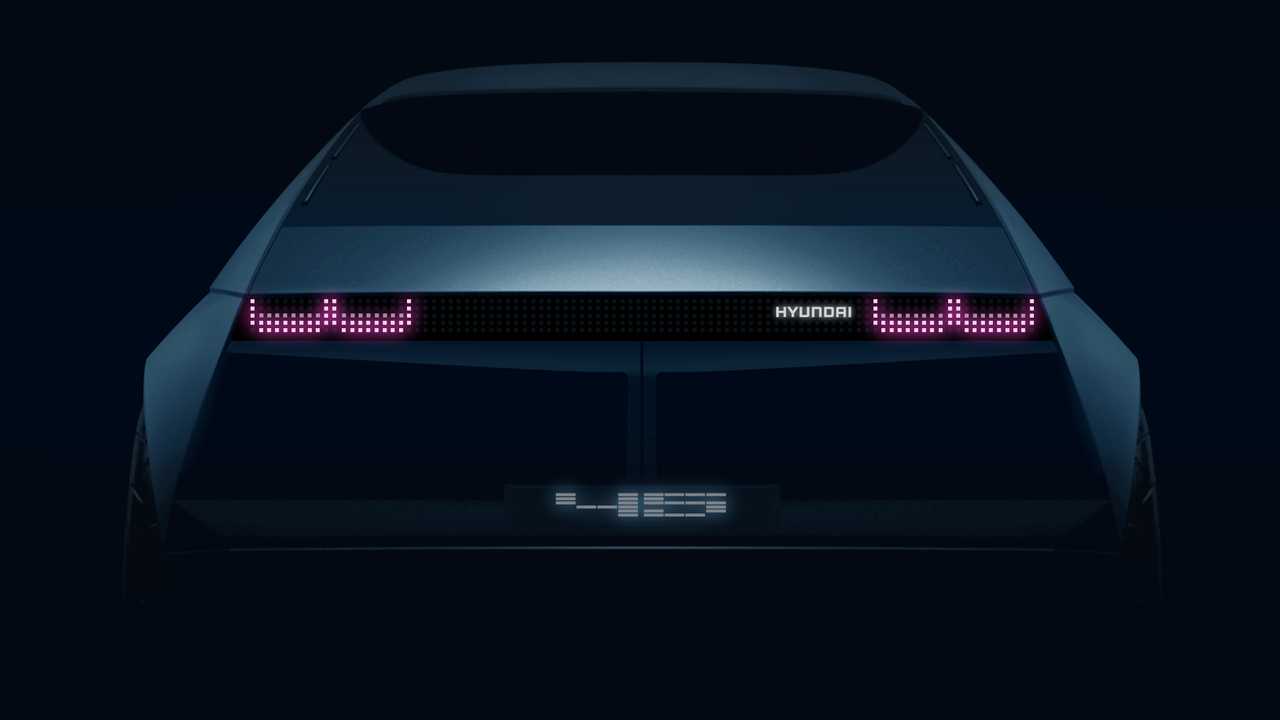
    We’ve already told you what Hyundai is bringing to the 2019 Frankfurt Motor show but the company has now teased a new model, and from the looks of it, it is another electric vehicle. The company says that this EV will focus on the future direction of the company’s car design and the inspiration from the past while also stepping into the future. The looks of the electric car in question is inspired by the brand’s first model in the 1970s. It’s called the 45 concept and yes, it’s an all-electric model. The company says that the 45 electric car concept will act as a milestone for Hyundai’s future EV design.

    The second electric vehicle will be the company’s first-ever electric racing car, which the carmaker claims will tease the future of motorsport. The new electric race car has been designed and built at the company’s headquarters in Alzenau, Germany by Hyundai Motorsport (HMSG). The company says that the car “will underline the company’s high-performance capabilities, green technology credentials and unwavering passion for motorsport.”

    The car will be unveiled on September 10, 2019 and will bring out the sensous and sporty design language that the company has been bringing in their cars lately. There are no technical details that have been released yet, but from the looks of it we’ll get a digital fascia. In addition to this showcase, Hyundai will debut the next-generation Hyundai Grand i10 (known as just i10 in Europe), and one more electric car.

  • Kia Motors Receives Over 32,000 Bookings For Seltos Compact SUV

    Kia Motors Receives Over 32,000 Bookings For Seltos Compact SUV

    The Kia Seltos compact SUV has been launched in India, with prices starting at ₹ 9.69 lakh and going up to ₹ 15.99 lakh (ex-showroom, Delhi). Kia has received over 32,000 bookings in India since it started taking bookings for the Seltos July 16, 2019 onwards. In fact, the company received more than 6,000 bookings on the first day itself. By the first week of August 2019, the number of bookings went up to 23,000 units. Kia says that over one-fifth of the bookings have been done online, from Kia’s website. The company has already manufactured over 5,000 units of the Seltos from its Anantpur facility in Andhra Pradesh! Kia’s production plan for the Seltos is set and the company will start the deliveries of the Seltos from today itself. Manohar Bhat, Head, Sales & Marketing, Kia Motors India, said that the company will not stop taking bookings for the Seltos. The Anantpur plant currently has production capacity of 300,000 units annually.

    There will be a total of 16 variants on offer with three engine options and two trims. The three engine options which are the 1.4-litre GDI turbo petrol, the naturally-aspirated 1.5-litre petrol, and 1.5-litre diesel engine will be conforming to Bharat Stage 6 (BS6) emission norms right from the beginning. All three motors will be BS-6 (Bharat Stage VI) complaint from the time of the launch. The 1.4-litre GDI turbo petrol motor is tuned to produce 138 bhp and 242 Nm of peak torque, and comes paired with a 6-speed manual and a 7-speed automatic transmission. The 1.5-litre NA petrol belts out 113 bhp and 144 Nm of peak torque, and is paired with a 6-speed manual and an IVT (Intelligent continuously variable transmission) automatic transmission. Lastly, the 1.5-litre VGT diesel produces 113 bhp and 250 Nm of torque, and is paired with a 6-speed manual and a 6-speed torque converter automatic transmission.

    The Seltos will also be equipped with the UVO (Your Voice) connected car tech that can be controlled via a 10.25-inch touchscreen infotainment system. The SUV also gets an 8-speaker sound system by Bose, segment-first a 360-degree surround camera, an 8 inch heads up display, and a 7-inch colour TFT unit for the instrument console. Other features include – LED headlamps and fog lamps, rear reclining seats, ventilated seats, eight-way power-adjustable driver seat, wireless charging, electric sunroof, rain-sensing wipers and more.

  • Kia To Start Second Shift At Anantapur Plant To Reduce Waiting Period

    Kia To Start Second Shift At Anantapur Plant To Reduce Waiting Period

    Kia Motor India has finally introduced the Seltos compact SUV in India and the all-new offering has been launched at a disruptive pricing of ₹ 9.69 lakh (ex-showroom). The company has already garnered over 32,000 bookings for the Kia Seltos in five weeks and the pricing, which undercuts all its rivals, is only going to fill the order books faster. The automaker has confirmed that the current waiting period stands at about six to eight weeks for the Seltos, and Kia plans to add a second shift at the Anantapur plant to meet the growing demand.

    Manohar Bhat, VP – Marketing and Sales, Kia Motor India confirmed the details on the growing demand for the Seltos SUV. The carmaker has about 5,000 models ready that have been dispatched to dealers, while the new shift is expected to churn out consistent volumes to meet the overwhelming number of bookings. Bhat also confirmed that it won’t stop bookings for the Seltos, taking a slight dig at MG, which has stopped accepting bookings for the Hector owing to the current demand.

    The Kia facility in Andhra Pradesh is spread over 536 acres and has an installed capacity of three lakh units per annum across three shifts. The Seltos is currently the only car to be produced at the facility and will largely cater to the domestic demand, while exports are also being planned from here to markets like South America, Africa and neighbouring countries.

    The Kia Seltos is a made-in-India, made-for-India model and has witnesses heavy localisation, which has prompted the competitive pricing on the SUV. The model is offered in a total of 16 variants across two petrol and one diesel engine options. There are two key trims – Tech Line and GT Line with four sub variants in each. Clearly, the manufacturer has put in a lot of thought of packaging different variants to meet the different customer requirements.

    Kia is currently operating out of 192 outlets spread across 160 cities in India. At least one out of five bookings for the Seltos was received online, and the manufacturer is anticipating consistent demand via the online booking platform, despite it being a novel form of booking vehicles in India. Kia’s online booking platform also helps prospective customers with financing options. Deliveries for the Kia Seltos start from today.

  • Audi Hong Kong opens Drivers experiential centre

    Audi Hong Kong opens Drivers experiential centre

    Audi Hong Kong has opened an experiential retail concept store focusing on technology and lifestyle.

    The store, billed as the Audi Innovation Space, was unveiled earlier this year at Kowloon Tong’s Festival Walk. It uses digital technologies such as a VR experience to engage customers and offer new ways to experience the brand. The store supersedes the former Audi Kowloon Showroom in Tsim Sha Tsui, which was shuttered in June.

    Audi will roll out the new experiential store concept at its other Hong Kong locations, beginning with a new outlet at The Elements in Tsim Sha Tsui later this month.

    Audi’s exclusive distributor in the territory is Dah Chong Hong, which has provided sales and service on behalf of the brand for 20 years.

  • 45% People Killed Due To Road Accidents In 2018 In Delhi Were Pedestrians

    45% People Killed Due To Road Accidents In 2018 In Delhi Were Pedestrians

    The Delhi Traffic Police released data of accidents in the capital city in 2018 and it shows that the fatalities in road accidents have gone up from 1584 deaths in 2017 to 1690 deaths in 2018. The report states that in 2018, 6515 road accidents occurred in Delhi in which 6086 people were injured while 1690 people lost their life.

    The fatality rate has increased by 6.69 percent though there has been a total decline in road accidents by 2.36 percent. Pedestrians were the most vulnerable victims. In 2018, 45.86 percent of the total persons killed in road accidents were pedestrians while scooter or motorcycle riders were second-most vulnerable with 33.72 percent killed in an accident.

    The fatalities have been showing a downward trend since 2009 but last year this trend reversed. The data also suggested that vehicles registered in Haryana were responsible for the highest number of fatal accidents in Delhi among other state vehicles. Out of the total 1657 fatal accidents, 150 were caused by vehicles registered in Haryana in 2018. The report also suggests that 743 accidents occurred during the day while 914 occurred during the night. The Traffic Department also identified 110 cluster points as accident-prone zones in Delhi and among the most dangerous stretches are on the Ring Road, Outer Ring Road, GTK Road, Rohtak Road and Grand Trunk Road.

    In 2018, cars/taxis caused 253 fatal accidents accounting for 15.26 percent of total fatal accidents which was the maximum number for a vehicle type.


  • India Has Not Set Deadline To Launch Electric Vehicles

    India Has Not Set Deadline To Launch Electric Vehicles

    The Indian government has not set a deadline to launch electric vehicles or to ban manufacturing of petrol and diesel cars, a government official said on Wednesday.

    The Indian auto industry has been caught in the middle of slowing economic growth that has led to a slump in demand for vehicles, forced plant shutdowns and large layoffs.

    Prime Minister Narendra Modi has been working to push electric vehicles in an effort to cut India’s fuel import bill and curb pollution.

    In June, a government think-tank that plays a key role in policy making had recommended that only electric models of scooters and motorbikes with engine capacity of more than 150 cc must be sold from 2025.

  • Upcoming Maruti Suzuki XL6 Will Be BS6 Compliant

    Upcoming Maruti Suzuki XL6 Will Be BS6 Compliant

    Maruti Suzuki India’s today announced that half of its petrol line-up is already Bharat Stage VI or BS6 compliant. The Indo-Japanese carmaker is the first OEM to bring BS6 compliant vehicles in the mass segment, ahead of the statutory timeline, and currently, the Alto 800, Wagon R 1.2, and petrol options of the Swift, Baleno, Dzire, and Ertiga have already made the shift to BS6. In fact, the BS6 models offered by the company currently constitute around 70 percent of the total petrol vehicles sold. Now, the carmaker has confirmed that the upcoming Maruti Suzuki XL6 premium MPV will also be BS6 compliant from the time of its launch, which is slated for August 21, 2019.

    Like the aforementioned models, the upcoming Maruti Suzuki XL6 is likely to get only a petrol BS6 engine, while the diesel options are likely to remain BS4 compliant for now. The new XL6 will get the new BS6 compliant 1.5-liter K15 petrol motor with the company’s SHVS (Smart Hybrid Vehicle by Suzuki) technology, which was recently introduced in the Ertiga. The XL6 is also likely to come with the Ertiga’s 1.5-litre diesel motor. Both engines are mated to a 5-speed manual gearbox as standard, along with an optional 4-speed automatic torque converter for the petrol model.

    The new Maruti Suzuki XL6 will get the same 1.5-liter BS6 petrol engine that powers the Ertiga

    Maruti Suzuki introduced its first BS6 compliant petrol car, a Baleno in April 2019. This was followed by the launch of BS6 compliant petrol variants of Alto 800, WagonR (1.2-litre), Swift, Dzire, and Ertiga much before the government stipulated date of implementation of the regulations. The BS6 compliant petrol vehicles will lead to a substantial reduction of nearly 25 percent in Nitrogen Oxide (NOx) emissions.

    Talking about the company’s proactive measures to introduce BS6 cars beforehand, Kenichi Ayukawa, Managing Director & CEO, Maruti Suzuki India said, “As a responsible and environment-conscious brand, Maruti Suzuki is aligned with Government of India’s vision to introduce BS6 compliant vehicles before April 2020. Seven of our top-selling models are BS6 compliant much before the deadline. We are committed to progressively upgrade our entire range of petrol cars to BS6 technology before stipulated timelines. The BS6 vehicles use Suzuki’s proven technology that helps to substantially reduce the emissions thus contributing to a cleaner and greener environment.”

  • Jaguar And Audi Are Having A Really Hard Time Beating Tesla In The US

    Jaguar And Audi Are Having A Really Hard Time Beating Tesla In The US

    It’s a trope that’s been around roughly as long as Elon Musk has been in the car business: When a new electric vehicle is unveiled, it’s dubbed a potential “Tesla killer.”

    But from the flaming-out of Fisker to present day, Tesla has largely dominated the American electric-vehicle market. Musk has even managed to expand the company’s preeminence over the still small segment despite two new battery-powered luxury SUVs arriving in U.S. showrooms the last 10 months: Jaguar’s I-Pace and Audi’s e-tron.

    Their starts are the latest indications that legacy automakers aren’t assured instant success when they roll out new plug-in models. Tesla’s Model S and X have largely held its own against the two crossovers that offer a shorter range and less plentiful public charging infrastructure. Jaguar and Audi also lack the cool factor Musk has cultivated for the Tesla brand by taking an aggressive approach to autonomy and using over-the-air software updates to add games and entertainment features.

    “If a customer is choosing the I-Pace over the comparable Tesla, they are making the conscious decision: I don’t want the Tesla,” said Ed Kim, an analyst at the car-market research and consulting firm AutoPacific. “You really have to be someone who doesn’t like Tesla, who doesn’t want the Tesla product, in order to go for this.”

    Tesla’s Model X and Model S each boast more than 300 miles of range, and the cheaper Model 3 travels 240 miles between charges. Jaguar’s $69,500 I-Pace is rated at 234 miles, and Audi’s $74,800 e-tron registers 204 miles.

    Jaguar’s marketing team spent years laying the groundwork to introduce the I-Pace. In 2016, the brand joined Formula E, an open-wheeled, electric-powered race circuit similar to Formula One.

    “We had an electric car in our development plan – the I-Pace – at the time,” said James Barclay, Jaguar’s racing director. “We had to create awareness about the fact that we had an electric car coming to market, firstly, and to showcase why you’d buy a Jaguar electric vehicle over something else.”

    Porsche and Mercedes-Benz are also joining Formula E for the 2019-2020 season to help generate buzz for the new all-electric models they have coming out. The circuit makes stops in cities including New York, Hong Kong and London, which the brands are banking on as major markets for plug-in cars.

    “City centers are where there’s going to be a really good application for electric vehicles,” said Kim McCullough, Jaguar Land Rover’s vice president of marketing for North America. “So having them be able to see something firsthand – it starts the education process.”

    But while Formula E is drawing crowds of urban dwellers and a substantial audience on social media, all that buzz may not necessarily translate into showroom traffic.

    “Auto racing really comes as one of the last influencers, in terms of influencing people to buy whatever car they’re looking at,” according to AutoPacific’s Kim. If Jaguar is doing well in Formula E, it couldn’t hurt the I-Pace, he said. “But I don’t think it would have a huge positive impact on awareness of the vehicle.”

    Jaguar has sold an average of about 190 I-Pace crossovers a month since U.S. sales began. Tesla, by comparison, was delivering Model Xs at a clip of about 550 a month in its first year on the market, beginning in 2015, according to InsideEVs.com estimates.

    The Audi e-tron has been on the market in the U.S. for only four months, but during that time, it has averaged sales of about 745 units, InsideEVs estimates. In July, 3.5% of Audi’s U.S. sales were all-electric, and the company expects that number to climb to 30% by 2025.

    “We are confident that we are and will continue to deliver an offering that customers will want to be part of,” Cian O’Brien, the interim president, and chief operating officer of Audi of America, said in an email.

    After initial efforts to nab electric-car buyers proved challenging, Jaguar has decided to attack Tesla head-on.

    The brand is offering Tesla owners a $3,000 discount on the I-Pace for the next month and a half. “This is all about capturing a share of voice,” Stuart Schorr, a Jaguar Land Rover spokesman, said in an email. “The EV market is just at its infancy.”

    “Consumers, as a result of seeing our race program, do consider us to be a car brand they would consider for their electric car purchase,” said Barclay, the racing director. “Rome wasn’t built in a day, and for a premium automotive manufacturer with their first electric vehicle, it takes time in the market.”

  • Volkswagen T-Roc Cabriolet Revealed

    Volkswagen T-Roc Cabriolet Revealed

    Volkswagen is all set to bring in the first crossover convertible in the compact SUV class and it’s the T-Roc that’s going to get this treatment. The T-Roc cabriolet will add to the diversity of the booming SUV segment across the world and of course breathe in some fresh air in that segment. The T-Roc is a popular car and ever since its launch globally, Volkswagen has sold 3.60 lakh units of the car. The Cabriolet is based on the T-Roc Crossover and gets a high-quality soft top which opens in nine seconds, even when driving at speeds of up to 30 kmph. What’s more, the crossover utility vehicle boasts all of the familiar strengths of Volkswagen SUVs: elevated seating along with numerous customization options. The crossover convertible will be showcased at the 2019 Frankfurt Motor Show and will launch subsequently in global markets.

    The T-Roc Cabriolet stands out with its distinctive body style. The strikingly wide front end, prominent lines and tight proportions bring out the SUV looks. The team under Head of Design Klaus Bischoff gave the crossover Cabriolet a powerful yet refreshing appearance. “The T-Roc Cabriolet carries the freedom of design into the driving experience itself. We have redefined the CUV as an emotive lifestyle product that combines power and style in a unique way”, says Bischoff.

    Positioned within the segment under the Tiguan, the T-Roc and the T-Roc Cabriolet both share its design basis: the modular transverse matrix (MQB). The T-Roc Cabriolet is 4,268 mm long, with a wheelbase of 2,630 mm. The vehicle is 1,811 mm wide (without exterior mirrors) and 1,522 mm high. The driver and front passenger are seated at a comfortable 599 mm over the tarmac.

    Inside, the two-door model, the drivers, and passengers can expect a high degree of flexibility and generous open spaces. The same goes for the 284-liter luggage compartment, which is something to be proud of in the compact crossover segment. The versatility of this vehicle concept is also underscored by an optional towing bracket. The soft top itself consists of the linkage, the headliner, an all-over cushioned mat and the outer cover. A total of four cross braces and the front cross strut (the first large cross-member behind the windscreen frame) are mounted between the longitudinal frame of the soft top linkage. The soft top is attached to the cross struts by bolted-on fabric holding rails. This ensures that the soft top does not inflate, even when driving at high speeds. Not only does this have a positive impact on the aerodynamics, but also on the noise levels in the vehicle interior. The interior is quiet thanks to both the sophisticated design of the soft top, as well as to the specially developed window and door seals.

    Passengers in the T-Roc Cabriolet are well-protected thanks to the roll-over protection, which is located behind the rear seats and is extendable and reversible. The system used in the T-Roc springs upwards in the area of the rear headrests within fractions of a second, in response to exceeding a defined lateral acceleration or vehicle tilt.

    The T-Roc Cabriolet gets an option of the next-generation Infotainment system (MIB3), thanks to which it is permanently online – enabling it to offer completely new services and functions. The new system has an online connectivity unit, including an integrated eSIM. This means the Cabriolet can, if desired, be permanently online as soon as the driver has registered it in the Volkswagen system. Information is displayed on the Infotainment system screen, which measures up to 8 inches. When this is used in combination with the optionally available Active Info Display, with its 11.7-inch screen, a completely digital cockpit landscape can be created – what we call the Digital Cockpit. There is also the option to round off the functional equipment with a 12-channel sound system from US-based manufacturer BeatsAudio, with a system output of 400 watts, enhancing the driving experience when the soft top is open.

    Customers can choose between two efficient turbocharged petrol engines with 113 bhp and 147 bhp. The manual six-speed gearbox comes as standard with the 1-liter 3 cylinder unit while the more powerful 1.5-liter gets a 7-speed dual-clutch transmission. The open-top T-Roc is produced at Volkswagen’s Osnabruck location, a plant with a long history of making convertibles. Indeed, the convertible variants of the Beetle and the Golf were also built here.

  • Hyundai India Market Share Hits All Time High

    Hyundai India Market Share Hits All Time High

    Amidst all the gloom in the automobile sector, Hyundai Motor India has found some cheer. The country’s second-largest car manufacturer has been able to increase its market share in July to 19.4 percent. This is the largest share of India’s car market that Hyundai has ever been able to command. That it comes at a time the market is depressed means that overall volumes are of course lower than previous year levels for the sector.

    Yet if you make simplistic percentage correlations, Hyundai lost only 3.8 percent sales in July 2019 at 57,310 units over the same month in the previous year; while market leader Maruti Suzuki saw a much more drastic 35.1 percent year-on-year drop in sales. Hyundai has traditionally held on to between 17 and 18 percent of the market for the past several years. It’s the first time it’s share has crossed 19 percent.

    SS Kim, MD, Hyundai Motor India said, “We have maintained the sales momentum and grew to 1.7% in FY 18-19 vis-a-vis FY 17-18. We sold 5,45,243 units in the domestic market and exported 1,62,105 units in FY 18-19. In July 2019, with the tremendous response for Venue, we sold close to 39000 units, out of which 9585 units sold were of Venue. Despite current market challenges, Hyundai has been the only brand to maintain its leadership position and has increased its market share by 3% registering 19.4% market share in July 2019.”

    H1 data released by Jato Dynamics suggests that Maruti saw its market share erode marginally to settle at 51.07 percent in the first half of 2019 when compared to H1 2018 when it held 51.57 percent of India’s car bazaar. Others who also saw their share drop are Tata Motors (down from 6.49 to 5.90 percent) and Ford (down from 3.07 to 2.66 percent).

    The Tata Tigor and Zest, and Ford EcoSport have been draggers for the respective manufacturers as competition has driven customers elsewhere. Ironically the drag for Maruti off late is coming from the Vitara Brezza – a Diesel-only best selling model that’s been hurt by Maruti’s apparent stance to drop smaller displacement diesels from April 1 2020. Hyundai meanwhile has benefitted at its expense as it’s new Venue subcompact SUV that rivals the Vitara Brezza has two petrol engine options and has now emerged as the market leader in its segment. The Mahindra XUV300 also offers petrol and has therefore benefitted.

    Hyundai is also expected to see a small surge in compact hatchback sales as its new generation Grand i10 Nios drives in alongside the outgoing model which will stay on in the market for some months. It’s Creta continues to perform well and while it may take a slight hit as the Kia Seltos comes to market, Hyundai will pad up for the second generation Creta launch in 2020.

  • Ferrari Will Expand Its Line-up Of Road Cars

    Ferrari Will Expand Its Line-up Of Road Cars

    Italian premium sports car maker Ferrari NV will expand sales of easier-driving grand touring cars, but will not try to chase rival Porsche’s annual sales volume, Ferrari Chairman John Elkann told an audience of classic car enthusiasts gathered at this storied golf resort on the Pacific coast.

    Elkann also reiterated that Fiat Chrysler Automobiles NV, of which he is chairman, remains open to opportunities to combine with other automakers, but is positioned to remain independent. Fiat Chrysler in May proposed a merger with French automaker Renault SA, but the deal fell apart after the French government intervened and Elkann withdrew the proposed merger.

    Fiat Chrysler Chief Executive Mike Manley sent the same message to Renault and other would-be partners earlier this month. Elkann visited Pebble Beach during the annual Concours d’Elegance, during which wealthy collectors bring some of the world’s rarest vintage automobiles to be admired – and sold – and premium manufacturers showcase exotic new models.

    Ferrari is best known for flashy, high-performance sports cars. Among fans of vintage Ferraris, more understated GT, or grand touring, cars from the 1960s, some with seating for four people, are among the most popular models on auction blocks and at enthusiast events. GT cars were designed to be comfortable on long road trips.

    Elkann hinted Ferrari will unveil a new GT type car in November. Ferrari has said previously that about 40 percent of its total sales could come from GT cars by 2022, up from 32 percent now.

    Ferrari has outlined plans to expand revenue to 5 billion euros ($5.54 billion) by 2022 from 3.4 billion euros in 2017. The company has said it plans to add a model called the Purosangue to compete with a growing stable of sport utility vehicles wearing premium sports car brands, such as the Lamborghini Urus.

    Rival Porsche AG, a unit of Volkswagen AG, has expanded its sales to more than 250,000 sports cars and sport utility vehicles annually. Elkann said Ferrari is not aiming for Porsche’s level of sales.