Category: E-Tailing

Retail News Asia is committed to providing both local and global retailers with the latest E-Commerce & Etail news throughout the Asian market. This on a daily base.

  • Shopee scales up B2C efforts with launch of Shopee Mall

    Shopee scales up B2C efforts with launch of Shopee Mall

    Shopee, Southeast Asia and Taiwan’s leading eCommerce platform, today officially launched Shopee Mall, a dedicated in-app space for B2C sellers. Consumers are now able to shop from Shopee Mall, in addition to the existing offerings available in the Shopee marketplace. The new portal provides access to thousands of products from over 200 top sellers and leading brands such as 3M, L’Oreal, Philips and Reckitt Benckiser.

    Additionally, all products on Shopee Mall come with 100% Authentic Guarantee, Free Shipping and 15 Days Return Policy.

    Shopee Mall was conceptualised due to the increasing need for brands to provide Singaporeans with a streamlined online shopping experience. In a recent survey by HSBC, 94% of local online shoppers identified reliability and trust as key considerations when making an online purchase.

    Shopee Mall aims to bolster both attributes and assure consumers by ensuring that all sellers on Shopee Mall are verified with the Accounting and Corporate Regulatory Authority, a locally registered entity. This verifies a merchant’s trustworthiness and ensures that all goods sold are authentic.

    Speaking about the launch, Zhou Junjie, Country Head of Shopee Singapore, said: “The launch of Shopee Mall is a major move for us in establishing Shopee as an industry leader and a one-stop platform that caters to all our customers’ needs.

    As we scale up our B2C efforts, customers can now shop conveniently from hundreds of leading brands. At the same time, Shopee Mall helps brands to reach out to more customers whilst building consumer confidence. Our users are very important to us and we’re continually working to improve Shopee for them.”

    Additionally, Shopee further strengthens its consumer-first policies by giving consumers more convenience. Shoppers can reap cost savings from free shipping on every order with no minimum spend. Furthermore, shoppers who wish to return their purchases can do so using the prepaid postage labels provided.

    In a survey conducted by PwC in 2016, Southeast Asian shoppers indicated that this is an amenity they expect from eCommerce businesses.

    Catering to this is crucial as return policies in Asia have typically been less favorable to consumers.

    Shoppers can easily identify Shopee Mall product listings with the newly added red ‘Mall’ label. Within the portal, shoppers can also navigate easily between key brands, category campaigns and personalised recommendations.

    During the launch period beginning 18 July, Shopee Mall will offer exclusive campaigns, including opening sales of up to 80% off, voucher codes and giveaways.

  • Toby’s Sports to expand online

    Toby’s Sports to expand online

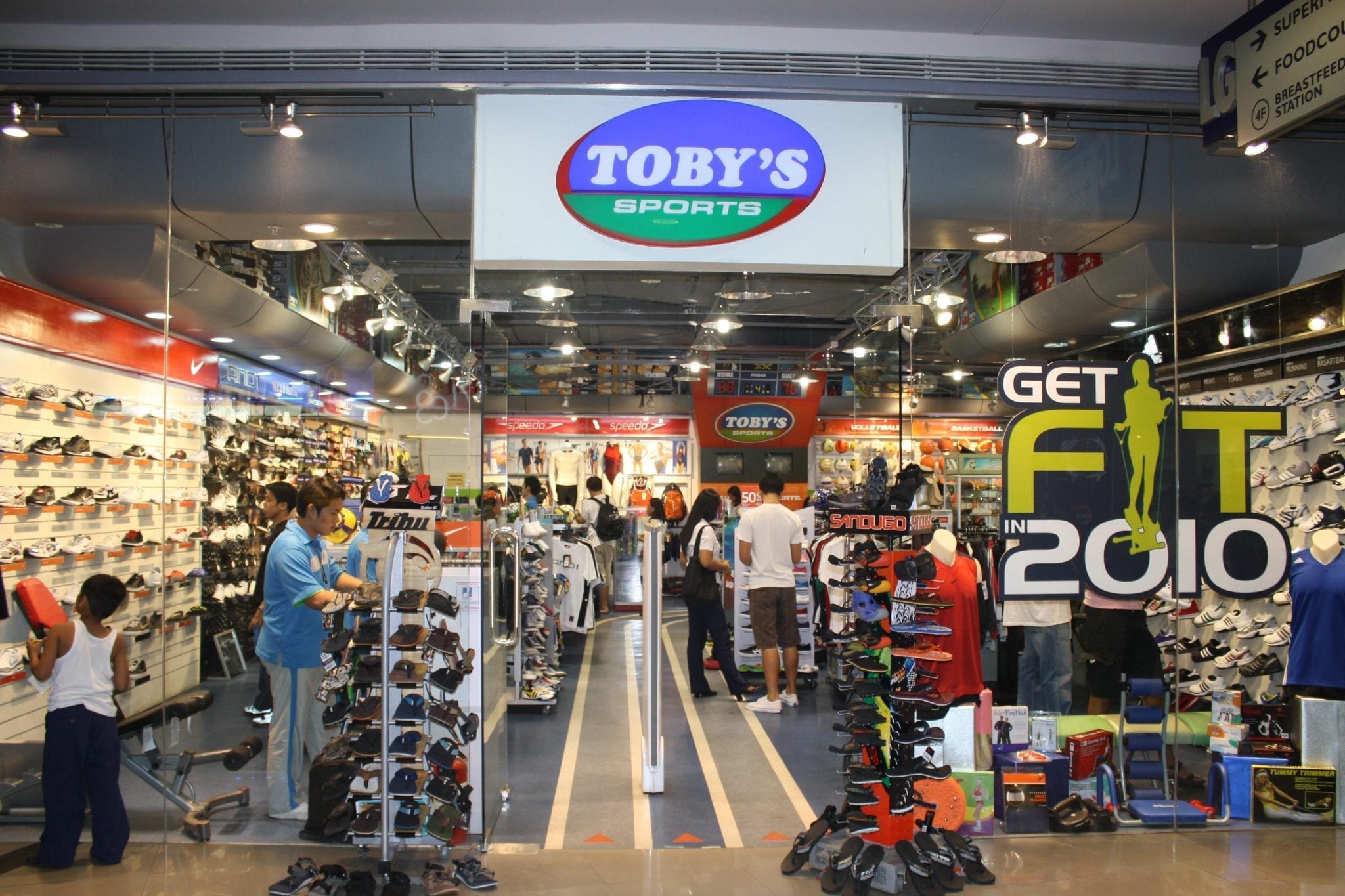
    Philippines-founded retailer Toby’s Sports has launched a new e-commerce site as it marks its 40th anniversary.

    “Our e-commerce platform was completely revamped and we have since added multiple services to allow for a more convenient shopping experience,” explains Toby Claudio, president of Quorum International, parent of Toby’s Sports.

    The site features a wide range of footwear, apparel and equipment from high-profile international sports brands.

    Also coinciding with the anniversary, Toby’s Sports has launched a national campaign entitled, ‘We Got This’, highlighting an individual’s journey to achieve success in whatever sport or fitness activity they pursue.

    A video journey examines the mental and physical hardships of sports training – from an aching, calloused body to a state of frustration and self-doubt – to achieving success.

    “When you take on a challenge or set a goal for yourself in sports and fitness, you undergo several hurdles that make you want to give up. #WeGotThis is our rally cry to keep them going; to let them know that as the leader in the sports industry. We are here not just here to provide them with the right gear, but to also give them the support they need to succeed,” said Claudio.

    “Officially introducing the site at the same time as the new campaign really brings the message home for us – that our dedication to our customers and their well being is unparalleled,” he added.

  • Korea needs to draw long-term growth plan for startups

    Korea needs to draw long-term growth plan for startups

    Korea has leaped into being one of Asia’s leading economic powerhouses in less than a century after the post-war devastation back in the early 1950s.

    Many attribute the rapid growth to the nation’s tough working culture — represented by an obsession to generate short-term, outstanding outcomes mainly in the business circle.

    This has brought about such homegrown hardware titans as Samsung and LG whose history falls short of their overseas counterparts, but have become top-tier players.

    The hardware-driven growth, however, is still holding back the development of the local software industry, with the government putting little attention on the non-manufacturing yet crucial growth area.

    “Not a single Korean software company has achieved global success, compared with the hardware or manufacturing industry players,” Tiger Company CEO Kim Beom-jin said in an interview Sunday. The software startup — established in 2011 — is an enterprise-level social networking system provider here.

    He said the nation’s software market is not huge enough to grow into a sizable shape due to the small market size and weak infrastructure, so the government needs to implement specific measures for its long-term growth both in quality and quantity. The software market in the United States and China is 20 to 30 times bigger than that of Korea, he said.

    “It is also tough for us to tap directly into overseas markets, as we are no match for industry leaders there in terms of factors such as capital, workforce and marketing,” he said.

    Kim urged the government to support local software startups in particularly overseas networking and marketing activities.

    “Small startups with weak capital cannot have enough chances to contact overseas clients and promote products by participating in global exhibitions,” the chief executive said.

    The government has in recent years pushed for the development of the local software industry. For example, the Ministry of Science, ICT and Future Planning unveiled a plan last year to name and support 20 software-oriented universities by 2019.

    The move comes amid growing calls that the country should make more effort in software education to build an infrastructure for its long-term growth.

    This reflects that global information and communication giants such as Google and Facebook generate billions of dollars in profit with their software infrastructure. But even if the global tech paradigm has shifted into the software sector, the government has made little effort to catch up with the trend.

    “The small software market size is also blocking the government from making enough investments in software industry players,” he said. “Most state-run bodies have invested mainly in hardware and online to offline industry players here, paying little attention to their software counterparts.”

    “Local venture firms or small- and medium-sized firms can receive state-run research and development funding projects for as long as three years,” he said. “But the government needs to draw up concrete funding policies from a longer-term perspective, from product development to global expansion.”

  • Ensogo Philippines to shut down

    Ensogo Philippines to shut down

    Ensogo Philippines will be closed down along with the online retailers’ other sites across Southeast Asia.

    Following the resignation of its co-founder Kris Marszalek, the Singapore-based tech company said it will cut its financial support to its sales and marketplace business units in Indonesia, Thailand, Hong Kong and the Philippines.

    “These business units will be shut down. All staff have been informed and communications will be made to customers in the coming days,” the company said in a statement.

    Australian internet entrepreneur Patrick Grove founded Ensogo, formerly iBuy. Grove also established the online businesses iProperty and iCar under Catcha Group.

    Recently the company reported growth averaging more than 100 per cent in the first quarter, after the launch of a cross-border marketplace business in January. It said the number of suppliers had skyrocketed from 3141 in the fourth quarter of 2015 to 13,599 in the first quarter of 2016. The first three months saw US$8.2 million in gross merchandise value.

    As of the end of March 2016, however, Ensogo reported A$22.6 million (about US$17 million) in receipts from customers, while total cash was only A$17.6 million, a 64 per cent decline from A$29 million by the end of last year. Earlier this year the company, which is headquartered in Singapore and listed in Australia, laid off employees.

  • ShopBack launches in Thailand and pays Thais to shop online

    ShopBack launches in Thailand and pays Thais to shop online

    ShopBack, the online Cashback platform with a strong regional presence, today announced its official launch of its website and mobile in Thailand at a media briefing

    Connecting international merchants to local shoppers, ShopBack introduces the smarter way to shop with up to 30% Cashback stacked atop discounts, coupons, voucher codes and credit card rebates.

    More than 1,300 merchants are integrated in ShopBack sites, with 100+ local and international merchants on the Thai site as of the launch. These include leading online travel booking websites Expedia and Booking.com, French beauty merchant Sephora, SE Asia’s leading online shopping platform Lazada, transport apps Grab and Uber and many more. Shoppers can get up to 30% Cashback depending on individual merchants.

  • Alibaba project in Thailand to support Asean e-commerce

    Alibaba project in Thailand to support Asean e-commerce

    Alibaba Group has pledged to build an e-commerce park in Thailand’s Eastern Economic Corridor (EEC) to serve the burgeoning Asean e-commerce market, says Industry Minister Uttama Savanayana.

    Covering 300 rai (50ha), the park will serve as the centre of Alibaba’s logistics business in Asean, he says.

    The Chinese e-commerce giant expects to sign the project’s first-phase contract with local developers within the next few months and start construction before the end of the year.

    The second phase will include an R&D unit and a business development centre tailored to cater to small and medium-sized companies, says Uttama, who is in talks with top-level executives of Alibaba subsidiary Lazada.

    He says the group will give more details about the project soon.

    “Alibaba is investing in the EEC because it is the most attractive investment project in Asean. Also, Thailand is the region’s most promising and best located e-commerce market.”

    Uttama says Alibaba wants to use Thailand as a stepping stone to the global market, and as a production base for Cambodia, Laos, Myanmar and Vietnam.

    The government has allotted more than 18,000 rai for the EEC project, adding to 30,000 rai already allocated.

  • Zalora embarks on company-wide project to deliver operational speed to employees

    Zalora embarks on company-wide project to deliver operational speed to employees

    SAP announced that ZALORA has selected SAP S/4HANA to enhance its operational capabilities and streamline processes for real-time business decisions.

    Founded in 2012, ZALORA is Asia’s online fashion destination, serving markets across Southeast Asia, Hong Kong and Taiwan. With more than 30,000 products online from over 500 international and local labels, ZALORA provides fashionistas access to the latest fashion goods from across the world. To meet the growing needs of its expanding online business, ZALORA looked to SAP for a reliable, scalable and industry-grade enterprise resource planning (ERP) system.

    Before adopting SAP S/4HANA, ZALORA’s accounting processes required manual input for details such as revenue and product costs, which were computed outside of its accounting system. This posed a challenge for the business due to the reliance on human input rather than processes for data integrity and reporting. Without an integrated solution, business information was often presented in silos with no flow between other key systems, presenting a lack of real-time data that were crucial to operations and planning.

    “To support our continued growth as a leading online fashion retailer, we needed a platform capable of automating and streamlining existing processes and the capacity for large scale expansion,” said Parker Gundersen, ZALORA Group CEO. “SAP’s S/4HANA solution fulfilled our objectives of visibility, compliance, automation, productivity and sustainability. We’re very excited that SAP’s real-time insights allows us to better meet the needs of our digital business.”

    SAP S/4HANA® is a business suite that helps organizations to run their core business processes digitally and live. Characterized by simplifications and high effectiveness, SAP S/4HANA is a system of intelligence which automates processes and provides end users with active decision support in real-time based on data from both internal and external sources. With SAP S/4HANA, ZALORA will be equipped to handle extremely high volume orders per day during peak sales periods and promotions and gain real-time customer and business insights.

    At the core, ZALORA also foresees that it will become more productive from enhanced real-time oversight of critical financial data that will grant insight and address issues in merchandising, sales, supply chain, finance and control, and compliance, through a single platform.

    ZALORA will also be leveraging the expertise of IBM for the implementation across its business. IBM will support ZALORA by working closely with its project teams to migrate ZALORA systems to the SAP S/4HANA platform.

    “Online businesses are increasingly driven to innovate and discover new ways to deliver values to their customers along the entire purchase journey,” said Khor Chern Chuen, Managing Director of SAP Singapore. “ZALORA has transformed the way people shop and interact with their favourite brands, and this project highlights how the company is blazing the trail in digital transformation. We are excited to work with ZALORA, one of the fastest growing online fashion retailer in Asia, to accelerate their business and provide a better experience for their customers and increase business value as an e-retailer.”

  • Singapore sets e-commerce target for growth

    Singapore sets e-commerce target for growth

    Singapore has set a three-year target to grow the share of e-commerce from the current 3 per cent to 10 per cent of total receipts.

    This would match where China was three years ago, according to Senior Minister of State for Trade and Industry Sim Ann.

    She told Parliament that benchmarked against the 2014 figures of the UK (13 per cent) and the US (6.5 per cent), Singapore’s target was not unrealistic.

    One in four online retail transactions in Singapore were with foreign businesses, she said.

    Total e-commerce with locally issued credit and debit cards was valued at S$24.7 billion (US$17.8 billion) over the past three years, with foreign entities accounting for $6.4 billion worth of these transactions, said Sim in response to an MP query.

    “While e-commerce presents competition to our retailers, it also gives them the opportunity to expand their reach to the region and beyond,” she said.

    The retail industry transformation map outlined last year by the government envisioned a “vibrant” retail industry spanning physical stores, online retailing and mobile channels, as well as local brand owners with global presence.

    Sim said government initiatives were helping retailers build digital capabilities and access e-commerce…

    Enterprise agency Spring Singapore and the Info-Communications Media Development Authority (IMDA) have teamed up to pre-qualify e-commerce packaged solutions that can be readily adopted by small and medium enterprises.

    Spring is also partnering companies such as Google to help SMEs strengthen their digital marketing, while other private firms like DBS, Mediacorp and SingTel have given support by setting up an e-marketplace and training opportunities.

    Trade agency International Enterprise Singapore helps companies leverage e-commerce to unlock growth opportunities in overseas markets.

    At the same time, said Sim, trade associations and chambers of commerce were reaching out to SMEs to encourage them to adopt e-commerce.

    Being launched this year is Spring’s initiatives with SkillsFuture Singapore to help the retail industry workforce adapt and upskill to keep up with developments in e-commerce and digital marketing.

  • India’s Flipkart planning offline venture

    India’s Flipkart planning offline venture

    India’s Flipkart is planning to enter the brick-and-mortar space as a master franchisee for foreign brands. This follows other e-commerce companies opening on-ground ventures as the online market slows down.

    Flipkart is already in advanced talks with Giordano for a licensing deal to sell the Hong Kong­ apparel and accessory retailer’s products both offline and online in India. The plan is to set up a chain of Giordano­-branded stores along with a digital platform, says an insider.

    Flipkart will appoint sub-­franchisees with brick-­and-­mortar expertise to run the physical stores.

    Meanwhile, pure-play companies such as Faballey, Lenskart, Myntra, Nykaa, Pepperfry and Urban Ladder have already set up physical stores.

    Fashion retailer Myntra this year acquired the Indian franchisee agreement for Spain’s Mango and is appointing two sub-­franchisees for the label – Jaipur-­based Samarth, which runs more than 100 outlets of Benetton, Calvin Klein, Lee, Puma, Tommy Hilfiger, US Polo and Wrangler, and New Delhi­-based G&B which has 25 Benetton stores in the National Capital Region.

    Myntra is also selling its own brands. It opened its first brick-and-­mortar store in Bengaluru in March under its private brand Roadster on the 100 Feet Road.

    Beauty retailer Nykaa.com is also expanding on the ground. Its head of offline retail strategy, Adwaita Nayar, says touch and feel is important for customers in India. “Almost 90 per cent of the market for beauty products is still offline.”

    Nykaa.com intends to have large-format experiential stores as well as smaller outlets. Its aim is to have 30 stores at malls and high streets as well as travel retail by 2020.

  • JD.com buys into Farfetch fashion site

    JD.com buys into Farfetch fashion site

    Chinese e-commerce giant JD.com has made its largest overseas investment ever, in online Farfetch fashion marketplace.

    JD.com has bought a US$397 million stake in Farfetch, solidifying a partnership that will see its CEO Richard Liu take a place on the UK company’s board. It will also make JD.com one of Farfetch’s largest shareholders.

    This comes amid a push by the luxury-oriented Farfetch to expand in Asia, having raised $110 million in 2014 to support China growth. The new partnership will allow Farfetch to make use of JD.com’s logistics network and marketing systems, alongside online payment technology and social-media resources like its partnership with WeChat.

    An added bonus for the UK fashion marketplace is an increased ability to tackle counterfeit luxury products produced in the region.

    JD.com will also benefit from the partnership, pushing into the luxury market and setting itself apart from rival Alibaba.

    “China is the world’s second-largest luxury market, and we are delighted to have such a respected partner, known for its strict protection of IP, with whom to address Chinese luxury consumers,” says Farfetch founder/CEO Jose Neves.

    Just this month, JD.com launched its high-end delivery service JD Luxury Express, with staff in suits and white gloves delivering packages via electric vehicles directly to customers’ homes.

    Farfetch, which counts France’s Eurazeo, Singapore sovereign wealth fund Temasek and China’s IDG Capital among its investors, was valued at around $1.5 billion in a fundraising last year.

  • Microsoft expands local presence

    Microsoft expands local presence

    Microsoft is looking to extend its local retail footprint, yesterday launching a virtual store on Ebay.

    The tech giant said it is looking to tap into the 11.3 million monthly visitors that visit the online marketplace, with one in two online shoppers visiting the site.

    It represents a three-fold tilt at Aussie consumers with the Ebay store joining its own e-commerce platform and flagship store at Pitt Street mall in the Sydney CBD.

    “With the launch of the Microsoft store on Ebay, we’re making it easy for the millions of Australian Ebay users to discover and purchase their favourite Microsoft products with the assurance of the same safe online shopping experience, return policy and free shipping that they have come to expect from microsoft.com,” said Fiona Sims, online store manager, Microsoft Store ANZ.

    Operated by Microsoft Australia, the Ebay store will feature Surface, Xbox, a full range of PCs, accessories, software and similar deals and promotions to those found at the flagship Pitt St location, where there are over 178 digital panels throughout the store with 38 different video feeds, and two large external screens.

  • How to fight Amazon

    How to fight Amazon

    Supercheap Auto unveiled their national flagship on 28 June calling it a “customer experience centre” while downplaying the impact of Amazon.

    Meanwhile other retailers, rather than wallowing in self pity, are also taking steps to minimise the impact of Amazon. One such initiative is the creation of own brands (not a new idea) and tying up exclusive deals with suppliers (also not a new idea).

    Amazon’s strategy (or maybe their supplier’s strategies) has been to block the sale of many products from being exported outside the USA. Of course there are ways around this such as getting a USA address and having the item forwarded. One reason for the strategy is to prevent customers from buying goods that are cheaper, sometimes a lot cheaper, compared to the prices outside the USA.

    However even with the freight and third party fees, one can still import goods from Amazon for lower prices than we pay in Australia.

    The million dollar question is whether Amazon will be offering their USA prices in Australia because if they do together with lower freight charges, the impact could be severe for Australian retailers.

    What the Super Group, to their credit, are doing is getting off their butts and attempting to counter the Amazon threat.

    I know that fellow commentators have said that they are tired of the Amazon story and that everything that needs to be said, has been said. But how many retailers out there have formed a team to specifically strategise ways of fighting Amazon?  To the best of my knowledge very few apart from the Super Group.

    There are many ways that this can be tackled, not that they are necessarily new but clearly you have a choice. Take the threat seriously and do something or roll over and play dead!

  • Japan’s Rakuten retail site bans ivory sales

    Japan’s Rakuten retail site bans ivory sales

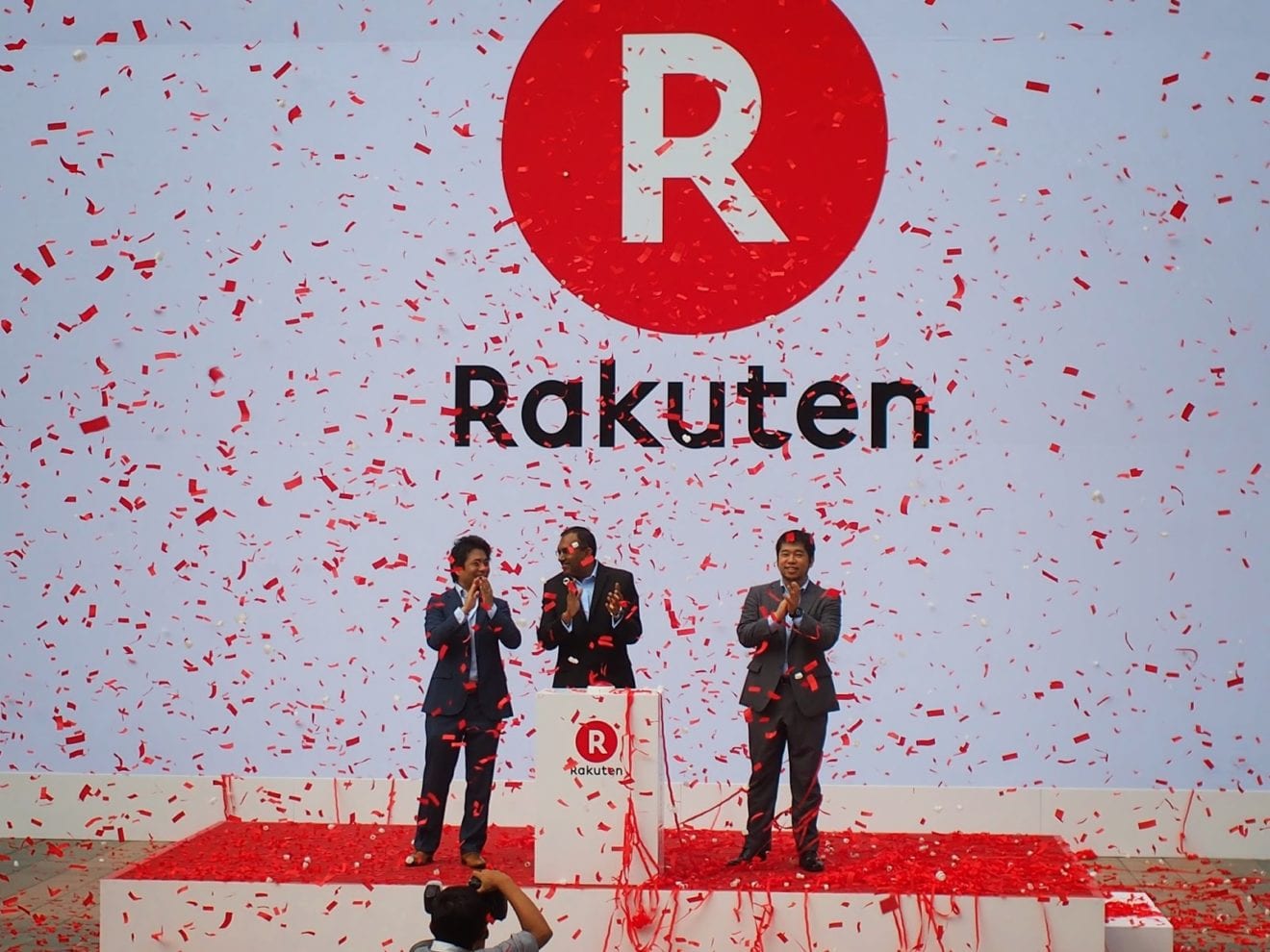
    One of Japan’s largest online retailers has banned the sale of ivory, closing a major marketplace for the controversial trade. Rakuten is accused of being the world’s largest online retailer for elephant ivory, but will now phase out its sale. The trade is legal in Japan for items imported before 1989 – but no new stock can be brought into the country. Many other countries have banned the trade outright over concerns that it contributes to elephant poaching.

    Rakuten also banned the sale of sea turtle products on its site, telling it was responding to “growing international concern”.

    “We expect it will take 1-2 months for all listings of these prohibited products to be removed,” it said.

    On the day of the announcement, a large number of ivory items were still listed for sale, including many carved personal seals known as “hanko”. Sellers of such items are expected to maintain careful records of their origin, and use only government-regulated ivory stockpiles. But activists believe the rules are often circumvented and the precious material is often smuggled across borders.

    Yahoo Japan, another site which allows the sale of ivory, has previously come under fire for the practice.

    However, a spokesman told Reuters it did not plan to halt the trade, saying: “We don’t think that the legal ivory trade in Japan has any impact on African elephant numbers.”

    “It is important to recognise there are cultural differences between different countries,” he added.

    African elephant numbers have plummeted in the last century, and there are an estimated 500,000 remaining on the continent.

    China, a traditional powerhouse in the ivory trade, announced in December that it would ban all ivory activities and trade by the end of 2017.

    Conservation groups hailed the decision as “historic” and a “game-changer” – but ivory artists have lamented the loss of a traditional craft.

  • Ho Chi Minh City to crack down on tax-evading Facebook retailers

    Ho Chi Minh City to crack down on tax-evading Facebook retailers

    The tax man is threatening to shut down social media accounts, but savvy retailers know that it’s an empty threat. Ho Chi Minh City sent out tax demands to nearly 13,500 Facebook retailers over a month ago, but a representative from the city’s Tax Department told that so far only around 1,000 of them have responded.

    As a result, the city’s tax authorities have decided to work on tougher solutions to crack down on potential tax-evading online retailers, and have asked the Ministry of Finance to finalize regulations regarding tax declarations and deductions at source, as well as the supervision of online business activities.

    The city’s tax department also said it is considering a name-and-shame approach to individuals and organizations that refuse to pay tax.

    To combat retailers that open multiple Facebook accounts to avoid detection, the department claimed it had come up with multiple solutions, such as closing down accounts or sending officials posing as customers to confront them in person.

    It also said it would ask the State Bank of Vietnam for copies of retailers’ bank statements to determine their incomes, and courier companies would be asked to provide information on the quantity and value of the goods they transport for them.

    However, many online retailers say that the tax man has no authority over Facebook.

    Nguyen Thi Cuc, who chairs the Vietnam Tax Consultants’ Association, also told that Vietnam does not have a comprehensive tax policy for online businesses, and that collecting taxes is difficult because most transactions are conducted in cash.

    Many retailers claim they already have business licenses and have declared tax, and only use Facebook to advertise their products, while others say they earn less than VND100 million ($4,400) annually so they are not required to declare tax by law.

  • Alibaba launches low-cost voice assistant amid AI drive

    Alibaba launches low-cost voice assistant amid AI drive

    The Chinese device costs significantly less than counterparts by Amazon and Google. China’s Alibaba Group Holding Ltd launched on Wednesday a cut-price voice assistant speaker, similar to Amazon.com Inc’s “Echo”, its first foray into artificially intelligent home devices.

    The “Tmall Genie”, named after the company’s e-commerce platform Tmall, costs 499 yuan ($73.42), significantly less than western counterparts by Amazon and Alphabet Inc’s Google, which range from $120 to $180.

    These devices are activated by voice commands to perform tasks, such as checking calendars, searching for weather reports, changing music or control smart-home devices, using internet connectivity and artificial intelligence.

    China’s top tech firms have ambitions to become world leaders in artificial intelligence as companies, including Alibaba and Amazon, increasingly compete for the same markets.

    Baidu, China’s top search engine, which has invested in an artificial intelligence lab with the Chinese government, recently launched a device based on its own siri-like “Duer OS” system.

    The Tmall Genie is currently programmed to use Mandarin as its language and will only be available in China. It is activated when a recognized user says “Tmall Genie” in Chinese.

    In a streamed demonstration on Wednesday, engineers ordered the device to buy and deliver some Coca Cola, play music, add credit to a phone and activate a smart humidifier and TV.

    The device, which comes in black and white, can also be tasked with purchasing goods from the company’s Tmall platform, a function similar to Amazon’s Echo device.

    Alibaba has invested heavily in offline stores and big data capabilities in an effort to capitalize on the entire supply chain as part of its retail strategy, increasingly drawing comparisons with similar strategies adopted by Amazon.

    It recently began rolling out unstaffed brick-and-motor grocery and coffee shops, using QR codes that users can scan to complete payment on its Alipay app, which has over 450 million users. Amazon launched a similar concept of stores in December.