Category: E-Tailing

Retail News Asia is committed to providing both local and global retailers with the latest E-Commerce & Etail news throughout the Asian market. This on a daily base.

  • Amazon reportedly coming to Singapore

    Amazon reportedly coming to Singapore

    Amazon is said to be coming to Singapore and as soon as this week, according to a report by TechCrunch, marking the US e-commerce giant’s entry into Southeast Asia.

    A close familiar with the matter told the tech publication that Amazon plans to launch Amazon Prime, Amazon Prime Now fast delivery and Amazon’s regular e-commerce services, in a bid to tap Singapore’s population of over five million people.

    Exact product offerings and pricing remains unknown at this time.

    The Singapore rumour mill started brewing in 2016 when Amazon hinted at the idea of entering Southeast Asia last November, but it was reportedly delayed following complications.

    Via social media, a quick glimpse at Instagram this week shows Amazon has already begun slyly marketing its services through online influencers who have posted sponsored content in a bid to tease Amazon’s Prime Now to their followers, using with the hashtag #dontsaybojio.

    Among the influencers are Jaime Teo, theramengirl, Charmaine Seah-Ong and online portal superadrianme.com. While Amazon isn’t mentioned in the posts, the iconic ‘tick’ logo is seen on the packaging of goods shown.

    Amazon’s move mimics Chinese e-commerce giant Alibaba, who has been rapidly expanding in Southeast Asia over the past year.

    Milestones include the major investments in Malaysia such as the Digital Free Trade Zone, its first e-hub outside of China along with the availability of the Alipay digital wallet and Alibaba Cloud service.

    The Singapore news comes as Amazon readies for an imminent Australia debut, signalling the retailer’s plans for a piece of the burgeoning e-commerce markets in Asia-Pacific.

  • Walmart and JD.com plan shopping festival in August

    Walmart and JD.com plan shopping festival in August

    Walmart and JD.com are set to launch a new online shopping festival for August 8, in an onmi-channel alliance that will see the two retail juggernauts link their supply chains and other operations.

    As the fight for the online Chinese consumer intensifies, the festival will help the US retailer “reach the 99 per cent of the country’s population that JD.com’s delivery network covers, bringing high-quality Wal-Mart products to more Chinese customers nationwide,” said an announcement.

    Helping the sale garner promotional traction, coupons have already been made available across 400 Walmart stores in China, allowing shoppers huge discounts during the upcoming online sale.

    “Our ability to tap into JD.com’s advantages across logistics, big data, technology and customer service gives Wal-Mart a huge advantage in reaching China’s rapidly expanding consumer class,” Ben Hassing, senior vice president of Wal-Mart China e-commerce and technology, told WWD.

    “We look forward to further bringing together our strengths in digital and physical retail to take the customer experience in China to the next level.”

    The date, August 8, was chosen for its symbolic numerical links, the double 8. The number eight is considered a lucky number in the country.

    The two companies also confirmed plans to integrate supply chains, “to significantly improve delivery efficiency for customers, optimize delivery routes for JD.com and increase Wal-Mart’s inventory turnover rate.”

    The change allows customers to place orders online with JD.com, where then the system will find out if a JD.com warehouse or Walmart store is closer to the delivery address. From here, the order will dispatch a JD.com courier accordingly.

    The trial project will launch initially in Beijing, Shanghai, Guangzhou, Shenzhen, Chengdu and Wuhan.

  • Facebook traders face taxation anxieties

    Facebook traders face taxation anxieties

    Le Ha of Hanoi, who has been selling clothes on Facebook, is stressed and worried after receiving a message from tax authorities inviting her to come and declare her income.

    Ha is one of over 13,400 Facebook account holders in Hanoi who’ve been identified by the Hanoi Taxation Department as online traders.

    “I have been selling clothes through Facebook for years, getting about 10 orders each day with maximum daily sales of around VND5 million (US$220),” Ha told us, admitting that unlike other shop owners, she doesn’t have to declare her business or pay taxes.

    She was satisfied with her earnings and not having to bother about any intervention from State management agencies.

    The promise of attractive profits has prompted many people to jump on the bandwagon, catching the attention of authorities trying to reduce tax losses from State budget collection.

    A tax administration project for e-commerce business has been drawn up, with the two taxation departments of Hanoi and HCM City functioning as pioneers in bringing business owners selling merchandise on social media, especially Facebook, into the tax bracket.

    Vien Viet Hung, deputy director of Hanoi Taxation Department, told Vietnam News that the department had collected information on the identity and telephone numbers of the 13,422 Facebook traders.

    Since late June, the department has been sending SMS messages to these traders, encouraging and instructing them to voluntarily register their operations, declare income and pay taxes.

    However, after sending messages twice, only 1,000 of the 13,422 phone numbers have replied, and only around 500 have approached the department on their own to register to pay taxes, Hung said.

    In a recent interview with the Vietnam News Agency, Chairwoman of the Vietnam Tax Consultant Association, Nguyen Thi Cuc, said that under current laws, all institutions and individuals that are doing businesses, whether through traditional channels or via e-commerce platforms, are required to declare income and pay taxes.

    However, she also conceded that in the current situation, the tax collection was totally based on the willingness of traders, their authenticity, honesty and integrity.

    Income bracket

    According to the law, only online sellers with revenues over VND100 million a year will be subject to taxation.However, many Facebook merchants are afraid that the taxation process will be fair.

    “If paying tax is an obligation, we are ready to fulfill it, as long as it is fair to everyone. What if I tell the truth, while other Facebook sellers lie about their revenue? They will pay less or no tax, which is unfair,” Le Ha told us.

    Regarding income declaration, many argue that was very difficult to determine the exact revenue of those who do business on internet, so it is not possible to ensure fair treatment of honest sellers and those who deliberately evade taxes.

    But Ta Thi Phuong Lan, deputy head of the division in charge of personal income tax under the General Department of Taxation, said tax authorities can assess Facebook sellers’ revenue by checking their sources of goods, post offices, delivery companies, and bank payments.

    One of the most difficulties in determining Facebook traders’ income is the low rate of non-cash transactions in Vietnam, said Truong Thanh Duc, chairman of the Basico Law Firm.

    In other countries, buyers make payments via banks, so it is not difficult to identify the revenue from online business. Therefore, it is necessary to apply measures to encourage Vietnamese to use non-cash payment methods for online transactions, Duc said.

    Recently, the General Department of Taxation issued Document No. 2623/TCT-CS, asking local taxation departments to co-ordinate with network operators to gather information on online sellers, including identity and bank number accounts, so that they can monitor all online transactions.

    However, in response to the Vietnam News Agency, CMC Telecommunication Infrastructure Joint Stock Co (CMC Telecom) said they haven’t received any communication from tax authorities.

    The company said that if needed, they can explain and persuade customers to provide them with necessary and detailed information, but they can’t ensure that all the customers will agree to supply this.

    Step by step

    Transactions on the Internet are difficult to control and tax collection procedures can’t be comprehensively introduced in a short time, it should be done step by step, said Nguyen Huu Tuan, Head of the E-commerce Management Division of the E-commerce and Information Technology Department under the Ministry of Industry and Trade.

    To collect taxes, authorities should understand each business as they have their own specific characteristics, Tuan said.

    With millions of Facebook accounts, tax authorities should classify them based on the nature of their operations and key products, he said.

    In the first phase, the tax authority should target large and professional businesses. It is easy to identify these account holders as they will have popular Facebook pages with a large numbers of followers, likes, posts and comments, he said.

    The rest are likely to be individuals selling things online as a side job or even seasonal business. They do not sell goods regularly, so tax departments should carefully review the list before inviting them to their offices, Tuấn said.

    “There are petty traders with modest monthly incomes. If we try to control all Facebook sellers, we will use up significant resources and end up being inefficient,” he said.

    Sharing the same idea, Vien Viet Hung, deputy director of Hanoi Taxation Department, said to obtain necessary information on online businesses, tax departments nationwide should have enough staff who are well versed with social media networks.

    The Hanoi Taxation Department will seek co-operation and support from many concerned agencies like commercial banks, post offices, especially social networks like Facebook, to provide information about account holders, Hung said.

    Late last month, reporters of the Vietnam News Agency contacted the Facebook representative office in Vietnam with questions about the tax collection issue, but hadn’t  received any response at the time of going to print.

  • Transport ministry reconsiders ride-sharing service ban

    Transport ministry reconsiders ride-sharing service ban

    The Ministry of Transport has sought opinions from ministries, localities and transportation associations on its recently imposed ban on app-based taxi ride-sharing service.

    The ministry recently sent a document to the ministries of police, justice, finance, industry and trade, information and communications; authorities of Hanoi, HCM City, Danang, Quang Ninh and Khanh Hoa and the Vietnam auto transport association and Hanoi and HCM City taxi associations.

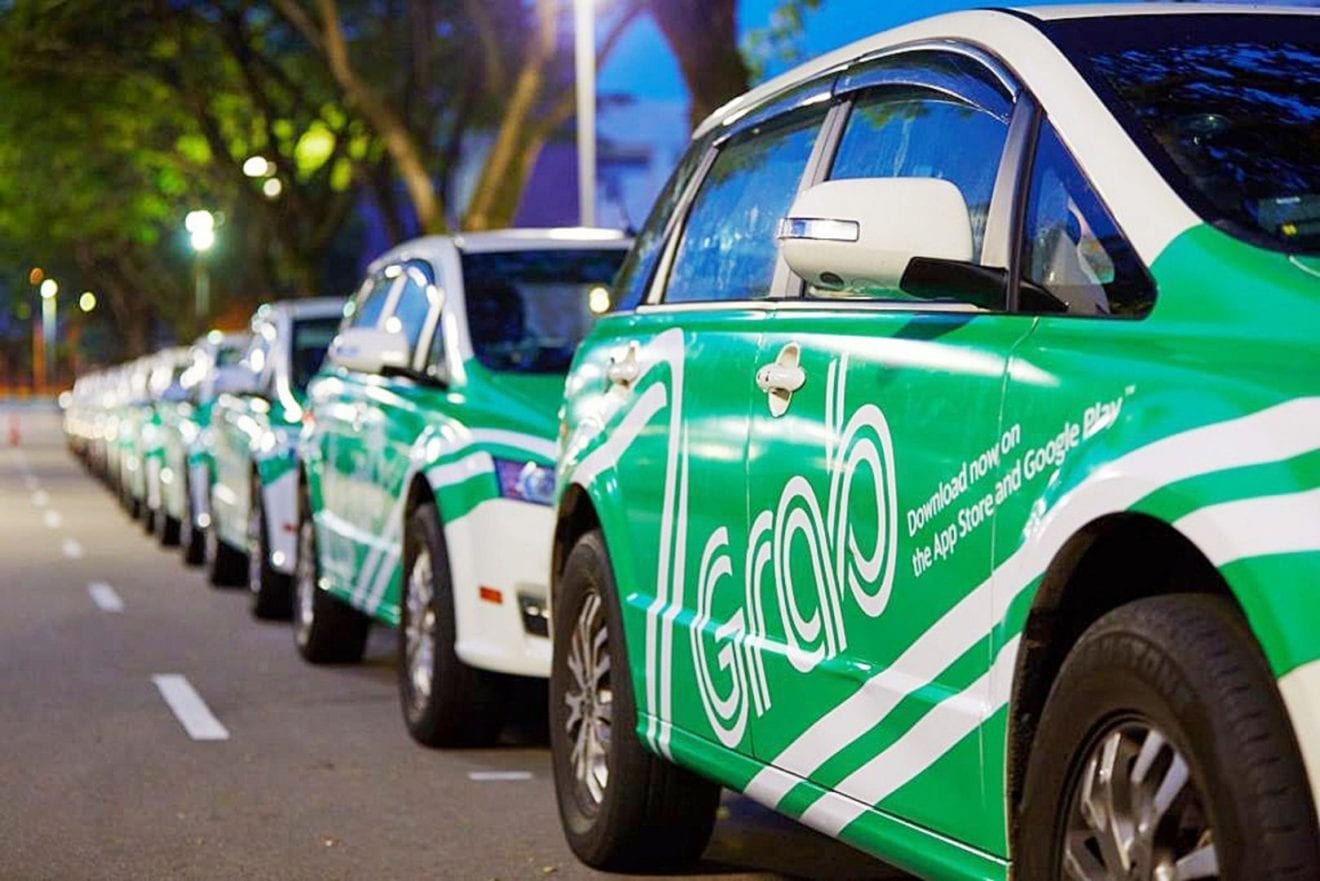
    In the document, the Ministry of Transport admitted that earlier the ministry requested Grab to stop its ride-sharing service called GrabShare. However, now, the ministry needed to gather the opinion after receiving Grab’s reports on advantages of the GrabShare. Grab has asked for the ministry’s permission for the firm to continue the service.

    The Ministry of Transport noted that the ministry wants to get the opinion about Grab’s proposal and also needs recommendations about fines for the violation in this service.

    Both Grab and Uber launched GrabShare and UberPool respectively in May this year. The services allow drivers to add additional passengers to their journey in addition to the person who makes the original booking. The service can help save customers around 30% compared to the original booking.

    But traditional taxi companies strongly oppose the service, saying that it is illegal and unfair competition.

    In June this year, the Ministry of Transport requested the ban on the ride-sharing service, explaining that under the ministry’s Circular 63, transport firms are only permitted to sign one contract per trip. If a GrabCar driver carries two passengers that agree to share their ride with each other, it means they are fulfilling two separate contracts, and therefore in breach of regulations, the ministry explained.

    The ministry spuriously claimed that sharing a car with a stranger may result in possible risks for passengers, although such practices are very common among traditional taxi companies at airports.

  • Grab and Uber choking out traditional competition

    Grab and Uber choking out traditional competition

    Vietnamese taxi company Vinasun has seen a decrease in revenue and employees in the first half of this year, claiming it due to the unfair competition in terms of price posed by Grab and Uber.

    Traditional taxi companies, especially Vinasun and Mai Linh Group, are losing the fierce competition with Grab and Uber due to the dizzying rise in the number of Grab and Uber cabs.

    According to newswire Vneconomy, in recent years, the number of Uber and Grab taxis has exceeded the figure of Ho Chi Minh City’s taxi planning. Notably, Uber and Grab’s fleet has reached a total of 21,000, while Ho Chi Minh City’s taxi demand is 11,000-12,000 only.

    The oversupply of cabs has not only contributed to traffic jams and losses in tax revenue, but also created difficulties for traditional taxi companies.

    Now Uber and Grab are battling for dominance, while competing with traditional taxi brands at the same time.

    In general, UberX fares range about VND7,000-8,000 per kilometre, while GrabTaxi charges VND9,000-11,000 per kilometre. In spite of this difference in fares, both Uber and GrabTaxi have their own tactics to seize passengers.

    Mai Linh Group and Vinasun lament competition

    Vietnamese taxi company Vinasun has reported an decrease in revenue and employees in the first half of this year.

    According to newswire Vnexpress, in the second quarter of this year, Vinasun’s net revenue reached VND810 billion ($35.75 million) only, a record low since 2014. Besides, the after-tax profit in the second quarter fell 50 per cent on-year to VND16 billion ($706,299). The cumulative figure of the first six months was VND1.9 trillion ($706.29 million), signifying a decrease of 15 per cent on-year.

    Within the first six months of this year, the number of Vinasun’s employees decreased by approximately 8,000 people, to 9,179.

    According to a Vinasun representative, the company’s business results may remain gloomy until the end of this year.

    Regarding Mai Linh Group, according to its 2016 financial report, the company’s revenue was VND3.73 trillion ($164.65 million), equalling an increase of 32.3 per cent on-year. However, its pre-tax profit was VND61.12 billion ($2.74 million), a sharp 62 per cent fall due to increasing financial and management expenditures.

    Besides, Mai Linh claimed that the dizzying growth of the fleets of Grab and Uber makes it increasingly difficult for the company to perform.

    Traditional taxi companies persist

    In early June, Ta Long Hy, deputy general director of Vinasun, said the company would keep pressing litigation against Grab and Uber for unfair competition, a campaign that has recruited many other Vietnamese taxi companies from Hanoi and Ho Chi Minh City.

    Hy said that the company is gathering evidence. Besides, Vinasun would also propose that the government review its price management policies.

    Vinasun is not alone in its claim of unfair competition against Uber.

    In December 2016, as reported by indiatimes.com, the Indian equivalents of Uber, Ola and Meru, have separately urged government agencies to formulate policies which would undercut the ability of US-based Uber to offer steep discounts to passengers and generous incentives to drivers.

    On April 7, as reported by the Guardian, in a ruling that is subject to appeal, a court in Rome upheld a complaint filed by taxi unions and banned Uber because it contributes to unfair competition.

    The court gave Uber ten days to terminate the use of its various phone applications on Italian territory, along with promotion and advertising activities. However, the ban was suspended about a week after it was implemented as the company appealed. On May 26, the ban was officially lifted.

  • E-commerce dominates purchasing habits

    E-commerce dominates purchasing habits

    With the rapid evolution of technology and the internet, consumers are changing their attitudes and behaviours. Therefore, moving fast to understand changes in consumer demands is crucial for any business to grow sustainably, according to research conducted by Kantar Worldpanel Vietnam.

    Internet accessibility in Vietnam at present includes 94 percent of urban households and 69 percent of rural households.

    If internet accessibility continues to grow at the current pace, nearly 100 percent of Vietnamese households will be connected to the internet in the next five years, the research said, adding that the number of broadband subscribers in Vietnam is 53.411 million.

    The development of such services has prompted businesses and consumers to use the internet for different purposes like marketing, selling, buying and payment.

    According to Google, eight out of ten Vietnamese consumers are online at least once a day.

    Today’s Vietnamese consumers are also more familiar with shopping online. Even before they make a purchase, consumers use the internet to find information on products they considering buying, the research said.

    Higher purchasing power breeds greater aspirations, but does not mean that consumers will spend uncontrollably.

    “Over time, we have seen that households tend to save a greater proportion of their total income for the future and with interest rates in Vietnam still relatively rewarding, it is understandable. Anyone selling any consumer goods now has greater competition, within a smaller pie,” the research noted.

    Nguyen Huy Hoang, Business Development Director – Kantar Worldpanel Vietnam, said thanks to widespread internet coverage, Vietnamese consumers can access more diverse products and services. Through virtual stores, they can purchase products at home.

    With rising incomes and a growing middle class, cross border shopping is another developing trend. Many international brands start seeing Vietnam as a great opportunity for them to increase their sales. Today, this is happening in various industries such as fashion with many international brands moving into Vietnam and in fast moving consumer goods markets.

    More foreign brands can penetrate Vietnam‘smarket thanks to the proliferation of foreign retailers entering the market such as Emart, Aeon Mall and most recently 7-Eleven.

    Each has their own plan to expand with more store openings that will make more international products more accessible. With more foreign products more accessible to the masses in modern arenas but also in more traditional stores, this represents a threat to local products in Vietnam.

    Hoang said using the internet, businesses can promote their products to consumers in other countries quickly and cheaply, noting that borderless online shopping allows enterprises to maximise sales.

    The internet can also help farmers, small enterprises and communities introduce their products to the world.

    However, he said, the e-commerce market in Vietnam is still at the very early stage of development and needs big players to bring knowledge, know-how and expertise.

    Fabrice Carrasco, Managing Director of Kantar Worldpanel Vietnam and Philippines said Vietnamese consumers raise a lot of issues, with brand owners finding it hard to keep up with their modern lifestyle, independent decisions and demand for product sophistication. Such complexity requires developing on-trend products and talking to shoppers.

  • Line Friends lining up in Times Square

    Line Friends lining up in Times Square

    Line Friends, the character merchandising unit of mobile messenger Line, will open its first US store in New York City’s Times Square tomorrow.

    In an announcement via Twitter, Line Friends say this is a “pre-opening” of the store ahead of its official grand opening next month. This is so it can test and optimise the store before the official opening, says a company spokesperson.

    Visitors will be able to browse the store and make purchases during the pre-opening period.

    Spanning 430 sqm, the Broadway store is in the same building that is home to the Lion King musical.

    It will be the first-ever large-scale Asian character-brand store to open in the US, and also commemorates the one-year anniversary of Line’s public listing on the New York Stock Exchange.

    As well as Line Friends’ flagship character-based products, the store will offer items tailored to the US market, the firm says.

    Founded two years ago, Line Friends is a wholly owned subsidiary of Naver-owned Line Corp, which runs the Line mobile messenger. It creates such products as dolls and stationery based on the signature characters featured as virtual stickers on Line messenger such as Brown, Choco and Cony.

    Line Friends has 83 stores in 11 countries, including its home country Korea, and China, Hong Kong, Indonesia, Japan, Singapore, Taiwan and Thailand. The company has collaborated with hundreds of major consumer companies such as global stationery brands Lamy and Moleskin, furniture maker Mr Maria and cosmetic brands L’Occitane en Provence and Missha.

    Line Friends CEO Kim Sung-hoon says a Line Friends pop-up store opened in Times Square in 2014 with LED billboard advertisements running in the city in late 2015. “Starting with New York, we will speed up our efforts to ramp up our presence in various markets around the globe.”

  • ShopBack Thailand launches with 100 merchants

    ShopBack Thailand launches with 100 merchants

    Cash-rebate service ShopBack Thailand has launched with more than 100 merchants on board.

    Merchants include online travel booking websites Booking.com and Expedia, beauty platform Sephora, e-commerce giant Lazada, as well as ride-hailing services Grab and Uber. Consumers can expect to receive up to 30 per cent in cash back when the new service.

    “Online shopping in Thailand isn’t a trend, it’s part of the everyday retail culture,” says ShopBack Thailand co-founder/country head Kawin Prachanukul. “We’re discovering ways to connect merchants and shoppers in a way that creates added value for both parties.”

    Thailand is the sixth market for Singapore-based ShopBack, founded two years ago. As well as Singapore it is active in Indonesia, Malaysia, Taiwan and the Philippines. It has received more than US$1 million in funding from Accel-X and East Ventures.

    ShopBack claims to have more than three million users. Merchants on the platform receive more than $20.3 million in sales each month, and to date the service has paid more than $10 million in cash back to its customers.

    In Thailand, ShopBack faces competition from homegrown player Dealcha!, backed by Thai seed-funding specialist 500 TukTuks.

  • The Rise of Selfies in E-Commerce in 2017

    The Rise of Selfies in E-Commerce in 2017

    Over the last few years, e-commerce has evolved from a supporting act into a leading role. Retailers globally are looking for e-commerce to drive their future growth. As a part of this effort, retailers are realizing the benefits of providing an exceptional customer experience for their online shoppers.

    The maturation of existing technologies, including computer-vision, has provided retailers with the possibility to create compelling online customer experiences that drive results, increase customer conversion and loyalty as well as provide retailers with a wealth of information about their shoppers.

    Selfies and computer-vision in general are making their presence felt in the online customer experiences of retailers and are quickly winning the attention of shoppers.

    Solutions targeting specific e-commerce verticals, such as Amazon’s Outfit Compare for fashion, Smart Picture for home improvement and interior design or Revieve’s Digital Skincare Advisor for beauty are examples of offerings that are attracting the attention of ecommerce executives as they strive to grow their online businesses

    The most important benefit of leveraging selfies as part of creating a compelling customer experience for your shoppers is saving their time. Through selfies, shoppers are able to find products relevant for them and their desires faster than ever.

    Furthermore, selfies are becoming an increasingly important factor in building true one-tone personalization into e-commerce experiences.
    The fundamental shift being created by technology-lead solutions targeting specific verticals has to do with recent acknowledgements that not all online shopping is alike.

    The expectations of online shoppers vary widely across product groups and categories and retailers can no longer afford to consider their e-commerce visitors similar across verticals.

    This results in the need for retailers to create specific, vertical- or category –focused customer experiences to meet the needs of online shoppers and presents a change in the mindset of most e-commerce retailers.
    Although selfies are a relatively novel way of interacting with the shopper online, they represent an important opportunity for retailers in creating a competitive advantage through the online customer experience and helping combat against the dominance of Amazon.

    The days of building “one-size-fits-all” experiences for shoppers online will soon be but a distant memory.

  • Alibaba opens cashier-free retail store in China

    Alibaba opens cashier-free retail store in China

    Alibaba Group has opened its first cashier-free retail store in China.

    The Chinese e-commerce and tech giant has opened its first Tao Café, an experimental cashless cafe, empowered by artificial intelligence and data technologies through the use of the Alipay e-payment service.

    Located in Hangzhou, capital of east China’s Zhejiang Province, the 200-square-metre store offers beverages, fast food and snacks and can accommodate 50 customers at a time.

    “The Tao Cafe, an experimental cashier-less and cashless coffee shop, is another feature for Alibaba to outline its technology capability bridging the world of offline and online shopping,” Chris Tung, chief marketing officer of Alibaba Group, told reporters.

    At the café, customers use their Taobao app to scan a QR code in front of the shop where a camera set with face recognition detects their identity.

    The data links to their Taobao accounts so they can buy a cup of coffee using voice-recognition technology. From here, the beverage will be brought to their table and users can shop online using their smartphone to access Taobao while they wait.

    Alibaba joins other retail chains and tech start-ups flooding the market with their own offering of staff-less retail. This includes mega rival Amazon and its Amazon Go store, which debuted last year via tracking cameras, utilising a facial and voice recognition system.

    And it’s a trend that looks set continue in retail, according to experts.

    Neil Wang, president of global consulting firm Frost & Sullivan China, told local media that staff-less stores will bring the “next spring” to the retail industry.

    “Staff-less stores are a combination of digital payments, radio frequency identification technology, biological recognition, big data and AI,” Wang told China Daily.

    “They will lower the risk of shop lifting, optimize the goods and reduce costs, from running and maintenance costs to human labour.”

    China’s banking institutions handled more than 25.7 billion mobile payments last year with a transaction volume of 157.55 trillion yuan (23 trillion U.S. dollars), according to a report by the People’s Bank of China, the central bank.

  • Zara to launch online sales platform in India this October

    Zara to launch online sales platform in India this October

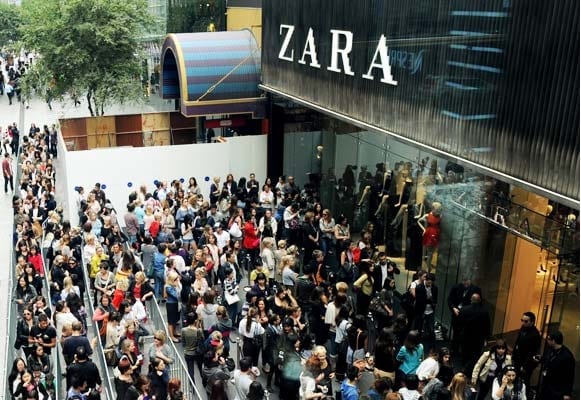
    As part of the ongoing international expansion of its integrated store model, Zara will launch its online store in India this October. This was confirmed by Inditex’s Chairman and CEO Pablo Isla while reviewing the company’s performance in 2016.

    Isla highlighted ‘solid, sustainable and integrated growth’ as key to the Inditex of the future.

    Besides launching Zara’s online sales platform in India, this August the Group’s brands, including Zara, Pull&Bear, Massimo Dutti, Bershka, Stradivarius, Oysho and Zara Home will open their first stores in Belarus.

    Speaking at the company’s Annual General Meeting in Arteixo, Spain, Isla defined Inditex as a company “focused on its people, devoted to creative talent and underpinned by an integrated offline-online store model.”

    In 2016, Inditex Group’s points of sale surpassed the 7,200 mark in 93 countries and 41 online markets. Group revenue reached €23.31 billion, underpinned by growth in all the regions in which it does business, while net profit amounted to €3.16 billion.

    At the end of the year, Inditex had 162,450 employees representing 99 different nationalities worldwide.

  • Find Me A Shoe virtual footwear fitting service app in beta trial

    Find Me A Shoe virtual footwear fitting service app in beta trial

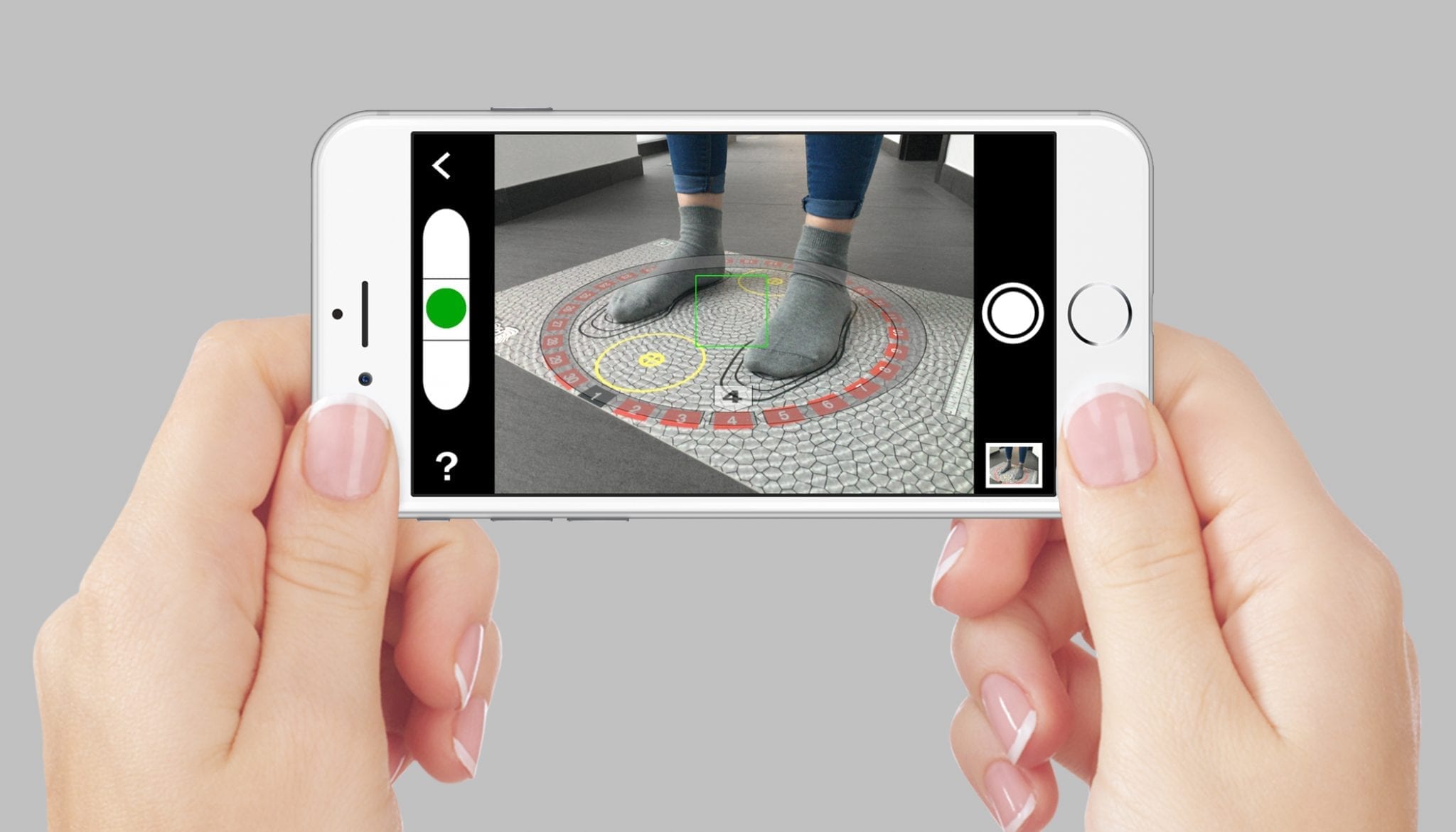
    Find Me A Shoe, a retail technology start-up has launched the beta version of its virtual fitting service for footwear called ‘Try Me’.

    The app is described as an “end-to-end footwear size and fit recommendation application that aims at giving all footwear shoppers an oh-so-easy footwear shopping experience online”. The mobile and vision-based technology provides consumers with shoe recommendations based on precision measurements and personalised fitting algorithms that go beyond the traditional shoe scale system.

    Unlike other virtual fitting solutions, the app does not use analytics or purchasing history.

    “Our technology takes the purist approach to shoe fitting,” said Anand Ganesan, CEO of Find Me A Shoe.

    “Research shows two main factors that increase customer loyalty in retail-time-savings and personal attention,” he said. “Find Me A Shoe creates a brick and mortar experience by delivering a spot-on fit recommendation that’s personalised to the customer’s foot. No more trials in store and no more online returns.”

    The California-based company offers its fitting service to footwear retailers and brand outlets. The patent-pending technology enables the shoppers to find a shoe that fits in just a click. The recommendation engine simulates a shopper’s foot (with 12+ parameters) inside every model before suggesting the best size and fit.

    With cloud-based servers running Artificial Intelligence-enabled complex computer vision algorithms in the background, recommendations ensure customer’s toes and heels will fit comfortably in that new shoe.

    “Personalisation and customisation are the pillars of the next generation retail experience,” said Ganesan.

  • E-commerce booms in China for Chow Tai Fook

    E-commerce booms in China for Chow Tai Fook

    Chow Tai Fook Jewellery Group’s e-commerce sales in Mainland China grew 140 per cent year-on-year in the first quarter to June 30. Volume surged 125 per cent.

    Retail sales value growth overall for China came in a 17 per cent, compared to 7 per cent for Hong Kong/Macau, unaudited figures show.

    Same-store-sales growth for China was 11 per cent, with zero growth in sales volume, a 3 per cent rise in gemset jewellery sales and 16 per cent for gold products.

    For Hong Kong/Macau, same-store sales grew 5 per cent, with volume growth up 7 per cent, a 4 per cent fall in gemset jewellery sales and a  per cent increase in the sale of gold products.

    Both retail  sales value and same-store-sales performance improved for the quarter in the two markets.

    An increase in average selling price (ASP) helped boost the same-store sales of gold products in both markets. In China, the same-store ASP was HK$3600 (US$461), compared to $3000 in the first quarter, while for Hong Kong/Macau the figure was $7100 compared to $6800.

    Chow Tai Fook says the increase was primarily because of gold product sales having a higher average weight while the average international gold price stayed flat.

    Driven by an increase in both volume and ASP, same-store sales of gemset jewellery in China improved during the quarter. The decline in same-store sales of gemset jewellery in Hong Kong/Macau narrowed to a single digit, as volume resumed double-digit growth.

    Same-store ASP was $6100, up from $6000 in the first quarter, for China, and $10,800 for Hong Kong/Macau, down from $12,900.

    During the latest quarter, the group added 28 points of sale. This included 29 in China, two in Japan and one in the US, with four outlets being closed in Hong Kong. This gave the group a total 2409 points of sale as at the end of June.

  • Foot Locker Launches E-commerce Platform

    Foot Locker Launches E-commerce Platform

    Foot Locker has launched its first Aussie e-commerce platform, opening a website that includes the shoe retailer’s full range of sneakers and apparel.

    In a statement, the shoe retailer said it anticipates the online store will further fuel the rise of sneaker culture in Australia.

    “We’re excited to expand into the online space and give our customers the opportunity to access our full range of product from anywhere in Australia,” said Natalie Ellis, VP GM Foot Locker Asia Pacific.

    The 24/7 website will house sneakers, apparel and accessories from brands including Jordan, Nike, adidas, Puma, Asics and Converse.

    Foot Locker said it’s built the e-commerce store to meet the needs and expectations from consumers and ‘to facilitate access to the best-of-the-best sneakers from anywhere in Australia’.

    Consumers will have access to the full range of House of Hoops, a-standard, Puma Lab and Converse Prime product that had previously been available for purchaseonly within flagship stores.

    The e-store allows free returns anywhere in Australia, free delivery nationally for orders over $150 and has a selection of over a thousand products.

    Foot Locker Australia, a subsidiary of the US corporation, Foot Locker Inc, was incorporated in 1994 and is based in Murarrie, Queensland. It operates approximately 100 stores across Australia and New Zealand.

    Sneaker culture appears to be a developing phenomenon, with Foot Locker’s British rival, JD Sports, recently asserting the success of its first local offerings.

    “The highly anticipated JD Sports Parramatta launch is expected to attract sneakerheads en masse, following the success of Melbourne Central’s flagship store, which went down as one of the largest launch days of any international territory within the JD Sports business,” said Hilton Seskin, head of JD Australia. The Parramatta store opened last week with over 500 customers queueing to get their hands on limited edition sneakers.

  • Grana expands into Mainland China, opens store on Alibaba’s Tmall

    Grana expands into Mainland China, opens store on Alibaba’s Tmall

    Today Grana, one of Asia’s fastest growing eCommerce disruptors in the apparel industry, with US $16 million in funding, announced its official launch into mainland China opening an online store on Alibaba’s Tmall – the largest business-to-consumer (B2C) retail platform in Asia.

    The Hong Kong-based startup has also announced global shipping, adding more than 50 new countries across Asia Pacific, Southeast Asia and Europe to introduce its obsession with high-quality fabrics and bring affordable luxury basics to millennial consumers. This expansion comes from direct consumer demand to ship Grana’s modern essentials cross-border into their countries.

    With today’s official entry into the Chinese market, the young startup aims to meet demand from the emerging middle-class seeking trusted quality goods at a lower price-point from online luxury and fast-fashion retail brands currently in the market.

    To drive its market penetration, Grana’s increasing brand awareness in the US – it’s biggest growth market and traction with celebrities including Gigi Hadid, Jessica Alba and Lily Collins, wearing its products for everyday looks to red carpet appearances, will be important factors to attract the Chinese consumer.

    “We appreciate the strong and strategic partnership with Alibaba supporting our expansion plans onto Tmall. It’s a pinnacle time for the company right now and it’s promising to see Chinese millennial consumers and online shoppers around the world becoming more sophisticated in how they shop, encouraging brands to disrupt the cost of quality goods across all sectors.

    It’s great, since this is our sweet spot. We now ship cross-border to over 60 countries and are well positioned to further drive the projected total revenue of eCommerce in Asia to double, over the next five years to US $1.4 trillion”, said Luke Grana, CEO & Founder at Grana.

    Grana’s flagship store on Tmall has been localised to provide the Chinese consumer with detailed information on product description pages that focus on its trusted and best-selling fabrics, garment production and key styles.

    Given the consumer preference for more guidance on size and fit, online shoppers will soon have access to customised size guides with measurement details sharing recommended sizing to purchase its modern essentials. This customised size guide is different to the size guide available on grana.com and more tailored for Chinese consumers.

    “We’ll be introducing our unique value proposition to Chinese consumers focused on sourcing the finest luxury fabrics from around the world, affordable pricing and direct shipping from Hong Kong.

    This will be crucial to break out amongst fast-fashion and luxury brands. On the Hong Kong front, our team can now introduce Grana to Chinese tourists who already visit our showroom and communicate that we ship to their city. It means they can try items offline, place an order and have it delivered by the time they get home – the aim is to bring these offline customers, online for their second purchase”, says Grana.