Category: E-Tailing

Retail News Asia is committed to providing both local and global retailers with the latest E-Commerce & Etail news throughout the Asian market. This on a daily base.

  • Uber has offered CEO role to Dara Khosrowshahi from Expedia

    Uber has offered CEO role to Dara Khosrowshahi from Expedia

    An Uber spokesperson tells us its board has reached a decision to offer someone the CEO role. We’ve confirmed from a source familiar with the situation that this person is Dara Khosrowshahi, CEO of Expedia.

    Both Meg Whitman and Jeff Immelt had been considered for the top job, but both publicly tweeted that they didn’t want it.

    Some reports on Sunday suggested that Whitman was still in the running anyway.

    The Uber CEO seat has been vacant since June, when co-founder Travis Kalanick resigned.His departure came after former U.S. Attorney General Eric Holder completed an investigation into the company’s culture. Lawsuits and allegations of sexism are what prompted the investigation.

    Since then, the Uber board has been involved with its own lawsuits. Early investor Benchmark Capital, which has one of the board seats, sued Kalanick claiming that he did not disclose material information about the company’s problems.

    They now want Kalanick off the board and say they would not have granted him the power to appoint two additional board seats, which have not been filled. Early investor and former board member, Shervin Pishevar, has intervened in the lawsuit, accusing Benchmark of leaking confidential information.

    Khosrowshahi has headed up Expedia since 2005, after serving as the chief financial officer of IAC for seven years. Expedia has done very well in the stock market under his term and is up 32% so far this year. The stock has nearly tripled in the past five years.

    Several Uber investors have told us that they are happy with the decision, saying that Khosrowshai has the right operational experience to get the job done.

    According to a recent Glassdoor survey based on employee feedback, Khosrowshahi was ranked 39th among the highest-rated CEOs, with more than 2,200 employee reviews combining to assign him a 94 percent approval rating.

  • 11street Malaysia commits to long term after parent’s Indonesian exit

    11street Malaysia commits to long term after parent’s Indonesian exit

    Just days after its parent company announced an exit from Indonesia, 11street Malaysia says it is confident of its long-term growth prospects.

    11street is effectively the online business unit of giant Korean telco SK Telecom, which last week said it was selling its 50 per cent stake in Indonesian e-commerce venture Elevenia to Lotte, a company it is pursuing a joint venture opportunity with in their home market.

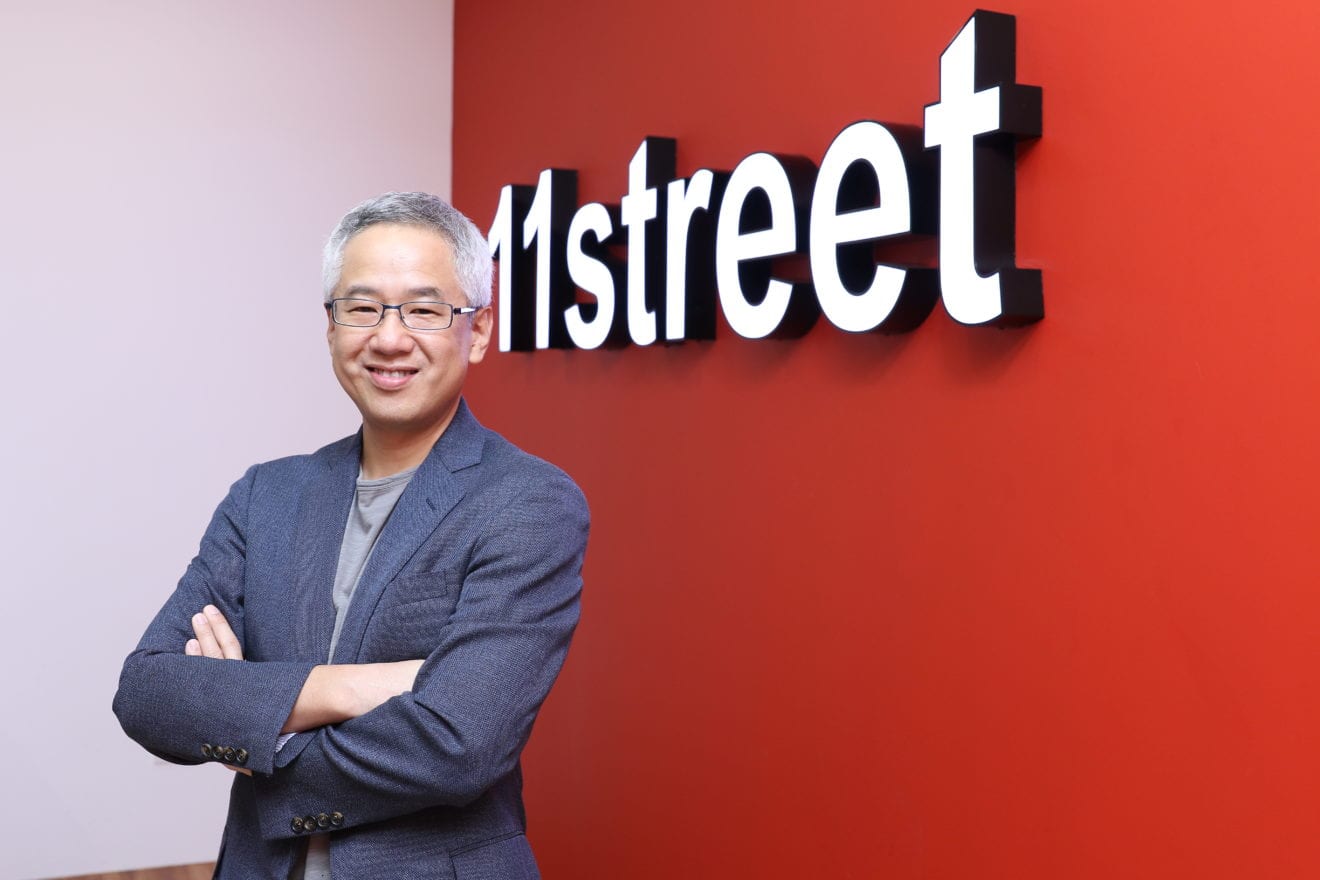
    In Malaysia, 11Street is operated by Celcom Planet, a joint venture between Celcom Axiata Berhad and SK Planet. Celcom Planet CEO Hoseok Kim (pictured) says since its launch in April 2015, 11Street Malaysia has rapidly grown into a first tier e-commerce provider of an open-market platform with 40 thousand listed sellers, 13 million registered products for sale and 16 million monthly visits.

    “We are very pleased with the success and progress that 11street Malaysia has made in less than three years since its launch and we are confident that we will be the number one marketplace in Malaysia within the next three years”, said Kim.

    He added that the company is currently looking at various strategic options including funding from strategic partners to prepare for the next phase of accelerated growth.

    Sungwon Suh, CEO of SK Planet, backed up Kim’s comments.

    “Recently, SK Planet has made a strategic decision to pick and choose battlegrounds where we can win and Malaysia is [one of] the battlegrounds, one of the fastest-growing and infrastructure-ready e-commerce markets in Southeast Asia,” said Suh.

  • E-commerce leap for Gome Retail

    E-commerce leap for Gome Retail

    A 54.24 per cent leap in e-commerce sales has been recorded by Gome Retail Holdings, formerly known as Gome Electrical Appliances Holding, for its first half.

    The company’s online-offline total gross merchandise volume grew by 22.87 per cent year on year, while sales revenue rose 7.82 per cent to about RMB38 billion (US$5.7 billion).

    Sales from the comparable stores increased by about 2.34 per cent and the consolidated gross profit margin went up by 1.46 points to 17.83 per cent.

    As a result, the profit attributable to the owners of the parent eased by 1.61 per cent to about RMB122 million.

    The weighted average sales area of the group’s stores was about 5.2 million sqm, with revenue per sqm about RMB7273, up by 12.41 per cent on the first half last year.

    Sales revenue from the 1000 comparable stores was about RMB22.9 billion, up 2.34 per cent.

  • Central Group, JD.com discussing joint venture

    Central Group, JD.com discussing joint venture

    Thailand’s Central Group is discussing a possible US$500 million e-commerce joint venture with JD.com, Reuters reports.

    JD.com chief executive Richard Liu said in June that it plans to enter the Thai market this year with the idea of using it as a hub to service other countries in the region like Malaysia and Vietnam.

    The venture would help China’s second-largest e-commerce retailer expand beyond Indonesia, where it has invested in an e-commerce platform as well as travel start-up Traveloka.

    Sources say the JV will focus on e-commerce and the finance sector, but the deal is being delayed because the companies have not been able to agree on ownership terms.

    Thailand’s e-commerce market is worth $900 million and is expected to grow 29 per cent over the next decade, according to a report published last year by Google and Singapore’s Temasek Holdings. Major players include Alibaba-backed Lazada, Thailand’s CP Group unit Ascend and South Korea’s 11street.

    It estimated the e-commerce market in Southeast Asia will soar 16-fold in value to $88 billion by 2025.

    JD.com sought to invest in Indonesian online retailer Tokopedia last month, which instead raised $1.1 billion from a group of investors including Alibaba, says Reuters.

    Meanwhile, JD.com has partnered with Qihoo 360 Technology in China to broaden sales channels through its Qihoo browser, search engine and app store.

  • JD.Com In Talks For A Joint Venture In Thailand

    JD.Com In Talks For A Joint Venture In Thailand

    Chinese online retailer JD.com is considering starting an e-commerce joint venture whose planned total investment would be half a billion dollars. The joint venture talks with the Central Group of Thailand would help the second biggest online retail company in China get a foothold in Southeast Asia and further diversify its business beyond its domestic market.

    Currently the only other foreign country that JD.com has a presence in is Indonesia where the Chinese online retailer runs Traveloka, a travel startup, and an e-commerce platform. A presence in Southeast Asia would also assist JD.com catch up with bigger rivals Amazon and Alibaba who already have a presence. At the moment the two are fighting for market share by introducing new services with the most recent being quick deliveries in the city state of Singapore.

    Regional hub

    According to the chief executive officer of JD.com, Richard Liu, the Chinese online retailer intends to launch in Thailand later in the year. It will use the country as a hub for servicing the region and this includes countries such as Malaysia and Vietnam.

    Besides e-commerce, JD’s joint venture in Thailand will concentrate on the financial sector. An agreement on ownership terms is holding back the conclusion of the deal. The control of Central Group is in the hands of the Chirathivat family.

    Fast-growing sector

    This will not be the first time that Central Group is eyeing e-commerce which is a fast growing sector in Thailand. Last year the firm acquired the Thai unit of Zalora, an online fashion retailer. The value of e-commerce market in Thailand is currently estimated to be $900 million and in the next decade it is projected to grow by 29%. This is as per a report published last year by Temasek and Google. Currently the major players in the Thai e-commerce sector include Lazada, an outfit backed by Alibaba; Ascend, a unit of Thailand’s CP Group and 11 Street from South Korea.

    The report prepared by Google and Temasek expects Southeast Asia’s e-commerce market to grow 16-fold by 2025 and reach a figure of $88 billion. The population of the region currently stands at about 600 million people.

    JD’s planned joint venture in Thailand comes a little more than a week after the online retailer slipped back into loss territory in the second quarter results. The retailer reported a net loss of $42.3 million despite revenues increasing by 44%.

  • Macy’s taps Ebay exec with strong digital background

    Macy’s taps Ebay exec with strong digital background

    US department store retailer Macy’s has named Hal Lawton, formerly senior vice president of Ebay North America, as president.

    Effective September 8, Lawton will be responsible for all aspects of the Macy’s brand, including merchandising, marketing, stores, operations, technology, and consumer insights and analytics, and will report to Macy’s CEO Jeff Gennette.

    Lawton brings strong retail and digital expertise from his time at Ebay and Home Depot, where he was responsible for jump-starting the hardware store’s e-commerce site and building it into a nearly $2 billion business.

    After reporting a fall in sales and earnings per share last quarter, though the fall wasn’t as bad as analysts were estimating, Macy’s is banking on Lawton’s tech background and track record of successfully driving change to turn the business around.

    “This is a key step as we look to further transform the business and work through the volatility of today’s retail landscape,” said Gennette in a statement.

    “Macy’s already has one of the strongest omnichannel businesses in the industry, and with Hal on the team, we will accelerate the integration of digital both online and in our stores to deliver the world-class experience our customers demand.”

    In addition to Lawton’s hiring, Macy’s has also announced the creation of a single simplified merchandising organisation and an enhanced focus on the company’s data analytics capabilities.

    The restructuring will consolidate three functions – merchandising, planning and private brands – into a single function organised around five ‘families-of-business’ (ready-to-wear, center core, beauty, men’s and kid’s, and home).

    The restructure will be supported by strengthened customer insights and data analytics, including new inventory replenishment and pricing capabilities.

    While the primary objective is growth, Macy’s anticipates it will save approximately US$30 million on an annual basis, some of which may be used for reinvestment in the business. It expects one-time costs of approximately $20-25 million to be booked primarily in the third quarter of 2017 and a headcount reduction of approximately 100.

    Lawton said he is excited to play a part in transforming the iconic retailer for the future of retail.

    “At a time when there is both dramatic change and great potential in retail, I’m excited to be part of the team that will shape the future of the Macy’s brand and, along with it, consumer expectations of what a great omnichannel experience can be,” he said.

  • Amazon’s Wholefoods takeover gets regulatory green light

    Amazon’s Wholefoods takeover gets regulatory green light

    Amazon’s Wholefoods takeover has received regulatory approval, clearing the way for the biggest retail deal of the year to proceed.

    The Federal Trade Commission, charged with ensuring business acquisitions do not impact customer choice, has given the green light to the US$13.7 billion deal,  shortly after Whole Foods shareholders voted in favour of it.

    The FTC said in a statement that it was satisfied the deal would not substantially lessen competition or constitute unfair competition and had opted not to continue its investigation further.

    But it effectively sent a warning to the US’ largest online retailer that it “always has the ability to investigate anticompetitive conduct” should it believe it has grounds to in the future.

    GlobalData senior analyst Molly Johnson-Jones said the shareholder vote “consolidates the threat of Amazon repeating the damage on the grocery market it has ravaged on mainstream supermarket territory”.

    “Amazon is the ultimate disrupter in retail, but for a long time it has only been on the periphery for the food retailers. Amazon’s vision of being a one-stop-shop for all of a consumer’s needs is (now) one step closer to being a reality.”

    Analysts did not expect the FTC to intervene given Amazon has little involvement in the retail grocery market at present, and Whole Foods’ share of that market is small.

  • Walmart, Google in voice shopping deal

    Walmart, Google in voice shopping deal

    Walmart is diving into voice-activated shopping with Google to offer hundreds of thousands of items for voice shopping through Google Assistant.

    The capability will be available in late September.

    It’s Google’s biggest retail partnership – and the most personalised shopping experience it offers – as it tries to broaden the reach of its voice-powered assistant Home speaker. It underscores Walmart’s drive to compete in an area dominated by Amazon’s Alexa-powered Echo device.

    “Voice shopping is becoming a more important part of everyday shopping behaviour,” said Marc Lore, CEO of Walmart’s US e-commerce business.

    The voice-activated devices are becoming more mainstream as they become more accessible. Walmart has said Google’s investment in natural language processing and artificial intelligence will help make voice-activated shopping even more popular.

    Lore said the personalisation of the partnership means people can shout out generic items like milk, bread and cheese, and Google Assistant will know exactly the brands and the size that the user wants.

    Google introduced shopping to Home in February, letting people use voice to order essentials from more than 40 retailers like Target and Costco under its Google Express program. But that was far behind the Echo, available since late 2014.

    Walmart, which has more stores than any other retailer and the largest share of the US grocery market, is also working hard to close the gulf online between itself and Amazon.

    To be more competitive, Google Express is scrapping the $US95 ($A120)-a-year membership starting on Wednesday, allowing shoppers to get free delivery within one to three days on orders as long as the purchase is above each store’s minimum.

    Walmart says it will be tapping its 4,700 US stores and its fulfilment network next year to offer more kinds of customer experiences using voice shopping. For example, shoppers can tell Google Assistant they want to pick up an order in a store.

    Lore said the company wants to make voice shopping as easy as possible.

    “That’s why it makes sense for us to team up with Google. We know this means being compared side-by-side with other retailers, and we think that’s the way it should be,” he wrote in a corporate blog post.

  • Kakao Taxi dominates cab-hailing app in Korea

    Kakao Taxi dominates cab-hailing app in Korea

    Kakao Taxi is the most popular cab-hailing app in South Korea, dominating 98 percent of the market, while the food delivery app sector is fiercely contested by two rivals, according to a survey on Tuesday.

    Market analysis company Open Survey polled 1,500 smartphone users between 20 through 40 to find out which online-to-offline apps they use the most for specific needs.

    Kakao Taxi, run by Kakao Corp. that also operates the popular messenger service Kakao Talk, commanded 98 percent of responses for cab-calling services, while UberTaxi came in a far second with 11 percent. Multiple selections were allowed in the survey

    For food delivery, the most used app was Baedal Minjok with 80 percent. It was closely followed by Yogiyo with 72 percent. Baedaltong was third with 48 percent.

    Yanolja and Yeogi Eoddae were neck and neck for hotel booking apps, with both around 50 percent.

    Hotels Combine was second with 35 percent, and Hotels.com ranked third at 33 percent. Airbnb followed with 22 percent.

    Socar was the top choice for car rental with 78 percent. The second most popular app was Green Car with 38 percent.

    Customer satisfaction was the highest for cab apps with 83 percent. Hotel reservation apps also did well with 71 percent. Food delivery apps had 68 percent satisfaction numbers.

  • Ebay names new leads for 3 regional teams

    Ebay names new leads for 3 regional teams

    Ebay announced it has promoted Scott Cutler, Jay Lee and Jooman Park to lead Ebay’s regional teams. Cutler will lead the Americas, Park will lead APAC and Lee will lead EMEA. Cutler has been with Ebay since 2015. Prior to Ebay he was the Executive Vice President of the New York Stock Exchange for nine years.

    He got his law degree from the University of California Hastings College of Law and began his career as a securities attorney.

    Cutler’s new title will be Senior Vice President of the Americas. He will lead both the Ebay Marketplace in the region as well as continue to lead StubHub until a new leader is found for that role.

    Lee has been with Ebay for fifteen years. His work with the company focused on building market share in Korea. He did that through developing the company’s Gmarket and Auction platforms in Asia. He also helped open up international exporting opportunities for Chinese sellers.

    Lee received his MBA from Harvard’s Graduate School of Business Administration. He will become the Senior Vice President for EMEA.

    Park has also been with Ebay for fifteen years. He spent eight years leading Ebay’s Korean business. He then transitioned to Australia where he focused on growing partnerships with the local retail industry.

    Park has an MBA from the Wharton School of Business. In his new role as Senior Vice President for APAC, Park will lead Ebay’s Marketplace.

    Devin Wenig, President and CEO of Ebay Inc. said the new appointees will “focus on accelerating core business and driving Ebay’s competitive advantages as a global commerce leader.”

    Ebay is based in San Jose, CA. Its main commerce platforms are the Marketplace, StubHub and Classifieds. It enabled $84 billion of gross merchandise volume in 2016.

  • Alibaba to invest $1bn in Indonesia e-commerce platform

    Alibaba to invest $1bn in Indonesia e-commerce platform

    Alibaba Group has led a $1.1 billion investment round for financing into Indonesia’ Tokopedia to become a minority shareholder.

    A number of undisclosed existing Tokopedia investors also participated in the round, the Chinese e-commerce giant said.

    “We have always thought of Alibaba as our teacher and role model. Today, we are excited to welcome them as a shareholder and we believe that our partnership will further accelerate Tokopedia’s mission, to democratise commerce through technology,” said Tokopedia CEO and co-founder William Tanuwijaya, in a statement.

    “The partnership with Alibaba will enhance the scale and quality of Tokopedia’s offerings to its customers and make it easier for merchants and partners to do business across the archipelago and beyond.”

    Alibaba first showed interest in Tokopedia in July where it was in reported talks to lead a funding round in the Indonesian unicorn.

    “Alibaba and Tokopedia have a shared mission of helping small and medium enterprises in achieving success in its business,” said Daniel Zhang, CEO of Alibaba Group.

    “We are very delighted to partner with Tokopedia in serving Indonesian customers.”
    The start-up first announced an investment round in 2014, where it received $100 million from SoftBank and Sequoia.

    In 2016, Tokopedia raised $147 million in an undisclosed round from several venture capital firms including Amasia, which brought the total amount raised to $247 million. The funding round valued the company at one billion dollars.

  • Walmart online sales surge 60 per cent

    Walmart online sales surge 60 per cent

    Walmart online sales in the US soared by 60 per cent during the second quarter.

    Already the nation’s third largest e-commerce player, Walmart has been acquiring pure-play online businesses to gain range and – most importantly – experience in the online space. Companies such as Jet.com (which it paid $3.3 billion for last August), men’s apparel retailer Bonobos, (which it shelled out $310 million for in June), ShoeBuy.com, ModCloth and Moosejaw.

    CFO Brett Biggs told an earnings call last week that its e-commerce results include all web-initiated transactions including those through Walmart.com such as ship-to-home, ship-to-store, pick up today and online grocery, together with transactions through Jet.com and the other sites.

    Gross merchandise value grew by 67 per cent year-on-year in the quarter to July 31.

    “GMV represents the total US dollar volume of merchandise sold or services rendered for all transactions, including marketplace transactions, that are generally initiated through our e-commerce platforms or include our owned inventory sold on other third-party platforms,” Walmart said.

    Walmart offers more than 67 million products on Walmart.com, including its own goods and third-party lines. The number of SKUs online has grown more than 30 per cent quarter-on-quarter.

    CEO Doug McMillon said the majority of the growth was organic “as customers are finding a broader assortment and more options to receive what they want at their convenience”.

    The acquisitions were playing their part, as well, he said.

    “Our recent acquisitions, such as Moosejaw, ShoeBuy and Bonobos further improved our assortment and have provided critical category expertise in higher-margin categories like shoes and apparel.”

    Meanwhile, Walmart has begun trialling an “associate delivery service” which involves staff earning extra cash during their time off by delivering online orders to shoppers’ homes.

  • Alibaba’s quarterly results show massive customer growth

    Alibaba’s quarterly results show massive customer growth

    The pace of growth of Chinese online juggernaut Alibaba Group shows no sign of slowing, with both online marketplace customer numbers and mobile shoppers growing markedly between March and June.

    Alibaba’s quarterly results released today show the company had 529 million active customers on mobile shopping platforms, and 466 million on its online marketplaces – increases of 22 million and 12 million respectively.

    And a record number of merchants using its platform enjoyed “robust growth” in the average spend.

    Consolidated Alibaba Group sales growth hit 56 per cent in the quarter to June 30,  turnover reaching RMB50.2 billion (US$7.4 billion).

    “Alibaba had a strong start to fiscal 2018, reflecting the strength and diversity of our businesses and the value we bring to customers on our platforms,” said CEO Daniel Zhang. “Our technology is driving significant growth across our business and strengthening our position beyond core commerce.”

    Core e-commerce business activities grew by 58 per cent to RMB43.027 billion (US$6.347 billion), while the cloud computing business posted 96 per cent to RMB2.431 billion.

    Net income was RMB14.0 billion (US$2 billion) with adjusted EBITDA of RMB25.124 billion (US$3.7 billion) and an operating margin of 35 per cent.

    Alibaba says its Taobao platform drove mobile sales growth, aided by the launch of a new mobile user interface that integrates personalisation technology to improve user experience and enhance engagement.

    Tmall recorded 49 per cent year-over-year growth for physical goods gross merchandise volume in the quarter, with fashion, consumer electronics and FMCGs among the key growth categories.

    Alibaba’s cross-border and international consumer businesses achieved 136 per cent growth, reaching RMB2.638 billion, driven by its Southeast Asian platform Lazada and China outbound platform AliExpress.

    The other outstanding division was digital media and entertainment. Alibaba broadened its access to quality content, developing Youku’s subscription based business, and expanding the products and services of UCWeb.

    The daily average subscribers of Youku video subscriptions increased by more than 100 per cent year-on-year during the quarter.

    “We believe a strong pipeline of content, especially with a focus on original content with visibility of content availability and broadcast timing flexibility, will bring us sustainable long-term advantages in video entertainment,” the company said.

  • Uber raises minimum fares in Hong Kong

    Uber raises minimum fares in Hong Kong

    Ride-hailing firm Uber has raised the minimum fares for all rides in Hong Kong by as much as 80 per cent from Monday after “an evaluation of the marketplace” and in response to its drivers’ calls for better income security.

    The minimum fare for an UberX ride – the cheapest car option the company offers, and its most popular – in Kowloon and the New Territories rose from HK$25 to HK$40 after midnight on Monday.

    And the company added a new HK$5 booking fee, which it said would help cover administrative costs, boosting the new flag fall to HK$45, or an 80 per cent jump.
    AdvertisementThe minimum charge for an UberX ride on Hong Kong Island has risen from HK$30 to HK$40. The new booking fee will also apply.
    UberX uses smaller and economy car models at a lower rate, compared to the company’s luxury UberBlack line, which provides professional drivers and pricier cars.

    Why Hong Kong has to accommodate Airbnb and Uber – or slam the door on innovation economy.For UberBlack the new minimum fare is HK$60, up from  HK$50, plus the HK$5 booking fee. The new charging model for UberAssist, for which drivers are trained to provide additional assistance to elderly and disabled people, will be the same as that for UberX. An Uber spokeswoman in Hong Kong said on Sunday that the move to raise fares was a result of a market evaluation. It was also a response to drivers’ calls for better income security.

    Uber last adjusted fares in March last year when it cut the rates for UberX rides in Kowloon and the New Territories.

    Since it began operations in the city in July 2014, the firm has faced hostility from the taxi trade and is still struggling in its fight for legalisation.
    In August 2015, seven Uber drivers were arrested for not having permits and driving without third-party insurance. Police also raided the company’s offices in Hong Kong after complaints from local taxi drivers. Two of the seven drivers were fined and had their licences suspended for one year in January last year.
    In March this year, the remaining five Uber drivers who were convicted of driving without a permit and third-party insurance were fined HK$10,000 each and banned from driving for one year. All five appealed.
    In a series of raids in May, Hong Kong police arrested 22 Uber drivers on suspicion of picking up passengers without a hire car permit and third-party insurance in the largest operation against Uber of its kind.

  • Record quarterly profit for WeChat parent Tencent Holdings

    Record quarterly profit for WeChat parent Tencent Holdings

    Marrying social media with mobile gaming has helped Chinese internet giant Tencent Holdings post its fastest revenue growth in seven years for a record profit.

    It tapped the spending power of about 200 million players, including a solid female representation, of Honour of Kings and other games, boosting mobile-game revenue past that of desktops for the first time.

    Its flagship game, Honour of Kings allows WeChat users to discuss strategy as well as co-opt friends to join their team. Tencent is reportedly taking the game to new markets.

    Games distributed to more than a billion users on QQ and WeChat combined fueled a 54 per cent surge in mobile gaming revenue in Tencent’s latest quarter. It had a 70 per cent leap in net income to a record RMB18.2 billion (US$2.7 billion) for the three months to the end of June. Sales soared 59 per cent to RMB56.6 billion yuan.

    Tencent’s payments and cloud businesses both grew by triple digits in the quarter, says president Martin Lau.

    Revenue from value-added services, including games and messaging, rose 43 per cent to RMB36.8 billion. Online advertising sales increased 55 per cent to RMB10.1 billion yuan.