Category: E-Tailing

Retail News Asia is committed to providing both local and global retailers with the latest E-Commerce & Etail news throughout the Asian market. This on a daily base.

  • John Gokongwei turning focus to e-commerce

    John Gokongwei turning focus to e-commerce

    Billionaire John Gokongwei, whose empire includes airlines, malls and property, is expanding the family business into online shopping.

    His Robinsons Retail Holdings is moving more of its $2.7 billion empire online with plans to triple by next year the number of supermarkets handling web orders. Other retail chains in the empire will follow.

    Rivals SM Investments Corp and Ayala Corp are already expanding their e-commerce reach, all three launching online shops or investing in services over the past year.

    The Gokongwei family is speeding up its efforts as Alibaba and Amazon move into Southeast Asia.

    But supermarkets are the main driver of revenue. Robinsons launched online sales in May and is already showing exponential growth, says president Robina Gokongwei-Pe, the tycoon’s daughter.

    “This is the way to go given the horrible traffic in urban areas like Manila and a growing market of millennials.”

  • Shoppers can create bespoke clothing online real-time

    Shoppers can create bespoke clothing online real-time

    New online made-to-order clothing shop Frilly allows customers to create bespoke clothing and see the effect in real-time.

    According to Springwise, the independent, innovation publisher, which scans the globe for the most promising innovations and new business ideas, Frilly is “an alternative for those who don’t want cookie-cutter clothing”. Unsurprisingly, it uses digital tools to transform a traditional service.

    Los Angeles-based Frilly allows customers to choose a piece of clothing and then customise almost everything about it – from hem length and color to material and style.

    Frilly co-founders Jeni Ni and Shangwei Ding were inspired to start the business while out shopping one afternoon. The pair realised that there was always one aspect of every garment that they were not happy with. They realised that if they could devise a system that would allow people to change those nagging details, then customers could be completely happy with every purchase.

    It took the pair three years designing the 3D simulation software to bring their dream to life. The Made to Measure Service uses an advanced AI algorithm to tailor garments to a client’s unique measurements. Customers choose and customise their pieces online, which are then handed over to a designer to create.

    As each variable is changed online, Frilly’s proprietary software allows the customer to see the effect in real-time on screen. A model gallery and a pop-up window provides recommendations from the designer, and demonstrates how to adjust each piece to achieve the exact look the customer wants, as well as offering a 360 degree view of the item’s details – from draping to the weave and texture of the fabric.

    Frilly’s made-to-order model also reduces waste and over-buys. Fabrics are chemical-free and the company is also committed to offering sustainable options, such as the use of recycled fabrics.

  • E-commerce wars: fashion exodus from JD.com

    E-commerce wars are in the news again in China, with reports of a mass exodus of fashion brands from the JD.com platform.

    44 fashion brands closed their flagship stores on JD last month while launching or keeping their shops on Alibaba’s Tmall. The main brands involved included millennial niche brand JNBY, billion-yuan brand Peacebird, menswear brand GXG and fast-fashion label Heilan Home.

    Following up, state-run Xinhua News Agency has published a more detailed breakdown of the brands that left: 27 womenswear brands, seven menswear brands, seven childrenswear brands and three lingerie labels.

    JD has confirmed the exodus with a statement containing a thinly veiled reference to Alibaba as “another industry player”.

    “We believe strongly in open, fair and legal competition, but not everyone in the industry agrees,” says the JD statement. “Numerous brands have told us that another industry player is inappropriately using threats to attempt to force them to sell on only one site in China.

    “We believe brands and consumers should be able to sell and shop where they want without interference, and will continue to support the ability of brands to choose to sell on however many sites they want.”

    Alibaba denies it is pressuring brands to leave any other e-commerce platform. “Brands have full autonomy to maximise their ROI in choosing their distribution platforms,” it says in a statement.

    Meanwhile, the two e-commerce giants are going head to head in preparation for Singles’ Day, the November shopping festival introduced by Alibaba. JD has its own shopping festival in June, but both platforms offer discounts during the promotions.

  • Online retail sales going strong in Thailand

    Online retail sales going strong in Thailand

    Thailand has seen an explosion of Internet shopping in recent years as consumers become more tech-savvy. If that is anything to go by, e-commerce in South-east Asia is taking off as well.

    Online retail sales in Thailand of everything, from washing machines and televisions to fish sauce, are growing more than 100 per cent, far outpacing purchases made at traditional stores, where sales are rising by about 10 per cent.

    That is down to a combination of stronger and faster Internet speeds in the country and the success of online merchants, such as Lazada.

    Thailand’s third-biggest mobile-phone company, Total Access Communication, estimates that Thais spend up to six hours a day on social media websites, including Facebook and YouTube.

    Thailand is the only country in South-east Asia that breaks down retail sales data into an online category, providing a useful guide of what e-commerce growth may be like in the region, according to Maybank Kim Eng.

    Bigger markets, such as China and South Korea, already have higher penetration rates of online retailing at 16 per cent and 18 per cent, respectively.

    That shows the potential for South-east Asia, where e-commerce sales could grow to 5 per cent to 10 per cent of overall retail purchases over the next five years, according to Maybank.

    Alibaba founder Jack Ma recently signed up to be a member of a government panel in Indonesia tasked with steering the e-commerce industry in South-east Asia’s most-populous nation. Macquarie Research estimates online retailing in the country can reach US$65 billion (S$88 billion) by 2020.

    The surge in e-commerce and a lack of official data means the health of the consumer in South-east Asia may be underestimated, according to Maybank. Tracking consumer patterns will involve more than just looking at official retail sales, it said.

  • B2B platform Balluun sets up first office for Asia

    B2B platform Balluun sets up first office for Asia

    American B2B social commerce company Balluun has set up its first Asian office, in Hong Kong.

    Under the leadership of Vander Ng as director of business development Asia, the new office will aim to take B2B exhibition and event business across greater China and ASEAN to the next level.

    Ng has had more than 25 years’ experience in the IT industry with such companies as CA Technologies, IBM Software and Oracle.

    Describing Ng as a pioneer in B2B e-commerce, Balluun CEO Roland Kümin says his experience in the field of digital transformation, especially in the Asian market, is important.

    With nearly 180,000sqm of  exhibition space, Hong Kong is a centre of the Asian trade-fair industry, which contributes more than HK$40 billion (US$5.1 billion) annually to Hong Kong’s GDP, about 2 per cent. About 120 trade fairs are held annually in Hong Kong, 35 of which are organised by the Hong Kong Trade Development Council.

    Balluun offers platforms on which wholesalers and retailers, exporters and importers as well as suppliers and buyers can exchange business information and offers while networking and contacting each other directly.

    With more than 40,000 members on five different marketplaces, the Balluun365 platform offers scalable cloud-to-mobile architecture.

  • ANZ markets outpaced in mobile shopping

    ANZ markets outpaced in mobile shopping

    Growth in online shopping in Australia and New Zealand is much slower compared to some emerging markets in the Asia Pacific region, according to the recent Mastercard Mobile Shopping Survey.

    Emerging markets in Asia Pacific have recorded high year-on-year growth in mobile shopping, outpacing their more developed counterparts. India, at 75 per cent, has retained its crown as the region’s top mobile shoppers for the second consecutive year; China, at 71.4 per cent, remains a close second.

    The Philippines (53.5 per cent) and Malaysia (55.6 per cent) have the highest year-on-year growth in mobile shopping, recording increases of 12.6 per cent and 10.1 per cent respectively.

    While the Philippines, Malaysia, China and India have recorded growth in mobile spending, the more advanced markets like Japan (31 per cent), Australia (26 per cent), and New Zealand (26 per cent) are keeping their mobile purse strings tight, the study showed.

    The study also revealed Asia Pacific’s penchant for mobile shopping has also fueled a steady increase in digital wallet adoption, with more than one in five consumers (22.3 per cent) using such payment methods. The region’s consumers are also embracing QR code payments. Over one in ten consumers use QR code payments with the most avid users hailing from China (42.6 per cent) by a wide margin.

    “Consumers in many of Asia Pacific’s emerging markets are mobile-first users, having leapfrogged the traditional payment evolution,” said Benjamin Gilbey, senior vice president, Digital Payments and Labs, Asia Pacific, Mastercard. “Their governments are making significant efforts to push the development of the e- and m-commerce landscape as well as its supporting infrastructure, which has in part contributed to the growth we’ve seen in the latest survey results.”

    Gilbey said today’s consumers have shifted from simply being one-device users to one-app users as they demand more seamless payment experiences.

    The Mastercard Mobile Shopping Survey, which was carried out across fourteen markets in Asia Pacific (Australia, China, Hong Kong, India, Indonesia, Japan, Malaysia, New Zealand, Philippines, Singapore, South Korea, Taiwan, Thailand & Vietnam) where total of 8,738 consumers aged 18-64 were polled online, revealed that majority of consumers across the region (53.6 per cent) cite convenience as a key reason for shopping on their mobile devices, particularly those in China (70.9 per cent), Thailand (60.8 per cent) and Taiwan (59.2 per cent). Contrary to the rest of the region, majority of consumers in Malaysia cited the ability to shop on the go as a key reason, as opposed to convenience.

    Clothing and fashion accessories (34.9 per cent), personal care and beauty products (21 per cent) and movie tickets (20.2 per cent) are the top purchases made by Asia Pacific’s mobile shoppers, the study showed. This was not the case, however, for mobile shoppers in Japan, New Zealand and Taiwan, whose top purchases include books, CDs and DVDs; toys and gifts; and personal and beauty care products, respectively.

    Preferences for in-store shopping continues its steady decline across Asia Pacific, dropping to 45.9 per cent from 48.6 per cent two years ago.

  • Chinese luxury e-commerce firm Secoo debuts on Nasdaq

    Chinese luxury e-commerce firm Secoo debuts on Nasdaq

    Chinese luxury e-commerce company Secoo Holding Limited on Friday rang the Nasdaq Stock Market opening bell in celebration of its Initial Public Offerings (IPO).

    Secoo’s IPO of 8,500,000 American depositary shares (ADSs) priced at 13 U.S. dollars per ADS, within the pricing range of 11.5 dollars to 13.5 dollars given by the company, for a total offering size of approximately 110.5 million dollars, assuming the underwriters do not exercise their option to purchase additional ADSs. Each two ADSs represent one Class A ordinary share.

    The company has granted the underwriters an option, exercisable within 30 days from the date of the final prospectus, to purchase up to an aggregate of 1,275,000 additional ADSs to cover over-allotments.

    Shares of Secoo, trading under the ticker symbol of “SECO,” tumbled about 19 percent to 10.52 dollars per ADS around midday Friday.

    Secoo is Asia’s largest online integrated upscale products and services platform as measured by gross merchandise volume in 2016, according to the Frost & Sullivan report.

    The company’s net revenues increased to 198.6 million dollars for the six months ended June 30 from the same period a year ago, with a net profit of 7.7 million dollars. It had net losses of 32.9 million dollars and 6.6 million dollars in 2015 and 2016, respectively.

    “China’s consumption expenditure continues to grow rapidly, with luxury spending on the upswing, which will give us tremendous development opportunities,” Secoo Founder & CEO Richard Rixue Li told.

    By 2021, China will add 1.8 trillion dollars in new consumption, according to a report by The Boston Consulting Group and AliResearch, the research arm of Chinese e-commerce giant Alibaba.

    Meanwhile, online platforms are one of the fastest growing retail channels in China. The stocks of Alibaba and JD, China’s two largest e-commerce firms, have been trading around their record highs in recent days, despite the stagnant global consumer market.

    “By listing on the Nasdaq Stock Market, Secoo will have a better international stage, which will enable us to link global brands and the Chinese consumer market more closely,” Li said.

  • Redbubble adds augmented reality to mobile app

    Redbubble adds augmented reality to mobile app

    Global online art marketplace, Redbubble, has this week released a new feature in its mobile app, which lets users see products in their own home before buying.

    The feature is powered by Apple’s augmented reality (AR) toolkit, which Ikea has also harnessed for its recently-released augmented reality app.

    Customers can now place virtual pillows on couches and chairs, view fabric texture up close, see how items interact with lighting and compare colours and size to surrounding objects.

    The feature is only available to those who have downloaded Redbubble’s app on an Apple mobile device running iOS 11.

    Redbubble plans to add AR support for three more objects before Christmas and will continue to add support for other categories where it makes sense.

    The marketplace currently offers 65 everyday objects, which customers can print over 11 million different designs onto. The range extends across apparel, stationery, homewares, bags, wall art and other categories.

    “At the moment, we are focused on home décor. We know it’s a product range that people want to see in their home [before buying]. It provides value,” Alex Lunnon, Redbubble’s product manager for mobile.

    “We may take AR to every category, but it won’t be overnight. We’re really trying to understand the problem space around specific categories first,” he said.

    For instance, customers could create and rearrange a gallery wall of various artworks using AR, or see how several different sticker designs look together on a laptop case.

    Redbubble wants to be Pinterest for e-commerce

    It took just a few weeks for Redbubble’s mobile development team to build the tool, according to Lunnon.

    “The framework itself is provided by Apple, so they take care of the complexity of understanding flat surfaces and the actual scale, so we can place a pillow in a way that reflects its actual size in real life,” he said.

    Redbubble needed to create a 3D model of the pillow and overlays that show texture, light and shadows and other details to make the object appear as it does in real life.

    The company has a team of 60 developers who are primarily based in Melbourne. Eight people are dedicated specifically to the company’s mobile app, which launched globally in May of this year.

    The app has had almost one million downloads so far.

    Lunnon said AR supports the app’s purpose to be more of a browsing and discovery tool, rather than a transactional one.

    “What we’re trying to create with the Redbubble app is an experience similar to Pinterest for self-express and exploration,” he said.

    Redbubble listed on the ASX in May 2016. It has offices in the US and Germany, and last year launched German, French and Spanish language versions of its website.

  • Amazon reviews site over bomb-making tips

    Amazon reviews site over bomb-making tips

    Amazon.com says it’s reviewing its website after an investigation found that it could help users buy the ingredients to make a bomb using its “Frequently bought together” and “Customers who bought this also bought” features.

    Britain’s Channel 4 News found the online retailer’s algorithm was suggesting items that could be bought together to produce explosives on Monday, days after an apparently home-made bomb was detonated on the London Underground network.

    The ingredients, which are legal to purchase, were included in a “Frequently bought together” section in the listings for chemicals, the broadcaster said.

    Other materials that could be used in bomb making, such as ball bearings, ignition systems and remote detonators, were available on the site, and some of them were suggested on the same page as the chemicals in the “Customers who bought this item also bought” section, Channel 4 said.

    “All products sold on Amazon must adhere to our selling guidelines and we only sell products that comply with UK laws,” the company said in a statement on Wednesday.

    “In light of recent events, we are reviewing our website to ensure that all these products are presented in an appropriate manner.”

    The company said it would also continue to work closely with police and law enforcement agencies when circumstances arise where we can assist their investigations.

    The explosion of what appeared to be a home-made bomb on a London Underground train on Friday injured 30 people.

    Pictures on social media after the attack showed what appeared to be a device contained in a white plastic bucket. It engulfed the railway carriage in flames, although it appeared that it did not fully explode.

  • Retailers don’t have strategy in place to combat Amazon

    Retailers don’t have strategy in place to combat Amazon

    Shoppers may be ready for Amazon, but 78 per cent of Australian retailers still don’t have a strategy in place to combat the global retail giant, Commonwealth Bank’s latest Retail Insights research showed.

    Jerry Macey, Commonwealth Bank national manager for retail, said it seemed Australian shoppers are ready for Amazon but many of the country’s retailers are still at the drawing board.

    “Although Amazon’s arrival is reportedly weeks, not months, away, it will have a staged entry,” Macey said. “So there is time to put plans in place, but that window is closing.”

    Macey said there is still one quarter of retailers concerned about Amazon who not only don’t have a plan, they aren’t working on one.

    Retail Insights also found an unexpected generational split among Australian shoppers.

    The older a person is, the more likely they are to be aware of Amazon. But older shoppers show the least inclination to buy from Amazon. In contrast, younger shoppers are more likely to buy from Amazon, despite having the least awareness of it.

    “Savvy retailers will be looking to better understand their target market and provide a relevant experience for that group,” Macey said. “For instance, younger generations want a more engaging experience in-store to prevent them drifting online.”

    The report also revealed almost three quarters (73 per cent) of consumers are comfortable buying Amazon branded-products. A third are likely to subscribe to Amazon Prime for extra benefits, likely to include unlimited free delivery and access to video streaming, for a fee.

    “Shoppers are clearly indicating their willingness to buy from Amazon and flagging a high degree of trust in the brand – before it has even arrived in the local market,” Macey said.

    Almost nine out of ten retailers are aware of Amazon’s plans to enter the local market, a rise of 27 per cent over the past six months, the study shows. Of these, the majority (52 per cent) now perceive Amazon as a threat, up from 47 per cent at the beginning of 2017. The proportion of those considering Amazon’s entry as an opportunity remained flat over the past six months at 13 per cent.

    Despite heightened awareness, the number of merchants who perceive Amazon as a threat and also have a plan to compete has only grown moderately, from 14 per cent to 25 per cent. A further 50 per cent of retailers are working on a strategy.

    According to Macey, with so many retailers planning for Amazon’s arrival, the country will be seeing merchants ramp up activity.

    “Those excited about expanding their channels will be learning the ropes of Amazon Marketplace, and those concerned will be considering their overall strategy including products, categories, pricing and distribution,” he said. “So even if you don’t think Amazon will impact your business directly, you need to be ready for an increase in competitor activity.”

    Shoppers said their purchases from Amazon are likely to include the categories of books, gaming, music and media (47 per cent) followed by consumer electronics/computers (35 per cent) and household appliances (32 per cent).

  • Amazon Find offers fresh fast-fashion challenge

    Amazon Find offers fresh fast-fashion challenge

    The new Amazon Find fashion collection features a 500-piece womenswear offering plus 200 items for men.

    It is the online retailer’s challenge to fast-fashion giants like H&M, Uniqlo and Zara that are being slow to optimise their online offerings.

    Already being noticed on Facebook and Instagram, Find taps on fast-fashion professionals like Frances Russell (Amazon’s own-label VP and former Marks & Spencer head of womenswear), designer Karen Peacock and Glen George (former buyer for Primark).

    Also new is the Amazon Echo Look camera that works alongside its voice-controlled assistant Alexa. It enables customers to take fashion selfies their mobile app, which will then show them similar clothing items available from Amazon.

  • Bike Technics launching e-commerce site

    Bike Technics launching e-commerce site

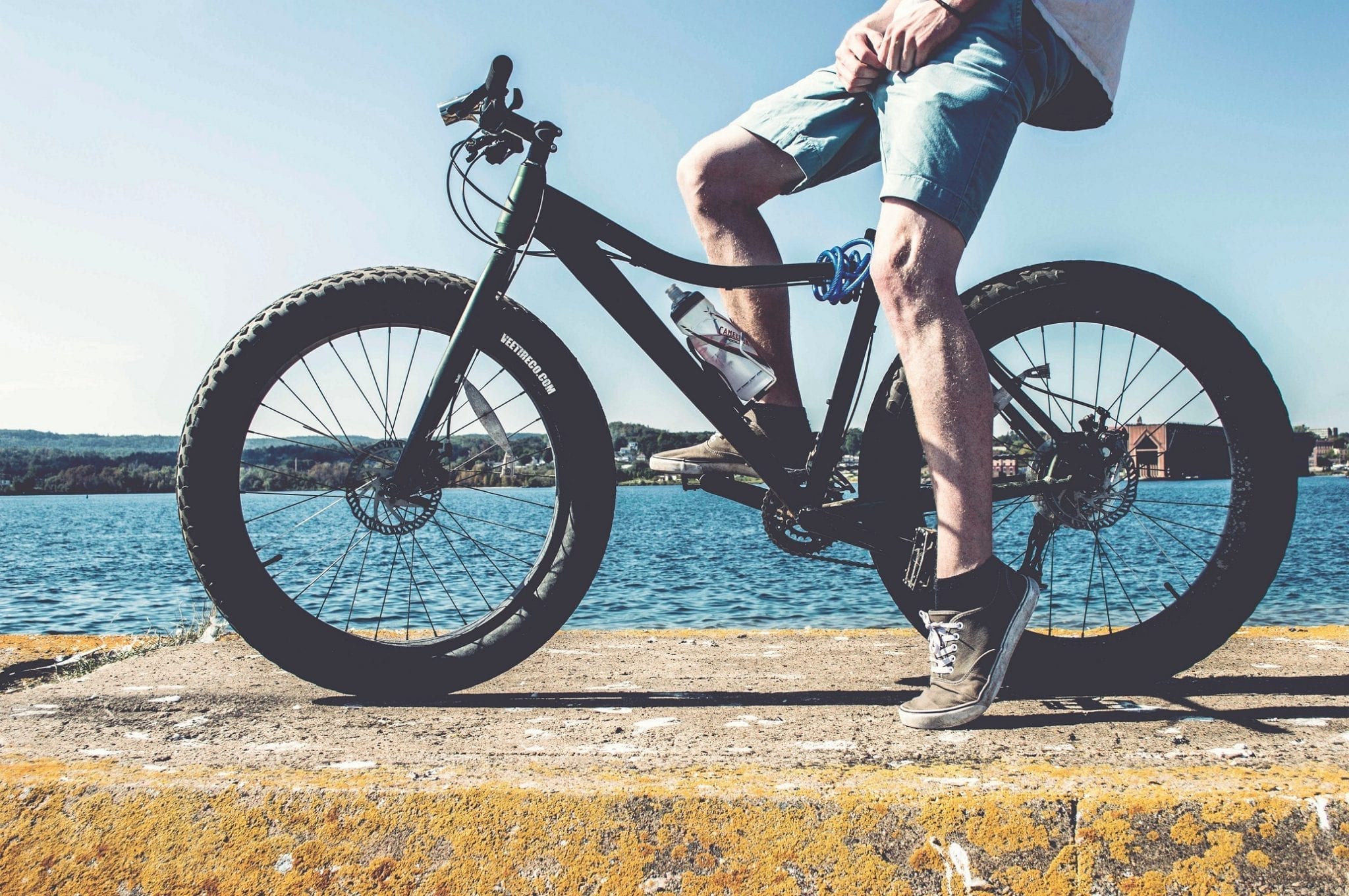
    Bicycle accessories and service provider Bike Technics, which specialises in mountain bikes, is launching an e-commerce site.

    It offers products from a range of specialist brands as well as professional services. Products include mountain-bike components, helmets, handlebars, saddles, protective gear (gloves, knee pads, elbow/forearm pads), sensors and devices for workouts.

    Services include basic bicycle examinations, tuning and repairs; overhauls (full stripdown and component check), lubrication, wheel realignment, custom builds, drive-chain maintenance, for and frame cleaning, and professional advice and support.

  • Amazon China on recruitment drive

    Amazon China on recruitment drive

    Amazon China appears to be ramping up business with nearly 400 mainland jobs listed on its careers website, plus another 900-odd on LinkedIn.

    The US company’s China-centred recruitment drive includes senior content executives to acquire and manage content, a leader for its Amazon Lending program and a head for its storefront on Alibaba’s Tmall.

    While the Seattle company still sells goods from abroad to Chinese consumers, the country’s e-commerce market is dominated by Alibaba and JD.Com, and the government places limits on foreign companies.

    Meanwhile, Amazon is encouraging its more than 2 million merchants to expand their horizons to embrace international markets. To streamline the process, it offers language translation services, currency conversion and tariff services.

    Amazon’s sales in China represented just 1.1 per cent of the nation’s online gross merchandise value in 2015, and by last year that figure had dropped to 0.8 per cent, according to iResearch figures.

    However, in last year’s fourth quarter, Amazon controlled 7 per cent of the China’s cross-border commerce, according to ICBC. For the first quarter this year, its cross-border sales were 11 times above their level two years earlier.

    Amazon this year started hiring HR executives for a new regional “shared-services hub” in Beijing, and a new office in Hangzhou – Alibaba’s home territory – is hiring sales team leaders empowered to headhunt more staff.

  • Alibaba and Mexico forge digital deal

    Alibaba and Mexico forge digital deal

    Alibaba and Mexico have signed a deal to promote the nation’s products online and help tap into the Chinese economy though e-commerce.

    In a ceremony at Alibaba Group’s headquarters, Alibaba Group’s executive chairman Jack Ma and Mexico’s President Enrique Peña Nieto witnessed the signing of a Memorandum of Understanding (MoU). Alibaba Group president Mike Evans and Undersecretary of Industry and Commerce of the Ministry of Economy of Mexico José Rogelio Garza were the signatories of the MoU.

    Under the agreement, Alibaba will work closely with the Ministry of Economy of Mexico to help Mexican SMEs to expand into international markets, in particular China, starting with a tailored program for them to benefit from the company’s B2B trading platform, Alibaba.com. Alibaba, together with its ecosystem partners, will also share expertise in logistics and payment platforms in order to enhance the cross-border e-commerce capabilities of Mexican SMEs and to attract Chinese tourists to Mexico.

    Alibaba will also share with Mexican SMEs international best practices related to digital transformation and e-commerce trends. Specialised training will focus on key areas including e-commerce, digital payments, logistics and analytics that drive consumer insight, product innovation and rural development in China. This is an effort to create a more inclusive world by helping SMEs and entrepreneurs to better reap the benefits of globalisation by leveraging e-commerce and learning from Alibaba’s experience in China.

    “Alibaba is one of the world´s largest technology companies with a sophisticated e-commerce ecosystem and a remarkable reach of more than 500 million active annual consumers globally,” said President Peña Nieto. “By partnering with Alibaba, we can expand Mexico’s export options in China and in Asia more broadly, while enhancing Mexican SMEs’ knowledge of e-commerce and cross-border trade.”

    “Alibaba is committed to inspiring, motivating and enabling SMEs from around the world to grow and thrive through e-commerce and the use of technology,” said Ma. “We are delighted to help promote cross-border trade with Mexico through this MoU. We view our cooperation as a way to energise economic development in both countries.”

    Ma travelled to Mexico last May and met with Nieto to discuss how technology plays a critical role in economic development and competitiveness. Discussions regarding the signing of this MoU began during that visit. Alibaba says the deal demonstrates Alibaba’s interest in, and commitment to, facilitating the entry of Mexican SMEs into the large Chinese consumer market.

    China is Mexico’s third largest trading partner globally, with much room for growth. Today, well-known Mexican products, ranging from agricultural products to packaged food and tourism, are already being sold in Alibaba’s ecosystem.

  • IamClaire a ‘sisterhood community’ and shopping experience

    IamClaire a ‘sisterhood community’ and shopping experience

    A “sisterhood community” launched in Philippines targets women in a hybrid social media and retail concept.

    IamClaire.com was founded by Singapore’s Altus Capital Digital which describes the site as

    “a fully integrated community and media and online buying platform that synergizes three elements in new and meaningful ways”.

    Users can create accounts, post content, connect with other platform members and create their own “online buying experience”.

    And shop.

    The site, just launched in the Philippines, features short videos offering tips for female millennials on beauty, lifestyle and health and wellness.

    “IamClaire is about joining a community; a sisterhood that stands for positive transformation and about becoming a better you,” says ACD VP and COO Liam Mendoza.

    The core business model is to make it easy for women to buy the products after they see or share details about them.

    “There is a simple, fun way to buy them that is tied to the content and the community elements,” said Mendoza.

    Altus Capital Digital believes the modern day shopping experience should be new: “more social, more fun, more informed and much less intrusive than what e-commerce presents them today”.