Category: E-Tailing

Retail News Asia is committed to providing both local and global retailers with the latest E-Commerce & Etail news throughout the Asian market. This on a daily base.

  • Thailand’s Pomelo raises extra $19 million capital

    Thailand’s Pomelo raises extra $19 million capital

    Thai online fast-fashion retailer Pomelo has raised an extra US$19 million in a series-B funding round.

    Led by China’s JD.com and Provident Capital Partners, joined by Lombard Investments, it was the largest series-B round by a company based in Thailand.

    Pomelo says it aims to use the cash injection to accelerate global growth.

    A year ago Pomelo raised a follow-on funding round, taking its total series-A funding to $11 million, an investment led by Singapore-based Jungle Ventures.

    Altogether, the three-year-old company has raised $32 million from investors globally.

    “We look forward to continuing the mission of building the first global fast-fashion brand out of Southeast Asia,” says Pomelo CEO David Jou.

  • China’s JD.com is keen to link with Saudis

    China’s JD.com is keen to link with Saudis

    With the Middle East in its sights, China’s JD.com is keen to team up with the Saudi government.

    “We want to have a partnership with the Saudi government,” says the e-commerce company’s international business president Winston Cheng.

    He describes Vision 2030, Saudi Arabia’s economic reform plan aimed at boosting private-sector growth and developing non-oil industries, as an incredible opportunity.

    “This region is the next new frontier,” says Cheng. “We’re looking to move very fast.”

  • Hundreds of cities bid to become home to second Amazon HQ

    Hundreds of cities bid to become home to second Amazon HQ

    It’s the prize of a lifetime – a $5 billion investment creating 50,000 well-paid jobs that everyone wants, but only one city will get. Amazon said Monday it has received 238 pitches from places across North America vying to be home to its second headquarters.

    It’s the prize of a lifetime – a $5 billion investment creating 50,000 well-paid jobs that everyone wants, but only one city will get.

    “We received 238 proposals from across North America for #HQ2,” the Seattle-based internet colossus said in a post from its official Twitter account.

    “The team is excited to review each of them!”

    From East to West and North to South, metropolises across the United States are locked in a frenzied bidding war, desperate to woo Amazon into favoring them as the site of the e-commerce giant’s second headquarters.

    Proposals were also reported to have come from Canada and Mexico.

    From $7 billion in tax breaks in Newark, New Jersey — 50 years ago aflame in deadly race riots — to a giant cactus shipped inter-state from Tucson in Arizona, bids ranged from the extremely ambitious to the silly before the deadline for submissions recently passed.

    The e-commerce giant announced last month that it planned to invest more than $5 billion in opening Amazon HQ2, a second company headquarters in North America that would also create tens of thousands of spin-off jobs.

    “We expect HQ2 to be a full equal to our Seattle headquarters,” promised Amazon founder Jeff Bezos, America’s second richest billionaire worth $85.8 billion.

    The unusual announcement unleashed competitive streaks nationwide as some of America’s most glittering cities vie with lesser-known backwaters looking to exit oblivion.

    In addition to direct hiring and investment, Amazon expected construction and operation of HQ2 to create tens of thousands of additional jobs.

    Amazon said in an online post that it is making the selection of its second headquarters a public process because “we want to find a city that is excited to work with us.”

    It has expressed a preference for places with more than one million people, a business-friendly environment and urban or suburban locations able to attract and retain strong technical talent.

    A study commissioned by World Business Chicago claimed that in 17 years, HQ2 would generate $341 billion in total spending, including $71 billion in salaries.

  • Grab, Uber benefit from ‘unfair competition

    Grab, Uber benefit from ‘unfair competition

    Vietnam’s top taxi firms have for months been blaming Uber, Grab for their losses. The two most popular app-based ride-hailing services in Vietnam, Uber and Grab, hold an unfair advantage over local taxi firms, according to reports by the trade and transport ministries.

    “App-based ride-hailing services are not regulated by the same laws as transport providers like local cab firms and motorbike taxis,” said the trade ministry in its report.

    “These app-based services should be regulated the same as transport providers,” the ministry said.

    Both ministries are in favor of a change to the legal framework to guarantee fair competition.

    Uber and Grab currently operate in Vietnam as part of a pilot scheme that also allows for 10 or more app-based ride-hailing services, including the apps launched by Vinasun and Mai Linh. They are treated as providers of transport software which, unlike traditional taxis, excludes them from being accountable for passenger and traffic safety.

    Responding to a proposal in September from the Hanoi Taxi Association, the transport ministry said a complete halt to their operations was unlikely, but the government should hold fast on new approvals for app-based taxis.

    Authorities fear the fast-growing number of app-based taxis will contribute to Hanoi and Ho Chi Minh City’s traffic problems. There are now already over 50,000 Uber and Grab vehicles registered in the two cities.

    In Vietnam, local cab firms like Mai Linh and Vinasun have to pay VAT of 10 percent and corporate income tax of 20 percent, while Grab and Uber only have to pay 3 percent and 2 percent.

    But this July, the tax department found that most local cab firms in Ho Chi Minh City only paid 0.01 to 0.06 percent corporate income tax, while some like Mai Linh Taxi paid less than 3 percent value added tax. The finance ministry subsequently asked the tax department to review these cases for possible tax fraud,

    Meanwhile in September, Ho Chi Minh City’s tax department demanded Uber Vietnam pay over VND10.5 billion ($460,000) in tax arrears.

    “We look forward to new regulations that ensure fair, relevant competition among transport providers,” a Grab Vietnam representative told last month, in response to recent allegations of local cab firms regarding unfair competition.

    Both Uber and Grab have repeatedly told local media they are not violating any laws.

    Vinasun, the biggest taxi firm in Vietnam, has lost 10,000 employees so far this year, and its nine-month revenue only reached 58 percent of the company’s annual target. Rival firm Mai Linh also has lost 6,000 employees this year, 20 percent of its total drivers.

  • Lazada Online Revolution offering 210 million items

    Lazada Online Revolution offering 210 million items

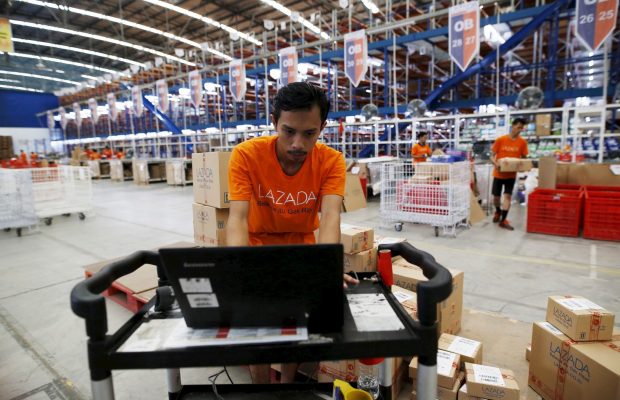
    In its sixth year, the Lazada Online Revolution mega-sale will be the biggest yet when it takes off on November 11 across six countries – Indonesia, Malaysia, the Philippines, Singapore, Thailand and Vietnam.

    Themed “Shop the Universe”, the sale will offer 210 million products, up sevenfold from last year, and has expanded its product categories to include fashion, luxury cosmetics, groceries, pet supplies and digital goods such as e-vouchers and prepaid mobile-phone top-ups. International brands include Huawei, Laneige, Levi’s, Mac, Ray-Ban, Shiseido and Triumph.

    There will be about 26 million deals offering discounts of up to 90 per cent, including items from the Taobao Collection, which offers kitchenware, furnishings, fashion apparel and accessories.

    Shoppers in Southeast Asia ordered about two million items within the first 24 hours of last year’s Online Revolution 2016. Among the top sellers were VR glasses, smartphones, shower gels and mascaras.

    As well as its own 130 delivery centres across the six countries, Lazada will work with more than 80 delivery companies to handle demand during the sale.

  • EU mulls digital firms’ global profits tax

    EU mulls digital firms’ global profits tax

    The European Union is asking its citizens to help decide on a fairer tax regime for large digital corporations that may include a tax on their global profits.

    Firms such as Amazon, Google and Facebook have often been accused of paying too little tax within the bloc by establishing their regional headquarters in low-tax countries such as Luxembourg and Ireland.

    The executive European Commission wants binding legislative proposals for a fair taxation of the digital economy by March.

    In a public consultation published on Thursday, it listed new ideas on what such a blueprint might contain.

    It is seeking responses on a “unitary tax” that would be levied on a share of digital companies’ global profits, divided up between the EU countries where they operate.

    This option has never appeared in EU documents before.

    It would be a long-term solution, as would a proposed tax using the corporate rate of the countries where the firms’ consumers are, rather than where the firms are based.

    That would eliminate the incentive for multinationals to set their EU headquarters in low-tax states.

    The commission also sought reactions to the idea of changing the principle of corporate establishment, so that companies could be taxed when they have a “digital” presence in a country. That was an option listed in a document published in September .

    In the short term, EU states could impose a tax on revenues from “digital activities” or services, like the sale of online ads.

    They could also consider a withholding tax on digital payments or a “digital transaction tax” levied on companies selling consumers’ personal data.

    The move is set to gauge public support for an initiative that is backed by the EU’s big states but opposed by smaller, low-tax countries who fear losing revenues.

  • Amazon sales surge on Wholefoods acquisition

    Amazon sales surge on Wholefoods acquisition

    E-commerce giant Amazon has posted a surge in sales of 34 per cent to $43.7 billion over the last three months.

    Amazon announced profits in the three months to the end of September were $256 million, up from $252 million in 2016. Despite its sales growth, the company’s profits were nearly flat as it ploughed money into tech gadgets, streaming video, data centres and warehouses to support its growing empire.

    The firm also saw an increase in revenue in its profitable cloud services division which exceeded $4.5 billion, up 42 per cent.

    Amazon’s recently acquired upmarket grocer Whole Foods has brought in $1.3 billion in sales for the quarter.

    Upmarket grocer Whole Foods, which Amazon acquired in August, brought in $1.3bn in sales in the quarter. Excluding Whole Foods, the e-commerce giant said sales increased 29.8 per cent.

    The firm has posted a 35 per cent increase in overall sales in North America, which accounts for the bulk of Amazon’s business. They increased 29 per cent in its international division thanks in part to a Prime Day surge, but the unit is still running at an operating loss.

    Neil Saunders, managing director of GlobalData Retail, said Amazon has impressively managed to increase the pace of growth from its online stores, where sales increased by 22 per cent over the prior year.

    “This is the highest rate of growth since the second quarter of 2016,” Saunders said. “A very successful Prime Day, the addition of more customers to the Prime ecosystem, and continued uplifts in spending from both Prime and non-Prime customers alike, all drove the outperformance.”

    “All that said, it is clear that Amazon’s own online stores are no longer the star of the show,” he said. “Both the subscription services arm and Amazon’s web services division (AWS) are outpacing product sales in growth terms.”

    Saunders said the former, which includes Prime fees, grew by 59 per cent and the latter by 42 per cent.

    “In particular, we believe that the growth of Prime will continue to boost subscription revenue in the quarters ahead, all the more so because of the slew of new devices that Amazon is releasing,” he said.

    Saunders said for all Amazon’s undoubted success, there are a few chinks in the behemoth’s armor.

    “The main one of these is profit,” he said. “For the quarter, operating income was down by 40 per cent to $347 million. The dramatic growth of marketing costs, which were partly a function of the Whole Foods acquisition as well as the substantial promotion of new devices, took its toll on the bottom line. Fulfilment and shipping costs also increased faster than sales, although the pace of increase is not quite as bad as feared.”

    International also weighed down on the profit line with a $936 million operating loss during the quarter, Saunders added. This was a sharp increase on the $541 million loss the division posted last year. The launch of new services like Amazon’s unlimited music service in several European countries, and the rollout of Alexa services to India and Japan, have all taken their toll on the cost line. Amazon is still very much in the building stage in many of its overseas operations, and we think profitability is likely to get worse before it gets better. However, this near-term pressure should not be seen in negative terms; indeed, we view it as an investment rather than as an unrecoverable cost.

    “Turning away to Amazon’s latest venture, Whole Foods, we believe it is too early to conclusively say whether this is a success story,” Saunders said.

    However, initial signs are encouraging, and our data show some very slight movements on price perception – these are not dramatic, but they are a step in the right direction and show that Amazon’s approach is being noticed by consumers. Looking ahead, we excited about the possibilities for the Whole Foods business and believe that over the medium to longer term Amazon will make some more radical changes that will deliver stronger results.”

    Overall, Saunders said, Amazon is in very good shape.

    “In some ways, the deterioration in profit doesn’t matter, if only because the business has an enormous amount to show for its expenditure,” he said. “These investments – in services, devices, new ventures, pricing, international markets, and business services – will all power growth in the years ahead.”

  • Safe.Shop moves to unify e-commerce certification

    Safe.Shop moves to unify e-commerce certification

    Global trustmark Safe.Shop is rolling out an international umbrella for e-commerce certification.

    In launching Safe.Shop, the Ecommerce Foundation says its aim is to help improve customer confidence while boosting e-commerce trade globally.

    National e-commerce associations from 13 countries are already partners, including China, Hong Kong, Japan and Malaysia.

    The foundation says there are already more than 300 e-commerce trust marks worldwide, most being solely national initiatives. Some focus explicitly on legal compliance, while others focus on financial reliability, security, reviews or anti-counterfeiting policies. And some try to cover most of these aspects.

    Separate certification for national trust marks can cause complications, says the foundation, and can be especially complex for small- and medium-sized e-commerce companies. Safe.Shops aims to bridge the borders. Webshops certified by a local trust partner offer reliability and uphold consumer rights.

    “We are not building a trust mark from scratch,” says Ecommerce Foundation director Jorij Abraham.

    “Many national retail and e-commerce associations already have a trusted certificate. They know the local market and can serve local retailers and online stores much better than could a central organisation. Collaborating with local trust-mark partners enables us to use the strength of the local brand and to build a global trust mark together.”

    Safe.Shop’s launch will take about three months as processes and systems need to be optimised.

    Online stores can apply for the trust mark through their national e-commerce association or via www.safe.shop. The organisation wants to have 30 countries linked to the initiative by next year, and is negotiating with e-commerce associations in a further seven countries including South Korea.

    Initiated by the Ecommerce Foundation, Safe.Shop is managed by Ecommerce Operations, a company based in The Netherlands. It creates free reports about the e-commerce market in more than 50 countries, and has set up EcommerceWiki as an online community and knowledge-sharing platform for e-commerce students, professionals and managers.

  • Dropee Launches Full Release of its B2B Marketplace with a New Web Interface

    Dropee Launches Full Release of its B2B Marketplace with a New Web Interface

    Dropee, a local based technology start-up, today launched the full release of its B2B marketplace and introduced a new web interface to further streamline trading between suppliers and retailers.  Prior to the full release, Dropee was running on beta since early this year.

    Unlike previously, current Dropee is able to support any number of suppliers and retailers. In addition, it also brings a new web interface that contains enhancements to help improve and optimize the way suppliers trade products with retailers. For instance, suppliers now have a new dashboard that has greater functionalities to help speed up documentation processing, to better manage relationships with customers and more. Dropee full release is now accessible by registered retailers and suppliers and it is available at a same low rate, starting at RM388 per month.

    Key enhancements brought by the new Dropee are:

    1. Targeted promotional campaigns: Unlike previously, suppliers now can launch promotional campaigns where they can choose to specify which customers that are eligible for additional discounts from the listed prices on Dropee. Dropee system is flexible enough for them to key in any amount of discounts to be given to eligible customers. Additionally, frequent customers of the suppliers will be able to request to be a part of this additional discount feature by clicking on the “Request For Additional Discounts” button on the their respective dashboard.
    2. Better streamline ordering process: With the new interface, the process of ordering can be done more efficiently where retailers can place new orders and to re-order directly without relying on a sales person from the supplier to help them. Subsequently, this empowers suppliers and their sales team by enabling them to focus on closing more new accounts and servicing a larger pool of retailers than they previously could.
    3. Easier discovery of wholesale pricing goods (buyers): Different than the old interface, current Dropee allows retailers to discover products easier based on their categories of interests such as Convenience Stores, F&B Restaurants, and others which are curated by Dropee team for each category after making sure that the products listed are at wholesale prices.

    Lennise Ng, chief executive officer (CEO) and co-founder of Dropee said, “We are truly excited that the Dropee’s full release is here and we now have a new web interface. After months of running on beta, we’ve improved our system to be ready to take on any number of suppliers and retailers. We have also decided to revamp the interface of our B2B marketplace to benefit both retailers and suppliers. We are pleased with the result where it is now easier for suppliers to manage their sales and for retailers to get the best deals that meet their needs and budget.”

    Aizat Rahim, chief operating officer (COO) of Dropee said, “We’ve run a test for the new enhancements with some of our users and they have noted an increase in recurring sales due to a faster replenishment process from reduced documentation time. On top of that, their process ordering rate has increased by 30 percent within two months, based on an internal survey conducted.”

    Lennise Ng added, “Our target is to have 1000 small- and medium-sized enterprise (SME) retailers sourcing from our platform in the next six months. Currently, we have more than 1000 of products of fast-moving consumer goods (FMCG) and, the number is growing rapidly. With just a few clicks of a button, retailers can find products that they want and from the suppliers and brands that they trust.”

    “We plan to expand our on-ground sales team and form strategic partnerships with organizations who aim to provide better services to SME business owners across Malaysia. We will be looking to enter different states in the first quarter of 2018,” Lennise explained about her plan for market acquisition.

    Some of the retailers that have used Dropee include offline retailers such as Shell Select, Pusrawi and local F&B outlets such as Kopi Time, as well as, online retailers such as GrubCycle and Giftr.


  • Inside the new Amazon stores-in-stores at Kohl’s

    Inside the new Amazon stores-in-stores at Kohl’s

    Ten Amazon stores-in-stores have opened inside discount apparel chain Kohl’s across the US, the first stage in a broader commercial partnership between the two retailers.

    Announced in early September, the deal sees Amazon smart home experience mini-stores opening in prominent locations at the front of the Kohl’s stores across the Chicago and Los Angeles areas from this month.

    Amazon has since released these accompanying images showing how the concept looks.

    The stores are staffed by Amazon employees and provide a hands-on experience where customers can interact with a variety of Amazon devices, including Amazon Echo, Echo Dot, Amazon Fire TV, and Fire tablets. They can buy them on-site.

    Amazon says the stores will demonstrate how its devices can “modernise and simplify home management, entertainment and security”.

    Returns service

    Shortly after the Amazon stores-in-stores concept was revealed, the company also announced an arrangement allowing 82 branches (initially) in the two cities to accept returns of goods bought by Amazon shoppers online. From next month, they will be able to take their goods to a Kohl’s store where the merchandise will be packed and shipped for free back to an Amazon warehouse.

    Kohl’s believes partnering with Amazon represents a competitive advantage. “The Kohl’s and Amazon collaboration leverages the strengths of both brands – the Kohl’s store portfolio and omnichannel capabilities combined with the power of Amazon’s reach and loyal customer base,” Kohl’s said.

  • New CEO says Uber Vietnam will not be distracted by criticism

    New CEO says Uber Vietnam will not be distracted by criticism

    Traditional taxi firms have been protesting against Uber and Grab, accusing the ride-hailing apps of unfair competition. Uber Vietnam on Thursday said the company would focus on growing and serving its partners and passengers and would not be distracted by criticism, following protests and accusations of foul play by traditional taxi firms.

    Tom White, the company’s newly appointed CEO, issued the statement during a press briefing at the unveiling of Uber Vietnam’s new partner support center in Hanoi.

    “My focus would be to serve them as best as I possibly can and not be distracted by criticisms about this,” he said.

    Uber Vietnam’s key objective instead would be to further expand across the market and reach an even greater number of riders and drivers.

    “There have been millions of app downloads here in Vietnam and we’re only scratching the surface of what’s possible.”

    Stressing reputation as a precious asset for Uber, White said he would prioritize building and maintaining trust with the Vietnamese government.Regarding his appointment as the new CEO of Uber Vietnam, White said his experience working for Uber in Australia had played a role in the decision. As one of its earliest members, he helped build the company there from scratch and forged a strong and trusting relationship with the Australian government.

    While admitting he had much to learn after moving from Australia to Vietnam, White also said he hoped to be able to work with the government to make policies more open and regulations more fair across all platforms for companies to compete and allow consumers to benefit from the competition.

    Regarding Ho Chi Minh City’s demand last month for VND66.68 billion ($2.93 million) in tax arrears, White said that the company firmly believed it had met all its tax obligations and complied with government regulations.

    Tom White is an Australian who joined Uber in January 2015 and held various management positions in Uber Australia and New Zealand. He was appointed as the new CEO of Uber Vietnam earlier this month following his predecessor Dang Viet Dung’s departure.

    Dung, who had been Uber Vietnam’s CEO since the U.S.-based firm first entered the country in 2014, left the company on October 1, but no information about the reasons for his departure has been revealed.

    His departure triggered speculation that Uber Vietnam was in a crisis, especially after a recent tax scandal.

    Late last month, tax authorities in Ho Chi Minh City demanded VND66.68 billion ($2.93 million) in arrears from Uber Vietnam, including fines for faulty declarations and late payments.

    Following the incident, rumors started to spread that Uber would be leaving Vietnam. The company was quick to dismiss this.

    As of August, Uber had four million users in Vietnam, according to official company data.

  • Alibaba Macau trademark registrations lodged

    Alibaba Macau trademark registrations lodged

    Alibaba Group Holding has applied for new trademark registrations in Macau, according to the Official Gazette.

    Alibaba has applied for the protection of 14 sets of commercial services and products under two brandnames, Alisports and 阿里體育. Overall, Alibaba Macau is seeking commercial protection for the provision of scientific services, cloud computing and IT applications, games and toys, advertising, data processing, information, telecommunications and broadcasting, online training and education, as well juridical and legal services.

    With more than 50,000 employees, Alibaba Group provides C2C, B2C and B2B sales services via web portals. Its main businesses comprise core commerce, cloud computing, digital media and entertainment.

    In early July, the group had several applications for trademark protection approved in the city for products including media, e-payment systems, nautical instruments and file-sharing software.

    On August 4, the Macau SAR government and Alibaba co-founder/CEO Jack Ma signed a framework agreement to implement services linked to the development of Macau as a “smart city”, including medical services, transport logistics and encouraging talent to return to the city.

  • Singapore m-commerce set for 33 per cent growth

    Singapore m-commerce set for 33 per cent growth

    Singapore m-commerce is set for 33 per cent growth in the next five years, according to a new report.

    However, while it leads Southeast Asia in smartphone and mobile broadband use, Singapore is nearing saturation point for its e-commerce market, says Worldpay’s Global Payments Report.

    Despite its modest population numbers, the city/state is the region’s third-largest e-commerce market with 73 per cent of internet users already shopping online. But this growth is set to slow with a modest 9 per cent expansion to reach US$6.5 billion by 2021 predicts Worldpay, which analysed e-commerce spending patterns across 36 markets on five continents.

    In comparison, China’s e-commerce market is expected to grow by 11 per cent, South Korea should see 19 per cent growth and India is set for 24 per cent expansion.

    Despite Singapore’s decelerating growth, there will be plentiful opportunities for capturing a new wave of mobile shoppers in Singapore, says the report.

    Cross-border shopping is also increasingly popular, with more than half of Singapore’s online consumers buying from international merchants.

    ‘New set of demands’

    “Retailers looking for a foothold to the future must prepare to deliver on a new set of demands in Singapore,” says Worldpay Asia Pacific GM Phil Pomford. “Online shoppers are moving beyond the desktop, and beyond country borders. Savvy and well-connected across multiple devices, they increasingly prefer to shop via mobile and want more opportunities to buy from merchants around Asia and the globe.

    “To deliver on the demands of Singaporean shoppers who expect a convenient, seamless experience no matter how they shop, merchants need to create mobile-friendly payments.”

    Pomford says merchants will be able to capture more cross-border trade by accepting a variety of currencies and payment options.

    Worldpay also found that shoppers in Singapore still overwhelming prefer to pay with credit cards (66 per cent), but alternative payment methods are gaining a foothold. Bank transfers and e-wallets are both set to nearly double in share by 2021, increasing from 11 to 21 per cent and 13 to 21 per cent respectively.

    “Our report also uncovered that 70 per cent of Singaporean internet users would shop online more if offered loyalty benefits – a great tip for e-commerce businesses looking to gain a competitive edge,” says Pomford.

    Worldpay offers three main guidelines for merchants seeking to capitalise on the e-commerce and m-commerce opportunity in Singapore and the wider Asia-Pacific region:

    1. One-click ordering: Consumers are more likely to shop more often with companies that save their payment details for one-click ordering. This makes online checkout as seamless as possible, especially via mobile apps.

    2. Payment options: Merchants should look at the most popular payments methods in each territory, and prioritise those that complement their business model. There is no one size fits all in the Asia-Pacific region, so they need to understand their best options.

    3. Cross-border trade: Merchants should ensure they have local acquiring capabilities wherever they have a legal entity. They should also offer a range of currencies at checkout, and consider local-language customer support.
    Worldpay offers technology-led payment products and services to about 400,000 clients across 146 countries and 126 currencies.

  • eBay tests the world’s first ‘subconscious shopping experience’

    eBay tests the world’s first ‘subconscious shopping experience’

    Online shopping giant eBay and specialist retailer Saatchi Art have created and tested an experimental retail experience they claim is the world’s first subconscious shopping experience.

    It merges art and technology to reveal shoppers’ subconscious desires.

    For just 48 hours, the two retailers invited select guests to their personalised shopping event, The Art of Shopping. Guests were first hooked up to headsets incorporating EEG technology to monitor electrical activity in the brain. They then entered a special art gallery where the “mind-tracking” technology, supplied by MyndPlay, was able to detect when they were inspired by particular works. This information was used to create personalised shopping carts.

    An algorithm to match customers with artworks was developed by behavioural psychologists and designed to be used with the billion items being sold on eBay’s virtual marketplace.

    The eBay team launched the project after commissioning a report on the neuroscience of what motivates buyers. The report investigated the difference between two types of buyers – “shop-y-cats” who impulse buy to fit in with trends, and “inspired shoppers” who prefer to discover non-mainstream  items. It found that inspired shoppers could browse longer and had a prolonged emotional high at checkout.

  • Chope funding round secures $18 million

    Chope funding round secures $18 million

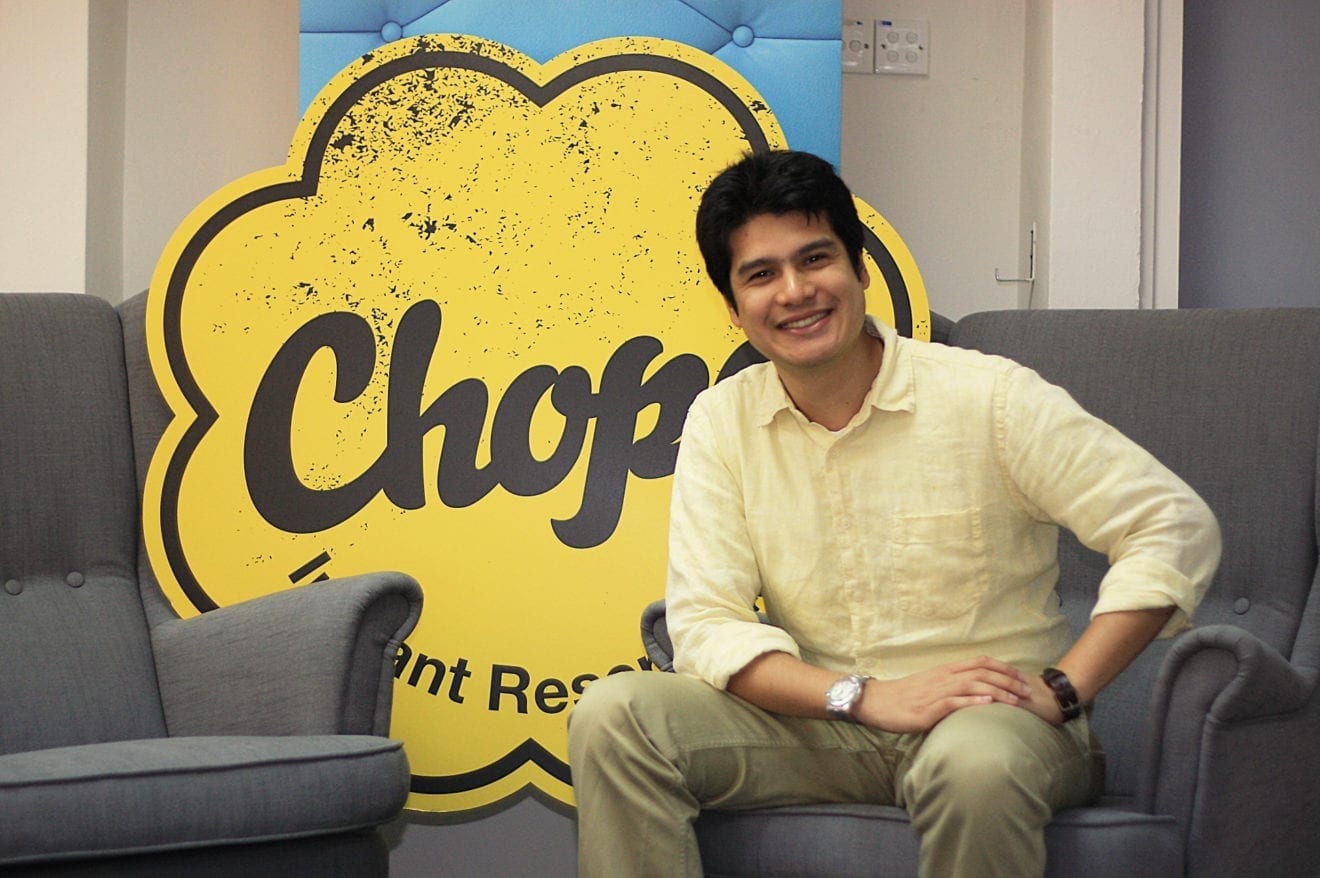
    Restaurant-booking app Chope has secured S$18 million from multiple investors.

    Led by venture capital firm Square Peg Capital, the investors in the funding round include Moelis Australia, NSI Ventures and SPH Ventures.

    Chope CEO Arrif Ziaudeen says the funds will be used to improve product, increase staff numbers and enhance customer support. The Singapore-based company will also “invest heavily in further innovations” while deepening its reach into its markets across Asia.

    “Chope offers a compelling service to both restaurants and diners,” says Square Peg partner Tushar Roy.