Category: E-Tailing

Retail News Asia is committed to providing both local and global retailers with the latest E-Commerce & Etail news throughout the Asian market. This on a daily base.

  • It Is All About Tencent In China

    It Is All About Tencent In China

    Asia has been the best performing region globally this year as China 2.0 kicked in as a theme with China (at the MSCI level) being the best performing market and tech being the best performing sector. As Mark Tinker, responsable de AXA IM Framlington Equities Asia, comments: “In Hong Kong the story has all been about Tencent, while in Korea it has been about Samsung.”

    In fact, in Hong Kong in particular the impact of Tencent has been extra-ordinary as the largest stock in the market with a current weighting of almost 12% has effectively doubled over the last 12 months, while the second biggest, HSBC, is up a mere 17% – albeit with a significant dividend to yield a total return of 23%. In South Korea, where Samsung Electronics is more than 20% of the index, it has risen by 83%. Probably not since Apple became the biggest stock in the US market back in 2011/2 and then doubled has the index effect had such a big impact on so many active institutional investors.

    “Of course the argument threatens to become circular” says Tinker.  Therefore, he wonders if Tencent or Samsung are up so much because people are buying the index or vice versa?

    For Tencent there may well be some influence from the fact that mainland Chinese investors can buy it through the Southbound Stock Connect, which continues to expand its influence on Hong Kong markets. Tencent is affecting the real economy in China as well as here in Hong Kong.

    As previously noted by Will Chuang in Hong Kong, “it is not only possible but actually significantly easier to spend a weekend in Shanghai without using either cash or a credit card, simply using WeChat pay by Tencent. Tinker adds that “all you have to do is click on your phone to call up a quick response (QR) code that the merchant scans and you are done.”

    It is now said that you can always spot the tourists in Shanghai as they are the ones using credit cards, or if they are really old fashioned, cash.The fact that the largest note in China is RMB100, which is the equivalent of around EUR15 is probably a factor in using WePay to replace cash, but even here in Hong Kong it is increasingly being used.

    Tencent is mainly Chinese but it is also having something of a wealth effect here in Hong Kong as the number of people trading the stock and several of the connected spin-offs that have recently IPO’d here are clearly celebrating their ‘success’ in the bars and restaurants in Central. The expert of AXA IM in Asia explains:

    The retail offering of Tencent spin-off China Literature for example was 625 times oversubscribed and effectively doubled on opening, having caused a huge spike in interbank rates as money was locked up in anticipation.

    Former Hong Kong Chief Executive Chun-ying Leung used to refer to Hong Kong as “where the rest of the country meets the rest of the world” and as well as offering an outbound conduit for mainland investors through its H share listing, the company itself is, like a number of others, investing overseas, most notably when it picked up around 12% of SNAP as that particular stock continued to slide. Many have noticed the contrast between the performance of US tech IPOs and their Chinese equivalents.
  • China faces waste hangover after Singles’ Day buying binge

    China faces waste hangover after Singles’ Day buying binge

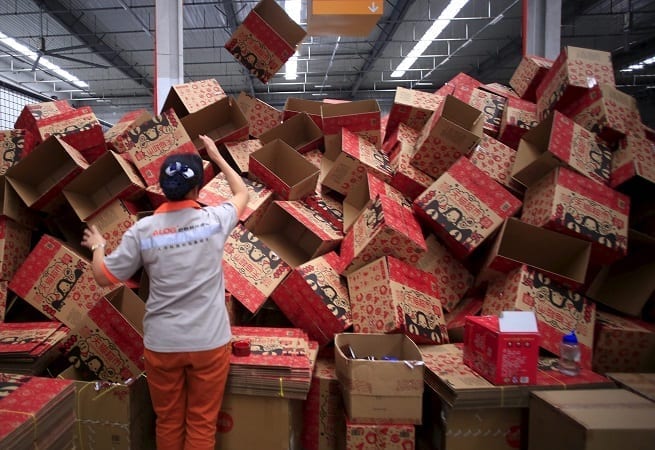
    China’s Singles’ Day online discount sales bonanza on Saturday saw bargain-hungry buyers spend over $38 billion, flooding the postal and courier businesses with around 331 million packages – and leaving an estimated 160,000 tonnes of packaging waste.

    The annual Nov. 11 buying frenzy is a regular fillip for giant online retailers like Alibaba and JD.com, but the mountains of trash produced from just one day of conspicuous consumption have angered environmentalists.

    “Record-setting over-consumption means record-setting waste,” said Nie Li, toxics campaigner at Greenpeace, which estimates this year’s orders will produce more than 160,000 tonnes of packaging waste, including plastic, cardboard and tape.

    Total sales from Singles’ Day hit 254 billion yuan ($38.25 billion), with 1.38 billion orders placed, state media reported. Around a quarter of the total sales involved household electric devices or mobile phones.

    China’s State Post Bureau (SPB) said postal and courier companies are having to deal with at least 331 million packages, up 31.5 percent from last year.

    Greenpeace described the annual promotion as a “catastrophe for the environment” that not only creates waste, but leads to a surge in carbon emissions from manufacturing, packaging and shipping. In a report published last week, it estimated that total orders last year produced 52,400 tonnes of additional climate-warming carbon dioxide.

    E-commerce firms have drawn up measures aimed at solving the problem, and aim to replace cardboard boxes with reusable plastic ones that courier companies can share. They have also experimented with biodegradable delivery bags and tape-free boxes, but Nie said the efforts were still not enough.

    “China’s online retail giants have taken few real steps to reduce delivery packaging waste,” she said. “Ultimately, packaging that we throw out after one use is not a sustainable option.”

    A spokesman for JD.com said it is “continually improving ways to better reduce waste and pollution” and, among other measures, aims to raise the proportion of biodegradable materials in its packaging materials to 80 percent by 2020.

    Alibaba’s Cainiao logistics arm said in emailed comments that it had launched initiatives aimed at minimising its environmental impact. “We are committed to work closely with different stakeholders to protect the environment and contribute to the sustainable development of the industry,” it said.

    MOUNTAINS OF WASTE

    China’s packaging waste problems are not confined to Singles’ Day.

    Official data shows China’s courier firms delivered around 20 billion orders in 2015, using 8.27 billion plastic bags, 9.92 billion packing boxes and enough sticky tape to go around the globe more than 400 times.

    Overall deliveries continue to surge, with the number of packages expected to hit 50 billion next year, up from 30 billion in 2016, according to forecasts by the SPB.

    But even that’s only a small part of China’s mounting waste problem, with large sections of the country’s soil and water contaminated by untreated industrial, rural and household trash.

    With China’s major cities producing around 2 billion tonnes of solid waste a year, they are already surrounded by circles of landfill known in Beijing as the “seventh ring road”.

    China has also struggled to finance the infrastructure required to handle surging volumes of discarded white goods, consumer electronics and batteries.

    Despite massive production volumes that have left the country dependent on imported raw materials, overall recycling rates in industries like steel, glass or textiles remain way behind their international counterparts.

    On top of that, China has only just started to impose restrictions on imported waste, which stood at 47 million tonnes in 2015.

    Recycling of foreign and domestic trash was traditionally handled by migrant workers, known as “scavengers”, who ripped apart discarded goods in back-street workshops.

    But rising economic prosperity means fewer people seek to make a living recycling waste, and tougher environmental regulations have forced small-scale recyclers to close.

  • Black Friday bargain hunting to benefit more than just retailers

    Black Friday bargain hunting to benefit more than just retailers

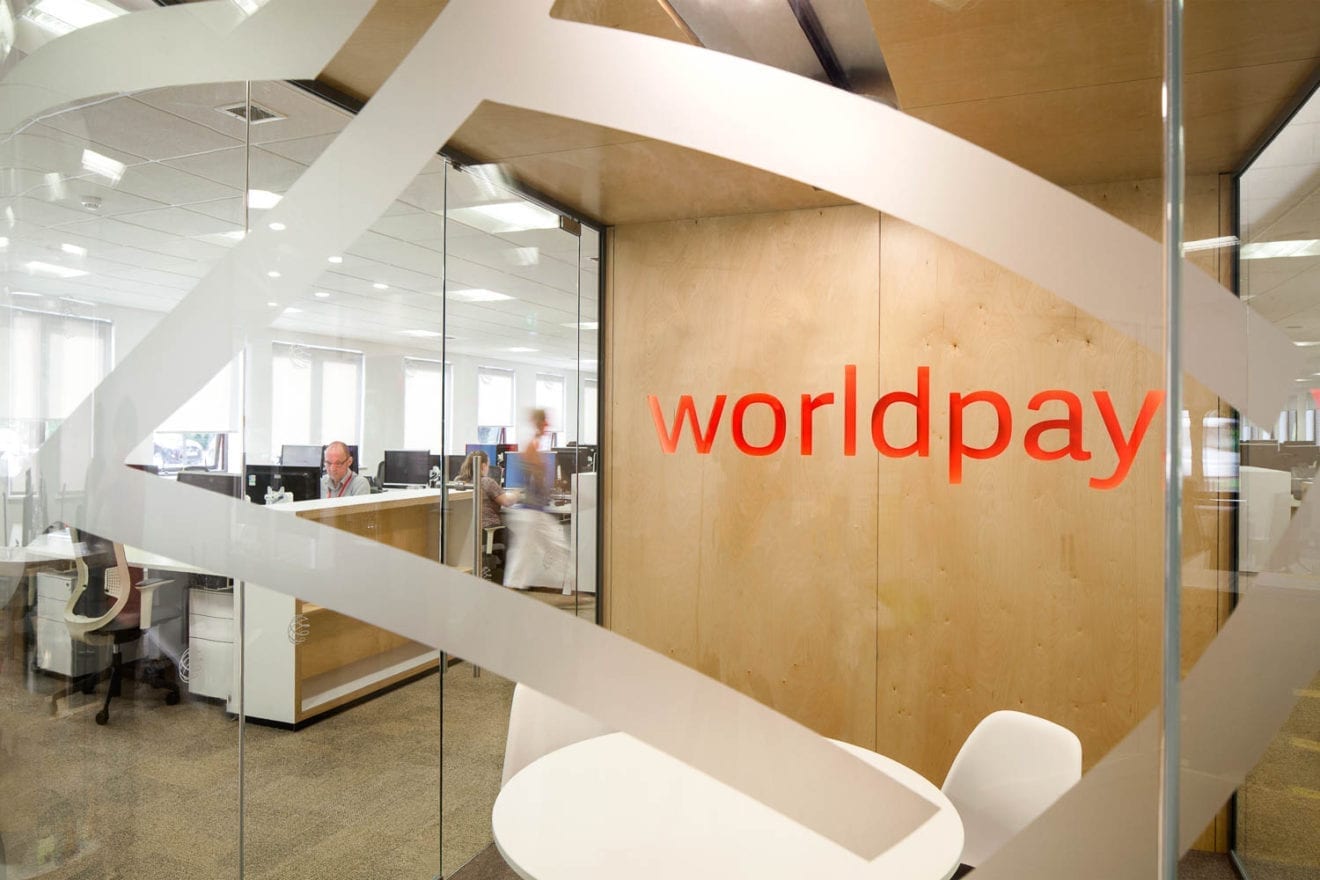
    Worldpay, a global leader in payments, has predicted that Black Friday and Cyber Monday mania will continue this year, but with a wider range of businesses expected to get in on the online action. Although the shopping event has traditionally been the realm of US retailers, the shopping event grew by 29% in Asia Pacific last year.

    Despite forking out $17.8bn on China Singles Day, Chinese consumers were still hunting Black Friday bargains, with overall spending on the day up by 37% compared to the previous year. The event is also growing fast in Singapore and Hong Kong, at a rate of 21% and 32% respectively.

    While retailers are among the biggest Black Friday winners, new data from the payments processor suggests this year could also be a great opportunity for savvy APAC businesses in the travel and digital sectors. In Singapore, spending with travel & airlines was up 20%3 compared to 2015. And in Hong Kong, travel and airlines saw a 30%4 surge, with eager travellers jumping online to search for great flight and hotel deals.

    Shoppers are also increasingly seeking out bargains for digital content such as subscriptions, e-books, and on-demand box sets, with Black Friday spending in this sector experiencing year on year growth of 62%5 in Hong Kong and 14%6 in Singapore.

    Phil Pomford, General Manager for Asia Pacific at Worldpay said based on the data, 2017 seems set to be another solid year for the shopping event and a fantastic opportunity for a variety of e-commerce businesses, not just retailers.

    “While Black Friday and Cyber Monday have typically been the realm of retailers, a more diverse range of businesses are now recognising that they too can take can take advantage of this unique online opportunity. Shoppers during this time are highly engaged, proactive, and looking for a wide range of online deals, so the potential to reach new customers and strengthen brand loyalty is huge, no matter what sector you operate in.

    “E-commerce businesses should ensure they set themselves up for success by making sure their websites are prepared for heavy traffic and offer simple payment options to drive shopping cart conversions online. They might also consider following the example of US retail giant Amazon and kickstart Black Friday deals a week early in order to generate excitement early on.”

  • Walmart US’s online sales soars by 50 per cent

    Walmart US’s online sales soars by 50 per cent

    Walmart’s online sales in the US soared 50 per cent during the latest quarter, described as a stellar rate of increase which shows Walmart is growing its digital market share at pace.

    The world’s largest brick and mortar retailer recorded a revenue rise of 4.2 per cent, which equates to a US$5 billion increase in sales over the three months. Walmart US led the way with a 4.3 per cent increase in revenue and a 2.7 per cent increase in comp-store sales.

    GlobalData Retail MD Neil Saunders described that result as “impressive” and underscoring the company’s determination to not only defend its leading position but to extend it.

    That most of the online growth came from the core Walmart.com operation rather than from new additions, highlights the success of initiatives such as free two-day shipping and an expanded online selection, which now encompasses over 70 million products, said Saunders.

    “From GlobalData Retail’s figures, it is clear that Walmart is not only getting existing customers to spend more online but is also attracting new shoppers.

    “With a solid e-commerce base, Walmart is now looking to deepen its offer and experience in a select number of categories. This is one of the reasons it has struck deals with partners like Lord & Taylor in fashion and is building relationships with premium brands like KitchenAid and Bose.

    Walmart’s longer-term aim is clear: it wants to become the go-to online destination for both everyday and specialty items. The push into higher-end products should also help to bolster online margins.”

    Strong traffic

    However, although online has been a success story for Walmart, the second reason for its US growth is the performance of stores. Traffic held up well across the US, with price cuts helping to keep customers loyal, especially in categories like grocery. Some modest improvements to store layout and design have also aided conversion rates, particularly in non-food categories.

    “For a retailer of its size and scale, Walmart’s ability to keep its stores growing is impressive,” said Saunders.

    While he cautioned that some of the US sales success could be attributed to post-hurricane spending and recent acquisitions, the core business is performing well, with a broad pickup in both customer traffic and spending across all of Walmart’s channels.

    Sales outside the US also picked up. He said the Mexican operation is benefitting from investments in e-commerce, including an expanded online offer. Revenue in Canada has increased, mainly thanks to sharper pricing and expansion of the number of locations offering grocery pickup.

    In the UK, Asda posted its second consecutive quarter of comparable growth. “While this result comes off the back of a long run of weak performance and does not yet constitute a return to sustainable growth, we believe the investments made in price, offer, and service are starting to pay dividends.”

    Saunders said the latest results show Walmart is a retailer on the front foot.

    “Admittedly, the investments it is making in price and e-commerce are taking their toll on the bottom line, but they are also positioning the company for significant future success.”

  • Amazon Australia launch to happen “really soon”

    Amazon Australia launch to happen “really soon”

    US giant Amazon announced it plans to launch both an online retail and a “marketplace” presence in Australia, confirming that its arrival is imminent in the buoyant local retail market.

    In a conference in Melbourne, Amazon Australian country manager, Rocco Braeuniger said the e-commerce heavyweight was “getting really, really, really close” to opening trade, but failed to give an exact date.

    Braeuniger did confirm, however, that when Amazon opens, it plans to sell products from first Australian warehouse, and also host third-party retailers on its online marketplace.

    Right now, Amazon is in the process of converting a 24,000-square-metre warehouse in Dandenong South, in Melbourne’s outer east, into its first Australian fulfillment centre.

    The company has already taken out trademarks on private-label brands that sell electronics, home wares, baby products, and pantry staples.

    The company this week also booked out several photography studios around Melbourne for product shoots, according to local media reports, highlighting a push into fashion and accessories.

    Amazon said it would wait, however, before taking on Australia’s grocery market, saying “it is really, really complicated to make fresh food delivery a great customer experience.”

    “We have the long-term ambition to be successful and to earn the trust of Australian companies and the Australian customer,” Braeuniger told the crowd, made up of media and hundreds of small business owners hoping to sell their products on the website.

    “We will be focusing on listening to the Australian customer, inventing on behalf of the Australian customer, [and] delivering a great customer experience.”

    While a date has not been disclosed, experts predict the company will start taking orders before Christmas, particularly close to the Black Friday or Cyber Monday shopping events on 24 and 27 November 2017.

    For the three months ending 30 September 2017, Amazon Inc. said global revenues rose 34 percent to $43.7 billion in the third quarter. The world’s largest online retailer said net income rose to $256 million, or 52 cents per share.

  • Anticipating your customers reaction to the launch of Amazon in Australia

    Anticipating your customers reaction to the launch of Amazon in Australia

    The Amazon juggernaut is coming to change Australian retail…or so they say. There is also lots of conjecture over what their offering will be? What is their strategy? And how will they deliver it to the Australian consumer?

    A great deal of debate, conjecture and for some, abject fantascism and equally many opinions are somewhat isolated from the opinion that ultimately matters most – being the customer

    So, we decided, within our insights division at Retail Doctor Group, and supported by our partners at Lightspeed, to ask a wide range of Australian retail customers about Amazon.

    What do our customers think about this launch? What will their reaction be?

    Awareness of the Amazon brand was high however, the results also uncovered the lack of knowledge around what the Amazon proposition really is, with 38 per cent of Australians reporting not to be aware of the upcoming launch of Amazon, surprisingly millennials were even less aware.

    Retailers where naturally 100 per cent aware.

    Dig a little further into the fuller Amazon model and we see even less Australian consumer awareness.

    Knowledge of Amazon Prime was murky for consumers when asked to define it, with 24 per cent thinking TV streaming, 15 per cent thinking delivery subscription and a whopping 47 per cent admitting they’re not sure. Likewise, Alexa hadn’t been heard of by 65 per cent of respondents and only 27 per cent knew it was artificial intelligence.

    So, the process begins in earnest for Amazon to educate and convert customers, as all retailers need to do on an ongoing basis,

    Security, trust, fulfillment, value add, community build and experience are the currencies of competition with Amazon. As retailers, focus on improving service offerings, simplifying order processes, accelerating the speed to customer while still retaining a focus on quality.

    Only 22 per cent of consumers think Amazon will change their shopping behaviour. For those unlikely to shop at Amazon, the barriers were around a physical element as 33 per cent like to see, touch and feel the product before buying and 28 per cent prefer the shopping experience in a store.

    This confirms what we already firmly believe, that building a one channel retail ecosystem is key to customer loyalty, as we like to say “Interaction before transaction”. Retailers should be dialing up their in-store experience and emotionalising their brand attributes to build their customer connection and loyalty.

    During our recent event we asked some of the country’s most influential retail leaders some of the same questions we asked the consumers.

    Interestingly, we saw that retail professionals think 97 per cent of their customers are likely to start shopping at Amazon post Australia launch versus only 57 per cent of consumers who report this intention.

    Trust was a key area of difference between consumer and our retail leaders’ opinion.

    93 per cent of the retail professionals said Amazon was a brand consumers trust, whereas consumers themselves rated this at 58 per cent.

    Building your customers trust is key to customer loyalty, ensure you know everything about your customer. Knowing how to connect to them on an emotional level with strengthen their loyalty to your offering and brand.

    During these times, it is imperative to understand consumers to better build quality strategy

    The real risk lies with not understanding the changing customer needs and how to fulfil these, rather than Amazon itself.

    The world of retail is changing and as retailers we must keep up, but how can we realise this change if we do not understand our raison d’être, our customer.

  • Changing face of retail becomes the focus in HKTDC Asian e-Tailing Summit

    Changing face of retail becomes the focus in HKTDC Asian e-Tailing Summit

    As e-commerce continues to grow, it is fundamentally changing the face of retail. It has already influenced how many products and services are being sold, from clothes, packaged goods and seafood to hotel bookings, music files and taxi services.

    Because of this, companies of all sizes in all sectors cannot afford to ignore this channel, which is the focus of the upcoming Asian e-Tailing Summit, being organised by the Hong Kong government’s HKTDC. It is aimed at e-commerce professionals, retailers, industry leaders, service providers and users, as well as brand owners and suppliers, online marketplaces and platforms, wholesalers and distributors.

    As social networks proliferate and supply chains improve, more and more people are buying from foreign online shops. E-commerce Foundation figures show that more than 300 million consumers worldwide are now buying from merchants outside their own immediate jurisdiction, and Euromonitor International says this number is expected to increase to nearly one billion by 2020.

    On the move

    Other research shows that the total value of purchases made by cross-border online consumers is growing at the rate of 28 per cent a year and is set to reach US$1 trillion by 2020, and much of this shopping is being done on the move by smartphone. As well as searching for products or services, smartphone users can easily compare product specs and prices, download coupons and make online purchases all in one go.

    Overall, m-commerce has been a game changer, making it a necessity for merchants to have a mobile-optimised website or app. Ideally, every retailer should offer omni-channel options, and also be aware of social-media opportunities.

    In China, meanwhile, billions of shops now accept payments via Alipay and/or WeChat Pay. On the international front, Apple Pay, Google Wallet and Tap & Go have also swelled the number of digital wallets available. Improved and safer e-wallet technology has been a key factor in optimising the O2O buying experience.

    An overview of this fast-growing side or retail will be offered at the Asian e-Tailing Summit, at the Hong Kong Convention and Exhibition Centre, on December 6, with speakers representing such companies as eBay, Fung Global Retail and Technology, Gartner, KPMG, Lazada, Macy’s China, PayPal, Sephora, Suning and Zalora.

    It launches with a plenary session that looks at the impact of rising digital consumption on the world economy.

    There will be two breakout sessions following the plenary. The first examines worldwide procurement for cross-border e-commerce, while the other looks at the social-commerce movement as an omnichannel priority.

    Two concurrent workshops wind up the event. The first offers practical tips on cross-border e-commerce, while the other covers best practice in e-commerce.

  • JD.com surprises with first profitable quarter

    JD.com surprises with first profitable quarter

    JD.com profit soared 50 per cent after a 39 per cent increase in sales during the Chinese online retailer’s latest quarter.

    Its unaudited results for the three months to the end of September show revenue of RMB83.7 billion (US$12.6 billion), with a record 50.3 per cent surge in gross profit to RMB13 billion. Non-GAAP gross profit was RMB12.8 billion, up 51.9 per cent.

    Active customer accounts increased by 34 per cent to 266.3 million in the 12 months to September 30.

    Chairman/CEO Richard Lio says the company is building robust product content and enhancing user engagement with innovative tools that enable brands to launch highly targeted online marketing programs.

    “The scale economies of our model are becoming clearer with every quarter,” says CFO Sidney Huang. “Looking ahead, we will continue to prioritise investments in technology and leading R&D talent as we execute on our vision to revolutionise China’s retail industry.”

    While releasing its third-quarter figures, JD.com also listed its latest business developments…

    In October, JD and Tencent expanded their partnership with the launch of a marketing initiative that integrates insights on consumer behaviour from Tencent’s social-media platforms with online and offline shopping data from JD and its brand partners. As well as enabling more precise target marketing, the move benefits consumers by offering them wider access to sales promotions and preferred discounts.

    Strategic partnerships

    During the past three months, JD.com also formed strategic partnerships with Baidu, iQIYI, NetEase, Sogou and Qihoo 360 with their big-data resources, massive user bases and AI algorithm technologies.

    JD also continued to strengthen its position among top-tier international brands, expanding its partnership with high-fashion brand Armani with the opening of official online stores for Armani Exchange and Emporio Armani.

    JD Worldwide also launched flagship stores for such companies as Reckitt Benckiser, Spectrum Brands and Tiger, while its new Toplife platform attracted marquee brands like Dyson, La Perla, Rimowa (LVMH) and Trussardi.

    During the quarter, JD Logistics test-launched an unmanned sorting centre, the first of its kind in the logistics industry. JD also signed agreements to lay the groundwork for the rollout of China’s largest drone network.

    In September, JD Logistics expanded its environmentally friendly logistics and packaging campaign, working with brands including  Johnson & Johnson, Kimberly-Clark, Lego, L’Oreal, P&G, Nestle, Unilever, Watsons and Wrigley. The aim is to minimise environmental impact by cutting back on packaging materials.

    Customer demand

    JD also enhanced its fresh product offerings during the quarter to meet customer demand. In July, it launched the Canadian Fresh Food Pavilion, the first country pavilion for fresh products on the JD.com platform. Live lobsters from Canada can now be delivered to customers’ doorsteps in China in as little as 48 hours. During JD’s Super Canadian Day, 140,000 lobsters were sold within 24 hours.

    In September, JD.com, JD Finance, Central Group and Provident Capital announced agreements to establish two JVs in Thailand covering e-commerce and fintech services, with an aggregate investment of $500 million. JD.com is providing its expertise in technology, e-commerce and logistics while Central Group is drawing on its retail store network, brand and merchant relationships, and retail behaviour insights from its loyalty program.

    In October, JD and Sam’s Club launched a promotion offering customers discounted bundled memberships for Sam’s Club and the JD Plus paid-for membership service.

    By the end of October, JD.com JV New Dada had partnered with 146 Walmart stores and 301 Yonghui stores, as well as many other supermarkets and grocery stores, to provide online fresh grocery shopping with one-hour home delivery.

    At the end of September, JD.com had 405 warehouses and provided scheduled delivery services in 250 Chinese cities. It had about 160,000 merchants on its online marketplace, and 137,975 full-time employees.

  • Temasek Holdings to enter online fashion

    Temasek Holdings to enter online fashion

    Singapore state investor Temasek Holdings has led a new round of equity funding for US second-hand fashion marketplace Poshmark.

    Poshmark plans to use the cash to expand its footprint across Asia, broaden its product categories and develop data-driven shopping experiences. It will also introduce its voice-enabled Stylist Match service. Accessed via Amazon Alexa, this aims to offer shoppers a personalised experience through engaging with seller stylists on its platform.

    Founded in 2011, Poshmark hosts about 5000 brands and sells up to 7 million items daily.

    The latest funding round raised US$87.5 million, led by Temasek, with support from GGV Capital, Inventus Capital, Mayfield, Menlo Ventures, Uncork Capital and Union Grove Venture.

    That takes the aggregate equity investment in the business to date to $160 million.

  • Middle class driving Chinese cross-border e-commerce

    Middle class driving Chinese cross-border e-commerce

    A growing middle class in China that likes shopping for foreign brands is helping drive cross-border e-commerce spending, according to a forecast by research company eMarketer.

    However, it warns of a growth slowdown ahead.

    Total cross-border e-commerce sales in China are expected to reach US$100 billion by the end of this year, with the average buyer spend of $882. This average has increased since eMarketer’s previous forecast thanks to a growing awareness in China of overseas brands, as well as improved logistics and the perception that foreign goods are of better quality.

    Also contributing to the growth is the popularity of JD Worldwide, Kaola and Tmall Global, sites that have made it easier for shoppers to access overseas products, says the eMarketer report.

    It also notes that 23 per cent of digital buyers in China will make at least one cross-border purchase, but growth in these purchases will start to slow as preference switches to local brands for some categories, such as fashion. Realising the demand for better-quality goods, Chinese brands are starting to adapt, says the report.

    However, eMarketer senior forecasting analyst Shelleen Shum says that with shopping sites adding more brands and improving cross-border logistics and processing times, foreign brands still have an opportunity to tap into the demand for high-quality products, especially in categories like baby, maternity, health and beauty.

  • Giants’ retail partnership points to Asia’s future

    Giants’ retail partnership points to Asia’s future

    JD.com brings to the partnership its competitive edge in logistics and technologies such as artificial intelligence, cloud computing, drones and robots, while Central offers retail expertise including knowledge of Southeast Asian markets, brand relationships, customer base, physical store network and loyalty programmes.

    E-commerce has enormous growth potential in Thailand, which the partnership hopes to tap into. For example, only 1-2 per cent of Central’s sales are online; by working with JD.com, Central aims to increase this to 15 per cent by 2021.

    A major benefit for Central is better access to the Chinese market. JD.com has an alliance with Tencent, owner of the popular messaging app WeChat that averages 902 million daily logged-in users (as of September 2017). JD.com customers who make their purchases with WeChat have their goods delivered using an advanced logistics system which increasingly features drones. JD.com’s 150 or so drones make more deliveries than any other drone user globally. The company is also testing drones that can carry up to a tonne, and using robots in its warehouses.

    JD.com’s drone-delivery model is different from that being tested by US retailers such as Amazon and 7-Eleven. Instead of delivering packages direct to individual homes, local distributors receive and distribute them. In the US, a stricter regulatory environment and privacy concerns mean drone deliveries are not advancing as rapidly as in China and are still in the testing phase.

    JD.com founder and chairman Richard Liu believes drone deliveries would save massively on costs, especially in rural areas. He estimates that drone deliveries are at least 70 per cent cheaper than delivery by truck and take a fraction of the time.

    Unlike China’s other e-commerce giant Alibaba, JD.com is focused on building a complementary bricks-and mortar-business through strategic alliances with strong retail brands such as Walmart, and selling luxury goods through its partnership with the online luxury-brand marketplace Farfetch.

    According to Liu, JD.com is attracted to Thailand because of its large population, developed infrastructure and strong logistics network. The plan is to make Thailand a major hub for e-commerce expansion across Southeast Asia.

    Many North American retail stores are closing – Sears and Macy’s among them – so it is encouraging to see the confidence reflected in this partnership. Given the Chinese love of shopping, Thailand’s experience in developing luxury malls and the rapid development of technology in this part of the world, this points to a prosperous future for retailing in Asia.

  • Alibaba’s Singles’ Day Sales Hit $10 Billion in one hour

    Alibaba’s Singles’ Day Sales Hit $10 Billion in one hour

    the frenzied annual celebration of consumption and commerce that is China’s much larger version of Black Friday — began as a protest of sorts against Valentine’s Day, propelled by college students in the 1990s.

    The event’s date, written numerically as 11/11, was associated with unattached singles, known as “bare sticks.”

    This year’s shopping festival entered new territory, blazing past $1 billion within two minutes of the holiday, starting at midnight on 11 November.

    Singles’ Day is now inextricably linked with Alibaba, the Chinese e-commerce leviathan that in recent years has turned the holiday into an online — and occasionally brick-and-mortar — mercantile extravaganza. It routinely eclipses Amazon’s yearly Prime Day promotional event.

    In July 2017, Prime Day generated an estimated $1 billion in revenue during its 30-hour sale window, resulting in what Amazon called its “biggest day ever.” A little more than an hour into this year’s Singles Day, sales had already exceeded $10 billion.

    The event has evolved into a cultural phenomenon. On Friday night, Alibaba hosted a lavish gala in Shanghai, directed by one of the producers behind the 2016 Academy Awards.

    Celebrities such as Nicole Kidman, Pharrell Williams and Maria Sharapova helped count down the moments before the 60,000 participating global brands released their Singles’ Day deals to shoppers.

    One offer, from the Chongqing-based online alcohol brand Jiang Xiao Bai, allowed 33 fast-moving customers to make a single payment of 11,111 yuan, or $1,673, for a lifetime supply of a grain liquor known as baijiu.

    Singles’ Day, which is largely powered through Alibaba’s Tmall marketplace, will test the company’s logistics network. The company promised delivery within an hour for certain products and, in advance of the shopping festival, converted nearly 100,000 stores across China into “smart stores” capable of processing payment using facial recognition and other advanced technologies.

  • 11/11: everything you need to know about Singles’ Day

    11/11: everything you need to know about Singles’ Day

    It is that time of the year again. China’s – and the world’s – biggest online shopping event is about to take place on 11 November.

    Known as Singles’ Day, Alibaba and its founder, Jack Ma, transformed the de facto holiday from an ‘anti-Valentine’s Day’ for Chinese singletons to a global shopping festival back in 2009 – and made billions of dollars in the process.

    How did it start?

    Singles’ Day, also known as ‘bare sticks holiday,’ started in 1993 at Nanjing University as a day for students to celebrate their singledom. The date 11 November was chosen as it resembles 4 solitary bare sticks.

    The annual event kicks off on the midnight of 11 November and runs for 24 hours featuring steep discounts that are driven by the main Alibaba-owned platform, Tmall.

    Essentially, think of it as the Asian version of America’s Black Friday and Cyber Monday shopping sales – but bigger than the two combined.

    Who’s participating?

    This year, Alibaba says over 15 million products from more than 140,000 brands, including 60,000 international brands, will be offering discounts on Tmall – up from 100,000 in 2016.

    Besides the e-commerce giant, other platforms like JD.com have become a key competitor and will be pushing equally hard to attract shoppers.

    11/11: everything you need to kn ow about Singles' Day

    How much is spent?

    In terms of sales, Singles’ Day is known for racking up record numbers – more so than Black Friday, Cyber Monday or Amazon Prime Day sales. In 2016, Alibaba made a staggering $17.8 billion ($5 billion in the first hour alone) and intends to break that record this year.

    How is the high demand met?

    Shoppers purchase everything – home appliances, electronics and even cars – on the day. To manage the high volume of deliveries, Alibaba opened its first automated, robot-managed warehouse. JD.com is not resting on its laurels either. It has teamed up with Walmart to simplify shopping processes and speed up deliveries.

    2017 : Increased focus on luxury

    This year, through strategic partnerships with international fashion luxury brands like Jason Wu, Opening Ceremony and Robert Geller, Alibaba is focusing heavily on the luxury sector. Similarly, JD.com is appealing to high-end consumers by launching a new luxury e-commerce site, TOPLIFE, which will go live on Singles’ Day.

    The ‘New Retail’ strategy

    This year also marks the one-year anniversary of Alibaba’s ‘New Retail’ strategy launch. The term coined by Ma aims to depict the increasingly blurry lines between offline and online shopping. As such, Alibaba is partnering with 52 shopping malls to set up 60 pop-up stores across 12 cities in China.

    100,000 stores will also become ‘smart stores’ with tech features ranging from facial recognition-powered payment solutions, scan-and-deliver O2O shopping feature and AR beauty tutorials to create a much more immersive experience.

    Entertainment will be big

    To kickstart the event, Tmall will host a four-hour star-studded countdown gala on the night before, where Pharrell Williams is expected to perform alongside other Chinese celebrities. Last year, the glitzy show attracted over 400 million viewers – three times the number of those who watched this year’s Super Bowl.

    Jack Ma to unveil debut movie

    Starring alongside action superstars Jet Li and Donnie Yen, Ma will be unveiling his martial arts film, Gong Shou Dao (The Art of Attack and Defence), on video platform Youku on Singles’ Day. To promote the film, Ma also released a theme song entitled Feng Qing Yang that he recorded with Chinese singer Faye Wong.

    Going global

    “We want to make this a global holiday, a global festival for every consumer… We want [to] help global small business…” Ma told CNN in 2016. To demonstrate it, this year Tmall will bring 100 Chinese brands overseas offering special promotions to target millions of consumers around the world.

    If you’re in China…

    Timing is everything, so be sure to prepare your shopping list early instead of browsing the entire site once the sale starts. While you’re checking out, also look out for additional promo vouchers that you can use to gain further discounts. Payment can be made with Alipay, UnionPay or major credit cards.

    If you’re abroad…

    Since most of the sites are in Chinese, prep yourself with a translation tool like Google Translate to help you navigate. Before checking out, ensure the products can be shipped to your destination. Lastly, do a quick research to find out which credit cards offer the lowest rates for inter-bank transactions and exchange rates.

  • Singles’ Day trumps Black Friday and Cyber Monday combined

    Singles’ Day trumps Black Friday and Cyber Monday combined

    Alibaba, the Chinese e-commerce giant, said on 11 November 2017 its Singles’ Day sales extravaganza hit $25.4 billion, smashing its own record from last year and cementing it as the world’s biggest shopping event.

    Once a celebration for China’s lonely hearts, Singles’ Day has become an annual 24-hour buying frenzy that exceeds the combined sales for Black Friday and Cyber Monday in the United States, and acts as a barometer for China’s consumers.

    As tills shut midnight on Saturday, Alibaba’s live sales ticker registered 168.3 billion yuan, up 39 percent from 120.7 billion yuan in 2016. The dollar figure was up more steeply due to the strength of the yuan against the greenback in 2017.

    The event began soon after a star-studded event in Shanghai late on 10 November 2017. As midnight hit, a deluge of pre-orders helped drive a billion dollars of sales on Alibaba’s platforms in the first two minutes and $10 billion in just over an hour.

    “In terms of scale it just dwarfs any other event out there,” said

    Ben Cavender, Shanghai-based principal at China Market Research Group.

    At just past the halfway mark, the headline gross merchandise volume swept past last year’s dollar total just shy of $18 billion. Shortly afterward, sales surpassed the 2016 total in the local currency.

    The event gets shoppers around China scouting for bargains and loading up their online shopping carts, while delivery men – and robots – brace for an estimated 1.5 billion parcels expected over the next six days.

    “This is a big event for China, for the Chinese economy,” Joseph Tsai, Alibaba’s co-founder and vice chairman, said. “On Singles Day, shopping is a sport, it’s entertainment.”

    Tsai said rising disposable incomes of China’s “over 300 million middle-class consumers” was helping drive the company’s online sales — and would continue. “This powerful group is propelling the consumption of China,” he said.

    The final total — more than the GDP of Iceland or Cameroon — leaves other shopping days in the shade. Cyber Monday in the United States saw $3.45 billion in online sales last year.

    Investors closely watch the headline number, though some analysts say the way it is calculated is too opaque. The U.S. Securities and Exchange Commission launched a probe into Alibaba‘s accounting practices in 2016, including into its Singles’ Day data. That investigation is as yet unresolved.

    Last year, the sales number rose by nearly a third at the eighth iteration of the event – though that was slower than the 60 percent increase logged in 2015.

    Slower growth?

    At Alibaba’s Friday night gala on 10 November 2017, the company’s co-founder and chairman, Jack Ma, hosted guests including the actress Nicole Kidman, singer Pharrell Williams and Chinese musicians and film stars such as Zhang Ziyi and Fan Bingbing.

    Singles' Day trumps Black Friday and Cyber Monday combined 5

    The excitement around the shopping blitz, however, masks the challenges facing China’s online retailers such as Alibaba and JD.com Inc., which are having to spend more to compete for shoppers in a broader economy where growth is slowing.

    “A lot of the lower hanging fruit has been picked and there’s increased competition for a share of consumer spending,” said Matthew Crabbe, Asia Pacific research director at Mintel. The sale did though beat his forecast of 20 percent growth.

    Online retailers were being forced to push offline as well as overseas to attract new shoppers, and the overall online retail market was close to “saturation,” raising questions about whether current rapid growth could be sustained.

    “They’re having to spill over out of the purely online realm into the wider consumer market,” Crabbe said.

    This has sparked deals to buy bricks-and-mortar stores in China, and overseas tie-ups, especially in Southeast Asia. Technology, too, has been key, with virtual reality dressing rooms and live fashion shows to attract shoppers.

    Alibaba also said it had turned 100,000 physical shops around China into “smart stores” for this year’s event. Goods perused by people at the stores, but then bought and paid for on Alibaba’s platforms, were added towards the sales total.

    China Market Research Group’s Cavender said brands were also increasingly making smaller price cuts to avoid “margins getting killed,” and were often asking for deposits in advance. In previous years, prices were often halved.

    Fu Wenyue, a 23-year-old dresser in Shanghai, said offers this year were smaller but more “personalized” as brands used big data to hone their targets. Fu spent 4,000 yuan on clothes, cosmetics and kitchen utensils in pre-event sales, and kept shopping on the day.

    “In actual fact, I think I spent even more than I did last year,” she said.

  • Korean department store sales lift on strong e-commerce

    Korean department store sales lift on strong e-commerce

    South Korea department store retail sales recorded an increase in September 2017 on the back of strong online sales, a government report showed.

    The Asian nation’s major retailers registered an increase of 8.4 percent in September from a year earlier, according to the Ministry of Trade, Industry and Energy.

    The figure was based on a revenue survey taken across 13 physical and 13 online retailers.

    Online sales surged 22.8 percent, the biggest gainer by retail category, while offline sales rose 2.6 percent last month, in comparison.

    Direct sales by online retailers skyrocketed 46.2 percent, with sales by online brokers lifting 14.7 percent, said the report.

    In the physical retail environment, sales by department stores increased 4.9 percent, with those by convenient stores gaining 12.1 percent. The latter saw double-digit expansion on strong demand for food and beverage items, including imported beer and convenience food. Meanwhile, the number of convenient stores jumped 14.7 percent in South Korea last month.

    The only negative segment was in sales recorded at major discount outlets, which dropped 4.9 percent in September, said the ministry.

    Convenient store sales saw discount outlet sales retreated on weak demand for miscellaneous items and housewares.

    Online continues to dominant in Korea. According to a recent Ipsos survey of 18,180 consumers in 23 countries, South Korea is a leading market for mobile payment services, as many of the nation’s tech-savvy consumers are turning to their smartphones to make purchases.

    According to a tally by the Bank of Korea, the daily average of mobile payments came to 1.26 million cases in the fourth quarter of 2016, nearly three times the 440,000 settlements posted three quarters earlier.

    The number of mobile payment service users in South Korea was estimated to have exceeded 32 million as of the end of last year.

    Approximately 7 in 10 South Koreans are known to own a smartphone, the fourth-highest smartphone penetration rate in the world.