Category: E-Tailing

Retail News Asia is committed to providing both local and global retailers with the latest E-Commerce & Etail news throughout the Asian market. This on a daily base.

  • Amazon seizes half of all online Black Friday sales

    Amazon seizes half of all online Black Friday sales

    Amazon is dominating — again.

    Black Friday sales and promotions have helped the company claim between 45% and 50% of all online Black Friday sales, according to a new report from GBH Insights. GBH called the results “eye-popping.”

    This new number, combined with online sales figure estimates for the same timeframe from other analytics firms, shows Amazon’s sales are well over $1 billion for the last 24 hours or so.

    This heralds another blockbuster holiday for Amazon, with estimates that it will take half of all online sales throughout the holiday. It will need to fend off an aggressive Walmart to do so. Walmart has pumped its resources into its new online offerings to make them more competitive and likely had its most ambitious online Black Friday this year.

    Still, Amazon Prime subscriber growth — in terms of both numbers and how much they spend — sets Amazon up well for the rest of the year.

    “Customers purchased millions of Amazon’s Alexa-enabled devices , and Alexa devices were the top sellers across all of Amazon,” David Limp, Amazon’s head of devices, said in a press statement.

    The Echo Dot, Amazon’s cheapest device with its voice assistant, Alexa, was Amazon’s best-seller globally across all categories — and it was on sale over the weekend for $30, the cheapest it has ever been.

    Other best-sellers included the new Fire TV Stick, the new Amazon Echo, and the Fire 7 tablet, the company said.

    The device sales propelled Amazon to a strong Thanksgiving weekend overall.

    Amazon accounted for 45% of online transactions among 50 top retailers on Thanksgiving and 55% on Black Friday, an analysis by Hitwise found. As of Monday, Amazon was on track to take about half of all online sales over Thanksgiving weekend, according to research by GBH Insights.

    People spent a record $6.59 billion online on Cyber Monday, $5.03 billion on Black Friday, and $2.87 billion on Thanksgiving Day, according to estimates from Adobe Analytics. Given these figures, it’s not hard to make a rough guess about the billions Amazon raked in over the holiday weekend.

  • Black Friday crushes Singles’ Day Chatter in Southeast Asia

    Black Friday crushes Singles’ Day Chatter in Southeast Asia

    Bigger is not always better – or so retailers are discovering following the conclusion of the biggest shopping extravaganzas.

    While Singles’ Day hit a record US$25.3 billion dollars in sales, it was Black Friday and Cyber Monday that dominated social media chatter in Singapore, Malaysia and Indonesia.

    Meltwater, a global media intelligence company, tracked online reactions in the lead-up to – and during – Singles’ Day, Black Friday and Cyber Monday and found that over eight in ten conversations (82.92%) online were focused on Black Friday and Cyber Monday.

    “The rise of Singles’ Day in recent years has been astronomical, breaking records every year and drawing interest from around the globe. While it’s clear that Chinese consumers are spending and talking about Singles’ Day, this massive spend and conversation in China seems to have translated poorly to other markets in Southeast Asia. Black Friday and Cyber Monday still prevail, highlighting the fact that these markets have yet to be fully penetrated by the Chinese phenomenon,” said Neil Brennan, Area Director, Meltwater Japan and South East Asia.

    Meltwater tracked online perceptions across Facebook, Twitter, Instagram, YouTube, blogs, forums, message boards and review sites from 28 October to 28 November 2017.

    Indonesia generates maximum buzz

    Regionally, Indonesia led the way driving the highest volume of online chatter with 88.6% of conversations centered around Black Friday and Cyber Monday.

    Out of the three markets monitored, Singapore generated the most social media buzz for Singles’ Day, accounting for 22.14% of the conversations, followed closely by Malaysia at 21.97%.

    Share of Voice Regional Singapore Malaysia Indonesia
    Singles’ Day 17.08% 22.14% 21.97% 11.4%
    Black Friday & Cyber Monday 82.92% 77.86% 78.03% 88.6%


    Alibaba for the win

    Conversations across all countries typically revolved around finding good deals and offers from specific retailers. It is noteworthy that Alibaba was a major source of online chatter thanks to its record breaking sales figures. Lazada, backed by Alibaba, also drew a considerable amount of chatter following their Singles’ Day push. The largest trending topic in Indonesia was Taman Anggrek, a famous mall located in Jakarta, known for being one of the biggest in Southeast Asia.

    Trending Keywords Black Friday & Cyber Monday Singles’ Day
    Regional
    1. Sales
    2. Amazon
    3. Best Buy
    1. Alibaba
    2. Lazada
    3. China
    Singapore
    1. Black Friday Sales
    2. Free Shipping
    3. Amazon
    1. Lazada Sale
    2. Taobao Buying Guide
    3. Qoo10 Deals
    Malaysia
    1. Amazon
    2. Black Friday Sales
    3. Cyber Monday Sales
    1. Alibaba
    2. Singles’ Sale
    3. China
    Indonesia
    1. Amazon
    2. Best Buy
    3. Black Friday
    1. Taman Anggrek
    2. Singles’ Sale
    3. Alibaba


    How the platforms stacked up

    A majority of the conversations took place on Twitter, Instagram and online forums. Twitter emerged as the top platform contributing to more than half of all conversations about Singles’ Day and over 85% of chatter on Black Friday and Cyber Monday.

    # Top Three Platforms – Black Friday & Cyber Monday
    1 Twitter – 86.51%
    2 Instagram – 6.81%
    3 Forums – 6.53%


    # Top Three Platforms – Singles’ Day
    1 Twitter – 57.92%
    2 Instagram – 29.67%
    3 Forums – 11.68%


  • Coupang opens Korea’s largest puzzle store

    Coupang opens Korea’s largest puzzle store

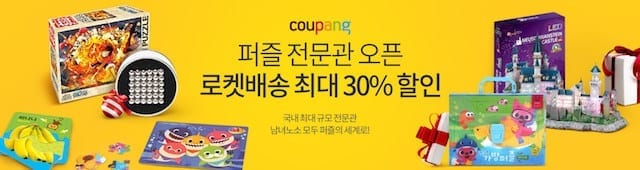
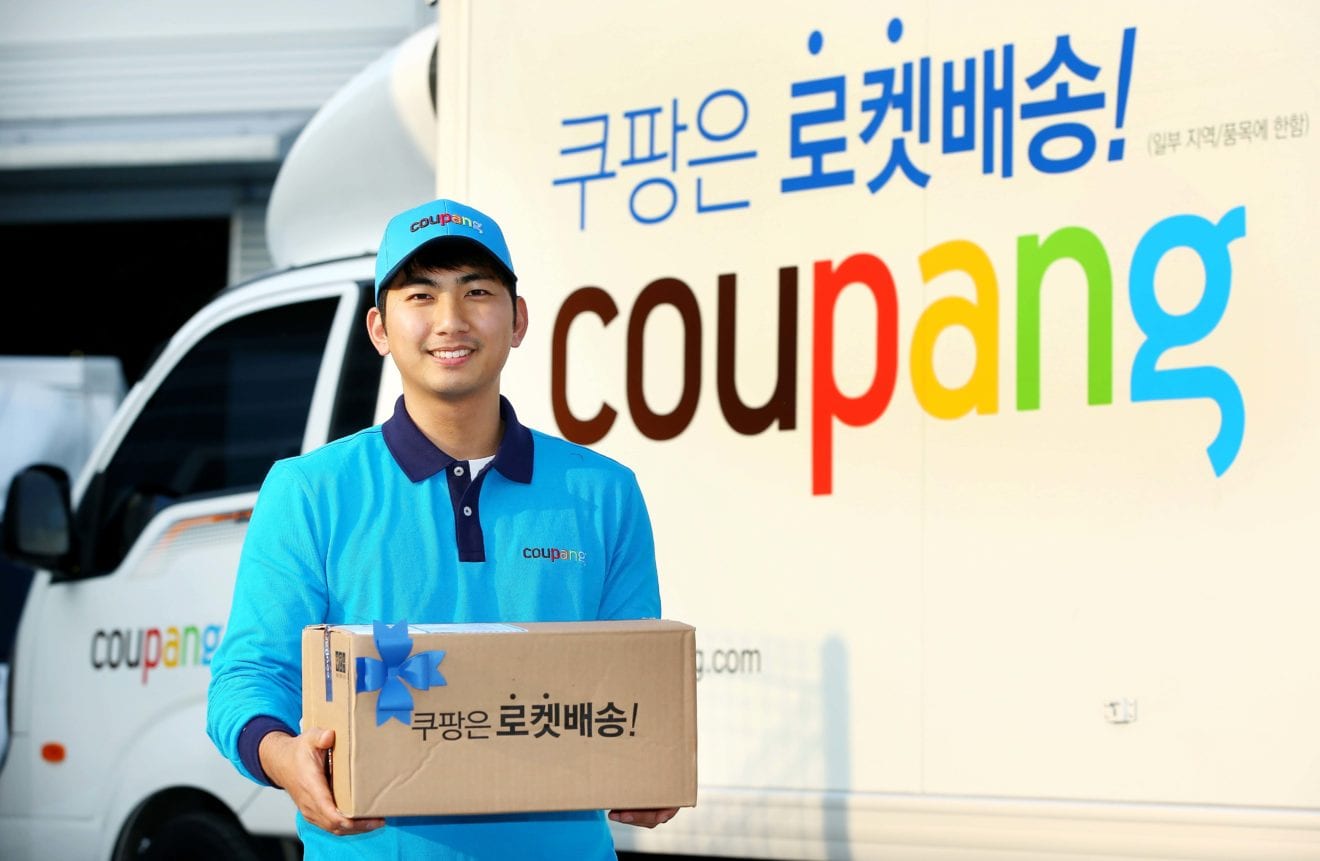
    E-commerce platform Coupang has opened what it claims is Korea’s largest toy store.

    While the store specialises in puzzles, it features a catalogue of some 95,000 toys including jigsaw puzzles, 3D puzzles, cast metal puzzles, cubes and fidget toys.

    Coupang launches Koreaís largest puzzle store on November 28 (PRNewsfoto/Coupang)

    Coupang already offers a broad range of products at affordable prices through its specialty stores, including organic foods, men’s grooming products, health supplements and children’s books.

    Coupang’s head of baby, Lee Byeong-hee said that puzzles have become a popular hobby for all ages.

    “We created the puzzle store to offer a range of products from Korean and overseas brands at low prices.”

    Key items on sales include Smart Study’s Pinkfong Puzzle Bag, Haksan Publishings One Piece Jigsaw Puzzle, palm-sized ALB Neo Cube Magnet Blocks and the CubicFun L174H 3D Neuschwanstein Castle with LED lights.

    Coupang marked the grand opening with special discounts of up to 30 per cent on some 10,000 Rocket Delivery puzzles.

  • Danone-Lazada plans its strategic partnership

    Danone-Lazada plans its strategic partnership

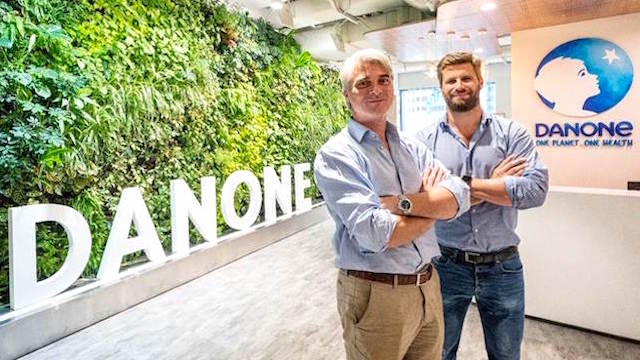
    French FMCG company Danone has teamed with Lazada Group to create a series of online stores for Southeast Asia, starting with Thailand in December.

    The Danone-Lazada strategic regional partnership covers Thailand, Indonesia, Malaysia and Singapore. The two companies say they will create “a superior online shopping experience for key product categories, combining their expertise on shopper needs and behaviours, and bringing convenience and compelling content to the ever-growing number of online consumers across the region”.

    The alliance will begin with Danone’s Early Life Nutrition category, which features a portfolio of brands for families with young children. Danone’s Early Life businesses are already working together in Indonesia, Thailand and Singapore – participating in Lazada mega-campaigns such as Online Revolution on 11.11 and 12.12.

    The joint venture will stretch beyond simple e-commerce by offering parents advice and information on the growth, development and nutritional needs of children. Lazada’s digital platforms will provide convenient ordering solutions, personalised service and exclusive content and events developed with Danone.

    “We have been working with Lazada for more than a year, and accelerating our partnership in the last six months,” says Eric van der Hoeven, VP of growth through engagement at Danone Early Life Nutrition. “We want to support all parents in their journey, and wherever we can, to help them make well-informed feeding decisions for their children at the critical moments in their growth and development. I am very pleased that our constructive collaboration so far will now be taken further in this strategic regional partnership.”

    Lazada CEO Max Bittner says young parents live increasingly busy lives and are often confronted with information overload.

    “Teaming up with a trusted brand like Danone reinforces Lazada’s position as a source of quality products and enables us to serve the best, most relevant content, service and support for parents on their journey.”

    The partnership will come into force by end of November, beginning with workshops bringing together the Danone and Lazada teams in the local countries in sharing insights and planning. The first visible consumer features jointly developed will be implemented on the Lazada websites in Thailand in December.

  • Bitcoin to be accepted in Seoul Mall

    Bitcoin to be accepted in Seoul Mall

    Seoul’s giant Goto Mall has partnered with a Korean cryptocurrency exchange to enable its retail tenants to accept bitcoin as payment.

    The exchange, HTS Coin, launched in October and developed a smart payment system using cryptocurrencies before launching a mobile app.

    Goto Mall – also known as the Gangnam Terminal Underground Shopping Centre – has 620 tenants and hosts nearly 500,000 shoppers daily. Stores will begin accepting bitcoin payments by the middle of December, reports Bitcoin.com.

    “I think it is very meaningful to be able to settle the bitcoin used by foreigners and young people at Goto Mall,” said mall CEO Chung Gwi Yeon.

    Some stores in the mall have been accepting bitcoin payments directly in a trial, but Bitcoin.com reports there were problems with store owners losing their passwords and unable to spend the bitcoins they had accepted.

    Newspaper Bridge Economy observed that when the new World Duty-Free store opens in Gangnam Central City next year, Goto Mall can expect to further increase its foreign customer base. “Goto Mall is expected to turn into a bitcoin mecca.”

    Bitcoin will join cash, credit cards and Alipay is primary payment options at the shopping centre.

  • Pomelo to get more cash injection

    Pomelo to get more cash injection

    Thai retail powerhouse Central Group has joined the series-B funding round of international online fashion company Pomelo, based in Bangkok.

    Along with Start Today Ventures, it joins JD.com, Lombard Private Equity and Provident Capital Partners in the capital raise.

    Start Today Ventures specialises in fashion business investments that use digital innovation and information technology, and is supported by Start Today which runs Japanese fashion e-commerce venture Zozotown.

    “We are pleased to have Central Group and Start Today Ventures join us in building the first global fast-fashion brand out of Southeast Asia,” says Pomelo CEO David Jou. “This investment gives us further capital to continue to push our business forward.”

    “We believe Pomelo and its team is best positioned to capitalise on the growing fashion-conscious middle class in Southeast Asia,” says Start Today Ventures general partner Reina Nakamura. “The company has established unique assets that distinguish it amid heating competition – a combination of data-driven business throughout a value chain that is competitive at a global scale, with an innovative interpretation of multi-channel (O2O) and an in-depth understanding of its customers across core markets in Southeast Asia.”

    The extra capital raised will help the company continue to expand its product assortment, open innovative retail stores and continue moving into other markets.

  • Speed Lotte shopping app, Lotte Mart’s next move

    Speed Lotte shopping app, Lotte Mart’s next move

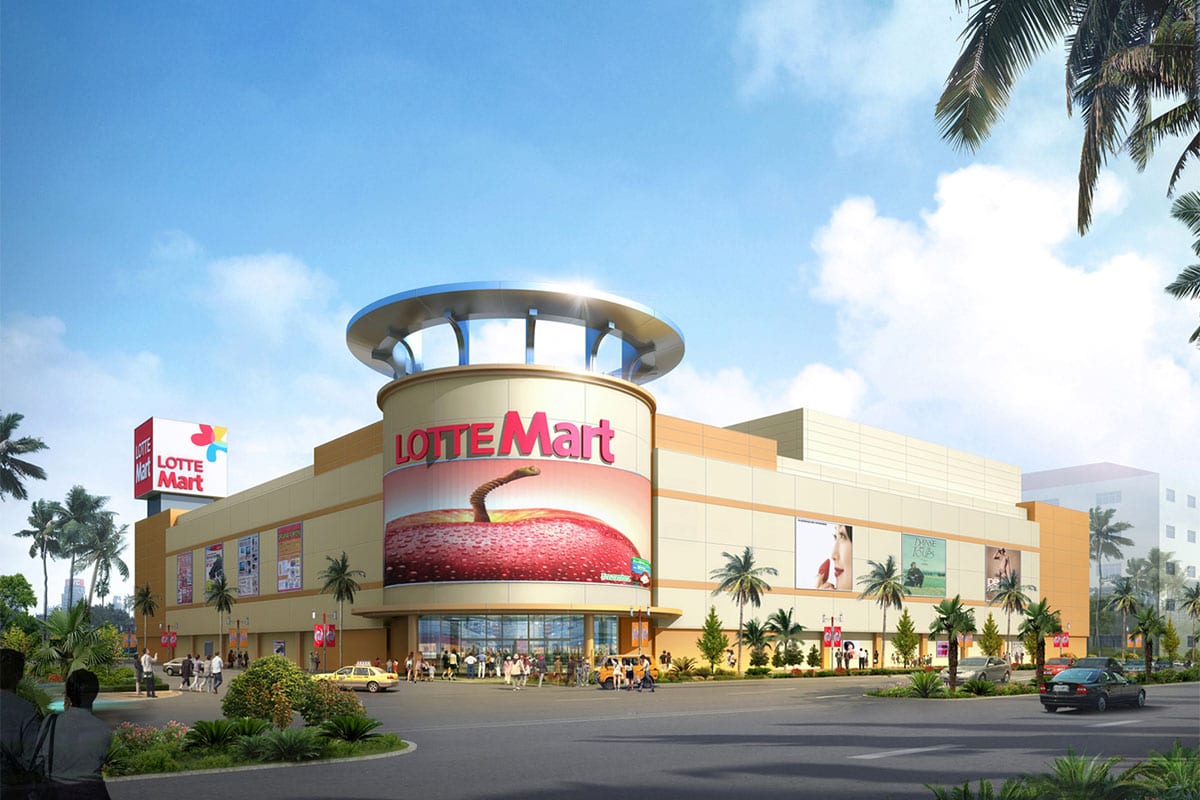
    Korean retailer Lotte Mart has launched its Speed Lotte shopping app in Vietnam.

    The app allows smartphone users to buy more than 1000 items from categories including fresh food, lunch boxes and Korean products as well as Lotte Mart’s Choice L home-brand products.

    Free delivery within a radius of 10km will apply for purchases over VND100,000.

    Both Lotte Mart members and non-members can shop through the app, although registered members can enjoy frequent promotions from the retailer.

    The first 1000 customers to spend more than VND200,000 via the app will get vouchers worth up to VND100,000.

    The app is being tested at Lotte Mart District 7 and Go Vap, in greater Ho Chi Minh City before being launched nationwide.

  • Uber-inspired Vietnamese start-up wins golden ticket to Silicon Valley

    Uber-inspired Vietnamese start-up wins golden ticket to Silicon Valley

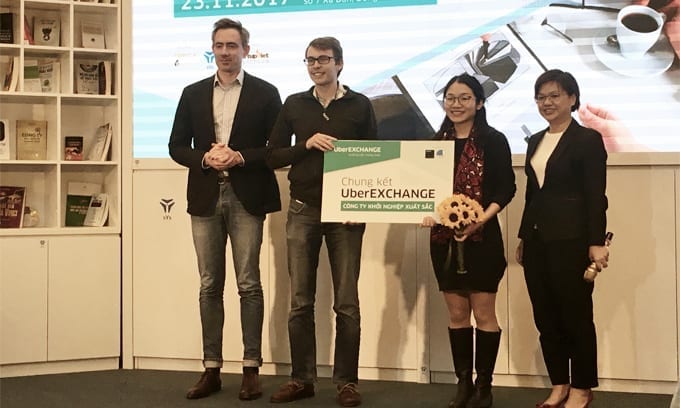
    Ten aspiring Vietnamese start-ups went head-to-head on Thursday at the final of UberEXCHANGE, a nationwide competition offering a $4,400 prize and two tickets to visit Silicon Valley.

    Logivan, a two-month-old start-up, emerged as the winner with its plan to ‘Uberise’ Vietnam’s road freight market.

    “From my house I can see lots of empty trucks returning to their depots after completing their deliveries,” said CEO Linh Pham. “It’s a huge problem.”

    The start-up already works with 300 trucks and ships up to 28,800 tons of freight per year.

    Logivan hopes to step up in the giant market that will be worth an estimated $9 billion in 2017.

    “If you bought something, a truck brought it!” the slogan says.

    Last year, the Vietnamese government set a target of reaching one million new firms by 2020, turning the country into a start-up nation.

    In the cozy conference room, both experts and competitors were positive about the country’s start-up scene.

    “People say that Vietnamese start-ups are not tech-related, and that might have been true a few years ago when most people were focused on commercial start-ups,” Nguyen Thi Thu Van, said board member and vice president of the Vietnam Youth Union.

    “But this year we’ve seen two clear tech trends: bio and information technology.

    “I don’t think the government’s target is out of reach,” Van continued. “Since the plan was announced, remote provinces like Kon Tum have been the most supportive for start-ups.”

    Diep Que Anh, head of communications for Uber Vietnam, shared Van’s optimistic view.

    “We’ve seen a number of them reaching international markets in their very early stages,” Anh said. “So I think there’s a lot of reasons to be optimistic and excited about.”

    Vietnam, particularly its biggest economic hub Ho Chi Minh City, has long been known to the global tech market as an outsourcing haven, but the nation is yet to register on the global startup map.

    In the Global Startup Ecosystem Report 2017 released by U.S. research organization Genome, Ho Chi Minh City was not mentioned in its top 20.

    Geektime, one of the biggest tech blogs that focuses on global innovation, estimated the number of tech start-ups in Vietnam stood between 1,400 and 3,000 in 2016, making the country the third largest ecosystem in Southeast Asia. However, around 95 percent of start-ups die within 3-5 years.

    But Vietnam’s start-up spirit, its young, tech-savvy generation, and recently, ambitious leadership, make the country an attractive new ecosystem.

    What Vietnamese start-ups are missing is access to experienced professionals.

    “Even the best teams we’ve seen today don’t have the necessary presentational and persuasive skills,” said board member Van Nguyen.

    “It helps to receive mentorship from successful startups to learn about management skills,” Van stressed.

    Diep Que Anh, head of communications for Uber Vietnam, offered more advice.

    “It’s always important to understand the landscape in which you are competing,” Anh said. “They need to look regionally and globally, not to solve just Vietnam’s problems.”

    Despite all these problems, Phan Nguyen, CEO of another finalist, said it was a good start. “It’s good to see the quantity first, then the quality will improve.”

    Uber’s Que Anh agreed.

    “If these are the indications, then the future is very bright,” she said

  • China’s Tencent surpasses Facebook in valuation a day

    China’s Tencent surpasses Facebook in valuation a day

    Chinese internet giant Tencent has surpassed Facebook in terms of market value just a day after it became the first Asian technology firm to reach the $500 billion valuation mark.

    Tencent shares hit a record high of 439.6 Hong Kong dollars during Asian trading hours on Tuesday 21 November 2017, giving it a market capitalization of 4.17 trillion Hong Kong dollars ($534.5 billion).

    The Chinese firm’s value overtook Facebook’s $519.4 billion market capitalization, which was hit at the close of the U.S. markets on Monday 20 November 2017.

    Also Monday 20 November 2017, Tencent beat Alibaba to become the first Chinese technology company to hit the $500 billion market capitalization mark. Tencent is also within touching distance of Amazon’s $542.7 billion valuation.

    Tencent went public in Hong Kong in 2004 at 3.70 Hong Kong dollars per share. Since then, it has rallied over 11,000 percent. Tencent’s stock this year alone is up 126.69 percent.

    Still, the company is not well-known outside of China, but owns the country’s most popular messaging service, WeChat, which has close to 1 billion users. Tencent is a sprawling business that spans gaming, social media, news and content.

    Online and mobile games are a key part of the business — the division brought in over $4 billion in revenue last quarter. In 2016, Tencent acquired a majority stake in Finnish smartphone maker Supercell, the company behind the popular “Clash of Clans” mobile game.

    Tencent has also been trying to move outside of China, but not necessarily through the expansion of its own products. Instead, it has been making investments across the U.S. and Asia. It has acquired stakes in both Tesla and Snap, and invested in numerous start-ups in Asia, including India’s Uber rival Ola.

    Analysts were positive on Tencent’s stock after it smashed past market expectations when it reported third quarter earnings earlier this month. Barclays raised its price target for Tencent from $49 to $59, and upped its revenue forecasts for 2018 and 2019.

    “We mainly attribute accelerating revenue growth to the continued monetization improvement across multiple key business segments, such as gaming, video, and payment services, and note that user growth is still strong,” Barclays said.

  • AsiaMalls Management and UnionPay International partner to launch QR Code payments

    AsiaMalls Management and UnionPay International partner to launch QR Code payments

    AsiaMalls Management signed a memorandum of understanding (MOU) with UnionPay International (UPI) to roll out acceptance of UnionPay QR Code payments across all six malls – Hougang Mall, Liang Court, Tiong Bahru Plaza, Tampines 1, White Sands, and Century Square when it reopens in 2018.

    As the first large-scale partnership between a mall manager and a global payment brand to deploy QR Code payments across malls in Singapore, this form of QR Code payments is compatible with SGQR and compliant with EMVCo standards. UnionPay International is a member of the SGQR taskforce led by Info-communications Media Development Authority (IMDA) and Monetary Authority of Singapore (MAS) to develop a common, interoperable QR Code to accelerate the adoption of mobile payments locally. UnionPay is also part of the EMVCo Global Workgroup developing an international standard for QR Code payments.

    This new partnership between AsiaMalls and UPI came from the mall management’s understanding of the shopper’s needs and the retail landscape, coupled with a mindset for innovation. AsiaMalls strives to go beyond meeting the basic necessities of their shoppers and the community around each mall by constantly seeking new and exciting retail experiences, of which this partnership serves as an example.

    Tapping onto existing payment infrastructure from AsiaMalls’ rewards programme, AMperkz, the initiative will enable UnionPay Cardholders to enjoy greater ease of payment at all participating AsiaMalls merchants when the enhanced system rolls out in phases starting 2018. UnionPay QR Code payments allow merchant discounts and payment transactions to be processed via a single scan of the consumer-presented QR Code, providing added convenience and simplifying the payment process for both consumers and merchants alike. It will also open up opportunities for shoppers without NFC-enabled smartphones to make contactless mobile payments.

    “With the nation’s move towards a cashless society, we saw the opportunity for AsiaMalls to anticipate our shopper’s wants and expectations, and to provide them with all the conveniences possible, by equipping our merchants with the ability to accept UnionPay’s QR Code payment option. This would allow the stores to expand their clientele base, and in time, enable them to be fully integrated and ready for the Smart Nation roll-out,” shares Tan Kee Yong, Managing Director, AsiaMalls Management.

    “Today’s cooperation is significant in multiple aspects: First, we are able to establish the acceptance of UnionPay QR Code on a sizeable scale in Singapore for cross-border payment by leveraging on AsiaMalls’ strong footprint in the local retail industry, offering the same seamless mobile payment experience to Chinese tourists in both Singapore and in China. Second, we choose to promote UnionPay QR Code payment first in everyday spend merchants like shopping malls as this will not only help us localise our business, but also help issuers like Bank of China Singapore branch and other local

  • Is Singles Day still the world’s biggest retail event?

    Is Singles Day still the world’s biggest retail event?

    As Americans prepare to savor the year’s best holiday sales opportunities, an even bigger sales extravaganza just took place in China: Singles Day.

    Singles Day is China’s annual e-commerce event, which takes place on Nov. 11 (hence its nickname, “11.11”), and this shopping phenomenon inspires consumers to buy things for themselves — especially if they are not currently in a relationship.

    Singles Day 2017 certainly lived up to the massive marketing hype by smashing global sales records yet again. The event earned $38 billion in total sales, with $25.3 billion from Chinese e-commerce giant Alibaba alone, up 42% from last year’s total of $17.8 billion.

    These results prove Single’s Day is the biggest retail event in the world — and it’s only getting bigger. Singles Day 2017’s success also reflects the stark contrast between booming Asian markets and the contraction of retail markets in Western countries, including store closures, bankruptcies and consolidation.

    China’s favorable market factors

    To take advantage of growth opportunities abroad, an increased number of U.S. and global retailers have expanded into China through cross-border e-commerce.

    Retailers around the world must understand the following emerging consumer and market trends, which have contributed to China’s retail expansion — especially if they are considering entering China in 2018.

    • Economic prosperity: The size of China’s middle class continues to surge, increasing 55% between 2015 and 2020. In addition, their increased affluence has led to a “consumption upgrade,” as Chinese consumers are now more likely to buy premium merchandise.
    • Tech-savvy consumers: Mobile sales accounted for an astounding 90% of total Singles Day sales. The convenience and efficiency of integrated mobile payment made it easy for Chinese to shop from anywhere.
    • Savvy shoppers: Increasingly discerning Chinese consumers often prefer foreign products for certain categories for their safety, quality and prestige. However, on Singles Day, shoppers prioritize irresistible pricing and smooth logistics. Top-selling categories for cross-border e-commerce include mom and baby, healthcare and nutrition products; on Singles Day, shoppers prefer apparel and footwear, cosmetics and consumer technology, and product placement is essential, as online visibility correlates with higher sales.
    • Regulatory influences: The Chinese government has agreed to postpone restrictions on imported products until at least December 2018, making cross-border e-commerce more attractive and lucrative for foreign retailers. In addition, China’s removal of the One-Child Policy has led to a mini baby boom — and major growth for companies selling mom and baby products.

    Proof cross-border e-commerce is hot

    As a result of these market trends, U.S. and global retailers (and consumers) are paying more attention to Singles Day than ever before. While Alibaba accounted for 66% of total Singles Day sales, we certainly see the theme of greater globalization of this sales event, as 2017 is only the second year that international goods have been available for sale in China on Singles Day. This year, on Amazon China’s website, 7.3% of sales came from overseas, compared to 5.4% of sales on Tmall (Alibaba’s online marketplace) and 4.9% of sales on JD.com (another Chinese e-commerce powerhouse).

    Early results show U.S. and foreign retailers don’t need to have a gigantic marketing budget like Amazon or Alibaba to succeed on Singles Day.

    One American retailer selling online in China hoped to achieve sales of 300 orders per day by December 2018; instead, the company shattered that goal, earning more than 1000 orders in a day, ahead of Singles Day. The retailer prepared well by stocking bestselling products in its Hong Kong warehouse for faster delivery; these few SKUs accounted for 15% of Chinese Singles Day orders. The campaign also boosted sales growth by 276% and the number of new users by 200%.

    Key success factors in China retail

    To succeed in China, especially on Singles Day, U.S. and foreign retailers need to invest in product placement; proactive and abundant stocking; competitive price offers; and fast, effective logistics.

    In summary, due to multiple advantageous market conditions in China’s retail market, more U.S. and global retailers are paying attention to, and participating in, Singles Day promotions using cross-border e-commerce. If your company plans to enter China in 2018, consider how you will adapt to these market trends to win in China’s retail market — and potentially earn explosive sales on Singles Day 2018. Here’s an infographic summarizing the results of a Singles Day campaign by one of Azoya’s clients:

    Franklin Chu is managing director U.S. for Azoya International, a provider of turnkey cross-border e-commerce solutions to assist retailers looking to expand into China through a cost-effective and lower risk method. To date, over 35 retailers in 11 countries are partnering with Azoya to expand into China with ease, including French fashion retailer La Redoute, Australia’s largest pharmacy group, Sigma, as well as Feelunique, the largest online beauty retailer in Europe.

  • Alibaba and JD in a war of words via lawyers over claims of dominating China’s e-commerce

    Alibaba and JD in a war of words via lawyers over claims of dominating China’s e-commerce

    China’s two dominant e-commerce platforms in the world’s largest online retail market are under the spotlight in an online debate via their legal representatives about their duopoly in the industry.

    On one side is Alibaba Group Holdings, owner of the South China Morning Post and operator of the world’s largest online shopping platform, claiming that it has been the target of an organised series of chat room postings and blogs aimed at tarnishing its reputation.

    On the other side is JD.com, China’s second-largest online retailer, which said it too had been the target of more than 100 attacks to cast aspersions on its reputation, as recently as during the November 11 online shopping gala.

    The attacks on Alibaba were designed to “manipulate public opinion,” and made “groundless accusations,” the company’s legal department said in a Friday post on its Weibo social media account. “We believe the authorities should investigate and punish the criminal groups who we believe have illegally profited from propagating such rumours,” the Weibo post said, without naming the perpetrator.

    Chat room posts and blogs have surged in the past month, accusing Alibaba of using its dominance of China’s e-commerce consumer market to force merchants to choose side, or be squeezed out of business.

    As many as 9,700 articles emanating from more than 500 social media accounts were posted on various online platforms in China to attack Alibaba, mostly before the Singles’ Day online shopping gala on November 11, according to a WeChat post on Wednesday by Alibaba’s legal adviser. Up to 4,600 of these accused Alibaba of forcing merchants to choose sides or accusing it of monopolising China’s e-commerce market.

    At stake is an e-commerce industry that has dwarfed every other country in the world, and is being dominated by two large companies.

    Alibaba’s Tmall platform has 80 per cent share of China’s online clothing sales, while JD holds 10 per cent, according to research by Analysys.

    Even though Alibaba hadn’t named the perpetrator of the online campaign, the company’s legal adviser had forwarded Weibo posts that claimed JD as the client behind a 2.6 million yuan (US$394,000) contract to hire ChinaLabs, a Beijing-based consulting services provider, to attack Alibaba of monopolising the market.

    JD paid ChinaLabs 600,000 yuan to initiate research and host media seminars to discuss Alibaba’s monopoly in China’s e-commerce market, according to the posts, which cited a contract between the two parties between August 1 and December 31.

    Another contract showed that ChinaLabs was receiving 2 million yuan from JD to instigate China’s antitrust regulators to investigate on Alibaba for monopolistic practices.

    The contracts in the Alibaba legal adviser’s posts could not be independently verified.

    Spokespersons at JD, an online retail platform whose market value is about a tenth of Alibaba’s capitalisation, did not respond to text messages and phone calls soliciting their comment.

    Jincheng Tongda Law Firm, acting on behalf of JD, issued a statement on Saturday denying any association with ChinaLabs.

    Separately, ChinaLabs’ chairman Fang Xingdong denied through a Weibo post that his company had ever signed the contracts with JD, saying that it will continue to conduct investigations and research on the antitrust situation in China’s e-commerce industry.

    Alibaba’s shares have doubled this year as the Hangzhou-based company broke its November 11 retail festival record and deepened its push to marry online and physical shopping. The company this month agreed to buy a 36 per cent stake in Hong Kong-listed Sun Art Retail Group, which runs one of the biggest hypermarket chains in China.

  • Trading house Itochu taking on Alibaba and JD.com

    Trading house Itochu taking on Alibaba and JD.com

    Itochu and two partners are investing roughly 7.6 billion yen ($67.6 million) in an e-commerce venture selling Japanese goods to the Chinese market in hope to enhance its own forays into China’s internet sector.

    The Japanese trading house is investing around 4 billion yen into the Tokyo-based startup Inagora, with telecom KDDI and financial services company SBI Holdings providing the rest.

    Itochu previously invested around 100 million yen in the company and will now hold a roughly 20% stake, making it the second-largest shareholder behind founder and CEO Weng Yongbiao.

    Founded in 2014, Inagora operates Wandou, a Chinese-language e-tailer with some 3 million users.

    The site boasts around 40,000 offerings, with a focus on cosmetics, clothing and foods from brands including Japanese fashion label Samantha Thavasa, Swiss lingerie maker Triumph International and Japanese food producer Ajinomoto.

    China’s cross-border e-commerce market is growing rapidly. The market for goods from Japan is seen nearing 2 trillion yen in 2020. The country’s overall e-commerce leaders currently have a strong grip on the cross-border segment: Top player Alibaba Group Holding commands a roughly 40% share, while second-place JD.com and major internet player NetEase control shares in the 10-20% range.

    Itochu has already taken its first step into the cross-border market, launching a high-end site in spring 2017 with Chinese state-owned conglomerate Citic, a major partner.

    But the trading house has realized breaking Chinese heavyweights’ grip will require savvy marketing that can respond nimbly to consumer tastes — hence its turn to Inagora, which excels at creating videos highlighting the appeal of Japanese products for local consumers.

    The trading house will supply products for Inagora’s site through units including food wholesaling arm Nippon Access and Edwin, Japan’s largest maker of jeans. In addition, Itochu will have the site carry local specialty items from across Japan stocked by convenience store chain FamilyMart, another member of the Itochu group.

    Itochu Logistics, with over 100 locations in China, will also cooperate with Inagora, which plans to add warehouses to its own distribution network using money from the latest round of investment.

    The startup will also hire more sales staff to encourage companies to list their products. Forays elsewhere in Asia are on the agenda as well: The company plans to bring its business to Taiwan, Malaysia and elsewhere in 2018.

    Inagora anticipates around 15 billion yen in transactions this year, six times the 2016 level. With help from Itochu and others, the startup targets 100 billion yen in transactions in 2019 and 176 billion yen a year later.

  • VIP to invest in Australia

    VIP to invest in Australia

    A Chinese online shopping giant has arrived in Australia this week to unveil its new Sydney distribution centre.

    VIP.com is one of the largest players in China’s e-commerce space with total orders for the third quarter of 2017 increased by 23 per cent to 74.0 million from 60.1 million in the prior year period.

    “Australia is already a very strong market for VIP.com. We are looking to procure about AUD 500 million of Australian goods in FY18 and we expect to double that figure the year after,” said Hillary Wang, VIP.com’s head of global buying.

    “We have highly effective partnerships with many Australian businesses and have become their primary sales channel in China. We have serious aspirations to become the number one platform in China for many more of our suppliers’ businesses.”

    With Australian brands highly sought after in China – based on consumer’s perceptions of trust and value – VIP recently partnered with Australia’s largest food manufacturer, Nestle,  to introduce Australia’s Uncle Toby’s, Allen’s confectionery and Soothers trademarks to China.

    “We only deal with brand owners directly or through their authorised distributors. Authenticity is critical to building brands and Chinese shoppers know that VIP.com delivers that,” Wang said.

    VIP stated its female skewed audience (+80 per cent) and ability to customise the recommended range of products to shoppers, based on demographic and purchase history, give it major point of differences to its Chinese e-commerce competitors.

    “We are pleased to be investing in Australia,” said Wang.

    “Chinese consumers trust Australia’s production standards and quality of its natural resources.

    “Australia is our number one import market for nutrition and food and beverage, and whilst we have made much progress, we have plans for further significant growth. This trip is about deepening our partnerships with existing suppliers and inviting participation from potential new partners.”

    The online retailer will invest in local infrastructure to enable growth in trade between Australian businesses and its accessible database of 300 million Chinese shoppers.

    Investment is being channelled into supply chain capability and people in Australia to facilitate trade.

    “In discussions with our Australian partners, we are often told the Australian market is a highly contested and offers relatively low growth,” said Wang.

    “We are happy to bring a good news story to these businesses, the opportunity to share with Chinese shoppers brands that are rich in history, made with the best ingredients to the highest standards, by hard working Australians. These are exciting times.”

  • Winning the hearts and wallets of today’s tech-savvy customers

    Winning the hearts and wallets of today’s tech-savvy customers

    New-age digital customers are changing, so are the ways to keep them hooked. Today’s customers in Asia, like those elsewhere, expect seamless and consistent omnichannel experiences along with the best quality and price. Thanks to a plethora of touch-points, selling is no longer a linear process and requires a constant connect with customers. Customer engagement now rides heavily on technology, which, in turn, drives each step of the buying decision and beyond.

    As retailers struggle to come up to speed with fast-changing customer behavior, the threat from new-age global digital players has become very real – the disruption has happened in a very short time.

    A big challenge for retailers involves bridging the gap between what they have to offer and what customers want. A Forrester survey shows that while 60% of retailers believe their company provides an exceptional customer experience, only 31% of customers reported having consistently positive experiences.

    Retailers are also struggling to effectively utilize digital capabilities in serving customers. Around 84% retailers in the survey rated themselves over 8 (on a scale of 10) in digital maturity of the services they provide to their customers. But a whopping 51% reported challenges in leveraging those capabilities to provide consistent customer experiences.

    Walk alongside, not behind

     The customer is well and truly the king now. Retailers must adopt a customer-centric approach. An ideal customer-centric approach will ensure that the focus is on enhancing customer experiences while simultaneously understanding customer behavior and attitude.

    The ideal starting point towards this goal is to review the digital customer touch-points and assess whether customer interactions are designed to enhance both customer experiences as well as the organization’s ability to understand customer intent and preferences.

    While the fundamentals of product, price and service are just as relevant as ever, a 360-degree approach to understanding customer interests, attitudes and behaviors is necessary for retailers to meet customer expectations.

     Attention – the first step of the A-I-D-A (Attention, Interest, Desire and Action) model — is being grabbed by retailers who offer exciting technology experiences to customers. The likes of Alibaba and Myer introduced virtual shopping experiences earlier this year, allowing customers to wear headsets and enter virtual stores to browse through products. Several retailers are leveraging personalized products, interactive digital displays, touch-and-go payment applications, body scanners and magic mirrors, all of which have the potential to bridge the gap between the online and the offline worlds, accelerating the promise of a “smart” shopping experience that recognizes and delights the new-age consumer.

    Accelerate towards omnichannel 2.0 with caution

     While the basics of omnichannel retailing must be in place, customers today demand excellence. This means even one part of the experience falling short of expectations can undo the greater experience retailers may have delivered across other channels.

    Checking the box too quickly on omnichannel programs, before ironing out the issues with in-store operations, can lead to poor customer experiences, low adoption rates of these services, and even customer attrition. Retailers must look at their store environments to see where opportunities exist for improving not only digital experiences, but also the interactions and processes that form the key components of the shopper experience.

    Strengthen the purchase beyond purchase

    Buying is no longer a sequence of steps. There is much more back-and-forth, many comparisons, multiple channels and several decision points – all driven by technology. It is important to bring the customer back too. Customers are excited by technology, and technology becomes a companion to customers in their path to purchase and beyond.

    Retailers must design experiences that encourage shoppers to come back. Post-purchase experience is one of the important touch-points that can influence customers and inspire loyalty.  The first 24 hours after a purchase is the ideal time to build trust by delivering more content or asking for feedback. That helps capture emotional highs – both positive and negative – and translate them into better actions. Negative outcomes can be turned into opportunities to connect with customers and positive outcomes can be used to strengthen relationships.

     A big opportunity awaits

    Highly connected customers bring with them very high expectations, settling for nothing less than the best experiences and deals. This creates a lot of opportunities as well as challenges for retailers to gain and retain those customers. Successful retailers will be the ones who leverage technology to engage with customers – well beyond buying – in innovative ways, focus on all touch-points to impress customers and glean insights, and provide a seamless, integrated experience across channels.


    by  Singaravelu Ekambaram, Global Delivery Head, Retail and Consumer Goods, Cognizant