Category: E-Tailing

Retail News Asia is committed to providing both local and global retailers with the latest E-Commerce & Etail news throughout the Asian market. This on a daily base.

  • Zalando seeks more brand partnerships to compete with Amazon

    Zalando seeks more brand partnerships to compete with Amazon

    The German company’s share price has come under pressure as Amazon’s big push into fashion has prompted Zalando to increase investment in logistics and technology to keep pace, forcing it to trim profit forecasts.
    But Zalando sees its new business line giving it an edge over its U.S. rival.

    Launched in Berlin in 2008, Zalando has grown fast to sell almost 2,000 brands in 15 countries via a classical e-commerce model, buying in stock to be sold online and shipped from its vast warehouses.

    It started complementing that with a partner programme two years ago to increase choice, charging fashion labels a commission for selling additional stock through the Zalando website and shipping the goods direct to customers. The brands, meanwhile, can keep control of pricing and presentation.

    After a pilot with Adidas, Zalando has signed up 700 brands and the programme now accounts for nearly 10 percent of the total value of goods sold on its site, with a long-term target of 20-30 percent.

    Carsten Keller, Zalando’s managing director of partner solutions, expects the scheme to support profitability and cement relationships with brands, some of which remain wary of listing on Amazon, where third-party sellers compete on price.

    “The brands are put in the driving seat. They keep control over the assortment, prices and brand representation. It is a very different environment to other market places like eBay or Amazon,” Keller told Reuters.

    PROFITABILITY

    German shoe brand Birkenstock is withdrawing from Amazon because of concerns over counterfeit products, while luxury brands last week won the right in Europe to stop retailers selling their products on online platforms.
    Zalando says the partner scheme’s expected profitability should help the company to reach a long-term target for an operating margin of 10 percent. But analysts have their doubts, on average forecasting 5.9 percent by 2020, up only slightly from the close to 5 percent Zalando expects in 2017.

    British rival ASOS, by comparison, forecasts a stable operating margin of 4 percent but is growing sales faster than Zalando and is seen as better insulated from Amazon’s advance thanks to a focus on fashion-mad youngsters.

    “We think expectations look demanding, as does the company’s longer-term margin guidance, given Zalando’s desire to push for market share, more intense online competition and expansion into lower-margin regions,” said RBC analyst Richard Chamberlain.

    Keller, a former McKinsey consultant who joined Zalando last year, says the partner programme was born because Zalando realised it was losing millions of potential sales when it ran out of stock on top-selling items.
    “It is growing with very high momentum. We doubled it over the past 12 months,” Keller said. “It adds substantial value and has a positive effect on the bottom line.”

    Nike is particularly pleased with the arrangement — so much so that its executives mentioned it three times on a recent analyst call.

    “Our partnership with Zalando is creating growth and shaping the digital marketplace in and beyond Europe,” said Elliot Hill, who runs Nike’s wholesale and direct-to-consumer businesses.

    Zalando is attracting brands that do not normally sell wholesale, such as Inditex’s Oysho, while also persuading others to offer exclusive ranges. Nike, for instance, released new colours of its classic Air Force 1 shoe for the German site.

    ‘VIRTUOUS CYCLE’

    “Amazon is a strong competitor, but is more transactional, offering more basic and discounted fashion. Zalando gets edgier stuff,” said Macquarie analyst Andreas Inderst, who has an “outperform” rating on Zalando.

    “It is a virtuous cycle because the more consumers come to the home page, the more Zalando can leverage consumer insights through data analytics, the more brands are attracted.”

    Zalando is offering its partners data about who is buying what and where, as well as helping brands with their marketing strategies, online content, logistics and inventory management, buying two software firms that help brands with digital inventory management.

    “In an Amazon or eBay environment, brands lose contact with their consumers because they do not get their hands on consumer data,” Keller said.

    Some analysts remain sceptical that Zalando will be able to fend off Amazon for long. Amazon more than doubled its share of the western European market for online fashion in five years to 6.5 percent in 2016, just behind Zalando on 7.4 percent, Euromonitor data shows.

    Amazon has signed up more than 350 brands in Europe in the past year and is running a pilot with Nike in the United States in return for more control over its goods on the site.

    “At the moment, Zalando has better brands and Amazon does not have as broad a range of current-season products,” said Berenberg analyst Michelle Wilson, who rates Zalando a “sell”.

    “But it is only a matter of time until Amazon can convince brands they won’t destroy their brand equity.”

  • Apple launches on Lazada

    Apple launches on Lazada

    Apple fans around South East Asia can now get new iPhones, iPads, and Macbooks from an official store on Lazada.

    Apple’s Lazada store opens in Indonesia, Thailand, the Philippines, Singapore, and Malaysia. Vietnam too will participate at an unconfirmed date.

    Alibaba-owned Lazada will get stock directly from Apple, after forming an agreement with the Cupertino company. That makes it the only official online seller of Apple’s baubles in the region. Beats by Dr. Dre headphones and other accessories are also available.

    Apple has a store in only one Southeast Asian nation: Singapore. That has created a niche for grey-marketeers to sell Apple’s gadgets – particularly iPhones – at inflated prices, with the ever-present risk of shoppers getting a counterfeit item.

    The opening is a boost to Lazada’s efforts to get more major brands to set up storefronts on its site. It already has 3,000 brands, mixed in with 135,000 smaller merchants.

    Earlier this year, when Retail in Asia met Duri Graziol, Director of Lazada Indonesia, and our discussion was about very well established brands and their way of targeting South East Asia.

    Typically, brands explore different options, among others,  creating their own .com., or going with a market place such as Lazada or Alibaba.

    Duri’s views on those options were the following :

    Creating your own .com

    Iis more ambitious and it requires huge investments, which go beyond building the website. Brands can easily build an e-commerce website, but how to bring people to the website, this is the challenge.

    Unless, you are selling something specific, which customers cannot find elsewhere, you are a small shop next to a shopping mall. Either people know your shop, or you will be basically just one in the thousands shops in the city, so on the internet.

    When people look for products without having any preference or idea, they go to a mall, and if you are not in there, you will miss your chance. In an online environment, those people go to market places and search per category.

    Going with a market place

    Customers who go to Lazada for instance, do not search per brand, they search for category, and if you are not there, it is very hard to target those customers.

    Additionally, a brand, which decides to open its own website will have to deal with high marketing costs to bring traffic to the website, with Lazada, those marketing costs are reduced as we work as a group. This is a massive advantage.

    In the countries we serve, infrastructures are a huge obstacle. Indonesia, for instance, has thousands of islands, as well as Philippines, and you need to deal with that, 50% of our orders are done ourselves.

    Another advantage of going with Lazada is the customer service management, which is internal for us makes it easier to reply to all questions regarding products, delivery, and logistics issues.

    Furthermore, payment, in countries like Indonesia, present some difficulties. Credit card and online banking penetration are still low or COD remains the lion’s share of payment methods and this it has pushed us to develop a business model for it.

    Cash on delivery is the solution for markets, in which trust is hard to build, and other payment services are not very well established.

    Concisely, Lazada is not only a market place, Lazada means experience in managing the customer journey and the different stakeholders involved in it.

    Apple is always looked at as a role model, so we are looking forward to the next giant brand to join Lazada.

  • Be ready with ‘more convenience’ app from 7-Eleven US

    Be ready with ‘more convenience’ app from 7-Eleven US

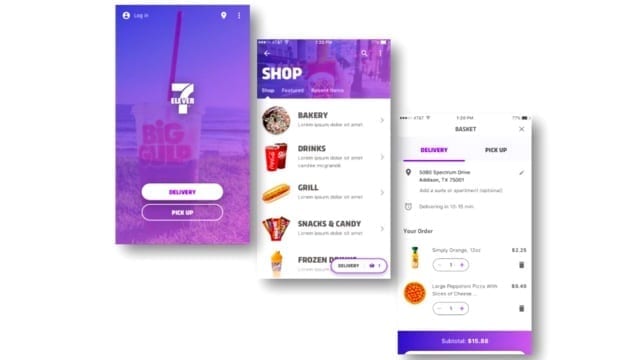
    7‑Eleven US is trialling on-demand ordering for delivery or in-store pickup at selected Dallas stores via its new 7‑ElevenNow smartphone app, ahead of a national roll-out.

    The new service is being tested in 10 downtown and uptown 7‑Eleven stores, and the convenience retail company says it will introduce the program into other locations in the US next year.

    Dallas customers who enroll in the new app – which runs on both Google and Apple platforms – will receive free delivery on their first order.

    “With more locations than any other convenience retailer in the world, 7‑Eleven has a corner on convenient, in-store shopping,” said 7‑Eleven US chief digital officer Gurmeet Singh.

    “As we undergo a significant digital transformation, we continue to look for ways to expand and enhance the company’s shopping footprint – and consumers’ digital shopping experience – outside its stores as well.”

    Singh said today’s digitally savvy consumer expects a wide range of options right at their fingertips.

    “We continuously ask our consumers how we can make their lives better, and 7‑ElevenNow is a proprietary solution to their on-demand needs. The app will enable our customers to get the products they want, when and where they want them, quickly and conveniently. This is redefining convenience.”

    When ordering items through 7‑ElevenNow, customers can choose to receive direct delivery to their location or pick up their prepared order at the participating store of their choice within the 7‑ElevenNow footprint. A wide selection of snacks, cosmetics, gift cards, home goods, beverages and hundreds of other products are available for purchase on the app.

    To use the app, shoppers choose the delivery or pick-up option. If delivery is selected, the app will auto-locate the nearest participating store and, once the order is placed, send it to a courier service. The courier then picks up the customer’s prepped products at the store and delivers them to the customer’s location. If shoppers choose pick-up, they select the items they want as well as the store they prefer for pick-up. The order will be waiting for them at the register. Customers can pay for both delivery and pickup via the app.

    “7‑Eleven has a legacy of innovation,” said 7‑Eleven US president and CEO Joe DePinto. “We have been pioneering new trends in the convenience industry for 90 years. Our company was the first to offer coffee in to-go cups, operate 24/7 and provide a self-serve soda fountain.

    7-Eleven, Inc. is testing on-demand ordering for delivery or in-store pickup at select Dallas stores with its new 7-ElevenNOW smartphone app. Currently being tested in 10 downtown and uptown 7-ElevenÆ stores, 7-ElevenNOW is expected to roll out to other U.S. locations in 2018. (PRNewsfoto/7-Eleven, Inc.)

    7‑Eleven will always look for innovative ways to reach and excite our customers and maintain our leadership position in convenience retailing. Today, that means redefining convenience through digital innovation.”

    7‑Eleven US’ digital team is working on a “full-stack digital transformation,” which includes the technology customers experience, as well as the technology that works behind the scenes to ensure seamless and effortless interactions.

    Other recent digital releases include the expansion of the 7Rewards app-based customer loyalty program, now available on a wider range eligible purchases, and the launch of 7‑Eleven Bot on Messenger, which allows millions of 7‑Eleven customers to engage with the brand from within Facebook.

    7‑Eleven US has also expanded the availability of Amazon Lockers for in-store package pickup, added Amazon Cash to over 8000 locations, and BillPay – an app powered by PayNearMe to help cash users pay for a variety of bills at 7‑Eleven stores.

  • Robinsons Retail acquires 20% stake in beauty website

    Robinsons Retail acquires 20% stake in beauty website

    Multi-format retailer Robinsons Retail Holdings has acquired a 20 per cent stake in Taste Central Curators, which runs Filipino e-commerce site BeautyMNL.

    Robinsons Retail has taken 1 million shares of the online store, which sells a range of beauty products including makeup, skincare and haircare.

    Financial details of the deal have not been disclosed as the transaction amount was less than 10 per cent of Robinsons stockholders’ equity.

    Robinsons Retail has six business segments: supermarkets, department stores, do-it-yourself stores, convenience stores, drugstores and specialty stores. Its brand names include Costa Coffee, Daiso Japan, Handyman Do it Best, Ministop, South Star Drug, The Generics Pharmacy, Topman, Topshop, Toys R Us and True Value.

  • Net giants ‘must pay for news’ from which they make billions

    Net giants ‘must pay for news’ from which they make billions

    Nine European press agencies, including AFP, called Wednesday on internet giants to be forced to pay copyright for using news content on which they make vast profits.

    The call comes as the EU is debating a directive to make Facebook, Google, Twitter and other major players pay for the millions of news articles they use or link to.

    “Facebook has become the biggest media in the world,” the agencies said in a plea published in the French daily Le Monde.

    “Yet neither Facebook nor Google have a newsroom… They do not have journalists in Syria risking their lives, nor a bureau in Zimbabwe investigating Mugabe’s departure, nor editors to check and verify information sent in by reporters on the ground.”

    “Access to free information is supposedly one of the great victories of the internet. But it is a myth,” the agencies argued.

    “At the end of the chain, informing the public costs a lot of money.”

    News, the declaration added, is the second reason after catching up on family and friends for people to log onto Facebook, which tripled its profits to $10 billion (8.5 billion) last year.

    Yet it is the giants of the net who are reaping vast profits “from other people’s work” by soaking up between 60 and 70 percent of advertising revenue, with Google’s jumping by a fifth in a year.

    Meanwhile, ad revenue for news media fell nine percent in France alone last year, “a disaster for the industry”.

    ‘Pillar of democracy at risk’ 

    “Years have passed (without anything being done) and free and reliable newsgathering is now threatened because the media will simply no longer be able to pay for it,” the news agencies added.

    “Diverse and reliable news sources, a pillar of democracy, risk being undermined.”

    Attempts by news outlets in France, Germany and Spain to force internet giants to pay have only resulted in them coughing up a “few symbolic crumbs”, they added.

    The press agencies insisted that some of the vast imbalance could be rectified if the EU gives them and other media “related rights” copyright to their work.

    However, some European Parliament members were worried that the proposed directive would threaten free access to news for internet users.

    But that would not be the case, the agencies insisted.

    “Internet users would not be touched… simply those who now pocket a disproportionate part of advertising revenue would have to share a significant part of it with those who actually produce the information” on which the money is made.

    The appeal was signed by AFP; the German agency DPA; Britain’s Press Association; the Spanish agency EFE; Italy’s Ansa; the Swedish agency TT; Belga of Belgium, Austria’s APA, and the Dutch agency ANP.

  • SpherePay, a mobile payment app launched in November this year

    SpherePay, a mobile payment app launched in November this year

    Launched early last month, mobile payment app company SpherePay, has acquired over 60,000 users in Singapore and has actively engaged users by running campaigns and strategic partnerships with reputable brands and organizations. With its mission to be South East Asia leading localized mobile payment app, SpherePay is on track of acquiring over 1 million users by end of 2018.

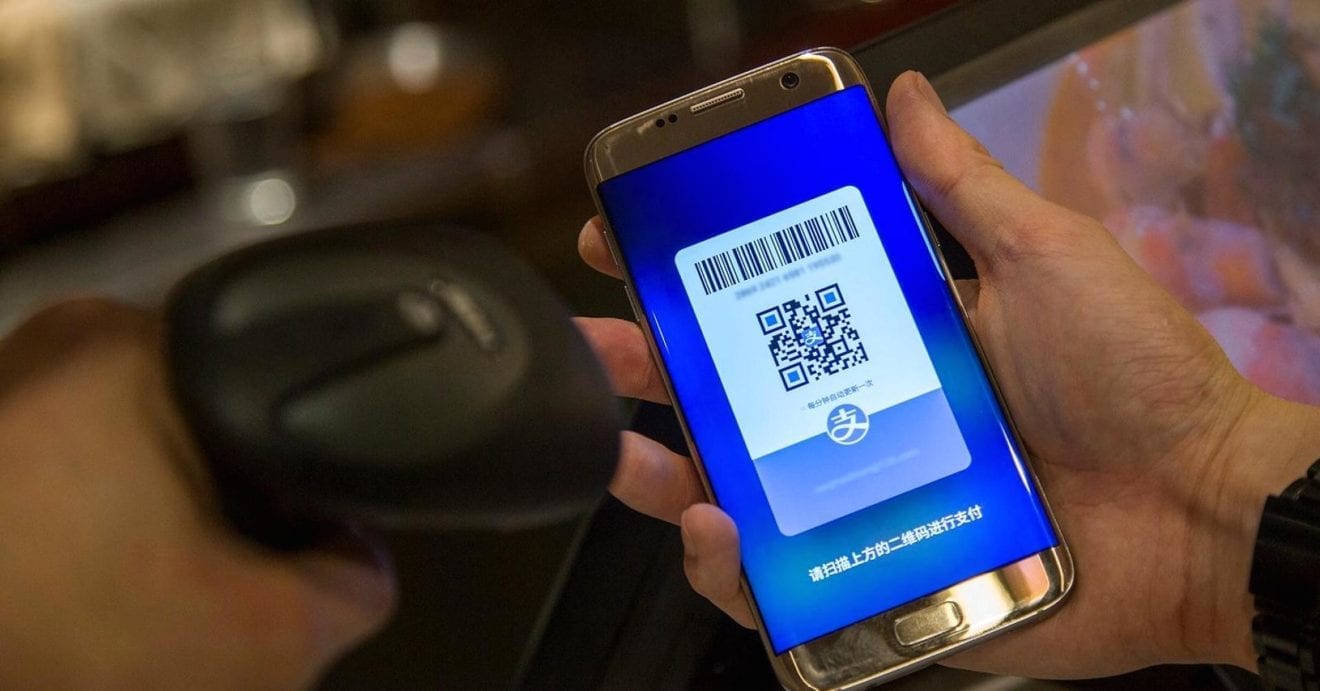
    With a fully equipped and supported QR code-based transaction systems, SpherePay aims to bridge both consumers and merchants’ transaction experience by providing a new cashless payment services, communications, events and experience of offline and online transactions all under one platform.

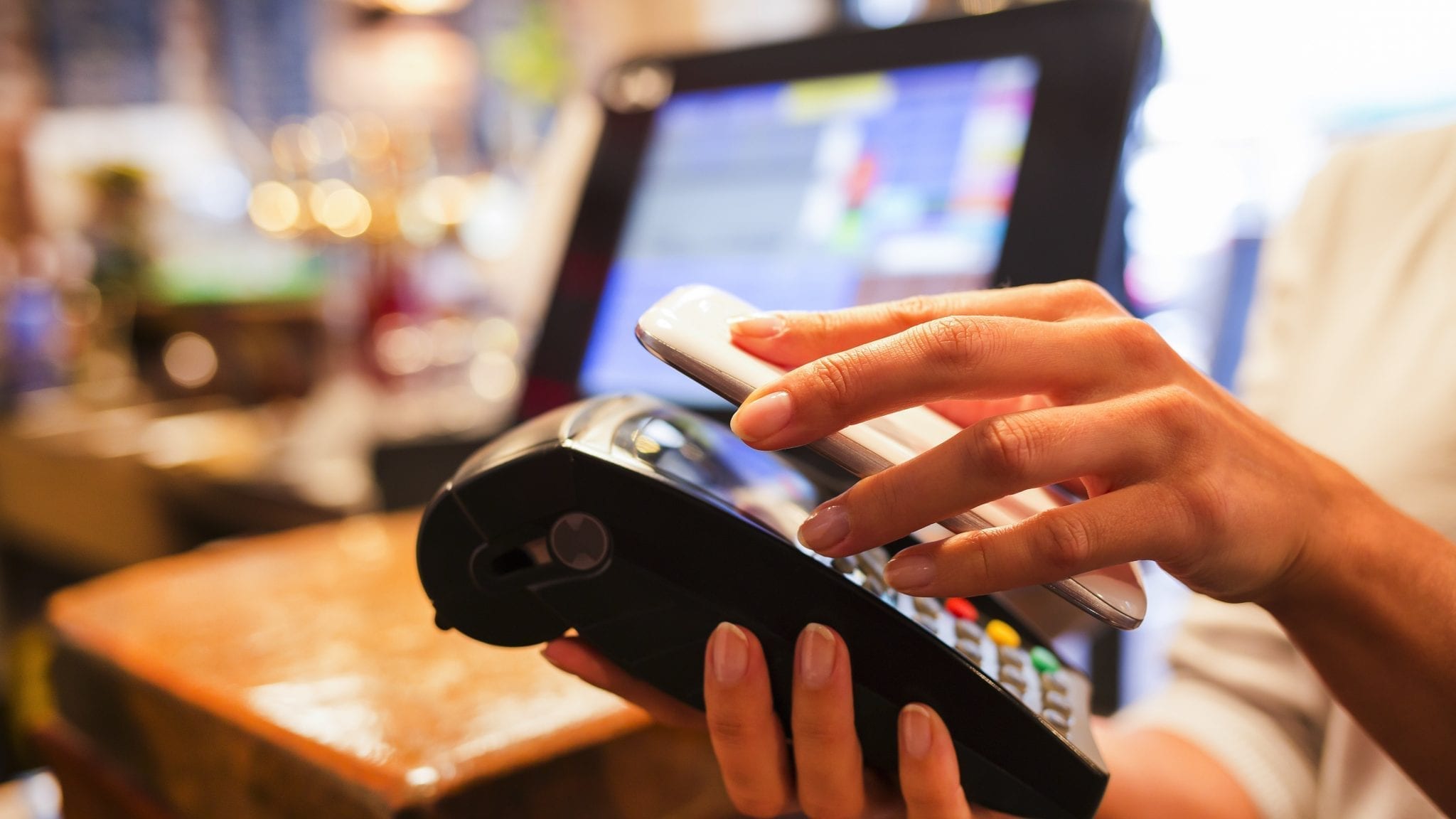
    SpherePay users can make payments for their purchases or transactions swiftly, conveniently and seamlessly with just a scan of a QR Code via their smart-phones. By adding user credit cards and debit cards to the app, users can easily choose their mode of payments without even having to bring their physical wallets out. Users can also top up credit into the app wallet to enjoy special perks, benefits and rewards when they pay with the app credit. To benefit the user further, the app also enables users to apply for an advance wallet credits of up to $500 where this credit could be used to purchase any goods or services at SpherePay merchant in advance of payment. With the concept of “Buy now pay later”, the credit function hope to assist users to purchase items they really need without having to go thru the hassle of documentations as with taking any other loans from credit provider or banks. In near future, SpherePay will also be made available for online purchases enabling seamless offline and online transactions.

    Consumer data protection and data safety is the upmost importance to SpherePay and its users. Thus, SpherePay puts in rigorous efforts and has met the compliances of the PCI DSS. The Payment Card Industry Data Security Standards (PCI DSS) was crafted to augment and promote cardholder data security and to implement a standardized global data security measures for all entities that store, process, or transmit account data. These entities include merchants, service providers (e.g. payment app), issuers and acquirers who accept or process account data. Users can rest assured their data are secured with SpherePay.

    Where is SpherePay now:

    Recently launched on Apple store and Google Play store last month, SpherePay is now available at over 100 merchants and over 60,000 users in Singapore. With the recent announcement from Monetary Authority of Singapore (MAS) about the SGQR initiatives to consolidate all QR Code enabled payment app provider into a one generic QR Code, SpherePay intends to be engaged and be part of this initiative to offer its users a bigger array of merchants and platform to use the app.  With its expansion footprint in line, SpherePay has plans to launch in Thailand and Indonesia market early next year and other Asian markets by the end of 2018.

  • More e-commerce fraud, customers to be careful

    More e-commerce fraud, customers to be careful

    E-commerce fraud is becoming more prevalent, says US internet payments technology company Stripe in a new report.

    Fraudsters repeat online purchases at the same businesses 10 times more quickly than actual cardholders, says the report, which reveals new patterns to help e-commerce companies combat fraudulent activity during the holiday shopping season.

    With chip-enabled credit cards making brick-and-mortar shopping safer, criminals are turning their attention to online stores. Unlike physical stores, online businesses have to pay the associated costs of fraudulent orders. On average, every $1 of fraudulent orders costs an online business an extra $2.62.

    Stripe looked across a year’s worth of data to seek out fraudulent behaviour patterns by country, time of day, industry and other factors. Insights to emerge include:

    • Fraud rates based on the country where the credit card is issued vary dramatically, by a factor of two or three
    • In Singapore, fraudulent transactions are significantly larger than normal transactions
    • The highest online fraud rates occur during days and times when many people are not shopping, such as Christmas Day or late at night (for example, for US businesses, fraud rates as a percentage of overall traffic increase in the summer and in late December, but not on heavy shopping days like Black Friday)
    • Fraudsters give themselves away by making rapid additional charges at the same businesses on the same credit card, initiating repeat purchases 10 times more quickly than actual cardholders
      • Fraudsters prefer products that can be delivered to locations like public buildings or parks and can be obtained quickly before transactions are invalidated, which explains the prevalence of fraud among on-demand services as well as low-end consumer goods.

    “While there are some consistent patterns to fraudster behaviour, such as their high-purchase velocity, their propensity to work late at night and their preference for cheap or immediately deliverable goods, we have found that the predictive strength of these patterns varies widely depending on the location of the business and the fraudster,” says Stripe engineering manager for payments intelligence Michael Manapat.

    “Because of this, we recommend using anti-fraud tools based on machine learning from large amounts of data.”

    Principal analyst Jordan McKee of 451 Research says it is crucial for online businesses to have robust fraud defences, especially during the busiest shopping season of the year.

    “Because online fraud is highly complex and increasingly global, merchants should consider outsourcing fraud tooling to trusted third-party providers that have access to large, robust data sources. The most effective providers draw on global data sets from hundreds of thousands of other businesses to train their machine-learning algorithms and identify even subtle fraud patterns.”

    For its report, Stripe examined transaction data across hundreds of thousands of its customers across 25 countries. Stripe works in more than 25 countries to allow both individuals and businesses to accept payments over the internet.

  • Line Friends to open Pop-Up stores in Seoul City

    Line Friends to open Pop-Up stores in Seoul City

    A Line Friends pop-up will open at luxury speciality store BoonTheShop in Seoul on Saturday.

    Running until January 14, the Korean character brand’s outlet will introduce its latest merchandise, BT21. The range includes dolls, cushions, fashion items, limited-edition postcards, posters and bag charms – all based on a set of characters created by K-pop boyband BTS and the Line Friends team.

    LINE FRIENDS

    The same line will also start selling at Line Friends’ New York flagship on the same day via a “BT21 Zone”, and at other stores in Hong Kong, Japan, Taiwan and Thailand, as well as online early next year.

    BT21 was initially launched as stickers on Line App with more than 17 million downloads and 200 million Twitter exposures. The first Line Friends’ collaboration with artists, the BT21 range joins signature characters such as Brown, Choco and Cony.

    LINE FRIENDS Unveils BT21 Merchandise at Its Flagship Store in New York (PRNewsfoto/LINE FRIENDS)

    Line Friends has 91 stores in 11 international markets.

  • Time to win for Vietnam Tax Department on Facebook e-commerce case

    Time to win for Vietnam Tax Department on Facebook e-commerce case

    Ho Chi Minh City’s tax department has handed a bill of VND9.1 billion ($401,300) to a Facebook retailer in a rare successful attempt to levy sales on social media.

    A source from the department said that the tax declaration submitted by the cosmetics retailer was millions of dollars short compared to information acquired from the retailer’s banks.

    Le Thi Thu Huong, deputy director of the department, said the sum was the biggest amount ever to be claimed by her agency from an online retailer for tax evasion.

    The department contacted nearly 13,800 Facebook accounts earlier this year asking them to pay tax for businesses they were running on the social network, but few complied.

    Facebook is the most popular social network in Vietnam with more than 52 million active accounts, and is also used as an e-commerce platform that tax authorities have struggled to keep track of.

    Vietnam levies a 0.5 percent income tax and a 1 percent value added tax on sales of more than VND100 million ($4,400) per year.

    Local tax authorities have recently stepped up efforts to collect taxes from online businesses that use Facebook and other social media sites such as Instagram and YouTube.

    Tax departments in both Hanoi and Ho Chi Minh City have sent out tax demands to around 27,000 Facebook retailers in a move to target tax avoidance by online businesses.

    Online sales in Vietnam have expanded rapidly in recent years, currently accounting for 3.39 percent of the country’s retail market. The total retail market grew 10.2 percent last year to $118 billion, mainly fueled by a growing middle-class with expanding disposable incomes and an increasing number of internet users.

    In an effort to minimize tax losses, the Ministry of Finance is considering a plan to impose value added tax and income tax on sales with a value of VND1 million ($44) upwards, or multiple sales of a lesser value.

  • Is e-commerce taking over sales in Indonesia?

    Is e-commerce taking over sales in Indonesia?

    The growth rate for retail stores is now at single-digit levels, falling from above 10% in recent years. Online shopping is shouldering part of the blame, but the main culprit is a slowdown in overall consumer spending — long the driver of Indonesia’s economy — due to sluggish wage growth.

    Since the busy Ramadan shopping season ended in the summer, Indonesian consumers apparently have tucked away their wallets, at least at brick-and-mortar establishments. Retail store sales in October 2017 grew by an anemic 1.3% from a year earlier, according to preliminary data released by Bank Indonesia, the country’s central bank.

    This is causing store closures across the country, where the modern retail business model had entrenched itself over the years. At the end of June, all Indonesian 7-Eleven convenience stores closed their doors. In September 2017, Matahari Department Store, the nation’s largest department store chain, shuttered two southern Jakarta stores.

    Same-store sales of the chain over the first nine months of the year fell 2.7% from the same period last year.

    The recent lack of foot traffic at a major Jakarta department store typified the trend. As some 40 clerks stood idly chatting away, a nearby supermarket swarmed with shoppers.

    Many of the vacant store fronts in the country’s commercial centers are due to the increase in e-commerce. According to one survey, online sales surged 22% in 2017 from the previous year to around $7 billion.

    A bevy of powerful e-commerce sites — among them Tokopedia, one of Indonesia’s largest online marketplaces, and Alibaba Group Holding’s Lazada — are siphoning shoppers away from stores, a trend that shows no sign of abating. Online sales are projected to keep climbing at a brisk annual rate of around 20% for the foreseeable future.

    The growth in smartphone usage has also spurred online shopping, especially in rural areas where modern retail shops are still few and far between.

    But the rise in online shopping tells only part of the story. The main reason for tepid consumer spending is weak wage growth. The minimum wage growth rate will slow to 8.71% in 2018, the lowest in recent years, according to the government, noting that relatively low-income earners will be hit particularly hard.

    As recently as 2013, minimum wages had soared more than 40%, fueling the country’s free-spending ways. Now, consumers are being forced to cut back in order to save for future outlays, such as on housing and education. This has put a crimp on spending for even daily products.

    With a population of over 250 million, Indonesia is the largest consumer market in Southeast Asia. Many economists say the country’s consumption will continue to rise over the long term.

    There is little doubt, however, that Indonesian’s retail industry is facing a crisis of sorts, and the government is not helping with the situation.

    If this trend continues, the ensuing shock waves may hit other sectors of the economy, possibly dampening foreign direct investment in the country’s consumer market.

  • Japanese making $62m with an instant-second hand website

    Japanese making $62m with an instant-second hand website

    What if you paid people instantly for their used goods over the internet, with no guarantee that they would hand them over?

    The 36 year-old e-commerce entrepreneur, Yusuke Mitsumoto, launched an app in June 2017 to test the idea. It worked better than he imagined; after 16 hours, he was stunned to discover he was on the hook for 3.6 billion yen (£23m) and shut the service down.

    A day later, truckloads of clothes and electronics gadgets started to arrive, with his startup’s employees forming a bucket line to move packages into his company’s tiny office in Tokyo.

    All told, less than 1 in 10 second-hand-goods sellers didn’t deliver as promised. That was good enough for Mitsumoto, who relaunched the service, called Cash, in August 2017 as a new way to gather inventory for an online flea market.

    Total daily purchases are capped at 10 million yen, and are limited to smartphones, luxury handbags, watches, clothing and other specific items from a list of several thousand. Customers take a photo and are given a non-negotiable offer. Prices are set automatically based on data gleaned from other second-hand marketplaces and Cash makes money by reselling the goods.

    “It was a social experiment,” said Mitsumoto, who started selling goods on the web in 1996. He later launched Stores.jp, Japan’s version of Shopify, which he sold and then bought back. “Of course, I believed that good people would outnumber the bad, but the question was by how much. That’s not something you can find out without trying.”

    Second-hand sales are a big business in Japan and a market worth 1.6 trillion yen, according to the Reuse Business Journal. Bookoff has hundreds of stores that buy and sell everything from used books to video games and electronics. Yahoo Japan operates the country’s biggest online auction site. Mercari became Japan’s first startup to be valued at more than $1bn with a smartphone app that made it easy for people to sell unwanted things to each other.

    What Mitsumoto discovered was a way to remove the last bit of friction for sellers to get rid of stuff, unlocking value wasting away in people’s closets. He tapped into a market of people who lacked either the time or the patience to take nice pictures, write product descriptions and haggle with buyers.

    He also knew that it was only a matter of time before bigger rivals followed with similar offerings. So when Mitsumoto got a Facebook message on 4 October 2017 at 1:58 am, “Hi! This is Kameyama~! Sell Cash to me~! No?” he saw a way to stay ahead of the competition.

    Keishi Kameyama is one of Japan’s richest people and the founder of DMM.com, a media and technology empire with $1.6bn in revenue. Kameyama started with pornography but has grown his company into a vast collection of enterprises that spans a currency trading platform, video games, an online English school and solar farms. Mitsumoto agreed to sell Cash to DMM for 7 billion yen and continue running the business.

    “For people doing internet businesses in Japan, DMM is a scary presence,” Mitsumoto said. “You never know when they may launch their own business and become a tough rival. I figured it’s best to at least meet.”

    Indeed, a week after the deal was announced, Mercari launched an identical offering.

    Kameyama said his team recognized the potential of the market uncovered by Mitsumoto, but admits that the eye-popping valuation for a company of six people that’s not even one year old was also partly an “acquihire” —an acquisition based on hiring.

    “Doing business on the internet is not all capital and equipment, you need a certain intuition, a design sense and ability to get a service going,” Kameyama, 56, said in an interview. “I can also appreciate a bold play. There aren’t that many audacious people in this world.”

  • T2 opens Alibaba Tmall store

    T2 opens Alibaba Tmall store

    Australian tea retailer T2 Tea has opened an online storefront on Alibaba’s Tmall Global marketplace to cash in on Chinese demand for Australian products.

    Tmall Global enables international brands to sell to Chinese consumers online, simplifying the export and retail process.

    A curated range of products will be available to Chinese shoppers at t2tea.tmall.hk including homegrown tea blends such as T2 Tea’s Bondi tea, which includes lemon myrtle and native berries.

    “It’s T2’s curiosity for taking the ancient tradition of tea culture in China and giving it a modern twist that we think is both intriguing and exciting for the Chinese consumer,” said Nicole Sparshott, T2 Global CEO.

    First launched in Melbourne 20 years ago, T2 now has 100 stores across five markets. It entered the Asia market in January 2017 and now has four stores in Singapore.

    “For a company that came from humble beginnings in Melbourne, launching on Tmall Global marks a key milestone in our mission to build a generation of tea lovers on every continent,” Sparshott said.

    According to Alibaba, more than 14,500 international brands from 63 countries and regions sell on Tmall Global. For more than 80 per cent of those brands, their Tmall Global virtual store was their first foray into the China market.

    The number of imported product categories on Tmall Global climbed nearly 50 per cent to 3,700 this year.

    “The opening of T2 Tea’s Tmall Global store reflects the growing diversity in demand for premium Australian products,” said Maggie Zhou. “We’re excited to be working with such an iconic Australian brand to help them expand on the success they’ve already seen in Australia.”

    So far there are 1,300 Australian and 400 New Zealand brands on Tmall and Tmall Global. The Chinese demand for Australian products was demonstrated during the company’s 11.11 sale last month.

    Australia recorded its best performance to date ranking as the third highest selling country (outside of China) behind the United States and Japan. Last year, Australia ranked fourth, and fifth in 2015.

  • Malaysia sees mobile commerce boom as mobile payments become widely available

    Malaysia sees mobile commerce boom as mobile payments become widely available

    Malaysian people’s love for mobile shopping has led to more transactions generated on mobile platforms.

    The data compiled from Malaysia’s three major online marketplaces — Lazada, 11street and Shopee — revealed that 70 percent of the online transactions on Single’s Day and MyCyber sales were done through mobile devices, said iPay88, a leading regional payment gateway provider in South East Asia.

    MOBILE USERS GROWING

    “Mobile users are growing faster than our anticipation, we expect the momentum to continue,” Ipay 88’s executive director and co-founder Chan Kok Long told Xinhua in a recent interview.

    According to Malaysian Central Bank, there are 42.8 million mobile phone subscriptions in Malaysia currently. Meanwhile, smartphone penetration stands at 70 percent and it is expected to increase.

    In view of the growing mobile phone user base and more friendly mobile applications, Chan said the transactions generated on mobile platform will account for 60 percent of the total before climbing to 70 percent in the next two years. Last year, the ratio stood at 50 percent, he said.

    MOBILE PAYMENTS’ CONTRIBUTION

    Another key driver is the introduction of mobile payment, which several banks are looking to launch Quick Response (QR) code-wallets that enable payment to be done in an easier way.

    IPay88 is currently the payment gateway market leader in Malaysia, accounting for 60 percent of Malaysia’s online payments system transaction.

    Chan also believed the two major Chinese online payment companies — Alipay and WeChat Pay — making their ways into Malaysia e-payment segment, could potentially double the online transactions.

    “When you see m-commerce growing tremendously, the next thing will be mobile-wallets. It is no doubt that they (the two Chinese players) will contribute a lot to the online transactions in Malaysia going forward,” said Chan.

    Cited Alipay as an example, he said, the retail transaction volume has grown robustly since it was launched four months ago.

    “Although Alipay is new in Malaysia, the growth potential is tremendous because of the increasing Chinese tourists in Malaysia,” Chan said, adding that more Malaysian retailers have to adopt the payment system as they are also afraid of losing competitiveness in dealing with Chinese tourists.

    Chan also sees great potential from WeChat Pay, which will be unveiled in Malaysia next year, as it has 20 million WeChat holders in Malaysia and 600 million active users in China.

    Earlier this year, Alipay, a unit of Alibaba affiliate Ant Financial, has inked agreements with Malaysian banks for the rollout of its service this year.

    Its competitor, WeChat Pay by Tencent Group, was then granted an e-payment license in Malaysia and planned to unveil its service in early 2018. Since then, it has secured Hong Leong Bank as its partner for the service.

    The payment gateway provider that has presence in other Southeast Asian countries, also sees Malaysia ahead its peers in embracing cashless payment.

    This is due to Malaysia’s strategic position with decent population and better infrastructure, in addition to the Malaysian government’s encouraging policies, Chan said.

    “Malaysians are more ready than its counterparts in the Association of Southeast Asian Nations, also because of the Alibaba-led Digital Free Trade Zone, which is expected to drive the country’s e-economy,” Chan said.

  • Alibaba all set to put $300 million in BigBasket

    Alibaba all set to put $300 million in BigBasket

    Chinese e-commerce giant Alibaba Group Holding plans to invest about US$200 million in India’s online supermarket Bigbasket.

    This leads a $280 million funding round and would give it a stake of about 25 per cent in the startup, insiders say. The deal is awaiting approval from the Competition Commission of India.

    Based in Bangalore, the grocer has previously had investment discussions with Amazon.com, which was given government approval this year to invest $500 million into food retailing. Founder Jeff Bezos has said he will invest $5 billion in India.

    Meanwhile, Alibaba has invested in One97 Communications, which runs digital payment and e-commerce businesses.

    Owned by Innovative Retail Concepts, Bigbasket has TV commercials featuring Bollywood actor Shahrukh Khan. The company offers delivery in more than 25 cities and offers 18,000 products from 1000-plus brands.

  • E-commerce trend as highlight at Luxury China report

    E-commerce trend as highlight at Luxury China report

    Luxury brands have started embracing e-commerce in China, says the Luxury China report released by digital marketing company L2.

    It says 91 per cent of luxury brands in China had gone online by June last year, more than double the 43 per cent using e-commerce 12 months earlier.

    This comes as Chinese millennials and generation Z are set to become the dominant driver of luxury consumption over the next decade, according to the 2017 Chinese Luxury E-Commerce Whitebook report from high-end e-commerce platform Secoo and data company Tencent.

    The average age of the online shopper of luxury goods in China is now 25, 15 years younger than the average age of European luxury consumers, and 20 years younger than those in the US. These young consumers are stepping up their buying of minority brands – as opposed to high-profile labels – in a quest for more personalised and less mainstream experiences. For example, the streetwear trend has gradually become more mainstream, leading to more young people embracing such brands as Supreme and Vetements.

    “Consumers are no longer too loyal to one specific brand, but want luxury brands that speak for themselves,” says a Deloitte global luxury consumption survey about millennium consumers. “They are more willing to pay attention to trendy brands with stories.”

    Secoo has announced partnerships with niche brands including Corto Moltedo, Maison Kistune and Mr&Mrs Italy, which has been popularised by a South Korean TV series. Corto Moltedo is known for its entirely handmade bags.

    Corto Moltedo and Mr&Mrs Italy have signed exclusive co-operation agreements with Secoo, and all their collections are sold simultaneously across the world at the same prices.