Category: E-Tailing

Retail News Asia is committed to providing both local and global retailers with the latest E-Commerce & Etail news throughout the Asian market. This on a daily base.

  • Taobao Again on U.S. Blacklist for Counterfeit Products

    Taobao Again on U.S. Blacklist for Counterfeit Products

    Taobao has been added to the USTR counterfeit blacklist for the second successive year for selling suspected fake items on its shopping platform.

    However, the Chinese e-commerce giant says the listing does not reflect its IP-protection efforts.

    Owned by Alibaba Group, it is one of 25 online markets along with 18 physical markets to make the annual USTR (US Trade Representative) list of “the world’s most notorious markets” for selling pirated and counterfeit goods.

    Taobao managed to stay off the list from 2012 to 2015, but was included in 2016 and now again for last year.

    “A high volume of infringing products reportedly continues to be offered for sale and sold on Taobao.com, and stakeholders continue to report challenges and burdens associated with IP enforcement on the platform,” says the USTR. While the agency acknowledges Alibaba’s efforts to curb the sale of fake products on Taobao, it says the prevalence of infringements is still a challenge.

    Alibaba says it has made its IP protection programs easier to use, leading to an 11 per cent increase in registries plus a 25 per cent drop in takedown requests as infringing listings were removed even before reaching its marketplaces.

    “In light of all this, it is clear that no matter how much action we take and progress we make, the USTR is not actually interested in seeing tangible results,” says Alibaba Group president Michael Evans.

    The USTR says Alibaba’s data does not directly reflect the scope and status of the counterfeiting problem on Taobao, but is “merely suggestive of progress” in its anti-counterfeit efforts. It also says those efforts appear to be more toward addressing the concerns of global brands rather than small and medium businesses.

    “It is incumbent upon Alibaba to develop more effective means to address the concerns of the full range of US businesses that continue to find infringing versions of their products for sale on Taobao.com.”

  • Alibaba’s plan to revamp mom-and-pop stores ‘innovative’, but Singapore ‘not ready’

    Alibaba’s plan to revamp mom-and-pop stores ‘innovative’, but Singapore ‘not ready’

    Ahead of its annual online shopping extravaganza, popularly known as Singles Day, last November, Chinese tech titan Alibaba unveiled its Ling Shou Tong retail strategy.

    Ling Shou Tong’s idea is simple: To connect convenience stores, often mom-and-pop stores, to the e-commerce giant’s network of supply chain, logistics and data analytics – and by doing so, revamp how these shops operate.

    As it said on its news portal Alizila: “The programme doesn’t just give a cosmetic update to convenience stores. It’s also an extreme tech makeover, injecting modern analytics to improve, streamline and automate operations that have long relied on elbow grease and intuition.”

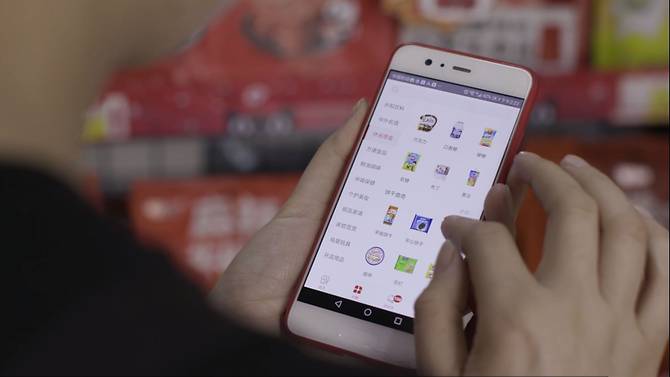
    In practical terms, this means when shopowners order goods via the Ling Shou Tong app, analytics of their stores would suggest to them the products that are most in demand. They are also able place their orders online, in a centralised manner, without having to negotiate with multiple distributors.

    Alibaba said a large number of mom-and-pop stores in China are owned by those over 45, who “log long hours and do everything themselves”, and these are characteristics that could apply to small retailers here in Singapore too.

    LING SHOU TONG IN SINGAPORE?

    But could Alibaba bring the Ling Shou Tong concept to Singapore?

    IDC’s lead analyst for Future of Commerce Lawrence Cheok said in an email that this retail strategy provides similar benefits for consumers and small merchants here, such as greater supply chain efficiencies and, hopefully, competitive prices.

    However, he noted that Ling Shou Tong is similar to the tech titan’s other rural commerce initiatives in that it is an effort to more deeply penetrate the local domestic market, given that e-commerce is mostly saturated in the top tier cities. With that in mind, he questioned if bringing this retail concept here is the “lowest lying fruit” for the Singapore market.

    Other analysts also downplayed the possibility of Ling Shou Tong being brought here, with Forrester Research’s senior analyst Xiaofeng Wang saying that Singapore is not ready for the retail concept as consumers or small merchants are not prepared for it.

    Ms Wang pointed out that mobile payment in China is already so dominant, with the majority of consumers and small merchants, even street stall owners, using this method on a daily basis. So upgrading to Ling Shou Tong and using digital means to order and manage inventory “wouldn’t be that far away” for these mom-and-pop shopowners.

    “In Singapore, there’s still a long way to go,” the analyst said in an email. “Majority of consumers and merchants still use cash in hawker centres even after QR code payment is launched.”

    Gartner’s research director Adrian Lee also said that while the concept is “innovative”, he does not see it “playing out well” here.

    Mr Lee said in his email that Ling Shou Tong needs several conditions to be successfully implemented: A near ubiquitous digital payment channel and point-of-sale management to facilitate seamless checkout, a robust and integrated logistics network and fulfillment partners such as Cainiao and sufficient number of store owners who believe in the value of tapping into the company’s massive inventory to gain cost savings when stocking up.

    “For the above reasons, I do not believe that Ling Shou Tong is viable in Singapore.”

    NEW RETAIL METHODS “A MATTER OF TIME”

    That said, IDC’s Cheok is of the opinion that Alibaba’s New Retail strategy, which Ling Shou Tong is a part of, will spread to the rest of Asia. Chairman Jack Ma had said last October that New Retail will “bring about a restructuring of the global supply chain and change the complexion of globalization from the domain of big businesses to small businesses”.

    The imported retail concept would be a variation of the China model “in order to cater to local requirements” and would likely entail partnerships with local players who can provide value, the analyst explained.

    “For instance, Alibaba would require local consumer data and insights to provide the same benefits they are providing to the Chinese merchants. In addition, new supplier relationships would be required to cater to local merchandising preferences,” he said.

    Should this happen, it will “definitely impact the bottom line for competitors caught unawares”, Gartner’s Lee suggested.

    “Amazon will have an advantage in that they’ve launched similar converged retail initiatives and is also sufficiently funded to scale up,” he said. “The capital investment required to carry out Ling Shou Tong will prove an obstacle for local supermarket chains and players like honestbee.”
     

  • Is Amazon threatening luxury?

    Is Amazon threatening luxury?

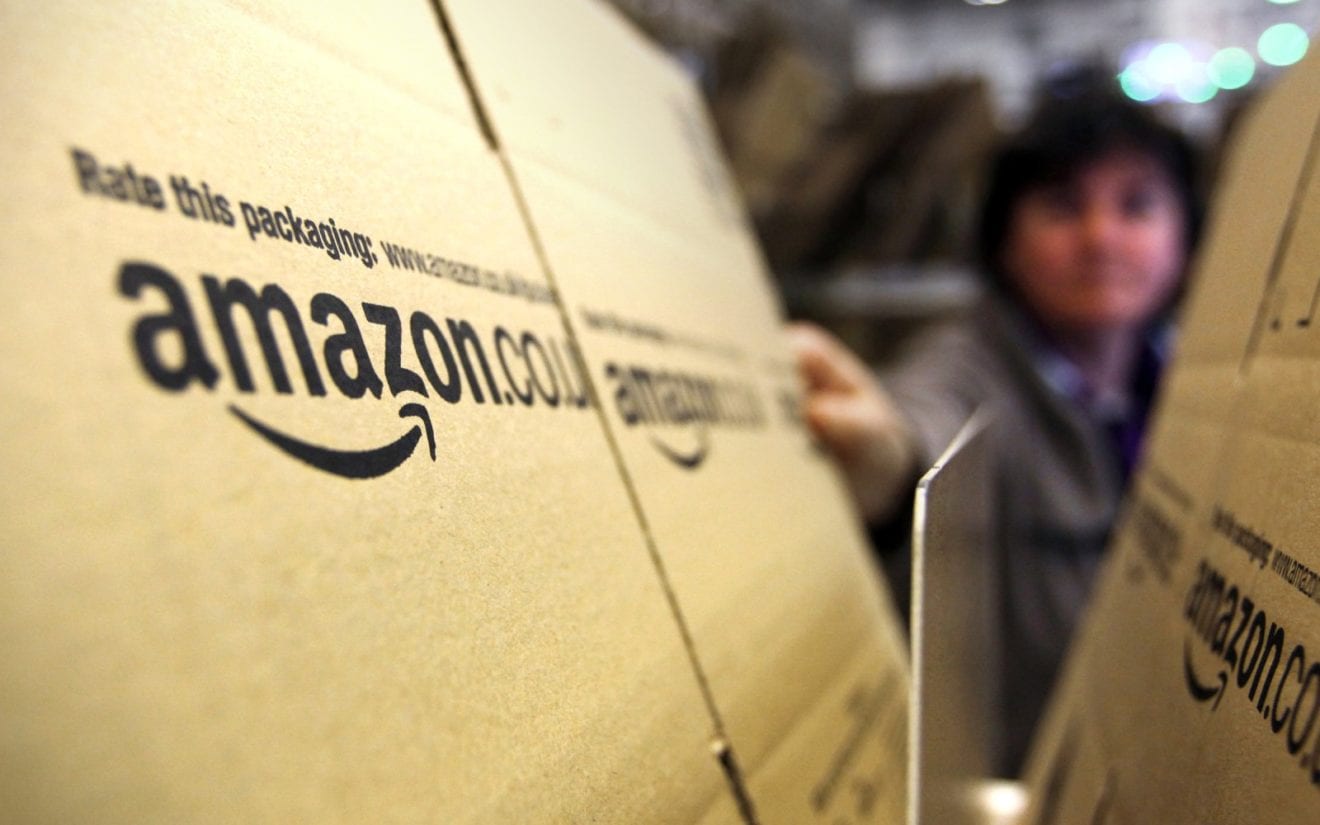
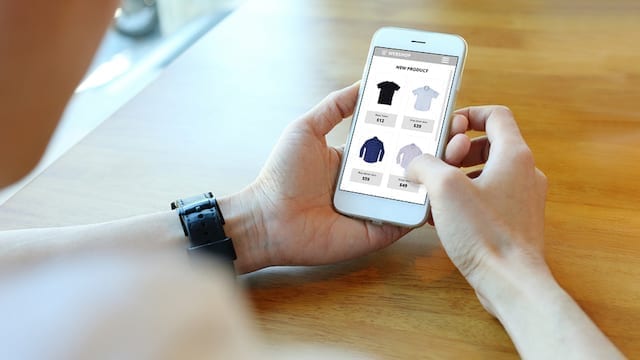
    Amazon has been struggling to recruit luxury brands to sell their good on its platform, but there is one way that it could make its marketplace more of a destination for shoppers looking for certain tiers of luxury products.

    Amazon could launch vertically integrated, mass-customized brands of its own that use technology to smooth the customer shopping process, similar to Indochino.

    While Amazon is not likely to get catalog coverage from many of the ultra-luxury brands, it does have the ability to make a number of mid-level luxury brands less relevant to large segments of Amazon customers, replacing those brands through the merchandising of its own private-label luxury brands at prices that encourage even the slightly price-sensitive luxury products customer to consider a cheaper alternative, available directly from Amazon.

    There will always be customers who want nothing other than the $10,000 handbag with that special brand name, or the $3,000 suit from Armani or Gucci. Yet for millions of Amazon Prime customers, the prospects of “affordable luxury” becomes available through something like an Indochino model.

    Brands like Brooks Brothers, Hugo Boss, Zac Posen, Tom Ford and Burberry that may today be aspirational for millions of Amazon customers could be replaced with Amazon’s own mid-level luxury brands, made at comparable quality with perfect custom fitting and a much lower price. Such a model has the potential to wipe out much of the apparel advantage Stitchfix has created for itself over past few years.

    Indochino is a direct-to-consumer manufacturer of custom suits for shirts for men. While production is based out of China, it offers U.S. customers the opportunity to get sized either through a measurement process online using videos, or in a limited number of storefronts based in major metropolitan locations throughout the United States. For under $400, Indochino is able to manufacture a custom-fitted garment and shrip it to the U.S. or Canadian customer within 3 weeks.

    Comparable pricing for a U.S.-tailored suit including luxury brands would range from $1,500-$3,000. While a luxury U.S. brand in the U.S. is likely to require 2-3 weeks for custom tailoring of an off-the-rack suit, the custom-made Indochino suit sells for a fraction and promises a better fit because it was made using the customer’s body measurements.

    Let’s say Amazon bought Indochino, or built its own comparable model, and expanded it into women’s clothing too.

    Then Amazon uses some variant of technology from its new acquisition Body Labs to develop a system for measuring customers’ dimensions. With such technology onsite at a range of retail studios across the country, Amazon now would have the dimensions of millions of Prime customers, and would be able to offer them its own custom-fit luxury-quality brands.

    Using pin-point merchandising, Amazon could target these brands to specific customers that have searched for comparable luxury brands on Amazon already. Amazon’s scale and ability to accept low margins would quickly turn the mid-luxury brand customer towards Amazon, and away from so many of the luxury brands that have declined to distribute their products on Amazon.

    With any decent scale, Amazon would have competitive manufacturing costs, the ability to up-sell and cross-sell all sorts of other items (apparel and non-apparel), all the while being comfortable with much lower margins than a typical luxury brand. With an already generous returns policy, Amazon could offer customers the opportunity to buy lower-priced custom-made items, returning whatever items the customer did not like. I do not know of any other apparel brand that could compete effectively with such a model.

    The prospect that Amazon could win part of the customer’s wallet that today goes to luxury brand purchases externally should be on the radar of mid-tier luxury brands, and a ray of hope that more consumers will be able to afford a luxury look at lower prices.

  • Santander and JD.com to support UK brands expanding into China

    Santander and JD.com to support UK brands expanding into China

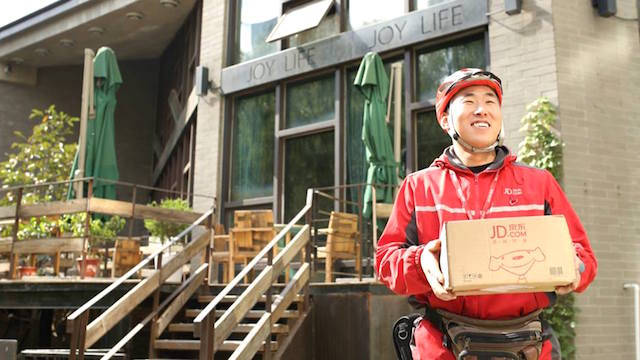
    Santander UK has partnered with Chinese retailer JD.com to give British brands access to China’s massive retail and consumer market.

    As part of the agreement, small and medium-sized business customers at Santander with turnover of at least £10 million and international trading experience will be able to launch stores on JD.com, which is known as one of China’s largest B2C online retailers.

    The online marketplace has a customer base of over 266 million people, and its extensive delivery network has attracted top European and American brands. Luxury brand Saint Lauren was the latest to join the platform this week as it announced its launch on JD.com’s Toplife.

    The Santander/JD announcement comes after the signing of a Memorandum of Understanding in July 2016.

    Deputy general manager of JD.com worldwide Kaisi Li commented: “This partnership with Santander opens up many more opportunities to small and medium-size enterprises across the UK. Demand for imported products in China is strong and growing rapidly, and we’re excited to work with Santander to enable more UK-based brands to benefit from the growth of this huge market.”

    JD rival ecommerce site Alibaba features brands such as Burberry, Hugo Boss and Gucci.

  • Australia’s November online sales surge most in three years

    Australia’s November online sales surge most in three years

    Online sales in November 2017 increased the most in three years in Australia, according to data released by the NAB, with consumers buying considerably more items online compared to the same month in 2016.

    The NAB Online Retail Sales Index (NORSI) said online sales increased 4.7% in November 2017, equating to the biggest growth rate over the period of one month since December 2014. The NORSI also revealed e-commerce sales year-on-year surged 14.4%, excluding the holiday sales period and Amazon’s launch in Australia.

    The biggest shift was the increase in online sales made in Australia, compared to the start of the year, said the NAB.

    “We estimate that Australian consumers have spent around $24 billion over the 12 months to November 2017. This is equivalent to 7.7% of spending at traditional bricks and mortar retailers, as measured by the Australian Bureau of Statistics in the 12 months to October 2017,” NAB said.

    By category, homewares and appliances recorded the most rapid growth over the past year, up 24.9%, compared to 3.8% last year. Fashion and apparel witnessed a comeback after weaker sales, increasing by 5%.

    Moreover, Australian retail sales, including off and online sales, hit 1.2 per cent – the biggest jump in almost five years. Experts were predicting a 0.4%.

    The Australian Bureau of Statistics said the November uptick was helped by the release of Apple’s iPhone X and higher sales activity Black Friday sales, adopted in by Australian retailers from the US, due to the globalization of retail.

    As a whole, Australia’s retail sales at department stores fell 1.1%; fashion was up 2.2% and footwear and other personal accessories sales were up 0.3%. Cosmetics were up 1.1%, said the ABS.

  • Amazon goes shopping

    Amazon goes shopping

    All sorts of rumors are out there talking up potential Amazon acquisitions.

    First, it was Kohl’s that was going to be bought by Amazon. It seemed reasonable; after all, they are already selling some of the Amazon electronic equipment like Alexa. Kohl’s also agreed to take back Amazon merchandise from customers.

    It was a good idea for Amazon to initiate brick and mortar returns. At the same time, Kohl’s is counting on gaining more customer traffic

    Then, technology analyst Gene Munster of Loup Ventures wrote that Target was a candidate to be purchased by Amazon. The locations of Target stores are appealing and would provide a great opportunity for the sales of Amazon hardware. Moreover, the fashion appeal of Target’s 1,834 stores makes this an interesting candidate.

    As long as we are guessing who the next candidate might be, Walmart could be a great candidate. It has stores in every state of the U.S.A., a significant global presence, and is a fierce competitor to Amazon. All the more since Mark Lore has intensified online sales, so eliminating competition could enrich Jeff Bezos’s coffers. However, Walmart has 11,650 stores worldwide.

    Here is another option. Forbes contributor and Columbia University Professor Mark Cohen’s belief that Costco could be the most likely candidate has merit since I believe both the food and non-food sections of Costco continue to function well and generate higher revenues and earnings every quarter.

    Many Costco customers stay loyal to the company because of the quality of Costco’s offerings and value of every product they sell. And, membership renewals are very high. This acquisition would also strengthen Amazon’s presence in the food business. Amazon’s 2017 acquisition of Whole Foods Markets was a spectacular move.

    Amazon is an amazing company – hated by the industry but loved by its customers. Their next acquisition is most likely going to be a ready-to-wear retailer that will intensify its fashion presentation. Kohl’s fits that description. Maybe J.C. Penney, but that company has too much debt. So what about Macy’s? Dillard’s?

    The industry is fighting for survival. Amazon recognizes the opportunities and may act. However, this is still just a guessing game. Amazon will choose if and when to act when it’s ready, so we can just wait and watch as none of this is going to accelerate what Amazon will do.

  • Vietnam to tighten tax control as it legalizes Grab, Uber after 2-year trial

    Vietnam to tighten tax control as it legalizes Grab, Uber after 2-year trial

    Ride-hailing apps Grab and Uber are to be officially authorized in Vietnam after completing trial runs, but the government has pledged to impose the stricter controls it currently imposes on local transport firms.

    The phone-based transport services have created healthy competition but they need to be regulated, the Ministry of Transport said.

    Director of the ministry’s transport department, Tran Bao Ngoc, said that ride-hailing services will have to register their businesses with investment authorities and the transport ministry and the tax authorities.

    “Tax agencies will keep track of fares so management can be more transparent,” said Ngoc.

    Ho Chi Minh City’s Tax Department is looking to collect more than VND53 billion ($2.34 million) in suspected back taxes from Uber by January 10. The department has asked five commercial banks to help retrieve the money.

    Uber Vietnam, a subsidiary of Uber International Services Holding B.V. based in the Netherlands, filed a lawsuit last month, saying that it is not subject to taxes according to Vietnam’s agreement on double taxation avoidance with the Netherlands.

    But the city court dismissed the lawsuit earlier this week, saying Uber Vietnam does not have the legal status for such action.

    Grab and Uber arrived in 2014 and operate both car and motorbike taxi services. The two services have been running on a trial basis since early 2016, but have been caught up in a war with traditional taxi drivers.

    Many taxi firms have accused Grab and Uber of “unfair competition” that has hindered their businesses and caused thousands of drivers to quit.

    Last September, Hanoi Taxi Association said Uber and Grab had been transferring around $150 million overseas every year to evade taxes. Grab denied the accusation.

  • AirAsia and Uber partner up, now everyone can ride and fly

    AirAsia and Uber partner up, now everyone can ride and fly

    Travellers will now be able to book their rides to the airport a month ahead, following a partnership between AirAsia and Uber.

    The low cost carrier and ride-share service will be working together in 52 cities in 16 markets across Asia Pacific and the United States, where AirAsia operates and the Uber app is available.

    According to the press release, riders would be able to request or schedule rides up to 30 days in advance, when confirming, booking or checking in for AirAsia flights via web or mobile.

    New Uber users would also get free or discounted rides if they enter the promo code “AIRASIA” when registering their account.

    “So, whether you’re trying to get home to see your family, or heading to an important business meeting, your travel experience should be seamless, from door-to-door,” he said.

    AirAsia Bhd Group chief executive officer Tan Sri Tony Fernandes said AirAsia had found the right ride partner in Uber, as AirAsia was always looking to complement its in-flight experience with services outside the plane.

    “Working with Uber allows our guests to plan their entire trip from the moment they step out of their home right until they arrive at their destination,” he said.

  • Saint Laurent joins Toplife

    Saint Laurent joins Toplife

    French fashion label Saint Laurent, part of Kering, will start selling online in China through a JD.com portal, joining shopping players like Alibaba in trying to tap strong luxury goods demand from Chinese consumers.

    The French brand created in 1961 by its late founder Yves Saint Laurent, said  it was partnering with Toplife, a platform launched last October by JD.com, which aims to woo luxury buyers with same-day deliveries and premium services.

    “Thanks to the sophisticated logistics network and personalised platform provided by our partnership with Toplife, Saint Laurent will be able to implement its omnichannel development in China, securing a top-level luxury journey to our clients,” said Francesca Bellettini, president and chief executive of Saint Laurent, in a statement.

    Brands on the platform will have access to “JD.com’s upper middle class user base” and “an online luxury experience that can match the in-store experience,” said Xia Ding, president of JD.com’s fashion division.

    Toplife rivals Luxury Pavilion, a similar portal launched in August, which is backed by Alibaba’s Tmall platform and features products from fashion groups such as Burberry.

    Chinese shoppers made up 32 percent of the worldwide luxury market in 2017, more than any other nationality, consultancy Bain & Co said, making it a crucial market for fashion brands.

    KPMG has projected, meanwhile, that half of China’s domestic luxury consumption could come from web sales by 2020.

    Online shopping has proved a potent earnings driver for fashion brands even if many were initially reluctant to distribute their wares too widely.

    Top labels such as Kering’s Gucci or LVMH’s Louis Vuitton recently started marketing directly to Chinese buyers with their own websites in the country.

    High-end fashion houses are still wary of alliances with mass-market platforms such as Amazon, however, fearful they will lose control of their image.

    JD.com and Alibaba’s specialist luxury platforms have already lured several other brands, touting themselves as more exclusive, selective sites.

  • SpherePay launches in-app credit function in Singapore

    SpherePay launches in-app credit function in Singapore

    Singaporean mobile payment app SpherePay has introduced a “micro-loan” concept for its users.

    It is the first mobile payment app to offer a buy-now-pay-later scheme, which it terms advanced credit. A QR code enables payments. Users must be at least 18 years old to sign up for the service, which allows users 30 to 45 days to repay.

    Processing and approval can be done within two hours. Applications can be made by clicking the Advanced Credit icon on the SpherePay mobile app. For first time users, the credit amount is set at $300. As the app monitors spending patterns and repayments, the credit amount can increase.

    “The advance credit will benefit people without credit cards, especially students,” says the company.

    Launched in November, SpherePay has more than 60,000 users in Singapore and 100-plus merchants. Meanwhile, the company plans to expand to Thailand, Indonesia and Malaysia this year.

  • Central Group to add its online presence with JD.com

    Central Group to add its online presence with JD.com

    After forming an e-commerce partnership with China’s JD.com, Thai retail giant Central Group expects online sales to account for as much as 15 per cent of its revenue in five years’ time, from 2 per cent now.

    CEO Tos Chirathivat says the $500 million JV, announced in September, will help it compete in Southeast Asia’s booming e-commerce market and also open up businesses opportunities in China.

    Tos estimates online retail in Thailand could rise fivefold to 10 per cent of the market as web access spreads via smartphones.

    While Central Group is a privately held investment arm of the Chirathivat family, it controls a range of publicly traded businesses – Central Pattana is a mall developer, Central Plaza Hotel runs resorts and restaurants, Robinson is a chain of department stores and COL is an office supplies company. Central Pattana turnover surged 50 per cent last year, Central Plaza 47 per cent and COL more than doubled.

    Outside of Thailand, Central Group owns Italian luxury department store La Rinascente, Danish retailer Illum and the Big C hypermarket chain in Vietnam, along with interested in retail chains including Nguyen Kim (Vietnam) and B2S (Thailand).

    Central Group is targeting annual revenue growth of 13 per cent this year, says Tos. Local sentiment is helping the company, with consumer spending in Thailand picking up after the October cremation of King Bhumibol Adulyadej ended the nation’s year-long mourning period.

  • Deliveroo heads to India

    Deliveroo heads to India

    UK food-delivery startup Deliveroo is preparing to launch in India.

    Valued at US$2 billion, the company is hiring a country head along with a full team, insiders say, according to The Times of India. It will go head to head with local players like Swiggy and Zomato as well as comparatively new entrant UberEats. Ola has also re-entered the category by acquiring Foodpanda from Delivery Hero.

    Founded in 2013 by former investment banker Will Shu, Deliveroo works in 140 cities across 13 countries, including Hong Kong and Singapore.

  • VIMO to provide Wechat payment at Airport outlets in Vietnam

    VIMO to provide Wechat payment at Airport outlets in Vietnam

    Dealers are now turning their attention to the release later in the day of key U.S. jobs data, which is expected to show the world’s top economy continuing to improve.

    A forecast-smashing reading Thursday on private take-ups boosted optimism, which had already been bolstered by U.S. tax cuts, healthy corporate profits and strong manufacturing figures from around the world.

    Global markets powered ahead in 2017 as economies showed long-running improvements after years of faltering.

    Greg McKenna, chief market strategist at AxiTrader, said in a note that data from the manufacturing and services sectors “suggests economic strength across the globe remains robust”.

    He noted that an index of world factory activity was at its highest level in seven years.

    On Wall Street the Dow ended above 25,000 for the first time, leading records across Wall Street.

    In Tokyo the Nikkei ended up 0.9 percent at a 26-year high following its more than three percent jump Thursday, while Sydney added 0.7 percent.

    Seoul rose 1.3 percent, with dealers buoyed by news that North Korea had accepted the South’s offer of talks next week, further easing geopolitical tensions in the region.

    Shanghai closed 0.2 percent higher but Hong Kong lost 0.1 percent and Singapore eased 0.2 percent.

    Pause in oil?

    While oil prices inched down in Asia they remain elevated after recent rises to around three-year highs thanks to Middle East tensions, while the U.S. sees stockpiles fall as it is hit by a severe cold snap.

    The latest gains have given impetus to petroleum-linked firms, sending them rallying this week. In Hong Kong Sinopec was up two percent while CNOOC was also higher. Woodside Petroleum in Sydney was up along with Santos, though Tokyo-listed Inpex eased.

    However, Ric Spooner, a Sydney-based analyst at CMC Markets, said: “There’s been a one-way, very steep and uninterrupted rally off the last minor low in mid-December near $56, so it won’t be surprising to see a pause here.”

    On forex markets the dollar rose slightly against the euro, but the single currency remains buoyant with the eurozone continuing to improve, which raises the chances of a reduction in the region’s massive stimulus programme, bringing monetary policy in line with the Federal Reserve.

    McKenna added: “It’s again the story of a weaker U.S. dollar as the fact its data is solid and improving is lost on traders focused on expectations that the EU strength will drive the European Central Bank to chase the Fed, and that synchronised global growth will, in fact, drag most central banks along the tightening path.”

  • JD.Com, Online Fashion Retailer Meili Ally to Develop ‘No Boundary Retail’

    JD.Com, Online Fashion Retailer Meili Ally to Develop ‘No Boundary Retail’

    JD.com plans to form a JV with online fashion retailer Meili to build and run a commerce platform on Chinese voice-messaging service Weixin.

    Merchants who sell through the new platform, expected to launch before the Lunar New Year next month, will gain access to JD’s logistics network.

    The move follows the joint introduction of “no-boundary” retail by JD.com and Tencent in October, a concept that aims to create online communities of consumers with similar buying preferences, fusing e-commerce with social life.

    Meili founder/CEO Chen Qi, who will also be the JV’s chairman, says the platform will draw on Meili’s ability to reach female shoppers, particularly in lower-tier cities in China.

    Established in 2016, Meili has several platforms including Meilishuo and Mogu Street, and more than 15 million active daily users. It not only provides online retail, but also society and fashion information.

  • HCMC court drops Uber’s lawsuit against tax demand

    HCMC court drops Uber’s lawsuit against tax demand

    A court in Ho Chi Minh City has dismissed a lawsuit against the city’s tax department by Uber after the ride-hailing firm asked the court to stop the department from charging it with a million-dollar sum of tax.

    The HCMC’s tax department earlier asked five local commercial banks to help collect more than VND53 billion ($2.34 million) of what it believed was back taxes from Uber between January 1 and 10 of 2017.

    Instead, Uber Vietnam, a subsidiary of Uber International Services Holding B.V. based in the Netherlands, then filed a lawsuit against the department.

    On December 29, the department received an emergency notice from the court, saying that its collection of tax from Uber would be put on hold.

    The court has since dropped the lawsuit because Uber Vietnam “does not have the required legal status for such a case.”

    At the same time, it has also removed the suspension on tax collection, a source from the department said on Wednesday.

    “With this new decision from the court, the HCMC’s Tax Department will continue to force Uber to pay tax by asking for help from commercial banks,” said an official from the department who wished to remain anonymous.

    Specifically, Uber will have to transfer its income into the bank accounts of the tax department instead of handing it over to its headquarters in the Netherlands as it has been doing so far.

    This process will last until the tax authorities collect enough $2.34 million in tax from the company.

    In September, the department ordered Uber to pay VND66.7 billion of back taxes and tax evasion penalties by December 23.

    But the company has only paid VND13.3 billion. It has complained to Vietnam’s Ministry of Finance that it is not subject to paying taxes according to Vietnam’s agreement on double taxation avoidance with the Netherlands, where it is based.

    Uber International Services Holding B.V. has been repeatedly accused of tax evasion since bringing its ride-hailing business to Vietnam in mid-2014.

    Yet Vietnam’s finance ministry said the company has to pay taxes for the income it generates in Vietnam.

    Traditional taxi companies in Vietnam have used the tax issues to accuse Uber and Grab for putting up unhealthy competition.