Category: E-Tailing

Retail News Asia is committed to providing both local and global retailers with the latest E-Commerce & Etail news throughout the Asian market. This on a daily base.

  • Alibaba and Kroger in talks

    Alibaba and Kroger in talks

    Looking to fight back against Amazon’s move into the grocery business, Cincinnati-based Kroger is reportedly eyeing an alliance with the Seattle juggernaut’s nemesis: China’s Alibaba.

    Industry speculation has Kroger exploring everything from a technology alliance to an outright acquisition by the Hangzhou-based tech company. Such an epic takeover – which could easily top $50 billion – would be four times larger than last year’s acquisition of Whole Foods by Amazon that sent traditional grocers scrambling to boost their digital capabilities.

    Senior Kroger executives met with senior Alibaba officials last month in China, the New York Post and Reuters reported, citing unnamed sources. While details of a potential partnership were not revealed, an arrangement of some type was disclosed by of all sources, China’s Ministry of Commerce.

    “Alibaba has teamed up with Kroger … to speed up the integration of online and off-line sales,” the Chinese agency said in a statement on Jan. 13.

    Kroger shares rose Thursday as investors pondered the merits of a pact or a takeover of Kroger by Alibaba. Kroger stock climbed as high as $30.46 on Thursday, up 3.3 percent. Shares closed at $30.26, up 2.7 percent.

    Alibaba at the least could provide a digital payment platform to create stores that would not need cashiers or checkout stations. That’s something it has done in China and which Amazon introduced earlier this week in Seattle with a new Amazon Go store.

    With 2,800 stores across the U.S., Kroger could provide Alibaba a massive American platform to compete against Amazon. The Cincinnati-based grocer is the U.S.’s largest supermarket chain. Further, Kroger could direct some business to Alibaba’s site for general merchandise, sources told the paper.

    But while Alibaba’s annual sales last year were only $25 billion versus Kroger’s more than $100 billion, it has pockets nearly as deep as Amazon. The company is worth 10 times Kroger. If Alibaba wants to enter Western markets via an acquisition, it could make a credible offer.

    Wall Street analysts were intrigued at the possibility of a takeover, but seemed to think a partnership was more likely to result from the talks.

    “If these articles are in fact true, we applaud Kroger for thinking outside the box – because a Kroger/Alibaba partnership would be a superior solution… and would meaningfully alter the competitive landscape in the US,” wrote Barclays analyst Karen Short in a Thursday note to investors. “Alibaba could certainly provide Kroger with the most – if not all – of the e-commerce solutions.”

    Wells Fargo analyst Edward Kelly also leaned toward a possible alliance.

    “A partnership with a player like Alibaba would seem to make a lot of sense, as it could provide an attractive opportunity to advance Kroger’s technology platform and digital knowledge without significant upfront cost,” Kelly wrote in a Thursday note to investors.

    Andy Stout, managing director of investments at Simply Money in Symmes Township, said a takeover might be hard to pull off as regulators might resist a foreign ownership for a Fortune 500 company. He noted regulators early this year helped kill the acquisition of Moneygram by Alibaba subsidiary Ant Financial.

    “Regulators would look very closely at a Chinese company buying the third-largest retailer in the US,” Stout said. “In this age of populism, I think regulators probably would not allow Alibaba to buy Kroger.”

    Kroger officials declined to comment Thursday, labeling the reports “rumor or speculation.”

    Speculation of possible Kroger acquisitions or partnerships are in overdrive this month with news outlets suggesting the grocer was eyeing potential takeovers of digital wholesaler Boxed as well as online retailer Overstock.com. The common thread to all these reports besides unnamed sources and Kroger silence was avenues for the retailer to beef up its digital abilities.c


     

  • JD.com Announced Its Chic New Paris Office

    JD.com Announced Its Chic New Paris Office

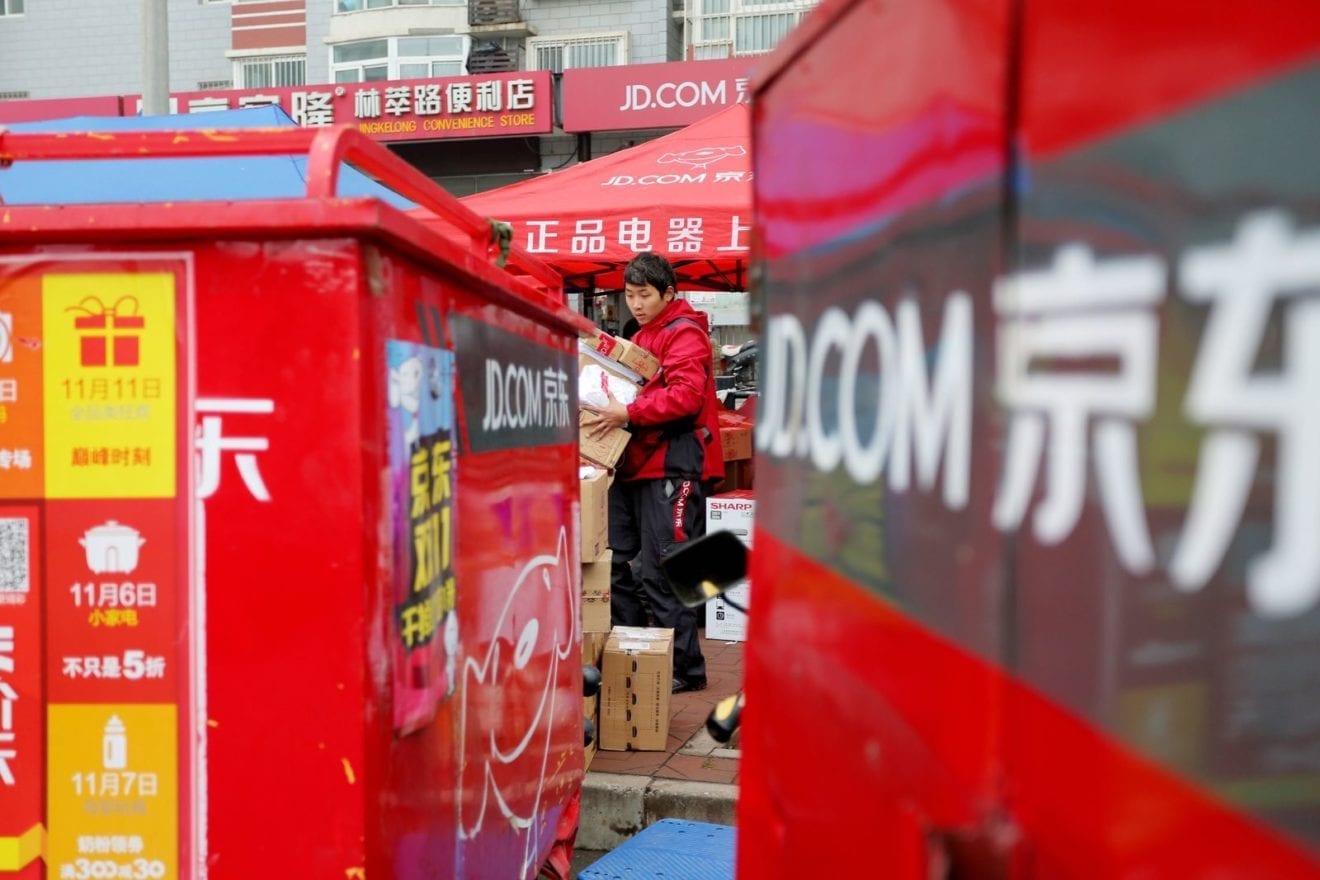
    JD.com announced yesterday that it has opened a Paris office. The move follows an agreement with France’s official trade promotion agency, Business France, to sell €2 billion (US$2.4 billion) in French products to Chinese consumers over the next two years.

    It’s a strategic move, putting JD.com in close proximity to many of the world’s top luxury brands at a time when China’s leading e-commerce platforms are battling for a bigger share of the luxury market.

    JD.com France’s Managing Director, Florent Courau

    JD.com first made public its intentions to woo French retailers earlier this month when French President Emmanuel Macron made a state visit to China. This visit also coincided with another landmark announcement that French luxury fashion house Saint Laurent would be officially partnering with JD.com to sell its collections on the e-commerce site’s luxury platform, Toplife, joining the ranks of La Perla, Tod’s, Emporio Armani, and more recently, Derek Lam.

    Company representatives called the collaboration with France a “milestone” for the e-commerce giant. The newly appointed Managing Director for JD.com in France is Florent Courau, who worked as COO of Sephora in North Asia and, before that, at LVMH for 12 years, six of them in China.

    JD.com intends to leverage stronger relations with the country to broaden its luxury portfolio in Europe, giving its customers access to a wider range and a better quality selection of not only fashion brands, but categories like cosmetics, food, and wine and spirits.

    “Our customers value the quality of French products, making this a critical market for us to further expand our brand relationships,” Courau said in a statement. “Our Paris office will be committed to providing tailor-made support to our French partners who want to seize the immense opportunity that JD offers.”

    A new report released by Bain last week revealed that many luxury consumers were still wary about making purchases online and preferred shopping either at brick and mortar stores, on the brand’s official website, or on its WeChat platform. Luxury aggregators like JD.com’s Toplife and Alibaba’s Tmall Luxury Pavilion were the third most-preferred resource for these consumers.

    But both JD.com and Alibaba have been ramping up their efforts to secure the trust of both consumers and brands in the luxury sector with the launch of these ‘pure play’ platforms—JD.com launched Toplife last fall—that keep luxury goods separate from their other mass market offerings and even counterfeit goods.

    These platforms also let JD.com cater to the specific demands of luxury consumers through offering better customer service, guaranteed authenticity, and a “white glove” delivery service. JD.com has also spent much of the past year forging stronger networks in the luxury industry beginning with $397 million deal with UK luxury platform Farfetch.

    “Since we launched Toplife the goal has been to provide the convenience of online with the personalized feel of making a luxury purchase online,” VP for International Corporate Affairs at JD.com Josh Gartner said. “Our physical presence in France brings us closer to the world’s leading luxury brands and helps us understand them better so we can ensure the integrity of their offline brand identity when they come online with us in China.”

    To smooth the process of entering China’s world of online retail, JD.com also plans to offer a new training program for senior executives on reaching China’s online shoppers, as well as build a logistics center to smooth out the overseas shipping process.

    “Now, we want to bring the best of France, not only in terms of world-class brands, but also in terms of a world-class shopping experience, right to the doorsteps of our luxury consumers,” Gartner said.

  • Tencent expands WeChat Pay to HK residents

    Tencent expands WeChat Pay to HK residents

    Tencent has expanded its WeChat Pay user base to Hong Kong residents, who now will not need to have a Chinese bank account or credit card to take advantage of the Mainland’s popular cashless payment system.

    With the announcement, Hong Kong residents can now bind and activate their WeChat Pay accounts with any international credit cards, including MasterCard, Visa and JCB.

    They can activate WeChat Pay in two ways:

    • Bind any Mastercard, Visa and JCB credit cards for online payments such as online shopping, taxi hailing, ticket purchasing, bike-shares, food delivery and hotel booking.
    • Bind any credit cards or bank cards issued by 71 banks in China, together with proof of a valid passport, China Resident Identity Card, a Mainland Travel Permit for Hong Kong and Macau Residents or a Mainland Travel Permit for Taiwan Residents, to pay for all online and offline payments. Users with these bank cards can also activate their QQ Wallet.

    Besides Hong Kong residents, Tencent opens WeChat to expatriates living in China as well as to Macau and Taiwan residents.

    According to the 2017 WeChat Data Report that tracked consumption habits of foreign residents in China, over 64% of expatriates use Weixin Pay for their daily needs, especially for splitting bills, food delivery, transportation, dining, as well as shopping in stores, supermarkets and online.

    With the introduction of using credit card accounts, this number is expected to grow as the payment system will be simpler and more convenient to use for citizens outside of China.

    In China, WeChat is being used by a group of friends to split a restaurant bill, check into or out of a hotel, board a bus or train, hail a car service or hop on a bike. WeChat provides access to China’s car hailing service Didi Chuxing and bicycle-sharing system Mobike.

  • ASEAN companies face US$750b risk from cyberattacks

    ASEAN companies face US$750b risk from cyberattacks

    Companies across the ASEAN bloc face a growing risk of cyberattacks, which can expose the region’s top-listed firms to a US$750 billion erosion in current market capitalisation.

    This was revealed on Tuesday in a new research commissioned by Cisco.

    Conducted by global management consulting firm A.T. Kearney, the research underlines that ASEAN’s growing strategic relevance, driven by economic expansion and ongoing digital adoption, make it a prime target for cyberattacks.

    A combination of nascent policy preparedness, absence of a unifying regional governance framework, shortage of skilled talent, underestimation of risk and lack of adequate investment are among the factors contributing to the heightened risk.

    The research report, titled “Cybersecurity in ASEAN: An Urgent Call to Action”, emphasises that cyber-security risk across the bloc will continue to escalate as the bloc gets more digitally interconnected.

    ASEAN countries underspend on cyber security. The region currently spends an average of 0.07 per cent of its collective gross domestic product (GDP) on cyber security annually. It will need to increase the spending to 0.35-0.61 per cent of GDP between 2017 and 2025 to be in line with the best benchmark (based on spending levels as percentage of GDP for Israel).

    The research estimates that this translates to $171 billion in collective spending needed across ASEAN countries during the period. Limited sharing of threat intelligence, often because of mistrust and a lack of transparency, will lead to even more porous cyber-defence mechanisms.

    Naveen Menon, ASEAN President at Cisco, said: “Digital innovation and adoption are central pillars of economic growth for ASEAN. Its success hinges in large part on the bloc’s ability to combat cyber threats. Cyber security needs to be an integral part of policy discussions at the semi-annual ASEAN Summit, with the aim of developing a unified policy framework for the region. The corporate sector also needs to start treating cyber security as a business wide issue that can only be tackled by adopting a risk-centric approach to building resilience, rather than just an IT problem.”

    Lương Thị Lệ Thuỷ, general director of Cisco Việt Nam, said: “Việt Nam has fallen to rank 101 among 195 countries in the Global Security Index 2017 compiled by the UN International Telecommunication Union, down 25 places from 2016.”

    “The National Assembly (NA) has been discussing the need to formulate a law on cyber security. It has been put under consideration at the fourth session of the 14th NA. However, all stakeholders need to work together to help build cyber-security capabilities in Việt Nam to ensure that we are able to combat these threats,” Thủy said.


  • Aeon plans foray into on-demand delivery services

    Aeon plans foray into on-demand delivery services

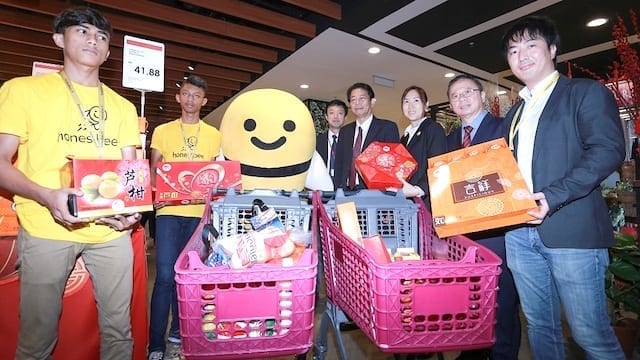
    Aeon Co (M) Bhd signed a memorandum of understanding (MoU) with Singapore-based online concierge and delivery service, honestbee, to venture into on-demand delivery services.

    This new delivery option, which uses personal shoppers to pick up and deliver orders, will enable Aeon customers to make their purchases online, via honestbee mobile app or website.

    Speaking at the signing ceremony, Aeon executive director Poh Ying Loo said the alliance is part of the group’s strategy to speed up its e-commerce business and at the same time add value to its outlets.

    Aeon joined the e-commerce bandwagon in late 2015 through its online website called shoppu.com.my, offering various product categories including electronics, fashion and household items.

    Asked on how this new service will help to elevate its e-commerce sales growth, Poh said at this point of time, it is still early to determine. It was reported that the group’s online website shoppu.com.my contribution in financial year 2016 (FY16) remained marginal.

    For now, Poh said the new online marketplace platform will only offer delivery service for grocery items at its flagship store, Aeon Mid Valley. He said customer who live within 17km radius from the store will enjoy a minimum one-hour delivery service.

    Commenting on its future plans for e-commerce segment, Aeon managing director Shinobu Washizawa said going forward, the group will have more such innovations in the pipeline.

    “In order to enhance the value for our customers by moving towards an omni-channel retailer, we want to combine our strengths with honestbee’s expertise to digitalise our customer’s shopping experience.”

    “We will closely monitor the feedback and demands from our customers, and consider to expand this service both in terms of regional and in merchandise offering,” Washizawa added.

    At present, Aeon has 26 malls, 33 Aeon outlets and two Maxvalu prime supermarkets across the country.

    Launched in 2015, honestbee currently has presence in eight markets including Singapore, Hong Kong, Taiwan, Japan, Malaysia, Indonesia and Thailand. To date, it has 112 partners, providing more than 90,000 products across the markets.

  • Carrefour steps up e-commerce push, chases Tencent deal in China

    Carrefour steps up e-commerce push, chases Tencent deal in China

    Carrefour is to cut jobs, boost ecommerce investment and seek a partnership in China with Tencent in the face of competition from Amazon, sending its shares higher on Tuesday.

    Alexandre Bompard, who took over as CEO in July, is trying to overhaul Carrefour’s French hypermarket business as well as expand online retail. Amazon’s purchase of Whole Foods in the United States last year has prompted speculation that the tech company could be targeting food retail in Europe next.

    Bompard plans to invest 2.8 billion euros ($3.4 billion) in digital commerce by 2022, six times its current investment, as Carrefour plays catch-up in online food retail.

    “Carrefour has reached a turning point in its history. We have a huge ambition and I am well aware of the magnitude of this challenge,” Bompard told a news conference.

    Under pressure to increase profits, Bompard also announced cost savings of 2 billion euros by 2020, including a voluntary redundancy plan for 2,400 employees at its French head office and plans to sell or close 273 underperforming stores Carrefour bought from Spanish retailer Dia in 2014.

    Carrefour shares rose around 6 percent, their biggest one-day gain since October 2015.

    “Consumer trends are changing, and Carrefour is adapting accordingly,” said Benoit de Broissia, analyst at Paris-based investment firm Keren Finance, which owns Carrefour shares.

    The group, the world’s second largest retailer with more than 380,000 employees, is targeting 5 billion euros in sales in food e-commerce by 2022 – an amount that would be six times greater than at present, which would represent a 20 percent market share in France.

    Carrefour’s online sales accounted for just 1.7 percent of its total French food sales in 2016, while more digital-savvy rival Leclerc managed 8 percent, according to analysts at brokerage Bernstein.

    Carrefour has struggled for years to reduce its reliance on hypermarkets, particularly in France, where it makes 47 percent of its sales.

    Bompard, previously CEO of electronics retailer Fnac Darty, ruled out closing any of the 247 French hypermarkets, proposing instead to reduce selling space whenever it was relevant and to transfer five hypermarkets to lease management contracts.

    In China, Carrefour remains loss-making amid fierce competition from local players and a buoyant online market.

    A partnership between rival French retailer Auchan AUCH.UL and Alibaba has also increased the pressure on Carrefour’s China business.

    In response, Bompard announced a potential deal with Tencent and local retailer Yonghu to take a stake in Carrefour China. Carrefour would still be the largest shareholder.

    UNION ACTION

    Bompard’s plan to shed 2,400 jobs out of a total French HQ workforce of 10,500 could set the chief executive on a collision course with France’s trade unions, including Force Ouvriere, which has already called for a walkout on Feb. 8.

    Carrefour is the largest private sector employer in France, which accounts for 44 percent of its operating profits.

    Bompard also said if the Dia stores did not find buyers and had to be closed there could be more redundancies.

    “This is a plan destined to please shareholders. We remain vigilant and still fear as many as 4,500 jobs could go,” Dejan Terglav, secretary general at the Force Ouvriere (FO) trade union said.

    French Economy Minister Bruno Le Maire also said the government would be “very vigilant” on the staff cut plans.

    Other big European retailers are also cutting jobs. Britain’s supermarket group Tesco said on Monday it would cut a net 800 jobs from its UK business to simplify operations and cut costs.

    Bompard also outlined plans to accelerate growth in supermarkets and convenience stores globally, especially in Brazil in where it wants to open 20 new Atacadao cash and carry per year.

    His plans followed Carrefour’s warning last week that its 2017 operating profit could fall by 15 percent amid weak sales, marking its second profit warning in six months.


  • WeChat launches first pop-up store in Shanghai

    WeChat launches first pop-up store in Shanghai

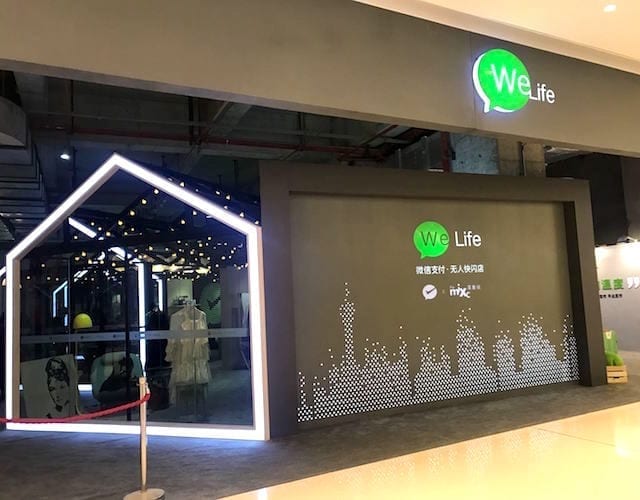
    Chinese messaging app WeChat has launched its first cashierless pop-up store in Shanghai.

    The Tencent company has teamed with more than 300 merchants, including EasyGo and Elle, as well as shopping mall The Mixc to build up its first “flash retailing” pop-up store.

    By scanning a QR code via WeChat, customers can enter the store. The system verifies the customer’s identification and gains access to their digital wallet WeChat Pay. All products have RFID tags to identify them and their price. Buyers can easily check the bill by scanning codes.

    The Bai Zhenjie company, which applies WeChat Pay to the retail industry, says the concept of flash retailing is constantly being polished. Face-recognition technology and a credit-evaluation system are expected to also be applied to the stores.

  • Google, Temasek Coming in as New Investors in Indonesia’s Go-Jek

    Google, Temasek Coming in as New Investors in Indonesia’s Go-Jek

    Google, Singapore state investor Temasek Holdings and Chinese online platform Meituan-Dianping are investing in a fundraising round of Indonesian ride-hailing startup Go-Jek, sources familiar with the matter said.

    Go-Jek’s existing investors, such as global private equity firms KKR & Co and Warburg Pincus, are also participating in the funding round, which is raising about $1.2 billion in total, the sources said.

    They said the funding round opened last year and is expected to close in a few weeks.

    The funding by prominent investors including Google gives Go-Jek greater firepower to tackle competition at home from Grab and Uber Technologies, which are viewing Indonesia, Southeast Asia’s most populous country, as a large potential market.

    “As a strategic investor, Google can add a lot to Go-Jek’s business,” said one source.

    It was not immediately clear how much the investors are pumping in individually.

    Google, KKR, Warburg and Temasek declined to comment. Meituan-Dianping and Go-Jek did not immediately respond to requests for comment. The people declined to be identified as they were not authorized to speak to the media.

    Go-Jek, which began as a ride-hailing app for motorcycle taxis, operates mainly in Indonesia but is developing a food delivery business. Its mobile payment business, Go-Pay, is also growing rapidly.

    Reuters reported last year that JD.com was investing about $100 million in Go-Jek. This followed an investment by Chinese social media and online entertainment firm Tencent Holdings, which is also an investor in JD.com.

  • Protest arise after JD.com launches house brand Jing Zao

    Protest arise after JD.com launches house brand Jing Zao

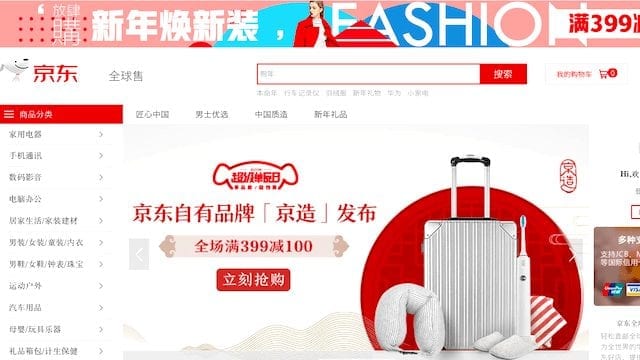
    Clashing head-on with manufacturers who sell through its platform, China’s JD.com has introduced its own brand, Jing Zao.

    Its initial 38 products range from towels to suitcases in similar style to Japan’s Muji or US luggage maker Samsonite, but at a lower price. Both companies sell their wares through JD.com.
    JD.com knows which products are popular with customers and can tailor its offerings accordingly, plus it has its own logistics service for deliveries.

    Its house brand follows its venture into physical retail stores. This month it introduced its first fresh-food supermarket in Beijing.

    Meanwhile, JD.com has confirmed it is a co-investor in Vietnam’s Tiki e-commerce platform, becoming one of its largest shareholders.

  • JD.com widens Southeast Asia presence by investing in Vietnam’s Tiki.vn

    JD.com widens Southeast Asia presence by investing in Vietnam’s Tiki.vn

    Chinese online retailer JD.com Inc has made an investment in Vietnamese e-commerce firm Tiki.vn, expanding its Southeast Asia business amid growing competition in the region from Alibaba Group Holding Ltd and Amazon.com Inc.

    JD.com co-led the financing with Vietnamese entertainment and social media firm VNG Corp, which is an existing investor, China’s second-biggest e-commerce firm behind Alibaba said in a statement on Tuesday.

    The firm did not disclose the size of the funding but said that JD.com will become one of Tiki’s largest shareholders alongside VNG following the deal.

    Vietnamese media had reported in November that the round was worth roughly 1 trillion dong ($44.04 million). JD.com declined to give a dollar number for the investment.

    “With JD’s expertise in leveraging social media for e-commerce, Tiki.vn’s partnership with VNG in social network and mobile payments is a natural fit,” Winston Cheng, president of JD.com’s international business, said in the statement.

    Vietnam is the latest focal point in JD.com’s strategic push into Southeast Asia, where Alibaba and Amazon have also made significant investments in the past year.

    JD.com will tap Tiki.vn’s warehousing and delivery system, as well as its technology and payments capabilities.

    Tiki.vn and VNG’s tie-up has similarities to the partnership between JD.com Inc and internet giant Tencent Holdings Ltd, which is an investor in JD.com and Asia’s largest tech firm by market cap.

    JD.com leverages data and payments from Tencent’s WeChat, China’s most popular social media app, and will seek to build similar capabilities with VNG and Tiki.vn, Cheng said.

    While Southeast Asia’s e-commerce market is still nascent compared to the China‘s, improvement in internet services and an increase in mobile-based payments have attracted large international e-commerce firms to the region.

    Alibaba has invested heavily in payment and e-commerce ventures in Thailand, Singapore, Indonesia and Malaysia. U.S. retailer Amazon also launched its subscription-based Prime service in Singapore last month in a bid to challenge Alibaba-backed online retailer Lazada Group in Southeast Asia.

    JD.com launched a local online retail business in Indonesia two years ago, and now claims to be the country’ largest retailer by revenue. It also formed a $500 million e-commerce venture with Thai retailer Central Group.

    Besides VNG, Tiki.vn’s previous investors include Seedcom, Sumitomo Corp and CyberAgent Ventures.

  • Fliggy, American Airlines Partnership to Benefit Chinese Travelers

    Fliggy, American Airlines Partnership to Benefit Chinese Travelers

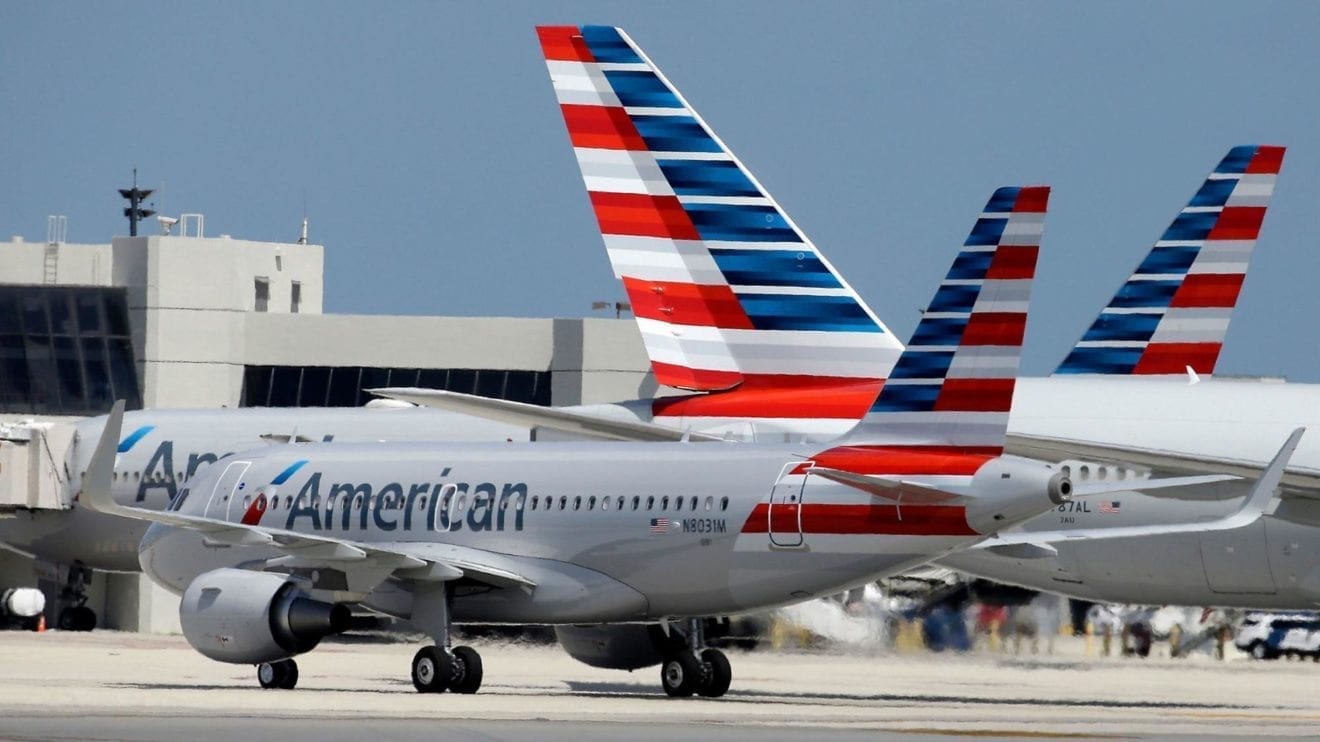
    The world’s largest airline, American Airlines, and Alibaba Group-owned Fliggy on Tuesday announced a strategic partnership that will bring travel perks to millions of the online travel platform’s Chinese customers.

    Starting next month, Fliggy members can register to enjoy select benefits from AA’s loyalty program, AAdvantage, depending on the level of their membership with Fliggy. For example, Fliggy F1 members will earn preferred boarding when taking an economy class flight, while those with Fliggy’s F2 and F3 memberships will receive certain perks equivalent to AAdvantage’s Gold and Platinum status, respectively.

    Moreover, AA plans to launch a flagship store on Fliggy, joining other airline stalwarts such as Cathay Pacific, Singapore Airlines, and Lufthansa to capture the booming travel demand by Chinese consumers.

    Future plans for the partnership also include the implementation of Alipay, the mobile payment system of Alibaba’s related company, Ant Financial, as a form of payment, said both companies in a joint statement.

    As part of Alibaba Group, Fliggy has access to more than 500 million mobile monthly active users on Alibaba’s China retail marketplaces. This means that by partnering with Alibaba airlines can gain valuable insights into the Chinese market, allowing them to better customize their services for Chinese customers, said Fliggy Vice President Jerry Hu.

    “This is why more than 70 well-known domestic and foreign airlines have chosen to establish flagship stores on Fliggy,” he said.

    Alison Taylor, senior vice president of Global Sales and Distribution at American Airlines, said the company is committed to China and is offering Chinese customers more flights to more destinations between North America and Asia.

    “This partnership changes the way loyalty programs in China interact with one another and provides more flight options for Fliggy users between these two critical business and leisure destinations,” she said.

    According to a forecast by investment bank CLSA, Chinese outbound tourism is expected to hit 200 million people by 2020 from 135 million seen in 2016. Spending by Chinese overseas travelers is also projected to reach $429 billion in 2021 compared with $261 billion in 2016, the firm said in a report.

    Founded in 1930, AA offers 6,700 flights each day to 350 destination in 50 countries and regions. The Texas-headquartered company is also a founding member of the Oneworld Alliance, whose members and members-elect offer nearly 14,250 flights daily to 1,000 destinations in 150 countries.


  • Alexander McQueen partners with JD.com to expand in China

    Alexander McQueen partners with JD.com to expand in China

    Alexander McQueen China has partnered with JD.com to launch a store on the e-commerce giant’s luxury platform Toplife.

    It will offer the full Alexander McQueen fashion ranges as well as accessories.

    While the UK luxury fashion brand already has 15 on-ground stores throughout China and Hong Kong, it aims to bolster its online reach through JD.com’s logistical infrastructure as well as its understanding of the Chinese luxury e-commerce.

    “This is a strategic addition to our physical presence in China, part of our multi-channel experience,” says Alexander McQueen CEO Emmanuel Gintzburger. “JD.com’s advanced capabilities will allow us to engage with a larger local clientele while respecting the creative expression of the house.”

    Launched in October, Toplife aims to fill a gap in the Chinese e-commerce market by offering only full-priced items from premium global brands. It offers international luxury brands access to its allround system, which seamlessly incorporates an online store, premium customer service, delivery services and marketing and branding expertise.

    The move follows the launch of Saint Laurent’s stand-alone store on Toplife earlier this month.

  • Toymaker Lego teams up with Chinese internet giant Tencent

    Toymaker Lego teams up with Chinese internet giant Tencent

    Danish toymaker Lego is teaming up with Chinese internet giant Tencent Holdings to jointly develop online games and potentially a social network aimed at Chinese children.

    Privately-owned Lego has seen a slowdown in sales growth in recent years, but the Chinese market has been a bright spot with sales growing 25-30% in 2016.

    It is competing with Barbie maker Mattel and Hasbro, the firm behind My Little Pony, for a slice of the $31 billion toys and games market in China.

    Lego said on Monday the partnership with Tencent, China’s biggest social network and gaming company, aimed to create a safe online environment covering content, platforms, and experiences tailored for Chinese children.

    “What we are looking for now with Tencent is just to find more creative ways of reaching children, and creating bespoke content with Tencent, in this case, video games,” Jacob Kragh, head of Lego in China, told Reuters on Monday at joint event with Tencent in Beijing.

    It also includes LEGO BOOST — a building and coding set that lets children turn their brick creations into moving objects — and will explore developing a joint social network for children in China.

    Tencent is Asia’s most valuable company with a market capitalisation of $537 billion.

    Last year, Mattel struck deals with Chinese e-commerce giant Alibaba Group Holding and online content developer BabyTree to sell interactive learning products based on its Fisher-Price toys.

    Lego has about a 3% market share in China, followed by Mattel and Hasbro with around 2% and 1%, respectively, according to Euromonitor International.

    In November 2016, Lego opened a factory in Jiaxing, China, which it expects to produce 70-80% of all Lego products sold in Asia.

  • Online sales bring cheers to online retailers

    Online sales bring cheers to online retailers

    To technology, retailers have and are moving out from brick-and-mortar stores to join the cyber world. As a result, street retail sales are accelerating on the Internet, offering shoppers better deals because they do not have to worry about the overhead expenses which traditional stores have to deal with.

    Christy Ng Sdn Bhd founder Christy Ng, who started her business in her mother’s living room years back, now owns five brick-and-mortar stores that delivers to 30 different countries.

    She decided to open her own physical store after her loyal customers, who rather try out the shoes before buying them, nudged her into it.

    “During the recent MyCybersale blow-out frenzy which ran from Oct 9 to 13 last year, we achieved 10-fold more sales than our physical stores,” she said.

    “We also witnessed a 35% increase in sales, specifically during the Alibaba Single’s Day 11.11 and 12.12 mega sale bash.”

    She added that 60% of her customer base comes from the online store, whereas the remaining 40% of customer base are from our physical outlets.

    MyCybersale is a five-day online sales festival organised by the National ICT Association of Malaysia along with the Malaysia Digital Economy Corp.

    MyCybersale 2017 managed to rack in a gross merchandise value (GMV) of RM311 million, exceeding the RM300 million target set for the year.

    RM39 million of the RM311 million GMV were derived from international shoppers which surpassed the export revenue target of RM20 million.

    It was a phenomenal growth of over 254% from the 2016 export revenue of RM11 million.

    Bagman Corp Sdn Bhd group CEO Datuk Liew said his online retail business also witnessed some positive numbers during the online mega sale frenzy.

    “Bagman didn’t do all that well during last year’s MyCybersale. However, during the 11.11 and 12.12 deals, we saw a 20%-30% increase in sales.

    “It is an improvement from the previous year and I believe online retail is the future,” Liew said.

    Liew, who used to sell his designed bags in major marketplaces, however, added that it is hard to do branding on those marketplaces since shoppers mainly go on these sites to search for “affordable” things.

    Previously reported that ShopBack Malaysia country GM Alvin Gill revealed the average spending per customer surged more than threefold during the recent the 12.12 online shopping celebration compared to the Single’s Day 11.11.

    “The average spending per customer during the 12.12 was RM485, whereas for 11.11 it was US$76 (RM302.04).

    “This is due to the increase in travel bookings made for the year-end holidays along with Christmas gift purchases, as well as apparels purchases for the New Year,” said Gill.

    ShopBack Malaysia collaborated with more than 30 online partners during 12.12, among them were Lazada, Zalora, 11street as well as Booking.com.

  • FairPrice and Grab to launch new subscription service

    FairPrice and Grab to launch new subscription service

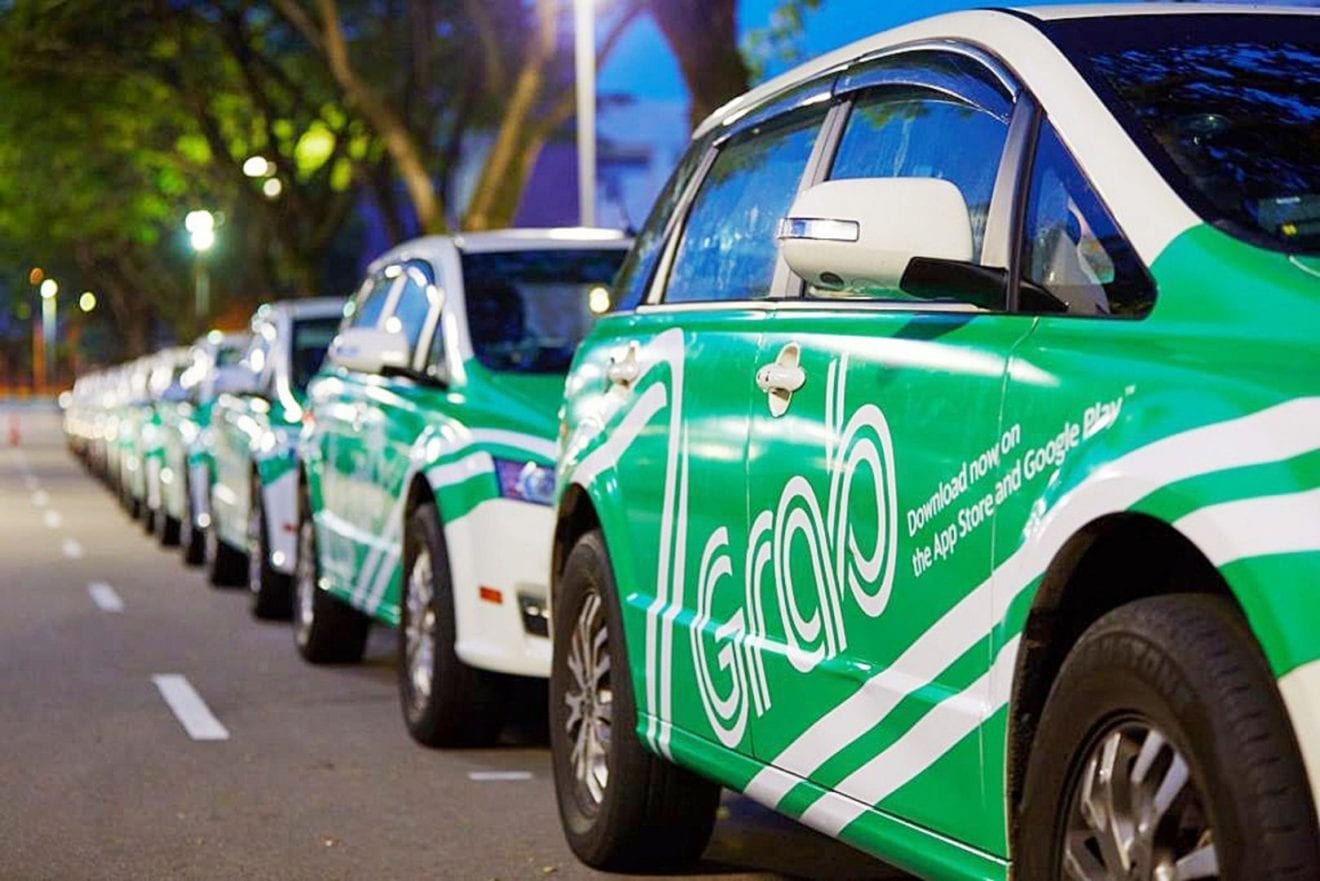
    A subscription service is being planned by supermarket chain NTUC FairPrice and on-demand transportation/mobile payments platform Grab.

    They have signed a memorandum of understanding to embark on a joint initiative to complement the online-to-offline lifestyle of consumers by offering better value, convenience and access to goods and services.

    “Our strategic partnership with Grab signifies our ongoing efforts to cater to the evolving needs of the community,” says NTUC FairPrice CEO Seah Kian Peng.

    Grab Singapore group CEO/co-founder Anthony Tan says the partnership will offer its customers extra discounts and perks from FairPrice. “With both supermarket and transport services as part of this initiative, we are thrilled to provide greater cost savings and convenience.”

    A survey of more than 1000 customers between 20 and 40 years old has shown that 95 per cent are likely to subscribe to such services, while 56 per cent of respondents indicated they are not subscribed to a service. Groceries (69 per cent) and transport (54 per cent) also top the list of services they want from a subscription service.

    Consumers opting for the Grab/FairPrice subscription service will be offered exclusive savings, rebates and access to services on groceries and transport. It is targeted for launch this first quarter.