Category: E-Tailing

Retail News Asia is committed to providing both local and global retailers with the latest E-Commerce & Etail news throughout the Asian market. This on a daily base.

  • SmartOSC Joins Hands with UrbanFox to Promote End-to-End Ecommerce

    SmartOSC Joins Hands with UrbanFox to Promote End-to-End Ecommerce

    SmartOSC, a leading ecommerce agency, has joined hands with UrbanFox, an omnichannel logistics and channel management solutions brand, and a subsidiary of Singapore mainboard-listed Keppel Telecommunications & Transportation, to jointly promote their end-to-end ecommerce services to retailers across Southeast Asia.

    In recent years, several brands, including Club21 and Times Publishing Group, have chosen SmartOSC and UrbanFox as strategic partners for their ecommerce needs. The partnership promises to bring retailers seamless omnichannel solutions, backed by SmartOSC’s consulting, user experience and platform implementation practices, together with UrbanFox’s logistics services and omnichannel management.

    Retailers in the region have been looking to create a more seamless shopping experience for their customers in tandem with their changing shopping habits. According to recent research published in the Harvard Business Review, the omnichannel shopping generation spent an average of 4% more on every shopping occasion in-store and 10% more online than single-channel customers. Even more compelling is that, with every additional channel they used, the shoppers spent more money in the store.

    SmartOSC has leveraged its strong ecommerce expertise, technical capability and scalable resources to meet the rapidly evolving needs of global brands and retailers. Today, major consumer brands such as COURTS Singapore, Lotte, Nestlé and Friso have partnered with SmartOSC to implement effective ecommerce solutions, which has enabled the brands to get to market faster, as well as optimise sales.

    Thai Son, CEO of SmartOSC shared, “We’ve seen raving demand from clients in Europe and North America for implementing omnichannel solutions to catch up with the new shopper generation. The same trend is happening across Southeast Asia, and our partnership will help retailers in the region to implement the best practice for their new retail strategy.”

    Answering the needs at the other end of the ecommerce supply chain is UrbanFox, which is part of Keppel Logistics. By incorporating omnichannel strategies as part of their services provided for B2C and B2B brands, UrbanFox is able to enhance the efficiency of the brands’ supply chains.

    Channel management is another key service in which UrbanFox is seeing strong pick-up. In this area, UrbanFox helps retailers manage multiple sales channels and distribution from the initial order through to the last mile delivery, by using a centralised inventory management model. UrbanFox counts many major companies among their clients, such as Kao Singapore and Mondelez.

    Joe Choa, Managing Director of UrbanFox shared, “UrbanFox has helped retailers respond to the ecommerce trend by integrating their online and offline channels onto one unified platform where inventory, sales and promotional campaigns can be managed across various marketplaces with ease. Following our initial success with clients in Singapore, we hope to offer our effective logistic solutions throughout Southeast Asia together with e-commerce veterans SmartOSC.”

    Both SmartOSC and UrbanFox will be present at the Last Mile Fulfilment Asia 2018 event in Singapore from March 15-16, to share successful case studies and showcase how retailers can benefit from their joint offering.

    The abovementioned transaction is not expected to have any material impact on the net tangible assets or earnings per share of Keppel Telecommunications & Transportation for the current financial year.

  • Alipay now available in all Starbucks across South Korea

    Alipay now available in all Starbucks across South Korea

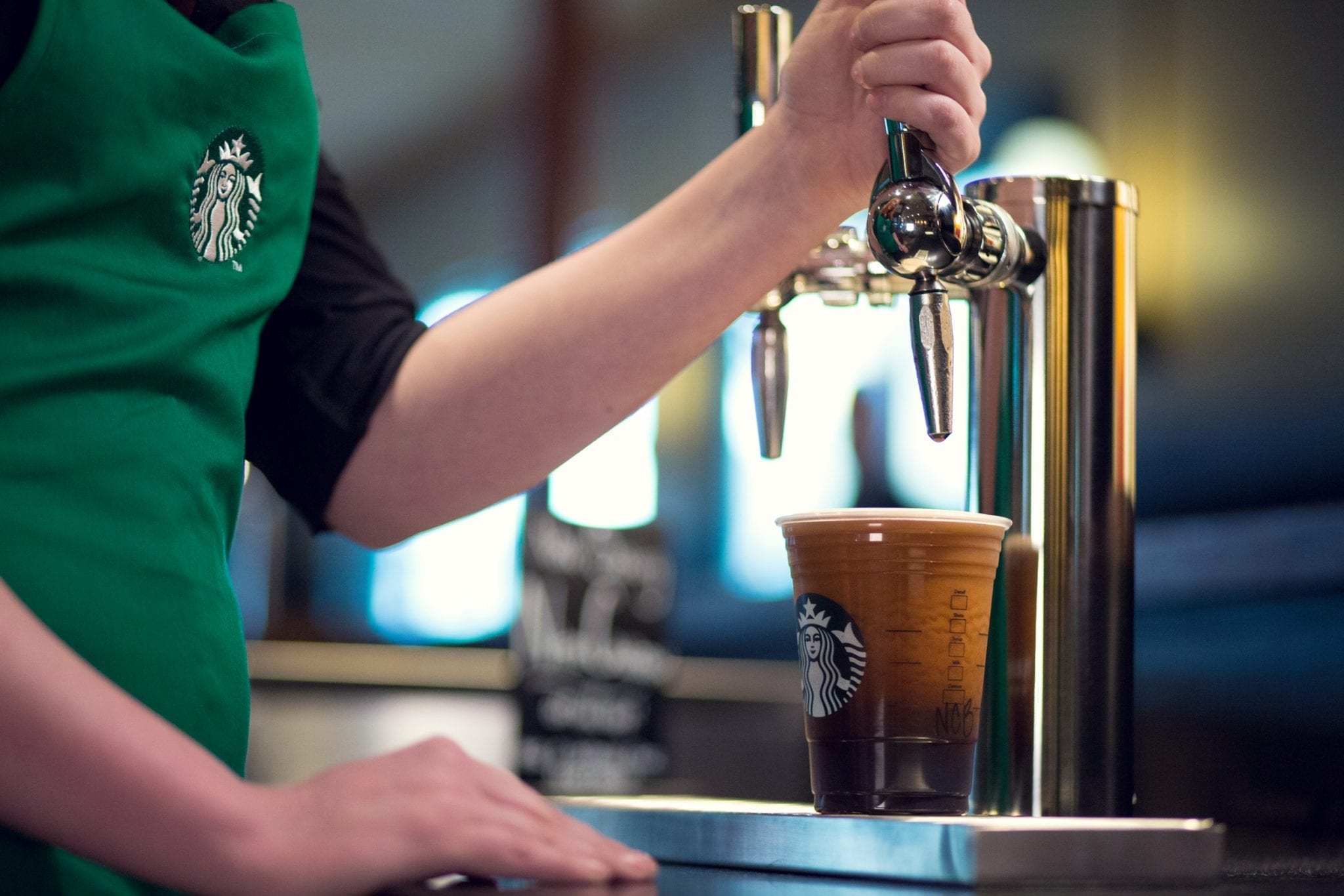
    For Chinese tourists traveling South Korea, paying for a grande latte at Starbucks is now as easy as showing your smartphone.

    Ant Financial, which now Alibaba a 33% stake, said Sunday its Alipay e-wallet service is now available at over 1,150 Starbucks branches across South Korea – the first third-party mobile-based payment method enabled nationwide at Starbucks in the country.

    “Starbucks branches are among the most-visited places by Chinese travelers in South Korea. We will continue to introduce Alipay to more local merchants, including restaurants and shops to make Chinese travelers’ journey as convenient as at home,” said Danny Chung, General Manager of Alipay Korea.

    Alipay, the world’s leading third-party payment platform available in 38 countries and regions, was first introduced in South Korea in 2015. Users of the online payment platform can also enjoy an instant tax refund via Alipay at four major airports in South Korea. Earlier this month, Finland became the first country to offer Chinese tourists fully cashless experience by adopting Alipay.

    According to the state-run Korean Tourism Organization, travelers from China make up around one-third of South Korea’s inbound tourists each year.

    The announcement comes on the heels of Alibaba’s launch of an interactive showcase at Gangeung Olympic Park, a staging area for PyeongChang 2018 that hosts the Games’ ice sports.

    Alibaba Group is an Olympic TOP partner through 2028.  As part of the Olympic Partner worldwide sponsorship program, the Hangzhou-based technology giant is the official “Cloud Services” and “E-Commerce Platform Services” partner of the International Olympic Committee, as well as a Founding Partner of the Olympic Channel.


  • Amazon 2017 sales soar, record-breaking Q4 profit

    Amazon 2017 sales soar, record-breaking Q4 profit

    Amazon has bested all previous financial quarters with the announcement this month company fourth-quarter revenues hit $60.5 billion, driving profits up 150% to $1.9 billion – a record profit gain for the US e-commerce giant.

    On the back of a strong Christmas period across both its namesake Amazon.com and the newly acquired Whole Foods Inc, Amazon said total revenues soared by 38% compared to the previous year.

    The American company was further helped out by its burgeoning cloud business, Amazon Web Services, which took in $5.11 billion, up 45% on last year.

    Over the three-month period ending December 31, the Seattle-based firm said net income more than doubled to $1.86 billion, or $3.75 per share, thanks also to a $789 million benefit from the U.S. Republican tax bill passed in December.

    The world’s largest online retailer drew millions of new customers to its Prime fast-shipping club too. Amazon said that Prime saw more than 4 million sign-ups in just seven days alone last quarter, and revenue from subscription fees grew 49% to $3.2 billion.

    Amazon said it expects operating profit this quarter of between $300 million and $1 billion.

    In a statement, chief executive officer Jeff Bezos also praised the company’s Alexa voice assistant: “Our 2017 projections for Alexa were very optimistic and we far exceeded them. We don’t see positive surprises of this magnitude very often.”

    Amazon continues to break into new retail territory. In addition to Alexa, the internet shopping giant opened its first automated grocery store in January in Seattle, Washington.

    Dubbed Amazon Go, the checkout-free grocery looks to set the stage for the future of physical store retailing where shoppers serve themselves, with the option of leaving without ‘paying’.

    Amazon also recently revealed a healthcare deal with partners Berkshire Hathaway and J.P. Morgan Chase. Looking ahead, it plans to “double down” on Alexa’s promotion while it continues to look for a second headquarters location in North America.

  • Coupang Opened a Hanbok Store that Provides Korean Traditional Costume

    Coupang Opened a Hanbok Store that Provides Korean Traditional Costume

    E-commerce platform Coupang has opened an online store specialising in hanbok, Korean traditional clothing.

    Even babies and pets are catered for with the hanbok range, which also includes hanbok accessories such as hairbands, daenggi (ribbons for braided hair) and ggotshin (women’s shoes with flower patterns).

    As well as its hanbok store, Coupang has specialty stores focusing on its private-label brand Tamsaa, organic/eco-friendly items, men’s grooming, maternity items and travel accessories.

    Ecommerce platform Coupang has opened a store specializing in Korean traditional clothing hanbok. (PRNewsfoto/Coupang)

    As well as Seoul, Coupang has offices in Beijing, Los Angeles, Seattle, Shanghai and Silicon Valley.

  • Alibaba reports solid Q3 growth, increases FY guidance

    Alibaba reports solid Q3 growth, increases FY guidance

    Alibaba Group Inc. said revenues reached 83 billion yuan ($12.8 billion) in the third quarter – soaring 56% on last year – pushed on by China retail growth.

    For the three-month period ending December 31, Alibaba said China recorded the highest revenue growth, up 57%, counteracting a dull consumer confidence in the Asian nation. Annual active consumers on Alibaba’s China retail marketplaces reached 515 million, an increase of 27 million from the previous quarter, representing the largest growth in 12 quarters.

    The hometown result was helped by a strong Singles Day 2017 performance. The massive sales event clocked 168.2 billion yuan ($25.39 billion) in gross merchandising value.

    The Chinese e-commerce giant said the quarterly period was its seventh-consecutive quarter for growth.

    “We delivered another outstanding quarter and our business is performing stronger than ever,” said Daniel Zhang, Alibaba’s chief executive officer.

    Zhang went on to praise the firm’s pioneering technology in the online sphere and its intelligent move toward offline, in particular, its Hema supermarket chains.

    “It’s the direct result of our long-term, forward-looking approach to new user acquisition, new technology and creation of new user experiences. We have demonstrated what new retail looks like through innovations such as Hema and inspired a global wave of experimentation in new retail. We believe the future of retail is much more than just connecting online and off-line, our new retail strategy is a combination of creating new and transforming old.”

    Looking ahead, Alibaba said it has revised its outlook for full-year revenue growth up to 55 to 56%, from its earlier estimate of 49 to 53%

    In addition to the financial reporting, Alibaba said it would acquire a 33% in Ant Financial, its digital payment partner. The move highlights Alibaba’s new retail strategy, which includes enabling digital payments in brick-and-mortar stores.

  • Dusit International now accepts Alipay at its hotels and resorts in Thailand

    Dusit International now accepts Alipay at its hotels and resorts in Thailand

    Dusit International, one of Thailand’s foremost hotel and property development companies, has rolled out Alipay at its hotels and resorts in Thailand to cater to Chinese travellers who prefer to make quick and secure payments via mobile.

    With over 520 million users and counting, China-based Alipay is one of the world’s largest mobile payment platforms which allows its users to pay for goods and services by scanning QR codes on their smartphones or tablets. Its presence is ubiquitous in Chinese cities, where mobile payments are fast becoming a way of life.

    Dusit International already accepts Alipay at all of its hotels and resorts in China. Alongside Thailand, it also plans to roll out the system at its international properties soon.

    “The Chinese market is a key segment for our hotels in Thailand, so it is important our properties are equipped to meet the needs of those who prefer to pay via mobile, now the method of choice in China,” said Mr Lim Boon Kwee, Chief Operating Officer, Dusit International. “Alipay can certainly enrich and enhance the guest experience for all our Chinese travellers.”

    Dusit Hotels & Resorts in Thailand now accept Alipay at their restaurants, spas, participating outlets, and for hotel rooms upon check-out. The properties also accept China’s other major mobile wallet, WeChat Pay.

    Dusit properties in Thailand include Dusit Thani Bangkok, Dusit Thani Hua Hin, Dusit Thani Pattaya, Dusit Thani Laguna Phuket, Dusit Thani Beach Resort Krabi, dusitD2 Chiang Mai, dusitD2 Khao Yai, Dusit Princess Srinakarin Bangkok, and Dusit Princess Chiang Mai.

    Alipay is operated by Ant Financial, an affiliate of Alibaba Group Holding Limited, a Chinese multinational e-commerce, retail, and technology conglomerate which is one of the top 10 most valuable companies in the world.

  • Vietnam leads in phone e-commerce growth

    Vietnam leads in phone e-commerce growth

    Vietnam is the fastest-growing market in South East Asia in terms of mobile e-commerce growth, says the latest report on Southeast Asia’s 2017 e-commerce status by iPrice.

    In the past 12 months, mobile phone usage in Việt Nam has grown on an average of 19 per cent, accounting for 72 per cent of the overall e-commerce Web traffic. In comparison to other Southeast Asian countries, Việt Nam enjoyed the steepest growth at 26 per cent.

    However, in absolute terms, Indonesia is leading mobile e-commerce, with 87 per cent of the traffic coming from mobile phones. Meanwhile, traffic via personal computers is less than 30 per cent in all countries in the region.

    Việt Nam is also the leader in website conversion rate, which measures the percentage of website visitors that turn into customers, with a conversion rate of up to 65 per cent, closely followed by Singapore and Indonesia.

    Meanwhile, with the low use of credit cards (except in Singapore), e-commerce merchants are offering more payment options to reach out to shoppers.

    In Việt Nam, 86 per cent of merchants offer online payment, while cash on delivery is offered by more than 80 per cent of the players. Besides this, in both Việt Nam and Thailand, almost 50 per cent of the merchants offer offline point of sales.

    This is due to the popularity of online to offline e-commerce models, such as Thế giới di động (Vietnam Mobile World), FPT Shop and Nguyễn Kim, the report said.

    However, due to lower gross domestic product per capita (US$6,880) compared to other countries in the region, Việt Nam has the lowest basket size, with an average order value of just $23.

    iPrice’s data was collected from over 1,000 e-commerce players operating in the six largest Southeast Asian markets, including Indonesia, Malaysia, Singapore, Thailand, the Philippines and Việt Nam.


  • Alibaba platform receives registration from 2,000 SMEs

    Alibaba platform receives registration from 2,000 SMEs

    More than 2,000 SMEs have registered with the Alibaba group platform under the the Digital Free Trade Zone initiative.

    International Trade and Industry Minister Datuk Seri Mustapa Mohamed said it is targeting for 10,000 SMEs to be on the platform by this year.

    At the Malaysia Digital Economy Forum here this morning, he said Malaysia’s digital economy has seen exponential growth.

    To date, 58,824 online businesses have registered with the Companies Commission of Malaysia. The digital economy accounted for 18.2% of the country’s gross domestic product (GDP) in 2016.

  • More than half of millennials prefer online retailer info to in-store assistance

    More than half of millennials prefer online retailer info to in-store assistance

    More than half of millennial customers would rather look for retail information online than talk to a shop assistant, according to research.

    A survey of online marketplace OnBuy.com’s customers found that 53% of young people aged between 25 and 34 prefer to seek out details online rather than talk to store staff when they are in a shop.

    The younger generation also prefer to avoid shops when they need information, with 61% of the millennial age group saying they find it easier to chat to a retailer via digital communication channels such as text, online chat or messaging applications as opposed to visiting a physical location.

    Cas Paton, MD of Onbuy.com, said consumers increasingly want to see more retail technology in stores as well as an online offering.

    “As technology is evolving so rapidly, it is important that companies incorporate new technologies into their business to help keep up with the times,” said Paton.

    More than half of shoppers believe that in the near future they will increasingly be using mobile devices to make more of the in-store experience.

    The purpose of stores has been slowly shifting since the arrival of e-commerce – stores are increasingly becoming showrooms for consumers to try out products before buying them online, with many physical locations becoming experience centres instead of just places to buy goods.

    Younger consumers often demand more from the shopping experience because of their use of technology, and as well as using mobile devices for information in store, want to be able to buy products through social media. Also, more and more consumers want to be able to collect loyalty points through their smartphones.

    This change in customer behaviour over the past 50 years as technology proliferation has increased also makes it more difficult to retain customers – but, surprisingly, the older generation are more likely to change between brands than the more tech-savvy millennials, perhaps because there is less social pressure for them to be affiliated with particular brands.

    Onbuy.com found that just under half of customers between the ages of 18 and 40 could be persuaded to buy from a particular brand or retailer if its stores were more different or interesting. This was true of 65% of the millennials in the group, who would be more likely to be enticed by a more exciting store experience.

    Almost three-quarters of consumers said retailers will have to keep up with changes in the technology landscape if they hope to improve the consumer experience and keep customers loyal.

    Some retailers have been trying to address this shift to omni-channel by offering services such as voice-ordering through internet-connected home devices or click and collect.

    But some larger retailers struggle to implement these new technologies because of legacy technology, and some have begun to turn to startups to help them test and implement new technologies.


  • Alibaba Throws $486 Million Behind Big Data

    With plans to expand its offline presence, Alibaba Group Holding Ltd. will be investing $486 million in a China-based big-data firm centered on the hotel, catering and retail industries.

    A filing to the Shenzhen stock exchange today shows that the company is set to buy a 38 percent stake in Beijing Shiji Information Technology Co. Ltd. through its subsidiary Alibaba Investment Ltd. The e-commerce giant is shifting into what it calls a “New Retail” strategic cooperation and intends to leverage big data as part of a bigger push to restructure the domestic retail market, which has seen troubling times over the past few years.

    Led by Chinese billionaire Jack Ma, Alibaba reported 61 percent growth in quarterly revenue last November, beating retail and financial analysts’ expectations. “We are seeing the early results from our efforts to integrate online and offline with our New Retail strategy, and consumers have benefited from access to high-quality products, improved customer experience and the tremendous convenience of shopping anytime, anywhere,” CEO Daniel Zhang said at the time.

    Already dominating the country’s online shopping market, the e-commerce and technology giant has been experimenting with brick-and-mortar retail, reportedly investing billions in physical stores as it faces growing competition with rival company Tencent Holdings Ltd. Ma also announced a plan last fall to spend $15 billion on research and development within three years, with the goal of serving 2 billion customers and creating 100 million job opportunities over the next two decades.

  • JD.com and Fung Retailing form Artificial Intelligence partnership

    JD.com and Fung Retailing form Artificial Intelligence partnership

    JD.com is both the largest e-commerce company in China, and the largest Chinese retailer, by revenue.

    The retailing businesses of the Fung Group are brought together under privately-held Fung Retailing Limited and it is a Hong Kong-headquartered multinational group whose core businesses are engaged in trading, logistics, distribution and traditional and digital retailing.

    The agreement between the two companies calls for the establishment of an AI Boundaryless Retail Center that will oversee and manage cooperative research and development projects, and facilitate the sharing of information and expertise relating to AI technology.

    Leveraging AI, and combining JD.com‘s extensive online expertise and Fung Retailing’s offline expertise, the two companies aim to develop a new retail format for China and Asia.

    This includes creating an AI-driven retail system that seamlessly integrates online and offline retail platforms; developing an end-to-end system that enables the management of products, pricing, storage, order and payment; and enhancing consumer experience through solutions such as AI-driven virtual fitting, unmanned stores and smart shopping assistants.

    Speaking at the signing, Sabrina Fung, Group Managing Director of Fung Retailing Limited said, “When it comes to the future of retail, and driving the customer experience, AI is an essential component. Across our retail portfolio, AI is a focal point and this co-operation with JD will, without doubt, accelerate our progress.”

    Bowen Zhou, Vice President of JD.com and Head of JD’s AI Platform and Research said, “As one of the largest retailers in the world, we believe that figuring out how to deploy AI solutions is critical to our future success. Drawing on Fung Retailing’s global offline retail expertise, this partnership will be important for us as we deliver our retail vision.”

    Other areas of focus within the agreement include cooperation on the construction of AI infrastructure, as well as smart retail, creating AI-driven solutions that break down the barriers between online and offline, and exploring the intersection of AI and fashion.

  • GRAB and UBER fighting to dominate the ridesharing in South East Asia

    GRAB and UBER fighting to dominate the ridesharing in South East Asia

    Uber’s founders first tested their app among San Franciscans, a pair of Harvard Business School classmates from Malaysia seized upon a similar idea: They wanted to build Uber, but for Asia.

    In 2012, they launched a ride-sharing service with 40 drivers in Kuala Lumpur. Eventually, they settled on the name Grab.

    Six years later, Grab dominates the ridesharing market in South East Asia, boasting 2.3 million drivers in 168 cities across eight countries.

    In 2017, the company raised $2.5 billion from investors, including Softbank, the Chinese ridesharing company Didi Chuxing, and Hyundai.

    This recent round of funding valued it at $6 billion, making it the most valuable tech startup in South East Asia. Despite Uber’s aggressive investment in the region, it has struggled to beat Grab. That is in part because of Grab’s cultural advantage.

    While Uber has spent close to a decade figuring out what Western users want out of a ride-service, the company has struggled to adapt its findings to parts of the developing world. By contrast, Grab has solved a puzzle facing companies in places that are just coming online: How to make e-pay work in nations that lack financial infrastructure.

    For co-founder Anthony Tan, the transactions Grab facilitates represent the future of his company. We are sitting in the booth of a hotel restaurant in Davos, Switzerland.

    Tan, 35, who is the son of one of Malaysia’s largest automobile distributors, wears a cross and a ring on a chain around his neck. He pauses over his noodle dish as he describes the company’s bustling Singapore headquarters, where he and co-founder Hooi Ling Tan (no relation) have recruited an army of young coders that include alumni of Facebook, Amazon and Google.

    They will need that army. In South East Asia, the ride sharing wars have escalated into an arms race for money and talent. Since Uber launched in the region in 2013, the company has sunk millions of dollars into recruiting riders and drivers.

    Meanwhile, local competitor Go-Jek enjoys a strong market lead in Indonesia, where it is based, and recently raised $1.2 billion in a funding round that included Google as well as Chinese companies Tencent and JD.com and the Singaporean sovereign wealth fund Temasek.

    Dominating ride-share in Southeast Asia comes with significant economic opportunity. According to a December report co-authored by Google, spending on ride-hailing apps in the region has more than doubled over the past two years to $5 billion, and is expected to reach $20 billion by 2025.

    So far, local companies seem to be winning. Despite its huge investments, Uber continues to lose money as it strives to match the discounts and promotions competitors are offering riders and drivers in the region.

    Speaking at the New York Times Dealbook Conference in New York last fall, new CEO Dara Khosrowshahi addressed the company’s business in Southeast Asia, saying the market was over-capitalized. “We’re going in, and we’re leaning forward,” he said. “But I‘m not optimistic that market is going to be profitable any time soon.”

    Citing a source close to Grab, Reuters reported in November 2017 that Uber may look to partner with Grab, as Khosrowshahi moves to cut costs in advance of a possible 2019 initial public offering.

    There is precedent for this. In 2016, as Uber bled money in China, the company sold its China business to Didi Chuxing in exchange for a 20 percent stake in the merged operation.

    Now that Uber has completed its Softbank deal, the two companies share a significant investor, which could pave the way for a similar future partnership. Both Uber and Grab declined requests for comment on the speculation.

  • Citiesocial to expand in Asia after the funding boost

    Citiesocial to expand in Asia after the funding boost

    Following series-A funding of US$2.75 million, Taiwan online retail platform Citiesocial seeks to expand into other parts of Asia.

    Its funding round was led by the Taiwan fund of Alibaba Group Holding.

    Citiesocial, which sells items such as water bottles and kitchenware from emerging brands, plans to use the funds to bolster services and technology to help rising designers grow their presence in Asia, says founder Eric Wang. This will start in the next few months with strategic partnerships with e-commerce channels in China, Japan and Korea, he says.

    Citiesocial curates branded goods as a point of difference from other platforms that offer mainstream brands. It revenue last year reached $20 million, with monthly sales valued 130 times more than at the beginning of 2014. It has 600,000 customers and a staff of 42, including Wang, who describes his customer demographic as “leaning slightly” toward a more mature, well-educated male consumer.

    “We curate goods globally to sell at least in Taiwan and Hong Kong,” he says. “A third of our revenue comes from goods that no-one else sells in Taiwan and Hong Kong.”

    One of Citiesocial’s top performing brands is British men’s accessories maker Vanacci, while it has just sold more than 1000 travel jackets from Kickstarter graduate Baubax.

    Taiwan’s fragmented e-commerce market allowed Citiesocial to be able to pivot many times in its seven and half years with only $700,000. Elsewhere he would have burned that money within the first six months, says Wang, who worked in the US for 18 years.

  • WeChat Pay Now Links to Non-Chinese Cards

    WeChat Pay Now Links to Non-Chinese Cards

    Tencent’s WeChat Pay is now linking to non-Chinese credit cards for mobile payments.

    This means expats in China and foreign residents of Hong Kong, Macau and Taiwan can now bind and activate WeChat Pay accounts with credit-card services provided by JCB, MasterCard and Visa.

    Tencent says it is the first time WeChat Pay users do not need a Chinese bank account or credit card.

    With China going cashless, Alipay and WeChat Pay are now used for online shopping, ride-hailing, buying tickets, renting bikes, food delivery and hotel bookings.

    In its five years, WeChat Pay has expanded to 25 countries, serving Chinese tourists.

    According to a Tencent data report last year, more than 64 per cent of expats in China use WeChat Pay for their daily needs.

  • Alibaba’s Taobao has launched a special version of its app for elder people

    Alibaba’s Taobao has launched a special version of its app for elder people

    Alibaba’s C2C e-commerce site Taobao aims at seniors and their families on a newly launched shopping channel on its platform.

    Taobao for retirees aims to be easier for seniors to register an account and browse products, delivering an improved user experience that includes personalised recommendations and after-sales service, says Taobao head of development Ding Jian.

    It also includes a peer-to-peer chat service, allowing family members to share products and consult or help one another in one click, as well as a new “pay-for-me” option to pay for another’s purchases.

    It is the first move by Taobao this year to refine services based on a particular consumer group. “We want Taobao to become a bridge that helps them strengthen relationships with the younger generation, brings them closer together,” says Ding.

    The channel also expands Taobao from being “a tool for individuals” to a more-social “shopping destination for our relatives, partners and children…a shared place where we can seamlessly exchange product information and interact with each other as a unit,” says product manager Zhang Xiaoyu.

    “Great to see”

    “For middle-aged to elderly people, the website layout is too loud with too much information. Things we don’t need to see can be removed,” says retired teacher Liu Yanping, quoted on Alibaba Group’s Alizila news service. “And they did it – they simplified the website and made it cleaner. It’s great to see that.”

    Former engineering professor Li Lu says the channel will have a major impact on seniors. “In my social circle, most of us stay home and rely on Taobao. Retirement would be impossible without Taobao. Groceries can be too heavy to carry,” says the 83-year-old.

    Alibaba is recruiting two “senior experience officers”, senior citizens who are influential in their social circles, to provide user feedback and help further improve the channel.

    China’s population of over-60s is expected to exceed 255 million by 2020, up from 230 million in 2016 and equivalent to 16.7 per cent of the nation’s overall population, according to the National Health and Family Planning Commission.

    Alibaba figures show that more than 30 million Taobao users are 50 years or older, with more than 75 per cent falling in the 50-59 range, and nearly 20 per cent 60-69. More than 1000 livestream shows aimed toward this consumer group are broadcast on Taobao daily.