Category: E-Tailing

Retail News Asia is committed to providing both local and global retailers with the latest E-Commerce & Etail news throughout the Asian market. This on a daily base.

  • Alibaba to quietly dominate retail

    Alibaba to quietly dominate retail

    While Australian retailers fret about the impact of American online retail behemoth Amazon, China’s Alibaba looms as an equal threat, according to Russell Zimmerman, Executive Director at the Australian Retailers’ Association.

    Speaking to A’n’Z of Economics on podcast, Zimmerman said the changes underway in retail brought by online retail giants were leading to a complete “revamping and re changing” of the sector – but warned Alibaba’s impact was being underrated.

    “I think Australian retailers have been very focused on Amazon and there’s certainly been a lot of hype,” he said. “[But] I think the biggest sleeper in the online space is Alibaba. I think we’ll actually need to move our focus away from Amazon and realiZe Alibaba is out there.”

    Zimmerman was a guest on the podcast alongside Richard Li, the Chief Operation Manager for Miniso, a Tokyo-based retailer which has recently opened stores in Australia. You can click below to hear an edited version of the comments – or go to the A’n’Z of Economics Soundcloud page to listen to the full podcast.

    Zimmerman said AliBaba is slightly different to Amazon in that it owns a large portion of the value chain, including not just sales but elements like data collection and AI-assisted marketing. On Single’s Day – China’s version of Valentine’s Day – in 2017, the company recorded record sales $US25.3 billion, a 40 per cent jump on the previous year’s figure.

    “I think Amazon is a very interesting case study because they really haven’t spent a dollar on advertising but everyone’s talking about it,” he said.

    “I know there are some retailers in Australia already dealing with Alibaba and they’re doing very well but I think [more need] to at least look at it. They may or may not wish to go on that platform, but at least look at it.”

    Miniso customers are currently unable to shop online in Australia but Li said the company had a strategy in the works.

    “We find there are two things stopping us launching our online strategy in Australia,” he said. “The first is there is no landmark website or something [in Australia] like an Amazon or Alibaba.”

    “The second thing is the lack of logistics. We find Australia is one of the most-expensive in the world when we’re selling different commodities. We need to find different ways to move product at the most-efficient cost. The good thing is right now things change very fast.”

    The conversation also touched on why overseas retailers were moving into Australia and the surprising true size of the Australian online retail market. Listen to the podcast above to find out more.

  • No more airport queues for overseas tax refund thanks to WeChat, Alipay

    No more airport queues for overseas tax refund thanks to WeChat, Alipay

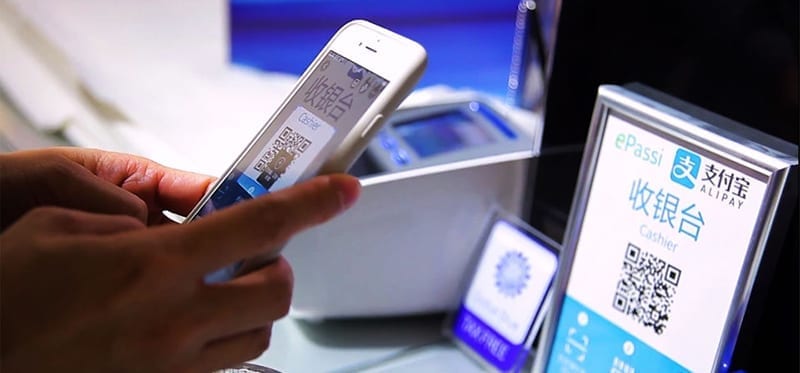
    WeChat Pay and Alipay, China’s two biggest mobile payment platforms, have recently forged partnerships with tax refund companies to enable Chinese tourists to obtain rebates on their purchases via their respective mobile apps.

    Within this year, WeChat also plans to offer instant refunds in-store overseas as it competes for a larger share of rising Chinese tourist spending abroad.

    Their strategy is driven by how China has embraced mobile payments faster than any other country and is also the biggest source of outbound travellers. In 2016, mobile payment transactions in China reached US$5.5 trillion, making the country the largest mobile payments market in the world, according to iResearch.

    Both WeChat Pay and Alipay have been expanding their services as mobile payments are used for everything from food delivery, taxi rides and in-store purchases, both on the mainland and abroad.

    WeChat Pay, operated by Tencent Holdings, and Alipay, the payments subsidiary of Ant Financial Services Group, account for a combined 66 per cent of the third-party payments market in China, based on estimates of Analysys International.

    Ant Financial is an affiliate of New York-listed Alibaba Group Holding, which owns the South China Morning Post.

    WeChat Pay and Alipay, along with its overseas mobile payment partners, have estimated a total of 600 million and 800 million users, respectively.

    Late last month, WeChat Pay partnered up with Swiss firm Global Blue to offer an instant tax refund service for Chinese tourists leaving from Madrid airport, while Alipay rolled out a similar service for returning Chinese tourists at Singapore’s Changi airport.

    With those instant tax refund services, users can get their rebates settled in yuan and sent to their WeChat Wallet or Alipay accounts immediately once their tax refund forms are stamped and approved at the airport counter.

    The rising affluence of Chinese consumers and the boom in outbound China tourism also made it attractive for WeChat Pay and Alipay to facilitate tax rebates.

    According to a recent report by the China Tourism Academy and online travel agency Ctrip, an estimated 6.5 million outbound Chinese travellers spent this year’s week-long Lunar New Year holiday overseas. Each tourist was expected to spend an average of 9,500 yuan (US$1,500) on their trip.

    “Offering instant tax refunds is a smart strategy by both Chinese players to capture further market share beyond what is likely to be a close to saturated market within the mainland,” said Michael Yeo, research manager for financial and retail insights at IDC.

    “Many outlets across Asia, Europe and Northern America already accept both WeChat and Alipay payments. Offering instant tax refunds provide convenience and may prove to be an effective tool in luring these tourists to switch from other payment methods, such as cash or credit card, for such trips.”

    Similar to other WeChat Wallet and Alipay programmes, the tax rebate service makes use of quick response (QR) codes. The tax refund officer scans the QR code on a user’s smartphone to credit the refund to their account.

    While Alipay allows users to access the QR code in the Alipay app, WeChat Pay users will have to search for its WeChat Tax Refund feature to process the refunds.

    Global Blue and WeChat Pay are now working to offer in-store refunds, which means that Chinese travellers would no longer need to line up to get their tax refund forms processed at the airport. The service is expected to be rolled out across Europe within this year, according to a joint statement.

  • ZALORA Group CEO Parker Gundersen resigned

    ZALORA Group CEO Parker Gundersen resigned

    Online fashion platform ZALORA announced that ZALORA Group CEO Parker Gundersen has made the decision to leave the company at the end of May 2018 for personal reasons.

    Parker joined ZALORA in 2016 and has since worked with the leadership team to grow the brand, improve overall profitability and affirm the position of ZALORA as the leading online fashion destination in Greater Southeast Asia.

    Said Parker, “ZALORA’s evolution as a fashion platform is unrivaled in the region and is a testament to the great progress we have made improving our product offering, building stronger relationships with our brand partners and strengthening our positioning in the market. I want to thank the team for all of the hard work getting ZALORA to where it is today and wish them continued success moving forward.”

    ZALORA now offers the widest online selection of International and local fashion and lifestyle brands in the region, including latest additions Calvin Klein, J.Crew, Hugo Boss, Abercrombie & Fitch and Adidas. ZALORA’s brand positioning has been greatly strengthened through a revamped site and catalogue, television and online partnerships including Asia’s Next Top Model and How Do I Look Asia?, and a number of exclusive product launches with local and international brand partners. ZALORA has also made significant progress in improving its profitability by optimizing back office and supply chain operations.

    Patrick Schmidt, Co-CEO of Global Fashion Group commented “Parker has reinforced ZALORA’s strength as the preferred multi-brand fashion platform in Southeast Asia. I want to thank Parker for his leadership and ongoing commitment to ZALORA, and for supporting a smooth transition in the coming months.”

  • Y Ventures Group establishes new subsidiary to develop a Global Buying Concierge With SingPost

    Y Ventures Group establishes new subsidiary to develop a Global Buying Concierge With SingPost

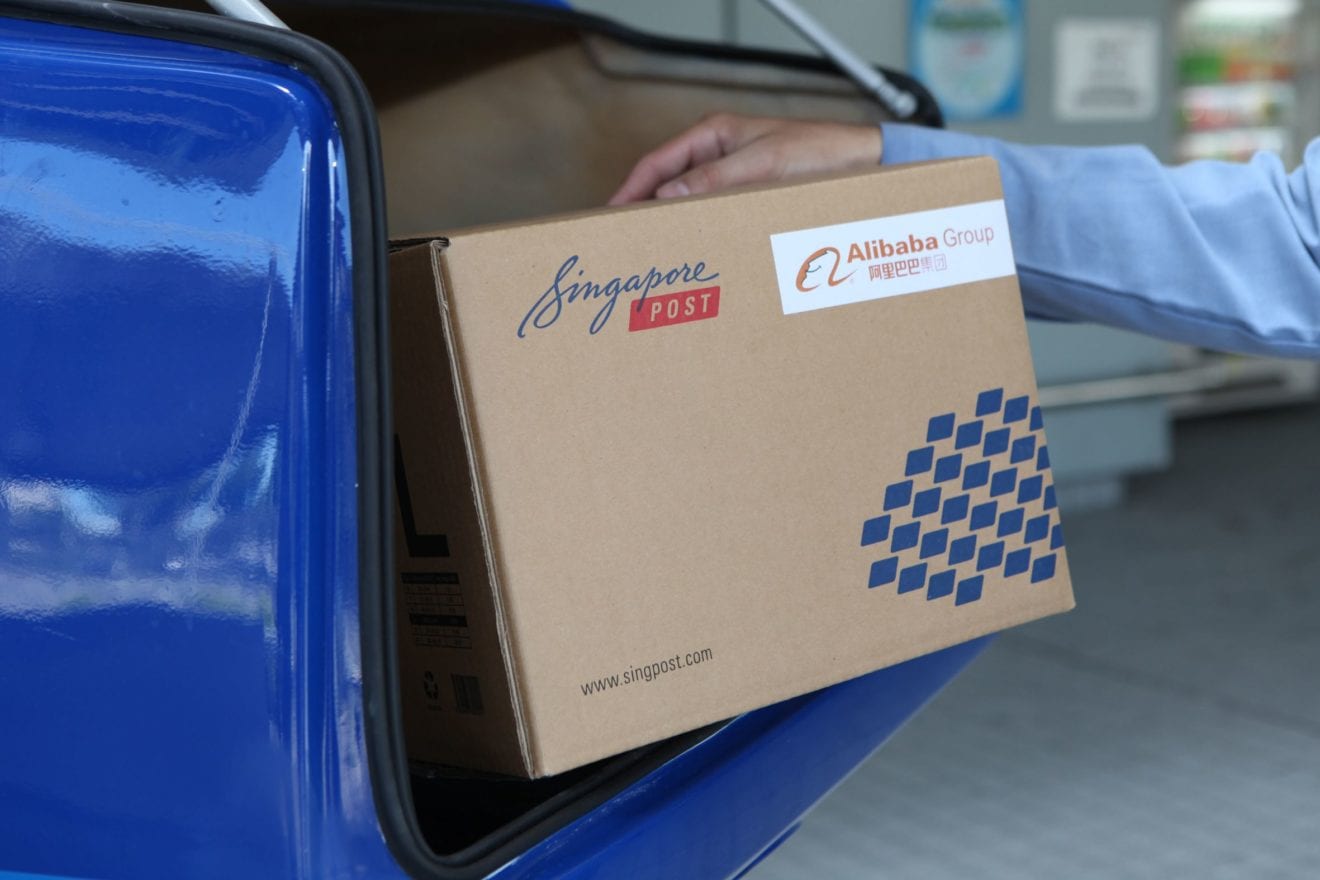
    Singapore’s Y Ventures Group has established a subsidiary to develop the Aora platform, a global buying concierge that will focus on cross-border purchases on behalf of consumers in Asia.

    The group has also signed a memorandum of understanding with e-commerce logistics and communications service provider Singapore Post with the aim of collaborating on developing an e-commerce platform with last-mile delivery services, plus share data on buying trends and consumer preferences in new markets.

    The group’s wholly owned subsidiary Luminore 8 will also focus on developing logistics-related technology and algorithms to enhance efficiency across the vertical logistics chain to accelerate the global expansion of both parties.

    “This collaboration reflects SingPost’s commitment in building a strong ecosystem for e-commerce logistics,” sats Singapore Post VP Lee Hon Chew.

    The Aora buying platform is slated for a limited beta launch late this year.

  • China’s Sun Art Retail to go digital with Alibaba

    China’s Sun Art Retail to go digital with Alibaba

    China’s largest offline hypermarket chain Sun Art Retail Group is going full speed on digital retailing, with plans to transform more than 400 outlets within this year to become a member of Alibaba Group Holding’s ecosystem.

    The nationwide store revamp plan came after the e-commerce conglomerate acquired a 36.16% stake in the chain from Taiwanese shareholder Ruentex Group for about $2.86 billion last November, effectively making Alibaba’s control equal to Sun Art’s French owner, Auchan Retail.

    Under the “digital transformation” initiative, all Sun Art’s brick-and-mortar stores, under the RT-Mart brand, will be equipped with point-of-sale machines and automation facilities developed by Alibaba, as well as big data systems that track and analyze customer behavior, according to Peter Huang Ming-Tuan, chairman of RT-Mart China.

    Huang said the adoption of Alibaba’s technologies would cost about 5 million yuan ($790,000) for each store, but business would not be affected as it would not be necessary to close shops during the renovations. With the help of Alibaba’s digital and customer resources, Huang expects the share of online sales to increase from less than 3% of the group’s total at present to between 10% and 20% in the next few years.

    The wider adoption of products offered by Alibaba, however, means the largest player in China’s hypermarket industry — which, as of the end of December, owned 461 complexes in more than 200 Chinese cities — will significantly reduce collaborations with the e-commerce conglomerate’s key rivals, especially Tencent Holdings.

    Huang admitted that it was not clear whether WeChat Pay, the digital wallet developed by Tencent, would be available after the Alibaba-style makeover.

    “Now we are part of Alibaba’s ecosystem, we will have more and more cooperation with Alibaba, and less and less with others,” said Ludovic Holinier, CEO at Sun Art Retail, adding that the group would gradually reduce the use of other companies’ services and products.

    Like Sun Art Retail, many traditional merchants have teamed up with internet companies to retain Chinese customers who are increasingly accustomed to the digital world. And the dominance of big players like Alibaba and JD.com have made it difficult for retail chains to start their own digital services.

    The online-offline alliances come at a time when Tencent and Alibaba are locked in a fierce competition to gain the bigger share of China’s lucrative online payments market, with transactions reaching $5.5 trillion in 2016, according to iResearch. The pair are also trying to recruit traditional retailers with a large number of brick-and-mortar stores as a way to expand their last-mile delivery capacities, and those in the fresh food sectors — which have been the most difficult segment to convert to e-commerce.

    Last December, Tencent purchased a 5% stake in one of China’s largest supermarket chains, Yonghui Superstores, following the announcement of the Alibaba-Auchan-Ruentex alliance. The social media company announced a deal to take a stake in French department chain Carrefour’s China unit. Most recently it teamed up with JD.com, an e-commerce platform rival to Alibaba, to take minority stakes in Chinese retail chain Better Life. Tencent and JD.com agreed to pay $140 million and $117 million respectively for stakes in the chain, which operates about 600 stores in China.

    Besides adopting Taobao Dao Jia, a system that enables customers to buy RT-Mart products on Alibaba’s flagship online marketplace Taobao, Sun Art Retail is also exploring other areas for collaborations with Alibaba, such as offering consumer loans.

    Holinier said the company had been looking into a potential collaboration with Tmall, a business-to-customer e-commerce platform under Alibaba, since December. Taobao and Tmall together had 580 million actively monthly users by the end of December and controlled over 70% market share of online transactions in China.

    Other areas they are currently looking into include co-operations with Hema Xiansheng, Alibaba’s own fresh food grocery unit, and the possibility to jointly roll out customer loans with Alibaba’s financial unit.

    “We have plenty of projects. We have to examine them,” Holinier said.

    However, Sun Art’s latest result seems to be a disappointment for the market. Its Hong Kong-listed shares dropped by 9.7% to close at 9.72 Hong Kong dollars, its steepest drop in more than a year, and outpacing the fall in the benchmark Hang Seng index which lost 2.3% to close at 29,886.29 points on Monday. The drop came in spite of the hypermarket operator announcing an 8.6% increase in net profit for the full year in 2017 to 2.79 billion yuan. Revenue was 102.32 billion yuan, a mere 1.9% increase on the year.

  • Mobile payments preferred, says survey

    Mobile payments preferred, says survey

    Chinese tourists are taking their cashless lifestyle overseas, preferring mobile payments for shopping, says a new Nielsen/Alipay survey.

    Their joint Outbound Chinese Tourism and Consumption Trends: 2017 Survey provides analysis and insights into consumption and payment behaviours as well as assessing trends. Unlike similar studies, the report focuses on the use of mobile payment platforms by Chinese tourists travelling overseas.

    A growing number of Chinese tourists expect they will use mobile payments when travelling, says the survey, which includes a case study on mobile payment and lifestyle platform Alipay.

    China National Tourism Administration statistics show that Chinese tourists made 131 million trips overseas last year, an increase of 7 per cent from 2016. Data from the International Association of Tour Managers shows that overseas travel spending by Chinese tourists reached US$261 billion in 2016, up 4.5 per cent year-on-year, and ranking first worldwide.

    Key findings of the survey include:

    ● On average, Chinese tourists who took part in the survey visited 2.1 countries or regions in 2016-17, and expect to visit an average of 2.7 countries or regions this year. Chinese tourists spend an average of $762 a head on shopping while non-Chinese tourists spend an average of $486.

    ● Mobile payment is gaining momentum, with 65 per cent of Chinese tourists using mobile platforms while abroad, nearly six times that of non-Chinese tourists (11 per cent). They primarily use mobile payments for shopping, dining and visits to tourist attractions.

    ● More than 90 per cent of Chinese tourists surveyed say they would use mobile payments if more overseas merchants accept it.

    ● The habit of using mobile payments in China, convenience and extra discounts are key factors for Chinese travellers to use mobile payment overseas, while limited merchant coverage overseas is cited as the biggest obstacle.

  • Suning.com Sees 500% Rise in Net Profits for 2017

    Suning.com Sees 500% Rise in Net Profits for 2017

    Chinese smart retailer Suning.com has turned in its best performance since embarking on its O2O business model in 2009.

    Its omni-channel sales of RMB243.2 billion (about US$38.4 billion) last year rose nearly 30 per cent year-on-year, while the net profit attributable to equity shareholders of the company was RMB4.21 billion – an increase of 497.66 per cent.

    The retail subsidiary of Suning Holdings Group, Suning.com focuses on traffic management, merchandising and affiliate marketing, optimising customer experience and improving omni-channel capabilities.

    During the reporting period, total online physical trading volume for the company was RMB126.6 billion (tax inclusive), up 57 per cent, while the number of monthly active Suning.com app users has grown by 106 per cent since the start of the year. In December, the number of orders generated by the app reached more than 89 per cent of the total online.

    At the end of December 2017, Suning had 3867 physical stores with a total area of 5.09 million square metres.

    Still improving

    Through internet technology application, data-oriented management and strong quality control, the business performance of Suning stores continues to improve, says the company. Sales revenue grew 4.17 per cent in the firm’s Mainland China stores with the efficiency of direct-sale stores jumping 34.9 per cent.

    By the end of this year, with a strategic partnership with 300 real-estate developers domestic and abroad such as Evergrande, Sunac and Wanda, Suning plans to add a further 5000 physical stores to its portfolio, all connected to its online presence and covering diversified consumption scenarios including Suning cloud stores, direct-sale stores, fresh-food supermarkets and convenience stores, Redbaby (maternal and child supplies stores), Suning Sports and Suning Cinemas. It says 15,000 internet-connected stores will open within three years for a total of 20,000 by 2020.

    As well as the substantial growth of its retail subsidiary, the logistics and financial services arms of Suning also continued rapid growth. Suning Logistics revenue (excluding Tian Tian Express) grew 135.76 per cent last year. It now has a total area of 686 million square metres of warehousing, with 20,871 express outlets. Suning Financial Services (payment business, supply-chain finance) saw transactions increase by 130 per cent in size overall.

    Founded in 1990, Suning has two public companies, in China and Japan respectively.

  • JD.com launches new accelerator to develop AI and blockchain technologies

    JD.com launches new accelerator to develop AI and blockchain technologies

    JD.com, one of China’s largest e-commerce companies, has launched a new accelerator program called AI Catapult that focuses on blockchain and artificial intelligence startups.

    Based in Beijing, AI Catapult will start with an inaugural roster of companies that include Bluzelle, a blockchain startup based in Singapore providing database services, Bankorus, a leading Chinese robo-advisory provider, CanYa, an Australian cryptocurrency startup, Nuggets, a London-based e-commerce payments and ID platform built on blockchain technology, Republic Protocol, an open source decentralized dark pool exchange, and Devery, a blockchain-powered product verification protocol.

    JD.com said the purpose of the program is to partner with innovation startups to build new businesses and create real-world applications of their technologies at scale.

    Uri Ferruccio, the director of strategy and investment for JD.com’s AI Platform and Research Division, said AI Catapult “will support JD.com as it explores how AI can improve the scalability, security, privacy and efficiency of blockchain, and enable novel and improved applications in areas such as distributed AI.”

    Bowen Zhou, vice president of JD.com’s AI Platform and Research Division, added, “We are excited to work with some of the world’s most innovative startups to explore ways we can scale these cutting edge technologies for the future of retail and other industries, as well.”

    The program will begin in March and will provide selected startups with the opportunity to cooperate with business units throughout JD.com’s retail business and implement their technologies.

    The firm also plans to invest in the growth of the AI and blockchain ecosystem through future commercial, strategic and research partnerships.

    JD.com already uses blockchain technology in its supply chain to track products and AI to control its logistics drones and automated package sorting centers. The firm joined the Blockchain in Transport Alliance earlier this month to explore the use of blockchain for global freight and logistics. It is also working with Walmart, IBM and Tsinghua University National Engineering Laboratory for E-Commerce Technologies on blockchain applications for food tracking, traceability and safety in China.

    JD.com has over 266 million customers and recorded 658.2 billion RMB, or about US$100 billion, in gross merchandise value in 2016.

  • Flipkart’s Singapore parent infuses Rs. 4500cr into India wholesale arm

    Flipkart’s Singapore parent infuses Rs. 4500cr into India wholesale arm

    the wholesale arm of the country’s largest e-commerce company, has received almost Rs 4,500 crore in what is one of the largest capital infusions for the entity, as per latest regulatory filing at the Registrar of Companies (RoC). This large investment in to the wholesale arm from its parent indicates the aggressive plans that Flipkart has charted out to counter its closest rival Amazon which too runs a wholesale arm. Since raising $4 billion from marquee investors like SoftBank last year, Flipkart has been largely been pushing its logistics and payments businesses adding big bucks to rev up these verticals.

    Flipkart India is one of the core companies that controls the e-tailer’s India operations. The wholesale arm buys products in bulk from various manufacturers and then sells it to merchants who work closely with the online retailer as well as to independent third party vendors. These merchants, in turn, sell these products to consumers on the Flipkart platform. Flipkart Internet is the other significant entity which runs the marketplace for the e-commerce major. This entity too received an investment of about Rs 370 crore recently.

    In March 2016, the Indian government allowed 100% FDI in online retail of goods and services under the marketplace model with riders which restrict a seller from contributing more than 25% of overall sales generated on any e-commerce site. This is why companies like Flipkart and Amazon, which cannot work on the inventory model, prop up few big merchants and help them cater to the growing consumer demand. Having a wholesale arm helps in doing that as they e-tailers cannot directly sell to shoppers. As per the RoC documents, Flipkart’s Singapore parent was issued each share of Flipkart India for Rs 23,900 for raising the new capital.
    An email sent to a Flipkart spokesperson on the development did not elicit a response. The e-tailer’s wholesale entity reported revenues of Rs 15,264 crore for the financial year 2017 compared to Rs12, 818 crore in the previous year showing a growth of about 18%. After a tough 2015- 2016, Flipkart had managed to make a turnaround last year with a bump up in growth numbers on the back of smartphone sale. It also successfully raised massive funds to fight Amazon as Japan’s SoftBank came on board as its largest investor.
    Both Amazon and Flipkart are vying for the largest pie of the Indian e-commerce market and are investing in their businesses at a staggering pace. Amazon has already infused over $3 billion in the Indian market and its international losses–majority of which is credited to India–stood at $3 billion for the full year of 2017. Flipkart Singapore parent reported a 67% jump in losses at Rs 8,771 crore for the financial year ending March 2017. Both the players are also ramping up their infrastructure for new businesses as they look to drive up growth. While Flipkart is setting up new fulfilment centres for its TV and large appliances business, Amazon recently announced it has opened up 15 new warehouses or what it cals Fulfillment Centres to push its grocery and daily consumables business.
    Flipkart is currently engaged in talks with Walmart, the world’s largest offline retailer, for a deal that may give the American retailer a big stake in the homegrown comoany valuing it at upwards of $20 billion, as TOI reported in our February 8 edition.
  • JD.COM signs delivery deal with FamilyMart China

    JD.COM signs delivery deal with FamilyMart China

    JD.com has signed a deal with Japanese convenience-store chain FamilyMart.

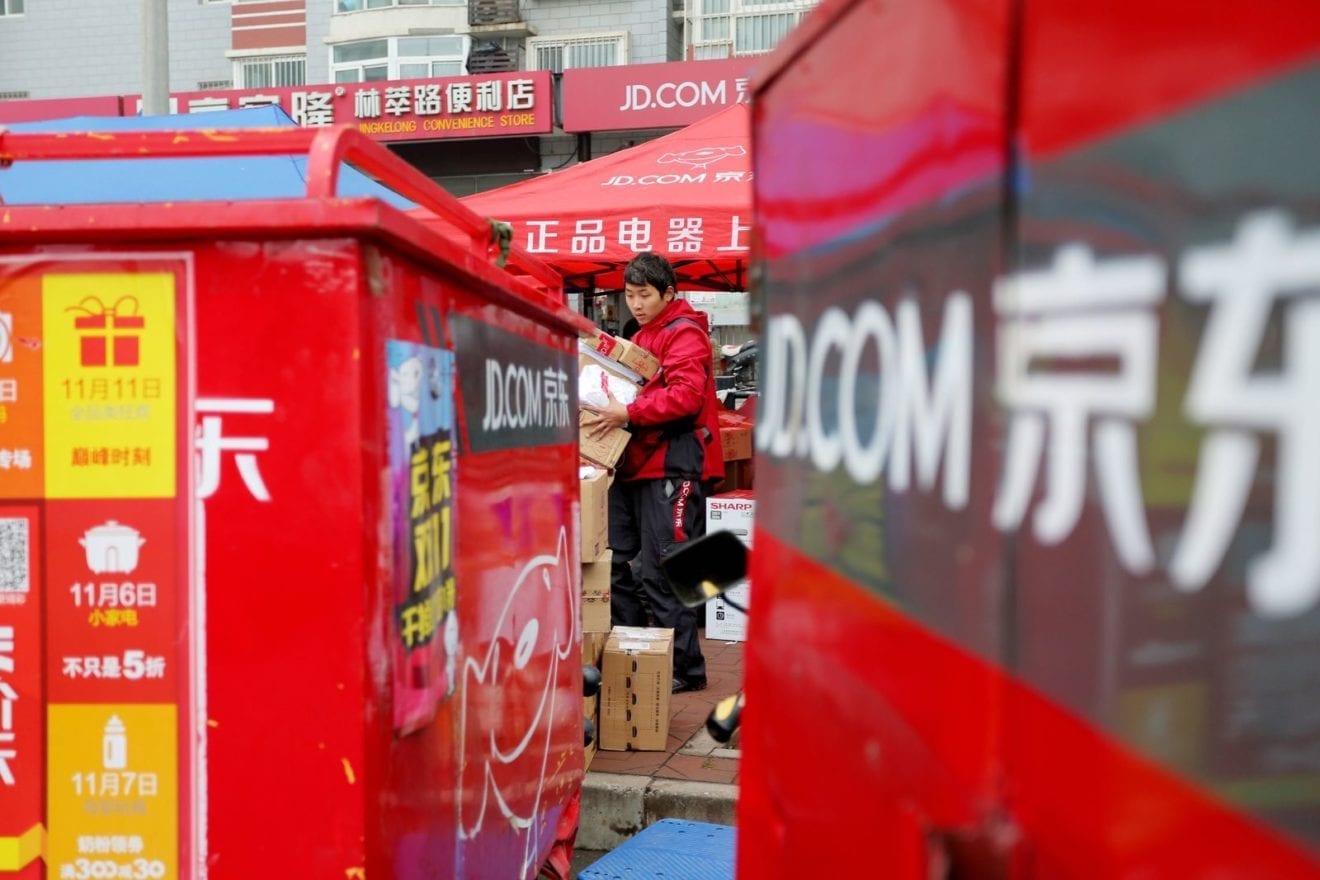
    This will enable users to order goods through JD.com’s 24-hour O2O service Jing Dong Dao Jia (“Door-to-Door JD”) and have them delivered from FamilyMart’s 212 core locations in Beijing, Shanghai, Shenzhen and Chengdu within 30 minutes.

    Early this year JD.com launched 7Fresh, its offline fresh-food supermarket, in Beijing. Before that, it invested in Yonghui supermarkets and formed a strategic partnership with Walmart through Jing Dong Daojia. JD.com has also invested in fresh-food delivery app Fruit Day and created a business unit dedicated to fresh food, JD Fresh.

    The e-commerce company has also established co-operations with two other Japanese convenience store chains, 7-Eleven and Lawson, as well as international brands. The company now covers nearly 1000 convenience stores.

    JD.com says that during January, all convenience stores working with it recorded three times higher sales volume than at the same time last year. For 7-Eleven stores, which joined Jing Dong Dao Jia in 2016, there was a 400 per cent increase in sales.

  • Alibaba said to buy out Baidu

    Alibaba said to buy out Baidu

    Alibaba Group Holding Ltd. plans to buy out Baidu Inc. and other investors in Chinese startup Ele.me to shore up its delivery network, a person familiar with the matter said, placing its biggest bet yet in online food and local services.

    An acquisition would hand Alibaba the biggest chunk of Chinese online food delivery and pit it directly against Meituan Dianping, backed by Tencent Holdings Ltd. Ele.me – which means “hungry yet?”. Meituan runs an army of delivery people on motorbikes across the country that could enhance Alibaba’s last-mile ability to get parcels to customers’ doorsteps and complement its Koubei neighbourhood services business.

    Alibaba, which owned 23 per cent of Ele.me as of May, plans to buy the stock from existing investors including Baidu, the person said, requesting not to be named because the matter is private.

    It is unclear how much Alibaba agreed to pay, but Ele.me was said to have been valued at between US$5.5 billion (S$7.23 billion) to US$6 billion in a May fundraising last year.

    The startup then bought Baidu’s delivery business at a US$500 million valuation in August 2017, a person familiar said at the time. The current talks are ongoing and it’s possible terms may change or the deal may not be completed.

    Alibaba, Ele.me and Baidu declined to comment.

    Alibaba shares rose 0.47 per cent to US$194.19 Monday in New York, the highest in four weeks. Baidu rose 2.2 per cent to US$256.25, the highest in more than a month.

    If the deal goes through, Alibaba and Meituan will dominate a Chinese food delivery market that Analysys estimates reached 67.7 billion yuan (S$14.1 billion) in 2017’s final quarter, up 16.2 per cent from the previous three months.

    For Baidu, it is another exit from a business considered peripheral to its core operations in search and artificial intelligence.

    “With its online traffic and Koubei business, Alibaba could create a lot of synergy with this acquisition,” said Steven Zhu, a Shanghai-based analyst with Pacific Epoch.

    “This would be a drag on the margin, because Alibaba now owns more delivery men and inventory, but it has no choice because long-term wise most consumption still takes place offline.”

    Alibaba has taken steps to shore up its logistics in recent months, taking over longtime delivery affiliate Cainiao and drawing up plans to invest in warehouses.

    Unlike e-commerce rival JD.com Inc. however, which builds and runs its own fleet of delivery people, Alibaba’s last-mile capabilities have been confined mainly to third-party partners. Its investments in so-called “new retail,” such as brick-and-mortar stores and grocery chain Hema, also help shore up the network, by providing delivery points and warehousing for parcels.

  • Aeon, SoftBank, Yahoo Japan team up

    Aeon, SoftBank, Yahoo Japan team up

    Aeon and Yahoo Japan have not had tremendous success with their own e-commerce ventures, according to the report.

    Softbank’s IT prowess is seen as key to enabling Aeon to make the most of its brick-and-mortar assets in a retail sector quickly evolving as customer data and technologies such as artificial intelligence are leveraged to create better, more personalized shopping experiences.

    A teaming of these companies could also help Aeon keep up with the trend toward rolling out cashierless or unmanned stores, while helping Yahoo Japan become a more formidable, competitive e-commerce player.

    As with many strategic alignments between brick-and-mortar and e-commerce retailers, this potential partnership is being seen as an attempt to build an alliance worthy of challenging the international Goliath Amazon, which has set its sights on expanding in Japan.

    Physical retailers and e-commerce companies in other countries are becoming especially sensitive to Amazon’s threat as it continues to expand e-commerce interests internationally while also building up a brick-and-mortar presence through efforts like physical bookstores, Amazon Go and Whole Foods.

    As the largest retailers in many countries prepare for inevitable war with Amazon, as well as one another in some cases, there are two priorities. One is to become even larger and broader through partnership, acquisition or strategic investment. The other is to have solid footholds in both e-commerce and brick-and-mortar.

    Aeon, Softbank and Yahoo Japan are not the only ones evolving with these priorities in mind. We already have seen significant efforts from some of the world’s largest retailers and e-commerce players to do the same. For example, Walmart recently aligned with Japan’s Rakuten. China’s JD.com has been looking to expand into the U.S. and Europe, and fellow Chinese e-commerce giant Alibaba is aggressively investing in brick-and-mortar retail firms.

    By getting together in one way or another, Aeon and Yahoo Japan in particular may be looking to strengthen what have been weaknesses in their respective retail and e-commerce strategies, but they also would be positioned to play the game at a whole new level — that of a retail superpower fit to tackle new opportunities at home and abroad.

  • Shopee to offer Singaporean the China Marketplace

    Shopee to offer Singaporean the China Marketplace

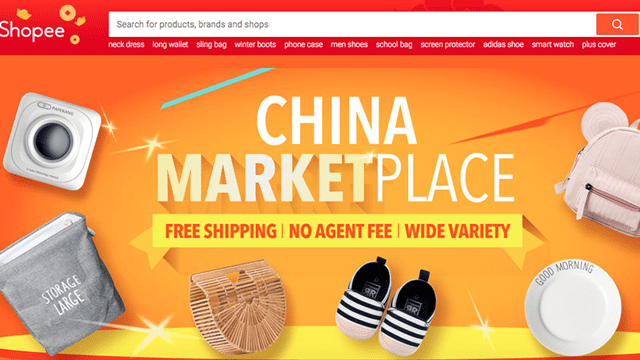
    E-commerce platform Shopee Singapore has launched a China Marketplace.

    Users can access it via a dedicated entry point on Shopee’s home page.

    As well as offering a variety of products from China, the new marketplace offers inroads for sellers to tap into Shopee’s retail ecosystem in Singapore.

    In a survey of local online shoppers, Shopee found that more than 60 per cent of respondents shop for products from China at least once a month. Almost 90 per cent indicated they shop from China more today as compared to five years earlier, citing product variety, convenience and cost savings as key reasons. Also, a Paypal report says an estimated half a million Singaporeans spent about S$1.2 billion on cross-border shopping.

    For Shopee’s survey, 57 per cent of respondents said a pain point of cross-border shopping is high shipping fees, 39 per cent indicated language barrier, and 37 per cent listed poor user interface.

    “We believe Shopee’s China Marketplace is the perfect answer,” says Shopee Singapore chief commercial officer/country head Zhou Junjie. “Shoppers will also enjoy free shipping and no agent fees for purchases, as well as easy access to millions of translated listings.”

    China Marketplace features more than 1 million listings across such categories as women’s and children’s fashion, home and living, and kids’ apparel. Shoppers will also have direct access to China’s top sellers and leading lifestyle brands such as Xiaozhainv, Banfang Home, and Xi Home, which have gained significant popularity in Singapore over the past few years.

    “Shopee’s China Marketplace has provided us with a platform to expand our reach to Singapore, and a way to directly engage with an overseas customer base,” said a spokesman for Chinese fashion retail Xiao Zhai Nv. “With strong logistics and integrated payments support from Shopee, we can focus our attention on other aspects of the business, including curating the best product assortment suited for the Singaporean consumer, and enhancing overall customer experience through provision of strong customer support.”

  • WhereIsWhere Launches to Help Singapore Brick-and-Mortar Businesses Attract Customers

    WhereIsWhere Launches to Help Singapore Brick-and-Mortar Businesses Attract Customers

    Singapore’s first free marketing platform helping offline retailers bring nearby customers to their stores, has launched. With just three clicks, users will be able to discover what to eat, shop and do based on two factors: where they are and when they search on WhereIsWhere’s mobile app. In its initial roll-out, WhereIsWhere targets retailers and mall operators: it is already working with Wisteria Mall, a community mall slated to open by the third quarter of this year, to help drive store traffic to its mall and over 100 of its tenant brands.

    Retail is a key industry for Singapore – approximately 22,000 establishments account for almost 1.4 percent of Singapore’s GDP and 3 percent of its total employment. Brick-and-mortar businesses, however, are losing their market share as consumers shift to e-commerce platforms. To help these retailers become more discoverable, WhereIsWhere has developed an effective and affordable marketing solution for targeting and converting nearby consumers.

    “Retailers today face real challenges and frustrations, from high rental prices to the constant fear of losing market share to e-commerce,” said Terence Mak, CEO and Founder at WhereIsWhere. “Brick-and-mortar businesses never really had a platform for differentiating offerings and driving in-store traffic. WhereIsWhere aims to level the retail industry playing field through effective and affordable targeting that enables consumers to better learn about great deals and happenings around them.”

    Driving mobile-first shoppers to offline stores

    With over 80 percent of Singaporeans using smartphones, WhereIsWhere allows offline businesses to cater to mobile-first consumers by enabling brands to push live updates and flash campaigns towards consumers nearby. For users, they can instantly find what to eat, shop and do based on search parameters.

    Businesses can register their listings and activities on WhereIsWhere for free. With WhereIsWhere’s interactive map, businesses can mark their exact location and easily drive nearby traffic to their storefronts. Businesses can also push unlimited marketing messages on WhereIsWhere’s self-servicing dashboard, which allows them to design and run campaigns across multiple outlet locations in real-time, for a fixed monthly fee of S$100 per outlet. In WhereIsWhere’s pre-launch phase, malls and merchants may even avail of a referral programme, which entitles them to free marketing campaign credits after successfully inviting partners such as merchants or mall developers on board.

    Wisteria Mall and Old Chang Kee tap WhereIsWhere to drive traffic

    Prior to its official launch, WhereIsWhere has expanded its merchant and mall network with the on-boarding of Wisteria Mall and Old Chang Kee, one of Singapore’s most recognised household brands.

    “We see lots of potential in this mobile application and intend to work closely with WhereIsWhere to drive higher shoppers’ traffic and sales conversion for all our 80 outlets across the island,” said William Lim, Managing Director at Old Chang Kee.

    Andrew Tan, Director of Wisteria Mall Management, also said: “As a community mall with limited advertising budget, Wisteria Mall, along with its tenants, will be happy to adopt this innovative, cost-effective medium to reach out to our target audience within the primary catchment area.”

    Built by retailers for retailers

    WhereIsWhere is founded by tech entrepreneur Terence Mak. Joining Terence at the helm are retail industry veterans Michael Leong and Patrick Lum, who bring with them over 70 years of combined retail experience across Singapore, Malaysia and Indonesia.

    “As consumers shift to online and mobile, brick-and-mortar players should leverage new solutions to deliver exceptional experiences for discerning consumers,” said Michael Leong, Industry Advisor at WhereIsWhere. “Think of a mobile map app, but for shopping deals, businesses and activities nearby consumers want – that’s how WhereIsWhere aims to revolutionise the Singapore retail scene and consumer shopping behaviour.”

    Interested retailers and mall operators who wish to drive store traffic through WhereIsWhere may register their stores, activities and listings on whereiswhere.com.

  • Amazon buys video doorbell firm

    Amazon buys video doorbell firm

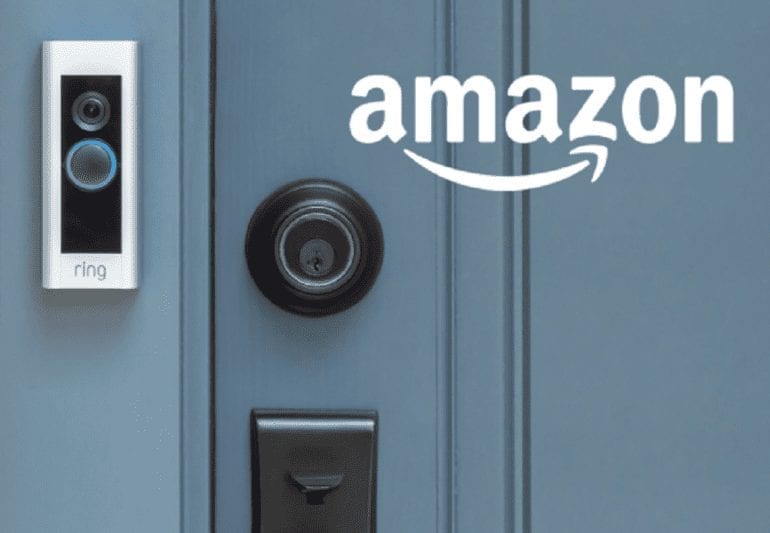
    Amazon has acquired video doorbell and home security camera maker Ring in a deal reportedly worth more than $1bn, as it pushes further into the internet of things and in-home-delivery space.

    The deal values Ring, which makes and sells popular video doorbells in the US, UK and Europe, at between $1.2bn (£86.4m) and $1.8bn, according to reports, making it Amazon’s second largest acquisition after Whole Foods Market.

    Analysts see the Santa Monica, California-based Ring fitting in with Amazon’s move into the home security market, driven by a bet on delivering packages inside shoppers’ homes to boost sales.

    “As Amazon moves more aggressively into the grocery delivery space … we believe smart security devices will be an important factor in driving user adoption,” said Baird Equity Research analyst Colin Sebastian.

    Amazon already sells two different camera products: the Echo Look fashion-advice camera and the Amazon Cloud Cam indoor security camera, which forms part of Amazon’s Key service that lets uses a smartlock to allow delivery personnel put packages inside a home to avoid theft or, in the case of fresh food, spoiling.

    Amazon’s venture capital for voice technology arm, the Alexa Fund, previously invested in Ring, which first shot to notoriety after founder Jamie Siminoff’s appearance on ABC’s Shark Tank, in which he declined investment from the show’s panel.

    The company’s line of devices, including the Ring Video Doorbell 2, currently integrate with Amazon’s voice-controlled assistant Alexa. Users of Amazon’s Echo Show or Echo Spot devices can say, “Alexa, show my front door” to receive a live feed of activity around their home via Ring cameras.

    Ring is not the first home security firm Amazon has bought in the last six months. In December, the company acquired smart camera and video doorbell startup Blink for a reported $90m. While the Blink purchase provided the retailer with access to potentially groundbreaking low-power chips that could extend the life and power-efficiency of Amazon’s cameras, Ring offers Amazon a popular consumer electronics brand that the retailer may not have been able to replicate internally.

    For Ring, Amazon provides a scale not possible for a small company. Siminoff said in an interview with the Guardian in November: “We are a lot like Amazon from the side of reinvesting revenues into the business.

    “The idea that Amazon goes into things to win, to deliver the best service to the customer, that aligns with what we want to do. We want to deliver the most cost-effective solution to customers at scale. So it is not about maximising the dollar per customer, it is about maximising the overall scale.”

    Wedbush Securities analyst Michael Pachter said: “Amazon, more than Ring, can revolutionise home security.”

    US security and alarm company ADT could be the biggest loser, Pachter said, adding that Ring’s “camera technology is far superior to physical security. With Amazon having roughly 100 million Prime members, that’s a big addressable market for them to start selling this into.”

    Ring, which employs more than 1,500 people with offices in the UK and a European headquarters in Amsterdam, was involved in a legal battle with ADT over intellectual property for a forthcoming integrated alarm system, which was settled in January. Shares of ADT Inc fell more than 2% after the news to close at $11.60. Amazon stock closed down 0.7%.