Category: E-Tailing

Retail News Asia is committed to providing both local and global retailers with the latest E-Commerce & Etail news throughout the Asian market. This on a daily base.

  • Tourism Malaysia Supports ShopBack’s Move of Hiring A Chief Travel Officer

    Tourism Malaysia Supports ShopBack’s Move of Hiring A Chief Travel Officer

    Tourism Malaysia today expresses its supports towards ShopBack Malaysia’s Chief Travel Officer (CTO) campaign, an attractive idea that offers RM15,000 for a travel lover to go for three trips within Malaysia and showcase how he/she does it through a smarter way via videos.

    “Travel has become a common hobby among the youth, and we believe ShopBack’s Chief Travel Officer campaign will certainly drive interest and conversations towards the interesting places in Malaysia. The first CTO campaign in 2017 was a success, and we are glad that ShopBack Malaysia is passionate to keep this going – more worthy places could be discovered by the next Chief Travel Officer,” says Mr. Mohd Amirul Rizal Abd Rahim, Deputy Director, Domestic & Events Division, Tourism Malaysia.

    “Malaysia is a blessed country with beautiful destinations. Many of us are travel lovers too, therefore we initiated a social campaign that embodies money-saving skills, passionate travel spirit as well as fun and daring adventure. The first CTO brought us to places less publicised such as Kudat, the tip of Borneo in Sabah while nicely demonstrated how she saved on trips booking via ShopBack through lively videos. We look forward to working with the next Chief Travel Officer for a more engaging experience like this,” says Alvin Gill, Country General Manager, ShopBack Malaysia.

    The leading cashback site works with a full range of travel sites that covers airlines, bus, rides, accommodations and tour services to offer cashback on top of discounts provided by merchants. Those include Malaysia Airlines, easybook, Expedia, Booking.com, Traveloka, Hotels.com, Adventoro, KLOOK, Grab and more.

    The Chief Travel Officer will be given a RM15,000 travel fund to plan for 3 holidays within Malaysia. He/She will need to demonstrate how the travel planning was done, film and share travel experience with the public. The campaign targets to encourage youth to travel the smarter way and appreciate the beauty of the country that they live in.

    Amirul also expressed that the Chief Travel Officer campaign will help to amplify Tourism Malaysia’s Cuti-Cuti Malaysia Dekat Je Domestic Campaign and Visit Malaysia 2020 campaign, where ShopBack’s CTO will indirectly promote local tourist attractions and generate interest on domestic travels among Malaysians.

    “We appreciate Tourism Malaysia’s endorsement of this campaign and are confident that it will resonate well with travel communities and show them a journey to enjoy travel without burning a hole in the pocket. Since 2015, we have helped Malaysians to save more than RM25 million Cashback from their purchases, of which a chunk of it is from travel expenses,” Alvin added.

    The application closing date is 8th April 2018, 6 pm. It opens to all Malaysians who love to save while travelling always active on social media and keen to discover the path less travelled. The chosen one will be announced on 18th April 2018.


  • Pomelo Fashion CEO David Jou against the stream in SEA

    Pomelo Fashion CEO David Jou against the stream in SEA

    Pomelo recently had the largest-ever series B funding round for a Thai start-up, raising $19mn.

    Jou was previously Managing Director of Lazada Thailand, which was set up as to take advantage of digital adoption rates in emerging markets which lacked capital, technology and human resource investment. Why did he choose Thailand, and remain there to set up Pomelo?

    “I always thought Bangkok was a very international city, while simultaneously small and charming. It’s a central location, which is great for ecommerce. From Bangkok to Singapore, Hong Kong, Ho Chi Minh… it is all within a three-hour flight. In addition, the population and GDP per capita were at a level that can really support an online business – especially with accelerating trends in internet adoption rates. Another option was the Philippines, which Jou says would have been more challenging logistically due to its many islatnds, and Malaysia where the population is small and fragmented both ethnically and culturally. “A customer-facing brand serving such a hugely diverse population would have proved difficult,” says Jou, adding: “When I looked at Indonesia [four years ago] I thought maybe it was a bit early in terms of its technology development – but I was completely wrong; Indonesia has really leapfrogged other markets in terms of how quickly it was able to develop.”

    Thailand, in conclusion, was “a really great place to set up: 70mn people, 30-40% internet penetration, and social media adoption was greater than 100%, meaning there are more Facebook accounts than people”.

    For Pomelo, managing an efficient reverse supply chain is paramount to giving users what they require. “I think it’s really at the heart of the ecommerce problem fashion has. When people purchase fashion products like apparel and shoes fit and sizing are such important factor. We have a ton of customers and a huge online following, but when we look at the segment of people who have yet to make a purchase, they say the #1 roadblock isn’t brand or style, it is always fit and not wanting to deal with returns. That’s 95% of it.”

    “That is why in 2016 we recognized we’re not an online brand, we’re a digital brand. Online or offline, you can make it better through the use of technology. We do have an offline presence we’re rolling out very quickly. it is an omnichannel experience; we don’t think about it as ecommerce versus in-store retail, we think of it as offline and online both being ways to reach and interact with our customer.”

    Jou feels that an Asia-based fashion company is set to disrupt the fashion industry as the continent consumes 70% of fashion and produces the vast majority of clothing. In the Asian market, it’s important to look at what you are replacing with ecommerce, according to Jou: “It comes down to accessibility: they want trends localized to the climate and lifestyle people in these countries lead. In the US or Australia, every major town has multiple retail outlets selling all the high street brands, but here if you’re not in one of the major cities you don’t get that assortment. It is key that we’re able to provide that assortment of trendy fashion at a price point that works regardless of whether you’re in Bangkok, Chiang Mai or Phuket.”

    In the future, the brand hopes to expand its channels to reach a wider consumer base.

    “We are mostly online with a small offline footprint, but as we’ve recently realized the biggest barrier to purchase is fit, sizing and hassle of returns. This can be easily addressed by combining technology with the offline footprint that makes sense for the markets we operate in.”

    Next, Pomelo will expand geographically. “I like to call it multi-vector growth: all big companies have multiple vectors along which they are growing at any given time, simultaneously. Currently we are in Thailand, Indonesia, Singapore and are setting up our cross-border trade warehouse in Hong Kong which will allow us to reach customers across the world cost-effectively, efficiently and quickly. We will then be able to serve customers in India, Nigeria, the Middle East, Japan, Vancouver… all from the same warehouse. That will be possible due to recent innovations in the logistics space. That’s going to be really exciting.”

  • Ippin meets global demand for Japanese Sake with launch of vast online collection

    Ippin meets global demand for Japanese Sake with launch of vast online collection

    Cross-border e-commerce platform Ippin Japan Mall has launched one of the internet’s largest sake collections.

    Ippin, which specialises in direct sales internationally of quality items from Japan, has made available more than 1350 varieties of sake, with direct delivery within a week from supplier warehouses.

    Ippin Japan Mall is a part of the C-Connect Corporation, which also runs a printer ink retailing store. It is active in 16 countries.

  • Salvatore Ferragamo wins US$60 million payout over counterfeit product

    Salvatore Ferragamo wins US$60 million payout over counterfeit product

    A New York court has confirmed an injunction against 60 unidentified holders of illegal online profiles and the transfer to Salvatore Ferragamo of about 150 domains that were infringing upon the luxury brand’s rights.

    The websites were selling counterfeit Salvatore Ferragamo products, and the court ruling acknowledged the substantial damage this had caused for the luxury Italian brand, ordering US$60 million in compensation.

    Also comprising exemplary damages, the ruling was the highest ever awarded for this type of violation, says Salvatore Ferragamo Group chairman Ferruccio Ferragamo.

    “The internet is the prime channel for traffickers of counterfeit goods and so is the focus of our monitoring and control efforts. In recent years, our group has implemented a series of anti-counterfeiting measures, both on- and off-line, to protect our customers and the value of our brand.”

    These measures last year enabled the group to have more than 35,000 items and illegal profiles removed from major social networks, as well as the interception, blocking and deletion of nearly 69,000 counterfeit products from online auctions.

    Furthermore, the group constantly monitors offline markets through court and out-of-court activities, focusing its efforts on China. About 62,000 counterfeit products were seized in China last year, out of the more than 268,000 counterfeit products seized around the world.

  • This Singapore Startup Is Helping Tourists Skip The Queue For Tax Refunds With Just An App

    This Singapore Startup Is Helping Tourists Skip The Queue For Tax Refunds With Just An App

    When Tan Tie Wee, 40, heard complaints from his colleagues in China about the hassle of filing for tax refunds overseas, he was motivated to start up something that can help simplify this process.

    “Some said it was language difficulties. Some said they were pressed for time because they were in a tour group. So I suggested an app that could help them with the claims and they said if there was one, they would definitely use it,” Tan said.

    He was working as PwC’s senior manager for indirect tax practice then, and he had spent two years working in China.

    Tan was impressed by the country’s prevalent use of mobile payment apps and QR codes and figured that he could integrate it into his own venture.

    He ended up quitting his job in 2015 so he could work on realising this ambition amidst other big players such as Global Blue, Premier Tax Free, and Global Tax Free in Singapore.

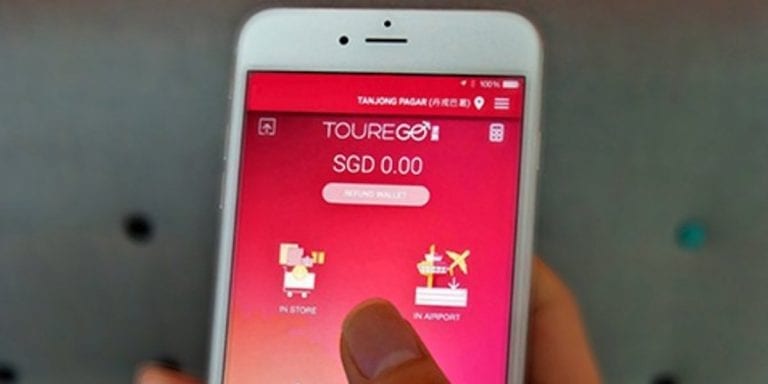
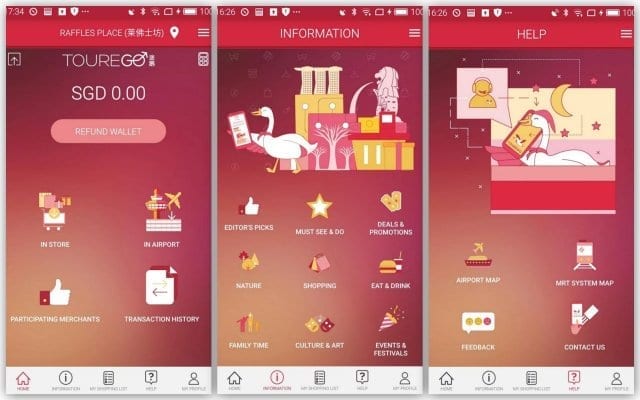
    He then worked on developing Tourego (short for ‘tourist refund on the go’), an all-in-one app that acts as a mobile passport and e-wallet that stores tax refund tickets.

    Launched just three months ago, the mobile app allows retailers to simply scan the QR codes which in turn generates digital tax refund tickets for tourists, replacing the current paper-based system.

    This means that retail staff no longer need to take down the particulars of tourists when they issue tax refund tickets, which helps to effectively save time and manpower.

    Senior Minister of State for Trade and Industry Sim Ann mentioned Tourego in her speech during the recent Committee of Supply debate, and said that such productive technologies allow staff to spend less time on routine or tedious tasks, and more time to provide better customer service.

    On the other hand, tourists can also easily submit claims by scanning these e-receipts at the tax refund kiosks upon reaching Changi Airport.

    With the digitisation of such process, tourists no longer need to worry about losing receipts when keeping track of their Goods and Services Tax (GST) refund claims.

    Challenges On Starting Up

    The traction of the mobile app has been enjoying positive traction so far.

    Although exact user numbers weren’t disclosed, Tourego said that it has gotten 150 retailers – such as Robinsons, Zara, 1872 Clipper Tea Co, and RISIS – onboard since its launch.

    But starting up the business wasn’t easy.

    The process was much more tedious than he expected.

    For starters, the startup needed to go through stringent checks before being given its license by the Inland Revenue Authority of Singapore (IRAS) last November.

    According to IRAS, all central refund agencies that participate in the Electronic Tourist Refund Scheme (eTRS) have to meet necessary requirements to ensure that the GST refunds are properly administered, and that their systems are robust.

    These include a technical certification process and IT audit.

    But the start-up also managed to tap on Government schemes for support.

    For instance, the Ministry of Trade and Industry’s Pro-Enterprise Panel facilitated cooperation with Government agencies to ensure Tourego’s solution complemented existing systems, said Ms Sim in her speech in Parliament.

    The Singapore Tourism Board (STB) also featured Tourego on its VisitSingapore website and inbound trade newsletter, as well as displayed the start-up’s brochures at the Singapore Visitor Centre.

    “With electronic payment platforms growing increasingly popular in Singapore, STB is pleased to support Tourego’s mobile application as it allows visitors to claim tax refunds in a more seamless and hassle-free manner in Singapore,” said STB.

    The eTRS system in place right now already seeks to make Singapore’s tourist tax refund system less reliant on paperwork.

    Since its roll-out in 2011, tourists no longer have to fill in different GST refund forms and queue at different counters to get the claims done.

    Now, visitors can choose to swipe their chosen credit card at the self-help kiosks to retrieve records of their purchases. Alternatively, they can scan the eTRS tickets individually before indicating their preference for the tax refund method.

    Competing Against Other Big Players

    Other technology players also seem to have set their sights on this space.

    China’s Alipay, for one, partnered Global Tax Free last year to allow Chinese tourists to make claims and have their tax refunds deposited directly into their Alipay accounts.

    This instant tax refund service through the Chinese mobile and online payment platform, was made available in Singapore earlier this year.

    Tourego App

    As such, Tourego is working to roll out its other features that would eliminate the need for its users to present their passports at the point of purchase and allow them to skip the queue at the airport.

    “We want everything to be done on the mobile phone,” said Tan.

    “For registration, all you have to do is to scan your passport using our app. At the retail store, flash your QR code and a digital receipt will be generated automatically.

    “Joining the queue at the airport is probably the most painful part of the refund process and we think this can be changed. My full solution will be to move the declaration process on to the app so that there will no need to stand in line at the various counters or in Singapore’s context, queue to scan your passport at a kiosk,” he added.

    The start-up founder is also aiming to expand beyond Singapore though the navigation of various tax systems could be a hurdle.

    “We have global ambitions to be a homogeneous global tax refund solution. It may be challenging but we will take one step at a time and first, we will show that it’s going to work here in Singapore.”

  • DBS launches Electricity Marketplace

    DBS launches Electricity Marketplace

    DBS announced the launch of the DBS Electricity Marketplace which will allow all households in Jurong (residents with postal code of 60, 61, 62, 63 and 64) to seamlessly switch to other retailers with the liberalisation of the retail electricity market in Singapore.

    Around 108,000 households in Jurong will stand to benefit in this pilot phase.

    As a start, DBS is working with two electricity retailers – iSwitch and Keppel Electric. During the pilot phase, all households in Jurong can search for various price plans that best suit their electricity needs on the DBS Electricity Marketplace. For DBS/POSB customers, they can apply directly with just a few simple clicks via DBS/POSB digibank and choose their preferred payment options. Once the switch is done, customers can look forward to their selected electricity plans provided by their new electricity retailer, without any service disruption.

    Said Jeremy Soo, DBS Head of Consumer Banking Group (Singapore), “DBS Electricity Marketplace exemplifies how we are reimagining banking, using digital technology and innovation to make life simpler for our customers. Through our partnerships with alternative electricity retailers, we want to enable our customers to enjoy savings on their bills easily. Our insights also indicate that consumers want a fuss-free process to sign up for other electricity retailers, and we have made it easier and convenient for them to make the switch with just a few simple clicks on DBS/POSB digibank.”

    Since 2001, the Energy Market Authority has been liberalising the electricity market in Singapore in phases and the pilot phase for residents in Jurong will start from April 2018. DBS is also working with other electricity retailers which will be made available to consumers at a later date.

  • Geometry Malaysia appoints Michael Fillon as ECD

    Geometry Malaysia appoints Michael Fillon as ECD

    Geometry Malaysia has appointed Michael Fillon as its ECD. He reports to CEO Kenny Loh.

    In a statement, Loh said Fillon will be responsible for leading Geometry Malaysia’s creative output and taking it to the next level.

    Fillon replaces former ECD Mehdi Lamloum, who left the agency last year to join iris Worldwide as its ECD in Jakarta. The interim ECD for Geometry Malaysia was Daniel Comar, who is also the regional executive creative director for Geometry Global Asia Pacific.

    Prior to joining Geometry Malaysia, Fillon was creative director at Leo Burnett ARC based in Dubai, where he headed creative work for clients including Ferrero, VISA, P&G and Kellogg’s, according to his LinkedIn. Before that, he was creative director at J. Walter Thompson Dubai for about three years, where he was responsible for clients including Nike, HSBC and Nestle. Fillon also previously worked at Impact BBDO.

    “In an age where clients are becoming even more result-oriented, our work will present intelligent ways to get our audiences to act – to join movements, to engage in conversations, to try new things, and ultimately, to shop well,” Fillon said.

    “I’ll admit we searched high and low for this critical position and the wait has been worth it. Fillon’s energy is infectious, his talent undeniable. I’m looking forward to some really great work coming out of Geometry Malaysia,” Loh said.

    In a separate statement, Loh added that most agencies focus on consumer insights, but with Fillon on board, his expertise will enable Geometry Malaysia to place more focus on shopper insights and figure out consumers’ shopping behaviour.

    “What I like about Fillon is he understands shoppers’ behaviours and how they react to retail promotions, as well as his expertise in e-commerce. I think this knowledge is very important and e-commerce will be the future of Malaysia,” Loh added.

  • Converse starts selling online on Lazada

    Converse starts selling online on Lazada

    Lazada has launched the first official Converse online store in Singapore and Malaysia.

    The two companies say they have created “a curated brand experience” which showcases a diverse product offering.
    The store opened on Friday and will expand later this year into Indonesia, Thailand, the Philippines and Vietnam.

    “We look forward to providing Southeast Asian consumers with the broadest selection of Converse products and an elevated shopping experience via our Converse Official Store,” said Dan Brausch, VP of global partner markets with Converse.

    Robin Mah, chief business officer with Lazada Group, said the store allows local fans of the brand to browse and purchase hundreds of styles for men and women.

    Popular Converse ranges including the Chuck Taylor All Star, One Star and Chuck 70’s are all available in assorted colours, patterns and materials.

  • Vietnam e-commerce grows but taxes hard to collect

    Vietnam e-commerce grows but taxes hard to collect

    Experts have recommended amending e-commerce regulations that would allow authorities to better manage and collect tax as well as develop the sector.

    Mạch Thị Tuyết Mai from the General Department of Taxation’s policy division, said: “We have encountered difficulties in tax collection.”

    The issuance of business licenses for e-commerce firms remains confusing because some kinds of e-commerce are not included on the tax list. Therefore, it is hard for tax authorities to determine the appropriate tax collection form.

    Most businesses in Việt Nam still use paper invoices, while some businesses have used e-invoices but do not have a system to connect with the tax agency.

    As a result, tax agencies found it hard to identify the revenue of these businesses, she told the Vietnam Online Business Forum held in HCM City on March 17.

    “We are now conducting an electronic invoice project to submit to the Government. The project will encourage all businesses to use e-invoices connected to tax agencies. This will make management easier and we will have to avoid using fake invoices,” she said.

    Another issue is tax collection from cross-border service providers and organisations that have income in Việt Nam, according to the official.

    The sale of products on Facebook, Zalo and websites has grown strongly, but sellers do not issue invoices and declare their revenue, leaving difficulties for tax agencies to collect tax.

    Nguyễn Thanh Hưng, deputy chairman of the Việt Nam E-Commerce Association, said that a number of significant issues in public administration occurred last year.

    He said that it was time for policy and law makers to create a more favourable macroeconomic environment for e-commerce to develop.

    The challenges for policymakers are clearly very different from than those in previous years, according to Hưng.

    Since e-transactions are now commonly used, direct participation of most government departments in developing e-commerce policies and laws is needed.

    “Along with development technology, many new and different kinds of businesses are based on cloud computing, mobile technology, big data, social networks, the Internet of Things, and blockchain technology,” he said, adding that these are all available in the country.

    He said Vietnam should urgently promote research on and application of blockchain technology, and at the same time, should not manage virtual currencies simply by prohibiting and then punishing violators.

    Virtual currencies should be controlled under methods that are in line with the market economy during the interim period as the business community waits for new legal documents on management of virtual assets and digital and virtual currencies, Hưng added.

    At the same time, accepting the experimental use of cryptocurrency in a few international transactions might be a careful but advantageous approach for the policy amendment process, he said.

    “If organisations and enterprises do not participate, they may become too slow in conducting research about and investing in blockchain applications, and Việt Nam could be quickly left behind if cryptocurrency becomes a significant payment method for e-commerce.”

    “In addition, Việt Nam needs to conduct research on the benefits of the sharing economy and make appropriate policies to encourage enterprises as well as other organisations to provide such services for the common purpose of raising socio-economic efficiency,” he said.

    Last year, the Ministry of Finance made public a draft of a proposal submitted to the Government to amend the Law on Tax Administration, which calls the law to be simple, clear, transparent, convenient and systematic.

    The proposal, which requires the use of international standards, electronic tax administration, and a more favourable environment for taxpayers, was an important first step in tax administration for e-commerce.


  • Manhattan Associates Predicts 2018 Retail Technology Trends

    Manhattan Associates Predicts 2018 Retail Technology Trends

    Manhattan Associates, Inc. predicts five key technology trends will influence the Southeast Asia retail environment and business strategies in 2018:

    1. Increased personalisation of shopping experiences
    2. More flexible checkout experiences
    3. Accelerated automation integration
    4. Reimagined use of Artificial Intelligence (AI)-based technologies
    5. Greater implementation of employee engagement solutions

    “As consumer expectations continue to rise in a fast-changing retail environment, retailers are seeking new ways to succeed,” noted Richard Wright, Managing Director Southeast Asia, Manhattan Associates. “With the pace of innovation increasing, we anticipate retailers will double down on technology deployments in the year ahead.”

    Increased personalisation of shopping experiences

    Digitally-savvy consumers are demanding personalised shopping experiences from retailers. “Nearly 90 percent of organisations say they are focused on personalising customer experiences, yet only 40 percent of shoppers say that information they get from retailers is relevant to their tastes and interests,” according to Brendan Witcher, principal analyst at Forrester Research. However, store staff and call centre agents historically have been unable to offer a personalised experience, lacking an omnichannel view of the customer and their behaviour.

    In 2018, new technologies will enable retailers to combine unstructured customer conversation data with structured order information allowing store and call centre staff to improve service. Retailers have long struggled with multiple applications and disparate data points lacking a single, comprehensive view of the customer. Retailers are expected to harness new technologies to improve customer engagement which, alongside enterprise order management, will provide actionable insight into the omnichannel shopping experience for personalisation and optimisation across the buyer journey.

    More flexible checkout experiences

    Retailers are expected to move from traditional fixed POS systems to more flexible approaches as consumers increasingly adopt Apple Pay and innovative contactless payment experiences.

    Consumers increasingly desire fluid approaches to seeking advice or online browsing when interacting with store associates, and no longer want to be limited to traditional purchase methods. Retailers are expected to seek standardised mobile POS systems that enable payment throughout the store and act as a one-stop shop for inventory management, browsing, recommendations and customer data, driving engagement with fast, easy to use technology applications.

    Accelerated automation integration

    Retailers have delivered huge service level improvements and accelerated goods flows in recent years by deploying advanced warehouse management systems (WMS) and automated equipment within their warehouses. But long-term success is dependent on striking the right balance between man and machine and using centralised software that synchronises both human and technological capital.

    This year we will see retailers do more than just dip their toe in the water when it comes to software and automation adoption, but they must remember to start this process from the ground up. The machine will evolve over the course of many years which will mean the centralised software orchestrating everything – technologies, people and processes within the warehouse – will need to evolve with it. This is why retailers are seeking centralised cloud-based systems that can be upgraded to advance innovation.

    Reimagined use of AI-based technologies

    In 2017, some retailers experimented with AI and chatbots to engage consumers and provide customer service. This year, retailers are expected to pivot from futuristic AI, virtual reality (VR) and augmented reality (AR) technologies to embrace more pragmatic uses of machine learning within their back-end supply chain operations. Warehouse Management Systems will advance in 2018 with a machine-learning capability they can sense and learn, so retailers can optimise the release of work to the warehouse floor and when best to execute customer orders to maximise service levels and operational efficiency

    Greater implementation of employee engagement solutions

    Millennials are the new workforce and more of them than ever before are working in retail, presenting retailers with an engagement challenge. Employee engagement today requires more visual, graphic based content that is personal and digital. In 2018 retailers will look beyond traditional engagement channels to facilitate the sharing of thoughts and feedback in more creative and intuitive ways.


  • Indonesia’s authority to start ticketing violators of ride-hailing app rules

    Indonesia’s authority to start ticketing violators of ride-hailing app rules

    The Transportation Ministry in April will start ticketing ride-hailing drivers who violate the rules as stated in Transportation Ministerial Regulation No. 108/2018 on non-route public transportation.

    The ministry will pay particular attention to drivers who do not have a driver’s license for public transportation (SIM A general) and the document that demonstrates the vehicle has passed a roadworthy test, said Transportation Ministry land road transportation director general Budi Setiyadi in Jakarta on Wednesday.

    He said there was no reason for drivers to violate the rules as the government had helped them and the vehicle owners by providing cheap driver’s licenses and free roadworthy tests.

    “Transportation Minister Budi Karya Sumadi instructed me to complete the issuing [of driver’s licenses and vehicle roadworthiness documents] in March so that in April we can start ticketing [violators],” said Budi.

    The ministry has started deploying officers on roads to advise ride-hailing drivers who do not have the two documents. The officers currently only issue warning tickets to the drivers.

    Budi said the ministry had recorded a high demand for the two documents as the deadline was approaching. He said in Jakarta alone, 18,000 roadworthy documents for ride-hailing vehicles had been issued and about 1,000 drivers had also obtained their new driver’s licenses.

  • WeChat gives more effort to support anti-counterfeit

    WeChat gives more effort to support anti-counterfeit

    WeChat has tightened its anti-counterfeit measures with 38 improvements to its Brand Protection Platform revealed in its annual Brand Owner Protection report released yesterday.

    WeChat claims more than 72,000 vendors were punished last year for attempting to sell counterfeit goods on its platforms.

    WeChat has also standardised the online infringement complaint system to make it easier for companies and individuals to report offenders.

    The WeChat team collected more than 126,000 valid infringement clues through user complaints on its Brand Protection Platform, 99.9 per cent of which led to crackdowns facilitated by brand owners.

    Fake-selling had even been occuring on so-called ‘mini programs’. As of early February, 976 mini programs have been permanently banned by WeChat. More than 22,300 infringing links and pieces of content have been removed.

    WeChat’s monthly active users reached 1 billion worldwide last week.

    More than 180 domestic and foreign enterprises from 18 countries and regions covering more than 400 well-known trademarks at home and abroad have registered on WeChat’s Brand Protection Platform. Most of the registered enterprises are from the US, China, Switzerland, Japan and France.

  • Online sales surge boosts Zara owner Inditex

    Online sales surge boosts Zara owner Inditex

    Surging online sales have boosted Zara parent’s Inditex’s net profit in the past fiscal year by 7 per cent.

    Inditex, which also owns brands including Pull & Bear, Bershka and Massimo Dutti, reported an increase in net profit for the 12 months ending January 31 to €3.37 billion (A$5.27 billion) from €3.16 billion a year earlier.

    Sales rose 9 per cent to 25.34 billion euros in the fiscal year, with revenue for online sales growing by 41 per cent.

    In FY17, Inditex invested €1.8 billion in further developing its integrated stores and online model and upgrading its technology. Specifically, the rollout of RFID technology has improved flexibility and response times by integrating stores and online inventories, the company said.

    Pablo Isla, chairman and CEO of Inditex, described it as a year of “solid growth”, and highlighted, “the unique strength” of their integrated stores and online model and its significant growth potential.

    He added that “the prescient investments made in technology and logistics in recent years,” coupled with space optimisation, had positioned the company for continued growth across all its markets.

    The group, which during 2017 opened its first stores in Belarus and launched its online sales platform in India, Vietnam, Singapore, Thailand and Malaysia, was founded in 1975 by Amancio Ortega and has become the world’s largest clothes retailer with eight brands.

    Inditex owns 7,475 shops worldwide, an increase of 183 stores from the previous year when factoring in shop closures, but 29 less than three months earlier.

    Florence Allday, beauty and fashion associate at Euromonitor International, said Inditex faces a period of uncertainty as the changing retail environment and globally volatile currencies make this rapidly evolving market sector even more competitive.

    The fashion conglomerate may be one of the most dynamic players in the industry, Allday said, but the past few months have seen Zara and its direct global competitors vie to remain in favour with their female, millennial demographic in a market that is fast-maturing and reaching saturation.

    Currently, Zara has the fourth largest global market share in the apparel and footwear category, behind Hennes & Mauritz (H&M), Adidas and Nike. Other significant competitors include Asos, Boohoo and Primark.

    Allday said rankings and shares in the global apparel and footwear market remained static in 2016, with sportswear giants taking the top two spots.

    Inditex ranked fourth, maintaining its positioning as one of the leading non-sportswear companies in the world. Inditex’s key rival is H&M, which slightly outperformed Inditex due to more dynamic store expansion and an aggressive pricing strategy. H&M also utilises far more visible marketing, including collaborations with high-profile designers that attract widespread fashion press.

    “Although Inditex does rank higher than H&M in the global footwear market the company will need to utilise its vertical operations and exploit its widespread geographic coverage, to overtake H&M in apparel, capitalising on the narrowing gap between the two rivals,” Allday said.

    “Further still, players such as Fast Retailing [Uniqlo parent] continue to move up the ranks, capturing consumers’ demand for value-orientated product offerings, threatening the dominance of Inditex and H&M.”

    Allday said despite Zara’s status as the world’s largest fast fashion retailer, its sales slowed last year due to a lack of distinction between seasonal collections, and general market saturation.

    “To continue to be a key player in the fast fashion arena, Zara needs to ensure that its constant, uninterrupted flow of new designs and products is matched by a digital retail experience that is equally seamless,” she said.

    “With competitors like Asos, Amazon and Missguided enjoying enormous sales and growth, thanks to their sleek online platforms, Zara must streamline its payment and delivery options to ensure that its online shoppers remain loyal. Consumer attitudes are shifting, preferring to pay more for quality over quantity.”

    “To ensure that it remains relevant, Zara must emphasise the quality and longevity of its garments and justify its low price points to ethically-conscious consumers.”

  • Dickson Concepts opens up Harvey Nichols to HK online shoppers

    Dickson Concepts opens up Harvey Nichols to HK online shoppers

    Dickson Concepts has entered a strategic partnership with UK department store Harvey Nichols to combine physical retail stores and e-commerce.

    “Dickson Concepts will gain complete access to Harvey Nichols’ digital expertise, and allow Harvey Nichols to accelerate its global e-commerce strategy by combining its highly curated fashion edits from two iconic international locations online,” the Hong Kong-listed company said in a statement.

    Dickson Concepts operates Harvey Nichols, Beauty Bazaar and Beauty Avenue stores and controls the UK-incorporated Harvey Nichols Group.

    Leading international brands and emerging designer talent from both Harvey Nichols UK and Harvey Nichols Hong Kong will be available online, with local customers now able to shop the global Harvey Nichols range.

    As part of the partnership, Dickson Concepts will also launch multiple omnichannel initiatives, such as introducing “Endless Aisles” at its stores that will allow in-store customers to enjoy the full offer of Harvey Nichols’ in-store and online offering simultaneously.

    E-commerce styling lounges with stylists offering personalised service will be introduced to assist customers to coordinate their personal looks.

    “Dickson Concepts will also work with Harvey Nichols to introduce augmented reality solutions in-store, which will allow Hong Kong customers to virtually try selected beauty products only available at Harvey Nichols UK, before proceeding to make purchases online. Furthermore, Dickson Concepts will work with Harvey Nichols to allow Hong Kong’s online customers to shop live with Harvey Nichols’ in-store stylists in the UK, via a solution powered by the global retail technology company Hero, with which Harvey Nichols has an exclusive arrangement.”

    Hong Kong online shoppers will be able to connect and interact with associates from Harvey Nichols’ UK stores via instant messaging, photo sharing, and live video streaming, allowing customers to shop the group’s eight stores in the UK in the comfort of their own homes.

    Since launching harveynichols.com in 2011, Harvey Nichols has invested over HK$500 million in its e-commerce business, allowing the company to become the first luxury department store in the UK to integrate a marketplace solution in its e-commerce platform, along with being the first department store in the UK to link its online customers with in-store product experts in real-time, to enable live shopping via instant messaging, photo sharing, and live video streaming.

    Harvey Nichols also recently signed a multi-year, global partnership deal to become the first department store in the world to join the Farfetch platform. Farfetch customers will be able to buy from Harvey Nichols from anywhere in the world.

    Embracing digital

    Dickson Concepts says the partnership with Harvey Nichols demonstrates the former’s commitment to embracing digital technologies and developing its e-commerce business to “define a completely new retail format for Hong Kong,” re-enforcing its belief that e-commerce will become a dominant part of retail internationally.

    “As such, the group is prepared to invest up to HK$200 million on its digital marketing and e-commerce initiatives to grow its e-commerce business, and with its healthy cash balance in excess of HK$1 billion, will also make additional appropriate strategic investments to accelerate its growth in e-commerce.”

  • McDonald’s and private taxis in Thailand now accept Alipay

    McDonald’s and private taxis in Thailand now accept Alipay

    Alipay, the world’s largest mobile, online payment and lifestyle platform operated by Ant Financial Services Group, announced today that the payment platform will be available in all McDonald’s restaurants in Thailand by April 2018. This makes Thailand the first destination outside Greater China to accept Alipay at McDonald’s.

    Commenting on the development, Cherry Huang, General Manager, Cross-border Business for South and Southeast Asia, Alipay, said: “Thailand ranks #4 on the list of Top 10 Most Popular Destinations Outside Chinese Mainland for Chinese Tourists; to better facilitate the travel experience of Chinese visitors, our mission is to enable their smart lifestyle through our continuous efforts in expanding the merchant network and providing more value-added services. McDonald’s as one of the most popular fast food brands is an exciting addition to our merchant network in Thailand to bring greater convenience to Chinese visitors.”

    To date, Alipay has established a broad network of merchants in Thailand across shopping, F&B, entertainment, hotel and attractions, including duty-free brand King Power, convenience store 7-ELEVEN, shopping malls and night markets such as Asiatique and JJ Green.

    “Alipay has seen one of the highest penetration rates in Thailand. The average on-location spending of Chinese visitors in Thailand has surpassed USD2,000 per person per trip, which reflects a great business opportunity for local merchants,” added Cherry Huang, “Duty-free shops and convenience stores are the top two locations where Chinese visitors spend. Increasingly, we have also seen taxis becoming the transportation of choice in Thailand among Chinese visitors.”

    Currently, Alipay is available in hundreds of private taxis in Bangkok, which will further expand in 2018.