Category: E-Tailing

Retail News Asia is committed to providing both local and global retailers with the latest E-Commerce & Etail news throughout the Asian market. This on a daily base.

  • Qoo10 visitors balloon by 70%

    Qoo10 visitors balloon by 70%

    Visitors to e-commerce site Qoo10 ballooned 70 per cent to hit an average of 14.4 million in last year’s fourth quarter, according to Malaysian online aggregator iPrice.

    Qoo10 has about 3 million registered members and offers products ranging from women’s fashion to groceries, and services that include credit card and insurance policy subscriptions. The site offers daily deals, limited-time sales and coupons.

    Discounts and savings of up to 70 per cent off are offered through promotional deals.

    Qoo10’s Live10 mobile app includes a GPS-enabled interactive game with daily discounts, coupons or Qpoints as prizes.

    Based in Singapore as a JV established between founder Ku Young Bae and eBay, Qoo10 launched online in 2010 and has expanded its marketplaces to Korea, Indonesia, Malaysia, Hong Kong and Mainland China.

  • iPrice Thailand is profiling online shoppers

    iPrice Thailand is profiling online shoppers

    Thai online shoppers are most active before leaving the office or school, according to research from online shopping startup iPrice Thailand.

    Based in Kuala Lumpur, iPrice has a presence in seven markets across Asia and aims to uncover important e-commerce metrics from the perspective of thousands e-commerce practitioners, highlighting the differences and similarities in each market.

    Its research draws on its proprietary data from more than 1000 e-commerce players in Indonesia, Malaysia, Philippines, Singapore, Thailand and Vietnam.

    For Thailand, mobile traffic is the second-highest in Southeast Asia, where mobile traffic has grown by an average of 19 per cent in the past 12 months to now account for 72 per cent of overall e-commerce web traffic.

    Indonesia leads the field, accounting for 67 per cent in the third quarter of 2016 and 79 per cent in the second quarter last year.

    Therefore, mobile e-commerce traffic accounts for more than 70 per cent of overall web traffic, while desktop traffic is less than 30 per cent.

    Meanwhile, Thailand’s conversion rate is lowest in Southeast Asia (conversion rate is the percentage of website visits that result in a product purchase). Along with the Philippines, Thailand’s conversion rates are 20 per cent lower than average.

    The comparison between mobile and desktop conversion rates shows that mobile is 1.7 times higher on average. For Thailand, the desktop conversion rate is 1.3 times higher than mobile. However, there is an increasing trend of mobile e-commerce traffic.

    Thai basket size is fourth among the six countries in the study. This metric measures the average total amount spent for every order made by customer over a defined period of time. Singapore has the highest basket size of $91, with a GDP per capita of US$90,530; on the other hand, Vietnam was the lowest with a basket size of $23 and a GDP per capita of $6880. Thailand’s basket size is in the middle with the value of $42 and a GDP per capita of $17,000.

    On average, the basket size on desktop is slightly higher than the basket size on mobile. In Thailand, desktop conversion rate is 1.3 times higher than mobile, which implies that people in Thailand prefer using desktops over mobile phones when buying online.

    Also, Wednesday shows the highest peak in online shopping in Thailand. Taking Monday as a base value, e-commerce merchants have an increase in conversion rate on Wednesdays of up to 15 per cent, but it dips up to 30 per cent over weekends, which is consistent across the region. For Thailand, the Wednesday conversion rate increases 8 per cent above the average while the weekend conversion rate drops 19 to 22 per cent.

    For Thailand, orders increase in volume up to 53 per cent at 11am and reach up to 69 per cent at 3pm. A dip in conversion rate is noted across all countries between 5pm and 7pm.

    Bank transfer and offline POS are among popular payment methods in Thailand.

    Credit cards are used for 90 per cent of payments, but the credit-card transaction rate in Thailand is relatively low at 6 per cent, which is below the average of 9 per cent in Asean countries, according to Global Findex database 2014.

    To work around this issue, Thai e-commerce companies offer alternatives. For example, 81 per cent offer a bank transfer option such as ATM, making the country rank third in Southeast Asia. Also, 46 per cent of e-commerce sellers offer offline POS such as counter service at 7-11, ranking Thailand second place when it comes to frequency of using this type of payment.

  • Online retail sales in China to hit US$1 trillion

    Online retail sales in China to hit US$1 trillion

    Online retail sales in China are rising faster than previously predicted, and likely to surpass US$1 trillion this year according to a new report from Forrester.

    In the broader Asia-Pacific market, one in every four dollars spent on retail will be spent online by 2022, with China and South Korea the principal drivers.

    Forrester says rapid growth in mobile shopping and burgeoning online sales of fashion and food are likely to result on US$1.1 trillion in spending in China this calendar year.

    China already accounts for 83 per cent of online shopping in the region, although a projected annual growth rate of 4.6 per cent in the number of individuals buying stuff online suggests the market is becoming mature in terms of participation. Future growth will be driven by Chinese consumers buying more goods online rather in store.

    By 2022, Forrester estimates 631 million Chinese will shop online, compared with 502 million now.

    Japan is Asia-Pacific’s second largest online market, likely to account for $97 billion in sales this year, followed by South Korea with $69 billion. Australia is next, with $31 billion, followed by India, the region’s fastest-growing market, but currently worth $27 billion. India is expected to overtake Australia next year.

    Finally, Forrester projects mobile devices will account for 80 per cent of online retail sales in the region by 2022.

  • Zilingo raises $54 million in a new funding round

    Zilingo raises $54 million in a new funding round

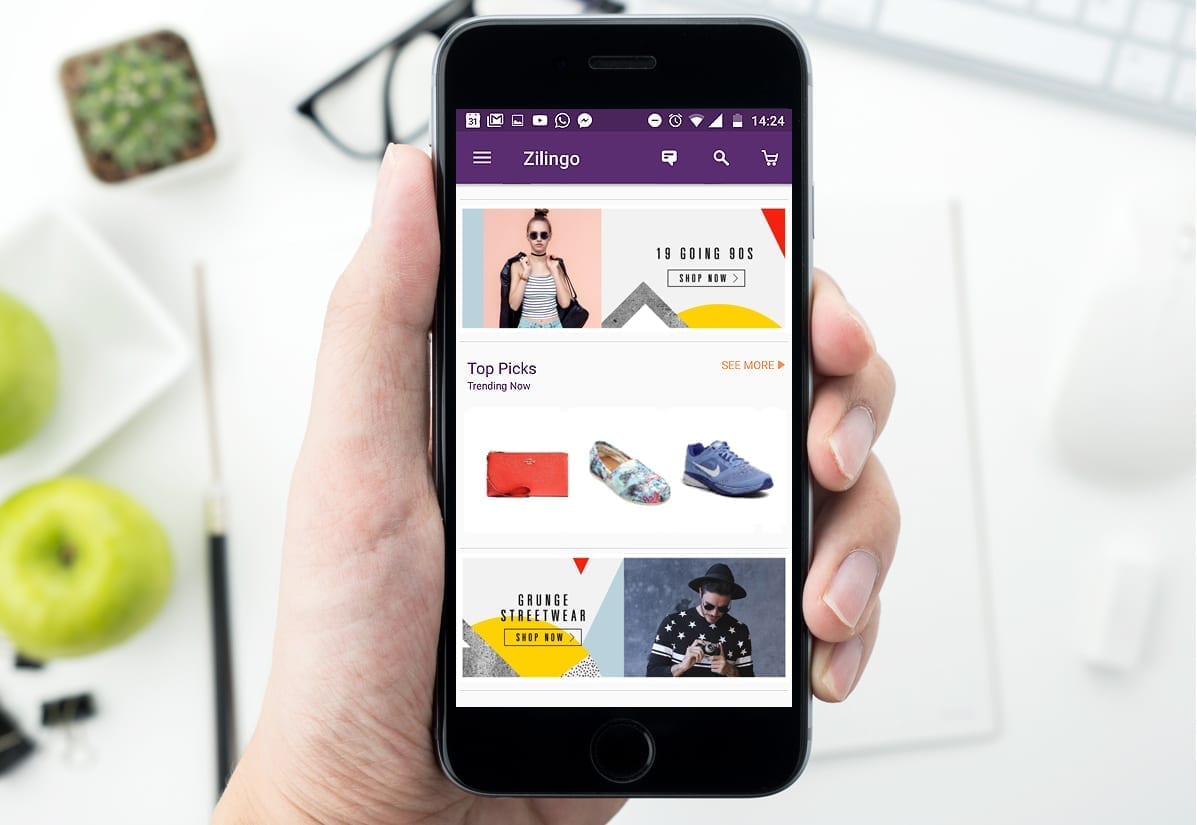
    Singapore-based lifestyle marketplace Zilingo has raised US$54 million in series-C funding, taking its total capital raised to $82 million.

    Zilingo was founded in October 2015 by Dhruv Kapoor and Ankiti Bose, who was inspired after seeing the clothing stalls in labyrinthine markets while backpacking across Indonesia and Thailand.

    Their idea was to connect a fragmented landscape of fashion supply for buyers across Asia.

    “Nowhere in the world has a horizontal e-commerce company also cracked fashion,” says Bose. “It’s a unique, high-margin category that is highly dependent on fast-moving cycles and has its own nuances. Unlike buying detergent or electronics, fashion is much more about your choice, individuality and trends. It requires a different approach than the rest of e-commerce.”

    Bose and Kapoor set out to build a proprietary platform where merchants could upload and manage their inventory in any language, using any currency, connecting them through 25 interfaces with logistics, warehousing and payment providers, as well as services like loans, cataloguing and insurance.

    They launched their B2C sites and apps in November 2015 across Southeast Asia, followed by their B2B business, Zilingo’s AsiaMall, where merchants internationally can buy wholesale from Asian suppliers.

    Zilingo is now selling in Indonesia, Singapore and Thailand, and ships internationally to four further countries. As well as Indonesia, Singapore and Thailand, Zilingo has supply bases in Bangladesh, Cambodia, China and Vietnam. There are more than 10,000 independent merchants using the platform to sell to millions of customers around Asia and the world.

    Revenue growth has growth tenfold, and during the past year Zilingo has launched a TV campaign in Indonesia and expanded its merchant ecosystem.

    Zilingo’s latest capital injection follows a $17 million series-B round five months ago.

    “We think the market is showing us the right signs in terms of adoption and retention, so it’s good to double down,” says Bose.

    Each Zilingo office has local leadership, and half the top leadership team are women. “Having so many women at the leadership level, despite being a tech company, gives us a special edge while scaling,” says Bose,

    “Our leadership team comes from 10 different countries in Asia, Europe and North America, and 15 languages are spoken. The cultural diversity gives the team a unique perspective on how to solve challenges creatively.”

  • Trump says he’ll check out Amazon

    Trump says he’ll check out Amazon

    US President Donald Trump has escalated his criticism of Amazon and CEO Jeff Bezos, saying the White House will take a “serious look” at addressing what he sees as an uneven playing field between the e-commerce giant and its competitors.

    “Amazon is just not on an even playing field,” President Trump told a press pack assembled on Air Force One in the US yesterday.

    “I’m going to study it and we’re going to take a look. We’re going to take a very serious look at [levelling the playing field].

    “It’s very important for me, it’s got to be an even playing field for everybody.”

    The comments are just the latest in a myriad of criticisms levied at Amazon and Bezos in recent weeks by the President, who has also criticised the business for its impact on the US postal service and not paying adequate sales tax.

    “What they have is a very uneven playing field, you look at the sales tax situation — which is going to be taken up, I guess, very soon — it’s going to be a decision by the Supreme Court, so we’ll see what happens,” the President said yesterday.
    Amazon charges sales tax in a variety of US states with applicable regulation, but this does not apply to third party sellers on its platform.

    Amazon’s share price sank more than 5 per cent last week on reports that Trump was looking to target the company with tax reforms, but aides have reportedly since clarified that no such plans are in motion.  Trump has also argued that Amazon receives favourable rates with the US Postal Service and is weighing it down with the volume of its deliveries, although the e-commerce giant accounted for more than a third of the postal service’s US$19.5 billion in revenue last year.

  • E-commerce finally cracks $25 billion mark in Australia

    E-commerce finally cracks $25 billion mark in Australia

    Australian consumers spent around $25 billion online in the 12 months to February 2018, a more than 15 per cent boost over the same period last year, according to the monthly Online Retail Sales Index compiled by NAB.

    This equates to eight per cent of spending at traditional bricks-and-mortar retailers, as measured by the ABS in the 12 months to January 2018.

    Trend online retail growth is now well above the lows of this period in 2017, and sales volatility dampened in February, the index shows.

    The sector saw a 0.8 per cent increase in month-on-month seasonally-adjusted sales, compared to the 0.1 per cent growth seen by bricks-and-mortar retailers.

    Growth was mixed across categories, with toys and games and media seeing the biggest increase in online sales, followed by department stores, while grocery and liquor, food catering and fashion sales slowed slightly in the 12 months February, compared to the 12 months to January.

    Small and medium businesses represent just over a third of all online sales and saw slightly faster sales growth in February than larger online retailers.

  • H&M to launch new marketplace Afound

    H&M to launch new marketplace Afound

    Swedish fashion retailer H&M will launch an off-price marketplace later this year featuring discounted fashion and lifestyle brands, both external and those from the H&M group.

    Afound, which will be introduced as a new brand, will be launched both online and with physical stores, starting in Sweden in 2018.

    H&M’s ANZ communications manager Elizabeth Cave said there are still no details on whether the retailer will open an Afound store in Australia.

    The company’s first store will open in Drottninggatan, Stockholm in parallel with the launch of the digital marketplace in Sweden.

    H&M has not specified which brands, or how many, will be featured on Afound, but Cave said the retailer will reveal more details closer to the launch date which would probably include a list of all participating brands.

    Cave said Afound will be a “style- and deal-hunting paradise”, a marketplace selling discounted fashion and lifestyle products, with both external and the H&M group’s own brands, offering a wide range of well-known, popular brands for both women and men.

    “Afound will present a carefully selected, season-less range from Swedish and international brands in a variety of price segments both online and in physical stores,” she said.

    Fredrik Svartling, managing director of Afound, said in a statement that there’s big potential for Afound and that the business is looking forward to introducing the marketplace.

    “Afound cares about both the value of the products and the mix,” Svartling said. “And by offering personal style inspiration, quality labels, and the sense that you’re getting a really good deal, Afound will offer a new form of off-price experience.”

    According to H&M Group CEO Karl-Johan Persson in an earlier statement, H&M is branching out into new concepts, like Afound, in order to keep up with the fashion industry’s ever-changing pace and to increase its market share.

    “We constantly work on new ideas and innovations that will drive us forward – and there are many in our pipeline for 2018 and the years to come,” Persson said.

  • Alibaba buys Ele for US$9.5 billion

    Alibaba buys Ele for US$9.5 billion

    Alibaba has bought the Chinese food delivery business Ele.me for US$9.5 billion.

    The new deal will enable Alibaba to take over its daily operations and network of delivery drivers. Ele.me is China’s largest online delivery and services platforms.

    Alibaba, which already held a 43 per cent stake in the delivery business, hopes the move will bolster its offline retail infrastructure, furthering founder Jack Ma’s New Retail ambitions.

    Alibaba Group CEO Daniel Zhang said the move into online food delivery will create more value for China’s 1.3 billion consumers.

    “Ele.me can leverage Alibaba’s infrastructure in commerce and find new synergies with Alibaba’s diverse businesses to add further momentum to the New Retail initiative,” Zhang said.

    Alibaba said in a statement it flagged an expansion of Eli.Me’s product horizons beyond its traditional food-focused base, with possible synergies with Alibaba’s existing local services platform Koubei. It also said it will give Eli.me access to its extensive product offering under the New Retail strategy.

    “This acquisition shows that we have built Ele.me into one of China’s most valuable internet businesses. Our customers, merchants and partners will benefit from our further integration into the Alibaba family. We share the same strategic vision that New Retail has a bright future and being part of Alibaba’s ecosystem will take Ele.me’s growth to a new level,” Ele.Me founder Zhang Xuhao said.

    The food delivery Ele.me founder will take the position as chairman of the business post-acquisition and will also be appointed as a special adviser to Alibaba’s CEO on its New Retail strategy. Alibaba vice president Wang Lei, a company veteran of 15 years, will become the CEO of Ele.me.

  • Mintel integrates ecommerce sales data, social listening and price tracking analytics

    Mintel integrates ecommerce sales data, social listening and price tracking analytics

    Mintel, the world’s leading market intelligence agency, announced today a strategic joint venture with Early Data, ecommerce solutions and market intelligence provider.

    Online retail has gone from an industry disruptor to an everyday, preferred channel for many consumers. In today’s ‘new’ retail world, brands are challenged to meet the needs of a new breed of consumer. By combining ecommerce category performance, social listening and price tracking analytics from Early Data with Mintel’s existing portfolio of Mintel Global New Products Database (GNPD), Mintel Trends and Mintel Reports, brands and companies will have access to game-changing research and insights into China’s online retail market—the biggest in the world. Brands will be able to access category and brand share for both ecommerce volume and value with detailed item level sales performance, helping them continually monitor and strategise their growth within the evolving landscape.

    John Hore, Managing Director APAC at Mintel, said: “The new joint venture between Mintel and Early Data is changing the rules of the research market. We are combining a host of trusted proprietary data sets and a wealth of expertise in ecommerce data, predictive analytics, consumer research, product innovation and market sizing. Never before has this combination of data and unparalleled expertise been available to businesses operating or looking to do business in China.”

    Brian Negley, Executive Vice President of Early Data, commented: “We are proud to partner with Mintel to deliver what we believe is the best market intelligence solution available. By integrating Early Data with Mintel, digital ecommerce, product and marketing teams alike will have a complete picture of their category, a clear understanding of the consumer behaviours driving it, and the expert recommendations of where their company should be headed next.”

  • China’s online retail market to reach $1.1tn soon

    China’s online retail market to reach $1.1tn soon

    China’s online retail market will hit $1 trillion this year, a year ahead of predictions, according to Forrester.

    The Forrester report revealed the growth in mobile shopping and consumer spending in categories like fashion and grocery would see China’s retail sales reach $1.1tn in 2018.

    Chinese online shoppers will continue to grow by 4.6% annually to reach 631 million by 2022, up from the current 502 million.

    The report, which provides online retail forecasts for Asia Pacific, found China remains the largest market accounting for close to 83% of all retail sales across the region.

    Japan is the second largest with $97bn, followed by South Korea with $69bn, Australia with $31bn and India with $27bn. India continues to be the region’s fastest growing market and is expected overtake Australia in 2019.

    One-fourth of all retail sales in APAC will occur online by 2022, led by China and South Korea.

    Online retail via mobile devices continues to accelerate across the region and is expected to grow 17.64% annually to reach $1.7tn in 2022, up from $735bn in 2017. Mobile sales will account for 80% of online retail sales in 2022.

  • NTUC Fairprice launches revamped online shopping platform and new high-tech order fulfilment system

    NTUC Fairprice launches revamped online shopping platform and new high-tech order fulfilment system

    NTUC FairPrice has relaunched its e-commerce platform, renaming it FairPrice On.

    A revamped mobile app and online portal provide a user-interface the grocery describes as “more robust and intuitive” and an automated storage and retrieval system that increases order fulfilment efficiency by four times.

    NTUC FairPrice CEO Seah Kian Peng, says the company was one of the first supermarkets to launch online shopping more than a decade ago “and today we take another leap forward to enhance our online customer experience with FairPrice On”.

    A new logo and brand identity was also  launched today. “The new identity for FairPrice On was developed to capture the spirit of thoughtfulness, innovation and familiarity through the use of vivid colours, clarity and casual everyday language,” said the grocer.

    Behind the online interface of FairPrice On is a high-tech distribution centre at FairPrice Hub in Joo Koon, and the company’s new online fulfilment system, AutoStore, an automated goods-to-man storage and retrieval system that uses robotics to provide high-density storage, optimise manpower and boost productivity. AutoStore is able to handle up to 3000 orders per day and is four times faster compared to radio frequency-assisted picking, with the ability to fulfil 220 order-lines every per hour. The high-density storage system consists of over 20,000 bins spread over multiple layers, occupying a space over one and a half times the size of an Olympic-sized swimming pool.

    Each bin can be configured to hold any quantity of products depending on size and weight, with the ability to hold multiple types of products within the same bin to provide greater flexibility and scalability. Order fulfilment is managed through a computerised system with robots retrieving the items needed and shifting bins around to maximise space. The system is also scalable to accommodate for future growth of FairPrice On.

    “In line with Singapore’s Retail Industry Transformation Map, we continue to innovate and harness technology to boost productivity and customer service while adapting to constant shifts in the e-commerce industry,” says Peng.

    Customer engagement focus

    FairPrice says that apart from operational efficiency, FairPrice On features a revamped online portal and mobile app to provide a more robust and intuitive shopping experience for customers. For example, the online customer journey from searching and selecting products to choosing a delivery slot and making payment has been streamlined to make it faster and easier for shoppers.

    FairPrice On offers more than 13,000 products ranging from groceries and fresh produce to personal care and electronics. Over 400,000 subscribers are registered on FairPrice On. To cater to varied customer needs, FairPrice On also uses data analytics to send targeted personalised promotions based on their profile, interests and consumption habits. Free home delivery is offered with spending of more than $59, or free collection from 71 click-and-collect locations on orders of more than $29. Exchanges or refunds may be made at 138 brick-and-mortar FairPrice stores located island-wide.

  • Asos wants to make online shopping more inclusive

    Asos wants to make online shopping more inclusive

    The millennial fashion company has stocked petite, tall, curve, plus size and maternity ranges for a while now, and this new step will help it embrace inclusivity even further.

    According to the reports, the images will be created using augmented reality, as the technology will enable to company to superimpose the pieces on women of different sizes rather than having to resort to countless and expensive photo shoots.

    The feature will be rolled out gradually across the brand’s app, it confirmed this week via social media.

    Asos said in a statement: “We’re always testing new technology that can make our customers’ experience even better. In this case, we’re experimenting with AR to show product on different size models, so customers can get a better sense of how something might fit their body shape.”

    The decision was praised by consumers on Twitter, with one user writing: “This helps massively, as I often wonder how clothes would look on me, when I’m clearly 5 sizes bigger than the model. Great move forward.”’

    With over 80,000 brand and own-brand products available on its platform, Asos is one of the largest fashion platforms in the e-commerce space. The company is continually innovating, having launched try-before-you-buy in November and a Christmas gift assistant on Facebook in December.

    The company overtook Marks & Spencer last year in market value, and is en route to reach a 25-30% sales growth in financial 2018.

  • Uber selling Southeast Asian business to regional rival Grab

    Uber selling Southeast Asian business to regional rival Grab

    Ride-hailing giant Uber is selling its business in Southeast Asia to regional rival Grab while gaining a robust stake in the fast-growing ridesharing, food delivery and financial services business.

    Grab said Monday that Uber will take a 27.5 percent stake and a seat on its board as part of the deal. Financial details were not disclosed.

    Since becoming Uber’s CEO in September, Dara Khosrowshahi has been maneuvering to make the company profitable before a planned initial public offering expected next year.

    The company’s full-year net loss widened to $4.5 billion in 2017 as it endured multiple scandals and the departure of its co-founder and former CEO Travis Kalanick.

    The deal enables Uber to keep a foothold in the increasingly affluent market of 640 million people while cutting its losses.

    “It will help us double down on our plans for growth as we invest heavily in our products and technology to create the best customer experience on the planet,” Khosrowshahi said in a statement.

    Grab provides services in Singapore, Indonesia, the Philippines, Malaysia, Thailand, Vietnam, Myanmar and Cambodia. It says it offers access to five million drivers and agents and handles over a billion transactions a year.

    The deal was dismaying to many in Asia who have often compared the rival apps in search of the best deal.

    The Uber app will be discontinued in just two weeks, and in the meantime its drivers have to sign up to drive with Grab. Riders, likewise, will need to download the Grab app and set up accounts, although their Uber accounts will still work outside Southeast Asia.

    The companies said that Uber Eats, the food delivery business, will run in Southeast Asia through May and then shift to the GrabFood platform. Grab has been seeking to dominate the regional market for car and motorbike hailing and has expanded into other areas, recently announcing plans to partner with a Japanese credit card company to provide credit to millions of people without bank accounts.

    In Indonesia, the region’s biggest economy and most populous country with more than 250 million people, it’s in a fierce battle for customers with local app Go-Jek, which has backing from Google and Tencent.

    Grab’s CEO and co-founder Anthony Tan said the acquisition of Uber’s regional business marks the beginning of a new era in using mobile businesses to provide transport, food delivery, payments and other financial services across the region.

    Uber has withdrawn from several big overseas markets. It sold off its China business to a competitor and partner, Didi Chuxing, taking a stake in Didi. In Russia, it agreed to merge its ride-hailing business in the country with Yandex, a local search-engine leader that also runs a popular taxi-booking app.

  • Xiaomi in sales deal with Shopee Thailand

    Xiaomi in sales deal with Shopee Thailand

    China’s Xiaomi has partnered with Shopee Thailand to provide its smartphones on the online platform.

    And the company also plans to open 20 authorised shops and 50 Xiaomi zones for its products in stores and shopping centres in Thailand this year.

    Xiaomi Southeast Asia regional sales manager John Chen says the collaboration with Shopee will cover marketing and branding, and the technology company is confident it will generate revenue growth in the triple digits by the end of this year.

    A new smartphone has also been launched, the Redmi 5, which has a 5.7-inch display screen, 16GB of memory and a Snapdragon 450 chipset. It has been sold exclusively online on Shopee at a special price through a flash sale.

    Shopee COO Terence Pang says the partnership can offer access to a wide variety of Xiaomi official products. With revenue growth of more than 50 per cent last year, electronics products comprise around 30 per cent of its business.

    Shopee has more than 17 million visitors and customers, says Pang.

  • H&M opened on Tmall

    H&M opened on Tmall

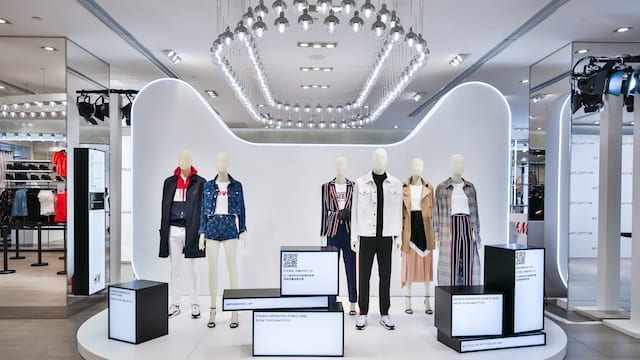
    H&M China launched on Chinese e-commerce platform Tmall, complementing the Swedish clothing retailer’s 400-plus physical stores and HM.com Shop Online.

    “We are very happy to extend our collaboration with Alibaba by launching H&M and H&M Home on Tmall,” says H&M Greater China country manager Magnus Olsson.

    H&M opened its first store in Mainland China in 2007 and launched its online shop in 2014. The H&M group brand Monki has had strong development in China since its launch on Tmall, and this collaboration between the two groups, touted in December, is being extended to include both the H&M brand and H&M Home.

    During the launch period, H&M’s Tmall shop is offering more than 10,000 styles of fashion items including women’s, men’s, teens’ and children’s styles, plus H&M Home. As well as special opening offers, Tmall and H&M is offering exclusive pieces featured by TF Boys singer Wang Yuan, one of the stars in a H&M/Tmall campaign film.

    “With H&M’s experience in online and offline fashion retail, this collaboration signifies an important milestone for Tmall’s expansion, allowing more customers to enjoy the pleasure of interactive shopping,” says Alibaba VP for Tmall fashion and luxury Lv Jianmei.

    Procurement centres

    Meanwhile, Tmall Global plans to open six procurement centres across the world to help overseas vendors capture Chinese consumers’ booming appetite for newer and better imported goods, says Tmall president Jet Jing. They will be established in Japan, South Korea and Hong Kong, as well as regions of North America, Europe and Oceania.

    Jing’s announcement, at the annual Tmall Global 2018 Global Partners Summit in Hangzhou, did not disclose a time frame.

    Launched in 2014, Tmall Global is Tmall’s channel for cross-border e-commerce. The platform controls nearly a quarter of the market. With Alibaba’s expansive consumer analytics, Tmall Global provides overseas vendors insights into Chinese consumers’ shopping behaviour and preferences.

    China is the world’s second-largest consumer market following the US, according to Boston Consulting Group. The research consultancy notes China will see nearly $2 trillion in new consumption by 2021, and also projects China’s e-commerce cross-border trade to more than double to RMB620 billion (US$98 billion) in gross merchandise volume by next year from RMB305.5 billion in 2016.

    Global commitment

    Tmall Global, which already offers more than 18,000 brands from 74 countries and regions, is committed to attract even more international brands and vendors to sell their goods into China in the coming year, says Tmall Global GM Alvin Liu.

    New Retail, which harnesses new technologies to unify online and offline shopping, will serve as an important driver to power such growth by allowing vendors to engage with their customers in both spheres, Liu says.

    “Our goal is to give Chinese consumers the best shopping experience, so we select only the best quality for China,” says Liu.“We must discover new categories and find new products so Chinese consumers can find items that are best suited to their needs.”

    To achieve these goals, Tmall Global has pledged to boost the traceability of items sold on the platform. By using blockchain technology, consumers will be able to track their orders throughout every stage of the delivery process, starting from the factory at the country of origin.

    Secondly, the platform seeks to expedite the expansion of overseas fulfillment centres so smaller foreign brands can introduce their products to the Chinese market more quickly.

    The platform will also increase the use of bonded warehouses, where imported goods can be stored securely without import duties until the items are sent.