Category: E-Tailing

Retail News Asia is committed to providing both local and global retailers with the latest E-Commerce & Etail news throughout the Asian market. This on a daily base.

  • Why e-commerce and social media platforms will keep growing

    Why e-commerce and social media platforms will keep growing

    If China’s online retail sales increased by 30 percent, does that mean the revenue growth for e-commerce platforms would also be about 30 percentIf online sales growth decelerates, does that mean e-commerce platforms will also face slower growth?

    Not exactly.

    That’s because shopping websites get most of their revenue from advertisements placed by online vendors. As long as online sales continue to be a main source of growth, and rivalry intensifies in the online shopping space, the need to increase online advertising spending will go up.

    A decade ago, China’s online shopping market boom had just started. There weren’t too many online shops, so making money was relatively easy for e-vendors and they don’t even have to spend much to promote themselves.

    The booming business has lured more and more brands to migrate online, which in turn has stimulated online shopping. China now has 500 million to 600 million online shoppers.

    With thousands of e-shops competing for customers, a bigger advertising budget becomes necessary. Major e-commerce platforms are the big winners amid such a trend.

    The same is happening to social media platforms.

    Brands used to hire advertising firms to design an ad for broadcast or print media. Now, they’ve shifted to online celebrities, or Key Opinion Leaders (KOLs), who get paid in cash or in kind to help promote their products online, and it cost KOLs almost nothing to tap into the huge user base of social media.

    But if social media sites start to charge KOLs to prioritize their postings, that will translate into fresh income streams for these platforms.

    Shopping online and visiting social media sites have become part of daily life, and it is hard to change that.

    So with their massive user base, leading online shopping and social media platforms will continue to enjoy good business.


  • Alibaba teams up with Singapore university on AI

    Alibaba teams up with Singapore university on AI

    Chinese tech giant has set up a joint research facility at Singapore’s Nanyang Technological University to develop artificial intelligence-based technologies in retail, transportation and healthcare

    Chinese e-commerce and technology giant Alibaba has partnered Singapore’s Nanyang Technological University (NTU) in a joint research facility aimed at harnessing artificial intelligence (AI) to solve societal issues such as Singapore’s ageing population.

    The first of its kind outside China, the Alibaba-NTU Singapore Joint Research Institute will bring together NTU’s AI capabilities, including efforts to develop an artificial companion for the elderly, and Alibaba’s expertise in natural language processing, machine learning and cloud computing.

    The multimillion-dollar partnership between Alibaba and NTU is expected to involve 50 scientists and engineers from both parties over five years. Besides addressing the needs of ageing societies, they will also develop AI technologies in areas such as retail, urban transport and healthcare.

    For example, NTU’s expertise in healthcare research and Alibaba’s knowhow in AI to diagnose and prevent diseases will be pooled to achieve breakthroughs in health-related AI. Both parties will also conduct research to improve urban mobility and reduce Singapore’s carbon footprint.

    Alibaba said its contribution to the research facility will come from a $15bn fund earmarked for its Damo research and development (R&D) programme, which includes establishing research labs across the globe, including one in Singapore.

    The joint research institute is located on the NTU campus, but it is open to researchers and academics worldwide. Alibaba will also build a crowdsourcing platform to connect researchers and industry practitioners in an AI-focused R&D community.

    Jeff Zhang, Alibaba’s chief technology officer, said the AI technology developed by the institute will first be rolled out in NTU, followed by other parts of Singapore and Southeast Asia at a later date.

    “By launching our first joint research institute in Singapore, we hope to work with talent in Singapore and researchers worldwide to explore technology innovation that can address common issues faced by the society at large,” said Zhang.Alibaba’s efforts to develop AI capabilities in Singapore follows the recent launch of Chinese facial recognition specialist Yitu’s regional headquarters in Singapore that will mainly serve as a sales, marketing and operations outfit for now.

    Yitu said plans are also in the pipeline to establish R&D capabilities in the city-state by the end of 2018.

    In May 2017, Singapore’s National Research Foundation said it would invest up to S$150m (US$107m) over five years in a programme called AI.SG to drive adoption of AI to solve business problems.

    To nurture a local AI community, AI.SG will also work with startups and corporate laboratories through new facilities that will provide software tools, anonymised datasets and high-performance computing resources.

  • Alibaba, JD.Com Could Clash in US

    Alibaba, JD.Com Could Clash in US

    Two Chinese behemoths in online retailing that have battled at home may now take their rivalry to the U.S.—and challenge Amazon. Alibaba Group Holding has reportedly held talks with grocer Kroger (KR) to form a U.S. partnership to better compete with Amazon.com (AMZN).

    Alibaba’s competitor, JD.Com (JD), is also looking to plant a flag here. Richard Liu, JD’s chief executive, has said he plans to expand his e-commerce platform to the U.S. later this year, with a distribution presence starting in Los Angeles. He could partner with Walmart (WMT), a major JD shareholder and retail partner in China.

    To call Alibaba and JD the Amazons of China is an understatement. China mostly skipped the big-box store era that dominated U.S. retail before e-commerce took off, which means few powerful players stand in the way of Alibaba and JD. The two battle each other—sometimes bitterly.

    Late last year, after about 100 domestic clothing brands left JD ahead of the Nov. 11, 2017, Singles Day shopping rush, the company blamed “coercive tactics from our competition, which if proven true would be illegal.” Alibaba denied any wrongdoing.

    JD management recently told analysts that a few of the companies had come back, and that others said they didn’t receive enough traffic from Alibaba during Singles Day to make up for lost JD business. JD posts fourth-quarter results on Friday.

    Last fall, Barron’s said investors should prefer JD shares. Since then, JD has gained 23%, versus 6% for Alibaba and 8% for the Standard & Poor’s 500 index.

    The two companies differ in significant ways. Alibaba is larger and more prosperous. JD’s profits are held down by its spending to build its own end-to-end logistics network. That’s an important competitive advantage; JD does better in high-trust items like baby products and scores higher on customer-satisfaction surveys.

    One concern for JD is that it will stretch too far, too fast. It is expanding in Southeast Asia. It is building a distribution network in France, and says it wants to make a European push as soon as next year. JD recently opened a brick-and-mortar store in Beijing selling high-end food. For financing, the company last year created a subsidiary called JD Logistics, in which it’s sold an 18.6% stake.

    Profits are slim today. Looking out to 2020, estimates for JD earnings range from $1 to $2.30 a share. That’s adjusted for “extraordinary items,” which, for a company in such fast motion, can become all too ordinary.

    Assume the high end of earnings forecasts, factor in remaining growth, and consider low interest rates, then squint and perhaps have a belt of whiskey, and the $47 share price might look reasonable, maybe even cheap. It’s becoming difficult to tell.

    But one thing we liked about JD is that its stock gain lagged behind Alibaba’s last year for no good reason.

    It has since caught up. Time to sell.

  • Alibaba Cloud Expands Europe Offering With Eight New Products

    Alibaba Cloud Expands Europe Offering With Eight New Products

    Alibaba Cloud on Tuesday launched eight of its products in Europe, covering areas from big data and artificial intelligence to infrastructure and security, as it targets new business in an important market for cloud services.

    Announced during the Mobile World Congress, underway in Barcelona, Spain, the products aim to deliver efficiencies in online-offline retail integration, smart manufacturing and smart-city development for European businesses.

    “Alibaba Cloud wants to be an enabler for technology innovation in Europe helping enterprises do business,” said Wang Yeming, general manager of Alibaba Cloud Europe, in a statement. “These advanced solutions will enable organizations in a wide range of sectors and will bring them true connectivity, both locally and globally.”

    Previously, these products were available only to Alibaba Cloud clients in China. The company pointed to three that may prove popular among enterprises, including Image Search, a chatbot called Intelligent Services Robot and Dataphin, a smart data engine used to link businesses working together from different sectors.

    According to Alibaba Cloud, Image Search, which allows for research both online and offline using pictures, is used widely in China, including in sectors such as New Retail. The chatbot for businesses served more than 40 million customers in a single day during last year’s 11.11 Global Shopping Festival, the company said. Dataphin is now managing 95% of Alibaba Group’s data and being used to drive improvements and new applications in retail, finance, logistics, transportation and health.

    In addition, Alibaba Cloud launched the ECS Baremetal Instance; the Super Computer Cluster; its next-generation Cloud Enterprise Network; the Vulnerability Discovery security service; and the Apsara Stack, a cloud-services platform adopted by 120 clients so far in China. These infrastructure and security products are typically used by enterprises undertaking important tasks, such as migrating data and applications to the cloud.

    Alibaba Cloud said the product launches were a sign of continued commitment to the European market that build on other initiatives already underway there. The company opened its first availability zone in Frankfurt Germany in November 2016 and recently began operating a second one in the same region. It has partnered with Vodafone in Germany, as well as the U.K.’s Met Office and Station F, an innovation hub in France.

    “The Mobile World Congress in Barcelona is a great opportunity for us refresh our European strategy and consider how we can make an increasing contribution to the digital transformation of enterprises in this market from different sectors with our offerings and expertise,” Wang said.

    Alibaba Cloud, the leading cloud provider in China, services both Alibaba Group’s operations and other enterprise clients. The company has expanded overseas in recent years to Singapore and Malaysia in Southeast Asia, Frankfurt, London and Paris in Europe, New York and San Mateo in the U.S., Dubai in the Middle East, as well as Seoul, Tokyo and Sydney. It currently has over 2.3 million customers worldwide.

  • Online malls lead South Korea retail growth

    Online malls lead South Korea retail growth

    South Korea retail sales inched up 0.7 per cent year on year last month with online malls outshining brick-and-mortar stores, government data shows.

    Sales for 13 online stores and marketplaces jumped 21.6 per cent, according to the Ministry of Trade, Industry and Energy, which did not disclose sales figures.

    At the same time, sales for 13 offline retailers, including department stores and discount chains, fell 9.2 per cent. Convenience stores were the only bright spot, posting 9.8 per cent growth.

    Online malls saw sales soar 25.5 per cent, attributed to people being attracted by online grocery shopping offering fast delivery service.

    Online marketplaces also surged 20.4 per cent, with an increase in third-party sellers in the electronic and home-appliance sectors.

  • More funding comes for Go-jek Indonesia

    More funding comes for Go-jek Indonesia

    Go-Jek has raised a higher than targeted $1.5 billion in a fundraising round from a dozen investors, including BlackRock and Google, as the Indonesian ride-hailing firm builds its war chest to fight deep-pocketed rivals.

    Go-Jek had planned last year to raise $1.2 billion, and, with the 25 percent extra funds it has received, it is now valued at about $5 billion.

    Reuters Breakingviews said last month that Go-Jek was valued at roughly $4 billion compared with over $6 billion for Grab, Southeast Asia’s largest ride-hailing firm.

    The additional funds and backing of well-known investors, including Singapore’s Temasek Holdings and Chinese technology giant Tencent Holdings, will help Go-Jek to better compete in Southeast Asia’s cut-throat market where incentives to drivers and passengers are used to build loyalty.

    Singapore-based Grab was expected to have raised $2.5 billion last year and Uber Technologies has pledged to invest aggressively in Southeast Asia – home to 640 million people – even though the US firm expects to lose money in the fast-growing market due to costly battles with rivals.

    Both companies are expanding in Indonesia, Southeast Asia’s most populous country, where Go-Jek, a play on the local word for motorbike taxis, is transforming the local economy, economists say.

    Go-Jek and Grab are also investing heavily in expanding their mobile payments platform.

    “Go-Jek is far beyond a ride-hailing app, it’s a digital platform that dominates consumers’ daily lives, including transportation, food delivery, logistics, and payment, etc.,” said Xiaofeng Wang, senior analyst at consultancy Forrester.

    “That’s also the key value that its key investors like Google and Tencent see. They know well about the power of the digital ecosystem, and Go-Jek has built it in Indonesia, like Google in the US and WeChat in China,” Wang said.

    Go-Jek told Reuters that some investments that came in this year were part of the funding round that kicked off last year but it declined to comment on the amount raised or the names of investors.

    It said the funding was aimed at developing technology for micro, small and medium enterprises in Indonesia.

    Go-Jek delivers everything from meals and groceries to cleaners, masseuses and hairdressers across Indonesia’s capital city Jakarta, all at the touch of a smartphone app – helping it become a crucial workaround in a city with some of the worst traffic in the world.

    Rumours said BlackRock and Temasek are investing about $100 million each in Go-Jek’s latest fundraising.

    BlackRock declined to comment. A Temasek spokesman confirmed participation in the fundraising but declined to say how much it had invested.

    This month, Indonesian conglomerate Astra International said it would invest $150 million in Go-Jek, while  Djarum Group’s Global Digital Niaga is putting in $100 million.

    Go-Jek’s payment system, known as Go-Pay, has emerged as one of the most popular mobile payment platforms in Indonesia. Grab, which bought Indonesian payment service Kudo last year, also sees its future in mobile payments as much as in transport.

    Go-Jek is expanding in other Indonesian cities and has said it plans to start operations in the Philippines this year, followed by other Southeast Asian countries.sou

  • Tencent and JD.com each take minority stakes in Chinese retail group Better Life

    Tencent Holdings and JD.com are buying minority stakes in Chinese retailer Better Life Commercial Chain Share.

    A Tencent subsidiary is paying RMB886.9 million (US$140 million) for a 6 per cent shareholding, while a JD.com subsidiary is paying RMB739.1 million for a 5 per cent stake, according to a Better Life filing with the Shenzhen stock exchange.

    Also known as Bubugao, Hunan-based Better Life announced a strategic collaboration agreement with Tencent at the beginning of this month, Reuters reports. The three companies and shareholders agreed to the transactions on February 14, according to the filing.

  • Coupang launched Korea’s largest STEAM toy store

    Coupang launched Korea’s largest STEAM toy store

    Ecommerce platform Coupang has opened what it says is the largest Korean online toy store specialising in Steam (science, technology, engineering, arts and mathematics) education.

    The new theme store offers more than 390,000 Steam education items at low prices.

    Steam education refers to a creative teaching framework that integrates the five disciplines. It started as a Stem initiative in the US, and later arts was added to the mix. Unlike the traditional lessons, this latest education trend uses fun games to learn knowledge and senses that can be applied in a daily setting. The initiative encourages children to think comprehensively and flexibly, which contributes to their creativity.

    Coupang opens Koreaís largest STEAM toy store

    At Coupang, customers can find art supplies, blocks, remote control toys including drones, board games as well as instructive toys that can be used as tools to learn the five disciplines, grouped by age category as well as toy type.

    Flagship items include the Lego Boost 17101 unveiled at CES 2017 in Las Vegas. The toolbox offers hands-on experience of building a robot, cat or a car.

    Lee Byeong-hee, the head of baby category in Coupang, says the Steam initiative has been widely accepted as a new teaching method to nurture talents for future.

    “Customers can take advantage of the opening promotion and shop top educational toys from various brands at affordable prices.”

    Coupang is one of the world’s largest and fastest growing e-commerce platforms.

  • VIP.com, first Chinese partner of the London Fashion Week

    VIP.com, first Chinese partner of the London Fashion Week

    The new relationship is truly special as this is the first time a Chinese retailer becomes an Official Sponsor of London Fashion Week. Vip.com will be working closely with British brands to help them launch in its hugely lucrative and ever-expanding home territory.

    “The fashion market in China is extraordinarily sophisticated and fast paced, and hungry for new design talent,” says Jenny Jioe, Managing Director of Fashion at Vip.com. “Our consumer is aware of London’s creative pedigree, and ready for both news and product. I know from first-hand experience that the brands in London, with all their energy and unbridled creativity, are precisely what we are looking for.”

    Vip.com is one of China’s top 3 ecommerce retailers, with annual retail sales of $11.2b, 57.8million active customers, over 335million orders in 2017, and eight individual international sourcing offices. In 2016 Forbes ranked Vip.com as No.2 in its top 100 companies with the highest growth.

    London Fashion Week is a renowned launch pad for emerging fashion talent. “The nature of working with so many new businesses, is that they don’t have the advertising power of the global fashion brands,” says Caroline Rush, Chief Executive British Fashion Council. “What they have is incredible products that a fashion-forward Chinese consumer is going to love. Our role is to shine a light on these businesses and work with our partners at Vip.com to introduce these brands to a highly engaged audience in China.”

    The new partnership takes sponsorship at London Fashion Week into new, global realms of business and marketing savvy. “We are going to stage a show that is exclusive run by Vip.com,” says Paul Tyce, the Chinese e-commerce site’s UK country manager. “We will offer live streaming to our customers in China, in-depth cooperation with designers, and fashion and art exhibitions. This isn’t just about title sponsorship.”

  • ShopBack searching for Singapore’s biggest online shopaholic

    ShopBack searching for Singapore’s biggest online shopaholic

    E-commerce start-up ShopBack is teaming up with online social networking service LinkedIn to hunt for its Chief Shopping Officer.

    The Chief Shopping Officer will identify the best deals and shop for him or herself at any of ShopBack’s 500+ merchant partners, including Singapore Airlines, FoodPanda, Cathay Cineplexes, Grab and more.

    The online loyalty platform will provide SGD11,271 in shopping funds for the role, which will commence from 1 March – 30 April 2018. All purchases and cashback accumulated during the period of employment will be for the Chief Shopping Officer to keep thereafter.

    Applications for the temporary role will run for three weeks (ending on March 5, 2018) on LinkedIn and the Chief Shopping Officer will be officially announced on March 13, 2018.

    “There’s no better way for us to find out what our customers want than picking a Chief Shopping Officer from among them. Most of these customers do not necessarily have a professional background as a shopper and have regular day jobs. We wanted to tap professionals on LinkedIn, who may be a hardcore programmer by day, but an online bargain hunter at night,” said Vincent Wong, country head at ShopBack Singapore.

    ShopBack said it is looking for candidates who can work remotely with at least two to three years of online shopping experience with a knack for sniffing out the best online bargains. The role also requires some video editing skills and being on camera.

    Linda Lee, LinkedIn’s head of communications for South-east Asia and North Asia, added the company is seeing companies in Singapore and the Asia-Pacific region hire for more fun and unconventional roles on the website.

  • WeChat Pay available at European airport retailers

    WeChat Pay available at European airport retailers

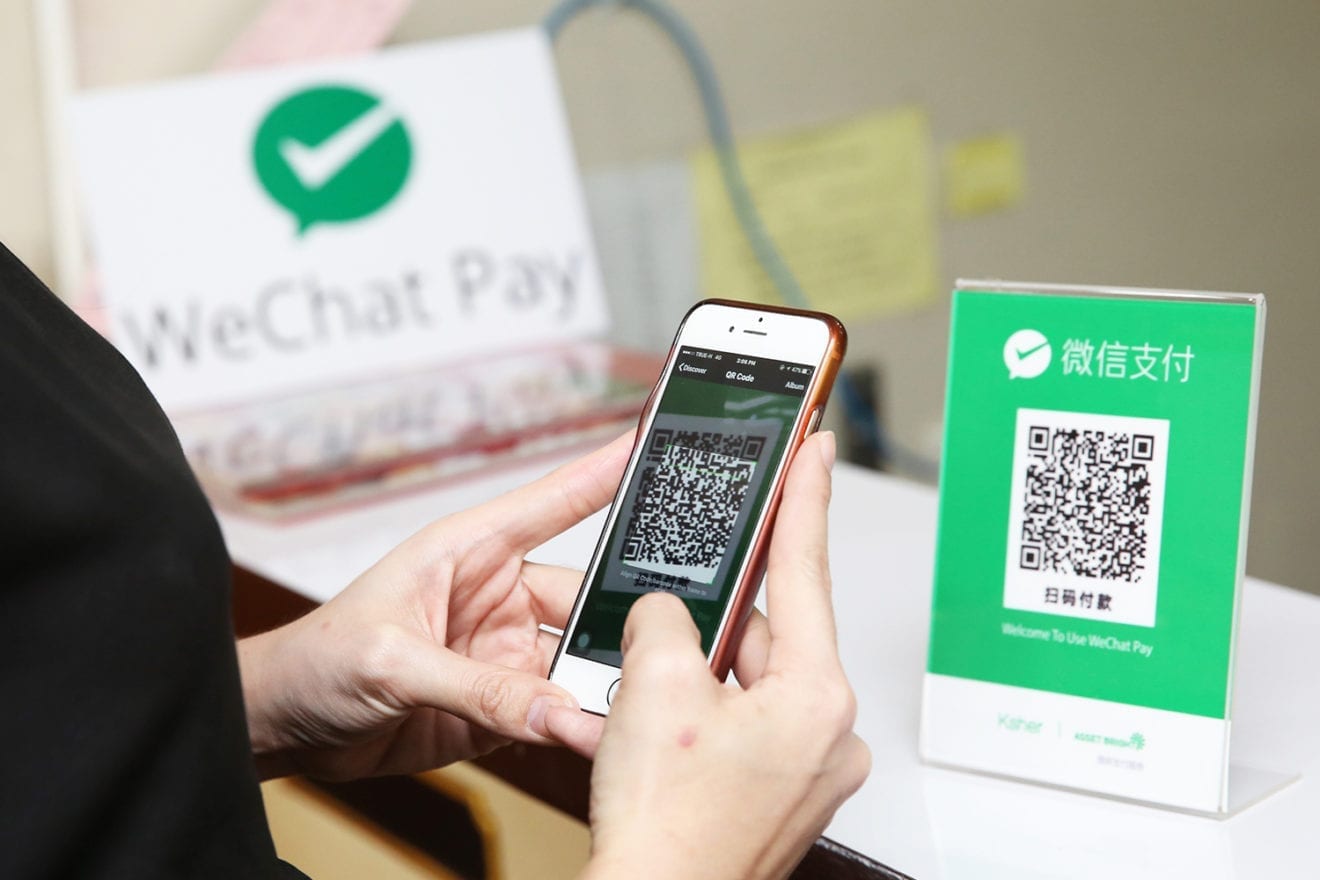
    WeChat Pay, a popular mobile payment method among Chinese consumers, will be available in several European airport retail destinations, as part of the travel retail industry’s attempts to appeal to large visitor numbers from China.

    Lagardère Travel Retail, which operates retail, foodservice, and duty-free premises at airports around the globe, has first launched the payment service in Terminal 1 of Charles De Gaulle Airport in Paris.

    Timed to coincide with Chinese New Year, a popular period for travel among Chinese consumers, shops operated by Société de Distribution Aéroportuaire – a joint-venture by Lagardère Travel Retail and French airport operator Groupe ADP – will be the first to accept WeChat Pay. It will be launched in additional airports in due course.

    WeChat Pay is a smartphone-based payment service and has around 600 million active users. It is integrated into internet group Tencent’s WeChat app, which is the most popular social network in China with nearly one billion users.

    To make a payment users scan QR codes generated within their WeChat mobile wallet stored on their smartphones.

    Travel retail is often perceived to be behind the times in terms of digital transformation when compared with the wider retail sector, but there are a number of new services being rolled out. Lagardère Travel Retail is one of several airport shopping companies to launch click & collect, enabling passengers to order products online and pick them up as they travel through the terminal.

    And as the travel industry looks to cater for international travellers in ways they are familiar with from their home countries, there is set to be further innovation in the space.

    Last week, for example, tax-free shopping company Global Blue announced it has teamed up with Tencent at Madrid Airport to allow WeChat Pay users to receive their tax refund digitally. For the first time, consumers can receive instant tax refunds into their WeChat Pay Wallet, once their tax-free forms have been validated by customs officials.

  • YNAP shareholder criticises Richemont’s acquisition bid

    YNAP shareholder criticises Richemont’s acquisition bid

    Richemont’s takeover bid for Yoox Net-a-Porter (YNAP) has been handed some uncertainty amid reports that a long term shareholder will vote against it.

    US-based value investor Robotti & Co – which has a stake of less than one per cent in the YNAP Group – did not see the deal as being “synergistic” or that the price offered was at “sufficient valuation”.

    “Given that Yoox Net-a-Porter has leading a position in the industry and the best management team, we think the company should remain independent for the time being,” Robotti & Co portfolio manager Isaac Schwartz told the newspaper.

    Swiss-based Richemont – which owns high-end brands such as Cartier, Montblanc and Dunhill London – already has a stake in the YNAP Group but last month it made a public tender offer to buy the shares it does not own for €38 (£33.5) per share.

    Various publications have revealed different total estimates for the takeover bid, ranging from €2.8 billion (£2.4 billion) to €5.1 billion (£4.5 billion).

    The deal would only go ahead once it is approved by YNAP Group shareholders.

  • Alibaba, Tencent rally troops amid $10 billion retail battle

    Alibaba, Tencent rally troops amid $10 billion retail battle

    China’s tech giants Alibaba Group Holding Ltd and Tencent Holdings Ltd, worth a combined $1 trillion, are on a retail investment binge, forcing merchants to choose sides amid a battle for shoppers’ digital wallets.

    Since the start of last year, the two companies have between them spent more than $10 billion on retail-focused deals, boosting their reach online and in brick-and-mortar stores.

    The aggressive drive, supported by large cash piles and soaring share prices, is part of a battle to win over consumers and store operators to the two firms’ competing payment, logistics, social media and big data services.

    The result: fewer and fewer retailers left without allegiance to either Tencent or Alibaba.

    “All of the retailers in the brick-and-mortar world are very worried. They have to take a side,” said Jason Yu, Shanghai-based General Manager of market research firm Kantar Worldpanel.

    “Otherwise they are afraid they will be eaten alive in the future.”

    Alibaba is China’s top e-commerce player and its affiliate Ant Financial leads in mobile payments. Tencent’s strengths lie in social media, digital payment and gaming. It also has a major stake in the second-largest online retailer, JD.Com.

    Tencent and JD.com have a growing range of allies, including French grocer Carrefour SA, which has announced a potential investment from Tencent, and U.S. retail giant Walmart, which has a stake in JD.com.

    Tencent also bought a stake in Yonghui Superstores Co Ltd, apparel retailers Vipshop Holdings Ltd and Heilan Home, mall operator Wanda Commercial, and this month snagged a strategic tie-up with grocer Bubugao.

    In the other corner is Alibaba, which has invested even more heavily in Suning.com>, Intime Retail, Sanjiang Shopping Club, Lianhua Supermarket, Wanda Film and IKEA-like home
    improvement store Easyhome.

    Key to the battle is China’s nearly $13 trillion mobile payment market, where Alibaba and Tencent are going head-to-head. Alibaba took a 33 percent stake in its payment affiliate Ant Financial this month ahead of an expected mega IPO.

    Ant operates China’s top mobile payment platform, Alipay, while Tencent’s payment system on its hugely popular Weixin chat app is catching up fast. Both firms are also making a big push in cloud computing and data.

    “I think for payment (the retail push) is a very critical part because it’s almost a gateway,” said Yu. Brick-and-mortar stores in China account for about 85 percent of retail sales, creating a huge lure for tech giants.

    “That’s the pot that Alibaba, JD.com and even Tencent want a slice of,” Yu added. “That’s the majority of the business where they can actually look for future growth.”

    In return, the physical stores get access to payment systems, logistics networks and other services – not to mention the reams of data on consumers that the tech firms control.

    Alibaba invested $486 million this month in a retail-focused big data firm, saying the deal meant it could better “help brick-and-mortar retailers succeed in the digital age.”

  • Malaysians are more Save-vy than Singaporeans

    Malaysians are more Save-vy than Singaporeans

    ShopBack, the leading online Cashback platform in Southeast Asia, observes a stronger head start in 2018 for Malaysia as compared to Singapore.

    “Further to our positive performance in the Q4 2017, almost 20% more digital transactions went through ShopBack Malaysia compared to our Singapore counterpart last month. Looking at our January 2018 vs January 2017 data, ShopBack Malaysia has experienced more than twice the growth. Data shows that when it comes to savings, Malaysians are more aggressive and increasingly choose ShopBack as a convenient way to accumulate Cashback for every transaction,” said Alvin Gill, Country General Manager of ShopBack Malaysia.

    “Several factors such as the petrol price hike and subsequent increase in food cost has urged Malaysians to optimise their spending in every possible way, to which we are glad to be able to help more than 850K Malaysians in getting over RM25 million Cashback from their digital purchases, including Grab and Uber rides, in the past three years.”

    In 2017, more than 30 online merchants joined ShopBack Malaysia to provide Cashback as a form of loyalty reward to online shoppers, including Malaysia Airlines, 11street, Uniqlo Online and Kinokuniya. Currently, ShopBack collaborates with more than 500 merchants to offer up to 30% Cashback, and the Cashback percentage tends to increase during the festive period.

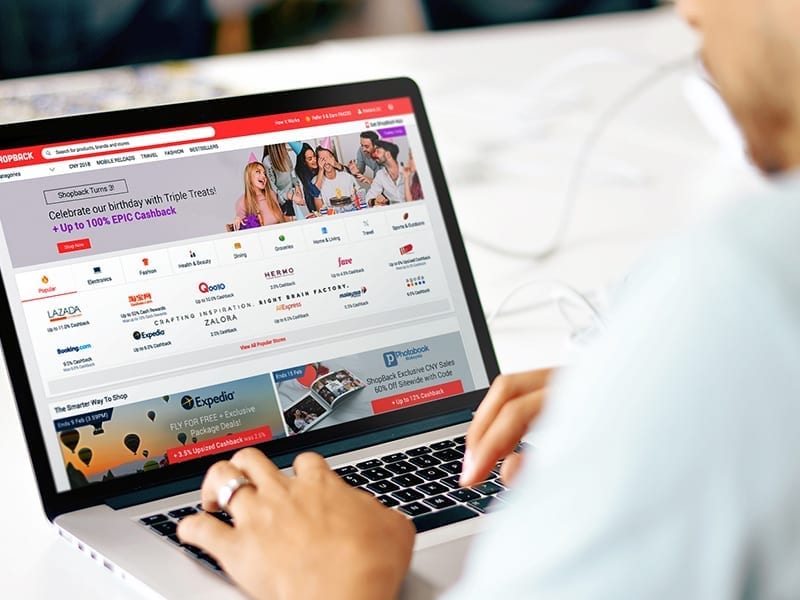
    “For example, there’ll be products on 100% epic Cashback sale during our birthday next week (22 February 2018). We will be giving away a total of RM18,000 to three lucky winners to spend on Lazada. Nike, Taobao, Booking.com, Photobook, Expedia, Hermo, Cotton-On, Sephora, ZALORA etc. are going to give out higher Cashback on that day too,” Alvin elaborated.

    Developing user centric features for better purchasing decisions

    While online Cashback still sounds new to locals, ShopBack is confident of its future as this concept has been introduced and is widely used by China, UK and US shoppers for more than a decade.

    “There is a bunch of loyalty programmes for offline retail in Malaysia but none comparable to ShopBack’s scale in the online retail space prior to our entry. We reward users in cash form, of which can be transferred into a bank account once it gets validated. What’s better is users are able to stack this on top of their credit card’s Cashback. On the other hand, online merchants see us as a valuable partner in promoting their business to the right target audience and retaining existing customers. We might earn less by sharing our commission with users as Cashback, but this triple-win model will help us go a long way,” Alvin said.

    To better support customers in their purchasing journey, ShopBack Malaysia extended its team to support live chat on web, mobile and app platform, as well as Facebook. It also upgraded its app to enable users access to purchase mobile reloads and internet packages offers within one tap, and implemented OTP (one-time-password) for a secure payout process.

    Recently, it also rolled out a ‘partial Cashback’ feature where a user can choose to withdraw any available Cashback amount (minimum RM10) from ShopBack to his/her bank account, or utilise it to settle phone bills (Maxis users only). The company is also looking to expand payout options via potential partnerships with popular brands and other loyalty programme providers.

    “Moving forward, we want ShopBack to be more than just Cashback. If you look at our app, there’s an exclusive function that allows our users to quickly compare rides and make a decision on the go. That is the kind of smarter way of living that we envision, and we hope to achieve greater milestones with our users in the near future.”

  • Suntec City Inks Partnership with Alipay To Attract Chinese Tourists

    Suntec City Inks Partnership with Alipay To Attract Chinese Tourists

    Suntec City and Alipay are pleased to announce today that they have inked a two-year partnership to launch Alipay touchpoints in Suntec City.

    The two-year partnership between Suntec City, one of Singapore’s largest shopping malls and Alipay, the world’s largest mobile payment and lifestyle platform operated by Ant Financial Services Group, is set to attract more Chinese tourists and enhance their shopping experience at Suntec City.

    Under the partnership, approximately 350 retail establishments in Suntec City will progressively roll out Alipay as a payment option for Chinese tourists. By July 2018, the partners plan to cover 60% of the stores with Alipay touchpoints.

    To enable merchants to leverage on the Alipay platform to engage Chinese tourists, Alipay and its acquirer partners will jointly organize a series of workshops to sign up with Alipay and to promote merchants’ businesses on the Alipay platform. Acquirers also provide hands-on training to merchants to operate the Alipay payment terminal and manage strategic content feature of merchants’ offers. Alipay has also launched a dedicated Suntec City microsite within its app to provide ongoing publicity to Suntec City and its merchants. The current joint marketing campaign with Suntec City on Alipay’s app, from now till Mar 2018, offers a ¥25 F&B voucher and a ¥50 retail voucher which can be used at participating merchants in Suntec City.

    Mr. Chan Kong Leong, Chief Executive Officer of Suntec Real Estate Investment Trust, which owns Suntec City said, “With an extensive range of shopping, dining and entertainment offerings coupled with the iconic Fountain of Wealth as well as being the embarkation point for the Duck & Hippo Tours, Suntec City is a popular destination amongst tourists. We are delighted to partner Alipay to offer our Chinese shoppers a seamless payment system that they are familiar with. This partnership with the market leader in mobile and online payment platforms is a great opportunity for us to elevate engagement with our shoppers in the digital space.”

    “Suntec City is a must-visit shopping destination among Chinese tourists and business delegates who convene at Suntec Singapore for exhibitions, seminars and conferences. We are happy to partner with Suntec City to deploy Alipay touchpoints in the mall for Chinese visitors who are looking for the best of retail and lifestyle offerings and the same seamless shopping experiences that they enjoy at home. At the same time, we are very excited to help merchants in Suntec City connect with Chinese visitors.” said Cherry Huang, General Manager, Cross-border Business for South and Southeast Asia, Alipay.

    According to the Singapore Tourism Board, Singapore received 15.9 million international visitors in the first 11 months of 2017, during which, the number of visitors from China reached close to 3 million, a stellar 13.1% increase from a year ago. This also makes China the single largest contributing country to Singapore’s tourism industry.