Category: E-Tailing

Retail News Asia is committed to providing both local and global retailers with the latest E-Commerce & Etail news throughout the Asian market. This on a daily base.

  • Digital wallet WeChat Pay launches in UK

    Digital wallet WeChat Pay launches in UK

    In the middle of London’s Camden Market, a trader from China hands red-bean cakes to a group of tourists from Sweden, as tattooed locals dressed in black leather weave their way between food stalls cooking up dishes including barbecued meat and fish and chips.

    The market, which has been at the heart of London’s punk scene since the 1970s, has evolved into one of the capital’s busiest tourist attractions. It draws hundreds of thousands of people every week to its maze of clothing shops, tattoo and piercing parlors, and food stands.

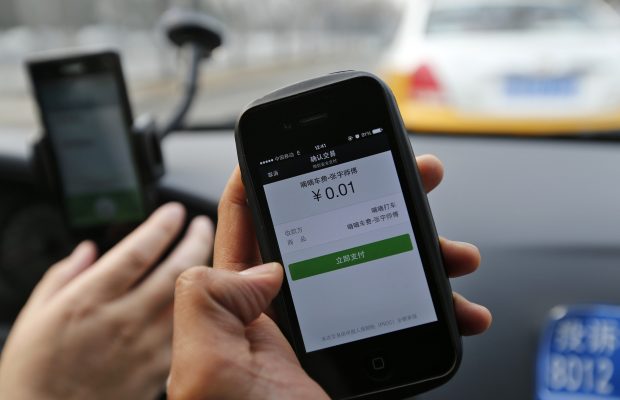
    And starting this month, Chinese visitors will be able to buy goods with the help of mobile payment platform WeChat Pay.

    Camden Market is a sharp contrast to luxury shopping hotspots such as Bicester Village and Oxford Street where Chinese tourists spend millions of pounds each year and might not seem the obvious choice for the United Kingdom launch of WeChat’s hugely popular digital wallet, which accounts for 40 percent of the Chinese mobile payment market.

    However, the number of Chinese visitors to Camden is climbing. In September 2016, 5 percent of visitors were Chinese. The proportion doubled to 10 percent in March.

    “In terms of demographics, the number of Chinese tourists in Camden is certainly growing, and in terms of a brand, Camden was an obvious choice. It’s iconic in London,” said Craig Jacoby, head of retail payments at SafeCharge.

    WeChat has worked with SafeCharge, a British payment technology company, to make WeChat Pay available at point-of-sale locations in the UK for the first time.

    During the next four months, SafeCharge will provide more than one thousand Camden Market vendors with a software update that enables in-store payment terminals to generate QR codes and perform transactions.

    Chinese tourists spent 513 million pounds ($681 million) in the UK last year, according to tourism authority VisitBritain. Camden Market’s management wants to better accommodate those bigspenders.

    Jacoby said WeChat Pay will soon be available at other shopping destinations in London, and it is also launching at six large retailers in Paris as WeChat moves forward with its international expansion.

    WeChat Pay rival Alipay has also made recent moves in Europe. In October, Alipay expanded its partnership with Dutch payment company Adyen to facilitate in-store mobile payments at retail partners in the UK.

    In Camden, merchants and customers were upbeat about the development. Yi-yin Wei, a shopkeeper from Taiwan who sells red-bean cakes at Wheel Cake Island, thought the update will be useful.

    “Chinese people are used to paying for things with their phones, so it will be like home for them,” Wei said.

    And Angel Chow, a tourist from Hong Kong, said Chinese shoppers will likely spend more now they have WeChat Pay as an option.

    “They will find it convenient if they can use their phones and will buy more. I think they will be excited to be able to use it in England,” Chow said.

    Other Camden merchants were not sure there would be enough demand. Vari McGeachy, manager of Books Iconica, said fewer than 5 percent of her customers are from Asia.

    “We don’t have many Chinese people coming through the doors, and when they do they don’t have a problem paying with cash or card,” McGeachy said. “It wouldn’t be worth having to train my staff about a new system.”

    SafeCharge Chief Executive David Avgi said in general there is great motivation to accommodate Chinese consumers in Europe, where 50 percent of luxury purchases are made by Asian tourists.

    And he said it is a matter of time before the mobile payment systems that are ubiquitous in China catch on in the West.

    “This innovative payment method is seen as the next big payment phenomenon in Europe,” Avgi said.

  • Alibaba And Singles Day Make Black Friday Look Small And Show The Future Of Retail

    Alibaba And Singles Day Make Black Friday Look Small And Show The Future Of Retail

    Singles Day may be an invented holiday, but Nov. 11 in China gives an indication of how retail will evolve globally over the next decade. And Alibaba is the company to watch. The numbers posted by e-commerce giant Alibaba on Singles Day — a holiday created as an antidote to China’s Valentine’s Day, which has caught on big time — in 2017 are mind-boggling. Alipay, the company’s payments system, processed $25B of payments, more than four times what the entire U.S. spent on Black Friday weekend and Cyber Monday in 2016.

    That is 1.5 billion individual transactions, 325,000 orders per second, at the day’s peak. Cainaio, the logistics company owned by Alibaba, processed 812 million delivery orders. The opportunity for brands is clear, and Alibaba said 167 companies each generated more than $15M in sales, 17 companies surpassed $75M, and six companies surpassed $150M.

    But as important as the numbers Alibaba posted was the way it posted them, because this gives an insight into how the worlds of online and physical retail will intertwine. “More than $25B of orders in one day is not just a sales figure,” Alibaba Chief Executive Daniel Zhang said in a statement. “It reflects how merchants and consumers alike have now fully embraced the integration of online and offline retail.”

    Ahead of Singles Day, Alibaba, founded by Chairman Jack Ma, sent an army of technicians across China to help more than 600,000 independent retailers — mom-and-pop stores, convenience stores and independents selling everything from clothes to hardware  — upgrade their computer systems.

    Those stores were able to sell goods through one of Alibaba’s online platforms, Tmail.com, and now serve as delivery and storage centres for goods sold on Alibaba. Wikimedia Commons Alibaba Chairman Jack Ma Convenience stores use an Alibaba app that helps manage these sales and deliveries, but also gives store owners advice on what they should be stocking to maximise profits and how their wares should be displayed. This is part of Alibaba’s wider effort to have deeper links into the world of physical retail.

    It is also working on the conversion of 100,000 retail stores into Alibaba-linked smart stores. If customers go into a shop and cannot find a product, they can find other stores nearby that might sell it, or have it delivered at home. “Alibaba plans to use these retailers to reach the elderly and children, who largely aren’t engaging with Tmail online,” said Henry Mason, managing director of consumer insights firm Trend Watching.

    “This move demonstrates that the future of retail is not a simple battle between online and offline. It is far more nuanced than that. As Alibaba in China and Amazon in the U.S. have noted, a purely online presence is not enough. “Because despite the proclamations of many online-obsessed, future-focused trend watchers, there are still hundreds of millions of consumers who aren’t pressing Amazon Dash buttons or using WeChat to order toilet paper via drone delivery on a daily basis.”

    Courtesy of Trend Watching Henry Mason Alibaba also has a chain of department stores called Intime, which double as fulfilment centres. Alibaba’s Singles Day numbers also highlight how smartphones will play an increasing role in retail, both online and offline — 90% of the payments Alibaba took were from mobile phones. “In major Chinese cities you hardly see cash machines anywhere,” Value Retail Chairman Scott Malkin said. “You pay for goods using your phone everywhere, whether it is at the street food stall or in the store.”

    Of course, the innovations being pushed by Alibaba will not be replicated exactly in other markets. The company has the advantage of working in a market which, because of the rapid pace of economic development and recent political history, does not have the pre-existing infrastructure and methodology of Western countries. “If you don’t have legacy companies like Marks & Spencer operating then you can go straight to what people want,” Malkin said. Its methods will not be adopted wholesale, but the way Alibaba is creating a platform that connects physical stores and online retailing is a development that will surely be replicated around the globe.

  • Singapore stores going big for mega Black Friday sales event

    Singapore stores going big for mega Black Friday sales event

    Stores are upping the ante for Black Friday, the sales extravaganza that begins on Friday (Nov 24).

    The yearly American shopping affair has gained traction in Singapore and both online and bricks-and-mortar stores are pulling out the stops to attract consumers to their offerings.

    Country chief executive of Courts Singapore Ben Tan said: “Black Friday is one of the biggest shopping events of the year and a great platform to offer shoppers and bargain hunters unbeatable deals in both the online and offline space.”

    He added: “This year, our Black Friday promises to be bigger and better with discounts ranging between 12 per cent and 90 per cent off the recommended retail price, across IT, electrical and furniture products, and we plan for this annual sales event months ahead as an integral part of our retail calendar.”

    Courts began participating in Black Friday in Singapore in 2013, and signs advertising the event went up at its Tampines megastore on Thursday.

    Other stores are lengthening their sales period to give customers more time to shop and spend.

    All Robinsons stores will open at 7am on Friday and close at 1am on Saturday, instead of its normal opening hours of 10.30am to 10pm.

    When Robinsons opened at 7am last Black Friday, queues had already formed outside its store at The Heeren before dawn. Robinsons then said the turnout was “overwhelming”.

    Robinsons said the turnout last Black Friday was “overwhelming”, with queues already forming outside its store at The Heeren before dawn. 

    This year, Robinsons offers will last till Sunday, though the stores will resume their normal operating hours on Saturday.

    A spokesman said: “Preparation for this Black Friday Sale has taken us around six months. We have also added more cashier counters and installed additional fitting rooms to cater to the expected increase in customer traffic across all three Robinsons stores.”

    Other retailers are extending their sales periods to before Black Friday. For example, a Wing Tai Retail spokesman said: “Following overwhelming response to our offers last year, we are extending our main sale from two days to four days – so from Thursday to Sunday.”

    Wing Tai’s brands here include G2000, Topshop, Topman and Dorothy Perkins, and the spokesman added that this year, Fox Kids and Baby will enter the fray for the first time.

    Other stores participating in Black Friday for the first time include beauty firm Fujifilm Astalift. Fujifilm Asia-Pacific’s life science brand manager Joyce Foo said that the company plans to mark its first year by giving customers “a very attractive discount of 25 per cent storewide with a minimum purchase of two products”.

    Other industry players are expanding their Black Friday discounts to the offline space. Harvey Norman, for instance,has lined up hundreds of offers across all of its departments at all its bricks-and-mortar stores, in addition to its website.

    Some, however, are choosing to limit their promotions to their websites despite their bricks-and-mortar presence.

    Managing director of Gain City, Mr Kenny Teo, said: “We are running Black Friday specials on the Gain City website as we believe there is more traction for this campaign via e-commerce.”

    He said that for the home-grown electronics chain, “more people are willing to purchase bigger ticket items such as washing machines and refrigerators on our e-commerce website. This is in stark contrast to many e-marketplaces which tend to see smaller cart values and smaller ticket items being sold”.

    Pure e-commerce players want a slice of the pie too, with retailers such as Qoo10, Lazada and Beauty Carousel making more products available for the promotional sales period. Ms Cindy Leong, assistant manager of sales and marketing at Beauty Carousel, said: “We have expanded the categories for the Liberta Armpit Care Range, now covering all needs from head to toe.”

    However, not everyone is taking part in the sales frenzy, such as furniture giant Ikea.

    An Ikea spokesman said: “Low price has always been a part of the Ikea offer and we aim to provide a wide range of well-designed, functional home furnishing products that are affordable to as many people as possible.”

    He explained that the store constantly strives to reduce prices yearly, saying: “This way, we are able to offer low prices all year long, and will not participate in one-off discount events.”

    For those looking to snap up the best Black Friday deals, the Wing Tai Retail spokesman gave some advice.

    “Shop early. Very often, you get the best selection and offers on the first day of the sale.”

    Beauty Carousel’s Ms Leong went further, saying: “We recommend that consumers act fast to secure their purchases as products may sell out within seconds.”

  • Visa launching payment wearables for 2018 Winter Olympics

    Visa launching payment wearables for 2018 Winter Olympics

    With digital payment methods taking the world by storm, Visa is taking it in a new direction.

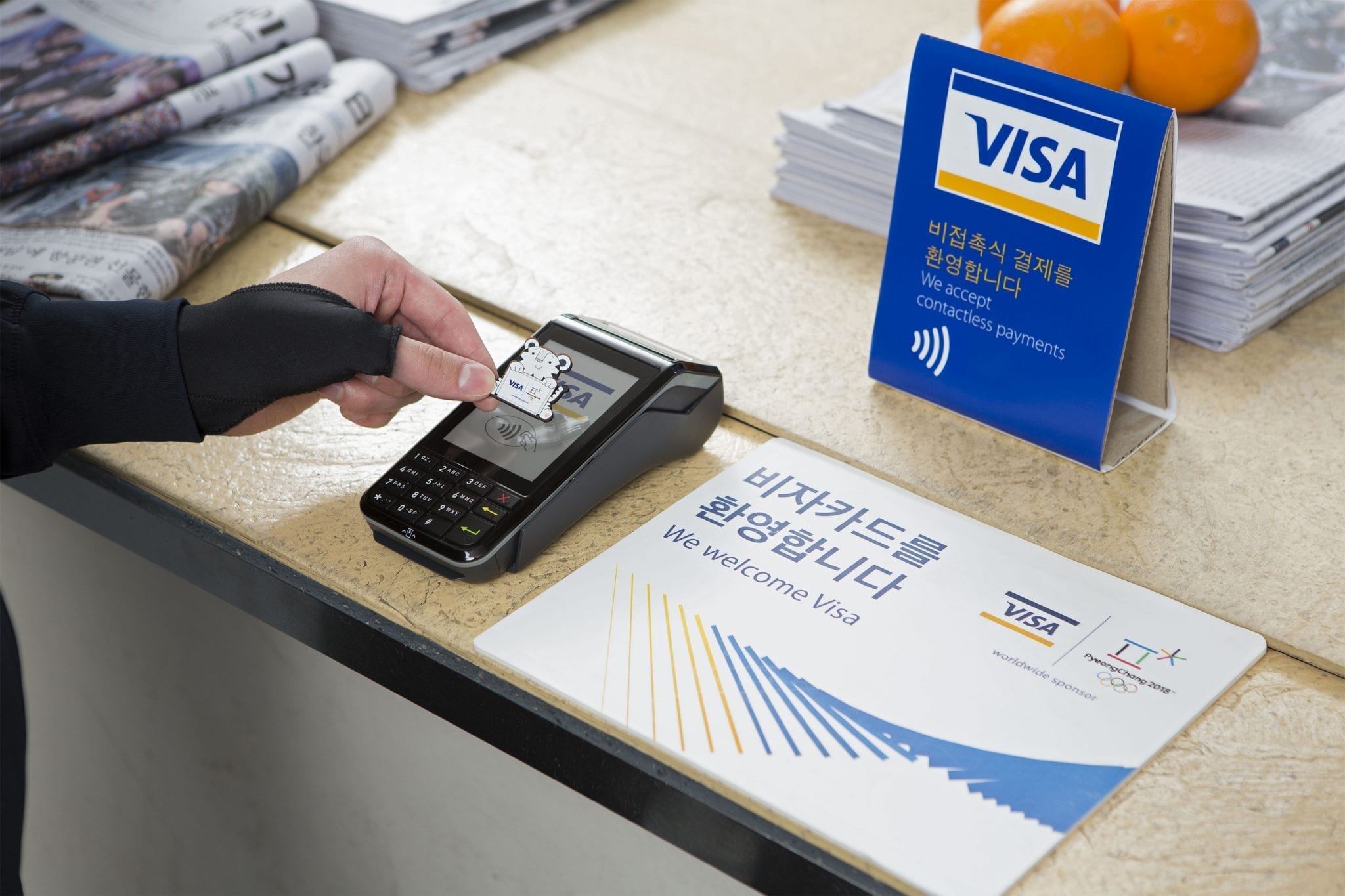
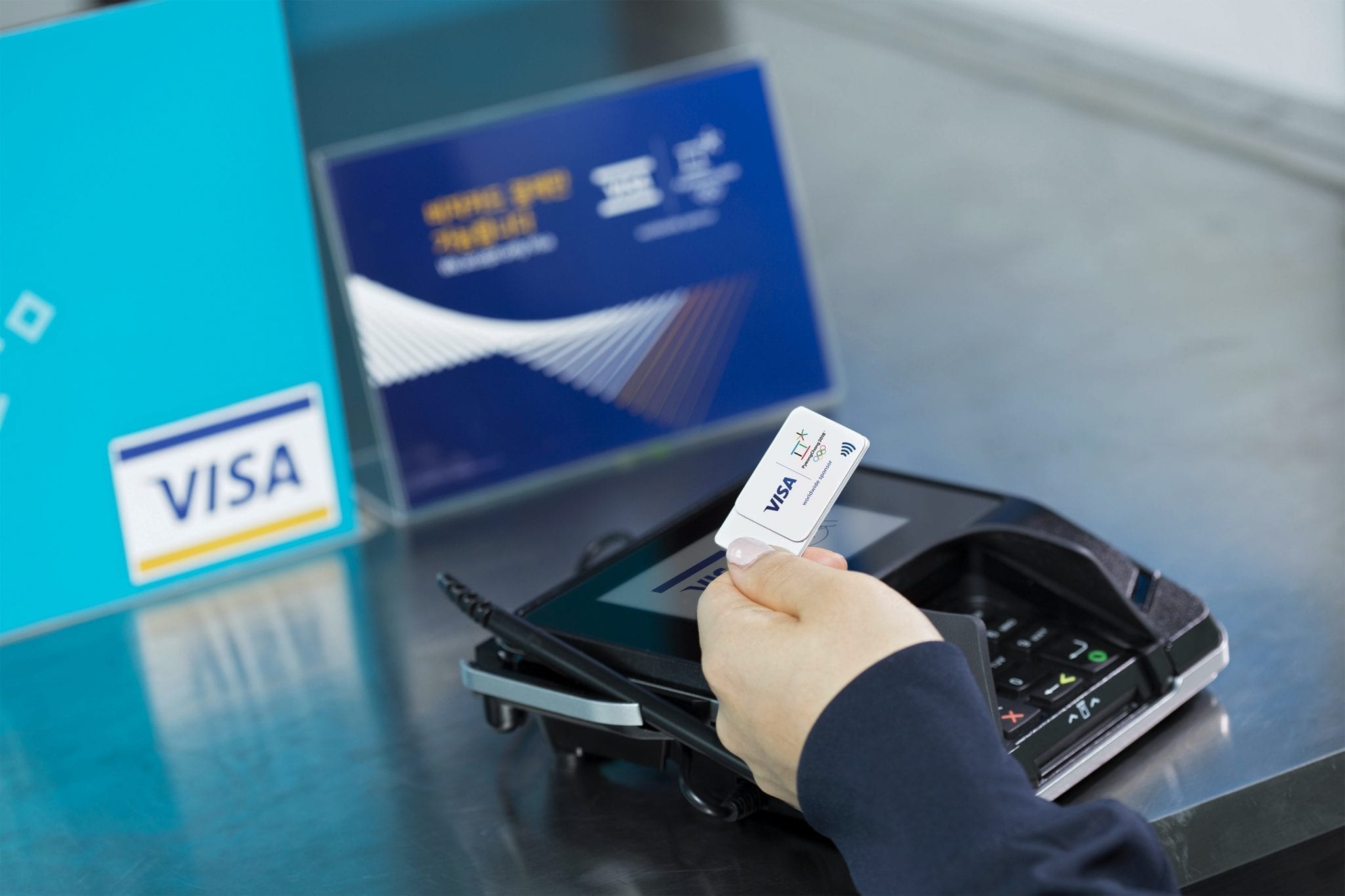
    The company is launching a line of three wearable devices that support contactless payments for fans and athletes attending the 2018 Winter Olympics in PyeongChang, South Korea in February.

    The line, which was produced in partnership with the financial arm of South Korean-based retail giant Lotte Department Store, includes payment-enabled gloves, as well as commemorative stickers and Olympic pins.

    “We are looking forward to transforming the payment experience for everyone who attends the upcoming Games in PyeongChang,” Iain Jamieson, Korea and Mongolia country manager at Visa, says in a Nov. 8 press release. “At Visa, we have been working tirelessly to ensure all of the Olympic venues are equipped with the very latest payment capabilities to provide the best experience possible for all those on-site.”

    With the average temperature in PyeongChang in February averaging around -4 or -5°C, the Visa gloves will allow fans to pay without getting cold hands. The gloves will have a dual interface chip with a contactless antenna built in, and come with prepaid amounts on them (KRW30,000 or KRW50,000, which is equivalent to approximately $35 or $60 CAD).

    Commemorative pins at Olympic games is a long-standing tradition, so Visa has introduced four unique designs that can be used to pay and then saved as a collectible. They will cost KRW5,000 (approximately $6 CAD), plus any amount fans want to load onto them.

    The Visa stickers will also have dual interface chips and antennas embedded in them, and can be stuck to almost anything. There will be eight distinct designs, and available in denominations of KRW30,000 ($35), KRW50,000 ($60), KRW100,000 ($117), and KRW200,000 ($235).

    While security is a concern, Visa said that its wearables “use the same EMV contactless standards, meaning it leverages the EMV crytogram security function to validate the authenticity of the wearables and the transaction.”

    “The wearables are powered by pre-paid products, there is no personal information attached to the wearable – no account number or token are used in the transaction process. If a wearable is stolen or lost, users should contact the Lotte Card call centre,” it adds.

    This is not the first time Visa has introduced wearables for the Olympics. At the 2016 Summer Games in Rio de Janeiro, Brazil, the company was selling payment-enabled rings that worked in a similar way to these new wearables for PyeongChang.

    “Growing up in South Korea, I am proud that my home country is hosting the 2018 Games, and is using this opportunity to introduce Visa payment innovations to the rest of the world,” Seung-Hi Park, a South Korean Olympic speed skating and Team Visa athlete, says in the release. “These payment gloves provide a hassle-free way to pay, even when it’s cold!”

    Available now, the gloves, pins, and stickers are available for purchase at Lotte Card’s customer centres in South Korea and online. During the games, they will also be available at Olympic Superstores in Visa vending machines.

  • Uber CEO says company failed to disclose massive breach in 2016

    Uber CEO says company failed to disclose massive breach in 2016

    Uber Technologies Inc failed to disclose a massive breach last year that exposed the data of some 57 million users of the ride-sharing service, the company’s new chief executive officer said on Tuesday.

    Discovery of the company’s handling of the incident led to the departure of two employees who led Uber’s response to the incident, said Dara Khosrowshahi, who was named CEO in August following the departure of founder Travis Kalanick.

    Khosrowshahi said he had only recently learned of the matter himself.

    The company’s admission that it failed to disclose the breach comes as Uber seeks to recover from a series of crises that culminated in the Kalanick’s ouster in June.

    “None of this should have happened, and I will not make excuses for it,” Khosrowshahi said in a blog post.

    According to the company’s account, two individuals downloaded data from a web-based server at another company that provided Uber with cloud-computing services.

    The data contained names, email addresses and mobile phone numbers of some 57 million Uber users around the world. The hackers also downloaded names and driver’s license numbers of some 600,000 of the company’s U.S. drivers, Khosrowshahi said in a blog post.

    Bloomberg News reported that Uber’s chief security officer Joe Sullivan and a deputy had been ousted from the company this week because of their role in the handling of the incident. The company paid hackers $100,000 to delete the stolen data, according to Bloomberg.

    Though such payoffs are rarely discussed in public, U.S. Federal Bureau of Investigation officials and private security companies have told Reuters in the past year that an increasing number of companies have made payments to criminal hackers who have turned to extortion.

    None have previously come to light that aimed to suppress breaches that would have required public disclosure, such as those involving protected personal information.

    Sullivan did not immediately return messages seeking comment.

    Sullivan, formerly the top security official at Facebook Inc , is a former federal prosecutor and one of the most admired security executives in Silicon Valley.

    Kalanick learned of the breach a month after it took place, in November 2016, as the company was in negotiations with the U.S. Federal Trade Commission over the handling of consumer data, according to Bloomberg.

    Uber representatives did not respond when asked to comment on the Bloomberg report.

    Khosrowshahi said he had hired Matt Olsen, former general counsel of the U.S. National Security Agency, to help him figure out how to best guide and structure the company’s security teams and processes.

    “While I can’t erase the past, I can commit on behalf of every Uber employee that we will learn from our mistakes,” he said. “We are changing the way we do business, putting integrity at the core of every decision we make and working hard to earn the trust of our customers.”

  • Another Alibaba major step in China retail

    Another Alibaba major step in China retail

    This week’s Alibaba-Sun Art deal is a major step in the development of a new retail landscape in China, write Wai-chan Chan and Jacques Penhirin of Oliver Wyman.

    This is not a “real estate play” with Alibaba buying 446 grocery stores, but shows how serious Alibaba are in developing the “new retail” model combining the strengths of online and offline retail.

    The first winners from this alliance are likely to be consumers.  Alibaba will use its investment in Sun Art to improve its price, service levels and the range of products available. In addition, expect to see Alibaba add the ability to deliver a wide range of goods from these stores to consumers’ homes in super quick times. Today delivery time is the new battlefield but performance is still highly dependent on physical networks.

    In the context of retail this alliance is more important than Amazon’s acquisition of Whole Foods in the US.  Sun Art is the largest, and one of the most respected grocery players in China, while Alibaba already has a large grocery business, making it an alliance between two leading players in retail.

    Unlocking fresh

    Despite the huge advances in e-commerce in China, fresh food has been one of the areas that has been most difficult to convert to e-commerce.  Freshness is the key driver for consumers in grocery shopping. According to a survey of 1500 consumers Oliver Wyman conducted in August, consumers purchase fresh products 4.9 times per week on average, and ‘fresh’ is the number one criterion in grocery retailer selection regarding range, product quality, and value for money. However, 81 per cent of respondents do not think e-commerce provides good quality fresh products compared with offline hypermarkets.

    As one of the top two hypermarkets receiving the highest rating from consumers on their fresh offering, Sun Art has strong expertise in operating fresh categories, which will greatly unlock Alibaba’s capabilities.

    Ally or die

    It is becoming clearer that the endgame of two eco-systems being established by Alibaba and JD.com is inevitable in the retail landscape of China, which poses pressure on those ‘unallied’ retailers such as China Resources, Carrefour, WuMart, etc. For retailers, capturing traffic through their own e-commerce platform will become even more challenging. Traditional retailers must understand that they are competing with giants with unlimited abilities to invest and the ambition of integrating online and offline retail. O2O orders already contribute 30 per cent of sales of Alibaba’s Hema Fresh Supermarket – it is indeed transforming the economics of the offline shopping cart, which is challenged by the declining like-for-like growth over the past 12 successive quarters.

    Traditional retailers need to choose their battlefield very quickly, but expect compromise on bargaining power and decision-making in the long term.

    Bad news for second-tier brands

    The two ecosystems are not pure retailers anymore but integrated media and branding platforms. It does not leave Consumer Packaged Goods brands much of a choice but to closely coordinate with Alibaba and JD.com and learn their rules. Niche brands which understand both the ecosystem and consumers will take this opportunity to grow, and top-tier brands will continue to flourish if they learn how to effectively partner with Alibaba or JD, to have both parties learn from each other. By comparison, weak brands will suffer because the traditional retail stores they rely on are losing ground. Furthermore, as O2O develops, the terms and conditions will become more transparent within the two ecosystems. Promotional pressure will likely increase, requiring more diligence on the return on investment.

    Despite the prospects for this alliance, Alibaba and Sun Art need to start thinking how to effectively realise its potential. Operationally, there is huge complexity in integrating the two businesses and overcome barriers of management and culture. After all, it is more difficult to manage shoppers than to manage mobile devices.

  • Jack Ma : the internet rock star

    Jack Ma : the internet rock star

    In 1999, when Alibaba was founded, the first association people would make was “Ali Baba” from the Arabian literature masterpiece “One Thousand and One Nights”. Jack Ma said he chose it for this reason, it was a name able to resonate in people’s mind all over the world.

    In less than 3 years, the name Alibaba populated media all over the world and like the Arabian literary work acquired appeal internationally.

    How Jack Ma build his internet empire can be summarized in 4 pillars.

    1. The rock star billionnaire

    It is hard to find the words to describe the scale of Alibaba Group, the Chinese e-commerce business founded in 1999. It is probably best exemplified by the numbers: Every single day, 200 million people shop on Alibaba’s mobile sites and it sold $550 billion worth of merchandise in its last fiscal year.

    In May 2017, Alibaba Group announced annual revenues had gone up 56 percent to almost $23 billion, and in June investors literally gasped as it upped its growth forecast for 2017 from 45 percent to 49 percent. Its 2014 initial public offering (IPO) was the largest in history, raising $25 billion on the New York stock exchange.

    At the head of it all is Ma Yun, the 53-year-old entrepreneur known as Jack Ma, who started the company with 17 others and $50,000 in his apartment in Hangzhou, a mid-sized city near China’s east coast, known for its green hills and West Lake.

    But Ma’s childhood was frugal: he was born to a family that had very little, sharing an income of just $7 a month between six. He was 6-years-old when President Richard Nixon met Chairman Mao Zedong in 1972, a “geopolitical earthquake” event ,which opened up China to the U.S. and led to it becoming the world power it is today. It was also the start of Ma’s Chinese dream.

    His journey from rags to rock star billionaire – Ma appeared on stage dressed as Michael Jackson at Alibaba’s 18th birthday party in September 2017 in front of an audience of 40,000 – is beset with failure and rejection. Ma said he was a “loser” in his thirties, insists he is not a tech expert and was rejected from a job at KFC and as a hotel waiter and was turned down three times when he applied to university. He also claims to have little tech expertise.

    Ma’s secret? His understanding of the power of the internet in putting buyers and sellers together, and his obsession with helping small companies, via eBay-like marketplace Taobao, bulk supplier 1688.com and Alibaba.com, a business-to-business site for wholesalers. The group also has marketing services and a financial lending affiliate including PayPal-like Alipay, which has 520 million users around the world.

    Other ventures include a 51 percent stake in delivery company Cainiao, which ships an astonishing 55 million packages a day, and Alibaba Pictures, a joint venture with Steven Spielberg’s Amblin Partners.

    2. A small business vision 

    The first time Jack Ma went online was in 1995. He was at a friend’s home in Seattle and he approached the computer gingerly.

    So Ma — then an English teacher — read U.S. business books to learn about GE, Microsoft, IBM and Wal-mart. “I was so interested in English. People read books, my school mates, they read English just for learning English. I read English, because I learned so many interesting American ideas,” Ma told CNBC’s “The Brave Ones.”

    Four years after his first U.S. trip he founded Alibaba, but only three of his coworkers knew anything about technology. “I called myself at that time like a blind man riding on the back of blind tigers. Without knowing anything about technology or computer(s), we start the first company,” Ma said, speaking at an Asia Society event in 2009.

    Ma would travel across China on road shows where 100 or 200 people would turn up to listen to him, in a kind of “mass movement” to talk to business owners about why they needed to get online.

    3. Ma’s Chinese Dream

    Jack Ma was long inspired by Yahoo founder Jerry Yang and the two met when Ma was assigned by his then government employer to show him around Beijing in the 1990s.

    Ma built his vision on the American companies he saw succeeding like Yahoo and eBay, and moved its main operations to Silicon Valley around the year 2000 because he had been convinced that was the best way to build a global business.

    “Because it is so difficult to hire people who know trade in the Silicon Valley, San Francisco. So instead we hire people from New York, Miami, all arriving in San Francisco. After one month or two months, we realized that something (was) wrong …. because those people, they know trade, but they don not know anything about internet. Those people that do not know internet, they do not know anything about trade,” Ma said in an interview.

    That moment was one of the hardest for Ma. He realized as an English teacher you almost never have to say no. But as a CEO, you need to make the tough decisions. And in that case, bringing the company back to China was the tough decision that Jack Ma had to make.

    In 2003, Alibaba decided to launch an eBay-type marketplace: Taobao. To start with, it was a defensive move to slow down the American company’s march to China.

    Taobao’s major difference was that it did not charge sellers or buyers commission, so did not have a revenue model to start with. But Ma was convinced that if you put buyers and sellers together, and the sellers made money, then the site itself would too.

    4. The global dream

    Search for “lobster” on Alibaba.com and more than 1,200 products come up, from a red Canadian variety costing upwards of $1,100 per metric ton that ships live from the U.S., to frozen lobster tails for $195-plus. If a Chinese customer wants fresh cherries, they can get them sent from a company in Maryland for $300-$500 a ton.

    Ma sees a sea change in the way goods are consumed around the world. “I say, past 30 years, the domestic consumption of the United States drives the global economy and supports so many small businesses in America or China to sell things globally. Today, next 30 years, the domestic demand and power of China is going to drive millions and millions of small businesses globally,” he told Faber.

    But Ma is also worried about a world where artificial intelligence and robots take people’s jobs – and businesses must adapt. He is likely to fly for 1,000 hours next year, he said. “This is why I am traveling, talking to all the government and state leaders and telling them move fast. If they do not move fast, there’s going to be trouble. When we see something is coming, we have to prepare now. My belief is that you have to repair the roof while it is still functioning.”

    He warned that while large businesses currently dominate industry, the next century will be more about smaller companies. “So how we can empower the small businesses? You know, the small businesses, not only (can) they only sell things to their village or their own country or even their city. With the power of the internet, we can help them sell across the board,” he added.

    For Alibaba, as for Amazon, the future is not just about e-commerce. Alibaba’s cloud computing division made a modest $968 million in revenue in the year to the end of March 2017, up 121 percent year-on-year, while its digital media and entertainment businesses including YouTube-style site Youku Tudou and event ticketing agency Damai took $2.1 billion, up 271 percent.

    The aim is for people to spend more of their waking moments on the platform, according to Alibaba’s digital and entertainment chair and CEO Yu Youngfu. “To put it simply, our mission is to allow those who have fun shopping at Alibaba to truly live at Alibaba. So in addition to shopping, we would like them to spend more time watching videos with us, getting information from us and listening to music with us, to come and game with us, among many other things,” he said at an investor day in June 2017.

    Alibaba also announced a partnership with Steven Spielberg’s movie production company Amblin Partners in October 2016. Alibaba Pictures is 49.5 percent owned by Alibaba Group, and will be creating its own content as well as distributing it in China.

    Other types of business may follow, such as a QVC-style shopping site that might combine with a Netflix-type offering.

    Alibaba sees its scope far more broadly than, Amazon and eBay would. They see their scope as more like the combination of of Amazon, Facebook, Google and Netflix.

  • Some words from Jack Ma for successful start up business

    Some words from Jack Ma for successful start up business

    Jack Ma has some blunt advice to startups: “If it’s hot, forget it.”

    “By that time everyone is doing it. It’s too late,” Ma told attendees of the Jumpstarter 2017 finale at the Hong Kong Exhibition and Convention Centre last night.

    Ma, who shared the stage with Hong Kong chief executive Carrie Lam, was on hand to present US$1 million in funding to winning startups from medical, agricultural and energy sectors.

    Ma encouraged startups to pursue their dreams.

    “The advice is first you should be optimistic – a great entrepreneur is optimistic for the future. And you have to answer what problem will you solve. What way can you solve it which is different? Why are you better than anyone else?

    “The second is that you have to find a group of people who can work together. Those people who have the same ambition. Those people coming to join you not just because it is a job, but because they believe in you and they believe in the mission.

    “And the third is: What price are you going to pay for it. You don’t ask “What can I get?” You ask “What can I give?”. If you have a great idea, you may have to wait 10 years. If you think I will win this in three years, prepare for five years.”

    Ma said when he conceived Alibaba 18 years ago and went out to raise money from venture capitalists, he was rejected by all of them.

    “The first money I got from a capital fund was $50,000. I thought this would last 10 months. We even counted every cent we spent. But it lasted only four months. We were almost bankrupt.”

    He also warned startup founders to be patient.

    “Today if you are only a tractor, don’t try to put a Boeing 747 engine inside. It will destroy you. You should find the people who suit the company. I have hired a lot of vice presidents from big companies – they almost destroyed my company. I only had $5 million and a guy came in with a marketing plan $12 million. I said: How can you have $12 million? He said: “I have never made a plan below $20 million.

    “Find the right person,” said Ma.

    Tax breaks

    He urged governments if they cannot fund startups, why not reduce the tax to them.

    “I’m doing that,” interjected Lam, who has met with Ma four times since her election in July and enjoyed wide-ranging discussions on technology and business.

    Both people said they were “very optimistic” about Hong Kong’s future as a base for startups.

    Ma said that although the city is not a large market, Alibaba is interested in the talent that the city offers. Its capital and technology also appealed.

    “The reason why Hong Kong has been so successful in the past 50 years is because Hong Kong is very open-minded, and accommodates all kinds of cultures. [Hong Kong] should also welcome people from all over the world,” he said.

    “Young people in Hong Kong, don’t focus your eyes only on Hong Kong. America, Europe, anywhere there is opportunity, go there and build something and bring ideas back.”

    Lam said Hong Kong needed to review immigration policies to encourage entrepreneurs to come to the city.

    “We need more time to nurture local talent and [in the meantime] we need to bring in outside talent. Hong Kong remains very attractive to a lot of expatriates and people from the mainland,” she said.

  • More online super sales for Asia online market

    More online super sales for Asia online market

    While the US formulated online super sales, such as this week’s Black Friday, Asia has adopted the concept with a vengeance.

    In fact, China has increasingly been exporting Alibaba’s Singles Day (11.11) event, which this month racked up a massive US$35 billion in sales. November is the favoured month for this new consumer mania, offering the Singles Day, Black Friday and Cyber Monday sales.

    Both Black Friday and Cyber Monday themselves have been catching on in the Asia Pacific, growing by 29 per cent last year, according to global payments company WorldPay.

    It says that despite forking out $17.8 billion on Singles Day last year, Chinese consumers still went hunting Black Friday bargains, with overall spending on the day up by 37 per cent from the previous year. In Hong Kong, the rate of growth was 32 per cent, and in Singapore 21 per cent.

    While retailers are among the biggest Black Friday winners, new WorldPay data suggests this year could also be a great opportunity for savvy APAC businesses in the travel and digital sectors. In Hong Kong, spending with travel and airlines saw a 30 per cent surge last year, with Singapore figures up 20 per cent as travellers jumped online to search for flight and hotel deals.

    Not just retailers

    Shoppers are also increasingly seeking out bargains for digital content such as subscriptions, e-books and on-demand box sets. Black Friday spending in this sector last year grew 62 per cent in Hong Kong and 14 per cent in Singapore.

    Not just retailers can benefit from Black Friday, but also a range of e-commerce businesses, says WorldPay Asia Pacific GM Phil Pomford.

    “While Black Friday and Cyber Monday have typically been the realm of retailers, a more diverse range of businesses are now recognising they can also take can take advantage of this special online opportunity.

    Shoppers during this time are highly engaged, proactive and looking for a wide range of online deals, so the potential to reach new customers and strengthen brand loyalty is huge, regardless of sector.

    “E-commerce businesses should set themselves up for success by ensuring their websites are prepared for heavy traffic, and offer simple payment options to drive shopping-cart conversions. They might also consider following the example of Amazon and kickstart Black Friday deals a week early.”

    Black Friday online sales surpassed $3 billion last year and are expected to rise this week, says Adobe Digital Insights, as buyers seek to avoid long queues and lost hours in retail stores.

    In Southeast Asia, Google searches for “Black Friday” have surged over the past five years, and 12 months ago major offline/online retailers like Robinsons, Sephora and Zalora offered generous discounts for the event.

    “Many industries rely on this event to make up a large portion of their fourth-quarter sales, in particular toys and games,” says Euromonitor International senior toys and games analyst Matthew Hudak.

    ‘Sure to jump on’

    Digital campaign company RTB House says Black Friday last year attracted 106 per cent more people to online stores, with 204 per cent more transactions.

    “We anticipate conversion rates surging this time,” says RTB House Southeast Asia country director Chandra Kuncara. “Customers who missed out on Singles Day will be sure to jump on this event.”

    He says personalised retargeting is an important selling tool during Black Friday. With AI technology and deep-learning algorithms, marketers can highlight most-desired products for each individual customer.

    More purchases mean more packages being shipped, and international courier service FedEx is again expecting to handle a record number of packages over the peak holiday shopping period, which starts on Monday and runs to December 24. This year it is expecting 380 to 400 million packages.

    The growth of cross-border e-commerce is turning the peak shipping season into a global phenomenon, says FedEx. For instance, 37 per cent of Singles Day purchases in China last year were from international brands or merchants. Cross-border shopping is expected to make up 20 per cent of e-commerce sales by 2022, led by Asia Pacific.

    “While an online purchase takes just a few clicks, logistics providers are working hard behind the scenes powering every moment,” says FedEx Express AsiaPacific president Karen Reddington. “Our business is the backbone of the e-commerce market.”

    Meanwhile, while shoppers scramble for Black Friday bargains this week, outdoor retailer REI is closing its 154 US stores for the third consecutive year, offering its nearly 12,000 employees a paid holiday. It is truly going against the tide by also putting a hold on online orders.

  • Vietnam’s top taxi firm wheels out motorbike service in the race against online taxi

    Vietnam’s top taxi firm wheels out motorbike service in the race against online taxi

    Major Vietnamese taxi company Mai Linh on Monday launched its own motorbike hailing app in its latest attempt to claw back customers from Uber and Grab, the ride-hailing firms from the U.S. and Malaysia that have been outshining local cab firms.

    The app, Taxi Mai Linh, is now available in Ho Chi Minh City, Hanoi and Da Nang, and has around 5,500 drivers.

    Ho Huy, Mai Linh’s chairman, said what makes his company’s new service different from Uber and Grab is that the fare is kept constant at VND11,000 (48 cents) for the first two kilometers and then drops to VND3,800 per kilometer from the third kilometer onwards.

    Uber and Grab charge their passengers similar rates but raise fares during rush hours and bad weather.

    He also said the company will run a campaign to encourage traditional xe om drivers to join its team in an effort to avoid fights between them and tech-savvy drivers, something that both Grab and Uber have experienced.

    So far, the strategy seems to be working, and many Uber and Grab drivers have shown up at Mai Linh’s door to switch sides.

    “I applied because I heard Mai Linh is offering a better deal for its drivers,” said Cuong, who has worked as a GrabBike driver for over a year.

    “My income has fallen because Grab now deducts up to 20 percent of the fares that drivers receive from passengers instead of 15 percent as before, and more and more people are working as GrabBike drivers, which means more competition,” he said.

    Uber takes a cut of 25 percent from its drivers.

    Mai Linh’s drivers will not have to hand over any of their earnings for the first two months, after which time the company will take a 15 percent share.

    Mai Linh reported that it lost 6,000 employees in the first half of this year, or 20 percent of its total drivers.

    Its business results did not read much better during the same period, with revenue falling more than 5 percent on-year to VND1.72 trillion ($75.8 million).

    In all, Mai Linh suffered a loss of VND47.5 billion from its taxi business, twice as much as last year, the company said.

    Its rival Vinasun, the biggest taxi firm in Vietnam, lost 10,000 employees in the first nine month, and its  revenue in that period only reached 58 percent of the company’s annual target.

    They have both pointed the finger at Uber and Grab, saying the two foreign firms enjoy preferential policies as they are classed as transport software providers which, unlike traditional taxis, are not accountable for passenger and traffic safety.

    In its latest attempt to battle Uber and Grab, Vinasun has rolled out a hailing servicevia Facebook Messenger.

  • Retailers embrace e-commerce as customers shop more online

    Retailers embrace e-commerce as customers shop more online

    Helping pave the way to business success in e-commerce is the Electronic Transactions Development Agency (Public Organisation), or ETDA.

    The agency, an arm of the Ministry of Digital Economy of Society, conducts annual surveys profiling the actions of Internet users in Thailand. This year’s survey found that the top five most popular activities are: 1) communication through social network sites such as Facebook, Line, etc., 2) searching for information, 3) email correspondence, 4) watching TV or listening to online radio, and 5) online shopping.

    “It is a delight to say that online shopping was the fifth most popular activity for this year, while last year this activity was in the eighth ranking,” said the agency’s executive director, Surangkana Wayuparb.

    Surangkana said the Internet Market Report provided by the Office of National Broadcasting and Telecommunications Commission (NBTC), revealed that about 43.87 million people in Thailand accessed the Internet last year.

    “With compound annual growth rate at 20.2 per cent from 2000 to 2016, we expect that in the next five years the number of Internet users in Thailand will reach 46.48 million by 2021,” she said.

    Surangkana said that the value of e-commerce in Thailand is projected to increase by not less than 10 per cent per annum over the next five years. Her agency is working to maintain that momentum.

    “Last year, we at ETDA, in cooperation with the Office of SMEs Promotion (OSMEP), launched the ‘SMEs Go Online’ campaign to encourage small and medium entrepreneurs to rely on e-commerce activity as another tool to boost sales,” said Surangkana.

    An e-directory would be established this year, she added, with individual entrepreneurs contributing to verify business details and build the confidence of international business contacts.

    She said that Thailand is seen as a country ready to participate in e-commerce after changing its business operations to support Internet-related activities. Already, most entrepreneurs are increasingly using social media to support their businesses, including Facebook and Line.

    Surangkana said that private companies in Thailand are facing up to the challenge of orienting themselves to the government’s Thailand 4.0 initiative, and finding commercial benefit from Internet use.

    Surangkana said both retailers and consumers are increasingly attracted to e-commerce, to the tune of Bt2.5 trillion in transactions in 2016. Leading the pack in value is retail e-commerce (B2C), where Thailand is out front within the Asean block. Buyers are increasingly embracing this new way of shopping, raising expectations that the Thai e-commerce market will grow to Bt2.8 trillion this year, up 9.86 per cent.

    “This year, we aim to support Thai e-commerce entrepreneurs to move into the bigger marketplaces,” said Surangkana. “Business matching activity will be organised to help the strong Thai e-commerce entrepreneurs meet with major international buyers such as importers from China and Hong Kong who need quality products and services from Thailand.”

    As well, her agency will help create networks, connecting e-commerce beginners to those with knowledge to share. “Those who are thinking of starting an e-commerce business will be able to get started properly under the guideline and guidance of e-commerce gurus,” said Surangkana.

    ETDA will host “Thailand e-Commerce Week 2017” between November 24 and 26 at the Plenary Hall 1-3, Queen Sirikit National Convention Centre. The forum will be a platform for all kinds of entrepreneurs to learn how to create business opportunities and potential success through developing their e-commerce. The week’s opening ceremony will be presided over by Deputy Prime Minister Air Chief Marshal Prajin Juntong, who will also speak on the topic of “How could the national strategy support e-commerce?”

    Prajin will also chair a “people’s choice” awards ceremony honouring e-commerce entrepreneurs.

    Speakers from leading Thai and foreign companies, including Central Group and Thai Beverage, will share their e-commerce experiences with participants.

  • Vietnam approves Alibaba’s online payment platform

    Vietnam approves Alibaba’s online payment platform

    Chinese e-commerce conglomerate Alibaba has signed an agreement with the National Payment Corporation of Vietnam (NAPAS) that will allow Chinese tourists to use its online payment platform in Vietnam.

    The agreement with Ant Financial, Alibaba’s financial services arm, will enable Chinese travelers to use the Alipay platform throughout Vietnam via NAPAS member banks and its intermediary payment service networks, according to business technology websites.

    Under the agreement, people with cards issued by NAPAS member banks in Vietnam will be able to use Alipay to make purchases on Alibaba’s websites, such as AliExpress and Taobao.

    NAPAS is the only intermediary payment service provider licensed by the central bank to provide electronic payment services in Vietnam. The corporation operates an inter-bank connection system with tens of thousands of ATMs run by 43 banks, including Vietnam’s top lenders Vietcombank, Vietinbank and BIDV.

    “The collaboration with Alipay is part of our strategy to expand international cooperation and to explore new payment solutions,” NASPAS chairwoman Nguyen Tu Anh said.

    Official figures showed that more than 3.2 million Chinese tourists visited Vietnam in the first 10 months this year, up 45.6 percent from a year ago and accounting for nearly a third of foreign arrivals. Alipay, which has more than 520 million daily users globally, has been expanding its global presence along with China’s rising outbound travel. A Bloomberg report last December, citing Credit Suisse figures, said a 30 percent increase in spending by Chinese tourists would boost Vietnam’s gross domestic product by nearly 1 percentage point.

    The payment service entered the Australian market late last year under a similar agreement with the Commonwealth Bank of Australia.

    News of the deal with NAPAS comes a week after Alibaba founder Jack Ma visited Hanoi and spoke at a prominent e-payment forum co-hosted by NAPAS.

    At a meeting with Vietnamese Prime Minister Nguyen Xuan Phuc, Ma said he would consider establishing a store for Vietnam on Alibaba’s e-commerce app.

  • Facebook launches Creator app for influencers

    Facebook launches Creator app for influencers

    Facebook wants to turn mindless, passive video consumption into “time well spent,” and now it is giving social media stars a powerful tool to foster communities around their content.

    On 17 November 2017 Facebook launches Facebook Creator, offering influencers Live Creative Kit for adding intros and outros to broadcasts, a unified inbox of Facebook and Instagram comments plus Messenger chats, cross-posting to Twitter and expansive analytics.

    Facebook promised the Creator app back in June at VidCon and today it launches globally on iOS with Android planned for the coming months. It is actually a rebrand and update of the 2014 Facebook Mentions app that was only available to verified public figures and Pages, but now is open to everyone. Weirdly, it still appears as “Mentions” in the App Store for now.

    Any individual profile or Page can download Creator for access to the enhanced fan engagement tools. Facebook is also launching a Facebook for Creators website with best practices for growing fan bases, examples of what other stars are doing and access to answers of frequently asked questions.

    “It is a big priority for us to bring people closer together around meaningful content and the people who are meaningful to them,” Facebook’s VP of video product Fidji Simo tells me. “Creators are right at the intersection of everything we think is pretty unique about Facebook.”

    And after CEO Mark Zuckerberg declared on this month’s earnings call that “time well spent” via video is Facebook’s new objective, the Creator app could help it make Facebook video a lot less isolating than watching TV.

    “The idea was there to give them a one-stop-shop for all the functionality to manage their presence on the go,” Simo explains about the Creator app, which breaks down into four parts.

    Live Creative Kit

    This bundle of tools lets users add intros, outros and custom emoji reactions to their live broadcasts. Creators go on Facebook’s site, upload an intro like a theme song or welcome, and an outro like a call to follow them across social media.

    Those can then be enabled in the Creator app so they play at the start and end of the broadcast. Simo notes that “[Creators] were saying Live is cool because it’s raw and authentic, but they’d like to be able to introduce every time what their show is about or what the theme is about.”

    Graph frames let makers add a pretty border to their videos for a more immersive feel. And custom reactions let creators replace one of the six default “haha,” “‘angry” or “wow” alternatives to the standard “Like” with a graphic of their choice.

    That could tie in with the theme of their broadcast or personality. For example, Simo says feel-good video star Markian could add an especially toothy smile reaction to entertain his fan club group on Facebook, the #SmileSquad.

    These features push Facebook Live well beyond the capabilities of Twitter’s Periscope, and could make it more viable than YouTube Live.

    Unified inbox & Unified Sharing

    Rather than having to constantly jump between Facebook, Instagram and Messenger, Facebook is putting all of a creator’s comments and messages in a single inbox with Creator. That could make it much more streamlined to actually hold a conversation with fans or respond to comments instead of just being an old-school one-way broadcaster. Same will work for the dissemination of the content, which could be automatically shared on different platforms, Twitter included.

    For Creators trying to moderate their comments reels, combining Instagram and Facebook could reduce the time it takes to scrub abusive trolls. And the more ravenous the community and clean the comments, the more interested brands will be to advertise on Facebook video and sponsor the stars.

    One thing sorely missing from Facebook Creator is new ways for influencers to monetize. There’s no subscriptions or tipping, and they cannot even inject revenue-sharing ad breaks into their videos.

  • Grana Group bulks up with venture debt

    Grana Group bulks up with venture debt

    After raising US$16 million in venture funding from backers including Alibaba, online apparel brand Grana Group has boosted its coffers with an undisclosed amount in venture debt.

    The three-year-old online fashion startup will use the funds, from Hong Kong asset manager STI Financial Group, to improve its cash-flow management and advance its use of artificial intelligence for customer engagement. Using venture debt means the company can grow its business without having to dilute its share capital while working toward series-B funding at the end of next year, reports Deal Street Asia.

    Based in Hong Kong, the startup was founded by Australian entrepreneur Luke Grana. Its earlier funding included $6 million in seed money and $10 million as a series-A round.

    The company has an 18,000sqft (1700sqm) global distribution centre that ships to 67 markets. It has also opened 15 pop-up showroom-experience centres across Hong Kong, Singapore, the US and Australia.

  • Alibaba, Auchan, Sun Art partnership goal in China market

    Alibaba, Auchan, Sun Art partnership goal in China market

    A new Alibaba, Auchan, Sun Art partnership will further strengthen Alibaba’s efforts to integrate online and offline, say analysts.

    China’s Alibaba Group Holding, France’s Auchan Retail and Taiwan’s Ruentex Group have formed a strategic alliance to bring together their online and offline expertise to explore opportunities in China’s food-retail sector.

    As part of the deal, Alibaba is investing HK$22.4 billion (US$2.8 billion) to obtain an aggregate direct and indirect stake of 36.16 per cent in Chinese food retailer Sun Art Retail Group by acquiring shares from Ruentex.

    Auchan Retail is also increasing its stake in Sun Art, with the transaction giving it, Alibaba and Ruentex about 36.18, 36.16 and 4.67 per cent economic interest respectively in the multi-format offline food retailer.

    Sun Art had a total gross floor area of about 12 million sqm in China at June 30. It has 446 hypermarkets as large as 17,000sqm across China under the Auchan and RT-Mart banners. It also has superstores and unmanned stores under the Auchan Minute brand.

    Alibaba says the alliance reflects its “new retail” concept, while Auchan Retail says it aligns with its “Auchan changes lives” vision.

    Alibaba Group CEO Daniel Zhang says the move aims to redefine traditional retail through digital transformation. “Physical stores serve an indispensable role in the consumer journey, and should be enhanced through data-driven technology and personalised services in the digital economy.”

    ‘Positive impact’

    “Bringing together the leaders of instore retail and of online retail will allow us to offer hundreds of millions of Chinese consumers a fully integrated, world-class shopping experience,” says CEO Wilhelm Hubner of Auchan Retail, which has a presence in 17 countries with 3715 points of sale.

    “Consumer demands have changed tremendously with the rapid growth of the mobile internet, and Sun Art is also trying to move from offline to online,” says Ruentex Group vice-chairman Peter Huang.

    “I think this deal will have a positive impact for all involved,” says OC&C Strategy Consultants associate partner Veronica Wang.

    “It will further strengthen Alibaba’s efforts to integrate online and offline,” says Wang. “Alibaba has been quite aggressive in investing offline in the past two to three years with its continuous investments in the likes of retailer Suning and mall company Intime, as well as its own launch of Hema supermarkets.”

    She says the alliance could help Sun Art build digital capabilities, with the company trying to tap into e-commerce and build an O2O business since 2014, but with limited success. “Feiniu.com was the first attempt, which is still losing money after three years, and Sun Art launched cashier-free self-service convenience stores this year which are still in the stage of trial and error.”

    OC&C associate partner Steven Kwok says the move is no surprise “especially when retailers in general are finding that grocery retailing, unlike other categories thus far, has encountered greater barriers to the shift online”.

    He says Sun Art’s reach across China not only gives Alibaba an enhanced distribution network, but also serves as a testing ground for digital initiatives.