Category: E-Tailing

Retail News Asia is committed to providing both local and global retailers with the latest E-Commerce & Etail news throughout the Asian market. This on a daily base.

  • Facebook’s Mark Zuckerberg to visit Vietnam

    Facebook’s Mark Zuckerberg to visit Vietnam

    Founder and CEO of Facebook Mark Zuckerberg is expected to arrive in Vietnam on Saturday.

    Zuckerberg is scheduled to visit world heritage site Ha Long Bay in northern Vietnam and take a seaplane tour around the bay on Saturday morning.

    This will be his second visit to Vietnam after his first trip in 2011, when he toured the country with his then-girlfriend-now-wife Priscilla Chan for a Christmas vacation.

    On this visit, the world’s fifth richest person according to Forbes magazine, will be accompanied by colleagues.

    In March, Vu Tien Loc, chairman of the Vietnam Chamber of Commerce and Industry (VCCI), said Vietnam had invited Facebook leaders, including Zuckerberg, to attend the Asia Pacific Economic Cooperation (APEC) Summit that concludes Saturday in the central city of Da Nang.

    “We want Facebook leaders to join hands with Vietnam to support startups, and we hope Zuckerberg will accept the invitation,” he said.

    Facebook COO Sheryl Sandberg has been in Da Nang since Wednesday and delivered a speech at the APEC CEO Summit on Friday morning.

    She is scheduled to appear on a talk show to discuss equality in the workplace on Sunday in Hanoi.

    Vietnam is in the top 10 countries for Facebook users, and Google’s YouTube is also a popular platform.

    Last week, a draft law on internet security that would require foreign companies such as Google and Facebook to have offices and servers in Vietnam was met with strong opposition from experts and industry insiders.

    The VCCI said it went against commitments that Vietnam signed up to when it joined the World Trade Organization (WTO) and the EU-Vietnam Free Trade Agreement (EVFTA), as well as the Trans-Pacific Partnership Agreement (TPP).

    Insiders said if the bill is passed, Google, Facebook, Skype and Viber would have to invest in giant servers in Vietnam to legally operate in the country.

    In that case, local internet providers said there is a high possibility that they would drop out of the Vietnamese market.

  • Visa Obtains Domestic Network Licence for Debit Transactions in Thailand

    Visa Obtains Domestic Network Licence for Debit Transactions in Thailand

    Visa, the world’s leader in digital payments, has obtained a domestic network licence from the Bank of Thailand. Through a partnership with National Interbank Transaction Management and Exchange (National ITMX), Visa will provide banks and merchants with a comprehensive suite of Visa’s debit products and resources to grow digital payments for the people of Thailand.

    A Visa debit card provides consumers with fast, simple and secure access to the funds in their bank account and can be used to make purchases wherever Visa is accepted online and at more than 40 million merchant locations around the world.

    Suripong Tantiyanon, Country Manager, Visa Thailand said: “As the demand for faster, more convenient and secure electronic payments grows in Thailand, we see a tremendous need for a solution such as Visa Debit. The world of commerce continues to evolve at a phenomenal pace. Visa Debit can be used as a physical card or as the underlying digital account for QR Code or mobile payments, while also enabling cardholders to receive rewards and other benefits.”

    This licence allows Visa to fully participate in Thailand’s domestic debit market and support the government’s National ePayment Plan.

    “By obtaining a domestic network licence, Visa can continue to drive innovation and expand access to electronic payments in Thailand creating a more financially inclusive ecosystem for all. Visa Debit will be a key tool in the adoption of electronic payments in the country, helping Thais to become more financially confident,” said Mr. Suripong.

    For decades, Visa, together with its financial institution and merchant partners, has consistently invested in growing electronic payments in Thailand. This has included growing card issuance and acceptance, educating consumers and merchants on the benefits of electronic payments, and introducing new payment innovations.

    Visa operates one of the world’s largest retail electronic payments networks, VisaNet, processing more than US$9.5 trillion worth of transaction a year, with built-in fraud protection for consumers and assured payment for merchants. Thailand will benefit from Visa’s technological expertise and more than half a century of knowledge in growing an open and sustainable payments ecosystem.Based on payments volume, total volume, number of transactions and number of cards in circulation.

  • Razer partners with Worldpay for seamless online payments

    Razer partners with Worldpay for seamless online payments

    Worldpay, a leader in global payments has announced that it has been selected by Razer, the leading global lifestyle brand for gamers, as one of its key online payments provider for the virtual credits service Razer zGold.
    Razer’s zGold service allows gamers to purchase virtual credits in exchange for digital content such as games and in-game items from different content providers.

    Worldpay was chosen by Razer as it offers global coverage and a comprehensive suite of payment services. The company will also provide deep analytics to help Razer better understand its customers’ online behaviour, as well as extensive customer support. Since implementing Worldpay’s suite of payment solutions and a revamped checkout, Razer has seen a rapid take-up of zGold and retention rates. Razer is now also able to accept additional payment options including Alipay.

    Ian Lim, Director of Software at Razer said: “The Razer zGold service is set to transform the virtual credits landscape and we chose Worldpay for its ability to help us scale quickly cross multiple regions. We have seen increased user take-up and retention rates since we began working with the Worldpay team and there is much growth ahead for both companies.”

    Stuart Thornton, VP Business Development APAC, Global eCom, Worldpay said: “We are entering a hugely exciting period for Razer, and are delighted to be supporting its vision to create a first-class experience for gamers. Whether purchasing the latest hardware in the online store, or buying new games and digital content with Razer zGold, gamers can expect a seamless online experience.”

  • Suning Holdings next move is smart retailing

    Suning Holdings next move is smart retailing

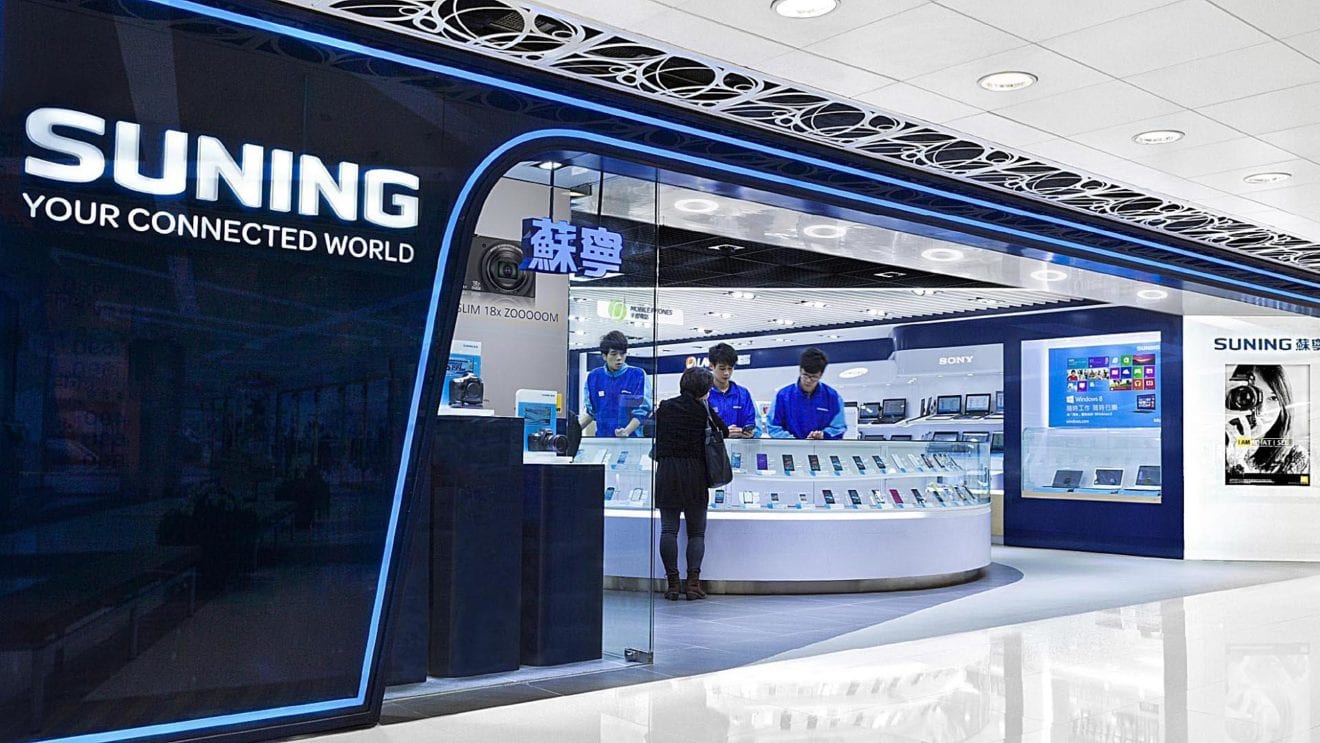
    China’s commercial conglomerate Suning Holdings Group is partnering with Hon Hai Technology Group in an “extensive retail co-operation” worth at least RMB50 billion (US$8 billion).

    Suning has also signed an RMB20 billion investment agreement with Evergrande Real Estate Group. Both moves are aimed at online/offline integration and expanding Suning’s smart-retail strategy.

    The property developer will help Suning develop its brick-and-mortar stores for personalised shopping experiences, and also help with its planned expansion of 5000 stores in the short term.

    The two companies will also explore smart home design, property management and other priorities.

    With Hon Hai, said to be the world’s largest contract electronics manufacturer, the co-operation focuses on the sharing of big-data analytics to optimise strategies and products for customised services. Hon Hai chairman Terry Gou says cross-industry co-operation should start from manufacturing to better satisfy customers’ needs.

    “By partnering with Evergrande, Suning’s advantages in innovative O2O physical stores will be strengthened more efficiently, and by working with Hon Hai we can create curated experiences through an open business model,” says Suning chairman Zhang Jindong.

    Suning ventured into e-commerce in 2010. By the third quarter this year it had 3748 stores in China and overseas. Revenue from its stores with online connections jumped by 35.27 per cent in the first three-quarters year on year. In the same period, its total transaction volume online reached RMB81 billion, a year-on-year rise of 55.64 per cent.

  • China online spending is already 50 per cent of retail sales

    China online spending is already 50 per cent of retail sales

    China online spending is set to account for almost 50 per cent of the country’s total retail market this year.

    According to fresh data from Mintel, this year’s figure will be 45.7 per cent of “total per capita retail spend”. In many categories, already more is spent on goods online than in physical stores in the world’s largest digital economy.

    “China is experiencing a fundamental shift in the way consumers shop, and in how the shopping experience fits into the wider environment of customer service, delivered both online and in-store,” said Matthew Crabbe, research director, APAC, with Mintel.

    The research shows China’s online retail market has reached a critical mass. Business-to-consumer (B2C) online retail is expected to reach more than 60 per cent of total e-commerce sales this year, with mobile online retail expected to make up more than 80 per cent of the B2C retail category.

    However, while Mintel estimates per capita online retail spend will reach 45.7 per cent of total per capita retail spend by the end of this year it predicts that share will hold steady between until the end of 2019.

    Crabbe said there are several reasons for the projected peak.

    “One issue is that consumers are increasingly buying experiences and services online, rather than products. The other issue is that consumers are already adapting to ‘new retail’; they are embracing greater integration between online and in-store shopping. This will mean much tougher competition between retailers. It will also likely mean more pressure for further consolidation in the market, resulting in more mergers, acquisitions and strategic partnerships,” he said.

    China’s ‘new retail’ experience has consumers purchasing different products from different channels. Mintel research shows that 72 per cent of in-home food shoppers prefer to shop in-store, compared with 60 per cent of consumers who prefer to shop online for toys, games, clothing, and accessories. Apart from alcoholic drinks (61 per cent shop in-store) and pharmaceuticals and healthcare products (57 per cent shop in-store), in all other sectors the combined total of those who shop online via a mobile device or lap/desktop is greater than the proportion who shop in-store.

    While in-store grocery shopping still dominates, 66 per cent of consumers buy in-home food and drinks in-store, the average number of consumers who shop online (mobile or desk/laptop) for in-home food and drinks grew three percentage points since 2016, with 49 per cent buying in-home food online using a mobile device.

    “The growth in mobile online shopping across all sectors this year illustrates how mobile is driving the convergence of online and offline shopping into ‘new retail’,” said Crabbe. “Meanwhile, online shopping penetration is high across most sectors. There may be room to expand fresh and luxury food product sales online, thus increasing the number of high-income consumers who shop online, but the room for expansion of share of pocket among China’s consumers is running out.”

    Arise the ‘grocernauts’

    In fact, urban Chinese consumers are keen to get the immediate experience that only shopping in-store can offer. Mintel research reveals that 62 per cent of urban Chinese consumers say the ability to try, see, and experience products in-person before buying encourages them to shop in-store; the same proportion (62 per cent) shop in-store to ensure the freshness of produce, and 55 per cent say in-store shopping means they can get what they want faster.

    “Supermarkets and hypermarkets are moving away from just selling in-home foods towards  providing catering services (so called ‘groceraunts’), as well as offering online food ordering and in-store pick up services. And convenience stores are morphing into unmanned, checkout-free, cashless, elaborate vending machines. We’ve also seen shopping malls evolve away from retail spots into theme park-like leisure developments. This is all leading to a very diverse potential retail environment that includes retail as part of a wider range of consumer services. Store functions will increasingly incorporate online-enabled, front-of-store consumer touch points for selling goods and providing other customer services – even ones not related to the retailer’s core business,” Crabbe added.

    Probably the main driver of online retail’s success, 65 per cent of urban Chinese consumers say they find products cheaper online, while 63 per cent say that online offers more choice. More than half (52 per cent) of consumers say they find what they were looking for faster when shopping online.

    “Despite the instant sensual and entertainment experiences that consumers enjoy when shopping in-store, low cost, high convenience and more choices are the key ingredients that drive consumers to do more of their shopping online. As online retail platforms invest in and collaborate with physical retailers, who in turn look to increase their online exposure, these new business models will create the ideal ‘new retail’ experience for shoppers. However, companies and brands will be challenged to find their own, unique combination of online and in-store features in order to create their own bespoke experience,” concluded Crabbe.

    Total B2C and consumer-to-consumer (C2C) online retail sales in China are expected to reach RMB 6.4 trillion by year-end, having grown at a compound annual growth rate of 37.9 per cent since 2012 – that represents nearly fivefold value growth in just five years.

  • India is next plan for PayPal

    India is next plan for PayPal

    Global technology platform and digital payments company PayPal Holdings has launched in India.

    This enables Indian consumers to use PayPal to shop online. Merchants offering PayPal will be able to process both local and global payments, gaining access to the brand’s more than 218 million customers across 200 global markets.

    Offering cross-border payments in India for nearly a decade, PayPal has now rolled out secure transactions and such benefits as One Touch, Buyer and Seller Protection and Refunded Return Shipping.

    India has all the ingredients to become a true digital economy, says PayPal Private CEO Rohan Mahadevan.

    “India is transitioning away from our biggest competitor, cash, and our digital platform and technology has immense scope to enable this at scale,” says PayPal India MD Anupam Pajuja. “For us, the marathon has just begun.”

    PayPal has set up a customer service centre in India with multilingual support and on-ground sales team.

    As digital payments become more mainstream in India, PayPal is partnering with government and state-owned banks on such initiatives as a digital financial literacy program and an eTourist visa.

  • China’s singles day VS black friday

    China’s singles day VS black friday

    For the past few years, Black Friday has become a focal point for many US and UK retailers – and for media outlets hungry for images of shoppers bursting into stores in pursuit of posh televisions. The event, supposedly named after the moment when retailers move into profit for the year, has quickly escalated into a four-day shopping festival. But it is not the only game in town – or even the biggest.

    Black Friday falls the day after Thanksgiving in the US (November 23 this year) and is followed up by a long-weekend extravaganza which culminates in the online-focused “Cyber Monday”. It has recalibrated, and brought forward, many consumers’ pre-Christmas shopping plans.

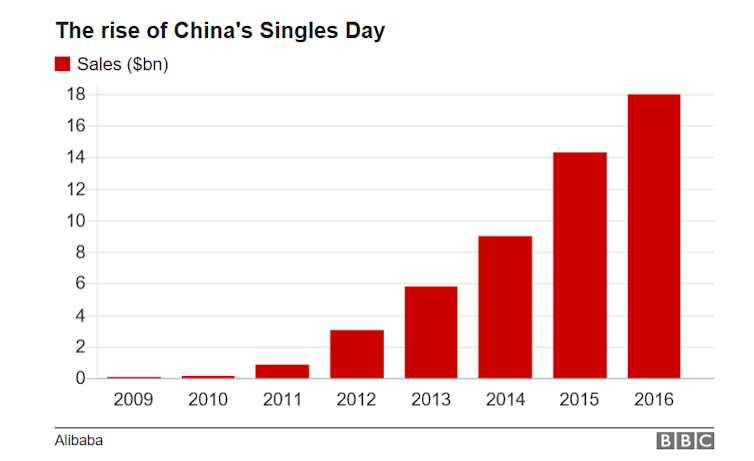
    However, unlike Black Friday, China’s November 11 “Singles Day” is still predominately focused on local consumers and completely dominated by one online retailer – Alibaba. The economic impact of Black Friday is dwarfed by this online one-day retail festival from China. Singles Day has gone under the radar for most of the general public in the West, but in 2016, Chinese shoppers spent an incredible US$17.8 billion in 24 hours on the Alibaba online platform – China’s Amazon equivalent.

    This online sales bonanza shifts more goods than the Black Friday and Cyber Monday sales days in the US combined. Black Friday in the US saw online sales hit a record of just over US$3 billion in 2016.

    Origins

    Singles Day started as an obscure “anti-Valentine’s” celebration for single people in China back in the 1990s. The popular story is that it was started by students at Nanjing University who celebrated their singledom by treating themselves. It takes place on November 11 every year and is sometimes known as “bare sticks holiday”, after the way the date is written (11/11).

    The event is also known as “Bachelors’ Day”, and it’s not hard to see why. China has a surplus of males caused by years of the government’s “one child” policy. By 2020, sociologists expect the gender imbalance to have widened to 35m and by 2030, it is estimated that one in four Chinese men in their late 30s will never have married. That is a big market.

    Black Friday was, of course, initially driven and then “exported” to the UK and other markets by major US retailers, specifically Walmart and Amazon. In China, it was the e-commerce giant Alibaba which adopted Singles Day in 2009, just as online shopping started to explode.

    It has now become a day when everyone, regardless of their relationship status, buys themselves gifts. Alibaba spotted this as a chance for retailers to generate interest and excitement and to boost sales in the lull between China’s Golden Week national holiday in October and the peak Christmas season.

    Like much of the global growth in online sales, Singles Day has been driven by mobile. Nowhere is this more stark than in China where, with 1.3 billion smartphone users, mobile shopping is huge. Around 37 per cent of Chinese shoppers buy products using their phones, compared to the global average of 13 per cent.

    We’ve seen that Alibaba’s sales numbers for Singles Day are astonishing. And the growth has been too. The chart below shows how Singles Day sales for Alibaba have risen over the past seven years. Last year alone, sales were up 32 per cent on the previous year.

    Alibaba/BBC, Author provided

    According to Alibaba, during the event on 2016 they processed more than a billion payment transactions in total, with 120,000 transactions per second at peak and their distribution system processed more than 657m delivery orders.

    Analysts have predicted this year’s event could see Alibaba rack up sales of US$20 billion despite a slowdown in China’s economy, partly due to it having a broader audience.

    Copy cats

    Of course those kinds of numbers attract the interest of Western retailers too and the 2016 event saw 37 per cent of total buyers purchasing products from international brands or merchants. Companies like US retailers Costco and Macys as well as Britain’s Top Shop and House of Fraser have marketplaces on Alibaba’s Tmall site have already got involved.

    And, for the first time, Alibaba’s 2017 Singles Day festival will bring more than 100 Chinese brands to overseas buyers, offering special promotions targeting over 100m overseas Chinese consumers in Asia and around the world.

    There is one rather sensitive obstacle to the adoption of Singles Day in the UK, however. The eleventh day of the eleventh month is Armistice Day when Britain marks the end of World War I and the nation remembers all those who have died in military service. There will be many who think it distasteful to run a shopping event on that day. However, as David McCorquodale, head of retail at KPMG, pointed out: “Singles Day in China is the biggest promotions day in the world. [The date] will stall its entry to the UK, but not forever.”

    Given the rapid globalisation of most retail trends and the way online retail now allows immediate access to millions of products from thousands of manufacturers, it is indeed impossible to envisage that Singles Day won’t extend it’s reach, in some form, to Western consumers very quickly.

  • Boom predicted for China Singles’ Day

    Boom predicted for China Singles’ Day

    Three days out from China Singles’ Day, retail experts are predicting Alibaba’s annual e-commerce sales event will continue to set records.

    With the Chinese online giant expanding it to a 24-day shopping and entertainment bonanza, the global marketing hype is likely translate to record cross-border e-commerce demand, according to marketing research company eMarketer Retail.

    Global payments processor Worldpay has released new data showing that last year’s event grew by 39 per cent globally. When sales peaked, Worldpay was processing 44,505 payments a minute.
    Meanwhile, more and more international brands have been opting to participate in this year’s 11.11 shopping festival.

    Worldpay’s transaction data supports findings from the Global eCommerce Leaders Forum (GELF), which revealed the rise in consumer spending power in China is translating into growing sales on international e-commerce sites as growing numbers of shoppers seek genuine products from trusted global brands.

    Fastest growth

    Retailers in Australia and Hong Kong are seeing the fastest growth, with sales rising by 105 and 71 per cent year on year respectively, says Worldpay. While the volume of sales has plateaued in Mainland China, the average spend per purchase continues to rise at a rate of 9 per cent.

    “Since its inception as a local celebration of singledom, Singles’ Day has risen to become the world’s top grossing-online shopping holiday, and the event knows no boundaries,” says Worldpay Asia Pacific GM Phil Pomford.

    “For international businesses looking to break into the huge Chinese e-commerce market, November 11 should be an important landmark in the calendar year.

    eMarketer Retail analyst and editor-at-large Andria Cheng agrees. “For international brands this event will continue to mark Alibaba’s biggest pitch and showcase for them to get on board its platform and test the waters regarding Chinese consumer demand and promise,” she says

    “The fact more than two-fifths of this year’s 140,000 brands at the shopping extravaganza come from outside of China speaks to the continued international hope and bet that Chinese consumers will pick up the slack left by the slowing domestic growth for many brands.”

    Threefold increase

    According to marketing technology company Criteo, sales on Singles’ Day have increased threefold, with shoppers browsing online up to four days earlier.

    “This makes it the main sales peak of the season, impacting most retail categories, and is a major opportunity for both shoppers and retailers,” says Criteo GM Alban Villani, who covers Southeast Asia, Hong Kong and Taiwan.

    Analysing more than 5.1 million online transactions in Southeast Asia between October 1 and December 31 last year, it found that retail sales spiked by 254 per cent on November 11.

    Between November 9 and 12 there had been a rise of 28 per cent in average online traffic on key retail companies’ websites, and shoppers had started buying as early as November 7.

    Shoppers are increasingly buying via apps, accounting for nearly half of all transactions and 73 per cent of mobile transactions.

    Meantime, a forecast from eMarketer Retail shows that retail e-commerce sales in China will grow by 33.1 per cent this year to reach $1.13 trillion, representing 23.1 per cent of total retail sales.

    Retail m-commerce, which includes products and services ordered via mobile devices, will increase by almost 42 per cent in China this year, reaching $881.96 billion, and accounting for nearly three-quarters of all retail e-commerce sales, says eMarketer Retail.

    Close competition

    Alibaba says $18.2 billion worth of products were sold on its platforms during Singles’ Day last year, up 32 per cent from the previous year. By comparison, says eMarketer Retail, JD.com’s 618 Festival, which involved 18 days of discounts from June 1 to 18, was reported to have brought in $17.6 billion this year.

    Worldwide e-commerce sales are expected to reach $2 trillion this year. Almost half of these sales will be generated by consumers in China. eMarketer Retail says retail e-commerce sales worldwide will increase at four times the rate of retail sales this year, jumping 23.2 per cent to $2.2 trillion.

    Also, Alibaba has overtaken Google this year to be the second company to Facebook for display ad revenue, with a spend of $14.62 billion.

    Meanwhile, Worldpay has advice for retailers opting in to the Alibaba festival… “To turn browsers into buyers, it is essential to tailor the online shopping experience to local tastes. For Chinese consumers, this means focusing on your mobile proposition. Shoppers expect to use their preferred payment option – increasingly e-wallets like Alipay and WeChat Pay.”

    For Singles’ Day last year, Worldpay processed a total of 14.9 billion transactions altogether worth £451.1 billion (US$594.1 billion).

    Worldpay provides payment technology and services to about 400,000 customers. It can process payments across 146 countries and 126 currencies, helping its clients accept more than 300 different types of payment.

  • Visual search on Zalora Group apps

    Visual search on Zalora Group apps

    Online fashion destination Zalora Group has launched a visual search feature on its Android and iOS mobile apps.

    By clicking the search button, users can take a photo of their favourite clothing item or accessory and instantly see similar products available on the online fashion destination. It is a result of a partnership with artificial-intelligence company ViSenze, which specialises in visual commerce.

    ZALORA App Visual Search


    “We understand the pain of not being able to describe the perfect dress or shoe in a text search, and wanted to give our customers the simple joy of shopping for what they like by simply taking pictures of fashion items,” says Zalora Group chief technology officer Karthik Subramanian.

    ViSenze CEO Oliver Tan says Zalora is one of its earliest partners in the region.

    More than 20 million customers across Asia have downloaded the Zalora app, and to date more than half of the company’s orders come from mobile devices. Founded in 2012, the company has a presence in Hong Kong, Indonesia, Malaysia, Singapore, Taiwan and the Philippines. Zalora is part of Global Fashion Group.

    ViSenze delivers intelligent image-recognition software for retailers, its clients including Asos and Rakuten. The company has offices in China, India and Singapore as well as the UK and US.

  • Singles’ Day sales set to soar

    Singles’ Day sales set to soar

    Worldpay, a global leader in payments, is predicting another record-breaking China Singles’ Day for businesses around the world, as the eCommerce extravaganza goes global.

    New data from Worldpay reveals that last year’s event grew by 39% globally1, with sales outstripping Black Friday by 137%.2 Online shopping activities peaked at 17.24 GMT3, at which point Worldpay was processing 44,505 payments per minute.

    The payments processor is expecting 11 November to make history again this year, as more and more international brands opt to participate in the shopping festival.

    According to Worldpay, retailers in Australia and Hong Kong are seeing the fastest growth, with sales rising by 105% and 71% respectively year-on-year.4

    Although the volume of sales has plateaued in mainland China, the average spend per purchase continues to rise, at a rate of 9%,5 as more and more shoppers tend to splurge on big ticket-items.

    Worldpay’s transaction data supports recent findings from the Global eCommerce Leaders Forum (GELF), which revealed the rise in consumer spending power in China is translating into growing sales on international eCommerce sites, as more Chinese shoppers than ever before are seeking genuine products from cherished global brands.

    Phil Pomford, General Manager for Asia Pacific at Worldpay said: “Since its inception as a local celebration of singledom, Singles’ Day has risen to become the world’s top grossing-online shopping holiday, and the event knows no boundaries. Our data reveals how fast Singles’ Day is growing internationally, so for international businesses looking to break into the huge Chinese eCommerce market, 11 November should be an important landmark in the calendar year.

    “To turn browsers into buyers, it is essential to tailor the online shopping experience to local tastes. For Chinese consumers, this means focusing on your mobile proposition. Shoppers expect to use their preferred payment option – increasingly e-wallets like Alipay and WeChat Pay – and merchants should offer a cutting edge checkout experience to attract tech savvy consumers.”

  • UnionPay Records Strong Growth in Spending by Cardholders During Singapore Golden Week 2017

    UnionPay Records Strong Growth in Spending by Cardholders During Singapore Golden Week 2017

    UnionPay, the Official Payment Card for Singapore Golden Week (SGW), revealed that total spending by UnionPay Cardholders in Singapore grew 40 percent year-on-year during the 17-day-long event held from 29 September to 15 October 2017. The growth was contributed by a surge in UnionPay card usage by locals and tourists during the SGW 2017 period, and boosted by the increase in participation by merchants and consumers in this year’s SGW.

    Into its second edition this year, SGW is a lifestyle event designed to bring fresh new experiences to local consumers and tourists as part of Singapore Retailers Association’s (SRA) efforts to inject vibrancy into the local retail scene. This year, SGW presented a wider range of golden privileges – featuring offers at over 300 participating merchant outlets island wide, up from the 200 participating merchant outlets last year. Shoppers also enjoyed better golden rewards – in the form of shopping e-Coupons redeemable on SRA’s GoSpree mobile app worth a total of S$25,000, up from S$10,000 last year; as well as golden experiences – with over 1,100 complimentary golden taxi rides made available for the public over the three SGW 2017 weekends.

    Following the close of SGW 2017 on 15 October, UnionPay revealed that spending by UnionPay Cardholders during the event grew 40 percent year-on-year, spurred by broad increases in spending across luxury goods, department stores, supermarkets, duty-free goods and food & beverage categories. Total spending by local UnionPay Cardholders in particular during the SGW 2017 period also doubled year-on-year, driven by growth in spending in fashion, supermarkets and food & beverage categories.

    “With a bigger and better Singapore Golden Week this year, we are delighted to see positive growth in spending by UnionPay Cardholders across the board. We received very positive feedback on SGW from customers and non-customers alike, some even complimented us on Facebook. Our local and overseas Cardholders gave their stamp of approval for SGW via strong spending – all in all we are delighted that this year’s event appealed to a broader range of consumers from different walks of life. UnionPay’s payment products and services have been gaining momentum through our participation in the Great Singapore Sale and Singapore Golden Week, and this will spur us on to continue rolling out programmes that delight our customers, as well as consumers in Singapore,” said Mr. Wenhui Yang, General Manager of UnionPay International Southeast Asia.

    “We are happy to see the expansion of SGW’s appeal to both locals and tourists this year. During the SGW 2017 period, SRA’s GoSpree mobile app gained more than 1,500 new members, bringing the total number of GoSpree members to more than 33,000 to date. We also saw a 15 percent increase in downloads of the GoSpree app from Chinese tourists, with over 1,300 e-Coupons redeemed during SGW 2017. As we continue to improve on the event, we hope to see more locals and tourists be part of the Singapore Golden Week festivities,” said Ms. Rose Tong, Executive Director of Singapore Retailers Association.

  • Hula is going offline for pop-up in Soho

    Hula is going offline for pop-up in Soho

    Online marketplace Hula is launching a pop-up shopping experience, The Living Room, at Kong Art Space in Soho from November 28 to December 3.

    Founded last year by Sarah Fung, Hula offers curated pre-owned designer womenswear at prices up to 95 per cent off retail. Sellers are by-invitation-only industry “insiders”.

    A graduate of Central St Martins, Fung has had more than 20 years in the fashion industry, previously designing her own lingerie and swim label in the UK (stocked at Colette, Browns Focus and Selfridges) followed by a nine-year stint at Lane Crawford in Hong Kong.

    Hula’s mission is to prolong the life of well-designed fashion pieces and help reduce textile waste. It offers 5 per cent of its profits to partnered charities ranging from environmental to human-trafficking NGOs.

    Not just an online boutique, Hula is a sustainable fashion community where members can consign items they no longer need. For its first venture offline, its pop-up is an intimate space inspired by a living room and offering pieces from such brands as Alaia, Alexander McQueen, Celine, Chanel, Dolce & Gabbana, Ellery, Givenchy, Gucci, Hermes, Prada, Saint Laurent and Stella McCartney.

    On its upper level The Living Room will initially host private appointments, but open to the public for its last two days. The ground level will feature a photography exhibition by art director and sustainable fashion advocate Gloria Yu.

    As part of the event, Hula will host a discussion panel about sustainability and style. Panelists include Carlo Imo (head of Kering Asia Pacific), Justine Lee (fashion director at Hong Kong Tatler) and Christina Dean (founder of Redress), with Bloomberg Asia anchor Angie Lau as moderator.

    Charitable giving from the six-day pop-up will go to Redress, an environmental NGO working to reduce waste in the fashion industry which has just held a clothing drive in conjunction with Miele Hong Kong.

  • The best quarter ever for Alibaba sales

    The best quarter ever for Alibaba sales

    In an “outstanding quarter” to September 30, Alibaba sales have grown 61 per cent to US$8.3 billion.

    That’s the tech and e-commerce giant’s strongest quarterly performance since its IPO and a result the company says reflects the strength of the business beyond its core activities.

    “We had an outstanding quarter,” said CEO Daniel Zhang. “Our consumer insights and technology innovation were the key drivers behind our customer value proposition across the Alibaba economy.

    “We are seeing the early results from our efforts to integrate online and offline with our New Retail strategy, and consumers have benefited from access to high quality products, improved customer experience and the tremendous convenience of shopping anytime, anywhere.”

    Maggie Wu, CFO, said the group generated about $3.4 billion in free cash flow during the quarter, “which enables us to invest in our future growth areas of core commerce, including logistics, cloud computing, digital entertainment and other innovation initiatives.”

    E-commerce remained the backbone of the business despite its rapidly growing diversification. Mobile monthly active users on China retail marketplaces reached 549 million in September, an increase of 20 million over June 2017. Annual active consumers on China retail marketplaces reached 488 million, up 22 million users from the 12 months to June 30.

    Cloud revenue grew 99 per cent year-on-year to $447 million, driven by robust growth in paying customers and an improving revenue mix of higher value-added services.

    Revenue from digital media and entertainment increased 33 per cent to $721 million and the daily average subscribers of Youku video increased by more than 180 per cent, attributed to a strategy of offering a mixture of licensed and original content.

  • Alibaba’s 11.11 sale to showcase brand new Retail concepts

    Alibaba’s 11.11 sale to showcase brand new Retail concepts

    In its sixth year, the online 11.11 Global Shopping Festival will introduce Alibaba Group’s New Retail concept which integrates online and offline shopping experiences.

    With the event bringing together consumers, retailers, logistics companies, financial institutions and online as well as offline stores and shopping centres internationally, Alibaba Group CEO Daniel Zhang says it is a “grand stage” for showcasing the New Retail initiative.

    During the festival, Alibaba will collaborate with 52 shopping malls to set up 60 New Retail-powered pop-up stores across 12 cities in China. Consumers can visit a pop-up store of a cosmetics brand, for example, to experience an augmented-reality (AR) lipstick trial.

    Nearly 100,000 stores in 31 provinces and 334 cities throughout China will also be converted into “smart stores” with a range of New Retail experiences such as facial-recognition payment and scan-and-deliver O2O shopping.

    New Retail will also be rolled out for community stores such as Rural Taobao service centres and neighbourhood convenience stores.

    In the lead-up to the November 11 event, Alibaba is running an array of promotional initiatives. The 24-hour online sale involves more than 140,000 brands and 15 million product listings globally, with more than 60,000 international brands available to Chinese consumers them across the Alibaba marketplaces, including Adidas, Bose, La Mer, L’Oreal, Mac, Mattel, Mondelez, Nike, P&G, Shiseido, Siemens, Unilever, Uniqlo, Wyeth, Zara, and more.

    Through a new Tmall initiative inaugurated in June this year, 100 Chinese brands can sell globally, with a focus on the Southeast Asian markets at the initial stage. Free shipping will be introduced to 10 countries during this year’s Festival to extend the global reach.

    This year, Alibaba will continue to leverage its media and entertainment assets to drive online consumption. Chris Tung, Alibaba Group’s chief marketing officer, says this year’s event “brings consumers around the world a step closer to realising the aspirational life where entertainment and retail become one”.

    “Regardless of their physical location, consumers will be able to participate in more experiences than ever before this year, all showing the reality of New Retail. We start today but this is a festival with nearly two weeks of celebration and so many different ways to participate.”

    Entertainment components include:

    • An AR game on Mobile Taobao App called Catch the Cat will drive online traffic to offline locations. Consumers will use their mobile device to catch the virtual Tmall Cat mascot at a number of retail partner locations to win special perks, discounts and coupons for use at online and offline stores.
    • Red envelopes of more than RMB250 million will be shared among Chinese consumers through various interactive games. One of which shoppers can invite friends to form special teams, and once their team’s purchases reach a certain amount collectively, all team members will be able to get discounts and coupons.
    • The 11.11 Countdown Gala Celebration will be held on November 10 in Shanghai’s Mercedes Benz Arena. Directed by Hollywood producer David Hill for the second year in a row, the gala will be broadcast live on three of the leading satellite TV channels Zhejiang TV, Shenzhen TV and Beijing TV, and will feature top-tier singers and movie stars who will be announced in the weeks ahead.
  • The Garnered comes to ground at Landmark Hong Kong

    The Garnered comes to ground at Landmark Hong Kong

    Online retailer The Garnered, which offers mainly handmade fashion, craft and design products, is showcasing its wares at a pop-up in Landmark in Central.

    In a first for Hong Kong, the London-based venture will have its creations on show until November 12.

    Former Selfridges head of fashion Anna Gardner launched the e-commerce site last year to offer designers a more flexible, supportive platform through which to express their vision and highlight their creative processes.

    Garner started in the fashion industry at the Paris office of American Vogue and Vanity Fair, as an assistant to André Leon Talley. It was the springboard for an international career that has encompassed being head of communications for London retailer Joseph Ettedgui, and fashion director for Henri Bendel.