Category: E-Tailing

Retail News Asia is committed to providing both local and global retailers with the latest E-Commerce & Etail news throughout the Asian market. This on a daily base.

  • Zalora and SPH Magazines Announce Strategic Content Partnership

    Zalora and SPH Magazines Announce Strategic Content Partnership

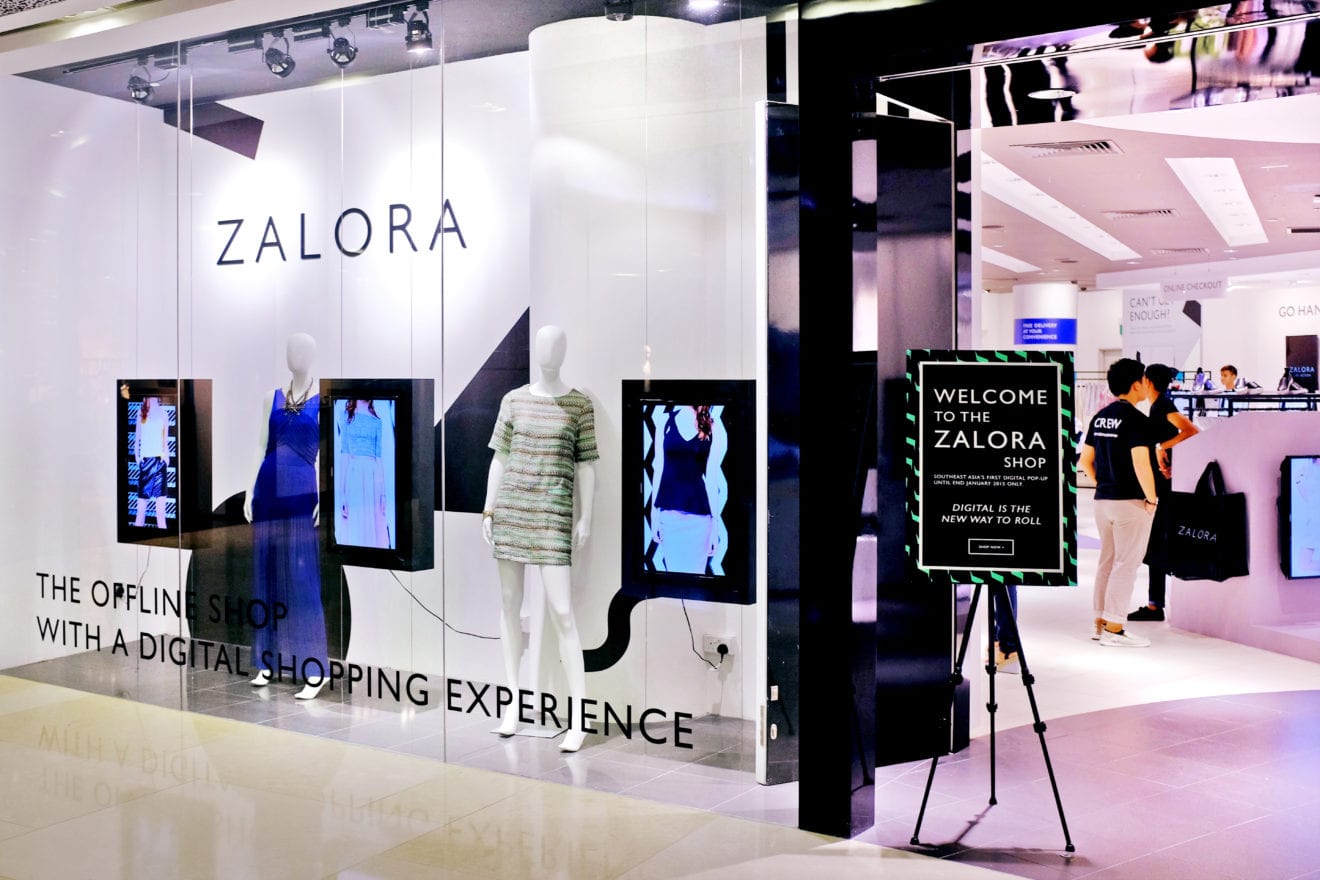
    ZALORA, Asia’s Online Fashion Destination, announces its partnership with SPH Magazines Women’s Network. The partnership will see both organisations share editorial content and syndication between SPH Magazine’s Women’s Network Magazines and ZALORA’s fashion magazine, ZCOOP, as well as cross-channel promotions on their social media pages. This collaboration brings together two of Singapore’s fashion authorities, the country’s most popular fashion e-commerce website and Singapore’s top magazines including Her World, Female, Cleo, Singapore Women’s Weekly, and Shape.

    As one of the leading organisations in Singapore catering to women, SPH Magazine Women’s Network is an authoritative voice on the trends and wants of the Singaporean women, while being able to deliver relevant and useful content to their readers. They boast of award winning editorials and have intimate knowledge of the latest news in lifestyle, fashion and beauty.

    The content partnership with SPH Magazines Women’s Network is a step forward for both organisations in terms of engaging the consumer through separate channels. Today’s consumers are comfortable with the notion of mixing and matching different elements of their persona, a trait that carries over into their shopping choices, according to analysts and academics. Providing them a plethora of brands with mixes of independent designers and boutiques while being able to keep them entertained through online publications, social media and other channels is the ideal way to create and maintain the bonds created between ZALORA and our consumers.

    Tito Costa, Chief Marketing Officer of ZALORA Group said, “Media consumption is at its height in Singapore, and as a leading fashion e-tailer, ZALORA must communicate our fashion proposition in an entertaining manner and establish authority in curating styles. As such, ZALORA recognises the need to invest in engaging consumers through different touch points as well as providing an optimised presence on mobile devices. This partnership with SPH Magazines Women’s Network will allow us to deliver content that our consumers want and need while tapping onto that to build a stronger brand.

    We are very excited to see what SPH Magazines Women’s Network will create.” “A brand needs more than its own voice. SPH Magazines are uniquely positioned as a content partner as we give our clients the credible, persuasive voice of third-party endorsement with the authority of our editorial experts and the connection we have with our audiences,” said Eileen Chia, Head of Product and Partnerships, Women’s Network.

    Added Ivan Wong, Commercial Director, SPHM Pte Ltd, “Great content which attracts, delights and grows customer relationships is the one constant in the evolving digital economy. This bespoke partnership with Zalora affirms our strategy of placing audience and content at the heart of our business.”

    The partnership will include content syndication, content production and cross-channel promotion through social media and other publications. Exclusive ZALORA deals will also be available to readers of SPH Magazines through this partnership and special subscription rates will be given to ZALORA customers.

  • Alibaba’s Tmall expands in Hong Kong and Southeast Asia to non-Chinese speaking consumers

    Alibaba’s Tmall expands in Hong Kong and Southeast Asia to non-Chinese speaking consumers

    Alibaba Group, the world’s largest e-commerce operator, is beefing up its presence in online shopping by further expanding in Hong Kong and tapping more English and non-Chinese speaking consumers in Southeast Asia.

    The group has officially launched its Tmall online supermarket in Hong Kong this week, and teamed up since March with Southeast Asian e-commerce operator Lazada – which it acquired last year – to sell selected Taobao products under the “Taobao Collection” direct to shoppers in Singapore.

    The English-language Lazada site also operates local sites in Indonesia, Malaysia, the Philippines, Thailand and Vietnam, where some of them are in local languages.

    The Malaysian platform will be launched on June 13, where shoppers will be able to take advantage of lower prices from Chinese sellers, said Elaine Hu, director of Tmall World on Monday.

    In Hong Kong, Tmall sells daily necessities from food to household products imported from the mainland to local Hong Kong consumers. With its warehouse in Shenzhen – the group’s largest in South China region – consumers will be able to receive the products within the next day after placing the order on the Hong Kong supermarket, Hu said.

    She said mainland foodstuff and snacks not easily available in Hong Kong were the most popular products.

    Household supplies, especially paper products were also selling well as consumers look for cost-saving products from the mainland, Hu said, based on data obtained from the trial run of the platform in the city since late April.

    “The average value of orders on Tmall HK’s supermarket is surprisingly high so far. It is the highest compared to any other regions in China and shows the strong spending power of local Hong Kong consumers,” Hu said, without giving specific figures.

    The variety of goods available to Hong Kong consumers pales in comparison to those on the mainland platform as fresh products and heavy goods are generally not included. Products imported to Hong Kong are also subject to rules of local regulations.

    Unlike on the mainland where the group faces fierce competition from rivals including the Tencent-backed JD.com, Hu said Alibaba was a dominant e-commerce player in the Hong Kong market.

    In 2012, the group said it had 1.4 million registered users in Hong Kong. Hu said the figure was higher now but she didn’t give any figures.

    According a survey released by Mastercard in April this year, topping the most popular category list for Hong Kong online consumers is clothing and accessories, with 41.7 per cent out of more than 8,000 consumers surveyed. Supermarket products came second, with 37.5 per cent. Other popular categories: airlines – 36.7 per cent; travel – 36.2 per cent; and hotels – 36.0 per cent.

    The strengthening of retail business in Hong Kong and other overseas markets is seen to serve as a part of Alibaba long-term plan that aims to provide services to as many as 2 billion consumers worldwide by the year of 2036, Alibaba founder Jack Ma Yun told the investors in Hangzhou last week.

    In response to the recent dispute between Alibaba and logistics firm SF Express, Hu said SF remained a partner of Tmall and for overseas transactions, downplaying the impact.

  • Visa Partners ShopBack to Host Three-Day Buka Puasa Treats Online

    Visa Partners ShopBack to Host Three-Day Buka Puasa Treats Online

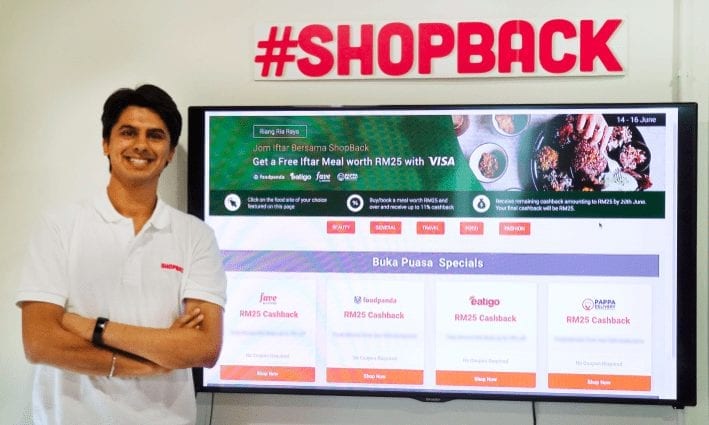
    Top Cashback platform ShopBack and global payment technology company Visa today announced a three-day Buka Puasa Treats ‘Jom Iftar Bersama ShopBack’ campaign, which will be organised in the form of online meals booking via ShopBack Malaysia’s Visa store from 14th – 16th June 2017.

    During the event period, the public can go to the site and order a meal/voucher from Eatigo, Fave by Groupon, Foodpanda, or PappaDelivery for themselves and the person they want to sponsor and enjoy a Buka Puasa dinner with, whereas Visa and ShopBack will giveaway RM25 Cashback to their accounts thereafter.

    “We are truly glad to team up with Visa on this campaign in the spirit of Ramadan. We hope to express our appreciation to our users and encourage the spirit of sharing among the online community in Malaysia, starting by ordering and sharing a meal with the people around us. The Cashback earned is meant to be transferred to their bank account after verification, which is also a savings that could be put to good use.” Alvin Gill, the Country Manager for ShopBack Malaysia said.

    Alvin expressed that the company has seen at least 60 per cent increment in terms of the number of users from its website and app in the past six months, which indicates more Malaysians are spending cautiously and constantly looking for the ways to save due to current economic challenges.

    Currently, there are more than 650,000 Malaysians making online purchases through ShopBack account every month. The company collaborates with over 500 international and online e-retailers such as Booking.com, Fave by Groupon, Foodpanda, Hermo, Lazada, Zalora and more to reward shoppers with up to 30% hard cash whenever they make a purchase online.

    ShopBack is the top Cashback platform in Southeast Asia that has enabled Malaysian online shoppers to save RM13.5 million thus far. Other than Malaysia, it also has a presence in India, Indonesia, Philippines, Singapore and Taiwan.

  • Korea’s Mobile shopping soars to record levels

    Korea’s Mobile shopping soars to record levels

    Purchases made through mobile devices like smartphones accounted for record-high levels of all products traded online in April, government data showed.

    Mobile transactions through smartphones and tablets reached 3.68 trillion won (US$3.28 billion) in April, surging 42.2 percent from a year earlier, according to the data by Statistics Korea. The amount was equal to 60.6 percent of all online purchases made in the cited month, which reached 6.08 trillion won, and outpaced the earlier record of 59 percent set in March.

    Mobile purchases in Korea have been on a steep rise for years as a growing number of people are spending more on their smart devices. The percentage of mobile transactions within total online sales was in the 40 percent range in 2015 and went up to the 50 percent level in 2016 before rising to the 60 percent range this year.

    Industry watchers said the increase is attributable to mobile shopping industry that launched aggressive marketing with ‘easy payment’.
    SK Planet Co., the operator of leading e-commerce site 11st offers customized products through ‘Digital Concierge’, which is a consultation service for digital appliances in applications (apps).

    The e-mart mall is equipped with a scanning function to support the mobile viewing of product information, shipping, and sending gifts, as well as the “”always-bought”” corner optimized for shopping malls.
    At the same time, the monthly value of mobile transactions has also been on a roll, reaching an all-time high of 3.74 trillion won in March this year.

    In April, mobile bookings for travel and movie tickets soared 32.9 percent from a year earlier to 509.6 billion won, while mobile sales and deliveries of foodstuffs shot up 68.8 percent to 547.5 billion won. Sales of clothing surged 40.1 percent to 439.8 billion won, while 300.8 billion won worth of cosmetics were sold through smartphones, up 37.2 percent.

  • Chinese e-commerce giant JD.com plans expansion into Southeast Asia

    Chinese e-commerce giant JD.com plans expansion into Southeast Asia

    It plans to use Thailand as a hub for servicing other regional countries such as Vietnam and Malaysia. JD.com Inc, China’s second-largest e-commerce company, plans to enter the Thai market later this year in a move to expand its overseas business beyond Indonesia, its founder and chief executive said on Friday.

    Richard Liu also told Reuters in an interview the company planned to use Thailand as a hub for servicing other Southeast Asian countries such as Vietnam and Malaysia.

    “Thailand will come soon, before the end of the year. We will invest a lot and also find the best local partners to work together with. Everyone could be possible, but not Lazada,” Liu said, referring to the fact that the Southeast Asian online retailer is now controlled by JD.com’s largest domestic rival Alibaba Group.

    Liu said he was confident his firm could compete with Alibaba in that market and elsewhere in Southeast Asia.

    “When we entered the e-commerce business 12 years ago Alibaba was already a giant. It couldn’t kill us. How can it do so today?” Liu told Reuters.

    “Unless we make some serious strategic mistake, no competitors can actually beat us nowadays.”

    But he declined to say how much JD.com would invest in Thailand, though said it was likely to be less than he was investing in Indonesia, which accounts for almost all its current business outside China.

    Amid intense competition, JD.com has expanded into fast-moving consumer goods, including household supplies, food and drink. The company has also diversified into data, cloud and artificial intelligence services.

    In May the firm posted its first quarterly profit since its share listing in 2014, as an expanded product line-up attracted more active users, but also cautioned the cost of expanding at home and abroad could crimp profits growth.

    It made a first-quarter net profit of 355.7 million yuan on revenue up 41 percent at 76.2 billion yuan ($11.21 billion), while active customer accounts total more than 237 million.

    Liu also said the firm was pressing ahead with its adoption of drones to deliver goods between cities and remoter areas including sourcing agricultural and wild produce in the southwestern province of Sichuan, and adjoining Shaanxi province.

    He said JD planned to build 180 so-called drone network “airports” in the mountainous Sichuan region where vehicle deliveries would cost more and take much longer. Each of these drone launch pads would likely cost around 600,000 yuan he said.

    “In the mountains there is a lot of … very good food like wild fruits, like fish, mushrooms, chicken, everything that is safe, more organic or green food,” Liu said.

    Packages delivered to remote villages now cost around five times more than in large cities, Liu said, but with drones this could be reduced to around twice the cost. Deploying drones across China’s vast rural hinterland could potentially grow into a “multi-billion” yuan business for JD he said, without giving exact projections.

    Liu earlier told the D.Live Asia technology conference in Hong Kong that he aimed to eventually be operating a million drones but this would not lead to fewer jobs for its staff.

    “We will need a huge staff to maintain the drones,” he said.

  • Paycock to supply Seoul with optical recognition-based mobile payment service

    Paycock to supply Seoul with optical recognition-based mobile payment service

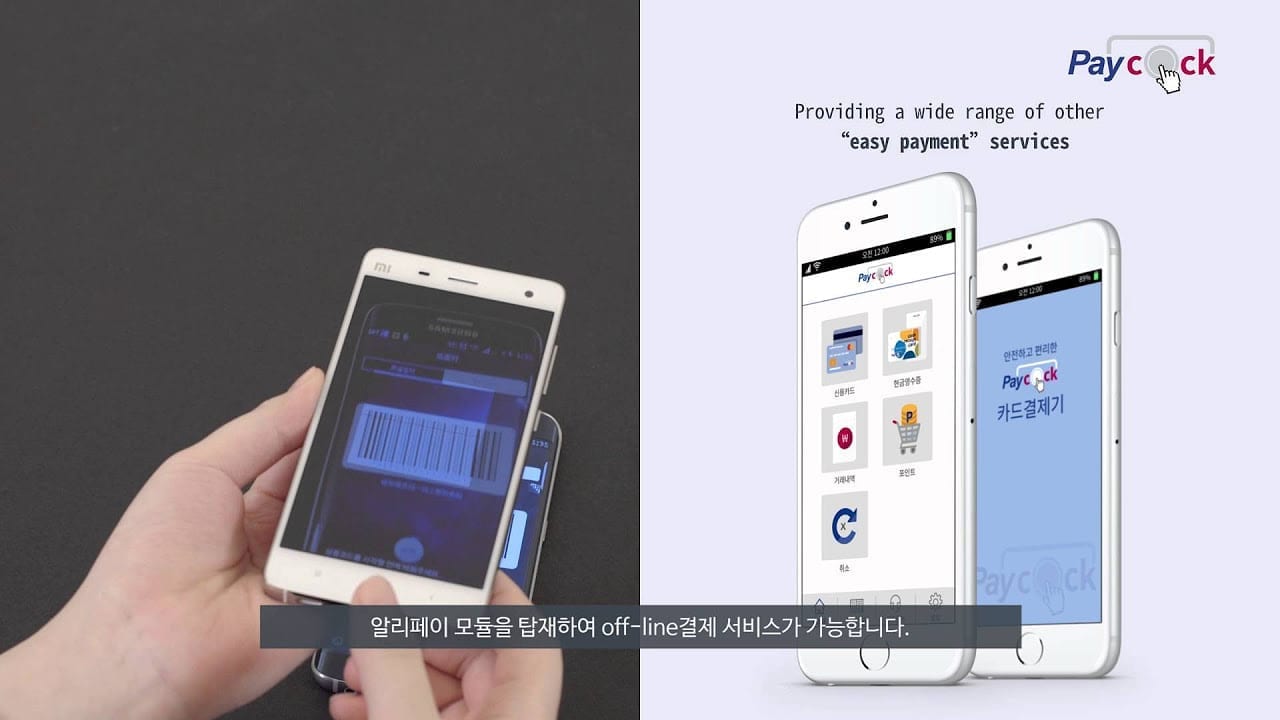
    Fintech startup Paycock announced Monday that it would begin supplying Seoul City with a mobile payment service based on optical character recognition technology starting in June. The service allows stores to accept credit card payments through the company’s mobile application, Paygood, making it possible for payments to be made and accepted no matter the time or location of the payment participants. Seoul City will be providing the mobile application to merchants in the Namdaemun and Dongdaemun markets as part of its support program for small business owners.

    Paycock’s payment application does not require a traditional card-reading device, as its OCR technology enables not only payment via physical credit and debit cards but also mobile application-based credit cards. This OCR technology, which is the product’s key technology, is accompanied by AI deep learning technology to prevent credit card fraud and theft.

    As the application is highly convenient to use and guarantees the security of credit card transactions, it is expected to be widely adopted by small business owners, individuals working in the delivery business, and companies that employ traveling sales representatives. CEO Kwon Hae-won said, “Our product has been fully vetted in terms of security. It has passed the security tests and evaluations of companies recommended by the Korea Internet & Security Agency and the Financial Security Institute.”

    Paycock has already signed MOUs with corporations and the governments of six countries, including the United States. Through its participation in K-Global@Moscow 2017, which is scheduled to be held on June 5, the company plans to seek out opportunities for it to enter the Russian and Northern European markets. Paycock receives support for its overseas marketing activities from the K-ICT Born2Global Centre, an organization affiliated with the Ministry of Science, ICT and Future Planning.

  • YouAppi Strengthens Presence in Japan

    YouAppi Strengthens Presence in Japan

    YouAppi, a leading mobile growth marketing platform for premium mobile brands, today announced an integration with leading Supply Side Platforms for smartphone applications and web (SSPs) Ad Generation (Supership Inc.) and Geniee SSP (Geniee, Inc.). These leading Southeast Asian solutions serve publishers and digital marketers in Japan, Indonesia, Vietnam, Singapore, Thailand, and Malaysia.

    Initially, these partnerships will focus on Japanese inventory to support the growing needs of YouAppi’s recently announced Japanese office. Ultimately, these partnerships will also provide inventory for YouAppi’s global customers in Indonesia, Vietnam, Singapore, Thailand, and Malaysia.

    “By integrating with premium and respected SSPs including Ad Generation and Geniee SSP, YouAppi Japan will be able to offer our clients, both global and Japanese, better, more accurately targeted Japanese traffic,” said Yoshie Nakabayashi, the Country Manager for YouAppi Japan. “Following last year’s investment from Asian and Japanese investors, this announcement is the first in a series of partnerships from YouAppi Japan, which will establish YouAppi as a leading mobile growth solution in Japan.”

    Ad Generation and Geniee SSP will provide inventory for YouAppi clients interested in targeting Japan and Southeast Asia. These partnerships enable real-time optimization, maximization of fill rates to prevent inventory shortages, and monetization via a broad range of ad units across apps and via the mobile web.

    “We’re excited to be partnering with a pre-eminent mobile marketing solution like YouAppi,” said Mr. Yusuke Ono, Manager at Ad Technology Center/Advertising Business Unit, Supership Inc.

    “By partnering with a company that uses its proprietary technology based on AI and big data analysis, we will be able to maximize the revenue of publishers who are using Ad Generation.”


    Brand marketers seeking to acquire new users for their apps (or re-engage inactive users) will profit from a direct supply of traffic from Japan and other key Southeast Asian countries with global reach supporting a wide range of ad units, including rewarded videos and video interstitials. To ensure marketers acquire the right users at the optimal price, YouAppi’s optimizes performance based on Post-Install Events – the actions deemed valuable by the marketer that are taken after users install an app. This proprietary matching and predictive technology has been the cornerstone of YouAppi’s OneRun platform since the company’s founding.

    “These integrations with Ad Generation and Geniee SSP are the first of several announcements that will strengthen YouAppi’s offering for Southeast Asian clients as well as global marketers interested in targeting Southeast Asian users,” said Moshe Vaknin, CEO & co-founder, YouAppi. ”We announced our commitment to Asia with last year’s funding announcement and we’ll strengthen our presence in Southeast Asia by announcing new offices and more partnerships to support the strong growth YouAppi is experiencing in Asia.”

    By improving the mobile experience for publishers and marketers in Japan and Southeast Asia, YouAppi is experiencing strong global revenue growth driven by the company’s proprietary technology and OneRun platform. Proof of the company’s success can be found in the 16,600 campaigns for 470 leading advertisers via 115 billion monthly impressions served around the world over the last four years. YouAppi’s OneRun Platform offers one single point to streamline mobile media buying, combining the power of machine learning with the company’s proprietary predictive algorithms, which analyze over 250 terabytes of data every day.

  • Tellscore launches brands-meet-influencers platform in Thailand

    Tellscore launches brands-meet-influencers platform in Thailand

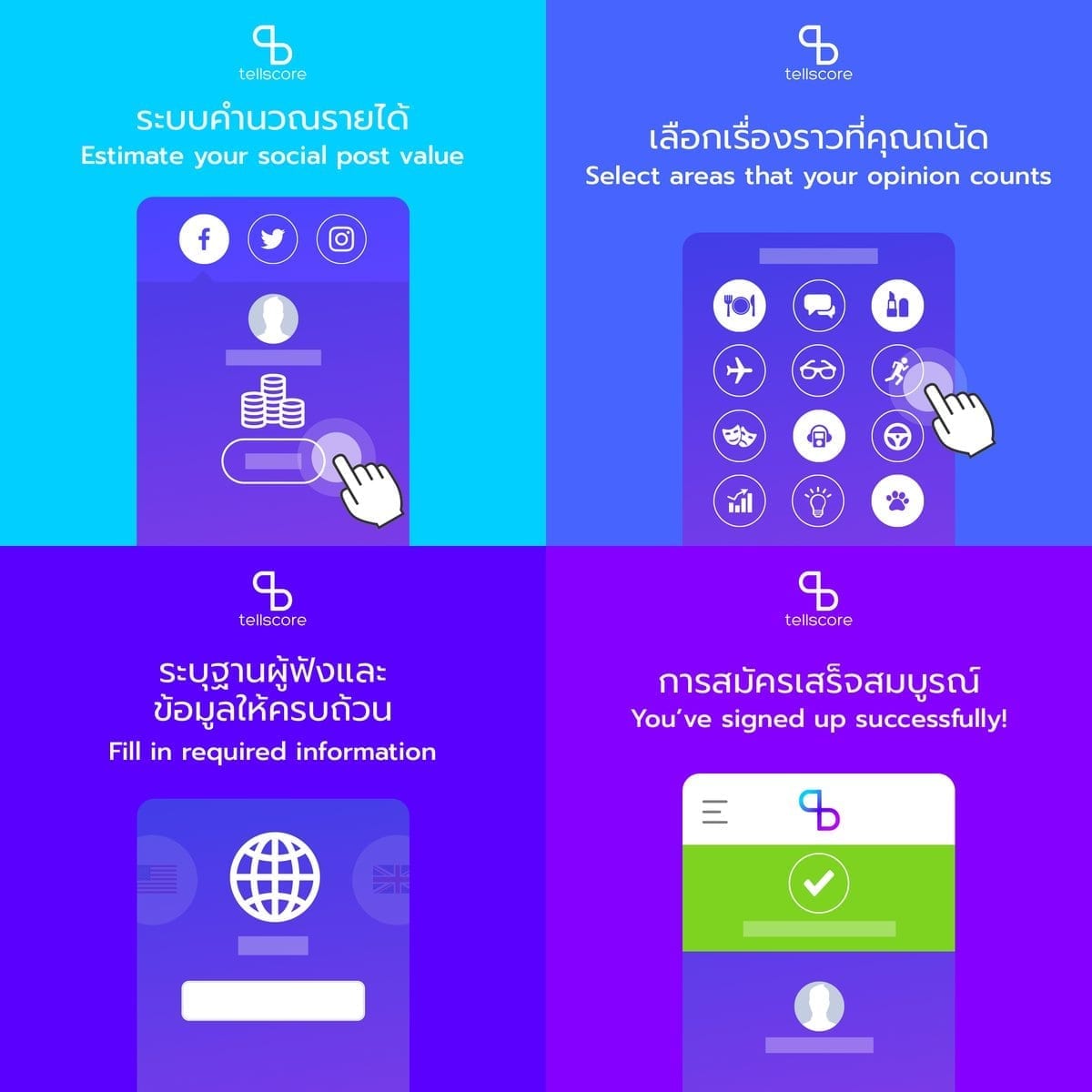
    Thailand’s first automated and one-stop micro-influencers-meet-brands platform, Tellscore, announces its official debut online today The powerful digital tool enhances business reach and conversion through social media channels. Tellscore enables micro-influencers to earn and brands to benefit by expressing genuine opinions and authentic branded content online.

    Tellscore utilizes micro-targeting technology, allowing brands to customize the number of micro-influencers they work with based on their areas of expertise, size of followers, and most importantly engagement rates that works as an automated system connecting brands and micro-influencers directly. The incorporation of algorithms creates a Tellscore scoring system that is not only effective but also measurable, projecting a preview of the exposure brands are likely to receive from the budget of their choice, with a wide yet precise digital targeting.

    Tellscore is designed with the insider’s knowledge and understanding that reach or visibilities can be mere quantitative figures in marketing performance but does not provoke shifts toward desired purchasing behavior. In truth, the key to a successful marketing campaign is heavily relying on the level of engagements, which is proven to be only garnered by micro-influencers.

    The brains behind the game-changing platform Tellscore are Suvita Charanwong and Amornthep Chimpleenapanont, the Co-Founders of Redlab Co., Ltd., a leading digital agency in Thailand, specializing in digital marketing. With over 20 years of industry experience, Suvita believes that the Asian market is ready to unlock the marketing potential of micro-influencers.

    “Micro-influencers relate and communicate directly with consumers because they are consumers and they speak from their perspective rather than being corporate mouthpieces. This is their real power. Compared to bigger marketing heavyweights there are many diverse and niche micro-influencers; offering a direct line of communication straight to markets that may be difficult to reach without the Tellscore system.

    “Micro-influencers are vital because of the extent of social-media engagement. In Asia, Thailand is leading the way with 47 million Facebook users which accounts for nearly 70% of the population. According to Facebook, in Southeast Asia, that figure is around 241 million users. In just over a year, Instagram users in Thailand have risen from 3.2 million to 9 million. Southeast Asia is gathering pace at an impressive speed when it comes to online and mobile connectivity.”

    Anyone with social media followers and an opinion can become a Tellscore micro-influencer and be notified of incoming campaigns from brands that are relevant to them, which they are then able to create and share meaningful stories that resonate amongst their followers, while they benefit from paid work. Micro-influencers add credibility to brands through their role of trusted friend that can earn them anywhere between THB 100 – 50,000 for a content share or product review depending on their level of engagement and number of followers.

    Tellscore’s campaign management tool assists both brands and influencers in managing their busy schedules when it comes to launching a campaign. The platform helps reduce campaign setup time for brands and provides influencers with a scheduled timeline to share their content. Both Thai and English language micro-influencers are being actively sought prior to the Thailand launch.

    Tellscore expects to reach up to 30 million reachable consumers by connecting micro-influencers with top brands via the platform. Tellscore’s widening their digital reach in Thailand and potentially beyond by the end of 2017.  Tellscore has invested THB 50 million towards this platform, which includes design and development, licensing costs, and other technology fees.

    Marketers signing up to Tellscore can start a campaign and collaborate with any number of micro-influencers of their choice immediately, with no tie-in obligations or locked-in contracts; ideal for product launches, marketing campaigns, breaking news and any campaign that seek to reach out to real audience instead of a temporary digital buzz. The Tellscore automated platform ensures that micro-influencer content is relevant and trusted so consumers listen rather than activating consumers’ default setting of ignoring branded content, loud advertisements and traditional advertorials. 

    Current brands marketing through Tellscore’s platform include Thai Wacoal and Dutchmill, with many other businesses getting online too. Meanwhile, micro-influencers range from individuals and bloggers with 500-10,000 followers and A-lists such as Nang-Prod-Kong-Kha-Prajao, movie review page (1,085,415 followers), Job-Khao, news synopsis page (563,750 followers), Sapai-Pae, travel page (500,324 followers), Tem-Khor, soccer fans page (263,045 followers), Pai-Donnnn, eat and travel page (112,251 followers), Cocopsyche, beauty blogger page (104,765 followers) and many more.  

    With micro-influencers reaching out to consumers in an engaging way, their opinion and content can prove to be invaluable, especially to those budget conscious brands or that looking for new ways to effectively influence their target markets.


  • AdColony Ups its Mobile Video Offering

    AdColony Ups its Mobile Video Offering

    AdColony, the largest independent mobile advertising platform, today announced the launch of Aurora™ HD Video, a suite of interactive mobile video creative products that fundamentally changes the way consumers can physically engage with video content. Aurora™ HD Video allows advertisers to immerse consumers into video content in a way never before seen in mobile advertising, delivering branding and engagement goals with TV-like reach.

    Powered by AdColony’s Instant-Play™ technology, the video gives marketers access to powerful graphic capabilities, interactive content that is enhanced with haptic effects and other native mobile capabilities that result in an experience for the viewer that is more immersive than anything else in market.

    “The future of Mobile Video is here, and, it is very different from what anyone has experienced yet,” explained Vikas Gulati, managing director of AdColony for Asia Pacific. “Video ads have always been a one-way street, yet, users want more than that. They want custom graphic effects that provide a life-like experience and content that rewards them for interacting with it.”       

    From creating fully shoppable video experiences, to changing backgrounds, to switching between concurrently-running videos, Aurora™ HD Video allows users a range of ways to interact and  personalise the experience on their screens.

    As one of its first advertisers, AdColony partnered with Disney to launch a mobile campaign for its global blockbuster release: Pirates of the Caribbean: Dead Men Tell No Tales which ran in the U.S. and APAC. 

    The campaign comprises an online treasure hunt that allows users to unlock rewards by engaging with the content in front of them. As a custom trailer for the film played, consumers tapped specific items on the screen, and were rewarded with exclusive video content from the film for everything they found. You can experience the video here.

    Added Gulati: “Mobile is no longer just an extension of TVs or digital videos. Mobile creative requires  crystal clear sound and picture quality, buffer-free video playback in apps, and a variety of post-video experiences to drive consumer actions. We are excited to have Disney as our very first Aurora™ advertiser and look forward to delivering results on brand and performance levels.”

    The Evolution of Instant-Play™ HD

    AdColony has been a leader in mobile video since 2011, when they launched Instant-Play™ HD video, a proprietary technology that ensures crystal clear, buffer-free video playback in apps. AdColony also pioneered the ability to engage with mobile video with their 2013 launch of dynamic end cards that provide the viewer with a variety of immersive, engaging post-video experiences to drive consumer actions. Since bringing these products to market, AdColony has run over 26 billion minutes of mobile video ads, and driven 78 billion impressions. 

    The Aurora™ video suite is powered by the AdColony 3.1 SDK. AdColony’s SDK is currently in more of the top 1,000 apps than anyone outside of Google, and this deep integration with top publishers allows advertisers to access the company’s latest and most innovative technology in the most popular apps in the world.

  • How will Saigon track down Facebook retailers to collect tax?

    How will Saigon track down Facebook retailers to collect tax?

    Tax officials are reaching out to 13,500 retailers in their database, but they admit this will be a very tough task.

    For the first time Ho Chi Minh City has started a new tax collection campaign targeting retailers on Facebook, the most popular social network in Vietnam.

    Now tax officials are working to solve an anticipated problem: how to track down thousands of retailers across the city, many of whom are elusive, and how to calculate their earnings.

    Le Thi Thu Huong, a municipal tax official, said the city has a record of 13,500 retailers on Facebook and that the law only requires those with an annual revenue of VND100 million or $4,400 to declare tax.

    Tax officials will also need to figure out how to determine their taxable income, Huong said, noting that cash transactions are difficult to monitored.

    “Tax authorities will need the support and cooperation from relevant sectors such as banks, postal services and Facebook itself to collect tax effectively,” she said.

    District-level tax agents said they have been reaching out to the 13,500 retailers in the database, but to no avail.

    District 1 and Binh Thanh District have both sent out letters asking Facebook retailers to meet officials to discuss tax payments, only to find that many of the addresses listed on Facebook are fake.

    “If the retailers continue to keep quiet, we will come to them in person,” an official in Binh Thanh said.

    Another official said the database should be reviewed to remove inactive retailers first before district agents begin to send out requests.

    Nhung, an online retailer in Binh Tan District who sells clothes and cosmetics on Facebook, said her monthly revenue usually stays at VND30-40 million ($1,300-1,700) .

    She did not hide the fact that her address and phone number are not disclosed publicly on Facebook.

    “I think this is why the city’s tax department doesn’t have me in the database. So far I have not been contacted,” Nhung said. VnExpress chose not to publish her full name.

    “It’s not easy for tax authorities to have my personal information, unless they contact Facebook directly. But that is not likely to happen,” she said.

    Nhung also said most of her customers pay in cash.

    Mai, a cosmetics seller, said she has received a letter from District 1 even though she has a business license and has declared tax.

    She said she may just ignore the letter because it’s “not necessary.”

    Since February, Vietnam’s tax authorities have been looking at ways to collect taxes from online businesses that use Facebook and other social media sites such as Instagram and YouTube.

  • WeChat Pay and Alipay North American expansion presents golden opportunity for retailers

    WeChat Pay and Alipay North American expansion presents golden opportunity for retailers

    With Chinese travelers being one of the most valuable customer bases for luxury goods, negotiations are underway to make mobile payment solutions WeChat Pay and Alipay acceptable in North America.

    The move comes at the behest of Citcon, a cross-border commerce company, China Luxury Advisors and The Momentum Group, a marketing agency that works with WeChat. Together, the three are hoping that Chinese travelers will soon be able to use WeChat Pay and Alipay while abroad in the United States, easing the purchase of international luxury goods.

    “Chinese travelers are already the highest spending international tourists in the United States – having spent more than $27 billion in the U.S. in 2015, and this number is expected to continue to grow rapidly,” said Renee Hartman, co-founder of China Luxury Advisors, Los Angeles. “This tremendous growth brings new possibilities for American retailers and destinations to continue to grow their share of visitation and spending from Chinese tourists.”

    But what makes Chinese luxury consumers so interesting is that few are actually purchasing their luxury goods in China. Due to China’s strict laws on imports and what stores can open shops within its borders, many affluent Chinese get their luxury goods while abroad.

    The other important factor to understand about this announcement is that for many Chinese consumers, they use an entirely different ecosystem of digital platforms than many other nations.

    Most notably, WeChat Pay lets Chinese customers make mobile payments, something that is extremely popular in China.

    Along with Alipay, Chinese online retailer Alibaba’s mobile payment system, the two make up almost three-quarters of purchases made in China through mobile.

    Many luxury brands already have heavy presences on WeChat. A recent campaign from Swarovski illustrated some of the ways WeChat can be used by luxury brands.

    Alipay has also seen integration with international luxury retailers. LVMH-owned travel retailer DFS Group is furthering its partnership with Ant Financial’s Alipay by giving exclusive promotions to customers checking out with the mobile payment method.

    With an already built-in integration with many luxury brands, bringing these two China-centric mobile payment platforms to North America will be an obvious boon for American luxury retailers looking to capture more of the lucrative Chinese traveling customer base.

  • LINE starts to attract luxury brands in Japan

    LINE starts to attract luxury brands in Japan

    While Japanese social media consumption patterns are similar to those in the United States with significant popularity of Facebook, Twitter, and YouTube, one local platform dominates all of them: LINE.

    Originally popularized as a phone replacement when telecommunications infrastructure was damaged by the Tōhoku earthquake in 2011, the mobile messaging app is used by 77% of all smartphone users in Japan—making LINE the top social media channel in the Japanese market by a wide margin, with a higher adoption rate by smartphone users than YouTube (55%), Facebook (41%), Twitter (30%), and Instagram (19%).

    In spite of LINE’s popularity, brands have been resistant to launch official accounts on the app due to the high cost of setting one up. The official account allows a brand to launch its own collection of the immensely popular LINE stickers and have larger numbers of followers than a small business LINE@ account, but costs at least $25,000 a month with price increases for a higher fan base and greater frequency of messaging. International fashion brands have been especially reluctant to join, with an adoption rate of only 32% among Index brands in the Luxury Fashion category as of May 2017.

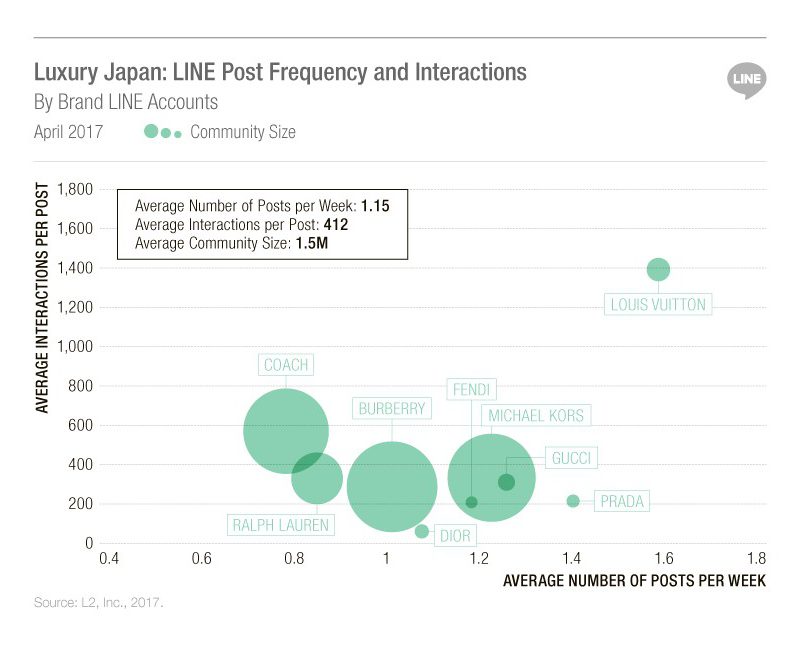
    There are signs that the luxury industry is taking more interest in the platform in 2017, as several major fashion labels have flocked to the app this year. LVMH brands Louis Vuitton, Fendi, and Dior launched official LINE accounts at the beginning of the year, and were joined by Prada in February.

    As these new brands launch on the platform, they’re forcing early adopters including Coach, Michael Kors, and Burberry to step up their game to keep up with luxury marketing innovations. In the months since its January launch, Louis Vuitton has surged ahead of competitors, generating 237% more interactions per post in April than the Index Luxury brand average, despite a lower follower base. Its engagement was boosted by offering exclusive LINE wallpapers, including a set of wallpapers inspired by its Cruise 2018 fashion show in Kyoto as well as a promotion offering a wallpaper download to followers who visited its official message menu eight days in a row.Luxury Japan Line News - Retail in Asia

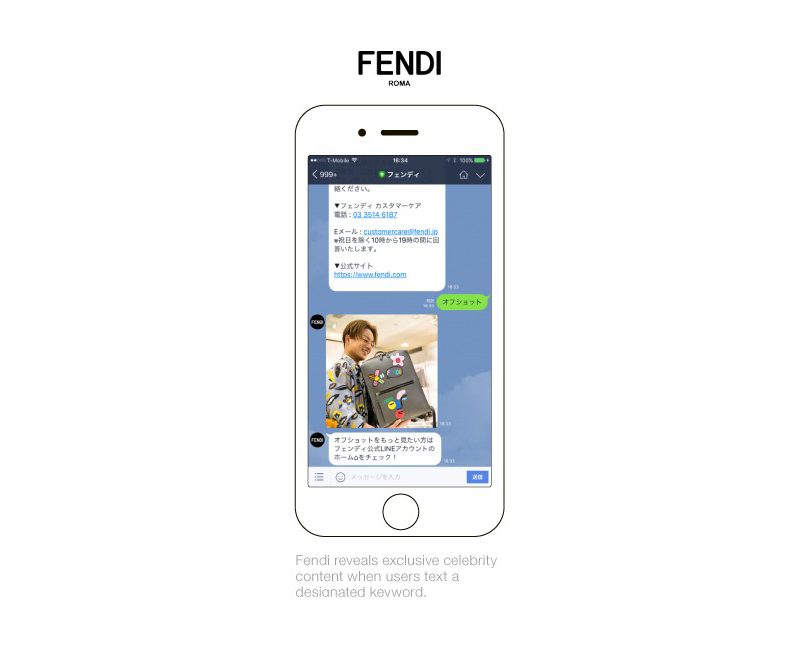
    Fendi is also investing in LINE with a strategy that understands the role of LINE as a closed one-to-one communication tool, where users expect brands to behave more like their friends and less like advertisers. The brand used chatbots to reveal exclusive celebrity content when users message a designated keyword, and utilized gamification for a virtual slot machine that offered the chance to win an original Fendi USB flash memory stick.

    Fendi News - Retail in Asia

    In addition to keeping up with competitors, brands should also monitor LINE’s growing list of services as additional opportunities to differentiate. Like China’s WeChat, LINE is expanding its functions in an attempt to become an operating system within itself. Its payment service LINE Pay now boasts 30 million users, while it also offers features such as livestreaming and social games. LINE launched LINE Business Connect in 2016, which allows brands to sync their customer databases and run one-to-one marketing campaigns.

    LINE also recently announced that early this summer, it will release a Siri-like AI digital assistant called Clova that will be available through its new Wave speaker, which is similar to the Amazon Echo. Unlike the social platforms focused on viral campaigns, LINE offers a wide range of opportunities to brands to implement valuable CRM, payment, and personal communications strategies to resonate with shoppers in Japan.

    source: L2

  • Uber, Grab conquer airport taxi market

    Uber, Grab conquer airport taxi market

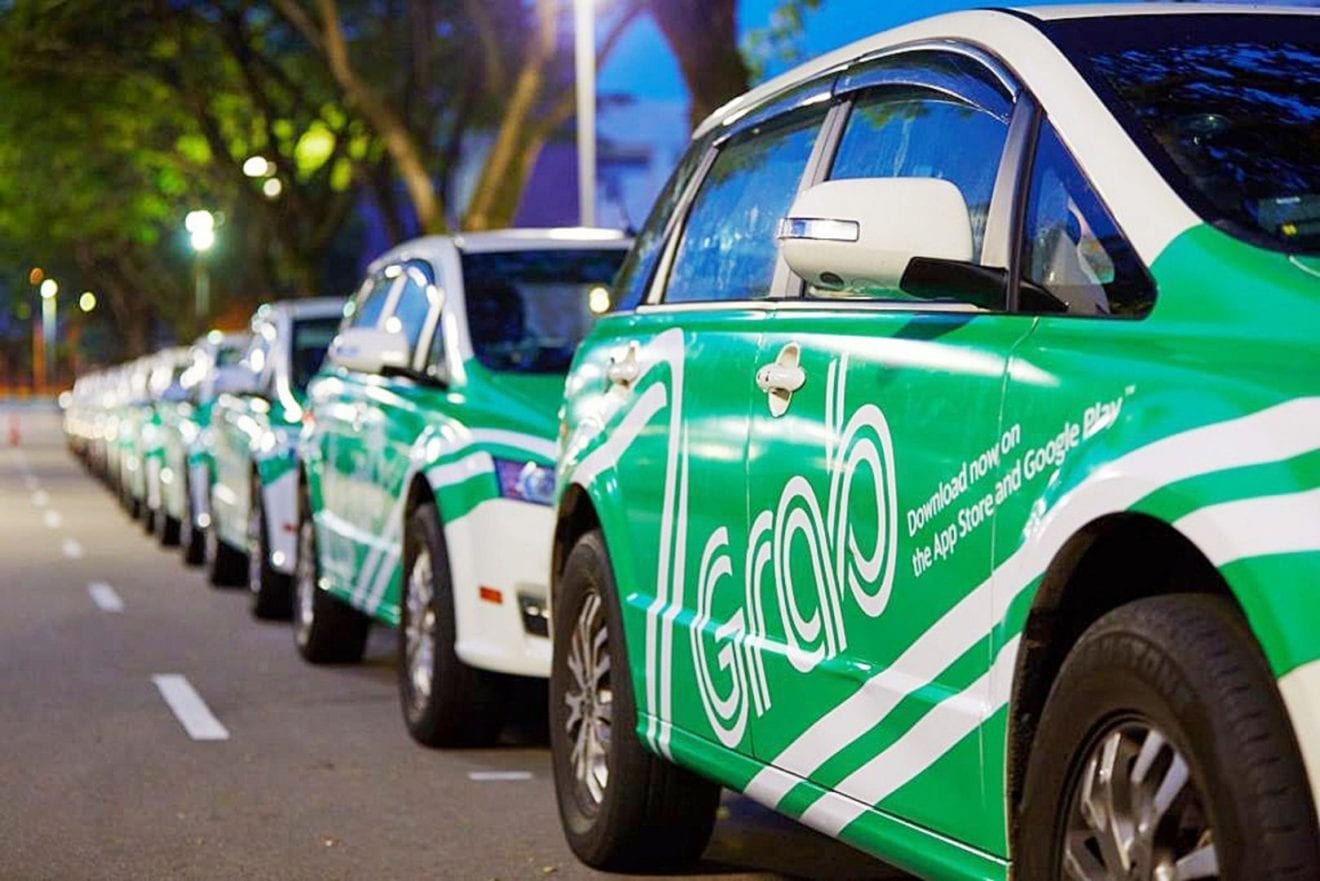
    Uber launched a service package at the flat price of VND150,000 to carry passengers from any location in the inner city of Hanoi. In HCM City, Grab sometimes has a promotional fee of VND20,000 for trips to the airport.

    “You will have to pay VND130,000 for every trip to the airport with traditional taxi service, while it’ll take you VND70,000 to go with Grab, and sometimes the fee is just VND20,000 when Grab runs sale promotion campaign,” Tin, a passenger said.

    Uber, Grab cars flood airports

    Quang Huy in Cau Giay district, Hanoi said the service fee of VND150,000 set by Uber is ‘very reasonable’ which is much lower than the fee of VND200,000-250,000 he has to pay to traditional taxis.

    “I wonder if Uber gives any support to taxi drivers, so they can charge so little. However, as a customer, I really like this. And Uber’s services are acceptable,” he said.

    However, some passengers complained that it is difficult to catch Uber taxis. Uber drivers tend to refuse to serve passengers, saying that the VND150,000 service fee set by Uber is too low, which cannot bring profit to them.

    Hieu, a driver, said with the fee, drivers pocket VND40,000-50,000 for every trip to the airport after paying for fuel and other expenses. He would rather serve passengers within the city to get more profit.Uber drivers confirmed that they won’t serve passengers at the service fees set by Uber.

    Reporters also tried to hail Uber taxis and all drivers refused to serve when asked to go to Noi Bai Airport.

    Airport taxi firms complain about income 

    Traditional taxi drivers complained that their income has become unstable, though it is now the high season: children are finishing their academic year and people are beginning to travel.

    Quang Truong from Bac Ninh province, an airport taxi driver, said the appearance of Uber and Grab has badly affected his job. He could serve 10 trips a day on the Hanoi – Noi Bai route, but the number has been cut by half.

    However, Truong doesn’t think Uber and Grab drivers have better income.

    “More taxis in the market means higher competition and lower income,” he said.

  • Ride-hailing firm Grab says likely to raise funds in near future

    Ride-hailing firm Grab says likely to raise funds in near future

    In five years, Grab’s network has grown from 40 drivers in one country to over 930,000 across 55 cities in seven countries including Vietnam.

    Ride-hailing firm Grab, Uber Technologies Inc’s largest rival in Southeast Asia, is likely to embark on a round of fundraising as it works to develop new offerings such as financial services, its chief executive told us on Tuesday.

    “I can’t specifically give a time line but I can imagine somewhere in the near future, there probably could be more money coming in. That’s probably quite likely,” Anthony Tan, group chief executive officer and co-founder of Grab, said in an interview after an event to mark the firm’s fifth anniversary.

    In five years, Grab’s network has grown from 40 drivers in one country to over 930,000 across 55 cities in seven countries including Singapore, Indonesia, Vietnam and the Philippines.

    The Singapore-based startup raised $750 million in a funding round in September, which sources said valued the firm at over $3 billion.

    Grab’s current investors include Chinese peer Didi Chuxing, China Investment Corp, Japan’s SoftBank Group Corp and Vertex Ventures Holdings – a subsidiary of Singapore state investor Temasek Holdings (Pte) Ltd.

    Tan also said Grab is spending less on incentives per transaction even as competition with Uber increased after the U.S. firm exited the Chinese market last year.

  • YouCam makeup retail consultations partners with Fruit Gathering

    YouCam makeup retail consultations partners with Fruit Gathering

    Perfect Corp. announces YouCam Makeup’s consultation mode will be available at Fruit Gathering’s new Ginza store starting June 15th, 2017.

    The new store includes a “Virtual Makeup Studio” in which customers try true-to-life makeovers using YouCam Makeup’s augmented reality (AR) technology. YouCam’s consultation mode displays products available on the shelf at Fruit Gathering, so customers can easily explore and create their own makeup and then buy the products directly in-store. Clients can also use the magic makeup mirror to try Fruit Gathering’s recommended base makeup method called the contour “3D Base.”

    “We are delighted to announce our new partnership with Fruit Gathering that creates a new shopping experience through virtual makeup try outs,” said Alice Chang, CEO of Perfect Corp. “The Virtual Makeup Studio at Fruit Gathering will allow customers to try on variety of makeup in seconds to find their ideal products more easily. We believe that true-to-life AR technology is the ultimate key to improving customer satisfaction in stores.”

    Fruit Gathering’s Makeup Method is based on the method developed by GIMA (Good Impression Makeup Association Japan), represented by Reiko Nagashima. Fruit Gathering’s techniques create beauty looks that emphasize the natural bone structure to create the perfect beauty look. This method creates a timeless vision and is sure to leave a lasting impression at first sight. Starting with a neutral makeup base, customers can experience “quick”, “brand mix”, and “retouch” makeup looks. A combination of 36 types of facial recognition allows for an instant impression that gives the ultimate control over the makeup.