Category: E-Tailing

Retail News Asia is committed to providing both local and global retailers with the latest E-Commerce & Etail news throughout the Asian market. This on a daily base.

  • Pupuk Indonesia intensifies research to strengthen food security

    Pupuk Indonesia intensifies research to strengthen food security

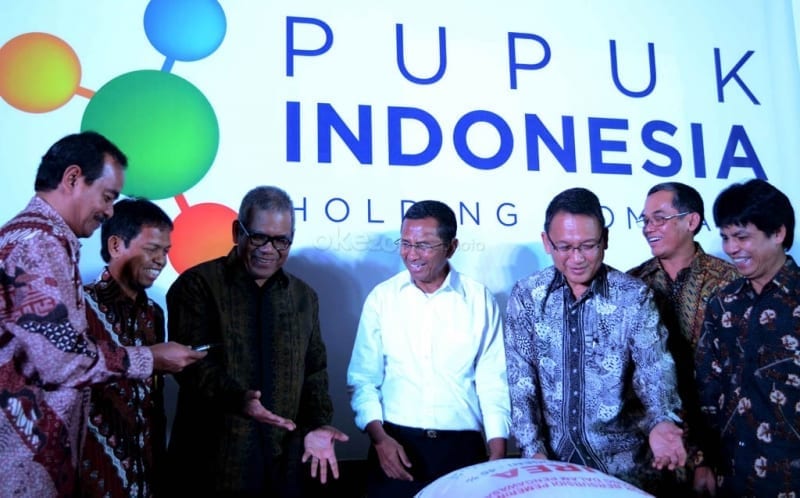
    State-owned fertilizer producer Pupuk Indonesia is intensifying agriculture research through its subsidiary, Pupuk Indonesia Pangan, in its effort to strengthen national food security.

    Pupuk Indonesia investment director Gusrizal said his office had contributed to food security through its research and development programs nationwide since 2013.

    “We have conducted research programs in Kapuas [Central Kalimantan], Ketapang [West Kalimantan] and Merauke [Papua],” Gusrizal said in a statement on Monday.

    He further said Pupuk Indonesia had prepared Rp 30 billion (US$2.3 million) to conduct research on upstream product development and fertilizing, land cultivation and for marketing programs conducted under the assistance of agriculture experts from various institutions this year.

    “The research has helped farmers increase their harvest yields for the last three years,” Gusrizal claimed.

    He further said the company would focus on researching downstream products, such as ammonia and urea fertilizers.

  • Revenue up 36pc for Zalora parent

    Revenue up 36pc for Zalora parent

    The Lazada and Zalora parent is paring back its losses after divesting operations in two markets.

    With operating losses nearly halved and excluding disposals in India and Southeast Asia, Global Fashion Group (GFG) has reported a 36.3 per cent rise in net revenue.

    Backed by Rocket Internet and comprising online fashion retail businesses in emerging markets, GFG says net revenue in constant currency rose 47.5 per cent to 456 million euros (US$512.73 million).

    GFG sold interests in Thailand and Vietnam for an undisclosed amount to retailer Central Group in April. It also sold its Indian fashion business Jabong to Flipkart for $70 million in cash in August.

    GFG raised 330 million euros in funding from existing investors in July, cutting the holding of Rocket Internet to 20.4 per cent.

    The company says adjusted losses before interest, taxes, depreciation and amortisation (EBITDA) narrowed to 67.6 million euros in the first half of this year from 120.5 million euros in the same period last year. The EBITDA margin improved to a negative 14.8 per cent in the first half from minus 33.4 per cent, which the company says was driven by tighter inventory management and cost-cutting.

  • Alibaba Group now Asia’s richest company

    Alibaba Group now Asia’s richest company

    Alibaba Group Holding has surpassed Tencent Holdings and China Mobile in market capitalisation to become Asia’s richest company.

    Alibaba’s market value rose to US$261 billion in New York last week, overtaking Tencent’s US$255.98 billion capitalisation in Hong Kong on Thursday during a trading week shortened by a public holiday.

    China Mobile was the region’s third-largest company, valued at $249.38 billion.

    Alibaba’s shares have risen 28.8 per cent this year to $104.64, making the owner of Taobao.com and Tmall eCommerce platforms the world’s 10th-largest company by value, according to Bloomberg data. The world’s five most valuable companies now gain their revenue from technology or the internet – Apple, Alphabet, Microsoft Corp, Facebook and Amazon.com.

    In Asia, technology and internet-related businesses have displaced oil refineries, manufacturers and banks in the top three spots.

    Samsung Electronics of South Korea is the other technology company among Asia’s 10 most-valuable corporations, valued at $191.76 billion.

    As well as eCommerce, Alibaba has businesses in internet finance, cloud computing, film investment and logistics. The Hangzhou-based company’s second-quarter revenue rose 59 per cent, the strongest since its 2014 initial public offering in New York.

  • ShopBack Joins MDEC’s #MYCYBERSALE As Official Cashback Partner

    ShopBack Joins MDEC’s #MYCYBERSALE As Official Cashback Partner

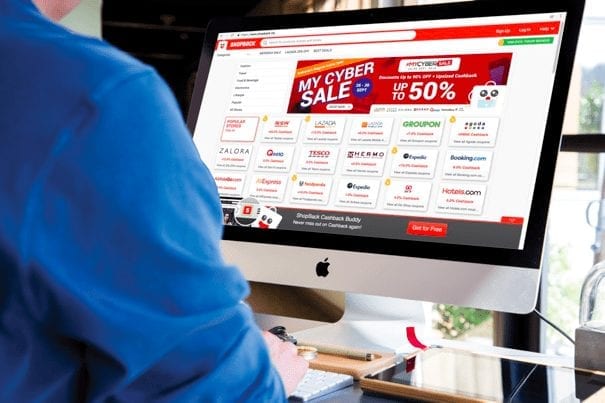
    ShopBack Malaysia, the most popular Cashback platform in the country, today announces that it is joining the much-awaited #MYCYBERSALE as its official Cashback partner to give away real, hard cash for online shoppers.

    Organised by Malaysia Digital Economy Corporation (MDEC), #MYCYBERSALE, the largest annual online sale event, is scheduled to be held from 26-30 September this year. The 5-day national event will see e-retailers like Groupon, Hermo, Lazada, Zalora, Qoo10, Photobook Malaysia, and more to collectively customise their products as well as services to surprise shoppers with best value deals and up to 90% discounts.

    Ms Wee Huay Neo, Director of eCommerce Enablement at MDEC says, “#MYCYBERSALE is all about providing value-added experience to online shoppers and having ShopBack on board as one of our partners will add-on more value and savings to buyers everywhere.”

    Sharmeen Looi, the Chief Operating Officer of ShopBack Malaysia expresses, “It’s our pleasure to be part of #MYCYBERSALE this year. As the leading Cashback platform in the country, ShopBack collaborates with e-retailers to give away up to 50% Cashback on top of the promotions they offered.”

    ShopBack brought the triple-win Cashback model that benefits all parties – shoppers, e-retailers, and Cashback provider – into Malaysia in February 2015. It has enabled Malaysian shoppers to cash out RM5.4 million so far, of which the top shopper received more than RM17,000 in his account.

    “Cashback can be obtained every time when shoppers click through ShopBack and make a purchase from any of our 500 over online sites, thereafter transfer the accumulated savings into their bank account. We believe that via this practical approach, the number of online shoppers will eventually increase and lead to a sustainable digital economy growth here,” Looi further explains.

    The company took the initiative to raise Cashback offerings since early this year to help Malaysians save more on their daily purchases, whereby approximately 300,000 savvy shoppers are getting Cashback incentives from ShopBack every month. 

  • Lazada partners with 40 Vietnamese retailers

    Lazada partners with 40 Vietnamese retailers

    Southeast Asian eCommerce giant Lazada has partnered with 40 Vietnamese retailers to expand their businesses.

    The partner businesses include electronics retailers Cho Lon, Tran Anh, Home Center, cookware chain Lock&Lock, and jeweller PNJ.

    Lazada expects the deals will help it cater better to local consumers, developing its business throughout Vietnam market with the message “whatever you buy offline, you can buy it online”.

    Vietnamese retailers, on the other hand, hope to expand their customer bases via the Lazada brand and reputation. Kid Plaza, a baby product supplier, says it has tripled its monthly revenue after selling its items on Lazada.

    Founded four years ago, Lazada Vietnam has become one of the biggest online shopping sites in Vietnam, sharing the US$4 billion worth market last year. Through the new deals, Lazada plans to claim at least 25 per cent of Vietnam’s online shopping spend.

    Lazada’s plan seems achievable when almost 50 per cent of Vietnam’s 93 million population are using the internet. Research predicts that by 2020, 30 per cent of the population will regularly buy goods and services online, with an average spend of US$350 per year. This will take online retail sales to $10 billion.

  • Chinese cross-border eCommerce has peaked

    Chinese cross-border eCommerce has peaked

    Chinese cross-border eCommerce has reached a turning point, says new research from Oliver Wyman.

    Spending online offshore by Mainland Chinese reached RMB 120 billion (US$17.963 billion) in 2015 according to iResearch, and is expected to grow more than 60 per cent, reaching 7 per cent of total Chinese eCommerce value by 2018.

    However, Oliver Wyman warns increasing regulation may mean the industry has now reached an inflection point.

    “Chinese consumers are probably the most informed and digitalised in the world,” said Wai-Chan Chan, Oliver Wyman partner and author of the report. “As Chinese consumers travel abroad, they are increasingly aware of offline prices around the world.

    Exhibit 1

    Cross-border eCommerce provides Chinese consumers with access to the best products at the best prices without leaving home. At the same time, companies entering or currently in the market need to consider their positions.”

    The report, titled Shopping Without Boundaries found that one in five online Chinese shoppers made a purchase on cross-border eCommerce platforms in 2015, double the proportion in 2014. This represents more than 3 per cent of total eCommerce transactions in China including both B2C and C2C.

    Today’s cross-border eCommerce businesses expanded out of the Daigou model which involved small businesses abroad who brought or sent products back to China. In 2013, the Chinese government established experimental zones of cross-border eCommerce for better regulation. Shanghai was the first to be selected, followed by 11 further cities by June 2016.

    International brand owners and retailers are taking advantage of the new channels through different models. The most common are platform providers such as Tmall International and self-operated plays such as Jumei. JD Worldwide operates across both models. Vertical specialists have also emerged, including the rapidly-growing Xiao Hong Shu (Little Red Book) that has established itself as a challenger.

    Exhibit 2

    After a strong boom, the report finds that cross-border eCommerce has arrived at a tipping point.

    “The future now seems unclear to many players due to a series of government regulations,” concluded the report. “Covering a wide range of topics such as tax, product safety, manufacturing standards and logistics, these regulations have not been fully defined and leave room for speculation.”

    “While cross-border eCommerce still presents great opportunities, companies may want to have a Plan B in case the market dynamics change completely due to the new regulations,” added Chan.

    The full report details how both incumbents and new brands should review and adapt their strategic approach to China’s cross-border eCommerce market. For example, incumbents need to define what role cross border eCommerce should play in their overall Chinese business while ensuring global price harmonisation.  New entrants, need to select a product that appeals to online shoppers in China.
  • Lazada to join Tmall.com for 2017 Asean expansion

    Lazada to join Tmall.com for 2017 Asean expansion

    Lazada, a leading e-commerce platform in Southeast Asia owned by Alibaba Group, is gearing up to tap into the burgeoning cross-border e-commerce market next year, in a move set to create greater opportunities for small and medium-sized enterprises in Asean and China.

    The company will join forces with Alibaba’s Tmall.com platform and its logistics and payment systems to drive the market, said Alessandro Piscini, chief executive of Lazada Thailand.

    Global marketing research firm Nielsen forecasts that Thailand’s online retail e-commerce market, excluding online travel, will reach US$3 billion by 2020, up from $1 billion in 2015.

    Online retail e-commerce market in Southeast Asia is expected to value at $20 billion in 2020, up from $5 billion last year.

    The e-commerce market will be driven mainly by middle-income earners and the growing number of internet users, according to Nielsen.

    The number of internet users in Thailand is projected to exceed 50 million by 2020, up from 40 million in 2015.

    Mr Piscini said the synergy between Alibaba and Lazada can be used to support local retailers and manufacturers in expanding to cross-border markets successfully.

    Chinese retailers and manufacturers will also be able sell their products in Thailand through Lazada’s website.

    Lazada also plans to work with Ant Financial, the Alibaba affiliate that runs Alipay and other financial services in China, to facilitate online payment service to local retailers and merchants, Mr Piscini said.

    He explained Lazada plans to combine its six websites in Southeast Asia into a single website within two years, and continue sales through one retail e-commerce channel.

    Lazada Thailand’s marketplace platform accounts for 85% of sales revenue, with the remaining 15% from its own marketplace platform selling products from its own website.

    To help local merchants and retailers boost their sales, Lazada will conduct an online festival from Nov 11 to Dec 12.

    “We expect sales volume at this year’s event to be 3-5 times higher than last year’s event,” said Mr Piscini.

    Lazada has expanded the range of products sold at its marketplace to over 2 million items.

    Its best-selling products include cosmetics, fashionable clothes and IT gadgets. “We are focusing more on the high-growth product segments like auto accessories and pet care products,” said Mr Piscini.

  • Lalamove Satisfies City’s Hunger for Food Delivery

    Lalamove Satisfies City’s Hunger for Food Delivery

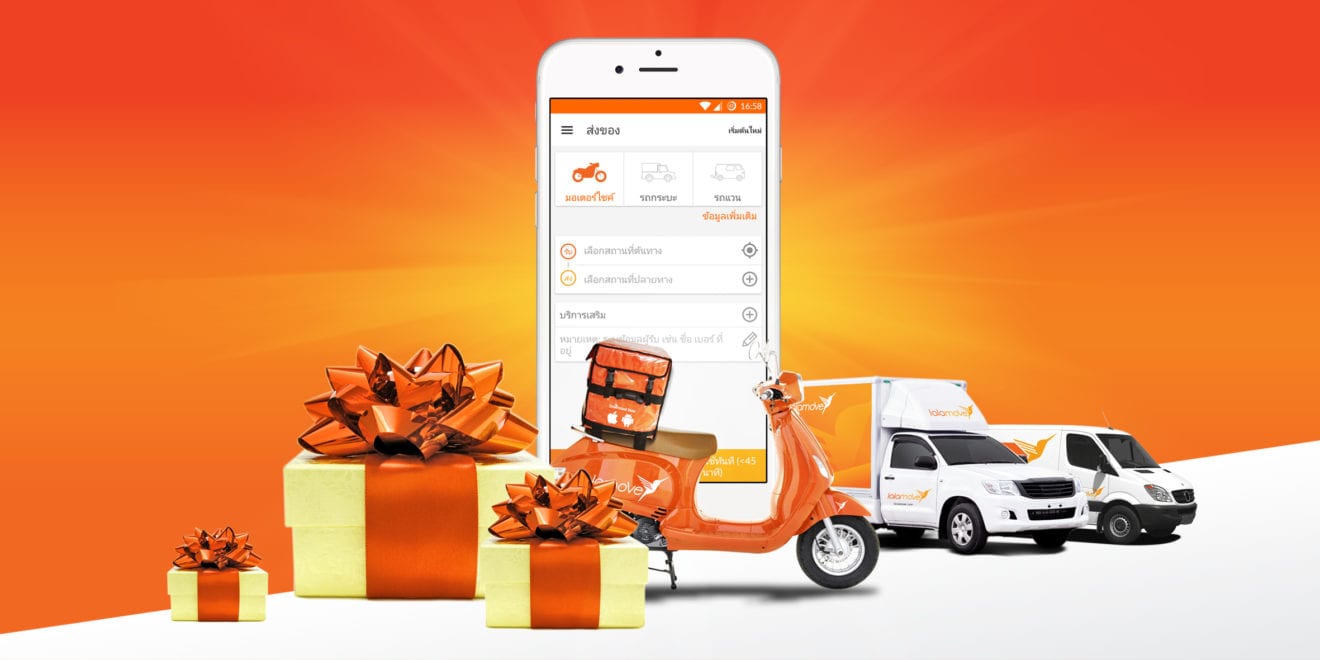
    Hong Kong based on-demand delivery app Lalamove is moving into restaurant and food delivery across Bangkok to feed the growing appetite for appetizing restaurant dishes and produce to be brought straight to customers’ doors.

    Restaurants and food producers invited to use Lalamove’s 24/7 dedicated courier service receive a stamp of approval with a ‘Lala Recommended’ graphic featured on Lalamove social media. Invitees are selected for their high quality cuisine, outstanding reputation and popularity amongst customers.

    Alongside this insignia, dishes and produce are promoted on Lalamove’s Facebook and Instagram pages, giving businesses a real boost and satisfying demand for reliable delivery for hungry customers too.

    In return, ‘Lala Recommended’ restaurants and food companies are promoting Lalamove services via their own social media too; reminding customers that Lalamove is the go-to app for all delivery needs in the city, from important documents via motorcycle courier to large items of furniture via pickup truck, and everything in between.

    The food delivery scheme which began recently already offers a wide array of  tempting ‘Lala Recommended’ cuisine, from high-class dinners to nourishing comfort foods and lunches for health-conscious workers across the city. This includes fresh seafood from Lobster Gangster and The Cooking Crab, Japanese dishes with Taka Sashimi Express, plus juices and wheatgrass shots with Own Your Own Fresh, plus much more.  

  • Coupang Sales Growth Bolsters SoftBank’s Bet on Korean Retailer

    Coupang Sales Growth Bolsters SoftBank’s Bet on Korean Retailer

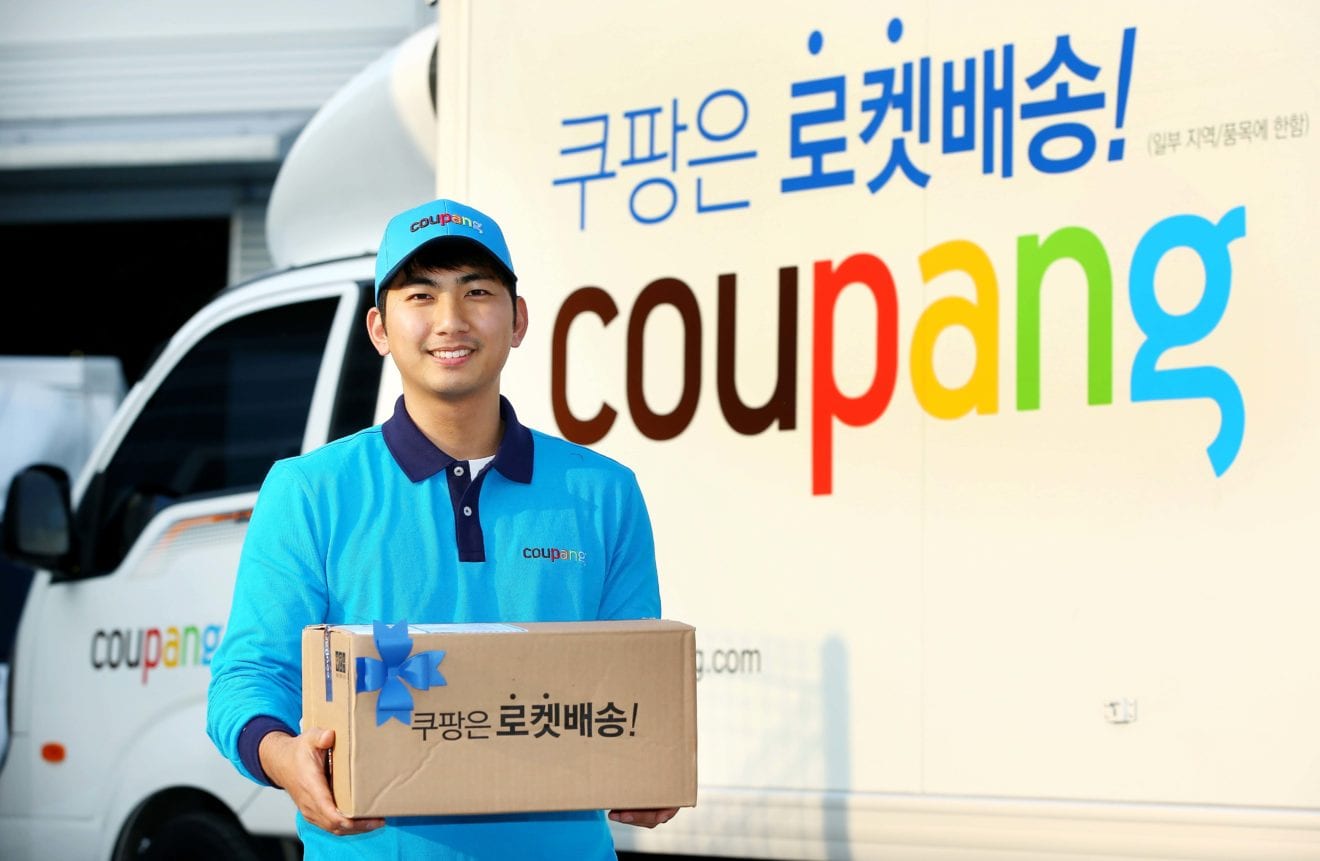
    Coupang’s net sales more than doubled in the first half of the year, helping to validate SoftBank Group Corp.’s bet that the South Korean web retailer will carve out a piece of Asia’s booming e-commerce market.

    Net revenue rose to 868 billion won ($782 million) in the first half of the year, helped by retail expansion and increased margins, according to a financial document seen by Bloomberg. Gross merchandise volume climbed 26 percent to 1.8 trillion won in the period, the document showed.

    SoftBank, whose investment in Alibaba Group Holding Ltd. has zoomed past $70 billion, backed Coupang in June 2015 with $1 billion in financing that valued the Seoul-based company at $5 billion. The bets are part of billionaire Masayoshi Son’s quest to replicate his success with Alibaba, an investment that started with a $20 million stake more than 15 years ago. SoftBank’s expansion in Asia has also led to deals with India’s Snapdeal and Indonesia’s Tokopedia.

    The number of products offered by Coupang more than tripled to 700,000 items from a year ago, according to the document. The startup launched its Rocket Pay services and opened a fulfillment center in Korea, the first of two planned for this year, the document showed.

    Matthew Nicholson, a spokesman for SoftBank, declined to comment. Coupang Chief Executive Officer Bom Kim didn’t immediately reply to an e-mail seeking comment. Backers of Coupang include Sequoia, Greenoaks Capital and Rose Park Advisors.

    The startup, founded in 2010, is burning through cash to expand and capture users as it competes with sites such as Ticket Monster, a Korean online retailer that’s owned by Groupon Inc., KKR & Co. and Hong Kong-based Anchor Equity Partners. Forward Ventures, Coupang’s parent, said its operating loss widened to 547 billion won in 2015, compared with a 121.5 billion won loss in 2014.

    SoftBank’s e-commerce bet in India is under even more pressure. Snapdeal, which has struggled to narrow the lead of its home-grown rival Flipkart Ltd., now faces competition from Amazon.com Inc. In June, Amazon Chief Executive Officer Jeff Bezos pledged to invest another $3 billion in his company’s Indian operations, bringing the total to $5 billion.

  • Santa Rita launches on Tmall

    Santa Rita launches on Tmall

    The Alibaba Group which operates Tmall is the biggest e-commerce platform in China with more than 400 million users and 120 million clicks per day. Tmall is Alibaba’s B2C online retail platform that has recently listed other big brand wine accounts, such as Wine Australia, Mondavi andASC Fine Wines.

    Earlier this year, Jack Ma, founder and executive chairman of Alibaba Group announced the launch of the first ever ‘Wine Day’. Hoping to emulate the success of ‘11.11 Singles Day’ which recorded a massive US$14.32 billion in sales in just 24 hours, this event, called the “9.9 Wine & Spirits Festival”, took place today at 9am CST.

    The Santa Rita online flagship store will offer key wines from their portfolio along with specific offers and promotions targeted China’s 688 million internet users – most of whom connect to Tmall via their smartphones.

    Terry Pennington, Santa Rita’s east region export director, said the listing was a “significant milestone” in the estate’s route-to-market in China.

    “This opportunity provides an excellent platform not only for retail but one from which we can communicate to and with the many millions of Chinese e-consumers our brand heritage, values and story,” he said.

    Established in 1880, Santa Rita is one of Chile’s oldest and most renowned wineries and owns over 2,500 hectares in the wine valleys of Limarí, Casablanca, Leyda, Maipo, Colchagua, Apalta, Maule, Rapel and Curico.

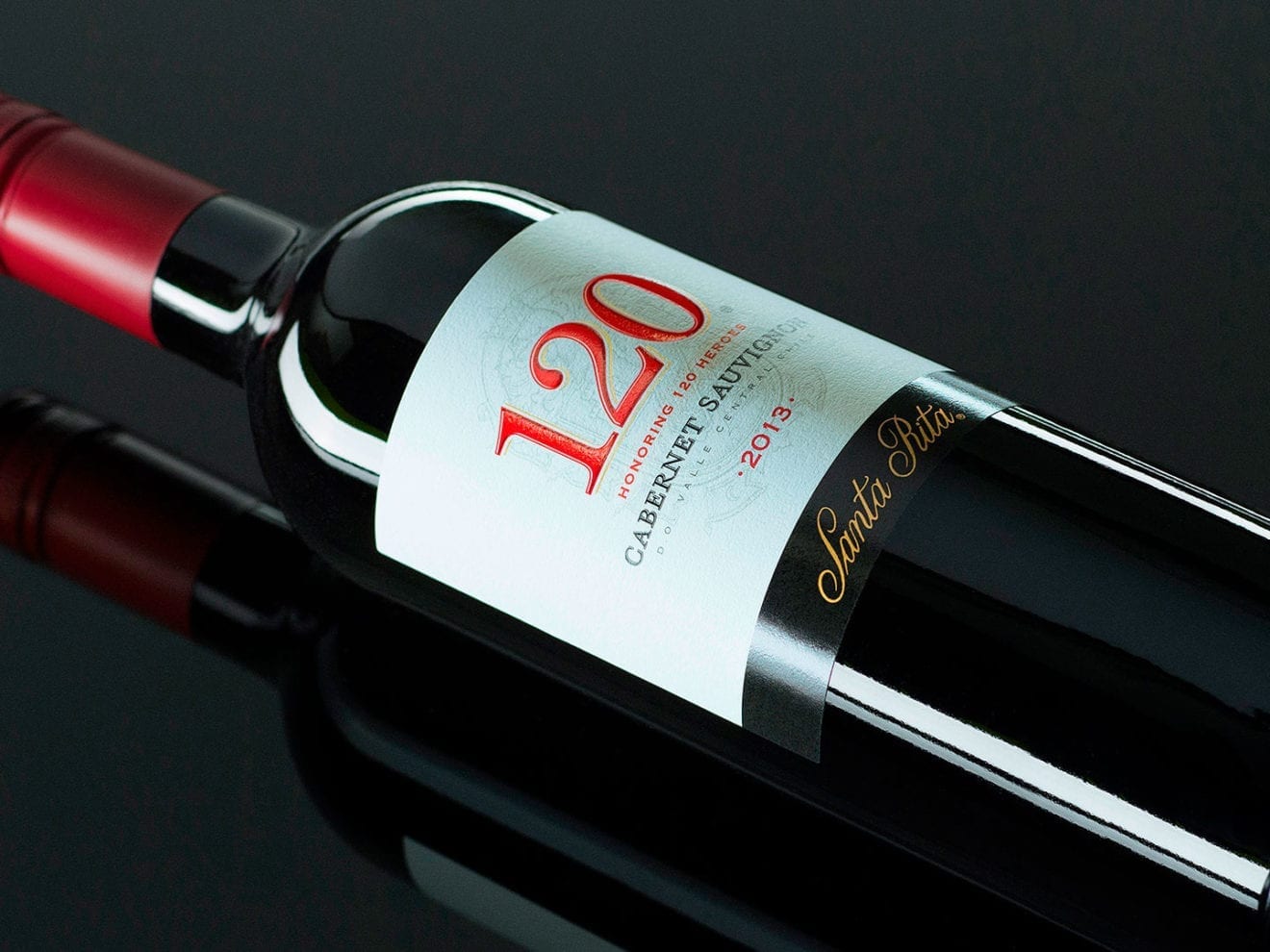
    Brands in the Santa Rita portfolio include 120, Secret Reserve, Reserva, Medalla Real, Floresta, Pehuen, Triple C and Bougainville with the top wine being Casa Real.

    Santa Rita is part of the Santa Rita Estates (SRE) stable comprising three key wine brands: Santa Rita and Carmen from Chile and Doña Paula from Argentina.

  • Adobe designs new video measurement model

    Adobe designs new video measurement model

    Adobe has launched a new video analytics offering that promises to provide marketers with new and improved measurement for both content and ads.

    “As video measurement grows increasingly important for marketers to drive major decisions, the significance of these metrics comes into focus daily,” said Chris Wareham, the senior director of product management at Adobe in a blog entry.

    “The ability to obtain data such as time spent, ad performance, device, geography, bounce rates, impressions, and more is now a crucial piece of the pie.”

    New video measurement model

    A key update would be the measuring of video engagement with substantially greater granularity than in the past. This is done by sending “heartbeats” packets every 10 seconds during a video playback or during a live event.

    On top of the initial start server call that Adobe Analytics receives whenever a video is played, a new processing layer will now aggregate all heartbeats until the viewer ends the session – either by completing the video, closing the browser, or switching to a new video. This data is then transmitted as part of a final server call to complete the playback data set.

    “The 10-second heartbeat measurement eliminates the blind spot and offers a much more thorough view of how content is being consumed,” explained Wareham. “By analyzing video streams, rather than just starts and stops, brands can gain a more complete picture of how content is being consumed.”

    A move away from simple monitoring milestones that is based solely on server calls means that stream can not only provide standardization across basic video performance metrics, but is also able to provide deeper insights into media consumption, said Wareham.

  • LINE explores more opportunities to expand user base

    LINE explores more opportunities to expand user base

    Japanese messaging app LINE is seeking to develop new features and establish a partnership with a major bank to seize a larger user base in Indonesia.

    LINE’s new Indonesia country director Ongki Kurniawan said on Thursday that it would try to develop new features, such as live video streaming, which has already been tested on several levels. One notable example of that is the recent broadcasting of a concert by Indonesian pop band Kahitna, which drew 3 million viewers on the LINE stream.

    The video streaming feature, however, is still in its conceptual phase as the company needs to figure out how to properly get around the obvious problem of Indonesia’s weak internet infrastructure.

    “LINE has to wait and work together with local telecom operators as they are the ones that have the ability to properly address the infrastructure and network issues,” said Ongki, who previously served as digital officer at telecommunications operator XL Axiata.

    In the near future, the app plans to also announce a partnership with a major bank that will fall short of being a “financial technology” service. However, no details were immediately available regarding the upcoming partnership.

    Ongki insisted that the key to becoming the “most notable and popular communication app” was to focus on closing the distance between users located across the archipelago as well as for businesses who use LINE to peddle their wares to expand their customer range.

    Content-wise, the application has steadily evolved from being a messaging app to becoming a platform where news, entertainment and business collide in one package: A target that had been achieved since the company started its Indonesian operations in 2013.

    It has gradually tried to enter the news and shopping sectors, with the LINE Today news aggregator service launched in February and the LINE Shopping Marketplace being launched just last Thursday.

    “To increase our user base, which is our primary goal at the moment, we need quality and diverse content. From there, even brands that use our service can benefit from our larger user base as it gives them more value to collaborate with others,” Ongki said.

    As for the fate of its messaging service, the company claims that its diverse functionality has given LINE the higher ground compared to other messaging services operating in Indonesia as the app boasts a majority of millennial users that make up more than 70 percent of its Indonesian user base.

    At the same time, Ongki said localization in terms of content through its widely used Stickers and its trademark LINE Webtoon comics platform have also given it an edge in the market. LINE is reportedly present in about 70 percent of all smartphones active in Indonesia.

    LINE recorded a total of 220 million monthly global active users in the second quarter of 2016, with Indonesia listed as its largest market with estimated 90 million users.

  • Indonesia asks Alibaba’s Jack Ma to advise its e-commerce development

    Indonesia asks Alibaba’s Jack Ma to advise its e-commerce development

    Indonesia has asked the chairman of China’s Alibaba Group Holding Ltd, Jack Ma, to act as adviser in the development of the Southeast Asian country’s nascent e-commerce industry, according to a video released by the government.

    Indonesia has the world’s fourth-largest population, boasting a young, internet-savvy demographic, and a thriving e-commerce market that is increasingly attracting global investors.

    Earlier this year, Alibaba bought a controlling stake in Southeast Asian online retailer Lazada Group for around $1 billion, while a group of investors led by private equity firms KKR & Co LP and Warburg Pincus LLC poured more than $550 million into Indonesian ride-hailing start-up Go-Jek.

    To promote growth in the e-commerce industry, the government is setting up a “steering committee” consisting of 10 ministers for which it has asked Alibaba’s Ma to be an adviser, Communication and Information Minister Rudiantara said.

    “The thinking behind this is to make Indonesia’s positioning in the international marketplace more prominent,” Rudiantara said in a video released by the state secretariat. The minister, like many Indonesians, only uses one name.

    Rudiantara is part of President Joko Widodo’s delegation attending the G20 summit in the Chinese city of Hangzhou.

    An Alibaba spokeswoman confirmed that Ma was asked to be adviser to Indonesia’s e-commerce steering committee, but declined to say whether he had accepted the offer.

  • Foodpanda India looking to raise $50m

    Foodpanda India looking to raise $50m

    Rocket Internet-backed Foodpanda India, which last year faced allegations of internal fraud and misappropriation of funds, is reported to be raising fresh capital.

    It has mandated Mumbai-based mid-market investment bank O3 Capital for a US$40-60 million fundraise as it initiates talks with investors, reports the Times of India.

    Foodpanda has already said it is selling its Indonesian business and rethinking its presence across the rest of Southeast Asia.

    “To be certain, we are not looking to exit India,” says Foodpanda India CEO Saurabh Kochar. “We have grown rapidly over the past months while increasing our already positive operating margins.”

    In the past six months, Foodpanda India is said to have had its average daily orders inch up to about 30,000. Swiggy, the market leader, clocks about 45,000 orders a day on average, while Zomato has about 35,000.

    Over the past year, Rocket Internet global head of corporate development Spyro Korsanos has been stationed in India to get the business back in shape, according to an insider.

    Launched in 2012, Foodpanda has a presence in 20 countries.

  • Indonesia leading charge, says Asia Luxury Index

    Indonesia leading charge, says Asia Luxury Index

    Indonesians have become Asia’s foremost online buyers of luxury goods, according to the latest Asia Luxury Index.

    Amid difficult economic conditions, online sales of luxury goods in Indonesia have grown by 84 per cent, according to the index, which draws mainly on the sales data of Reebonz, a Singapore-based eCommerce platform for luxury products.

    Reebonz Indonesia executive manager Anggono Wijaya says social media, digital marketing and collaborations with influencers and young designers were among the main reasons behind the ballooning sales.

    Senior marketing manager Bernard Widjaja Ng says the group of luxury consumers is evolving and expanding as luxury is no longer just for the select few. “With growing affluence and accessibility, more consumers can readily buy luxury goods.”

    He says consumers have also become younger, with 21-year-olds starting to buy luxury goods. “There is a shift in an economical class of buyers, as people from the B-level economy have started to buy luxury goods.”

    Accounting for 62 per cent of online transactions in Asia are bags, with Balenciaga, Fendi and Longchamp topping the brand list in Indonesia. The report also notes an 87 per cent rise in shoe sales and a 39 per cent increase in timepiece sales.

    It also notes a shift in buying trends, with a 30 per cent increase in pre-owned luxury goods sales.

    Topping the brand list in this category are bags and shoes by Chanel, Hermes, Louis Vuitton and Prada.

    Starting as a luxury product retailer in Singapore, Reebonz has expanded via eCommerce platforms with offices in Indonesia, Australia, Hong Kong, Malaysia, South Korea, Thailand and Taiwan.