Category: E-Tailing

Retail News Asia is committed to providing both local and global retailers with the latest E-Commerce & Etail news throughout the Asian market. This on a daily base.

  • Report predicts $25b in eCommerce revenues

    Report predicts $25b in eCommerce revenues

    Southeast Asia eCommerce revenues are projected to exceed US$25 billion by 2020, according to new research by growth partnership company Frost & Sullivan.

    Despite acquisitions, market exits and many online retailers struggling to achieve profitability, the market earned $11 billion last year, says the report, from its Telecommunications and Digital Services program, Analysis of the Southeast Asian E-commerce Market. The study examines market trends and opportunities in six key Southeast Asian markets – Indonesia, Malaysia, the Philippines, Singapore, Thailand and Vietnam.

    Key findings include continuing rapid growth as the industry evolves.

    Total revenues from business-to-consumer (B2C) eCommerce in the six markets will increase at a compound annual growth rate of 17.7 per cent.

    Malaysia and Thailand were the largest eCommerce markets in the region last year, generating revenues of $2.3 billion and $2.1 billion respectively. But by 2020, both these markets are expected to be eclipsed by such emerging economies as Indonesia and Vietnam.

    “Despite being relatively young, the eCommerce market in Southeast Asia is developing quickly, thanks to an astounding rate of digital adoption,” says Frost & Sullivan Asia-Pacific lead consultant for eCommerce and digital transformation, Cris Duy Tran.

    “However, companies pursuing an Amazon-style B2C mass-market business model are struggling to turn a profit, and there have been several mergers and acquisitions and market exits,” he says.

    “With fewer players in the market, eCommerce players are beginning to compete beyond price points and logistics, and are moving into new areas such as Online-to-Offline (O2O) eCommerce and loyalty programs.”

    Although the mass-marketing approach has not worked so far in Southeast Asia, he says there are many exciting opportunities in specialized eCommerce and peer-to-peer (P2P) eCommerce. Services such as Carousell, Shopee and Tokopedia are aggressively pursuing a “mobile first” strategy, and Frost & Sullivan expects to see more sector-specific services in areas such as travel, food delivery and luxury goods.

    Challenges

    While the opportunities for growth are immense, says the report, the eCommerce market in Southeast Asia is not without challenges.

    Several key factors that inhibit growth have been identified, including low credit-card ownership – less than 7 per cent of the population in all Southeast Asian markets except for Malaysia and Singapore. In some countries, more than half of the population does not have a bank account, making payment the biggest challenge for eCommerce companies.

    Logistics is another issue hampering eCommerce growth, especially in areas with complex geographies such as Indonesia and the Philippines. However, recent investments by regional logistics players such as aCommerce and SingPost have strengthened eCommerce logistics infrastructure in these markets.

    China’s rapid expansion in eCommerce is providing further impetus for online retail growth in Southeast Asia, says the report.

    “The eCommerce revenue in China represented 12.1 per cent of all retail sales last year, surpassing the US, Europe and Japan,” says Tran. “Given the massive adoption of eCommerce in China, Southeast Asia is set to follow a similar upward trajectory, even though eCommerce now represents less than 2.5 per cent of all retail sales.”

    With more mergers and acquisitions likely during the forecast period, more exciting market developments can be expected in the near future, says Tran.


  • Grab adopts Adyen for payment platform

    Grab adopts Adyen for payment platform

    Ride hailing platform Grab has adopted Adyen to extend the capabilities of its payment platform in Indonesia, Philippines, Thailand and Vietnam.

    The two companies aim to deliver a consistent, frictionless payment experience for customers traveling across markets regardless of device or payment method.

    Grab customers will be offered both traditional cards and, over time, country-specific payment methods, using Adyen’s expertise and data to expand payment options. Adyen supports around 250 payment methods globally.

    “As part of Grab’s drive to make ride-hailing even safer, easier and more accessible to everyone in Southeast Asia, providing trusted, seamless mobile payments is crucial for the overall customer experience. Grab wanted a partner who could support a variety of traditional and alternative payment methods to support our growth across the region,” Grab head of payments and commerce Joel Yarbrough said.

    Business travelers who work within the region can also easily tabulate their business ride spending with Grab through the Grab for Work portal, and companies can automatically pay for their employees’ rides through the use of corporate cards.

    “Southeast Asia is a diverse and highly fragmented region and there is no one preferred method of payment. However, mobile penetration in the region remains high and drives several key trends including the rise of mobile payments and platforms as a service,” Adyen president Warren Hayashi said.

    “Partnering with a fellow innovator and disruptor such as Grab, we are eager to empower commuters in Southeast Asia with the same convenience of hailing a ride seamlessly as paying for their Grab ride with equal ease.”

  • Asian online shoppers habits uncovered

    Asian online shoppers habits uncovered

    Asian online shoppers research, locate, engage with and purchase products and services in entirely different ways in different markets, according to a new report.

    For example, almost all consumers in Indonesia knowingly provide brands with wrong details, including name (93 per cent), phone number (94 per cent), and email address (95 per cent) when researching or shopping online

    And the biggest driver of online-to-offline (O2O) conversions is with email in Singapore; SMS in Indonesia; chat apps in China; social media in Malaysia and Thailand and video ads in Hong Kong.

    And 27 per cent of consumers in China and 10 per cent of consumers in Singapore unknowingly input wrong payment details, breaking the region’s eCommerce’s momentum.

    Those are among many takes from The Digital Consumer View 2016 (Asia) report, released by global information services specialist Experian today, containing research from International Data Corporation (IDC), aimed at helping businesses better understand digital consumers in Asia.

    The report reveals how consumer behaviour varies across the key Asian markets of Singapore, Malaysia, Indonesia, Thailand, Hong Kong, and China, based on surveys with over 1200 digital consumers.

    Differences exist across channels (SMS, app notifications, email, social media, chat apps), devices (smartphone, feature phone, Wi-Fi/cellular tablet, wearable) and content (ads in email, ads in mobile apps, ads in social media, video ads on websites, and search ads). The findings highlight the complexity of reaching digital consumers in Asia across many channels, but also highlight how crucial that is, says Jeff Price, MD of Southeast Asia at Experian.

    “While the region is fast-growing, consumer behaviour in each market has unique disparities. Businesses today cannot succeed without intelligent insights based on consumer data,” he advises.

    “Asia is in the midst of a great digital revolution, with an explosion of smart devices, social media interactions and eCommerce transactions. While this evolution has greatly enabled and empowered both sides, it has also challenged businesses to be more effective and targeted in the way they communicate and market to this modern, digital-savvy consumer.

    “For companies to keep up with digital consumer behaviours – how they act on information – it’s absolutely vital to adopt and leverage what their consumers are providing them with every day – invaluable data. Businesses slow to act on this data will see their competitive advantage erode.”

    Key findings

    Experian - DCV - Region - Key findings

    • Search and discovery: Social media is the top channel in Singapore (31 per cent), Malaysia (49 per cent), Indonesia (67 per cent) and Thailand (58 per cent). It’s equally important as chat apps in China (47 per cent); in Hong Kong, video ads (63 per cent) trumps all.
    • Triggering product interest: Social media, once again, is the key driver in Singapore (28 per cent), Malaysia (44 per cent), Thailand (49 per cent) and Hong Kong (25 per cent). However, in Indonesia it’s SMS (62 per cent), and in China it is chat apps (48 per cent).
    • Triggering purchase intent: Email is the biggest driver of online to offline conversion in Singapore (27 per cent); SMS tops in Indonesia (57 per cent); chat apps in China (45 per cent); social media in Malaysia (44 per cent) and Thailand (51 per cent); and video ads tie with social media in Hong Kong (23 per cent).
    • Finding good deals: For unplanned purchases stemming from promotions, email leads in Singapore (34 per cent); social media in Malaysia (50 per cent), Indonesia (68 per cent) and Thailand (58 per cent); SMS in Hong Kong (36 per cent), and social media in China (51 per cent).
    • Brand engagement: Email is key for marketers to build engagement in Singapore (58 per cent) and Thailand (60 per cent); chat apps in Malaysia (62 per cent) and China (70 per cent); banner ads in Indonesia (56 per cent), and SMS in Hong Kong (61 per cent). While email is important, marketers need to be wary: more than 70 per cent of consumers reported receiving too many emails, up from 52 per cent in 2015.

    Experian - DCV - Region - The rise of omni-channel engagement 1

    Shiv Putcha, associate director, consumer mobility and telco strategy with IDC Asia Pacific, says businesses and brands cannot afford to ignore Asia’s multi-trillion-dollar digital commerce market. China alone is now the world’s largest retail market.

    “The challenge lies in the fact that the region has extraordinary differences – language, economy, purchasing power – and consumer behaviours, especially with the digital generation. That uniqueness will not diminish over the next few years and may even increase, making it challenging for marketers not using data-driven insights to research, plan and execute effectively. The Digital Consumer View 2016 (Asia) will hopefully serve as a valuable guide to deciphering some of these key trends, mapping the path forward for brands and their connected consumers.”

    Experian - DCV - Region - Top 3 types of ads that influence consumer's buying behavior

    Key Learnings for marketers in Asia

    • Over-reliance on a single marketing channel will not work. Depending on the country and its current state of digital sophistication, marketers need to think carefully about the right mix of channels to employ.
    • Quality over quantity. Consumer preferences for receiving promotional material varies from market to market, and by specific use cases. On a broader level, more is not necessarily better. A relevant and targeted message will ensure better conversion. Too much, and consumers are inclined to unsubscribe, delete, or mark content as spam.
    • The quality and integrity of data is crucial for marketers to find success. A significant number of consumers across the region either knowingly or unknowingly provide inaccurate information, which in turn causes errors and inaccuracies in marketer’s data sets. Around 27 per cent of consumers in China but only 10 per cent in Singapore unknowingly input wrong payment details; 40 per cent of consumers in China, and over 20 per cent of consumers in the rest of the region provide a wrong address at online checkout.

    Asia comprises 49.6 percent of the world’s Internet users, according to Internet World Stats (2016), digital commerce in the Asia-Pacific (excluding Japan) region will rise to US$17 trillion by 2019, up from US$7 trillion in 2015 according to International Data Corporation (IDC). The combination of rising incomes, increased consumption, acceleration of internet use, and the proliferation of mobile broadband access continues to unlock tremendous opportunities for marketers across the continent.

  • CapitaLand Mall Asia inks its first third-party management contract in China

    CapitaLand Mall Asia inks its first third-party management contract in China

    The contract with Changsha Pilot Investment Holdings Group Co is for Fortune Finance Center, an integrated development in Changsha, the provincial capital of Hunan in central China, CapitaLand announced on Wednesday (Aug 31).

    It said the deal marks the beginning of an enhanced asset-light strategy to enlarge its mall network through third-party management contracts to complement its core strategy of developing, owning and managing malls.

    The scope of the contract covers asset planning, pre-opening and retail management for a total gross floor area, excluding car park, of 95,000 square metres (about 1 millio square feet) that spans seven levels – five levels above ground and two basement levels.

    Currently under construction, the mall is targeted to commence operations in end 2018. It is owned by Changsha Pilot Investment Holdings, a Chinese state-owned developer which currently has seven projects in Changsha.

    Said Mr Jason Leow, CEO of CapitaLand Mall Asia: “We continue to be on the lookout for suitable acquisition opportunities to grow our mall portfolio even as we seek to enlarge our network through third-party management contracts. By managing quality third-party malls for which we have a right of first refusal to acquire, we are also paving the way for future acquisitions.

    “Through this multi-pronged approach, we will be able to maximise opportunities to expand our mall and retailer network, increase recurring income and further strengthen our leadership in the shopping mall sector in the region.”

    With this contract, CapitaLand doubles its presence in Changsha, where it currently owns and manages CapitaMall Yuhuating, a 62,000 sqm mall, approximately 10 km) from Fortune Finance Center.

    It is also expanding its presence in China, where it has a network of 65 malls. Across Asia, CapitaLand now manages a total of 104 malls in Singapore, China, Malaysia, Japan and India.

  • VMware launches cross-cloud architecture

    VMware launches cross-cloud architecture

    VMware launched its Cross-Cloud Architecture at VMworld 2016, along with a partnership with IBM Cloud and plans to extend to Google, Microsoft Azure and Amazon Web Services.

    The architecture is designed to let network operators manage, provide uniform policies for and secure applications running across public, private and hybrid clouds.

    Cross-Cloud Architecture is available in two main parts:

    • The VMware Cloud Foundation is designed to allow network operators to launch private clouds and extend them to the public cloud. It is an integration that VMware says will combine some of its existing compute, storage and networking virtualization offerings, helping organizations run and manage existing on-premises applications on both private and public clouds.
    • Cross Cloud Services, announced as a technology preview, runs applications across multiple public clouds, including IBM, AWS, Microsoft Azure and Google, as well as VMware’s vCloud Air hybrid cloud architecture and the vCloud Air Network of 4,000 service providers.

    The new Cross-Cloud strategy sees the company focusing more on selling products that work with existing leaders, rather than trying to establish itself as an alternative to AWS, Google or Azure. It will also provide an essential orchestration layer that helps network operators coordinate cloud applications

    As more companies run applications on rented infrastructure over the internet rather than their own data centers, providing the link to the different technologies customers use is a growing opportunity for VMware and something that it can also provide to partners like IBM.

    Earlier this year, IBM and VMware set out to tackle one of the industry’s most pressing challenges: extending existing VMware workloads from on-premises environments to the cloud without incurring the cost and risk associated with retooling operations, re-architecting applications and re-designing security policies.

    During a presentation, Guido Appenzeller, chief technology strategy officer of networking and security at VMware and Robert LeBlanc, senior vice president, IBM Cloud said that Cloud Foundation will “automatically provision pre-configured” software-defined data centers on IBM Cloud “in hours versus weeks or months.”

  • Alibaba Cloud, IIPL to support Singapore startups

    Alibaba Cloud, IIPL to support Singapore startups

    Alibaba Cloud and Infocomm Investments (IIPL) have announced plans to collaborate to drive technology innovations in Singapore, built upon Alibaba Cloud’s support network and suite of cloud infrastructure services.

    The announcement was made at the Create@Alibaba Cloud Start-up Contest (CACSC).

    The collaboration will combine Infocomm Investments’ existing initiatives for local startups and technology innovations and Alibaba Cloud’s cloud computing resources.

    It will focus on extending sophisticated networking solutions and big data intelligence to a broader base of Singaporean start-ups under Alibaba Cloud’s first global startup program, Create@Alibaba Cloud.

    Alibaba Cloud will also pave way for start-ups in Singapore to leverage Alibaba Cloud’s ecosystem and to gain access to the China market as well as multiple business network resources and funding opportunities.

    In addition, the collaboration will foster innovative exchanges between Singapore and China’s startup ecosystems by inviting accelerators, incubators, and start-ups in Singapore to participate in startup activities in China and vice versa.

    This marks the start of a long term collaboration between both ecosystems to drive innovation, the companies said.

    “We are very proud to work with Infocomm Investments to build a more robust start-up ecosystem in Singapore,” said Sicheng Yu, vice president of Alibaba Group and general manager of Alibaba Cloud Global.

    “This underscores our on-going commitment to drive technology innovation in Singapore, as well as to support local start-ups in their business growth through our cloud capabilities and extensive support network in both local and global markets.”

    The Create@Alibaba Cloud Start-up Contest (CACSC), organized in partnership with Infocomm Investments, is Alibaba Cloud’s first ever global start-up competition, which is aimed at championing start-ups and maximizing their potential.

  • How brands are using VR to improve customer experience in China

    How brands are using VR to improve customer experience in China

    Tech-enhanced customer experiences have always had a very receptive audience in China, and as a result, VR technologies are being widely embraced by both brands and platforms.

    China has the world’s biggest ecommerce market and by 2020, it will dominate the retail sector also, according to PwC. The sheer size of the country’s retail consumer market is one reason why the rest of the world sits up and takes notice when China adopts new technologies in this sector.

    And while the rest of us have been dipping our toes in the VR pool, trying out Oculus Rift headsets at trade shows and testing the low-tech, low-cost Google Cardboard on the relatively limited VR apps available via smartphone, China has been forging ahead with this new technology, putting it to practical use and building a market for virtual retail experiences.

    It’s no coincidence that China’s big three Internet platforms (Alibaba, Tencent and Baidu) have all invested significantly in VR, in what is expected to become a market worth $8.5 billion by 2020. these figures suggest that VR is no mere novelty to the businesses that shape the country’s economy.

    Alibaba

    Alibaba’s Buy+, launched last month, is a virtual reality shopping programme, which allows users to choose clothes and accessories via the headset, assisted by a virtual shopping assistant. It will give Alibaba’s 400 million users access to a VR shopping experience with 3D renderings for hundreds of products, and will eventually allow retailers to create their own VR stores.

    China_VR_Alibaba_Buy+_Alizila_600

    *Source: Alizila

    While it’s still in concept mode, Alibaba anticipates that the technology will become as central to the shopping experience as smartphones are today, picking up on and exploiting consumers’ appetite for ever-evolving and exciting experiences.

    Tencent

    Tencent has taken a different approach in its quest to dominate the VR market by launching its own operating system (Tencent OS) and VR console project – the miniStation. Tencent is focused on China’s gaming community to kick start user interest, and plans to integrate all of its services and apps into the platform, including WeChat and QQ. This will undoubtedly open up all kinds of opportunities for retailers to engage with customers in entirely new ways.

    China_VR_Tencent_miniStation_600

    *Source: Tencent’s miniStation for QQ and WeChat.

    As these ecommerce giants lay the foundations for a vibrant and viable VR market, physical retailers also have their sights set on the growing interest in this technology and how it can work for them.

    Suning + Gome

    For example, Chinese electronic retailers Suning Commerce Group and Gome Electrical Appliances Holding Ltd have done a deal with HTC to set up around 10,000 VR experience sites across China by the end of this year, including virtual rollercoasters and other adventurous in-store experiences.

    OnePlus

    Another example is smartphone manufacturer OnePlus. It developed a VR space station to launch its latest handset. As part of the campaign, 60,000 people were ‘beamed up’ to the space station where they learnt about the phone and its features. Within six hours, the conversion rate was an impressive 30%, giving a very promising return on investment.

    Takeaways

    What these pioneering retailers and retail platforms have learned is that VR has a number of advantages as an experience mechanism:

    • It allows them to showcase multiple products in a very cost-effective way – around 80% of the cost of building a traditional, brick-and-mortar showroom

    • There’s no physical limit to what VR can do – it’s possible to develop truly innovative and extraordinary experiences which would usually be out of reach. Going into space, on a rollercoaster, under the sea or any one of an almost endless list of scenarios can be developed and delivered to customers

    • There’s a huge appetite for VR experiences in China – according to industry analysts Canalys, the country will account for 40% of all VR headset shipments this year, and people are queuing up to try out local offerings from DeePoon, Pico, Pimax, Idealens and, most recently, Xiaomi.

    China_VR_DeePoon_600

    *Source: DeePoon homepage.

    As the market continues to develop, industry insiders say VR in China is reaching a game-changing tipping point. Yang Tao, general manager of Beijing-based VR startup SweetTech, told the China Daily in March: “The market feels like it did on the eve of the first iPhone when it was unveiled in 2007”. Given what happened to the smartphone market in the years since then, this is something retailers can’t afford to ignore.

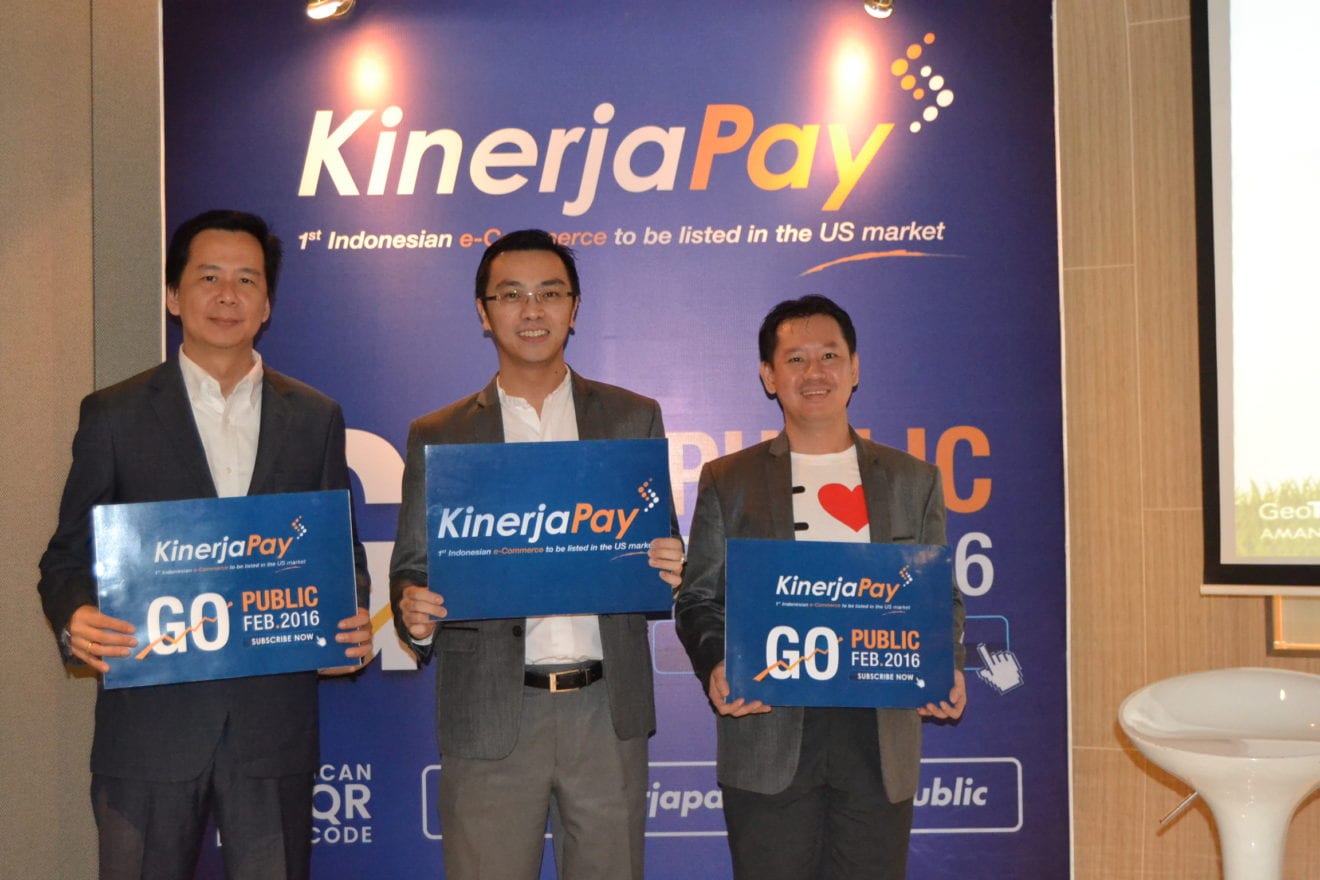
  • KinerjaPay Launched “I Love Indonesia” Campaign

    KinerjaPay Launched “I Love Indonesia” Campaign

    KinerjaPay launched “I Love Indonesia” Campaign to promote selected premium local products in its marketplace. This campaign is also to celebrate Indonesia’s 71st Independence Day anniversary on 17 August 2016. It is also designed to increase people’s love for domestic products and stimulate domestic consumption.

    Indonesia is a country of big numbers and big opportunity. With 252 million inhabitants it is the world’s fourth most populous country and the largest in south east Asia. Indonesia has 18,307 islands, over 742 different languages and a middle class larger than the population of Malaysia or Australia. Currently the 16th largest economy in the world, it is projected to be the seventh largest economy in the world by 2030. Catching the hype and realizing that a young population embracing the Internet faster than ever before. Mr. Sofyan Djalil as the Indonesia State Enterprise Minister once said he supported any form of program that boost love for the country’s products. “So far, people are not aware that the quality of Indonesian products is already good. I appeal to all state-owned companies to really take the opportunity, provide funds and put up the logo in their ads. They must do whatever they can to make the campaign effective,” he said.

    On the other hand, this campaign also means to promote national products abroad. In making an effective on this goal, The Company is also collaborating with overseas partners such as in Singapore to assist SMEs to expand their businesses internationally especially in South East Asia (SEA). The idea is to leverage strategic values and locations of Indonesia and Singapore, running many regular and ad-hoc events such as monthly networking events, trainings, site visits, and trade exhibitions.

    Mr. Deny Rahardjo, CEO for PT KinerjaPay Indonesia stated “We are very excited and optimist on the success of this campaign to promote Indonesia’s selected local prominent and unique merchants such as Batik, Indonesian coffee bean and handcrafted products. There are currently already more than 418 premium products and 14 prominent merchants have agreed to join the campaign that is planned to run until end of 2016. We do hope that this will bring positive impact towards local economy while promoting KinerjaPay as brand of trust.”

    Notice Regarding Forward-Looking Statements

    This press release may contain forward-looking statements, about KPAY’s expectations, beliefs or intentions regarding, among other things, its product development efforts, business, financial condition, results of operations, strategies or prospects. In addition, from time to time, KPAY or its representatives have made or may make forward-looking statements, orally or in writing. Forward-looking statements can be identified by the use of forward-looking words such as “believe,” “expect,” “intend,” “plan,” “may,” “should” or “anticipate” or their negatives or other variations of these words or other comparable words or by the fact that these statements do not relate strictly to historical or current matters. These forward-looking statements may be included in, but are not limited to, various filings made by KPAY with the U.S. Securities and Exchange Commission, press releases or oral statements made by or with the approval of one of KPAY’s authorized executive officers.

    Forward-looking statements relate to anticipated or expected events, activities, trends or results as of the date they are made. Because forward-looking statements relate to matters that have not yet occurred, these statements are inherently subject to risks and uncertainties that could cause KPAY’s actual results to differ materially from any future results expressed or implied by the forward-looking statements. Many factors could cause KPAY ‘s actual activities or results to differ materially from the activities and results anticipated in such forward-looking statements, including, but not limited to, the factors summarized in KPAY ‘s filings with the SEC. In addition, KPAY operates in an industry sector where securities values are highly volatile and may be influenced by economic and other factors beyond its control.

    KPAY does not undertake any obligation to publicly update these forward-looking statements, whether as a result of new information, future events or otherwise. Please see the risk factors associated with an investment in our securities which are included in our Annual Report on Form 10-K as filed with the U.S. Securities and Exchange Commission on February 11, 2016.

  • Indonesia-based HappyFresh announces Series B round, leaves Philippines and Taiwan

    Indonesia-based HappyFresh announces Series B round, leaves Philippines and Taiwan

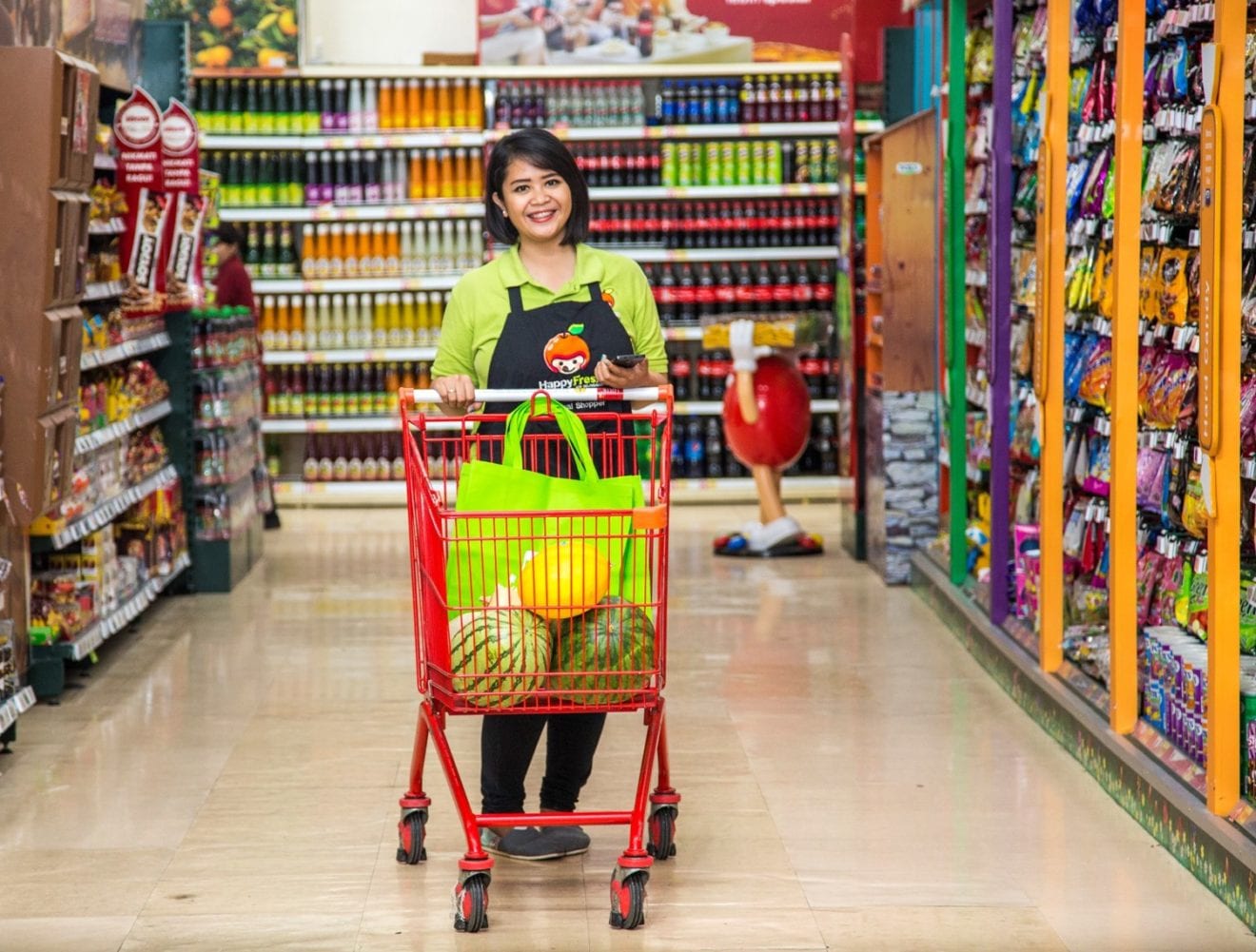
    HappyFresh, the Jakarta-based grocery delivery platform, announced yesterday it has raised an undisclosed Series B round while also revealing it will be consolidating operations and pulling out of the Philippines and Taiwan.

    The round was led Dubai-based private equity firm Samena Capital, with HappyFresh CEO Markus Bihler said a major reason for the partnership was Samena’s status as a leading investment firm for logistics.

    “Number one, given that our business is, to a significant extent, a logistics business, we feel the support on logistics is very value-add,” said Bihler.

    “And number two, they are a classic large-cap private equity firm with significant ties to offline retail, which is the second arm of the HappyFresh business,” he said.

    Other participants in the round were Vertex Ventures, the venture-arm of Singapore’s Temasek Holdings, Sinar Mas Digital Ventures of Indonesia’s Sinarmas Group and Endeavor Catalyst, a New York-based venture arm of Endeavor Capital.

    The fundraising, which was larger than the US$12 million Series A the company raised in September 2015, remains undisclosed in large part because Bihler said it brought unnecessary attention to the number.

    In regards to the decision to pull out of the Philippines and Taiwan, Bihler said a crucial goal for HappyFresh is to focus on its core markets.

    “I believe that companies who are profitable and independently sustainable are companies that last, and therefore can continue to serve, in our case, the end customers and offline retail partners,” he said.

    The decision to consolidate the company to Indonesia, Thailand and Malaysia was a fast decision. It comes six months after the company entered the Philippines back in March and less than a year since it launched in Taiwan.

    “What we have decided is we will focus our effort on the three core markets that we have chosen to operate in, which is Indonesia, Malaysia and Thailand,” said Bihler.

    Because HappyFresh puts emphasis on the role of logistics in the decision to go with Samena Capital, e27 asked Bihler to provide some details as to how that looks on-the-ground.

    “I think if I go back and look at what HappyFresh is, we are a digital marketplace for offline retailers on the front end. And on the backend we are a digitally enabled fulfillment operation. So the largest efficiency gains that we have seen historically, and I am very sure that we will see in the future, is driven by technology,” said Bihler.

    This means intelligent use of routing, the increase of prediction software, and more efficient usage of resources (the time and availability of the shopper and drivers in the company).

    HappyFresh was founded in October 2014 and began operating in March of 2015.

    Its operating model is similar to that of competitor honestbee — in which shoppers visit specific grocery stores and shop for the consumer before the food is delivered. As a comparison, another grocery delivery player, RedMart, has its own warehouses and thus does not ‘shop’ for customers.

  • Apple Pay, Android Pay purchases may hit $8b by 2018

    Apple Pay, Android Pay purchases may hit $8b by 2018

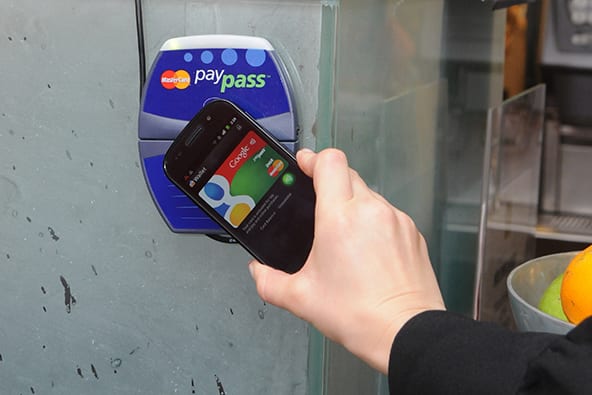
    In-app purchases and website retail payments are projected to drive annual spend via Apple Pay and Android Pay up to $8 billion in 2018, up from $540 million this year, Juniper Research reveals.

    The company also projects that the value of digital and physical goods purchased through mobile ‘OS-Pay’ platforms will increase by fifteen times in the next two years.

    Meanwhile, despite the continued contraction of the consumer tablet market, more than 85% of remote goods payments are forecast to be made using mobile devices in 2021.

    The new study, “Mobile & Online Remote Payments for Digital & Physical Goods: Opportunities & Forecasts 2016-2021,” found that the integration of OS-Pay into apps will be standard for developers looking to reduce buyer friction, where password entry on smartphones remains cumbersome.

    “It is clear that even in markets where PCs and laptops have a high installed base, the smartphone is playing an increasingly important role where remote goods purchases are concerned,” noted research author Steffen Sorrell. “For merchants, this means that the buyer experience must be made as frictionless as possible – from product search and discovery to purchase.”

    Apple has recently signalled its intent to offer Apple Pay to online merchants by the end of 2016, offering a similar payment mechanism to PayPal. Juniper anticipates that this move will be welcomed by most merchants as long as integration into their storefronts is made simple and rates are competitive.

    The research firm also expects the entry of Android Pay into this space as it expands to more countries. This will no doubt boost the market further in terms of merchants who may have been undecided where Apple Pay is concerned.

    Juniper believes that these OS-Pay solutions are likely to pose a threat to PayPal’s Western dominance, although it said it does not anticipate that combined sales via Apple Pay and Android Pay will approach those via PayPal within the next five years at least.

  • Carrefour Taiwan launches digital vouchers

    Carrefour Taiwan launches digital vouchers

    In a world first, Carrefour Taiwan has launched the supermarket’s first digital voucher service.

    Carrefour Ticket Xpress enables both retail and mobile payments, and was launched jointly with international payment service Edenred.

    Partners in Taiwan include banks as well as loyalty and employee benefit programs. The vouchers can be distributed, managed and redeemed easily via mobile devices. It offers mobile payments for Carrefour’s consumers in Taiwan, and the company plans to roll out the service in other countries.

    carrefour voucher

    In Taiwan the service partners include 113, Cathay United Bank, Chunghwa Telecom online mall, CTBC Bank, E.Sun Bank, Hua Nan Commercial Bank, JihSun Bank, MyCard, PayEasy, Ta Chong Commercial Bank, Taishin Bank and Tree Mall.

    Consumers can use reward points to have Carrefour Ticket Xpress vouchers delivered directly to their mobile device, and cash them in by scanning the barcode at any of 87 Carrefour stores in Taiwan.
    Carrefour Taiwan has also updated its mobile app with the “reward wallet”, an in-app Carrefour Ticket Xpress gift catalog for CTBC and E.Sun credit card holders. An “e-voucher clip” feature is also available for consumers to manage vouchers received outside the app.

  • Amazon India eyes private label

    Amazon India eyes private label

    Amazon India is planning to expand its private label fashion offer to gain a bigger foothold in the growing eCommerce sector.

    Deal Street Asia reports that the US-based company sees private label fashion and electronics lines will help give the brand additional pulling power with Indian consumers in a crowded, but booming online retail market.

    “Launching private labels is tricky as India bans foreign direct investment (FDI) in online retail, but allows 100 per cent FDI in the marketplace model, under which sites such as Amazon and Flipkart are supposed to simply connect third-party sellers with customers,” Deal Street Asia noted in a report online.

    Private label products may also be added to its grocery offer, which it markets through the Amazon Now app.

    Amazon recently hired former Myntra chief creative officer Gautam Kotamraju to lead its push into private brands in fashion. Kotamraju, who has worked 18 years in the fashion business, helped create Myntra’s large private brands business, which generated more than 20 per cent of Myntra’s gross sales within two years of its launch.

    Amazon hasn’t decided on a timeline for the launch of its proposed private brands in fashion, the report said, quoting sources familiar with the matter.

    Read more on Deal Street Asia

  • HK privacy commissioner weighs in on e-wallets

    HK privacy commissioner weighs in on e-wallets

    Privacy commissioner for personal data Stephen Kai-yi Wong has urged Hong Kong residents to vigilantly keep control of their personal data in wake of the Hong Kong Monetary Authority’s (HKMA) decision to grant Stored Value Facilities (SVF) licensesto five mobile e-wallet providers.

    Wong also called on e-wallet operators to win customers’ trust by respecting their privacy rights and safeguarding their personal data.

    While he acknowledged that e-wallet operators may need to collect significant amounts of personal data as part of their operations, he said providers should give consumers control over the types of data e-wallet apps are allowed to access, and the ability to revoke these permissions at any time.

    To keep their personal data safe, Wong recommended that users of e-wallet services find out how e-wallet operators will handle and process personal data collected, understand the apps’ privacy settings and permissions and avoid operating e-wallet apps over public or insecure Wi-Fi connections.

    Users should also use complex, unique passwords, make sure devices with the app installed have appropriate anti-theft features switched on and regulatory monitor transaction records for unauthorized payments.

    Wong said e-wallet operators are required under the new Stored Value Facilities Ordinance to clearly explain to users what personal data is collected and the reasons why.

    Operators planning to use collected data for purposes not directly related to payment should obtain the user’s explicit and voluntary consent, and are legally required to ensure the accuracy and security of personal data collected. Customers are also entitled to access this data and request corrections.

  • Pos Malaysia Q1 net profit jumps 40% to RM32mil

    Pos Malaysia Q1 net profit jumps 40% to RM32mil

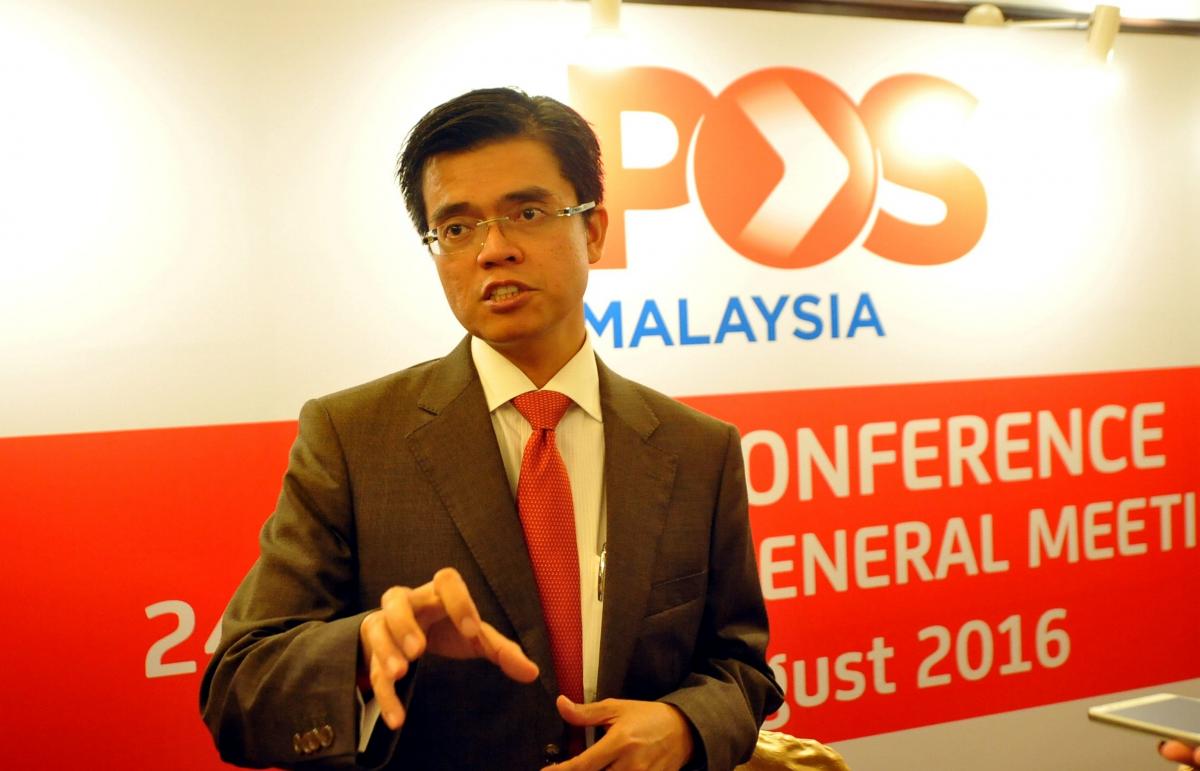
    Pos Malaysia Bhd’s net profit for its first quarter ended June 30, 2016 grew 40% to RM31.84mil, from RM22.74mil a year ago, despite operating in the current challenging environment, said group chief executive officer Datuk Mohd Shukrie Mohd Salleh.

    The increase was due to higher profits generated from its courier segment that was driven by demand from its e-commerce and online businesses. First quarter revenue rose to RM415.87mil from RM390.37mil a year earlier.

    Shukrie said Pos Malaysia is focussing to transform itself into a one-stop fully integrated logistics services provider through the recently approved and soon-to-be-completed corporate exercise of acquiring Kuala Lumpur Airport Services Sdn Bhd (KLAS) group of companies.

    The company will also introduce more new 24/7 e-commerce convenient touch points when it unveils a slew of new services. The company will also enhance facilities at all Pos Laju Centres and post offices nationwide. It is planning a total of 110 more touch points from the current total of 1,030 throughout Malaysia by end of 2016, Shukrie said.

    In a separate Bursa filing yesterday, the company said its courier segment registered higher revenue of RM162.8mil in the first quarter of this year compared with RM148.1mil a year ago.

    The upward performance was driven by increase in demand from e-commerce, the company said. Its postal services segment registered lower revenue of RM206.7mil in the first quarter of 2016 compared with RM230.6mil a year ago.

    “This is due to lower revenue for direct mail for mail segment and decrease of transactions from bill payment for retail segment,” Pos Malaysia said.

    Its international segment registered lower revenue by RM16.4mil as compared to RM36.1mil a year earlier due to lower transactions from transhipment business segment.

    Meanwhile, Pos Malaysia’s other segments which consist of digital certificates, printing and insertion registered higher revenue by RM7.8mil in the first quarter of this year due to higher business volume attributed to sales of digital certificates, as well as printing and insertion.

    Going forward, the company said its longer term prospects remain closely tied to the growth in the fulfilment and delivery of merchandise arising from the growth of e-commerce.

    “Investments by global e-commerce giants into the South-East Asia’s e-commerce players, for example the acquisition of Lazada by Alibaba, support the growth and development of the industry in the region.”

  • Why retailers should embrace showrooming

    Why retailers should embrace showrooming

    Trends eventually stop being trendy and either disappear into obscurity or become part of everyday life.

    The trends which end up only being fads often come in with a bang and leave with a thud, leaving embarrassing photos and fashions in their wake. Remember those 80s hairstyles?

    The other trends — the ones that create a whirl of buzz and actually manage to stick around — can often change social, cultural and political landscapes. When it comes to the world of retail, trends are often born and die in a single day. This isn’t without good reason.

    Consumers now control the retail landscape. Your competitors are now only a click or tap away. Lower prices, more sizes and dynamic shopping experiences are waiting in the shopper’s purse or pocket as they navigate your retail spaces.

    This specific shift in consumer behavior has led to one trend that has now become part of nearly every shopping experience.

    Love it or loathe it, showrooming is a behaviour that retailers need to embrace.

    Many retailers have taken a defensive stance against consumers visiting their physical stores to research items they find and often plan to purchase only online.

    Headlines encouraging retailers to “battle” or “combat” showrooming conjures images of war.

    Going against the tide of consumer behavior will rarely lead to success. Especially when you consider MasterCard’s recent Mobile Shopper study, which found that nearly one-third of shoppers in Singapore (31.9 per cent) will use their phones to research product costs and details while in a brick and mortar store.

    Understanding the reasons consumers want to showroom can help you to find ways to embrace this consumer behaviour and connect with your shoppers in a way that encourages them to buy when they are ready.

    Retailers must consider the catalysts for showrooming, the information consumers seek and how to position their brand as a source for everything they need to be an informed consumer.

    Let’s look at a few of these behaviours more closely.

    Research purchases

    A primary reason shoppers showroom is to research items they have discovered online. The knowledge that better deals and desirable products are so easily accessible has motivated consumers to become informed shoppers.

    Retailers can meet this showroomer need by ensuring product pages are optimised for mobile devices and that the information on these pages is comprehensive. Communicate product specifications as well as other value propositions that help your brand stand out. Are your materials locally sourced or all natural? Let your shoppers know! Have your handbags been carried on the red carpet? Share the photos!

    Help the in-store consumer to reconnect with the items they shopped online by making the shopping cart accessible on a mobile device and include details such as SKU, product number, brand, style, size and color as potential search criteria.

    Finding a lower price

    After viewing an item in your store, the shopper may try to find a lower price at one of your competitors. If price is not a differentiator, other shopper services could cause the showroomer to stray.

    Promote information about low price guarantees as well as return and exchange policies. Show perks such as repeat buyer discounts or loyalty program rewards.

    Tout services such as ship from store or in-store pick up at nearby locations. These also include low-price guarantees, in-store pick up, loyalty rewards and international shipping.

    phone, shopping mall, hand

    Look-alike items

    Many showroomers may use your app to locate an item in your stores. Give the shopper more reasons to buy from your brand by including product recommendations based on their shopping, buying and profile information.

    This level of customer intelligence is now more accessible to marketers and packs a lot of power to keep the showroomer engaged with your brand while helping to raise your average order value.

    Virtual store representatives

    Lastly, think of all the ways your store shoppers interact with your store staff.

    What questions do the shoppers ask? What concerns or problems do they encounter in your stores? Your site needs to serve as a virtual store representative by being making all of this information easily accessible.

    Consider how many times you’ve asked a store representative if they have an item in a different size only to find out they don’t have your size in stock. Now consider that 32 per cent of global respondents to PWC’s Total Retail 2016 study said they would be happier shoppers if they could check stock levels at other stores while in a store. That’s nearly one in three shoppers in your stores that want this kind of information.

    Make sure they can find answers! Additional areas to cover are product reviews, manuals, detailed specifications, installation information, warranties, demos, product videos… anything that answers the most commonly asked questions in your stores.

    Rather than seeing showrooming as a threat to your sales, accept the fact that this is how today’s consumer will shop — so find ways to use this behaviour to your advantage, keeping shoppers engaged.

    Shifting your perspective to empower today’s multi-device, multi-channel shopper will only help to boost sales and show your shoppers that you care.

    *Benjamin Glynn is managing director for Southeast Asia with Emarsys.