Category: E-Tailing

Retail News Asia is committed to providing both local and global retailers with the latest E-Commerce & Etail news throughout the Asian market. This on a daily base.

  • ‘Tremendous challenges’ for Chinese eCommerce

    ‘Tremendous challenges’ for Chinese eCommerce

    Chinese eCommerce companies could face “tremendous challenges” as Alibaba aims to transform the the mainland’s traditional retail industry, worth an estimated US$4.5 trillion.

    In a letter to shareholders, CEO Daniel Zhang says the company hopes to “upgrade” traditional retailers through improvements to distribution, service and product manufacturing.

    “The most important opportunity on the horizon is not growing online sales in isolation but rather helping traditional retailers upgrade into a brand-new retail model,” he writes. “The consumer retail industry as a whole is experiencing radical disruption driven by digital transformation.”

    Alibaba chairman Jack Ma has set a target of 20 years to attain 2 billion customers and support 10 million profitable businesses globally.

    Zhang cites cloud-based infrastructure and data as two areas where Alibaba sees future growth.

    “Cloud computing and big data will become ubiquitous,” he says. “Data has already become the new ‘natural resource’ that is as vital as oil and electricity. Cloud computing is the new ‘engine’ powering commerce.”

  • McDonald’s social media blitz: 200 staff added to Tweet & Like

    McDonald’s social media blitz: 200 staff added to Tweet & Like

    Gearing up for a McDonald’s social media blitz, the fast food giant has recruited 200 staff from tech-savvy online companies.

    The new recruits have come from companies such as Amazon and PayPal and are stationed in the McDonald’s head office in Oakbrook Illinois, in Singapore and London.

    Their challenge is help the iconic burger brand catch up with rivals in using social media to monitor customer experiences, engage with customers and monitor what is trending online.

    Just two years ago, McDonald’s was not even following or responding to online comments on its brand or products – yet its name is mentioned every one to two seconds.

    “We seemed deaf and mute,” Paul Matson, director of social and digital engagement at McDonald’s US, said in an interview with the Wall Street Journal.

    Matson believes the expanded team will help win business from social media-addicted millennials – some 78 per cent of whom visited a McDonald’s restaurant at least once a month during the first quarter of 2016.

    Besides improved monitoring and communication, the company is using social media to test market products and concepts – replacing more traditional focus group research. The spin-off from that is increased exposure of the concepts, wider engagement and a far great sample base than focus groups allow.

  • ASEAN e-commerce market keeps booming

    ASEAN e-commerce market keeps booming

    The ASEAN region (The Association of Southeast Asian Nations) is emerging as one of the most promising e-commerce markets in the world to replace the saturated Chinese market.

    Following the establishment of the ASEAN Economic Community (AEC) at the end of 2015, e-commerce is providing huge opportunities for Korean retailers seeking new customers abroad.

    Most member states of ASEAN, including Indonesia, Thailand, Malaysia, Singapore, the Philippines and Vietnam, are experiencing an e-commerce boom.

    The Internet-based retail market has been relatively underdeveloped in Southeast Asia due to low Internet penetration and lack of customers with purchasing power.

    However, with the middle class growing and Internet penetration spreading, the number of online and mobile shoppers in the region is rising fast.

    Still, it is fragmented and Internet users account for only around 40 percent of the total population of Southeast Asia, indicating that the region has much room to grow.

    According to the 2016 report “E-Conomy SEA (Southeast Asia)” released jointly by Singapore’s sovereign fund Temasek and Google, the average annual growth rate of Internet users in the region is forecast to reach approximately 14 percent by 2020, well above 4 percent for China and 1 percent for the United States.

    Online shoppers, accordingly, are also on a sharp rise.

    According to Bain & Company, the number of digital consumers, or those aged over 16 and using e-commerce, reached 150 million in 2015. Of them, around 100 million or 75 percent actually purchased goods online.

    By nation, Indonesia ranked at the top with 51 million digital consumers, followed by Vietnam (31 million), the Philippines (28 million), Thailand (23 million), Malaysia (14 million) and Singapore (3 million).

    “Chinese and global Internet companies should look at Southeast Asian e-commerce as their next potential gold rush,” reported IT-specialized media TechCrunch in June, 2015.

    In particular, ASEAN’s e-commerce has a special feature that sets itself apart from other countries.

    For example, the online retail market in the U.S. and Korea first grew with expansion of PC-based shopping. However, Southeast Asia experienced the e-commerce boom with more consumers accessing Internet via smartphones.

    In 2015, e-commerce in the ASEAN is estimated at $5.5 billion (6.06 trillion won), and the amount is expected to rise to $8.78 billion by 2025, according to E-Conomy.

    The portion of e-commerce to retail sales in the region stood at only 0.8 percent in 2015 but is forecast to jump to 6.4 percent by 2025.

    Global players eye ASEAN

    Against this backdrop, global players are making fast forays into the ASEAN e-commerce market.

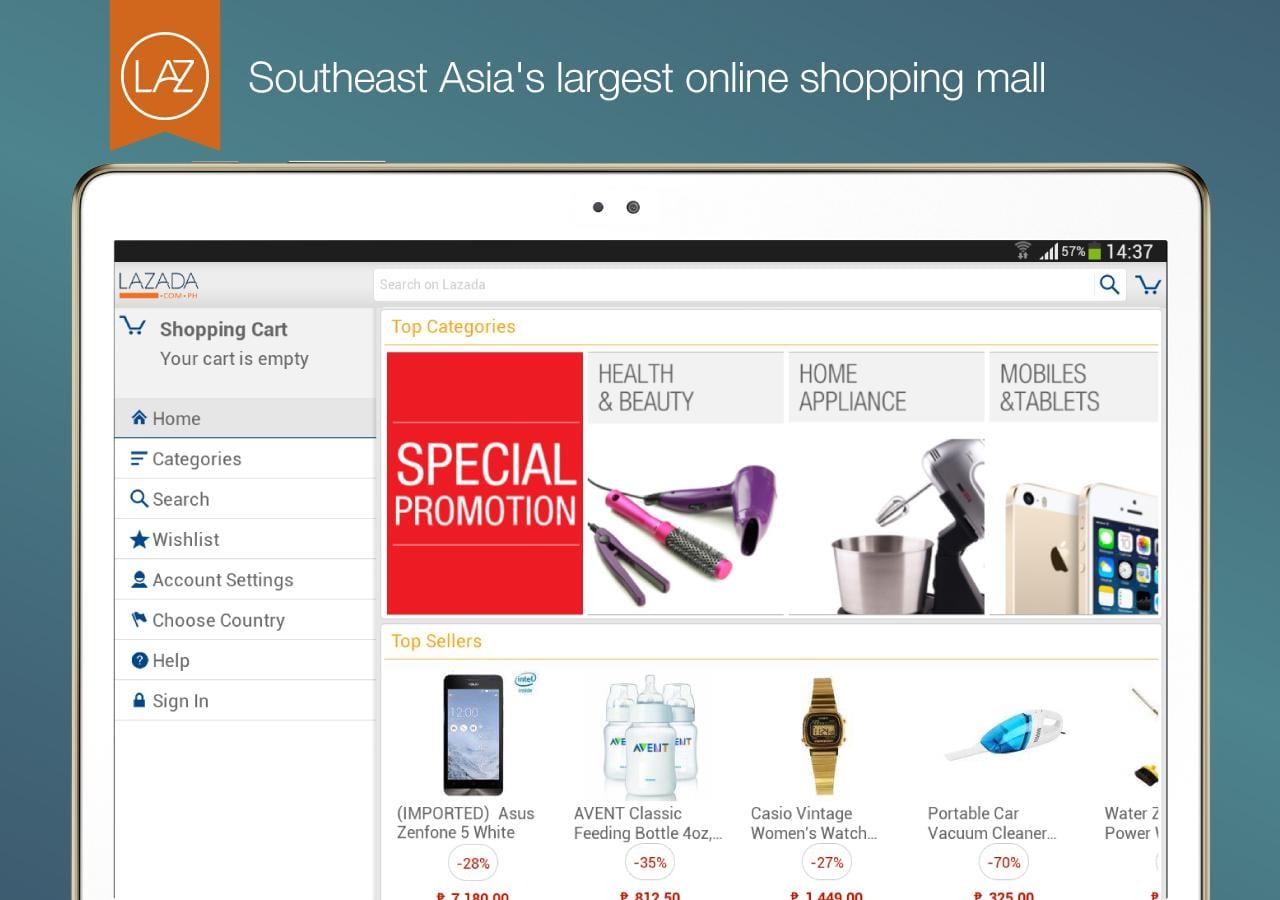
    In April, Alibaba, China’s largest e-commerce company, purchased a controlling stake in Southeast Asian online retailer Lazada Group for $1 billion, its largest overseas investment.

    Lazada was started by Germany’s Rocket Internet in 2012 with headquarters in Singapore. It is operating in Malaysia, Indonesia, the Philippines, Thailand and Vietnam. It is the number one e-commerce player in Philippines, Malaysia, Thailand and Vietnam.

    In June, U.S. retail giant Amazon also decided to invest $600 million to open an e-commerce platform in Indonesia, according to Daniel Tumiwa, chairman of the Ecommerce Association of Indonesia (IDEA).

    Japanese SoftBank and Silicon Valley venture capitalist Sequoia Capital acquired a $100 million stake in Tokopedia, the biggest startup investment in Indonesia. eBay, another U.S. e-commerce giant, currently owns Qoo10, the online shopping mall based in Singapore.

    Korean companies are also expanding their operations in the region to capitalize on the rising popularity of hallyu or the Korean Wave.

    On Sept. 20, CJ Korea Express, South Korea’s largest parcel delivery service company, signed an international delivery service contract with Lazada. Under the deal, CJ would deliver goods made in Korea purchased by customers via Lazada’s website.

    On the same day, KOTRA, Korea’s trade-investment promotion agency, joined hands with Qoo10 to start an online support program and help Korean small firms export their goods to Southeast Asia. Qoo10 has a total of 300 million online members in Singapore, nearly 60 percent of its population.

    SK Planet opened 11th Avenue, its online shopping mall, in Indonesia in 2014 and Malaysia in 2015.

    Korea is now focusing on expanding exports of consumer goods to ASEAN as it has faced limitations to increase external shipments of parts and intermediary products.

    “With more Korean firms entering the ASEAN e-commerce network, including Lazada, exports of Korean consumer goods, such as mobile phones, cosmetics, food and fashion items, are on a sharp rise,” Roh In-ho, KOTRA’s Asia Regional Director based in Singapore, said.

    For sustainable growth, Korean firms need to make more effort to come up with localized strategies that meet demands from local customers.

    “If diversifying marketing strategies, ASEAN e-commerce will offer good opportunities for small Korean exporters,” Roh said. “It is very important to develop designs and products that locals would like.”


  • Local e-commerce not fazed by Alibaba expansion plan

    Local e-commerce not fazed by Alibaba expansion plan

    Local e-commerce company Bukalapak is not worried about Chinese giant Alibaba’s plan to expand into Indonesia as local players can still compete with foreign ones, the company’s co-founder said.

    Bukalapak co-founder and chief financial officer Muhammad Fajrin Rasyid said that unlike social media, which adopted a general model for their users worldwide, e-commerce business models needed a so-called “local touch”. This was because customers’ preferences for goods, methods of payment and logistic systems were different in each country, he went on.

    “Our customers mainly buy ‘local goods’ such as sambal [traditional hot relish] and they prefer to use cash on delivery as a method of payment. We must understand things like this,” Fajrin said at a Centre for Strategic and International Studies (CSIS) seminar on the digital economy in Jakarta on Monday.

    He further said that some foreign e-commerce companies had fallen victim to their own poor understanding of local customs. Japanese online market Rakuten Belanja Online closed in March while German-backed online delivery service Foodpanda Indonesia was shuttered on Oct. 3.

    “We are sure our customer to customer [C2C] model is still suitable for Indonesia. We have 1 million sellers and our mobile apps have the highest rate by users compared to other e-commerce companies,” Fajrin said.

    During the event, Investment Coordinating Board (BKPM) deputy of investment planning Tamba Parulian Hutapea confirmed that Chinese tech giant Alibaba would enter the Indonesian market soon. The company has bought German e-commerce company Lazada and plans to use the latter’s resources in Indonesia to make entry into its market.

  • Timberland Asia launches online

    Timberland Asia launches online

    Footwear and apparel brand Timberland Asia has partnered SP eCommerce, a Singapore Post company, to launch its official eCommerce store for the Southeast Asian region.

    The Singapore-based online store uses SP eCommerce’s security, management, digital marketing, store operations and customer-care technology. Order fulfillment is being handled across Singapore through SingPost’s last-mile distribution network.

    This gives Timberland the ability to deliver a seamless shopping experience, with exclusive online promotions as well as its full retail catalog.

    “This is a natural next step for Timberland,” says Malaysia/Singapore GM Daisy Tan of Timberland owner VF Corporation. “Working with one partner for the entire shop-to-ship process lets us focus our attention on serving our customers and growing our business.”

  • Sprooki platform to launch in Indonesia

    Sprooki platform to launch in Indonesia

    Shopper-engagement platform Sprooki will launch in Indonesia next month at the 125,000 sqm Supermal Karawaci retail precinct in western Jakarta.

    It will be integrated with the precinct’s touchpoints and mobile apps, allowing retailers to offer customers individualised content such as vouchers, special offers, event alerts and store information.

    Sprooki Michael Gethen and Claire Mula

    Sprooki Michael Gethen and Claire Mula

    Customers will be able to share content on social media including Facebook, which has more than 60 million users in Indonesia. Sprooki is available in both English and Bahasa languages.

    Based in Singapore, Sprooki uses customer location, profile and behaviour data to help retail outlets, shopping malls and department stores engage with their customers via smartphones and other devices.

    Supermal Karawaci is the largest shopping centre in Banten province, west of Jakarta, with more than 1000 stores, three cinemas and the largest Timezone arcade in Southeast Asia – complete with an indoor rollercoaster.

    Sprooki CEO/co-founder Michael Gethen says the deployment will help Supermal Karawaci’s retail tenants improve sales and give the mall unprecedented insight into shopper habits and behaviour.

    Sprooki

    “By implementing the Sprooki platform, our mall will be one of the first shopping precincts in Indonesia to incorporate a data-driven mobile platform to improve shopper experience,” says Supermal Karawaci marketing and leasing GM Pipih Tjandra.

    Sprooki’s mobile platform is already being used by Southeast Asian shopping malls such as a Lend Lease’s 313@Somserset in Singapore and Crescent Mall in Ho Chi Minh City, Vietnam, as well as thousands of retailers and major brands such as Coffee Bean and Tea Leaf, Forever 21, Gap, GNC, Marks & Spencer and Pie Face.

  • T-Hub, Uber launch T-Bridge startup platform

    T-Hub, Uber launch T-Bridge startup platform

    Indian startup incubator T-Hub has joined hands with ride sharing pioneer Uber and TiE Silicon Valley to launch a program that will connect Indian startups with global market opportunities and help bring global new-age companies to the country.

    A press release issued by the startup incubator T-Bridge said that the program will enable startup communities in India and globally to cross-pollinate ideas, innovate and create channels for knowledge transfer. It will also create a network of mentors, VCs, incubators and accelerators that will support the Indian startup ecosystem.

    K T Rama Rao, Telangana Minister for IT on Saturday inaugurated T-Bridge at Uber’s headquarters in San Francisco.

    T-Bridge will provide a platform for such fast-track tech companies looking to tap into India’s huge consumer market for technology and help startups access UberExchange-Uber’s flagship startup mentorship program and TiE Silicon Valley’s mentor network.

    “We have a strong vision to make Hyderabad one of the top 10 startup cities in the world. T-Bridge is one such move towards opening a channel of investment from the world to the state of Telangana. I am proud to open our first outpost in the US in association with Uber and TiE Silicon Valley and believe that this association will forge new partnerships and spur investment and innovation between the two countries,” Rama Rao said at the launch.

    Rachel Whetstone, Uber’s senior vice president for policy and communications, said, Telangana is one of the most progressive states in India; and it has set up a culture of ‘regulatory incubation’ – allowing new ideas and business models to thrive.

    “Today more and more people around the world want to build something themselves. Through initiatives like UberExchange, our mentorship program for Indian startups, we hope to spur entrepreneurship. Creative partnerships like T-Bridge will continue to strengthen ties between India and the global startup scene,” Whetstone said.

  • Lazada stays online

    Lazada stays online

    While some global e-commerce giants, including Amazon Inc, are planning to build brick-and-mortar convenience stores, Lazada Malaysia will focus on things it does best — selling inventory to customers from its warehouses through its online platform.

    Its chief executive officer (CEO) Hans-Peter Ressel said Lazada Malaysia will concentrate on strengthening its online shopping business, rather than building physical stores to complement its online services.

    “We can’t comment on their (Amazon’s) strategy because we focus only on our products,” Ressel said in an interview last week. “We have decided to go this way, and if other players are doing other things, I’m happy to learn and observe how this works for them, but it doesn’t change our strategy.”

    Citing unnamed sources, The Wall Street Journal last week reported that Amazon stores will sell perishable goods, including milk and meats. The Seattle-based retail giant will also build drive-in locations for consumers in a rush where online grocery orders will be brought to the car, the newspaper said.

    Lazada Malaysia, which has achieved more than five million app downloads, is part of the Lazada Group which operates online shopping platforms in Indonesia, the Philippines, Singapore, Thailand and Vietnam. Its product offering covers diverse categories, including electronics, fashion, health & beauty, sports & travel, and groceries.

    Vienna-born Ressel, who is of Austrian and Filipino descent, had served as Lazada Malaysia chief commercial officer and chief operations officer since August 2012, before he became its CEO in March 2015.

    Lazada Malaysia, he said, would continue to collaborate with brand retailers, hypermarkets and offline flagship stores to sell their products.

    “If you want [to operate your own] store, how many stores do you need? What do you want to put on these stores? We don’t believe in doing everything by ourselves. We have partners; we have brands, and it is crucial to have their collaboration, that’s our focus,” he said.

    Notably, Lazada Malaysia this year brought in top brands such as L’oreal, Levi’s and Samsung. It also formed partnerships with giant retailers such as Tesco, Watsons and Senheng.

    Ressel believes e-commerce is the way forward, considering that two-thirds of Malaysians have Internet access, with most of them spending more than four hours a day online.

    “If we didn’t believe in the future growth of e-commerce, we won’t be here. Today, 20 million out of 30 million Malaysians are online. The [Malaysian] e-commerce market will definitely grow towards a size that is similar to Western countries, China and Korea. It’s just a matter of time,” he said.

    According to an estimate by statistics portal Statista, total revenue for the Malaysian e-commerce market this year will hit US$894 million (RM3.75 billion) and revenue is expected to see an annual growth rate of 23.7% in the next five years, to reach US$2.58 billion by 2021.

    Currently, the market’s largest segment is electronics and media, with a market volume of US$380 million. User penetration is at 61.7% this year and is expected to hit 76.8% in 2021.

  • Watsons places products on Lazada Singapore

    Watsons places products on Lazada Singapore

    Healthcare and beauty chain Watsons has formed a partnership with eCommerce company Lazada Singapore.

    As a result of the collaboration, more than 500 Watsons products have been made available on Lazada.

    Formed in 2012, Lazada Singapore offers a wide range of products, from electronics and household goods to fashion apparel and sports equipment. Watsons has more than 100 stores throughout Singapore.

    “The partnership with Lazada is a timely extension to our digital strategy in the region,” says Watsons Singapore GM Dominic Wong.

    The alliance not only ensures convenience, but Lazada has also just introduced a free delivery option with no minimum spend.

  • Kaskus founder leaves company, says IT sector becoming too risky

    Kaskus founder leaves company, says IT sector becoming too risky

    Kaskus founder Ken Dean Lawadinata has resigned from his position as chairman of PT Darta Media Indonesia, the operator of the Kaskus online community. Ken plans to invest in property and commodities instead of Information Technology (IT).

    Ken released his shares in Kaskus to GDP Ventures.

    “That’s right, I have left Kaskus. I released all my shares to GDP,” he said on Saturday as quoted by kompas.com.

    Ken was one of the founders of Kaskus and elevated Kaskus to its current status as the biggest online community in Indonesia.

    Ken said that after Kaskus, he was not interested in the IT industry anymore. He has his eyes on property and commodity investments such as mining and timber.

    He said the IT industry in Indonesia was still growing and demand was healthy and new ideas kept emerging. However, Ken said the risks in IT were now too high.

    “IT was a sector with low-risk, high-return, but it has now become a high-risk, high-return sector. In this industry, US$10 million is now meaningless,” Ken said.

    Ken also founded Smartmama, a media company for mothers, and Tororo, an online baby products shop. He plans to hold on to these companies.

    “In IT, I will focus on Smartmama and Tororo,” Ken went on to say.

    Another Kaskus founder, Andrew Darwis, who is still chief commercial officer of Kaskus, offered his thanks to Ken for Ken’s dedication in growing Kaskus. He stated that Ken’s resignation would not disturb the company’s performance.

    “Kaskus is focusing on its mission to become the biggest social commerce platform in Indonesia,” Andrew said.

    Kaskus was founded in 1999 by Andrew, Ken and two other friends.

  • Rakuten launches Raxy subscription service

    Rakuten launches Raxy subscription service

    Japanese eCommerce company Rakuten Inc has launched a beauty-subscription service, Raxy.

    Registrations are already being accepted for the service, which offers options for three, six or 12 months.

    Each month, subscribers will receive boxes of assorted cosmetics and beauty products. Through partnerships with such brands as Revlon and SK-II, these boxes will contain three to seven items of cosmetics, hair care products, make-up accessories and beauty supplements.

    Raxy’s website will offer a variety of content each month, including articles and videos by makeup artists and beauty experts, as well as YouTube users introducing products.

    As well as receiving Rakuten Super Points upon subscribing, users can also earn extra points when buying beauty products on Rakuten Ichiba. Also, the first 100 subscribers receive a limited-edition original cosmetics pouch from the official SK-II store on Rakuten Ichiba. Customers signing up for 12 months will also receive a special product.

  • StanChart, Uber launch multi-market partnership

    StanChart, Uber launch multi-market partnership

    Standard Chartered Bank and Uber announced a partnership that offers all Standard Chartered credit cardholders in six markets (Singapore, Indonesia, Malaysia, Vietnam, India and the United Arab Emirates) across two continents up to 25% cashback for all global Uber rides. This is the first ever multimarket partnership for both Standard Chartered Bank and Uber, the world’s most popular transport app.

    Collaborating with Uber is part of Standard Chartered’s digital agenda to deliver simple and convenient banking through digital channels for increasingly tech-savvy clients. To meet clients’ needs in the new digital ecosystem, the Bank believes that collaboration between the financial and technology sectors will lead the way forward. Ride hailing service providers such as Uber are fast becoming a mainstream feature of transportation globally, and continue to gain popularity exponentially. This collaboration between Standard Chartered and Uber capitalises on key areas of synergies, which are mainly an extensive geographical network, highly-mobile client base and the desire to provide innovative offerings to clients.

    Sebastian Arcuri, Regional Head, Retail Banking, ASEAN and South Asia, Standard Chartered Bank said:

    “There has been a dramatic shift towards digital and cashless payments across the region and we are seeing success in the seamless integration of the Bank’s services in our clients’ everyday life. As a global bank with a focus on Asia, Africa and Middle East, we are pleased to partner Uber, a transport network operating in more than 425 cities, to engage our clients for both their local and overseas transport needs.”

    Commenting on the partnership, Chan Park, Uber’s Regional General Manager for Southeast Asia, said:
    “We are thrilled to partner with Standard Chartered Bank, one of the region’s longstanding and illustrious banks. Together, we will bring to life our shared passion for delighting customers and bring even more value to riders. We also look forward to welcoming cardholders as first-time Uber riders to join over 50 million riders globally to experience the ridesharing revolution.”

    VisaNet data reveals that in Singapore, in-app payments account for around one third of total card spend under the transportation category. The overall consumer spend in transportation witnessed a healthy growth of 35% year-on-year, driven primarily by a growth in spend for in-app merchants. On the average, third party transportation booking apps account for more than 1.5 million transactions every month.

    Andrew Chia, Head of Retail Banking, Standard Chartered Bank Singapore, said:

    “We constantly seek new ways to delight our clients and are excited to partner Uber in delivering greater value and a more seamless travel experience for our cardholders. Given the shift towards a cashless society in Singapore, there is strong demand for more accessible digital payment options. With this partnership, our cardholders are rewarded with convenience and cashback when they go cashless with Uber.”

  • Discovery Japan Mall opens online

    Discovery Japan Mall opens online

    Tokyo-based craft products retailer DigitalStudio has launched Discovery Japan Mall, a cross-border eCommerce venture.

    Specialising in Japanese brands, the mall’s initial catalogue includes mainly toys, fishing gear, cosmetics, food, watches and fashion. About 100 Japanese companies have opened stores on the mall, offering about 15,000 items.

    Shipping is available to more than 120 countries and regions, and as part of the opening campaign free international shipping is offered for orders worth JPY 20,000 (US$190) or more until the end of this month.

    As well as credit cards, the mall supports payment by AliPay, PayPal, UnionPay and WeChat. The website is available in English, simplified and traditional Chinese, Indonesian, Korean and Thai. Purchases can be made by smartphone, and all orders include tracking and shipping insurance, plus delivery from Japan.

    Discovery Japan Mall representative Norio Itabashi says many hidden Japanese products do not reach the overseas market, and the mall is working with craftsmen and manufacturers to sell unique products.

    DigitalStudio was established in 2003 with the aim of “continuing to bring Japan to the world”.

  • Trade ministry encourages small, medium industries to utilize e-commerce

    Trade ministry encourages small, medium industries to utilize e-commerce

    Indoensias Ministry of Trade has said it has been encouraging small and medium industries (SMIs) to take benefit of online trade (e-commerce) to market their products.

    “We are pushing the small and medium industries to take their products to various e-commerce platforms. Websites like Tokopedia, Bukalapak, Blibli and Lazada are all local e-commerce platforms and we encourage the SMIs to use them,” the Minister of Trade, Airlangga Hartarto, stated in Jakarta on Tuesday.

    He hoped that once the SMIs start fully utilizing the e-commerce platforms, the industry will start expanding.

    The fourth industrial revolution era hinges on embracing the internet and integrating it with products and services, he added.

    The minister further explained that internet usage is now part of people’s daily lifestyle and it has now become integral to the industrial world also.

    “Germany began doing it in 2013. If we start this year, we will make sure that we are not left behind,” he remarked.

    Additionally, the Ministry of Trade also encourages professional vocational training to enhance the quality of human resources.

    The minister mentioned the importance of undertaking research and forging collaborations with universities in the industrial sector.

    Minister Hartarto also pointed to the progress made in basic materials, and highlighted the fact that natural energy resources cannot last forever.

  • Singapore Website Shutdown After Selling Fake Calvin Klein Products from Taobao

    Singapore Website Shutdown After Selling Fake Calvin Klein Products from Taobao

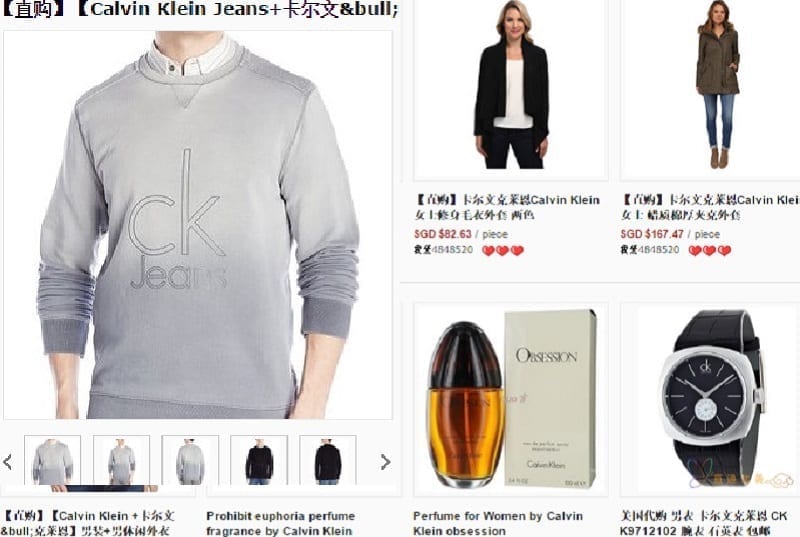
    Website SGbuy4u was found selling fake Calvin Klein goods after investigators successfully purchased imitation wallets and underwear from the website.

    Calvin Klein’s case against Singapore-based Global PSM marked the first reported suit that involved a summary judgment against a firm selling fake goods online in Singapore.

    Global PSM however, claimed that their business model was customer-to-customer service.

    2

    Users can search for and buy a variety of goods on the website and after a payment for an item has been made, Global PSM then passes on the order to Chinese shopping website Taobao. After the company has transferred payment, and the item has been delivered in China, it will then be shipped to the customer in Singapore.

    Calvin Klein filed cases and asked for summary judgment against Global PSM, freight forwarding company HS International and a Mr. Jeffrey Tan, the owner of the two firms, after two successful purchases.

    “The crux of the dispute lies in the proper characterization of the business and the involvement of each of the defendants in those business activities,” said Justice Chan Seng Onn was quoted as saying.

    Global PSM’s argument claimed that the company merely served as a courier, pointing the blame for the trademark breaches to original sellers on Taobao.

    Prosecution lawyers, however, countered that the SGbuy4u business does more than courier services as it collects payments, buys the fake goods on Taobao and has them delivered to their warehouse.

    While Justice Chan had expressed willingness to hold Global PSM accountable for trademark infringement, he ruled that some issues were needed to be clarified in relation to the involvement of the other defendants.

    “There is a pressing need for intellectual property law to keep up with technological advances in order to ensure that the law continues to protect intellectual property and rights owners in real and relevant ways,”the judge said.