Category: E-Tailing

Retail News Asia is committed to providing both local and global retailers with the latest E-Commerce & Etail news throughout the Asian market. This on a daily base.

  • Alibaba tipped to record solid quarterly revenue growth

    Alibaba tipped to record solid quarterly revenue growth

    Alibaba Group Holding, the world’s largest e-commerce company, is expected to report another strong quarter of sales in the three months to September 30, as its preparations intensify for the Singles’ Day online shopping festival next week.

    Analysts estimated New York-listed Alibaba’s total second-quarter revenue for its fiscal year that ends March would increase about 50 per cent year on year.

    “We model total revenue to grow 51.7 per cent to 33.64 billion yuan (HK$38.55 billion) versus [market analysts’] consensus estimate of 33.94 billion yuan,” Alicia Yap, the head of regional internet research at Citi Research, said in a report published ahead of Alibaba’s earnings announcement on Wednesday.

    Yap estimated Alibaba’s gross merchandise volume, the total amount of goods sold through the company’s vast online retail platforms, to have grown 22 per cent year on year to 872 billion yuan in the past quarter.

    Citi maintains a “buy” rating on Alibaba shares, and has raised its target price to US$133, up from the previous US$112.

    In an open letter to shareholders early this month, Alibaba chief executive Daniel Zhang Yong said: “During fiscal year 2016, our China retail marketplaces reached a historical milestone when annual gross merchandise volume transaction surpassed 3 trillion yuan, making Alibaba Group the largest retail ecosystem in the world.”

    In the three months to June, Alibaba reported a 59 per cent year on year jump in revenue to 32.15 billion yuan. The gross merchandise volume transacted on its China retail platforms rose 24 per cent to 837 billion yuan.

    Alibaba, which owns the South China Morning Post, runs four business segments – core commerce, cloud computing, digital media and entertainment, and innovation initiatives.

    Citi estimated Alibaba’s revenue from its core commerce business would reach 28.18 billion yuan in the quarter to September, up from 27.24 billion yuan in the quarter to June.

    That segment comprises the China and international online marketplaces operating in retail and wholesale commerce, including Taobao Marketplace, Tmall.com, Juhuasuan, 1688.com, AliExpress and Lazada.

    Citi predicted Alibaba’s cloud computing revenue would reach 1.56 billion yuan in the three months to September. Led by subsidiary Alibaba Cloud, it had revenue of 1.24 billion yuan in the quarter to June.

    Digital media and entertainment revenue was estimated by Citi to have reached 3.35 billion yuan in the past quarter. This segment, which includes UCWeb and Youku Tudou, had revenue of 3.13 billion yuan in the June quarter

    Alibaba’s innovation initiatives segment was forecast by Citi to have posted revenue of 550 million yuan in the three months to September, compared with 535 million yuan in the June quarter. This segment includes the YunOS mobile operating system and web mapping and navigation software AutoNavi.

    We want to offer a large variety of daily necessities to the city’s consumers

    Daniel Zhang Yong, Alibaba chief executive

    Last week, Alibaba said its introduction of the Singles’ Day shopping extravaganza and the Tmall.hk platform to Hong Kong would ramp up e-commerce services outside the mainland.

    “We want to offer a large variety of daily necessities to the city’s consumers,” Zhang said at the launch of Alibaba’s 11.11 Global Shopping Festival in Hong Kong.

    That kicked off a flurry of activities ahead of Singles’ Day, an annual event held on November 11 that will see billions of dollars of goods transacted on Alibaba’s online retail platforms within 24 hours, making it the world’s biggest online shopping event.

    At last year’s 11.11 festival, Alibaba posted a 60 per cent year on year increase in gross merchandise volume to 91.2 billion yuan.

    Daiwa Capital Markets analyst John Choi said in a report that sentiment on Alibaba was positive as “most investors now seem to have a better understanding of Alibaba’s ecosystem”. Daiwa has a “buy” rating on Alibaba.

  • Pomelo boosts funding to $11m

    Pomelo boosts funding to $11m

    Thai online fashion retailer Pomelo has raised a follow-on round, bringing its total Series A funding to US$11 million.

    This round was again led by Singapore-based Jungle Ventures, with participation from existing investors and new contributors including 500 Tuk Tuks (a fund of major venture capitalist 500 Startups), Andre Hoffmann and Jonathan Price.

    Pomelo says it will use the funds to continue expanding in Southeast Asia. While focussed on Indonesia, Singapore and Thailand, it has customers in more than 40 countries.

    “We strive to provide the absolute best in terms of online fashion through our vertically integrated supply chain,” says Pomelo co-founder/CEO David Jou. “eCommerce is clearly approaching a tipping point in Southeast Asia, and we’re lucky to be one of the leaders in the fast-growing fashion vertical.”

    Additionally, the label continues to strengthen its management depth, having added Meg Mistry as brand president and James Lamrock as regional VP (operations). Mistry was previously regional creative director for online fashion house Zalora, while Lamrock was chief logistics officer at Luxola, which was acquired by beauty products company Sephora. Investment firm TPG senior adviser Jonathan Price has also joined in an advisory capacity. He was previously MD of cosmetics and skincare group The Body Shop Asia and global COO of accessories company Targus.

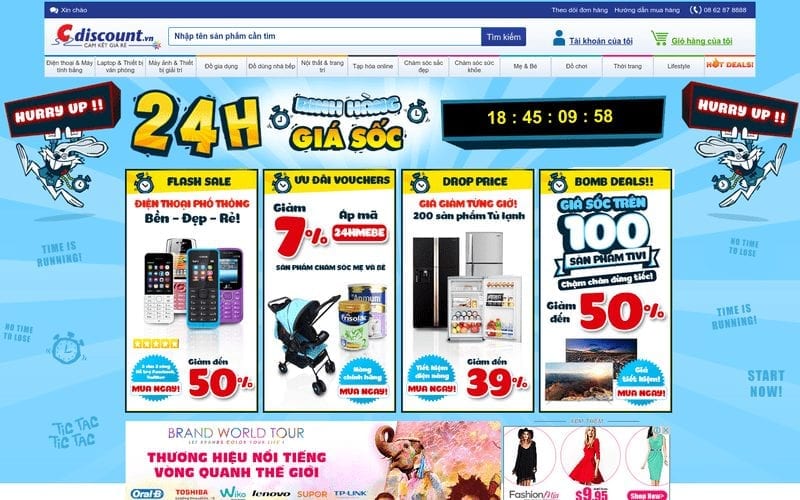
  • Big C Vietnam closes Cdiscount

    Big C Vietnam closes Cdiscount

    Big C Vietnam says it will close its eCommerce site Cdiscount by the end of December.

    The closure appears to be part of a policy change from Thailand’s Central Group after it bought the supermarket chain in April in a US$1.14 billion deal. The company will soon change the chain’s name and it has other eCommerce brands and established sites it could expand into Vietnam.

    Post-December, after sales service will be transferred to original retailers who used the portal.

    The e-tailer specialises in cell phones, household goods, beauty products and groceries and has been operating since the beginning of 2014. Originally it aimed to become the leading online retailer in Vietnam. However, after two years, Cdiscount has had little impact on the market.

    Vietnam is considered one of the two Southeast Asian nations with the most potential for eCommerce along with Indonesia. Korean retail giant Lotte recently announced plans to launch its first online shopping website Lotte.vn in Vietnam this month.

  • Ride-hailing app Grab brings GrabBike services to Bali

    Ride-hailing app Grab brings GrabBike services to Bali

    Watch out Gojek, competitor GrabBike has come to Bali. Ride-hailing app Grab has announced that it launched both GrabBike and GrabExpress services in Bali, as of Oct. 22. 

    Like Gojek, GrabBike allows you to order motorbike taxis, while GrabExpress is Grab’s courier service. Also in common with Gojek, the app’s drivers use black and green colors.

    Similar to Uber, the app has provided its GrabCar driver services in some time in Bali (they launched in 2015)—to the frustration of competing taxi and other drivers operating on the island. 

    As with GrabCar, the GrabBike and GrabExpress options will be most available in Badung and Denpasar. 

    Grab started in Malaysia but has quickly spread throughout the region, with notable success in Jakarta, its first Indonesian city. 

    “Bali is dominant in growth and tourism potential, so we saw an opportunity to improve the quality of daily trips in Denpasar and Badung. The launching of two-wheel services in Bali will complement GrabCar, which previously launched in 2015.

  • Amazon bans most ‘incentivized’ reviews

    Amazon.com is prohibiting most reviews made in exchange for free or discounted products, part of a wider campaign to bolster consumer confidence in its rating system.

    Sellers and brand owners have long used these so-called “incentivized” reviews as a way to get word out on their products, and until now they had been tolerated by Amazon as long as they were disclosed as such.

    But in a post on the Amazon site Monday, Chee Chew, Amazon’s vice president of customer experience, wrote that the practice will no longer be tolerated, unless done through the Amazon Vine program.

    That’s a program in which Amazon, not the third-party merchant of a product, chooses the reviewer. Amazon says it doesn’t reward positive star ratings, nor attempt to influence the review’s content in any way.

    Books are also an exception, with merchants and publishers still allowed to send out advance copies of books.

    The move highlights how customer reviews have become a major currency on Amazon’s site, as they are a big guide in purchasing decisions — and how the company endeavors to ensure these reviews remain trustworthy.

    The company in the past year has applied a new algorithm that gives preference to “newer, more helpful” reviews. It has also sued more than 1,000 parties for allegedly offering fake reviews for sale, and last June for the first time filed arbitration claims against merchants it accuses of paying for favorable opinions of their products.

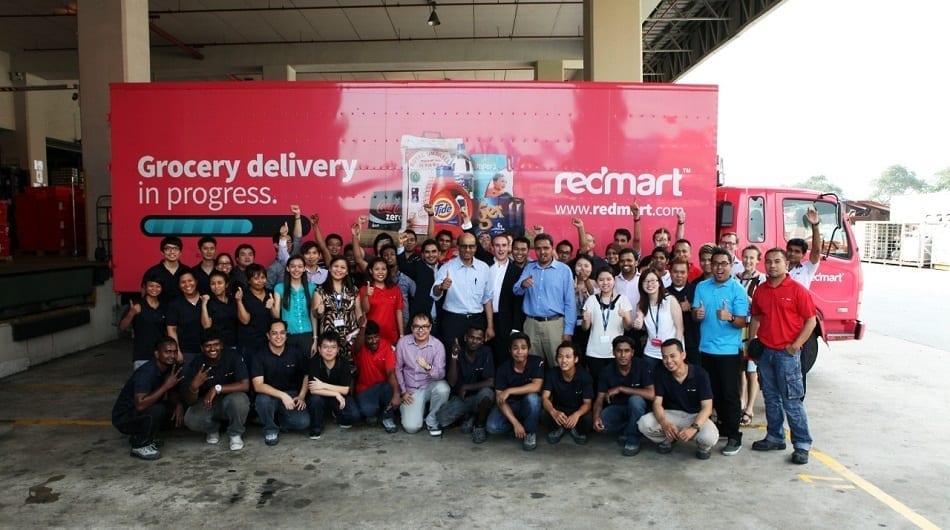
  • Lazada in talks to buy Redmart for rumored $30m to $40m

    Lazada in talks to buy Redmart for rumored $30m to $40m

    Southeast Asia ecommerce portal Lazada is reportedly in talks to buy online grocery provider Redmart. The acquisition amount is said to be around US$30 million to US$40 million, which if true, is in the low range given it raised US$26.7 million last year.

    Redmart had apparently held unsuccessful talks with supermarket chain NTUC and Singapore sovereign wealth fund GIC. It also received a “lowball” offer from Amazon.

    The startup had been in trouble for some time. While its revenue grew, its expenses increased at an even faster clip.

    Lazada is controlled by Chinese online shopping Alibaba, which in April took a commanding stake in the Rocket Internet-born startup for US$1 billion.

  • Kakao food-delivery service planned

    Kakao food-delivery service planned

    Korean internet company Kakao, known for its chat app KakaoTalk, plans to jump into the food-delivery sector.

    The Kakao food-delivery service is planned for launch by January, and it is expected to be incorporated into the app, which has four menu buttons. One of them lists extra services such as sending gifts or making reservations.

    A Kakao spokesperson says the deliveries would mainly be from franchise restaurants.

    In July, Kakao acquired a 20 per cent stake of CNT Tech, a developer of an order-receiving platform for more than 80 franchise restaurant brands in Korea.

    CNT Tech has 90 per cent of market share in the ordering platform sector. Once an order is placed through a franchise’s key number or homepage, the start-up connects orders to stores nearest the customer.

    Already companies are battling for share in the food-delivery market, including Baedal Minjok, Baedaltong and Yogiyo. Baedal Minjok, which has more than 50 per cent market share, is the only start-up that has turned around its business from losses.

    Kakao head of communications Lee Su-jin says its new on-demand service will follow the company’s business perspective that an online-to-offline service should add value both to individual service providers and customers.
    “Through our Kakao Taxi service, the annual income of taxi drivers rose by more than 3 million won [US$2650],” he says.

  • Lotte to launch Lotte.vn in Vietnam

    Lotte to launch Lotte.vn in Vietnam

    Korean retailer Lotte is entering the Vietnam eCommerce market with Lotte.vn after six months’ preparation.

    By launching its first online shopping website on October 28, the Korean retailer is expecting to acquire 20 per cent of the online market. And it sees Lotte.vn as completing the full spectrum of retail services: physical stores, TV shopping, mobile shopping and now online.

    Despite joining the market a little later than other eCommerce sites such as adayroi.com and tiki.vn, Lotte.vn has some advantages such as its products being available – and sourceable – from its local Lotte Department Stores.

    According to Lotte.vn GM Seo Tae Ho, all products from the department store will be sold online, with cosmetics and apparel expected to be the two most popular categories.

    Furthermore, Lotte is planning to encourage more purchasing by developing a shopping app for Android and iOS.

    Vietnam is still seen to be a leader in the Southeast Asian eCommerce market in the next five years along with Indonesia.

  • ‘Astonishing growth’ for Chinese FMCG market

    ‘Astonishing growth’ for Chinese FMCG market

    The Chinese FMCG market online has shown “astonishing growth” according to a report by global consulting firm OC&C Strategy Consultants.

    In 2010, the market was worth just US$1.4 billion – today it has exceeded $25.3 billion according to data from Euromonitor. It has far surpassed any other country in the world and is about twice as big as the US.

    But while large, FMCG still has a relatively lower online penetration than other categories in China, providing ample opportunities going forward especially given favourable tailwinds, believes OC&C.

    The report Bits & Bytes: FMCG’s shift to eCommerce in China aims to help FMCG brands understand eCommerce trends in China and thus to derive the best strategy for their target segments in the market.

    “The post-80s and 90s generation in China, who grew up with the internet, are coming of age and entering the workforce, forming families and increasing their need for FMCG. It is unquestionable that they will become an important customer segment and driving overall growth of FMCG eCommerce,” comments the report.

    “Moreover, growth is not only coming from the younger generations. In fact, more people aged between 30 and 50 intend to devote more of their FMCG spending to online channels next six months (Figure 1), suggesting the universality of growth of FMCG eCommerce.

    Figure 1

    “Price and convenience related factors are consistently placed as the top reasons for buying FMCG online in China. Growing middle class want to save money on everyday consumables so they can use these savings towards a better lifestyle including for dining out or buying international fashion brands,” said Jack Chuang, Hong Kong-based partner, Greater China, OC&C Strategy Consultants.

    He says consumers’ need for convenience is fuelling the demand to buy FMCG online anywhere, anytime.

    “All these are favourably fulfilled in China given the rapid development in infrastructure and logistics across the country, with leaps and bounds in both intra-country movement of goods as well as last-mile delivery to consumers. These make online shopping of FMCG easy, inexpensive and fast,” said Chuang.

    When respondents were asked to rate various eCommerce platforms based on their experience, Alibaba’s platforms were neither the most highly rated, nor are they frequently ranked among the top five across selected FMCG categories.

    Figure 2

    However, interestingly, when the survey asked about brand awareness and actual purchases, Tmall and Taobao, under Alibaba, received highest brand awareness and shopper penetration across the major FMCG categories explaining Alibaba’s dominating market share.

    Figure 3

    A third of survey respondents ranked ‘familiarity’ as being the key reason on why they rely so much on a particular online platform. Beyond benefiting from being an early entrant, Alibaba is also able to provide competitive prices, a convenient one-stop shopping destination, as well as a ubiquitous payment system.

    Figure 4

    “Online platforms in China are always fighting for customer traffic and market share, yet consumers often perceive buying on Alibaba a bargain, thanks to its promotions,” added Chuang. “Selling online in China is rewarding yet not easy. Brands can benefit and achieve their online objective through partnering with strategically-aligned platforms and by customising their offerings to cater to various needs of different market segments. In addition, brands need to figure out the level of control and capability which an online store demands, so as to determine whether to establish in-house operations or to rely solely on platforms. Choosing the right model and strategy can definitely make it much more effective.”

    Though Alibaba’s dominance remains undeniable, the online FMCG market is relatively more fragmented than retail in general. Alibaba commands a 52 per cent share in FMCG as compared to 70 per cent of the overall online retail market.

    “Just as you would not depend entirely on one particular store format (e.g. hypermarkets or mom-and-pop stores) as you formulate your offline channel strategy, the same applies to online whereby brands should leverage each platform’s unique strengths, be it its large traffic flow, strong authenticity and quality, more personalised customer service, etc.,” commented, Chuang.

    “At the same time, companies should treat eCommerce not only as a sales channel but also as a platform to build their brand. For example, premium players can build brand awareness to a wide audience by opening a flagship store, while other companies who lacks physical presence in China, can use cross-border platforms to ‘test the water’ prior to their full market entrance. They should also integrate offline and online channels to create a win-win proposition, either through leveraging existing offline infrastructures, such as distributor networks, to facilitate online sales; they may also consider using e-commerce to facilitate offline strategies,” concluded Chuang.

    The study canvassed 4600 respondents from 16 cities across China, looking into 13 selected sub-categories across infant milk formula, packaged food and soft drinks, alcoholic beverages, and beauty and personal care, from August to September 2016.

  • Alibaba Group promises to redefine retail as it sets the clock ticking for Singles Day shopping festival

    Alibaba Group promises to redefine retail as it sets the clock ticking for Singles Day shopping festival

    Alibaba Group has started the clock on the Global Shopping Festival it will hold on November 11, which is known as Singles Day in the Chinese market where it dominates online shopping.

    The retailer, which trades through marketplace sites including Alibaba.com and TMall, has unveiled its plans for a festival that’s set to include a countdown gala, an eight-hour live streamed fashion show, virtual reality shopping, interactive games and more.

    These are all innovations aimed at enabling almost 100,000 merchants to build their brands, as well as engage with and sell to the hundreds of millions of Chinese consumers it predicts will shop on its marketplaces during the festival.

    Last year’s event, saw goods worth £9.3bn sold via the group’s websites.

    The press launch alone was attended by brands from Macy’s and Costco through to Swisse and eMart. There, Daniel Zhang, chief executive officer of Alibaba Group, said, “11.11 Shopping Festival has become the global retail benchmark over the past seven years, and we have raised the bar again this year to redefine the retail experience for consumers together with our merchants from around the world.”

    Zhang continued, “11.11 has evolved far beyond a 24-hours sales event. From today through November 11, consumers will discover, explore, play, watch, comment, share, recommend and shop across our entire ecosystem with our merchants both online and offline. Leveraging our robust infrastructure, global merchants have been empowered with unprecedented capability to seamlessly engage and serve customers through new technology and new environments.”

    Highlights of the Global Shopping Festival will include a Tmall eight-hour fashion show in Shanghai in which 50 international brands and 160 models will take part. It will be streamed live via Tmall and Taobao mobile apps that viewers can use to pre-order items as they appear on the catwalk.

    Shoppers will be able to use virtual reality to buy, as Alibaba pilots Buy+, billed as the world’s first complete virtual reality (VR) shopping experience. Those who use it will be virtually transported to select retail stores internationally, where they can experience the entire shopping process from product selection to payment, all via VR.

    In the run-up to the event, more than 600 international brands are streaming live broadcasts on Tmall to tell consumers about their brand and the deals and products they’ll be offering on 11.11.

    Katy Perry will headline the 11.11 Global Shopping Festival Gala on November 10.

    The event will link online and offline: Alibaba believes the future of commerce is not online only but will integrate the online and offline experience. A location-based augmented reality mobile, to be released two weeks ahead of the festival, will enable consumers to follow the Tmall Cat across the online and offline retail ecosystem: offline partners include shopping malls in Beijing and Shenzen, Shanghai Disneyland, KFC and Starbucks. Alibaba is also working with more than a million offline shops to present consumers with a joined-up experience.

    The retailer also promises each consumer a personalised shopping experience, thanks to the use of big data that will drive tailored product recommendations, search results, and user-generated content.

    The retailer is also focusing on going global, and aims within 10 years to serve two billion consumers, while supporting 10m small businesses, brands and retailers. The 2016 11.11 Global Shopping Festival includes a ‘buy globally, sell globally’ initiative that focuses on making Alibaba a gateway for international brands and merchants to sell to consumers in China. Meanwhile, it is also piloting approaches to supporting global retailers and brands as they sell beyond China. It is taking its infrastructure, including logistics and payments to Hong Kong and Taiwan – the first steps in its expansion strategy.


  • Retailers get boost with halal e-market

    Retailers get boost with halal e-market

    With nearly 60 merchants on board, including 55 SMEs, the launch of Aladdin Street gels with the Government’s push for retail firms to use e-commerce to reach out to more customers.

    The platform, which will eventually have offices in 30 countries, aims to promote halal products as a healthy, premium option even for non-Muslims.

    Aladdin Group, the company behind the e-marketplace, is headquartered in Kuala Lumpur, Malaysia.

    The businesses were screened for quality and compliance with halal standards by an in-house team, and operate in industries that range from food and beverage to cosmetics to fashion.

    Aladdin Group co-founder Sheikh Muszaphar Shukor cited a “growing acceptance” of the health benefits of halal products even in non-Muslim countries.

    But a lack of reliable marketing platforms means only a fraction of the demand can be met, he said.

    Noting that Singapore is one of the largest importers of halal products, he said: “Given the country’s good track record in governance and high standards of halal compliance, Aladdinstreet.com.sg will help these SMEs access this market to its fullest potential.”

    Ms Jacinta Ong, 40, who founded tea retailer Tea Ideas, sells her products through a blogshop and at roadshows in malls.

    She has not set up a permanent stall because of the high rental and manpower costs.

    “I think the right way forward is going online and collaborating with other retailers to harness demand in the halal market,” she said.

    Vielkaline founder Gavyn Lim, 38, said the platform would help him target big halal markets such as the Middle East.

    The firm sells alkaline ionised mineral water.

    “The entry barrier to putting my products up for sale at supermarkets is too high,” he said. “It is a lot cheaper to put them online.”

    The Singapore Chinese Chamber of Commerce and Industry (SCCCI) said yesterday that it is stepping up efforts to help local SMEs innovate and digitise their businesses.

    Last year, it took SMEs to Beijing and Shenzhen to learn about e-commerce business models in these Chinese cities and how they could penetrate the China market.

    This month, SCCCI organised a trip to Silicon Valley in the United States so SMEs could engage with businesses there to explore potential collaborations.

    It said it would continue to work with government agencies to help SMEs identify suitable partners to support innovation efforts.

  • Apple, Deloitte enter mobile business tie-up

    Apple, Deloitte enter mobile business tie-up

    Apple and Deloitte has entered into a partnership to help companies transform the way they work by taking advantage of the iOS platform.

    As part of the joint effort, Deloitte is creating a first-of-its-kind Apple practice with over 5,000 strategic advisors who are solely focused on helping businesses change the way they work across their entire enterprise.

    Apple and Deloitte will also collaborate on the development of a new service offering from Deloitte Consulting called EnterpriseNext, designed to help clients fully take advantage of the iOS ecosystem of hardware, software, and services in the workplace.

    The new offering will help customers discover the highest impact possibilities within their industries and quickly develop custom solutions through rapid prototyping.

    “We know that iOS is the best mobile platform for business because we’ve experienced the benefit ourselves with over 100,000 iOS devices in use by Deloitte’s workforce, running 75 custom apps,” said Punit Renjen, CEO of Deloitte Global.

    “Our dedicated Apple practice will give global businesses the expertise and resources they need to empower their mobile workforce to take advantage of the powerful ecosystem iOS, iPhone, and iPad offer, and help them achieve their ambitions, while driving efficiency and productivity.”

  • Walmart makes another big move in China

    Walmart makes another big move in China

    Walmart has made another big e-commerce investment in China.
    On the heels of launching three major e-commerce initiatives in China, Walmart will invest $50 million in New Dada — China’s largest local on-demand logistics and grocery online-to-offline (O2O) e-commerce platform.
    Walmart’s newest investment further extends its agreement with JD.com, which uses New Dada’s network to offer customers two-hour delivery on groceries ordered from Walmart stores through the JD Daojia Dada app.
    New Dada, an independent joint venture between Walmart’s Chinese partner JD.com and Dada, has more than 25 million registered customers. Providing local on-demand delivery capabilities with 2.5 million crowd-sourced deliverers across more than 300 cities in China, this new service complements the 426 stores that Walmart operates in nearly 170 cities.
    Overall, Walmart’s investment in New Dada will help the retailer target Chinese shoppers with faster delivery times in a popular, fiercely competitive online grocery market, according to a company statement.
    “All around the world, we’re creating seamless shopping experiences that bring together our stores, sites and apps to make shopping faster and easier,” said Walmart CEO Doug McMillon. “Our alliance with JD and cooperation with New Dada will enable seamless shopping to millions of customers across China.”
    Specifically, the business partners expect the combination of New Dada’s delivery network with Walmart stores to give “consumers convenient access to a wide range of high-quality goods delivered to their homes and offices in record time,” said Philip Kuai, CEO of New Dada. “We look forward to deepening our cooperation with Walmart as China’s O2O retail industry continues to evolve and grow.”
    Walmart’s next move is to double the number of its stores that offer two-hour delivery by the end of the year, the statement said.
  • Cashless push stimulating APAC m-payment market

    Cashless push stimulating APAC m-payment market

    A top down regulatory push toward cashless societies will stimulate exponential growth in the mobile payment market in Asia-Pacific (excluding China and India), which will surge from $71.92 billion to $271.47 billion by 2021, research from Frost & Sullivan indicates.

    According to the research firm, the number of active customers will also double to 130.8 million users by this time.

    With standardization and increasing openness toward FinTech, competition is intensifying for the entire supply-side ecosystem. Mobile payments solution providers will need to fully understand the mobile payments market in the region to gain an edge.

    Asia-Pacific is expected to continue to lead the world in mobile payment developments as smartphone penetration here is the highest. Apple, Samsung and Google with Apple Pay, Samsung Pay and Android Pay have also addressed existing security concerns through tokenization in the payment infrastructure, supplemented by biometrics on the smartphone.

    “The mobile payments market in Asia-Pacific, however, is guided by local preferences and considerations,” noted Frost & Sullivan Digital Transformation Industry Principal Analyst Quah Mei Lee.

    “For instance, in Indonesia and the Philippines, telcos lead with their e-money products whereas in Japan, South Korea and Australia, credit card is the key payment method. Understanding these dynamics is critical for mobile payments solution providers to succeed.”

    Mobile payment in Asia-Pacific is being led by developed countries such as Japan, South Korea, Australia and Singapore. Japan and South Korea has dominated since the early days of near-field communications (NFC) in 2011 and continues to account for 89.2% of market revenue share in Asia-Pacific.

    Among mobile payment market segments, m-commerce dominates despite the rapid increase in point-of-sale (POS) payment transaction volumes. The strong deployment of NFC in some countries is expected to help expand POS payment shares.

    For now, the mobile payment market has the most promise in countries that have a mandate to go cashless, like South Korea, Australia, Singapore and Malaysia. These will be followed closely by countries such as Thailand and Vietnam which are slowly transitioning to cashless.

    “The opportunities are limitless and mainstream integration of mobile payments into everyday life is already underway,” said Quah. “Even beyond this, there is tremendous potential for growth alongside connected devices in the Internet of Things era.”

  • Lenovo launches transit app in China

    Lenovo launches transit app in China

    Lenovo has commercially launched its transit application in China with the electronic payment and settlement service provider BMAC (Beijing Municipal Administration and Communications Card).

    The service is supported  on Lenovo X3 smartphones driven by the eSE PEARL by OT (Oberthur Technologies).

    Thanks to OT’s NFC embedded Secure Element, end-users can now use their Lenovo X3 smartphone to install the Beijing Municipal Administration Traffic Card in their Lenovo Transit application and commute simply by waving their phone in front of contactless transit terminals.

    PEARL by OT is described as  the most advanced embedded Secure Element on the market, offering a yet unattained level of security and the largest memory on the market. It allows easy deployment of secure mobile contactless payment, transit, governmental and automotive applications, as well as secure access to online services for enterprise and consumer markets.

    In addition to its eSE, OT provides its Key Management System to Lenovo to manage security domains on the eSE in which partners can securely load, install and run their applications.

    Via its China Secure Hub, a platform used to connect handset makers and their partners in different cities in China, OT also securely ensures the connectivity between Lenovo and BMAC’s TSM provider, Beijing eNFC science and technology.

    “China is often at the forefront of new technologies and we are happy to offer Lenovo users with a convenient, secure and easy-to-use way of commuting with the BMAC application” said Viken Gazarian, deputy managing director of the connected device makers business at OT.

    “PEARL by OT is the best eSE on the market to address the fragmented market of transport systems throughout the world and is the sole component to support international as well as Chinese transit technologies,” said Gazarian.