Category: E-Tailing

Retail News Asia is committed to providing both local and global retailers with the latest E-Commerce & Etail news throughout the Asian market. This on a daily base.

  • Huawei moves further into mobile payments

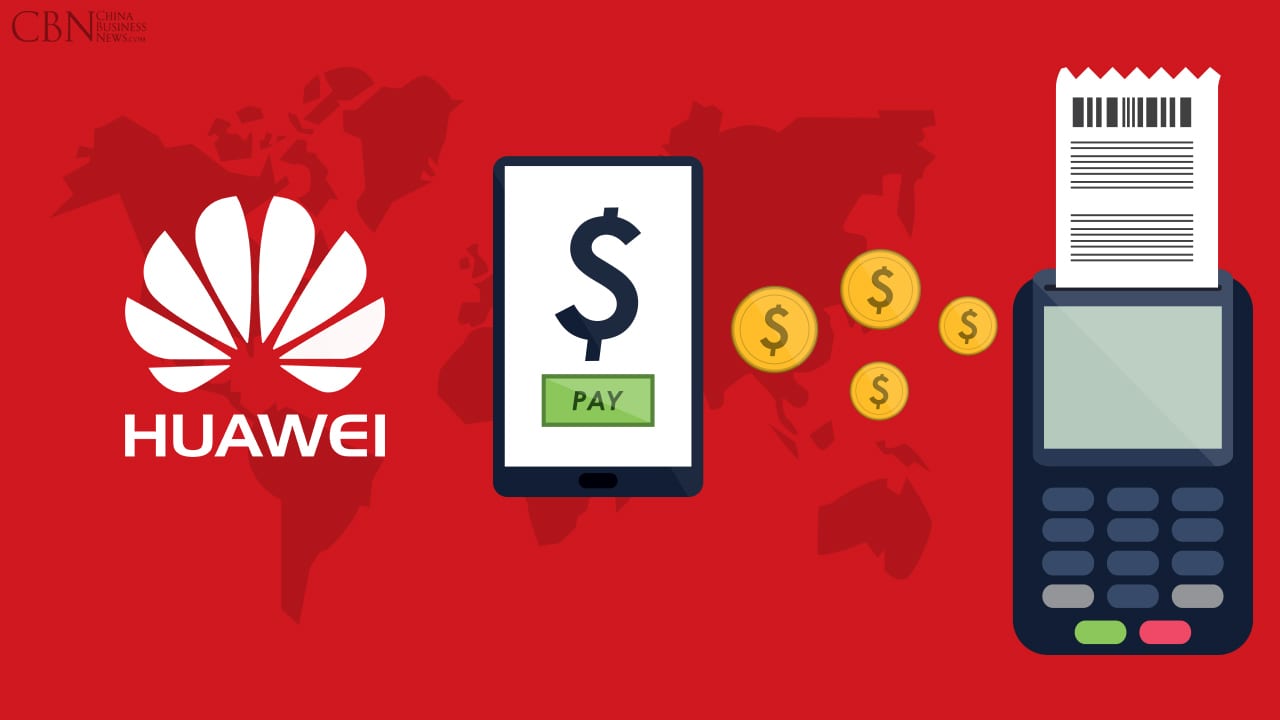
    Huawei moves further into mobile payments

    Apple and Samsung recognize that revenue from the sale of mobile devices, alone, cannot keep shareholders happy.

    With the vendors venturing into what is arguably one of the most exciting spaces in the financial services space – payments – it begs the questions of who will follow suit and whether the market can afford multiple payment providers.

    Not to be left behind, Chinese mobile phone device manufacturer, Huawei, is accelerating its payments ambition in 2016 with two significant announcements in the first quarter of 2016.

    The first is an agreement with Bank of China to jointly co-develop what the two organizations are claiming to be the next mobile based payment system under the Huawei Pay label. This was followed by a separate announcement with China UnionPay, the country’s state-run bank-card processor.

    This is not Huawei’s first foray into payment. Unofficially, Huawei Pay debuted in China with the launch of the company’s latest flagship smartphone – the Mate S in December 2015 following a test run of the payment service in September 2015. Using NFC technology, placing the Mate S in close proximity to a China UnionPay POS terminal with Quick Pass function will launch the Huawei Pay service.

    Users can complete the transaction via fingerprint authentication. The partnership with UnionPay holds the promise of extending Huawei Pay across China to a broader spectrum of Huawei handset users – mostly smartphones equipped with fingerprint sensors and an NFC chip simply by downloading the Huawei Pay app.

    China UnionPay, which holds a monopoly on bank-card payments in the country, also works with Apple Pay, which was launched in China last month.

    Local market research firm iResearch estimate that third party mobile payment transactions reached 2.42 trillion yuan in the third quarter of 2015, a 64% jump from Q2 2015. The China Internet Network Information Center estimated mobile payments to have risen to 357 million, up 60% from the previous year.

    The Chinese mobile payment market is expected to get very crowded rapidly with other mobile device manufacturers, including Xiaomi, ZTE and Lenovo, rumored to be developing their own mobile payment service. Xiaomi is doing so following its acquisition of a local payment company – Jiefu Ruitong in early 2016.

    According to iResearch China’s mobile payment is dominated by Alipay (70%) and WeChat Wallet (19%). To compete in this market Huawei plans to secure the assistance of more banks as part of its smartphone launch strategy. Without releasing details the company said it is designing more payment scenarios for its smartphone users.


  • Alibaba taps VR to enhance shopping experience

    Alibaba taps VR to enhance shopping experience

    The global virtual reality market to grow at a rate of 96% by 2019, according to a new report made available by Research and Markets.

    VR is being adopted in a wide variety of applications ranging from healthcare, gaming devices, public entertainment, prototype creation to military exercises.

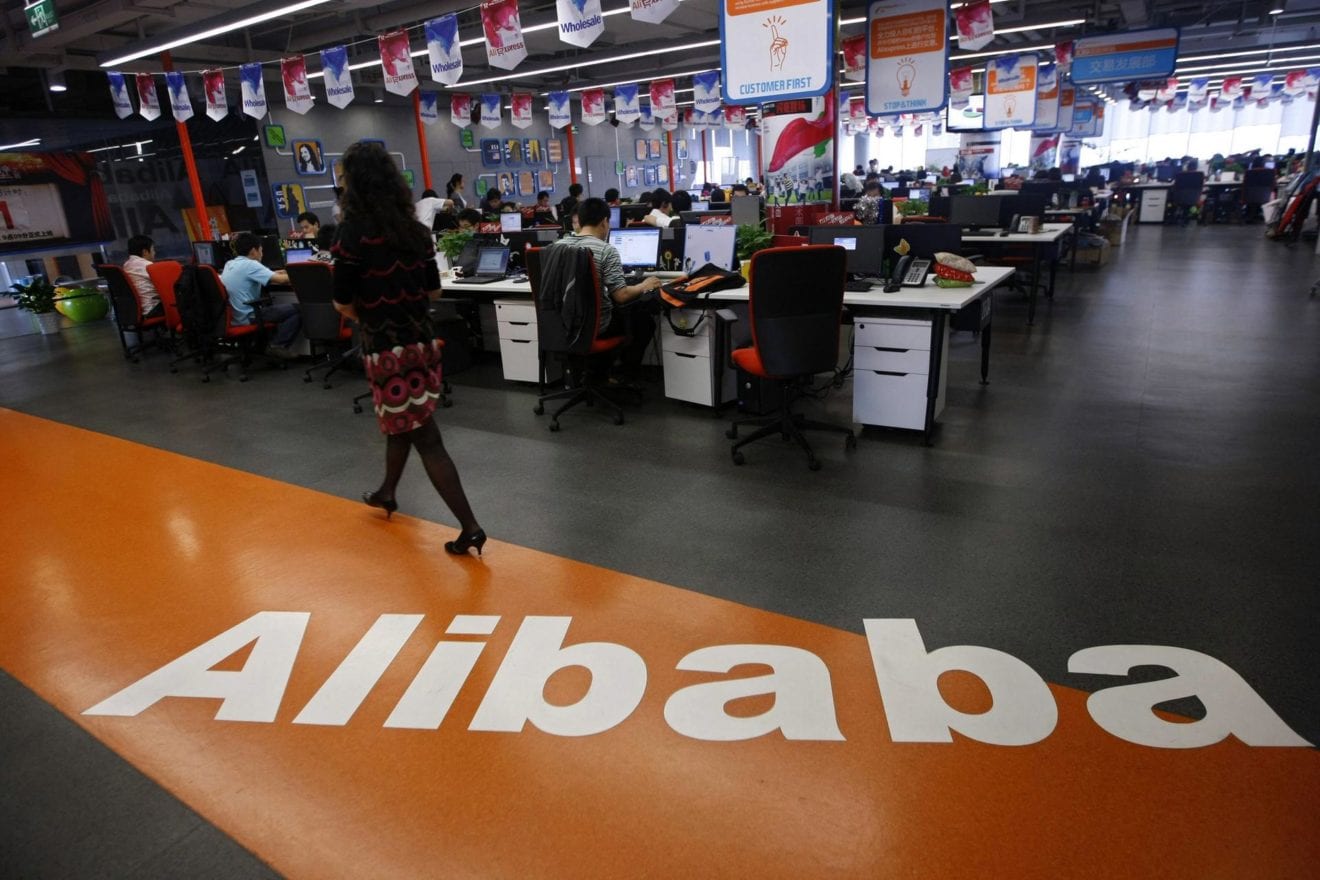
    Chinese e-commerce giant Alibaba has now set up a research lab as it looks to use VR to enhance the shopping experience for its 400 million users.

    The company is also exploring how VR technology can be applied to its other services, including online games and video streaming, according to reports.

    Head-mounted displays have created opportunities for VR in a number of applications. A head-mounted display consists of an image source, collimating optics, and a mechanism to mount the device on the head.

    The device is wearable, and projects images and information relative to the user’s line of sight in front of the user. A report on the HMD market predicts growth of 49% over the next five years.

    Virtual reality devices, which are compatible with smartphones, can help users by providing specific information about their requirement on-the-go, without pulling out their portable devices. This technology is expected to commercialize in 2016 and could be worth $2.30 million in 2016.

    Alibaba has already created three-dimensional visuals for hundreds of products and will issue standards for merchants to create VR-enabled shopping options. It is also said to be working on creating music and videos.

  • Li & Fung proves nimble

    Li & Fung proves nimble

    Hong Kong-listed global supply chain management company Li & Fung has proved nimble weathering one of the most challenging retail environments for many years.

    Yet despite an overall increase in trading volume, its revenue for the year ended December 31 fell 2.4 per cent to US$18.8 billion for the year.

    Mainly servicing US and EU brands, department stores, hypermarkets, specialty stores, catalogue-led companies and eCommerce sites, the family-led company reorganised during the year with the aim of delivering innovation and product differentiation while focusing on client solutions.

    Growth was strong in its e-logistics division, thanks to the eCommerce boom, and with an unprecedented drop in ocean freight rates, its logistics network grew in both turnover and unit volume.

    Adding to the difficulties of the year were political uncertainties in Europe and Asia. Meanwhile, increased competition from fast-fashion, off-price and eCommerce players continue to challenge retail customers, resulting in margin pressure across the board.

    Turnover eased by 2 per cent year-on-year to $18.8 billion, largely because of soft macroeconomic conditions and the challenging retail environment.

    Turnover in Asia decreased by 2.5 per cent to $2 billion, with distribution being hit by the slowdown in China, geopolitical issues in Southeast Asia and Asian currencies depreciating against the US dollar.

    However, Li & Fung’s logistics network continued to grow in Asia, largely thanks to support by new contracts and expansion, particularly into Southeast Asia.

    Across its trading network, the company served a diversified group of customers including brands, department stores, specialty stores, clubs, hypermarkets and pure-play eCommerce ventures. The network covers more than 40 economies, and the top three sourcing countries continue to be China (more than half of products), Vietnam and Bangladesh.

    The company’s entrance into Indonesia, Japan and Korea also began to generate positive contribution, and it launched a regional distribution centre in Singapore.

    “Globally, our industry is going through an unprecedented structural change, led by the changing conditions at retail,” says group CEO Spencer Fung, the great-grandson of the company’s founder.

    “Retail is becoming more competitive as more eCommerce players enter the marketplace, and global competition overall is being augmented by cloud computing, mobile connectivity and cross-border logistics.”

    He says consumer preferences and buying patterns are also changing, led by millennials and the newer Generation Z.

    “The way these consumers discover, socialise and finally make a purchase decision has had immense consequences to brand loyalty, to sustainability and to the sharing economy… the speed of change is only increasing as we look ahead.”

    Li & Fung is partnering with companies that offer technology and innovation to create products “with more excitement”, and has simplified its structure and business to improve speed and flexibility.

    “With fewer acquisitions in 2015 compared to previous years, we have been very focussed on growing organically and increasing our market share with our existing customer base,” says Fung.

    “All indications point toward a challenging 2016, but I am confident we will weather these changes as we build for the future.”

  • China’s web shoppers want more

    China’s web shoppers want more

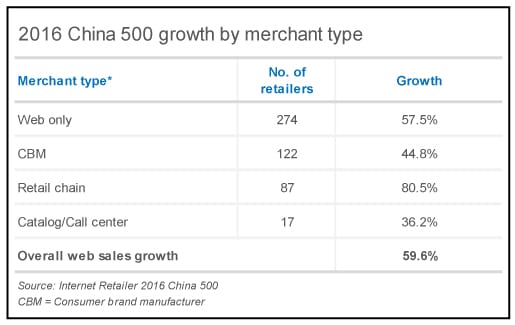
    China’s growing middle class craves imported goods and that’s driving big opportunities for overseas brands and retailers. China’s 500 largest web retailers grew combined sales by 60% in 2015, according to the all-new Internet Retailer 2016 China 500, which ranks the 500 leaders of the world’s largest and fastest-growing e-commerce market

    China’s slowdown to only 6.9% growth in gross domestic product in 2015, one of the lowest increases in decades, has been blamed for hurting the economies of trading partners in other countries. But China’s growing middle class keeps buying more online, and its thirst for foreign goods creates a big opportunity for overseas retailers and brands.

    Chinese consumers purchased $589.61 billion worth of goods online in 2015, an increase of 33.3% from a year earlier, according to the National Bureau of Statistics in China. By comparison, U.S. online retail sales grew roughly 15% per year from 2011 to 2014 to $304.9 billion, according to the U.S. Commerce Department.

    China’s 500 largest e-retailers grew their combined online sales by a stunning 60% in 2015 to $198 billion, according to the all-new Internet Retailer 2016 China 500, which ranks and provides a wealth of financial and operating data on the 500 leaders of the world’s largest and fastest-growing e-commerce market. And the data contained in Internet Retailer’s newest research report on e-commerce in China shows that the world’s biggest online market is rapidly consolidating, with the 500 largest competitors now controlling 33.6% of China’s e-retail market, up from 28% just one year ago.

    Retailers and brands based outside of China shared in that growth. The 52 U.S.-based retailers ranked in the China 500, for example, grew online sales 24.3% to $17.77 billion last year—the bulk of that coming from Chinese customers. The 79 retailers based outside China, including those in the U.S., grew sales by 24.0%, to $21.31 billion in 2015.

    The growing online retail sales for brands and retailers based outside of China is not surprising given the strong demand among middle-class Chinese for foreign goods, from Apple Inc. iPhones to food and household goods from Wal-Mart Stores Inc. Alibaba Group reported that 33% of Chinese consumers bought items from international brands during the 24-hour Singles’ Day event Nov. 11, with U.S. goods in the top spot. Singles’ Day is a marketing initiative that Alibaba created to spur single consumers to buy goods online for themselves, as opposed to other marketing days where consumers buy gifts for loved ones.

    Among the factors driving online sales growth are increasing sales from consumers in China’s villages, and the steady growth in the number of Chinese shoppers who can access the web through mobile phones.

    “In China, the major market drivers in the past year have been cross-border e-commerce, mobile shopping, omnichannel and e-commerce in villages,” China E-commerce Research Center senior analyst Zhang Zhouping says.

    There were 668 million Internet users in China by June 2015, and about 89%, roughly 594 million consumers, could access the web through mobile devices, according to China Internet Network Information Center. During Alibaba’s Singles’ Day sale, Chinese consumers purchased $14 billion worth of products, and 70% of sales were generated on mobile devices, according to Alibaba.

    Rural areas, where there are few bricks-and-mortar stores, also present huge potential for online merchants. There were 186 million Internet users living outside of cities as of June 2015, and 60% of them had never bought products online, according to China’s Ministry of Commerce. To encourage rural shoppers to order online, e-commerce firms are rapidly improving their facilities in those areas. Alibaba, whose big marketplaces Taobao and Tmall account for about 75% of China’s online retail sales, has helped about 14,000 merchants with small stores in rural China sell their wares on Taobao, the company says. Alibaba is aiming to establish up to 100,000 such service centers among about 570,000 villages in rural areas of China.


  • JD.com Dominating The Rapidly Growing Chinese Online Retail Market

    JD.com Dominating The Rapidly Growing Chinese Online Retail Market

    Rapidly Growing Online Retail Market

    There are multiple dimensions through which the Chinese online retail market is growing such as growing Internet users and expanding middle class. Unlike developed countries with largest online retail markets such as the UK, the US, and Germany, the penetration of online retail is fairly low at a meager 12.9% (2015) of the country’s overall retail sector. Despite that, China is the largest e-commerce market in the world, which is also growing rapidly. Chinese consumers spent 33.3% more on online shopping last year. And the expanding middle class is making the market lucrative for e-commerce players in the B2C segment, which was an unprofitable prospect a few years ago due to unscalability. This is where the two fiercest competitors JD and Alibaba’s Tmall are fighting to capture a larger chunk of the growing pie.

    JD.com or Jingdong is the second-largest e-commerce player in China, only behind Alibaba. BABA provides marketplaces for businesses (Alibaba.com), consumers (Taobao), and brands (Tmall), along with technological support and services; it generates revenues primarily through advertising and commissions. On the other hand, JD is more of an online retail pure-play with a lion’s share of revenues generated from direct sales; however, it also hosts third-party sellers. JD operates in the B2C segment and directly competes with BABA’s Tmall.

    Why Invest In JD.com?

    Largest logistics infrastructure

    This is the key differentiator between the two. JD operates its own logistics network while BABA provides these services to its merchants through a group of logistics service providers called Cainiao. JD has been aggressively investing to expand the largest fulfilment network operated by an e-commerce company in China. Its last mile delivery distinguishes it even from Amazon, resulting in the fastest and reliable delivery as evident from the nearly 80% orders fulfilled on the same day. While BABA has stepped up its efforts in building several large-scale logistics centre, it would still rely on third-party delivery personnel. Even though the strategy is better in terms of its less labour-intensive nature, it lacks control on the quality of service.

    Rising revenues in non-core areas

    One of the reasons JD started building its logistics network in 2007 was to attract third-party sellers. Its strategy has been successful as evident from the y-o-y jump of 101% in revenues from marketplace fees, ads, and logistics services. Third-party sellers find JD more attractive as the company doesn’t ask for exclusivity, unlike Tmall. Additionally, the company has seen strong growth in the apparels and shoes segment. JD was a consumer electronics and home appliances focused retailer, but the segment’s 66% growth was outpaced by the 92% y-o-y growth in general merchandise/other segment during Q4 2015.

    Increasing market share

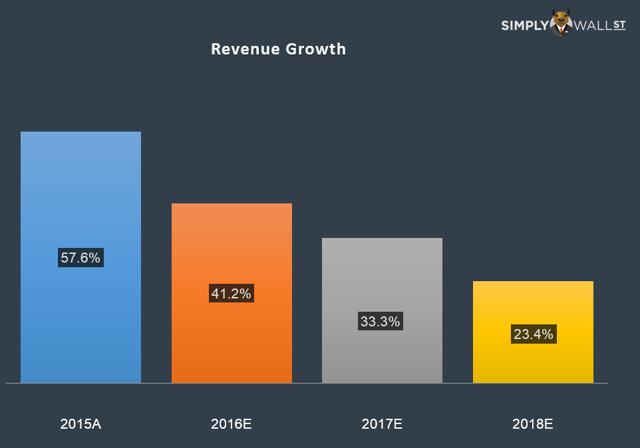
    JD’s revenue growth of 57.6% (in US dollars) during 2015 was well above the industry’s growth rate (33.3%). It indicates that the company increased its market share which accounted for the incremental growth. During early 2015, analysts at William Blair highlighted that during Q4 2014, JD gained 5% market share in GMV compared to a 2% decline experienced by Tmall. During the first three quarters of 2015, JD’s market share increased to 23.2% from 18.6% at the start of the year compared to Tmall’s contraction to 54% from 61.4%.

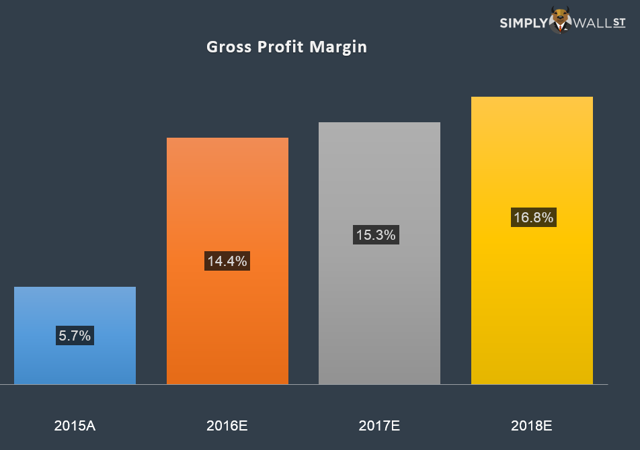
    Improving gross margin

    Source: Simply Wall St

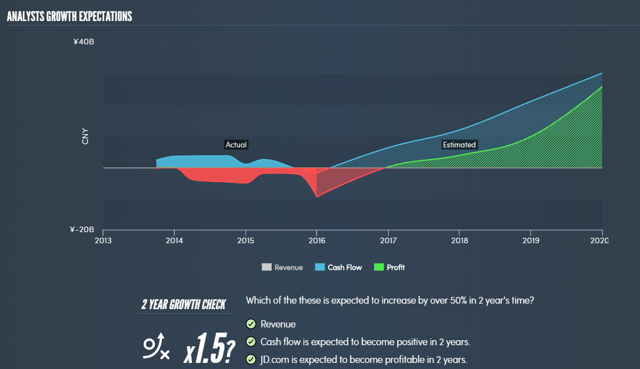
    JD was unprofitable last year. More than 85% of the loss was related to impairment charges (Paipai platform) and acquisitions; however, the company is expected to deliver positive earnings in 2016 and sizable earnings growth thereafter. JD’s improved utilization of infrastructure – growth in marketplace, ads, logistic services revenues – and increase in higher-margin product mix – general merchandise/other segment – will start reflecting in improved gross margin. Its loss doesn’t come as a surprise, as the management clearly stated in early 2015 that it is in investment mode, and this year’s target was to grow its market share and expand infrastructure.

    Source: Simply Wall St

    Smart money and the strategic partnership

    As per Bloomberg, the hedge fund holdings in the company increased from less than 4% at the start of 2015 to over 18% at the end of Q2. Q3 saw a decline, but the smart money increased its stake by nearly 7% during Q4. One of the key reasons behind hedge funds’ interest was JD’s strategic partnership with Tencent, the operator of China’s largest messaging service: WeChat. This has allowed JD to tap into the fastest-growing customer network as evident from the 61.4% sales coming from mobile devices during 2015 compared to nearly 36% in Q4 2014.

    Source: Simply Wall St

    Source: SEC 13-F filings, National Bureau of Statistics China, company fillings, S&P Capital IQ, WSJ.com, Simply Wall St

  • Alibaba likely to surpass Walmart as world’s top retailer

    Alibaba likely to surpass Walmart as world’s top retailer

    Chinese e-commerce giant Alibaba is expected to surpass the US multinational firm WalMart soon as the world’s largest retail platform with its total trading volume this fiscal year set to exceed USD 463.3 billion, an official media reported today.

    Chinese e-commerce giant Alibaba is expected to surpass the US multinational firm WalMart soon as the world’s largest retail platform with its total trading volume this fiscal year set to exceed USD 463.3 billion, an official media reported today.

    An official announcement by Alibaba Group Holding Ltd expected to be made at the end of this fiscal year on March 31.

    WalMart Stores Inc posted net sales of USD 478.6 billion for its fiscal year ending Jan 31, while the latest trading volume figure for Alibaba amounted to three trillion yuan (USD 463.3 billion), the company said yesterday.

    It is equivalent to China’s Sichuan province’s gross domestic product (GDP) last year, when the province’s GDP ranked sixth on the Chinese mainland, state-run China Daily reported today.

    Zhang Yong, the company’s CEO, said in Hangzhou that the figure was recorded on the company’s business-to-customer platform Tmall, consumer-to-consumer platforms Taobao and Rural Taobao, and group-buying site Juhuasuan.

    Zhang said he expected the company will achieve an annual trading volume of six trillion yuan by 2020 (about USD 980 billion) and that “in 2024, we wanted to be a business platform serving 2 billion consumers and tens of millions of enterprises at home and abroad.”

    According to Zhang, the company will strive to combine cloud computing and big data technologies with the Internet and the Internet of Things, as well as consumer terminal equipment, to spur its development.

    The Internet of Things is the network of physical objects devices, vehicles, buildings and other items embedded with electronics, software, sensors and network connectivity that enables these objects to collect and exchange data.

    Citing the National Bureau of Statistics and McKinsey & Co figures, Gao Hongbing, director of AliResearch, said that of Alibaba’s 3 trillion yuan in total trading volume, about 660 billion to 1.17 trillion yuan is newly increased consumption.

    “Online shopping has been an important engine to promote consumption, which meets the nation’s strategy of promoting domestic demand,” Gao said.

    Last year, Chinese consumers’ willingness to spend reached the highest level since 2012, despite the economic slowdown, according to a study published in February by The Nielsen Company.

    “This is a result of China’s commitment to shifting from an investment-driven to a consumption-driven economy,” said Kiki Fan, managing director of Nielsen China, China Daily reported.

    “Booming online shopping provides more variety and convenience to customers, thus fuelling their spending desire,” the Daily quoted Fan as saying.

    Despite its economic growth falling below 7 per cent (USD 6.9 per cent) for the first time since 2009, China surpassed the United States last year to become the largest e-commerce market in the world, according to statistics from multinational consultancy Forrester Research Inc.

    Chinese government has fixed 6.5 to seven per cent GDP target for this year.

  • Central Market and 11street Take 19th Century Malaysian Handicrafts Online

    Central Market and 11street Take 19th Century Malaysian Handicrafts Online

    Online marketplace 11street (www.11street.my) and Central Market, one of Kuala Lumpur’s oldest and most famous centres for Malaysian culture and handicrafts products, have signed a Memorandum of Understanding (MoU) to make the historic venue’s offerings available to customers online.

    Customers throughout the country can now browse and buy a huge variety of products from Central Market’s diverse mix of retailers, ranging from home & living, fashion, sports & leisure, electronics and even groceries. 

    “This strategic collaboration will enable a business, which began life in the 19th century to make its products available to consumers across the country through a state-of-the-art 21st century medium,” said Hoseok Kim, Chief Executive Officer of 11street during the signing ceremony.

    Central Market has a rich history that dates back nearly 130 years to 1888. It currently hosts a total of 300 tenants and has become a landmark for souvenir shopping as well as an iconic opportunity to sample some of the finest aspects of Malaysian culture.

    “Collaborating with 11street has been a fantastic development for us. One of the secrets of Central Market’s unbroken track record of success has been its location within the heart of Kuala Lumpur. Being close to a public transportation hub has also played a role in making it a major attraction for both tourists and Malaysians alike,” Cheong Wai Mun, Complex Manager of Central Market.

    “Now, with the brand new presence on 11street, Central Market has broken its reliance on geography. Retailers can focus on doing what they do best – offering an incredible range of artistic and exciting products as well as services at attractive prices – to a wider group of audience,” Cheong said.

    The move has been warmly welcomed by Central Market’s tenants. One of them is Gadis Manis Malaysia, a brand that promotes Malaysian’s cultural diversity, with products such as bags, t-shirts, tableware, stationary and aromatic oils inspired by Malaysia’s nature, architecture and cultures.

    “I founded Gadis Manis in 2008 after moving to Malaysia and falling in love with the cultures diversity. I’m confident that partnering with 11street will add a new dimension to the business. I look forward to introducing my unique creations to a hugely expanded online customer base,” said founder, Florence Lambert Lee.

    Staying under the same roof, Wau Tradisi, a traditional handicraft shop that sells homemade Wau, congkak, gasing, wayang kulit and many more takes part on welcoming the collaboration. Wau, a uniquely designed Malaysian kite is a tradition inherent to the culture of Eastern States of Malayan Peninsula residents, such as Kelantan and Terengganu. Whereas congkak, gasing and wayang kulit are the traditional Malay games that have a century of history. 

    Expressing the happiness, Sarimah, founder of Wau Tradisi said, “E-commerce is universal nowadays, I’m glad that both Central Market and 11street make the effort to promote Malaysia culture by having our traditional items sold at 11street. With the combination between traditional products and modern online marketplace, I believe we can continue to carry on and bring our culture to more people, and even the future generation.”

    Other than Gadis Manis and Wau Tradisi, the list of enthusiastic tenants also includes Borneo Pearl, which sells hand assembled jewellery pieces using pearls cultured in Sabah, and the Coconut Shop, which offers a wide range of products crafted from coconuts.

    “All of Central Market’s tenants will benefit from the solid marketing support that 11street offers to its customers in order to make their online businesses a success. That includes education and training programs which covering effective product listing, digital content strategy, integrated online marketing, and photography,” Kim added.

    In conjunction with the new launch, a series of Central Market’s promotional offers and discounts that are close to 40% will be available on 11street until 24 February 2017.

  • Microsoft Store opens in Lazada Thailand

    Microsoft Store opens in Lazada Thailand

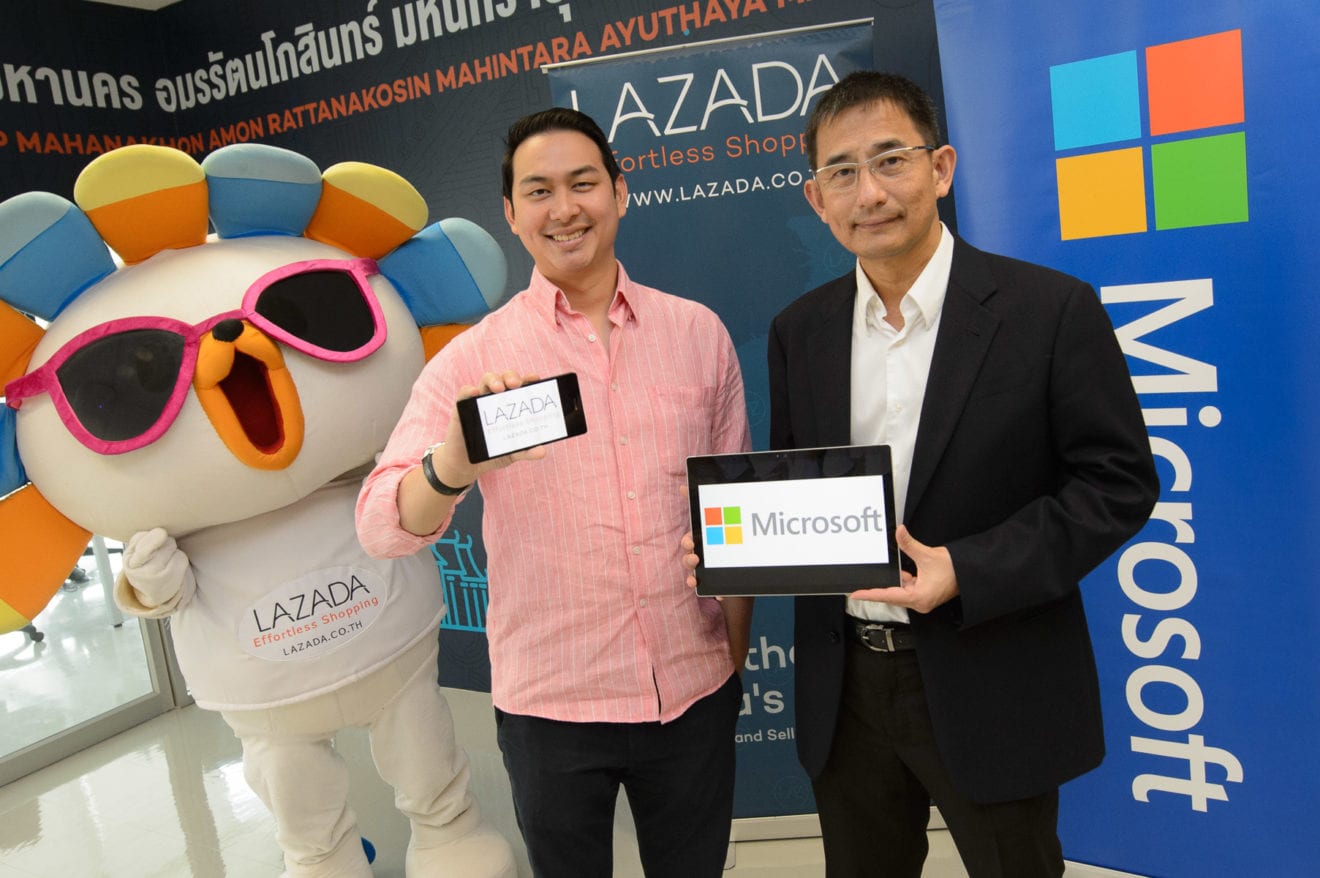
    Microsoft Thailand recently announced the official launch of its Microsoft Online Store on Lazada Thailand.

    The store is envisioned to be a one-stop shop for Microsoft’s products and a destination for exclusive offers and deals, giving Thai consumers access to the full lineup of devices, software, and services, including Surface, Lumia smartphones, Windows 10-powered laptops, tablets, and 2-in-1 devices, various hardware accessories, and the Office productivity suite.

    Following a similar partnership between Microsoft and Lazada in Malaysia last year, Thailand becomes the second country in the region to welcome the Microsoft Online Store on the Lazada platform.

    “The launch of the Microsoft Online Store on Lazada is an important milestone for Microsoft Thailand as the explosion of social and mobile technology has enabled the era of online shopping in Thailand,” said Orapong Thien-Ngern, General Manager, Microsoft Thailand. “Partnering with Lazada gives Microsoft an opportunity to build on our customer-centric approach and deliver our products and services to Thai customers via a platform that is already familiar to them.”

    The Microsoft Online Store opening comes just days before Lazada celebrated its fourth anniversary in Thailand. Lazada has seen rapid growth in the country since its launch in March 2012.

    “We are delighted that Microsoft is launching its online store with Lazada. Together with Microsoft, we are making exciting, aspirational innovative products accessible to more consumers in Thailand,” said Tarin Thaniyavarn, Chief Commercial Officer, Lazada Thailand.

  • Lippo Group Launches Web-Based E-Procurement Service Mbiz.co.id

    Lippo Group Launches Web-Based E-Procurement Service Mbiz.co.id

    Mbiz.co.id offers an integrated and web-based e-commerce experience. It offers an electronic catalog of thousands of products in  various categories, ranging from IT products, stationary and industrial tools to groceries, provided by a number of certified vendors in Indonesia.

    “The value of sales from online retail in Indonesia is less than 1 percent of the total [bricks-and-mortar] retail sales,” said Andrew Mawikere, co-founder of Mbiz.co.id, describing the growth potential in the sector.

    Christopher Hartono, head of general services at Bank Nobu, a bank owned by the Lippo Group, said ever since the lender cooperated with Mbiz.co.id since October last year, the company was able to easily acquire any goods it needed.

    “Transactions became more transparent and convenient,” he said.

  • Ecommerce Turns into Mcommerce in China

    Ecommerce Turns into Mcommerce in China

    The shift of ecommerce sales from the desktop to mobile devices has been under way in China for a couple of years. And according to data from the end of 2015, the tilt toward mobile is clear.

    Analysys International Enfodesk reported that nearly two-thirds of retail and consumer-to-consumer (C2C) ecommerce sales in China in Q4 2015 occurred via mobile. That was up from 55.5% the previous quarter—the first time mobile accounted for a majority of ecommerce sales in the country.

    2015 may have been a turning point, but the rise of mobile has been ongoing since early 2013, when 9.0% of retail and C2C ecommerce sales occurred via mobile devices.

    eMarketer estimates that mcommerce sales were just shy of the 50% mark as a share of ecommerce sales for the full year last year.

    This year, eMarketer forecasts retail mcommerce sales in China will grow by 51.4%, to reach 55.5% of retail ecommerce sales in the country this year. That will still amount to just 10.9% of total retail sales, however.

    By 2019, the end of our forecast period, mobile users in China will spend nearly $1.5 trillion on mobile commerce, which will amount to nearly a quarter of the country’s retail market.

  • Services give Korean online retailers the edge

    Services give Korean online retailers the edge

    Online shopping operators are turning to personalised services as they try to differentiate themselves in a burgeoning industry.

    eCommerce sites are no longer just selling and quick-shipping products: they are taking care of small tasks like shoe polishing through to more extensive services that include interior remodelling, industry watchers say.

    Further blurring the online-offline boundary, these operators are taking broader steps by putting together an array of services instead of specialising in a single category like food delivery and cab hailing. Prices range from 6000 won (US$5) for a shoe shine to 40,000 won for a car wash.

    11st Street started running “Life Plus” on its mobile application last week, offering visiting services for car washing, house cleaning, laundry pickup, custom shoes and shirts, and home interior. Customers can place their orders online and receive the services when and where they want. They are entitled to the same discounts, coupons and payment tools as people shopping for goods.

    Some of the services are not yet available nationwide, but 11st Street plans to fix that soon and add more choices.

    “We put out Life Plus first as an O2O (online-to-offline) service category, and we intend to turn it into an O2O service portal,” a company spokesman said.

    Industry competitor Gmarket started a home cleaning service this month, covering home appliances, kitchens and bathrooms. The service offers detailed cleaning, such as for mattresses, kitchen hoods and washing machines to bidets.

    “We will be expanding what we have to overall home management – moving, insect control, home organising and such,” said Sohn Hyung-sool, head of the life and kitchen team at Gmarket.

    Lotte.com renewed its rental services last month, more than doubling the number of service providers that now have added car tires, bidets and massage chairs. The online market can also send people to take care of the elderly. The company said it lets customers pre-consult before ordering so that they can consider available options without pressure.

    “Our website for offered services was more about advertising,” a company official said. “It will be changing soon to show the specific price for each service and to give customers easier access to consulting and purchasing.”

  • MasterCard and IBM make Big Data available to small retailers

    MasterCard and IBM make Big Data available to small retailers

    IBM and MasterCard have partnered to offer smaller retailers real-time, analytics-based market insights on revenue, market share, customer demographics and competitors.

    The solution integrates IBM Watson Analytics with insights based on aggregated and anonymous MasterCard transaction data through MasterCard Advisors Local Market Intelligence (LMI).

    The data will be available to retailers who accept MasterCard – on subscription – from mid-2016 for specific locations or across multiple locations for those with store networks.

    Eric Schneider, senior VP with MasterCard Advisors, says there is an increasing wealth of data today that merchants can leverage to better understand their market and customers.

    “However, smaller merchants often don’t have the resources to maximise the insights. That’s the value of this platform turning Big Data into smarter data that is easily accessible and actionable.”

    Yashesh Kampani, financial services sector leader with IBM ASEAN, says the service will help smaller merchants understand their business and competition better, and increase the strength and value of their customer relationships.

    “Through this new service, merchants will discover just how easy leveraging Big Data can actually be with the analytical tools that IBM and MasterCard are making available.”

    IBM says the Watson Analytics data discovery tool is designed to deliver cloud-based guided analytics, data visualisation and predictive analytics “without complexity”.

    With its natural “language-based cognitive abilities”, Watson Analytics recommends starting points for the user to follow based on his questions and automatically serves up insights and visualisations that enable the user to discover new patterns in their data such as customer buying and behaviour trends and untapped campaign opportunities.

  • Philippines’ mobile wallet providers announce interoperability

    Philippines’ mobile wallet providers announce interoperability

    Mobile money interoperability in the Philippines took a step forward with the successful integration of the digital payments mobile app of PLDT and Smart Communications’ Paymaya Philippines with Globe Telecom’s mobile money service GCash.

    The interoperability agreement is part of an initiative of the GSM Association (GSMA) and the Philippine Central Bank in making mobile money services more inclusive and accessible to more people in the country.

    With the interoperability in place, users of the PayMaya app can soon send funds to users of other mobile money systems, including GCash, and vice-versa. This move is seen to boost the growth of mobile money usage in the country, and in turn, expand the local digital commerce ecosystem.

    “This development comes on the heels of the launch of the National Retail Payment System (NRPS) Framework in December led by the BSP and fully supported by the industry, which aims to create a “safe, efficient, reliable, and affordable electronic retail payment system that is interconnected and interoperable,” said Bangko Sentral ng Pilipinas (BSP) Deputy Governor Nestor A. Espenilla Jr. in a statement.

    Aside from domestic remittances, GCash and PayMaya are also expected to collaborate on merchant payments, bulk payments, government-to-person payments (G2P), and person-to-government payments (P2G), among others.

    “We are confident that more consumers would be more open to adopt mobile money services if they can send cash to anybody regardless of what mobile provider they are using especially if this means more efficient services and lower prices,” John Rubio, President and CEO of Mynt, a fully-owned financial services subsidiary of Globe, said in a media statement.  Mynt is also the mother company of G-Xchange, Inc. which operates GCash.

    Through Paymaya and GCash, customers no longer need to own a credit card or even have a bank account to make financial and e-commerce transactions.

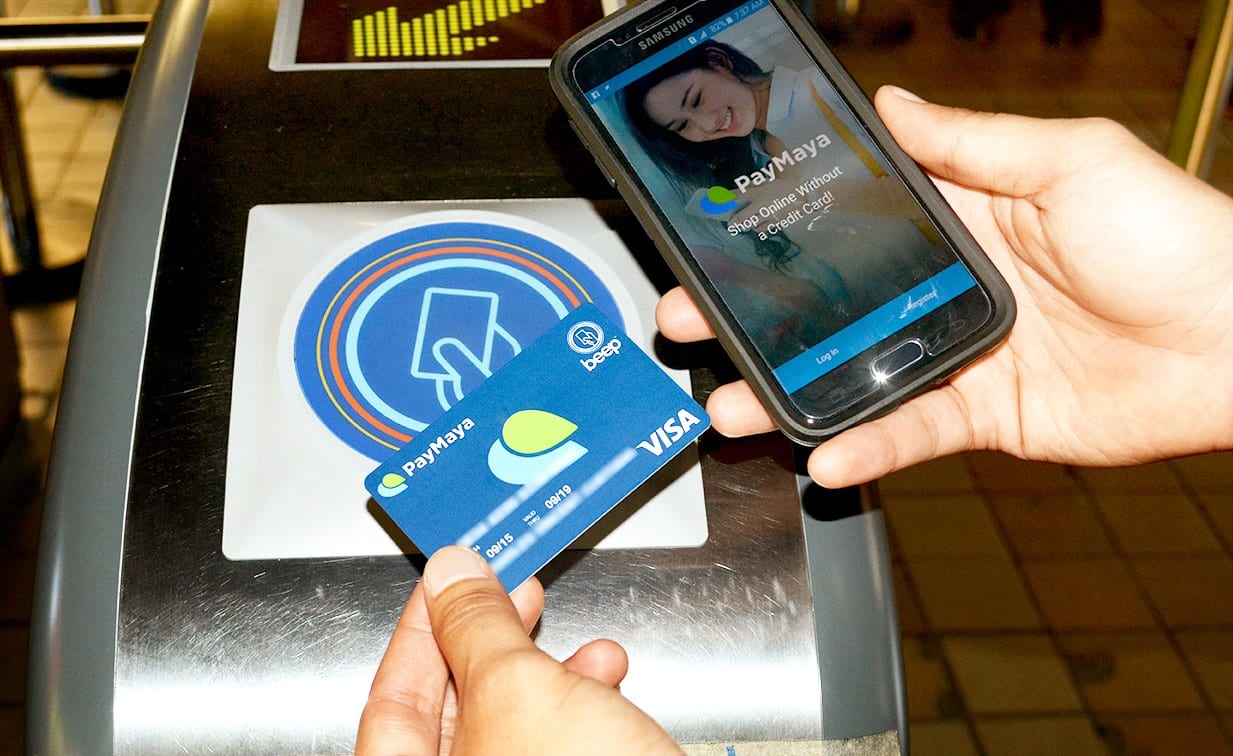
    Paymaya was launched in August 2015 as a virtual Visa card that resides in a mobile app, allowing people to purchase online, send money, send telco airtime load. Soon, it envisions to allow users to pay bills online and do other types of transactions. A physical card can be linked to the virtual card for use for purchases in physical stores and pay for train rides.

    GCash, on the other hand, was launched in 2004 as a micropayment service of millions of Globe subscribers. It transforms a mobile phone into a virtual wallet for safe, secure, and hassle-free mobile money transactions such as the purchase of prepaid load, bills payment, money remittance, donations, online shopping, among others.

    “This is a step toward advancing the future our digital economy. Interoperability is but a natural progression in the ongoing evolution of financial technology services in the country,” said Orlando B. Vea, President and CEO of PayMaya Philippines.

    BSP Governor Amando Tetangco Jr. cited in an earlier speech that studies have shown that shifting from paper to electronic–based payment system could generate annual savings up to one percent of the country’s gross domestic product (GDP).

    At present, there are 10 GSMA active operators with strong money deployments, three of which – Sri Lanka, Pakistan, and Tanzania, are already practicing interoperability since 2014.

    Committed markets, on the other hand, include the Philippines, Paraguay, and Myanmar while Rwanda, Madagascar, Thailand, and Jordan already made a pilot launch last year.

    The fifth annual ‘State of the Industry Report on Mobile Money’ released by GSMA during the Mobile World Congress in Barcelona, Spain showed that there are more than one billion mobile money transactions in December 2015.

    The report noted that mobile money is available in 85 percent of countries where most of the population lack access to formal financial institutions. Moreover, there were 29 cross-border mobile money initiatives connecting 19 countries in 2015, with cross-border remittances growing 52 percent, by volume, over the last year.

    “Mobile money is driving social and economic impact for millions of people in emerging markets,” said John Giusti, Chief Regulatory Officer, GSMA. “Over the last decade, mobile money has done more to extend the reach of financial services than traditional bricks and mortar banking were able to do over the last century. With 411 million mobile money accounts today, mobile is an increasingly critical platform for expanding financial inclusion globally.”

  • Online shopping will never defeat brick-and-mortar shops in Singapore: report

    Online shopping will never defeat brick-and-mortar shops in Singapore: report

    Store-based retailing will continue to rule.

    The rise of e-commerce will be insufficient to dethrone brick-and-mortar shops in Singapore, according to a report by RHB Research.

    RHB noted that even if the popularity of online shopping continues to grow, traditional shops will retain the upper hand because of their wider reach.

    “We think the e-commerce business is unlikely to impact retailers to a large extent. Based on Euromonitor’s 2015 data, non-store retailing made up a mere 6.2% of the overall retail market in Singapore. Given its small scale at the moment, we think it is unlikely for the e-commerce sector to make a dent on the brick-and-mortar stores domestically,” RHB said.

    Even if the e-commerce sector grows at a much higher rate, RHB reckons that traditional stores will continue to dominate.

    “If non-store retailing growth rates were to double Euromonitor’s assumption every year, brick-and-mortar stores would still dominate at least 88% of the market share, even after five years. Hence, this suggests that the e-commerce business is unlikely to result in any big changes within the domestic retail scene,” said the report.

  • Mobile ads help Facebook double Q4 profit

    Mobile ads help Facebook double Q4 profit

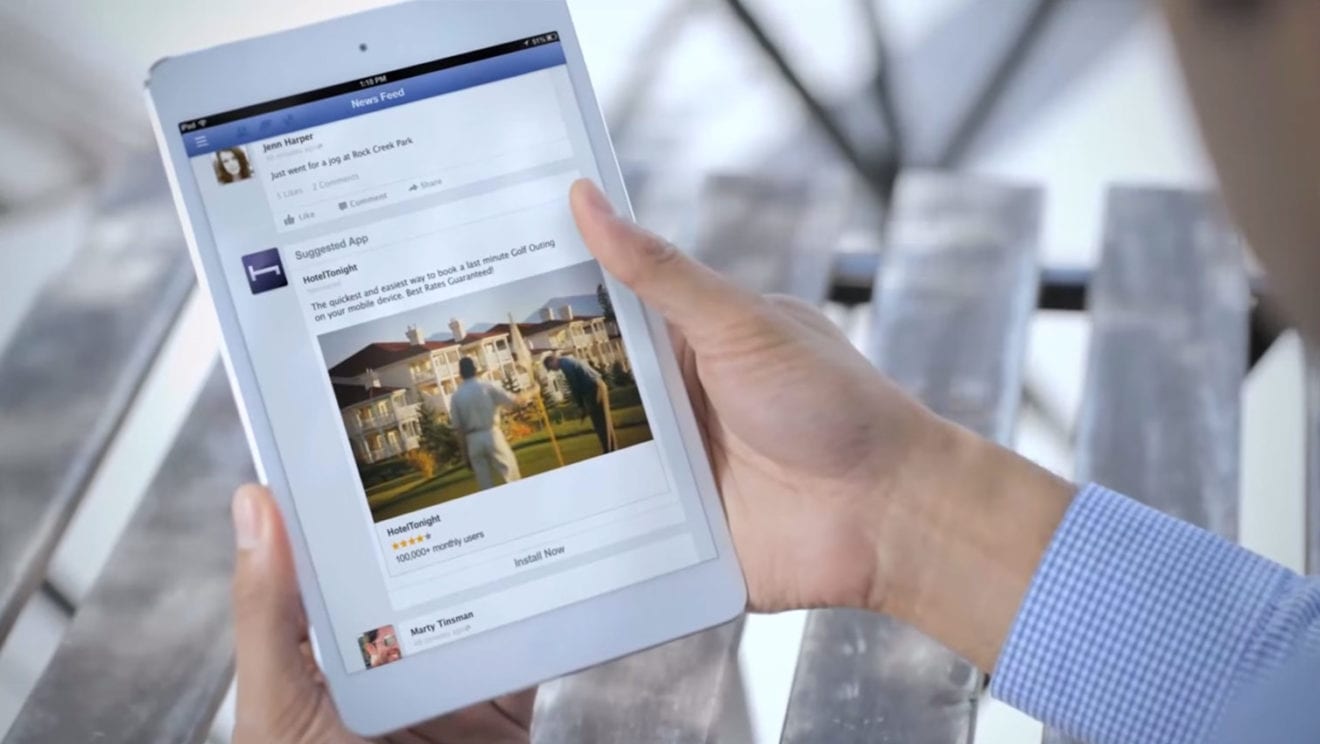
    Facebook last week revealed another quarter of soaring revenue and profit for the last quarter of 2015, thanks to the popularity of mobile ads on its social networking platform.

    The results come on the back of sales in Q4 2015 that rose 52% to $5.84 billion from a year ago, which contributed to profit increasing to $1.56 billion. The profit is more than double the $701 million from just a year ago.

    Mobile ads made up 80% of the company’s total ad business for the fourth quarter of 2015 compared to just 23% in the same quarter in 2012.

    “Our strategy is working and we have many more opportunities ahead,” said Mark Zuckerberg, who is back after taking two months to spend time with his newborn daughter. “So we’re going to continue investing to deliver more great results, over the long-term.”

    The company now has 1.59 billion users that log into Facebook each month, which is likely to further boost the company’s sales and revenues in the months and years ahead.

    Marketers are heading to Facebook due to its ability to get well-targeted ads that are relevant. By making sure that ads blend in with what people would like to see in their feeds anyway, Facebook was able to boost the percentage of marketing messages in the latest quarter.

    While it is not known how much of Facebook’s Q4 sales came from the Asia Pacific (APAC), we did observe a sharp increase in Facebook spending in the region last year as advertisers spend more on Facebook ads than before.

    The CPM (Cost per 1,000 impressions) for the APAC region grew 66% quarter-over-quarter in Q3 last year, more than the EMEA (27%) and the Americas (13%) regions.