Category: E-Tailing

Retail News Asia is committed to providing both local and global retailers with the latest E-Commerce & Etail news throughout the Asian market. This on a daily base.

  • Thai online marketing firm COL to expand via M&A’s

    Thai online marketing firm COL to expand via M&A’s

    COL is the operator of OfficeMate, B2S, Central Online Shopping, Mobile E-Books, and Cenergy Innovation.

    “The competition has become so fierce that many companies are finding it difficult to run their business. Hence, there are opportunities to acquire them, which will help us enlarge our customer base domestically and internationally,” Worawut Unjai, chief executive of the COL Group, said.

    The company is also shifting its focus on online business, which is expected to generate revenues of 800 million baht this year.

    Only last week, it informed the Stock Exchange of Thailand that it completed its entire investment disposal in Central Group Online Co, representing 49 per cent of total shares, to its subsidiary Cenergy Innovation Co, which is into retail online marketing and IT solution, for 147 million baht.

    It cited in the statement that the joint venture with Central Department Store, a leader in Thai retail, is key to gaining competitive advantage in the online retail market. It will be able to leverage Central’s expertise in inventory management, brand, and connections with suppliers and customers.

    “We will launch a new online shopping website in the third quarter. We will gather the goods from Central Group and its major partners and target to have 180,000 items in the website this year,” he cited.

    The COL Group posted 10.8 billion baht in total revenue in 2015, up 9.2 per cent from the previous year.

    Of that, 60 per cent was from OfficeMate and 37 per cent from B2S. Central Online made up for the remaining 3 per cent, which is being boosted to around 10 per cent of total revenue in 2016.

    He said, the group’s net profit was 394 million baht, thanks to its adjusted strategies and management policy for better efficiency.

    The group increased the number of products and services to address customers’ needs and catered to various businesses.

    COL Group expects to grow its revenue this year by 10 per cent to 11.9 billion baht despite lower consumer spending.

    OfficeMate is the first company in the group that has expanded into other countries and it would add branches in Vietnam, which will officially open this year.


  • Rakuten launches mobile e-commerce app in Taiwan

    Rakuten launches mobile e-commerce app in Taiwan

    Japanese e-commerce giant Rakuten has launched  consumer-to-consumer mobile e-commerce app Rakuma in Taiwan.

    The app, first launched in late 2014 in Japan, enables the sale of goods between individual consumers via smart devices. It allows quick product listing and direct communication among users.

    Rakuten said the app will target Taiwanese consumers interested in easy mobile access to e-commerce and is available for free download on Google Play and the iTunes Store.

    “We are excited about Rakuma making the leap from Japan to Taiwan with this popular mobile app and providing Taiwanese users with the opportunity to ‘sell and buy’ their personal, home and fashion goods seamlessly on their smart devices,” said Rakuma Business Manager, Takafumi Inoue.

    Taiwan is a priority market for Rakuten’s global growth strategy as Taiwan Rakuten Ichiba is already a leading e-commerce company in Taiwan and other newer Rakuten services, such as the Rakuten Card credit card and Rakuten Travel, continue to experience rapid growth.

    Rakuten is building its ecosystem of services that offers Taiwan users valuable membership benefits.

  • Retailers undeterred by e-commerce

    Retailers undeterred by e-commerce

    The rise of e-commerce will not deter global retailers from expanding their physical presence in Asia, according to a new study of more than 150 major international brands.

    Despite much-publicised concerns about economic slowdown in China, real estate firm CBRE found that the country remains the top retail market in Asia-Pacific and the fourth most popular in the world.

    More than a quarter of global retailers (27%) reported that they are looking to expand in China while a similar proportion (24%) intend to expand in Hong Kong, which is ranked as the sixth most popular market worldwide.

    Other countries in the region are also highly valued with 22% of global retailers expecting to expand in Japan, the seventh top retail destination in the world, and another 21% in Singapore, the ninth top retail location.

    Although European countries dominate for retail expansion – Germany is top with (35%), followed by France (33%) and the UK (29%) – CBRE said that interest across Southeast Asia surged by more than double that of the previous year.

    Retail brands continue to harbour concerns about rising real estate costs (56%) and uncertain economic prospects (42%), but the report emphasised that Hong Kong remains a desirable market despite the recent slowdown.

    “We’re seeing more of a challenging economic environment, and concerns such as high operating costs and a lack of quality space means retailers are somewhat more wary this year,” said Dr Henry Chin, head of research at CBRE Asia Pacific.

    “However, even as markets such Hong Kong and China are seeing a slowdown, we see increasing numbers of opportunistic retailers looking to enter markets like Hong Kong, supported by strong underlying consumer demand.

    “Japan and Australia remain attractive, while Southeast Asia showed strong growth due to opportunities for retailers around an expanding middle class and stronger economic growth.”

    The study went on to reveal that a full 83% of retail brands believe their physical store expansion plans for 2016 will not be affected by the growth of e-commerce.

    Indeed, almost one-in-five (17%) have ambitions to open more than 40 stores, while two-thirds (67%) are looking to open up to 20.

    “A physical store presence in key locations is still critical to the strength of a brand’s image,” said Joel Stephen, a senior director at CBRE Asia Pacific.

    “Stores still need to create an emotional affinity with shoppers, and customers still feel a need to go into stores, to physically touch a product and enjoy the feel-good factor associated with a particular brand experience,” he added.

  • E-Commerce Latecomer Chow Tai Fook to Chase Online Giant Alibaba

    E-Commerce Latecomer Chow Tai Fook to Chase Online Giant Alibaba

    The Chow Tai Fook brand took almost 90 years to become a family empire spanning Hong Kong shopping centers, the world’s largest jewelry chain and casinos to give patriarch Cheng Yu-tung a $10 billion net worth. Alibaba Group Holding Ltd.’s founder Jack Ma needed less than five years to amass an e-commerce fortune almost triple that.

    Now, the Cheng family’s holding company is making a move to chase Alibaba and other Internet retailers by expanding its online presence. It invested 350 million yuan ($54 million) in shopping platform CTFHOKO.com in December and a mall to showcase products sold online. Its website offers genuine imports such as infant formula, diapers and cosmetics at prices at least 10 percent cheaper than shops in mainland China and is aimed at consumers wary of counterfeit goods online.

    The company is banking on its decades-old reputation. While Hong Kong-based Chow Tai Fook has little e-commerce experience compared with JD.com Inc. and Alibaba’s Tmall, it “can offer confidence in product quality while some existing websites may have fake products,” said Chan Sai-cheong, executive director of Chow Tai Fook’s jewelry unit in charge of the venture.

    Cheng family’s flagship Chow Tai Fook Jewellery Group Ltd. joins other retailers in stepping up its online business that has long been dominated by Alibaba and other e-commerce companies. It’s also seen its traditional business suffer its worst year since 2011 as China’s slowing economy and anti-graft campaigns curb demand for luxury goods.

    The prize is a $100 billion-a-year online Chinese market for imports such as cookies and diapers, according to a report by Mintel Group Ltd., as consumers remain concerned about local products after a series of scandals over fake goods. China’s e-commerce industry is dominated by Alibaba and JD.com, with market shares of 52 percent and 20 percent respectively, according to the report.

    “It’s unlikely for newcomers to compete for website visitation” because China’s most popular online platforms such as Alibaba attracts the most traffic, said Ray Zhao, an analyst at Guotai Junan Securities Co. “It has to cooperate with China’s Internet companies to let Chinese consumers know there is a new website.”

    The hurdle for Chow Tai Fook is not just homegrown. Amazon.com Inc., the world’s largest e-commerce company, is also putting together a plan to take on Alibaba as it vies to capture China’s growing cross-border e-commerce market, which by 2020 is expected to swell into a $1 trillion industry serving 900 million shoppers, according to a June report from Accenture and AliResearch, Alibaba’s research arm.

    No Partnership

    While other brick-and-mortar companies have paired up with established platforms to break into China’s online market, such as the partnership between LVMH-owned cosmetics retailer Sephora and JD.com as well as department store chain Intime Retail Group Co.’s venture with Alibaba, Chow Tai Fook is prepared to go at it alone.

    “We don’t need to have any partnership in expanding the business — we are strong enough to do it by ourselves,” Chan said in an interview in his Hong Kong office. “What we care is that the business model has potential to grow.”

    Cosmetics, Cakes

    To complement its online offerings, Chow Tai Fook built a companion shopping mall in the Qianhai free trade zone in the southern city of Shenzhen to exhibit products sold online, while some are also for sale at the stores.

    Since the first phase of the three-story mall opened in December, Chow Tai Fook has invited 21 Hong Kong retail brands such as cosmetics retailer Sa Sa International Holdings Ltd. and Maxim’s Cakes to display their wares there and sell on its website. At least another 50 retailers will open outlets at the mall when its next phase is ready in May, said Chan.

    All products in the CTF HOKO mall and sold on its sister website are shipped from Hong Kong or other countries outside China, and prices for products such as cosmetics, milk powder and diapers are cheaper than at shops. That’s because the government has adopted lower taxes for online retailers that import through specific ports, under a program labeled “cross border e-commerce.”

    Chow Tai Fook isn’t the only traditional retailer to try and benefit from the program. China Resources Holdings Co. started ewj.com last July and opened a companion showroom in Shenzhen, while Wal-Mart Stores Inc. also plans to introduce a cross-border e-commerce service this year.

    Imported products for infants have been the most popular category since Chow Tai Fook opened its platform, as “Chinese parents don’t stint on baby products,” said Chan. “They want to give their children everything that’s good quality, and they don’t trust domestic brands after some scandals.”

    Showroom Expansion

    The company plans to open other showrooms across China to market its online offerings. It could draw more traffic with low-value goods before switching back to the luxury products for which Chow Tai Fook is known, said Bloomberg Intelligence analyst Catherine Lim.

    “New players can only succeed in surviving by focusing on some niche segments that existing players don’t focus on,” she said.

  • Overseas E-Retailers Represent 25% of China’s 500 Top Web Merchants

    Overseas E-Retailers Represent 25% of China’s 500 Top Web Merchants

    The 500 largest e-retailers in China ranked by annual web sales grew their combined online sales by 59.6% in 2015 to $198.30 billion from $124.22 billion a year prior, according to Internet Retailer’s newly published 2016 China 500. Now in its third edition, the e-commerce research ranks the 500 leading e-retailers in China based on their annual web sales. Of them, 398 are based in China while 102 hail from overseas; this latter group, which includes 52 U.S.-based web merchants, grew web sales by 124.0% to $21.31 billion in 2015. By comparison, U.S. online retail sales grew roughly 15% per year from 2011 to 2014, according to the U.S. Commerce Department.

    The fastest-growing U.S.-based e-retailer in China, according to the data in the 2016 China 500, is no. 11-ranked Apple Inc., which increased its web sales in the country by nearly 150% in 2015 to $2.2 billion, up from $897.6 million a year earlier. Computers/electronics as a merchandise category among the 2016 China 500 e-retailers grew by 49.8% in web sales in China last year.

    More analysis of the fastest-growing e-retailers by merchant type and merchandising category can be found in the 2016 China 500. The database version provides 139 metrics for each retailer, including web sales, web traffic, conversion rates and other key metrics. A 45-page downloadable PDF executive report provides rankings, summary market data and in-depth analysis of competitive trends in China’s e-commerce market.


  • Zizan Razak and Elizabeth Tan are the new faces of 11street!

    Zizan Razak and Elizabeth Tan are the new faces of 11street!

    Underlining its intent to localise and grow its business in Malaysia, 11street (www.11street.my), Malaysia’s most exciting e-mall, today announced Zizan Razak, prominent local actor-cum-entertainer and Elizabeth Tan, Malaysia’s YouTube sweetheart-turned-singer as its new Brand Ambassadors for 2016.

    “As we turn one in April, we felt it was necessary to have two youthful, engaging, and exciting Malaysians to better connect with our customers and community moving forward. Both Zizan and Elizabeth share these qualities and we are delighted to have them represent our brand in 2016,” said Hoseok Kim, CEO of 11street.

    They will both be officially unveiled and make their first appearance at 11street’s 1st Anniversary celebration, themed ‘11street’s Shocking Deals Come to Life’! The online marketplace invites all Malaysians to join the party – a fun-filled carnival with games, goodies and coupons to be given away.

    It will take place on April 11(Monday) from 11:00am to 7:30pm at NU Sentral Shopping Centre, Kuala Lumpur. Well-known celebrity influencers, such as Intan Ladyana and Atikah Suhaime will present to the jubilant birthday celebration. During the event, 11street will also be announcing its collaboration with Xpax, the main prepaid brand for youth under Celcom Axiata Berhad, to help people to save more in 2016.

    On the other hand, leading up to the anniversary, 11street is running various onsite promotions from 1st to 11th April 2016, where unlimited discount coupons will be given out to its loyal consumers.

    As a treat to both customers and fans, 11street is also announcing its “Fly High LIKE A STAR with 11street” contest. By just spending a minimum of RM11 on 11street mobile app and answering a simple question, participants will stand to win a breath-taking helicopter ride followed-by an intimate dinner session with Zizan and Elizabeth. For those who are interested, do participate the contest from 23rd March until 3rd April on 11street.

    11street will definitely ‘WOW’ you at it’s full of shock 1st year anniversary!

  • China Shun Ke Long Reaches Cooperation Agreement with Hengli To Advance Into Cross-Border e-Commerce

    China Shun Ke Long Reaches Cooperation Agreement with Hengli To Advance Into Cross-Border e-Commerce

    China Shun Ke Long, a supermarket chain store operator in Guangdong province, entered into a cooperation agreement with Hengli Limited, the wholly-owned subsidiary of Foshan Shunde Shente Trading Limited. The Group will sell cross-border goods, general goods and imported goods through the e-commerce platform “Hellogou” (www.hellogou.com), and the retail outlets of Hengli, advancing into the cross-border sales market.

    Pursuant to the agreement, the Group agreed to sell cross-border goods, general goods and imported goods through “Hellogou” and the retail outlets of Hengli. In addition, the Group agreed to provide various advisory services to Hengli, including to (i) look for new vendors for Hellogou and franchisees for its retail outlet; (ii) promote “Hellogou”; (iii) monitor the vendor portfolio and product mix of “Hellogou”; and (iv) provide training to the staff of Hengli Limited. With the duration of agreement of 5 years, the Group shall pay 2% commission to Hengli for those goods sold through “Hellogou”, and Hengli shall pay advisory fee equivalent to 70% of its revenue to the Group.

    “Hellogou” obtained the approval from Guangzhou Custom Bureau to operate cross-border online sale of goods and the approval from Guangdong Telecommunication Management Bureau to run value-added services online, which made “Hellogou” different from other ordinary e-commerce platforms. Hengli also had set up counters in 10 retail outlets of the Group to promote its “Hellogou” and display samples of oversea products. Customers could access “Hellogou” to complete the transaction online by using their mobile phones to scan the “Quick Respond Code” on the price tags of the samples of overseas products, and the goods will be delivered to the customers directly either from overseas or custom controlled warehouses.

    Mr. LAO Songsheng, Chairman and Executive Director of the Group, stated, “With a strong foothold in the third and fourth-tier cities in Guangdong province of the PRC, SKL possesses in-depth knowledge in the local market. In recent years, the Group has been committed to developing online-to-offline (O2O) retail business and accumulated extensive experience. With Chinese customers’ increasing demand for high-quality imported food and goods, the Group is optimistic towards the cross-border shopping industry. As we reached the agreement with Hengli, at a relatively low commission rate, we could sell high-quality fresh food and other goods through ‘Hellogou’, bringing consumers a wide range of cross-border goods. In the future, the Group will continue to focus on the development of O2O business in response to market trends. We will also enhance the operating platform to improve efficiency and drive revenue growth for the Group.”


  • Indonesians share memorable Twitter moments to mark 10th anniversary

    Indonesians share memorable Twitter moments to mark 10th anniversary

    The Twitter logo appears on an updated phone post on the floor of the New York Stock Exchange. The social media site famous for its 140-character “tweet” limit turned 10 years old on Monday, having evolved from what was originally billed as a microblogging site into one of the internet’s most influential means of communication.

    Online social networking service Twitter on Monday celebrated its 10th anniversary, gathering many tweeters in Jakarta, including some of the nation’s most prominent figures.

    During the celebration, they shared their most memorable experiences with the microblogging site using the hashtag #KarenaTwitter (because of Twitter).

    Religious Affairs Minister Lukman Hakim Saifuddin, who spoke at the event on Monday evening, said Twitter had allowed him to express himself freely and to talk people who he might never have had an opportunity to meet with otherwise.

    Lukman said he signed up to the microblogging site in 2009 and admitted it was his most favorite social media platform.

    “After some comparison, Twitter is more enjoyable because of its short word count of only 140 characters and you can have a dialogue and unlimited communication,” he said.

    The minister added that the social media platform had exposed him to a wealth of information on a daily basis and prompted him to continue to learn new things, be more engaged and enrich his general knowledge.

    “Because of Twitter I feel stupid. There are many things I didn’t know about. The more people I meet on Twitter, the more I realize that I don’t know so many things,” Lukman said.

    Despite having almost 200,000 followers, the minister said his account was not yet verified.

    Singer Andien, who performed at the event, said Twitter had enabled her to get to know her now husband, Irfan Wahyudi. “This is a true story – without Twitter I may not have married my husband,” she said.

    Andien said she met her husband in 2002 but they did not become close until 2009, after she joined the social media platform. Andien explained that when she lost her cell phone that year, she messaged all her friends on Twitter with her new phone number. Among them was Irfan. After that, she and Irfan started to communicate more often and eventually grew closer. The couple married in May last year.

    Twitter Indonesia’s business head Roy Simangunsong thanked the Indonesian Twitter community for their continued enthusiasm. He said 77 percent of Twitter users in Indonesia were active daily tweeters. Of that amount, over half send out two tweets per day on average.

    Twitter had been witness to many historical moments in Indonesia, Roy said. Today, the wide range of interests and public sentiments can also be seen in the various hashtags that are used, he added.

    “From simple things like how they find a mate to gaining the confidence to be able to do business and become part of the everyday world using Twitter, we can see how Twitter has become an important element of Indonesian society,” Roy said.

  • Jakarta taxi drivers protest against Uber and Grab

    Jakarta taxi drivers protest against Uber and Grab

    Thousands of Indonesian taxi drivers have brought parts of the capital, Jakarta, to a standstill in a protest against transport apps.

    The drivers say ride-hailing apps, such as Uber and Grab, have severely reduced their salaries.

    Footage from Jakarta showed some protesters attacking vehicles and apparently threatening taxi drivers not taking part in the strike.

    The drivers have been joined by bus and “bajaj” motorbike drivers.

    Mobile apps like Grab and Uber have disrupted the transportation industry across Asia, and other parts of the world.

    Taxi drivers say they’ve been disadvantaged because the apps do not face the same costs and regulations as they do.

    ‘They are destroying us!

    The protest is far bigger than similar action taken last week. She said it was impossible to get a taxi in the city centre.

    The protesters have blocked roads outside the parliament, the city administration offices and the ministry of communication, causing massive traffic jams across the already heavily congested city.

    Commuters have expressed frustration at the demonstrations, which also saw tires set on fire.

    “This protest is so terrible. They really are rude and overbearing. I was very hurt,” Dewi Gayatri, who missed her flight for a business trip, told the Associated Press.

    “I still like Uber, and hope the government protects Uber, because it’s so easy to order and cheaper,” she said.

    But for the drivers, many of whom moved to Jakarta to work, the price wars have eroded their ability to support their families,

    “They are destroying us,” Salahuddin, who uses one name like many Indonesians, told the BBC. “We pay tax but because Uber uses private cars they don’t. I am fighting for my survival.”

    Ahmad Rahoyo who operates a bajaj taxi said he used to earn up to 100,000 rupiah ($10; £7) a day, “but since the apps entered Indonesia just covering my costs is hard”

    One man, Hans, said he saw drivers blocking a bus lane.

    “When they saw a taxi driver accepting a passenger they straight away ran over to the vehicle and told the passengers to get out of the taxi,” he said.

    “They threatened them with rocks. I didn’t see them hit anyone but they destroyed the rear vision mirrors of one taxi.”

    Indonesia’s government has appeared divided over the issue.

    The transport ministry has said it is in favour of a ban on ride-hailing apps, since the online and mobile app-based services are not registered as public transport.

    However the communications ministry, which oversees such companies, has said they are legitimately allowed to operate.

    President Joko Widodo has said new technology should be embraced and not banned.

    Global resistance

    Uber, which has sparked conflict with regulators and traditional taxi companies in many US and European cities as well, has expanded aggressively in recent years.

    Its success has led to a slew of localised transport-app companies with similar business models.

    This includes Malaysia-based Grab, which claims to be Southeast Asia’s largest, and Indonesian startup Go-Jek which specialises in motorcycle taxis.

    To try and claim market share, Grab for example, has offered commuters 20 free rides on their motorcycle taxi service.

  • WearYouWant presents a five-step guide to safe online shopping

    WearYouWant presents a five-step guide to safe online shopping

    WearYouWant, Thailand’s leading online fashion and beauty marketplace has created a five-step guide to smart shopping online for Thai consumers, with useful information on how to shop safely through reputable e-commerce sites.

    WearYouWant Co-Founder and CEO, Julien Chalté acknowledges that e-commerce in Thailand is still in its infancy and would like to guide Thai consumers into making smarter decisions when shopping online.

    “We are very aware that we are a part of a fairly new industry in the midst of enormous growth which does not enjoy the same immediate trust as our offline peers. Therefore, it is important for WearYouWant, as one of the leading players in the vertical markets, to take responsibility and provide our customers with a seamless and genuinely safe shopping experience all the way.  We offer a simple five-step guide to shopping safely online in the hope that more Thai consumers will enjoy online shopping – hopefully little by little spurring the e-commerce industry in Thailand to become the regional frontrunner.”

    Agreeing with Chalté, Pawoot Pongvitayapanu, President of the Thai e-Commerce Association highlights how the WearYouWant’s anti-cybercrime checklist is an invaluable guide. “There has been a huge rise in e-commerce in Thailand and this is positive news for online retailers attracting Thai consumers, as well creating more choice for customers.  However, the Thai e-commerce industry is still new and presently constitutes a fairly small part of retail as a whole. Alongside this expansion, we need greater education towards consumers to expand consumer knowledge about e-commerce and shopping online in general. The five-step guide from WearYouWant can help us all and we see it as incredibly useful.”

    The five-step guide:

    Step 1: Check for clear contact information:  Whilst a web shop may not have a physical retail outlet, credible e-commerce sites do have easily visible contact information. If contacts are difficult to find or simply not shown then proceed with caution. Look for a local Thai contact with a phone number or an email address and other company details for an international business.

    Step 2: Check for spelling mistakes and language problems:  E-commerce sites that are not legitimate are often full of glaring errors. This may not be an issue with a tourist site, but for an online shopping site, bad spelling and weird sentence construction should be a red flag. If a site is not an authentic e-commerce site, then it may be created quickly, using a simple translation tool. Check out the pages which list the conditions of purchases too, as well as the ‘about us’ page. Information about employees and photos can be a good indication of authenticity.

    Step 3: Check payment certifications:  E-commerce sites always display logos showing secure payment methods, such as PCI and Norton. The logos should be crisp, clear and recognizable. If there are blurred edges or if a certification has never been heard of before, it is advisable to be cautious. The rule is, if in doubt do not enter your payment details. Quite often a quick search online will reveal methods used by cyber criminals, such as company names regularly used and methods.

    Step 4: Check the company out on Google: Search engines are a shopper’s ally when it comes to investigating companies online. Simply typing in the business name into Google or any search engine should reveal some details which validate the business. This could range from the site and products being reviewed, advertised in various locations through sponsored links and mentioned in press releases and articles. Forums and social media sites can be great platforms to discover any negative experiences associated with a company and/or its founders.

    Step 5: Check common sense warnings: Instinct, logic and experience of online browsing are good indicators of whether an e-commerce site is the real deal and the products on sale are authentic. The golden rule is that while there are some amazing offers online, if a deal seems too good to be true, and then it probably is. Shoppers need to be realistic about offers in relation to the expected price of certain brand names and quality products. 

  • Electronic payments boost economies, said Visa

    Electronic payments boost economies, said Visa


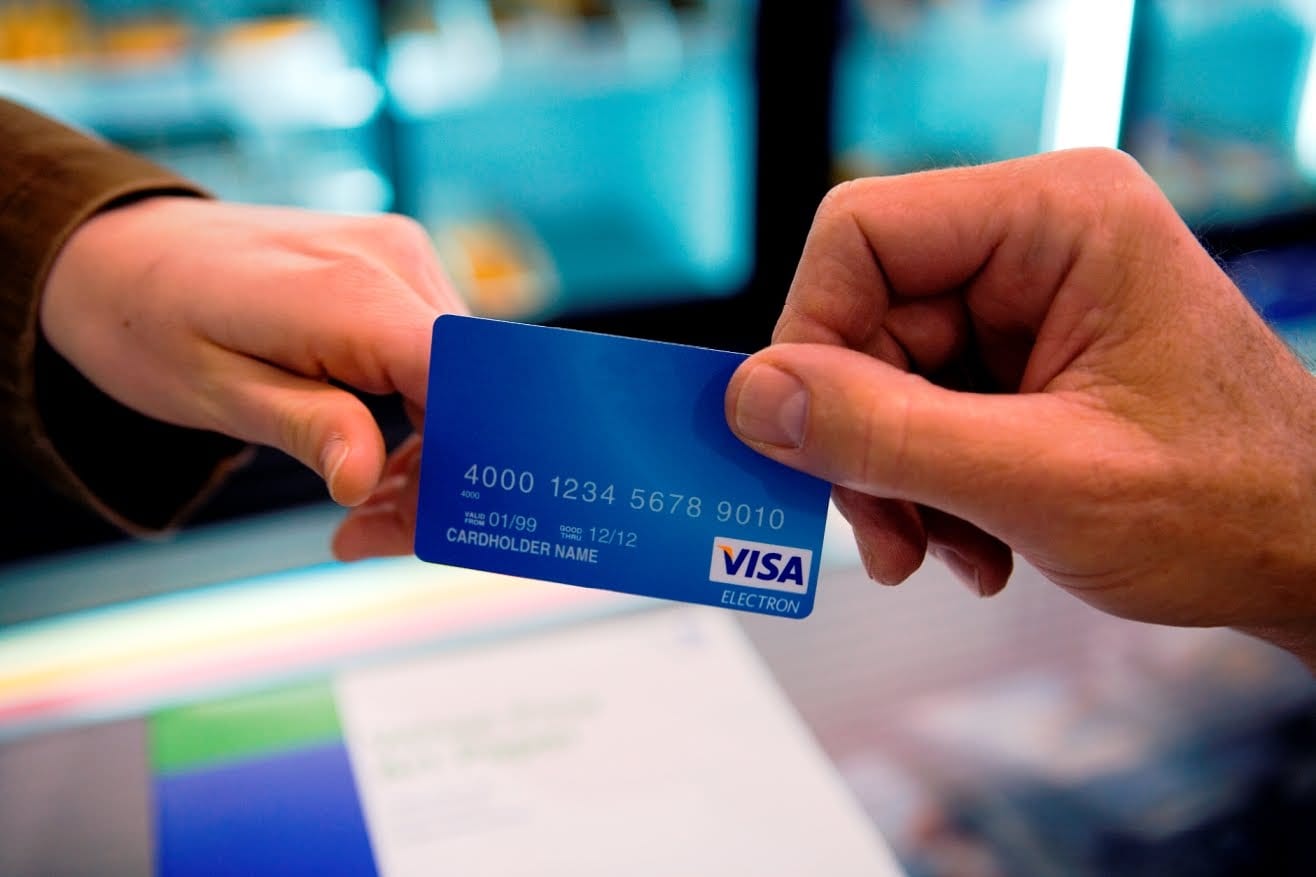
    Electronic payments boost household spending on goods and services as well as boost GDP, according to a study commissioned by global payments technology company Visa.

    Moody’s Analytics investigated the impact of electronic payments on economic growth across 70 countries between 2011 and 2015, finding that the increasing use of credit, debit and prepaid cards added US$296 billion to GDP, while raising household consumption by an average of 0.18 per cent a year. The countries in the study make up almost 95 per cent of global GDP.

    Moody’s economists also estimated that another effect was the creation of 2.6 million jobs on average annually over the five-year period as a result of increased use of electronic payments.

    “Countries that saw large increases in card usage also saw larger contributions to overall growth in their economies,” says chief economist Mark Zandi.

    Purchasing is more convenient and efficient for consumers, and merchants can manage their businesses better and benefit from higher sales.

    Electronic payments also benefit governments and contribute to stable and open business environments, says the study, The Impact of Electronic Payments on Economic Growth. Also, electronic payments help minimise the “grey economy” – economic activity that is often cash-based and goes unreported. This means that electronic payments provide a higher potential tax revenue base for governments, while also bringing the added benefits of lower cash-handling costs, guaranteed payment to merchants and greater financial inclusion for consumers.

    “This research suggests that the right public policies can create an open, competitive payment environment, and contribute to economic growth and job creation,” says Visa CEO Charlie Scharf.

    Two countries stood out for their large gains in employment, stimulated by fast-growing productivity and increased use of cards – China (427,000 jobs added) and India (336,000 jobs).

    As with GDP gains, job gains were not uniform across regions. North America had the highest average job gains per year (69,000), followed by Asia (62,000).

    Some emerging economies have also experienced notable increases in productivity. For example, increased card penetration raised GDP in Vietnam by 0.14 per cent, and Vietnamese labour productivity rose by 18 per cent, resulting in about 75,000 jobs gained each year.

    As consumption growth is, on average, faster in emerging economies, those countries also have more to gain by increasing card usage, says the study.

    Moody’s found that every 1 per cent increase in usage of electronic payments could produce, on average, an annual increase of about $104 billion in the consumption of goods and services. But expanding electronic payments alone do not necessarily increase a country’s prosperity – this needs the support of a well-developed financial system and healthy economy. Countries need to promote policies that minimise unneeded regulation and create a robust financial infrastructure.

    Because of the somewhat lower penetration, card use added 0.06 per cent to GDP a year in Asia.

  • Thailand’s Robinson makes online push

    Thailand’s Robinson makes online push

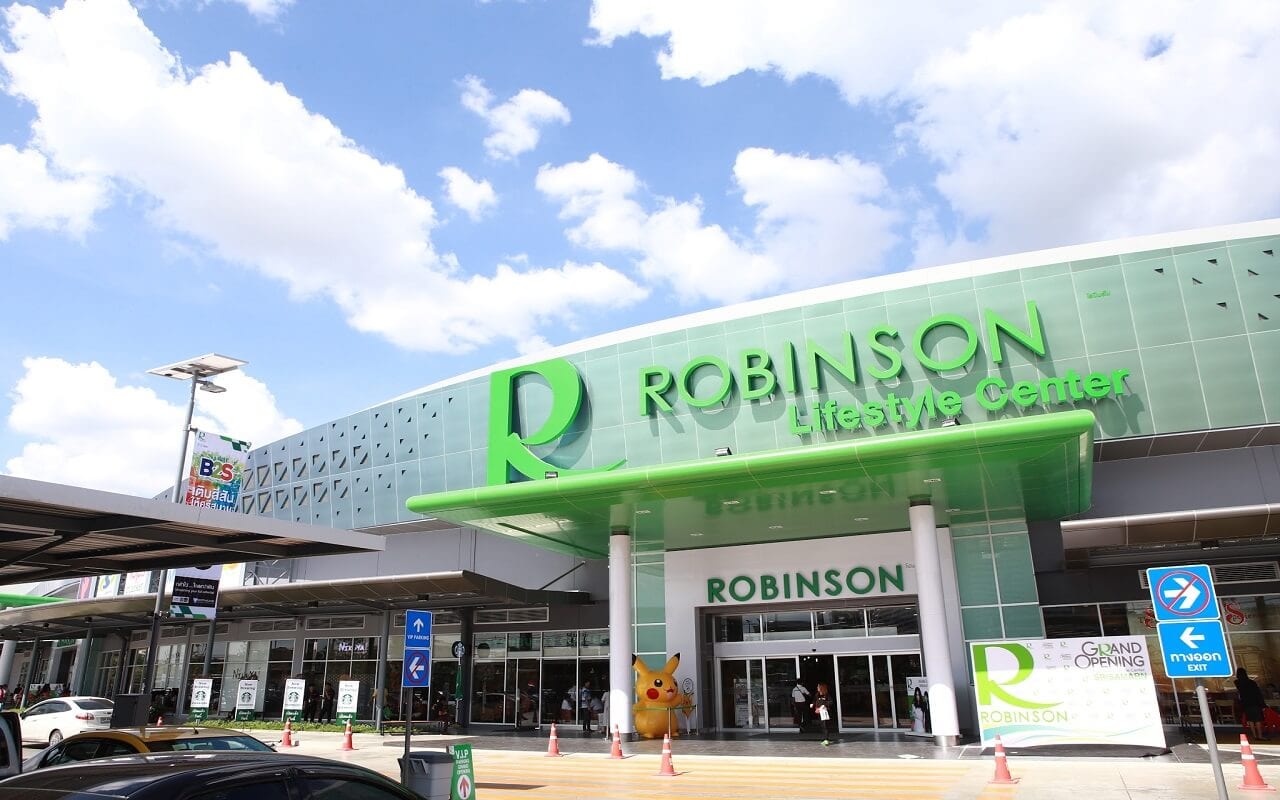
    Major department store operator Robinson said it was turning its focus to online sales and enhancing in-store services — offering anything from ear-piercing to eye tests — rather than opening new stores this year as the economy remained sluggish.

    President Alan George Thomson said that sales from its online platform will contribute 5-7% of overall sales by 2020, from the current 1%. In that time, its online business will become Robinson’s largest segment in terms of sales, exceeding its flagship Rama 9 store in Bangkok.

    Adding to the conventional online shopping service, special kiosks will be set up in stores where customers can make orders online. Items will be delivered to the shop as soon as the next day. Customers in rural areas can thus buy items that would otherwise only be found in the cities.

    “We are transforming Robinson from a department store to a retail company,” Thomson told reporters on Wednesday. By 2017, the company will have spent 2.5 billion baht to renovate 20 of its major department stores.

    Robinson will introduce services such as ear-piercing, eye tests, smartphone-charging stations, coffee stands and even fitness centers. “We want to make retail more than just shopping,” Thomson said.

    But sluggish domestic consumption has meant that the company will open just two stores this year, down from the four or five in the past few years.

    “The economy is definitely much slower now,” Thomson said. Sales in 2015 increased a mere 5% on the year to 2.15 billion baht, underperforming its initial target of a 15% growth. “Getting sales in Thailand is not easy,” Thomson said. “We will slow down our expansion but get better profits from existing shops.”

    To improve efficiency, it will introduce centralized cashiers in its stores.

    Robinson is a part of retail giant Central Group. While Central’s flagship Central department stores target the mid- to high-income customer, Robinson’s focus is on the mass market and a younger customer base. Many of the Robinson department stores are in the Central Plaza shopping malls operated by the group’s development arm Central Pattana.

  • Here is What Institutional Investors Think About China Jo-jo Drugstores Inc

    Here is What Institutional Investors Think About China Jo-jo Drugstores Inc

    China Jo-jo Drugstores Inc institutional sentiment decreased to 1 in 2015 Q3. Its down -1.50, from 2.5 in 2015Q2. The ratio is negative, as 5 investment professionals opened new or increased holdings, while 2 trimmed and sold equity positions in China Jo-jo Drugstores Inc. The investment professionals in our partner’s database now have: 783,924 shares, up from 321,572 shares in 2015Q2. Also, the number of investment professionals holding China Jo-jo Drugstores Inc in their top 10 holdings was flat from 0 to 0 for the same number.

    China Jo-Jo Drugstores, Inc. is a retailer and distributor of pharmaceutical and other healthcare products found in a retail pharmacy in the People’s Republic of China. The company has a market cap of $29.26 million. The Company’s operating divisions include retail drugstores, online pharmacy, wholesale business selling products similar to those the Company carries in its pharmacies, and farming and selling herbs used for traditional Chinese medicine . It has 33.31 P/E ratio. The Firm has 59 store locations under the store brand Jiuzhou Grand Pharmacy in Hangzhou.

    It is up 28.82% since August 11, 2015 and is downtrending. It has underperformed by 26.09% the S&P500.

    Analysts await China Jo-Jo Drugstores Inc to reports earnings on July, 4.

    According to Zacks Investment Research, “China Jo-Jo Drugstores, Inc., through its contractually controlled affiliates, operates a retail pharmacy chain in China offering both western and traditional Chinese medicine. Its contractually controlled affiliates include Hangzhou Jiuzhou Grand Pharmacy Chain Co., Ltd., Hangzhou Jiuzhou Clinic of Integrated Traditional and Western Medicine General Partnership, and Hangzhou Jiuzhou Medical & Public Health Service Co., Ltd. The chain has stores throughout Hangzhou, the provincial capital of Zhejiang Province.”

    Sabby Management Llc holds 0.05% of its portfolio in China Jo-Jo Drugstores Inc for 614,149 shares. California Public Employees Retirement System owns 29,300 shares or 0% of their US portfolio. Moreover, Morgan Stanley has 0% invested in the company for 34,787 shares. The New York-based Renaissance Technologies Llc has invested 0% in the stock. Sabal Trust Co, a Florida-based fund reported 12,400 shares.

  • Faster way to shop online with Visa

    Faster way to shop online with Visa

    According to Visa Consumer Payment Attitudes Study 2015, 67% of Malaysians shop online at least once a month, an increase from 53% in 2014.

    However, 81% of online shoppers in the country have abandoned a purchase because it took too much time to complete the payment process, revealed a study conducted by eCommerce Monitor in 2015.

    Now, online and mobile shoppers can purchase their desired items without much fuss because there is a better way to do so.

    Visa has just officially launched its Visa Checkout in Malaysia, a fast, easy and secure payment service that allows Malaysian consumers to pay for goods online, on any device, in just a few clicks.

    All users need to do is enter their username and password rather than a 16-digit credit card number, and select their required Visa credit, debit or prepaid card to complete the transaction.

    Visa country manager for Malaysia Ng Kong Boon noted the increasing significance of technology becoming part of Malaysians’ everyday lifestyle, including shopping online and on mobile devices.

    “Visa Checkout is designed to improve the digital shopping experience by making the payment process fast and secure, reducing the number of steps required to complete an online purchase.

    “We have partnered with several key merchants in the country to be part of our launch and we are confident consumers will embrace Visa Checkout across all their devices,” said Ng, adding that at least 100 merchants are expected to engage in Visa Checkout by year end.

    Visa Checkout is now accepted at a wide variety of online merchants in Malaysia including Golden Screen Cinemas (GSC), Superbuy.com, SweetSpot Digital, Little Whiz, Twenty3, Avenue 86, CUTI, Malindo Air and Lelong.my.

    There are also 13 banks in Malaysia on board for this service, with Maybank being the first bank to enrol Visa cardholders for the service and offer Visa Checkout acceptance to merchants across the country.

    With the roll-out of Visa Checkout, Visa aims to concentrate on its existing cardholders for this service.

    “Today, we have more than 20 million debit and credit cards issued in the market, and all these cards will be targeted for the Visa Checkout enrolment. Of course, new customers are welcome to enrol too,” shared Ng.

    In conjunction with the Visa Checkout launch, both GSC and Malindo Air are giving special offers to Visa Checkout users.

    Customers can enjoy normal movie tickets at a flat fee of RM8 until June 3, with a maximum of six tickets per Visa card per transaction.

    Those purchasing Malindo Air flight tickets or holiday packages with minimum transaction of RM250 will get a RM50 discount code for subsequent purchases from the airline.

    Both offers are subjected to terms and conditions.

  • Freelancer.com eyes Indonesia

    Freelancer.com eyes Indonesia

    Online jobs listing platform Freelancer.com is set to expand its presence in Indonesia, with company CEO Matt Barrie praising the country’s efforts to drive innovation and investment in technology.

    Mr Barrie’s comments came as he and his team, including senior vice president of growth, Indonesian-born Willix Halim, played host to a delegation of Indonesian officials in Freelancer’s Sydney offices.

    The delegation, headed by the Indonesian minister of trade Thomas Lembong, discussed a number of topics with Freelancer’s management, with a particular focus on touting the efforts of the Indonesian government to create a more welcoming environment for local and foreign start-ups in the country.

    Mr Lembong said he was committed to making investment leaner, faster and friendlier in Indonesia. Under initiatives signed off by Indonesian president Joko Widodo, the country is looking to potentially reduce start-up capital costs and time for foreign companies to establish themselves in Indonesia.

    The country recently unveiled its e-commerce platform that’s designed to reduce the bureaucratic burden for entrepreneurs

    Mr Lembong also hinted at the prospect of Australian universities given the chance to establish campuses in Indonesia. Both Singapore and Malaysia have had similar policies regarding foreign universities for almost two decades and while the trend of Australian universities branching out geographically is on the wane the move signals the Indonesian government’s desire to boost its local innovation ecosystem.

    Indonesia is an important market for Freelancer, with 1 million of its 18 million users globally hailing from the country.

    Mr Barrie said that he was impressed by the level of activity in Indonesia.

    “I am very impressed with how many people in Indonesia’s cabinet are from the private sector with domain experience directly in the sector of their portfolio,” he said.

    “Why can’t we do this in Australia? It would take how Australia is governed into the 21st century and away from petty politics that is the mainstay of career politicians.”

    “I thoroughly enjoyed discussing the challenges and rapid progress that Indonesia has made and will make through technology-enabled reform and “breaking taboos to get things done” with the minister,” he added.