Category: E-Tailing

Retail News Asia is committed to providing both local and global retailers with the latest E-Commerce & Etail news throughout the Asian market. This on a daily base.

  • Philippines online grocery service launched

    Philippines online grocery service launched

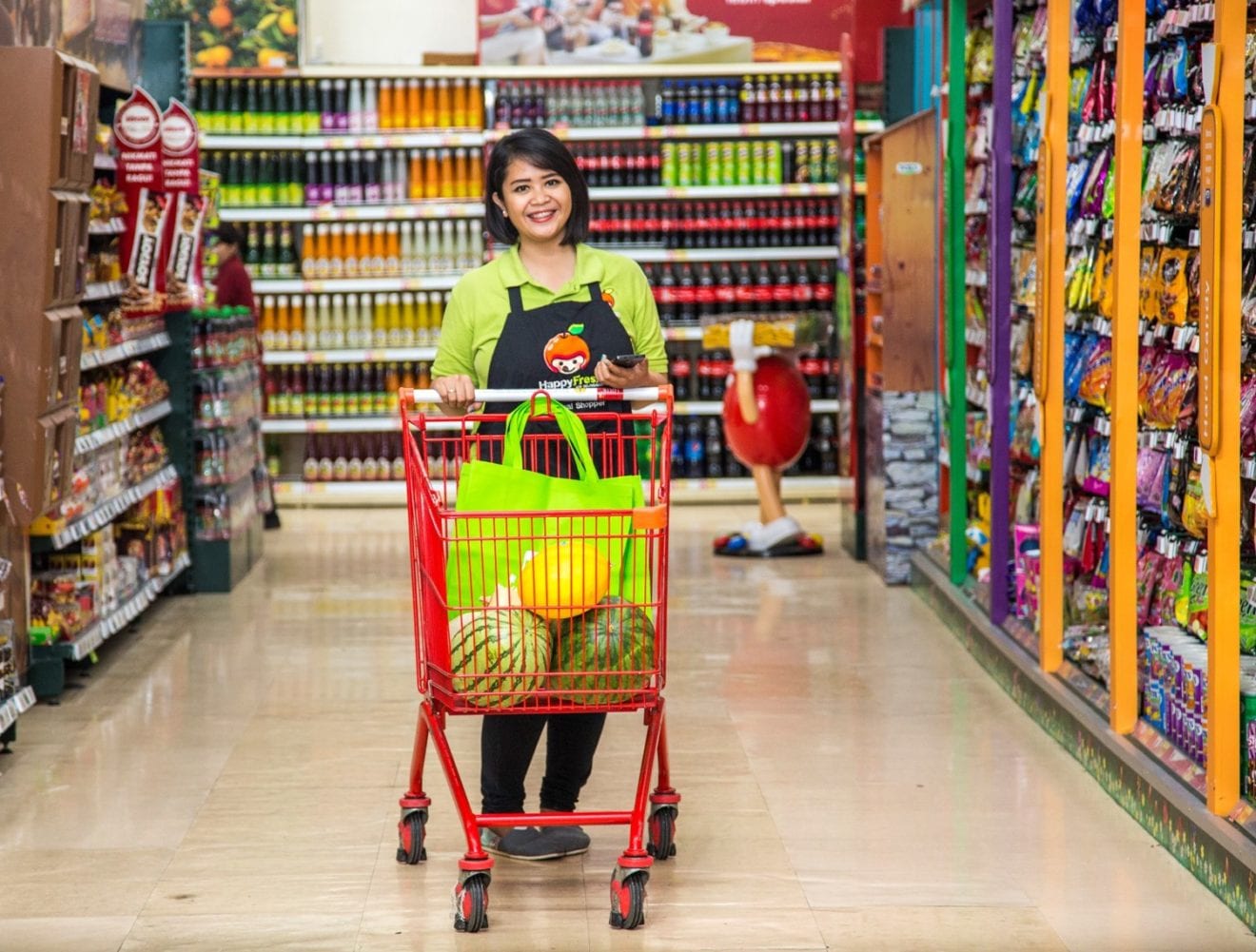
    Jakarta-based HappyFresh is bringing its operations to the Philippine market by the second quarter of 2016.

    Manila is the online grocer’s fifth market in Asia, following  Indonesia, Malaysia, Thailand and Taiwan. Isabel ‘Pao’ Barientos, former chief operating officer of online marketplace theshop.ph, will lead the Manila office as MD. Barientos has also previously worked for deal sites Ensogo and the Lazada Group.

    The Philippines online grocery shopping app will target the growing urban workforce, especially working mothers, who are in need of personal shoppers to deliver goods amid the city’s notorious traffic congestion.

    “The Philippines is an exciting market because the population’s wealth is expanding and consumer spending growth will accelerate through to 2030,” said HappyFresh CEO and co-founder Markus Bihler in a statement.

    In Bangkok, HappyFresh competes with supermarket chain Tesco Lotus, which has been offering a delivery service for several years already. In Jakarta, the competitor is startup Back Garlic, a meal-kit delivery service sends pre-packaged, portioned and labeled groceries in a box.

    Bihler said the market for online grocery shopping in Asian countries could see double-digit growth in market turnover by 2020 to reach S$19 billion (US$13 billion) by 2020. He said the rise of a young, working-class population in urban areas is driving the market.

    Working mothers outnumber all other HappyFresh customers, with dairy products such as milk and eggs among the top purchases. They are followed by young professionals and expatriates who mainly buy tomatoes, spaghetti and chicken breast.

    Securing $12 million in funding as a start-up last year, led by Singapore’s Vertex Venture and Sinar Mas Digital Venture, HappyFresh partners with supermarket retailers, “particularly small and medium-sized enterprises that do not have the capacity or ability to invest in technology and reach out to new set of customers,” said Bihler.

  • Ensogo mobile marketplace takes wings

    Ensogo mobile marketplace takes wings

    Ten weeks after its launch, the mobile marketplace of Australia-listed Hong Kong-based eCommerce platform Ensogo has reported “exceptional” growth.

    Ensogo connects products for sale to more than 600 million consumers throughout Hong Kong, Indonesia, Malaysia, Singapore, The Philippines and Thailand.

    Ensogo app

    The company says its marketplace’s inventory has rocketed 3000 per cent, with the number of sellers swelling 600 per cent over the first two weeks of January, following a strong fourth-quarter.

    “The introduction of Ensogo’s mobile marketplace represents a game-changing shift for the business,” says co-founder and CEO Kris Marszalek. “Since its launch, we have seen an exponential increase in both new and active sellers, adding hundreds of thousands of products to our offering.

    “Exciting merchandise is a prerequisite to successful customer acquisition and retention, and Ensogo now offers consumers across the region a vastly expanded and truly exceptional range of products at competitive prices.”

    Powerful personalisation technology drives product discoverability while creating individualised shopping experiences on the marketplace, which with its rapid traction underscores the company’s transition away from its legacy services business. Along with changing trends and consumer behaviours in Southeast Asia, the company believes a streamlined offering is critical as the business moves into its next stage of growth. “The eCommerce opportunity in Southeast Asia is enormous, and has immense potential for further growth,” says Marszalek.

  • Contactless mobile payments growing

    Contactless mobile payments growing

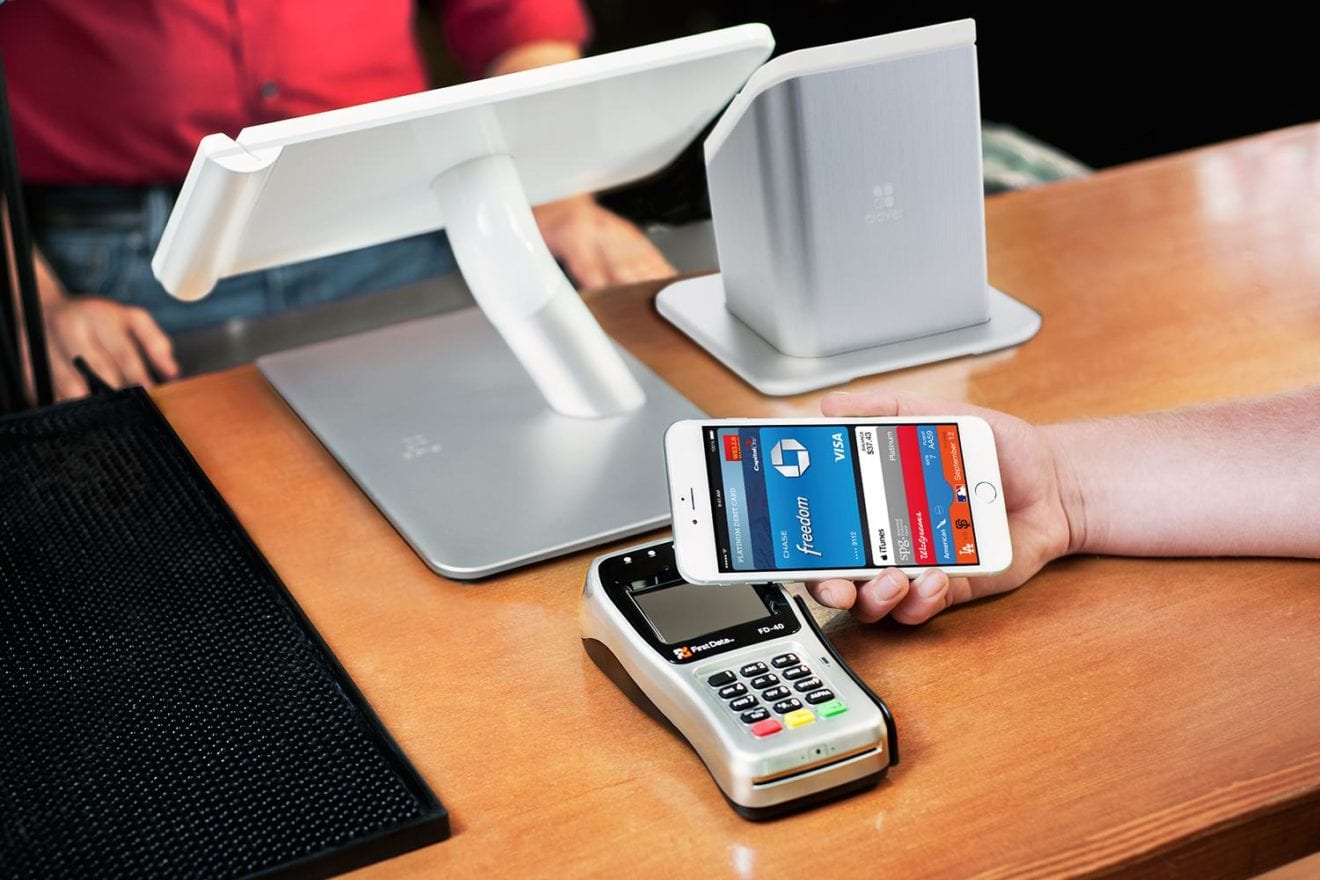
    The number of contactless payments made via mobile handsets will reach 148 million globally this year, according to a study conducted by Juniper Research.

    Samsung and Apple will account for approximately 70 per cent of new customers.

    The study showed consumers have been receptive to this payment method, predominantly because of their strategic placement. When Apple Pay was introduced in China, nearly 40 million payment cards were registered to the service in 24 hours in mid-February.

    Nearly one in five point-of-sale terminals in the US are now contactless-capable, with the report finding this will see smartphones be the number one driver of contactless payments in the US. The report also revealed banks and leading “over the top” players will deploy Host Card Emulation-based (HCE) models.

    “The combination of HCE and tokenisation is extremely attractive to banks. HCE means that they are not dependent on a mobile operator to enable the service; tokenisation reduces the burden on the issuer and allows them to use their existing infrastructure,” research co-author, Dr. Windsor Holden said.

    The study also found that NFC sticker-based solutions can be ‘risky,’ stating that in closed-loop solutions, ‘there’s a chance thieves could simply use all the money in the wallet at participating retail outlets.’

  • Online boom not deterring global retailers

    Online boom not deterring global retailers

    Global retailers are undeterred from expanding their bricks and mortar stores this year despite growing online sales, says a new report.

    In the seventh edition of How Active Are Retailers Globally?, real estate service company CBRE also says China remains the top target market of global retailers in Asia-Pacific. Its study covered more than 150 major international brands based in the Americas, Asia Pacific and EMEA.

    While European countries dominate the target destinations this year, China is the top target market in Asia-Pacific and the fourth most popular globally, with 27 per cent of retailers looking to expand there. This is followed by Hong Kong in sixth position (24 per cent), Japan seventh (22 per cent) and Singapore ninth (21 per cent).

    Globally, the top three were Germany (35 per cent), France (33 per cent) and the UK (29 per cent).
    China and Hong Kong maintained fourth and sixth place respectively, while Japan (seventh), Singapore (ninth) and Australia (11th) all rose higher in the rankings, up from 13th, 18th and 15th respectively.
    Most Asia-Pacific markets saw increased interest for this year compared with last, except for China and South Korea, which softened somewhat, says the report. Meanwhile, interest in Southeast Asia surged, with Malaysia (10 per cent), Indonesia (9 per cent ), Thailand (8 per cent), Vietnam (8 per cent) and The Philippines (8 per cent) all receiving more than double the interest they saw last year, when those markets achieved only between 1 and 3 per cent.

    When questioned about the risk factors facing them in the coming year, brands indicated that real estate cost escalation (56 per cent) and unclear economic prospects (42 per cent) continue to be at the forefront of their minds.
    “We’re seeing more of a challenging economic environment, and concerns such as high  operating costs and a lack of quality space mean retailers are somewhat more wary this year,” says CBRE head of research for Asia Pacific Dr Henry Chin.

    “However, even as markets such as China and Hong Kong are seeing a slowdown, we see increasing numbers of opportunistic retailers looking to enter markets like Hong Kong, supported by strong underlying consumer demand. Japan and Australia remain attractive, while Southeast Asia showed strong growth because of opportunities for retailers around an expanding middle class and stronger economic growth.”

    He says there are still opportunities for retailers to grow their business in Asia, as the region has four of the top 10 most popular destinations worldwide.
    “The goal now for all brick-and-mortar retailers is to build an engaging offer that encourages people to stay longer and spend more,” says CBRE senior director and head of retailer representation Joel Stephen.
    Of the brands surveyed, 83 per cent suggest their physical store expansion plans for this year will not be affected by the growth of eCommerce, and only 22 per cent see online retailing as a threat to their business.

    At the same time, retailers are cautiously optimistic about physical expansion. Of those questioned, 17 per cent have large-scale ambitions, many of them looking to open more than 40 stores this year (up from 9 per cent last year). Most retailers (67 per cent) are considering up to 20 stores.
    “A physical store in key locations is still critical to the strength of a brand’s image,” says Stephen. “Stores still need to create an emotional affinity with shoppers, and customers still feel a need to go into stores, to touch a product and enjoy the feel-good factor associated with a particular brand experience.

    “The store is integral to the shopping journey and can be used in a number of different ways, such as to click and collect, research of the product or brand, or to test the product. It isn’t solely about the transactional side.”

    In a new trend, a fifth of brands, largely from the Americas and EMEA, intend to expand into travel hubs such as airports and train stations this year to gain access to high footfall in busy locations. However, for Asia-Pacific retailers, shopping malls are still the most-preferred destination by far (nearly 90 per cent).
    While globally the key concern for brands in lease negotiations is “lease length”, Asia-Pacific retailers are most concerned with turnover rent clauses as well as changing consumer behaviour (40 per cent), which is higher than the global average (31 per cent).

  • Leading Philippines retail developer teams up with Lazada

    Leading Philippines retail developer teams up with Lazada

    Leading Philippines retail, banking and property developer SM Investments Corp has entered into a partnership with e-commerce giant Lazada. Through this alliance, it hopes to leverage Lazada’s popularity in the Philippines (6th most popular website) to push sales of its merchandise online.

    According to Teresita Sy-Coson, vice chairwoman of SM Investments Corp, it will initially carry light-to-carry non-food items through Lazada’s online store, then eventually offer bulkier items such as furniture and appliances.

    This venture will drastically boost SM Investments Corp’s existing e-commerce presence. In Dec 2014, its retail arm, SM Store, launched an e-commerce platform, selling a gamut of goods from apparel, bags and shoes to luggage and gift vouchers. At the end of February, SM Investment Corp sought to consolidate all its retail businesses including Watsons and Toy Kingdom under the SM Store banner.

    According to a report, its combined retail stores number 1,374 and netted a revenue of US$1.14 billion in 2015.

    With this consolidation and partnership with Lazada, it will  both drastically expand its online repository of merchandise, as well as extend its online reach.

    E-commerce in Philippines has been picking up steam over the recent years. According to a Statista report , e-commerce will bring in US$1.26 billion in 2016 and is expected to hit US$2.69 billion in 2020. The number of e-commerce users is also projected to reach 46.1 million.

    Lazada will play no doubt a key role in boosting Philippines e-commerce growth – last year, it captured 20 per cent of all online sales in the country. This, in part, was due to the filipinos appetite for consumer electronics, which bagged a whopping US$581.5 million of online sales in 2015.

    Lazada’s climb to e-commerce dominance in the Philippines was not without setbacks. Late last year, it was accused of carrying fake products.

  • China’s cross-border online retail shows strong progress

    China’s cross-border online retail shows strong progress

    China’s cross-border e-commerce market has shown a strong growth during the six-month period ending November 2015, according to research firm Mintel.

    Boosted by favourable government policies and an increasing Chinese propensity for foreign goods, many Chinese consumers are now interested in buying foreign products online. Mintel’s new report ‘Haitao Retailing’ reveals that almost 58 per cent consumers bought foreign products online from domestic shopping websites, with quality of products (63 per cent) and pricing (38 per cent) as the prime concerns when shopping for imported products online.

    The cross-border online shopping market value grew at a compound annual growth rate (CAGR) of 63.3 per cent in 2015, while the total online retail market during the same period saw 48.8 per cent CAGR growth.

    “The continued growth of online retail, backed by increased consumer interest in spending time online, especially in rural areas, combined with the government’s support of online sales and an uptake of m-commerce and online payment systems, indicate that online retail will continue strong growth in the near future. Indeed, the future outlook for ‘haitao’ shopping looks good. However, it is an increasingly competitive market. Brands need to stand out by offering something different. Chinese consumers want top quality, and they need to have that quality proven through good information and good service,” said Matthew Crabbe, APAC research director at Mintel.

    Comparing Chinese domestic and overseas online shopping websites, foreign sites are perceived by shoppers to do better in terms of product quality, while domestic websites do better in most other areas, such as good value for money spent and fast delivery.

    “Not all Chinese consumers feel the need to have foreign products or services. However, fashion, furniture, food and drinks are much more significant online shopping categories, representing opportunity for online retail market growth. And we are seeing there is another great opportunity for niche brands, with specialist products having the potential to make an initial market entry into China via overseas online retail channels,” added Crabbe.

    “Consumer attitudes to cross-border online shopping can be summarised with reputation, reviews and recommendations. Helpful advice and information about products, a good return policy and a variety of delivery options are important in building reputation. Good service and good products are the key areas where online retailers must learn to compete in the future,” Crabbe concluded. (NA)

  • Malaysia among first in world with Retail Workbench iPad app, said Standard Chartered

    Malaysia among first in world with Retail Workbench iPad app, said Standard Chartered

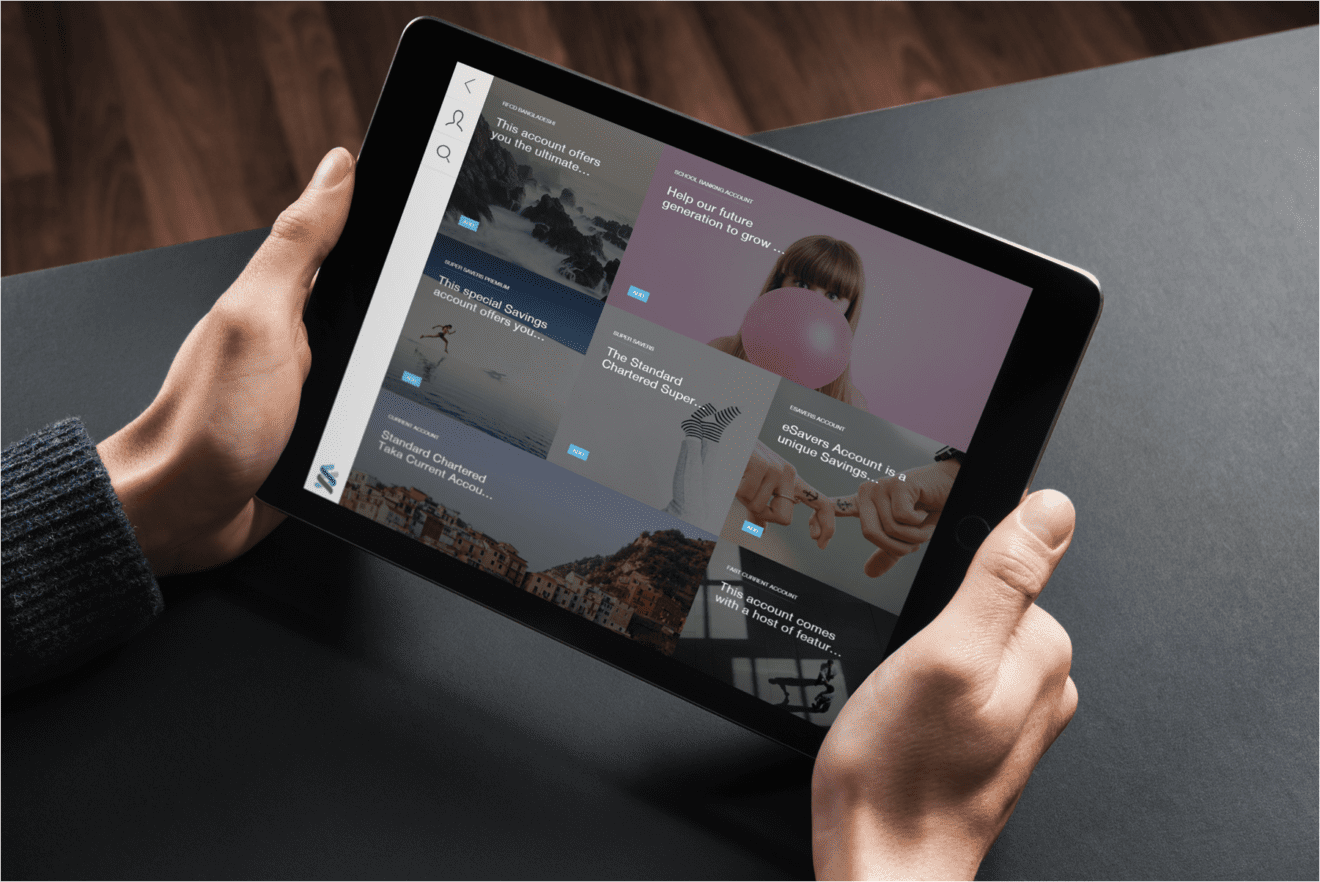
    Malaysia is one of the first six markets to go live with Retail Workbench, a digital tablet-based sales-and-service tool, according to Standard Chartered Bank, which globally launch of its Retail Workbench,

    The iPad tool is also live in India, the UAE, Bangladesh, Nigeria and Kenya, said Aaron Loo, country head, Retail Banking, Standard Chartered Bank Malaysia.

    “Banking should be easy and convenient – that’s what the Retail Workbench is all about,” said Loo, adding that the application is integrated with the Bank’s back-end infrastructure, which will allow sales staff to open an account for a client in any location. Banking services such as loan approvals and credit card issuance will be fast, simple and completely paperless.

    “We are harnessing technology to make banking a seamless experience for both clients and staff. Going paperless fits into the increasingly mobile lifestyle of our clients while improving cost efficiency and productivity by freeing up staff’s time to focus on what really matters, which is serving the client,” he said.

    In addition, Loo said the ‘the bank on an iPad: Retail Workbench’ also puts a set of current and savings account, credit card and personal loan products on one mobile platform – along with product information and marketing brochures – so sales staff can answer questions and respond to client needs in person, at any location.

    He said that with this fully digital device, we can process client requests from anywhere, with the data moving straight through to the Bank’s back-end operations in near real-time. Previously, sales staff could visit clients in person but the paperwork had to be manually entered into the Bank’s systems back at the branch or Bank’s premises.
     

    Aaron Loo - Standard Chartered Malaysia 

    Photo – Aaron Loo, Country Head, Retail Banking, Standard Chartered Bank Malaysia

    This means that clients only need to give their personal data to the bank once to create a profile that can be used for future purchases. Sales staff use the iPad’s built-in camera to securely snap a picture of identity documents so there is no need to fill out multiple forms and no missing data.

    Loo said Retail Workbench has already revolutionised the banking industry in Korea when it was launched in 2014, cutting account opening time in the digitally advanced country to five minutes and credit card issuance to less than half an hour. It has since won numerous industry awards for innovation and outstanding client service.

    Due to differences in local infrastructure, turnaround times and other features of Retail Workbench will vary across the seven markets following the global launch, he added.

    A statement added that Standard Chartered will successively add capabilities and enhance performance in each market over the coming months and equip more sales teams with the device. By the end of 2017, Retail Workbench will be in the hands of staff in 18 markets across Asia, Africa and the Middle East.

     Digitising banking

    The statement added that this global launch marked “a milestone in Standard Chartered’s strategy of using digital technology to deliver a better banking experience to clients. The Bank last year announced it will invest US$1.5bn in technology over three years. Standard Chartered was named the World’s Best Consumer Digital Bank in 2015 by Global Finance magazine and also won Best Consumer Digital Bank in Malaysia in 2010, 2014 and 2015.”

    Standard Chartered Bank, a member of the Standard Chartered Group was established in Malaysia in 1875 and incorporated as Standard Chartered Bank Malaysia Berhad in 1984. Standard Chartered employs close to 7,000 employees in all its Malaysian operations.


  • Coupang losses mount

    Coupang losses mount

    Coupang, the leading South Korean eCommerce operator, is expected to reveal mounting operating losses for 2015 as big investments in logistics capacity weighed on the financials of the startup company, industry sources said Thursday.

    Coupang is expected to log over 400 billion won (US$326.9 million) in  losses when it files its 2015 audit report in mid-April due to rising costs in building new logistics centres and hiring new staff, they say.

    The online retailer’s sales were estimated to have jumped more than four-fold last year from 348.5 billion won in 2014 after its same-day delivery service helped attract more customers in online marketplaces.

    While market watchers questioned the sustainability of its business model, Coupang said the deficit is an inevitable result of aggressive investment to get ahead in the highly competitive market.

    “The operating deficit was already being expected because we are making big investments to establish a nationwide logistics network and hire more staff,” a spokesperson said.

    “The investment is aimed at the long-term goal of making a strong foothold in the market. It is expected to take some time to make a turnaround as several projects are currently underway.”

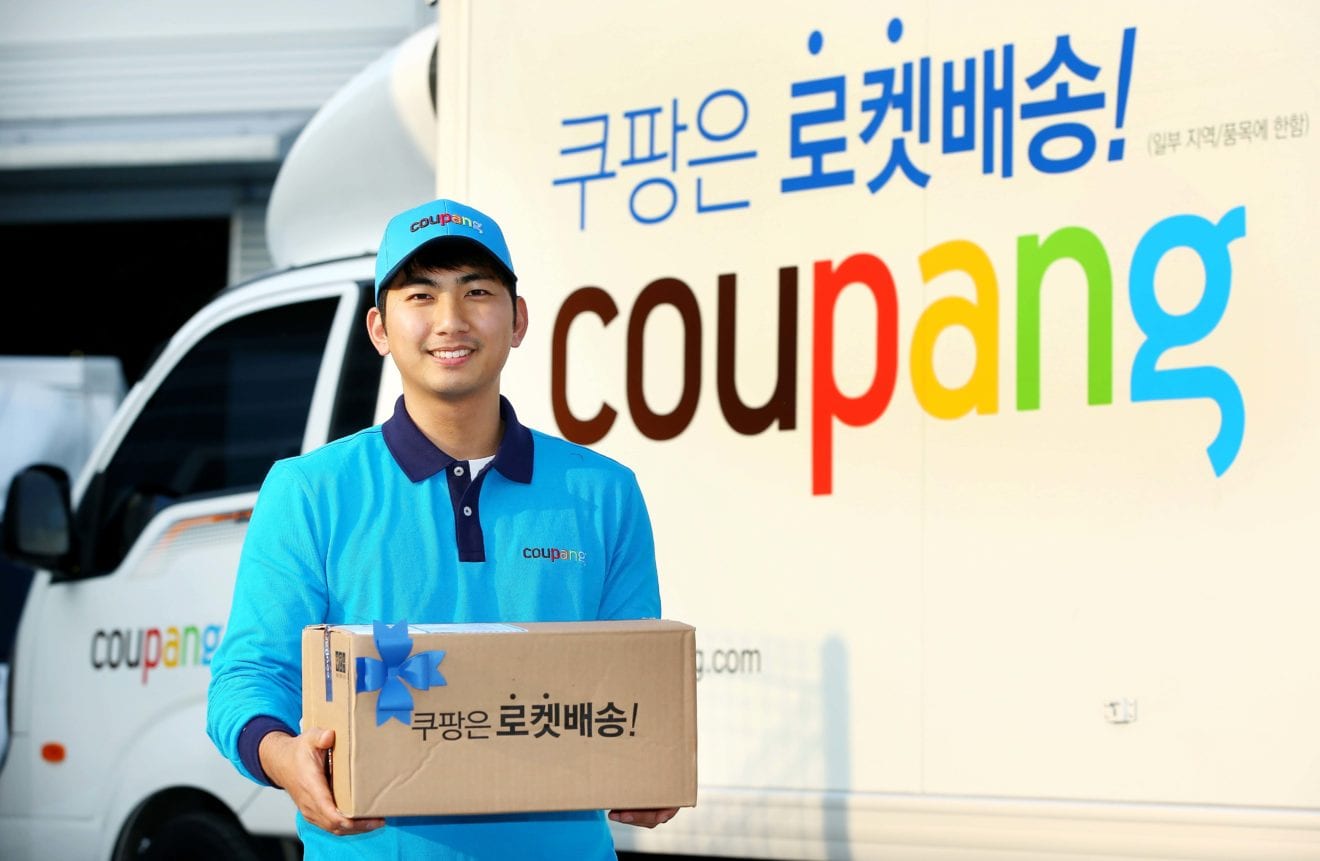
    In November, Coupang said it will invest 1.5 trillion won in expanding logistics capacity by 2017 to step up its same-day delivery service, just months after it won a US$1 billion investment from Japanese telecommunications giant  Corp. Coupang launched an ultra-fast delivery service called “Rocket Delivery” in March 2014 by establishing its own logistics system and employing couriers, joining the global wave of delivery wars led by online retail behemoth Amazon.

    Coupang said it will hire 4000 more staff in the delivery and logistics sector by next year, in addition to 3500 full-time delivery staff, and have 21 logistics centres across the nation. In addition to the same-day delivery competition, Coupang has recently launched a cut-throat price war, advertising that its diapers and powdered milk are the cheapest in South Korea.

    As a result of aggressive marketing, Coupang’s market share in the local online market has steadily risen from 2.3 per cent in 2013 to 5.6 per cent in 2015. Mobile devices also accounted for 9.8 per cent of its transactions last year, according to industry data.

  • Two-pronged approach for Giordano Vietnam

    Two-pronged approach for Giordano Vietnam

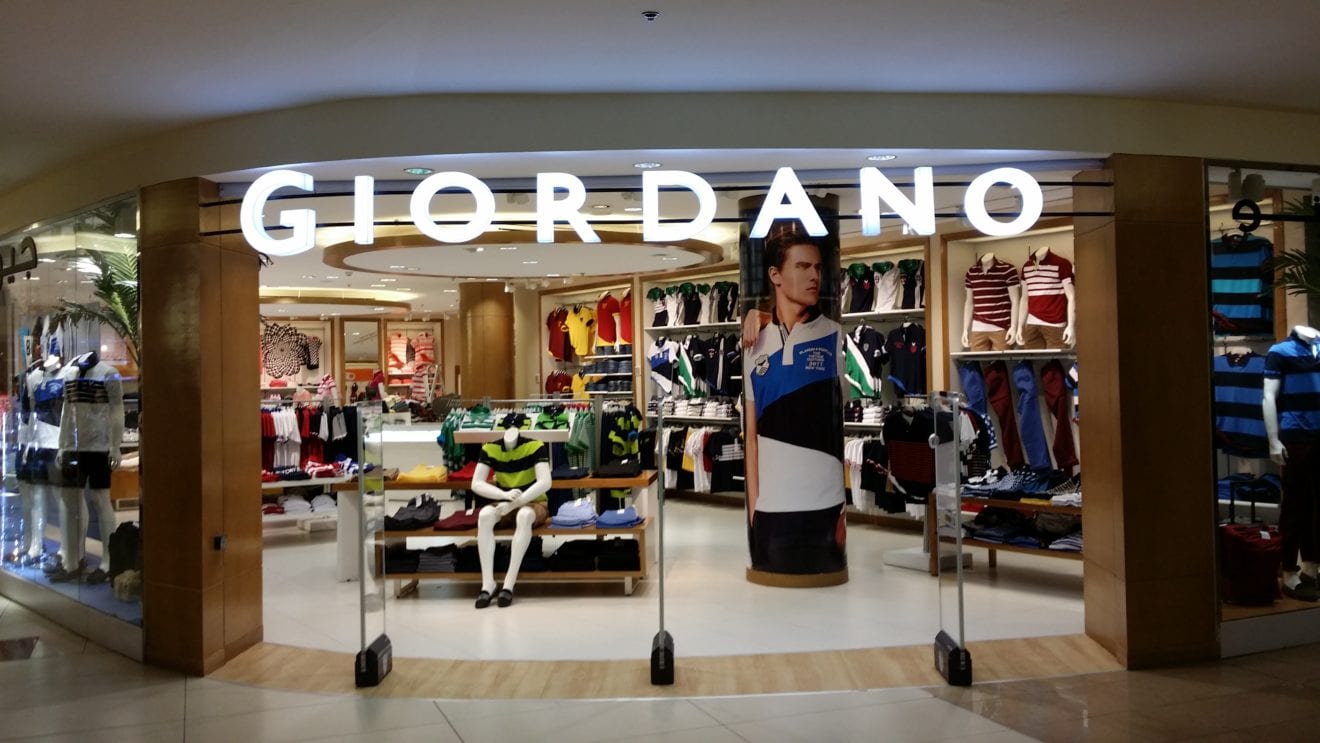
    Vietnam is on the radar for Hong Kong clothing retailer Giordano International, both as a market and supplier.

    With its steady growth in the emerging market, the company is planning to establish a legal entity Giordano Vietnam.

    It is also eyeing the country as a source market for product, while it continues to develop sourcing opportunities in Bangladesh.

    While Giordano still sees opportunities for growth in developing markets such as Indonesia, Malaysia and Thailand, the company says in its annual review that those opportunities are fading.

    Meanwhile, the group has plans to launch digital sales channels outside mainland China this year, initially through the development of its own eShops.

    “Market conditions in Southeast Asia have been challenging in the past two years,” says the group, which improved its merchandising, and therefore profitability, in Singapore last year – “but this will be a tough market going forward”.

    In the 2015 financial year, consolidated sales eased by 3 per cent – but increased by 1 per cent on a constant currency basis. Global brand sales were down 1 per cent for the year, but comparable same-store sales grew by 3 per cent.

    As a strong Chinese New Year offset the impact of 81 store closures, brand sales in the first half of the year grew by 1 per cent. But in the second there was a 3 per cent drop because of unseasonably warm weather in Greater China.
    Gross profit margin declined by 0.4 percentage points to 57.6 per cent, with higher purchasing costs caused by a strong US dollar eroding margins in Southeast Asia and Taiwan.
    “Weak consumer demand in many markets has led to fierce competitive pressure on selling
    prices,” says the group.

    Nevertheless, in the second half of the year, improved purchasing and merchandising resulted in gross margin improving from 57.4 to 57.9 per cent.

  • Tmall driving more than sales for top beauty brands

    Tmall driving more than sales for top beauty brands

    Scores of high-end cosmetics companies are setting up shop on Alibaba Group’s Tmall.com online marketplace as eCommerce continues to gain ground as a critical marketing and sales channel for reaching China’s increasingly sophisticated consumers.

    At the recent Tmall Beauty Awards ceremony in Shanghai, which celebrated the top cosmetics brands operating on the eCommerce platform, Alibaba announced that 29 well-known Western brands and 37 from Japan and Korea had storefronts on Tmall at the end of 2015, including more than 10 joining the platform last year alone such as Lancôme, Bobbi Brown, La Mer, Anessa and Avene. Another 20 cosmetics companies are planning to launch their own presence on Tmall this year.

    Alibaba also announced a cooperation agreement with Korean cosmetics maker AmorePacific Group to expand the latter’s Tmall presence. AmorePacific will add two more storefronts exclusively on Tmall for the Sulwhasoo and IOPE beauty brands in the following months. AmorePacific already operates the Laneige, Innisfree, Mamonde and Etude House e-shops on Tmall, and about 800,000 Chinese consumers have purchased goods from Laneige’s shop over the past three years, according to Alibaba. The brand also sold about 45,000 BB creams, or blemish balms, during Alibaba’s 11.11 Shopping Festival, bringing in US$1.4 million from that product alone.

    Alibaba has similar cooperation agreements with Procter & Gamble, Estée Lauder, L’Oréal and domestic retailer Shanghai Jahwa Corp.

    The eCommerce push by cosmetics companies comes amid strong growth in high-end cosmetics purchases by Chinese consumers. A report from Chinese research firm CBNData, released in conjunction with the awards, noted that total sales of cosmetics products in China climbed nearly 20 per cent to $74.1 billion last year from 2014. Citing independent researchers, CBNData’s report also said that online channels accounted for 36 per cent of that, or $27 billion, with Tmall controlling about a 70 per cent share of the B2C market. Alibaba Group is an investor in CBNData parent China Business Network.

    Tmall Cosmetics GM Mike Hu said total sales generated on all business-to-consumer retail websites in China currently account for 12 to 15 per cent of the entire cosmetics market, and he predicts those channels will grow by another 30 per cent to 50 per cent over the next two to three years.

    Hu stressed that Tmall offers more than just another sales channel to brands. It’s also a platform to promote new products, build a connection with customers and increase business both online and off. According to Hu, over 20 brands have introduced about 160 versions of products that were exclusive to Tmall shoppers, and the brands have launched more than 100 new products via the website in 2015.

    “Two or three years ago, eCommerce played as a sales channel since its significance grew and it helped enhance business,” said Gary Chu, online general manager at Estée Lauder China, said at the awards ceremony. “Now what we are thinking about is how to integrate brand property, content and products into our presence in Alibaba’s ecosystem to meet the needs and demands of the brand.”

    To that end, Estée Lauder has been engaging customers via its so-called Fans communities within the Tmall mobile app. One brand, Bobbi Brown, opened its Fans page last November and now has more than 640,000 followers. It offers make-up tips and sample trials, among other initiatives, to tackle customers’ most common inquiries in order to educate and interact with shoppers, while serving as a bridge to the Bobbi Brown storefront. In addition to the Fans page, the company also used Instagram-like photo sharing on Tmall to generate buzz about Bobbi Brown lipstick ahead of Chinese New Year earlier this month, and Estée Lauder regularly uses the Tmall mobile app to help launch new products.

    Alibaba Group CEO Daniel Zhang said Estée Lauder’s efforts are prime examples of ways brands can engage shoppers with content and convert interactions into business opportunities.

    “All the brands and merchants are the best content producers, and merchants should incorporate products into content that consumers are willing to read and eager to buy,” he said.

    Brands are also using their Tmall storefronts to boost their online-to-offline (O2O) business. So far 54 of them, including Estée Lauder, La Mer and Laneige, have integrated their online and offline membership programs and now allow users to make appointments for skin care treatments in brick-and-mortar stores online.

    Tmall will continue to promote O2O retail to “achieve the goal of same product, same service and same membership” online and offline, Hu said.

    Here are the winners from some of the biggest award categories from last Friday’s ceremony. The winners were chosen based on search popularity, interaction with shoppers, customer reviews, trial reports, sales and services among millions of customers and thousands of brands on Tmall in 2015.

    Most popular brands online: Laneige, Lancôme, Innisfree, Maybelline

    Hot search brands: Bobbi Brown, Avene, Sulwhasoo (which launched on March 1)

    Favorite brands among customers born in the 1990s:Sekkisei, The Face Shop, Hanhoo (Chinese domestic brand)

    Favorite brands among customers holding Alibaba Passport (shoppers spending more than RMB 100,000 ($15,270) annually on Alibaba’s platforms): Shiseido, Whoo, L’Oréal, Clarins, Innisfree

    Favorite brands among male shoppers: JVR (Chinese domestic brand), L’Oréal, NIVEA

    Best-selling brand: Pechoin (Chinese domestic brand)

    Outstanding and popular group: Estée Lauder Group
  • How UK Retailers Can Embrace The Chinese Ecommerce Opportunity

    How UK Retailers Can Embrace The Chinese Ecommerce Opportunity

    Within the next two years, China’s e-commerce market will top $1 trillion, making it bigger than the e-commerce markets of the US, UK, Japan, Germany, and France combined. Fuelled by greater internet and smartphone penetration, an expanding middle class with higher disposable income, and greater consumer confidence, over half of Chinese internet users having now made a purchase on the web.

    Surely then, UK retailers should be fighting tooth and nail for the loyalty and spend of these Chinese shoppers?

    Surprisingly, this is not the case. While over half of UK retailers (55%) ship to China, our research – into the international shopping experience offered by the UK’s top 150 online retailers – shows a massive variation in the quality of shopping experiences offered to Chinese shoppers.

    UK e-tailers are failing to accommodate a great number of Chinese shopping preferences and reducing the likelihood of conversions. For example, just over a quarter (26%) of retailers that ship to China offer shoppers the ability to pay in Yuan and present prices in local currency.

    The remainder are leaving shoppers in China to estimate for themselves how much products will cost to buy, which means shoppers could be hit by sudden currency exchange fluctuations or fees from their bank.

    Similarly, only 22% of retailers that ship to China offer shoppers the ability to pay using local payment methods, such as e-wallets and bank transfers like Alipay or Tenpay, which account for more than 80% of ecommerce payments, or Chinese payments cards such as UnionPay.

    Of retailers that do accept Chinese payment methods, 42% offer a single option, barring some prospective customers from making a purchase.

    Added to this, just one in ten (10%) retailers that ship to China offer shoppers a Mandarin-language shopping experience. Since the majority of people living in China don’t speak English fluently, shoppers are likely to feel unconfident about making a purchase if they are expected to use an English-language checkout.

    It’s clear from these customer experience shortcomings that the majority of UK retailers are failing to exploit the burgeoning Chinese ecommerce market fully. This puts them on the back foot when it comes to winning long term loyalty and purchasing preference.

    Retailers simply can’t afford to offer shoppers a second rate experience, especially when failing to localise the online store can make shoppers nervous and can quickly sour a great online experience.

    So, how can retailers rectify this and improve the customer experience to grow sales in China?

    Here are our top tips-

    •       Improve the experience for Chinese shoppers. The first rule of international trade is that, in order to be successful, customers must enjoy the same experience regardless of where they are in the world. Retailers should offer shoppers in China the same, high quality experience that shoppers in the UK and elsewhere expect to receive.

    •       Offer multiple shipping options at reasonable rates. To give Chinese shoppers the confidence to buy, retailers must offer greater choice as well as competitive prices. This is especially critical in China where clearance processes can be very lengthy for non-experienced carriers. Moreover, it’s important to have a simple and transparent returns process in place, so if something goes wrong, shoppers will be confident that it will be resolved quickly and easily.

    •       Display prices in Chinese Yuan. There are few things more off-putting than exchange rate uncertainty when buying from a retailer in another country, and this is particularly disconcerting at times of high currency fluctuation. Retailers should present shoppers in China with prices in the local currency, so that shoppers can feel confident about how much they are paying.

    •       Try to put the customer’s mind at ease. Most shoppers in China expect and prefer to pre-pay customs charges or handling fees when shopping online, so retailers should avoid any potential for nasty surprises, by being upfront about these charges and offering pre-payment.

    With e-commerce sales in China set to exceed $1 trillion next year, retailers must pay more attention to China in the years ahead. However, delivering a localised shopping experience doesn’t have to require a dedicated Chinese website or months spent negotiating with the local supply chain.


  • China $1.1T eCommerce Market On Horizon

    China $1.1T eCommerce Market On Horizon

    According to a recent report from Forrester, total eCommerce revenue for China, Japan, South Korea, India and Australia is projected to nearly double in the next five years, from $733 billion in 2014 to $1.4 trillion by 2020. That same report goes on to detail how these five Asian online economies have already outpaced the combined online retail markets in the U.S. and all of Western Europe, with China and India ranking as the two largest and fastest-growing markets worldwide.

    It goes on to point out that the Chinese market already surpassed that of the U.S. in 2015, and China remains the world’s largest eCommerce market, despite seeing its overall economic growth dip below 7 percent for the first time since 2009.

    “While the days of staggering year-over-year eCommerce growth in China are gone,” wrote Lily Varon, lead author of the Forrester report and analyst for eBusiness and channel strategy, “current growth rates are solid and more consistent with other mature markets in the region, like Japan and South Korea.”

    Varon also went on to project that China would continue to lead the region’s market growth, expanding to be nine times larger than Japan’s $122 billion market in 2020 and 17 times larger than South Korea’s $65 billion.

    India is also projected to see online sales expand by five times, fueled by a rapidly increasing number of online shoppers entering the market and per capita online spend continuing to increase. However, in the case of India, Varon noted that the country’s underdeveloped logistics, “challenging” connectivity, as well as a traditionally cash-based culture, would pose significant challenges to online retailers looking to grow the online India market.

    The Forrester report goes on to note an important and defining trend across the region: the dominance of Web-only retailers, such as Rakuten and Amazon in Japan; Taobao, Tmall and Jingdon in China; and Flipkart and Snapdeal in India.

    “Consumers have flocked to online pure-plays rather than their traditional retail counterparts,” Varon wrote. “In very few markets in the region do traditional retailers hold any dominant position or even come close to competing with the Web-only giants.”

    Having noted the significance of Web-only players, Varon shared that omnichannel functionality had not been as robust in Asian markets as it had in the U.S. or U.K. This, though, was starting to shift, as more traditional retailers start to make the move towards eCommerce in Asia. Australian retailers have been forced to play catch-up, with omnichannel offerings, such as click-and-collect, being adopted by global players, like TopShop and Zara, and helping to bring omnichannel services to the local market.

  • Tough battle brews in Indonesian eCommerce

    Tough battle brews in Indonesian eCommerce

    Three Indonesian eCommerce platforms are about to be launched – by Astra Graphia, CT Corp and a joint venture formed by the Salim and Lotte Groups.

    This comes after forays into eCommerce in the past 12 months by such Indonesian conglomerates Lippo Group (MatahariMall and Venturra Capital), Sinar Mas Group (SMDV) MNC Group (BrandOutlet) and MAP Group (eMall), reports E27, which says Indonesia’s eCommerce market is predicted to grow to US$130 billion by 2020.

    Salim Group has signed an agreement with South Korea’s retail giant Lotte Group to form a joint venture for eCommerce business. Launching next year, it is the second such collaboration followingElevenia.
    Lotte Group’s portfolio in Indonesia includes a department store, 41 retail stores and 31 fast-food franchise outlets. Salim Group owns businesses in the F&B, infrastructure, logistics, telco, media and real estate sectors. It also has 11,000 Indomaret minimart outlets.
    “We expect ourselves to champion the market as soon as we walk into it, says CT Corp founder Chairul Tanjung, who has yet to reveal a launch date for the group’s online venture.

    CT Corp owns hypermarket chain Carrefour, the department store chain Metro, hotels and theme parks managed by TransStudio, media companies Detik and TransTV, and fashion and F&B outlets.

    Its new eCommerce platform will be a separate business entity from the group’s TransRetail subsidiary, which covers its retail businesses.
    Meanwhile, a subsidiary of Astra International specialising in office equipment and services, Astra Graphia has spent about IDR50 billion (US$3.6 million) on developing its Axiqoe platform.
    “The online shop will display thousands of items, initially for business-to-business,” says Astra Graphia’s chief of finance Panji Nurfirman.

  • Fast rise for Chinese cross-border eCommerce

    Fast rise for Chinese cross-border eCommerce

    Chinese cross-border eCommerce will rise at a rate of 18 per cent annually through to 2020, predicts market research house Mintel in a new report.

    Mintel’s Haitao Retailing says Chinese spending on cross-border eCommerce soared more than 60 per cent in 2015.

    “The reason we chose to do this report was both due to Haitao becoming so large, and because this market is now becoming well-regulated, and encouraged by the central government,” said the report’s author Matthew Crabbe.

    “This was therefore clearly an important development in China’s international trade, its domestic consumer market, and as a route to entry for foreign companies hoping to sell to Chinese consumers.”

    Mintel surveyed more than 3000 Chinese online shoppers, of whom nearly 60 per cent said they had bought foreign products online from domestic shopping websites between June and November.

    The most popular products were beauty and skincare lines from South Korea, Japan and France; and food from Hong Kong, Macau, Taiwan and New Zealand. They also shopped for personal electronic devices from Japan and the US.

  • China leads digital payment adoption globally: Report

    China leads digital payment adoption globally: Report

    China has the highest adoption rate in the world for technology-enabled payment systems, the media reported on Thursday.

    In a survey of 13,000 respondents in 26 countries, 86% of Chinese respondents said they paid for online purchases during the past six months via digital payment systems compared with a global average of just 43%, the China Daily reported.

    The survey report by the market research firm Nielsen was issued on Wednesday

    About 98% of the respondents in China, the world’s largest e-commerce market, said they had made purchases online.

    At 71%, food-related businesses topped the list of purchases made via smartphones while event ticket purchases stood at 51%.

    The rising use of digital payments has attracted numerous players to the Chinese market.

    Apple launched its contactless payment system Apple Pay in the Chinese mainland last month. It allows users of the iPhone 6 or more advanced versions, certain iPads and Apple Watches to pay by their devices in bricks-and-mortar stores.

    The new service immediately became a hit.

    Samsung Electronics Co Ltd is expected to bring its own mobile payment service to China in mid-March.

    China’s internet giants Alibaba Group Holding Ltd and Tencent Holdings Ltd have already taken about 90% of the mobile payment market, but industry observers said the competition is just about to start.