Category: E-Tailing

Retail News Asia is committed to providing both local and global retailers with the latest E-Commerce & Etail news throughout the Asian market. This on a daily base.

  • Central Market signs up to 11street Malaysia

    Central Market signs up to 11street Malaysia

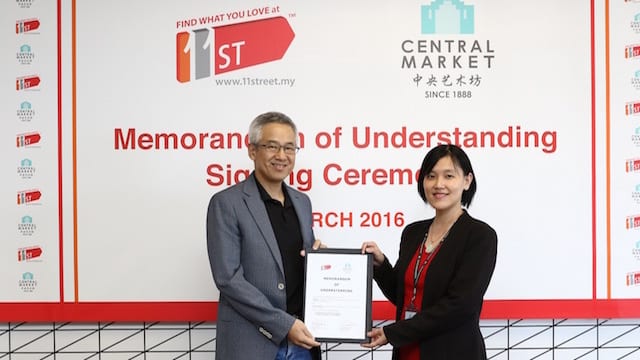
    One of Kuala Lumpur’s oldest and most famous markets for cultural items and handcrafts is about to have an online sales outlet, through 11street Malaysia.

    Central Market has signed a memorandum of understanding with the online marketplace to make its retailers’ offerings available. This will enable customers anywhere to browse and buy products from Central Market’s diverse mix of retailers, including home and living, fashion, sports and leisure, electronics and even groceries.

    11street - Central Market 2

    “This strategic collaboration will enable a business that started in the 19th century to make its products available across the country through a 21st-century medium,” says 11street CEO Hoseok Kim. Dating back to 1888, the market has 300 tenants and has become a landmark for souvenir shopping.

    “Collaborating with 11street has been a fantastic development for us,” says Central Market complex manager Cheong Wai Mun. “One of the secrets of Central Market’s unbroken track record of success has been its location within the heart of Kuala Lumpur. Being close to a public transportation hub has also helped make it a major attraction for both tourists and Malaysians. Now, with the brand new presence on 11street, Central Market has broken its reliance on geography.”

    Market tenants have welcomed the move.

    “All of Central Market’s tenants will benefit from the solid marketing support 11street offers its clients,” says Kim. “That includes education and training programs that cover effective product listing, digital content strategy, integrated online marketing, and photography.”

    To mark the launch, a series of promotional offers and discounts of nearly 40 per cent will be offered by Central Market tenants on 11street until next February.

    New ambassadors

    Meanwhile, 11street has announced that actor/entertainer Zizan Razak and YouTube singer Elizabeth Tan will be its brand ambassadors this year.


    11street ad

    They will make their first appearance at 11street’s first anniversary celebrations, at Nu Sentral Shopping Centre in Kuala Lumpur on April 11. Also attending will be celebrity influencers Intan Ladyana and Atikah Suhaime. will present to the jubilant birthday celebration.

    During the event, 11street will be announcing its collaboration with Xpax, a prepaid brand for youth under Celcom Axiata.

    Leading up to the event, 11street is running on-site promotions from April 1, with discount coupons for customers. There is also a contest with a helicopter ride followed by a dinner with Razak and Tan as a prize.

    Established in Korea in 2008, 11street has 400,000 sellers serving more than 30 million consumers worldwide.


  • Tencent Holdings rakes in $15 billion

    Tencent Holdings rakes in $15 billion

    Chinese eCommerce giant Tencent Holdings increased its revenues last year by 30 per to RMB101.9 billion ($US15.7 billion).

    Excluding its eCommerce business, the revenue increase was 38 per cent, to RMB102.2 billion.

    Tencent’s subsidiaries provide media, entertainment, internet and mobile-phone value-added services, and provide online advertising services in China.

    Chairman and founder Ma Huateng says its online game business had healthy revenue growth, mainly driven by smartphones, key PC titles and new client games launched during the year. The company’s social network revenues also grew, from increased digital content subscription services, QQ membership subscription services and virtual item sales.

    Revenues from online advertising shot up 110 per cent to RMB17.5 billion.

    Hong Kong- and Singapore-listed Tencent continued its traffic leadership in multiple online media categories such as video, sports, music, news and literature through partnering with premium content providers including the NBA, HBO, Paramount, Sony Music and Warner Music, and investing in original content.

    “During the year, we further executed our ‘connection’ strategy, bringing our own and our partners’ products and services to our consumers through cultivating an ecosystem around our core communication and social platforms,” says Ma in his chairman’s statement.

    Key initiatives for the group’s “internet-plus” ecosystem included:

    * Enriching products and services available within its platforms, such as introducing personal micro-loan products and municipal services like visa applications

    * Promoting online payment services

    * Growing mobile utility services, including security, a browser, an application store and strengthened infrastructural supports

    * Investing in equity stakes in leading companies in related internet verticals, such as Internet Plus Holdings.

    Industry trends

    Ma also noted a range of industry trends…

    “Messaging and social networking continued to rank as the highest time spent and widest penetration activities on smartphones, and evolved into increasingly relevant content-discovery media. Search queries moved primarily to mobile, and search remained an important content-discovery tool, along with application stores.

    “Online shopping became increasingly widespread, especially in lower-tier cities, and eCommerce transaction volumes sustained healthy growth rates.

    “Online advertising activity shifted decisively from PC to mobile, with particular growth in areas such as performance advertising on social networks, pre-roll advertising in video services, and in-feed advertising in news services.

    “Users proved increasingly willing to pay for digital content such as movies, TV series and music.

    “Mid/hard-core smartphone games, including PC game franchises moving to smartphones, boosted game-industry revenue.”

    Ma says China’s internet companies in sectors such as ride-hailing, classified listings, group buying, and online travel services competed with heightened intensity last year, leading to rapid user growth but reduced or negative profitability. “Consequently, several leading companies in these sectors consolidated with competitors, creating a wave of merger and acquisition activities.”

    There were more offline-to-online transactions last year which, together with the emergence of person-to-person payment transactions, contributed to substantial growth in online payments.

    Key platforms

    On Tencent’s key platforms, the QQ Wallet payment service gained popularity, with about 6 billion red envelopes exchanged within six days during the Lunar New Year holidays early this year.

    Qzone user activity benefited from enhanced features in areas such as sticker sharing and photo-album editing.

    There was year-on-year growth of 39 per cent for Weixin and WeChat together, with official accounts becoming a leading platform to connect users to content creators, merchants and advertisers.

    Weixin Pay also increased in popularity, with more than 32 billion red envelopes being exchanged within the six-day Lunar New Year holidays – growing by nine times year-on-year.

    Ma says the group’s social networks experienced 30 per cent revenue growth last year as digital content subscription services, QQ membership subscription services and virtual item sales were improved.

    “Our cloud service achieved more than 100 per cent year-on-year revenue growth as we promoted our services to key enterprise customers from a range of verticals such as eCommerce, O2O services, online games, online video and internet finance.”

  • “11street’s Shocking Deals Come to Life”

    “11street’s Shocking Deals Come to Life”

    With intentions to localise and grow the business, 11street (www.11street.my), one of the largest online marketplaces in Malaysia, will be forming strategic alliances with Celcom as part of the company’s business expansion plans this 2016 with key focus on its revamped shocking deals section and enhanced online shopping mobile app .

    As 11street marks its first full year of business operation this April, the e-commerce giant would like to announce its latest synergy with Celcom at the media conference, tackling the following topics:

    • What is Celcom’s prepaid expansion strategy? How would 11street fit into the plan and vice versa?
    • How could Celcom grow its prepaid subscriber base through an e-commerce strategy?
    • How could the collaboration with Celcom benefit and impact 11street’s business?
    • What are the other 11street’s business expansion plans to Malaysianise the brand?

    Present at the conference is Mr Hoseok Kim, CEO of 11street who will be accompanied by the Chief Marketing & Sales Officer of Celcom Axiata, Zalman Aefendy Zainal Abidin. With this, we would like to cordially invite you to 11street’s Shocking Deals Come to life media conference as the leader in Malaysia’s e-commerce and telco industry discloses their strategies to localise and grow its business in 2016.

    Apart from that, 11street will be officially unveiling their new brand ambassador Zizan Razak, prominent actor-cum-entertainer and Elizabeth Tan, Youtube sweetheart-turned-singer, with irresistible deals through 11street’s 11 Days of Shocking Giveaway.


  • Samsung Pay China goes live

    Samsung Pay China goes live

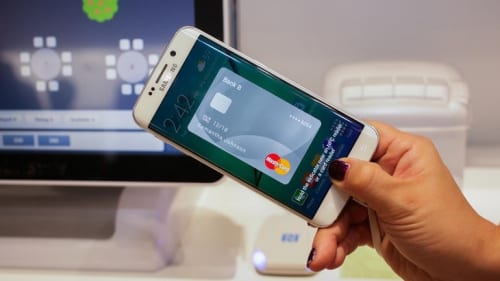
    Samsung Pay China is live after being launched by the South Korean smartphone giant this week.

    Samsung Electronics said Tuesday the introduction of the Samsung Pay China mobile payment service will speed its efforts to expand the scope of its flagship mobile payment platform globally.

    The South Korean tech company said Chinese users of high-end Galaxy smartphones can now use Samsung Pay in cooperation with China-based bank card giant UnionPay.

    The mobile platform supports magnetic secure transmission technology that works on traditional credit card machines. Like rivals Apple Pay and Android Pay, it also supports near field communication technology that requires a separate transaction device.

    Users of UnionPay debit and credit cards can now use Samsung Pay-equipped smartphones to make purchases, including the Galaxy S7 and Galaxy S7 Edge just released earlier this month.

    Samsung Pay joined forces with nine major Chinese banks, while six more partners will be added in the near future, Samsung added.

    Samsung said it will also make efforts to roll out more devices that support its mobile payment platform.

    Samsung Pay, first released in South Korea and the US last year, currently boasts around 5 million users. Samsung said last month it is also preparing to launch in Australia, Brazil, Spain and a handful of other countries.

  • Jack Ma’s grand eCommerce plan

    Jack Ma’s grand eCommerce plan

    Alibaba Group executive chairman Jack Ma wants to knock down barriers to global eCommerce by creating a business-driven, Internet-based platform that will function something like the World Trade Organization – but without all the controversy.

    Speaking at the Boao Forum for Asia, the founder of the world’s largest eCommerce company called for the establishment of “a new platform on which we are not debating, not having disputes, we are sharing trade,” Ma said.

    “On this platform we are promoting technologies as well as inclusive financing, so all [small businesses] and young people can enjoy the benefits of trade, so we are connecting the world with trade.”

    Ma’s ultimate goal is the creation of a virtual, borderless economy not constrained by politics. He calls the vehicle for achieving this the World e-Trade Platform, or eWTP. As envisioned, the eWTP would be set up primarily to formulate international rules to eliminate barriers to eCommerce and help small businesses and consumers everywhere participate in cross-border trade. The online platform would be open to a wide range of stakeholders including SMEs and would not be dominated by governments and multinational corporations.

    At the Boao forum – a business, government and academic leadership conference held annually on China’s Hainan Island – Ma said the WTO, which promotes free trade through lower tariffs and other trade barriers, “did a great job” in the last century in fostering a more global economy.

    China in particular after its accession to the WTO in 2001 experienced tremendous economic growth, he noted.

    But globalisation’s benefits have accrued unevenly and the WTO’s current rulemaking round, called the Doha Development Round, has been stalled for the last 15 years, largely over differences between developed and developing nations, Ma pointed out.

    The eWTP’s purpose is to help “the 80 percent of companies and developing countries that cannot participate in world trade,” he said, adding, “It is not the purpose of the eWTP to destroy the WTO, but to try to destroy trade protectionism.”

    Ma, who said last year he wants to help 10 million small businesses outside of China sell into global markets, stressed that he saw the proposed body as “complementary to the WTO … [so that] more nations that are poor like China was 15 years ago, let them enjoy the trade.”

    “Let’s make trade simpler, let’s take out some of the rules and laws that are not working, to move trade faster,” Ma said. “Let businesses drive it with governments and NGOs and other organisations participating.”

    During a Boao panel discussion focusing on Ma’s eWTO proposal, Indonesian trade minister Thomas Lembong and Luis Alberto Moreno, president of the Inter-American Development Bank, expressed support for the initiative.

    The explosive worldwide growth of eCommerce is spawning new business models and has the potential to spark fundamental changes in the way international trade is conducted by eliminating costly layers of intermediaries and shortening global supply chains. At the same time, the borderless, relatively frictionless nature of Internet trade offers small-and medium-sized businesses everywhere unprecedented access to global markets.

    “It’s hard to comprehend how fast things are changing, how fast things are moving,” Lembong said. “We really are talking about the dawn of a new era alongside the old one.”

    The eWTP could speed these changes, Lembong said, calling it “an intriguing concept.”

    “To me, eCommerce is an oasis of freedom in a world that threatens to be over-regulated and politicized” by protectionist trade barriers, he said, comparing the current trade regime to “a traffic jam.”

    Ecommerce “is an antidote to the poison of protectionism,” Lembong said. “Technology is a great equaliser, the best tools are available to the smallest companies. Now, thanks to technology and the mobile Internet, anybody with a mobile phone can become an entrepreneur.”

    Moreno noted that international eCommerce faces a number of challenges. Products can’t be consistently delivered quickly across borders because of inefficiencies in international logistics and customs procedures.

    “For a product to enter a country there might be 10 agencies you have to deal with,” Moreno said.

    Boao panelist Kasper Jakobsen, CEO of US-based infant formula maker Mead Johnson, agreed that global import regulations needed greater uniformity.

    “The biggest barrier to expanding [trade] platforms across boundaries is so many products have to comply with different regulations in all the markets they are sold in,” Jakobsen said.

    A clue to what reduced barriers with eWTP might look like can be seen in China’s efforts to boost cross-border eCommerce by setting up free-trade zones and bonded warehouses where certain goods ordered by Chinese consumers from overseas companies are subject to lower tariffs and receive expedited customs processing.

    “We have to ramp up and get ready for that platform Jack is inviting us to join,” Moreno said.

    Panelists also agreed backing should be sought for the eWTP proposal from world leaders at the upcoming G20 summit, scheduled to be held in September in Hangzhou, China, where Ma’s Alibaba Group is headquartered.

  • South Korea’s online shopping keeps double-digit growth

    South Korea’s online shopping keeps double-digit growth

    Online shopping in South Korea maintained a double-digit monthly growth as consumers increasingly prefer purchases online rather offline amid widespread penetration of smartphones, a government report showed Monday.

    Combined retail sales, including those online and offline, reached 29.18 trillion won (25.46 billion U.S. dollars) in February, up 2.9 percent from a year earlier, according to Statistics Korea.

    Online shopping jumped 22.7 percent from a year earlier to 4.69 trillion won in February, while mobile shopping through smartphones surged 54.0 percent to 2.39 trillion won.

    The figures showed consumers preferring purchases in cyberspace to visiting offline stores in one of the world’s most Internet-connected country.

    In 2015 when the Middle East Respiratory Syndrome (MERS) outbreak weighed down on South Korea’s private consumption, online shopping posted a double-digit monthly growth. Mobile shopping through smartphones surged more than 40 percent every month last year.

    In February, online sales of bags, cosmetics, furniture and leisure items recorded a double-digit increase compared with a year earlier.

    Main items purchased through mobile phones in February were baby products, shoes, clothing and cosmetics, which accounted for about two thirds of total mobile shopping in February.

  • Singapore telcos hit the road with transit NFC pay service

    Singapore telcos hit the road with transit NFC pay service

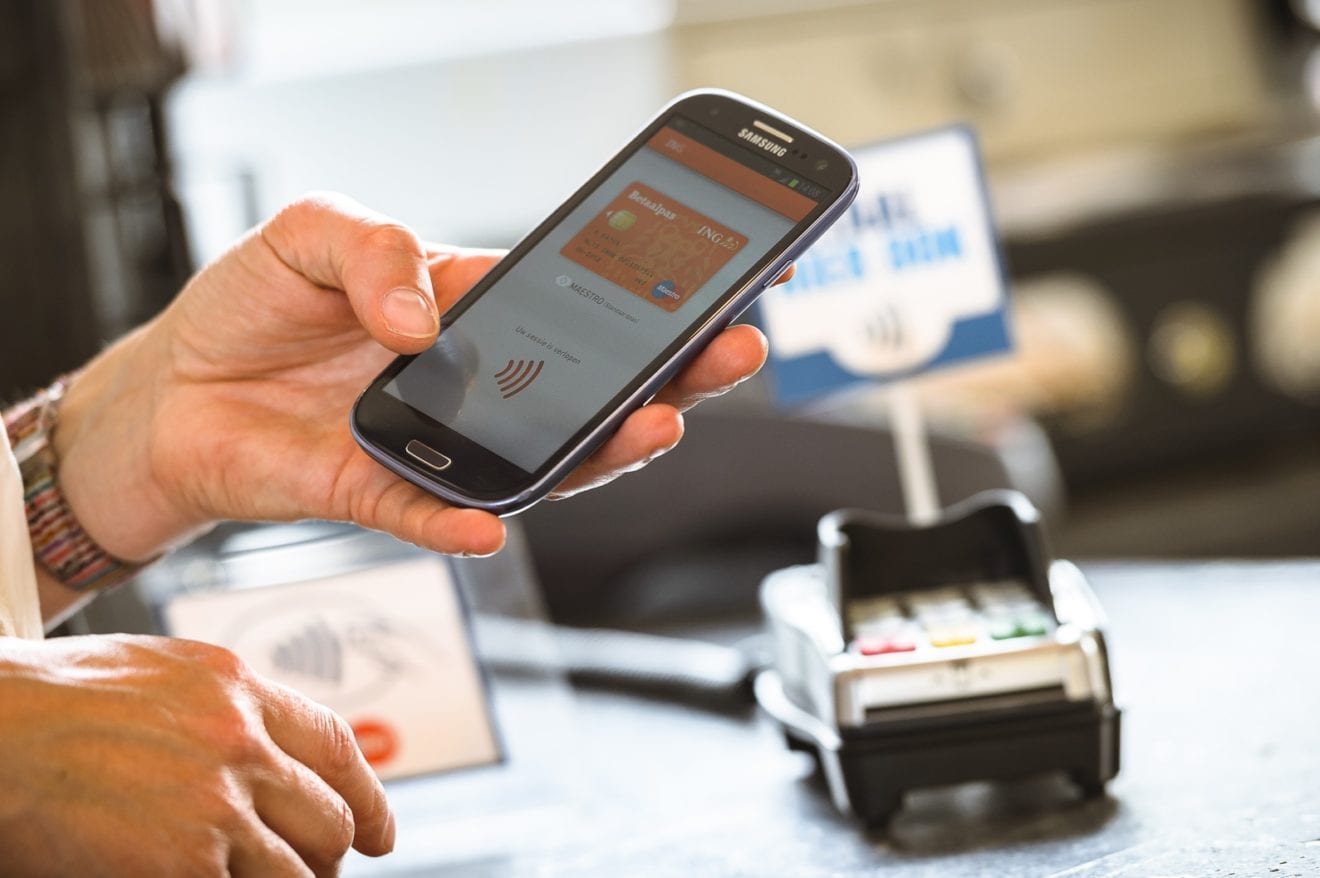
    Singapore’s three telcos have unveiled plans to offer NFC-enabled service for the country’s public transport network, enabling mobile users to pay for their fares using their smartphones.

    All three operators issued statements today, alongside a separate release from industry regulator Land Transport Authority (LTA), which announced the completion of a joint pilot conducted between the telcos and local public transport operators, as well as payment service provider EZ-Link. The latter’s contactless payment card currently is used by public transport commuters and as a payment option at more than 30,000 locations, including convenience stores, fast food outlets, retail stores, and taxis.

    Available today, M1’s service would be the first to allow its subscribers to swop their SIM cards for NFC-enabled chips that they could then use on buses and trains island-wide. They could do so at any of the telco’s retail outlets, but would need to have compatible devices for the NFC payment to work, including Samsung Galaxy Note Edge 4G+ and Sony Xperia Z. The Apple iPhone was not on the current list of approved devices.

    The NFC SIM cards are embedded with EZ-Link purse, which supports specifications under Singapore’s own standard Contactless e-Purse Application (CePAS). Upon activating the new SIM cards, mobile users would be able to top up or check the balance of their credit stored in the purse, as well as use their device to pay for other services that support ez-link payments.

    Singtel said sale of its transit NFC SIM cards would start in late-April, when subscriber would be able to purchase the chips from its retail stores. A S$5 registration fee for these SIM cards would be waived for a limited time, the operator said.

    M1 said its transit SIM card would cost S$37.45, with a service activation fee of S$9.10 that also would be waived until April 30.

    StarHub said its NFC transit chips would go on sale at its retail outlets from April 2 and would be priced at S$37.45 for a new SIM, or S$26.75 for a SIM replacement. It added that the “NFC ez-link purse fee” of S$5 would be waived “until further notice”.

    The telco’s head of business strategy Yeong Mun-Ling said: “This development is a step in the right direction towards stimulating digital commerce growth in Singapore. Our world is becoming increasingly digital and we are looking forward to meeting the needs of our mobile customers, who want to do more with their smartphones.”

    M1 CMO P. Subramaniam also noted: “Transit is the ‘killer phone app’ Singapore consumers have been looking forward to and we are pleased to be the first to offer customers the convenience of making payment with the one device that is always with them, their phone.”

  • Coupang Faces off against Retail Giant Shinsegae

    Coupang Faces off against Retail Giant Shinsegae

    “We should catch up to Coupang, accepting the risk of financial loss,” said Chung Yong-Jin, vice chairman of Shinsegae Group. “Coupang is taking away our customers in their 20s and 30s. Why are we just sitting on our hands and leisurely watching the exodus?”

    The JoongAng-Ilbo has recently reported that vice chairman Chung Yong-Jin of Shinsegae Group had harshly criticized Shinsegae executives for making a lukewarm response to Coupang eating into its customer base.

    Chung was quoted as saying: “Even if we have to incur a deficit, the entire distribution channel should come up with strategic online product offerings and sell them at rock bottom prices to lure in 20-30 something consumers who use smartphones to make purchases. To that end, we should give priority to taking E-mart’s online mall to new heights.”

    He made such a comment because E-mart, the discount store unit of Shinsegae, has lost business to social commerce operators, especially Coupang, over the past year.

    After all, Shinsegae Group waged a price war against e-commerce leader Coupang last month: it announced that it would sell baby formula, feminine hygiene products and instant coffee at the lowest possible prices. E-mart, the country’s largest discount store chain logging 13 trillion won in sales and 500 billion won in operating profit, started to fight back, accepting the risk of incurring a deficit.

    Coupang, established in 2010, has emerged as a threat to Shinsegae Group, the country’s largest retail juggernaut. Coupang’s sales grew sharply from 348.5 billion won in 2014 to 1.5 trillion won in 2015, greatly unnerving Shinsegae Group. If the growth of Coupang continued at such high speeds, Shinsegae Group fears, it could be overtaken by Coupang in 2-3 years.

    Computer-based and mobile traffic to E-mart’s online mall is languishing in the one million visitor range. Sales from its online mall account for about 5 percent (or 700 billion won) of its total sales (13 trillion won). In contrast, the number of visitors to Coupang reached over 7 million, dwarfing traffic to E-mart’s online mall.

    Coupang’s mobile app came out on top in traffic for 41 consecutive months from July 2012 to November 2015.

    Though E-mart with deep pockets is trying to take sales away from Coupang by offering products at sharply discounted prices, the majority view is that Coupang still gets the upper hand on E-mart when it comes to mobile shopping. A Coupang official said: “We are unscathed by E-mart going on the offensive. Actually, things are looking up as the mobile shopping market is on the upswing. It has become obvious that so many consumers have faith in Coupang.”

    According to Coupang, consumers, who have enjoyed convenient mobile shopping experiences since the launch of Coupang, will not easily drift away from Coupang.

    There is no doubt that Coupang is enjoying a “first-mover” advantage as sales from its mobile shopping platform surpassed 80 percent of its total sales. According to Statistics Korea, mobile shopping sales hit 2.66 trillion won in January 2016, exceeding computer-based e-commerce sales (2.54 trillion won) for the first time.

    Coupang is expanding its business realm on the back of its signature “Rocket Delivery” program, its delivery staff dubbed “Coupang men,” and its ‘direct commerce’ business model, in which Coupang takes care of all the stages of e-commerce from selling to delivery.

    Coupang plans to invest 1.5 trillion to increase the number of Coupang men to 15,000 and the number of logistics centers from 14 to 21 by 2017.

  • Lippo Group expands into online wholesaling

    Lippo Group expands into online wholesaling

    After launching its Matahari Mall online shop in October, Indonesia’s Lippo Group is expanding its eCommerce activity into wholesale services.

    It is set to launch Mbiz.co.id next month, targetting businesses and government institutions. It digitises the procurement process, which Lippo Digital Group CEO Adrian Suherman says translates into efficiency.

    To offer its customers more choice, Mbiz is hoping to attract a wide range of vendors to join its platform as suppliers. The aim is to offer an easy alternative to cumbersome conventional procurement, where a business has to find vendors and compare them one by one, negotiate prices and record transactions manually. Mbiz wants to expedite procurement by making vendor information easily available, comparable and transparent, as well as offering flexible payments.

    Meanwhile, the eCommerce site has been selling products from 12 main categories, including electronics, furniture, office supplies and packaging. Its vendors include Asus, HP, Philips, Samsung, Sony and other blue-chip companies.

    Mbiz intends to start selling heavy machinery and agricultural goods as well as maintenance, repair and overhaul items for businesses and government institutions.

    “If we talk about fashion in B2C business, it is going to be the clothing itself, but in B2B or B2G business, the items are yarn, loom, sewing machines, embroidery machines and fabrics,” says Mbiz co-founder Ryn Hermawan.

    As many businesses have their own particular procurement systems, Mbiz uses a direct-selling strategy, giving individual presentations to companies and organising events to introduce its services. A follow-up team is available to train businesses and help them evaluate their performance.

    Mbiz can also offer clients product recommendations and input on when they need to buy goods based on their historical data.

    For the largely untapped government institution market, Mbiz will play the role of vendor by providing its e-catalogue to the Government Procurement Regulatory Body (LKPP). Co-founder Andrew Mawikere says the potential for the procurement of government goods and services in Indonesia last year was Rp31 trillion (US$2.36 billion) without e-tendering.

    Mbiz has fewer than 100 employees and is funded by Lippo, but says it is open to foreign investment in the future. The unit is run by Brilliant E-Commerce, part of the Lippo group. Matahari Mall is run by Global Ecommerce Indonesia, in which Investama Digital Ventura holds a majority stake.

  • Grab to deliver for MatahariMall

    Grab to deliver for MatahariMall

    Taxi and ride app service Grab has formed a strategic partnership with one of the Indonesia’s largest conglomerates to provide logistic services for online shopping.

    It has signed up with Lippo Group’s MatahariMall, launched last year at a cost of $500 million
    – the largest eCommerce investment in Indonesia. A competitor to Sequoia-backed Tokopedia, MatahariMall is aiming for $1 billion in sales within its first few years.

    Formerly under the Singapore brand GrabTaxi, the company rebranded in January to reflect its extra services, including deliveries, beyond its original licensed taxi service.

    “Technology can be a key driver of economic growth, and we are both invested in opening the digital economy to all Indonesians,” says Grab co-founder/CEO Anthony Tan of its deal with Lippo.

    Backed by investors like Didi Kuaidi (China’s largest ride app), GGV Capital and SoftBank, Grab is reportedly valued at more than $1 billion. Its rivals include Uber and Indonesia-based Go-Jek, both of which are also entering the delivery/logistics space.

  • Lazada Philippines Celebrates 4th Birthday with 7 Million Visits

    Lazada Philippines Celebrates 4th Birthday with 7 Million Visits

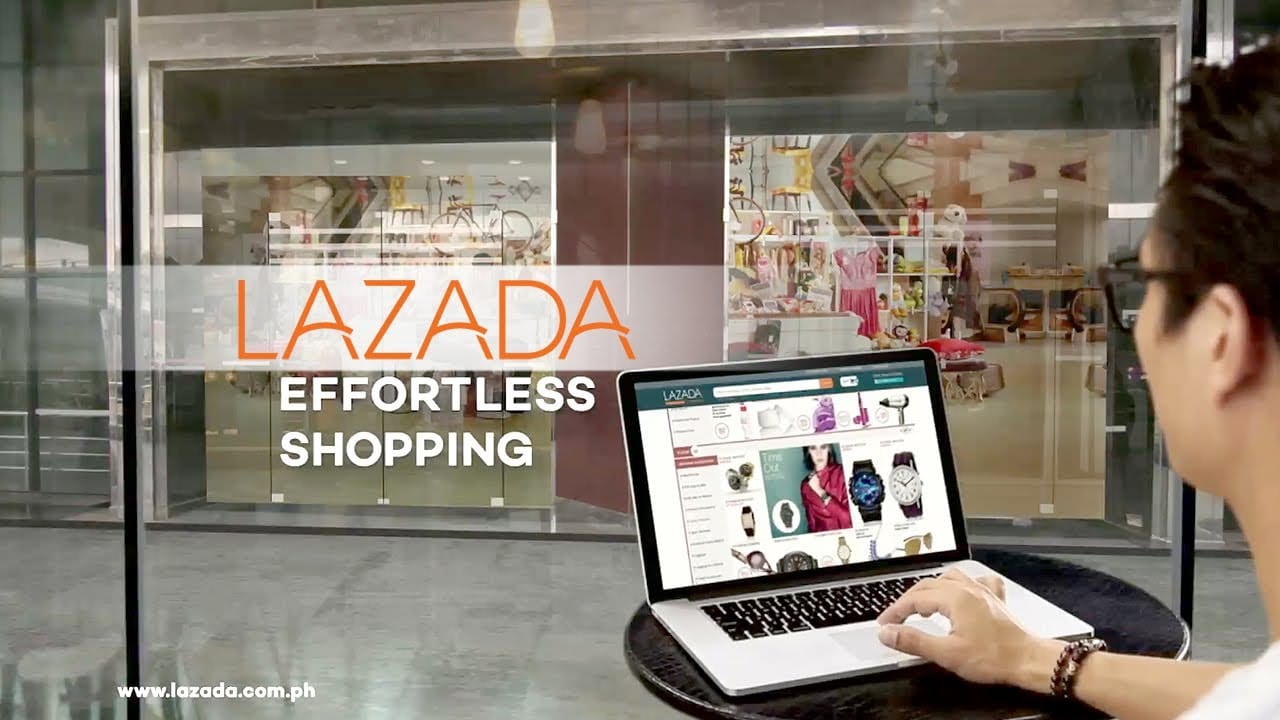
    March marks another year for ecommerce site leader, Lazada Philippines (www.lazada.com.ph). The country’s leading one-stop shopping and selling destination, capped its 4th anniversary with a Birthday Sale last March 15 – 18, 2016.

    Lazada sent online shoppers into a frenzy starting midnight of March 15 with product deals and flash sales up to 90% off. The Philippines alone recorded almost 7 million visits all throughout the sale – 8 times higher than average traffic of one of the biggest shopping malls in the Philippines.

    laz 1

    The campaign was participated in by more than 2,300 SME merchants and more than thirty local and international brand partners – all with special sale offers to online shoppers. Birthday sale top categories included Mobiles & Tablets, Health & Beauty and Home & Living where 6,000 mobile phones, 2,000 bluetooth smart watches and 1,500 hair straighteners were sold. Lazada also sold over 4,500 packs of diapers, a strong indication that Filipino parents are embracing the convenience of online shopping.

    laz3


    95% of ordered items were shipped within 24 hours to half a million customers who placed their orders across all Lazada countries. A large bulk of orders came from Metro Manila, Cebu, and Cavite respectively. Orders were also recorded to have reached the Dinagat Islands, Sultan Kudarat and the Mountain Province. The Lazada Mobile App brought in more than 50% of purchases proving the shift towards the use of smartphones and tablets in day to day transactions of Filipinos.

    With the huge uptake on mobile app shopping during the Birthday Sale, Lazada is launching another app-exclusive sale from April 7 – 10, offering discounts up to 80% off across a wide assortment of product categories. Top categories, brand deals and flash sales will also be available exclusively on the mobile app.

    laz 2

  • ShopBack explores giving Cashback for everyday activities

    ShopBack explores giving Cashback for everyday activities

    In a bid to venture beyond its core offering of paying people to shop online, ShopBack Singapore has conducted a weeklong public polling exercise to find out what are the everyday activities that Singaporeans would like to get paid for.

    shopback 1

    Since ShopBack’s establishment in September 2014, the start-up has given almost SGD2,000,000 in Cashback to shoppers’ preferred bank or PayPal accounts. Currently, the Singapore market has a base of over 250,000 shoppers.

    “Apart from getting Cashback for shopping online at any one of our 500 over retailers, we’ve learnt that some of our customers hope to get paid for their daily actions as well,” said Ms. Josephine K Chow, Country Head, ShopBack Singapore. “So we ran a poll to consolidate the top actions that Singaporeans do, and really wanted to get paid for.”

    “One of the popular picks is getting Cashback for passing through Electronic Road Pricing (ERP) gantries. Perhaps Singaporeans will be more forgiving towards ERP, satellite-based or not, if there’s Cashback available?” she quipped.

    2

    A weeklong poll was conducted from 21 March 2016 to 28 March 2016. Over 300 responses have been captured.

    “We’re still in the midst of sorting out the results and discussing feasibility of giving Cashback for the suggested daily actions. The top five actions will be announced at 10.00AM this Friday,” said Ms. Chow.
    Other crowd favourites include getting Cashback for getting matches on dating apps, paying penalty for bringing durians on MRT and catching bosses for swearing.

  • Vietnam payment platform wins PE funds

    Vietnam payment platform wins PE funds

    A Vietnam payment platform start-up has received a US$28 million shot in the arm from private equity investors.

    M_Service, which launched the mobile e-wallet MoMo, received the boost from Standard Chartered Private Equity (SCPE), which invested $25 million, and existing shareholder and strategic investor Goldman Sachs, which added $3 million to its initial $5.75 million investment of 2013.

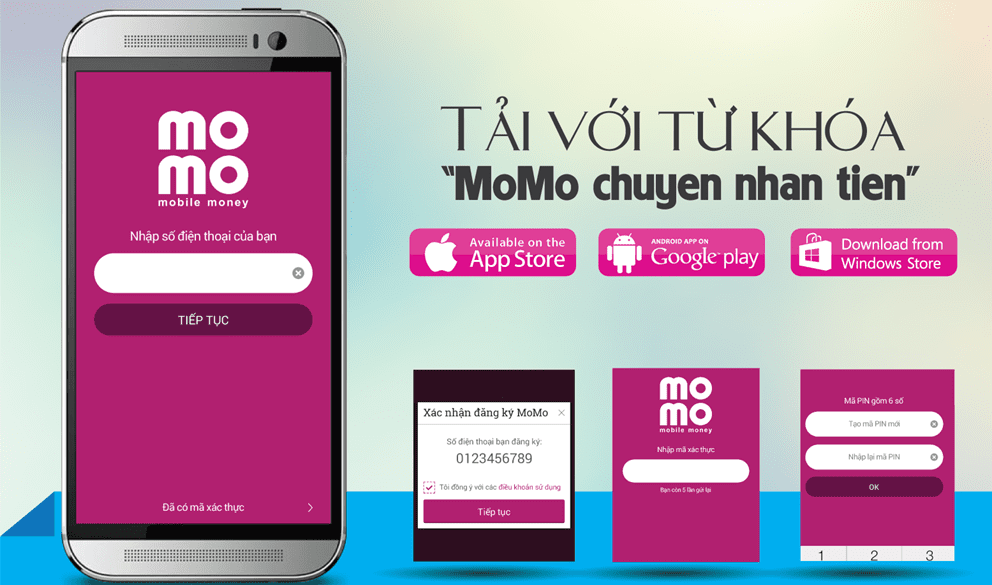
    More than half of Vietnam’s population of 90 million use the internet, and the app provides a useful service in a country where there are few debit or credit card users. Government data shows that mobile phone subscribers in Vietnam grew 26 per cent to 124 million during 2009-2013..

    Smartphone app MoMo provides eWallet services and over-the-counter remittance and payment platforms for a customer base of 2.5 million people, and already claims to have more than 1 million customers.

    “It is extremely exciting to see financial support and the customer base for MoMo growing,” says M_Service general director Pham Thanh Duc.

  • Indonesia is ASEAN eCommerce sleeping giant

    Indonesia is ASEAN eCommerce sleeping giant

    Indonesia is the most-promising ASEAN eCommerce market, according to Hong Kong-based consultant Paul McKenzie.

    He told a seminar in Bangkok, organised by brokerage and investment group CLSA, that Indonesia has the greatest potential because of its developing infrastructure and private equity advantage.

    Thailand is a little behind, he said, with the eCommerce landscape growing but not to the same scale as Indonesia.

    “It’s simply too early right now for The Philippines – there are not enough big and efficient companies in the market, and Malaysia’s market is just too small,” said McKenzie. However, Malaysia had less of a potential void for eCommerce as offline retail penetration was even higher than China.

    His talk focused on the “e-liftoff”’ of ASEAN countries, corresponding with a CLSA report published last year, and he predicted that the ASEAN eCommerce market would grow in terms of IPO, which would make it more appealing for investors.

    He also spoke about the Line app being essential to eCommerce in the ASEAN region. “More than 60 per cent of Thais 14 years and older are on Line, and mobile is the future of online shopping.”

    He predicted that within the next few years, mobile will be even more important in ASEAN than it now is in China. He said a third of online transactions were made on mobile, and 50 per cent of online browsing was done on mobile, lagging behind China by only a year.

    He said further progress was being hindered by slow data speeds, with users complaining about transactions being dropped and pages not loading. Another problem was that most shoppers in the region did not have credit cards.

    McKenzie said ASEAN countries had being doing well with delivery in the main centres, which meant there was a market for more warehouses or logistical services.

    Meanwhile, 1200 retailers, eCommerce and fulfilment company representatives gathered at the two-day Last Mile Fulfilment Asia conference in Singapore. Speakers included CEO Paul Srivorakul and CLO Mitch Bittermann from the Thai eCommerce solutions provider aCommerce Group, which has started expanding in Indonesia.

    “The changes in the Indonesian market are happening much faster when compared to other regions in Southeast Asia,” Srivorakul says on a company blog. “A lot of investment is taking place in Indonesia’s eCommerce infrastructure, cash-on-delivery networks and third-party logistics (3PL) systems.”

    The company has a presence in four countries in Southeast Asia: its home market as well as Indonesia, The Philippines and Singapore. Of its 200 clients, 120 are in Indonesia. Major clients include BerryBenka, Blibli.com, Elevenia, Mitra Adi Perkasa and L’Oreal. The company has about 500 employees in Indonesia, and runs two multi-client fulfilment centres as well as a 5000 sqm fulfilment centre for Lippo Group’s eCommerce arm MatahariMall.

    The company is also preparing to launch a four-level fulfilment centre in the next two months, which will increase the country’s warehouse capacity by 17,000 sqm, bringing the total to 32,000 sqm.

  • 3 startups win entry to IBM Watson-backed ‘pre-accelerator’ in Singapore

    3 startups win entry to IBM Watson-backed ‘pre-accelerator’ in Singapore

    IBM needs no introduction when talking about technology and computing. The US-founded company casts a long shadow over the developments that brought us the personal computer. These days, it’s throwing its weight behind another development: cognitive computing.

    The IBM Watson project is a computer system that’s based on machine learning and natural language processing. You might have seen it beating humans at Jeopardy. The aim is for the computer to keep learning from previous user interactions and experiences, and thus provide better solutions over time.

    This year, the firm held the IBM Watson Asia-Pacific New Venture Challenge, looking for startups that use the technology to develop new ideas and applications. The six-week, 25-team competition culminated in an event in Singapore, where the 12 winning teams were announced.

    Of the companies that came out ahead in the contest, three of them were the top performers on the strength and execution of their ideas. The 12 winners are invited to join Tag.Pass, a newly-announced “pre-acceleration” program run jointly by IBM and Singapore’s Infocomm Investments. Areas of interest include retail, travel, healthcare, the public sector, and finance. They also get access to IBM’s Watson API and cloud resources, making them part of a worldwide network of developers.

    Top teams

    Raydar

    Singapore-based Raydar is a search engine for stock photos. It uses the Watson tech to get better insights on content and improve its keywords, making its search function more effective.

    Snapask

    Snapask is a Hong Kong-based, on-demand mobile marketplace connecting students to tutors. It uses Watson to make sense of the students’ and tutors’ behavior on its service in order to be able to offer more personalized content.

    Silverlake

    Silverlake is a Malaysian company that helps businesses improve customer experience and engagement through big data. Among its software products is WALIC, a lifestyle concierge app powered by Watson that offers customers personalized recommendations.

    Runners-up

    Cogniant

    Singapore-based Cogniant is a mental healthcare service. Its app uses the technology to help mental health patients remember their medication and complete their thoughts in collaboration with their clinicians.

    Embodied Sensing

    Embodied Sensing is another Singaporean company. It works on speech-to-text and voice recognition. The product, Emotibadge, uses Watson tech to analyze conversations between staff and customers in order to improve customer service.

    Konversations

    Konversations komes comes from India. It helps prospective students choose universities, student loans, careers, and more, through a chat app. It uses dialogue tech provided by Watson to ensure a natural experience for users.

    LocoBuzz

    LocoBuzz is based in India and provides an online marketing service that includes big data, social media, and email marketing. It uses Watson to make sense of unstructured data and improve its customer intelligence to enable better targeting for its clients.

    mClinica

    Back to Singapore with mClinica, a health data and analytics startup for pharmaceutical companies and medical professionals. Watson tech helps it prevent medication dispensing errors and update prescription information in medical libraries in real-time.

    MobiCart

    Singapore-based MobiCart helps aspiring e-tailers to set up an online storefront on iOS, Android, and HTML5. It also provides an ecosystem of add-ons for merchants, like payment systems.

    StockFlock

    Singapore’s Stockflock is an online platform for investors, offering company comparisons so that users can make better investment decisions. It uses Watson tech to better personalize its search function and the information it sends to its customers.

    Swizzle

    Swizzle hails from South Korea. It uses its own tech along with Watson to scour the internet for trends, insights, and influencers. This way, it helps advertisers identify potential customers and better target their campaigns.

    Zumata Technologies

    Singapore-based Zumata works with travel retailers to offer hotel and travel booking options. Through predictive tech and proprietary APIs, it offers travel sites and agents competitive prices and attractive inventory. Watson tech helps the firm with changing listing information, like hotel descriptions and images.