Category: E-Tailing

Retail News Asia is committed to providing both local and global retailers with the latest E-Commerce & Etail news throughout the Asian market. This on a daily base.

  • Peruri expands operation to digital security business area

    Peruri expands operation to digital security business area

    The Indonesia state-owned money printing company Peruri has expanded operation to digital security business area in preparation to enter the era of integrated smart security to be competitive and able to keep pace with the modernization.

    “In order to have greater competitiveness in digital era we are expanding our wings to digital security that we could provide an integrated smart security service,” President Director of Peruri, Prasetio, said here, Thursday.

    The expansion is prompted by the rapid advancing technology that necessitated change in the world economic system that forces Peruri to continue to expand from service to business model, he said.

    “We are not only strengthening our core business of money printing , but we are also expanding operation to digital security business area through our subsidiary Peruri Digital Security by providing solution such as Certificate Authentication and Smart Card,” he said.

    Peruri also has a strategy in entering the era of integrated smart security, which is centered in transformation of company including transformation of human resources, business , structure and system as well as culture, according to him.

    “With the transformation we hope Peruri could continue to chalk up positive growth in the coming years,” he said.

    In a bid to achieve the positive growth, this year Peruri will be focused on market expansion, promoting reputation and strengthening competitiveness, he added.

    The strategic steps include reorientation of market from formerly focused only on domestic market to global market, and restructuring parent and subsidiaries to be more effective in marketing, he said.

    “Another strategic step is reorganization to be in line with the 2016 company budget working plan and long term business road map,” Prasetio said.

    With the strategic steps and preparation made ahead of the era of integrated smart security, the company is set to contribute significantly to the countrys economic development, he said.

    Peruri chalked up around Rp3.051 trillion in income in 2015 or more than doubling income of Rp1.39 trillion in the previous year.

    Its net profit rose to Rp284 billion or an increase of more than ten times from Rp23.49 billion in 2014.

    The company signed a memorandum of understanding to improve synergy with a number of state construction companies including construction companies — Adhi Karya, Amarta Karya, Brantas Abipraya, Hutama Karya, Istaka Karya, Pembangunan Perumahan, Nindya Karya, Perum Perumnas, Waskita Karya and Wijaya Karya.

    It also signed MoU with state-owned telecommunication company to develop digital business.

  • Korea’s CJ Group launches Malaysia shopping channel

    Korea’s CJ Group launches Malaysia shopping channel

    CJ O Shopping Co, a home shopping unit of CJ Group, said Thursday it will launch a new channel in Malaysia in a joint venture with Media Prima TV Networks, a major Malaysian media group.

    CJ O Shopping plans to start airing the new shopping channel in the first half of the year to target rising middle-class consumers in the Southeast Asian nation.

    CJ O Shopping will shoulder 51 per cent of the bill for the 19 billion-won (US$15.7 million) investment, while Media Prima TV Networks will make up the remaining 49 per cent.

    CJ will be in charge of operating the shopping channel, and Media Prima will provide media infrastructure.

    Media Prima TV Networks operates Malaysia’s four leading free-to-air television stations, as well as radio stations and online channels.

    Since launching a Chinese shopping channel in 2004, CJ O Shopping has expanded its global presence in India, Thailand, Turkey, Mexico and four other nations.

  • 2C2P helps Myanmar revolution

    2C2P helps Myanmar revolution

    Southeast Asia payments company 2C2P of Singapore, with its Burmese founder and CEO Aung Kyaw Moe, has taken a step to modernise Myanmar’s economy with the country’s first co-branded debit card so its citizens can shop with international merchants.

    The new UnionPay and Myanmar Payments Union (MPU) co-branded debit card is being introduced along with the launch of 1-Stop, a cash acceptance network of sellers and buyers, bringing digital commerce to Myanmar, especially helpful for its rural communities. Also a partner of the debit card is Myanmar’s Asia Green Development Bank (AGD Bank).

    Anyone in Myanmar can now set up a microbusiness to sell goods and services online. Domestic transactions are processed by MPU, while international transactions go through UnionPay International, which is recognised by more than 4000 merchants domestically and more than 26 million across 150 countries, as well as at 1.8 million ATMs internationally.

    MPU is Myanmar’s national payment network, authorising the issuance and acceptance of all payment cards within the country, of which there are more than 1.2 million. With UnionPay International, a subsidiary of China UnionPay, cardholders can shop with international merchants for the first time. UnionPay is the largest global payment card company with more than five billion cards issued.

    Myanmar is expected to quadruple the size of its economy from $45 billion in 2014 to $200 billion by 2030 (McKinsey), with a reboot of its cash-based economy seen as the key to growth. This will be driven by Myanmar’s young population (47 per cent of its 51.4 million citizens are 24 years old or younger). The World Bank pegs Myanmar’s annual growth rate as leading Asia at 8.3 per cent annually between 2014 and 2017.

    Myanmar’s millennials are also responsible for the country’s spike in outbound tourism. This sector grew from $29 million in 2002 to $257 million in 2012, a rise of 24 per cent, according to the World Trade Organisation.

    “2C2P is committed to support Myanmar’s financial institutions,” says CEO and founder Aung Kyaw Moe. “We do this by bridging the gap between local and international infrastructure.

    “We bring our robust platform, as well as our experience and knowledge in international payments, making it possible for Myanmar’s banking and financial institutions to innovate – offering new services that leapfrog legacy financial technologies.”

    AGD Bank customers can download an app to manage card transactions in real time with online support. A loyalty program offers discounts and privileges from more than 4000 merchants domestically, across food and beverage, retail, hospitality, and travel and tourism.

    “We are committed to innovate, offering Myanmar’s young, fast-growing and connected population the financial services that meet their evolving needs,” says AGD Bank chairman U Than Ye.

    Meanwhile, 1-Stop’s network has more than 3000 locations through 2C2P’s strategic partnerships with the country’s largest distribution network for the agriculture sector Myanmar AWBA Group, retail and convenience store chains Capital Hyper Mart and Grab & Go, mobile stores eCity, Lu Gyi Min andMr.Fone, as well as independent stores.

    It is aiming to contribute to modernising the economy through its online-to-offline commerce approach in a market with relatively high smartphone penetration but limited e-payment infrastructure.

    Myanmar is the fourth-fastest growing mobile market globally, according to Ericsson. In the third quarter of last year, it accounted for nearly 6 per cent of the world’s 87 million new mobile subscribers. Research firm Ovum estimates mobile subscriptions in Myanmar grew by 87.4 per cent in 2014 to 10.7 million. This is forecast to grow at a 21 per cent compounded annual growth rate to reach 38.5 million by the end of 2019 as networks expand to rural areas.

    Last year, 2C2P also launched easyBills, the country’s first online bill-payment system. Previously, along with Myanmar Citizens Bank, 2C2P launched the Citizen Card, a reloadable prepaid card accepted by MasterCard and merchants globally.

    2C2P has offices across Southeast Asia, including Cambodia, Indonesia, Laos, Malaysia, Myanmar, Singapore, Thailand and The Philippines, as well as in Hong Kong.

  • Alibaba’s Q3 sales grow 23% and profits double

    Alibaba’s Q3 sales grow 23% and profits double

    Alibaba reported consumers bought 964 billion yuan ($149 billion) worth of goods on its Chinese online marketplaces in the quarter ended Dec. 31, an increase of 23% from the gross merchandise value, or GMV, of sales in the same quarter of 2014. Shoppers made 68% of those purchases on mobile devices.

    The value of purchases on Alibaba’s China marketplaces during the 12 months ended Dec. 31 totaled just under $449 billion, well above anticipated U.S. e-retail volume for 2015 of around $350 billion. Alibaba’s China sites accounted for about 76% of the $589 billion in China 2015 online retail purchases reported recently by China’s National Bureau of Statistics.

    “We had excellent results this quarter. We achieved impressive revenue growth as we are increasingly monetizing the user activity on our marketplaces, particularly on mobile devices. In this quarter, revenue grew 32% year over year and China retail marketplace revenue grew 35% year-over-year,” says Maggie Wu, chief financial officer of Alibaba Group. “Meanwhile, we generated strong free cash flow of US$3.7 billion this quarter. The fundamental strength of our core business gives us the confidence to invest in our strategic priorities.”

    Alibaba attributes the growth mainly to more consumers shopping its online shopping sites. Alibaba said active buyers, those who purchased in the past year, increased to 407 million in this quarter, a 22% increase from 334 million a year ago. Mobile active users who shop every month in December reached 393 million, up 48% from the prior-year period.

    While Alibaba derives most of its revenue from its big China web marketplaces—Taobao, Tmall and Juhuasuan—it also reported growth in international ventures.

    One of those is the Tmall Global marketplace, launched last year to allow foreign companies without a business license in China to sell online to Chinese consumers. Sales on Tmall Global increased 179% in the recent quarter, though Alibaba did not report the actual sales. Plus, more foreign companies that have obtained China business licenses opened branded stores on the main Tmall.com site. Among the more than 200 international brands opening flagship stores on Tmall during the quarter were Coca-Cola, Starbucks and Lululemon, Alibaba says.

    Alibaba also sells to online shoppers around the world through its AliExpress.com retail marketplace. Revenue from selling products to overseas consumers, mainly on Alixpress.com, totaled 632 million yuan ($97 million) in the quarter, an increase of 14% from 554 million yuan in the same quarter of 2014.

    Like U.S. e-retail powerhouse Amazon.com Inc., Alibaba’s fastest-growing business is its cloud computing service. AliCloud, which grew its sales to 819 million yuan ($126 million), representing a year-over-year increase of 126%, Alibaba said.

    “Alibaba reported results mostly above expectations, highlighted by strong revenue growth and impressive mobile monetization improvement,” Colin Sebastian, a senior research analyst at investment firm Robert W. Baird & Co., said in a note to investors today. “While slowing GMV growth is a potential yellow flag, we believe concerns about the effects of China’s macro conditions on Alibaba are largely overblown. Overall, we view these results as largely reinforcing a positive view of Alibaba, even in the face of a transitioning China economy.”

    For the fiscal third quarter ended Dec. 31, Alibaba also reported:

    • Revenue was 34.543 billion yuan ($5.333 billion), an increase of 32% year-over-year from 26.179 billion yuan in same period 2014.
    • Mobile revenue was 18.746 billion yuan ($2.89 billion), an increase of 192% from 6.42 billion yuan in same quarter of 2014.
    • Net income of 12.456 billion ($1.923 billion), a 108% increase compared to 5.983 billion yuan in the same quarter of 2014

    For the 12 months ended Dec. 31, Alibaba reported:

    • Chinese retail transactions increased 29.4% year over year to 2.95 trillion yuan ($448.71 billion) from 2.28 trillion yuan in 2014.
    • Revenue grew 33.3% year over year to 94.39 billion yuan ($14.35 billion) from 70.81 billion yuan in 2014.
    • Net income reached 66.44 billion yuan billion ($10.10 billion), a 146% increase from 27.05 billion yuan in 2014.
  • E-commerce will boost smaller South Korean brands

    E-commerce will boost smaller South Korean brands

    As growth indicators such as commodities and oil test their lowest price levels for more than 10 years, the fear of deflation that gripped Japan for many decades is quickly becoming a global phenomenon. Even in the U.S., where economic growth is relatively strong, there is a noticeable lack of wage inflation in the face of strong employment reports over the past 12 months.

    While we can blame part of this problem on the aftermath of the global financial crisis of 2008, I place at least some of the blame on the rapid proliferation of Internet technology. A clear example is the loss of traditional retail jobs to ballooning online sales.

    South Korea is a good leading indicator on this issue because of its heavy Internet penetration and dense population, making it a good market sample for other economies to track. South Korea’s retail industry is also an interesting case of being both a victim and beneficiary of the creative destruction of traditional retail channels caused by the onset of e-commerce.

    South Korean retail businesses are dominated by large corporations, often part of one of the country’s huge conglomerates known as chaebols. The scale these corporations enjoy at the group level gives them a huge cost advantage over small to medium sized enterprises, which need to build from the ground up. Right now, e-commerce is killing retail businesses through intense price competition that is driving down margins.

    In South Korea, traditional retailers are hurt not just by domestic online sales but also overseas Internet purchases. In 2014, the value of purchases from overseas websites delivered to South Korean homes reached more than $1.5 billion, from $274 million five years earlier. This figure slipped slightly in 2015 because of government restrictions on purchases, but will continue to rise in the coming years at the expense of traditional retailers and their workers.

    For decades, chaebols operating in domestic retail and consumption industries enjoyed outsized margins due to protectionism against imported goods. In the last decade, however, the South Korean government has forged trade agreements with 52 nations far and wide, including one with China just last year.

    The combination of e-commerce and trade deals has driven the rapid rise of overseas online purchases, especially from the U.S., where a much broader selection of products is available, often at huge discounts to local prices. South Korean shoppers have become so successful at arbitraging this pricing gap that the South Korean government has placed an unofficial limit on cross-border online transactions that qualify for exemption from customs duties.

    Viable competitor

    Another driver of online imports is cheap and efficient delivery, made possible by a growing logistics industry. Strong growth in e-commerce has allowed for rising efficiency in deliveries, which now makes it a viable competitor to offline retailers.

    Overseas online purchases hurt all South Korean retail and consumer brands, but they hurt the large corporations most. For two decades, the chaebols have enjoyed government support through import protection and distribution networks built over many decades of lobbying and cooperating with myriad regulatory hurdles.

    South Korean SMEs never benefited from this because they were usually niche players in crowded markets. As a result, the flood of foreign brands coming into South Korea through online purchases threatens the profitability of large corporations more than the SMEs. A good example is Samsung Electronics’ 60 inch LED TVs, which South Korean shoppers have been buying from U.S. e-commerce shopping sites. Even after delivery and customs duties, prices are up to 20% cheaper than in South Korea.

    But these developments are not all bad news for South Korean retailers. The advent of technology will also allow South Korean SMEs to penetrate a much bigger market: China.

    Historically, when South Korean companies wanted to expand overseas, they would spend years investing in distribution channels and learning how to deal with customs and local regulations. As a result, expansion outside South Korea was a high-risk strategy that yielded patchy results for smaller companies. But the rapid development of e-commerce in China is making the expensive and time-intensive task of establishing distribution channels as quick as the click of a mouse. Already we are seeing companies that have rocketing China revenues, driven by online sales that would previously have taken years of investment and experience to achieve.

    The speed at which China’s online giants are making e-commerce accessible to outsiders will help companies from South Korea that have a good following at home but lack the scale to expand overseas. As South Korea continues to attract millions of mainland tourists annually, recognition of domestic-oriented brands will spread through China and create follow up demand.

    Right now, investors seeking to benefit from Chinese interest in South Korea are focusing on duty free stores. But the next phase of investor attention will be consumer brands that attract attention from Chinese customers seeking to buy outside duty-free channels. E-commerce and information distribution via the Internet will accelerate that process.

    As China tries to promote domestic consumption to compensate for the declining economic growth coming from falling investments, the tax incentives that duty free stores attract will have to decline. That will put brand owners in pole position in the China market rather than traditional retailers such as department stores, hypermarkets and duty free channels.

    Peter S. Kim 

  • Online retail Visa offers new payment method to deal with abandoned carts

    Online retail Visa offers new payment method to deal with abandoned carts

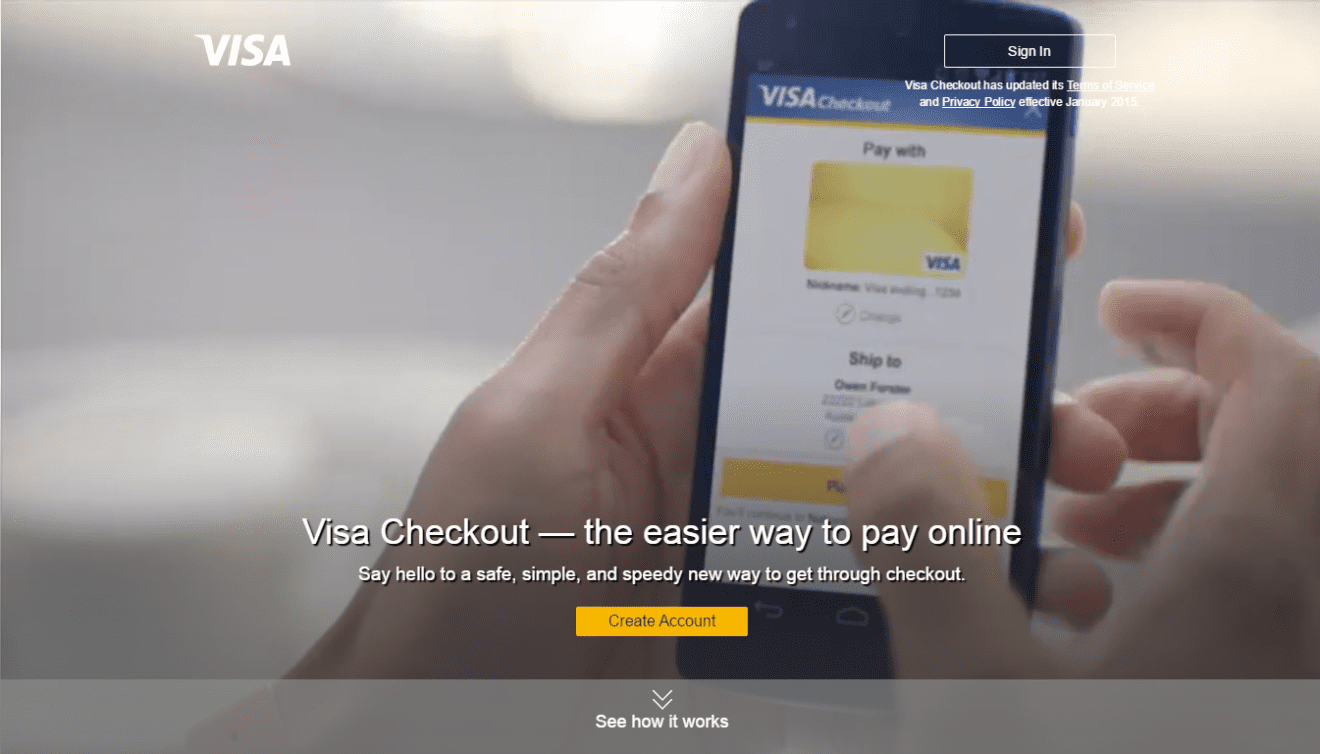
    Visa has launched a new payment service that simplifies the payment process for online shoppers in a bid to address the high percentage of abandoned online shopping carts caused by inconvenient payment methods.

    The service, Visa Checkout, captures and saves customers’ payment details. Registered users can pay for their online shopping at several merchants that have partnered with Visa through just one payment point. Users simply enter a username and password to pay for items, instead of filling up credit card information and shipping address for every transaction. The service can be used via a smartphone, tablet, laptop or PC.

    Visa Checkout is available in 16 markets worldwide, including China, Malaysia and Singapore. The company plans to extend this service to other parts of Southeast Asia in the near future.

    Ooi Huey Tyng, Visa country manager for Singapore and Brunei said that as more consumers spend more time and money on ecommerce, they are also “demanding a fast, secure and frictionless way to shop online.”

    “Two in three Singaporean shoppers have abandoned a purchase because it took them too much time to complete the payment process or it was too cumbersome to enter their personal details,” the company said in a press release on Wednesday.

    According to a recent Visa study, Singapore is among the top online shopping countries in Southeast Asia. At 88%, the city-state has the highest smartphone penetration of any country in the world, and 71% of Singaporeans shop online at least once a month, an increase from 59% last year.

  • Creative Industry Positive in Digital Era

    Creative Industry Positive in Digital Era

    Cooperation and SME Minister, Anak Agung Gede Ngurah Puspayoga, visited Marketers Creativity Day expo of creative products in Smesco building, Jakarta. He emphasized that creative industry has a big chance in the digital economy era.

    “The chance is open for anyone, be it internet users or women,” he said.

    Moreover, economy expert, Sri Adiningsih, said that Indonesia owns many creative products in the Asean Economic Community, only the marketing is still the problem. She even boosts women to create business and promote their products through social media in internet. Sri also calls on the people to use Indonesian origin products.

    Initiator of Galeri Indonesia WOW, Hermawan Kertajaya, said that Marketers Creativity event will be held on monthly basis. The expo is expected to inspire creative business in Indonesia, in the wake of Asean Economic Community.

  • Papua to use e-tender for goods and service procurement

    Papua to use e-tender for goods and service procurement

    The district of Biak Numfor would use online system of electronic tender for the procurement of goods and service in the 2016 fiscal year for efficiency .

    “Online system of e-tender would soon be applied to help accelerate the utilization of district budget fund,” assistant II of Biak district administration Mahasunu said here on Wednesday.

    Mahasunu said the mechanism of offering packages of project for the procurement of government goods and service would be socialized through website of the district administration.

    He said with the only system in project tender, it is hoped that there would be no misunderstanding between the providers of goods and services and the business players taking part in the tender.

    Another important benefit is that the system would allow less room for malfeasance and corruption, he said.

    “I hope that the process of implementing the online tender would be properly carried out,” he said.

  • US e-commerce giant eBay plans to open office in Indonesia

    US e-commerce giant eBay plans to open office in Indonesia

    According to information on eBay’s Linkedin link, the head will also be representative and spokesperson for the company.

    eBay already has an existing joint venture company named PT MetraPlasa with a unit of state-owned telecommunication operator PT Telekomunikasi Indonesia Tbk (Telkom). In 2012, eBay and Telkom partnered to increase e-commerce business in Indonesia through Plasa.com, now known as Blanja.com.

    One of the primary objectives of eBay’s new head will be to find local products that can be sold in the global market and to support Indonesian retail exporters.

    Telkom expects the partnership with eBay will enable small and medium enterprises (SME) in Indonesia to tap the global market.

    Blanja.com, a trading site that is in the same space as the likes of Tokopedia, Lazada, Blibli, has more than one million products listed of which 90 per cent would be locally made and sourced.

    This site operates several categories: fashion & accessories, health & beauty, gadgets, toys, home, computer, movies, music, automotive, photography, sports equipment, travel and food.

    The US-based eBay, set up in 1995, currently has branches in more than 30 countries. The site implements consumer to consumer (C2C) and business to consumer (B2C) trade. It can be accessed freely by buyers. However, the seller should pay to put their products on eBay.

    EBay’s move comes at a time when the Indonesian government is planning to launch a roadmap for e-commerce business in February to boost foreign direct investment.

    The government is warming up to the idea of allowing foreign ownership of up to 100 per cent for marketplace platforms with assets of over Rp10 billion.

    At present, Indonesia does not allow foreign ownership in local (business to customer (B2C) retail e-commerce companies, but this restriction does not apply to online marketplaces that mediate between buyers and sellers (C2C).

  • Online sellers turn Southeast Asia retail industry upside down

    Online sellers turn Southeast Asia retail industry upside down

    Here’s how bad it is in Southeast Asia’s retail industry for sellers. 

    They are paying more to borrow money to keep their business going than consumers do to keep buying from them.

    Courts Asia Ltd., which offers shoppers zero percent long-term credit on higher-end products, has seen its Singapore dollar bond yields rise 28 basis points to 4.34 percent in the past six months and is trying to refinance the note ahead of its May repayment, Bloomberg reports.

    The yield on US currency bonds of Parkson Retail Group Ltd., part of a Malaysian retailer which operates across Southeast Asia, has soared 320 basis points to 10.21 percent.

    Sagging global growth and rising household debt is knocking consumer demand across Southeast Asia, with Indonesian phone seller PT Trikomsel Oke in November becoming the first company to default on Singapore dollar bonds since 2009.

    Retailers that borrowed to finance growth are also losing ground to online market places like Alibaba Group Holding Ltd.

    The median debt load of the region’s retailers rose to 1.75 times operating profit in latest filings compared with 1.3 at the end of fiscal 2014.

    “I have been very careful about some local currency corporate bonds,” said Singapore-based Desmond Soon, co-head of investment management for Asia at Western Asset Management Co., which had US$446 billion under management at Sept. 30 and held Courts Asia bonds as of Nov. 30.

    “Bricks and mortar retailers do have an issue,” Soon said.

    Retail store sales in Singapore dropped for a third month in November, falling 2 percent from a year earlier, Department of Statistics data show.

    Meanwhile, online transactions in the region are growing.

    Singapore Post Ltd.’s domestic e-commerce orders in Southeast Asia and Australia rose 384 percent in the 12 months through November, according to a company presentation.

    Courts Asia, which sells goods from electronics to home furniture in Singapore, Malaysia and Indonesia, began meeting investors last week ahead of its scheduled S$125 million (US$87.1 million) repayment of notes in May. It’s looking to raise funds to help refinance and repay the bond, Courts’s Singapore-based spokeswoman Tammy Teo said.


  • Retail-tech start-up SnapBizz raises $7.2 million

    Retail-tech start-up SnapBizz raises $7.2 million

    SnapBizz Cloudtech Pvt Ltd, a start-up that devises technology for corner grocery stores, has raised $7.2 million in an investment round led by venture capital firms Jungle Ventures, Taurus Value Creation, Konly Venture and Blume Ventures to expand across cities.

    The Bengaluru-based company, which was started in 2013, had earlier received seed funding of $1.7 million from Qualcomm, Jungle Ventures, National Research Foundation of Singapore, Taurus Value Creation and Blume Ventures.

    SnapBizz provides grocery stores an Android-based, cloud-connected business platform in the form of a tablet, barcode scanner, printer and a consumer-facing LED display, with the technology enabling merchants to manage their billing, inventory and customer engagement.

    “We are convinced with the SnapBizz business model, which brings a tailored technology solution to kirana stores and believe that it will play a large role in India’s retail growth story,” said David Gowdey, managing partner, Jungle Ventures.

    SnapBizz is one of a small but growing number of start-ups like IPay Tech India Pvt. and StoreKing that aim to help small businesses like grocery stores to bridge the digital gap by targeting specific uses like payments or enabling e-commerce.

    “We are thrilled that all ecosystem players have shown confidence in our solution and that our existing investors have reiterated their support to us,” Prem Kumar, chief executive officer, SnapBizz, said in a statement.

    “Large retail and online players account for only 10-15% of any brand’s business. The remaining 90% happens through traditional trade and there is zero or minimal last mile connectivity between brands, consumers and retailers. We are on a mission to address this big gap while addressing the pain points of the kirana stores,” he added.

  • Alibaba Lunar New Year retail blitz planned

    Alibaba Lunar New Year retail blitz planned

    Alibaba plans to piggyback on the biggest celebration on the Chinese calendar – Lunar New Year – in the hopes of establishing another e-shopping tradition.

    Set to start in mid-January in the run-up to Chinese New Year, which falls on February 8 this year, theAlibaba Lunar New Year blitz – dubbed Ali Chinese New Year Shopping Festival – will have a different (and arguably less feverish) feel to it compared with the sprawling and competitive 11.11 sale, according to Alibaba.

    The company says its goal for the event is to use eCommerce to encourage two-way trade between China’s urban and rural areas, featuring discounted holiday products for the home, gifts, clothing and particularly food and agricultural products, in keeping with the spirit of a time when family members come together once a year for a celebratory feast.

    “Chinese New Year is the most significant celebration through the year and is a time to maintain traditions,” said Alibaba Group CEO Daniel Zhang at a recent kick-off event.

    By hosting the sale, “we aim to enable rural customers to access an extensive range of New Year goods from home and abroad, while making agriculture products from rural China more available among urban customers.”

    To that end, the event will be promoted heavily by Rural Taobao, an arm of Alibaba Group which focuses on rural eCommerce, as well as main Alibaba shopping marketplaces Taobao Marketplace,Tmall.com and Juhuasuan. During the sale, Alibaba will for the first time bring more than 500 premium overseas brands to China’s hinterlands via Rural Taobao, which facilitates online shopping and home delivery through more than 10,000 rural service centers in villages across China. Rural customers in some villages will be able to buy foods from 25 countries, including American crawfish, Alaska black cod, Russian king crab, Canadian lobster, Australian beefsteak, French wine and British tea.

    Meanwhile, Alibaba’s cross-border shopping channel, Tmall Global, will work with eight country pavilions (online shops offering national specialty products) and eight major supermarkets, department stores and duty-free shops to provide quality goods from around the world. International retailers including Macy’s, Costco, Metro and King Power will join the promotion.

    Alibaba Group executive chairman Jack Ma said the festival is geared not only to offer rural Chinese a chance to buy merchandise that is unavailable in their local shops. It is also meant to boost regional economies by helping farmers generate more income by selling their produce directly to consumers over the Internet.

    “The 11.11 Shopping Festival is designed for netizens,” Ma explained, “while the Chinese New Year Shopping Festival is created for farmers.”

    During the sale, Alibaba will promote local specialties from farmlands and pastures to urban online shoppers looking for healthy foods. Juhuasuan, Alibaba’s flash sales platform, has stored 150 tons of Jinhua ham, 100 tons of beef from Inner Mongolia, four million organic eggs, 10 million packs of Cantonese sausages, 50,000 kilograms of pork from the Dabie Mountains, and 30,000 grain-fed hens from Shuanglian in Hubei province.

    In addition to facilitating rural-urban commerce, Alibaba is using the sale to showcase innovations in O2O eCommerce and financial technology. For example, Rural Taobao developed a mobile app so that migrant workers unable to return home for the holiday can use their smartphones to purchase gifts for faraway parents and loved ones.

    Tmall Global recently partnered with the Tianjin Free-trade Zone to open a brick-and-mortar store near Beijing where customers can check out a wide range of products, from snacks to cosmetics, available from overseas merchants and order them by scanning QR codes using their phones. Built to facilitate cross-border eCommerce, the “Alibaba experience center” will offer special discounts during the CNY sale.

    Alibaba e-payments affiliate Alipay is again putting a high-tech spin on the Chinese New Year practice of giving red envelopes stuffed with cash to friends and family. Alipay this year is the exclusive partner of China’s Spring Festival Gala, an annual TV program hosted by CCTV that is watched by millions. During the show, viewers armed with the Alipay app will be able to receive virtual red packets distributed by Alipay and participating merchants. Alipay said it has landed more than 100 corporate sponsors, including taxi-hailing firm Didi and handset maker Huawei.

    Advance sales for the Ali Chinese New Year Shopping Festival are set to start January 14. The actual shopping festival will begin January 17 and will last for five days.

    Other Festival initiatives include:

    • Alibaba in cooperation with local governments has chartered trains to provide free transportation to migrant workers to return home for the holiday. The trains will run from Guangzhou to Guiyang and from Shanghai to Xi’an.
    • Alibaba will organize free Chinese opera performances in rural communities.
    • The company will provide assistance to 13,000 rural service center managers so they can host 10,000 New Year’s Eve dinners for the elderly, left-behind children and disabled people.
    • Taobao Marketplace is featuring “time-honored brands” that are widely recognized in China for their connection to Chinese New Year and staying power through generations. Mobile Taobao plans to launch related location-based services to help users find nearby stores carrying these brands.
    • Alitrip, Alibaba’s online travel service platform, has designed several tour routes along which tourists can experience folk customs such as floating lotus-shaped lanterns on rivers in the city of Lijiang in Yunnan Province.

  • Visa claims more Filipinos using contactless payments

    Visa claims more Filipinos using contactless payments

    More consumers in The Philippines are using contactless payments, according to the Visa Consumer Payment Attitudes Study 2015.

    It shows that 29 per cent of Filipinos have used contactless payments for transactions over the past year, up from 21 per cent in 2014. Cardholders cited the convenience of the system, security and ease of use among reasons for using contactless payments.

    Trends in payments behaviour and openness to using contactless payments were identified by the study which surveyed consumers in six Southeast Asian markets. Contactless payments are made by waving a credit or debit card or smartphone over a point-of-sale terminal, eliminating the need for cash, PIN number or signature.

    “As more Filipinos learn about the convenience, security and speed that contactless payments, such as Visa PayWave, bring to their lives, they are more willing to use them regularly,” says Visa country manager for The Philippines and Guam, Stuart Tomlinson.

    Filipinos’ awareness for contactless payments has risen 62 per cent in 2014 to 66 per cent last year. This has led to usage growing from 21 per cent last year to 29 per cent.

    Using contactless payments help save time, report 78 per cent of respondents (up from 58 per cent in 2014). The same percentage said system means they don’t need to carry cash (also up from 58 per cent), and 55 per cent said contactless payments are easier than using cash – a leap from 9 per cent in 2014.

    It was also revealed that Filipinos recognise contactless payments as being less hassle to use (41 per cent) and safer (36 per cent), while freeing them from queueing (34 per cent) and giving them a more enjoyable shopping experience (22 per cent).

    In The Philippines, contactless payments are mainly used for groceries plus food and beverage – 57 per cent for groceries, 37 per cent for F&B, 28 per cent for fashion and accessories, 27 per cent for beauty and cosmetics, 25 per cent for health and wellness services, 23 per cent for movie tickets, and 22 per cent for household electronics. Another revelation was that women are buying across all categories, however men use these payments more than women for transportation (8 per cent of total purchases). Other expenditures include books, CDs and DVDs (18 per cent), personal electronics (18 per cent), financial services (17 per cent), and events and concerts (10 per cent).

    Most respondents (80 per cent) said they prefer to buy products and services from retailers who offer contactless payments, and 84 per cent are interested in making payments with contactless wearables, such as smartwatches. Women would like to make such payments for groceries (67 per cent) while men prefer them for buying food and drinks (62 per cent).

    Users said security is also important, which is addressed by contactless cards having multiple layers of security including EMV chip technology and dynamic encryption. As they have a short read range, they are claimed to be virtually impossible to compromise. Financial institutions and credit card companies also monitor transactions to identify suspicious and unusual transactions.

    “Given growing awareness, use and openness to contactless payments among Filipinos over the past year, there is an immense opportunity for businesses to grow their market share by adopting the technology,” says Tomlinson.

  • Mihaibao Brings Luxury Brands to China

    Mihaibao Brings Luxury Brands to China

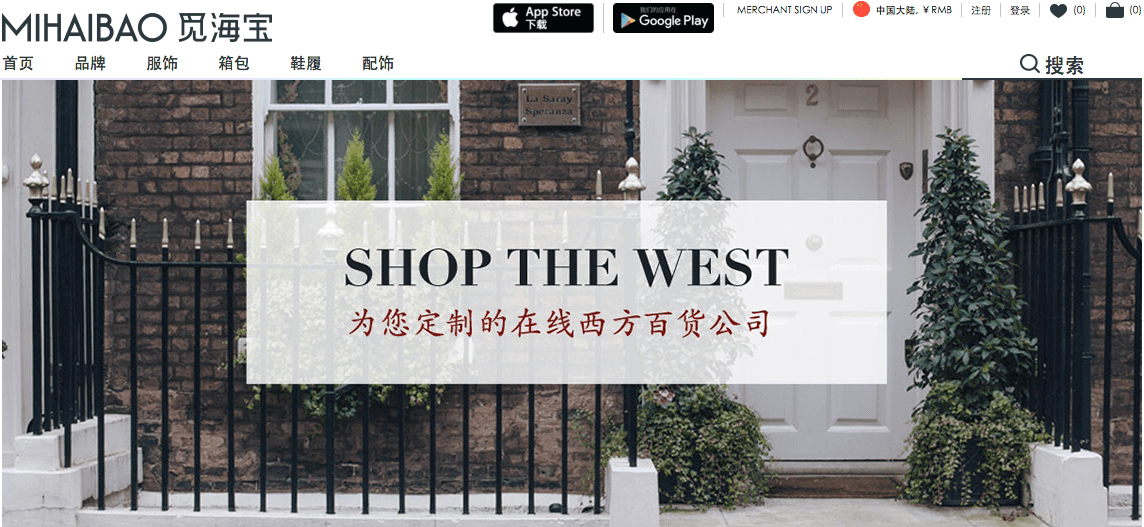
    Luxury retail tech start-up Mihaibao is looking to disrupt how Chinese consumers shop for luxury goods and how Western brands reach Chinese markets. And investors are certainly taking notice.

    Although still in a beta testing phase, the company is making waves due in part to the big-name participants in its $1.6 million seed round. Investors at this stage include Alibaba angel investor and former CTO John Wu, the UK Government and Royal Family, PayPal and more.

    “Chinese people are obsessed with Western luxury goods,” said Mihaibao co-founder Jacqueline Lam. “But on international websites, Chinese customers are dealing with language barriers, multiple shipping fees, and foreign currencies and payments.”

    Mihaibao co-founder Jacqueline Lam.Mihaibao co-founder Jacqueline Lam.

    Furthermore, while Western brands are eager to tap the Chinese market, “many do not understand the Chinese culture, shopping behaviour and trends, making China a high-risk investment,” said Lam.

    While many luxury brands have launched bricks-and-mortar stores in China, the taxes and mark-ups are high and the ranges often limited. Many such stores have been forced to slash prices, according to Bloomberg, due in part to online competition. China also has a massive ‘grey market’ for luxury goods fuelled by shopping agents who make a living moving Western luxury goods into China and reselling them.

    All of this means that there is massive demand in China for luxury goods but no real simple or satisfactory way of connecting consumers with the brands they want. And that is what Lam and Mihaibao are trying to do.

    Mihaibao is essentially a tech company. It has partnered with more than 200 Western luxury brands — including the likes of Chanel, Dolce & Gabbana, Gucci, Jimmy Choo, Valentino and many more — which are featured on the Mihaibao website. Shoppers pick what they want from the website and Mihaibao calculates prices and shipping costs via live currency conversion and deals with any tax or customs issues, for a percentage of the sale.

    As a tech company, Mihaibao is also focusing on its data capabilities, which it’s using to analyse key trends in the Chinese market to help its brands bring the right products to Chinese consumers.

    “Not only can we tailor the Chinese shopper’s experience but we can also help brands target the people that have created demand for a particular product — we know how the Chinese shopper thinks,” Lam told CNN.

    Together with streamlining the shopping process for Chinese consumers, Mihaibao is also working to establish consumer trust with buying luxury Western goods online. Many consumers have trust issues with major marketplaces, like China’s Tmall, which often sell counterfeit luxury goods side-by-side with the real thing.

    Whether Mihaibao can bridge the gap between Western luxury brands and eager Chinese consumers remains to be seen. But this young start-up’s powerful backers are certainly making people sit up and take notice.

  • Hong Kong entrepreneur Ricky Wong plans HK$100m ad campaign boost for online shopping

    Hong Kong entrepreneur Ricky Wong plans HK$100m ad campaign boost for online shopping

    Ricky Wong Wai-kay has ambitious plans to boost his online shopping venture with a HK$100 million ad campaign and staff expansion despite a grim economic outlook and still being a long way from breaking even.

    The HKTV boss said that a year after the official launch of his online shopping mall, it had recorded an average of 700,000 to 800,000 unique visitors per month and the number of customers had doubled in the last two months to tens of thousands.

    He said each customer placed orders ranging between HK$400 and HK$1,000.

    “We will broaden the range of goods available. We will soon offer fresh seafood, chicken and vegetables among some 99,000 items available in our online store.”

    Wong said the company had set aside a HK$80 million to HK$100 million advertising budget for e-commerce in the coming year.

    READ MORE: HKTV and boss Ricky Wong win HK$1.3m libel payout from ATV and ex-director James Shing

    He also planned to expand the logistics team from around 300 to 800 or 1,000.

    “The cost will still be much lower than operating a physical shop,” he said. “High rent is killing Hong Kong’s retail sector.”

    Wong cited a recent report from CBRE Research, which named Hong Kong as the world’s most expensive retail market.

    According to the report, rent for retail spaces in Hong Kong had reached US$4,334 per sq ft per year – 3.3 times more than in Paris, ranked at No 3, and 3.6 times more than in London.

    He said some Hong Kong retailers spent nearly 50 per cent of turnover on rent.

    “Tourists who come to Hong Kong won’t shop here. They would rather shop in London or Paris,” he said.

    But he admitted there was still a long way to go before breaking even.

    Wong initially intended to develop a TV business that operated alongside his e-commerce venture with HKTV. But HKTV did not get a free TV licence from the government and his internet TV business did not take off due to lack of advertising.

    But he has not given up his TV dreams completely. He said he was still negotiating with the government on mobile TV development, and a multimedia centre under construction in Tseung Kwan O was expected to be completed by the end of this year.

    However, Wong has no concrete plans to revive any TV productions.