Category: E-Tailing

Retail News Asia is committed to providing both local and global retailers with the latest E-Commerce & Etail news throughout the Asian market. This on a daily base.

  • Singapore rides omnichannel wave

    Singapore rides omnichannel wave

    Online and offline sales in Singapore are growing in tandem as omnichannel is becoming an integral part of shopping culture in Asia.

    Data compiled by online couponing website Flipit.com show that 85% of Singaporeans shop in-store at least once a month while 49% shop online with a similar frequency.

    But the preference is for bricks and mortar, Digital Market Asia reported, as more than half of Singaporeans (56%) like to shop in-store in one of the city state’s 105 malls, where they appreciate being able to touch and feel products as well as eat and drink and socialise.

    The fact that malls are increasingly integrating channels also helps, with click-and-collect facilities, for example, being supplemented with “click-and-mortar” stores where shoppers can use barcodes to save items to an online shopping cart.

    “Shopping trends are constantly evolving, but you can always guarantee that Singapore will be one step ahead,” said Willem Nout, Project Manager at Flipit.com.

    “Singaporeans just love to shop – plain and simple!” he said, adding that seeing shopping as a pastime rather than a necessity was “exactly the kind of attitude that guarantees to keep physical stores out of the red zone”.

    Amazingly, Singapore has double the retail space per person of Australia, despite being 10,000 times smaller.

    It is also among the world’s leading markets for retail expansion, according to a report by real estate services firm CBRE, attracting 58 new global brands last year – double the number of 2013 and second only to Tokyo.

    These entrants were mostly in the food and beverage sector, reported Inside Retail Asia, followed by apparel and accessories chains. And the Shoppes at Marina Bay Sands was a favoured location thanks to the high numbers of affluent customers visiting the connected casino facilities.

    Brandon Famous, senior managing director for retail occupier advisory & transaction services at CBRE, echoed Nout when he said that consumers continued to “view the physical store as their preferred mode of purchase and perhaps more importantly, as a point of social interaction”.

    “Consumers view shopping as a leisure activity and the continued expansion of brands and the development/improvement of shopping locations gives them the opportunity to embrace this,” he added. Data sourced from Digital Market Asia, Inside Retail Asia, CBRE; additional content by Warc staff

  • Retail movies for Millennials

    Retail movies for Millennials

    With many on-line publications funded by invasive adverts, it typically looks like web surfers are being bought one thing each different minute.

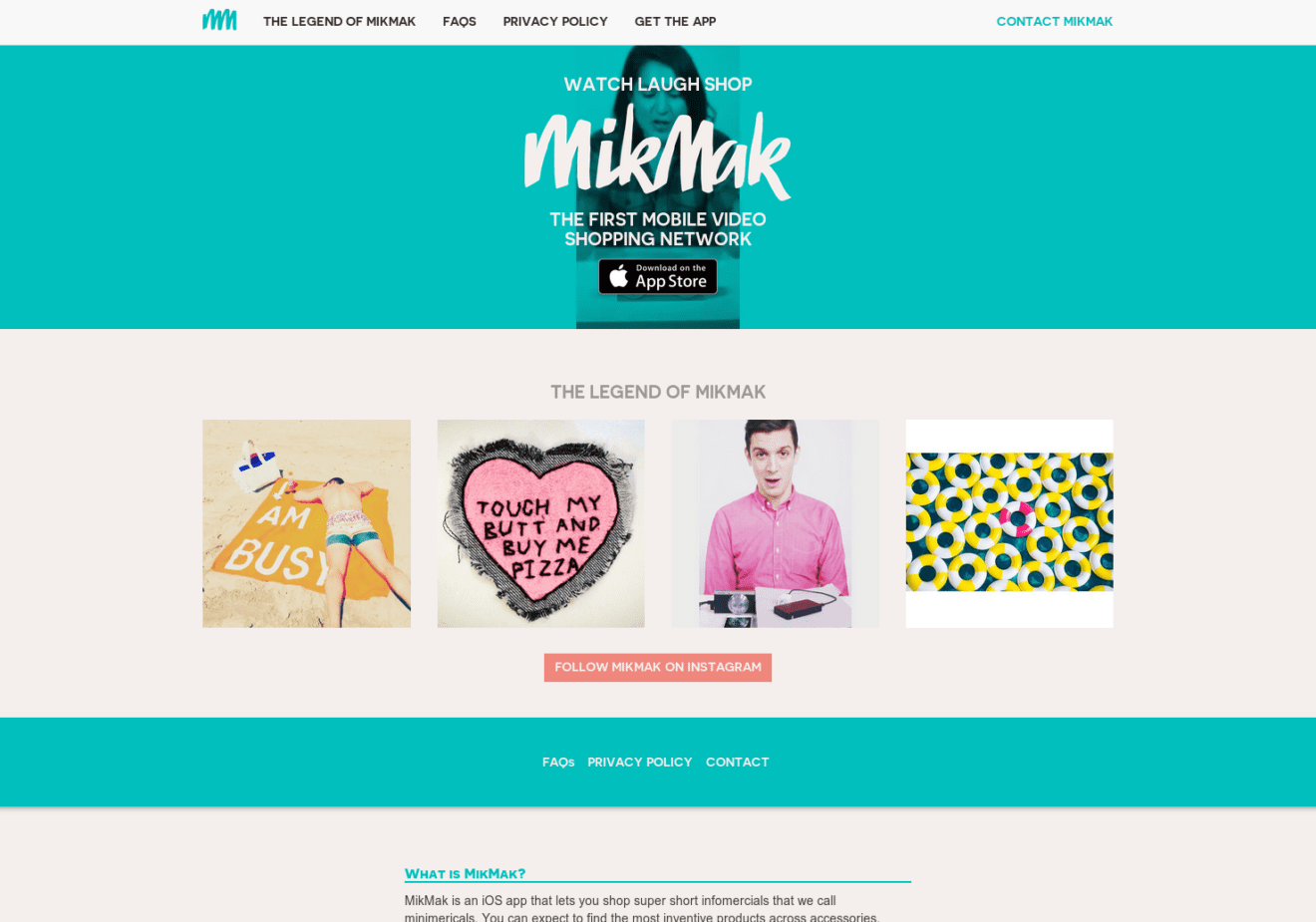
    Making a extra lively, participatory purchasing expertise is a brand new app referred to as MikMak. The app embraces the age of cellular promoting by giving the house buying community a 21st century smartphone makeover. MikMak is a cellular video buying channel aimed toward millennials, that creates infomercial fashion retail movies for every product it promotes.

    To start, customers obtain the free app and create an account. Then, they will browse by product sort, and watch a ‘minimercial’ for every merchandise they like. There are a selection of equipment, devices, residence items and extra — all for beneath US$100 — and new movies are uploaded nightly. All the products promoted might be purchased inside the app.

    MikMak is presently in Beta and the corporate behind it — based by Rachel Tipograph — is creating a variety of movies for every product in various types. Gadgets are sometimes introduced by comedians from the stand-up circuit, with tones starting from honest and critical to comical and gimmicky — as a way to confirm which sits greatest with their viewers. Every clip is thirty seconds lengthy and the group can produce as much as 25 in in the future on a really small finances.

    Is there potential for extra cellular buying channels for different audiences?

  • E-commerce to drive Asean retail growth

    E-commerce to drive Asean retail growth

    In its 2015 report to leaders, Asean BAC said business-to-customers Internet sales in Asean account for only one per cent of total sales as opposed to eight per cent in developed economies.

    According to global management consulting firm AT Kearney, Singapore is the only Asean country to be placed in the top 30 in a ranking led by the US, China and United Kingdom.

    In the firm’s 2015 Global Retail E-Commerce Index, Singapore ranked 14th with a 41.5 score in terms of online market attractiveness.

    The study said the city state has infrastructure that makes the retail environment conducive for online shopping.

    In terms of consumer behaviour, Singapore was rated at 89.4, a score higher than the US, which indicated a favourable consumer base for online transactions.

    Asean BAC said e-commerce technology is essential for the integration of Asean’s retail sector as it makes shopping easier for consumers. It also helps grow businesses without having to contend with too many pre-existing impediments.

    But in order to develop e-commerce, the council said Asean needs to work on its logistics, develop an online payment system and promote access to finance.

    Asean should also consider the establishment of a region-wide e-payment regulation system that will help companies identify their clients.

    To speed up the payment process, an e-payment escrow solution could also be explored, the council said in its report.

    Asean should also encourage partnerships between e-retailers and logistics players to improve trade efficiency.

    The integration of logistics systems in Asean must be accelerated. The council added in its report that the Asean Single Window system should be fully-implemented.

    Asean BAC said access to finance and use of regional e-commerce platforms will help Asean e-commerce players keep up with their international competitors.

  • Indosat, Facebook launch Internet.org in Indonesia

    Indosat, Facebook launch Internet.org in Indonesia

    Ooredoo Group’s Indonesian subsidiary Indosat and Facebook have jointly launched the Internet.org initiative in Indonesia. Facebook’s Internet.org seeks to make internet services more accessible through free internet access to a set of basic services, including health, education, social media for communication and news.

    In Indonesia, Indosat will provide internet access at no charge through the Internet.org services both for IM3 & Mentari (prepay customers) and Matrix (postpaid subscribers). Customers will be able to access general information on Ask.com and Wikipedia; get news updates on Merdeka.com & KapanLagi; stay up to date on sports through Bola.net; get education info on Kelase; as well as check the weather and climate through Accuweather; read stories via Wattpad; check employment opportunities on Jobstreet; sell items on OLX & Tokopedia; learn about women’s issues on BabyCenter, Mama, Girl Effect websites; and access health information on UNICEF’s Facts for Life.

    Indosat customers in Indonesia can access these services via www.internet.org or by downloading Internet.org app from the Android playstore. The service will be available in English and Bahasa Indonesia.

  • Yahoo Japan ties up with Tmall

    Yahoo Japan ties up with Tmall

    Japan’s third largest on-line retailer Yahoo Japan Co jumped probably the most in two months in Tokyo buying and selling after the corporate stated it is going to group up with Chinese language e-commerce big Alibaba Group Holding to increase footprint into the world’s second largest financial system.

    Yahoo Japan’s share surged 11.7 % to 556 yen (US$four.5) on Friday, the very best closing worth since March 31, lifting its market worth to three.2 trillion yen.

    Daniel Zhang, Alibaba’s chief government officer, stated they may launch “Japanese Pavilion” on the Tmall websiten with 100 manufacturers and plans to extend the quantity to 600 in three years.

    “The rising reputation of Japanese items in China is creating an enlargement alternative for home retailers. We see the cross-boarder e-commerce as an explosively rising market,” Yahoo Japan stated in its assertion, noting to faucet Alibaba’s large buyer base, logistics community and settlement system.

    The tie-up is predicted to start out as early as this summer time.

    These Japanese corporations can pay solely one-fifth the often preliminary prices for promoting merchandise on Tmall to benefit from the preferential coverage of the cooperation, Japan’s Nikkei Newspaper reported.

    The Chinese language e-commerce market is estimated at 50 trillion yen, or 2.5 trillion yuan (US$403 billion), 5 occasions the dimensions of the Japanese market, based on iResearch. Alibaba controls greater than 60 % of the market, boasting 350 million customers on the Tmall web site, stated iResearch, a number one market analysis agency specializing in Web business.

  • JD.com launches Japanese Mall

    JD.com launches Japanese Mall

    JD.com has launched a Japanese Mall – a brand new channel on the corporate’s JD Worldwide cross-border platform devoted solely to gross sales of genuine imported Japanese merchandise.

    JD.com launched Japanese Mall at an occasion in Tokyo the place JD Mall CEO Haoyu Shen was joined by Katsutoshi Takeda, director basic of the Japan-China Friendship Middle, and senior administration from Rakuten, Sumitomo, and different key Japanese companions.

    “Our new Japanese Mall supplies Chinese language shoppers with a trusted supply for purchasing imported Japanese merchandise,” stated Shen.

    “Japanese Mall will give extra Japanese manufacturers larger publicity to China’s quickly rising demand for imported items, and can additional solidify JD.com’s status as China’s on-line chief for assured genuine merchandise.”

    JD says it’s working to simplify cross-border transactions by offering suggestions on operational and worldwide logistics companions that Japanese companies can use to scale back prices and enhance the effectivity of promoting via the JD Worldwide platform.

    Japanese Mall will give attention to satisfying the fast-growing demand amongst Chinese language shoppers for genuine Japanese merchandise in a variety of classes together with gadgets for maternity, infants, meals, private care, cosmetics, attire, baggage, house ornament, electronics and residential home equipment from common Japanese manufacturers.

    Along with Japanese Mall, JD Worldwide additionally hosts French Mall and Korean Mall, each of which launched earlier this yr, and the corporate stated it might proceed looking for different alternatives to supply channels devoted to different nations’ merchandise in response to buyer demand.

  • Xiu.com confirms model enlargement

    Xiu.com confirms model enlargement

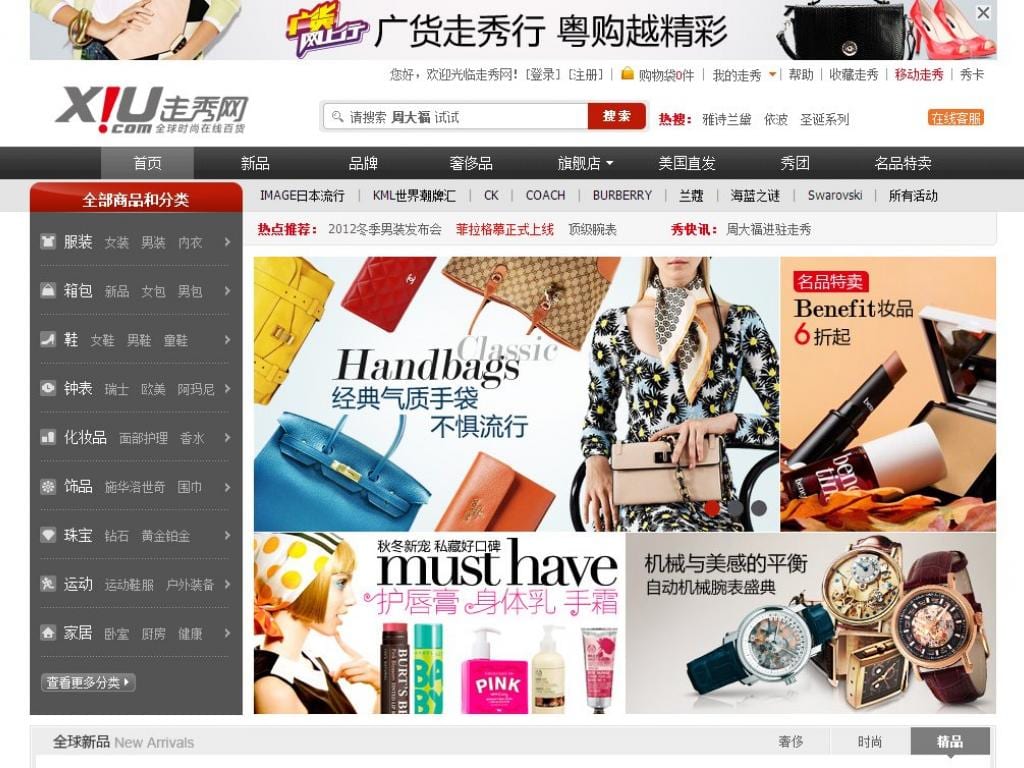
    On-line luxurious trend retailer Xiu.com says it’ll use its recent $30 million capital injection to attach extra western manufacturers with internet buyers in China.

    Xiu.com lately raised $30 million in collection C funding, led by personal fairness firm Pacific Enterprise Companions, a deal reported by Inside Retail Asia on Might 19, however solely formally introduced in the previous few days.

    Launched in 2008, Xiu.com sells worldwide branded trend merchandise, together with clothes, cosmetics, luggage, jewelry, footwear and homewares.

    “As an online-fashion main firm, Xiu.com operates superior logistic networks that cowl Europe and the US,” stated Ji Wenhong, founder and CEO.

    “Working instantly with established worldwide corporations, Xiu.com might supply quite a lot of Worldwide model merchandise and supply Chinese language shoppers in-season trend merchandise with lower cost than these in different markets.”

    “We’re very assured in Xiu.com after we studied the Chinese language eCommerce market for a very long time,” stated Tan Changwen, a associate in PVP.

    “We’ll help Xiu.com’s strategic improvement, particularly in growing its efforts of cellular e-commerce and expansions in Asia markets.”

    Regardless of Chinese language shoppers tending to buy luxurious items once they journey overseas, Xiu.com discovered that Chinese language at the moment are displaying extra willingness to buy luxurious items on-line.

    Greater than 600 abroad corporations, together with Salvatore Ferragamo, Blue Nile, and Hugo Boss, are partnering with Xiu.com, and almost 200 of them promote solely on Xiu.com to Chinese language internet buyers.

    Greater than 10 million shoppers have registered with Xiu.com and greater than 85 per cent of orders come from repeated consumers. The typical order worth is US$240.

    Xiu.com will use the funds to consolidate its worldwide provide chain community and to take a position into the venture of connecting offline shops in western nations with internet buyers.

    “We assist shops in western nations promote their inventories on Xiu.com,” Ji stated. “We might improve our product choices quickly, whereas shoppers may benefit from extra alternatives for new-arrival merchandise.”

    The Shenzhen based mostly firm additionally plans to make use of the funds to organize its forthcoming IPO.

  • Walmart China launches app-based retailer

    Walmart China launches app-based retailer

    Walmart China says it needs its clients to take pleasure in its services “anytime and anyplace”. So this week it has launched its hypermarket app retailer Walmart To Go in Shenzhen.

    The platform consists of the newly launched Walmart cellular buying app, To Go Service Middle in shops for self decide up and a number of on-line and offline e-payment choices.

    Walmart will pilot “Walmart To Go” in Shenzhen (excluding Yantian and Dapeng) and supply high quality E-Commerce expertise to clients with its community of 23 shops. Walmart To Go can be adjusted and upgraded in response to clients’ feedbacks and progressively broaden its service nationwide.

    Clients can now obtain the  app for each iOS and Android app shops.

    At present the app provides greater than 10,000 gadgets, with 1000 recent/dairy/frozen SKUs in addition to merchandise masking grocery, well being and wonder merchandise and family chemical compounds. Extra gadgets bought in bodily shops can be added progressively.

    Walmart To Go goals to offer “a top quality buying expertise to clients” the corporate stated in a press release.

    “From ordering on the app, choosing merchandise from the shelf, to residence supply or in retailer self-pick-up, clients will expertise a considerate service by Walmart devoted groups.”

    President and CEO of Walmart China, Sean Clarke, described Walmart To Go as “an necessary milestone”.

    “It’s an enhancement and extension to our brick and mortar enterprise. We’re uniquely positioned to combine bodily and digital retail seamlessly. Walmart needs to be an actual O2O firm. We’ll proceed to innovate each on-line and offline to satisfy the altering calls for of our clients, and would be the most trusted omni-channel retailer in China.”

    To offer the perfect supply providers to Chinese language shoppers, Walmart leveraged its expertise within the US, UK, and different comparably more experienced eCommerce markets. Each bodily retailer acts as an unbiased customer support and operation middle with a devoted staff of Walmart employees answerable for app orders. The employees will cowl the order preparation course of from product choosing, packaging, to delivering or handing the merchandise to clients in retailer. For recent meals that require a sure storage temperature, the Walmart supply staff will use particular insulated luggage to ensure the identical off-the-shelf freshness a buyer expects in a Walmart retailer.

    In the meantime, Walmart works with skilled logistics firm to construct devoted supply group accountable just for Walmart orders, and every supply van has a vivid Walmart To Go emblem on it.

    If clients select home-delivery providers and full an order earlier than 11 am, the merchandise could be delivered on the identical day. Supply charge can be freed from cost if the acquisition is over 188 RMB. Clients may also determine to select up their order in any retailer they need. The assigned retailer will put together the gadgets inside about 4 hours based on buyer choice of the pick-up time.

    After clients obtain the reminder message on their cell phone, they might go to the To Go Middle to select up the order by order quantity. For instance, a working mom, who lives in Nanshan however works in Futian, can determine what to have for dinner at midday and place her order on the app. After work, she will decide up her order from a retailer close to her home and convey the meals house to organize for dinner. It’s fear free and time saving for patrons demanding for comfort.

    Merchandise bought on the app are the identical as those bought in bodily shops. This ensures that the merchandise are from genuine sourcing channel. App customers additionally take pleasure in the identical worth and after gross sales providers as in bodily shops. As an example, app consumers can convey the merchandise bought on-line with the supply notice to any Walmart retailer for refund, and their cash will probably be returned to their cost account. Walmart’s 100 per cent Fear Free Recent Assure additionally applies on app. If app customers aren’t glad with the recent merchandise they purchased, they might refund inside 14 days of buy.

    Clients pays with Union Pay, Alipay and E present playing cards on Walmart app. Bodily shops may even have particular e-payment checkouts to simply accept Alipay and different cellular cost strategies. Walmart will add extra e-payments within the shops and on the app sooner or later to offer extra immediate, environment friendly, and handy cost providers.

  • 11Street Malaysia launched purchasing app

    11Street Malaysia launched purchasing app

    11street, Malaysia’s latest eCommerce participant, has launched an app to help on-line buying by way of iOS and Android smartphones.

    11street’s CEO, Hoseok Kim stated that the brand new cellular app is the corporate’s newest dedication to ship “a reliable and handy on-line purchasing expertise to Malaysian shoppers”.

    “11street is rising exponentially in Malaysia and quick turning into one of many prime three largest on-line marketplaces with greater than 350,000 product listings you could now view seamlessly utilizing Apple and Android units.

    “Malaysia leads the world in smartphone utilization and it is among the solely 5 nations worldwide to make use of their smartphones greater than computer systems as the first gadget for accessing the Web.”

    Kim stated to be ‘cellular first’ clearly an organization needed to have a user-friendly on-line buying app to raised accommodate the seemingly growing cellular consumers.

    He stated 11street’s cellular app is optimised to reinforce customers’ on-line purchasing expertise based mostly on the expertise the corporate had gained in offering eCommerce providers in Korea and different markets.

    “The important thing differentiator of 11street’s cellular app is its broadly collaborative-curated content material that permits shoppers to entry the recent promoting services a lot simpler, particularly on the ‘Surprising Offers’ part, which provides a Lowest Worth Assure.

    “General, with a nicely categorised and extra intuitive interface, shoppers can navigate and discover out what they love at 11road effortlessly at anytime, anyplace.”

    11street’s cellular app can also be constructed to simply accept bank cards and financial institution transfers upon purchases. Customers can view their membership advantages, examine their order standing, and make the most of their low cost coupons whereas buying on-the-go.

    “11street will constantly improve its cellular apps’ providers to supply higher consumer expertise as immediately greater than 50 per cent of visitors to 11road is from cellular units.”

    Kim concluded: “From the general e-commerce market perspective, it’s plain that mobile-commerce will flourish and we anticipate to see extra shoppers go browsing to 11street by way of cellular units to buy on-line.”

  • Daum Kakao buys Path assets for Indonesia growth

    Daum Kakao buys Path assets for Indonesia growth

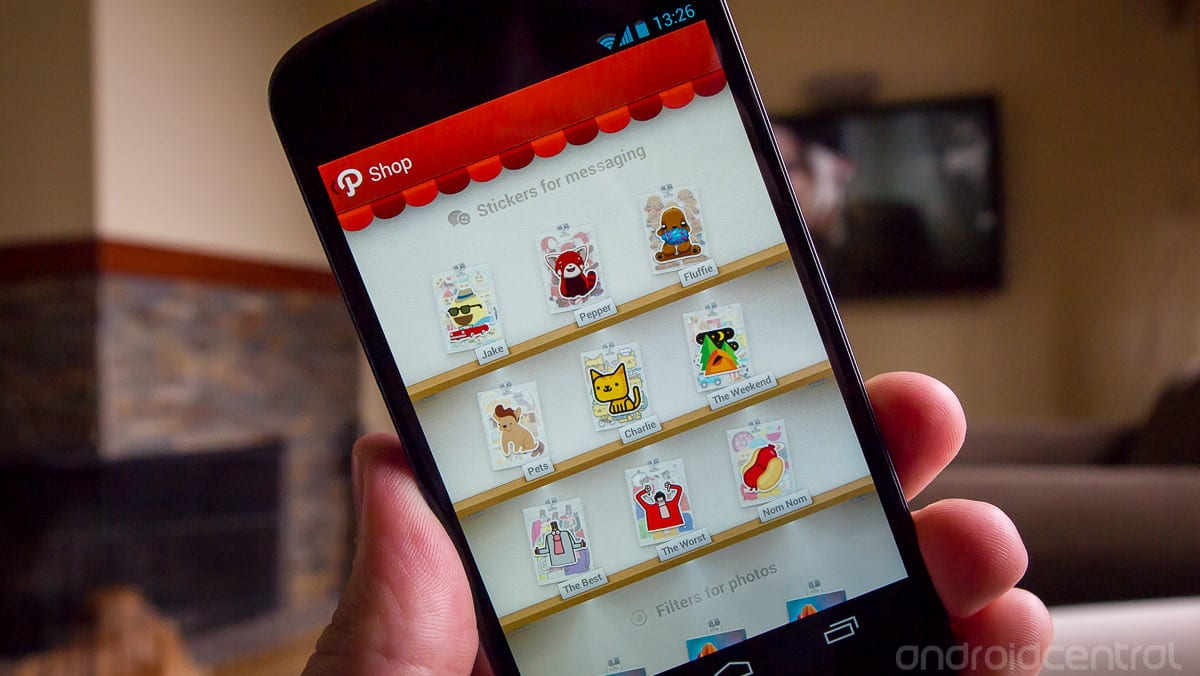
    South Korean messaging app operator Daum Kakao Corp said it has acquired social networking assets from U.S.-based Path Inc, giving it a strong presence in Indonesia and sending its shares surging 10 percent on its push to expand globally.While Daum Kakao owns South Korea’s dominant chat app KakaoTalk, investors have been worried that KakaoTalk’s global user base lags far behind rivals like Facebook Inc’s WhatsApp and compatriot Naver Corp’s Line.“This acquisition marks the first of the many global business approaches Daum Kakao will take in the coming years,” the company said in a statement, adding that in addition to acquisitions it would also explore investment and partnership opportunities.Daum Kakao will purchase social networking service Path which has 10 million monthly active users, most of them in Indonesia, making it one of the top three SNS services in the Southeast Asian country. It will also buy messaging app Path Talk.

    Terms of the deal were not disclosed.“This deal establishes a new stronghold country and could generate further growth momentum in nearby countries,” said Kyobo Securities analyst Lee Seong-bin.Efforts by Daum Kakao to date to grow in markets like Indonesia, the Philippines and Malaysia had failed to gain traction.In addition to strong position in Indonesia, Path has also been growing rapidly in Saudi Arabia.Daum Kakao’s shares were trading at 117,700 won in afternoon trade. At one stage, it rose 12 percent to its highest level in more than two months.

  • Singapore’s postal service reinvents itself for the digital age

    Singapore’s postal service reinvents itself for the digital age

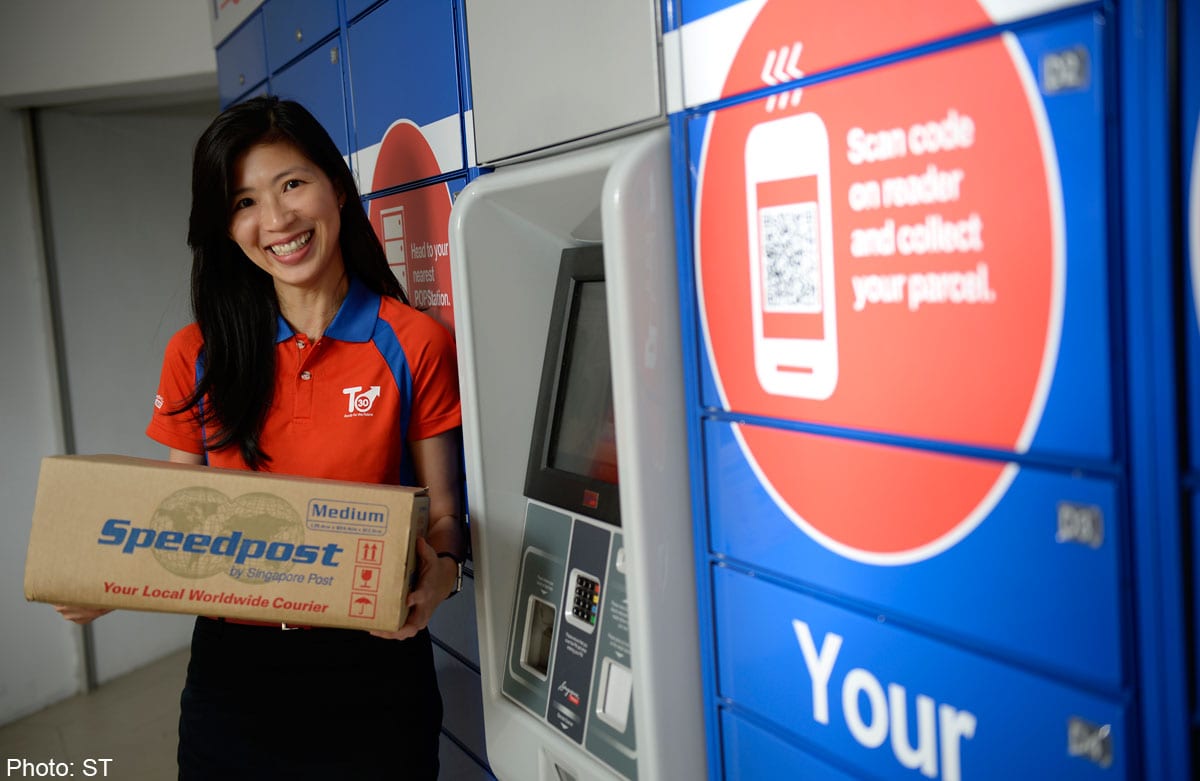
    When a German lingerie model needed to promote bras on-line in Malaysia, it turned to Singapore’s almost 200-year-old nationwide postal service.

    Singapore Publish constructed an internet site, developed a advertising technique and now delivers packages for the corporate, Triumph Worldwide. The customer support group even solutions questions on sizing.

    As postage stamps give solution to keyboard clicks, SingPost is redefining the position of the letter service, by making a one-stop store for retailers’ e-commerce wants in Asia.

    In South Korea, SingPost helps to promote Levi’s denims. In Singapore, it’s stocking Toshiba laptops. In Malaysia, it’s delivering Adidas sneakers.

    With conventional mail providers in decline, publish workplaces around the globe are scrambling to reinvent themselves for the digital age.

    “Sitting on that burning platform, we appeared round and stated, ‘The place might we develop?’” stated Wolfgang Baier, the chief government of SingPost.

    Japan Submit is shopping for the most important personal package deal and freight supply firm in Australia, Toll Holdings, in a bid to create a rival to UPSand FedEx. America Postal Service, which misplaced $5.5 billion final yr, is offering Sunday deliveries for Amazon. Australia Publish is working with the Chinese language Web big Alibaba to assist native companies join with shoppers in China.

    “There are a minimum of two enterprise developments unfolding earlier than us. One is the dying of mail,” stated Frank Lavin, chief government of the e-commerce consultancy Export Now. “The second is that this growth in e-commerce.”

    SingPost’s makeover is among the many most formidable. In addition to its common postal duties, it provides a basket of providers for corporations, together with web site improvement, on-line advertising, customer support and, in fact, package deal supply. Following the Amazon mannequin, it’s constructing a community of 24 warehouses in 12 nations to stockpile items for corporations. The e-commerce group is staffed with former Silicon Valley executives.

  • Alibaba companions with Korean authorities to launch Korea Pavilion on Tmall

    Alibaba companions with Korean authorities to launch Korea Pavilion on Tmall

    Chinese language e-commerce big Alibaba Group on Monday launched the Korea Pavilion on Tmall.com, China’s largest third-party B2C platform. The Korea Pavilion is the primary official on-line nation pavilion devoted to offering shoppers in China with one-stop store for real Korean merchandise and journey and cultural info.

    In partnership with Korea Argo-Fisheries & Meals Commerce Company and Korea Worldwide Commerce Affiliation (KITA), the Korea Pavilion provides Korean retailers a devoted on-line platform to faucet the Chinese language market. It is the results of fruitful discussions between Alibaba Group and the Korean authorities over the previous yr. These discussions have yielded different constructive initiatives akin to collaboration in logistics and the creation of internship packages aimed toward growing the cooperation between Chinese language and Korean enterprises.

    “The Korea Pavilion is Alibaba Group’s first official nation pavilion and we’ll proceed to work with governments of different nations to launch comparable pavilions sooner or later with a view to fulfill the wants of our Chinese language shoppers,” stated Jack Ma on the opening ceremony of the Korea Pavilion on Monday in Seoul. “Korean made merchandise have all the time been well-liked in China and we’re excited to convey these merchandise onto Tmall.com.”

    To additional strengthen the collaboration between Chinese language and Korean corporations, Alibaba Group is working with KITA to provoke a youth internship program that may let 100 Korean school graduates intern at Alibaba Group’s headquarters in Hangzhou. The primary session of the three-month lengthy internship program will begin in early July. The chosen interns will study concerning the Chinese language shopper market, its traits, and the operations and enterprise of Alibaba Group’s e-commerce platforms. Via this internship, Korean school graduates can study concerning the quickly rising Chinese language market and convey that have and information again to South Korea.

    With the rising demand of Korean merchandise amongst Chinese language shoppers, Cainiao, the logistics affiliate of Alibaba Group, is trying to broaden its partnerships with Korean corporations to deliver the perfect cross-border logistics options potential to the Chinese language shoppers.

  • Metro China upgrades e-commerce platform to offer seamless buyer expertise

    Metro China upgrades e-commerce platform to offer seamless buyer expertise

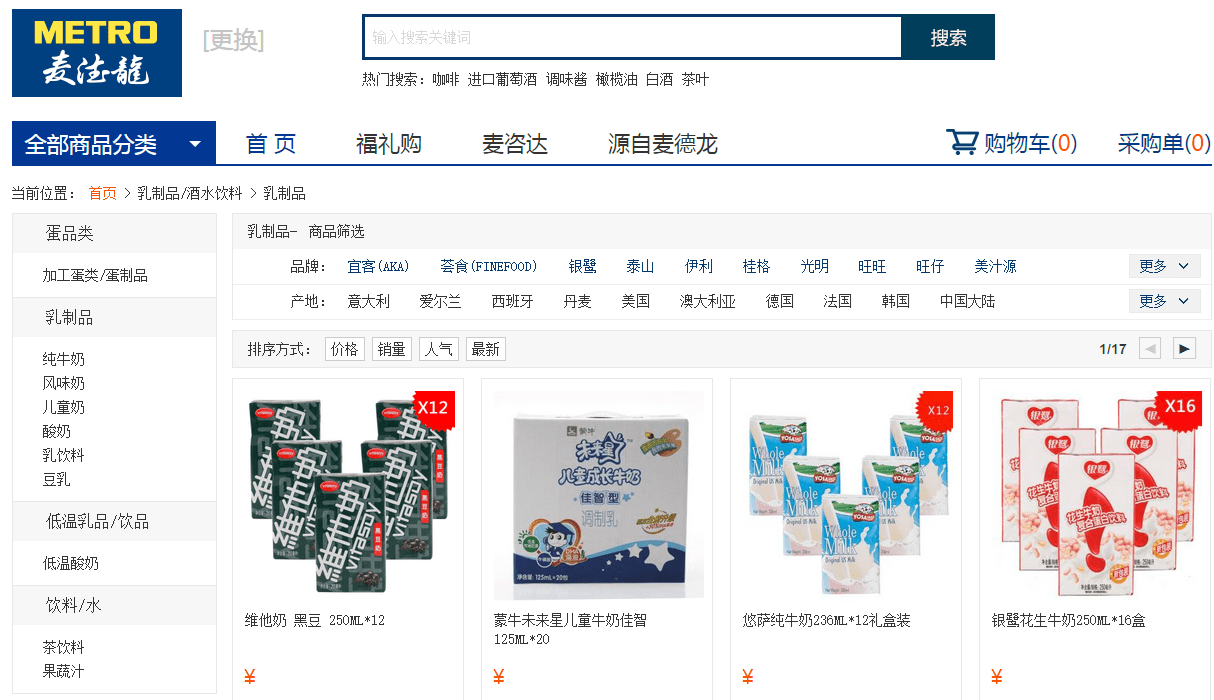
    Metro China has improve its e-commerce platform metromall.cn – which integrates on-line, offline and cellular channels for a seamless buyer expertise, the wholesaler stated on Tuesday.

    With an optimized consumer interface and location-based providers, Metromall synchronizes with the wholesaler’s offline shops, overlaying over 20,000 merchandise. Metro delivers all on-line orders instantly from native wholesale shops, not solely shortening supply time but in addition making certain product high quality. The platform gives clients handy and environment friendly decisions of products receiving, similar to residence supply or in-store pick-up.

    Ever since Metro entered China market in 1996, the wholesaler has adopted a membership system, and picked up knowledge from over four million shopping for clients with a purpose to present custom-made options and providers. By tapping into this wealthy database, the upgraded e-commerce platform will additional strengthen Metro’s buyer relationship administration.

    The Metro e-commerce platform at present covers 39 shops in 21 cities in China, and can unroll throughout all Metro shops in China by the top of 2015.

    “E-commerce is certainly one of our strategic channels to drive for progress in China market. We’re decided to reinforce buyer expertise and additional broaden enterprise by means of leveraging the facility of e-commerce,” stated Jeroen de Groot, President of METRO China.

    “Our Metromall not solely integrates online-to-offline, but in addition incorporates an revolutionary cellular perform. We’re assured this platform will allow us to offer extra thrilling options and seamless buying expertise to our core goal skilled clients, serving to them to be extra profitable out there.”

    The cellular app for Metromall permits clients to scan barcodes and determine product options, construct purchasing carts, place orders, and check-out. The app’s highly effective database consists of product barcodes of all articles in offline shops apart from recent and ultra-fresh merchandise. Clients also can comply with Metro’s WeChat to acquire promotional info of Metromall and place orders on their cell telephones.

    Leveraging its international procurement community, Metro Group is about to enter the free-trade zone this yr, partnering with China’s famend cross-border e-commerce platforms, to offer shoppers with a broader vary of high-quality imported items.

    Metro China is dedicated to offering protected and high-quality merchandise, and is the one wholesaler in China with all shops to function in accordance with Hazard Evaluation and Essential Management Factors requirements to make sure that the processes of receiving, processing, storing and promoting items are hazard-free.

    Additional illustrating the wholesaler’s dedication to meals security, Metro has developed an business main traceability system, which data all course of particulars from farm to market. Just by scanning product barcodes, clients can view the whole product lifecycle, together with the place it was grown, the way it was licensed, and the logistics concerned.

    The newly-upgraded e-commerce platform has enabled Metro to create a closed, online-to-offline loop for protected and traceable meals.

    Metro opened its first wholesale retailer in Shanghai in 1996. It was among the many first to realize permission from the China to arrange chain operations in all main cities within the nation. During the last decade, the corporate has set its foot in 56 cities with 80 retailers in operation in China. With a headcount of over 12,000 staff, the wholesaler is serving greater than three.eight million shopping for clients throughout the nation.

  • JD.com strikes into gadget making

    JD.com strikes into gadget making

    Chinese language on-line retailer JD.com has chosen CES Asia to unveil two new devices to be bought by its JD Sensible division.

    JD Sensible is a just lately launched ‘sensible gadget platform and enterprise unit’ which has created what it describes as an ‘open ecosystem initiative’, integrating merchandise from a variety of producers seamlessly on a JD.com sensible platform.

    The brand new merchandise are a DingDong Sensible Speaker, developed in partnership with iFlyTech. It’s a voice-controlled gadget that may pull information, climate and round three million songs and four million hours of audio content material instantaneously from third get together sources on the Web and play them by way of the high-quality speaker system.

    The voice interface system may also help in schedule administration by establishing alarms, calendars and comparable planning instruments, all by way of voice instructions. The DingDong Sensible Speaker makes use of the JD+ tremendous app (referred to as “Jingdong Weilian” in Chinese language) to permit full voice management of all merchandise within the JD+ ecosystem, centralising the consumer expertise.

    JD Sensible additionally launched Changhong’s EleCloud Wi-fi Sensible Rechargeable Storage System to its JD+ ecosystem. The gadget, which equally leverages the Weilian app, is an exterior charger for cellular units that integrates the functionalities of wi-fi sharing and a excessive velocity flash drive, permitting customers to share paperwork, music and movies concurrently with as much as greater than 30 individuals.

    JD Sensible president Zhenhui Wang stated the brand new merchandise underscore JD Sensible’s shut relationships with producers and its concentrate on delivering a very built-in open platform for sensible units.

    “Leveraging JD.com’s unrivalled assets, we help our associate corporations all through the event course of, together with massive knowledge evaluation of consumer conduct, sensible cloud computing platform, fairness crowdfunding by means of JD Finance for start-ups, advertising help and entry to our greater than 100 million customers for market-ready sensible merchandise.”

    JD Sensible’s ecosystem supplies customers a handy single level of management over related sensible units from collaborating producers by means of its Weilian cellular tremendous app.

    “We’ve created an ecosystem that permits merchandise from totally different producers to work collectively on a seamless sensible platform, JD Sensible is ready to bypass the ‘ache level’ created when a consumer’s units can’t speak to one another,” stated Leslie Liu, JD Sensible’s CTO.

    “The DingDong Sensible Speaker leverages the Weilian app we now have developed to seamlessly combine into clients’ sensible house networks with a single voice command middle, avoiding the ‘bottleneck’ of closed platforms.”

    By way of its JD+ business companion program, JD Sensible builds partnerships with conventional and early-stage hardware producers across the open JD Sensible platform. Presently JD+ consists of over 100 producers, together with Haier, Hisense, Midea, TCL, Joyoung and Fotile, with a complete of greater than 400 JD Sensible-enabled merchandise. JD Sensible helps its associate corporations by means of a number of improvement levels, together with offering incubators, accelerators, technological help, go-to-market options, provide chain and cloud computing providers, in addition to entry to JD.com’s big base of upwardly cellular shoppers.

  • Bebelian flourishes on celebrity cast-offs

    Bebelian flourishes on celebrity cast-offs

    A unique Indonesian eCommerce venture is making money by selling local celebrities cast-offs to starry-eyed fans.

    And if the concept works in Indonesia, surely it’s a fit for other Asian markets, like Thailand and Korea, where celebrity-spotting is almost a national obsession.

    As TechInAsia.com reports, in an article written by Lina Noviandari. and translated from Indonesian,Bebelian founder Khairiyyah Sari was a former executive fashion and beauty editor at Indonesia’s Femina magazine. It was a role which kept her up to date – and in stock – with everything related to branded apparel and accessories, particularly handbags. Her work in the media also allowed her rare access to the nation’s exclusive pool of models, actresses, and celebrities who were deeply entrenched in the archipelago’s fast-moving fashion world.

    Having cultivated relationships with many socialites and famous women, those in Indonesia’s fashion and beauty industry came to endearingly know her by one name; Sari. In mid-2011, however, she resigned from her safe and cushy media job to chase down a daring eCommerce dream. Bebelian was born, with the vision to sell branded, fashionable apparel and accessories that were pre-owned by Indonesian celebrities.

    “On eBay, I found Hollywood celebrities putting their goods up to be auctioned. I then thought, Indonesia should have a place that sells items previously owned by celebrities. Because I knew a lot of them, I was sure they had a lot stuff that they rarely used. And certainly, there were many fans out there who wanted a piece of their style, right?”

    Realising she couldn’t do it alone, Sari invited her friend Dewi Rezer – an Indonesian model, TV presenter, and actress – to help develop the company. Now a two-woman operation, Bebelian had an even deeper network of celebs it could tap into for secondhand goods. Sari went right to work creating the site and populating it with content, while Rezer helped legitimise the business and build buzz in the right circles.

    As a fashion journalist, Sari already knew that people in Indonesia bought branded apparel that was endorsed or pre-owned by celebrities, but that there wasn’t a formal place where people were doing it.

    She also knew that there was no website that was specialising in pre-owned celebrity handbags. With this in mind, she decided to focus her site solely on handbags in order to capture an early niche audience.

    “Because I was a fashion journalist, the concept of an online store that I made didn’t seem too arbitrary. Each celebrity has to make a profile, so it’s sort of like a magazine. Complete profiles are linked with the celebrity’s own signature style, including handbags. Each bag is photographed in our studio and celebrities share tips on how to wear them.”

    Sari claims that apart from the potential earning power of Bebelian, the site also has a mission to provide a means for average consumers to get their hands on designer brands at affordable prices. According to her, buying a pre-owned, branded handbag from a celebrity has a better value proposition than buying a counterfeit one.

    However, when you look at the site, it’s plain to see that the prices are somewhere between what they’d be for counterfeit items versus real branded ones. So in that sense, shopping on Bebelian is still a step above buying fake branded items, but still not as expensive as picking something up from the Gucci store.

    On Bebelian, users can browse via brands, celebrities, price, or product. According to Sari, around 30 celebrities have signed up, and she says she’s been dividing her time between Bebelian and her own private consultancy. She declined to comment on Bebelian’s traction, including the number of transactions it has facilitated to date. However, Bebelian currently features brand names like Chanel, Gucci, Guess, and Louis Vuitton as well as famous local names such as Astrid Tiar, Sandra Dewi, Jill Gladys, and Edies Adelia.

    While Bebelian is a unique business model, it does see indirect competition in local site WokuWoku, an eCommerce firm that sells clothes and apparel from fashion lines owned by celebs. The primary difference is that Bebelian sells designer brands from the personal closets of celebrities, while WokuWoku deals in brands that are part of celebrity-made clothing lines.

    However, Sari says she doesn’t need to worry too much about competitors just yet, as Bebelian seems to be performing beyond her expectations.

    “The next obstacle we face is that our celebrities don’t have any more items they want to sell,” says Sari. “Because of this, we must always be looking for new celebrity partners to feature on Bebelian.”