
Mumbai-based grocery e-tailer LocalBanya is set for a fourth round of funding worth about USD15 million from domestic venture capital firms within the next quarter. The company has raised about USD20 million in three rounds, one of them about a quarter ago. “We’ll need another round of cash infusion to go national.
Category: E-Tailing
Retail News Asia is committed to providing both local and global retailers with the latest E-Commerce & Etail news throughout the Asian market. This on a daily base.
-

Mining data with mannequins
Italian mannequin maker Almax caused a stir two years ago with its Eye See mannequins, which use facial recognition technology. In one store, Almax’s mannequins alerted managers to a regular spike in Asian customers coming through a particular entrance after 5pm. When management moved two Asian shop assistants to that location at that time, sales rose 12 percent. This is not just a one-off example.
-

Shopline eyes SE Asia rollout
Shopline, the Hong Kong-based start-up that offers online tools for eCommerce vendors, is planning Southeast Asian expansion after closing a US$1.2 million seed funding round.
Investors include 500 Startups, Ardent Capital, SXE Ventures, East Ventures, and COENT Venture Partners.
Co-founder and CEO Raymond Yip says Shopline will use the funding to ramp up staffing and marketing. Once a team of three, the company has now increased its employee count to nine, and expects to get bigger as it targets expansion in Southeast Asia.
“We just started hiring a month or two ago. It’s definitely a big change for us, because the three of us were not getting paid for a time,” says Yip.
Shopline is an online platform that helps eCommerce merchants sell goods directly to consumers on standalone websites, as opposed to an eBay-esque marketplace. Similar to Shopify, the Ottowa-based startup that’s reportedly valued at over US$1 billion dollars, Shopline charges vendors a monthly subscription fee of HK$125 (about US$16) for access to a domain name and a customisable admin panel.
But whereas Shopify has entered Southeast Asia through a partnership with Singtel, Shopline launched specifically for Hong Kong and Taiwan – two markets its founders believe were under-served. To date, the company claims to have more than 15,000 merchants on its platform, 60 per cent of which have roots in Taiwan, while the rest are from Hong Kong. That’s a huge jump from the 4000 merchants it reported back in August.
Localisation has been a key factor driving Shopline’s growth. In Taiwan, for example, vendors have the option to ship goods directly to convenience stores – a standard practice for the island’s eCommerce industry.
“You have to understand the cultural part,” Shopline co-founder Fiona Lau told Tech in Asia. “If people want to pick up at 7-11, there’s different things you need to fill in – the store name, store code, and another type of store code. If you didn’t know that this was such a big deal and just put the address of the store, it wouldn’t work.”
Taiwan’s eCommerce market generated revenues of US$25 billion in 2013, according to data cited by the American Chamber of Commerce in Taipei. The island’s robust logistics network, bolstered by ubiquitous convenience stores, help make same-day delivery commonplace. Yip says that Hong Kong’s eCommerce industry lags behind that of Taiwan due to its smaller population and dense brick-and-mortar landscape.
“[In Hong Kong] when people think of eCommerce, they think of Taobao to buy things from the mainland because it’s cheap. But when it comes to buying normal things like a shirt, you wouldn’t really go to Zara.com you’d just go to Zara because it’s across the street. Whereas in Taiwan, geographically it’s bigger, so there’s more of a need, and it’s a little more mature.”
Shopline’s latest round stands out in particular due to Ardent Capital’s participation. The Bangkok-based venture capital firm invests almost exclusively in Southeast Asia eCommerce plays. Its management team also directly oversees aCommerce, a portfolio company that provides back-end logistics and services for eCommerce companies across the region.
Back in November, aCommerce’s Paul Srivokal told Tech in Asia that the store-in-a-box model might not be suited to Southeast Asia, as eCommerce remains in the early stages and merchants will hesitate to pay for traffic. That might make Ardent bet on Shopline might therefore seem counterintuitive. But Yip says that his team’s proven record in Hong Kong in Taiwan shows that Shopline can execute once merchant preferences evolve.
“There’s no question in my mind that eCommerce is going to mature in this direction,” says Yip. “When this does happen, we want to be at the forefront of it.
“We told them we’re going to go to Southeast Asia anyway, so we’d rather do it with someone who has the resources to help us. They fully agreed and they supported us.”
In addition to Shopify, Shopline faces a handful of other Asian competitors. Taiwan’s 91mai, which is founded by former team behind Yahoo Taiwan’s eCommerce channel, offers a similar product for eCommerce vendors, but through native apps rather than mobile websites. Uitox, another Taiwan company founded by an eCommerce veteran, lets vendors build websites free of charge and monetises through commissions on purchases and value-added services.
In Japan, Base is seen as the market leader for the vertical with more than 150,000 shops on its platform. All companies have ambitions to expand beyond their domestic markets.
-
Korean marketplace to launch in Malaysia
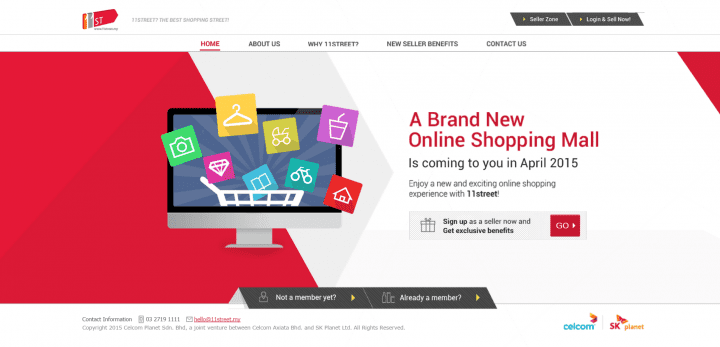
Korea’s largest online marketplace 11street says it will launch in Malaysia in April.
The company will invest more than RM35 million (US$10 million) to drive seller participation and aims to have 11,000 sellers on board by launch date. The site will be at
11street’s Malaysia CEO Hoseok Kim says the company wants the new site to become Malaysia’s largest online marketplace.
Established in Korea in 2008, 11street now has online marketplaces in Turkey and Indonesia as well as in its home market and boasted a combined network of 22 million sellers, serving 40 million consumers. Shoppers spend $6 billion annually on its sites.
“The online shopping paradise 11street in Malaysia is the company’s commitment to deliver local consumers a trustable and convenient e-commerce platform where they can shop for a variety of products across a broad range of categories available at anytime, anywhere,” said Kim.
“To deliver greater satisfaction and a more rewarding online shopping experience, it will be the first online marketplace in Malaysia that promotes not only physical products but also deal offerings such as e-vouchers under a single platform.”
Kim said the company’s $10 million investment would aim to encourage Malaysian sellers – including bricks and mortar businesses – to join 11street.
“We wish to foster continued eCommerce growth and elevate the maturity of the industry by empowering more local offline businesses particularly SMBs to break-through the traditional business model and explore the numerous eCommerce opportunities in the online space.”
Kim said that unlike other existing eCommerce websites, 11street has a hybrid eCommerce model whereby its ecosystem can support all types of sellers, including individual sellers, e-entrepreneurs, SMBs, retailers and service providers.
“Bolstered with expertise and know-hows gained through its worldwide ventures, 11street can empower the online sellers as well as traditional brick and mortar businesses to maximise sales and succeed in eCommerce – which in turn will accelerate Malaysia’s online shopping market growth.
“11street is equipped with unique and sophisticated online merchandising tools to support the complete online business set-up. Our ‘Seller Zone’ will be the first eCommerce education centre and support facility in Malaysia to advocate eCommerce sellers, where seminars and workshops will be given on a regular basis.
“Seller Zone is among the most significant investments that 11street has put in to grow the Malaysia’s eCommerce sector,” said Kim.
“In response to the mobility trends, we will also offer an integrated mobile interface and application upon 11 street’s official launch to support sellers in better managing their stocks, product marketing programs, payment settlements; and offer the analytics capability to help them retain customers with improved online shopping experience.”
As part of an early bird promotion to attract sellers prior to April, 11street will offer free stores, 50 per cent discount on transaction fees, complimentary use of Seller Zone facilities, promotion credits and product listing coupons. sellers who register before April 2015.
eC
“11street’s merchandising approach has a proven track record given that its worldwide ventures have grown remarkably well over the past few years. Against such backdrop, similar approach will be adopted to help Malaysian online sellers to excel in today’s increasingly competitive market.”11streeet in Malaysia will be hosted by Celcom Planet, established in November 2014 as a joint venture between Celcom Axiata Berhad and SK Planet – a leading Korean eCommerce open marketplace provider, which is also a wholly-owned subsidiary of mobile operator- SK Telecom.
-

Snapdeal gains a lot of weight, turns 5
After doing USD2 billion gross merchandise value of sales last year, Snapdeal seeks to hit USD3 billion in the next two months; Its seller base has grown to 100,000, from 1,000 in 2012.
-

Madura Fashion looks to strengthen online sales through exclusive e-commerce portal
Having tasted success in selling through online marketplaces, branded apparel manufacturer Madura Fashion & Lifestyle is now focused on growing its own multi-brand fashion e-commerce portal, Trendin.com, which was launched in an alpha-stage in March 2013.
-
Topshop in Japan shock
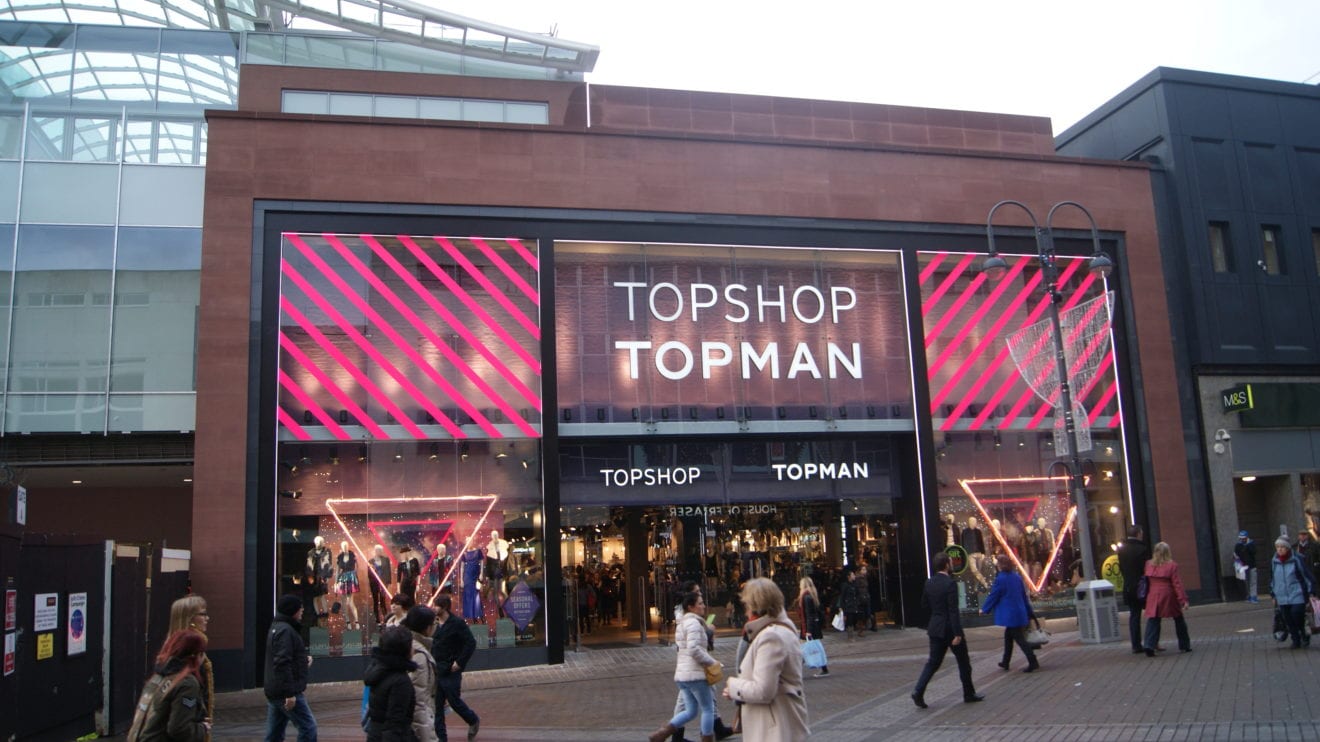
UK-based fashion group Topshop has shuttered its stores in Japan.
No explanation has been given for the closure – but it appears Topshop’s parent Arcadia Group is in some form of dispute with its Japanese partners.
In a statement issued overnight in response to media enquiries Topshop confirmed the stores were operated by a franchise partner.
“The Japanese market is an important part of Topshop’s business and there are no plans to pull out of this key international territory,” the company said in a statement to Fashionista.
“We are working hard, and exploring all avenues, to ensure that the brand maintains its presence in Japan.”
Topshop launched in Japan in 2006 and later partnered with Mori Building System, a retail real estate specialist which has also worked with Louis Vuitton subsidiaries. However it is not clear who the partner was at the time the stores closed as the association with Mori is reported to have ended last May.
The Nikkei Asian Review has reported that the Topshop Shinjuku flagship appeared to be fully stocked, but city’s other flagship, in the trendy Harajuku district, had been cleared out.
Phone calls to all five stores went unanswered.
The company last posted on its Facebook page on January 7 and its website still lists store locations.
-

YuuZoo to develop social e-commerce network for China’s JW Lottedi malls
Singapore’s YuuZoo Corporation on Friday said it has entered into an exclusive partnership with JW Lottedi Mega Malls in China to develop a social e-commerce network for the malls.
The network specially developed for Mega Malls will sit within YuuZoo’s social e-commerce virtual shopping mall. JW Lottedi is part of Jingwei Group, which is involved in property management, assets appraisal, real estate development and microfinance services.
The first of the Mega Malls, which are based on a new Korean-style shopping, entertainment and leisure mall concept, will be completed in August this year. A 120,000-square metre complex, it will have some 600 merchants. They will be able to provide their products to 700 million customers through YuuZoo China’s virtual shopping mall through the latter’s tie-up with Great Sports Media, YuuZoo Corporation said.
-

China’s $1 trillion online future
Forrester Research predicts online retail spending in China will exceed US$1 trillion by 2019.
-

Cross-border eCommerce a boon for small retailers
After years of tepid growth, sales at several Australian vitamins, minerals, and supplements companies suddenly shot up by 20, 30, or even 40 per cent in 2015.
For those who know what happened in China in 2014, the source of this growth probably isn’t a big mystery: Regulators expanded a tax exemption to cross-border eCommerce.
The resulting growth in trade has been dramatic, and for firms who have long eyed the big Chinese market but are too small to invest in finding a distribution partner or building a physical presence on their own, the boom of 2015 has delivered a revelation: They, too, can access the mainland market.
eCommerce has of course been big in China for years, and in 2014 online retail sales totalled nearly US$430 billion, accounting for roughly 10 per cent of all retail sales. (The same figures for the US were US$300 billion and 6.4 per cent, respectively.) Until recently, however, this activity was nearly all domestic – i.e., goods produced in or already shipped to China being sold to Chinese consumers.
That makes perfect sense in light of the retail explosion of recent years: China has more than 300,000 pharmacies, more than 2000 mid-to-high end department stores, and supermarket catchment areas in urban areas are even smaller compared with the US because of smaller formats and the lack of parking (and, until recently, widespread car ownership). Within this rapidly-developing retail landscape, however, some factors are driving consumers to prefer foreign products, whether bought once in China or ordered from abroad.
Driving demand
Food scandals are well-known and heavily publicised, from the baby-killing melamine-laced formula scandal of 2008 to the discovery this year of decades-old “vampire” meat. In September, fake rice made from tiny pieces of rolled-up paper was even uncovered in Guangdong. In light of such underhanded tactics, it is understandable that consumers might perceive foreign brands as safer and of higher quality.

Price pressures pushing up consumer prices is another key issue. Commercial rents, especially in first-tier cities such as Shanghai and Beijing, rival those in developed nations. At the end of 2014, rents in Beijing’s Wangfujing averaged $480 per square foot per year vs $360 for Singapore’s Orchard Rd. Wages, while still lower compared to western economies, are also rising quickly.
Finally, Chinese consumers are becoming more sophisticated and better able to differentiate between local brands trying to pass themselves off as foreign and the real thing. With travel increasing and the transparency in commerce that the internet can bring, tastes in products are becoming more global.
Historic developments
By as early as 2005, a Chinese consumer could order an album on Amazon and wait a few weeks for it to arrive—though naturally taxes and shipping often added to the price of the CD itself. But it wasn’t until the fourth quarter of 2014 that cross-border e-commerce really exploded. The impetus was the application of a previously obscure piece of the tax code to cross-border e-commerce, implemented in a number of pilot cities.
The personal effects tax originally targeted Chinese travellers who had emigrated abroad and were bringing back gifts – such as small appliances – for relatives. Small items were exempt, but the tax was set at 10 per cent for nearly everything else. In late 2014, though, the government proclaimed that this personal effects tax also applied to cross-border eCommerce in certain pilot areas. The effect was dramatic, as can be seen in the price differentials illustrated below.

Obviously some costs, such as freight and insurance, are incurred whether selling through physical stores or cross-border eCommerce. However, the price differential can be observed in following key areas, demonstrated with VMS products as an example:

The nuts and bolts
Business models for cross-border eCommerce can be viewed across two main dimensions: Whether the site serves as a platform that aggregates multiple sellers or sells its own products, and whether delivery to the consumer is made from the source country or from a bonded warehouse.
Each model has its own quirks (see graphic below), and it is not yet clear whether there is an obvious winner. It is likely that multiple models will co-exist –for example, a self-run, bonded import model could work for goods with the highest turnover (such as diapers and infant formula), while direct shipment models might better suit the long tail of less-frequently ordered items.

In terms of product flow, though, the bonded import model has the clear advantage in terms of speed. Consumers can receive product within days – sometimes only one or two – rather than weeks.

With both models the seller can choose how much to take on internally, and how much to either outsource or hand over to a partner. Hundreds of cross-border eCommerce companies have already sprung up in China, providing services that run the gamut from simple customs clearance all the way to a full consignment model.
Local interests
While eCommerce, including the cross-border variety, is here to stay, the advantages that it has over traditional imports may not last forever, depending on the product category. In June of 2015, for example, China’s government lowered import duties on skin care products, which harmonised online and offline prices to an extent. In 2016, import duties on additional products including handbags and suitcases are also slated to be slashed.
Regulatory vacuums will likely be filled step-by-step as well. For example, vitamin potency levels are regulated for products registered and sold in China, but currently these rules are not applied for cross-border eCommerce imports. Local players are crying foul, and regulators will no doubt feel pressured to act.
For now, though, cross-border eCommerce is helping to level the playing field by allowing smaller-scale companies to profitably access the vast China market while providing a huge boon in the form of savings and product diversity to Chinese consumers as well. Chalk one up for the little guys on both sides of the border.
Editor: Hudson Lockett.
-

Tinder isn’t feeling the love for Gap
Tinder just swiped left on Gap’s plan to use its dating app as a new means for promoting the brand.
In a story posted on AdWeek Wednesday, the apparel retailer said that it intended to run provocative phrases such as “you’re invited to the pants party” on the platform, in what it called a form of guerrilla marketing.
“We did a little something special on Tinder,” the Gap’s Tricia Nichols told the publication. “You’ll see a profile with clever messaging in the spirit of love and the perfect match. It’s the perfect fit for Tinder.”
-

Alibaba wins a battle against China but a war would have a different ending
Jack Ma, 1. China, 0. That seems to be the score in the unusually public tussle between the Alibaba billionaire and Beijing. Rarely does a mainland magnate push back when the Communist Party questions its business practices and ethics, and certainly not in the glare of the global news media.
But Ma is standing his ground, and the government has toned down its criticism of Alibaba selling fake goods on its e-commerce site.
This is not a sign that life is generally improving for private business in China, however. Alibaba is unique. Beijing loves a homegrown success story, and there’s none better than Ma’s fabled rise from schoolteacher to Asia’s richest man.
-

Smartphones boost Indonesian ecommerce
Smartphone shipments to Indonesia will grow 20 percent during 2015 and will give a boost to the country’s ecommerce industry, according to a new forecast from research firm IDC. Some 24.8 million smartphones were shipped in 2014.
-

China’s commerce regulator meets Alibaba’s Ma Yun
The head of China’s commerce regulator met with Alibaba’s chairman Ma Yun on Friday to exchange opinions on joint efforts to fight fake products.
During the meeting, Zhang Mao, minister of the State Administration for Industry and Commerce (SAIC), reaffirmed Alibaba’s positive efforts in safeguarding consumer rights, purifying the business environment and promoting self-discipline.
Meanwhile, there are currently some problems haunting online shopping platforms, Zhang said, adding that the SAIC should find new ways of supervision and set up a mechanism for communication and interaction in an effort to promote the healthy growth of internet economy.
-

Renminbi breaks into top 5 world payments currency, says SWIFT
The Chinese yuan (renminbi) overtook the Canadian and Australian dollar as a global payments currency in November 2014, and now takes position behind the Japanese Yen, British pound, Euro and US dollar, data from SWIFT shows.
Brussels, 28 January 2015 – After nearly one year firmly positioned at #7, the Renminbi (“RMB”) has entered the top five of world payment currencies since November 2014, overtaking both the Canadian Dollar and the Australian Dollar by value.
Just two years ago, in January 2013, the renminbi was ranked at position #13 with a share of 0.63 percent. In December 2014, it reached a record high share of 2.17 percent in global payments by value and now trails the Japanese Yen which has a share of 2.69 percent.
“The rise of various offshore renminbi clearing centres around the world, including eight new agreements signed with the People’s Bank of China in 2014, was an important driver fuelling this growth,” said Wim Raymaekers, Head of Banking Markets at SWIFT.
Overall, global renminbi payments increased in value by 20.3 percent in December 2014, while the growth for payments across all currencies was 14.9 percent. It has been showing a consistent three digit growth over the past two years with an increase in value of payments by +321 percent.
Over the last year, renminbi payments grew in value by 102 percent compared to an overall yearly growth for all currencies of 4.4 percent.
SWIFT is a member-owned cooperative that provides the communications platform, products and services to connect more than 10,800 banking organisations, securities institutions and corporate customers in over 200 countries and territories.