Category: E-Tailing

Retail News Asia is committed to providing both local and global retailers with the latest E-Commerce & Etail news throughout the Asian market. This on a daily base.

  • SingPost POPStation: a worldwide eCommerce mannequin

    SingPost POPStation: a worldwide eCommerce mannequin

    SingPost’s intelligent embracement of the web buying revolution is a case research different nationwide postal providers all over the world ought to take discover of.

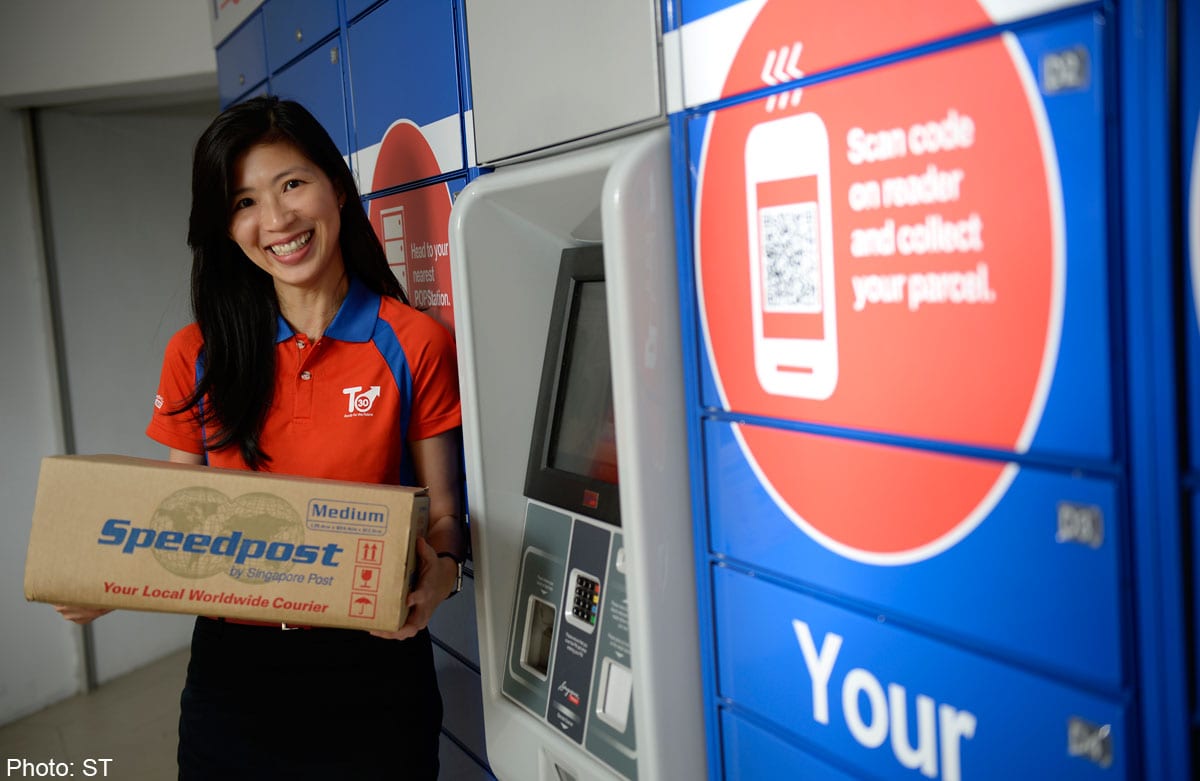
    Final week, SingPost opened its 100th POPStation – a parcel supply and assortment service which has minimize the supply time of on-line purchases by as a lot as a day, boosted comfort for patrons and distributors alike – and decreased its personal operational overheads and logistical challenges on the similar time.

    The SingPost POPStation is a supply and assortment community system which now offers a receiving level for patrons with a mean distance of not more than 2.5 km from any resident within the metropolis state.

    Primarily, POPStation is a locker supply service which does away with the necessity for patrons to should be obtainable at one place to obtain their deliveries, and for postal employees to traverse the town making private deliveries. It’s tailor made to the web retailing business, as a result of it standardises supply techniques and provides each distributors and SingPost the economies of scale of creating a lot of deliveries to a single level.

    Buyers can have their gadgets delivered to automated sensible lockers in any one of many 100 POPStations, all of that are accessible 24-seven. In addition to receiving gadgets, shoppers could make returns simply onsite as properly. Clients obtain their supply notifications and a PIN for his or her safe locker by way of smartphone.

    “POPStation is nicely fitted to city cities like Singapore because it lets the parcels do the ready, catering to busy way of life of Singaporeans on this digital age,” explains SingPost senior VP of Singapore Parcel, Lim Ann Nee, in a press release.

  • Jumei gross sales soar

    Jumei gross sales soar

    Jumei Worldwide, the Chinese language on-line retailer of magnificence merchandise, has revealed a 61.eight per cent improve in first quarter gross sales to US$250.6 million.

    Gross merchandise quantity lept 20.three per cent because of a 14.three per cent improve within the variety of lively clients to five.6 million, and an 18.four per cent improve in complete orders.

    Gross revenue was US$78.7 million, a rise of 15.2 per cent from the primary quarter of 2014. However expressed as a proportion of gross sales it decreased from 44.1 per cent to 31.four per cent, largely because of the firm’s shift in technique from pure play magnificence market to a broader merchandise supply.

    Founder and CEO Leo Chen stated the expansion price was stronger than anticipated for the primary quarter.

    “We efficiently accomplished our transition for magnificence merchandise from market gross sales to merchandise gross sales on the finish of 2014, and our new enterprise initiative – Jumei International, took off early this yr and skilled excessive progress when it comes to gross sales quantity. Jumei is at present one of many main gamers in cross-border eCommerce in China.

    “We expanded into cross-border child and maternity class in mid-April, 2015 and shortly achieved market main place on this new class in China. Our goal for 2015 is concentrated on prime line progress and enlargement into different cross-border classes as we glance to broaden our buyer base and considerably develop our order numbers. We’re assured that we will obtain our quarterly and yearly gross sales goal for 2015,” he concluded.

    For the second quarter of 2015, the corporate tasks complete internet revenues to be between US$270.1 million and US$277.eight million, representing a year-over-year progress fee of between 75 per cent and 80 per cent.

  • Money increase for iprice comparability idea

    Money increase for iprice comparability idea

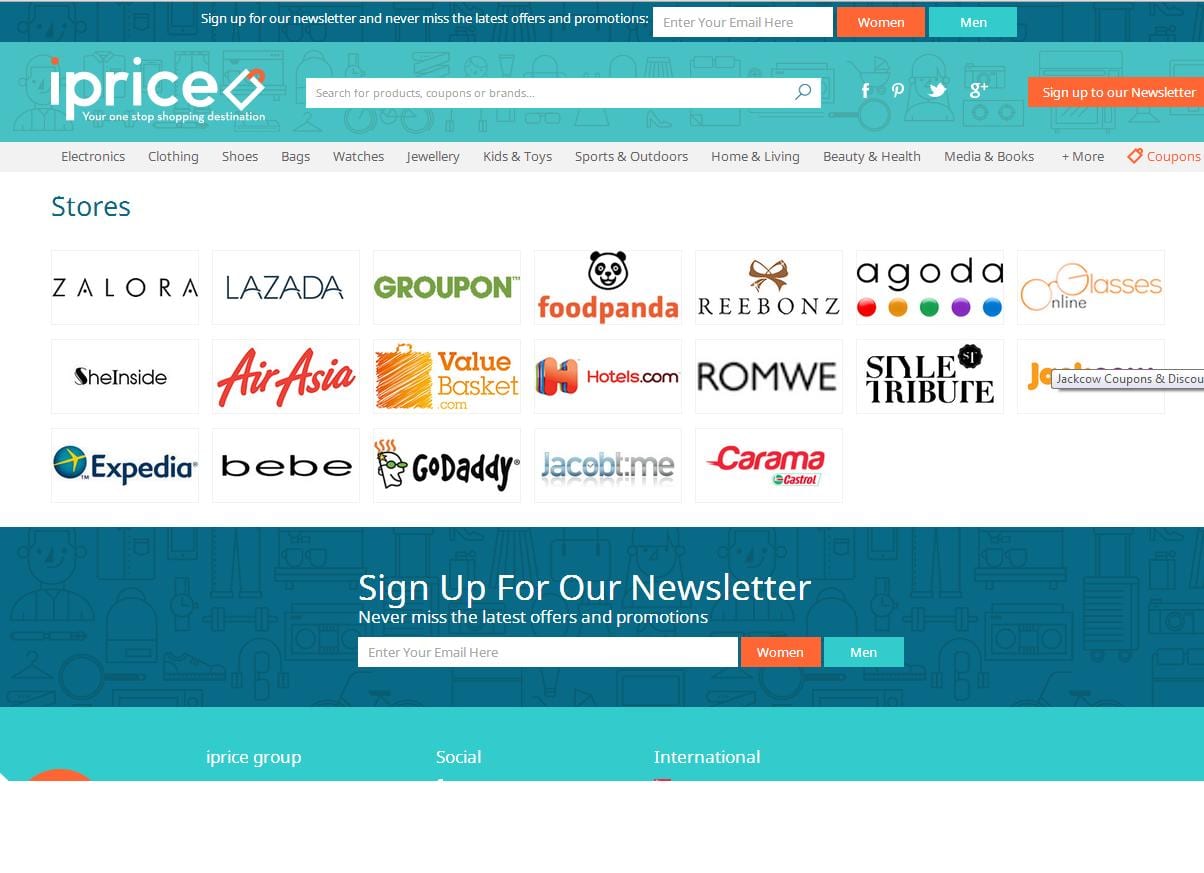
    Iprice Group, a Malaysia-based on-line worth comparability service for consumers, has acquired a $550,000 money funding from an angel investor enterprise capital group.

    Based solely final October, the enterprise is already lively in its residence base Malaysia, together with Hong Kong, Singapore, the Philippines, Thailand, Indonesia and Vietnam. The corporate says its on-line visitors is greater than doubling each month.

    The US$550,000 in funding was invested by from Asia Enterprise Group, a Malaysia-based angel investor, which needs to assist Iprice create “the most important on-line buying group in Southeast Asia”.

    Iprice co-founder Heinrich Wendel says the thought of the web site is to create “a pleasant on-line purchasing expertise” by giving buyers an intuitive and visible option to uncover merchandise.

    “Whereas different websites within the area are all about evaluating costs, we give attention to narrowing down the huge quantity of merchandise to your private choice. Regardless of you’re on the lookout for a blue and black gown, three-inch excessive heels, a strong backpack or a basic Chesterfield couch, we’ll present you the place you will get one of the best supply.”

    Because the younger Web inhabitants within the area is rising by greater than 50 per cent inside the subsequent three years – based on a report by UBS – it can drive eCommerce quantity no less than five-fold by 2020. Tapping into this potential, the web site already provides greater than three million merchandise from over 10,000 native and worldwide manufacturers, sourced by way of trusted on-line shops.

    Consumers flick through the hundreds of thousands of merchandise by classes, manufacturers, fashions and hues, amongst different attributes, to get inspiration. All merchandise are mechanically linked to particular promotions and coupons which might be provided by the respective eCommerce shops. Sooner or later, the corporate says it’ll double down on its machine studying algorithms to additional enhance the “sensible search” and supply particular person suggestions in response to the consumer’s searching behaviour.

    Working from its Kuala Lumpur headquarters, the corporate employs expertise from throughout Southeast Asia, enabling them to deal with the wants of every native market individually.

    For eCommerce shops, iprice supplies invaluable experience in on-line advertising, serving to them to increase their attain to new markets and develop their buyer base. Tito Costa, Zalora Group MD, says he recognises iprice as a robust affiliate associate.

    “Iprice helps internet buyers to seek out what they’ve been on the lookout for and to find new merchandise. They ship excessive changing visitors to Zalora throughout the Southeast Asia area and drive our income considerably,” he stated.

  • Alibaba Taiwan sent home

    Alibaba Taiwan sent home

    Alibaba Taiwan has been told by government officials to pack up and head home.

    The Taiwanese government’s Investment Commission has formally instructed the Chinese Mainland-based eCommerce giant to withdraw from the country within six months ruling the company had violated investment rules required for a Chinese company.

    The banishment was reported by Reuters and other major news services, based on information provided by an official from the economics ministry.

    Alibaba has been fined T$120,000 (a meagre US$3,824) and must “withdraw or transfer its holdings from its operation in Taiwan”, Emile M.P. Chang, acting executive secretary for the Investment Commission, was quoted by Reuters.

    That Alibaba will ultimately be forced to discontinue its business in Taiwan is unlikely.

    It is common for Mainland Chinese companies to fall foul of investment laws with Taiwan and the Mainland still technically political enemies despite fast-growing economic and trade ties which have been building steadily over the last five years. Mainland China does not recognise Taiwan as an independent state.

    The commission’s ruling follows an investigation launched last September. The commission says it requested documentation from Alibaba to prove it complied with local business regulations. When those documents were not forthcoming, the cessation order was made.

    Alibaba considers the move a misunderstanding.

    “We will actively communicate with the authority and provide the required supporting materials to comply with the latest requirements,” the company said in a statement.

    “Since Alibaba Group, the parent company of Alibaba.com, went public in the United States last September, the authority took a different view about the internal structure of Alibaba Group and deemed it as a mainland Chinese company.”

    Alibaba Taiwan was founded in 2008 through a Singapore-registered subsidiary. Alibaba says that business was founded in compliance with Taiwanese regulations applicable at the time.

  • China’s on-line cross-border buying growth

    China’s on-line cross-border buying growth

    Guangzhou has taken the lead in a pilot cross-border purchasing eCommerce scheme, offering each challenges and large alternatives for Hong Kong companies.

    Cross-border on-line purchasing is more and more in style on the Chinese language mainland. Generally known as haitao, the apply permits shoppers to order merchandise by way of abroad on-line buying platforms, and have their purchases dispatched by worldwide couriers or collected and shipped to China by forwarding brokers. Its reputation has been spurred by the comparatively restricted vary of abroad items out there throughout the mainland and the premium costs of such gadgets when obtainable.

    A number of mainland cities have been authorised to hitch the pilot program for cross-border e-commerce. However solely six cities – Shanghai, Chongqing, Hangzhou, Ningbo, Zhengzhou and Guangzhou – have been assigned the proper to undertake complete import-export actions. This has given these cities the prospect to determine typical retailers designed to facilitate abroad on-line purchasing. Guangzhou has been on the forefront of maximising this chance.

    Three cross-border eCommerce companies – MeijoyBest (Guangzhou MeijoyBest E-commerce Co Ltd), zero20 (Guangzhou Lingerling Cross-Border E-Commerce Co) and Ieasy (Guangzhou Yangxitai E-Commerce Co Ltd) – lately commenced operation within the metropolis. A fourth, Nansha Cross-Border Direct Purchasing Expertise Centre, will open shortly. On its first day of buying and selling, almost 100,000 individuals visited MeijoyBest’s 230 sqm retailer, a transparent indication of the large demand in Guangdong for imported items.

    1. Decrease costs

    General, costs are typically some 30 to 60 per cent cheaper than comparable items obtainable elsewhere. In line with the procedures for basic commerce, imported items are required to pay three taxes – a customs tariff, VAT and a consumption tax.

    The tax charges differ in line with the class of the products. The tax price for cosmetics, for instance, might be as excessive as 50 per cent. Moreover, each logistics step within the distribution of a product, from the importing agent to wholesalers and retailers, provides to the general value.

    As abroad on-line bodily shops place orders on-line and gather items offline, the one tax payable is on baggage and private postal articles, thus significantly decreasing the general tax burden. Moreover, these shops are entitled to supply tax exemptions for single purchases valued beneath Rmb50. This, along with the shortage of a day by day ceiling (although every buy might not exceed Rmb1000 in worth and the unit worth of indivisible commodities might not exceed Rmb1000), drastically boosts shopper’s inclination to spend.

    The tax on baggage and private postal articles is a type of import tax levied by the Chinese language customs on baggage and articles carried by incoming travellers, in addition to on private postal articles. This tax has 4 tax bands – 10 per cent (meals, toys, and books and periodicals), 20 per cent (textiles, residence electrical home equipment and audio-visual gear), 30 per cent (high-end watches and golf golf equipment), and 50 per cent (tobacco, wine and spirits, and cosmetics).

    2. Peace of thoughts and authenticity

    There have been some situations of eCommerce websites promoting counterfeit items in recent times. There have additionally been many instances the place individuals didn’t obtain items that they had paid for. These incidents have prompted shoppers to return to bodily retail channels, that are perceived as decrease danger. Sometimes, shoppers have larger religion in items they will contact and look at and that they will pay for on the spot.

    Gross sales at abroad on-line bodily shops are monitored in real-time by the related authorities departments. The sources and high quality of products and the monitoring procedures are extra clear than is the case with online-only buying, thus they’re extra dependable. Guangdong shoppers appear to have welcomed these abroad on-line buying bodily shops as a most popular and extra reliable buy route.

    three. On-site assortment

    In accordance with Tao Zili, chairman of Meijoybest E-Commerce Co, on-site pick-up is simply attainable on the firm’s bodily retailer within the Guangzhou Bonded Space. Its Guangzhou Pearl River New Metropolis retailer nonetheless has to dispatch on-line orders to shoppers. Upon customs approval, the acquisition is dispatched from the bonded space and delivered by the suitable logistics corporations. This course of takes as much as 48 hours, quicker than the prevailing supply association for items bought at abroad on-line buying web sites. The corporate is constructing a 50,000sqm abroad on-line purchasing bodily retailer within the Guangzhou Bonded Space, which is because of open subsequent month. This new retailer will permit on-site pick-up and supply buyers with an expertise similar to that of typical purchasing. The power is predicted to offer a further increase to the uptake of abroad on-line purchasing within the metropolis.

    The bodily retailer at Pearl River New Metropolis is, actually, primarily a promotional outlet for its abroad on-line shopping center within the bonded zone. To draw clients, the Pearl River New Metropolis retailer has a “obligation paid part”. All items bought right here have the three taxes pre-paid and can be found for instant on-site assortment. The disadvantage is that costs are similar to typical market costs elsewhere within the metropolis.

    four Eradicating language and transaction obstacles

    Most abroad eCommerce websites, sometimes that includes an English interface, will not be obtainable in Mandarin. If shoppers encounter issues with their purchases, they need to make long-distance calls and talk with the seller who typically doesn’t converse Chinese language. As well as, most of the bank cards issued by mainland banks are usually not accepted by abroad purchasing web sites. Establishing abroad on-line buying bodily shops on the mainland addresses each of those issues.

    When it comes to Hong Kong companies, the emergence of those shops has two clear implications:

    1. Fewer cross-border purchasing journeys by Guangdong residents

    Whereas costs for many items at these shops are greater than these for comparable items in Hong Kong (after taking the tax on baggage and private postal articles under consideration), if journey time and prices are factored in, it’s nonetheless cheaper than buying immediately in Hong Kong. This can inevitably have an effect on Hong Kong’s retail enterprise and scale back commerce between the 2 cities. It might, nevertheless, assist to alleviate Hong Kong’s gray market items drawback.

    2. Larger entry to home gross sales channels

    Provided that there are not any restrictions on the sorts of products bought in these shops, there’s appreciable scope for Hong Kong-sourced gadgets.  Tao, for example, welcomes the chance for elevated cooperation with Hong Kong suppliers. As MeijoyBest will maintain points referring to taxation, promotion, advertising and logistics, this provides Hong Kong companies that haven’t any advertising community in Guangdong a streamlined route into the huge mainland market.

    When it comes to the operation of those shops, Tao believes there are three key parts required for fulfillment – a vendor system (administration of provide and suppliers); a gross sales system (eCommerce platform and cost system); and a logistics system (administration of dispatch and transportation of products). These all require customs approval and should adjust to the related customs monitoring techniques.

    Whereas Tao was reluctant to reveal the precise quantity of funding required to ship this, he did point out that an eight-figure sum went into creating these three techniques over the previous two years.

  • Metro China builds eCommerce reach

    Metro China builds eCommerce reach

    Metro China has upgraded its eCommerce platform metromall.cn, which it says integrates online, offline and mobile channels for “a seamless customer experience”.

    “eCommerce is one of our strategic channels to drive for growth in China market,” said Jeroen de Groot, president of Metro China at a launch function.

    “We are determined to enhance customer experience and further expand business through leveraging the power of e-commerce.

    “Our Metromall not only integrates online-to-offline, but also incorporates an innovative mobile function. We are confident this platform will enable us to provide more exciting solutions and seamless purchasing experience to our core target professional customers, helping them to be more successful in the market.”

    With an optimised user interface and location-based services, Metromall synchronises with the wholesaler’s offline stores, covering over 20,000 products. Metro delivers all online orders directly from local wholesale stores, shortening delivery time and ensuring product quality. The platform offers customers convenient and efficient choices of goods receiving, such as home delivery or in-store pick-up.

    When it first entered China back in 1996, Metro adopted a membership system, and has since collected data from over 4 million shoppers in order to offer them customised solutions and services. Today, by tapping into this rich database, the upgraded e-commerce platform will further strengthen Metro’s customer relationship management.

    The Metro eCommerce platform currently covers 39 stores in 21 cities in China, and will unroll across all Metro stores in China by the end of 2015.

    Taking advantage of the rapid development of mobile communications and popularity of smartphones, Metromall also features an accompanying mobile app. Customers can use the app to scan barcodes and identify product features, build shopping carts, place orders, and check-out. The app’s database includes product barcodes of all articles in offline stores except for fresh and ultra-fresh products. Customers can also follow Metro’s WeChat to obtain promotional information of Metromall and place orders on their cell phones.

    Leveraging its global procurement network, Metro Group is set to enter the free-trade zone this year, partnering with China’s renowned cross-border e-commerce platforms, to provide consumers with an even broader range of high-quality imported goods.

    Metro China is committed to providing safe and high-quality products, and is the only wholesaler inChina with all stores to operate in accordance with HACCP (Hazard Analysis and Critical Control Points) standards to ensure that the processes of receiving, processing, storing and selling goods are hazard-free.

    Metro has also developed a complex traceability system, which records all processes from farm to market. Simply by scanning product barcodes, customers can view the entire product lifecycle, including where it was grown, how it was certified, and the logistics involved.

    The newly-upgraded eCommerce platform has enabled Metro to create a closed, online-to-offline loop for safe and traceable food, making Metro truly a multi-channel specialist.

    Metro Cash & Carry operates in 26 countries with over 750 self-service wholesale stores. Metro China has 80 outlets in 56 cities.

  • VIP shop doubles revenue

    VIP shop doubles revenue

    Chinese online discount retailer Vip shop Holdings says it doubled its net revenue in the first quarter.

    The cmpany says a 75 per cent year-on-year increase in customers helped it achieve net revenue of  RMB8.6 billion (US$1.4 billion).

    Some 12.9 million people shopped on VIPshop over the last year, amassing 38.5 million individual orders.

    Gross profit increased by 99.6 per cent to RMB2.1 billion (US$345.4 million).

    Eric Shen, chairman and CEO of the NYSE-listed company, described the first quarter of 2015 as “robust”, thanks to improved brand recognition and new mobile initiatives.

    “Specifically, the mobile contribution of our platform as a percentage of gross merchandise volume climbed to approximately 72 per cent in the first quarter, which is more than double the average figure across the broader Chinese online shopping industry. Going forward, we will continue to scale our business with a greater focus on further enhancing the shopping experience for customers across multiple devices, attracting new customers and expanding our product offering.”

    Donghao Yang, CFO of Vip shop, added: “We are very proud of our first quarter 2015 financial results, which saw our revenue grow by 100 per cent year over year and the expansion of our operating and net margins. Additionally, our warehouse capacity, both leased and built, reached approximately 1.1 million sqm as of March 31, 2015, up from approximately 350,000 sqm a year ago.

    “Looking ahead, we are confident that by emphasizsng operating discipline, strategically investing in fulfillment and technology, and continuing to offer great shopping experiences to our growing customer base, we will be able to capitalise on the growth opportunities ahead and continue to deliver sustainable value for our shareholders.”

    For the second quarter of 2015, the company says it expects its total net revenue to be between RMB8.7 billion and RMB8.9 billion, representing a year-over-year growth rate of between 71 per cent and 75 per cent.

  • Online China luxury goods mall expands

    Online China luxury goods mall expands

    Xiu.com, an online China luxury goods mall, has raised another US$30 million in funding, according to 36kr.

    The investment was led by Jardine’s, followed by KPCB China and others.

    Founded in 2008, Xiu specialises in high-end clothing, footwear, bags, accessories, and cosmetics from international brands. Headquartered in Shenzhen, it also has offices in fashion capitals like New York, San Francisco, London, Milan, and Hong Kong. The store has over 600 brands, and at least 200 of them are exclusive to Xiu in China.

    Xiu’s investment comes just days after French luxury goods retailer Kering, parent of Gucci and Yves Saint Laurent, amongst others, filed a lawsuit against China’s biggest eCmmerce company, Alibaba, alleging it is profiting from the sales of counterfeit goods in wholesale quantities on its Taobao site.

    Xiu.com says it will use the new funds to create a better shopping experience, improve its supply chain, and strengthen international ties.

    Founder Jiwen Hong says Xiu’s strength lies in the relationships it has with brands. By going directly to the brands and cutting out middlemen, it can offer better prices than competitors. 36kr says most items on Xiu sell for less than the retail cost in Hong Kong and the US.

    The startup has 10 million registered users with a repeat purchase rate of 85 per cent. The average customer spends about RMB 1,500 (US$242) per purchase.

    In 2012, US auction site Ebay launched a joint venture with Xiu to list products on a subdomain of Xiu’s site. That collaboration has since closed shop.

  • Tango users can now shop with AliExpress

    Tango users can now shop with AliExpress

    Users of the messaging app Tango can now shop online without leaving the app – after partnerships were struck with Alibaba’s AliExpress and Walmart.com.

    US-based Tango, which boats more than 300 million users, have launched “social shopping” on their message and chat platform allowing, they say, users to choose from millions of products sold by the two retailers online.

    “The company expects to expand shopping options over time to include additional retailers and geographies,” Tango said in a press statement.

    “Tango will offer curated lists of products based on user preferences, while also allowing them to create their own collections to share with family and friends.”

    Leo Shen, AliExpress GM, said Tango offers a way for consumers to access products on AliExpress “that are relevant to their preferences and lifestyles”.

    “We look forward to teaming up with Tango to provide consumers a great shopping experience wherever they go.”

    Tango CEO and co-founder Uri Raz says the move takes Tango beyond the realm of being just an messaging service.

    “Starting today, we’re leading the way in ‘conversational commerce,’ making it simple for consumers to connect with leading retailers using the same platform they rely on every day to chat with friends and family,” he said.

    “Tango is excited to collaborate with Walmart and AliExpress to revolutionise blending commerce and communication, creating a new and exciting experience for consumers and sellers alike.”

    Founded in 2009, TangoMe Inc is the developer of Tango, a free mobile messaging app whose users enjoy free video and voice calls, texting, social discovery, browsing and sharing content with one another.

    The company works with third-party game developers, brands, content publishers, and advertisers to provide distribution, integration opportunities, and advertising. Tango is cross-platform, operating over 3G, 4G and Wi-Fi, and is available in 15 languages in more than 224 countries.

  • Karl Lagerfeld goes on-line in 96 nations

    Karl Lagerfeld goes on-line in 96 nations

    Paris based mostly luxurious style home Karl Lagerfeld has partnerd with Yoox Group to launch Karl.com in 96 nations, together with in Asia.

    The location will go stay late in 2015 in a three way partnership partnership described as “long run”.

    Karl Lagerfeld says the enterprise will take “a contemporary strategy to distribution, an revolutionary digital technique and a worldwide 360 diploma imaginative and prescient that displays the designer’s personal type and soul”.

    “Launching eCommerce on Karl.com is the subsequent step right into a full omnichannel distribution mannequin,” the corporate stated in a press release.

    “I’m excited to annouce the launch of our eCommerce website as we speak partnering with the ‘greatest in school’ ecom supplier, Yoox Group. Karl.com will permit us to serve our clients and followers scaling geographical attain and delivering an distinctive expertise,” stated Pier Paolo Righi, CEO of Karl Lagerfeld.

    Karl.com will supply the complete ladies’s way of life mixture of the model – womens able to put on, luggage, footwear and equipment resembling small leather-based items, watches, eyewear, perfume and novely gadgets and restricted editions.

    Karl Lagerfeld luggage shall be on the core of the model’s distribution.

    One of many world’s celebrated trend designers, Karl Lagerfeld is globally famend for his aspirational and cutting-edge strategy to fashion. The designer’s namesake style home displays his personal signature aesthetic by way of artistic, cool and accessible-luxe attire and equipment.

    This yr, the corporate will increase its portfolio into childrenswear.

  • Cosme.com breaks out of Japan

    Cosme.com breaks out of Japan

    Cosme.com has launched an English language model of its web site, increasing the most important cosmetics and wonder portal in Japan to a broad overseas market.

    @cosme, a subsidiary of istyle Inc, has developed right into a full-scale cosmetics portal reaching overwhelmingly giant numbers of girls – one in each two ladies in Japan of their 20s and 30s store on cosme.com, making it the most important portal in Japan for cosmetics and wonder merchandise.

    Every month some 10 million shoppers go to the web site utilizing all varieties of units and racking up 270 million web page views. It boasts a database of 250,000 gadgets from 28,000 home and overseas manufacturers and comes with a perform for looking customers’ postings on merchandise analysis, and new product info.

    The annual rankings of cosmetics,@cosme Greatest Cosmetics Award, compiled primarily from the customers’ postings, attracts the shut consideration of the cosmetics and wonder industries.

    The brand new English-language Cosme.com, stocked with about as many gadgets of merchandise as with the Japanese website, guarantees an virtually equivalent buying expertise to the Japanese website.

    Overseas consumers can select from a variety of third celebration supply providers.

  • Indonesian Online Marketplace Elevenia Sees Strong Growth in Transactions

    Indonesian Online Marketplace Elevenia Sees Strong Growth in Transactions

    Indonesia as an e-commerce paradise in just two years’ time may seem an idle dream to those who still struggle with connectivity as a massive burden in their lives. It is, however, an emerging reality for some of the people behind Indonesia’s growing online market ecosystem.

    Meet Jungsung Lee, chief executive of Indonesian online marketplace Elevenia. Hailing from South Korea, he prefers to be called James and is one of those who have thrown off any doubts about Indonesia’s potential.

    His company is already starting to tap the country’s huge e-commerce potential, he said in an interview.

    While he acknowledged that Internet infrastructure is still far from ideal, there are methods to tackle the problem.

    Elevenia, registered as a business entity as XL Planet, opened for business in March last year as a joint venture between mobile provider XL Axiata and South Korea’s online marketplace, SK Planet.

    It began modestly, with around 500,000 products and 6,000 sellers.

    In just a year, the online marketplace had almost a million registered members, two million products and more than 20,000 sellers.

    Elevenia.co.id had 20 million visitors in February — 5 million of which were unique visits.

    The online marketplace posted Rp 250 billion ($19.45 million) in total transaction value last year and in the first two months of this year had booked Rp 60 billion.

    “It has exceeded [my plan]. We achieved more than our business target so our shareholders are so happy with us,” he said, noting that the investors now plan an additional capital injection within the next two years.

    Initial investments from XL and SK Planet last year amounted to $18.3 million and another $24.2 million was injected earlier this year.

    Calm, focused and friendly, Lee is clearly investor-friendly. At first glance he looks like any other businessman in his 40s but his nature manages to radiate a sense of security and optimism amid the hustle and bustle of an online business community populated by employees in their mid-20s.

    Jokingly, one of his employees said his calmness is the product of months of training. Korean businessmen are not accustomed to talking with the press and dealing with informal work atmospheres, yet Lee has been able to keep his cool.

    The Korean set out to explain the principles he believes are needed for success in the online world.

    “The first thing is trust. The second is good products, then good prices and convenience. For the Indonesian market, trust is very important; it is the customers’ basic demand,” he said.

    Many Indonesians remain hesitant to use online shops due to a lack of information. Potential customers think that fraud and crime are easily concealed in an apparently anonymous digital world.

    That is not the case with Elevenia, Lee said.

    “We use a system called escrow,” a formal account which holds funds prior to completion of a transaction, allowing Elevenia to guarantee a safe transaction for both buyer and seller.

    Elevenia also has some unique traits. For instance, customers can directly ask Elevenia to find a certain product, local or otherwise.

    “If there is something the customer can’t find, they can inform us, then we will get the product. [Especially] products from Korea. We have the experience, we have good channels. From Korea, we can get anything,” said Lee.

    To further the trust factor, the company has set limits on trading. It will not sell counterfeit goods, drugs or other illegal items.

    The growing business of Elevenia is a glimpse of Indonesia’s blossoming e-commerce industry.

    A survey conducted by the Indonesian Internet Providers Association (APJII) and University of Indonesia shows that online shopping is catching on fast with younger Indonesians.

    Samuel A Pangerapan, chairman of APJII, said the survey showed that there were 88.1 million Internet users in Indonesia in 2014. A huge portion — 49 percent — are young, around 18 to 25 years old, with 51 percent of them women.

    They use the Internet for various reasons, from networking through social networking applications to searching for information and exchanging messages, downloading and sharing videos.

    Internet users’ behavior has shifted, Samuel stated, from only using the Internet to interact — like exchanging stories from blogs, chatting through messaging services or talking directly through video chat — to more complex behavior like trading.

    In its latest report, APJII said many Indonesian Internet users have started to use the Internet for shopping. Around 11 percent of users purchased goods online in 2014, double the number a year earlier. The vast majority — 85 percent — browse the Internet with their phones, although many also use laptops, tablets and PCs.

    To meet this multiple gadget lifestyle, Elevenia has made sure it can be accessed from website, mobile web and mobile application.

    According to Lee, being in every digital space was critical, since competition is beginning to intensify as companies recognize Indonesia’s e-commerce potential.

    The number of popular e-commerce sites in Indonesia is growing each year. Local sites with a similar business model to Elevenia include Tokopedia, BukaLapak, Quoo10, Lazada and Rakuten, and new ones keep coming.

    “We welcome the competition,” said Lee. “At the moment, this market is really in its early stage. It’s not mature, that’s why at this moment I don’t think the other players are our competitors. At this moment, they are our cooperators.”

    Elevenia is keen to work with other e-commerce players in Indonesia to build an ideal ecosystem.
  • Changi Millionaire program extended in Singapore

    Changi Millionaire program extended in Singapore

    Singapore’s Changi Airport has expanded its successful Changi Millionaire promtoion for 2015, as part of its 50th anniverary celebrations.

    From now until October 31, shoppers and diners can participate in the ‘Be a Changi Millionaire’ campaign for an instant chance to win any of the six attractive premiums, on top of the chance to be made a millionaire. This is the sixth year Changi Airport is running its anchor retail promotion, which has the largest cash prize in Singapore.

    In a collaboration with local designers Wang Shijia and Jo Soh, Changi Airport Group is this year offering a set of six exclusive ‘premiums’ as instant prizes in the latest instalment of Changi Airport’s ‘Be a Changi Millionaire’ campaign.

    Meanwhile, to celebrate Singapore’s 50th birthday, Changi Airport has dressed its four Millionaire promotional sites as local icons of yesteryear – the dragon playground, the mobile tricycle ice-cream stall, an old movie theatre as well as the laid-back ‘Mama Shop’.

    For the six months of the campaign, one finalist will be picked each month for the grand draw to be held in early 2016. In addition, this year, the Millionaire excitement will be brought online. Travellers who shop on iShopChangi – Changi Airport’s very own e-commerce portal – will be entitled up to 10 times more chances of being picked as a finalist. At the end of the six-month period – for the first time in the game’s history – a seventh finalist will be picked among the pool of online shoppers to vie for the grand prize of a million dollars. All seven finalists will each win a cash prize of S$5,0001 and a three-night hotel stay.

    So far, five shoppers have been crowned millionaires overnight – including Singaporeans Ivan Rantung (2010) and Peh Hock Peng (2012), Australian Jessica Down (2011), Indonesian Irvung Tio (2013), and Japanese Seiichiro Oiyama (2014).

    Lim Peck Hoon, executive VP of commercial at Changi Airport Group, said after five successful years of Changi Millionaire, the introduction of a seventh finalist from among online shoppers will make shopping on iShopChangi more interesting and potentially very rewarding.

    “This year is a jubilee year for Singapore, and we are infusing local elements into the promotion, so that shoppers from all over the world can join in the celebrations with us. The exclusive premiums combine elements of both Singapore and Changi Airport, making them unique memorabilia for our visiting guests.”

    Airport visitors and travellers only need to make a minimum purchase of S$30 at any of the retail and F&B outlets at Changi Airport2 or iShopChangi.com to qualify for both the monthly finalist draw and games to win instant prizes. The number of winning chances increases with the amount spent. Changi Rewards members and purchases made on iShopChangi.com will receive additional chances. More information is available online.

  • ‘Cardless credit card’ launched in Korea

    ‘Cardless credit card’ launched in Korea

    Financial services business BC Card is set to launch Korea’s first mobile credit card service that does not involve the use of a real plastic card.

    BC Card has conducted a series of pre-launch tests for its new ‘cardless credit card’ over four days, and concluded that there weren’t any problems in terms of subscription, registration, issue, payment, payment and membership cancelation.

    BC Card provides third party payment processing services to Korean banks and a rnage of debit and credit card products.

    Following the Financial Services Commission’s recent decision to lift a regulation that obliged companies to release actual plastic cards when they launched mobile services, BC Card will be first company to launch a mobile-only credit card in Korea.

    The company is planning to launch various types of mobile credit cards, using USIM, eSE (embedded SE), HCE (Host Card Emulation) and NFC (Near field communication) technology.

    BC Card’s mobile-only credit card will be accepted at large retailers, department stores, convenience stores and gas stations.

    A BC Card official said that the company would be able to save costs associated with issuing plastic cards, and invest more money to provide benefits for its customers.

  • Sun Art looks to fresh Fields

    Sun Art looks to fresh Fields

    Chinese hypermarket operator Sun Art Retail Group has bought a controlling interest in Fields Hong Kong, an online retailer of fresh foods and produce.

    No price was disclosed for the 54 per cent stake.

    Fields Hong Kong was established to provide an alternative source of produce in a market where food safety scandals have bred distrust of corporate retailers and fast food chains. Middle class consumers who have the disposable income to afford premium products from vendors they trust are a growing market for online suppliers.

    Sun Art, listed in Hong Kong, is part owned by France’s Auchan Group and Taiwanese billionaire Samuel Yin.

    In a statement the company said the purchase would “further strengthen” its Chinese eCommerce business.

    Fields’ competitors include Amazon.com-backed yummy77.com, kateandkimi.com and epermarket.com.