Retail News CRM

Category: E-Tailing

Retail News Asia is committed to providing both local and global retailers with the latest E-Commerce & Etail news throughout the Asian market. This on a daily base.

  • Six percent of Apple Pay purchases believed to be fraudulent

    Six percent of Apple Pay purchases believed to be fraudulent

    When Apple introduced its pay-by-smartphone feature last year , the company touted the simplicity of the setup. All shoppers needed to do was wave their iPhones in front of a special scanner at the cash register – no need to fumble through pockets and purses for plastic cards or identification.

    But a sharp rise in reports of fraudulent Apple Pay transactions is now raising questions about the security of the first mobile payment system to find a measure of popular success. One payments analyst, Cherian Abraham, estimated that as many as 6 per cent of Apple Pay purchases are completed with stolen credit cards, or 60 times the rate of the old-fashioned plastic swipe.

    The problem is Apple Pay may be too simple to set up, security analysts said. Fraudsters have been loading stolen cards onto iPhones to buy things in shops. As it turns out, it may have been better if Apple Pay required users to do more to prove their identities when they sign up for the service, these experts said.

  • HK shopping mall partners with Variably to launch automated price negotiation system

    Hong Kong shopping mall The Arcade, Cyeberport has partners with a tech startup Variably to launch a personalised automated price negotiation system accessible via WeChat and QR Code Scan, allowing retailers and customers to negotiate the best possible price that is satisfactory for both.

    By scanning at the QR code of your favourite items with WeChat app, shopper can direct contact the retailer and negotiate the best possible price privately and automatically.

    In retail commerce, prices are fixed and cannot be negotiated. That has often left customers passively waiting for discounts, or skipping purchases altogether. For a seller, this is a tricky situation: set a price too low and they’ll lose profits; set the price too high, and risk losing customers. Finding the right price has proved to be a major challenge.

    The price negotiation platform empowers users to bargain the best possible price privately and automatically, breaking the traditional mold of retail operations and giving buyers and shoppers an innovative and efficient way to negotiate.

    A tenant at Cyberport, Variably is founded by a team of experts in the field of data, statistics, and computing. They are the only non-Chinese team included in Alibaba’s Baichuan developer services, with seed funding of more than USD900,000.

    In a pioneering move, the system will be available from now on to 15 April to give shoppers the chance to experience the future of interactive commerce.

  • UnionPay joins hands with 80 airport duty free shops to expand cardholder privileges

    UnionPay joins hands with 80 airport duty free shops to expand cardholder privileges

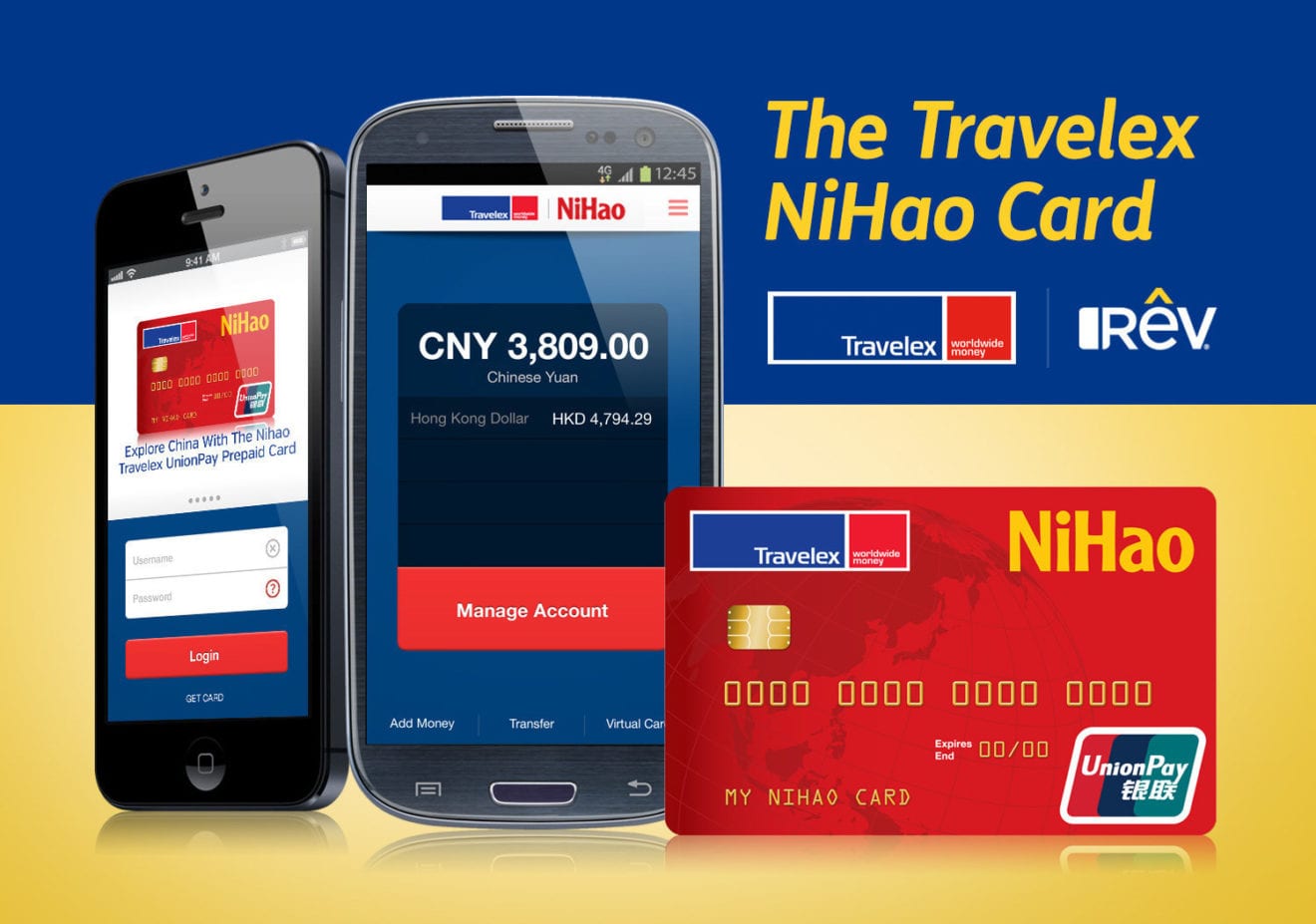
    UnionPay International, a unit of China UnionPay Co Ltd, said on Friday that it launched a new privilege program featuring special discounts at 80 duty free shops in 70 airports by partnering with 16 world-renowned duty free groups. Holders of UnionPay cards (card number starting with 62) are able to enjoy exclusive discounts of at least 5 percent while shopping at the airport.

    “As China becomes the world’s second largest tourism source country, we’re keeping up with the trends that individual and in-depth tours have become more popular to continuously enrich our global cardholder privilege system,” said Dong Li, Chief Branding Officer of UnionPay International.

    “Airport duty free shops are must-visit shopping sites for many during their travel, we wish to provide both domestic and overseas cardholders with better card-using experiences at airports around the world by rolling out the latest privilege program.”

    The program is an upgrade of the one of last year that features exclusive discounts at 60 airport duty free shops with many highlights.

    It covers a wide range including popular destinations such as Hong Kong, Taiwan, Japan, South Korea, Southeast Asia, Europe, North America, Australia, New Zealand and the Middle East. A total of 17 airports among the top 20 global ones in terms of passenger flow participate in the program.

    Cardholders can enjoy discounts of at least 5 percent. In the meantime, the program covers the Labour Day and the summer vacation during which Chinese tourists prefer to travel. Around 30 percent of the duty free shops, including those in Paris Charles de Gaulle Airport, Toronto Pearson International Airport and Ngurah Rai International Airport, will extend the offers to the end of 2015.

    A large number of new merchants are involved. International airports in emerging tourist destinations including Russia, Italy, Qatar, South Africa, Finland, Belgium and Fiji participate for the first time. UnionPay International also offers privileges in 5 domestic airport duty free shops in Guangzhou, Hangzhou and Kunming to overseas UnionPay cardholders.

    Currently, the overseas UnionPay acceptance network has expanded to 150 countries and regions. UnionPay cards are accepted by 26 million merchants and 1.8 million ATMs worldwide. UnionPay has become the preferred payment service provider of Chinese outbound tourists. Since last year, UnionPay International has launched privilege programs featuring discounts at airport duty free shops, core business districts and tourist destinations.

  • Paytm looks to double headcount in FY16

    Paytm looks to double headcount in FY16

    With most players in the sector looking to aggressively ramp up their teams, Indian mobile commerce platform Paytm plans to double its employee base in FY16 from around 3,000 currently. The company has added around 1,500 persons to its total headcount in FY15.

    “A large part of the hiring will be in operations and sales. We will also hire for technology roles,” Amit Sinha, vice president-business and people at Paytm told Business Standard. “We have given over 100 offers to students at top management and engineering colleges. We are still visiting campuses and that number will go up further.”

  • Flipkart may be readying itself for Nasdaq listing

    Flipkart may be readying itself for Nasdaq listing

    E-commerce major Flipkart is believed to be working on an international listing, with Nasdaq in the US emerging as the preferred destination. Experts say before an initial public offering (IPO), expected in 12 to 18 months, the Bengaluru-based company must strengthen its financials and organisational structure.

    “The choice of stock exchange will be a challenge, as listing in India is fairly impossible because of issues such as profits and the traditional definition of promoter, etc,” said Harish H V, partner at Grant Thornton. He added Nasdaq seemed the best choice, considering it was known for listing technology companies and the fact that it was much easier to list there. Flipkart might consider Singapore, too, as listing norms in that country aren’t as strict as in many others, it is learnt.

    Consultants said if an IPO was launched in the next six to eight quarters, Indian stock exchanges wouldn’t be considered, considering the requirements related to a company’s profits. For public issues of companies without a three-year ‘profitability’ record, the Securities and Exchange Board of India had, in 2012, reduced the retail investor quota from 35 percent to 10 percent of the issue size. The move, aimed at protecting retail investors (those investing up to INR2 lakh) from IPOs of loss-making companies, limited the participation of small investors in successful IPOs such as those of Just Dial and Snowman Logistics.

  • Vipshop takes stake in Ensogo

    Vipshop takes stake in Ensogo

    Chinese eCommerce company Vipshop has taken a cornerstone stake in southeast Asian online retailer Ensogo.

    The deal will open the way for Vipshop’s inventory to be offered on Ensogo and for the two parties to share commercial and business expertise to drive Ensogo’s growth.

    Australian Stock Exchange listed Ensogo has also raised US$7.5 million from the issue of nearly 60 million shares to equity fund investor Ward Ferry, through a subsidiary WF Asian Reconnaissance Fund.

    Ward Ferry will now hold a 10.6 per cent stake and Vipshop 12.2 per cent. The total capital raised in the two transactions is approximately $12 million.

    Ensogo CEO Kris Marszalek said to have an investor of the caliber of Ward Ferry was exciting.

    “The additional AU$10m of funding means we are perfectly positioned to execute on the tremendous opportunity our strategic relationship with Vipshop brings, as well as on the enormous opportunity for eCommerce in Southeast Asia.

    “As a part of the (Vipshop) strategic investment, the companies will also enter a strategic operating partnership, whereby Ensogo will have access to Vipshop’s vast volume and selection of existing inventory, all to be made available for immediate shipping. The companies also intend to cooperate in the areas of logistics, merchandising, technology, marketing and user acquisition; the very expertise, which enabled Vipshop to scale its revenues from US$32 million in 2010 to US$3.77 billion in 2014,” said Marszalek.

    “We’re excited to be in the perfect position to build the Vipshop of Southeast Asia.”

  • Bitcoin breakthrough

    Bitcoin breakthrough

    Japanese eCommerce giant Rakuten will start to accept bitcoin, the ‘cryptocurrency’ on its global marketplaces.

    TechinAsia.com reports the payment format will begin its roll out in America and then spread to Rakuten Germany and Rakuten Austria.

    Bitnet, an enterprise-focused developer that creates bitcoin platforms, is Rakuten’s partner in the rollout. Bitnet is a young company, founded in January 2014, but it is not your average startup. The team behind the firm also created CyberSource, a payment gateway sold to Visa for US$2 billion.

    “Rakuten’s mission is to empower the world through the Internet,” commented Yaz Iida, president of Rakuten US in a statement. “Not only can Bitcoin support this vision by helping our merchants better compete globally, but it also has the potential to benefit society by enhancing the security, privacy, and convenience of financial transactions. This is one of the reasons why we invested in Bitnet last year and we look forward to working with them on our US marketplace.”

    Rakuten’s move indicates that it is moving closer and closer to accepting Bitcoin. Already, its American logistics subsidiary accepts the currency. With its core ecommerce operations now getting integrated, it could just be a matter of time before the Japan office follows suit, writes David Corbin of TechinAsia.com

    It would not be the first Japanese tech titan to accept Bitcoin. GMO Internet set that precedent last September. However, Rakuten’s integration of bitcoin domestically could be the sort of move that pushes the currency into the mainstream. Rakuten is used by almost every adult in Japan. It has over 97 million registered users while Japan itself has a population of 127 million. Those users drove US$16.5 billion worth of sales last year.

    For Japanese bitcoin enthusiasts, the march towards widespread acceptance in their country is a long slog. With Rakuten’s latest signal of support, the goal becomes less of a mirage and more of an steadily approaching reality.

  • Jumei online sales soar on new focus

    Jumei online sales soar on new focus

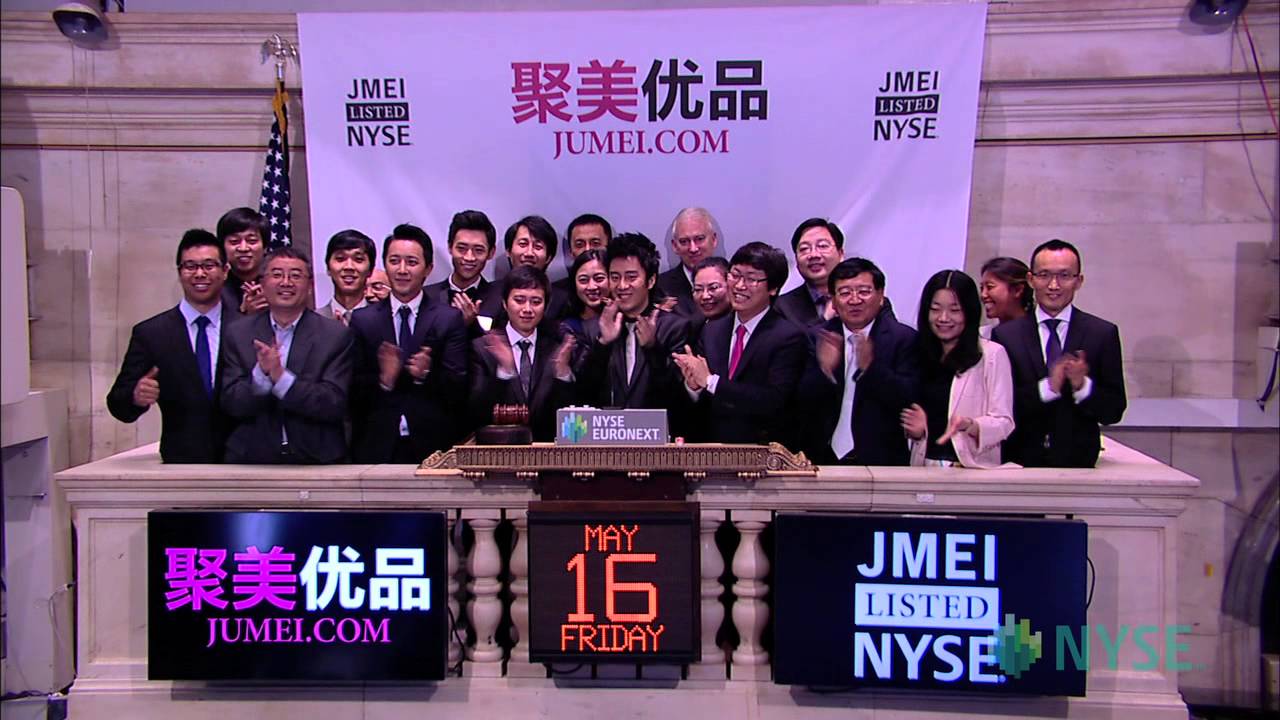
    Jumei International, the Chinese online retailer, says its 2014 net revenue increased by 31 per cent year-on-year to US$632.9 million.

    The increase reflects a change of focus away from its once core focus on own brand beauty products, to branded products and general merchandise categories and apparel.

    The total number of total orders increased 18.3 per cent year-on-year to 42.6 million, while the number of active customers increased by 26.7 per cent to 13.3 million.

    However in the last quarter of the year, Jumei online orders fell 5.9 per cent year-on-year to 9.6 million.

    For the full year, gross profit as a percentage of net revenues decreased to 39.5 per cent from 41.3 per cent in 2013. In the final quarter, it fell from 42.6 per cent to 30.4 per cent, primarily due to the company’s shift in strategy from beauty product marketplace sales to merchandise sales that started in September 2014.

    Gross profit increased by 25.3 per cent to US$250.2 million from US$199.7 million in 2013 and gross margin decreased slightly to 39.5 per cent from 41.3 per cent in the prior year.

    Jumei founder and CEO, Leo Chen, said the company had achieved “a solid recovery” of its business, recording its 11th consecutive quarter of profitability.

    “While fourth quarter 2014 was a full transitional quarter during which we no longer had beauty product marketplace business, we are very encouraged by the strong first quarter 2015 outlook.

    “The particularly strong sequential and year-on-year net revenue guidance indicates a strong recovery driven by Jumei Global which witnessed rapid growth from late December 2014. Not only were we able to fully replace former beauty product marketplace SKUs with Jumei Global, we were also able to achieve what we believe is best-in-class quality control and customer satisfaction.”

    By offering direct purchase from brand, competitive pricing and fast delivery speed, Jumei Global is now the largest cross border eCommerce platform in China, which is a crucial part of its growth strategy for 2015.

  • JD’s new delivery app to boost online-to-offline business

    JD’s new delivery app to boost online-to-offline business

    JD Inc, one of China’s biggest e-commerce companies, has introduced a new delivery app for urban Chinese. Paidaojia allows users to place online orders for delivery from nearby merchants, whether convenience stores or restaurants, according to China Daily. JD guarantees delivery within 2 hours on orders from stores within 3 kilometers. JD CEO Liu Qiangdong said in a statement that the app is a strategic move to capture more of the online-to-offline market. Along with the company’s logistics and delivery system, JD plans to build Paidaojia into a “local life and service platform.

    ” The company has already tested the app with a pilot program in Beijing and Shanghai. By the end of March, Paidaojia is expected to serve communities within Beijing from the city center to the fourth ring road. From there, the service area will expand to other large Chinese cities, including Shanghai, Shenzhen, and Guangzhou.

  • UnionPay in giant duty free pact

    UnionPay in giant duty free pact

    UnionPay International has launched a privilege program featuring special discounts at 80 duty free shops in 70 airports by partnering with 16 world-renowned duty free groups.

    Holders of UnionPay cards with a number starting with 62 can receive discounts of at least five per cent during their international travels.

    “As China becomes the world’s second largest tourism source country, we’re keeping up with the trends that individual and in-depth tours have become more popular to continuously enrich our global cardholder privilege system,” said Dong Li, chief branding officer of UnionPay International.

    “Airport duty free shops are must-visit shopping sites for many during their travel, we wish to provide both domestic and overseas cardholders with better card-using experiences at airports around the world by rolling out the latest privilege program.”

    The program is an upgrade of the one of last year that features exclusive discounts at 60 airport duty free shops with many highlights.

    It covers a wide range of destinations inside Asia and beyond, including Hong Kong, Taiwan, Japan, South Korea, southeast Asia, Europe, North America, Australia, New Zealand and the Middle East. A total of 17 airports among the top 20 global ones in terms of passenger flow participate in the program.

    The promotion is focussed on the Labor Day and summer holiday vacation season during which Chinese tourists prefer to travel. But about 30 per cent of the duty free shops, including those in Paris Charles de Gaulle Airport, Toronto Pearson International Airport and Ngurah Rai International Airport, will extend the offers until the end of 2015.

    A large number of new merchants are involved. International airports in emerging tourist destinations including Russia, Italy, Qatar, South Africa, Finland, Belgium and Fiji participate for the first time. UnionPay International also offers privileges in 5 domestic airport duty free shops in Guangzhou, Hangzhou and Kunming to overseas UnionPay cardholders.

    Currently, the overseas UnionPay acceptance network has expanded to 150 countries and regions. UnionPay cards are accepted by 26 million merchants and 1.8 million ATMs worldwide. UnionPay has become the preferred payment service provider of Chinese outbound tourists. Since last year, UnionPay International has launched privilege programs featuring discounts at airport duty free shops, core business districts and tourist destinations.


  • Burberry Korea partners with Shinsegae

    Burberry Korea partners with Shinsegae

    Burberry has entered into a new digital collaboration with Korea’s Shinsegae Group to launch the official Burberry ssg.com store in South Korea.

    The custom-built, dedicated space mirrors the brand’s own online flagship store, Burberry.com and is consistent with Burberry’s global luxury positioning. It offers Korean consumers a tailored assortment of Burberry products, allowing the consumer to have a seamless experience of the brand both in physical stores and online.

    The store will offer the Burberry Prorsum, Burberry London, Burberry Brit and Heritage collections, along with accessories, in the womenswear, menswear, childrenswear and accessories categories.

    The Burberry Korea store will be accessible in South Korea across all mobile, tablet and desktop devices. The official Burberry SSG.com store can be found here.

    South Korea’s Shinsegae Group operates both online and offline retail businesses and is considered the leading luxury department store in the nation. It  was founded in 1930.

  • Lazada Group aims to double freight hubs in Indonesia

    Lazada Group aims to double freight hubs in Indonesia

    E-commerce giant Lazada Group is set to spend more to develop its logistical system, planning to double its supply hubs in the country by year-end, the firm’s country representative has said.

    Lazada Indonesia CEO Magnus Ekbom said on Thursday, while marking the firm’s third anniversary, that the Lazada Group had secured a total of ¤700 million euros (US$749.4 million) since its establishment in 2012.

    Most of the investment was allocated to develop the group’s logistical system and human resources, he said.

    “In logistics, we’re expanding our capacity and we’re going to be better […]. We want to shorten our delivery period,” he told reporters.

    With more than 17,000 islands that have poor infrastructure facilities, Indonesia poses a challenge for any e-commerce players in expanding their outreach.

    “However, we see it as a massive opportunity […]. In January, we opened a 12,000-meter-square warehouse in Cakung, East Jakarta,” Lazada Indonesia chief commercial officer Rene Janssen said, claiming that it was the biggest that any e-commerce player in the country ever had.

    Ekbom said that his company currently had two warehouses in Jakarta and aimed to open new ones in the coming 12 months.

    “In addition to that, we will also double our Lazada fleet base stations or supply hubs,” he said, adding that his firm currently had around 20 hubs nationwide.

    Ryn Hermawan, Lazada Indonesia senior vice president for operations, was quoted by kontan.co.id as saying that Padang in West Sumatra, Lampung in Bengkulu, Mataram in West Nusa Tenggara and Kupang in East Nusa Tenggara would be among the intended locations for the new hubs.

    Other than adding to its warehouses and logistical hubs, Lazada Indonesia would also give a big push to bring in more international products that were not available yet, Ekbom said.

    He went on to say that his firm aimed to have millions of products this year, emphasizing that it added hundreds of thousands of products every month.

    While declining to share data on the number of merchants his firm currently had, Ekbom said that the marketplace accounted for 85 percent of Lazada Indonesia’s total transactions, a surge from only 10 percent at its commencement.

    Lazada runs its business by both becoming both an online retailer and marketplace for other online merchants.

    Ekbom said that he was optimistic that his firm would continue to grow in the country as Indonesia had one of the fastest growing e-commerce markets.

    He hinted that Indonesia contributed significantly to Lazada Group’s total gross merchandise value of more than $70 million last year. Besides being in Indonesia, the group currently operates in the Philippines, Malaysia, Singapore, Thailand and Vietnam.

    Indonesia’s e-commerce market itself is forecast to grow to $25 billion next year from only $8 billion in 2013, according to e-commerce provider Vela Asia.

    A number of e-commerce players, both online retailers and marketplaces, have planned to develop their businesses. Lippo Group has recently launched shopping website mataharimall.com and planned to invest $500 million. Existing marketplaces such as Bukalapak and Tokopedia have also secured some new funding. – See more at: https://www.thejakartapost.com/news/2015/03/20/lazada-group-aims-double-freight-hubs-indonesia.html#sthash.sXZvznBO.dpuf

  • Pay by face: Jack Ma’s new frontier

    Pay by face: Jack Ma’s new frontier

    Alibaba executive chairman Jack Ma has shocked the IT world by demonstrating technology allowing shoppers to ‘pay by face’.

    The concept is simple: using facial recognition technology consumers can have their face scanned to prove their identity and settle for goods they’ve purchased when shopping online on their smartphone.

    Alibaba news service Alizila describes the technology as “what might be a mobile-tech match made in heaven: selfies and online-payment security”.

    Ma unveiled the concept, still under development by Alibaba Group researchers, after a presentation at the opening ceremony for CeBIT, the annual IT and business expo in Hannover, Germany.

    The demonstration is included in this full length video of his presentation – fast forward to the 1:17:45 mark to watch the short pay by face section.

    As the smartphone increasingly becomes the digital tool of choice for the average Chinese, eCommerce giant Alibaba Group has been pushing the development of several technologies that make it easier and more secure to shop using mobile devices.

    “Online payment to buy things is always a big headache,” Ma said in a Steve Jobs-like “one more thing” moment following his keynote speech.

    “You forget your password, you worry about the securities… today we show you a new technology in the future how people can buy things online.”

    As yet, there is no word from Alibaba on when Ma’s beta version will be ready for prime time testing.

  • Singpost to target Indonesia eCommerce

    Singpost to target Indonesia eCommerce

    Trikomsel, one of Indonesia’s largest mobile device retailers, and SingPost, one of Asia’s biggest logistics providers for eCommerce, have announced a partnership to take advantage of the growing opportunities of eCommerce in Indonesia.

    The name – and even the exact nature – of the joint venture is still a mystery. However, the two firms are certain that they will create a company that acts as a partner for local brands and merchants in the eCommerce space. The project will combine Trikomsel’s distribution channels in Indonesia and SingPost’s expertise in logistics and eCommerce on a regional basis. In a statement, the firms say that the goal is to provide a complete eCommerce shopping experience, although they did not share any details of their plan.

    Trikomsel will take a majority stake of 67 per cent ownership in the joint venture and SingPost, through wholly owned subsidiaries such as SP eCommerce, will take the remaining 33 per cent. Similar to aCommerce, SP eCommerce provides a variety of solutions for eCommerce businesses including the use of technology, operations management, warehousing, delivery, payment and parcel collection, digital marketing, and post-sales support.

    “With the expertise, technology, and powerful resources owned by both parties, we are optimistic that this cooperation will be able to meet expectations and provide innovative services to our customers throughout Indonesia,” says Sugiono Wiyono, president director at Trikomsel.

    SingPost Group CEO Wolfgang Baier, says that he too is optimistic, as Indonesia is soon expected to become the world’s third-largest consuming nation.

    “As a regional company that encourages the growth of eCommerce, it is important for us to find a good business partner in emerging markets,” says Baier. “Trikomsel has extensive access and retail distribution throughout the nation. Trikomsel will also be able to utilise our expertise in logistics and eCommerce.”

  • Kate Middleton’s brush is top-seller on Chinese site

    Kate Middleton’s brush is top-seller on Chinese site

    From high street brand Top Shop to tea retailer Twinings, UK retailers have been flocking to set up virtual shops on Alibaba’s business-to-consumer site Tmall, and the move appears to be paying off handsomely.

    In 2014, sales of British products on Tmall.com surged 94 percent on-year, reflecting both increased supply – as more UK labels opened up sales channels – and growing demand among the country’s burgeoning middle class.

    Tmall, China’s biggest e-commerce site, currently hosts over 130 UK companies, most of them in the apparel, food and baby products categories.