Category: E-Tailing

Retail News Asia is committed to providing both local and global retailers with the latest E-Commerce & Etail news throughout the Asian market. This on a daily base.

  • Food brands team up on Tmall in New Zealand

    Food brands team up on Tmall in New Zealand

    Some of New Zealand’s most popular food and beverage brands now have direct access to Chinese customers through a new flagship on the online marketplace, Tmall.

    The online flagship, which opened last week, is the result of a joint venture between Tmall Fresh and New Zealand Food Basket Ltd, a consortium of 18 food and beverage brands.

    “It will significantly improve our reach and shorten the supply chain in a way that each brand couldn’t achieve alone,” Nicola O’Rourke, chairperson of the consortium, said.

    Nine brands were available for sale at launch – Babich, Vogel’s, Rockit, Future Cuisine, Pāmu, Zealong, Fiordland Lobster and Oha Honey – while the remaining nine brands are set to begin selling on the marketplace in June.

    They include Zespri, Sanford, Lewis Road Creamery, Kāpiti, Sealord, Alliance, Shott Beverages, Wild Catch and Cherri.

    Tmall is owned and operated by Alibaba, China’s biggest e-commerce company, with nearly 700 million monthly active users.

    The flagship store is expected to boost awareness of the brands in a market where demand for New Zealand products is high, but it can be difficult for even big companies to get cut-through.

    “Together, we want to help these brands deepen their engagement with the Chinese consumer, so shoppers in China can gain a greater appreciation of the premium high-quality products that New Zealand offers,” Maggie Zhou, Alibaba’s managing director for Australia and New Zealand, said at the signing ceremony in Shanghai last week.

    According to New Zealand’s official data agency, Stats NZ, in 2018, China was the country’s single-biggest export market, accounting for around one in every five dollars of sales of goods and services.

    At $16.6 billion, New Zealand’s export to China for the year ended September 30, 2018, was $2.6 billion more than Australia and nearly double the sales to the US.

  • South Korean E-Commerce Under Pressure

    South Korean E-Commerce Under Pressure

    Mounting losses in the South Korean e-commerce industry are calling local business models into question. Competitive pricing and fast delivery capacities have made the industry an ascendant phenomenon in the territory, with the purchase of a whole spectrum of consumables now possible via mobile phone. The industry hit a record high of KRW111.8 trillion (US$98.4 billion) in transactions last year, putting the economy among the top five e-commerce markets worldwide.

    But gigantic operational losses have emerged out of stiff competition on price and logistics set-up costs. Korea’s top e-commerce firm Coupang shattered its own records with KRW4.42 trillion ($3.8 billion) in sales last year, but made a staggering KRW1.1 trillion ($950 million) operational loss.

    While Coupang’s deficits have been widening for nine years, CEO Kim Beom-seok stubbornly insists the losses are planned and says investment will continue.

    “We have pushed for massive investment to impress our customers,” said Kim, “and will continue to aggressively invest in technology and infrastructure.”

    The firm has single-handedly changed the outlook for South Korean retail and put brick-and-mortar operators on red alert – but has yet to prove profitable.

    Rival operator Tmon faces a similar issue, with its KRW492 billion ($425 million) sales last year sad-tromboned by KRW125.5 billion (108.4 million) in operating losses that have been accumulating since the year 2000, now standing at KRW770 billion (665.5 million) in total. The firm’s latest nose dive was attributed to “investment in core technologies”.

    “Customers frequently visited our app on expectations for new products and promotions changing every hour, which raised their royalty and created a virtuous cycle,” said Tmon CEO Lee Jae-hu. “We will continue efforts to strengthen the market position and seek ways to improve profitability this year.”

  • L’Oreal Extends Lazada Partnership to next-day deliveries

    L’Oreal Extends Lazada Partnership to next-day deliveries

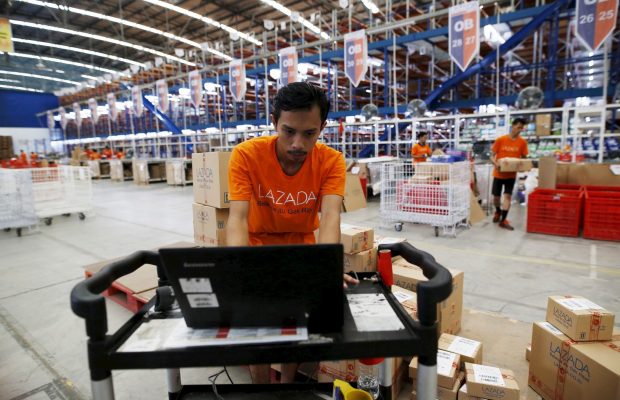
    L’Oreal has signed a joint business plan with Lazada to fulfil next-day delivery in top metro cities by June this year. This L’Oreal-Lazada logistical pact demonstrates the cosmetics company’s ambition to grow its e-commerce business in Asia. Both companies will also pilot consumer engagement tools such as in-app live streaming, and jointly launch products exclusively available to Lazada customers.

    “We are confident of creating the leading online beauty destination in Southeast Asia by combining Lazada’s extensive last mile logistics network to bring L’Oreal’s products faster into our customers’ hands,” said Jing Yin, president of Lazada Group.

    “Our partnership today signals our commitment and joint ambition of dominating the Southeast Asian beauty and skincare e-commerce market share by providing the best customer experience.”

    Other technological advancements such as new search features will ensure L’Oreal products are easily searchable within app to bring the most personalised products to its fans.

    “Lazada and L’Oreal will collaborate in many areas, from technology, sales and marketing to logistics,” said Pierre-Yves, MD, Southeast Asia, at L’Oreal.

    “Lazada’s technology infrastructure, logistics network and brand-engagement capabilities are the gold standard of the industry. Our joint efforts will take us one step closer to creating a true beauty-shopping destination on Lazada.”

    The L’Oreal-Lazada collaboration started in 2014, bringing 820,000 followers to the L’Oreal store on the platform. E-commerce sales now comprise 11 per cent of its global sales.

  • Ebay Buying in India’s Paytm Mall

    Ebay Buying in India’s Paytm Mall

    International e-commerce platform Ebay is preparing to head a US$160–170 million investment in e-tailer Paytm Mall.

    In a report last Monday, the move was interpreted as a grab at O2O commerce and payments opportunities in India. It will be the third major e-commerce investment in the territory for the firm following its minors stakes in Flipkart and Snapdeal.

    Paytm Mall raised about US$215 million from Japan’s SoftBank and existing investor Alibaba mid last year, at a valuation of $1.6–2 billion. It has raised roughly $645 million in funding to date.

    The firm has a minority segment of the Indian market, which is largely dominated by its two biggest competitors Amazon and Flipkart.

  • JD takes major stake in Five Star Appliances

    JD takes major stake in Five Star Appliances

    Chinese online retailer JD is to buy nearly half the shares in electrical goods retailer Jiangsu Five Star Appliance, for US$189 million. Jiayuan Chuangsheng currently holds 93 per cent of the Five Star business and after divesting a 46 per cent stake to JD will remain its largest shareholder with 47 per cent.

    Analysts say the investment will allow JD to boost its online profile and provide consumers with a network of about 300 Five Star Appliance storefronts, in much the same way as archrival Alibaba is building physical retail networks in Mainland China, blurring the boundaries between online and offline retailing.

    With stores primarily located in central and southern China, Five Star Appliances has annual sales of about US$2.7 billion.

    Last year, JD accounted for nearly 40 per cent of China’s home appliance sales, making it the largest retail in the space. Partnering with a brick-and-mortar retail network is likely to boost sales for both parties and protect JD from fast-growing Suniung.com which now accounts for 30 per cent of the market. Tmall is also building a share of the appliance sector, its sales now nudging 25 per cent.

  • Amazon to close China mainland store

    Amazon to close China mainland store

    Amazon China is about to stop selling local goods to local shoppers. According to multiple financial-news services, the global e-commerce giant is about to announce the closure of its dedicated Mainland China store, however Chinese consumers will still be able to order goods from Amazon’s global store.

    The dedicated Amazon China platform will close in July, meaning shoppers will no longer be able to buy goods listed by third-party local suppliers.

    According to “people familiar with the matter” quoted by Bloomberg, exiting the intensively competitive Mainland China market will allow Amazon to shift its focus to more lucrative businesses selling imported goods to Chinese and developing its successful cloud services operation.

    The withdrawal comes 15 years after Amazon entered China, purchasing local online store Joyo.com for US$75 million. Seven years later it rebranded the site under its own banner.

    The company estimates it will take about three months to close down its mainland fulfilment centres and delist local vendors as appropriate.

    With Alibaba and rival JD accounting for a combined 82 per cent of the Mainland China online market, there was little room for Amazon to eke out a commercially viable market share within a reasonable time frame.

    Michael Pachter, an analyst at Wedbush Securities, said Amazon was pulling out of the Chinese domestic market, “because it’s not profitable and not growing”.

    “The domestic Chinese online retailers just have huge advantages that Amazon can’t compete with.”

    Amazon has yet to officially confirm the China plan.

  • Walmart launched subscription service With Kidbox

    Walmart launched subscription service With Kidbox

    International retailer Walmart and Kidbox, the curated childrenswear subscription service, are teaming up to offer Walmart.com customers an exclusive, curated stylebox for kids.

    The service features an option to receive a seasonal selection, without a styling fee.

    The new stylebox will offer Walmart.com customers personalised styles selected from more than 120 premium kids’ brands. The stylebox will include four to five fashion items for US$48 – about 50 per cent off the suggested retail price for the group of bundled items.

    Clothing will include items from premium brands including BCBG, Butter Super Soft, C&C California and Puma.
    Walmart customers can order a stylebox by visiting the store’s website and completing a short style quiz for their child. Kidbox stylists use the quiz to tailor each box based on the child’s style preferences, the season and where the child lives.
    “We are thrilled to partner with Kidbox to introduce our first kids’ subscription apparel service offering premium fashion brands at a substantial savings,” said Walmart US e-commerce head of fashion Denise Incandela.

    “Over the last year, we have significantly expanded our portfolio of kids’ fashion brands as part of our broader effort to establish Walmart.com as a destination for fashion. Our partnership with Kidbox enables us to round out our offering with additional national and premium kids’ brands.”

    The Walmart and Kidbox collaboration has a charitable aspect as well. For every stylebox purchased on Walmart.com, Kidbox will clothe a child in need through its partnership with Delivering Good.

    “Walmart has done a lot over the past year to establish itself as a go-to retailer for all things fashion, and we’re honored to partner with the retailer to expand its kids’ assortment online, while also saving parents time and offering them the value and convenience of a stylebox,” said Kidbox CEO Miki Berardelli. “At Kidbox, we pride ourselves on understanding kids’ fashion preferences while also creating moments for them to learn about the importance of giving back.”

    Walmart.com has an expanding kids’ fashion assortment, which features more than 100 new brands that have been added over the last year, including Betsey Johnson, Kapital K, Levi’s, Limited Too and The Children’s Place. The retailer has also launched new shopping destinations for dance essentials and gymnastics, and licensed children’s clothing, making it easier for customers to shop for fashion featuring top movie, TV and gaming characters.

  • Jack Ma calls 12-hour work days a “blessing”

    Jack Ma calls 12-hour work days a “blessing”

    In the middle of stress awareness month, Alibaba founder Jack Ma has told his company’s workers they should be working a “996” work schedule – that is from 9am to 9pm, six days a week.

    According to a speech made this week by Ma, working 12 hours a day for Alibaba was a “blessing” to staff, and necessary for the business to achieve success.

    Ma’s comments caused a stir in China, where a conversation about work-life balance has spring-boarded off of a slowing tech industry.

    “With the pressure of economic downturn, many enterprises are facing challenges to survive… but the way to relieve anxiety is not to let employees work overtime as much as possible,” an editorial wrote.

    Ma later backtracked on his comments, calling such a work regime inhumane, unhealthy and unsustainable.

    The comments come as LinkedIn revealed work-life balance is the top cause of stress at work for Australians, with 72 per cent of survey respondents struggling to keep a balance between the two.

    The report also found that executive-level professionals are the most stressed, more so than middle management and individual contributors.

    In terms of age demographic, Generation X is the most stressed generation with over half (54 per cent) claiming to struggle with confidence in the future of their work.

  • Tmall Reinforces Go-to Platform Status for Product Debuts

    Tmall Reinforces Go-to Platform Status for Product Debuts

    Alibaba Group’s Tmall today announced it will launch a dedicated gateway for customers to discover new products through the Taobao mobile app, looking to cement its position as the “go-to” platform for such launches.

    From Wednesday, customers clicking on the “Tmall” icon in their Taobao app will be directed to the “Tmall New Products” channel, which includes a full array of new features, such as Tmall’s “Most Sought-after New Items,” “The Next New Things,” “Limited Editions” and “New Flagships.” Working with brands and key opinion leaders, the channel will provide customers with in-depth information and recommendations on new products.

    Tmall has long been an effective platform for showcasing new products, a one-stop shop for consumers to find the hottest new items online, and a creative, experiential channel to interact with and learn more about new products.

    The new channel for product launches is powered by Tmall’s already impressive suite of marketing tools, such as “Hey Box” and the Tmall Innovation Center (TMIC). In the past year, 82% of new products tailored by TMIC became a top-three “hot” item in its category within 30 days of launch. TMIC has also reduced the product development cycle by half, to an average of nine months.

  • Online sales not sufficient to save Oxfam

    Online sales not sufficient to save Oxfam

    Oxfam Australia will start the process of shutting down its retail, wholesale and e-commerce operations in June due to commercial pressures and the difficult retail environment in Australia.

    The decision affects nearly 100 staff, made up of approximately 40 permanent and 60 casual positions.

    “We know this will be very difficult news for our staff and volunteers – and our customers,” Tony McKimmie, Oxfam Australia chief operating officer, said in a statement.

    “We sincerely thank them all for their dedication and significant contribution to our core mission of tackling poverty.”

    The closure will see eight physical stores around Australia shuttered, as well as Oxfam’s online store and wholesale division, which supplies coffee, tea and chocolate products to supermarkets.

    “The business shifted last year to placing a stronger emphasis on its online trading business and reduced emphasis on its shops, with an assessment of each store’s financial viability as shop leases became due for renewal,” McKimmie explained.

    “This resulted in the closure of five stores, howeverdeclining revenue and profitability – including flat online sales growth – meant the financially responsible decision was to close all of Oxfam Australia Trading oper ations.”

    Goods sold through these stores are sourced from a global community of ethical artisans and farmers, which helps “communities to learn and living and lift themselves out of poverty”.

    “Oxfam Australia will continue its work empowering communities to tackle poverty through long-term development programs, emergency response and advocacy,” McKimmie said.

  • Mountain Designs relaunches witch New E-commerce Platform

    Mountain Designs relaunches witch New E-commerce Platform

    Australian adventure brand Mountain Designs has officially relaunched, with a new e-commerce website sporting the brand’s full range.

    Spotlight Group chief executive of leisure brands Chris Lude said the business was committed to maintaining its 45 year heritage.

    “We are dedicated to ensuring the iconic Mountain Designs brand remains Australian owned, operated and designed,” Lude said.

    The relaunched brand also offers a renewed range, with the business having redeveloped 14 of its best sellers, as well as newly designed apparel and gear.

    “Adventure is in the Mountain Designs DNA, and the new range will continue to provide quality, technical, multi-functional gear that people know and love,” Lude said.

    Acquired in early 2018 by Spotlight Retail Group for an undisclosed sum, Mountain Designs confirmed it would offer a selection of goods, including thermals, apparel and equipment, within the Spotlight-owned Anaconda chain.

    Prior to being acquired by Spotlight Retail Group, Mountain Designs had been shuttering its bricks-and-mortar locations to focus on a purely online model to create a more sustainable platform for the business moving forward.

    During this period, the brand’s website was also closed to facilitate this shift, remaining offline until earlier this week.

    Spotlight Retail Group has recently indicated a larger push into the New Zealand market amid a larger revamp of its brands, with craft retail chain Spotlight to open a Christchurch flagship later in the year.

    It remains to be seen if this initiative extends to Anaconda or Mountain Designs – both of which operate solely in Australia.

  • Walmart Hires robots to handle cleaning and unboxing

    Walmart Hires robots to handle cleaning and unboxing

    US retailer Walmart is adding thousands of robots to its stores to handle cleaning tasks, allowing workers more time to help customers.

    Walmart said by February 2019, it will have introduced the 920-pound autonomous floor scrubbers at 1,860 of its 4,700 US stores.

    The robots will clean the floors and unload boxes in its stockrooms. The “smart assistants” can scan shelf inventory at 350 stores and bots will be placed at 1,700 stores to automatically scan boxes as delivery trucks drop them off and they are sorted onto conveyor belts.

    “The overall trend we’re seeing is that automating certain tasks gives associates more time to do work they find fulfilling and to interact with our customers,” CEO Doug McMillon told of the new technology last year.

    Walmart is hoping that the bot army will increase sales and in-store efficiency. The retailer said it’s quite difficult to find workers to work overnight to receive the supplies from trucks.

    “We’re seeing increases in sales and reductions in turnover in what had been a very difficult job to fill,” CEO McMillon told.

    Walmart goes high tech

    Last year Walmart invested over US$2 billion to remodel stores around the country and improve online shopping services for its new in-store pickup feature. Walmart said on Tuesday that it would bring 16-foot-tall automated vending machines to 900 new stores this year to quickly fetch customers’ online orders.

    “There is a labor shortage in retail. It will not be easy for Walmart to add labor to perform these functions. So a high level of automation is required,” said Kirthi Kalyanam, director of the Retail Management Institute at Santa Clara University told.

    Earlier this month the retailer announced a partnership with Google on the new Walmart Voice Order which allows shoppers to order groceries through Google Assistant.

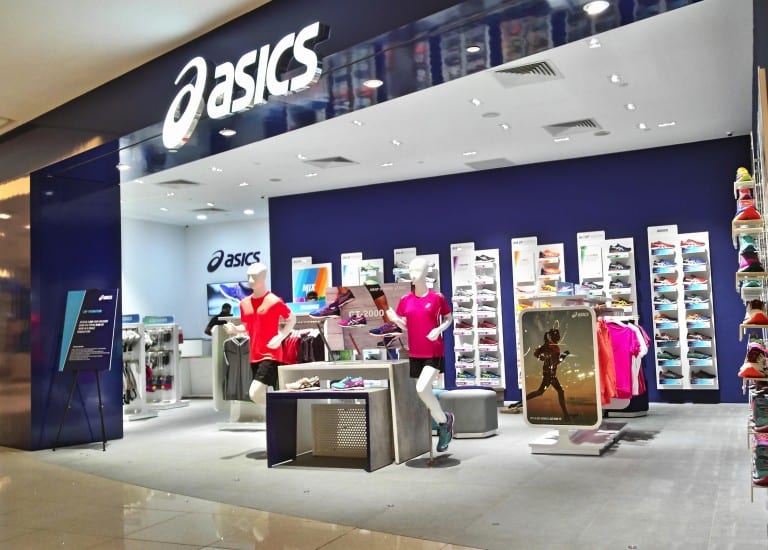
  • Asics Singapore E-commerce Platform Launched

    Asics Singapore E-commerce Platform Launched

    Asics Singapore has launched an online store, with other Southeast Asian markets to follow soon.

    The one-stop destination for all Asics products introduces an integrated shopping experience with shoes exclusive to the online store and a seamless check-out experience.

    The e-commerce site will strengthen Asics’s omnichannel retail strategy in Singapore, providing avid runners with easy access to shoes across all categories and a platform to browse for new purchases while on the move.

    Shoppers can choose to collect their orders directly from the stores or have them delivered.

    Asics’ brick-and-mortar stores will have tablets accessible to customers who want to  experience the Asics.com portal while in store.

    During the next eight weeks, shoppers can collect Asics shopping vouchers at pop-up vending machines across the island. By answering the questions posted weekly on the machines, shoppers can receive an eight-digit code to obtain the vouchers.

    This month, vending machines will be placed at SAFRA EnergyOne Toa Payoh from April 8 to 17; at SAFRA EnergyOne Yishun from April 18 to 27; and at Singapore Polytechnic (InnoMall) from April 28 to May 5. More locations will be revealed on the Asics Instagram account.

  • Amazon Products Now Available in Australia

    Amazon Products Now Available in Australia

    Amazon has launched another key part of its business in the Australian market – it’s advertising products.

    Amazon Advertising, the part of the company that offers display and video ads and an online tool to programmatically buy ads, launched in Australia on Friday, according to a company blog post.

    This gives businesses a way to reach the millions of unique visitors who land on Amazon’s local website each month, according to figures the company cited from SimilarWeb.

    “With Amazon Advertising, agencies and advertisers – regardless of whether or not they sell on Amazon – can deliver relevant messages to customers on and off Amazon, throughout their customer journey,” the blog post reads.

    The launch comes amid a recent revamp of the US e-commerce giant’s advertising business. In 2017, the company added a new office and 2000 jobs, mostly in advertising, in New York City. It has also introduced self-service buying tools, among other new products, and started providing deeper insights into its enormous customer database.

    These efforts seem to be paying off. Advertising was part of Amazon’s fastest growing business segment last year. Revenue from the company’s “other” category, which includes advertising, grew 115 per cent in 2018, to US$10.1 billion. Research firm Magna estimated that advertising accounted for US$6 billion of that figure.

    Most of this growth has come at the expense of rival digital advertising giant, Google, according to a report last week. 

    The report stated that WPP PLC, the world’s largest ad buyer, spent about US$300 million on Amazon search ads in 2018, and about 75 per cent of that money came from Google search. This was up from the US$100 million to US$150 million it spent on Amazon search ads in 2017, according to sources familiar with the matter.

    Advertising at the point of purchase

    One reason Amazon may be attracting more advertising dollars is that it enables businesses to reach customers much closer to the point of purchase than Google or Facebook, although both tech giants – particularly Facebook, which owns Instagram – have been working to close the gap between the discovery and purchase stages of the customer journey for some time.

    But before retailers completely upend their advertising budgets, they may want to consider the metrics they’re using to allocate budget to begin with. New research from Monash University has revealed that ‘last touchpoint attribution’, a key metric most advertisers use to measure ad effectiveness and allocate budget, is not accurate.

    “At the moment, if a consumer buys a new toy online, Google can look at the search patterns that person has had over the past few days, or whether they’ve received any emails from a department store such as Kmart,” Peter Danaher, head of the department of marketing at Monash Business School, said.

    “They use a method called ‘last touchpoint attribution’. So, if the consumer last opened an email about toys, the email gets the credit. It they last did a Google search on toys before making the purchase, Google gets the credit.

    “The advertising industry has used this method for the past five years because it’s simple and effective. The problem is, this method ignores how long consumers remember an advertisement.”

    According to Danaher, last touchpoint attribution doesn’t take into account the cumulative effect of seeing ads in different places, and allocating budget based on this metric is less effective than allocating budget to maximise profit.

  • Secrets Improving on its Online Ecommerce Offering

    Secrets Improving on its Online Ecommerce Offering

    Australian jewellery retailer Secrets is gearing up for international expansion online, with New Zealand slated to be its next major market.

    Customers in New Zealand can currently order from the Australian Secrets website, and while details are scarce, the retailer said in a statement that it will be launching a New Zealand website mid-year to better cater to the market.

    The business currently has 16 stores across Australia, as well as an online portal.

    It sells man-made diamond alternatives known as a diamond simulant, which are made in laboratories from natural mineral base zirconium oxide. According to Secrets, they possess all the optical qualities of fine quality diamonds – being visibly whiter and brighter than most middle-market stones.

    “Our stones exhibit all the fire, brilliance and scintillation of the rarest diamonds unearthed, which is why women worldwide love the Secrets brand,” Secrets chief executive Mike Parsell said.

    “We believe we offer the world a better beautiful.”

    This also means the products are more environmentally-friendly than mining for natural diamonds, Parsell points out.

    “We do not displace tonnes and tonnes of earth to find a single one-carat diamond. Our stones are conflict-free.”