Category: E-Tailing

Retail News Asia is committed to providing both local and global retailers with the latest E-Commerce & Etail news throughout the Asian market. This on a daily base.

  • E-commerce to reach tipping point by 2030

    E-commerce to reach tipping point by 2030

    Almost half (49 percent) of Australian businesses expect online operations to reach parity with bricks-and-mortar retail sales by 2030, according to new research by Australia Post. Rebecca Burrows, Australia Post general manager of segment development and marketing, noted that consumer habits have changed significantly over the past few years.

    “People want an in-store experience, but in the comfort of their own living room – they want to see, touch and try,” she said.

    “Leading retailers are also embracing mobile commerce and voice-activated shopping. It is those in tune with customers and willing to embrace the latest online technology trends that will have the winning strategy.”

    Burrow noted that technology trends, such as augmented reality, artificial intelligence-driven personalization, and biometric payments, are beginning to bridge the gap between online and offline retail, and are shaping the way customers shop.

    Changing consumer trends are not simply relegated to the use of technology, however, with the rise of subscription service also having made a significant impact on the way a retailer offers its service to customers.

    According to a recent survey by Harris Poll, on behalf of subscription management platform provider Zuora, Australians now average 2. 5 subscription services – with Zuora vice-president Iman Ghosdosi calling it the “end of ownership.”

    Fashion-tech company GlamCorner tapped into this phenomenon last year, with the launch of a monthly subscription box that gives customers access to three pieces of designer clothing each month for formal occasions, workwear or everyday wear.

    “The service is growing at an exponential rate,” GlamCorner co-founder and CEO Dean Jones said, “contributing significantly to the 30 tonnes of clothing we process each month.”

    “As a result, our customers are telling us their wardrobes are shrinking, while they still have a fresh new look every day.”

    Australia Post surveyed almost 1000 small to medium sized Australian business across retail, manufacturing, logistics, financial services, education, health, and utilities.

  • Carousell Strengthens Executive Leadership Team With Appointment of CCO

    Carousell Strengthens Executive Leadership Team With Appointment of CCO

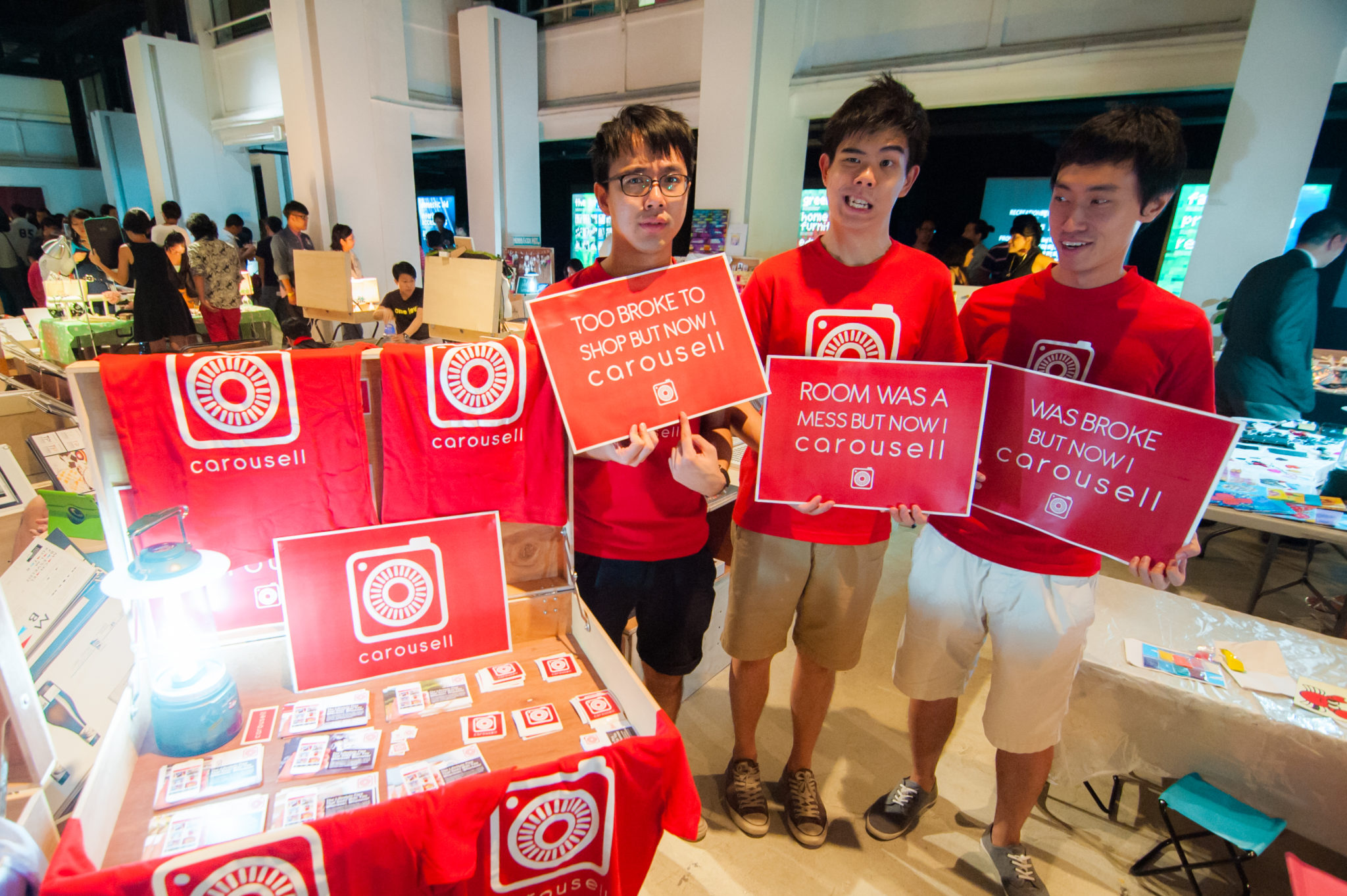
     Carousell, one of the world’s largest and fastest growing classifieds, today announced the appointment of Lewis Ng as Chief Commercial Officer. Lewis will be responsible for all commercial relationships, including high-value verticals, advertising sales and go-to-market partnerships. Lewis will also oversee the transformation of Carousell into a premium publisher by bolstering value-added services and premium products for clients.

    “We are at a stage with strong potential to scale. Currently, 1 in 4 Singaporeans use Carousell monthly, and with rapid growth regionally, it is imperative that we continue to attract top talents that would elevate our positioning and growth. With his extensive understanding of the classified space and business verticals, Lewis has displayed a solid record of growing robust revenue streams and executing high-impact business solutions,” said Siu Rui Quek, Carousell Co-founder and CEO. “There is a significant and growing market for high-value verticals such as Cars and Property, and we look forward to leveraging Lewis’ experience in these areas that pave way to achieve greater success across Southeast Asia.”

    Lewis’ role has been added in response to the increasing demand for business solutions and growth within the company and follows further high profile hires, including the addition of Su Lin Tan as Vice President of Operations.

    Previously Chief Business Officer at PropertyGuru and Commercial Director, APAC at TripAdvisor, Lewis brings over eighteen years of commercial and leadership experience in driving revenue growth across regional markets. Lewis was said to be instrumental in the leading property site’s continued double-digit revenue growth for three consecutive years, spanning roles in Marketing and Client Retention. At TripAdvisor, he was the Commercial Director for the APAC region and one of the first employees in Singapore, where he drove the brand’s revenue growth by triple digits in a period of three and a half years.

    Lewis has led key regional and in-market functions to deliver value to customers and partners and will be leading the overall commercial strategy at Carousell as Chief Commercial Officer. Lewis will be overseeing the Sales and Business Development functions in Carousell and he reports to Co-founder and CEO, Siu Rui Quek.

    “I am excited to join one of the biggest and fastest growing start-ups in Singapore. I really admire how fast and steadily the visionary founding team has grown the business in such a short amount of time, and I’m delighted to be able to contribute to the ongoing success of Carousell. With my experience and expertise, I am looking forward to creating efficient operations and models to help Carousell reach its fullest potential,” said Lewis.

  • Alibaba ranked China’s most valuable brand by BrandZT

    Alibaba ranked China’s most valuable brand by BrandZT

    Alibaba’s rise to the top resulted from growing its brand value by 59%, year-on-year, to $141 million. In the past five years, Alibaba has outperformed the WPP/Kantar Top 100 overall, with its brand value climbing 136%, compared to the Top 100’s 92% rise.

    Alibaba’s number-one spot for 2019 “reflects the growth of a brand which has contributed to transformational changes in the Chinese market,” the Top 100 publishers said.  In BrandZ’s “Brand Power” metric of brand equity, Alibaba’s score was particularly strong “for being ‘Meaningful,’ suggesting the brand known for coining the term ‘New Retail’ has successfully created closer connections with its consumers.”

    The Top 100 results show how digitization and the growing sophistication of Chinese consumers is creating a unique marketplace of products and services available with unprecedented speed and convenience – long a sweet spot for Alibaba. Innovators in AI, e-commerce, New Retail performed strongly.

  • Shopee, Tiki solidify positions as top e-commerce sites in traffic in Q1

    Shopee, Tiki solidify positions as top e-commerce sites in traffic in Q1

    Shopee and Tiki maintained their positions as the two leading sites in terms of traffic in Vietnam’s e-commerce sector in the first quarter of this year.

    According to the latest figures from the Map of E-Commerce released recently by iPrice Group – a meta-search website operating in seven countries across Southeast Asia, Shopee still held the dominant position in Q1 2019 with 40.7 million visits per month on average. Tiki followed with 35.6 million visits monthly.

    Lazada ranked third with 29 million visits, closely followed by thegioididong.com (28.8 million visits) and Sendo (25.3 million visits).

    Q1 2019 also saw several positive trends in the performance of local players, especially Tiki, Sendo, and Adayroi. iPrice’s latest data showed through the first quarter included the Tết (New New Year) holiday period, which is usually a tough time for e-commerce businesses in general, those three merchants still managed to maintain their good results from the previous quarters.

    Doing the best in this regard was Tiki. Similar to the previous quarter, the website continued to achieve over 35 million visits per month on average for Q1 2019, helping its web traffic grow at a rate of 23 percent per quarter on average since the second quarter of last year.

    Aside from Tiki, other notable local companies Sendo and Adayroi have been showing encouraging signs. According to iPrice’s Map of E-commerce, the two companies both have an average traffic growth rate of over 16 percent per quarter for the past four quarters.

    Sendo’s CEO Trần Hải Linh also confidently told IT website Tech in Asia recently that his company was on track to achieve US$1 billion in GMV (gross merchandise volume) much earlier than the previously projected target of 2020.

    This year would be an inflection point for the Vietnamese e-commerce market, Linh said, adding the market would grow much faster.

    “We will see sizable businesses becoming comparable to regional players [and] customers becoming more familiar with e-commerce,” Linh told.

  • Grab may be categorized as e-charter transport operator

    Grab may be categorized as e-charter transport operator

    The Ministry of Transport organized the meeting with other ministries, transport operators and associations to collect feedback for the eighth version of the draft decree before presenting it to the prime minister prior to April 15 as scheduled. Many participants at the meeting proposed Grab be listed as an e-charter transport operator.

    A representative from the Ministry of Public Security (MPS) noted that Grab was a new transport service provider that applies technology to its operations. Its services are widely used by the local people thanks to its convenient features.

    The MPS representative suggested the relevant agencies clarify Grab’s business structure and categorize it in accordance with prevailing regulations while imposing stringent management policies on the firm in terms of safety requirements for vehicles and drivers, service costs and tax and financial obligations to the State.

    Representing Grab Vietnam, Nguyen Ngoc Trang asserted that Grab functions as an e-commerce trading floor as it was previously registered with the Ministry of Industry and Trade. He also pointed out that some terms stipulated on the draft decree were redundant and illogical.

    Meanwhile, some participants at the meeting voiced their opposition to the suggestion to list Grab as an e-charter transport service provider.

    Nguyen Cong Hung, chairman of the Hanoi Taxi Association, was quoted by Nguoi Lao Dong Online as saying that the application of electronic features to operations is merely a transport connection method. It is illogical to name a new transport service type based on the connection method, Hung said.

    Also, Khuat Viet Hung, vice chairman of the National Traffic Safety Committee, stated that the five types of transport services regulated in the Law on Road Traffic were enough and creating a new service type was not needed.

    Wrapping up the meeting, Deputy Minister of Transport Le Dinh Tho remarked that the unit compiling the draft decree will take the feedback into consideration. He suggested the relevant parties continue to work on the draft decree before sending it to the prime minister.

  • CX is Critical to Cuccessful for Etailers

    CX is Critical to Cuccessful for Etailers

    Why a personalised and convenient engagement with shoppers is critical in online stores. Consumers are expecting more personalised and convenient experiences from retailers and brands in the B2B space.

    Research shows 58 per cent of online shoppers expect retailers to provide a more personalised user experience while 64 per cent of consumers have purchased online because of free shipping.

    That’s one of the key conclusions shared at a recent seminar in Hong Kong jointly organised by digital retail-experience agency Moni and e-commerce platform Magento, to share best practices in the industry and guide retailers on successful strategies for rolling out an e-commerce platform in Asia.

    Ensuring a superior customer experience cannot be achieved by adopting a one-size-fits-all prospect. It is critical to deliver consumers an excellent experience across every channel, including e-commerce.

    “Experience-driven commerce provides a comprehensive and flexible platform to make every moment personal and every experience shoppable,” says Mel Lim, enterprise sales manager – APAC at Adobe Magento.

    Delivering a personalised, customised experience of providing product recommendations based on a customer’s browsing history, presenting a dynamic call to action and saving abandoned carts, for example, are just some of the prime goals for online retailers in today’s multi-channel environment.

    Today, 77 per cent of consumers expect retailers to provide an end-to-end, connected experience which is consistent and integrates in-store and online.

    “Designing a true omnichannel experience is to provide customers what they want, when they want and where they want it – by delivering seamless experiences across all channels,” says David Francois, MD at Moni.

    The success of an omnichannel initiative depends on a combination of the brand’s presence – not only through an e-commerce store, but also on marketplaces, by initiating social commerce and by how well the online and offline experience is in sync, he says.

    Marketing automation can boost sales

    Cart abandonment is a constant challenge for e-commerce companies worldwide, with US$4.6 trillion worth of merchandise left unpurchased in online carts every year. The 77-per-cent cart-abandonment rate can be minimised by optimising an online store, taking steps such as simplifying the check-out processes and implementing marketing-automation tools to capture the lost sales.

    Magento has more than 4400 extensions to empower the platform, including an abandoned-cart automation tool powered by Dotmailer that produces professional, personalised email communications and reports user data from a company’s Magento store.

  • Online fashion retailers Starting to Limit Free Deliveries

    Online fashion retailers Starting to Limit Free Deliveries

    Zalando, Europe’s largest online-only fashion retailer, has said it will begin to charge delivery for smaller orders across more markets in response to shrinking order size.

    The e-commerce business initially enjoyed rapid growth due to its free delivery and returns, but the rise of mobile commerce has changed customer behaviour, with the size of orders getting smaller, driving up logistics costs.

    Zalando has already introduced a minimum order value to qualify for free delivery in Italy, Spain, Britain and Ireland, which has had no effect on customer satisfaction, according to the company’s finance chief David Schroeder.

    The initiative now will be extended to Denmark, Sweden, Finland and Norway at the end of May.

    The move echoes H&M’s announcement last month that it would reintroduce delivery fees for its loyalty club members to cut down on similar logistics costs and restore profitability.

    “We have a lot of logistics around the customers that shop online,” H&M head of customer loyalty Samuel Holst told.

    “For the plus level, deliveries will remain free for all purchases, but for the base level there will be a cap. You will need to shop for a certain amount to get free delivery.”

    While many retailers have invested significant sums in designing their websites and ad campaigns for mobile, these changes suggest that more work is needed to adapt retail businesses to the smartphone era.

  • Ebay launches e-commerce training program in Singapore

    Ebay launches e-commerce training program in Singapore

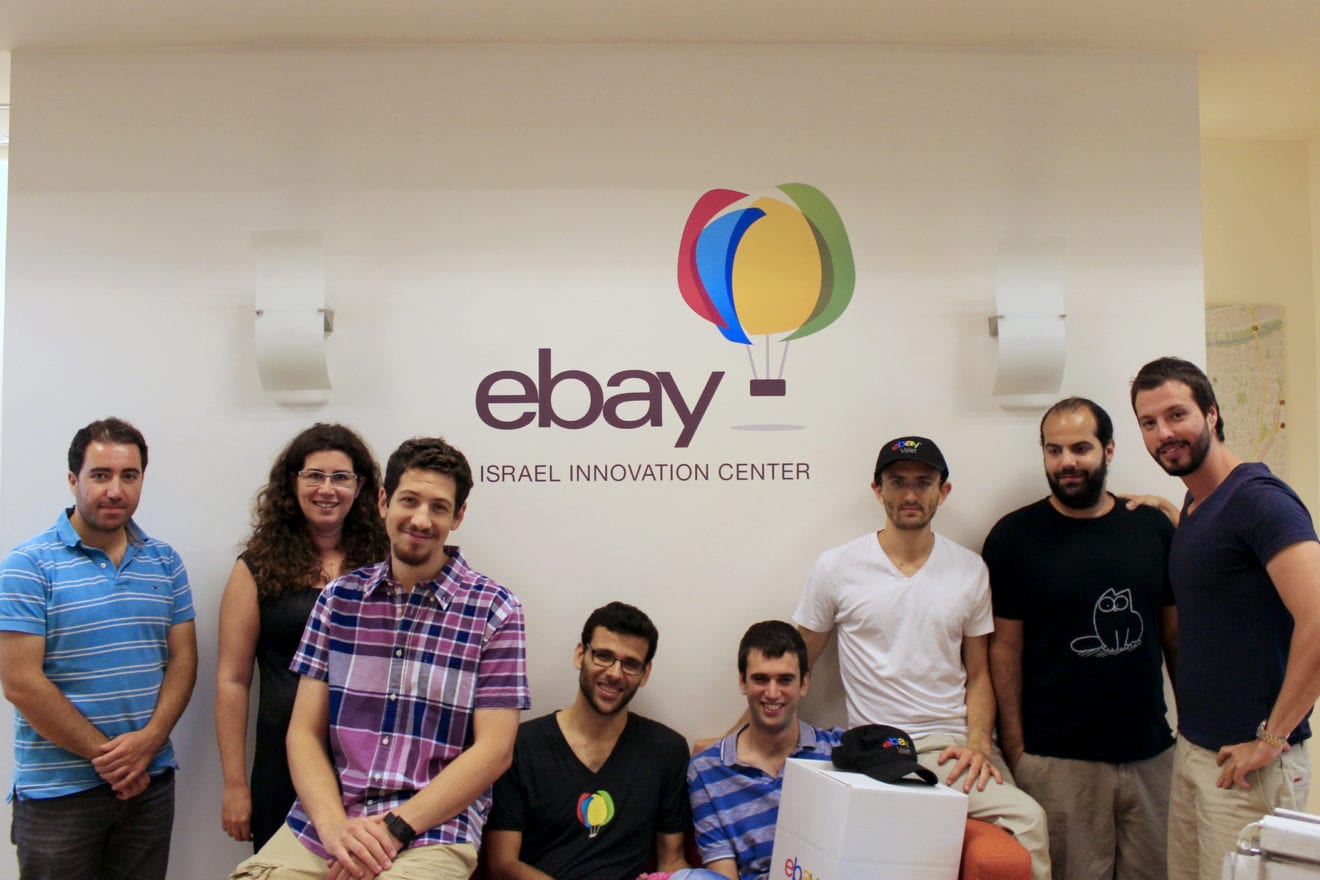
    Ebay Singapore and the Institute of Retail Studies have partnered in an e-commerce training program.

    Called “Let’s Ebay with SIRS”, the full-day workshop aims to help aspiring entrepreneurs kickstart their e-commerce business and connect with the global marketplace of active buyers.

    The program was designed for small businesses and entrepreneurs who have little or no e-commerce experience but want to learn directly from the source.

    Singapore’s e-commerce market is expected to grow by 48 per cent to S$10.04 billion by 2022.

    “Singapore’s cross-border trade continues to grow and there is a huge opportunity for more small businesses to join the ranks of Ebay sellers,” said Wong Mei Inn, Ebay‘s head of Southeast Asia seller growth.

    “By listing their products on Ebay’s global marketplace, Singaporean businesses can reach 180 million active buyers all around the world.”

    SMEs contribute to 72 per cent of Singapore’s employment, and added a nominal value of $213.6 billion, or 48 per cent to the economy last year.

    “E-commerce has been recognised as one of the key growth opportunities under the 2020 vision of the Retail Industry Transformation Map launched by Spring Singapore (now Enterprise Singapore),” said Megan Ong, Nanyang Polytechnic’s Singapore Institute of Retail Studies director.

    “By partnering with Ebay, we will be able to encourage retailers in Singapore to adopt e-commerce and omnichannel strategies to succeed in today’s digital context.”

    Following the workshop, the two parties launched an Ebay onboarding program which further enables SMEs to optimise cross-border selling and manage operations.

  • Suning.com’s Online Sales Soars

    Suning.com’s Online Sales Soars

    Suning.com’s first-quarter online sales soared 40.87 per cent as the company’s smart-retail strategy continues to drive the rapid growth.

    Operating income of RMB 62.2 billion (US$9.2 billion), represented a 25.44 per cent increase on the same period last year. First-quarter net profit was RMB 136 million.

    In a statement, Suning.com said during the first quarter of this year, the overall domestic consumer market in Mainland China still exhibited potential for growth.

    “Despite the softer market environment, Suning’s online and offline businesses maintained relatively rapid growth.”

    Off-line, Suning continued its large-scale expansion, its network comprising 9758 self-owned stores and 2571 franchise stores as at March 31. A standout was the Redbaby store, whose sales increased by 15.7 per cent year on year.

    “In the online market, with the enhanced industrial synergy and the improved efficiency brought by resource integration, the growth rate of Suning’s sales clearly outpaced the industry average,” the company said.

    During the quarter, the company set up five major product groups including household appliances, consumer electronics, FMCG, clothes and accessories, and international items to streamline product management.

    In the FMCG sector, Suning strengthened its brand and achieved dual online-offline growth through centralised procurement, purchasing directly from the manufacturer and strategic cooperation, which helped grow its network of offline stores.

    “In the same period, Suning has further optimised the supply chain management of online and offline stores through the acquisition of 37 Wanda stores, marking a significant success for Suning’s all-categories product portfolio operational strategy.”

  • Walmart trials new Online Store Format

    Walmart trials new Online Store Format

    Supermarket retailer Walmart has launched a new technology called Intelligent Retail Lab (IRL) that allows it to monitor its physical stores more efficiently and keep costs under control.

    The retail giant is testing this new technology, which includes artificial intelligence-enabled cameras, interactive displays and a massive data centre, in its 50,000-square-foot neighborhood market grocery store in Levittown, New York.

    According to IRL CEO Mike Hanrahan, the location is one of Walmart’s busiest stores and has more than 30,000 items and this allows them to test out the new technology concept in a real-world environment.

    “We’ve got 50,000 square feet of real retail space. The scope of what we can do operationally is so exciting,” Hanrahan said.

    IRL is set up to gather information about what’s happening inside the store through an array of sensors, cameras and processors. It has a combination of cameras and real-time analytics that will automatically trigger out-of-stock notifications to internal apps that alert associates when to re-stock, detect the products on the shelf and compare the quantities, among others.

    Hanrahan said the first thing this equipment will help the team focus on is product inventory and availability. In short, the team will use real-time information to explore efficiencies that will allow associates to know more precisely when to restock products, so items are available on shelves when they’re needed.

    “Customers can be confident about products being there, about the freshness of produce and meat. Those are the types of things that AI can really help with,” Hanrahan said.

    Walmart said with its new IRL technology, customers can trust that the products they need will be available during the times they shop.

  • Cloud Services Growth to Amazon profit

    Cloud Services Growth to Amazon profit

    Amazon profit surged 118 per cent during the first quarter of this year, from US$1.6 billion to $3.56 billion.

    Operating income during the March quarter reached $4.4 billion, compared to $1.9 billion the same time last year. The increases come off the back of a 17-per-cent growth in sales to $59.7.

    While the company grew its North American operating income over the period to $2.28 billion, its international division reduced its loss from $622 million last year to a more modest $90 million this year.

    Research firm eMarketer estimates that Amazon holds about 47 per cent of the US e-commerce market, which is set to grow 20 per cent to $282.5 billion this year.

    EMarketer principal analyst Andrew Lipsman said the quarter was fuelled by the strength of Amazon’s cloud and advertising business, which continues to inflate the company’s margins.

    “While AWS’s momentum continues unabated and is clearly the bigger driver of this profit story at the moment, the advertising flywheel now appears to be in full effect for Amazon and will only be a bigger part of the growth story over the near term,” Lipsman said.

    Amazon’s AWS segment saw net sales grow 40 per cent year-on-year, from $5.4 billion to almost $7.7 billion, contributing $2.2 billion to the company’s quarterly income.

    Looking ahead, Amazon expects second-quarter sales to land between $59.5 and $63.5 billion, representing an annual growth of between 13 and 20 per cent.

  • India’s Quikr Acquires Zefo marketplace

    India’s Quikr Acquires Zefo marketplace

    Indian online classifieds site Quikr has bought refurbished goods marketplace Zefo, headquartered in Bangalore.

    The acquisition allows an exit strategy for Zefo’s current investors, including Sequoia Capital, and gives Quikr a pathway to expand and strengthen its pre-owned product range.

    Zefo, has a portfolio of more than 10,000 products in four cities, including Bengaluru, Mysore, Delhi NCR and Mumbai.

    “With Quikr and Zefo as a combined entity, we will be able to offer a broader selection of products at even more competitive prices along with as strong a focus on quality,” said Quikr founder and CEO Pranay Chulet.

    “With this transaction, the capabilities we have built and the offerings we have honed can now be offered to Quikr’s large customer base,” said Zefo CEO Rohit Ramasubramanian.

  • Amazon doubles Quarterly Profit

    Amazon doubles Quarterly Profit

    Global online marketplace Amazon has grown its net income 118 per cent during the first quarter of 2019, from US$1.6 billion to US$3.56 billion ($2.28 billion to $5.07 billion).

    The three months to March 31 2019 also delivered operating income of US$4.4 billion ($6.27 billion), compared to US$1.9 billion ($2.7 billion) the year prior. These increases come off the back of a 17 per cent growth in sales to US$59.7 billion ($85.09 billion).

    However, while the company grew its North American operating income over the period to US$2.28 billion ($3.25 billion), its international performance led to a US$90 million loss ($128.2 million) – though this can be positively compared to the same period last year, during which Amazon’s international business lost US$622 million ($886.5 million).

    Research firm eMarketer estimates that Amazon holds almost half of the US e-commerce market, which is set to grow 20 per cent to US$282.5 billion ($402.6 billion).

    EMarketer principal analyst Andrew Lipsman said the quarter was fuelled by the strength of Amazon’s cloud and advertising business, which continues to inflate the company’s margins.

    “While AWS’s momentum continues unabated and is clearly the bigger driver of this profit story at the moment, the advertising flywheel now appears to be in full effect for Amazon and will only be a bigger part of the growth story over the near term,” Lipsman said.

    Amazon’s AWS segment saw net sales grow 40 per cent year-on-year, from $5.4 billion to almost US$7.7 billion ($7.7 billion to $10.97 billion), contributing US$2.2 billion ($3.14 billion) in income to the business’ quarterly results.

    Looking ahead, Amazon notes it expects second quarter sales to land between US$59.5 and US$63.5 billion ($84.8 and $90.5 billion) – an annual growth of between 13 and 20 per cent.

    The business is leaving room for its operating income to decline over the period, however, expecting between US$2.6 and US$3.6 billion ($3.7 and $5.1 billion) – compared to the US$3 billion ($4.28 billion) earned in the second quarter of 2018.

  • eBay and Singapore Institute of Retail Studies come together to deliver eCommerce training

    eBay and Singapore Institute of Retail Studies come together to deliver eCommerce training

    eBay and the Singapore Institute of Retail Studies (SIRS) joined forces to deliver training to small businesses and entrepreneurs seeking new and global sales channels in the fast-growing eCommerce sector. Titled “Let’s eBay with SIRS”, the full-day workshop was held at the Lifelong Learning Institute, one of two Continuing Education and Training (CET) campuses by SkillsFuture Singapore. To offer SMEs in Singapore a holistic support system to grow their businesses globally and sustainably, eBay and SIRS signed a memorandum of understanding (MOU) focused on Global e-Commerce Onboarding & Education Programs.

    Singapore’s eCommerce market is expected to grow by 48% to S$10.04 billion by 2022, and a rising number of entrepreneurial Singaporeans are capitalising on the opportunity to sell their products directly to customers all around the world on eBay.

    According to eBay Head of Southeast Asia Seller Growth Wong Mei Inn, “Singapore’s cross border trade (CBT) exports continue to grow and there is huge opportunity for more small businesses to join the ranks of eBay sellers. By listing their products on eBay’s global marketplace, Singaporean businesses can reach 180 million active buyers all around the world.”

    “Let’s eBay with SIRS was designed for the small business and entrepreneur who has little or no ecommerce experience but wants to learn directly from the source,” said Wong.

    “eBay has thousands of sellers here in Singapore and over 80% of them sell to customers overseas. eBay’s focus in Singapore this year is to enable even more SMEs to sell worldwide”, said Jenny Hui, General Manager, Cross Border Trade, eBay Hong Kong, Taiwan and Southeast Asia.

    “eCommerce has been recognised as one of the key growth opportunities under the 2020 vision of the Retail Industry Transformation Map launched by SPRING Singapore (now Enterprise Singapore),” said Nanyang Polytechnic’s Singapore Institute of Retail Studies Director Megan Ong. “By partnering eBay, we will be able to encourage retailers in Singapore to adopt eCommerce and omni-channel strategies to succeed in today’s digital context.”

    Small medium enterprises (SMEs) contribute to 72% of Singapore’s employment, and in 2018, added a nominal value of S$213.6 billion, or 48% to the economy. The government has acknowledged the importance of SMEs plugging into the digital economy as it would make a noticeable impact on Singapore’s economic growth.

    During the workshop, Let’s eBay with SIRS featured speakers from eBay, SIRS, WorldFirst, Watcheszon International, JTBC Global and DHL Express Singapore. The speakers shared case studies, advice on getting started, and introductions to payments and logistics service providers to help small businesses begin their global ecommerce journey.

    Following the workshop, eBay has launched the “eBay Onboarding Program”, a series of courses with SIRS to further enable SMEs to optimise cross-border selling and manage operations. Each course will be charged at $160, and subsidies range from 70-95%. For more information on the courses and available subsidies, visit https://www.sirsdigitalcommerce.com/ebay.html or email SIRS at courses@sirs.edu.sg

  • Alibaba Celebrates its 15th Ali Day

    Alibaba Celebrates its 15th Ali Day

    Alibaba employees across the world joined together to celebrate Ali Day, an annual event honoring the tenacity and fighting spirit of their colleagues and their families during the Severe Acute Respiratory Syndrome crisis in China 16 years ago.
    During the height of the outbreak in May 2003 in China, one employee was thought to have contracted the deadly virus. The entire staff was ordered to self-quarantine at home. But instead of putting the business on hold, everyone, including family members, pulled together to keep the operation afloat.
    Such determination and dedication prompted Alibaba Group founder Jack Ma in 2005 to declare May 10 as “Ali Day.” More than just a day of merriment, Ali Day is about paying tribute to employees and their family members, whom Ma often calls the company’s “biggest pillar.” It also underscores Alibaba’s values, placing “customers first, employees second and shareholders third.”
    This year, offices across all time zones held their own celebrations. Our main Xixi Campus in Hangzhou was transformed into a giant carnival, with musical and dance performances by employees throughout the day. There was a playground for children, arts-and-crafts corners and magic shows.
    The highlight of each Ali Day is the “wedding,” or a celebration of Alibaba couples who married over the previous year. This year was no exception, with 102 pairs of newlyweds, dressed in crimson traditional Chinese attire, receiving sage advice from Ma, himself, who presided over the ceremony. The number 102 symbolizes the minimum number of years Ma has said he wants Alibaba to last, spanning three centuries.
    On Ali Day, executives personally extend their gratitude to family members of Alibaba employees. This year, Alibaba Group Vice Chairman Joe Tsai invited the entire New York staff and guests to a New York Liberty WNBA basketball game. In Hangzhou, Alibaba CEO Daniel Zhang and Chief People Officer Judy Tong answered questions from employees’ family members.