Category: E-Tailing

Retail News Asia is committed to providing both local and global retailers with the latest E-Commerce & Etail news throughout the Asian market. This on a daily base.

  • Alipay to support China’s micro and small businesses to embrace digitization

    Alipay to support China’s micro and small businesses to embrace digitization

    Alipay has announced that it will launch new initiatives to provide more digital tools, safeguards, loan services and training to further improve efficiencies and support the growth and digitization of small and micro businesses (SMBs) in China.

    SMBs form the cornerstone of Chinese society and create millions of job opportunities. However, shifts in industry models mean that online and offline operations are increasingly merging together and this group has lacked the services and tools needed to improve efficiencies and seize the opportunities from digitization. Aiming to tackle this on-going issue, Alipay, will provide the following support to bolster the development of SMBs in China.

    Ÿ   Provide tools and services to support digital operations, including business analysis, customer engagement, and supply chain services aiming to help 100 million SMBs across China.

    Ÿ   Provide an additional safeguard to SMB owners. SMBs using Alipay services will be offered a maximum of RMB1000 (USD $144) rebate every half year on out-patient services. Alipay expects to extend coverage to 50 million SMBs by the end of 2018 and rebate more than RMB500 million (‪USD $71.8 million) in total.

    Ÿ   Provide MYbank’s loan services to 30 million SMB owners and self-employed people over the next three years.

    Ÿ   In collaboration with 100 start-up entrepreneurs, Ant Financial, the parent company of Alipay, will tailor 100 lessons in corporate development and operations with the aim of training 10 million SMBs and facilitate their digital transformation.

    A great number of SMBs have benefited from Ant Financial’s range of services, including those provided to QR code merchants, who are typically SMBs that use Alipay’s QR code to collect payment from customers. These services include business analysis, financial management, loan and insurance services. Powered by Artificial Intelligence, Ant Financial enables SMB owners to apply for business loans in less than three minutes by smartphone, receive near-instant approval without human intervention. One QR code merchant from Wuhan, for instance, applied for a RMB20,000 (USD $2,874) business loan during Chinese New Year and received approval within one second. In the year ending October 2018, over three million QR code merchants have applied for loans through this service with an average loan size of less than RMB8,000 (USD $1,150).

    AI facilitates the entire process of out-patient benefits offered to QR code merchants, from guiding users to upload their invoices correctly, to identifying key data points on the invoice (such as hospital name and fee amount), to reviewing the information and materials submitted. Ant Financial’s blockchain technology secures the authenticity of the invoices. Tens of millions of QR code merchants have begun to take advantage of this offer with 20,000 merchants on average signing up for the service each day.


  • Keeping Up with the Centennials:  Buy Social, Pay Offline

    Keeping Up with the Centennials: Buy Social, Pay Offline

    Dentsu Aegis Network, in collaboration with Econsultancy, today launched Here Comes the Centennial: Southeast Asia’s New Generation of Shoppers, a white paper investigating the online buying behaviour of centennials – consumers of the future – in the region. Launched on the sidelines of FUTR Asia 2018 Summit, the study finds that, despite the surge in online shopping, cash is still king for centennials in the digital age, and shopping on social media platforms is the new norm.

    Despite being digital natives, the concept of a cashless society has yet to fully take off for centennials in six countries surveyed, as 56% of survey respondents still prefer paying cash on delivery for their purchases. The next generation of online shoppers also enjoy having a variety of payment methods, as 43% of centennials will readily abandon their purchases because their preferred payment option is not available.

    Having grown up in the smartphone era, centennials are also using social media platforms differently compared to previous generations in their buying journey. Social media applications (47%) such as Facebook and Instagram are the second most popular place for centennials to shop in. Close to half of the survey respondents (49%) also turn to social media when they are researching for more information on their future purchases, rather than asking friends (45%) and family (27%).

    Nick Waters, CEO of Dentsu Aegis Network Asia Pacific, said: “All eyes are on Southeast Asia as the world’s next consumer powerhouse, with its young population and increasing purchasing power. Close to 280 million centennials – tomorrow’s consumers – call this region home. Enabled more than ever before by technology and data, we are seeing incredible potential for growth in the region and our latest research ‘Here Comes the Centennial: Southeast Asia’s New Generation of Shoppers’, helps us understand what is important for these consumers of the future and how businesses can adapt and position effectively for Southeast Asia’s future retail landscape.”

    Brand name and image is no longer a priority of centennials, making end-to-end brand experience more important than ever for retailers. Only 11% cite having a prestigious or famous brand as one of their top three attributes when choosing where to shop. This means retailers need to work harder to get their brand experience perfect in order to capture the attention of tomorrow’s consumers.

    Who are the Centennials? Why are they important?

    Centennials – also known as Generation Z – are those who are born between now and 1995. Accounting for about 277 million of Southeast Asia’s population, 50% of centennials spend more than USD30 a month on online shopping, while 9% spend over USD100 monthly. The size of this new generation alone makes them attractive for retailers, but the behaviours of this group make them lucrative in terms of its online shopping and ecommerce potential.

    This new generation will also soon be one of the world’s most demanding consumers who have high standards and expectations of the online shopping experience. Technology should be an integral part of this experience, as 82% of centennials are excited about futuristic shopping technology such as virtual reality. Personalisation is key as well, as 76% of respondents are happy to share data with websites, if it makes more relevant recommendations.

    Jefrey Gomez, Managing Director, Econsultancy Asia Pacific, said: “Centennials are coming of age in an era when high speed internet is always available, and they expect technology and brand experiences that are fast, responsive, and seamless. The survey showed that 86% of centennials will not use an app or website that takes too long to load and 82% will not use an app or website that is difficult to navigate. This means that retailers can therefore no longer just provide well-designed stores or rely solely on brand campaigns to drive sales. Instead they need to focus on the utility of their online offering to make the purchasing journey easy to complete.”

  • aCommerce Launches BrandIQ to Help Brands grow sales

    aCommerce Launches BrandIQ to Help Brands grow sales

    Southeast Asia’s leading brand ecommerce enabler, aCommerce, introduces BrandIQ, the company’s new ecommerce measurement and analytics suite. BrandIQ will enable brands to understand and visualize more than 11 million SKUs across 600 brands and 160,000 sellers online across Southeast Asia, enabling global consumer brands and retailers to grow online sales and market share.

    BrandIQ is envisioned to provide brands in Southeast Asia with measurable data and actionable insights for their online commerce strategy. Using sophisticated ecommerce data collection and proprietary machine learning technologies, BrandIQ will empower brands to monitor online merchandise, analyze competitors, offer better promotions, understand consumer sentiments, and improve the overall ecommerce experience.

    “We are now entering an era where usage of survey data is not sufficient to succeed in Southeast Asia’s growing ecommerce landscape,” said Poonpat Wattanavinit, Regional Director of Product, aCommerce. “BrandIQ is a new technology platform that collects data from all the leading online marketplaces to offer brands real-time insights. Through BrandIQ, brands will be able to benchmark their own performance on marketplaces over time as well as compare against competitors in terms of online sales and share of digital shelf.”

    As part of the launch, BrandIQ is also rolling out additional services to help brands and consumers engage in a more meaningful and personal way. Brands can now discover brand advocates and generate authentic product reviews, reward and retain them, and grow brand advocacy at scale.

    “For the last five years, aCommerce has helped brands in Southeast Asia overcome ecommerce challenges, including physical infrastructure and distribution barriers,” added Phensiri Sathianvongnusar, Chief Executive Officer, aCommerce Thailand. “Throughout these years, we saw that data and information is incredibly important to operate a business. The launch of BrandIQ comes naturally as a stepping stone for aCommerce to utilize data and further advance the success of our brands, along with the right tools, teams, and mindset throughout their ecommerce journey.”

    BrandIQ kicked off its pilot operations in Thailand last year and since then has expanded its presence across the Southeast Asian region covering six countries, Indonesia, Malaysia, Philippines, Singapore, Thailand, and Vietnam. BrandIQ will continue to expand the service to other Southeast Asian countries and marketplaces as the ecommerce space continues to grow throughout the region.

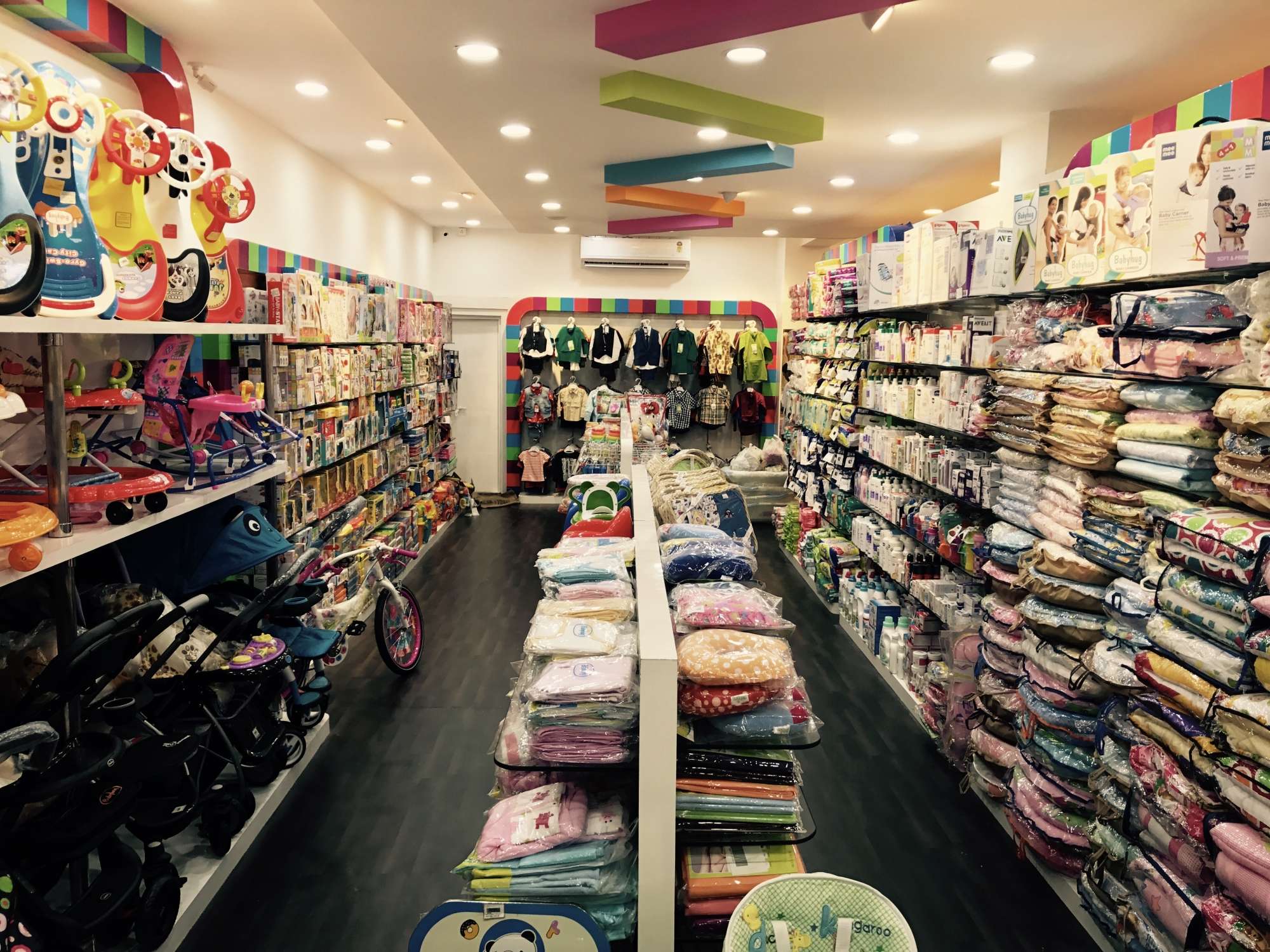
  • Baby apparel FirstCry in talks with Alibaba, SoftBank for funding

    Baby apparel FirstCry in talks with Alibaba, SoftBank for funding

    Indian online baby product retailer FirstCry is in funding talks with Chinese e-commerce platform Alibaba and Japanese multinational conglomerate SoftBank Group. The firm is seeking at least US$100–$150 million in the deal in a move to put it at the forefront of the market, according to unverified reports. Both investing partners may participate in the funding if the deal goes ahead.

    While none of the parties have released statements on the proposal, previous reports have revealed FirstCry as seeking similar investment figures over the past year.

    FirstCry has raised more than $100 million since launching in 2010. The business derives the majority of revenue from a network of more than 300 stores despite the relatively small size of its offline business compared to its online presence.

  • Myntra launches its in-house plus size brand, Sztori

    Myntra launches its in-house plus size brand, Sztori

    Myntra has announced the launch of Sztori, its in-house plus size apparel brand, especially designed to suit a larger range of body shapes and sizes. It is essentially a designer wear in the plus size category, offering consumers, the perfect fit and multiple style options at affordable rates. The apparel is made to suit plus size body types rather than prove to be a mere extension in size on existing profiles, thus breaking the existing age-old norm in the Indian market.

    Post identifying a white space opportunity in the segment, Myntra set out to design and develop merchandise under a new brand to cater to the category and make wearers look fashionable with multiple style options at affordable prices, opening new avenues in the industry.

    Known for democratizing fashion across segments, the launch enables Myntra to go a step further and include size profiles into the ambit of ‘fashion for all’. It champions inclusivity in fashion, evaluating and emphasizing greater attention to styles, trends, designs, fit and fabric for plus sized apparel, in order to bring out the personality of the person wearing it. ‘Sztori’ derives its name and theme from Myntra’s ‘story’ of developing a brand that celebrates a person’s journey and spirit, helping to soar above shape and size.

    The brand offers a range of products for men and women, including, Tees, denims, tops, dresses and more in L to XXXXL (Large to 4 times Large) sizes. Shoppers can choose from over 225 styles and designs at prices ranging from Rs 799-1,999.

    Speaking on the occasion, Manohar Kamath, CXO and Head, Myntra Fashion Brands, said, “We are extremely delighted to announce the addition of Sztori to our portfolio of private brands. Plus size clothing is in great demand and it was time we offered something substantial in the category, opening up more avenues and possibilities for our customers. Research estimates that this segment will account for US$ 5-6 billion in the US$ 40 billion Indian online fashion apparel market, by 2020, which is approximately 10-12 percent of the overall market, making it an important proposition.”

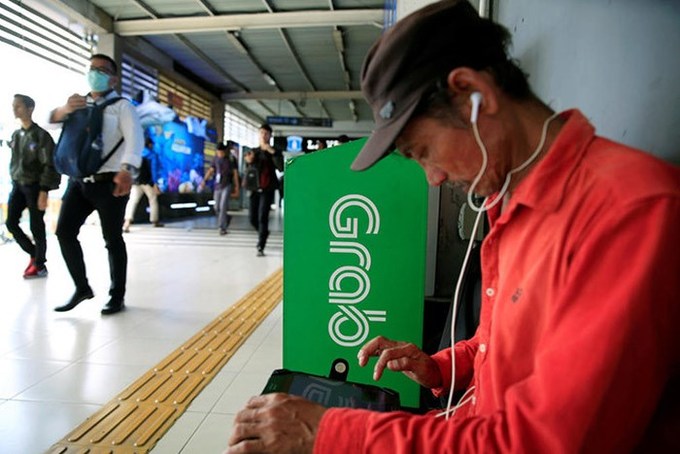
  • Grab: becoming a taxi company a step back from Industry 4.0

    Grab: becoming a taxi company a step back from Industry 4.0

    Ride-hailing firm Grab says giving in to traditional taxi companies’ demands is akin to bowing before “angry workers threatening to smash machinery.” Grab has written to Prime Minister Nguyen Xuan Phuc expressing concern over the latest draft of a decree prepared by the Ministry of Transport under which transport firms offering services with under 9-seater cars should be registered as taxi firms before they can apply ride-hailing technologies.

    This means that Grab and other ride-hailing firms would have to register their services again as taxi businesses and comply with corresponding legal responsibilities regarding their operating licenses, drivers’ profiles and tax duties.

    “The regulation not only goes against the policy and guidelines of the Government on the application of science and technology, and on reform of administrative procedures, but also completely denies the clear benefits achieved by the pilot scheme for ride-hailing services,” the company said.

    It said that the pilot scheme has sped up development of the transportation market, helped state agencies find effective management solutions using technology, and inspired the advance of Industry 4.0 in Vietnam.

    The company is providing an essential service to 20 percent of Vietnam’s population every day, providing work for 175,000 drivers and has contributed VND270 billion ($11.5 million) to the state exchequer in taxes in the first 9 months of this year.

    It said many taxi companies have “awakened” to the revolution and are currently cooperating very well with it, as well as other ride-haling firms.

    However, there remain “traditional taxi businesses who fear innovation, losing market dominance, and competition,” the company said.

    Bad precedent

    Grab said that this (treating ride-hailing firms as taxi firms) would set a bad precedent for the whole legal system and send discouraging signals to the start-up environment in Vietnam.

    “We have to emphasize that the approval of this draft, to appease the subjective will of some traditional taxi companies, would be to oppose the benefits and advances so important to society and the economy. This will be a step backwards from Industry 4.0, to bow before ‘angry workers threatening to smash machinery,” wrote Lim Yen Hock, CEO of Grab Co. Ltd.

    On Wednesday, a standing working group of the Government announced the results of the review of the draft submitted by the Ministry of Transport, saying that based on road traffic law, transport vehicles using ride-hailing technology like Grab or Uber are in essence taxis.

    These vehicles have to be subject to regulations as taxis, and cannot be classified as ‘electronic contract-based vehicles’ to circumvent the law, evade tax, avoid costs and receive incentives that do not apply to traditional taxis, the working group said.

    The debate over Grab’s status as transportation company is not new in Vietnam.

    Vietnam’s top taxi company Vinasun has sued Grab for $1.84 million in losses, citing “unhealthy competition.”

    The ride-hailing market in Vietnam has seen new entrants after the departure of Uber, which sold its Southeast Asia operations to Grab. The newcomers include Fastgo and GoViet, the last mentioned being an affiliate of Indonesia’s Gojek.

    Current market dominator Grab has expanded its services to include GrabFood, a food delivery service, and GrabCar Business, targeting the corporate sector.

    These moves pose further challenges for long-standing taxi firms like Mai Linh, Taxi Group and Vinasun.

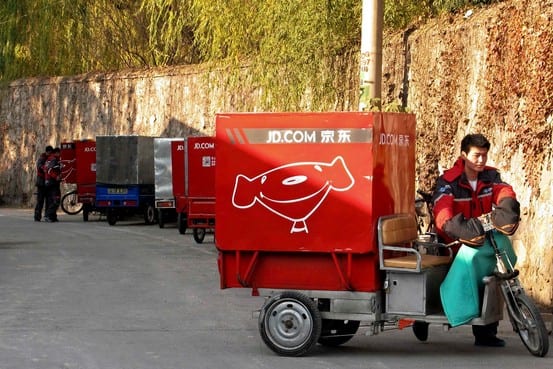
  • E-commerce platform JD introduces reusable packaging

    E-commerce platform JD introduces reusable packaging

    E-commerce platform JD has launched a reusable packaging initiative to promote sustainable consumption. The new program offers JD’s customers the option of ordering reusable packaging for their small and medium-sized parcels, returning the green boxes to delivery personnel after receiving their order. The firm estimates the program can save RMB32.5 million (US$4.68 million) per year if 10 per cent of orders use the new packaging.

    Customers who choose the packaging are rewarded with JD’s “Jingdou” loyalty points, which can be exchanged for products on JD.

    The service, which kicked off in Beijing, Shanghai, Guangzhou and Shenzhen, will expand to Chengdu and five other cities by the end of this month, and will cover 20 cities by the end of the year.

    JD Logistics’ head of planning and development Bing Fu said: “JD.com is always exploring ways to reduce e-commerce waste through green logistics. By using this green packaging, and taking part in our other innovative recycling programs, JD’s customers can enjoy the convenience of e-commerce while knowing that their purchases have involved minimal carbon emissions.”

    By deploying green boxes, JD expects to reduce the number of boxes used throughout the supply chain by 10 billion by 2020. The company has also set the target for 80 per cent of packaging materials to be recyclable; over 50 per cent of plastic packages to be replaced by biodegradable material; and 100 per cent of logistics packaging to be composed of recyclable or reusable materials.

    Meanwhile, JD introduced a fleet of hydrogen energy delivery trucks to greater Shanghai earlier this year, marking the first significant commercial deployment of hydrogen-powered vehicles for logistics in China as well as the latest expansion of JD’s goal to make the ‘last mile’ of the distribution process carbon-free. In early June, the company unveiled a fleet of 50 solar-powered delivery vehicles in Beijing.

  • JD.com starts marketing overseas properties to its buyers

    JD.com starts marketing overseas properties to its buyers

    Users of the service may find houses for lease with terms and prices verified as accurate.

    Other new partners include US Century 21 Real Estate and Beijing property search engine Zhuge. More than 1.7 million apartments in 100+ Chinese cities are already listed on the platform.

  • Online jewellery brand Melorra aims Rs 40 cr revenue this fiscal

    Online jewellery brand Melorra aims Rs 40 cr revenue this fiscal

    Online jewellery startup Melorra aims nearly five times jump in its revenue at Rs 40 crore in the current fiscal on bullish demand from non-metro cities, Saroja Yeramilli, Founder and Chief Executive said Tuesday. According to a report: The company, which sells contemporary lightweight jewellery in gold, diamond and coloured stones, had clocked a revenue of Rs 8.5 crore in the first year (2017-18) of its business, she added.

    “Much of the demand is coming from non-metro cities. We are getting orders from smaller cities and adding 100 new cities for delivery every month. We expect our revenue to touch Rs 40 crore this fiscal,” Yeramilli said.

    With rise in Internet and smart phones users, the company expects revenue to touch Rs 100 crore mark in the next fiscal and start making profits from 2021 onwards, she said.

    The company’s unique selling point is affordable rates, modern designs and quality of gold and diamonds from recognised agencies, she added.

    That apart, the Bengaluru-based company does not carry any inventory as it makes gold jewellery on order and delivers to customers with a return policy in 30 days and lifetime exchange of jewellery at prevailing rates of gold.

    On investment plans, Yeramilli, who had once headed sales division at Tata group jewellery brand Tanishq, said the jewellery start-up has already raised US$ 12 million from a venture capitalist, out of which US$ 8 million has been spent on the business.

    “We still have funds. We will invest that and later look for more funds. Funding has not been a problem. Investors are keen to invest in our company,” she further said.

    Asked if the company would go offline, Yeramilli said, “There are no plans to set up retail outlets. Melorra is an internet brand and it will remain like that.”

    With 100 employees recruited at present, the company plans to expand its marketing and technology division to cater to the growing online customers, she added.

  • Stocking up on Digitalization to Increase Share-of-Basket

    Stocking up on Digitalization to Increase Share-of-Basket

    With the rise of e-Commerce, Asian retailers are under tremendous pressure to continuously push traditional boundaries and embark on digital transformation to engage consumers. Keeping up with the latest trends in providing the best consumer experience have retailers looking to tech innovations, particularly digital technologies, to play a key role in capturing and keeping customers’ attention and loyalty.

    Technologies such as the cloud, Internet of Things (IoT), mobility solutions, and augmented reality (AR) are driving customer-facing innovations such as digital marketing, smart shopping carts, couponing, and mobile apps – that bring people into the store and keep them coming back. Cloud applications also make it easier for store associates and corporate staffers alike to collaborate and take care of back-office needs.

    The reality is that retailers need to embrace digital transformation and use technology in innovative ways to enhance the customer experience if they want to remain competitive.

    Technology Challenges

    However, rapid adoption of digital in retail not only improves outcomes but ignites new challenges for IT administrators in retail organizations. Among the challenges are how to:

    • Support increased customer engagement with in-store technologies that have high-bandwidth demands
    • Support increasing use of applications in the cloud with a resilient and secure network
    • Ensure connectivity and provide secure access for point-of-sale (POS) applications and electronic payment transactions
    • Ensure performance for real-time applications such as voice, video, and unified communications

    Taking on one of these efforts in the past may have required every resource, but now all of these must be accomplished by the same IT staff.  Also, these changes must be deployed across hundreds and even thousands of store locations spanning vast geographical regions.

    Yet the connective element that brings everything together for retailers –  existing networks are now too complex, too expensive, and frankly, too outdated to support the challenges and opportunities that come from digital transformation. A new approach to the retail network is required.

    With a Virtual Cloud Network, retailers can create an end-to-end software-based network architecture that delivers services to applications and data wherever they are located at global scale from edge to edge, with consistent, pervasive connectivity, and security.

    Faster service delivery on the cloud

    Alfamart in Indonesia is an example of a retailer that embarked on digital transformation by adopting cloud and mobility solutions, and reaped the benefits of a modernized, connected business network.

    Faced with a vast network of over 10,300 minimarts spread across the Indonesian archipelago and basic internet infrastructure in many far-flung areas, it was difficult for Alfamart to convey information in a timely manner across its network.

    The slow flow of information impeded the business’ ability to make critical decisions in a timely manner,  resulting in them not being able to react quickly enough to customer feedback or market trends, and affected overall competitiveness.

    Alfamart decided to connect all of its store employees and partners with a bring your own device (BYOD) strategy and an enterprise mobility management platform over the cloud.

    All store employees are now equipped with the most up-to-date product information, prices and stock level at their fingertips, enabling them to act quickly to meet market trends, and manage peaks in demand for the fast-moving perishable goods they provide.

    This has improved their speed-to-market, reduced training costs by 20 per cent, enhanced mobility across device and platforms, and improved internal communications between management and employees. Customer satisfaction levels have also gone up.

    Keeping systems up and goods in stock at all times

    City Mart in Myanmar is another retailer which benefited from modernizing its legacy IT infrastructure by adopting virtualization. Lengthy downtimes were a common occurrence under their old IT system, which affected their supply chain and resulted in unfulfilled customer orders, negatively impacting revenues.

    The supermarket network implemented a software-defined IT infrastructure and automated certain IT processes, which not only eliminated server downtime but also cut operational expenses by half. Predictive analytics and smart alerts also helped improve the system performance.

    With a new inventory management system, City Mart is now able to gain visibility of their stock across their entire network of 180 stores, whether on storeshelves or in the warehouse. This enabled them to better understand changing consumer demand patterns across different stores, ensure that goods are in stock at all times, and build stronger relations with suppliers.

    Ultimately, the virtualized IT infrastructure supports City Mart’s expanding business, enabling the retailer to meet the needs of Myanmar’s growing consumer class.

    Networking for Retail 2020

    The future of networking is software, and the network of the future is the Virtual Cloud Network. Virtual Cloud Networks allow retailers to create a digital business fabric for connecting and securing applications, data, and users across the entire network in a hyper-distributed world. In this way, retailers can simplify networking and wide area network management, optimize cloud access from all locations, assure high performance for even the most demanding applications, and enforce security and compliance across the network in every store location.

  • JD China Will Launch Flagship U.S. Store on Google This Year

    JD China Will Launch Flagship U.S. Store on Google This Year

    Chinese e-commerce platform JD is preparing to launch a flagship US store on Google. The move will allow JD, the second largest online retailer in China, to sell directly to American consumers by the end of the year, despite the emergence of potential new trade restrictions between the US and China.

    Google, which has been making moves to build a strong presence in e-commerce via its planned Google Shopping platform, purchased a US$550 million shareholding in JD this year. JD meanwhile is eyeing global markets as consumption slows in its home market. It is already selling in the US through partner and major investor Walmart.

    JD Logistics’s director of strategy Bao Yan said: “When Google Shopping launches, JD will have a flagship store. We are shipping from US fulfillment centers to US end-customers.”

    JD operates warehouse and delivery services in Los Angeles and has plans to expand its US-based facilities with several new fulfillment centres, ahead of opening its store on Google.

    Google, moving to compete with Amazon, will be responsible for payment and order processing for the enterprise.

  • Shopee becomes top e-commerce in Vietnam in Q3

    Shopee becomes top e-commerce in Vietnam in Q3

    Shopee has become the leading Vietnam e-commerce market player, followed by Lazada and Tiki. The report published by Iprice Insight, ranks the top 50 Vietnam e-commerce market players based on their average quarterly traffic, mobile application ranking, social media followers and number of staff, using data collected in July.

    The report shows that during the quarter, Shopee had a monthly average traffic of 34.5 million visitors while Lazada, which had topped the list since the second quarter of last year, achieved 30.2 million.

    Other players in the Top 5 included local company Tiki, with 29.4 million visitors a month, Sendo with 20.7 million, and Adayroi with 5.3 million.

    All of the top four platforms have foreign investment.

    Iprice predicts significant changes during the next quarter when the platforms offer more promotions to stimulate shopping as year-end approaches.

    The Vietnam e-commerce market has been growing fiercely, with revenue forecast to reach US$10 billion by 2022.

  • FastGo drives into provincial markets in Vietnam

    Vietnamese ride-hailing app FastGo has expanded its services to provinces in Vietnam like Dong Nai and Binh Duong, provinces neighboring HCMC. FastGo aims to cater to high travel demand within the southern provinces and for commutes between the provinces and Ho Chi Minh City

    Nguyen Huu Tuat, general director of FastGo Vietnam, said that Bien Hoa City in Dong Nai and Binh Duong were two municipalities next to HCM City with large traffic flows and number of commuters.

    The introduction of the app in these localities will make it more convenient for customers to travel, as well as reduce wasteful ‘empty miles’ for local cabs, he added.

    Currently, FastGo has about 1,000 drivers operating in these two cities.

    The company plans to expand its presence into Ha Long City in the north and Nha Trang City in the center early next month. By the end of the year, it will also introduce food delivery and “On Demand Shopping” services.

    Launched in June 2018, FastGo now operates in Hanoi, Ho Chi Minh City and Da Nang with more than 30,000 drivers. It has already completed “over one million kilometres of service.”

    At the end of August, the company received funding from VinaCapital, and is planning to mobilize up to $50 million for a second expansion phase that will target Indonesia and Myanmar.

    FastGo has three core services: Fast Car – a four-wheel drive app for private contractors wanting to make additional income; Fast Taxi – a service linked with existing taxi companies who can receive orders on the app; and Fast Luxury – a semi-luxury car service.

    FastGo last month said it has 15,000 taxi and motorbike partner drivers in Hanoi and Ho Chi Minh City, but they are still not a common sight on the streets, unlike the ubiquitous red and green uniforms of Go-Viet and Grab drivers.

    Tuat said he wants FastGo to become one of Southeast Asia’s top 3 ride-hailing apps in the future.

    A report quoted the company as saying it hopes to make its service available in 20 cities in Vietnam and five other Southeast Asian markets, including the Philippines, Cambodia and Thailand, by the end of next year.

    FastGo Vietnam Joint Stock Company was established in April 2018 with its headquarters in Hanoi. The company belongs to a wide network of services provided by Nexttech – a leading tech firm in Vietnam.

  • Aber ride-hailing service hits the road in Hanoi

    Aber ride-hailing service hits the road in Hanoi

    Aber, the second Vietnamese ride-hailing service, launched its Hanoi operations Friday, four months after making its HCMC debut. The ride-hailing market has seen new entrants after Uber’s departure, including Vietnamese firm FastGo, GoViet – a subsidiary of Indonesia’s Go-Jek, and the latest Aber. Aber estimates it will attract 5,000 taxi drivers and 5,000-10,000 motorbike drivers in Hanoi this year.

    In HCMC, the company is working with 7,000 drivers serving  more than 60,000 customers. Aber general director Huynh Le Phu Phong said the company was not afraid of major competitors such as Grab because it offers a wide variety of transport services.

    The firm will offer similar rates as other competitors, but give better benefits to its drivers, he said.

    “We do not force drivers to only work for Aber. They can also work for other companies to increase their income and improve their lives,” Phong said.

    In its latest update, Aber has added new features including a navigation system and accurate positioning to each alley, village, district and province in Vietnam.

    Vietnamese engineers designed the software.

    Next year, the company will focus on expanding its services, including Aber Express for delivery services, Aber Track for freight services, Aber Business for companies and Aber Travel for travel services, Phong said.

    Aber focuses on serving individual customers to help them save money, as well as drivers, when their vehicles are vacant, he added

    Instead of having to drop off items at the post office or delivery centers, drivers will come and pick things up right at the customer’s house.

    Current market dominator Grab has expanded its service to include GrabFood and GrabCar Business, the latter targeting the corporate sector. These moves pose further challenges for local long-standing taxi firms like Mai Linh, Taxi Group and Vinasun.

  • Castore Hong Kong prepares for debut next month

    Castore Hong Kong prepares for debut next month

    Castore Hong Kong is set to launch next month. The British sportswear brand will launch websites in Hong Kong, South Korea, Singapore and Japan, and will sell its men’s sportswear range in Hong Kong through local partner Harvey Nichols.

    Harvey Nichols merchandising manager, menswear Marco Lau said Castore creates cutting-edge fitness apparel for athletes who demand both function and style.

    “The multi-purpose use of Castore kit, from outdoor running to indoor gym training, appeals to the Hong Kong consumer and we have no doubt the brand will be a great success.”

    Castore’s head of Asia, David Wakely, said Asia offers a huge opportunity for Castore.

    “The brand has been incredibly well received to date by customers across the region and we are very excited to continue our growth going forward.”

    Co-founder Tom Beahon said the brand’s customers in Asia tend to be professionals, either locals or expats, who take their fitness very seriously.

    “So the demographic fit is perfect for us. We see huge potential among the residents and the millions of tourists who visit Hong Kong and are actively looking at locations to open a standalone Castore Hong Kong store.

    “Sales in Asia are growing at 400 per cent a year and are on track to account for 40 per cent of international sales in the next 12 months.”