Category: E-Tailing

Retail News Asia is committed to providing both local and global retailers with the latest E-Commerce & Etail news throughout the Asian market. This on a daily base.

  • Alipay will be available in Seoul taxis via kakao pay beginning January 2019

    Alipay will be available in Seoul taxis via kakao pay beginning January 2019

    Following the introduction of QR-code payment in more than 71,000 taxis in Seoul, all taxis in Seoul will accept Alipay beginning in January 2019. Alipay, the world’s largest online and mobile payment platform, operated by Ant Financial Services Group, can be used by Chinese tourists to pay for taxis in Seoul via its strategic partner kakaopay, which acts as system integrator. In the near future, local users will also be able to pay taxi fare via kakaopay.

    Alipay has been collaborating with kakaopay, a Korean mobile payment service, to further promote mobile payment services in the country. Last year, Ant Financial Services Group formed a strategic partnership with kakaopay. Since then, both Alipay and kakaopay have been working to integrate with all partner merchants in Korea. Earlier, Alipay enabled its payment service for taxis in the Pyeongchang and Gangneung areas where the Winter Olympics were hosted in February.

    Presently, Alipay is accepted by taxis in more than 15 countries and regions for Chinese users around the world, including China, Korea, Singapore, Malaysia, the U.S., Italy and Australia. Alipay is now available in more than 90% of taxis in primary and secondary cities in China. In addition, 75% of taxis in Singapore accept Alipay, providing a convenient payment method for Chinese tourists.

  • Mastercard and HKTaxi teamed up for clients’ Rewards Program

    Mastercard and HKTaxi teamed up for clients’ Rewards Program

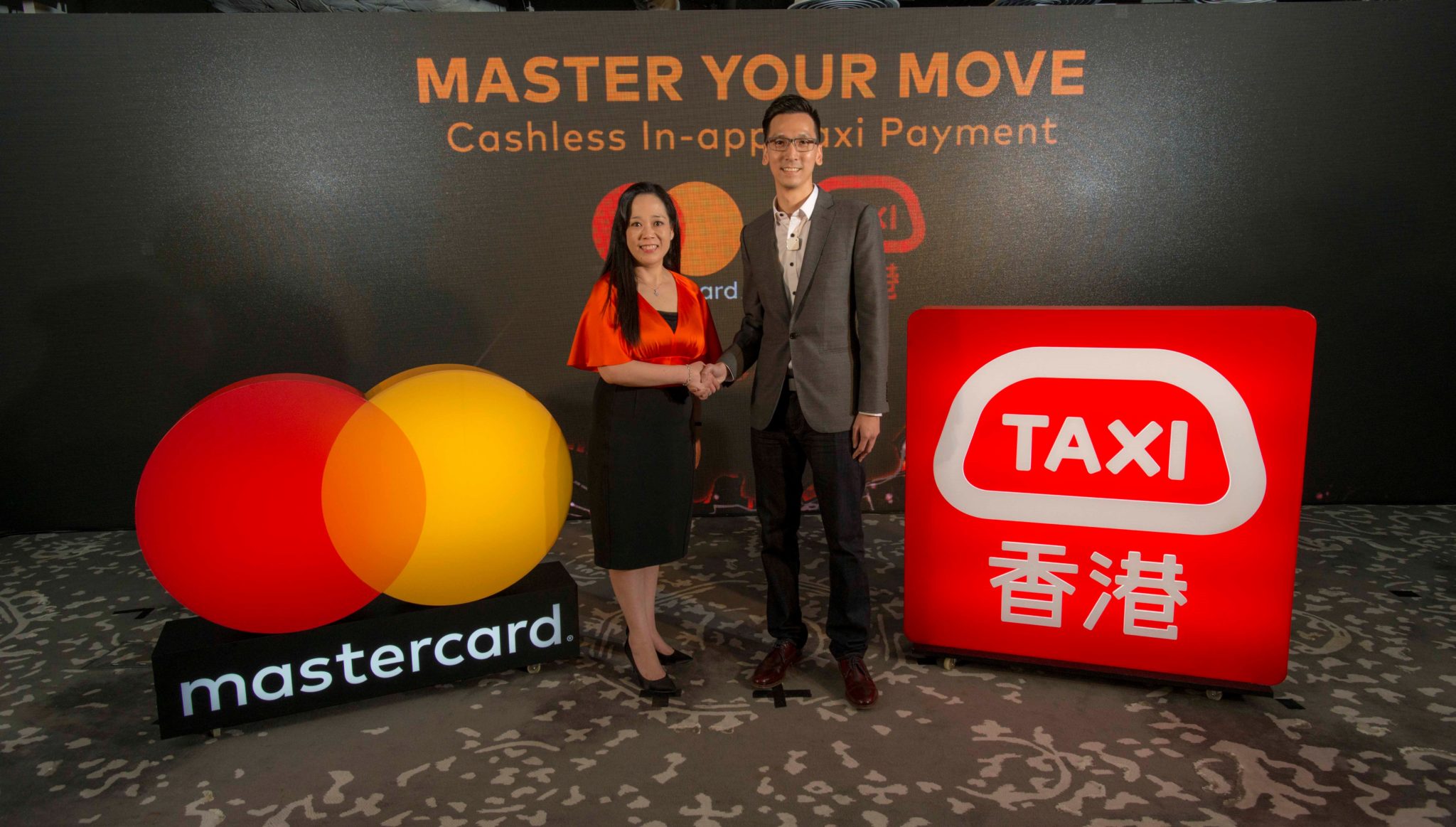
    Mastercard and local taxi-hailing app HKTaxi bring a new rewarding experience to Hongkongers by introducing the city’s first taxi ride rewards program, creating more value and excitement for passengers to enjoy safe, fast and convenient cashless payment all over the city. While earning rewards through dining and shopping are not uncommon in the city, the concept of earning rewards through taxi rides marks a breakthrough in the taxi industry.

    As part of the ongoing collaboration, Mastercard cardholders can exclusively earn a 5% rebate in “Taxi Dollars” when paying for taxi rides with Mastercard via HKTaxi from now until December 31, 2018. The earned Taxi Dollars can be used to pay for future HKTaxi rides, which will surely make travelers look forward to every journey they take.

    “HKTaxi shares the same vision with Mastercard in building a cashless society and making Hongkongers’ lives more secure and convenient through technology,” said Kay Lui, co-founder, HKTaxi. “We are proud to launch the city’s first taxi ride rewards program that endows passengers with Taxi Dollars, an enthralling and breakthrough concept that not only benefits the Hong Kong people but also takes the taxi industry to a whole new level.”

    “Mastercard aims to take care of cardholders’ needs and provides them with the best service every day,” said Helena Chen, managing director, Hong Kong and Macau, Mastercard. “Mastercard continues to bring safe, fast and convenient in-app digital payments experience to Hongkongers through its technology. The launch of the pioneering Taxi Dollars privilege enables taxi riders to further enjoy the secure and cash-free experience. More importantly, Mastercard aspires to push forward the development of digital payments in Hong Kong.”

    With the world’s fastest and most reliable global payments network, Mastercard cardholders can enjoy safe, fast, convenient, and rewarding journeys with the city’s first taxi ride rewards program.


  • Tmall’s “See Now, BuyNow” Show Kicks Off 2018 11.11 Global Shopping Festival

    Tmall’s “See Now, BuyNow” Show Kicks Off 2018 11.11 Global Shopping Festival

    Tmall, the largest B2C ecommerce platform for global and domestic brands and retailers in China, hosted its “See Now, Buy Now” Tmall Collection Fashion Show during the weekend in Beijing, kicking off the month-long lead-up celebration to Alibaba Group’s 2018 11.11 Global Shopping Festival.

    This year – the festival’s 10th anniversary – its fashion show added a new interactive element. In addition to popular “See Now” and “Buy Now” features that allow viewers to purchase items shown on the runway instantly from their mobile phones, this year’s fashion show also introduced an innovative feature, “Play Now”. “Play Now” gives viewers the chance to vote for their favorite outfits to create a trend report that would provide insights and instant feedback to participating brands.

    “Tmall Collection is our annual extravaganza to showcase the hottest trends in fashion. We created the ‘See Now, Buy Now’ concept two years ago, and we are excited to boost consumer engagement to a new level with the ‘Play Now’ feature, enabling viewers to share their views with brands real-time,” said Jessica Liu, President of Tmall Fashion and Luxury.  “The ‘See Now, Buy Now’ show provides a powerful sales channel for the world’s leading brands and also has the potential to reshape the fashion industry with the interactive component tailored for the always-online Chinese millennials.”

    The four-hour “See Now, Buy Now” show featured an impressive lineup of more than 60 international and domestic brands showcasing their latest collections, including Estée Lauder, Levi’s, Adidas, Guess, I.T, M.A.C.., G-Star Raw, and Swatch. More top luxury brands participated in the event than ever before, including Stella McCartney, Burberry, MCM, La Perla, Giuseppe Zanotti, and Stuart Weitzman.

    To celebrate the 10th anniversary of the 11.11 Global Shopping Festival, the fashion show also featured a special segment highlighting crossover products that are specifically designed for the Festival. Celebrities participating in the show this year included American fashion designers Anna Sui and Jason Wu, American singer Jaden Smith, and Chinese singer Chris Lee.

    The live runway show had attracted over 57 million online viewership, more than tripling that of last year. It was broadcast live on 10 platforms, including the Taobao app, Alibaba’s video platform Youku, social media platform Weibo, and short video app Tik Tok.

  • 7-Eleven Outlets In Singapore Are Now Lazada Collection Points

    7-Eleven Outlets In Singapore Are Now Lazada Collection Points

    Lazada and Ninja Van have teamed up with the Singapore 7-Eleven convenience store chain to allow online shoppers to designate any of the nearly 350 stores island-wide as collection points. The collaboration will offer the largest network of collection points around Singapore. The new service debuted at 159 7-Eleven stores this week, with a progressive rollout planned for the rest of the store network by the end of the year.

    Lazada and last-mile logistics provider Ninja Van say the new service eliminates the need for a purchaser to ensure someone is home to receive goods bought online. They can nominate any participating Singapore 7-Eleven store as their delivery point upon checkout.

    “More than 35 per cent of Singaporean households have only one or two residents, with close to 25,000 new dual or single person households forming just between 2016 and last year,” said Crispian Leong, Singapore 7-Eleven head of marketing.

    “Most are working during the day, and many may not find it convenient to receive parcels at their office. With close to 350 participating stores islandwide, we are excited that we can partner with Lazada and Ninja Van to offer this added convenience to consumers’ daily lives and online shopping habits.”

    Ray Chou, country head of Ninja Van Singapore, said the problem will address the high number of failed deliveries its partners encounter, “which is disruptive not only for our customers, but for sellers and delivery companies as well”.

    Users of the service will enjoy free delivery, as opposed to S$1.49 for normal and S$2.99 for express drop-off to their homes.

    Pierre de Bellescize, CEO at Lazada eLogistics Singapore, said partnering with 7-Eleven and Ninja Van will bolster the click-and-collect options the company already offers with SingPost’s PopStations, SPH Buzz Convenience Stores and Parcel Santa Lockers located in Condominiums and others.

  • Flipkart corners more than 50 pc share in India festive sale: RedSeer Consulting

    Flipkart corners more than 50 pc share in India festive sale: RedSeer Consulting

    Increased buying in smartphones and fashion verticals helped Walmart-backed Flipkart corner over 50 percent share during the first leg of the festive sale, according to research firm RedSeer Consulting. As per RedSeer’s latest report, Flipkart had a 51 percent share, while Amazon India had 32 percent share of the festive sale from October 9-14.

    “Flipkart accounted for more than half of GMV for the entire industry. Between Flipkart and Amazon, the share was 62-38. Higher share for Flipkart was driven by higher sales in both mobiles and fashion verticals,” RedSeer said.

    An Amazon spokesperson termed the report as ‘speculative’ that ‘lack robust and credible methodology’.

    “We received an overwhelming response to the Great Indian festival, with first 36 hours nearly surpassing the entire first wave last year and the entire wave growing by 96 percent versus last year…the festive season so far has exceeded our most aggressive plans,” the spokesperson said.

    Other players like Snapdeal, Paytm Mall and ShopClues also ran their festive offers and accounted for 17 percent share of the sales.

    Flipkart in a statement said the company “pushed the boundaries on many fronts and hit some of our biggest-ever numbers during its Big Billion Days (BBD).

    “We maintained a clear leadership in deep-penetrated and high ASP categories,” it added.

    As per the RedSeer report, the fashion and smartphone verticals grew by 78 percent and 70 percent, respectively.

    However, consumer electronics grew by only 45 percent despite large investments by both players in supply chain and affordability initiatives like debit card EMIs, it added.

    RedSeer said its report is based on interview with experts from supply chain, banking ecosystem and brands, seller views, customer surveys and other research.

    The report said Day 2 of the five-day sale was the biggest in terms of gross merchandise value (GMV) as it saw the launch of multiple new exclusives in mobile phones and offers on other platforms as well.

    Post second day, the growth of GMV stalled a bit with last three days accounting for only 42 percent of sales compared to 60 percent in the first two days, it added.

  • ZALORA nabs Myntra CMO Gunjan Soni as new CEO

    ZALORA nabs Myntra CMO Gunjan Soni as new CEO

    Global Fashion Group has chosen the head of Jabong India as the new Zalora CEO. Gunjan Soni will over the helm of the Southeast Asian e-commerce portal early next year after she completes her combined tenure as chief marketing officer with India’s largest fashion e-commerce business, Myntra, and the Jabong role.

    Soni has more than 13 years of leadership experience in marketing, strategy and operations and a passion for building new-age consumer businesses.

    “It is truly a huge privilege to lead Zalora, which is already the leading fashion and sports destination, at a time when Southeast Asian markets are poised for increasing fashion and e-commerce consumption,” she said in a statement.

    “When I see Zalora, I see a company with limitless potential and ability to shape the future of fashion commerce in one of the most exciting markets globally. This makes it both exciting and humbling to take on this role.”

    At Myntra, Soni was instrumental in positioning the brand as a leader in fashion and lifestyle and leading the turnaround of the Jabong business post acquisition.

    Prior to joining Myntra, the next Zalora CEO was executive VP for strategy & CEO office with Star India. She also spent a large part of her career at McKinsey where she was a partner, working across multiple consumer sectors and geographies including the UK, Singapore and Bhutan.

    She is a recognised leader in business having featured in Spencer Stuart-Economic Times young leaders 40 under 40 list, Fortune India 40 under 40, and named one of the most influential women leaders in media.

    Patrick Schmidt, Co-CEO of Global Fashion Group, Soni’s experience in leading operations, strategy and marketing in fashion e-commerce and her strong leadership skills will be instrumental in strengthening Zalora’s position as market leader in Southeast Asia’s e-fashion space.

    “She has a deep and broad understanding of the complexities of e-commerce and has contributed to building one of the world’s biggest fashion e-commerce companies.”

  • Dada-JD Daojia, Carrefour to collaborate online

    Dada-JD Daojia, Carrefour to collaborate online

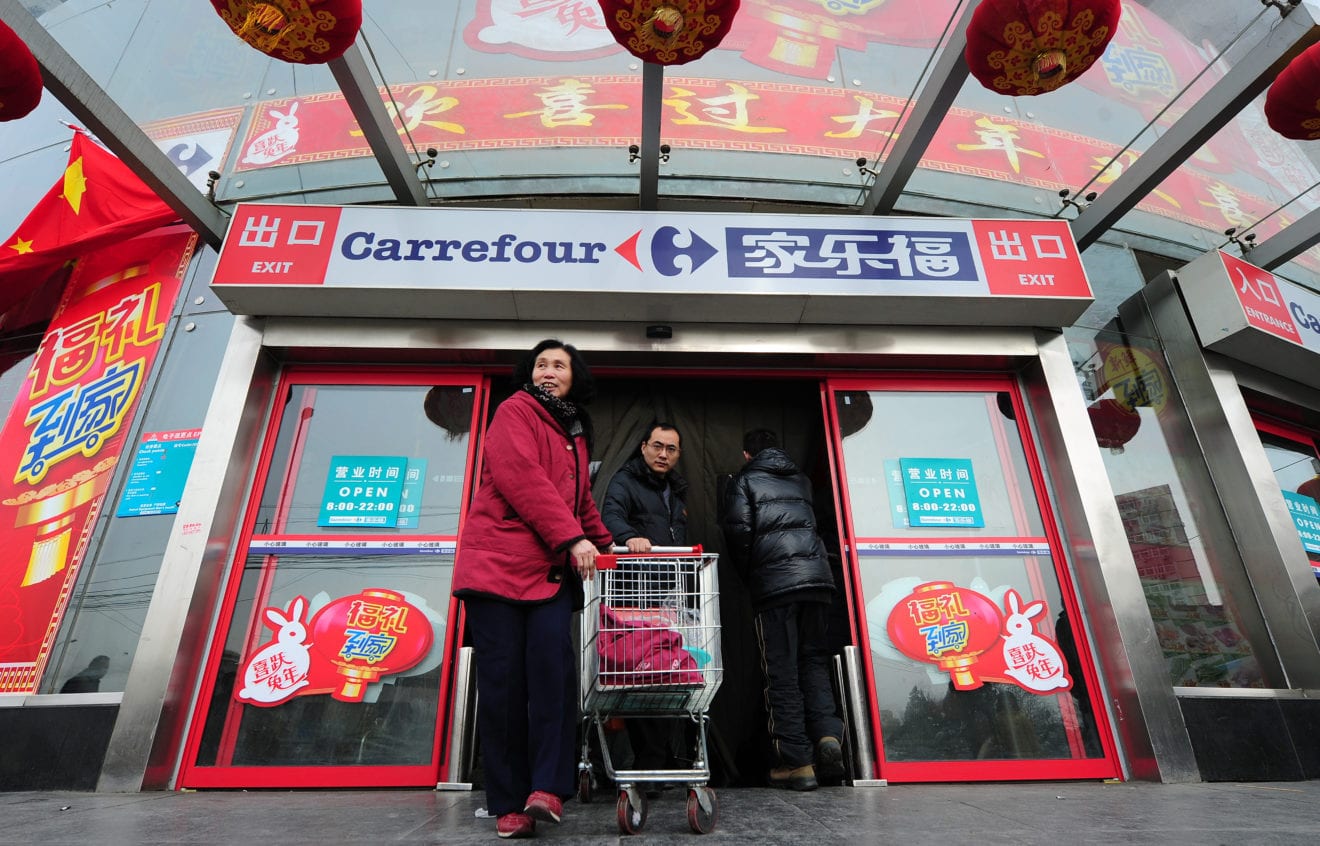
    Chinese online grocery and delivery firm Dada-JD Daojia is partnering with French hypermarket chain Carrefour. The collaboration, which involves listing Carrefour China stores on the Dada-JD platform, has already resulted in a 720 per cent increase in the chain’s online sales compared with the month previous. Some 4000 Carrefour products are available to be traded on the platform.

    So far, 158 Carrefour stores are listed on Dada-JD, with plans being to have 200 listed by the end of the year.

    Dada-JD Daojia offers two distinct services, the “Dada” on-demand logistics platform (which covers 400 major Chinese cities) and the “JD Daojia” e-commerce platform that has more than 50 million users. It has collaborated with Walmart since 2016 as well as other chain supermarkets.

  • US-China trade spat will exert exchange rate pressure on Vietnam

    US-China trade spat will exert exchange rate pressure on Vietnam

    If US-China trade tensions drag on, Vietnam will still see good growth but face strong exchange rate pressures exerted by two major currencies. After GDP growth reached 6.98 percent in the first 9 months of 2018, the highest in the past 8 years, it is relatively clear that the Government will reach its 6.7 percent growth target by the end of the year. Only a 6.11 percent growth in the fourth quarter to meet this objective.

    Usually, the fourth quarter will have the highest quarterly GDP of the year, thanks to the rise in exports, production and consumption. Consequently, some experts are optimistic that this quarter’s growth is likely to exceed the third quarter (6.88 percent) to bring GDP in 2018 to 6.9 – 7 percent as predicted by major international financial institutions.

    In its forecast, HSBC Vietnam made a rather safe prediction that GDP growth in 2019 would stand at 6.7 percent, equivalent to the bank’s forecast of growth for this year.

    In line with this, GDP per capita is expected to improve from $2,321 in 2017 to $2,734 next year. However, inflation will rise to 4.2 percent, the bank said.

    “The US economy is seeing strong growth, but the global economy is in decline and stagnating. However, while other countries in the region are showing signs of decline, Vietnam remains an exception,” said Pham Hong Hai, CEO of HSBC Vietnam at the ‘Infrastructure Outlook 2018’ conference last week.

    The International Monetary Fund (IMF) has lowered its forecast for global economic growth in 2018 and 2019 due to the escalating trade war. In a recent development, President Donald Trump has reiterated his threat to impose tariffs on another $267 billion in Chinese goods, which comes on top of the $200 billion in goods he has already targeted earlier this year.

    “Vietnamese companies, with the exception of the rubber industry, are increasing their capacity to export to the U.S. while the capacity of Chinese companies is decreasing,” said Hai on prospects for 2018.

    “Moreover, FDI will remain the main driver of growth as investors are likely to prioritise targeting Vietnam as opposed to other economies in the region.

    “Investors have traditionally preferred China, but now they are paying more attention to Vietnam because of its free trade agreements (FTAs),” he said.

    Although the outlook for 2019 is positive, the U.S.-China trade war still creates an unstable global economic environment. Vietnam has been trapped between the two major currencies, which both have extensive trade ties, economists said.

    At the end of September, the U.S. Federal Open Market Committee (FOMC) raised the refinancing rate by 0.25 percent to 2.25 percent. This is the third interest rate hike this year, and another is scheduled to happen before the end of 2018.

    This has led to an appreciation in the dollar, higher prices on imports into Vietnam, higher input costs and more pressure on exchange and interest rates.

    Meanwhile, the yuan is likely to continue to depreciate if tensions drag out, aimed at limiting the damage done from the effect U.S. tariffs have on the price of Chinese goods. With export turnover to China reaching $35.5 billion, accounting for 17 percent of Vietnam’s export turnover last year, exports in general will likely suffer.

    Vietnam also lies in the top 5 countries in the crosshairs of the U.S.’ protectionist policies given Vietnam’s high trade surplus with the U.S.

    However, experts believe it is highly unlikely for Trump to launch a trade war against the country as Vietnam is willing to be flexible. Recent announcements from Prime Minister Nguyen Xuan Phuc also indicated that Vietnam is very willing to welcome investors as well as consume more goods from the U.S.

    “We are also excited to know how you plan to do business or expand in Vietnam,” the Prime Minister declared in front of 40 leading U.S. firms in New York last September.

    As the fourth quarter has just commenced, there are still many variables yet to be ascertained to make predictions for next year. Even the U.S.-China trade war with its global economic implications, is unpredictable, not to mention other risks not associated with the trade war itself.

    “Vietnam has a great outlook, but the risk lies mainly in public debt. However, public debt has been falling. In addition, CPI at 4 percent or higher is also a risk for 2019,” Hai of HSBC noted.

    In the medium and long term, the future of Vietnam’s economy, according to specialists, remains a big question. HSBC offers two scenarios by 2030. The first is optimistic, predicting growth of over 8 percent while the other sees GDP growth deceleration to a level below 4 percent.

    According to Hai, the final outcome will depend on Vietnam’s ability to solve challenges in such issues as policy, productivity and infrastructure.

    “We are looking forward to Government reforms because we are in the Industry 4.0 era,” he added.
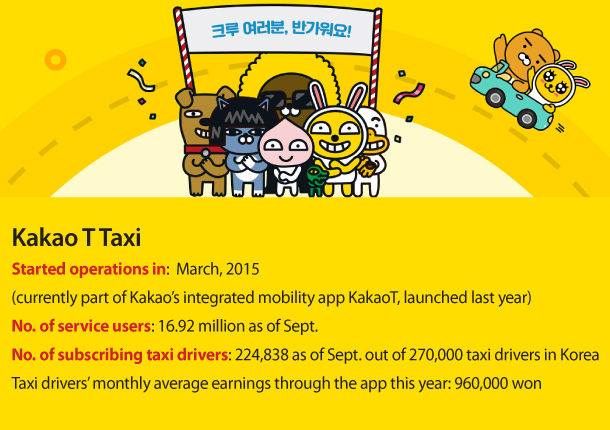
  • Kakao starts carpool recruitment

    Kakao starts carpool recruitment

    Kakao Mobility has opened recruitment for its carpool app, infuriating taxi drivers who are vehemently opposed to the move. According to the mobility company that operates taxi-hailing app Kakao T, recruiting drivers is one of the crucial steps in preparation for the launch of its carpool service. The hiring process opened on Tuesday with the launch of a driver registration app, dubbed Kakao T Carpool for crews.

    Kakao Mobility was quick to point out that recruitment does not mean it will immediately launch a carpool app, adding that there is no set date for release. Instead, Kakao is looking to move drivers registered on Luxi to the new Kakao app, although this process will mean that it has a pool of drivers readily available, allowing it to immediately launch the app whenever it wants.

    Kakao Mobility has actually been attempting to launch its own carpool service since it acquired Luxi for 25.2 billion won ($22.4 million) in February. At the time, the company made it clear that it would only use the carpool service to cover shortages in taxis during peak hours, “within the legal boundaries.”

    Kakao’s statement did little to appease taxi drivers back in February, and they’re not any happier with the service now. Korea’s taxi drivers are fiercely opposed to ride-sharing apps, which they consider an unlicensed threat to business.

    This is the main reason why popular international ride-hailing companies like Uber are illegal in Korea under Article 81 of the Passenger Transport Service Act, which says that personal vehicles cannot be exploited for business purposes.

    Carpooling services, however, have been operating by taking advantage of a loophole that says that carpooling during commuting hours is permitted. Still, the vagueness of the term “commuting hours” has caused conflicts between carpool service providers and taxi drivers.

    Taxi drivers argue that Kakao is taking work away from them. As Kakao operates Kakao T, which thousands of taxi drivers rely on for work, the feeling of betrayal is even stronger.

    “It feels as if we are being backstabbed by Kakao, who we have been thinking of as a business partner,” said a spokesperson from the Korea National Joint Conference of Taxi Association, a group representing over 100,000 corporate taxi drivers nationwide, in a phone call Tuesday. “I can’t believe Kakao is making this announcement without delivering any message to drivers who have been holding a series of rallies against the company’s plan to start the carpool business.”

    The drivers held two rallies in Pangyo, Gyeonggi, where the Kakao Mobility office is located, on Oct. 4 and 11. About 500 people gathered at the second rally from four taxi driver unions, including the Korea National Joint Conference of Taxi Association. Tomorrow, a bigger protest is due to take place in Gwanghwamun Square in central Seoul at 2 p.m.

    To participate in tomorrow’s rally, about 4,000 drivers from Incheon, about half the city’s taxis, are expected to walk out, according to Incheon’s taxi association. About 2,000 taxis in Jeonju, the capital city of North Jeolla, are also due to stop operations for the rally, according to the city’s government.

    Some other cities are also facing similar problems as taxi drivers say they will leave for the rally.

    Despite the controversy, Kakao Mobility maintained Tuesday that carpool apps could be a great complementary service for taxis, citing data that on Sept. 20 there were 205,000 calls for taxis on the Kakao app from 8 a.m. to 9 a.m., but only 37,000 taxis were available.

  • Honestbee risk losses with new experimental offerings

    Honestbee risk losses with new experimental offerings

    Online grocery service Honestbee has opened a retail space which merges cashless grocery store with a restaurant and a testbed for new retail technologies.

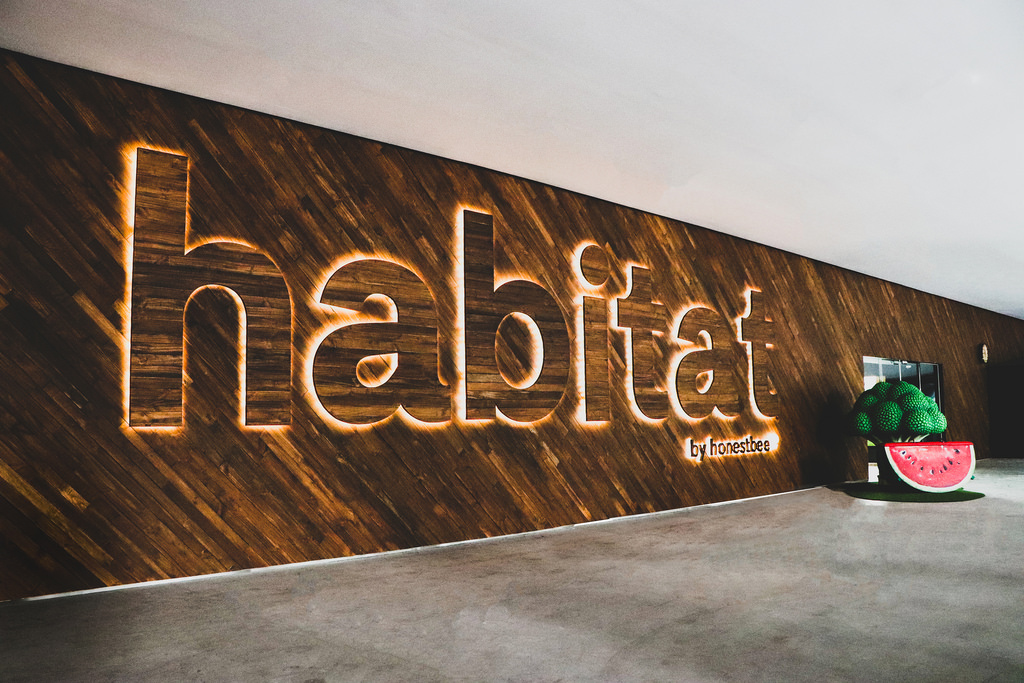
    Habitat by Honestbee in Pasir Panjang is billed as “the world’s first tech-integrated multi-sensory grocery and dining destination of its kind”. While Chinese online behemoth Alibaba may well challenge that claim, Habitat is certainly a revolution in Southeast Asia, boasting a cashless checkout experience and a fully automated robotic collection point, called RoboCollect.

    Spanning 60,000sqft, Habitat by Honestbee is a full supermarket with more than 20,000 Asian and global foods and ingredients as well as daily essentials, which can be purchased both online and offline.

    The store also features 15 unique food and beverage concepts ranging from grain bowls and grilled wagyu meats to Japanese souffle pancakes and homemade kombuchas, all available to eat on site or take away.

    More features are under development, including an invitation-only private dining space, an oyster bar, an entire section devoted to charcuterie and cheese, and a hidden bar.

    Honestbee says the new space heralds the arrival of NewGen Retail, a concept defined as “innovation in retail technology that inspires more human engagement for a multi-sensory experience” and not hugely dissimilar to Alibaba’s New Retail concept.

    For purchases of 10 items or less, shoppers can use the Scan & Go function on the Honestbee app, so they can skip the checkout line and get their items on the spot. Those with bigger shopping lists can drop off their trolleys at the convenient AutoCheckout and Habitat will take care of the scanning and packing, with bags ready for collection at the RoboCollect Stations.

    Honestbee says customer orders can be processed between checkout and collection in as little as five minutes.

    Online grocery orders are fulfilled by ‘Shopper Bees’ (Honestbee staff) using overhead conveyor belts for greater productivity before ‘Driver Bees’ pick them up for delivery.

    Purchases can be paid for securely using BeePay, Honestbee’s own digital wallet, either online or offline.

    “Habitat by Honestbee is a beautiful, physical extension of the honestbee brand we all love,” said VP and MD at Habitat by Honestbee, Pauline Png.

    “With its launch, we now provide tech-enabled convenience, value and quality through food in both the online and offline experience. It is a unique combination of a full supermarket, speciality grocer, dining and interactive lifestyle destination. In this innovative space, one can expect a multi-sensorial food experience that nourishes, educates and inspires. We designed it so that customers can get their groceries and meals efficiently but also linger and enjoy the experience.”

    View the full gallery of the newest Habitat store below (16 images) :

  • Alibaba’s Robust Ecosystem Supercharges  2018 11.11 Global Shopping Festival

    Alibaba’s Robust Ecosystem Supercharges 2018 11.11 Global Shopping Festival

    Alibaba Group Holding Limited (NYSE:BABA) today officially kicked off the 2018 11.11 Global Shopping Festival in China’s capital, promising this year’s mega-event will be the largest-ever in terms of scale and reach.

    Businesses within the Alibaba ecosystem will jointly offer hundreds of millions of consumers an enriching experience that supports their pursuit of high-quality products, entertainment and fast, reliable services. The Festival will also demonstrate the enthusiasm of consumers and brands embracing Alibaba’s New Retail strategy – the convergence of online and offline retail through technology.

    “This year marks the 10th anniversary of 11.11. On the back of China’s explosive digital transformation, the Festival’s astounding growth over the past decade has powered the steady growth of quality consumption sought by Chinese shoppers. The evolution also showcases the development of the Alibaba ecosystem over time expanding well beyond e-commerce,” said Alibaba Group CEO Daniel Zhang.

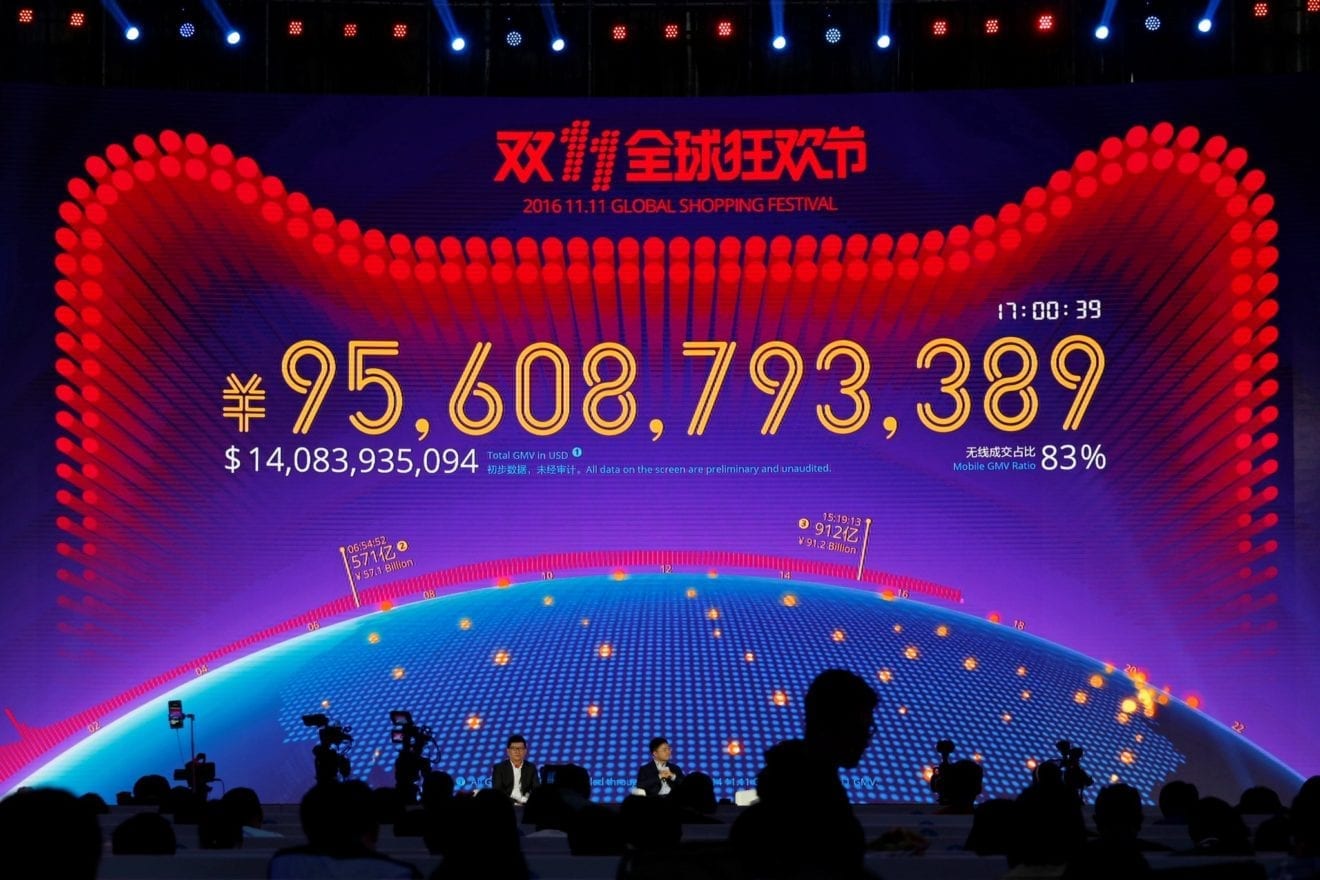
    Zhang conceived 11.11 as a concept a decade ago, turning “Single’s Day” on the Chinese calendar into the world’s largest annual shopping event. The first 11.11 in 2009 brought in US$7.8 million in gross merchandise value (GMV). Total GMV generated in 2017 was US$25.3 billion. Over the past decade, China’s number of Internet users has risen to 802 million and 98% of them are mobile1. Alibaba has captured the hearts and minds of these Chinese consumers and expects to keep leading the way in retail innovation.

    “Over the last two years, we have pioneered the concept of New Retail to accelerate the digital transformation of the offline. We are excited by the impressive results achieved to date and will continue to be the driving force innovating for merchants and customers in the coming decades. We aim to become both the number-one business partner for brands and the number-one shopping destination for consumers,” Zhang added.
    This year, 500,000 items will be available for pre-order on Tmall from October 20. Customers can enjoy additional promotional coupons on Mobile Taobao and Mobile Tmall. Specifically, the 2018 11.11 Global Shopping Festival will have the following features made possible by New Retail and interactive initiatives:

    • Brand Innovation Tmall will continue to give brands access to new digital capabilities – 180,000 brands from China and around the world will participate in this year’s celebration. 200,000 smart stores in China across the apparel, fast-moving consumer goods, beauty products, automobile and home décor industries will help boost traffic to offline and online shopping destinations. Tmall Global provides 3,700 categories of imported goods from 75 countries and regions on its platform.
    • International Consumers Tmall World, AliExpress and Lazada will bring the event to hundreds of millions of overseas users, making 11.11 a truly global event. Lazada will host its first 11.11 Shopping Festival across six countries in Singapore, Malaysia, Thailand, Indonesia, the Philippines and Vietnam, offering more engaged consumer experience and the biggest discounts of the year from LazMall and Lazada marketplace.
    • Participation of Local Services Ele.me’s on-demand platform will provide delivery services for select Starbucks stores across 11 Chinese cities, including full-service coverage in Beijing and Shanghai. In addition, 150,000 merchant partners of Koubei will offer half-price discounts on catering, beauty and hair salons and karaoke bars.
    • New Opportunities for Small Merchants 200,000 mom-and-pop stores powered by Alibaba’s Ling Shou Tong (which translates as “retail integrated”) will provide online sales promotions, along with augmented reality-based red packets that offer discounts at 3,000 “Tmall Corner Stores.” Rural Taobao will also bring coupons to its services in 800 counties across 29 provinces in China.
    • Dining and Supermarket Hema supermarket will designate 11.11 signature stores featuring a number of promotions. RT-Mart will complete the makeover of its nearly 400 stores, fully equipping them with New Retail capabilities.
    • Star-studded Entertainment Tmall Collection’s “See Now, Buy Now” Fashion Show will be broadcast live on ten platforms including Taobao, Youku, Weibo and Toutiao on October 20, starting at 6pm in China. This will provide millions of customers the opportunity to buy their favorite items on the spot and vote for their favorite looks to create a trend report. In addition, the signature countdown Gala will be held on November 10 in Shanghai’s Mercedes Benz Arena, featuring renowned stars.
  • Aber ride-hailing service hits the road in Hanoi

    Aber ride-hailing service hits the road in Hanoi

    The ride-hailing market has seen new entrants after Uber’s departure, including Vietnamese firm FastGo, GoViet – a subsidiary of Indonesia’s Go-Jek, and the latest Aber. Aber estimates it will attract 5,000 taxi drivers and 5,000-10,000 motorbike drivers in Hanoi this year. In HCMC, the company is working with 7,000 drivers serving  more than 60,000 customers. Aber general director Huynh Le Phu Phong said the company was not afraid of major competitors such as Grab because it offers a wide variety of transport services.

    The firm will offer similar rates as other competitors, but give better benefits to its drivers, he said.

    “We do not force drivers to only work for Aber. They can also work for other companies to increase their income and improve their lives,” Phong said.

    In its latest update, Aber has added new features including a navigation system and accurate positioning to each alley, village, district and province in Vietnam.

    Vietnamese engineers designed the software.

    Next year, the company will focus on expanding its services, including Aber Express for delivery services, Aber Track for freight services, Aber Business for companies and Aber Travel for travel services, Phong said.

    Aber focuses on serving individual customers to help them save money, as well as drivers, when their vehicles are vacant, he added

    Instead of having to drop off items at the post office or delivery centers, drivers will come and pick things up right at the customer’s house.

    Current market dominator Grab has expanded its service to include GrabFood and GrabCar Business, the latter targeting the corporate sector. These moves pose further challenges for local long-standing taxi firms like Mai Linh, Taxi Group and Vinasun.

  • Amazon.in announces wave 2 of it’s biggest celebration ‘Great Indian Festival’

    Amazon.in announces wave 2 of it’s biggest celebration ‘Great Indian Festival’

    Amazon.in has announced the return of its biggest festive celebration ‘Great Indian Festival’. Wave 2 of the ‘Great Indian Festival’ will start at 12 midnight on October 24, 2018 and end at 11:59 pm on October 28, 2018. Customers can look forward to getting some of India’s bestselling mobile phones at their lowest ever prices including the Redmi 6A which will go on a flash sale every day at 12 noon; up to 90 percent off and extra 15 percent cashback on Amazon Fashion; up to 80 percent off and extra 10 percent cashback on Home & Kitchen products; up to 60 percent off on TVs; up to 80 percent off on appliances and more.

    Amazon Devices – Fire TV Stick and Echo 3rd generation devices will be available at great discounts. Customers can get up to 70 percent off on Alexa built-in devices with exciting new product launches under speakers and headphones. Kindle eBook bestsellers will start at Rs 19 and Kindle Unlimited will be available for Rs 1,499.

    Customers shopping during the Great Indian Festival can save more by getting extra 10 percent back on ICICI and Citi cards. Customers can get ready for the celebration by topping up Amazon Pay balance with Rs 5,000 or more in advance and get extra Rs 250 back. Customers can shop for more than 5 crore products with no-cost EMI using Bajaj Finserv EMI card, select Credit and Debit Cards.

    “After an overwhelming wave 1 of our Great Indian Festival, we are excited to usher in wave 2 for all customers. We will continue to offer the best selection and biggest deals on our entire selection – from the most sought after smartphones, TVs, appliances to fashion, home & kitchen products, consumer electronics and more.” said Manish Tiwary, Vice President – Category Management, Amazon India.

    During Amazon.in’s Great Indian Festival, customers can avail special benefits with No-cost EMI on Bajaj Finserv EMI card and Debit and Credit cards, fast delivery and installation of appliances, exchange of mobile phones and large appliances, instant bank discounts, exciting cashback and lots more. Customers in Bengaluru, Delhi NCR, Mumbai and Hyderabad can enjoy ultra-fast delivery in 2-hours on popular deals on the Prime Now app.

    Furthermore, customers can unlock Amazon Pay offers of up to Rs 2,000 back on select Amazon Pay partner merchants like Swiggy, MakeMyTrip, Freshmenu and Eazydiner by shopping on the Amazon shopping app and paying through any online payment method.

  • JD.com’s green initiative for sustainable consumption

    JD.com’s green initiative for sustainable consumption

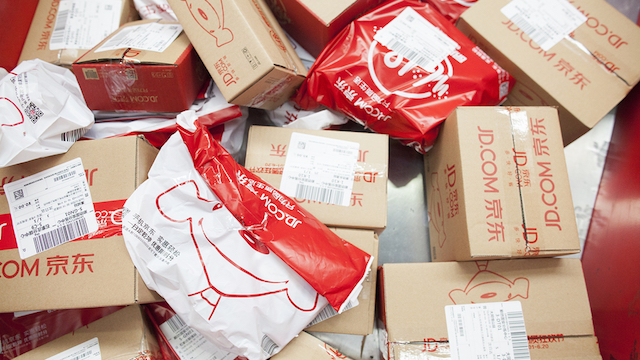
    JD.com, China’s largest retailer, the World Wide Fund for Nature (WWF) and The China Children and Teenagers’ Fund (CCTF) are partnering to launch a second annual Green Planet-Sustainable Week, raising awareness about sustainable consumption in the world’s most populous nation. The seven-day program, which kicked off this week, will reinforce JD’s commitment to help the retail industry develop more sustainably, reducing the impact of China’s booming consumption on the environment.

    For the event, JD will promote pollution reduction through the use of reusable shopping bags, created from the fabric of discarded apparel in response to a call from WWF to reduce pollution caused by plastics. The bags, which are also regularly used in JD operations, will be distributed free during the event and include RFID Chips that can be scanned as coupons in offline stores through JD’s partners.

    JD’s Green Planet-Sustainable Week also kicks off a new clothing drive for the company’s recycling program. Taking advantage of its nationwide in-house logistics network, which covers 99% of China’s population, JD will collect both used and unused clothing from customers either to be sent to recycling facilities or distributed to those in need. Proceeds will be donated to lower-income families, people with disabilities and charity groups. Last year, a similar drive led to the collection of nearly 400,000 items, or 20 tons, of clothing, from 150 million people in four cities. This year’s program will expand to cover 47 cities.

    Customers will be able to trade in major appliances for recycling as well, by third-party companies through JD’s platform. The appliances will be disassembled, after which parts will be used for repairs, helping to reduce the waste generated by household appliances as well as pollution created by their production. Working with JD’s charity affiliate, JD Foundation, the participating companies will donate a portion of any proceeds to support charitable activities on behalf of customers, while customers are eligible for payment for their used devices, plus coupons from JD in exchange for the trade-ins.

    Meanwhile, all logistics information for tracing donations and trade-ins are available through JD.com’s proprietary supply chain management technology.

    “The spectacular rise of Chinese consumption has been a major force behind the country’s incredible economic story but has also contributed to unprecedented environmental challenges,” said Zhonghao Jin, Head of Market Practice, WWF China. He believes this week’s activities will help “raise consumer awareness and accelerate the mainstreaming of sustainable consumption.”

    Libo Ma, head of the CSR department at JD.com disclosed the company is in the midst of an effort to convert its entire vehicle fleet to new energy vehicles while being involved in other efforts to reduce emissions. The company is also is developing biodegradable packaging to further reduce waste in the supply chain.

  • Sendo partners with DHL eCommerce for domestic delivery in Vietnam

    Sendo partners with DHL eCommerce for domestic delivery in Vietnam

    DHL eCommerce, a division of the world’s leading logistics company, Deutsche Post DHL Group (DPDHL), announced its partnership with Sendo, Vietnam’s #1 local e-commerce platform. The successful integration between the two companies means sellers on Sendo will now be able to access DHL’s excellent domestic delivery network, and deliver to their buyers same-day or next-day in Ho Chi Minh, Hanoi and other primary markets.

    “Being a homegrown company allows Sendo to have deep understanding of the Vietnamese local market and culture. Sendo aims to support over 300,000 individual vendors, micro-entrepreneurs, and small businesses to initiatively sell their goods online and deliver them affordably throughout Vietnam. With our collaboration with DHL eCommerce, we will provide not only the sellers but also several million buyers on our platform with an international quality delivery experience in Vietnam.” said Mr. Tran Hai Linh, CEO, Sendo.

    To support small businesses, DHL eCommerce also offers market leading cash-on-delivery (COD) services with next-day remittance to sellers. With more than 300 DHL ServicePoints located conveniently across Vietnam accessible to Sendo, sellers can also choose to drop-off their parcels at these locations instead of waiting for a pick-up as well as enjoy discounts of up to 20%. Alternatively, sellers can also arrange for a pickup by DHL for direct door-to-door delivery service to their buyers.

    “Micro, small, and medium-sized enterprises continue to play a major role in Vietnam, accounting for 98 percent of all enterprises, 40 percent of GDP and 50 percent of employment.[1] However, they face unique challenges such as access to finance and international partners. DHL is passionate about supporting small businesses and we are excited to work with Sendo to support their sellers with an excellent, high quality domestic delivery network.” said Thomas Harris, Managing Director, DHL eCommerce Vietnam.