Category: E-Tailing

Retail News Asia is committed to providing both local and global retailers with the latest E-Commerce & Etail news throughout the Asian market. This on a daily base.

  • Hong Kong online shoppers using more tablets

    Hong Kong online shoppers using more tablets

    While Hong Kong’s e-commerce market accounts for less than 5 per cent of total retail sales, the behaviour of those shopping online is changing.

    According to data presented by Nielsen at yesterday’s 2018 Hong Kong Retail Summit, organised by the HKRMA, home computers are now used by fewer than half of Hong Kong online shoppers – 48 per cent last year, down 8 per cent from 2016. They are shifting to mobile phones, where 25 per cent shop (up 8 per cent in a year) and tablets, used by 11 per cent, (up 2 per cent). And 13 per cent of Hong Kong online shoppers say they used work computers.

    Michael Lee, MD at Nielsen Hong Kong and Macau, who moderated a panel discussion at the event, said expanding availability of eWallets was making online shopping easy and secure in the territory.

    “The beauty of e-commerce is convenience, so easy checkout method via eWallet and flexible pick up and return policies are a key to winning.”

    Almost half of Hong Kong consumers (46 per cent) now use an eWallet, with the number of active accounts rising 15.4 per cent in the last quarter of 2017 compared with a year earlier. The value of eWallet transactions in the last quarter of 2017 rose 27.7 per cent, “a significant indication of the growth of the ecommerce market,” said Lee.

    Buying on impulse

    Unlike offline shopping, consumers usually spend impulsively online.

    “They are usually triggered to buy online for conditional free shipping/return policy, promotions and discounts as well as easy checkout methods. Among all impulsive purchase categories, the top products are all food-related, the frequently purchased categories being snacks, breakfast cereals, bottled water, instant noodles/pasta/udon as well as ready-to-drink beverages.”

    But, he said, despite the advance in online shopping, consumers are still hesitant about shopping online, nursing concerns about delivery logistics for perishable items, their desire to inspect goods before they buy and their need for convenience and the wish to follow habits.

    “It is important for online retailers to remove the barriers to make online shopping more welcoming and promising for shoppers by providing click and collect, return policies, showroom and cash on delivery as well as unique product range, and purchase incentives,” he said.

    “Because no physical product is in hand in the virtual world, there is nothing more important than creating a better customer experience to win over potential customers. It is therefore crucial for marketers to offer an unmatched online shopping experience by creating a sense of value for money, providing a flexible shopping platform and delivery options, informing customers fully about return policies and making information freely available to customers and giving them the chance to talk about their personal experience.

    Experience is essential

    “Consumer experience is essential,” Lee said. “With online shopping become more popular, it is important for industry players to identify the key ways to win in the ecommerce market in Hong Kong. To stand out in this highly competitive market it is important to provide unique cross-screen experience as well as unique product range for consumers.”

    Meanwhile, Hong Kong online shoppers are getting older. In contrast with just a few years ago, e-commerce is no longer the preserve of the young.

    The Nielsen survey revealed that e-commerce is now relevant to people of all demographics. About 80 per cent of males and females have tried online shopping last year.

    While consumers aged 22-29 and 30-39 represent the most frequent shoppers, 67 per cent of older consumers (aged 50-64) said they had bought online last year.

  • Google explains Hong Kong’s E-commerce Challenges

    Google explains Hong Kong’s E-commerce Challenges

    Mindset and talent are the two factors holding back the Hong Kong e-commerce sector, according to a senior Google executive.

    Speaking at the sell-out HKRMA 2018 Hong Kong Retail Summit this morning, Leonie Valentine, MD sales and operations at Google Hong Kong, said that compared with other major cities around the world, Hong Kong remains in the early stages of digital transformation.

    Here, where retail is a key driver of the economy, e-commerce accounts for just 4.68 per cent of sales.

    Yet across Asia-Pacific, 17.6 per cent of retail sales will be online this year.

    Of the small percentage of retail sales conducted online in Hong Kong, just 37 per cent is on mobile (m-commerce). In the mainland, that figure is 66 per cent and China now accounts for two-thirds of global m-commerce sales, driven by its mobile-first audience. Sales by m-commerce in China are expected to triple by 2021.

    Valentine dismissed the ubiquitous argument that the city’s dense urban layout is the reason Hong Kong e-commerce penetration is so low.

    “It’s the same argument I heard in 2011 when I arrived in Hong Kong, when I questioned why I couldn’t buy a mobile phone or groceries online here. ‘Oh, there’s no need,’ was the reply. ‘There’s a shop on every corner in Hong Kong. No one shops online.’

    “Should I tell that to the millennials in my team? They were  already buying dresses from Korea, shoes from Taobao and books from Amazon in 2011. Yet we really didn’t have as much of a digital industry here then,” said Valentine.

    “So while digital investments by some retailers have lagged behind, most consumers have actually embraced online shopping.”

    Last year, 58 per cent of non grocery sales were influenced by a digital touchpoint, compared with just 13 per cent in 2004.

    “Today’s consumer wants to compare products, features, price, benefits, etc, before they start their purchase process. Eighty-one per cent of the population is connected to the internet. Ninety-eight per cent of smartphone users go online at least once a day. So Hong Kong should rank really highly in digital integration.”

    But it doesn’t.

    “There are two things that hold back Hong Kong. Mindset – in terms of the willingness to embrace new things – and talent. One of the things we really need in Hong Kong is to have a mindset that change is good, that embracing digital is not about distrusting what you have today; it is about complementing that for the benefit of your customers.”

    Those customers are already online, said Valentine. “Everybody here is online: 98 per cent of smart phone users – and that’s everybody – are online at least once a day, from an eight-year old to an 80-year old. And yet where are we? Where are our government services today… on mobile? Where is the ability for you to be able to easily find what you are looking for online?

    “I want to buy a new couch. I can’t find one. I’m searching and I have money to spend and I cannot find a retailer in Hong Kong easily on mobile or on my desktop that has the product that I want. I find that really interesting in a city that is as modern and connected as Hong Kong.”

    Those are her two reasons for Hong Kong e-commerce lagging the rest of the region, she said. “It is very much about the mindset and it’s about having the right talent to drive a lot of the adoption of these ideas.”

    “Take a risk”

    Another speaker, Yann Bozec, president and CEO of Coach China, echoed Valentine’s comments on the mindset.

    “I love to be surrounded by millennials and listen to what they do and how they do it. Even further I am learning a lot from my eight year old daughter about digital [technology]. I think it is about listening and looking at how people, especially younger people, are engaging digitally.

    “[It’s about] being inspired by them and not being shy to take risks and try new things, including new applications.”

    Bozec said besides established giants like Google, a lot of smaller, upcoming applications are making their way onto the market.

    “Businesses who are early adopters and taking some risks can really take a lot of benefits.”

    Retail “a pillar” of Hong Kong

    The 2018 Hong Kong Retail Summit was opened by the SAR’s chief executive Carrie Lam, who congratulated the HKRMA on its 35th anniversary.

    “The retail industry is an important pillar of the Hong Kong economy, contributing about 4 per cent of our GDP and employing some 270,000 people. I am pleased to note that retail sales last year enjoyed moderate growth in both value and volume… with the forecast of a sales increase this year in the 3 to 4 per cent range.”

  • Amazon looks to expand check-out free concept without cashier

    Amazon looks to expand check-out free concept without cashier

    Amazon appears set to open its second and third queue free grocery stores in Chicago and San Francisco, a sign that the e-commerce giant is ready to start scaling up its wildly successful supermarket concept.

    After launching its first Amazon Go store in Seattle earlier this year the company has begun posting job openings for store managers in both cities, US media reported overnight.

    An Amazon spokesperson confirmed to Geekwire that the company is opening the locations, although no timetable was provided.

    The grocery concept garnered global attention when it was unveiled in late 2016, primarily because the store has no check-out and instead uses a range of intelligent cameras to charge customers automatically when they pick up items and walk out of the store.

    It has been dubbed as Amazon’s attempt to re-invent the supermarket amid the company’s ongoing efforts to claim a greater share of the global grocery pie.

    Expansion is a signal that Amazon believes it is ready to start scaling up the concept after navigating a range of technical challenges to open the store in 2017.

    Last year the Seattle-based business purchased grocery giant Whole Foods in the US to supercharge its efforts in the category, but it appears the Go concept is being kept separate from that investment.

  • JD invests another $306 million in supply chain partner ESR

    JD invests another $306 million in supply chain partner ESR

    Chinese e-commerce giant JD has invested US$306 million in its supply chain partner ESR, creating an alliance the two companies say will enables best-in-class logistics services for customers and businesses in China and beyond.

    ESR, a pan-Asian logistics real estate developer, owner, and operator focused on key metropolitan areas was co-founded by senior management and Warburg Pincus. It has $12 billion worth of assets owned or under development across China, Japan, Singapore, South Korea and India and capital and fund management offices in Hong Kong and Singapore.

    JD and ESR say they will use their resources and management expertise to proactively explore cooperation in multiple areas, including property development, fund management, and investment across the region.

    “Investing in ESR, one of our major warehouse partners, presents tremendous opportunities for us,” said JD Logistics CEO Zhenhui Wang. “The investment will further strengthen our relationship to solidify and expand our logistics networks.”

    China’s burgeoning e-commerce industry has triggered a logistics boom in the region. Government figures say online sales reached US$307 billion in the first quarter of this year, accounting for 21.4 per cent of total retail sales.

    Jeffrey Shen and Stuart Gibson, Co-CEOs of ESR, said matching JD’s network and smart supply chain capabilities with ESR’s penetration into both developed and emerging markets across Asia Pacific, would allow the allied companies to capitalise on megatrends in the region.

  • SG e-Auction bidding luxury goods

    SG e-Auction bidding luxury goods

    MoneyMax Financial Services has launched Singapore’s first online B2B auction platform for luxury goods, SG e-Auction, together with Japanese B2B internet auction company Aucnet Inc.

    As well as luxury branded merchandise, the site will bring buyers and sellers together for auctions involving gold and diamond goods.

    “This distribution channel allows us to tap into the growing market of pre-owned luxury goods in Southeast Asia on the back of a rising middle-income class,” says MoneyMax executive chairman/CEO Dr Lim Yong Guan.

    He says the channel already has members from Singapore, Malaysia, Vietnam, Hong Kong, Japan and the US. “With the eventual link up of SG e-Auction and Aucnet online platforms, buyers will have access to a greater variety of luxury goods while sellers will gain a wider pool of ready customers.”

    Listed since August 2013, MoneyMax is a pawnbroker, retailer and trader of pre-owned luxury items. Since its first outlet in 2008, the company has expanded to 68 outlets and has a presence in Singapore and Malaysia.

    In February 2015, the group launched MoneyMax Online as Singapore’s first pawnbroking chain to offer a platform for shopping, selling and appraising valuables.

    Established in 1985, Aucnet started as the world’s first provider of TV auctions of used cars, later developing its business to include used motorcycles, used digital products, flowers, used luxury items and used medical equipment.

    Incorporated in September, SG e-Auction is Singapore’s first B2B online auction platform for luxury branded merchandise, gold and diamond goods. A JV between MoneyMax (51 per cent) and Aucnet, SG e-Auction aims to transform and simplify how businesses buy and sell.

  • Shopee announces regional partnership with NIVEA across Southeast Asia

    Shopee announces regional partnership with NIVEA across Southeast Asia

    Shopee, the leading e-commerce platform in Southeast Asia and Taiwan, announced its partnership with global skin care brand, NIVEA across six key markets. Shopee users in Singapore, Malaysia, Thailand, Indonesia, Vietnam and the Philippines can now enjoy convenient access to an array of skin care essentials by NIVEA on the platform. To mark the launch, NIVEA will be holding an opening sale from 10 to 13 May, featuring discounts of up to 55% off all NIVEA products on its Official Store on Shopee.

    The partnership was officiated with a Memorandum of Understanding signing ceremony on 9th May, represented by Chris Feng, Chief Executive Officer of Shopee, and Holger Welters, President Director of Indonesia and Philippine Beiersdorf 

    Feng said, “Our users form the core of all our strategies, and the launch of NIVEA on Shopee is aligned with our commitment to continuously improve our product offerings to cater to the needs of our users. We believe that our partnership with NIVEA will improve our skin care category and help strengthen our positioning as the best e-commerce platform. We are pleased to welcome NIVEA as an official Shopee partner, and look forward to working closely with them to deliver greater choices and cost-savings for users across the region.”

    Based on a study by Statista, the global skin care market has been growing steadily over the years, and is estimated to hit 180 billion U.S. dollars by 2024. At the forefront of this growth is the APAC beauty market which achieved a compound annual growth rate (CAGR) of 6% over the past years, and makes up more than half of the total global beauty sales; demonstrating an increasing demand for beauty products, including skin care, by consumers in the region.

    “E-commerce has continued to gain traction in the region as a result of increasing internet and smartphone penetration. Expanding our business online will provide consumers with convenience and access to NIVEA products, and provide them with value-added services such as different payment and shipping options,” said

    Holger Welters, President Director of Indonesia and Philippine Beiersdorf

    “As a key brand under Beiersdorf, NIVEA’s corporate vision is to be the number one in skin care in all our relevant markets and categories. We believe that our partnership with Shopee as the leading mobile e-commerce platform in Southeast Asia will help us reach more consumers in the region, and provide them with access to the complete range of NIVEA products, as well as exclusive items and promotions. To provide consumers with peace of mind when shopping for NIVEA products online, we recommend our consumers to always purchase from an official online store, such as our NIVEA Official Store on Shopee,” concluded Welters.

    All NIVEA products can be found via the NIVEA Official Store on Shopee Mall. All Shopee Mall products come with 15 days free return, 100% authentic guarantee, and free shipping.

  • JakEVO app to simplify Jakarta business permit issuance

    JakEVO app to simplify Jakarta business permit issuance

    The Jakarta administration launched at City Hall on Monday a new smartphone app named JakEVO to simplify the procedures for obtaining business permits (SIUP) and registration certificates (TDP).

    Jakarta One-Stop Integrated Service Agency (PTSP) head Edy Junaedi said with the app, both of the permits can be obtained in less than an hour, without requiring applicants to visit the PTSP office or service points to get their SIUP and TDP.

    “The applicants only need to upload required documents, tag their location and approve of the terms and conditions within the app. In around 30 minutes, they will receive the permits in an email,” Edy said.

    JakEVo can be downloaded for free from the Google Play Store and the App Store.

    The city administration expressed hope that the initiative could help the country achieve a rank of 40 on the Ease of Doing Business index compiled by the World Bank. The country is currently ranked at 72, a jump of 19 places from its previous rank of 91.

    In the World Bank publication “Doing Business 2017: Equal Opportunity for All”, Indonesia jumped 15 places to 91 from 106.

  • Alibaba Eats up Daraz

    Alibaba Eats up Daraz

    Alibaba Group has acquired south Asian e-commerce platform Daraz for an undisclosed sum.

    This will make Daraz Group’s platform a wholly owned unit of the Chinese e-commerce provider, which also runs the Taobao and Tmall platforms.

    “Together with Daraz, we can empower entrepreneurs to better serve consumers in the region through our technology and expertise,” says Alibaba CEO Daniel Zhang.

    Founded in 2012, Darez has grown throughout Pakistan, Bangladesh, Sri Lanka, Myanmar and Nepal. It has 30,000 sellers and 500 brands on its platform, with 2 million products available to its 5 million customers. Its product offerings range across consumer electronics, household goods, beauty, fashion, sports equipment and groceries. It also offers multiple payment options, including COD.

    Daraz Co-CEO Jonathan Doerr says its acquisition by Alibaba will help drive further growth in its key markets, home to 460 million people, 60 per of which are 35 years and younger.

    Daraz will continue to run under its brand name after the transaction.

  • Grab refuses to release details of Uber buy-out

    Grab refuses to release details of Uber buy-out

    The deal has left tax payments unresolved and questions remaining about a potential market monopoly. Tax authorities in Ho Chi Minh City have once again sent a request to Grab in Vietnam asking the company to provide details concerning its recent acquisition of rival Uber’s Southeast Asia business.

    The reason for the request is due to the fact that Grab is legally obliged to pay tax on the transfer of capital and business market share following the deal.

    Vietnam’s tax law states that all income generated by foreign companies operating in the country should be subject to tax, regardless of where they are based.

    Organizations and individuals that receive capital from foreign organizations are required to declare and pay tax on behalf of those foreign organization, tax authorities cited the law as saying.

    With details of the Uber- Grab deal remaining undisclosed, authorities are still unsure how to calculate how much the latter owes in tax.

    Uber also allegedly still owes Vietnam’s government $2.3 million in taxes required, but claims that according to Vietnam’s agreement on double taxation avoidance with the Netherlands, that figure is inflated.

    Grab has previously said that the $2.3 million is down to Uber, and has refused to pay the firm’s outstanding debt.

    Grab’s decision violates Vietnamese law and international practices, said lawyer Doan Van Hau, chairman of the Vietnam Lawyers’ Commercial Arbitration Center.

    Quoting Vietnamese law, Hau said that Grab was responsible for paying all of Uber’s back taxes.

    Ho Chi Minh’s tax department previously asked five local commercial banks to help it collect the outstanding sum from Uber, but failed to do so as the company did not have a bank account in Vietnam.

    Uber has since filed two lawsuits against Ho Chi Minh’s tax department.

    Grab is also under investigation by Vietnam’s Ministry of Industry and Trade for violating the Competition Law in its acquisition of Uber.

    Malaysia, the Philippines and Singapore are all requesting details of the acquisition.

  • Amazon looks to UK grocery acquisition

    Amazon looks to UK grocery acquisition

    Amazon’s aim to conquer retail’s largest category, grocery, through the acquisition of bricks-and-mortar supermarkets has been further illuminated by its reported attempt to initiate takeover talks with the upmarket chain, Waitrose, in the UK.

    A recent report in The Sunday Times has suggested that one of Amazon’s most senior executives in Britain, vice president of special projects Ajay Kavan, had several “enormously informal” conversations with a director of the John Lewis Partnership, Waitrose’s parent company, about a possible deal last November. However, a request for a formal meeting was apparently shut down by the board.

    Citing an unnamed source, The Sunday Times reported that Amazon’s interest in the 350-store supermarket chain was known to the partnership’s executive team, including Waitrose’s boss Rob Collins, group finance director Patrick Lewis and head of John Lewis department stores Paula Nickolds, but chairman of the board Sir Charlie Mayfield denied the report.

    “These times are ripe for speculation, but there has been no approach to the partnership by Amazon regarding Waitrose, and nor would I expect there to be,” Mayfield told.

    Analysts have speculated that Amazon could buy a British grocery chain since it launched its online grocery delivery service, Amazon Fresh, in the market two years ago. Morrisons, Sainsbury’s and Waitrose reportedly were all considered potential targets.

    The recent £14 billion merger between Sainsbury’s and Asda has been cast as a move in part to ward off Amazon’s broader move into grocery, which many see as ramping up since the company’s US$13.7 billion acquisition of Whole Foods last summer.

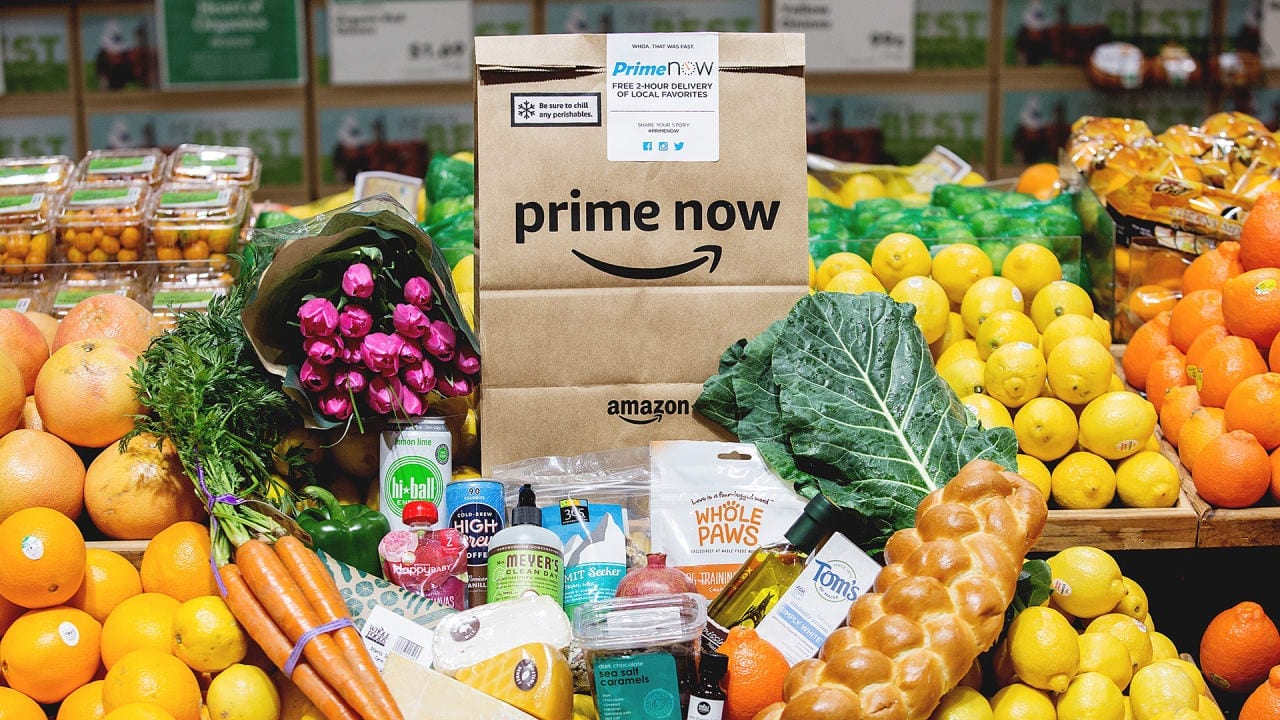
    Since taking over Whole Foods’ 470 stores in the US, Canada and UK, Amazon has cut prices on staples and rolled out free two-hour delivery for online grocery orders in several cities across the US.

  • Vietnam’s e-commerce market sees many new players

    Vietnam’s e-commerce market sees many new players

    Vietnam is among the fastest growing commerce markets. E-commerce makes up 0.5 percent of value of the FMCG (fast moving consumer goods) sector in the four largest cities, while the number of online shoppers increased from 5.4 percent to 8.8 percent in urban areas within one year. The value of one online shopping cart triples the value of a traditional shopping cart.

    The recent report of Kantar Worldpanel says that Vietnam’s e-commerce activities grew by 69 percent in 2017. Meanwhile, Frost & Sullivan predicted that Vietnam’s market value would rise from $1.7 billion in 2016 to $3.7 billion in 2030, or an annual growth rate of 45 percent.

    Chinese firms

    Analysts warned that Chinese online retailers are penetrating the Vietnamese market, putting pressure on domestically made products.

    JD earlier this year announced investment in Tiki to become one of the biggest shareholder of the e-commerce firm. While JD declined to reveal the amount of capital, Tiki has said that it had raised $50 million worth of funds to expand its business.

    Prior to that, Alibaba launched in Vietnam in April 2016 after it wrapped up the takeover of Lazada in SE Asia.

    Headquartered in Singapore, Shopee is still listed among Chinese firms in Vietnam as 40 percent of Shopee shares are held by Tencent, a Chinese technology group.

    All three Chinese ecommerce markets entered the Vietnamese market through mergers and acquisitions.

    According to Google, Lazada, Shopee and Tiki are three out of four most searched e-commerce websites in Vietnam.

    Chinese not the only foreign players

    However, with investors from the US and Japan entering the field recently, the worry about the dominance of Chinese firms has been lifted.

    Most recently, Japanese Scroll acquired 26.9 percent of shares of Cat Dong, the company that owns cungmua.com, nhommua.com and Shipto.vn. This is the second time that Cat Dong transferred capital during its 8-year operation.

    Prior to that, Cat Dong received investment from ACA Investment, a Japanese ifund belonging to Sumitomo which once poured money into Bibomart and Son Kim Land.

    In early March, the e-commerce market welcomed Amazon. The US giant, instead of making investment deals, decided to join hands with the Vietnam E-commerce Association. With the cooperation, Amazon wants to help Vietnamese businesses export their products on the Amazon platform.

  • Vietnam’s e-commerce companies face logistics and price challenges

    Vietnam’s e-commerce companies face logistics and price challenges

    Shipping costs are forcing prices up and driving potential customers away. Vietnam’s e-commerce industry is facing challenges due to poor logistics and consumer price-sensitivity.

    “The challenge for commerce in Southeast Asia in general, and Vietnam in particular, is logistics,” said Vu Duc Thinh, country manager for the logistics arm of Lazada, a Singapore-based e-commerce company which also operates in Vietnam.

    Vietnam’s logistics costs accounted for 20.9 percent of GDP in 2016, according to the World Bank, and were higher than regional peers China, Thailand and Japan.

    Inflated logistics costs are putting a strain on local businesses and need to be cut in order to make firms more competitive, said Prime Minister Nguyen Xuan Phuc during a conference held by the Ministry of Industry and Trade in Hanoi earlier this month.

    The reason for this is the cost of transporting goods via land, Phuc said. In Vietnam, transportation via land accounts for 59 percent of all logistics costs, which is 9.7 times more than via water and 2.5 times more than by train, said Deputy Minister Nguyen Van Cong during the conference.

    Insufficient infrastructure development is to blame for the disparity, with rail links lacking connections to storage depots, and waterway transport taking from 3-5 times longer than by land, according to experts.

    Another factor hindering the advancement of Vietnamese e-commerce companies is consumer price-sensitivity, which is proving to be a challenge when it comes to taking into account shipping fees when companies set their prices.

    “If Vietnamese e-commerce companies want to win customers here, they have to come up with the best prices,” Huynh Mai, 25, a Vietnamese online shopper.

    Online sales in Vietnam have expanded rapidly in recent years, currently accounting for 3.39 percent of the country’s retail market. The total retail market grew 10.9 percent last year to $173.27 billion, as reported by local media.

    The World Bank forecasts that Vietnam’s $200 billion economy is likely to grow to a trillion dollars by 2035. More than half of its population, compared with only 11 percent today, is expected to join the ranks of the global middle class with consumption of $15 a day or more.

    According to one estimate, about 30 percent of the population will be buying goods and services over the internet in 2020, with each shopper spending an average of $350 per year.

  • Walmart closes in on $15bn Flipkart e-commerce deal

    Walmart closes in on $15bn Flipkart e-commerce deal

    Walmart may have secured a key victory over Amazon in India, with reports surfacing that the board of Flipkart Online services, one of the fast-growing nation’s largest retail platforms, has approved a deal to sell 75 per cent of the company to the grocery giant for around US$15 billion.

    Citing sources familiar with the deal Bloomberg has reported that the world’s largest retailer is closing in on an official offer for the Indian retailer after Amazon, which was also reportedly looking at the business, took itself out of the race.

    The deal is expected to close in the next 10 days, although final terms remain uncertain. A Walmart deal is thought to be more appealing to regulators given Amazon’s position as the number two competitor in the market.

    Should a transaction progress it would represent a significant international capital reallocation for US-based Walmart, which only last week agreed to offload most of its stake in UK supermarket chain Asda in a £10 billion merger with Sainsbury’s.

    For Amazon, which has been investing heavily in its own Indian platform in recent years in a bid to cash in on growing consumption in the world’s second fastest growing economy, the deal represents a renewed competitive threat.

    Flipkart is an online marketplace founded in 2007 by former Amazon employees Sachin Bansal and Binny Bansal, valued at around $20 billion after garnering investment from the likes of Ebay, Microsoft and Tencent.

  • Ebay brings Flybuys to platform into the Wesfarmers deal

    Ebay brings Flybuys to platform into the Wesfarmers deal

    Wesfarmers has inked a deal with Ebay Australia that will see its Flybuys loyalty program extended to purchases made on the marketplace.

    As of today, Ebay shoppers can collect and redeem Flybuys points with 40,000 Australian retailers on the marketplace, earning one point for every $2 spent on eligible items.

    The partnership is the biggest expansion in the Flybuys program since the addition of Velocity frequent flyer points in 2016, signalling the growing importance of the program to Wesfarmers in the context of the planned Coles demerger.

    For Ebay the deal is its first move into loyalty, representing a significant opportunity to strengthen its customer retention in the lead up to the launch of Amazon Prime in Australia later this year.

    The online marketplace estimates that over 60 per cent of Australian households who actively use Flybuys will now also be able to redeem points for Ebay vouchers at a rate of 2,000 points for $10, which they can use to purchase items from the e-commerce company’s 1.1 billion global listings.

    Julie Nestor, Ebay Australia’s chief marketing officer, said Ebay had originally approached Flybuys with the idea for the partnership and described the deal as a no-brainer.

    “We’re thrilled to partner with Australia’s most popular loyalty rewards program as part of our mission to continue innovating and transforming the retail industry,” Nestor told.

    The details of the partnership remain confidential and Ebay would not be drawn on the specifics, but it comes as Wesfarmers pushes to better leverage its digital and data capabilities.

    In February, Wesfarmers group managing director Rob Scott announced the creation of a new data unit within the retail conglomerate, to pursue a variety of projects across its business units, as its rival Woolworths steps up its own efforts.

    Wesfarmers will retain ownership of Flybuys in the Coles demerger, a move that was flagged by Scott in March as a strategic boon.

    Ebay said the partnership will help smaller retailers on the platform gain access to a widely recognised loyalty program, which they likely would not be able to do on an individual basis.

    Citing a survey conducted with 1,570 sellers in April, Ebay said 62 per cent of small retailers believe a rewards program would help their business compete with larger players, while 71 per cent believe a loyalty program would be too expensive to set up and run.

  • Alibaba reaches a new record in transaction volumes

    Alibaba reaches a new record in transaction volumes

    Alibaba Group on Friday reported soaring revenue figures for the quarter ended March 31 and the 2018 fiscal year driven by strong growth in its core commerce business and strategic investments in New Retail.

    Total revenue for the quarter increased 61 per cent year-on-year to US$9.9 billion, with core commerce revenue increasing 62 per cent year-on-year to US$8.2 billion and cloud computing revenue increasing 103 per cent year-on-year to $699 million.

    Revenue from digital media and entertainment increased 34 per cent year-on-year to US$840 million and revenue from other initiatives increased 8 per cent year-on-year to US$158 million.

    Income from operations was US$1.5 billion. Adjusted EBITDA increased 11 per cent year-on-year to US$2.7 billion, while adjusted EBITDA for the core commerce segment increased 19 per cent year-on-year to US$3.5 billion.

    “Alibaba Group had an excellent quarter and fiscal year, driven by robust growth in our core commerce business and investments we have made over the past several years in longer-term growth initiatives,” said Alibaba Group’s chief executive Daniel Zhang.

    “With the continuing roll out of our New Retail strategy, our e-commerce platform is developing into the leading retail infrastructure of China. During the past year we also doubled down on technology development, cloud computing, logistics, digital entertainment and local services so that we are in a position to capture consumption growth in China and other emerging markets,” he said.

    Highest growth rate since IPO

    Alibaba ended the 2018 fiscal year with US$39.9 billion in revenue, a 58 per cent increase over the previous year. US$34.1 billion of that came from the company’s core commerce business, including its Taobao and Tmall e-commerce platforms. This represents a 60 per cent year-on-year increase in core commerce revenue, the highest revenue growth rate since the company’s IPO.

    Revenue growth in core commerce was largely driven by Alibaba’s investments in content and technology to personalise its retail marketplaces, its marketplace expansion through organic growth and acquisitions and its strategic shift to New Retail to capture consumer wallet share through online-offline integrations.

    H&M, Marni and Yonex established flagship stores on Tmall in the quarter, joining the more than 150,000 brands that sell through the platform, 18,000 of which are international brands from 74 countries selling into China through Tmall Global.

    Tmall’s newly established Luxury Pavilion now counts close to 50 brands, including Burberry, Dom Perignon, Tod’s, Zenith, La Mer, Maserati and Guerlain.

    Alibaba saw record transaction volumes in the 2018 fiscal year, with US$768 billion worth of goods purchased through its retail marketplaces, a 28 per cent over the previous year. This represents an acceleration compared to the 22 per cent increase in gross merchandise value it posted in the 2017 fiscal year.

    The company ended the fiscal year with 552 million and 617 million mobile active customers.

    Alibaba’s chief financial officer, Maggie Wu, said the company expects to maintain this high level of growth in the year ahead.

    “Looking ahead to fiscal 2019, we expect overall revenue growth above 60 per cen, reflecting our confidence in our core business as well as positive momentum in new businesses. We expect our new growth initiatives will drive long-term, sustainable value for our customers and partners and increase our total addressable market,” she said.