Category: E-Tailing

Retail News Asia is committed to providing both local and global retailers with the latest E-Commerce & Etail news throughout the Asian market. This on a daily base.

  • The Outnet starts selling in Japan

    The Outnet starts selling in Japan

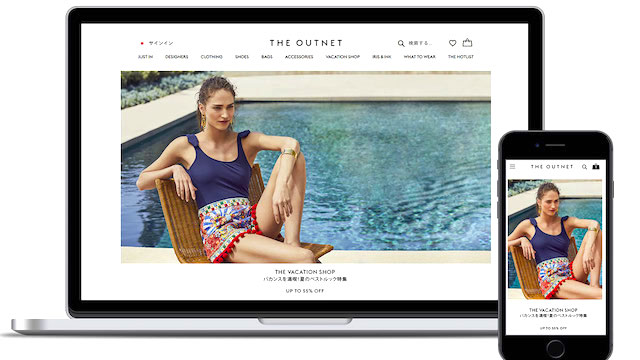
    The Outnet, the discount sister brand to Net-a-Porter, has launched in Japan. It lets customers shop and read fashion content in their own language. They can also pay for purchases in yen or pay in cash upon the delivery of their order.

    Yoox Net-a-Porter (YNAP), the company that owns The Outnet, says it aims to hire more customer-care consultants in the region and add a live-chat option to the Japanese website.

    Items ordered in Japan will be shipped from Italy using both international and domestic shipping services. YNAP says orders will be received within four to six business days by express delivery.

    Launched in 2009, The Outnet is a clearance website featuring items from more than 350 luxury brands and with discounts of up to 75 per cent off.

  • Muji opens flagship store on JD.com

    Muji opens flagship store on JD.com

    Muji will launch an online flagship store on JD.com, and promote the partnership with posters in 231 of its stores throughout China, it announced.

    This will make it easier for online Chinese consumers to find and purchase Muji’s full range of Japanese product categories, including clothing, household items, home furnishing and even food.

    “We are very excited to announce the opening of our store in JD.com, following the cooperation with JD Logistics, which began in September 2017,” said Naoyuki Yamamoto, president of Muji  Shanghai. “We look forward to bringing our vision of a simple, pleasant life to people, as well as contributing to society, through this partnership with JD.”

    The e-commerce giant said Muji is a “hugely popular brand” and that the launch on its platform will take it to new levels. “Known worldwide for its simple aesthetic and well-designed products, MUJI has garnered a loyal fanbase of quality-conscious customers. With our commitment to delivering authentic products with world-class service, JD is the perfect home for Muji’s premium wares.”

    The brands plan to deepen their link during the second half of the year with a more comprehensive omnichannel integration covering membership programs, products and more.

    Muji sells low-cost, high-quality items that are renowned for their clean lines and minimalist design.

  • Alibaba Hosts Taobao Maker Festival in September

    Alibaba Hosts Taobao Maker Festival in September

    China’s millennial generation is the driving force behind the shift from “Made in China” to “Created in China.” To celebrate this new generation of makers, and the consumers who are increasingly looking for unique, niche brands and products to express themselves, Alibaba Group (NYSE: BABA) will host its Taobao Maker Festival from September 13-16, 2018 at the iconic West Lake in Hangzhou. Founded in 2016, this year’s event will be the biggest yet, bringing together hundreds of Taobao creators to showcase their innovations.

    The four-day event will draw inspiration from the city’s rich heritage and folklore and transform the picturesque West Lake into an exciting offline bazaar, featuring innovative products, cutting-edge technologies, indie designer fashion shows, live concerts, and more. Centered around the intersection of tradition and innovation, the festival will spotlight unique millennial merchants such as Chinese costume brand Kongxuansi, which sells clothes inspired by the embroidered uniforms of Ming dynasty imperial guards. The venue will also feature a 300-square-meter “futuristic shopping area” powered by AR, where thousands of visitors can discover brands, visualize in-home decor, and enjoy animated virtual companions as they shop using headsets.

    Taobao is the world’s largest mobile shopping destination and more than half of its 610 million mobile active users are in their 20s and 30s. According to KPMG, millennials will become the biggest spenders in China in the next five years. Now in its third year, the Taobao Maker Festival has not only become an annual gathering for entrepreneurs to demonstrate their creativity, but also a window for the world to better understand China’s aspirational young consumers.

  • BGF Retail outlines KRW30bn online investment

    BGF Retail outlines KRW30bn online investment

    BGF, owner of Korean c-store chain CU, has boosted its stake in online grocery business Hello Nature.

    Founded in 2012, Hello Nature offers compact packaged-grocery deliveries. It was bought by SK Planet in 2016. Its sales reached US$9 million last year.

    Investing 30 billion won (US$28 million) for a controlling 50.1 per cent stake, BGF will run Hello Nature as a joint venture.

    “The online premium grocery shopping market is a blue ocean which has been growing rapidly every year,” said BGF chief Lee Keon-jun.

    BGF aims to build Hello Nature into the leading online grocery platform within the next five years by connecting its delivery service to 13,000 CU stores across Korea.

    Hello Nature will also consider consider expanding into the offline market.

    Demand for online delivery services for fresh food in Korea has been increasing rapidly thanks to the growing number of one-person households – 5.28 million in 2016, accounting for 27.8 per cent of all household types in the country.

  • Qoo10 to ‘renew focus’ on Singapore e-commerce market

    Qoo10 to ‘renew focus’ on Singapore e-commerce market

    It may be one of the earliest players in Singapore’s e-commerce market, but Qoo10 seems to have lost some of its shine in recent years as more high-profile names such as Lazada, RedMart, Amazon, and Carousell hog the headlines.t

    Still, the e-commerce site has managed to climb to pole position in Singapore based on traffic and gross merchandise volume (GMV). Launched in June 2010, Qoo10 currently has 2.5 million registered users in the country where it is headquartered. There are more than 10 million product listings on the site.

    According to online shopping aggregator iPrice, for the first quarter of 2018, Qoo10 clocked the highest monthly traffic in Singapore at 13.47 million visits, followed by Lazada at 10 million. In the previous quarter, Qoo10 saw 14.41 million monthly visits compared to Lazada’s 10.87 million. The Alibaba-owned e-commerce site, however, led in ranking for both Apple App Store and Android Play Store, while Qoo10 placed third in both appstores.

    Its general manager Sam Too acknowledged that Lazada was narrowing the gap and nipping at its heels. He noted, though, that the Singapore e-commerce market still was nascent and remained largely untapped.

    Too said Qoo10 was “refocusing” on the city-state and tapping the market as a springboard into Southeast Asia, where it was targeting to be the region’s second-largest player in the next three to five years.

    He said the company was planning for its Series C funding round this year and, if successful, would use the money to drive its expansion plans.

    He said Qoo10 had spent the last five years focused on the Japanese market, which was its fastest growing and where the site rose to claim the fourth-largest share. In February, its parent company Giosis sold the local business to eBay for an amount that Too declined to reveal, but he said the deal would see eBay divesting all its shares in Giosis’ businesses outside of Japan.

    While the sale gave the company a cash boost, it also meant Qoo10 would have to look elsewhere to ensure its sustainability, especially since Japan was its largest contributor, accounting for 50 percent of its GMV. Singapore was its second-largest.

    “No, we’re not late,” Too said, when asked if there still were growth opportunities in the Singapore market, where the likes of Lazada–backed by Alibaba’s deep pockets and dominance in China–and Carousell and Carro with their latest funding rounds, already had been ramping up their expansion plans over the past couple of years.

    While noting that Singapore was a challenging landscape, he said Qoo10 had first-mover advantage in the market where it had “groomed” the e-commerce industry a decade ago. “From out point, this industry is still only at its infancy. There is no clear winner at this point,” he said, adding that the market had the potential to grow three-fold by 2025 and another five-times by 2028.

    GETTING THE SMALL TO GO BIG ONLINE

    Specifically, he pointed to two key focus areas for Qoo10: small and midsize businesses (SMBs) as well as consumers aged between 35 and 45, who had only just started to shop online.

    SMBs, for instance, accounted for 99 percent of Singapore’s local enterprises, but many had yet to fully engage the digital world, running websites that had little traffic, Too said.

    “We want to engage these brick-and-mortar business owners and encourage them to try out e-commerce with minimum risks and resources…that’s where the [growth] potential is,” he said.

    Merchants peddling their wares on Qoo10 do not have to pay a monthly subscription. Instead, the e-commerce operator takes a cut of each transaction the merchant successfully closes.

    “So if they don’t see any sale on our platform, they don’t lose anything,” Too said, adding that the company had a salesforce dedicated to engaging and guiding SMBs on how to use its online tools to promote their products.

    It also meant these small retailers would need to learn how to sell and manage the entire cycle of growing their business on a digital platform, including responding to customer queries and reviews.

    In addition, they had to ensure their backend operations could support Qoo10’s three-hour delivery service, he said. The site processed 1.5 million transactions in the first quarter this year.

    To differentiate its offerings from the competitors, he underscored the need for Qoo100 to constantly test new ideas and bring new things to the table, including new apps, news contests, and new services.

    In addition, he said it was looking to bolster its grocery offering, though, by tapping different merchants to sell such products on the site, rather than storing its own inventory.

    “We have mini Redmarts,” Too quipped, noting that a FMCG (fast-moving consumer goods) retail chain processed S$500,000 worth of transactions on average each month, peaking at S$800,000 last November. He revealed that the merchant, three years ago, had started by offering diapers and formula milk on Qoo10 because these items were bulky and cumbersome to store in their physical stores.

    He added that the site now was exploring the use of retail outlets as pickup points, from which online customers could choose to pick up their purchases at these physical points.

    Asked if the business was profitable, he declined to give specifics but said Qoo10 was focusing on its bottomline and confident it was running a sustainable business.

    Apart from Singapore, the company currently operates online marketplaces in four other markets: Indonesia, Malaysia, Hong Kong, and China.

    Its focus for now, though, was on Singapore, Too said, adding that it would look to ramp up its presence in Indonesia and Malaysia in about two years when these markets were “ready”. He noted that some e-commerce markets in the region remained immature and needed more time to stabilise.

  • Wanda and Tencent join forces for omnichannel retail

    Wanda and Tencent join forces for omnichannel retail

    Dalian Wanda Group and Tencent Holdings Ltd will join forces to set up an internet technology firm, strengthening their position in retail.

    Dalian Wanda, which Is the largest property developer in China, will own 51% of the venture and Tencent 42.48%, with the remaining 6.52% going to Gaopeng, a joint venture between Groupon and Tencent.

    The project combines technology and brick-and-mortar retail and it is hoped that developing an omnichannel offering will help the businesses compete in New Retail, a space in which Alibaba is currently the world leader.

  • Alcis Sports Ties Up With Flipkart to Rollout 2018 World Cup Fan Wear Merchandise Online

    Alcis Sports Ties Up With Flipkart to Rollout 2018 World Cup Fan Wear Merchandise Online

    After bagging the rights for the upcoming 2018 FIFA World Cup Russia Licensed Apparel Merchandise for India, Nepal, Sri Lanka and Pakistan, Alcis Sports today announced their partnership with Flipkart to bring Indian fans the official fan-wear merchandise of the biggest single-sport event in the world – the FIFA World Cup. Alcis Sports has inked an exclusive deal with Flipkart to retail fan-wear merchandise on the online platform.

    The World Cup in Russia promises to be one of the biggest tournaments in the world and Alcis Sports expects an unprecedented response from football fans in India. Alcis Sports has lined up a comprehensive range of over 550 articles that will be exclusively available on Flipkart. The exclusive merchandise that will be available on Flipkart includes popular apparel categories such as T-Shirts, Polo T-shirts, Shorts, Track pants, and Tracksuits.

    “Football has always been popular among fans in our country and it got a further boost when we hosted the U-17 World Cup in India. With the Russia World Cup just a matter of few days away, it is the right time to introduce these products to these fans”, said Roshan Baid, Managing Director, Alcis Sports.

    “Ours is a young and youthful brand and with our audience being online, this medium is a very important channel for us. And for that Flipkart was an obvious choice for us,” he further added.

    Anuj Batra, President, Alcis Sports said, “The mandate from FIFA for the 2018 Russia World Cup licensed apparel merchandise is a wonderful opportunity for us at Alcis Sports to showcase our manufacturing capabilities and prowess. AlcisSports is known for its advanced apparel technology at attractive price points, and we are confident that this range will find great traction among football lovers of the country. Besides online with Flipkart, products will also be available across all our 5 exclusive stores and large format retail outlets such as Lifestyle, Shoppers Stop, Central, Globus, Sports Station, etc.  ”

    Allowing football lovers to cheer for their favourite country, the licensed apparel range also incorporates country-specific merchandise for some of the fan favourites such as Brazil, Germany, England, Spain, Portugal, France, Uruguay, Belgium and Sweden.


    The licensed apparel merchandise for the World Cup starts at Rs. 399 and comprises of apparel categories such as T-Shirts, Polo T-shirts, Shorts, Track pants, Tracksuits, Hoodies, Jackets, Sweatshirts, Jerseys and Caps. This comprehensive range consists of over 550 unique articles.

  • Shopmatic Selects Arvato as Customer Service Partner

    Shopmatic Selects Arvato as Customer Service Partner

    Arvato, a leading international customer service provider, today announced a new partnership with Shopmatic to provide customer service for the company’s fast-growing e-commerce platform. Shopmatic – which has grown 200 percent year over year—helps budding entrepreneurs take their retail businesses online, enabling them to sell their products through multiple channels with integrated payment services and shipping functions.

    Arvato’s customer service representatives will support Shopmatic’s sellers by setting up their accounts, designing and configuring their e-commerce shops and marketing their online presence to maximize sales. Arvato will also provide technical support to ensure the sellers are able to optimize the platform’s features.

    “Our vision is to help our sellers successfully develop their e-commerce offering and fulfill their entrepreneurial ambitions,” said Anurag Avula, CEO of Shopmatic. “Given our rapid growth, we needed a partner who can help us scale quickly and provide the best customer support to our sellers. Arvato’s expertise will empower and guide our sellers through all stages of their e-commerce journey with Shopmatic.”

    Initially, Arvato is supporting Shopmatic customers in India, Singapore and Hong Kong, with English language support provided out of its Alabang, Philippines, location and support in Hindi and English provided out of its Gurgaon, India, location. Services are provided via phone, email and chat. Future plans include support for Indonesia, Thailand, Philippines, Malaysia, United Arab Emirates, South Africa and Kenya as Shopmatic prepares to expand into new markets.

    “It’s been incredibly rewarding to work hand-in-hand with Shopmatic and guide them through their exciting growth trajectory,” said Fara Haron, CEO of Global BPS, Arvato. “Working with digital start-ups is unique because circumstances are changing almost daily and there’s a great need for creativity and flexibility. In partnership with Shopmatic, we’re able to shape their approach to customer experience to ensure it fully supports their wider strategic vision.”

    Arvato supports numerous clients in their customer service efforts from digital start-ups, like Shopmatic, to Fortune 500 companies across a range of industries including consumer technology, financial services and retail. Arvato currently has nine customer service sites in Asia across India, China, Singapore and the Philippines, and its employee headcount in the region has grown nearly tenfold over the past seven years. In addition to its expansion in Asia and its strong European heritage, Arvato has a growing North American presence with eight sites, including their newest location in Waterloo, Canada.

  • JD.com ready to roll out Thai domain

    JD.com ready to roll out Thai domain

    A JV between JD and Thailand’s Central Group, Central JD Commerce will launch online marketplace www.jd.co.th in August.

    A soft launch is scheduled within the next few weeks.

    “Thailand is our second-biggest market in Southeast Asia following Indonesia, with Vietnam in third place,” says JD corporate VP Gloria Li.

    She says Southeast Asia became part of JD’s overseas expansion strategy two years ago. “We will bring our technology expertise and transfers to local teams, building an innovative retail industry.”
    Li says Thailand is an attractive market because of its preference for high-quality products and the rising number of middle-income consumers.

    A partnership with Central Group will enhance the customer experience for online shopping and logistics, as well as warehouse and delivery capabilities.

    The marketplace will provide goods from qualified merchants, most of whom are brand owners and small- and medium-sized enterprises.

    Li says the JV will export Thai products where the company has a footprint, such as China and Russia.

    “Our big-data analytics technology will provide customers insights into products for which there is high demand, helping them run promotions for targeted customers,” says Li. The return on investment with such marketing campaigns can be measured.

    Globally, JD has 301 million customers, with 82 per cent of its orders made via mobile. It is the largest retailer in China with revenue of US$55.7 billion last year.

  • Play-Asia.com Partners with Worldpay to Optimise Payments

    Play-Asia.com Partners with Worldpay to Optimise Payments

    Play-Asia.com, Asia’s leading online gaming and lifestyle brand, has chosen Worldpay, Inc. a global leader in payments, to support the next phase of its business growth as it seeks to reduce fraud and accelerate its expansion plans into new territories.

    Play-Asia.com required a partner that could provide a comprehensive payments solution that would help understand where revenues may be affected by high fraud rates, allowing them to develop effective risk management strategies to minimise potential losses.

    After evaluating several payments providers Play-Asia.com selected Worldpay for its advanced end-to-end solution including online payment gateway, and fraud management services. Worldpay’s Risk Guardian tool is helping Play-Asia.com tailor automated fraud rules for their business model and industry, allowing them to maximise acceptance rates and protect their revenues.

    Supported with detailed insights on transactions, and fraud trends across each market they operate in, PlayAsia.com is equipped with actionable data to optimise their payment traffic and significantly reduce the resources needed to manage fraud. Since working with Worldpay, Play-asia.com has seen a 40 per cent reduction in the time spent processing fraud cases, customer orders and identity verification checks.

    The company can now also serve new customers by offering additional payment methods such as Diners, Discover, and UnionPay in China.

    The partnership with Worldpay has brought together two innovative companies from the gaming and payment industries. Play-Asia.com is renowned as one of the largest online gaming distributors globally, offering gaming products and content, while Worldpay provides in-depth knowledge and state-of-the-art payment technology to help companies reach new customers and improve their online shopping experience.

    Jan Neuhäußer, CEO at Play-Asia.com said, “With over 15 years of serving our customers, we have grown to become a leading online retailer, focused on providing the best shopping experience, genuine high quality products and outstanding gaming choices and experiences.

    “To continue to deliver consistency, quality and global fulfilment through our online marketplace, we required a partner who would support us to develop our offering and strengthen our position. Worldpay’s industry expertise and guidance has enabled us to expand the range of payment options we offer, to alleviate the risk of fraudulent payments, and support our expansion plans into Latin America.”

    Phil Pomford, General Manager for Asia Pacific, Global Enterprise eCommerce at Worldpay said: “Over the next few years we will see the global entertainment market grow from $1.8 trillion to $2.2 trillion, with consumer spending on videogames alone forecast to rise to $498 million by 20211. This is a huge opportunity for Play-Asia.com not just in terms of revenue, but also in providing customers with an optimal online shopping experience. By working with Worldpay to put payments at the forefront of its eCommerce strategy, Play-Asia.com has gained a significant competitive advantage.”

  • Shop Online and Roam the City with Mastercard, HKTaxi and HKTVmall

    Shop Online and Roam the City with Mastercard, HKTaxi and HKTVmall

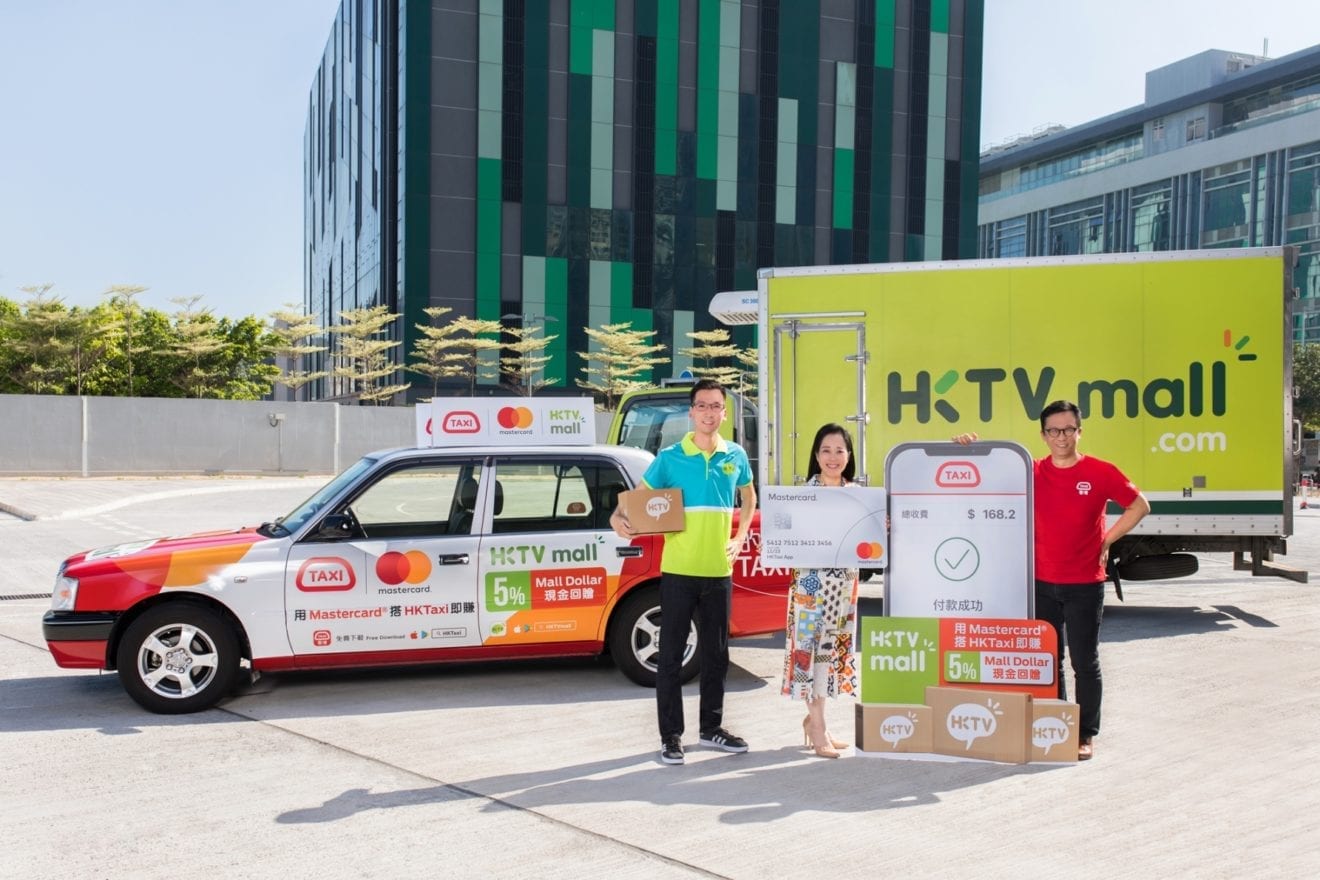
    From worry-free local transportation to hassle-free shopping, Hongkongers’ daily lives are getting more and more convenient! Mastercard has today announced its partnership with local online shopping mall HKTVmall, as well as its strengthened collaboration with the city’s most popular taxi-hailing app HKTaxi, to bring safe, secure and cash-free ways to shop and get around Hong Kong.

    Mastercard is effectively shaping the daily life of Hong Kong people to be more convenient than ever by forming a joint partnership highlighting both HKTVmall’s easy pickup and delivery services and HKTaxi’s 98.4% order fulfilment rate – the highest in the city as tested by the Consumer Council in March 2018.

    As a result of an exclusive privilege for Mastercard cardholders, HKTVmall shoppers can receive rewards to satisfy their daily needs by using their Mastercard to pay for taxi rides via HKTaxi, which recently announced that more than one-fifth of its 50,000 registered taxi drivers now accept Mastercard payments.

    “We at Mastercard aim to take care of all our cardholders’ needs and provide them with the best service every day,” said Helena Chen, managing director, Hong Kong and Macau, Mastercard. “By joining forces with HKTVmall and HKTaxi, we have now fully expanded our services from excellent local transportation to outstanding online shopping services, allowing us to become a truly integral part of Hongkongers’ daily lives.”
    “HKTaxi and Mastercard share the same drive to make Hongkongers’ lives more convenient with technology.

    The collaboration with HKTVmall extends our passion to provide great and beneficial services to every Hong Kong resident,” said Kay Lui, co-founder, HKTaxi. “Our joint partnership is built on convenience, safety and security, utilizing modern technology in responding to the demands of the Hong Kong people. Since the inception of the partnership between HKTaxi and Mastercard in March, the number of taxi rides paid for with Mastercard has been doubling each month and we are very thrilled with the progress. ”

    “We are proud to have partnered with Mastercard and HKTaxi to deliver the best experience in online shopping to everyone in Hong Kong,” said Ricky Wong, chairman, Hong Kong Television Network Limited. “Now, everyone in the city can rest assured that there is an easy way to take care of all their daily needs.”

    From June 1 to August 31, HKTVmall members who hail taxi rides with HKTaxi can receive HKTVmall Mall Dollar valued at 5% of the taxi fare when they pay with Mastercard. Mastercard cardholders who use HKTaxi can also get HK$50 after making three rides every week until July 29.

  • Chinese cross-border online market is yet to be dug out

    Chinese cross-border online market is yet to be dug out

    Cross-border e-commerce is the new fashion trend in China, powered by a rising middle class and robust economic growth. With an estimated 125 million Chinese consumers purchasing $105 billion of overseas products through this channel in 2017, according to a new research report by Azoya Consulting and Frost & Sullivan.

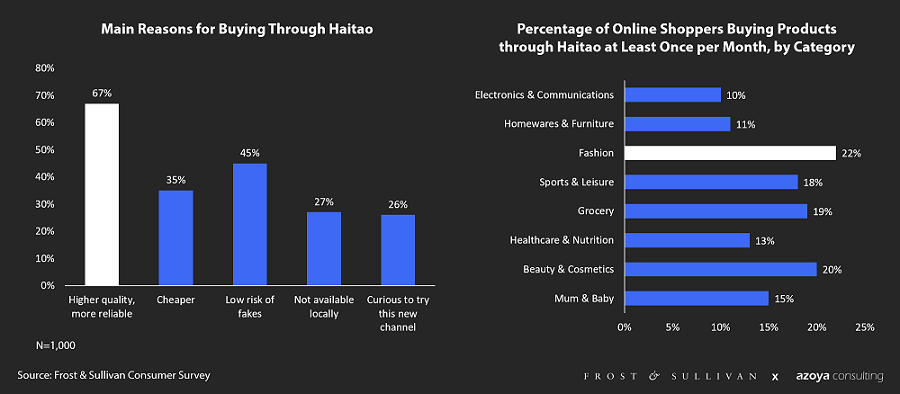
    In China cross-border e-commerce is often referred to as Haitao, which is overtaking the traditional method of buying through daigou agents (personal buyers) or friends/family based overseas as consumers seek a more legitimate, formal avenue for purchasing overseas products.; the research shows that the average Haitao shopper is spending RMB5,300 a year (US$848 a year) on products bought through this channel, with 60% intend to spend more. Fashion, beauty & cosmetics and grocery being the most popular categories.

    In China cross-border e-commerce is often referred to as Haitao, which is overtaking the traditional method of buying through daigou agents (personal buyers) or friends/family based overseas as consumers seek a more legitimate, formal avenue for purchasing overseas products; the research shows that the average Haitao shopper is spending RMB5,300 a year (US$848 a year) on products bought through this channel, with 60% intend to spend more. Fashion, beauty & cosmetics and grocery being the most popular categories.

    However, the research finds out while over 80% of western retailers see China as a lucrative opportunity, only 20% feel confident in their capability to succeed in China’s e-commerce market. Retailers cite regulations, intense competition, investment and not profitable as their main challenges, while retailers from different countries have distinctive strategy on enhancing their capabilities in China.

    Increased competition is making it difficult to succeed in the e-commerce marketplaces such as Tmall and Kaola were once seen as the major platforms where e-commerce sales and customer traffic come from, but now as the marketplaces are getting crowded and acquiring traffic is becoming more and more expensive, retailers find it increasingly difficult to differentiate themselves from one another, either satisfied with their sales performance in marketplaces.

    The research reveals that selling through marketplace holds the lowest satisfaction among other sales channels – only 21% of retailers are satisfied with their sales on marketplaces. Other concerns with selling through marketplaces include lack of direct customer access; high commissions up to 15% eating into margins; upfront costs to establish stores; and intense competition particularly around price.

    As a result, retailers are looking beyond marketplaces as their only approach to consider. “In fact, for retailers aim to establish long-term sales in China and build a brand that Chinese consumers trust, which commands a healthy profit margin and repeat buyers, retailers need to approach customers through multiple touchpoints. The key channel should be within retailers’ control, accompanied by supplementary platforms,” said Don Zhao, Co-Founder of Azoya International. “More and more retailers are establishing standalone websites as the core of their strategies, as these sites directly connect retailers with Chinese consumers who desire foreign brands, while empowering retailers with flexibility and control over their business.”

    Picky Chinese consumers are forcing brands to tailor their offerings to local tastes, while retailers react differently from countries Chinese consumers prefer to shop on cross-border e-commerce foreign platforms due to higher product quality and less risk of buying fake, while they tend to be picky when it comes to platform choices.

    The research finds out that China payment and website performance are the top influencers when selecting to buy from certain platform, the others were cited as Chinese customer support and nearby inventory.

    There’s also a trend that Chinese consumers are also looking for unique niche brands in pursuit of differentiating themselves from their peers and create a unique image. For cross-border transactions, shoppers are increasingly interested in seeking niche products suiting their personal needs; they also values the authenticity of a brand and the story it offers. Brand heritage and storytelling are important for brands to build a relationship with their customers now.

    Localisation is the key. Correspondently, retailers focus on enhancing their capabilities differently varies from countries. In mature countries where Chinese cross-border shoppers are familiar with, such as Australia and the USA, retailers focus on establishing warehouse or distribution centre in China to enhance shipment experience, tailoring their products to local consumer demands, and also Chinese language content such as blog articles to meet the tastes of Chinese consumers; while in the ‘late comers’ countries such as the UK, Germany, France and other European countries, retailers tend to focus on basic capabilities as introducing Chinese language website or entry level solution of social media strategy.

    The research draws a conclusion that retailers are advised to enter the Chinese market to take step by step approach that first research the market to understand the potential of certain brand or products in China, including category and product popularity; a second step involves deciding an entry model that’s most appropriate for their current stage offering the retailers enough control over the business while leave the flexibility of expanding to other channels; and finally, look for a local partner who will be able to guide the retailers through complex market, while adapt in time to the rapidly changing market when implementing.

  • Alibaba shows off automated wine store in Hong Kong

    Alibaba shows off automated wine store in Hong Kong

    Alibaba’s Tmall, China’s leading B2C online marketplace, wants to give wine selection and consumption a 21st century upgrade.

    At Vinexpo Hong Kong this week, Tmall unveiled a host of new technologies for the industry, including an automatic wine store, initiatives far from the grape-stomping and oak barrels of old.

    Tmall showcased a “Future Bar,” which included facial-scanning for entry, a robot waiter, RFID technology to enhance browsing, touch-screen displays for product research and a “Smart Wine Cooler.” The technologies are part of a larger trend in “New Retail,” an initiative in China led by Alibaba to merge the best of online and offline commerce for the benefit of both consumers and merchants.

    Mike Hu, a senior director at Tmall, said the goal of New Retail is to make shopping more personal, more engaging and more convenient – even in traditionally stodgy industries such as wine.

    “China really is at the forefront of consumer engagement right now,” Hu said. “Shopping here is mobile, it’s fun, it’s interactive, and the wall between e-commerce and brick-and-mortar stores is coming down. This kind of comprehensive shopping experience is what Chinese consumers have come to expect, so wine sellers need to adapt if they want to be successful here.”

    Upon arriving at Alibaba’s booth, attendees were greeted by the Tmall Robot Waiter, who asked, “Hey, don’t you want to have a drink?” – in multiple languages. The advanced human-computer interaction offered a glimpse of the future for wine merchants and their customers, Hu said.

    Facial scanning

    Facial scanning, meanwhile, offered entry to the booth and pointed a still-growing but soon-to-be important part of the consumer experience in China: facial-recognition payments, Hu noted. Already, Alibaba’s supermarket chain, Hema, has implemented the technology in one of its Shanghai stores. It is being tested in a cashierless store at Alibaba’s Hangzhou headquarters as well.

    The RFID technology was embedded in the foil wrapping that covers the cork so that when they were picked up from a shelf, their product information was displayed on a nearby screen. So, too, were recommendations for food pairings.

    Touchscreens at the booth allowed visitors to research a wine’s home chateau and place orders through the brand’s Tmall flagship store. This kind of setup would save much-needed stock and shelf space for retailers, Hu said, while providing greater selection for consumers visiting the shop and offering delivery direct to their homes.

    Users of Tmall’s Smart Wine Cooler scanned a QR code to open the cooler door, after which they could choose their favorite bottle and then simply close the door again to pay automatically. Or, as Tmall put it, “close the door, the deal is done.”

    Ecommerce marketplaces, such as Tmall, are playing an important role in China’s wine market, said Guillaume Deglise, CEO of Vinexpo. Not least because the brick-and-mortar retail business is not on par with other markets.

    “It’s very difficult to find very good shops in China, especially in tier-two and tier-three cities,” Deglise said. “So, e-commerce is changing this.”

    Also, younger consumers in China are more used to online shopping than their peers in the US and Europe, he said, “so the distribution will be different in China than the rest of the world.”

    Asia, overall, is driving global growth in the wine market, according to a new report from Vinexpo. And China is leading that trend. The country was the world’s third-largest importer in 2017 by value, at $16.41 billion, behind only the US and UK By 2021, however, China will overtake the UK in the number-two spot with $22.97 billion – a near 40 per cent jump.

    Deglise points to the middle class for these increases, especially those in urban centers, such as Beijing and Shanghai. An uptake among women is also playing a role, as is a general trend toward wellness in China that has people reaching for vino instead of the country’s traditional “baijiu” hard liquor.

    Then, there’s travel to markets where wine is already popular, such as the US, Europe and Australia, which gives Chinese consumers the chance to try new varieties.

    “When they come back home they tend to drink more wine than before,” Deglise said.

    This means that wine-producing countries will benefit, he added. Vinexpo expects almost all producing countries to increase their exports to China over the next five years, making China the only market to prompt such demand.

    “All producing markets are depending on China,” Deglise said. “It’s a huge market with tremendous potential.”

    Alibaba signed two memoranda of understanding at Vinexpo on Wednesday, with governmental organisation Wine Australia and French wine critics Bettane & Desseauve. Tmall will work to market Australian wines on the platform and support Wine Australia’s marketing efforts around major events such as the 11.11 Global Shopping Festival. For Bettane & Desseauve, Tmall will use their reviews to complement its wine listings while also hosting their annual top wine lists as they are released. They will also partner on offline wine events in China.

  • How AI affect online grocery shopping experience

    How AI affect online grocery shopping experience

    AI will soon revolutionise the online grocery shopping experience, according to research released today ahead of next month’s Consumer Goods Forum Global Summit in Singapore.

    The research, compiled by IGD, is based on a survey of 223 senior industry members across 42 different markets and a series of in-depth interviews. It predicts digital transformation will reshape online food and grocery retailing. In China, already the world’s largest online shopping market, online grocery sales will grow by 286 per cent within four years and account for 11.1 per cent of the nation’s total grocery spending.

    The online store of the future will contain five key features:

    Personal micro stores

    “Personal micro stores” will offer individualised and online-exclusive products as well as personalised promotions, recommendations, advertising and loyalty schemes. More than two-thirds of respondents (69 per cent) believe some retailers will apply personalised pricing and promotions in future. An additional 77 per cent think almost all digital communication to consumers by retailers will be personal.

    “AI will help to unlock personalisation,” explains Simon Mayhew, online retail insight manager at IGD. “The store’s layout will be dynamic and able to predict the customer’s reason for shopping. So, if you need a meal for tonight, your homepage will display only the relevant solutions. When generally browsing, you will only see the products and pack sizes likely to meet your needs. Many products will only be buyable online where there is no constraint on shelf space, and in high-value categories, there will be customisable products, so you can create your own ideal shampoo or cereal.”

    Smart personal assistants

    Tomorrow’s online grocery stores will act as a smart personal assistant, connecting with various devices, preventing shoppers from running out of products and supporting their lifestyle goals. Nearly two thirds (60 per cent) of the experts surveyed predict that smart devices automatically re-ordering products will become a firmly established way of shopping for many people. The shopping experience will also be more inspirational, through personalised planners and sophisticated digital assistants like chatbots. Seventy-one per cent of respondents expect some retailers to provide a service to offer personalised dietary guidance.

    “Smarter devices will make shopping simpler and more inspiring,” says Mayhew. “The online store will help stop you running out of products. Shoppers will subscribe to have their favourite products delivered regularly and AI will predict when you may run out and make or suggest a reorder. Household devices, such as washing machines, will connect to your store and reorder when necessary. This will lock in customer loyalty.

    “The online store will offer more than just groceries, it will also help around the house. With populations urbanising and tending to live in smaller properties, businesses will offer services that prevent the need for space-hungry appliances, such as home cleaning and laundry.”

    Faster and more efficient

    Tomorrow’s online grocery store will be more efficient for shoppers, making it easier and quicker to order products. Login and payment will be available through facial, voice or touch recognition technology. Shoppers will incur less waste, with a greater choice of pack sizes and meal planners to help manage quantities and advise on using leftovers. A better fulfilment service will be on offer with more deliveries, on time and in full and products delivered at the right quality and freshness.

    “For retailers and manufacturers, the online store of the future provides both opportunities and challenges,” says Mayhew. “Data from the online store will guide product development. Retailers will see gaps in their ranges through unfulfilled search requests and have a better understanding of product quality through ratings, reviews and feedback to chatbots.

    “Fulfilment will benefit from robotics and supply chain forecasting will be more accurate. This will mean online pickers have fresher products to select, helping overcome one of the biggest barriers to shopping online. Unattended deliveries to homes, cars, and even ‘straight to the fridge’, will grow in popularity.

    “Improvements in service will reduce the number of returns and make deliveries quicker. We will see greater collaboration in the supply chain, including manufacturers pooling resources to sell directly to consumers. However, there will also be new challenges and potential inefficiencies. Shoppers will expect faster deliveries, and this means smaller, more frequent orders.”

    Frictionless experience

    Tomorrow’s online grocery store will deliver a frictionless combined offline and online shopping experience for consumers. People will switch seamlessly from shopping online and instore with data cross-referenced between the two. This will help bring more personalisation to the physical store and help shoppers find their favourite products quickly and discover new ones. This is an opportunity that many companies need to work on with over half (53 per cent) of survey respondents saying they haven’t or have only just started to integrate their online and offline teams.

    “Before visiting a physical store, you will be able to look online to check in-store, real-time availability, access product information, get product usage ideas and read reviews”, says Mayhew. “When you arrive at the physical store you will then benefit from personalised offers and recommendations. An online app will help you find products and pay for your shopping without cash.”

    Invisible stores

    Tomorrow’s stores will – at times – be invisible, with shoppers buying products from shoppable digital content such as videos, photos and social media. In the future, people can be shopping at any time. There will be no limits to when you can be shopping. China has been leading the merging of media, entertainment and shopping, and Europe and North America will follow.

    “You won’t even need to visit your online store to buy products,” says Mayhew. “Alongside voice ordering, the majority of digital content you see will be shoppable. You could be watching a video or see a still image and just click on it to buy the product.”

    Danger in downplaying

    IGD’s team says there are three primary reasons why no grocery retailer or supplier can afford to downplay online retail:

    • Across most of the world, online is already a fast-growing channel.
    • Online and offline are merging, with an online store vital to complement physical stores.
    • The digital world evolves faster than the physical one and online stores will become increasingly compelling.

    The research house says tomorrow’s shoppers will expect more choice, convenience, inspiration, personalisation and transparency and online stores will play an increasing part in meeting these needs.

    “Grocery retail is seeing an unprecedented amount of change, driven by changing shopper expectations and the ability to meet these using transformative technologies,” says Joanne Denney-Finch, IGD’s CEO. “This offers great opportunities for companies of all sizes. The winners will put the needs of their shoppers first, be prepared to act decisively, maintain the highest everyday standards and exhibit tremendous agility.”

    The report, free to download from IGD, will be presented in detail at the Consumer Goods Forum Global Summit from June 12-15.

    Peter Freedman, the forum’s MD, says the IGD research report sets out a clear, consumer-centric vision of tomorrow’s online shopping experience.

    “It gives us all something to aim towards and it ties nicely to the theme of this year’s Global Summit – Consumer Centricity in a Data-Driven World.

    “And it highlights the importance of the CGF’s positive change agenda – such as using new technologies to deliver accurate product information on the digital shelf, designing out product and packaging waste, and retailer-manufacturer collaboration for growth.”

  • Indonesia Firms Face $34b in Losses Due to Cyber-Attacks

    Indonesia Firms Face $34b in Losses Due to Cyber-Attacks

    Cyber-attacks on Indonesian companies in 2017 will eventually cost domestic businesses $34 billion due to direct financial losses and long-term reputation damage, according to a recent study commissioned by global technology giant Microsoft.

    The study — which was carried out by research consultancy firm Frost & Sullivan by surveying 1,300 businesses and IT companies in the Asia-Pacific region — also put total potential losses to the region from cyber-attacks at $1.745 trillion, or 7 percent of the region’s current GDP.

    Almost half of Indonesia’s companies could have already been affected by cyber-attacks last year. The study found 22 percent of companies surveyed in Indonesia reported they had a security breach, while 27 percent were unsure if they had had one, due to a lack of data forensics assessments.

    Sixty-one percent of organizations either do not think about cybersecurity at all, or only after starting a new project. Almost seven out of 10 companies which had cyber attacks saw job losses in the last 12 months.

    “Companies face the risk of significant financial loss, damage to customer satisfaction and market reputation — as has been made all too clear by recent high-profile breaches,” said Haris Izmee, president director of Microsoft Indonesia, in a statement last week.

    Last year, Indonesia saw over 205 million cyber-attacks, including the ransomware WannaCry that attacked the country’s major hospitals, according to the Ministry of Communication and Information Technology.

    In calculating the potential losses, the study took into account direct financial losses from the attacks themselves, the opportunity cost to the organization caused by the incident, such as loss of customers because of reputation loss. The study also estimated cyber-attacks induced costs on the broader economy, such as a decrease in consumer and business spending.

    A large organization — one that has more than 500 employees — can possibly incur an economic cost of $16.3 million due to cyber-attacks.

    Of this, only $1 million is likely to be a direct cost to the company itself. Around $5.7 million is predicted to come from indirect costs, and $9.6 million to come from the induced costs.

    Over 90 percent of cyber-attacks can be prevented with maintaining most basic best practices, such as strong passwords, use of multi-factor authentications for suspicious log-in attempts and keeping all software up to date, Microsoft said.