Category: E-Tailing

Retail News Asia is committed to providing both local and global retailers with the latest E-Commerce & Etail news throughout the Asian market. This on a daily base.

  • Seafolly growing in Chinese market

    Seafolly growing in Chinese market

    Australian swimwear brand Seafolly is expanding into China, with its launch on e-commerce platform Tmall Global next month.

    The move is a noteworthy departure from the Australian retailers and brands that have been expanding into China in recent years, namely those selling milk, supplements and cosmetics.

    But according to Global Industry Analysts, the swimwear and beach casual wear market is on the rise in China, with an average of 9.6 per cent annual market growth from 2013 to 2017, and it is expected to remain strong over the next five years.

    Seafolly global CEO Paul Kotrba sees this growth as an opportunity to sell the brand’s unique beach lifestyle to Chinese consumers.

    “The swimwear industry today is very dynamic and growing at a rapid clip globally, especially so in China where it is forecast to grow close to 10 per cent each year through 2022, thus opening up an opportunity for Seafolly to be the first premium fashion swimwear brand in the market,” he said.

    Kotrba noted that Seafolly is already known to many of the 1.4 million Chinese tourists who have visited Australia in the past 12 months and said there are millions more fashion consumers in China who “love Australian products and brands”.

    Seafolly recently added Alipay as a payment option in certain retail locations in Australia, a sign of the increased demand for Seafolly products amongst Chinese tourists.

    The business has been working towards the Tmall Global launch over the past three months, with teams in Sydney and Shanghai. The private-equity-backed company will be running a series of marketing campaigns to support the brand’s development overseas.

    The brand will join over around 2,000 Australian brands on Alibaba’s e-commerce platforms when it launches on Tmall Global in July.

    “As Australia’s iconic swimwear brand, we are delighted to welcome Seafolly onto Tmall Global and we are excited by the growth and opportunities in the swimwear category,” said Maggie Zhou, managing director of Alibaba Group in Australia and New Zealand.

    Chairman and managing partner of the majority shareholder private equity group, L Catterton Asia, Ravi Thakran, said the move represents a significant step in the journey to create the world’s most iconic swimwear and beach lifestyle brand.

    “[We] look forward to continuing to work alongside the team to expand the brand in existing and new markets around the world,” Thakran said

  • Moschino partners with Alibaba’s Tmall Luxury Pavilion for its China launch

    Moschino partners with Alibaba’s Tmall Luxury Pavilion for its China launch

    Moschino, the iconic Italian luxury fashion brand, announced today it has joined Alibaba’s Tmall Luxury Pavilion to open its namesake flagship store, offering China’s luxury shoppers the opportunity to discover Moschino’s world of innovative designs.

    To expand its reach among China’s rapidly growing and young luxury consumer base, Moschino is joining forces with Alibaba to leverage the company’s unparalleled technology, exclusive platform, and insights into China’s high-end shoppers. The Luxury Pavilion is an invitation-only platform on Tmall for consumers of premium brands, providing an exclusive, luxury experience from product selection, brand experience, and customer service. Moschino’s flagship store will showcase a selection of items from its latest collections as well as the “Moschino X Tmall” collection, available only to Luxury Pavilion consumers.

    The “Moschino X Tmall” collection was designed by Jeremy Scott, Moschino’s Creative Director, and includes 6 ready-to-wear pieces and accessories, including a T-Shirt, hoodie, sweater, dress and baseball cap, all inspired by its Moschino Couture! design. The collection will be available on Tmall’s Luxury Pavilion starting June 28, 2018.

    “We are thrilled to make our debut into the Chinese market with Tmall.” said Gabriele Maggio, General Manager of Moschino. “To win in the China luxury market, you need to win over Millennials. We already see quite a bit of brand love among this powerful consumer group which we plan to grow in partnership with Tmall. There is no better partner to engage Millennial luxury shoppers in China than Tmall’s Luxury Pavilion. We are building an exclusive, social and digital experience with Tmall, designed for Millennial shoppers, to build our brand and expand Moschino’s presence in the Chinese market.”

    “We are very pleased to partner with an iconic fashion house like Moschino to help them expand in China and engage with a new generation of China’s sophisticated luxury consumers,” said Jessica Liu, President of Tmall Fashion and Luxury, Alibaba Group. “Moschino is a unique brand and important addition to Tmall’s Luxury Pavilion which is the premier luxury shopping destination for Chinese consumers, providing an exclusive, personalized and data-rich experience for luxury brands to engage with their customers today and into the future.”

    Launched in 2017, Luxury Pavilion has become the go-to destination for Chinese consumers looking to buy luxury products from around the world. The online platform provides the same brand exclusivity, customer service, tailored shopping experience consumers expect from a brick-and-mortar store brand store. The Luxury Pavilion is now home to around 60 luxury international brands.

  • GrabTaxi reiterates Vietnam-wide operations completely legal

    GrabTaxi reiterates Vietnam-wide operations completely legal

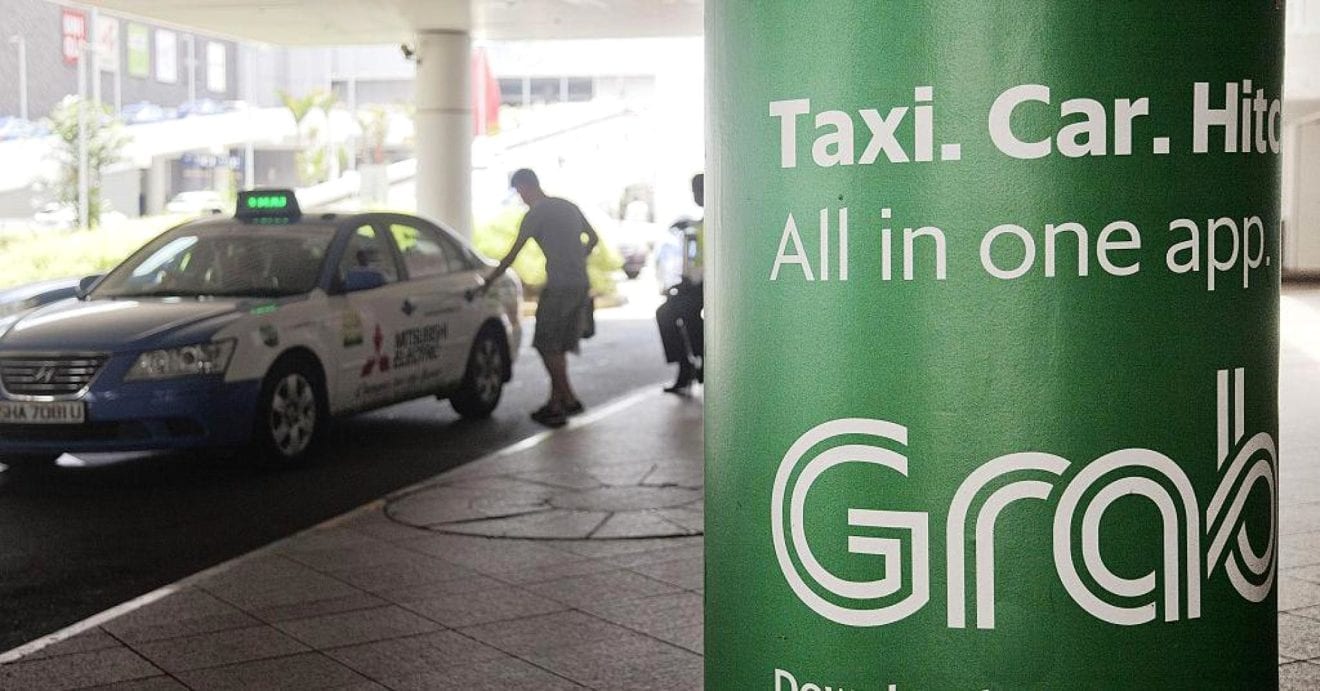
    Ride-hailing firm Grab Vietnam insists that its GrabTaxi service is legally allowed to operate nationwide.

    Grab Vietnam countered that GrabTaxi is an app for an e-commerce platform, so its operations would be in accordance with the government’s e-commerce laws.

    Grab Vietnam made the statement after the Transport Ministry has recently shot down a GrabTaxi plan to extend its services to provinces like Ninh Thuan, Dong Thap and Gia Lai. The ride-hailing firm now is allowed to operate in the five cities and provinces of Hanoi, Ho Chi Minh, Da Nang, Khanh Hoa and Quang Ninh.

    However, the firm said its GrabTaxi service is quite different from the GrabCar, which operates in the five above-mentioned provinces and cities, as a part of the ministry’s pilot plan for tech-based transportation services.

    Both GrabTaxi and GrabCar operate under the same Grab application, but GrabTaxi offers a run-of-the mill taxi service, while GrabCar is a service which connects customers with private cars for ride-hailing purposes.

    Therefore, GrabTaxi should be allowed to operate nationwide, stressed the firm.

    This isn’t the first time the ride-hailing firm has clashed with the Transport Ministry. In January, when Grab Vietnam wanted to extend its GrabTaxi service to provinces like Thua Thien Hue, Ba Ria – Vung Tau and Lam Dong, the firm also released a similar statement.

    Grab is currently under an investigation by Vietnamese authorities who say that its acquisition of Uber’s Southeast Asia operations shows signs of breaching local antitrust laws.

    A Vietnam Competition Authority (VCA) investigation found that Grab’s market share in Vietnam had exceeded 50 percent after its ride-hailing rival Uber left the Southeast Asian market in April.

    Under Vietnamese law, mergers and acquitions that result in a company gaining over 50 percent of the market share are restricted in Vietnam.

    The investigation, which began on May 18, is estimated to take 180 days and can be extended for another 120 days.

  • Grab now has more rivals than ever before

    Grab now has more rivals than ever before

    From an e-hailing app, Grab has made great steps forward, providing many different services. Most recently, it started the payment service GrabPay and lending service Grab Financial.

    The consumer lending market in South East Asia is very large. As estimated by the World Bank, about 2 billion people in the world cannot access bank services, and most of them are in Asia Pacific.

    The non-cash payment market, according to Grab, is worth $500 billion in South East Asia.

    An analyst commented that Grab is wise taking a ‘roundabout’ approach to consumer lending (it conquered the transport market first before aiming for the consumer credit market).

    Consumer lending is a fertile business field for Chinese e-commerce firms. The firms offer online payment apps to users to ‘learn’ about their financial capability.

    Grab, as an app, quickly attracted users, especially investors. Just within six years, Grab became an unicorn company, i.e. an unlisted technology firm with valuation of $1 billion and higher, in South East Asia. Analysts estimate that Grab is valued at $6 billion.

    The total number of Grab downloads has reached 95 million all over South East Asia. This could serve as the launch pad for it to conquer the consumer lending market.

    The challenges 

    “GrabPay e-wallet will be used for both transport and food delivery services, two of the most used services in South East Asia,” said Jerry Lim, director of Grab Vietnam.

    However, the analyst said, by expanding its business, Grab would have to compete with more rivals who are ‘powers’ in their fields. In online payment, for example, it will have to compete not only with AirPay (Sea) and Alipay (Alibaba Group), but also with local firms such as ZaloPay (VNG) and MoMo.

    In Indonesia, Grab bought an e-commerce platform, Kudo, in April 2017. Grab believes that this is the factor which can help expand GrabPay. However, in Vietnam, Grab’s two big rivals – Sea and Alibaba — both have strong support from two popular e-commerce floors – Shopee Vietnam and Lazada Vietnam.

    Similarly, GrabFood has rivals in the food delivery sector, where Sea’s Now, which inherited the large custom from Foody, is the leader.

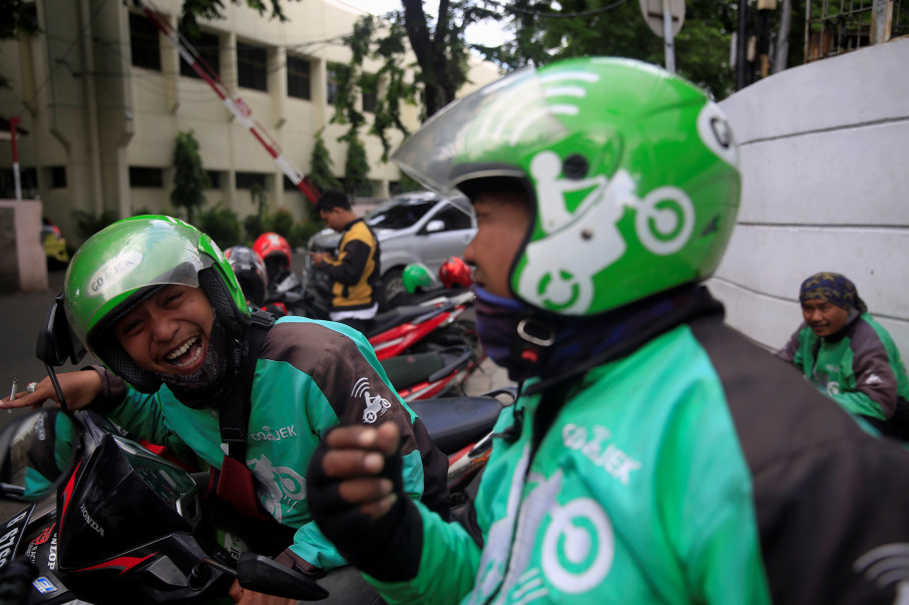
  • Go-Jek to launch ride-hailing services in Vietnam

    Go-Jek to launch ride-hailing services in Vietnam

    Indonesian ride-hailing app Go-Jek will officially launch in Vietnam this July under the brand name of Go-Viet.

    The firm will be run by a group of Vietnamese managers.

    Go-Jek will provide Go-Viet with financial and technological backing, as well managerial inputs.

    “We believe that these in-country teams have the knowledge and experience to make the businesses in Vietnam a huge success,” said Nadiem Makarim, Go-Jek CEO and founder.

    He said local teams will have in-depth knowledge and expertise to operate in Vietnamese market.

    The app would first offer ride-hailing and on-demand logistics services to customers in HCMC before expanding to other cities and provinces with food delivery and other services.

    The launch of Go-Viet in Vietnam is part of Go-Jek’s plan to expand to Southeast Asian markets, including Vietnam, Thailand, Singapore and Philippines.

    Founded in 2010, Go-Jek has raised over $1.5 billion from investors like Google and China’s Tencent Holdings.

    Starting out as a phone-based motorbike ride-hailing app, Go-Jek is now a digital platform which offers transportation, logistics and delivery services.

    Go-Jek isn’t the only firm vying for a spot in Vietnam’s transport market. Singapore based blockchain-powered ride-hailing app MVL is also on the verge of entering.

    Ever since Uber left Vietnam in April, Grab has dominated the local market, and authorities are investigating possible breaches of anti-trust laws.

  • Lippo Invests Rp 628b in Chinese Internet Giant Tencent

    Lippo Invests Rp 628b in Chinese Internet Giant Tencent

    Indonesian diversified conglomerate Lippo Group has invested Rp 628 billion ($45 million), or 350 million Hong Kong dollars, in Chinese internet giant Tencent, the world’s eighth most valuable listed company and owner of leading internet services including WeChat, Snapchat and Spotify, and technology companies such as Tesla.

    The investment highlights Lippo’s continued digital transformation and investment into the fourth industrial revolution, the group said in a statement on Monday (25/06).

    Lippo, a pan-Asian group with strategic investments and operations across eight markets globally, is the largest integrated services group in Indonesia, serving more than 60 million unique customers across its real estate, malls, department stores, hospitals, telecommunications, media and financial services businesses.

    Lippo’s 350 million Hong Kong dollars investment into Tencent comprised of new Tencent shares and equity-linked notes (ELNs). The investment is made by Lippo’s Hong Kong investment subsidiary.

    Tencent’s market capitalization passed $500 billion last November, making it the first listed Chinese firm to do so and briefly overtaking Facebook as the world’s fifth biggest firm.

    Co-founder Ma Huateng, nicknamed Pony Ma, is the 17th richest person in the world, with a fortune of $45.3 billion — four places behind Google co-founder Sergey Brin, according to the latest Forbes rich list.

    Tencent’s core business is built on messaging app WeChat, the world’s largest mobile gaming franchises, and an ecosystem of services (for its 1 billion users) usually offered by Silicon Valley firms that have no foothold in China.

    Tencent Video, a streaming service much like Netflix, is the biggest of its kind in China and carries exclusive content including HBO series “Game of Thrones”. The service more than doubled in size in 2017, drawing more than 40 million paying subscribers.

    In Indonesia, Lippo’s nine unique sectors are all pushing to digitalize. In addition, it has established a digital investment group to lay strong foundations for the fourth industrial revolution. This includes Venturra Capital having invested in 24 start-ups in the last 2 years, mataharimall.com, and OVO — Indonesia’s leading payment and marketing platform.

  • Alibaba plans massive 3-year expansion of Rural Taobao network

    Alibaba plans massive 3-year expansion of Rural Taobao network

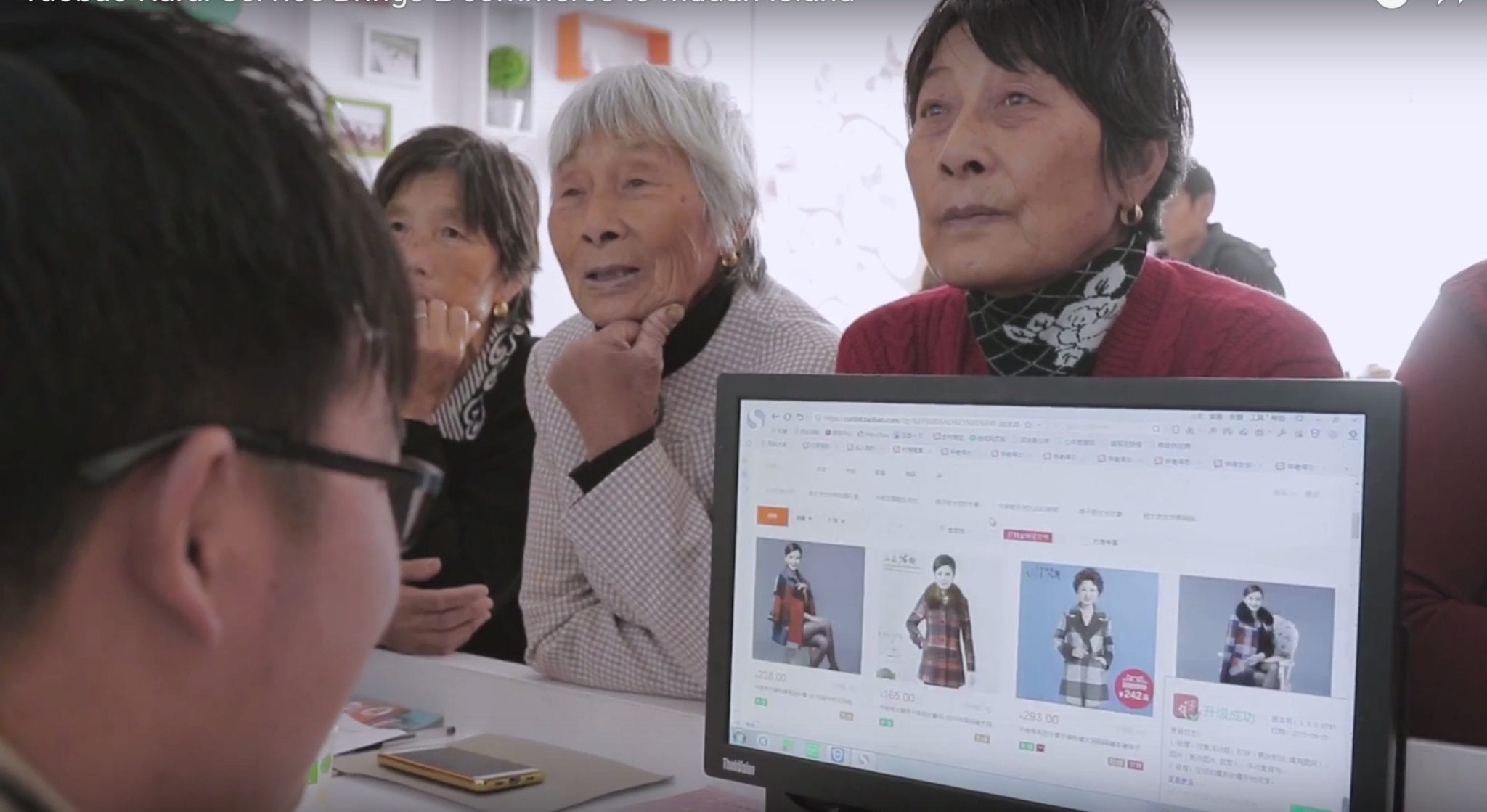
    Alibaba Group’s rural initiative – Rural Taobao – plans to expand its coverage to 1000 counties and 150,000 villages across China during the next three years.

    Launched in October 2014, Rural Taobao is one of Alibaba’s three main strategic projects in addition to globalisation and cloud computing. It aims to buttress trade between China’s remote regions and urban areas. Presently, around half of China’s 1.3 billion population reside in rural areas.

    “Our mission is clear: We want to improve the living conditions of China’s rural regions. To do so, we need to provide high-quality goods, personalised services, smart logistic solutions and prices comparable to that of the cities,” said Bill Wang, VP of Alibaba Group and GM of Rural Taobao.

    As part of the project, a network of e-commerce service centres has been created at the county and town level to provide services that enable villagers to purchase products online, as well as sell their goods via Rural Taobao’s dedicated online marketplace and other Alibaba e-commerce platforms. This way, villagers can enjoy a wider range of products and promote their own products beyond the village borders.

    Currently, the initiative covers 700 counties with over 30,000  service centres.

    Speaking at 2018 Rural Taobao Merchant Summit at Alibaba’s Hangzhou headquarters, Alibaba executives emphasised the consumption power of China’s rural population, though weaker than in urban centres, is gradually becoming a force to be reckoned with.

    According to the latest report from National Bureau of Statistics, in 2017, the average disposable income per capita in China’s rural region increased by 8.6 per cent year-on-year to RMB 13,432 (US$2066). Consumption per capita also climbed 8.1 per cent year-on-year to RMB 10,955.

    The amount of online retail shopping in rural areas is also booming. In 2017, sales reached RMB 1.24 trillion ($194 billion), representing an on-year surge of 39 per cent, said the Ministry of Commerce.

    One of the short-term goals is to offer next-day delivery of any goods and at-home installation of large electronic products, Wang added. Alibaba has also recently opened a number of “Taobao Select Service Stations,” where villagers can purchase an array of products, from food, to clothes and electronic items, at a physical location, without having to place the orders online.

    An integral part of the initiative is empowerment of the merchants, said Wang. By sharing insightful analytics about customer preferences and market trends with the brands, companies can develop products or craft marketing campaigns that are more befitting rural consumers.

    For example, Germany-based skincare and personal hygiene giant Beiersdorf Group recently sent a team of researchers on a three-month fact-finding trip in China’s villages to learn about their hair-washing habits. From the information they’ve gathered, the parent company of iconic brands such as Nivea and Eucerin is able to design a shampoo that best meets the local needs and demands.

    “Even though rural regions constitute a small portion of our total revenue, we treat it as an important market, not merely a sale channel,” said John Zhang, GM of Beiersdorf China, who has personally visited more than 50 villages in the country.

    In cooperation with brands, Rural Taobao also conducts frequent training sessions for service station managers to equip them with the necessary know-how and skill to deliver the best service to their customers, said Wang.

  • 11Street Shopping Mall to get US$449 million investment

    11Street Shopping Mall to get US$449 million investment

    South Korean mobile carrier SK Telecom has announced a US$449 million investment into a subsidiary’s e-commerce platform, 11Street Shopping Mall.

    In a decision yet to be approved by shareholders, SK will use the investment, sourced from the H&Q Korea private equity fund, to establish a new business entity. An SK spokesperson said that further reshuffling among its subsidiary firms will be aimed at seeking a new growth engine with a view to expanding its presence in the country’s online retail market.

    The move directly follows a joint venture set up earlier this month between an SK subsidiary and the country’s largest convenience store chain, CU.

    The improvements to 11Street’s operations will draw on artificial intelligence technologies, among other information and communications developments, to build new services – including improvements to its mobile payment system.

    A representative from SK Telecom said that the company’s new business structure is ready to promptly and flexibly respond to the fourth industrial revolution.

  • US Supreme Court Widens Reach of Sales Tax for Online Retailers

    US Supreme Court Widens Reach of Sales Tax for Online Retailers

    Local governments in the US are now able to force online retailers to collect sales tax on purchases made in states where they have no physical presence, echoing the Australian government’s move to ‘level the playing field’ through the implementation of GST on low-value imports.

    In a 5-4 ruling on Thursday, the highest court in the US backed a South Dakota law enacted in 2016, which required out-of-state e-commerce companies to collect sales tax if they generated $100,000 or more in sales, or conducted 200 separate transactions in the state.

    The law was challenged by online furniture and homewares business, Wayfair, on the basis of a 1992 ruling, which barred states from forcing businesses with no local physical presence in the state to collect state sales tax.

    This created a legal loophole benefiting online retailers in particular, since they could offer consumers an overall lower price on items than their bricks-and-mortar competitors.

    The reversal of the 1992 ruling is being praised as a win for ‘main street’, that is, traditional bricks-and-mortar retailers, which have struggled to compete with the increased choice and attractive prices offered by e-commerce companies, leading to record closures in recent years.

    Indeed, pureplay online retailers, including Ebay, Etsy, Overstock, Wayfair and Amazon, saw their share prices fall on Thursday, following the decision.

    Small online businesses are expected to suffer most, as they face the increased cost and complexity of collecting various state and local taxes.

    And while the ruling has immediate implications only for online retail sales in the state of South Dakota, other states in the US – 45 of which collect state sales tax – are now expected to introduce similar laws.

  • How JD could help fight a proxy war for its strategic investors

    How JD could help fight a proxy war for its strategic investors

    A proxy war is a strategy that refers to a conflict instigated by opposing powers who do not fight against each other directly.

    By using third parties to do the fighting, it is still possible to bring strategic benefits while minimizing the risks.

    Google has announced that it will invest US$550 million in JD.com for 1 percent stake, joining Tencent and Walmart to become the Chinese online retailer’s third strategic investor.

    In fact, the three may all be seeing JD as a proxy to help them compete with their respective rivals.

    Listed on Nasdaq in 2014, JD has a market capitalization of around US$60 billion.

    It’s China’s second-largest e-commerce company, but its market value is only a fraction of Alibaba’s US$500 billion plus.

    Alibaba’s Taobao and Tmall have snapped up about 70 percent of China’s online shopping market, while JD’s market share is around 22 to 25 percent.

    To Google, JD could serve as a proxy in competing with Amazon.

    Google and JD plan to “collaborate on a range of strategic initiatives, including joint development of retail solutions in a range of regions around the world”, they said.

    In the short term, JD would select a range of high-quality products and offer them worldwide through Google Shopping.

    The two companies would also explore new retail opportunities in Southeast Asia, the United States and Europe. The alliance would combine JD’s strengths in supply chain and logistics with Google’s tech capability to develop a new retail infrastructure.

    We could say that Google and Amazon have a sort of love-hate relationship. Amazon is now Google’s largest advertising client, spending billions of dollars each year. But Amazon is actively exploring direct distribution channels and even starting its own advertising business.

    Google, meanwhile, has launched its Google Shopping unit and JD would add more Chinese offerings to this platform.

    JD will also serve as Walmart’s proxy in its war against Amazon.

    In 2016, Walmart, the world’s largest brick-and-mortar retailer, sold its China e-commerce platform to JD as it pulled out of the market.

    In return, Walmart obtained a 5 percent stake in JD, and became its strategic shareholder. The US retailer has since then steadily increased its stake to 12 percent.

    Walmart is also looking to transform its business into an offline-to-online retail model. But it has achieved limited progress so far. JD serves as a good partner in this pursuit.

    To Tencent, JD would be a proxy in competing with Alibaba.

    Chinese internet giant Tencent spent US$215 million for a stake in JD in 2014. Following a number of additional purchases, Tencent now holds a 21 percent stake and is JD’s largest shareholder.

    If JD is able to put some pressure on Alibaba, the latter would have less time and energy to try encroaching on Tencent’s turf – social networking and online games.

  • JD and Better Life collaborate to fasten deliveries

    JD and Better Life collaborate to fasten deliveries

    JD has developed a partnership with Chinese retailer Better Life as part of its Retail as a Service strategy.

    The cooperation will further speed up delivery for mainland customers and integrates inventory across the two retailers by using technology to identify the most efficient way to source orders on JD.com, whether from JD’s own warehouses, or from Better Life stores.

    Products sourced from Better Life will be delivered in less than an hour by Dada, China’s leading crowdsourcing delivery company. The efforts follow a cooperation with Walmart that uses a similar strategy of supply chain integration to increase overall efficiency and improve user experience.

    “JD is uniquely able to improve our overall inventory management and reach a wider swath of customers more efficiently,” said Kevin Liu, grocery merchandising director at Better Life. “As the retail landscape is rapidly changing, we see this initiative as a prime example of how offline retailers can not only remain relevant, but actually become even more relevant.”

    Ting Qi, director of user experience at JD FMCG and Foods, said the partnership marks another step forward in the Retail as a Service strategy, which leverages JD’s resources to help traditional companies excel in a changing environment.

    “We are pleased that our customers will be able to get an even better shopping experience through this initiative with Better Life.”

    The benefits for the customer, offline stores and JD through the integration of inventory include increased sales, faster inventory turnover, improved cash flow and even faster delivery.

    JD is also exploring the option of integrating its online membership program with offline partner stores, so that offline stores can enjoy even more benefits from their partnerships with JD.

  • Instagram stories, new shopping windows

    Instagram stories, new shopping windows

    Facebook’s Instagram is letting people shop directly from its Stories, opening up a direct way for people to buy what they see.

    Starting on Tuesday, some retailers, including Adidas, Aritzia and The Kooples can tag and link directly to their products. Instagram users can click on the link and buy the item directly, without having to leave the app.

    The shopping function becomes very interesting when it relates to video. Coupled with Instagram’s reported plans to launch its own exclusive longer-length series, it’s plausible to think that one day a person could be watching a show on Instagram, see an actor or social media star wearing or using a certain product, and then tap on the link to buy that item directly.

    Although the buy links are free for companies to use, if more customers start shopping through Instagram it could get marketers to move their money to the platform. This click-to-shop feature could be a more compelling way to get to shoppers than a traditional TV commercial, allowing the Facebook company to dip into the nearly $70 billion brands are expected to spend on commercials this year.

    Instagram overall has 800 million daily active users — the Instagram Stories feature alone has 300 million daily users. It is especially popular with young adults, with 71 percent of 18- to 24-year-olds using the app according to Pew. Instagram Stories could be a way to get products in front of an audience that’s watching less TV.

    Allowing sales from Instagram Stories could also take money away from Google’s YouTube, which has its own shoppable feature. And it makes it a stronger competitor to Snap, which recently allowed direct shopping from its Snapchat lenses.

    The new Instagram Stories shopping feature is only available for businesses, not individual sellers or consumers trying to get affiliate payments. Moreover, companies can only directly link to products they sell themselves, meaning they won’t be able to sell through a third-party retailer for now. The feature also does not allow targeting to a specific audience, meaning most people who see the shopping-link enabled posts would have already been following the company on Instagram.

  • E-commerce tipped to take one third of Asia-Pacific retail spending

    E-commerce tipped to take one third of Asia-Pacific retail spending

    E-commerce will account for 31.4 per cent of total Asia-Pacific retail spending by 2020 according to fresh projections by research house Mintel.

    That’s nearly 10 times the proportion of 2010, when it accounted for a mere 3.6 per cent of sales.

    Those figures are based on countries with high populations – Australia, China, India, Indonesia, Japan, South Korea and Vietnam – and exclude markets like Singapore and Hong Kong, where e-commerce accounts for less than 5 per cent of total retail sales.

    “The future of Asia-Pacific’s retail landscape will force a fundamental change in the way Asian companies are structured, managed and do business,” the report, New Retail: The Futurenomics of Asia-Pacific, concluded.

    Its author, Matthew Crabbe, who is regional trends director, Asia-Pacific, with Mintel, said the 2020 projection is only the start.

    “E-commerce growth is fast-moving and on a massive scale. From 2015 to 2025, e-commerce will rise in value by over 290 per cent, and reach well over 37 per cent of total retail value across Asia-Pacific. This growth has created a new critical mass with the convergence of online and offline retail and services into New Retail.”

    Combining latest Mintel research to paint a picture of how the region’s future economy will be shaped, Crabbe settled on four key conclusions:

    Digitisation: Futurenomics nears critical mass

    “The online economy is a crucial part of Asia-Pacific’s current and future economic growth. It is also a major part of the continuing integration of the economies and consumer-spending patterns across the region. Meanwhile, Asia is not just innovating within New Retail, it is also a hothouse of innovation in AI, the application of augmented and virtual reality and revolutionary concepts in food production, among many technologies. And New Retail is the focus of how all these developments are agglomerating to shape the ‘futurenomics’ of Asia.”

    Integration: The value of experience

    “New Retail is a process, rather than a market, where the ‘space’ of e-commerce increasingly integrates with physical shopping spaces. It is also a part of a wider integration process into the broader digital consumer services environment, and across all consumer product sectors. Places and processes for shopping are integrating with entertainment, travel and socialising – which is great as 32 per cent of urban Thai consumers say they are spending more on leisure and entertainment this year,” said Crabbe.

    “Brands are finding that they are being drawn into their own integration across sectors. Services brands are merging with retailers; retailers are becoming hoteliers; online platforms are becoming transportation providers – everything is mixing up. This means that brands must now engage with consumers across formats, platforms, technologies, locations, nations and sectors, and find relevance across more aspects of consumer lifestyles.”

    Consolidation: More people in less space

    “Asia-Pacific’s population is rapidly urbanising into some of the world’s largest cities, creating the potential for New Retail to develop faster in the region. In India, 25 per cent of urban internet users who shop for groceries do so from online supermarkets at least once a month. Meanwhile, in Indonesia, 56 per cent of urban smartphone owners have made a purchase through an online retail site or app,” he said.

    “Urbanisation is likely to be significantly influenced in the future. To meet the needs of vast, crammed populations of tomorrow, cities will have to adapt to new technology. New Retail, with the ability to reach anyone, anywhere, via their smartphones, offers a unique solution to connecting with consumers.

    Companies in the New Retail industry are encouraged to spread their influence across the region. In fact, New Retail is already expanding rapidly across the region through the influence of China’s leading operators.”

    Migration: From brawn to ‘e-brain’

    Crabbe said as Asia-Pacific’s populations get older, there will be an increasing need for greater productivity as ‘working age’ populations shrink.

    “This will drive the need for ongoing education and long-life learning to keep up with and adapt to new technologies. Mintel research reveals that as many as 72 per cent of urban Thai consumers say they want to learn a new skill, while 59 per cent of urban Chinese mums agree that early education should start as early as possible.

    “Technology in production – manufacturing and agriculture, for example – is leading to a shift from a ‘brawn economy’ to ‘brain economy’. Already new technology has democratised the means of production.

    In an environment where ideas become currency, we see the emergence of what is now known as the ‘Fifth Estate’ where outlier, disruptor and social groupings become instigators of change in mainstream society. New Retail will be the foundation upon which new economies will be built, and Asia-Pacific is leading the first wave,” Crabbe concluded.


  • Tmall launches try-before-you-buy

    Tmall launches try-before-you-buy

    Tmall introduced a “try before you buy” option for fashion fans shopping on the platform.

    In a market where e-commerce is already ubiquitous, the B2C marketplace said it wanted to make shopping even more convenient by eliminating the hassle of returns and refunds for consumers searching for the perfect fit.

    The new service will let Alibaba Super Members with a Zhima credit score of over 550 to order clothes without payment and try them for seven days. If they decide to keep them, Tmall will automatically deduct the cost from their Alipay accounts. If not, shoppers can return them free of charge.

    Currently, more than 14,000 products from 15 local and international brands are participating in the service, including Italy’s Miss Sixty, Vancouver-based Lululemon and China’s home-grown labels Stella Luna, Dazzle, Ein, Yiner and Conquis.

    “Fashion brands can attract more premium consumers through this all-new shopping model… and it highlights how these brands are dedicated to enhancing the customer experience,” said David Ye, head of Tmall Fashion and Luxury’s customer operations unit.

    Tmall plans to expand the model to other categories and channels in the near future, Ye said.

    “We will also take the try-before-you-buy service offline, allowing consumers to book [garments] online and try on in-store, so they can at once access a wide variety of products online, as well as get the sense of certainty in shopping at brick-and-mortar stores,” he said.

  • Facebook, Google okay with Vietnam’s cybersecurity law

    Facebook, Google okay with Vietnam’s cybersecurity law

    Representatives of tech giants raised no objections and said they would modify their strategies according to the new law, claims senior official.

    Facebook and Google found Vietnam’s cybersecurity law “appropriate” and did not object to it, a senior Public Security Ministry official said Friday.

    Vietnam’s cybersecurity law, which was approved by a majority vote in the National Assembly on Tuesday, requires foreign businesses like Facebook and Google to store Vietnamese users’ data within the nation’s territory and provide it authorities upon receipt of written requests.

    As the law was being drafted, lawmakers had reached out to Google and Facebook to discuss its provisions, said Lieutenant-general Hoang Phuoc Thuan, director of the ministry’s Cybersecurity Department.

    “They said that this law was appropriate and that they will research to modify their companies’ strategies accordingly,” Thuan told.

    Authorities will only ask businesses to provide users’ data when there are signs of violations of the law, Thuan said.

    “Providing customers’ data to security authorities is not a violation of privacy,” he added.

    Facebook Vietnam and Google were not immediately available for comment.

    The cybersecurity law, which has been discussed by Vietnamese legislators since October last year, had raised concerns of MPs and experts that the country would end up violating its international commitments.

    Thuan dismissed these concerns. “I have met with and listened to diplomats and they all affirmed that there are exceptions in every country.”

    He affirmed that the law doesn’t affect freedom of speech; it actually protects the rightful benefits of individuals and organizations on networks.

    The new cybersecurity law, which will take effect in 2019, bans internet users from organizing, encouraging or training other people for anti-state purposes.

    They are not allowed to distort history, negate the nation’s revolutionary achievements, undermine national solidarity, offend religions and discriminate on the basis of gender and race.

    The law also prohibits the spreading of incorrect information which causes confusion among people, hurts socio-economic activity, creates difficulties for authorities and those performing their duty, and violates the legal rights and benefits of other organizations and individuals.