Category: E-Tailing

Retail News Asia is committed to providing both local and global retailers with the latest E-Commerce & Etail news throughout the Asian market. This on a daily base.

  • Costco Japan Launched new E-commerce Website

    Costco Japan Launched new E-commerce Website

    Costco Japan says it plans to launch an online store next year.

    The wholesale club-style retailer is still finalising plans for the site, in particular the exact launch date and the product range it will offer online. But it says it is committed to the e-commerce business given how Japanese consumers are increasingly buying goods over the internet.

    As with its physical stores, customers of the online store will have to pay an annual membership fee before they can purchase goods. That fee is currently ¥4752 (US$43).

    Meanwhile, Costco Japan plans to expand its network of hypermarkets from 26 to 50 by 2030. It is also building new distribution bases in the Chiba and Hyogo prefectures to prepare to service online customers and new stores.

  • Ebay tops list for local marketplace e-commerce

    Ebay tops list for local marketplace e-commerce

    More Australians visit Ebay in an average four week period than do Amazon and Kogan combined, new Roy Morgan research has revealed.

    New data put together from a sample of 50,000 Australians aged 14-plus has shown that Ebay is by far the most popular local online marketplace, with 9.4 million visitors in an average month.

    Next is Gumtree, with 5.6 million visitors, followed by Amazon, which entered last December, at 4.6 million.

    “The gap between these figures shows there is a large cohort of well over 4 million Australians who visit online shopping websites led by eBay, Gumtree, Amazon, Kogan.com, Groupon, Catch, OzBargain and others who don’t follow through and make the purchase,” Roy Morgan CEO Michele Levine said.

    “These online ‘window-shoppers’ represent a huge audience of Australians who are already living in the online world but haven’t taken the final plunge to purchase through the online shopping channels they know exist.”

  • Amazon Australia launches Prime

    Amazon Australia launches Prime

    Amazon on Tuesday launched its membership program, Amazon Prime, in Australia, offering free two-day delivery to nearly 90 per cent of Australians for an annual fee of $59.

    This is significantly less than the $119 fee for Amazon Prime in the US.

    Amazon Australia’s country manager Rocco Braeuniger noted the company was “thrilled” to introduce Prime six months after launching a local retail offering in Australia.

    “We have been working hard to expand selection, ensure customers get great value, and improve the Amazon shopping experience for Australians. With the addition of Prime, customers can now enjoy the most convenient way to shop and take advantage of new and expanding benefits from Amazon,” he said.

    In a press release, Amazon said its Prime program will bring free two-business-day delivery to 90 per cent of Australians, with more cities, towns and suburbs being added over time.

    It is currently available to members in Australian capital cities, including Sydney, Melbourne, Brisbane, Canberra, Adelaide, Hobart and Perth, as well as regional cities, such as Albury-Wodonga, Bendigo, Gold Coast, Gosford, Newcastle, Shepparton–Mooroopna, Toowoomba, Wagga Wagga and more.

    Prime members in more remote or rural locations will receive free expedited shipping in as fast as four or five days.

    There is no minimum purchase to qualify for free delivery, however, it is only available on ‘Prime-eligible’ products.

    Amazon said there are Prime-eligible products across all 23 shopping categories on its local site, including clothing  and accessories, electronics, books, toys, consumables, and beauty.

    Eligible products at launch include items from brands such as Blackmores, Bonds, Sol-Sana, Breville, Bose, L’Oreal, Tommy Hilfiger, Nintendo, Disney, Universal Sony Pictures Home Entertainment and Huggies.

    Notably, Prime members in Australia also have access to more than four million products on Amazon in the US through the local Australian site and free international delivery on orders over $49.

    This comes after Amazon announced it will stop shipping orders from its US site to Australian addresses in order to avoid having to comply with the new GST laws.

    “We hope that Australians will love free two-business -day delivery on products from Amazon Australia and free international delivery on products from Amazon US, all available to customers on Amazon.com.au,” Amazon’s vice president of Prime International, Jamil Ghani, said.

    “We are really proud to bring Australians the most extensive set of Prime benefits at launch for any country – ever. This is just the beginning for Prime in Australia, as we will keep making Prime better, adding even more selection and benefits.”

    Prime members in Australia also gain access to Amazon’s award-winning Prime Original television shows, as well as other popular movies and shows with Prime Video, over 1000 e-books with Prime Reading, benefits for gamers with Twitch Prime.

    Amazon Prime has more than 100 million paid members around the world.

  • Ebay launches free delivery with Myer, Target, Chemist Warehouse

    Ebay launches free delivery with Myer, Target, Chemist Warehouse

    Ebay Australia has officially launched its new membership program, Ebay Plus, offering free delivery and returns on 15 million products from tens of thousands of retailers, including Myer, Target and Chemist Warehouse.

    Ebay Plus members also get access to exclusive deals, such as up to 60 per cent off of popular items, early access to new products, a dedicated customer support team and collect double Flybuys points on all Ebay Plus purchases.

    The membership program, which went live last Friday, follows the introduction of Ebay’s Guaranteed Delivery, which provides faster and more precise delivery times for shoppers.

    The online marketplace now guarantees delivery in four days or less on millions of items, with the option to search for and filter items by delivery speed.

    The changes come as Amazon is reportedly gearing up to launch its own membership program, Amazon Prime, in Australia in mid-2018. With Prime, Amazon customers gain access to free shipping, including 2-day and in some cases same-day delivery, among other benefits.

    However, while Prime now costs US$119 (approximately A$160) annually, Ebay Plus costs only $49 for 12 months.

    According to research commissioned by Ebay in May, Australians spend over $71 on delivery each year, with 8 per cent spending in excess of $200.

    Ebay Australia & New Zealand managing director Tim MacKinnon said the introduction of Ebay Plus is a game-changer for Aussie shoppers and will address the pain-point of delivery costs.

    “We know our customers love the value and convenience of online shopping but our research shows the cost of delivery can stack up over time,” MacKinnon said.

    “Ebay Plus is the ultimate shopping membership. It’s like getting free delivery from your local shopping centre without leaving home. You sign up to Ebay Plus and receive free delivery and returns on 15 million items from tens of thousands of Aussie retailers including Myer, Target and Chemist Warehouse.

  • Grabbing Grab’s share a tough question in Vietnam

    Grabbing Grab’s share a tough question in Vietnam

    Local ride-hailing firms lack deep pockets needed to out-incentivize market leader Grab. After Uber Technologies Inc sold its ride and food-delivery businesses in Southeast Asia to bigger regional rival Grab last March, Vietnamese firms have tried to chip away at Grab’s dominance.

    A number of ride-hailing apps have been introduced recently, like Aber, which was developed by a group of Vietnamese students studying in Europe; FastGo, an affiliate of NextTech Group; and MVLchain – a Singapore-based transportation startup; VATO; Didi; and MaiLinhBike.

    Besides competing in the bike- and car-hailing businesses with dominant player Grab, the new entrants also plan to offer good delivery, car rentals and long-haul ride services.

    But, for the moment, none of them have shown the ability to fill the gap left by Uber or to threaten Grab’s supremacy, because they have not differentiated themselves from the competition.

    Newcomers did look for some “killer features” that are absent from previous apps to lure customers. For instance, VATO allows users to bargain with the driver for the most competitive price and Mai Linh Bike says it will collect lower commissions from its drivers and will not increase ride prices during peak hours.

    But such measures are not enough because ride-hailing is a cash burn business and only those with strong financial resources can endure, experts say.

    EasyTaxi has probably learned how tough this fight is. The Brazil-based company came to Vietnam at the end of 2013, six months before Grab and Uber’s presence in this market. Despite being the first comer, it withdrew from the market just two years later. Money, or the lack of it, was the reason, industry insiders say.

    Cash burn strategy

    Even big players like Grab and Uber have reported heavy losses in Vietnam. According to the General Department of Taxation, Grab, with a total registered capital of only VND20 billion ($881,057), has incurred losses of nearly VND1 trillion in three years of operating in Vietnam.

    But this cash burn strategy is how Grab and Uber are eating up traditional taxi firms’ market share. In 2014-2015, they launched intense promotional programs including free rides and discounts to lure customers. They also expanded their driver networks by providing them with subsidies and big rewards based on performance.

    Limited funding limits the budding competitors’ ability to offer incentives the way the big players can, so the former are always playing catch up. They can’t offer discounts, and can’t expand their network of drivers in order to offer faster, better rides.

    In a price-driven market, customers are always looking to choose the cheapest possible ride. And they have complained that it is not easy to book a ride with the new apps even in downtown areas.

    Duc Huy, a senior student at the Academy of Journalism and Communication in Hanoi, told VnExpress that he found it difficult to get a ride on MaiLinhBike as there are not many drivers around North Tu Liem District where he lives.

    “I have to wait for 10 minutes to get on a MaiLinhBike ride because the river is 2-3 km away,” he said.

    Drivers too see Vietnamese ride-hailing platforms as backup options. They are not ready to switch despite Grab cutting back on drivers’ incentives.

    Taxi driver Duy Ngoc said he operates on both Grab and VATO apps, but gets just two or three rides booked on the VATO platform a day.

    “So, I mainly drive on the Grab platform to ensure my income,” he said.

    “New apps do not have a large customer base. Drivers just sign up to get incentives, so their main driving service remains the previous one (Grab),” said 25-year-old Grab motorcycle driver Quoc Anh.

    Market niches

    With Go-Jek about to set foot in Vietnam with its Go Viet app, competition is only get tougher for local firms. The Indonesian ride-hailing firm is a heavyweight competitor to Grab in the Southeast Asian region. Will local apps stand a chance? The answer is, unlikely, in a head-to-head fight.

    “Capital shortfall is a disadvantage for Vietnamese ride-hailing apps, so they should not enter the cash burn race,” said Dr Nguyen Duc Thanh, head of the Vietnam Institute for Economic and Policy Research.

    He said going head-to-head with bigger rivals is not the right path to follow. There are other ways to succeed, he added.

    “They can enter niche markets like good delivery, car rentals or long-distance ride services. Instead of trying to divide market share in the beginning, newcomers should think of a long-term strategy to build a solid foundation,” Thanh added.

    It was not a fluke that even a well funded Uber lost to a more localized opponent, he said.

  • Southeast Asian online shoppers are big spenders via apps

    Southeast Asian online shoppers are big spenders via apps

    Southeast Asian online shoppers are leading the world when it comes to spending on shopping apps, according to research by tech company Criteo.

    Across Asia Pacific, 54 per cent of all online transactions are made in-app, 18 per cent on mobile web and 28 per cent on desktop.

    In its Q1 2018 Global Commerce Review (South East Asia), for which the company analysed browsing and purchasing data from more than 5000 retailers in more than 80 countries, Criteo also says shoppers in Southeast Asia are moving across multiple browsing environments before making a purchase.

    “Native mobile-shopping apps are now a prerequisite for success in retail and customer engagement,” said the Criteo report.

    “Our latest data reinforces how it is no longer just about having multiple channels available to consumers, but about how those channels are connected to offer a comprehensive and consistent shopping experience,” said Alban Villani, GM Southeast Asia, Hong Kong and Taiwan at Criteo.

    “Compared to other regions, the Asia-Pacific region now has the highest share of transactions on shopping apps – a natural progression from regional consumers’ mobile-first mindset. To engage shoppers, especially in countries like Indonesia and Vietnam, retailers must make mobile apps the centrepiece of their omnichannel strategies and integrate data across channels, at scale, to personalise content for consumers and drive sales,” said Villani.

    “It is crucial for retailers in the region to invest in the optimisation of shopping apps to effectively drive online and offline sales. This includes integrating native mobile-shopping apps into in-store shopping experiences and enabling mobile payments and customer loyalty programs within the app.”

    As they move to apps, Southeast Asian online shoppers are buying less on PCs. Year-on-year, online shopping on smartphones has grown 38 per cent while purchases via computers have fallen by 12.5 per cent in the region.

    Additional highlights

    The report also found:

    • Conversion rates on shopping apps in Asia Pacific are five times higher than on mobile websites.
    • Omnichannel consistency is key: Southeast Asian omnichannel customers generate 27 per cent of all sales, despite representing only seven per cent of all customers.
    • Southeast Asian omnichannel retailers that combine their online and offline data can apply more than four times as much sales data to optimise their marketing efforts.
    • Globally, 67 per cent of marketing leaders say that creating a connected customer journey across all touchpoints and channels is critical to the success of their overall marketing strategy.
    • In Southeast Asia, 62 per cent of customers worldwide check reviews or ratings before visiting a store.
    • The proportion of transactions made on smartphones and tablets in Southeast Asia increased from 28 per cent to 37 percent between last year and this year.
    • In Asia Pacific, 72 per cent of all online transactions are made on mobile devices. While desktop usage still dominates in online sales during working hours, mobile wins during nights and weekends.
  • JD.com hastens e-commerce race in Southeast Asia

    JD.com hastens e-commerce race in Southeast Asia

    Chinese online retailer JD.com has signed on Google as a strategic partner in a move seen to complement the former’s ambitions to expand into Southeast Asia while giving the latter a toehold in a market that it gave up in 2010.

    Google’s investment in JD.com comes as e-commerce companies, including Alibaba Group and Amazon, race to expand their global reach and carve a larger slice of market share in regions such as Southeast Asia, where the potential for e-commerce is viewed as largely untapped.

    Chinese smartphones brands such as Vivo, Oppo and Xiaomi have proven to be a hit among consumers in the region of 650 million people with their affordably priced models. Tencent Holdings, the online gaming and social media giant, is the largest shareholder in Singapore-based Sea, which operates Shopee, a regional e-commerce platform. Other internet services companies such as Didi Chuxing and Meituan Dianping have invested in local champions such as Singapore-based Grab and Jakarta-based Go-jek, respectively.

    Alibaba bought Singapore-based e-commerce platform Lazada and appointed one of its co-founders and most senior executives, Lucy Peng, to head the push into Southeast Asia.

    JD.com, too, has its eyes on Thailand, with a new online shopping platform developed with Thailand’s Central Group slated to open on June 18. In Vietnam, JD.com invested in local e-commerce firm Tiki.vn earlier this year. In Indonesia, JD.com launched a local online retail business JD.ID two years ago.

    “Logistics and language sites, everything should be localised here,” Winston Cheng, JD.com’s president of international business said in an interview in Singapore last week before the Google tie-up.

    “Today, people have higher and higher demand,” he said. “They want anything anytime anywhere but right away so the cross-border business model takes too long to wait for.”

    JD.com achieved 159.2 billion yuan (US$24.7 billion) in orders from June 1 to June 18, generating annual growth of 37 per cent for the company’s 618 Mid-Year Shopping Festival, an online shopping event similar to Alibaba’s Singles’ Day Shopping event on November 11.

    JD.com has also deepened cooperation with its biggest shareholder Tencent, launching a new shopping function on WeChat before the 618 Shopping Festival. The function enables consumers to shop on JD.com within WeChat, China’s biggest social network and messaging app. Product pages from JD.com pop up when consumers type product-related keywords into the search functions on WeChat.

    Google, together with other US internet companies such as Facebook and Twitter, are blocked in China, although several firms still maintain offices in the country selling advertisements to Chinese firms hoping to reach an overseas audience. Other companies, like Apple, continue to sell their products and services in China after complying with local rules, such as hosting its cloud services for the Chinese market on the mainland.

    “Google’s strategy for investing in JD.com is two-pronged. On one hand, it hopes to have a significant partner in China to support the company, which could help it reintroduce services like cloud or advertisements in China,” said James Yan, research director at Counterpoint. “Secondly, JD.com is strong in areas like logistics, courier delivery and so forth, which Google can tap on to expand its e-commerce ambitions.”

    The partnership is complementary as JD.com is in the business of e-commerce and logistics and is unlikely to clash with Google’s other services, such as cloud or OS services, Yan said.

    “We want to accelerate how retail ecosystems deliver consumer experiences that are helpful, personalized and offer high quality service in a range of countries around the world, including in Southeast Asia,” Karim Temsamani, president of Google’s Asia Pacific operations, said in a statement.

    The Asia-Pacific region is one of the largest and fastest growing e-commerce marketplaces in the world, with people in Southeast Asia alone expected to spend US$88.1 billion online by 2025, according to Temsamani.

    “This partnership with Google opens up a broad range of possibilities to offer a superior retail experience to consumers throughout the world,” Jianwen Liao, JD.com’s chief strategy officer, said in a statement. “This marks an important step in the process of modernising global retail.”

    Southeast Asia consists of 11 countries with a total population of 653.4 million, about 49 per cent of whom live in urban areas, according to the latest United Nations estimates. Only three per cent of the region’s retail sales are currently conducted online.

    Among the biggest barriers to developing a regional Southeast Asian market is the lack of mobile payments, with about 70 per cent of the region’s population still unbanked. The thousands of islands that make up the archipelagic nation of Indonesia also presents logistics challenges.

    JD.com will adopt different strategies to cater to the differences of the region, according to a spokesman. While there is no one-size-fits-all model given the different infrastructure, languages, cultures and religions across the region, e-commerce is still booming because of the commonality of a rising middle class, the spokesman said.

    “Alibaba sees Southeast Asia as a priority region within our global strategy,” an Alibaba spokesperson said in comments made before the JD.com-Google partnership announcement. “We are also committed to contributing to the growth of the digital ecosystem in Southeast Asia by driving initiatives to develop an e-commerce talent pool.”

  • Thailand Post to launch e-commerce service offering local products

    Thailand Post to launch e-commerce service offering local products

    Thailand Post is to add e-commerce to its logistics services, offering locally made products from across the country.

    From the fourth quarter, the enterprise will pilot exports of community-made products to Japan by collaborating with Japanese online marketplaces. The move aims to capitalise on cross-border e-commerce to compete with Chinese internet giants dumping their products in Thailand.

    “The company spent 10 million baht to launch Thailandpostmart.com, helping local communities sell their products in a marketplace with special delivery costs,” says Thailand Post president Samorn Terdtampiboon. The website, co-developed with BEC Tero, gathers local products nationwide into a “digital community”, aiming to be the largest distribution channel for agricultural products, crafts, food and One Tambon One Product items.

    The site’s eight categories are halal products, health and beauty, mail products, best cuisine in Thailand, best provincial products, locally made products, home and garden, and automotive.

    In the next phase, the site will integrate with at least 5000 points of sale in communities by year-end through collaboration with the Ministries of Commerce, Industry, Interior, Energy and Agriculture, as well as the Bank for Agriculture and Agricultural Co-operatives, to bring more local products to the e-marketplace.

    After the official launch, there will be an estimated 12,000 stock-keeping units of locally made products by April next, with THB200 million (US$6.2 million) in sales revenue through the website.

    Products can be delivered to buyers within two days after order and payment, and mobile apps for both Android and iOS will be available soon.

    By the fourth quarter, Thailand Post will pilot cross-border products to Japan’s largest e-marketplace for items like crafts, jewellery and locally made goods.

    Thailand Post will next month launch an e-wallet developed with partner 2C2P.

  • MyDeal launching Click Frenzy-like sales event with discounts

    MyDeal launching Click Frenzy-like sales event with discounts

    Online marketplace MyDeal has launched an end of financial year (EOFY) sales event, spruiking discounts and offers from its own sellers as well as participating retailers that will offer sales on their own sites.

    Called Australia’s Night Online, the sale will kick off at 6pm on 26 June and last for 24 hours.

    Customers can expect discounts on a range of popular items such as iPhones, Surface Pros, as well as discounts across commercial products such as office furniture, computers and office supplies.

    MyDeal plans to leverage the existing consumer spending intent to build hype for participating retailers, from technology brands, like Microsoft to fashion brands like Nasty Gal.

    The marketplace has partnered with Cash Rewards, Houzz, ZipPay and Compare and Connect to drive traffic for the event and expects impressions of more than 10 million.

    It has also partnered with Rakuten Marketing, which will be facilitating advertising space during the event for retailers not participating through the MyDeal platform.

    MyDeal is launching Australia’s Night Online off the back of its success during Click Frenzy 2017, when it was the most visited online retailer with 433,000 visits, according to Hitwise.

  • Catch Group reports a major loss after $24.9m writedown

    Catch Group reports a major loss after $24.9m writedown

    E-commerce company Catch Group reported a $17.8 million loss for the year ended 30 June, 2017, after booking a $24.9 million impairment on the value of its goodwill.

    The writedown was in the company’s services business unit, which comprised its daily deal business, Scoopon, which it sold to Lux Group on 1 December, 2017.

    This follows the $113.8 million loss Catch reported in 2016, after writing down the value of its goodwill and trademarks by $125 million across its products and services businesses.

    According to a financial statement filed with ASIC earlier this week, the writedowns are the result of a management review of the company’s five-year cash flow forecasts due to recent trading performances.

    The Scoopon sale was part of a broader asset swap between Catch Group and Lux Group, which involved Catch acquiring Lux Group’s discount apparel site, Brands Exclusive, and discount homewares sites, The Home, and Lux Group acquiring Catch’s travel booking sites, BonVoyage and Scoopon Travel.

    The two companies also merged their daily deal sites, including Scoopon, Cudo, LivingSocial, Deals.com.au and New Zealand-based TreatMe, into a joint venture with 50-50 ownership.

    According to Catch Group’s financial statement, it paid $2 million to Lux Group and received $8.8 million cash and 46 per cent of the shares in Lux Everyday Pty Ltd.

    $13.7m EBITDA before writedown

    Excluding the goodwill impairment expense, Catch posted $13.7 million in EBITDA in 2017, up 12.5 per cent on 2016.

    The online retailer generated $240.9 million in revenue in 2017, a 2.6 per cent increase over its 2016 revenues of $234.8 million.

    “The current performance of our business is outstanding,” Catch Group chief executive Nati Harpaz told.

    “The launch of the marketplace exactly one year ago has accelerated our growth and we now generate more than $1 million of sales every day with more than $2 million weekly sales coming from marketplace.

    “The key to growing our marketplace has been the growth in sellers which now tops 1,000 sellers and more than 1 million SKUs available on the website. This number continues to grow despite the fact that we are very selective as to the curation of our marketplace and who we invite to join our ecosystem.”

    The launch of the marketplace and Catch Connect, a new mobile phone service the company rolled out in February, are expected to have a positive impact on the company’s revenue in 2018.

  • Central JD to launch online marketplace in Thailand

    Central JD to launch online marketplace in Thailand

    A JV between JD and Thailand’s Central Group, Central JD Commerce will launch online marketplace www.jd.co.th in August.

    A soft launch is scheduled within the next few weeks.

    “Thailand is our second-biggest market in Southeast Asia following Indonesia, with Vietnam in third place,” says JD corporate VP Gloria Li.

    She says Southeast Asia became part of JD’s overseas expansion strategy two years ago. “We will bring our technology expertise and transfers to local teams, building an innovative retail industry.”
    Li says Thailand is an attractive market because of its preference for high-quality products and the rising number of middle-income consumers.

    A partnership with Central Group will enhance the customer experience for online shopping and logistics, as well as warehouse and delivery capabilities.

    The marketplace will provide goods from qualified merchants, most of whom are brand owners and small- and medium-sized enterprises.

    Li says the JV will export Thai products where the company has a footprint, such as China and Russia.

    “Our big-data analytics technology will provide customers insights into products for which there is high demand, helping them run promotions for targeted customers,” says Li. The return on investment with such marketing campaigns can be measured.

    Globally, JD has 301 million customers, with 82 per cent of its orders made via mobile. It is the largest retailer in China with revenue of US$55.7 billion last year.

  • Tmall extends online coverage for midyear sales

    Tmall extends online coverage for midyear sales

    Alibaba’s Tmall says it has extended its upcoming 618 midyear sales to several markets across the Asia-Pacific.

    This year, consumers in Hong Kong, Singapore, Taiwan and Australia will be able to join customers in Mainland China in accessing “billions of products at deep discounts online and offline” during the event.

    “This year’s 618 midyear sales coincides with the Dragon Boat Festival. It is a good opportunity for overseas Chinese to buy festive products and to build the understanding and connections with Chinese culture,” says Tmall export and import GM Alvin Liu. “For some markets, shipment by sea is now a delivery option, meaning consumers can literally buy a dragon boat on Tmall and have it delivered to their doorstep.”

    Another key element this year is New Retail, combining online and offline elements. “Pop-up stores in overseas markets will allow visitors to scan product QR codes and place orders online,” says Liu.

    Hong Kong, Singapore and Taiwan customers will be offered such promotions as free shipping.

    Tmall is working with more than 70 shopping malls and commercial districts across Mainland China and Asia to open pop-up stores that will offer consumers a seamless online and offline shopping experience.

    In these stores, consumers can sample new technologies such as product recommendations based on facial scans, smart-fitting, smart fashion advisors and scan-to-access product information.

  • Asia is the new e-commerce battlefield

    Asia is the new e-commerce battlefield

    Retail news is flush with GAFA (Google, Apple, Facebook, Amazon) and BAT (Baidu, Alibaba, Tencent) stories, as if the US and Chinese internet giants are dominating our digital planet.

    Indeed, at times it feels like they are…but are they really? What is going on in Asia Pacific? How big is each country’s e-commerce market? How fast are they growing? Who is dominating them: GAFA or BAT; or other players we don’t hear so often about? What are the implications for global brands active in these markets? And, along the way, what’s the situation in Hong Kong?

    E-commerce market size and growth in 2017

    It was no surprise that China and Korea lead the world by far in terms of e-commerce’s share of their total retail market, at  20 per cent and 19 per cent respectively. Japan and Korea are second and third behind China in terms of absolute e-commerce market RSV (Retail Sales Value), at US$79 billion and $51 billion respectively. India is fourth already, at $30 billion. But they are all dwarfed by China’s $449 billion e-commerce which is close to six times six times larger than Japan’s. (Notably, China’s total retail market is only 2.2 times larger than Japan’s.)

    Surprisingly, the total of Southeast Asian e-commerce market’s RSV in 2017 (six countries including Singapore, Malaysia, Indonesia, Thailand, Vietnam and the Philippines), was $9.1 billion, barely comparable to Taiwan’s $9.3 billion.

    Meanwhile, the fastest growing e-commerce markets in Asia Pacific over the last three years have been India – at an amazing 50 per cent CAGR from 2014-2017 – and Indonesia at 35 per cent CAGR, (just below China’s 38 per cent over the same period). Other Southeast Asian markets are not far behind:  Malaysia at 33 per cent, Vietnam at 34 per cent and Singapore at 26 per cent. If the trend continues, the Southeast Asian region will soon become one of the most attractive e-commerce arenas globally. No wonder, then, that global giants Amazon and Alibaba are establishing beachheads in these markets.

    The laggard

    Hong-Kong, however, is lagging, its e-commerce market worth just US$1.9 billion in RSV and its share of the total retail market just 4 per cent, comparable to Singapore’s 5 per cent but dwarfed by China, Korea, Taiwan and Australia. So, why is Hong Kong lagging other APAC markets so much? Here are some of the possible reasons:

    • Hong Kong has a very dense physical retail environment. Basically, shopping is easy and convenient in offline stores because there are plenty of them, close to everyone’s home. But the UK also has a very high retail density and its e-commerce penetration is as high as in China.
    • Hong Kong has a strong cash culture. Hongkongers use cash more often than in other markets (rather than credit card or electronic payment). The Octopus card has limited usage beyond MTR and convenience stores, whereas in Mainland China, for example, electronic payment is widely embraced, the country on its way to becoming a cashless society.
    • Less availability of local e-commerce sites. Perhaps the Hong Kong market is too small to justify a dedicated investment and entrepreneurs would rather build a website for China than for Hong Kong.
    • Global players have not invested in Hong Kong until recently (for example, Alibaba extending its 11/11 promotions and introducing Alipay in local restaurants and taxis) because they may have considered the market too small.
    • More importantly, unlike Singapore, Hong Kong may not be considered a gateway to a larger regional market like Singapore is for Southeast Asia. In fact, quite the opposite is true: global e-commerce companies may simply consider Hong Kong as a natural extension of the China market. If that is so, the good news is that Hong Kong may quickly catch up the rest of China, under the influence of BAT.

    The biggest e-commerce players in APAC

    There is no need for me to introduce Alibaba and Tencent/JD.com. China’s internet giants and their respective integrated ecosystems stretching from payment to logistics are battling for leadership in the world’s largest e-commerce market. Although protected from foreign intrusions, the rivalry between the two camps is brutal, each one matching the other’s advances, move after move, like the recent investments they made in the grocery sector.

    Meanwhile, Amazon has become the number one e-retail and marketplace platform in Japan, with more than 20 per cent market share, ahead of historical marketplace pioneers Rakuten and Yahoo! Japan. The rest of the Japanese e-commerce ecosystem is very local, with a few notable pureplays like Zozotown in fashion, and many online extensions of local offline retail incumbents like convenience store chains 7 and FamilyMart, and big box electronics retailer Yodobashi Camera.

    Amazon is also very active in Australia, where it is already number four behind pioneer eBay and Apple and Woolworths. But its recent decision to create an Australian website with a local distribution centre, enabling the introduction of its coveted Prime service, is likely to turn the Australian market upside down.

    Amazon has chosen Singapore as its beachhead entry point into Southeast Asia, where it has recently launched its Prime Now service.

    Ebay was the pioneer in South Korea where the company holds the number one position with more than 23 per cent market share through top player G-Market and the third largest player Auction. But venture capital-backed Coupang and 11Street are the fastest-growing challengers, with distinct value propositions. They might soon change the Korean ranking.

    Ebay is also number one – for now – in Singapore, with a 33 per cent share of the island-state’s e-commerce market through its locally owned leader Qoo10, leveraging the experience that eBay acquired in Korea’s most advanced e-commerce environment.

    Chinese giant Alibaba has put a stake in the ground in Southeast Asia through its acquisition of multi-market platform Lazada, which is present in six markets: Singapore, Malaysia, Indonesia, Thailand, Philippines and Vietnam. Benefiting from its parent’s huge capabilities and investment power, Lazada is growing at a fast speed and has already grabbed regional leadership with a 20 per cent market share in Southeast Asia.

    China’s second giant JD.com is quietly building infrastructure in Indonesia and entering alliances in Thailand and Vietnam while its parent Tencent is investing in technology, e-payment and C2C platforms.

    However, early entrant German capital-backed Zalora, which used to be present in every market in Southeast Asia, exited Thailand and Vietnam, selling its business to local players. In the Philippines, it sold a 49 per cent share of the business to mall operator Ayala, entering an omnichannel partnership which also includes Ayala’s BPI bank.

    Likewise, Japan’s Rakuten, which was an early entrant in Singapore, Indonesia and Malaysia, retreated from these markets in 2016.

    So the stage now seems set for an Asia Pacific face-off between Amazon, eBay and Alibaba.

    What about Hong-Kong?

    Hong-Kong’s e-commerce environment is still dominated by international platforms Amazon, Apple, Yahoo!, G-Market (eBay), Zalora, Asos, Rakuten and flash player Reebonz through their international websites, with very limited local adaptation or local infrastructure investment, which means a relatively basic service level.

    Meanwhile, China’s Alibaba and JD/Tencent have gradually become more available to Hongkongers:

    WeChat payment and AliPay have become increasingly accepted in Hong Kong restaurants and taxis, and Hongkongers can now enjoy Alibaba’s Singles’ Day and other promotions.

    It looks like Hong Kong’s e-commerce destiny is to become part of the huge China market and therefore China’s digital ecosystem – just as Hong Kong will soon be connected to the mainland by powerful road and rail links.

    What does this mean for Hong Kong e-commerce strategies?

    Betting on technologies and capabilities that are compatible with large Chinese platforms will undoubtedly boost Hong Kong’s e-commerce energy. That means local retailers should embrace WeChat, Alipay and other Chinese standard capabilities as Hong Kong standards.

    Likewise, Hong Kong entrepreneurs and investors may focus on building e-commerce websites and capabilities with the ambition to serve China, not just Hong Kong.

    With such strategies in place, Hong-Kong’s e-commerce players may be able to capture an opportunity at the scale of China – 236 times bigger than the Hong Kong market!

  • Alibaba, JD.com race toward faster delivery

    Alibaba, JD.com race toward faster delivery

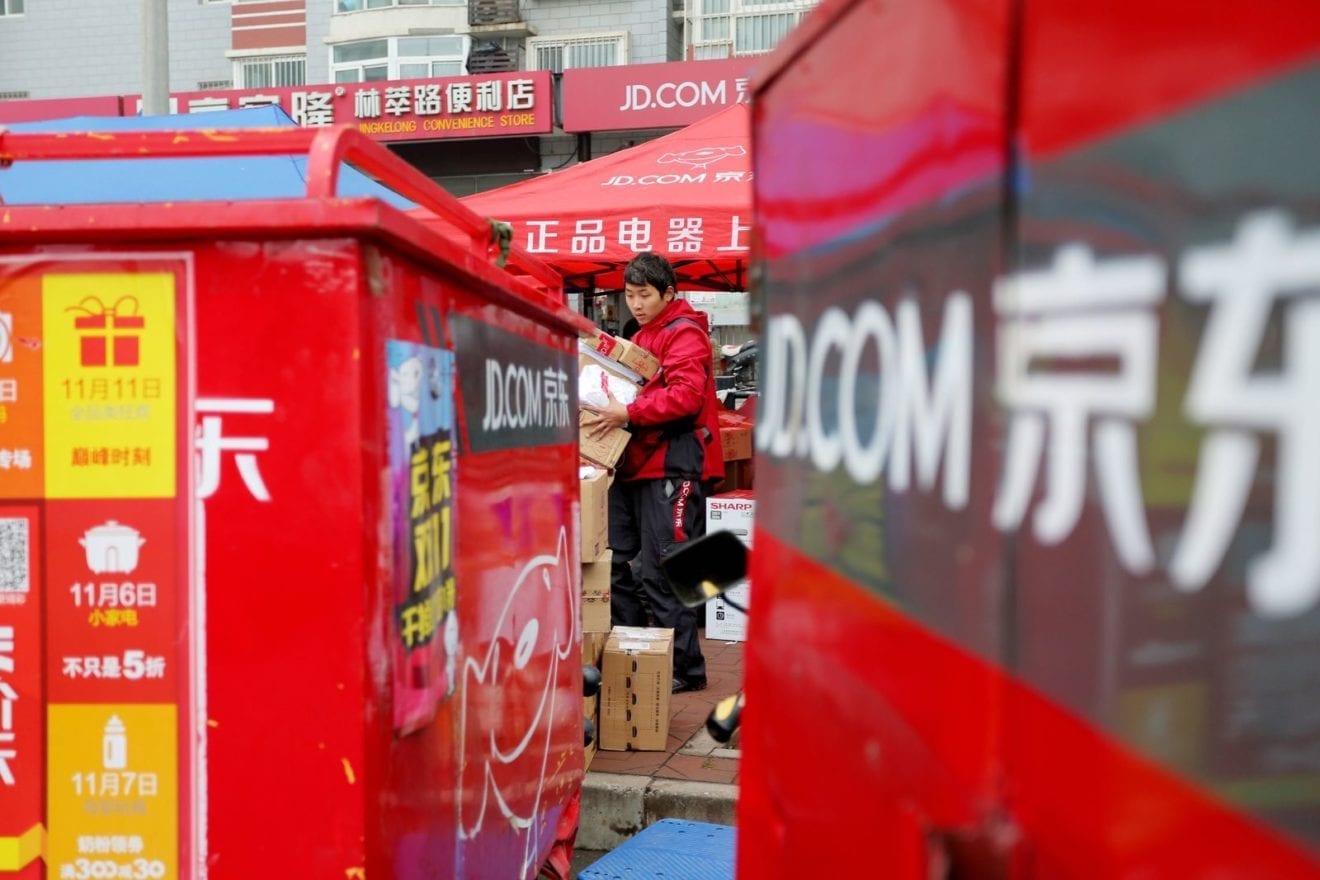
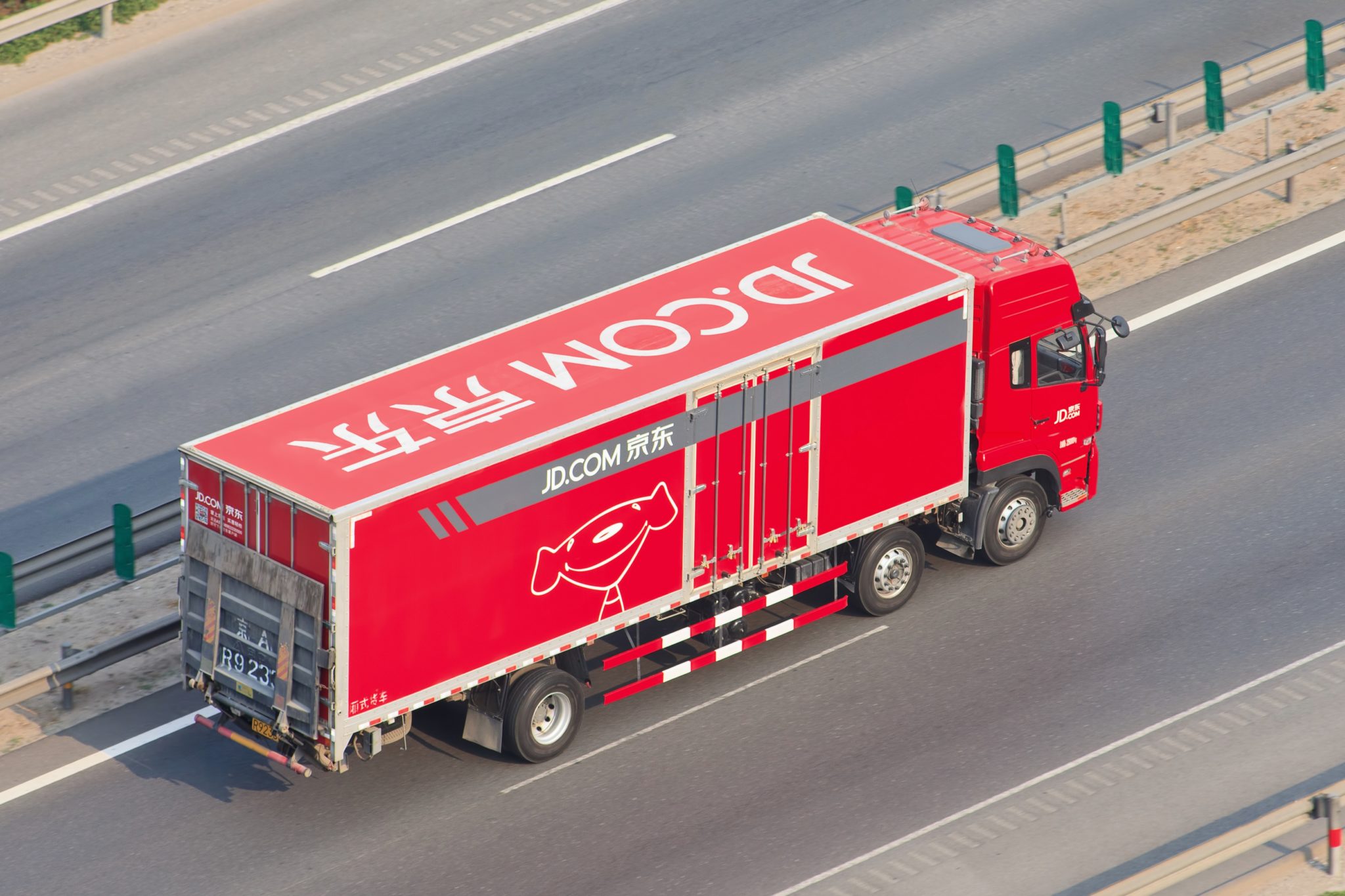
    Alibaba holds a controlling stake in smart logistics company Cainiao, a relationship that has drawn much scrutiny from the SEC, so it has been moving toward this concept of a vast smart logistics network for a while now. Its efforts to ramp up faster delivery are not only about making that happen throughout China, but internationally as well.

    Alibaba has also been facing growing competition from JD.com, its biggest e-commerce rival in China, and in recent years the companies seem to have been pursuing similar growth strategies, with frequent investments in brick-and-mortar retail. Alibaba, for its part, invested more than $1 billion in two different firms to feed it brick-and-mortar expansion, while JD.com has deepened a partnership with Walmart, and committed to building hundreds of unmanned convenience stores.

    Now, the rivals are shifting their attention to logistics, perhaps taking a page from Amazon’s book of how to expand retail dominance by building a network capable of reliable express delivery. That being said, Alibaba  and JD.com have much more vast canvases to work with, though they could face similar regulatory scrutiny being placed on technologies like drone delivery in the U.S.

    The big question is just how far both Chinese companies will look to extend their logistics reach. JD.com has already reportedly been considering a fulfillment center in Los Angeles as an outpost for a U.S. logistics expansion. Meanwhile, Alibaba has dabbled in the U.S. market, mostly focusing on Chinese tourists and immigrants through Alipay, although at one point it was rumored to be in talks with Kroger about a partnership.

  • Alibaba to sell more Korean stuff

    Alibaba to sell more Korean stuff

    Chinese e-commerce giant Alibaba Group announced Monday that it will expand partnerships with Korean brands in line with a Chinese government initiative to increase imports over the next few years.

    “During international forums such as Davos or Boao, President Xi Jinping has announced multiple times that China will expand exports – [the government] plans to import $8 trillion in the next five years and the China International Expo will take place in Shanghai this year,” said Angel Zhao, the group’s vice president, at a seminar held by the company on Monday at COEX in Gangnam, southern Seoul.

    “Under such import policy, Alibaba’s platforms like Tmall, Tmall Global, Taobao and others will be a useful tool for our partners to introduce their products to Chinese consumers.”

    Established in 1999, Alibaba Group is an IT giant that runs multiple e-commerce sites like Tmall, Taobao, Alibaba Express and the payment service Alipay. In 2014, it launched a Korean office aimed at expanding partnerships in Korea, but Monday’s event was the largest event it has ever held here, with some of its top executives from the China headquarters attending.

    Korean brands in Tmall Global, a website that mainly sells products from foreign companies, saw an annual sales growth rate of 45 percent between 2015 and 2017. This placed Korea as the No. 4 exporter to the website last year, following Japan, the United States and Australia.

    Alvin Liu, a general manager of Tmall’s import and export business, said he still sees potential for Korea’s beauty products to grow through Chinese e-commerce, which is currently dominated by jiulinghou, meaning consumers born in the 1990s.

    “Over 90 percent of Tmall Global’s users are jiulinghou, and in China there are 174 million people in this generation, which as a country would rank the eight largest in the world by population,” he said.

    “Data analysis [from our platform] indicates that this generation is particularly interested in expressing themselves in front of others and they’re starting to look for beauty products on a global scale – this is a big opportunity for Korea because it has an advanced market in the sector.”

    As an incentive for potential partners, both executives suggested that a partnership with Alibaba will offer opportunities to tap into both online and brick-and-mortar stores in China, including its in-house offline retailers like the grocery store Hema. Alibaba has been investing in a “New Retail” strategy, which is to expand offline services to create synergy with its online business. Earlier this year, Tmall opened its first store exclusively comprised of imported goods in Hangzhou.

    Zhao added that Alibaba could be the gateway to Southeast Asian countries as well through Lazada, a leading e-commerce website in the region which the Chinese company acquired shares of in 2016.

    “A priority for us [in the search for Korean suppliers] is to export products that are unique and trendy,” said Danny Chung, Alibaba Group Korea’s general manager. “From that perspective, diversification of product sectors apart from beauty and fashion is also important.”