Category: Electronics

Retail News Asia is committed to providing both local and global retailers with the latest Electronics news throughout the Asian market. This on a daily base.

  • Nokia recently announced its first Nokia smartphone – Nokia 3,5,6

    Nokia recently announced its first Nokia smartphone – Nokia 3,5,6

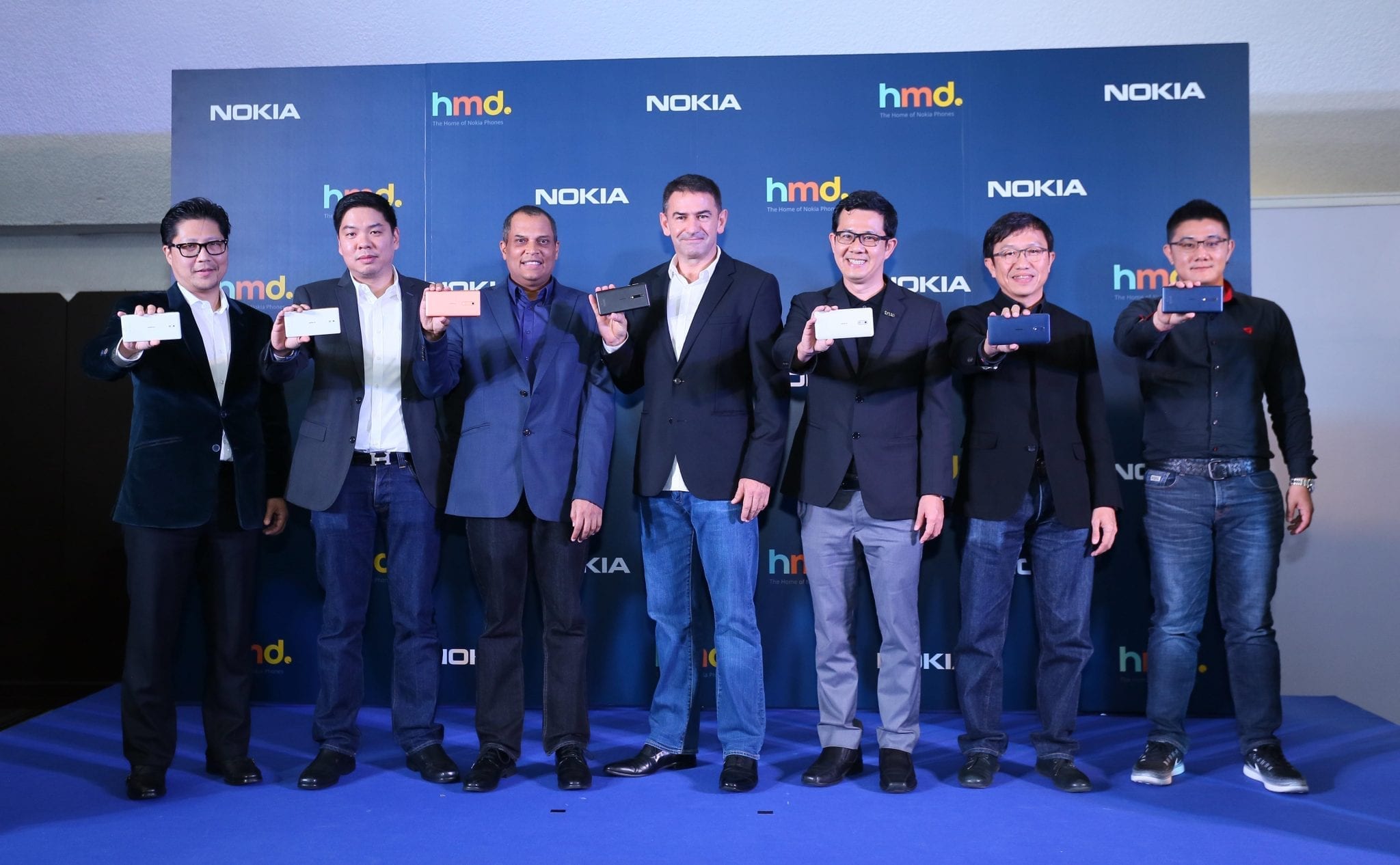
    HMD Global, the home of Nokia phones, recently announced at Thailand Mobile Expo 2017 that its first Nokia smartphone range, comprising of the Nokia 3, Nokia 5 and Nokia 6, will be available in all major operators and retailers in Thailand by end of June in 2017.

    Executives who attended the launch include (from left to right): Ponskorn Bencharongkul, Managing Director, Y.A.S Company, Arkapong Linpisarn, SVP, Head of Device Management Division,Total Access Communication, Sandeep Gupta, Regional General Manager, Thailand and Emerging Asia, HMD Global, James Rutherfoord, Vice President Asia Pacific at HMD Global, Tuantong Srivichian, Director, Device Product, True Corporation, Pairoj Thavornsapanant, Assistant Managing Director, TG Fone and Dusit Sukumvitaya , Vice President, Product, Jaymart Mobile

  • Nokia 6, Nokia 5 and Nokia 3 launched in Thailand Mobile Expo

    Nokia 6, Nokia 5 and Nokia 3 launched in Thailand Mobile Expo

    HMD Global, the home of Nokia phones, announced today at Thailand Mobile Expo 2017 that its first Nokia smartphone range – comprising of the Nokia 3, Nokia 5 and Nokia 6 – will be available in June in Thailand. Nokia 3 will be available second week of June 2017 while Nokia 5 and Nokia 6 will be available by end of June.

    Unveiled earlier this year at Mobile World Congress in Barcelona, the devices combine superior craftsmanship, distinctive design and powerful entertainment features with a pure Android experience, giving you the ability to use your phone, your way.

    James Rutherfoord, Vice President Asia Pacific at HMD Global commented “Thailand is one of the smartphone capitals of Asia and engagement on devices is extremely high. When it comes to smartphones, Thai consumers want high build quality and beautiful design from a trusted brand. We are very happy to bring Nokia 3, Nokia 5, and Nokia 6 with a pure Android experience into Thailand and we are looking forward to introducing more products in the months to come.”

    Nokia 6: Powerful entertainment experience and superior craftsmanship

    Combining superior craftsmanship and distinctive design with an immersive audio experience and a 5.5” full HD screen, the new Nokia 6 delivers a truly premium smartphone experience. The unibody of the Nokia 6 is crafted from a single block of 6000 series aluminium and is perfect for those who want a robust phone with outstanding entertainment credentials. The smart audio amplifier with dual speakers allow consumers to experience a deep bass and unmatched clarity, whilst Dolby Atmos® sound delivers a powerfully moving entertainment experience.

    With outstanding colour reproduction, the Nokia 6 has a fully laminated display stack delivering excellent sunlight readability without compromising the slim form. Powered by the Qualcomm® Snapdragon™ 430 mobile platform and the Qualcomm® Adreno™ 505 graphics processor, the Nokia  6  strikes  the  perfect  balance  between  performance  and  power consumption,   designed   to   deliver   premium   quality   entertainment   with   battery   life   to   spare, maximising your entertainment experience on the go.  The Nokia 6 is available in four distinct colours – Matte Black, Silver, Tempered Blue and Copper. 

    Nokia 5: Seamless, premium and durable design

    The Nokia 5 has been precision engineered out of a single block of 6000 series aluminium to create a perfect pillowed body that flows seamlessly into the laminated 5.2” IPS HD display with sculpted Corning® Gorilla® Glass. Featuring a ground-breaking innovation in antenna design the Nokia 5 brings robust structural integrity, attention to detail and the quality of a high-end flagship. Powered by the Qualcomm® Snapdragon™ 430 mobile platform, Nokia 5 delivers excellent battery life, improved graphics performance – all in a package that perfectly balances everyday usability with a premium quality design. With additional features including an 8MP, 84-degree wide-angle front facing camera – to squeeze even more scene into your selfie – and excellent sunlight and low light screen visibility, there are plenty of reasons to keep the Nokia 5 out of your pocket and in your hand where it belongs.

    The Nokia 5 is available in four distinct colours – Matte Black, Silver, Tempered Blue and Copper.

    Nokia 3: Superior craftsmanship at an affordable price

    This stunning new smartphone is designed to deliver an outstanding experience with unprecedented value.  The Nokia 3 features a precision machined aluminium frame forged out of a single piece of aluminium, offering exceptional structural integrity and protection where it counts. Featuring a fully laminated 5” IPS display with no air gap and sculpted Corning® Gorilla® Glass, the Nokia 3 offers durability and superb clarity delivering a viewing experience that is second to none. With fewer reflections thanks to the polarised screen, the experience is crisp and clear offering unbeatable visibility even in bright sunlight. With seamlessly integrated 8MP wide aperture cameras (front and back), the Nokia 3 packs a truly premium quality smartphone experience into its compact and elegant form. The Nokia 3 is available in four distinct colours – Silver White, Matte Black, Tempered Blue and Copper White.

    Always Pure Android

    With all Nokia smartphones you will always have the latest pure Android experience for your device. With monthly security updates your Nokia smartphone is safe, up-to-date as well as clutter-free – putting choice at the heart of the consumer experience.  And with the latest Android come the latest features including the latest capabilities of Doze, which saves battery life while the phone is in a pocket or bag. The new Nokia smartphones feature Google’s most recent innovation, the Google Assistant, building further on a great Android experience. Our teams have worked together to ensure conversations with the Google Assistant happen seamlessly on Nokia smartphones.

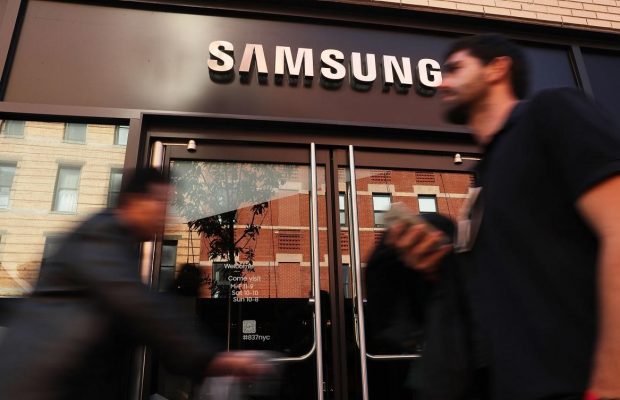
  • Samsung targets 33 pct sales growth in Vietnam as phone business thrives

    Samsung targets 33 pct sales growth in Vietnam as phone business thrives

    Samsung Electronics and three other units of the tech giant in Vietnam target combined sales of $60 billion this year. South Korean conglomerate Samsung expects that its strong smartphone business will boost sales in Vietnam by 33 percent this year.

    Four subsidiaries of the tech giant, Samsung Electronics, Samsung Display Co., Samsung Electro-Mechanics Co. and Samsung SDI Co. which is a battery producer, are targeting combined sales of $60 billion this year, up 33 percent from 2016.

    The units also aim to raise their export value by 25 percent to $50 billion, Samsung Vietnam General Director Han Myoung-sup told Vietnamese Prime Minister Nguyen Xuan Phuc at a Tuesday meeting.

    Samsung, the world’s largest cellphone maker, last month posted its biggest quarterly net profit in more than three years after shrugging off the debacle over exploding Galaxy Note 7 batteries. A company statement said its January-March net profit jumped 46 percent from a year ago to $6.7 billion.


    Its business in Vietnam has been driven by robust sales of its latest flagship phones Galaxy S8 and Galaxy S8 Plus, which sales have reached five million units worldwide in less than a month.

    Samsung Electronics operates two cellphone plants in the northern provinces of Bac Ninh and Thai Nguyen, which produce around half of all cellphones that Samsung supplies to the global market.

    Cellphones contribute to more than 80 percent of exports by the Samsung units in Vietnam, which accounted for 23 percent of Vietnam’s total overseas shipments last year, making it the dominant exporter from the Southeast Asian country.

  • Apple Orchard Road opening on May 27

    Apple Orchard Road opening on May 27

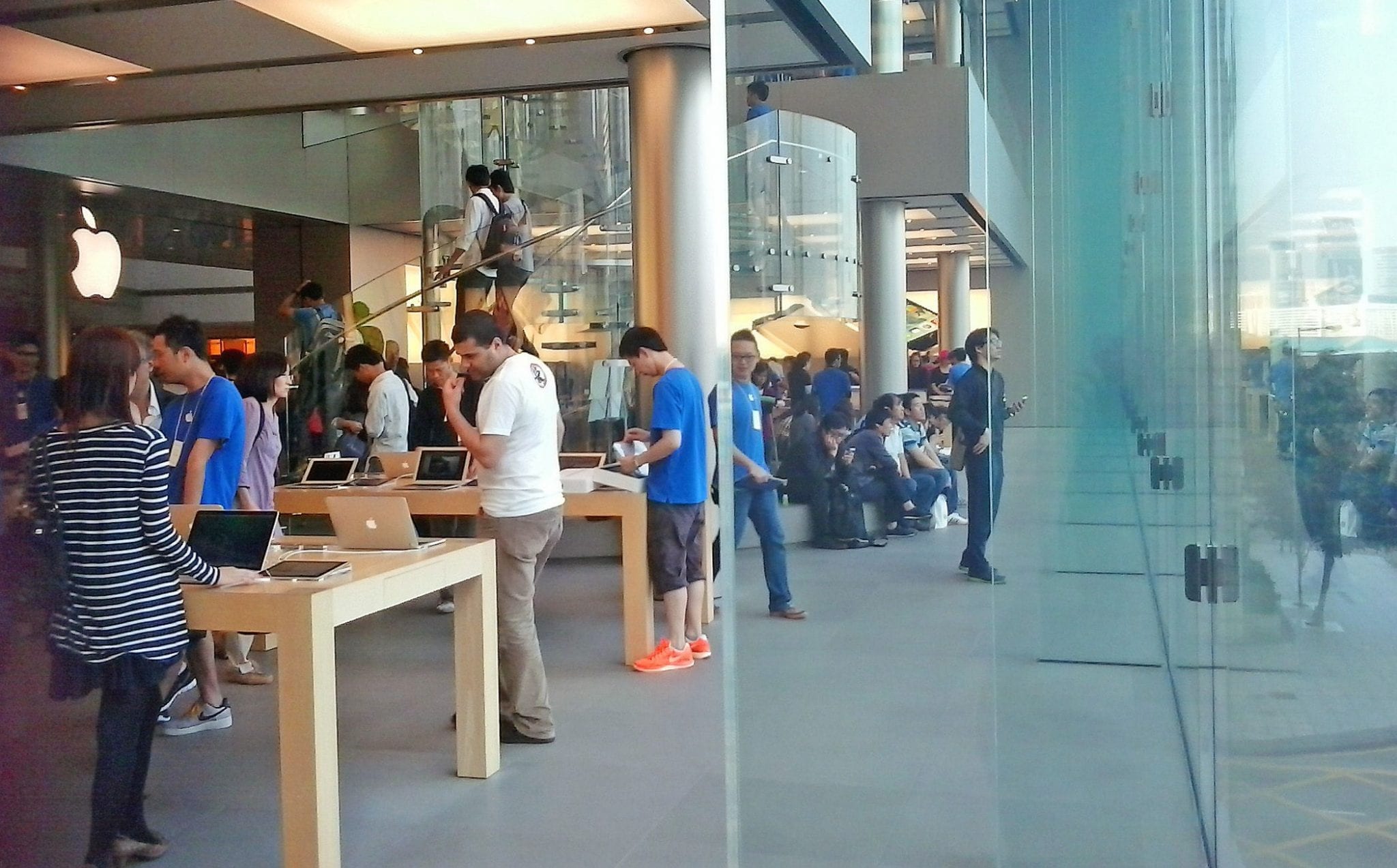
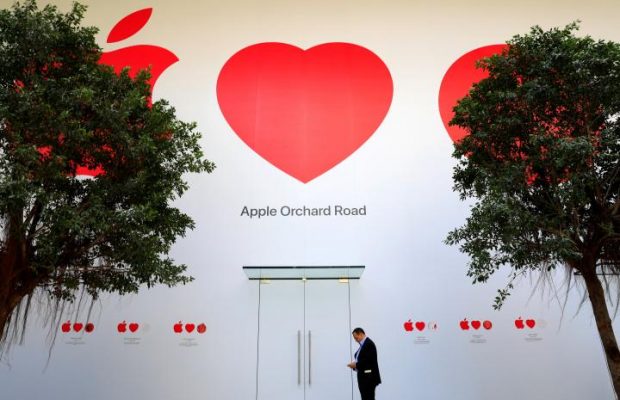
    The wait for Apple fans will be over soon. Apple Orchard Road – the official name of the Apple retail store here – will be opening its doors on May 27 at 10am. Close to midnight last night, workers were seen pasting the opening date on the white facade covering the front of the store at Knightsbridge mall.

    It is not only the first Apple retail store in Singapore, but also the first one in South-east Asia. The store will open daily from 10am to 10pm.

    News of the Apple retail store here first broke in October 2015, after a former tenant of the mall, the Pure Fitness gym chain, sent a letter to its members informing them of its closure to make room for the Apple store. Four other tenants were also moved.

    In an exclusive interview during the opening of the Apple Dubai Mall store last month, Apple’s senior vice-president of retail Angela Ahrendts told: “We want to be on an iconic street, where people will naturally come, whether they are locals or tourists.”

    This is especially so when it is the first store in the country and it allows Apple to build a beautiful signature store for that community, she said.

    Retail experts said the Apple store’s location makes sense. Said Associate Professor Prem Shamdasani of the National University of Singapore Business School: “For more than a decade, Apple has been opening retail stores in very good locations in major cities globally to showcase its great products and enhance the brand experience for loyal fans and consumers.

    “Singapore’s position as a vibrant and progressive global city in South-east Asia will help to reinforce Apple’s brand leadership in the region,” he said.

    As of April, Apple has 495 retail stores in 20 countries.

    Apart from selling Apple products such as iPhones, iPads and MacBooks, as well as accessories, the local Apple store will have staff who Apple calls Geniuses – technical personnel who specialise in troubleshooting and repairs of products.

    Apple Orchard Road will also host hands-on sessions called Today at Apple, which launches in all Apple retail stores across the world this week.

    Taught by Creative Pros, who are the liberal arts equivalent of Apple’s technical Geniuses, these free educational sessions focus on the features of Apple products and allow anyone to learn skills like photography, illustration or coding.

    For the Singapore store, Apple has appointed 12 Singaporean creatives as Red Dot Heroes. They are people who have made a contribution in their fields like the arts, photography, music or film.

    They include street photographer Aik Beng Chia and illustrator Kristal Melson (see their profiles below), as well as film-maker Boo Junfeng and local singer Sezairi.

    These Singaporean creatives are similar to Apple’s Creative Pros and some of them will conduct workshops in Apple Orchard Road.

    Experts also see possible learning points for the retail industry from the Apple store.

    “When you want to control the store experience, you need to own and operate it,” said Mr Clement Teo, principal analyst at market research firm Ovum.

    “The bar for customer service in Apple stores and online is high, supported by trained Geniuses and expert advice from Creative Pros to help customers get the most out of their Apple products. Happy customers equal to loyal Apple customers,” Mr Teo added.

    Contrary to popular belief, Apple Orchard Road will not signal the end of Apple premium resellers (APRs) like Nubox and Epicentre, and repair centres such as QCD Technology.

    “They (APRs) will continue to adapt and survive – especially in suburban areas,” said Mr Teo. “Repair centres will be a great supplement to Apple for all sorts of warranty and repairs.”

    In fact, Prof Shamdasani said that the Apple retail store will enhance the brand’s value and attractiveness and help to expand the market for Apple products and services in Singapore, which, in turn, will benefit the APRs and repair centres.

    Apple Orchard Road will be run on 100 per cent clean energy using rooftop solar installations provided by Singapore-based solar energy provider Sunseap Group.

    iPhone and MacBook user Chung Weifang is excited about the new Apple store here. The 33-year-old communications executive said: “There is nothing like buying a product from the brand’s flagship store, where the customer experience begins the moment one steps into the retail space.”
  • Toshiba delays results again, warns of $8.4 bln net loss

    Toshiba delays results again, warns of $8.4 bln net loss

    Toshiba twice postponed nine-month earnings before it released unaudited results last month. Troubled conglomerate Toshiba on Monday delayed its earnings for a third time since January, but warned it likely lost 950 billion yen ($8.4 billion) in the just-ended fiscal year, with fears growing about its survival.

    The latest delay comes as one of Japan’s best-known firms grapples with claims of financial misconduct at money-losing U.S. nuclear unit Westinghouse Electric, which is sitting in bankruptcy protection.

    Monday’s warning — largely linked to the bloodletting at Westinghouse — was, however, slightly better than an earlier projected net loss of 1.01 trillion yen for the year ended in March.

    “We can’t officially disclose the earnings as they’re still being audited,” Toshiba president Satoshi Tsunakawa told a news briefing in Tokyo Monday.

    Toshiba — still recovering from a 2015 accounting scandal — has said it needed more time to probe claims of financial misconduct by senior managers at Westinghouse and to gauge the impact on its finances.

    The investigation was started after a whistleblower complained that one or more executives at the U.S. unit exerted “inappropriate pressure” on its accounting.

    The series of delays have stirred fears that Toshiba could be delisted from the Tokyo Stock Exchange.

    The company now faces a deadline for the end of June to file its results with Japan’s finance ministry, or face a possible end-of-July delisting.

    But it is not clear if the firm’s shares will be yanked from the exchange even if that date is missed.

    Toshiba stock, which has lost more than 40 percent of its value since late December, rose 3.43 percent to 261.8 yen on Monday.

    “The market does not feel that the exchange is pushing toward a delisting,” Toshihiko Matsuno, chief strategist at SMBC Friend Securities, told AFP.

    “If that was the case, the company would have been delisted a while ago, but the reality is that it’s been put off for quite some time.”

    Lucrative chips

    Monday’s announcement comes as a sensitive time as Toshiba looks to sell its prized memory chip business.

    The plan is facing opposition from Western Digital, which jointly runs Toshiba’s key chip plant in Japan.

    On Sunday, the U.S.-based firm said it is taking its case to the International Court of Arbitration, seeking an injunction to block Toshiba from selling the business to a third party.

    Unloading the division, which accounts for about one-quarter of Toshiba’s previous 5.6 trillion yen in annual revenue, is seen as key for the company to turn itself around.

    The Japanese firm is the world’s number two supplier of memory chips for smartphones and computers, behind South Korea’s Samsung.

    Numerous reports have suggested that Taiwan’s Hon Hai Precision, better known as Foxconn, is offering some 3.0 trillion yen for the unit.

    Google and Amazon as well as U.S. private-equity firm Silver Lake Partners and American chipmaker Broadcom are reportedly among the other interested suitors.

    Any foreign buyer would need to pass a Japanese government review, given Japan’s concerns about losing a sensitive technology and questions about security around systems already using Toshiba’s memory chips. They are widely used in data centers as well as smartphones and computers.

    The Financial Times reported that Tokyo is ready to guarantee up to 900 billion yen in bank loans if Toshiba chooses a domestic suitor or one with strong Japanese links.

    “It would be no surprise if Japanese authorities take action to prevent Toshiba’s memory chip technology from being transferred overseas,” said Hideki Yasuda, an analyst at Ace Research Institute in Tokyo.

    “The technology is quite attractive and lucrative.”

    Toshiba’s huge losses come after its reputation was badly damaged over separate revelations that top company executives had pressured underlings to cover up weak results for years after the 2008 global financial meltdown.

    The company — which has 188,000 employees globally — once touted its overseas nuclear business as a future growth driver, filling a hole left after the 2011 Fukushima crisis slammed the brakes on new atomic projects in Japan.

    But delays and cost overruns have hit Westinghouse’s finances hard, as the global outlook for the nuclear business weakens.

  • Sony Indonesia Appoints New President Director

    Sony Indonesia Appoints New President Director

    Sony Indonesia has announced the appointment of Kazuteru Makiyama as its new President Director. He serves as President Director starting on April 1, 2017, replacing Kikuo Okura.

    In a press release on Saturday (5/13), Sony Indonesia stated that Kazuteru Makiyama has been a part of Sony since 1998. He started his overseas sales and marketing career in 2007 in Dubai, and then took on new challenges in Saudi Arabia as head of Sony Saudi representative office in 2011.

    In 2014, Kazuteru was appointed Managing Director of Sony Eurasia (Turkey). During his tenure, he had to work in a very challenging and volatile Turkish business environment.

    “Indonesia is my fourth foreign assignment and the fourth Muslim-dominant country. In all my previous assignments, I always gave high priority to understanding the local culture at the beginning of the assignment, “said Kazuteru Makiyama, President Director of Sony Indonesia.

    He said, this year, Sony has a WOW surprise for all, including the latest Alpha cameras, new OLED televisions., Headphones with Noise Cancelling, PlayStation VR, and more.

    “Without understanding and adapting to the uniqueness of a culture, we will not be able to target consumers precisely in the right place and time,” he said.

  • Word of mouth key to Indian smartphone sales

    Word of mouth key to Indian smartphone sales

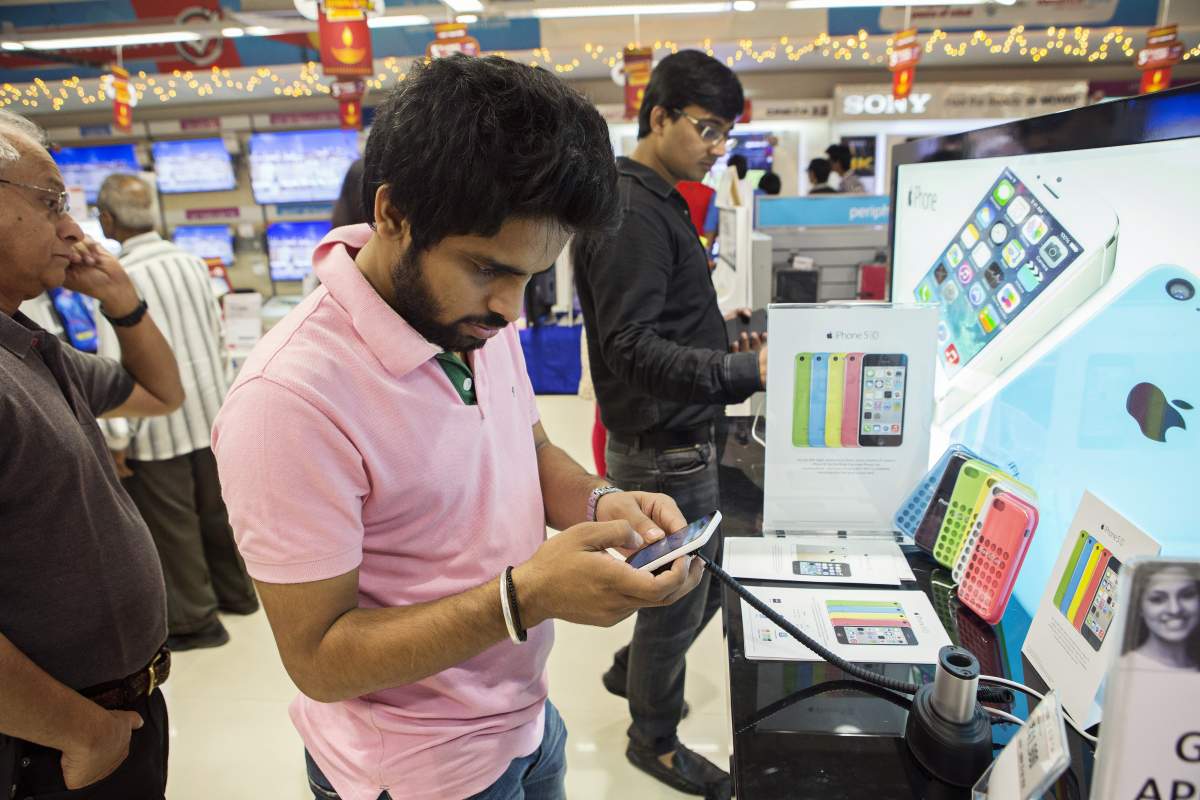
    The most important factors influencing the sale of smartphones in India are point of sales (POS) techniques and word of mouth, according to research from IDC.

    The research firm’s new Smartphone PULSE (Indian smartphone end consumer research) study finds that 75% of Indian consumers take recommendations from family and friends.

    When it comes to smartphone purchases, 50% of buyers are under 25 years and two-thirds of consumers prefer making the purchase at a brick-and-mortar store where they can touch and feel the device. Also 40% of consumers depend on in-shop promoters and retailers to decide their preference for a brand.

    According to Himanshu Jain , Market Analyst, IDC India “Smartphone is now more of a status and style symbol than a mere communication and utilitarian device. Sheer number of smartphones choices in the market, peer pressure and the need to remain up to date with the latest technology are some of the factors driving the consumers in India to research, seek reviews and recommendations before buying a smartphone.”

    Offline retail is still the biggest sales channel in India contributing 2/3rd of smartphone sales in India. To address the width and depth of Indian market a few China-based vendors like vivo, OPPO, Gionee are investing a lot in branding and marketing campaigns to create brand awareness and availability in smaller towns and cities. Also, the nearest to home convenience of stores followed by retailer trust with wide variety of options gives consumers comfort to go for offline purchase of smartphones.

    Online channel is very competitive since smartphones contribute a large portion to overall sales for all e commerce players. The investments by Amazon and Flipkart to improve user experience, reduce delivery time and entering exclusive alliances with smartphone vendors clearly show that online players are making serious efforts to gain consumer trust.

    e-Commerce is a growing trend in India with 50% of online consumer preferring e-commerce due to the convenience and ease of comparing different smartphone models.

    “The Indian smartphone consumer is looking for value-for–money smartphones that fit their budget, while offering the latest technology. With more than 40% overall share of smartphone segment in India, China-based vendors are investing a lot in offline promotions and branding to lure consumers,” IDC India market analyst Sachin Mehta said.

    “These brands are now perceived to be offering great quality products, with good design, latest specifications and focused high decibel communication on features like selfie camera and extended battery life, these vendors are setting a new trend in the industry.”

    The smartphone demand from Tier 2&3 cities is outgrowing demand from Tier 1 cities as urban markets have begun to saturate. Vendors are looking to tap consumer base in Tier 2&3 and rural areas by setting up robust offline distribution network.

    One of the major drivers of this is rapid expansion and promotion of 4G network footprint by telecom operators in India, led by Reliance Jio. This is compelling customers across city tiers to be future ready, by choosing more 4G than 3G devices, with more than 80% of the smartphones being 4G compatible across all city tiers.

    China based vendors have understood this trend and are gradually building and investing significantly in the offline distribution network in Tier 2 cities and beyond. This shows that the offline channel remains significant and the vendors have understood to address the needs of a diverse Indian consumer base, offline must go hand in hand with the online channel.

  • Galaxy S8 to use Gemalto Secure Element in some markets

    Galaxy S8 to use Gemalto Secure Element in some markets

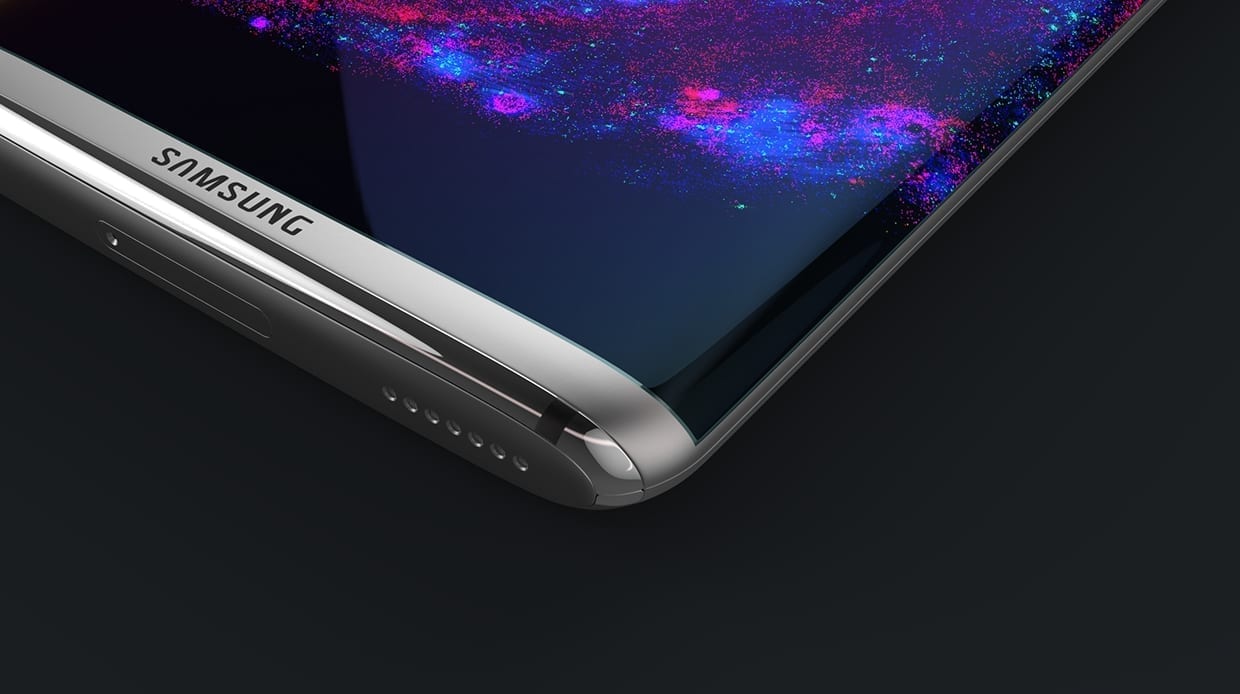
    Samsung’s flagship Galaxy S8 smartphone will be equipped with Gemalto’s embedded Secure Element, a smart chip with a secure OS and applications, in selected markets.

    The smart chip can secure various application types including Samsung Pay (Samsung’s contactless payment solution), couponing, transport, access control, ticketing, corporate, cloud computing and e-government.

    This integration is expected to help Samsung deploy its services worldwide, due to Gemalto’s connections with multiple service providers via its Trusted Services Hub (TSH).

    The chip has already been integrated into other Samsung smartphones including the Galaxy A series globally and the Galaxy C series in China.

    “Gemalto is thrilled to be selected as one of Samsung’s providers for the new Galaxy S8 and other smartphones. We are delighted to provide them with an end-to-end solution, which proves that our strategy based on our state-of-the-art embedded secure elements is successful,” Gemalto SVP of Greater China and Korea for mobiles services and IoT and China country head Suzanne Tong-Li said.

    “[The element] supports a unique combination of features, and our TSH offering delivers a single entry point to link device manufacturers and service providers.”

  • Apple plans new store in Red Dot Centre Singapore

    Apple plans new store in Red Dot Centre Singapore

    Apple is getting ready to open its first Apple Store in Singapore on the island’s prime Orchard Road shopping boulevard.

    The storefront at Knightsbridge Mall is covered by a white facade with a large red Apple logo next to a heart and red dot above the store name “Apple Orchard Road”.

    Singaporeans often refer to their city state as a “little red dot” on the map of Southeast Asia.

    Barricades outside the store were removed on Wednesday night, suggesting the store would open soon. In the Asia-Pacific region the Cupertino, California-based company already operates retail stores in China, Japan, Hong Kong, Macau and Australia.

  • Apple to open first Taiwan store in Taipei 101 mall

    Apple to open first Taiwan store in Taipei 101 mall

    Tech giant Apple  is reportedly eyeing Taipei 101 mall as the location for its first retail store in Taiwan, according to an industry insider, with no official opening date given by the source.

    Located on the first basement level of the mall, the debut Taiwanese store will be spread over 1,322 square meters. It is expected that the branch will be fitted out in Apple’s new retail design, which is already being rolled out across the US.

    Further consolidating Apple’s push into Taipei, Apple premium reseller Studio A will close its shop on April 17, Studio A president Cheng Ying-lung told local media.

    Cheng said the Studio A store in Taipei 101 has seen a decline in sales over the past three months, due mainly to a drop in tourist arrivals from China.

    Last July, Apple posted its first job listings for Taiwan, which were followed by a confirmation of its plans to set up a store in the country.

    However, Apple did not say when the shop would be opened or where in Taiwan it would be located.

    Apple boasts nearly 500 retail stores in 19 countries and online stores available in 39 countries.

    After the US, China is Apple’s biggest market. Apple’s latest store opening was in China’s Nanjing in early April, one day after a Beijing court ruled in favour of Apple pertaining to a patent feud the US smartphone maker is having with Shenzhen Baili Marketing Services Co.

    The local manufacturer claims Apple stole its exterior designs, which the court found not to be the case.

  • Apple reportedly opening first Singapore store in May

    Apple reportedly opening first Singapore store in May

    Apple is reportedly opening its first store in Singapore this month, according to CNBC, which will also serve as the U.S. tech giant’s first Southeast Asia store.

    Located at the city’s Knightsbridge mall on Orchard Road, the hotly anticipated Apple store – which spans five storefronts and climbs four storeys, is due to open May 22, a retail fit-out worker has told CNBC.

    CNBC managed to speak with the Legends Interior employee onsite last Thursday after finishing work on the retail space, who said the store is planned to open May 22.

    When contacted via email, the Apple’s head of corporate communications for Southeast Asia and India. Katrina Tran, told CNBC, “We don’t have any new announcements about Apple retail.”

    The mega-store has been veiled in secrecy since works began on the site some two years ago, with problems relating to the construction in a busy part of central Singapore being the reason behind such delays.

    Singapore’s Ministry of Manpower (MOM) issued a stop work order to the contractor for the worksite, Legend Interiors, a retail interiors specialist. The order went into effect on October 24, 2016 and was lifted on November 16, 2016.

    MOM told that the stop work order was issued “for unsafe conditions relating to work at height, traffic management, scaffolding, electrical installation and lifting operations that were observed during an inspection at the worksite.”

    A sign outside the building site originally said the expected completion date was October 31, 2016. Then it was changed to January 30, 2017, before a date was erased completely.

    A source with knowledge of the project also told CNBC about problems with a neighbour — the Grand Royal Orchard Singapore hotel. That source said there had been a conflict over logistical and infrastructure issues related to the construction

    DP Architects PTE, the architect for the Singapore project, declined to comment on the new store, citing nondisclosure agreements, while civil and structural engineer, Rankine & Hill, and the mechanical and electrical engineer, J. Roger Preston, also avoided commentary.

    Apple is notorious for secrecy with new stores and is known for strict non-disclosure agreements for the company’s contractors and suppliers, including $50 million payouts for each breach.

  • Lenovo Set To Open Retail Stores In Asia Pacific, Gaming Brand Push

    Lenovo Set To Open Retail Stores In Asia Pacific, Gaming Brand Push

    Lenovo has said that they are looking to establish over 100 Lenovo gaming stores in the Asia Pacific region, it’s not known if or when any Australian stores will be established.

    Currently JB Hi Fi has an exclusive deal with Harvey Norman who are not seen as a destination for hard core gamers. The decision to go exclusive with the mass retailer was made by Brandan Lau the Director of Consumer PC’s at Lenovo Australia.

    Initially JB Hi Fi was going to range Lenovo gaming products but dropped the Chinese brand in favour of staying with the Alienware brand from Dell, which has been highly successful for the retailer.

    According to Lenovo sources in Hong Kong, the new Asia Pacific stores will sell a range of gaming products including workstations, notebooks, accessories including mouse and keyboards as well as gaming bags.

    We also understand that the Company who are successful direct sell operators in Australia, are also looking to sell their B2B PC range which includes Think Pads and 2 in 1 products via the new stores.

    Currently Lau is banking on heavy discounting to drive consumer PC sales while at the same time investing in extensive direct sell marketing in mass newspapers and online, for Lenovo PC products a move that has not gone unnoticed by Lenovo consumer PC retail partners.

    The Company are also major partners with Amazon.

    Combined Lenovo’s consumer and enterprise product lines each contributes 50% of Lenovo’s PC sales in Asia Pacific with the Chinese Company set to shortly market a 25th anniversary range of ‘Think’ enterprise products to lift awareness of their enterprise offering.

    What Lenovo are looking to achieve with their direct sell retail format, according to sources, is uptake for a new gaming brand called Legion. All their new gaming products including a new range that will be released at IFA in Germany in September will be branded Legion.

    Ivan Cheung Asia Pacific President at Lenovo said recently that excluding Japan and China that gaming products made up 75% of the Asia Pacific’s overall consumer PC sales, Retail News understands that this is not the case in Australia due in part to Lau’s decision to consolidate his gaming sales primarily via Harvey Norman.

  • 3.4b smartphones to be ready for m-payment by year-end

    3.4b smartphones to be ready for m-payment by year-end

    The install base of smartphones compatible with mobile payment platforms Apple Pay, Samsung Pay or Android Pay is on track to reach 3.4 billion by the end of the year, IHS Markit has predicted.

    The company estimates that by the end of 2017, 11% of active smartphones worldwide will be ready for Apple Pay, 61% will be compatible with Android Pay and 3% with Samsung Pay – but this overlaps with the compatibility of Android Pay.

    The total install base of compatible smartphones is meanwhile predicted to grow even further to 5.3 billion by 2021.

    But to date Apple has launched Apple Pay in just 15 international markets, Samsung has rolled out Samsung Pay in 14 and Android Pay is available in 10, leaving a large addressable market untapped.

    “To reach [the large install base of compatible] smartphones, Apple, Samsung and Android must strategically expand mobile payments services and build partnerships with banks and financial institutions,” IHS Markit mobile and telecoms analyst Ruomeng Wang commented.

    “Despite Apple Pay having a 10-month head start on Samsung Pay, Samsung has been catching up with Apple in terms of total available markets,” he noted.

    Use of the payment platforms is also increasing online. IHS Markit said currently 38 payment platforms and 2 million small businesses are supporting Apple Pay on the web, while Android Pay allows users to make payments on the Google Play store as well as multiple mobile web sites in the US.

    “Compared to Apple and Google, Samsung doesn’t have the same level of content, app platforms or web browsers designed to keep customers engaged. In order to tie customers to Samsung’s ecosystem, Samsung must actively expand Samsung Pay’s support for online retail,” Wang said.

  • Apple to hold educative sessions at Apple Stores to increase customer engagement

    Apple to hold educative sessions at Apple Stores to increase customer engagement

    It may just be a marketing gimmick, but Apple’s latest initiative has all the elements to attract the crowd in its stores. The tech giant is planning to mobilize the mass to its stores by arranging educative sessions, dubbed “Today at Apple”, which would be organized by experienced professionals and will impart wisdom on a varied list of topics ranging from literature to coding.

    This initiative is aimed at building a better engagement between Apple enthusiasts and the brand by providing creative outlets and sessions, completely free of cost. The sessions will be held by experienced Creative Pros, who will make use of the varied products that Apple has to offer in order to educate the participants.

    Apple’s Senior Vice President of Retail, Angela Ahrendts said: “Today at Apple’ is one of the ways we’re evolving our experience to better serve local customers and entrepreneurs.”

    “We’re creating a modern-day town square, where everyone is welcome in a space where the best of Apple comes together to connect with one another, discover a new passion, or take their skill to the next level. We think it will be a fun and enlightening experience for everyone who joins,” she added.

    So if you are a photography enthusiast getting ready to sharpen your skills via six “How To” sessions at the nearest Apple store, that would cover shooting, organizing, editing and more or if you think you have elevated from all the basic stuffs, you can participate in the photo walks. If you are a coder, you can learn how to tinker around with Swift Playgrounds, which shares the same ethos that professional developers regularly apply in their day to day coding activities.

  • China’s Xiaomi branches out beyond smartphones to crack Indian market

    China’s Xiaomi branches out beyond smartphones to crack Indian market

    Chinese technology giant Xiaomi, best known for making smartphones and once hailed as an iPhone slayer, has decided the key to breaking the Indian market lies in a rather different product: the air purifier.

    “We have studied the demands of Indian customers, taking their living environment, preferences and consumption power into consideration. The air purifier is the product for us to further establish ourselves in India,” said Eugene Chan, regional manager of Mi Home, Xiaomi’s retail outlet chain.

    The air purifier is the product for us to further establish ourselves in India

    The Beijing-based firm is betting big on a bricks-and-mortar strategy to expand its presence in India, a country viewed by tech companies around the world as the next big internet market after China.

    Another part of the growth strategy is to branch out into making and selling products besides smartphones in an effort to rejuvenate the brand as an “everything store” in the South Asian country.

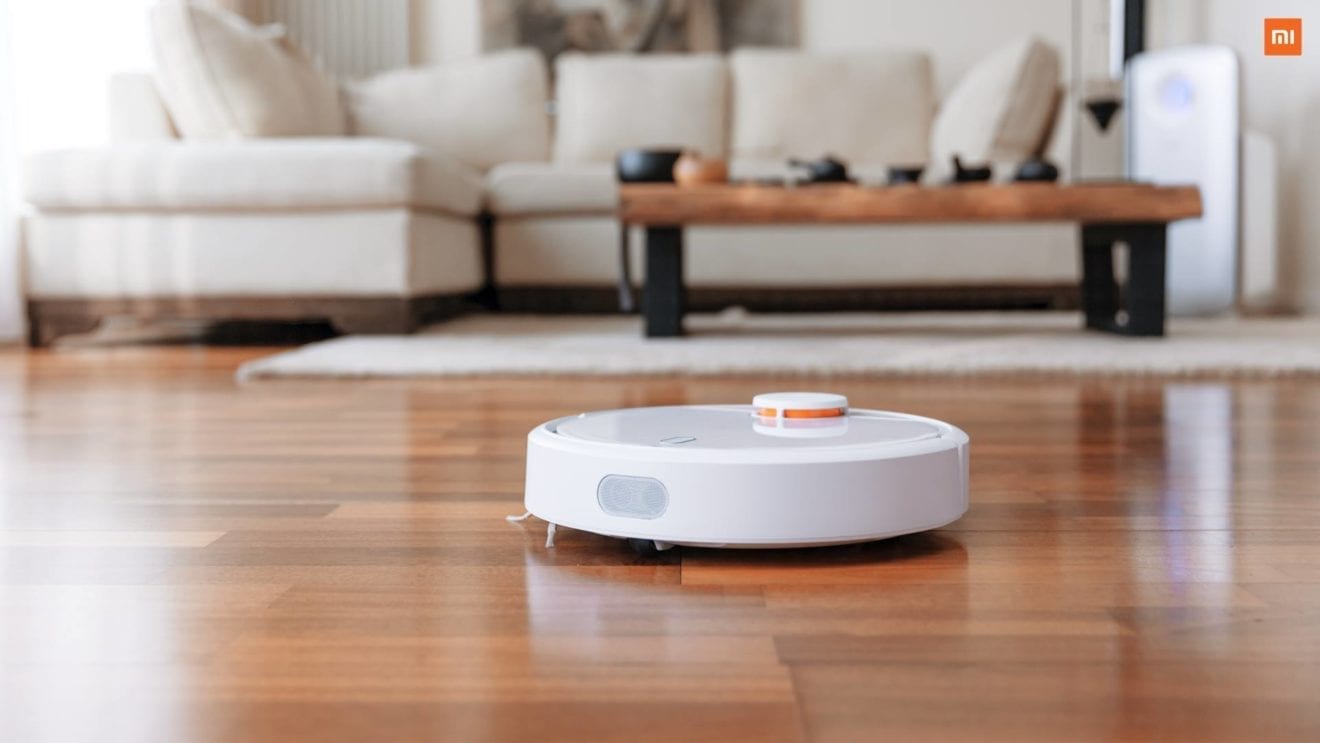
    With its first self-operated retail store set to open in Bangalore next month, Xiaomi plans to open five to 10 more offline stores under the Mi Home brand in India this year, selling products ranging from smartphones and fitness trackers to speakers and robot vacuum cleaners – and, of course, air purifiers.

    The plan is likely to include manufacturing some of the items locally to keep costs down.

    “We are considering producing air purifiers as well as other home appliance products in India locally to make sure that our products are still at affordable prices even sold offline in overseas countries,” said Chan, who is in charge of Mi Home’s expansion in South China and foreign markets.

    India, the fastest growing smartphone market in the world, has attracted a number of Chinese manufacturers, such as Huawei Technologies and Lenovo, as their sales at home stagnate. Xiaomi – one of the world’s most valuable companies in 2014, estimated to be worth US$45 billion – has recently announced plans to set up a second smartphone factory in India.

    Once compared to Apple for its sleek smartphones and dominance in China’s market, Xiaomi’s founder and CEO Lei Jun has recently sought to revamp the company into something more like US warehouse retailer Costco Wholesale, which sells everything from wine and cereal to diamond rings.

    He has halted the company’s online-only sales strategy, which originally catapulted Xiaomi to the top, and announced the goal of opening 1,000 Mi Home retail outlets in China in the next three years. Lei is aiming for sales from these stores to top 70 billion yuan annually within five years.

    The company currently operates 68 Mi Home stores in locations including Hong Kong and Taiwan.

    Xiaomi didn’t reveal the size of its investment in its physical expansion in India. But Chan said the offline strategy is good for both sales and marketing there.

    “We hope to bring 102 different kinds of products made by Xiaomi and its partners to Indian customers via Mi Home,” he said.

    In a recent interview with Blomberg, Lei said he expected to double Xiaomi’s revenue in India to US$2 billion in 2017.

    “The cost of offline expansion is much higher than purely selling products online,” said IDC China’s research manager Jin Di. “But Xiaomi needs to expand its product portfolio in India because the profit margin on smartphones is quite thin due to fierce competition. Home appliances, such as air purifiers, have much better margin than smartphones.”

    Xiaomi’s smartphone shipments in India grew 15.3 per cent in the fourth quarter of 2016, beating the industry’s 5.2 per cent, according IDC.

    This article appeared in the South China Morning Post print edition as:

    Xiaomi bets big on air purifiers in India