Category: Electronics

Retail News Asia is committed to providing both local and global retailers with the latest Electronics news throughout the Asian market. This on a daily base.

  • Apple announces the date for iPhone 15 ‘Wonderlust’ event

    Apple announces the date for iPhone 15 ‘Wonderlust’ event

    Apple has now confirmed that its next event for 2023, where it will apparently announce its new smartphone lineup, the iPhone 15, and new watches, will take place next month.

    The company’s website says that the event will take place on September 12 at Apple Park and will begin at 10 a.m. PT. It will be live-streamed on apple.com as well as the Apple TV app.

    The Pros will also likely feature a new 3nm chipset, which should make them faster and more power-efficient than the current models. The iPhone 15 Pro Max may feature a new periscope camera for a greater zooming range and this could make it the best camera phone of 2023.

    The iPhone 15 and 15 Plus will purportedly feature the Dynamic Island and a 48MP main camera.

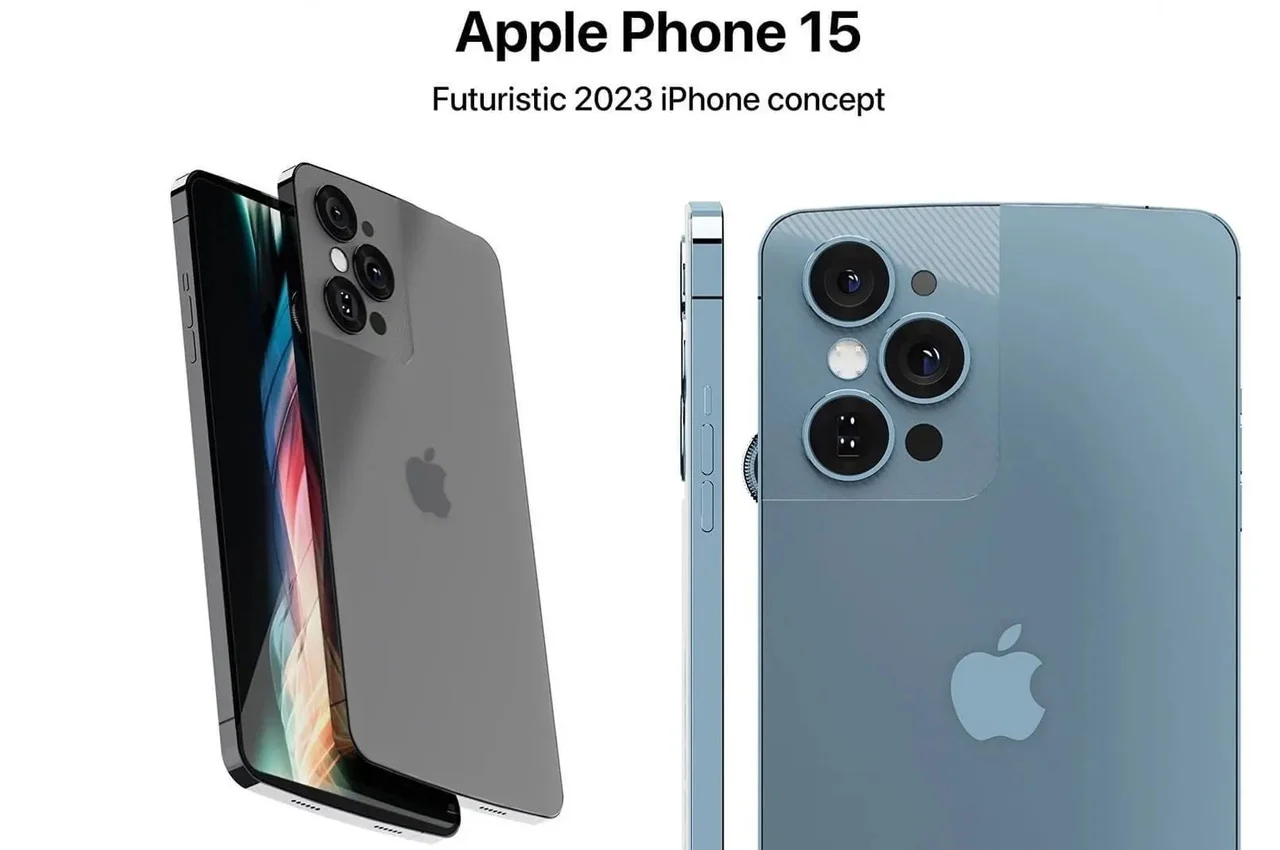
    The entire lineup will likely have USB-C ports, slimmer bezels, softer corners, and bigger camera bumps. The standard models will probably stick to last year’s pricing but the premium variants could be up to $200 more expensive.

    The phones will reportedly hit the shelves on September 22.

    Coming to the watches, we will probably also get to see the Watch Series 9 and the second Watch Ultra during the Apple 2023 event. The new wearables are sounding like incremental upgrades and the most interesting new feature is seemingly a new chip.

  • Android’s emergency satellite service could work in over 150 countries

    Android’s emergency satellite service could work in over 150 countries

    By a show of hands, let’s see how many of you think that the iPhone was the first smartphone offering emergency services via satellite connectivity. Wow, it’s going to be interesting to tell all of you with your hands up that you’re wrong. Actually, Huawei’s Mate 50 series introduced its version of this feature one day before Apple did. And now there is talk that Huawei’s Mate 60 line, due out later this year, will offer voice and image transmissions by satellite.

    With iOS and Harmony ahead of the pack, Google is supposed to dip its toes in the satellite water with the release of Android 14. One rumor last month said that the release of Android 14 was going to bring satellite connectivity to Pixel and Galaxy handsets at first. The rumor said that the Android 14 update will add the necessary software while phone manufacturers will have to deal with the hardware requirements.

    The Team Pixel FanClub, while not affiliated with Google, said that Pixel and Galaxy models will be the first Android devices to sport the necessary hardware required for satellite connectivity to work. And on Sunday, Neïl Rahmouni, who was nominated as a Top Google Developer Online Contributor in June, posted on X that it “Looks like Google Messages may use Garmin Response for the Satellite Emergency SOS. If true it could mean that Emergency Satellite messages would be available in 150+ countries.”
    This would instantly top Apple’s Satellite connectivity service which is available in only a handful of countries at the moment. Not that it hasn’t proven its worth as Apple’s Emergency SOS via Satellite has already saved numerous lives.
    Despite having his name all over the X message proclaiming that Garmin’s service might be used by Google Messages for its satellite connectivity feature, Rahmouni believes that we shouldn’t assume that the Google-Garmin tie-up is happening until Google makes the official announcement. At this point, we don’t know when the feature is expected to launch and more importantly, which Android devices will support it.
  • Apple iPhone users can move Chrome’s URL address bar to the bottom of the screen

    Apple iPhone users can move Chrome’s URL address bar to the bottom of the screen

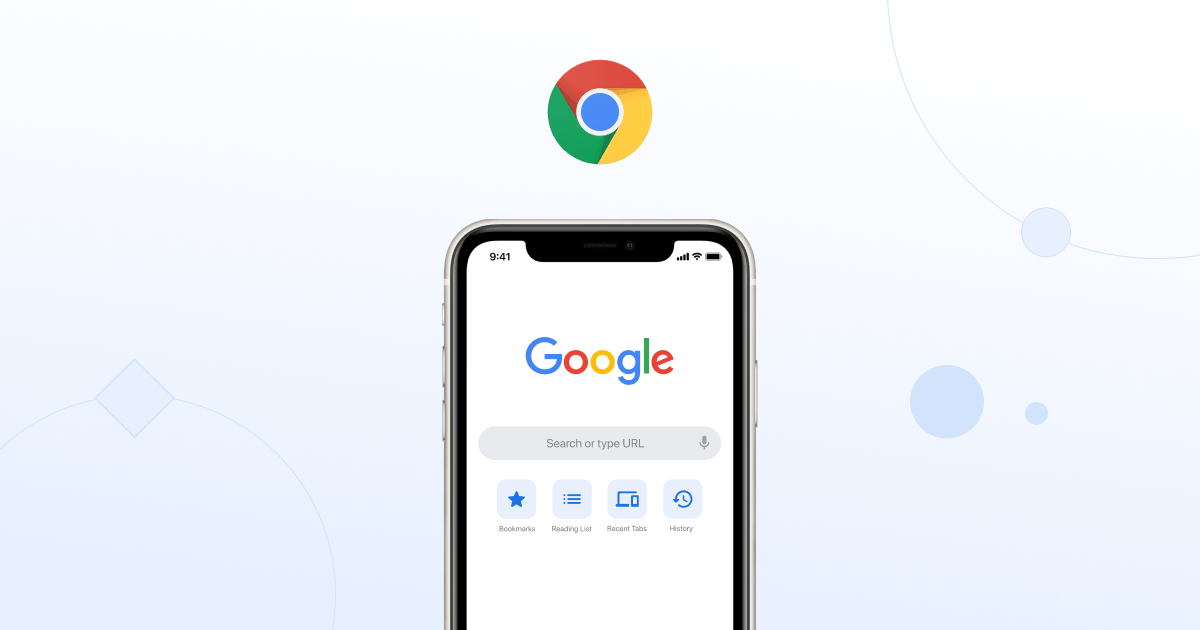
    Google is about to offer iPhone users the option to move the URL address bar (also known as the Omnibox) on Chrome to the bottom of the screen. Currently available only to iPhone users who enable a flag, a future update should allow all iOS users to move the bar on Chrome. By moving the URL address bar near the bottom of the display, users can more easily navigate the browser using one hand.
    If you want to move the Omnibox on the iOS version of Chrome to the bottom of the display, here is what you do. Open the Chrome app on your iPhone. From the URL field (AKA Omnibox) enter  chrome://flags. When the next page opens, in the rectangular search bar type in bottom-omnibox-steady-state. That should take you directly to the correct flag. Press the pill-shaped button that says “Default.”  Tap on “Enable,” close Chrome and re-open it.
    Once you’re back in Chrome, tap the three-line Hamburger icon in the lower right corner and then tap Settings (the gear icon) at the top of the screen. You’ll see a menu; scroll down to the listing Bottom Omnibox and toggle it on. And that is it. Your URL address bar, AKA your Omnibox, will now be on the bottom of the screen whenever you use Chrome on your iPhone.
    You might recall that when iOS 15 was in beta, Apple moved the URL address bar to the bottom of the screen on the Safari mobile browser. This created an uproar among iPhone fans who, while loyal, aren’t known for their flexibility. Those complaining said that moving the bar to the bottom of the screen made Reader Mode and the refresh button hard to find. So in iOS 15 Public Beta 4, Apple did away with the changes to Safari. However, Safari users on iPhone now have the choice between placing the mobile browser’s Unibox at the top or the bottom of the display.
    To make your selection, go to Settings > Safari and scroll down to the Tabs heading. You can choose between having the URL address bar/Omnibox at the top of the screen, or at the bottom. Remember, having it at the bottom might make it easier to use the browser one-handed.
  • Apple may sell iPhone 15 in Vietnam next month

    Apple may sell iPhone 15 in Vietnam next month

    Apple may sell its new iPhone 15 in Vietnam in September, a month earlier than last year as the company considers adjusting the country’s “priority level” from 3 to 2.

    According to a local electronics retail chain, Apple is considering adjusting the priority level of the Vietnamese market from three to two.

    Priority level two means Vietnam retailers could be authorized to sell the new iPhone 15 in its second phase of release.

    Last year, iPhone 14 was launched on September 7 and sold from September 16 in markets with Apple Store shops. The second phase started on September 23 in 20 countries and territories. The product was officially distributed in Vietnam from October 14, the release’s third phase.

    “The final decision has not been made, but it is a remarkable signal that Apple is more interested in Vietnam and iPhone 15 may be sold a few weeks earlier than previous years,” said the chain’s manager.

    The launch date of the iPhone 15 is likely to be announced on September 13 and the new model will be on sale from September 22. These timelines are about one week later than the iPhone 14’s schedule last year, but the sale to second-tier priority markets could still be as early as September.

    Some electronics retail chains said that although Apple wants to raise the Vietnamese market’s priority level, thin iPhone 15 supplies could push the release of the model past its expected date in early October.

    Vietnam does not have an Apple Store like neighboring countries Singapore and Thailand. However, in recent years, the growth of the iPhone’s presence in Vietnam has been significantly faster than in some international markets.

    Vietnam was the sixth country in Southeast Asia to open an Apple Store Online in May, and just two months later became the third country in the region to have Apple Pay.

    According to analysts, Vietnam, Thailand, Indonesia and India are becoming more important to Apple as growth in other key regions is slowing.

    “Apple is further consolidating its presence in emerging markets,” Chiew Le Xuan, an analyst at Singapore-based technology market analyst firm Canalys, said when Apple opened its online store in Vietnam on May 18.

    “In recent months, Apple has also increased their distribution and network of Apple authorized resellers (AARs) in Southeast Asia,” he said.

    During the coming September launch ceremony, in addition to the iPhone 15 series with four models, the Watch Series 9 and Watch Ultra 2 models are likely to be released. New operating system versions such as iOS 17 and PadOS17 will also be officially released.

  • Apple releases watchOS 9.6.1 with a big medical fix

    Apple releases watchOS 9.6.1 with a big medical fix

    Apple today released an update to watchOS 9.6.1 which is available for the Apple Watch Series 4 and later. That model was released on September 21st, 2018. This means that those with the Series 4 Apple Watch running through the Series 8, the two Apple Watch SE models, and the Apple Watch Ultra, will be able to download and install the update which is the first for the device since watchOS 9.6 was released on July 24th of this year.
    Next month, Apple will release watchOS 10, including a new widget-based UI for compatible Apple Watch models. Obviously a minor update, Apple says that watchOS 9.6.1 update “includes a fix for an issue that prevents access to motion data for apps that use the Movement Disorder API to track tremors and symptoms associated with Parkinson’s Disease.
    For example, H20 Therapeutics offers an app for the Apple Watch that tracks tremors and dyskinesia for Parkinson’s patients between visits to the doctor. This is accomplished by allowing the app to tap into Apple’s movement disorder API and the device’s inertial sensors.

    Dyskinesia is the involuntary movements that affect people with Parkinson’s disease. In 94% of cases, the smartwatch app was able to capture changes to the symptoms of a Parkinson’s patient that matched the expectations of the clinicians based on the patient’s current treatment. The clinicians look at the data for the remaining 6% of Parkinson’s patients to come up with a strategy to improve their treatment.

    Before the update was released, Parkinson’s apps could not access the Movement Disorder API preventing them from giving doctors information about whether their treatment plan was working for a specific patient wearing an Apple Watch. H20’s app, called Parky, captures 288 data points from Parkinson’s patients every day assuming that the watch is worn continuously. A color-based UI uses green to show that the patient has fewer symptoms.
    To update your Apple Watch, make sure your timepiece is on its charger and is within range of your iPhone connected to a Wi-Fi signal. Once the Apple Watch is charged to at least 50%, the installation process will commence. Do not restart or remove the Apple Watch from the charger until the update is complete.
  • Samsung tax refund delayed for two years in HCMC

    Samsung tax refund delayed for two years in HCMC

    A Samsung subsidiary based in Ho Chi Minh City has not received a VAT refund of US$44 million for two years due to red tape.

    Samsung Electronics HCMC CE Complex (SEHC), which exports around 90% of its products, formally became an export-processing company in May 2021, making it eligible for value-added tax incentives.

    But the VAT refund for before and after the transition it was supposed to receive never arrived, Youn Chel Woon, its CEO, said at a meeting between South Korean companies and HCMC authorities Wednesday.

    Vietnam offers a number of tax incentives to foreign enterprises and exporters, including VAT breaks.

    SEHC became eligible for a refund of $24 million from the time before it became an export-processing enterprise, and $20 million from the period between June 2021 and December 2022.

    The city tax department has been examining the situation since July and recently submitted a report to the General Department of Taxation.

    Woon urged city authorities to be more proactive in refunding taxes, saying some of his company’s suppliers are also having difficulty getting tax refunds promised by the government.

    Another South Korean firm, CJ Foods Vietnam, has not received tax refunds for lacking the title deeds for the land on which its factory is built.

    It was supposed to receive the documents in 2019.

    Issues with tax refunds are among the main problems South Korean companies face in Vietnam, Choi Bundo, chairman of the Korea Chamber of Business in Vietnam, said.

    “Resolving tax refund problems is taking longer and longer. We seek a solution from the authorities.”

    Nguyen Tien Dung, deputy head of the city tax department, referring to the SEHC case, said the reason for the delay is that the Ministry of Finance is yet to decide whether the refund would be made by the tax or customs department.

    As for the CJ Foods delay, he said some changes are occurring at the Hiep Phuoc Industrial Park where the company has its factory, and once they are complete it would receive the title deeds.

    The city government has instructed relevant authorities to resolve this issue by September this year, he added.

    South Korea is the fourth biggest investor in HCMC with $5.5 billion in 2,135 projects.

  • iPhone 14 Pro Max price down 24%

    iPhone 14 Pro Max price down 24%

    After 10 months of being sold in Vietnam, iPhone 14 Pro Max has seen its selling price fall by 24% to VND25.7 million (US$1,089).

    In early August, some Apple authorized resellers (AARs) in Vietnam lowered the price of iPhone 14 Pro Max to less than VND26 million, the lowest since its launch in October 2022.

    Di Dong Viet is selling iPhone 14 Pro Max for VND25.7 million, Hoang Ha Mobile for VND25.9 million, CellphoneS and FPT Shop for VND26.4 million, and The Gioi Di Dong (Mobile World) for VND26.7 million.

    The current price of iPhone 14 Pro Max at AARs is some VND5 million lower than the smartphone sold at Apple Store Online Vietnam.

    Phung Phuong, a manager of Di Dong Viet, said the price decline stemmed from both Apple’s assistance given to AARs and their own efforts.

    Besides iPhone 14 Pro Max, other models of Apple have seen selling prices drop by VND300,000-500,000 per unit. The prices of iPhone 14, iPhone 14 Plus, and iPhone 14 Pro currently are at least VND18.5 million, VND21 million and VND23.6 million, respectively.

    The manager of a big AAR said the prices of iPhone 14 models have decreased the most drastically.

    After 10 months of being sold in Vietnam, the price of iPhone 13 Pro Max declined by 15.7% to VND26.9 million from VND31.9 million.

    The third quarter is always a quiet period for the market as users wait for a new model of iPhone, usually launched in September and sold in October in Vietnam.

    However, this year the price competition has become more intense, forcing AARs to offer big discounts to attract users.

    “This may be the bottom price of iPhone 14 Pro Max, and the price race is showing signs of ending,” a manager of Hoang Ha Mobile said.

    In addition to smartphones, AARs have lowered selling prices of other Apple products by VND0.5-1 million per unit to lure customers before the new school year starts in September.

    This year, AARs in Vietnam not only compete with each other but also with Apple when its online store is offering students many incentives and promotions.

  • iPhone 14 users report battery degradation after less than a year of usage

    iPhone 14 users report battery degradation after less than a year of usage

    A full year hasn’t passed since the iPhone 14 hit the stores (it went on sale on September 16, 2022), but users are already reporting an issue with the battery.

    Complaints about battery degradation are stacking up on social media. While complaints against tech giant products are not something we’ve never seen before, some users are reporting numbers south of 90% on the battery health status of an 11-month-old phone.

    But the level of degradation reported online may be within the limits and specifications expected out of an iPhone’s battery. Battery performance is not constant and it sure changes over time, especially with heavy usage or when exposing the phone to high temperatures. Still, iPhone 14 users appear unhappy with their phones’ battery health.

    Sam Kohl from AppleTrack is one of those unlucky users that experienced the degraded battery phenomenon first handedly. In a tweet, he presents a screenshot from his own device that shows the battery health status to be 90%. “I’ve had my iPhone 14 Pro for LESS than a year…this is actually unacceptable”, he says and ends the disclosure with an angry face emoji.Some iPhone 14 users are reporting even worse battery health scores than that – in the 87% area. “Battery capacity is very annoying. It has become impossible to use the same iPhone for 2 years without changing the battery”, observe annoyed iPhone owners. Other commenters, on the contrary, enjoy 99% and 100% figures: “Well, mine is still at 100 %. So I don’t know what’s the issue with yours. And well, I use only original Apple products like charging cables. They may be more expensive but don’t damage your hardware”.

    Here’s what Apple themselves have to say on the battery performance topic:

    Think of one charge cycle as fully charging and discharging your phone once (though not necessarily in one go). If 500 complete charge cycles result in a capacity of at least 80%, it’s not too far-fetched to expect that 250 cycles should get you at 90% or more. A user who bought their iPhone 14 on release day and has charged it every night since then may be at 320 cycles already, as of this writing. And an iPhone battery at 90% health after 320 cycles is actually performing within specs.

    Another factor that shortens battery health is exposure to high temperatures (like leaving a phone in a car on a hot summer day). With summer being unusually hot in many parts of the world, it’s not impossible to have that play a role as well. Apart from that, lithium-ion batteries chemically age: the amount of charge they can hold diminishes, resulting in shorter amounts of time before a device needs to be recharged.

    Whatever the reason behind these numerous battery-related issues, the unfortunate owners of underperforming iPhone 14 phones could soon be faced with the choice of either getting a battery replacement or… yes, switching to the iPhone 15, which is to debut in September.

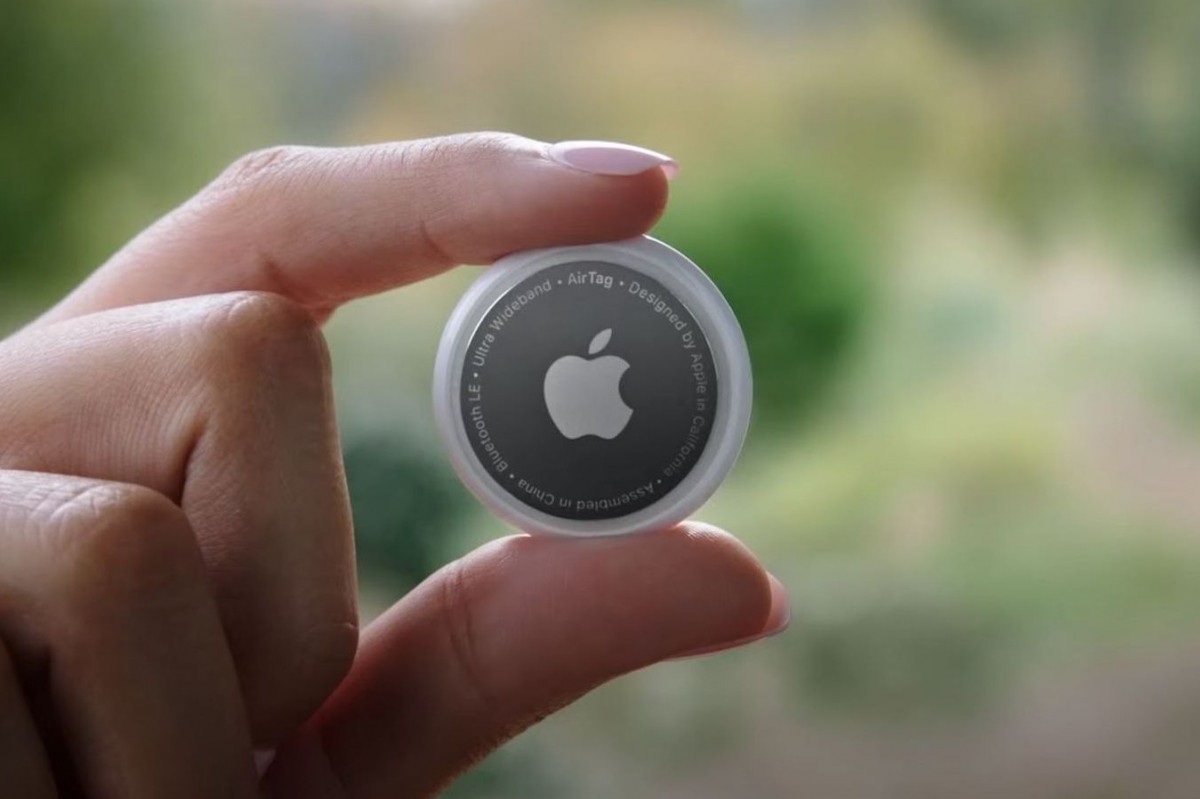
  • Apple is working on an AirTag 2

    Apple is working on an AirTag 2

    Commercially released more than two years ago, the AirTag tracking device is probably the least discussed product in Apple’s current portfolio, especially if you choose to ignore news stories and reports tackling various security issues and privacy concerns among both existing users and prospective buyers waiting for some “fix.”

    While it’s unclear if the AirTag stalking problem will ever be resolved (or even if it can be resolved satisfactorily), Apple is believed to be working on a sequel to the original 2021 edition that could see daylight as early as late 2024.
    That’s… still pretty distant, leaving a lot of room for a change of plans (or ten), and of course, today’s AirTag 2 information doesn’t come from an official source either. Ming-Chi Kuo’s new “prediction” of a “4Q24” mass production start doesn’t even seem particularly firm, and although the reputable analyst’s inside sources are more often than not right on the money, this rumor feels like a guesstimate first and foremost based on the OG AirTag’s sales figures so far.

    These are obviously not part of the public domain, but Kuo has reason to believe they’ve proven strong enough over the last year or so to justify the development of a second generation.

    Because the AirTag 2 is likely to go on sale either during the final calendar quarter of next year or sometime in the opening quarter of 2025, it’s virtually impossible to make any confident predictions regarding its specific features, capabilities, and potential upgrades over the first generation.
    For what it’s worth, Ming-Chi Kuo also “believes” (which sounds like another hunch rather than concrete info gathered from supply chain insiders) that the AirTag 2 will be used (alongside other devices) by Apple to create a new spatial computing “ecosystem” with the Vision Pro headset at its center.
    No, we’re not entirely sure exactly what that means either, but it’s safe to assume that the AirTag 2 will be deeply “integrated” and closely coordinated with the Vision Pro… whenever both products actually become available for the masses.
  • OPPO to exit France as distributor ceases operation

    OPPO to exit France as distributor ceases operation

    2023 has been a steep slalom for OPPO in Europe. In late March there were rumors that OPPO will leave four EU states, then the company denied this. Some four months later, OPPO might be leaving France for real.

    A report from SamMobile references an article from French outlet Frandroid: Yang Technology, the exclusive distributor of OPPO in France, announced that “it will cease its activities”.

    Earlier this year tipster Max Jambor tweeted that both OPPO and OnePlus are to withdraw from the following European countries: Netherlands, France, UK and Germany. An immediately issued statement by a OnePlus official refuted the tipster’s info and noted that “OPPO and OnePlus are committed to all the existing European markets”.

    Then came May, when it was reported that the German OPPO website was still live, but had turned into a ‘ghost town’ with no new posts, information or updates. That’s on par with the fact that the OnePlus 11 did not launch in Germany because of a patent dispute between Nokia and OnePlus.

    The beef between OPPO and Nokia was taken to court, where the Chinese brand actually won. A judge in the Paris Court of Justice has ruled that Nokia’s patents are considered “invalid” due to a “lack of novelty”. The trial at first instance has been won by OPPO, but most probably Nokia will appeal this Paris decision. Nevertheless, OPPO has decided to take a step back and apparently cut ties with France, while staying ‘on hold’ in Germany.

    It’s been awfully quiet on OPPO’s social media in France and their Instagram account. The brand used to share a minimum of three posts per week, but for the last 9 weeks, the sum is… zero. Social media activity is not a serious activity criterion, but it’s not to be underestimated in light of recent events

    This new state of affairs means that it will soon no longer be possible for people in France to buy OPPO smartphones straight from the official distributor, but instead will have to rely on resellers. However, there’s a statement from OPPO that their users in France will be able to access after-sales services and receive future OS updates.

  • Samsung and Microsoft team up to offer improved phone security for enterprises

    Samsung and Microsoft team up to offer improved phone security for enterprises

    Samsung and Microsoft have just announced they signed a strategic partnership to enhance phone security for business customers. The new solution is called “device attestation” and it’s supposed to ensure a device’s identity and health, verifying that it has not been compromised.

    Device attestation is now available on Samsung Galaxy devices and combined with protection from Microsoft Intune to add enhanced security and flexibility. Aimed at enterprises, the new solution is an extra layer of protection against compromised devices falsely claiming to be known and healthy, gaining access to sensitive corporate data.

    According to Samsung, device attestation is supported on select Galaxy smartphones and tablets, including “Security by Knox” devices with Android 10 or later. The company also notes that in order to be eligible for the solution, devices must have run Android 9 or later at the time of launch.

    “Samsung is committed to meaningful innovations that are as secure as they are versatile and optimized. As work habits evolve and people are working from virtually anywhere on any device, we are paving the way for the future of enterprise device security and democratizing the means for businesses to better protect their information,” said KC Choi, EVP and Head of Global Mobile B2B Team, MX Business at Samsung Electronics.

    Last but not least, the solution provided by the two giants works on both managed and unmanaged devices regardless of ownership. This is unusual since traditional device attestation mainly works on managed devices because it is server-based and requires network connectivity.

    Since this is a mobile hardware-backed attestation, enterprises will be able to verify a device’s integrity and allow access to the corporate system whether it’s managed or unmanaged. Furthermore, the user experience is also streamlined to make it easier for employees to bring their personal devices to work and safely access the corporate system without extra security steps.

  • Apple releases iOS 16.6 to patch several software flaws some of which have been actively exploited

    Apple releases iOS 16.6 to patch several software flaws some of which have been actively exploited

    Apple has released iOS 16.6 for the iPhone and iPadOS 16.6 for, well, the iPad. The updates will patch several vulnerabilities including one that impacts the Apple Neural Engine. The latter delivers on-device natural language processing and image analysis faster and with more energy efficiency than the CPU or GPU. Apple says that an app might be able to  execute arbitrary code with kernel privileges which means an attacker could run any command on a targeted iPhone or iPad.

    This patch is heading to iPhone 8 and later, iPad Pro (3rd generation) and later, iPad Air (3rd generation) and later, and iPad mini (5th generation). A vulnerability on the Find My app could allow sensitive location information to be divulged via an app. This patch will be available to the iPhone 8 and later, iPad Pro (all models), iPad Air 3rd generation and later, iPad 5th generation and later, and iPad mini 5th generation and later.

    Several patches for the Kernel are part of the update. This is the core part of an operating system. With one flaw, Apple says it is aware of reports that the vulnerability has been actively exploited on versions of iOS released before iOS 15.7.1. With this vulnerability, “an app may be able to modify sensitive kernel state” allowing the attackers to manipulate how the operating system runs.

    Other possible attacks against the iOS and iPadOS kernels listed by Apple include one that could allow the attackers to elevate privileges giving them the ability to do more than standard users. Another flaw could lead to a denial-of-service attack that could prevent users from accessing the features and apps they want to use. And another vulnerability can give an attacker root privileges. This could allow an attacker to create a backdoor, add a trojan, or delete any information on an iPhone or iPad.
    There are two vulnerabilities listed for the WebKit browser engine including one that has been actively exploited according to reports that Apple has become aware of. With these security issues, it is a good idea to install the update now. Go to Settings > General > Software Update and follow the directions. Other updates available today include watchOS 9.6, macOS 13.5, and tvOS 16.6.
  • China’s Xiaomi bets bigger on India retail stores amid Samsung rivalry

    China’s Xiaomi bets bigger on India retail stores amid Samsung rivalry

    China’s Xiaomi 1810.HK will focus on boosting its India sales from retail outlets after years of big bets on e-commerce, its India president said, as the company seeks to revive smartphone sales after falling behind South Korea’s Samsung 005930.KS.

    E-commerce sales in India via Amazon AMZN.O and Walmart’s WMT.N Flipkart have surged in recent years, helping Xiaomi and others expand in one of the world’s fastest-growing markets, with 600 million smartphone users.

    But while 44% of India’s smartphone sales are now online, the brick-and-mortar segment remains the bigger play and Xiaomi expects it to grow further.

    “Our market position in offline is substantially lower than what it is online,” Xiaomi’s India head, Muralikrishnan B., said in an interview on Friday. “Offline is where you have other competitors who have been executing fairly well and have a larger market share.”

    Just 34% of Xiaomi’s India unit sales this year have come from retail stores, with the rest through websites that have long been its dominant sales generator, data from Hong Kong-based Counterpoint Research shows. Samsung, in contrast, gets 57% of its sales from stores.

    Xiaomi plans to expand its store network beyond the current 18,000 and increasingly partner with phone vendors to offer other products, such as Xiaomi TVs or security cameras, where Muralikrishnan said competition is less intense.

    He said Xiaomi found some partner stores that put its bright orange branding outside shops were displaying rival brands more prominently inside, a marketing issue the company would address.

    Xiaomi’s offline push comes months after it lost its leadership position to Samsung, which had a much bigger portfolio of premium phones now in vogue. The South Korean giant has a 20% market share in India, while Xiaomi, which historically focussed on budget phones, has 16%.

    “Offline remains a key platform as India embraces the premiumization trend,” said Counterpoint analyst Tarun Pathak. “Consumers spending more would like to have the look and feel of the premium product.”

    Xiaomi plans to hire more store promoters – salespeople who lure, pitch and sell phones to prospective buyers inside outlets. It targets tripling the count to 12,000 promoters by the end of next year from early 2023 levels, Muralikrishnan said.

    Another significant India challenge for Xiaomi is a federal agency’s $673 million freeze on its bank assets since last year. The agency alleges Xiaomi made illegal remittances to foreign entities in the name of royalties. The company denies wrongdoing.

    “We’ll continue to be confident … that ultimately our position will be heard and validated,” Muralikrishnan said.

  • Android phones will soon try to entice users to install the latest update

    Android phones will soon try to entice users to install the latest update

    Google really wants you to install the latest Android update whenever it is released. While the company can’t twist your arm, Google is asking Android phone manufacturers to add a new feature called Android Upgrade Invite to their phones. Google says that the Android Upgrade Invitation is a “user flow that showcases the key new features included in the current available major Android OS upgrade.” It is “intended to help convince users to upgrade their device to the latest OS version.”

    As noted, the invitation can be tapped on by Android users to show them the new features and capabilities they will receive by upgrading to a new version of Android. The update can even be installed from the flow. The user flow is the path taken by an app user to complete a task such as the steps taken on an app to complete the purchase of a product. In this case, the task is to get an Android user to install the latest version of the platform.

    The invitation can be sent out automatically when a major update is detected (available on Android devices that use Google’s OTA ‘over the air’ update services and have Google Mobile Services). Or, the invitation can be sent out manually by the manufacturer. The manufacturers will have the ability to remove features from the user flow that are not offered on their Android skin, change the text if necessary, and modify the animations and colors to match their branding.
    We really can’t say how much the Android Upgrade Invite will change the fragmented world of Android updates. As of May 30th, the latest stable version of Android, Android 13, was on only 14.7% of active Android devices. But this low number has more to do with the various number of Android manufacturers and devices that can be purchased in the marketplace. On the other hand, by reminding some Android users who might not be as knowledgeable about the platform that an update is available, the feature could hike the percentage of users running the latest build.
    One thing that the Android Upgrade Invite will do is give more users a better idea of what they can expect when installing the update instead of trying to decipher a changelist provided by Google.
  • Alleged Foxconn employee reveals three possible colors for non-Pro iPhone 15 line

    Alleged Foxconn employee reveals three possible colors for non-Pro iPhone 15 line

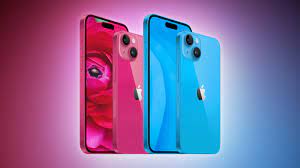
    The possible Foxconn employee’s Weibo post, when translated, says “Our workshop is a 15 ordinary model with an extra Green, light Yellow, and Pink to make it look better and a c port  is added to the smart island.” The post seems to have lost something in translation, but we can assume that what the post says is that Foxconn is working on the iPhone 15 in additional Green, light Yellow, and Pink. Two new features are observed on the upcoming basic iPhone model, the USB-C port and the Dynamic Island.
    Foxconn is the contract manufacturer hired by Apple to assemble many of its devices including some iPhone models. Several leaks about upcoming Apple devices are supposedly leaked by employees working with such contract manufacturers as they might know intimate details of these devices seeing as their job is to assemble them all day.
    We’ve seen plenty of rumors about possible colors for the iPhone 15 and iPhone 15 Pro models during the last few months and nearly all of them mention a Pink color option for the iPhone 15 and iPhone 15 Plus.
    Now that we’ve translated the Google Translation, let’s talk about some of the other new features coming to the non-Pro iPhone models this year. We can start with the 48MP image sensor that will back the Wide camera on both the iPhone 15 and iPhone 15 Plus. Both devices will also get a hand-me-down chipset as the 4nm (which is really an enhanced 5nm process node) A16 Bionic will be powering these units after driving the iPhone 14 Pro and iPhone 14 Pro Max. Larger batteries are also rumored to be onboard.
    The iPhone 15 Pro models will feature a titanium chassis, the 3nm A17 Bionic SoC (making them the only phones to use a 3nm chipset this year), larger batteries, and the aforementioned USB-C port. The iPhone 15 Pro Max should be equipped with a periscope lens making it the first iPhone ever to have this feature. Optical zoom on the unit will go from 3x to 5x-6x thanks to the periscope lens which will be exclusive to the top-of-the-line model.
    We expect the iPhone 15, iPhone 15 Plus, the iPhone 15 Pro, and the iPhone 15 Pro Max to be introduced in early September.