Category: Electronics
Retail News Asia is committed to providing both local and global retailers with the latest Electronics news throughout the Asian market. This on a daily base.
-

China bans shipments from U.S. memory chipmaker Micron Technology
The U.S. has banned phones and networking equipment from Huawei and ZTE due to fears that these companies’ products have backdoors that send information to Beijing. This weekend, China went on the attack against U.S. memory chip maker Micron Technology by banning its chips from the country. According to the South China Morning Post (SCMP), Micron is considered a “national security risk” which is exactly what the U.S. calls Huawei and ZTE.The U.S. Commerce Department said it “firmly opposes restrictions that have no basis in fact.” Besides getting back at the U.S. for banning products made by Huawei and ZTE, the move against Micron is retaliation for U.S Export rules that were put into place in 2020 that prevent certain chips made using American technology from being shipped to China.The U.S. Commerce Department added that “We will engage directly with PRC (People’s Republic of China) authorities to detail our position and clarify their action. We also will engage with key allies and partners to ensure we are closely coordinated to address distortions of the memory chip market caused by China’s actions.”Micron Technology, located in the heart of potato country in Boise, Idaho, released its own statement early Monday morning which said that it was aware of the decision made by Beijing and was examining its next steps. It also said, “We look forward to continuing to engage in discussions with Chinese authorities.” Last year Micron generated 11% of its $30.8 billion in revenue from China selling DRAM, NAND flash memory, and solid-state drives.Micron’s biggest customers in China were Lenovo, Xiaomi, Inspur Electronics Information, ZTE, Coolpad, China Electronics Corp, and Oppo. South Korean memory chip suppliers Samsung Electronics and SK Hynix will benefit from the ban. China’s own Yangtze Memory Technologies Corp. could also see some additional business with the ban of Micron in China.China’s Cyber Security Review Office under the Cyberspace Administration of China (CAC) had said back in March that it was investigating Micron and on Monday China said that Micron failed to pass a cybersecurity review. As a result, Micron’s chips cannot be used by telecom operators, banks, water utilities, and other companies. The CAC said that its review of Micron revealed “severe cybersecurity risks, posing significant security risks to China’s critical information infrastructure supply chain and to our national security.”We’re sure to hear more about this in the coming days. -
Poor demand drags MacBook prices down
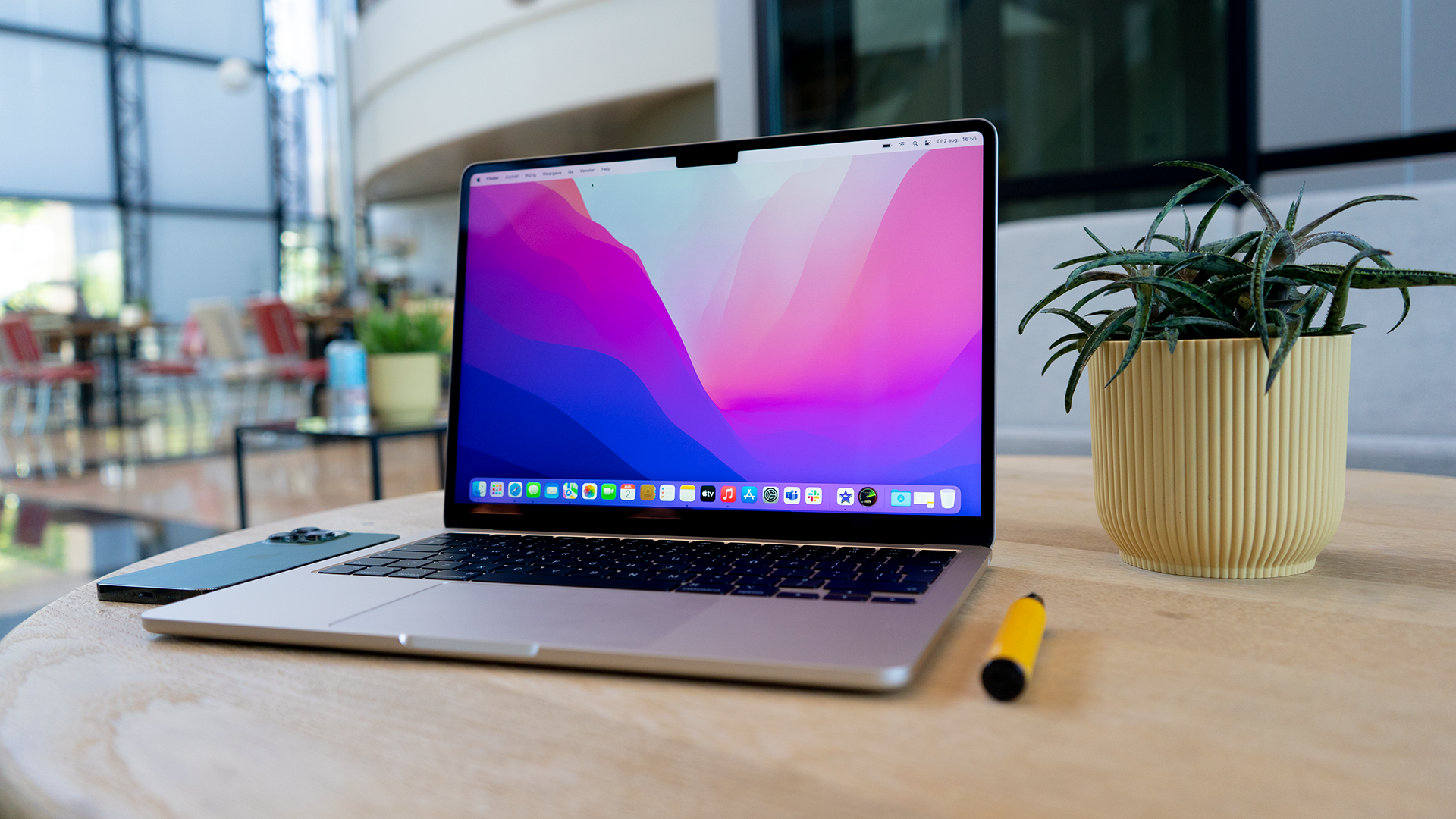
Apple’s MacBook Pro laptops have seen their prices tumble by tens of millions of dong (VND1 million = $42.6) in the two months amid underwhelming demand.
Quy Thien, a video editor, said when the MacBook Pro 16-inch was released in Vietnam at the end of March, he ordered a high-end model with an M2 Max chip, 96 GB RAM, and 4 TB storage for VND149 million (US$6,400).
But Apple dealers told him the model was not available, but would arrive in two months. When his device arrived, he checked the prices and found it had fallen to VND133 million.
“In two months, I lost VND16 million when I hadn’t even received my device,” he said.
A retailer explained that the MacBook Pro is a niche product due to its high price. Dealers do not stock some high-end models, and users have to order and wait for six to 12 weeks. Thus, early buyers got a bad break since prices started to fall as they waited, he said. Even the standard version has become cheaper.
At the time of launch the 14-inch version with 16 GB RAM, 512 GB storage and an M2 Pro chip cost VND52.9 million, and the 16-inch version cost VND65.9 million. If they had M2 Max chips, the prices were VND81.9 million and VND92.9 million.
In the next two months retailers slashed the prices of the 14-inch model by VND5 million if it had an M2 Pro chip and VND8 million if it had an M2 Max chip.
VND million (VND1 million = $42.63)MacBook pricesMarchMayMacBook Pro 14 inch M2 ProMacBook Pro 14 inch M2 MaxMacBook Pro 16 inch M2 ProMacBook Pro 16 inch M2 Max0255075100However, it has not worked and sales have not picked up, and the MacBook Pro only accounts for 2-3% of total laptop sales.
Hoang Ha Mobile said the high prices are the biggest dampener of demand.
Other Apple laptops have also become cheaper.
The MacBook Air M1, which used to be the best-selling laptop in Vietnam, currently costs VND17.9 million, VND11 million down since its launch in January 2021.
The MacBook Air M2’s prices have fluctuated. At the end of April its price briefly went down from VND28 million to VND25.9 million before climbing back up at the beginning of May.
-

MacBook Air M2 laptop price falls then rises
The retail price of the MacBook Air M2 laptop dropped by VND2.1-3 million (US$89-127) to VND25 million in April and has risen back to VND28 million in May.
The manager of an Apple distributor in Vietnam said retailers might have hiked the price because currently Air M2 inventories in the country are very low.
“If the demand … surges retailers … will have to wait for eight to 10 weeks for the product to be shipped to Vietnam.”
Large retailers such as The Gioi Di Dong, FPT Shop, and CellPhoneS had sold the Air M2 with the minimum configuration, the best-selling version, for VND28 million in early April, VND25.9 million in mid-April, and VND25 million in late April.
The laptop first sold for VND32.9 million when launched in Vietnam in July last year, but its price declined sharply partly due to competition among retailers to get a larger share of the pie, according to a manager of a The Gioi Di Dong store.
“Prices of technological products always tend to decrease gradually after launch. However, the continuous up and down with a large amplitude of several million dong in a short period of time shows the instability of the market,” said Nguyen Van Cong, a veteran trader of Apple products.
According to the manager of The Gioi Di Dong, the big discount of MacBook Air M2 is part of its price competition campaign.
In early April, during a shareholder meeting, Nguyen Duc Tai, Chairman of The Gioi Di Dong (Mobile World), said: “The price at The Gioi Di Dong was sometimes million dong higher than that at other retailers. However, this phenomenon will stop. We will not let the price difference become an advantage for competitors.”
Refusing to give the reason for their price fluctuations, managers of CellPhoneS and FPT Shop said MacBook prices have been “actively updated by the stores based on business strategies and the general situation in the market.”
In fact, the top three Apple device retailers in Vietnam, The Gioi Di Dong, FPT Shop and CellPhoneS, have changed the laptop’s prices frequently in recent days and the prices are almost the same.
At some Apple stores, it is one of the two best-selling laptops along with the MacBook Air with the M1 chip.
-

Vietnam third top chip exporter to the US
Vietnam accounted for 10% of semiconductor chip exports to the U.S. in the 12 months ending this February, ranking third after Malaysia and Taiwan.
The Vietnam chip industry’s revenue from the U.S. market rose by 74.9% during the period, from $321.7 million in February 2022 to $562.5 million this February, according to a report by the Ministry of Information and Communications.
Vietnam is also among the countries with the highest growth rate of chip exports to the U.S., alongside Thailand, India and Cambodia.
Cambodian chip exports to the U.S. grew in value 7-fold over the period, from $20.8 million to $166.3 million, while Indian revenues from the market grew 34-fold to $152 million in February.
In February, semiconductor chip export orders to the U.S. reached $4.86 billion, up 17% year-on-year. Among those, chips made in Asia accounted for 83%.
Bloomberg reported that the U.S. is diversifying its electronics supply chain by reducing the share of chip imports from Malaysia, a longtime powerhouse in chip packaging, alongside moving its iPhone production chain out of China.
At a government meeting in April, Prime Minister Pham Minh Chinh assigned the Ministry of Planning and Investment the tasks of improving the National Innovation Center, and developing a chip production program.
Experts believe Vietnam has the potential to be a global center of chip production if it can utilize its advantages and implement effective strategies, policies, and incentives for the sector.
Intel’s Asia Pacific and Japan General Manager Steve Long told VnExpress last year: “Vietnam can establish the necessary infrastructure and policies to support cutting-edge chip manufacturing.”
-

Apple co-founder Wozniak fears that AI will be used to scam the public
Apple co-founder Steve Wozniak, affectionately known as “The Woz,” says that artificial intelligence could make it harder to spot scams. Wozniak says that content created by AI should clearly be labeled as such and that regulation is needed or else bad actors will take control of the technology. Wozniak talked to the BBC about this issue two months after he and other tech leaders, including Elon Musk, signed an open letter asking for a slowdown in developing powerful AI models.Speaking to BBC Technology Editor Zoe Kleinman, Wozniak said, “AI is so intelligent it’s open to the bad players, the ones that want to trick you about who they are.” While The Woz thinks that the lack of emotion will prevent AI from replacing humans in the workforce, he fears that it will make bad actors seem more convincing when they are trying to scam the public. That’s because conversational AI chatbots like ChatGPT can create text that sounds convincing to the layman.As a result, Wozniak says that those who publish text written by AI are responsible for labeling it as AI-generated. “A human really has to take responsibility for what is generated by AI,” Wozniak says. He wants regulation to hold big tech firms accountable. The Woz didn’t mention any particular firm but said these are the tech companies that “feel they can kind of get away with anything.”Not that Wozniak was specifically talking about the company he helped create, but Apple CEO Tim Cook said to investors during a conference call last week that when it comes to AI, Apple would be “”deliberate and thoughtful. Cook added, “We view AI as huge, and we’ll continue weaving it in our products on a very thoughtful basis.”The Woz was not optimistic that regulators will be able to oversee the use of artificial intelligence. “I think the forces that drive for money usually win out, which is sort of sad,” he said. While he doesn’t believe that the development of AI can be stopped, he thinks that people can be educated to help them find situations where their personal data is at risk due to fraud. -

Laptop prices drop further
Electronics retailers have cut laptop prices by millions of dong (VND 1 million = $42.62) this year, but have been unable to spur sales as consumers remain wary of spending.
The price of a MacBook Air M1 was cut by VND3 million since early January to VND17.9 million (US$758.5) in April. It is down by VND11 million since its launch in January 2021.
The prices of newer Apple laptops like the MacBook Air M2 have also fallen quickly, coming down within seven months of launch from VND32.9 million to VND26.4 million now.
The manager of an Apple distributor said prices had to be slashed to cut inventories and ensure cash flows.
The inventory in the market is equivalent to 8-12 months of sales, according to the manager.
Laptops sales were high in the first four months of 2022, with MacBook Air M1 accounting for more than 50% of revenues.
But this year, consumers have tightened their purse strings, causing the market to plunge, the manager said.
Laptops running on Windows have also seen prices decline.
Electronics retail chain The Gioi Di Dong has cut the prices of Chuwi LarkBook X N5100 to VND5.7 million from VND12.8 million and MSI Gaming GE66 Raider 11UH i7 to VND38 million from VND78 million.
Retailers said profits from laptops were down 40-50% year-on-year in the first four months.
According to Nguyen Lac Huy, the manager of a CellphoneS store, retailers have had to slash laptop prices due to high interest rates, abundant supply, low cash flows, and weak demand.
The leading PC distribution company manager said most people bought laptops and desktops in 2021-22 when they needed them to work or study online during Covid.
Now, especially with the economic downturn, they are no longer buying new devices, he said.
According to research firms Gartner and IDC, global computer shipments fell by 30% in the first quarter to usual levels as life returned to normal after the pandemic.
According to Bao Viet Securities Company, the laptop segment’s profit in the first quarter of 2023 it decreased by 39.1% year-on-year.
It forecast sales to drop further in the second quarter, rise sharply in the third and decrease slightly in the fourth.
-

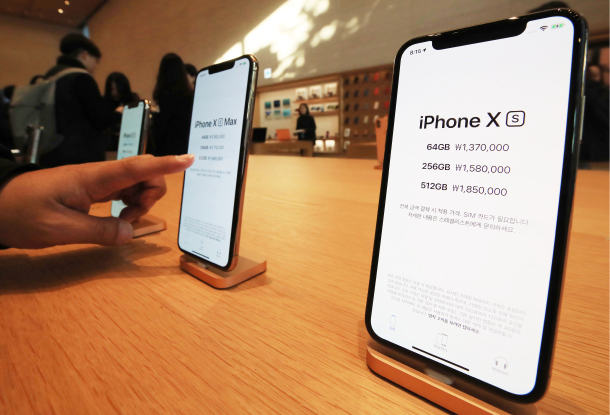
iPhone imports cost Vietnam $1.6B
iPhone imports cost Vietnam US$1.61 billion last year, equivalent to 46% of all phone imports.
According to the Ministry of Industry and Trade, total imports were up 10.5% to $3.5 billion, with Samsung, Oppo, and Xiaomi accounting for most of the rest.
Samsung imports cost $940 million, and that of Oppo, $442 million.
Almost $18 worth of components were also imported, and South Korea and China accounted for 93% of phone and part imports.
Many Apple distributors said the more expensive an iPhone model, the higher the demand.
According to the ministry, some 210.5 million phones worth VND663.7 trillion were manufactured in Vietnam last year, down 9.1% in volume but up 15.1% in value.
Exports fetched the country $33.32 billion, with Samsung alone accounting for $31.42 billion.
-

Apple opens second MixC store in Shenzhen, China
Apple will open its second MixC store in Shenzhen, China, as part of its strategy to strengthen its local footprint.
Apple said the new store has a Padang Light stone floor and a timber veneer-clad wall sourced responsibly and locally in China, maximizing visibility within the store.
The store will feature the latest Apple products and accessories and an Apple Pickup station that combines the online and in-person purchasing experiences for Chinese customers. Apple said the dedicated area allows customers to order online and conveniently pick up their devices in-store.
“At Apple, we’re constantly innovating to deliver the best possible experience for our customers, and our incredible team members in Shenzhen can’t wait to welcome them when doors open,” said Deirdre O’Brien, Apple’s senior VP of Retail.
The addition of Apple MixC Shenzhen marks the 55th Apple Store location in the area and the fourth in China’s Guangdong province. Apple has welcomed 22 million visitors to Shenzhen since Apple Holiday Plaza Shenzhen, the city’s first Apple Store, opened its doors in 2012.
The new store employs approximately 150 trained retail team members who speak ten languages, including Chinese, Cantonese, English, Japanese, Korean, French, Spanish, Russian, Arabic, and sign language.
After Europe and the United States, China is Apple’s third most important market. According to Bloomberg, Apple gained its most quarterly market share in China earlier this year, outpacing Covid outages and a global economic downturn.
Apple disclosed plans to open its first company-run retail presence in Mumbai, India’s financial powerhouse, at the beginning of this month.
-

Apple will reportedly allow Apple Watch to pair with multiple devices
When you buy a new Apple Watch, it must be paired with an iPhone. While one iPhone can be paired with multiple Apple timepieces, one Apple Watch cannot be paired with multiple Apple devices. But a Twitter tipster who made a great call last year says that the rumor mill is actively cranking out fresh speculation for mass consumption. This rumor says that Apple is developing software updates allowing an Apple Watch to pair with multiple Apple devices, including an iPhone, an iPad, and a Mac.Currently, an Apple Watch cannot pair with an iPad, but with the timepiece paired with an iPhone, a user can use his Apple Watch to help him view Apple Fitness+ workouts on an iPad that uses the same Apple ID. And those with an Apple Watch can unlock their Mac computers, view passwords, authenticate apps, and verify the user’s identity to complete an online Apple Pay transaction.“Apple Watch will sync across multiple iOS/iPadOS/Mac devices, and will no longer be tied to one single iPhone.” The tipster says that while he doesn’t know how Apple will implement this, he does know that in a future update, Apple will allow the Apple Watch to sync with more than one Apple device. Also unknown is which Apple Watch models will have this new feature and when it will be introduced.For example, the tipster says he is unsure whether Apple will include this new capability with watchOS 10, iOS 17, iPadOS 17, and macOS 14, all due out later this year, or if it will be delayed until then the 2024 updates. The tipster, @analyst941, made a great call on the Dynamic Island before the feature was announced last year giving him some legitimacy.Recently, @analyst941 posted not to give up on seeing solid-state buttons replace the mechanical buttons on the two upcoming premium iPhone 15 models, contradicting more well-known analysts such as Haitong Tech’s Jeff Pu, and TFI International’s Ming-Chi Kuo. Pu and Kuo both say that Apple will stick with the physical buttons on the iPhone 15 Pro and iPhone 15 Ultra. But @analyst941 wrote that the two models “will still have capacitive touch buttons, {and that] contrary to rumors, the development team is working too closely with new hardware to turn back now.”
The tipster also recently tweeted a list of new features he expects to see on iOS 17. Apple will discuss iOS 17 on June 5th, when the keynote will be held for the WWDC 2023 Developer’s Conference. The new iPhone, Apple Watch, and iPad operating systems will be released in September. -

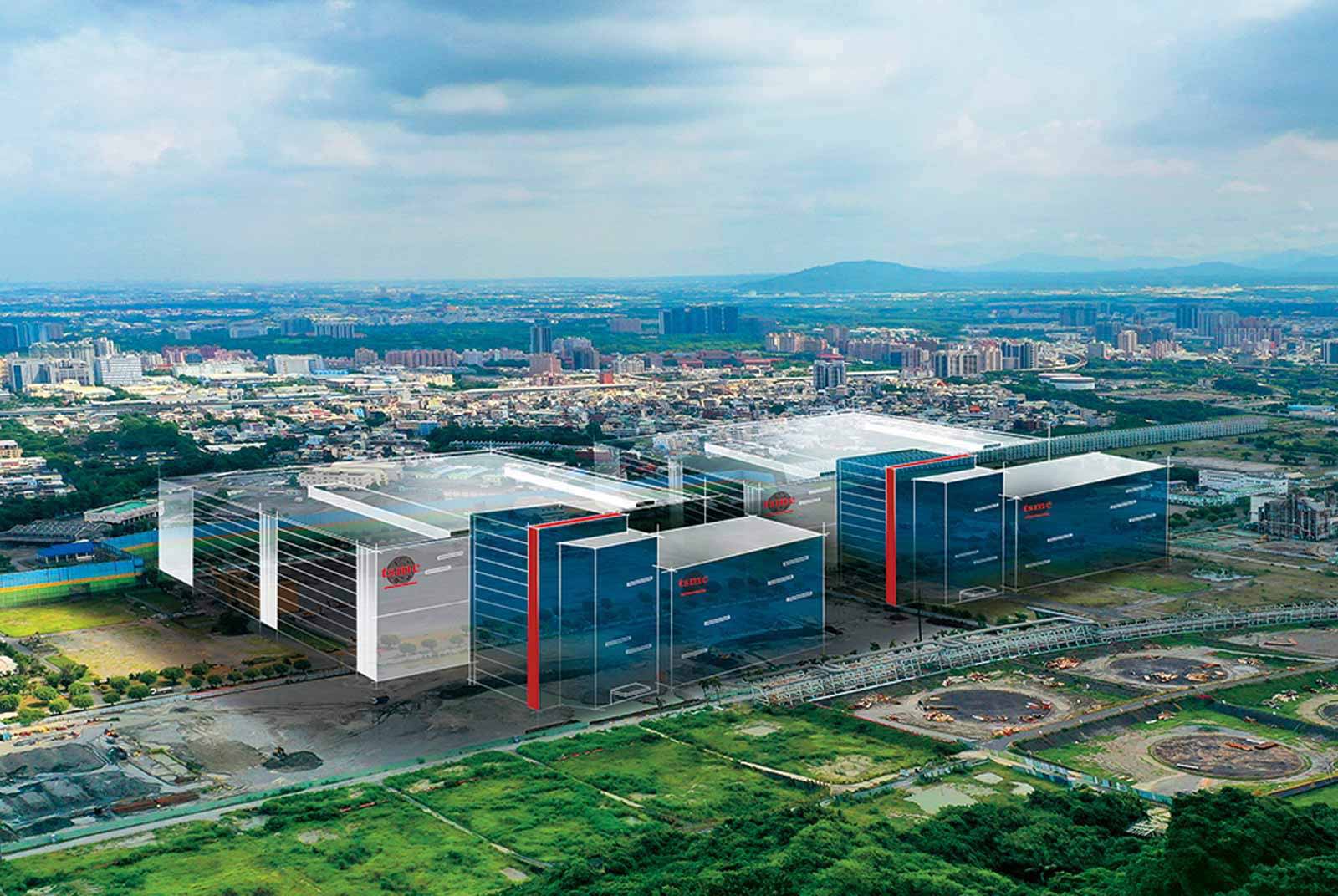
TSMC’s current 3nm chip production not enough to satisfy Apple’s needs
The world’s leading foundry, TSMC, is having problems meeting the demand for 3nm chips from Apple. The latter is TSMC’s largest customer, accounting for 25% of its revenue. Apple reportedly locked up all of TSMC’s 3nm production for this year and plans on debuting the 3nm A17 Bionic chipsets with the iPhone 15 Pro and iPhone 15 Ultra.The smaller the process node, the smaller the chip’s feature set, including transistors. Smaller transistors mean that more can fit inside a chip, which is important because the higher its transistor count, the more powerful and energy-efficient it is. For example, the Apple iPhone 11 line was released in 2019 and was powered by the 7nm A13 Bionic which contained 8.5 billion transistors in each chip. Last year’s iPhone 14 Pro models were powered by the 4nm A16 Bionic SoC with a transistor count of 16 billion.The aforementioned A17 Bionic that will power Apple’s premium iPhone 15 models this year will be made on the 3nm node and could include more than 20 billion transistors. The iPhone 15 Pro and iPhone 15 Ultra could be the only two phones from a major brand to use a 3nm chip under the hood this year. One reason is cost. With the price for each silicon wafer used for 3nm chip production tagged at approximately $20,000, moving to 3nm this year is an expensive proposition, especially with yields still improving.As TSMC and Samsung jockey for 3nm leadership, TSMC CEO C.C. Wei recently spoke to analysts during a conference call and said, “Our 3-nm technology is the first in the semiconductor industry to high-volume production with good yield. As our customers’ demand for N3 (TSMC’s 3nm production) exceeds our ability to supply, we expect N3 to be fully utilized in 2023, supported by both HPC (High-Performance Computing) and smartphone applications.”The executive added, “Sizable N3 revenue contribution is expected to start in the third quarter, and N3 will contribute a mid-single–digit percentage of our total wafer revenue in 2023.” The sizable N3 revenue contribution Wei sees in Q3 has to do with the release of the 2023 premium iPhone models.While TSMC and Samsung are the top two chip foundries in the world, Intel has joined the fight and promises to regain process node leadership in 2025. Right now, that crown belongs to TSMC. Mehdi Hosseini, senior equity research analyst with Susquehanna International Group says, “TSMC, in our view, remains the preferred foundry choice for leading-edge nodes as Samsung Foundry has yet to demonstrate a stable leading-edge process technology, all while IFS is years away from offering a competitive solution.”Besides the A17 Bionic, TSMC will also produce Apple’s M3 chip using the 3nm node. Brett Simpson, senior analyst at Arete Research, said in a report provided to EE Times, “We think TSMC will move to normal wafer-based pricing on N3 with Apple during the first half of 2024, at around $16-17K average selling prices. At present, we believe N3 yields at TSMC for A17 and M3 processors are at around 55% [a healthy level at this stage in N3 development], and TSMC looks on schedule to boost yields by around 5+ points each quarter.”As is the case in the chip industry, there is no time to rest because you always have to look ahead. With 3nm heading for the iPhone this year, 2nm production will start in 2025. TSMC CEO Weil says, “At N2, we are observing a high level of customer interest and engagement. Our 2-nm technology will be the most advanced semiconductor technology in the industry in both density and energy efficiency when it is introduced and will further extend our technology leadership well into the future.”Even with Apple’s 3nm business, 2023 is not shaping up as a good year for TSMC and revenue might fall this year for the first time in a decade. Year-over-year sales could decline by a mid-single–digit percentage point. Even with business slowing, the foundry expects capital expenditures to remain in the range of $32 billion to $36 billion.The Apple A17 Bionic has a die size in the range of 100-110 mm square allowing it to produce 620 chips per wafer. With a die size of 135-150 mm square, TSMC’s yield for the Apple M3 is 450 chips per wafer. -

Taiwan’s Apple supplier Quanta plans Vietnam factory
Apple supplier Quanta Computer plans to set up a factory in northern Vietnam, the Vietnamese government said.
The company, a MacBook contract manufacturer, on Friday signed an agreement with the authorities of Nam Dinh Province, 90 km (56 miles) south of Hanoi, to construct the facility at an industrial park there, the government said in a statement late on Friday.
The facility, which would be Quanta’s 9th factory globally, would initially cover an area of 22.5 hectares, the statement said, without giving its capacity nor a time frame for the construction.
Local media said on Saturday Quanta would invest $120 million in the factory.
-

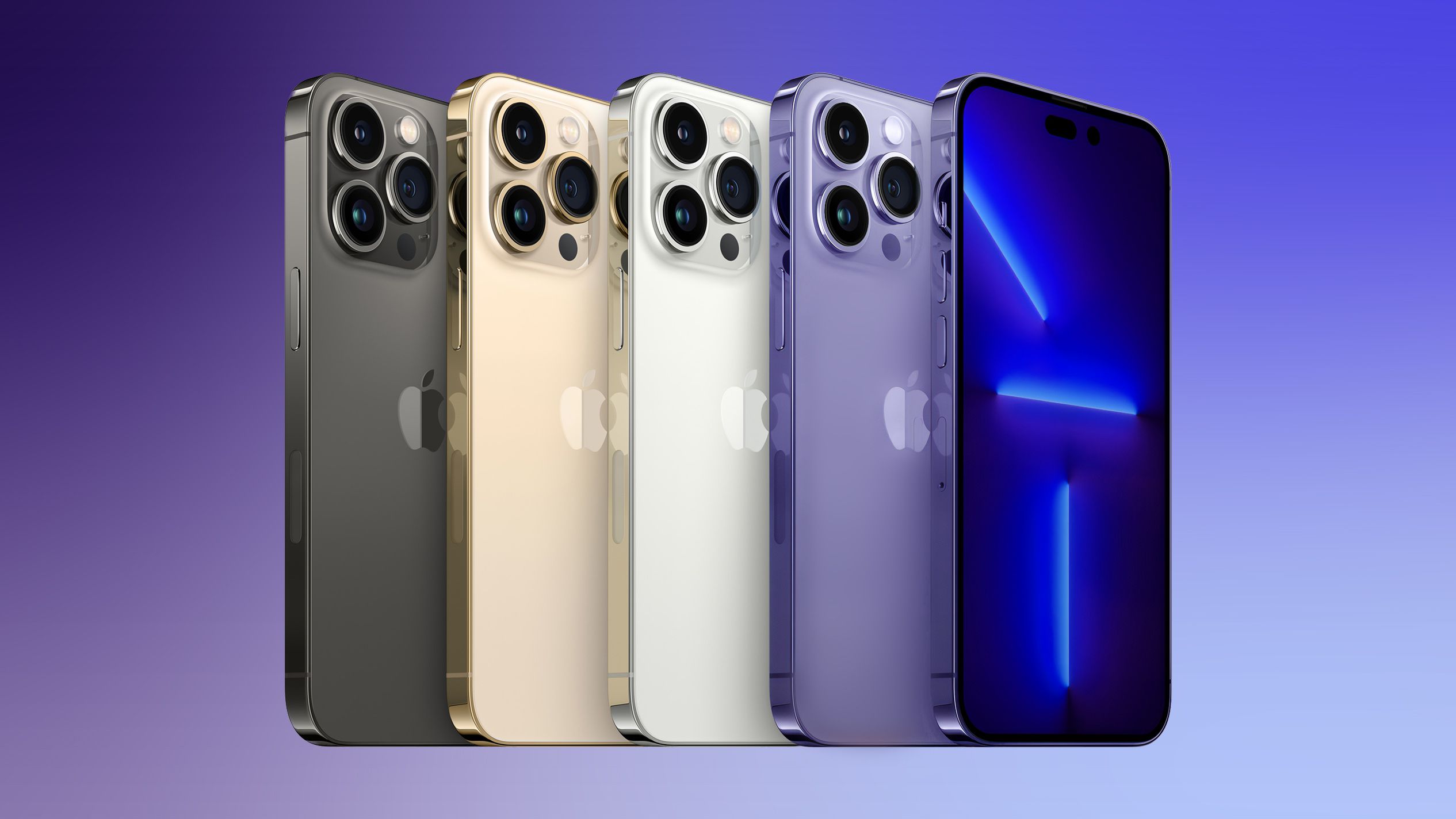
iPhone 14 prices to decline further
The prices of iPhone 14 in Vietnam, which are already among the lowest in the world, will continue decreasing in the coming time, market observers said.
“In April, Apple authorized resellers will have to import a new batch of iPhones according to their commitments to Apple. To lower inventory, slashing prices is the best way,” said a reseller.
Officially launched in the country on Oct. 14, 2022, the iPhone 14 Pro Max version originally sold for VND34 million ($1,440).
Only half a year later, the price dropped by more than VND7 million, the fastest rate of price decline since iPhone smartphones were first officially sold in Vietnam in 2014.
Prices of some other iPhone 14 versions also decreased sharply.
“The iPhone price war is always going on, but never as fierce as now. This is the first time the price of Apple’s latest phone model has dropped so steeply after only half a year,” said Phung Phuong, a manager of smartphone retail chain Di Dong Viet.
According to a large electronics retailer, there are two reasons for the current price race.
Firstly, Apple has not yet fixed a price range in Vietnam, so local dealers set their own selling prices according to actual needs and market situations.
Large stores often sell Apple smartphones at prices VND1-2 million higher than smaller ones, but still attract customers due to their wide coverage, good reputation, and better after-sales services.
Meanwhile, smaller stores must accept low profits, slashing prices to compete with bigger ones.
Secondly, at the beginning of 2023, demand for smartphones started diving, but Apple authorized resellers still imported a large number of products to receive sales incentives from Apple.
Inventory is now too high, forcing resellers to lower prices to make cash flows run smoothly.
“Big retailers are slashing selling prices, so small and medium ones have to follow suit to keep their market shares,” said Nguyen Lac Huy, a manager at smartphone retail chain CellphoneS.
The iPhone 14 was rolled out in Vietnam in October last year. While the Pro and Pro Max versions sold out within a few months, sales of the iPhone 14 and Plus versions have been sluggish.
Retailers said the combined sales of the two models account for less than 5% of the total.
-

Samsung says Vietnam is ‘global manufacturing hub’
Samsung considers Vietnam a global manufacturing hub and wants to make it a center of research and innovation, the South Korean giant’s CFO, Park Hark Kyu, has said.
In a meeting with Prime Minister Pham Minh Chinh Thursday, he said he highly regarded Vietnam’s investment and business environment. Samsung wants to make Vietnam the “center of centers” for research and development.
Last year the company set up an R&D center in Hanoi and provided training to ensure there would be more Vietnamese in its leadership ranks.
Over 2,000 engineers work at the center.
The number of level 1 and 2 Vietnamese suppliers in Samsung’s global supply chain has increased tenfold since 2014, from 25 to 257.
Park also spoke to Chinh about the use of “made in Vietnam” products, and the global minimum tax.
Chinh hailed Samsung’s business activities in Vietnam as helping shift the country’s economic structure, promoting exports and creating millions of jobs.
Last year Samsung’s profits in Vietnam topped US$4.6 billion. It has invested $18 billion in the country so far, and is planning to increase it to $20 billion.
-

Kobo launches improved Elipsa 2E e-ink tablet with magnetic stylus
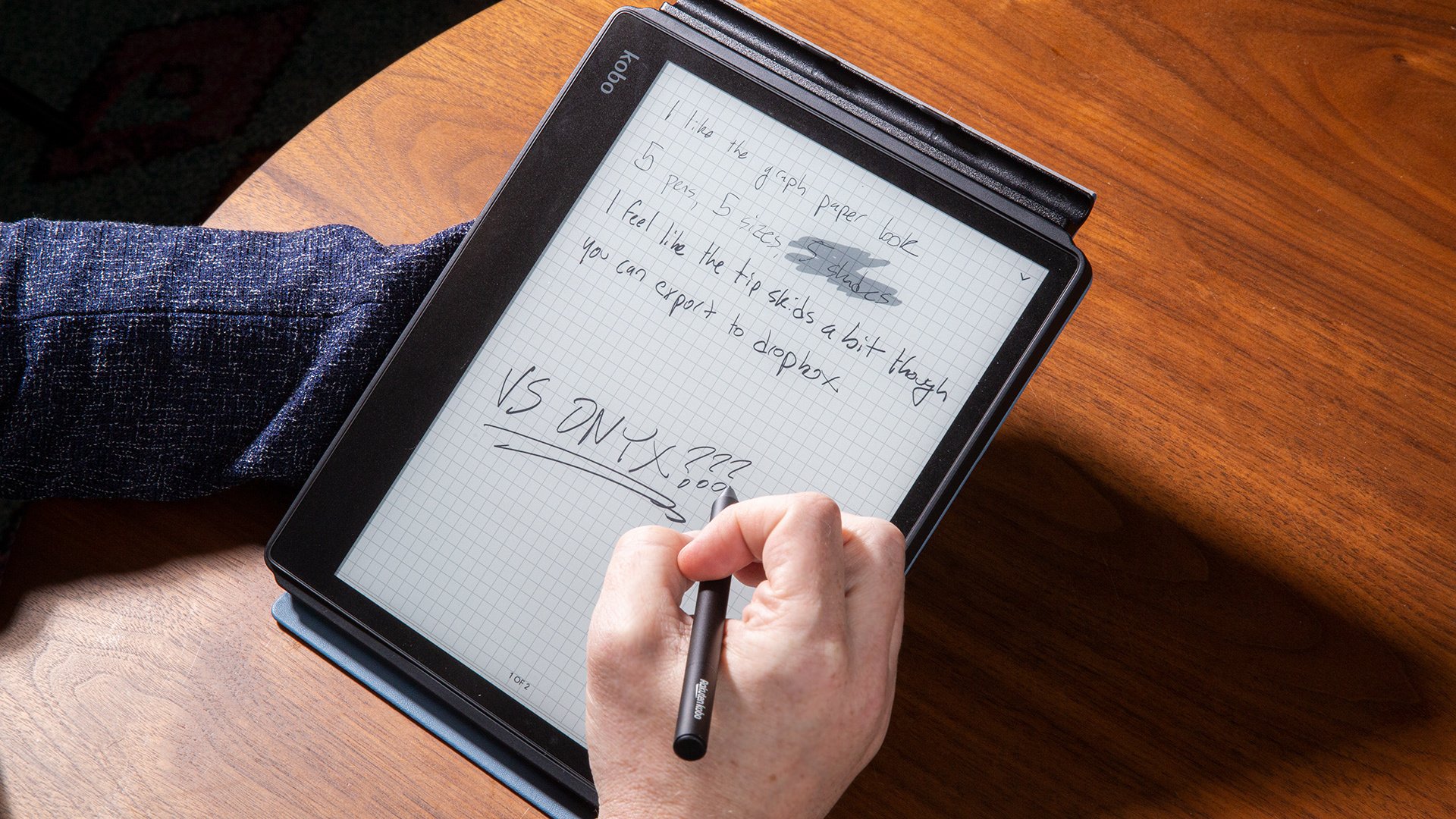
Kobo’s new Elipsa 2E easily goes into the large tablets category considering that it has a massive 10.3-inch display. It also features an upgraded magnetic stylus that can be easily attached to the side of the tablet.
The Elipsa 2E offers an upgraded digital reading and writing experience made from eco-conscious materials. The 10.3-inch glare-free e-ink touchscreen and ComfortLight PRO reduces blue light and eyestrain features that many other eReaders provide to different degrees.
The tablet has around 32GB of storage and it’s supposed to offer weeks of battery life on a single charge, but that will highly depend on how you use it. It’s fully compatible with audiobooks, so you can switch between reading ebooks to listening to Kobo audiobooks with Bluetooth wireless technology.
As per Kobo’s statement, the tablet’s exterior is 85% made of recycled plastic, while 10% is made of ocean-bound plastic. The Elipsa 2E can be protected with the eco-friendly SleepCover, which is also made with 97% recycled plastic, including 10% ocean-bound plastic. This is only available in Black and promises to save battery life by putting the tablet to sleep when you close it.
As mentioned earlier, the Elipsa 2E has an upgraded Kobo Stylus 2 that has been redesigned for better ergonomics. It’s also rechargeable and allows users to write directly on the tablet. You can make highlights, use the eraser on the back, write in the margins, and highlight standout passages with the dedicated button.
Regarding the price, Kobo Elipsa 2E is now available for pre-order for $400. The tablet can be picked up in stores and online as of April 19 in Canada, the US, the UK, the Netherlands, Belgium, France, Italy, Spain, Portugal, Sweden, Switzerland, Australia, New Zealand, Poland, the Czech Republic, Romania, Singapore, Malaysia, Taiwan, Hong Kong, Japan, and Turkey. The retail package includes the Kobo Stylus 2.