Category: Electronics

Retail News Asia is committed to providing both local and global retailers with the latest Electronics news throughout the Asian market. This on a daily base.

  • Drone maker DJI to shut Hong Kong flagship within a week

    Drone maker DJI to shut Hong Kong flagship within a week

    Shenzhen-headquartered drone maker DJI is to close its Hong Kong flagship store in Causeway Bay – but the company says the move is unrelated to strict new laws restricting drone use in the territory.

    The three-story, 930sqm store, which displays the brand’s range of aerial and handheld devices and includes a space where people can carry out test flights, will close from next Monday.

    A sign affixed to the storefront says DJI remains committed to its customers and partners in Hong Kong and elsewhere in the world and that the company would continue to develop the industry’s most advanced drones and creative camera technology.

    Responding to an inquiry from the South China Morning Post, a DJI spokesperson said the flagship’s closure reflected the company’s evolving needs and had “no connection” with the new regulations requiring drone operators to be trained and licensed to fly the devices. That law takes effect next June.

    After the store’s closure, the company’s drones will remain on sale online and through authorized dealers.

    DJI opened the store in September 2016. At the time it was the brand’s third retail store, following one in Shenzhen and another in Seoul.

    A flight cage on the ground floor showcases drones in action and a SkyPixel Gallery on the first floor features international aerial photography. A technical support center and space for workshops, seminars, and special events are located on the second floor.

    Under the new Hong Kong law, drones weighing between 250gm and 7kg must be registered, and pilots must undertake online training. Insurance will become mandatory.

  • H1 surge in phone, laptop sales

    H1 surge in phone, laptop sales

    Vietnam’s largest electronics retailers, Mobile World and FPT Shop, saw H1 mobile phone and laptop sales in the first half of the year.

    Mobile World posted total revenues of nearly VND62.5 trillion ($2.7 billion) and pre-tax profits of more than VND2.5 trillion in the six-month period.

    Of this the sales of mobile phones, laptops and relevant accessories was over VND15.6 trillion, a year-on-year increase of 7 percent.

    The Mobile World management board said the sales performance was really impressive because hundreds of the company’s stores have had to temporarily shut down or restrict sales amidst the Covid-19 pandemic.

    The FPT Digital Retail Joint Stock Company, which runs FPT Shop, earned total consolidated revenues of over VND9 trillion and consolidated before-tax profits of VND76 billion in the first half of this year, realizing over half and two-thirds of its annualized plan, respectively.

    Up to 85 percent of the total revenues came from mobile phone, laptop and accessories sales, which grew 13 percent year-on-year.

    While mobile phone sales grew 16 percent on year for Mobile World and laptop sales remained unchanged, FPT Shop saw a 31 percent year-on-year surge in laptop sales to over VND1.3 trillion.

    As of end June, Mobile World had 936 stores, up 23 stores over late 2020, but down from nearly 1,100 stores in late 2017. Meanwhile, FPT Shop had 625 stores, up 30 stores against late last year.

    According to Counterpoint Research, smartphone sales in Vietnam in the second quarter of this year grew 11 percent year-on-year.

    Meanwhile GfK has reported that sales of gaming laptops in the country grew 217 percent in the first five months of the year.

  • Chinese smartphones have 50 percent market share

    Chinese smartphones have 50 percent market share

    With Vietnamese phone brand Vsmart stopping production, Chinese smartphones grabbed a 50 percent market share in the second quarter of this year, according to Counterpoint Research.

    Of five prominent Chinese brands, Xiaomi, Oppo and Vivo accounted for a 45 percent share, according to the global research firm that specialized in technology, media and telecom. South Korea’s Samsung from and the U.S.’s Apple account for another 44 percent.

    Smartphone sales grew by 11 percent year-on-year in the second quarter. Pent-up demand and a new user base coming from the feature phone segment largely contributed to this growth, according to Counterpoint’s Monthly Vietnam Channel Share Tracker.

    Samsung topped with a 37-percent share riding on the Galaxy M31, Galaxy A12 and Galaxy A02s.

    Xiaomi was in second spot with 17 percent driven by the Redmi 9 and Note 10 series. OPPO and Vivo took third and fourth spots.

    The OPPO A series was the volume driver for the brand and it was the Y series for Vivo. Apple continued to do well in Vietnam and became the fifth-largest brand in the market.

    Six of the 10 best-selling smartphones at FPT Shop in the second quarter were Chinese, including Oppo the A15, Oppo Reno 5 and Vivo Y20.

    5G-capable smartphones have a 14-percent share of the market, and it will grow as mwobile phone operators are gearing up to launch 5G services, according to Counterpoint.

    Vietnam has already started 5G trials, with Viettel becoming the first company to do so.

  • Qualcomm Tops Magna’s Bid With $4.6 Billion Offer For Veoneer

    Qualcomm Tops Magna’s Bid With $4.6 Billion Offer For Veoneer

    Chipmaker Qualcomm Inc said on Thursday it had offered to buy Swedish auto parts maker Veoneer Inc for $4.6 billion, an 18.4% premium to a bid by Canada’s Magna International Inc that was accepted by Veoneer’s board. U.S.-listed shares of Veoneer rose 21.7% in premarket trading as the stage was set for a bidding war. Neither Magna or Veoneer made any immediate comment. Demand has been on the rise for advanced driver assistance systems, known in the industry as ADAS, that add features ranging from collision warning to parking assist. Some systems collect data from cameras and radar to monitor surroundings, interpret the situation and take action.

    Qualcomm, apart from powering mobile phones, has been a chip supplier to carmakers for a decade and last year started its own line of ADAS systems called Snapdragon Ride. Earlier this year it signed a signed a collaboration deal with Veoneer to develop a software and chip platform for driver-assistance systems. While fully self-driving vehicles are years away, assisted-driving features, such as adaptive cruise control, are being fitted into new cars by most manufacturers.

    Qualcomm hopes to grow its automotive chips business by creating open and competitive platforms for automakers along with Veoneer. “As the automotive industry continues to transform, it is becoming increasingly important for automakers to have a partner who develops horizontal platforms that drive innovation and enable competition,” said Qualcomm CEO Cristiano Amon.

    Magna has a similar interest in buying Veoneer as it tries to compete with ADAS makers such as Aptiv, Bosch and Continental to capture a larger share of the booming business. The Canadian company had offered to buy rival Veoneer in July for about $3.8 billion in cash.

  • Apple releases watchOS 7.6.1 to fix serious security issue

    Apple releases watchOS 7.6.1 to fix serious security issue

    Apple is urging owners of the Apple Watch to install the update to watchOS 7.6.1. Why the urgency? A flaw called the IOMobileFrameBuffer may have been actively exploited, according to a report that Apple is aware of. With the flaw, an application may be able to execute arbitrary code with kernel privileges which means that an attacker could gain unrestricted access to the timepiece.

    With watchOS 7.6.1 disseminated to patch the vulnerability, it would behoove those with a Series 3 or newer Apple Watch to install it ASAP. To do that, open the Watch app on your iPhone, tap on General > Software Update and you should see the prompt for the update. To install the update, your Apple Watch needs to be on its charger and in range of your Wi-Fi connected iPhone.

    Once the timepiece is charged to at least 50%, the installation will begin. Do not restart the watch or remove it from its charger until the update is completed. The patch delivered by watchOS 7.6.1 addresses the memory corruption issue using improved memory handling.

    Earlier this week Apple released iOS and iPadOS 14.7.1 to patch the same serious security issue that the watchOS 7.6.1 update is patching. The update weighs in at 64.6MB.

  • Oculus Quest 2 sales paused due to skin irritation issue

    Oculus Quest 2 sales paused due to skin irritation issue

    The Facebook-owned Oculus Quest 2—one of the leading headsets in the world of virtual reality—has been enjoying gargantuan sales this year, with Facebook reporting that this particular model “outsold not just its predecessor, but all of its predecessors combined” in 2021. However, that figure is about to take a hit as all sales of the Oculus Quest 2 have been put on hold for a few weeks due to a safety concern.

    Reportedly, only 0.01% of customers have been experiencing such irritation, with even these cases being very mild in their vast majority. However, a select few of them have been reported as quite severe, and for this reason, Facebook has chosen to pull the entire product and prevent further cases and perhaps a lawsuit in the future.

    This didn’t come out of the blue, however. The Oculus Quest 2 VR headset has been in the stores since last October, and people have been speaking up every so often for a very long time, posting pictures of their reddened skin on social media such as Reddit and Facebook.

    In April, Facebook suddenly addressed the issue, claiming they looked into the matter and found no real concern:

    “After conducting a comprehensive investigation into this issue, we did not find any contamination or unexpected substances in our manufacturing process. We identified a few trace substances that are normally present in the manufacturing process which could contribute to skin discomfort, and while these were already at levels below the industry standard, out of an abundance of caution we changed our process to reduce them even further. We’ve confirmed with expert dermatologists and toxicologists that these levels are considered extremely low. While this issue has only been reported by a very small percentage of Quest 2 users, with these changes, we believe that users are even less likely to experience irritation resulting from any substances in the foam facial interface. We encourage any customer who experiences irritation from using Quest 2 to contact Oculus Support for a facial interface replacement.”

    Somehow, this announcement didn’t fix the very real problem (surprise, surprise!) and many users continued to experience the blistering that whatever chemical was used in the foam seemed to be causing. Finally, a few days ago, Facebook apparently finally decided to face the problem and fix it for users once and for all.

    The company has paused sales of the Oculus Quest 2 on a global level, and the hold will last for a full month—resuming on August 24—while Facebook fits every single Quest 2 box around the world with a protective silicone cover that goes over the problematic foam (which, by the way, is also removable).

    Today, we’re introducing a new silicone cover for all customers globally, including as part of a joint voluntary recall of the Quest 2 removable foam facial interface with the U.S. Consumer Product Safety Commission (CPSC) and Health Canada. In addition, we’ve been communicating with global regulators and are taking the extra step of temporarily pausing sales of Quest 2 globally while we work to include the new silicone covers in all Quest 2 packages. The new silicone cover fits over the Quest 2 removable foam facial interface and starting on August 24, all Quest 2 headsets will come with a silicone cover included in every box. For more information, please visit the Oculus blog.

    Anybody who already owns the Oculus Quest 2 and wishes to get one of the protective silicone covers for free, can simply contact the company by following these instructions published on the official page.

  • Apple recruits more Vietnamese staff

    Apple recruits more Vietnamese staff

    Apple is recruiting 25 people in Vietnam, mostly for posts pertaining to operations and supply chain.

    Most of the job opportunities had been posted on Apple’s career website this month. On July 23 and 29, the U.S. tech giant posted information for the three posts of new product introduction-operation program manager (NPI OPM).

    Most of the 25 posts are for operations and supply chain workers in Hanoi, and sales and business development staff in Ho Chi Minh City. Some posts are for hardware engineers in charge of camera development working in both cities.

    For managerial posts, Apple requires candidates to have five to 10 years’ experience in hi-tech industries and a good command of English.

    Since early 2020, Apple has recruited some engineers and managers for software, screen quality, operation and product management units in Hanoi and HCMC.

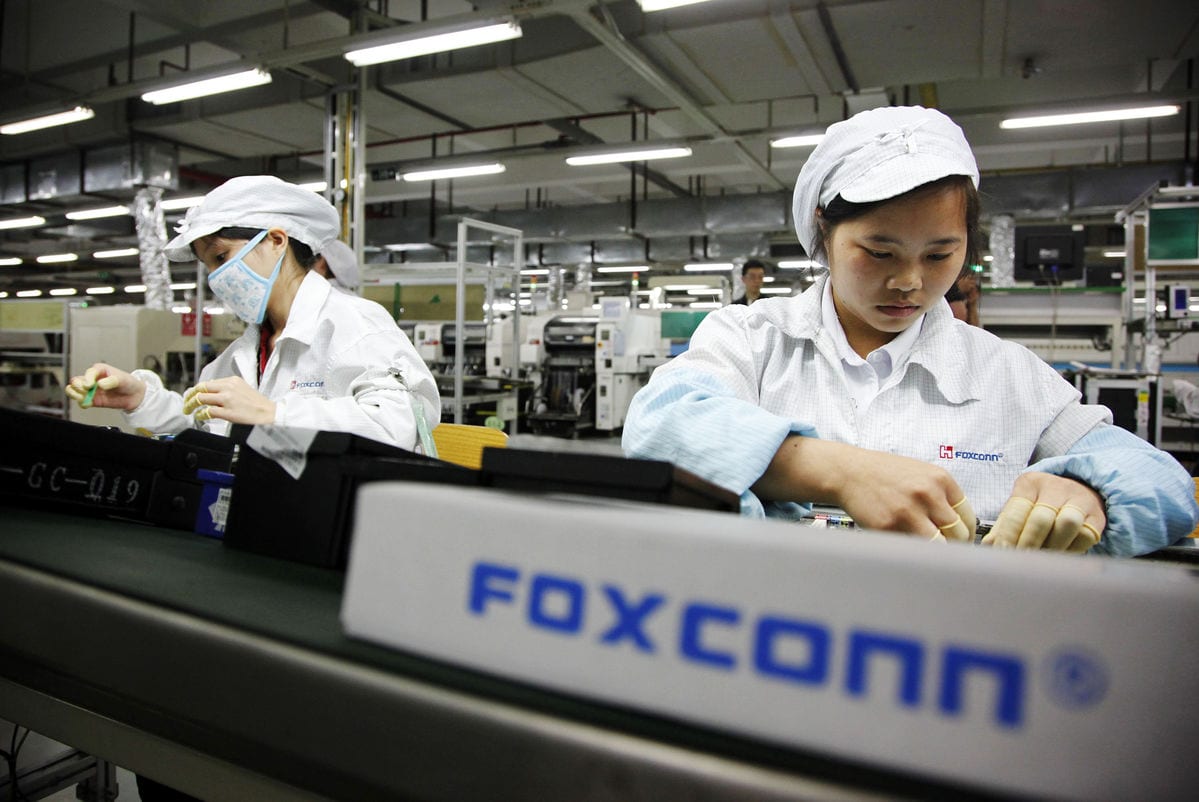
    Apple recruitment started when it shifted production of new products to Vietnam, which currently hosts 21 suppliers of the U.S. giant, up 1.5 times against 2018. These suppliers include Samsung, LG Display, Intel, Biel Crystal, Foxconn, Luxshare, Goertek and Compal.

    Many big assembling partners of Apple have factories in the three northern provinces of Bac Ninh, Bac Giang and Vinh Phuc. Many factories assemble AirPod headphones, Apple watches and Homepod Mini speakers.

    Early this year, Foxconn signed a $270-million project on producing laptops and tables in Bac Giang. According to many sources, Foxconn’s new facility would assemble iPads and MacBooks for Apple.

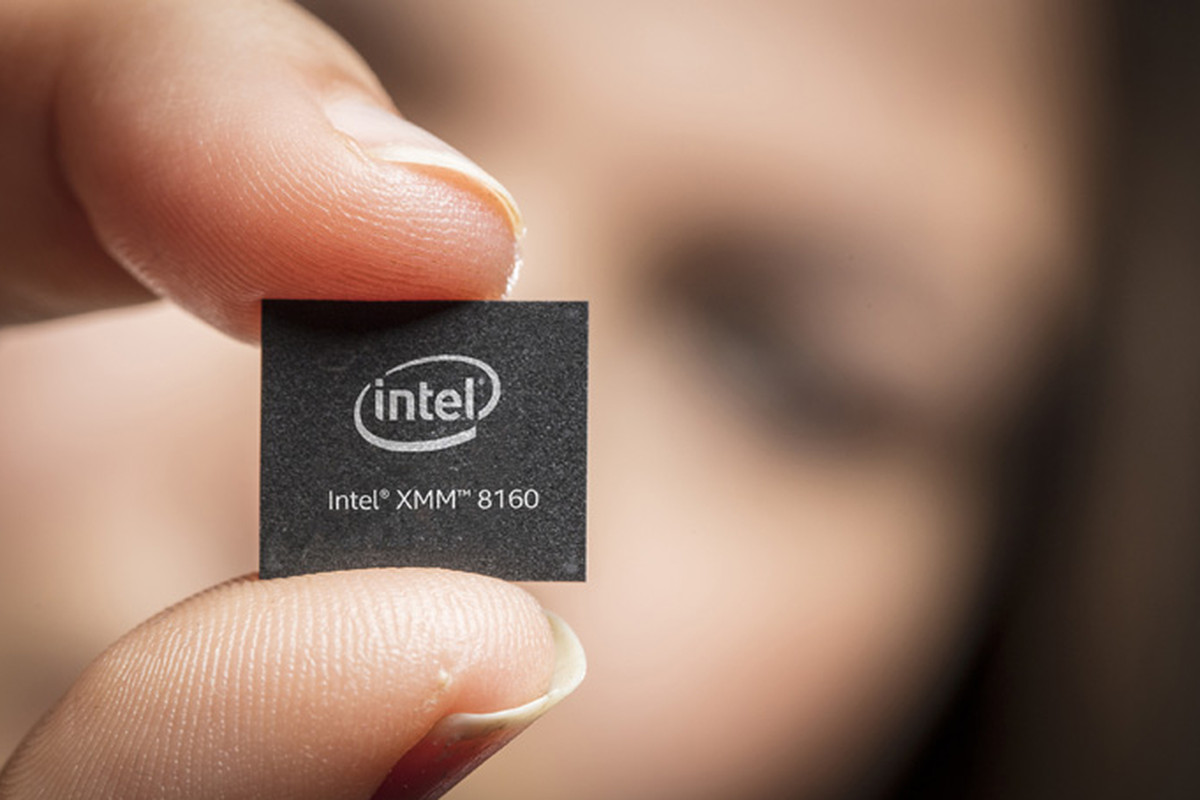
  • Intel to build chips for Qualcomm; hopes to rival TSMC

    Intel to build chips for Qualcomm; hopes to rival TSMC

    TSMC and Samsung, the two top contract foundries in the world, will soon have a new rival. Reuters reports that yesterday Intel announced that it will start producing chips for other companies such as Qualcomm and Amazon. Intel expects to challenge TSMC and Samsung by 2025.

    Intel was once the T-Rex of chipmakers, but Taiwan’s TSMC has become the global leader with Samsung right beside it. Both of those firms produce chips for Apple, Qualcomm, AMD, and other top tech companies. The pair also currently manufacture chips using 5nm process nodes and have roadmaps down to 2nm. As an example of what each of the two foundries can offer,  TSMC is the foundry rolling out Apple’s M1 chip that carries a whopping 16 billion transistors (no typo here folks) in each chip.

    Intel says that over the next four years, it will introduce five new technologies related to the production of these vital components. One of the five is the introduction of Intel’s first new transistor design in ten years. As early as 2025, Intel will get its hands on ASML’s next-generation extreme ultraviolet lithography (EVL) machines that place on the silicon an image of where the circuitry will be placed.

    The EVL machine is important because it needs to produce extremely thin lines as transistor size shrinks allowing foundries to pack more transistors inside the components they manufacture. Intel also plans on revamping the way it names its chips to be more in line with TSMC and Samsung. Dan Hutcheson, chief executive of VLSIresearch, an independent semiconductor forecasting firm, said that Intel’s current naming protocol gave the impression that the company was less competitive.

    The larger the number of transistors that fit inside a square mm, the more powerful and less energy-guzzling a chip is. And while Intel has been losing the process node war with TSMC and Samsung, it does plan to reveal a design for transistors smaller than 1nm by 2024.

    Intel’s first major new customers will be Qualcomm and Amazon. The former is known for the Snapdragon chips that drive mobile phones with some helping to connect handsets to 5G networks. These chips will use Intel’s 20A manufacturing technique that will produce chips that consume less power than current components thanks to the use of new transistor technologies.

    Amazon plans on using Intel’s packaging technology for the components it produces itself for the data center chips used for its Amazon Web Services. Intel Chief Executive Pat Gelsinger stated that “There have been many, many hours of deep and technical engagement with these first two customers, and many others.”

    While some analysts remain cautious about whether Intel can deliver on the promises it has made, Real World Technologies’ David Kanter said that the chipmaker is being more cautious than it has been in the past. He says, “Intel is absolutely going to catch up, and be ahead in some dimensions, with TSMC over the next few years. Intel really does have people who spend all their time looking at how to deploy new materials and technology to juice their performance.”

    You might recall that a legal feud between Apple and Qualcomm had Apple scrambling for a 5G modem chip to replace the one it wanted from Qualcomm. Apple planned on using a new 5G modem chip designed and produced by Intel. But Apple wasn’t thrilled about this and eventually reached a settlement that allowed it and Qualcomm to bury the hatchet resulting in the use of Qualcomm’s 5G modems on the iPhone 12 line, the first iPhone models to support 5G.

    Eventually, Apple plans on designing its own 5G modem chip and ended up purchasing most of Intel’s smartphone modem business in July 2019 for $1 billion.

  • Leaked promo confirms when Samsung will unveil two new foldables and a pair of new watches

    Leaked promo confirms when Samsung will unveil two new foldables and a pair of new watches

    A week ago, we passed along images of the devices we expect Samsung to introduce at its next Unpacked event, the second for 2021. Those products include the Samsung Galaxy Z Fold 3, the Galaxy Z Flip 3, the Samsung Galaxy Watch 4, and the Galaxy Watch 4 Classic. The huge leak had been posted on Twitter by tipster Evan Blass.

    On Saturday, Blass posted a promo from Samsung Russia that confirms that the next Unpacked will take place on Wednesday August 11th. The promo says that the event will start at 17:00 Moscow time (or 5 pm ). That equates to 10 am Wednesday Eastern Daylight Time.Leaked promo confirms when Samsung will unveil two new foldables and a pair of new watches

  • AirPods Max hit a new all-time low price

    AirPods Max hit a new all-time low price

    The AirPods Max are Apple’s most expensive headphones, but if you’re a fan of the brand, you’re probably going to get them anyway. Luckily, Amazon is making the experience of purchasing a pair of AirPods Max headphones more gentle for your wallet by offering a nearly 15% discount.

    The only catch is that you’ll have to specifically choose the Space Gray model to save a bit more than $70. The other four color options – Green, Pink, Silver, and Sky Blue are on sale as well, but the discount is slightly smaller.

    A $70+ discount on a pair of headphones that costs $550 might not seem too much, but this is the best AirPods Max deal we’ve been able to track to date. Not to mention that Apple’s products rarely get massive discounts, especially so close after launch.

    In any case, if you’ve been eyeing Apple’s expensive AirPods Max, now would be a good time to make your purchase. Just keep in mind that prices at Amazon change all the time, so you might not get the highest discount we’ve spotted at the time of writing.

  • Apple might add a way to measure temperature with your iPhone

    Apple might add a way to measure temperature with your iPhone

    We all know how serious Apple is about the impact its devices have on our health. They’ve been consistently providing more ways for us to track our heart rate, sleep, stress, and other vital stats. Most of the technology enabling this, like the blood oxygen sensor, Apple offers only on the Apple Watch.

    Yes, you do get a very detailed health tracker on iPhone, but that’s all software. Now, we might be getting hints at possible future hardware that could improve the phone’s health tracking capabilities even more.

    A patent application titled “Camera attachment and image data processing for temperature measurement” has been revealed. It shows that the American tech giant has been investing in camera technology that would be capable of analyzing an iPhone image to determine the temperature of a subject.

    The application states that “given the ubiquitous nature of smartphones, the attachment can be used to convert a smartphone into a temperature measurement device to provide readily accessible temperature measurements. In some embodiments, the attachment is a passive one (without electronics or need for a power supply) and may thereby reduce manufacturing costs and increase availability.”

    It looks like this innovative technology won’t be an integrated part of the iPhone itself but an attachment that can be added only when it is needed. “For example, in some embodiments, a camera attachment is provided that includes a frame configured to couple with a camera,” the patent mentions.

    The frame is explained to be the part that will be carrying all the tech required to determine said temperature. The text goes on to say that “the camera attachment includes a temperature reactive material (TRM) that is coupled with the frame. The frame is configured to position the TRM within the field of view of the camera such that images captured by the camera include at least a portion of the TRM.”

    The Apple Watch has been used by medical professionals and has aided them in their work and their ability to track their patient’s health. Similarly, this temperature measuring attachment that the company is looking into sounds like something that could make that whole process even easier.

    Let’s not also pretend we don’t notice the connection with the COVID-19 pandemic and the distance rules it’s imposed on society. Many places, from stores to country borders, use devices that can measure temperature from a distance, and Apple’s patent application highly resembles them.

  • M1 battery life was so good, Apple marketing thought it was a bug

    M1 battery life was so good, Apple marketing thought it was a bug

    The Apple M1 chip is probably one of the hottest new things to come out in the world of mobile tech in the last year. We are used to being excited about stellar cameras or pristine screens, but when Apple announced that the M1 is coming to the latest iteration of the iPad Pro, we were pumped.

    What’s the big deal with Apple M1? Well, there are two things that are really exciting. For one, it’s powerful — in fact, it’s so powerful that it was first introduced in the MacBook Air, MacBook Pro, and Mac mini, then added to the new iMac and then installed in the iPad Pro (2021).

    But what it’s really valued for is its low power consumption. The M1 MacBook Air became an instant hit and users love it for the massive boost it provides in battery life over the Intel chip models. The new iPad Pros are also really, really tough to kill, regularly giving us 10 hours of heavy (multitask) usage.

    Battery life is an extremely important quality for devices meant to be worked on the go, so with the M1 having such an amazing performance per watt ratio, it quickly became a hit.

    The guys over at Tom’s Guide recently posted their breakthrough and device awards for 2021 and M1 is at the very top. The team spoke with Mr. Bob Borchers — VP of worldwide product marketing for Apple — and Mr. Borchers recollected a fun story from when the team first got their hands on a prototype M1 system.

    “When we played with it for a few hours and the battery didn’t move, we thought “Oh man, that’s a bug, the battery indicator is broken” — he said. However, Tim Cook was in the room with him and found the reaction pretty funny. “Nope, that’s the way it’s supposed to be”, Mr. Cook replied.

    The Apple M1 is the logical evolution of Apple’s work with processors. The company has been making its own Apple A chips since the acclaimed iPhone 4 — powered by the good old Apple A4. The chips are the main driving force behind the iPhones — often climbing to the top of benchmark scores for that year. Since the chips are so powerful, the iPhones have a lot of headroom to work with, which is why they can usually receive major iOS updates for years on end and still work without a hitch (but you will very probably need a battery refresh a couple of years in).

    After seeing the success of the Apple A silicon, Cupertino got to work on the M1 with a very clear goal in mind — it needs to be noticeably better than what Intel has to offer. After all, why spend all the time on R&D and making your own silicon if it will make little difference in the end?

    Well, the M1 arrived with a splash. The tech community is currently excited over rumors about a possible Apple M1X chip, which would allegedly power the next 16″ MacBook Pro, and we’ve been hearing whispers about an Apple M2 in 2022. Will they deliver a massive performance boost compared to the M1? I would wager not, but who knows — we might be pleasantly surprised yet again.

  • Taiwan’s Foxconn Discussing Electric Vehicle Plant In Wisconsin

    Taiwan’s Foxconn Discussing Electric Vehicle Plant In Wisconsin

    Taiwan’s Foxconn said on Friday it was in talks with the U.S. state of Wisconsin about building electric vehicles there, part of the major Apple Inc supplier’s push to diversify income streams.

    Foxconn and electric car manufacturer Fisker Inc said in May that they had finalized a vehicle-assembly deal. They did not identify a location, but Fisker’s CEO said Foxconn’s Wisconsin site was a possibility.

    In a statement, Foxconn said it had begun discussions with Wisconsin.

    “Foxconn has engaged the Wisconsin Economic Development Corporation to discuss the company’s plans for electric vehicle manufacturing. Foxconn is optimistic about our partnership with WEDC and looks forward to ongoing discussions,” it added.

    The company formally called Hon Hai Precision Industry, gave no further details.

    A Wisconsin Economic Development Corp spokesman said the agency does not comment on any potential talks until a contract is executed.

    In April, Foxconn drastically scaled back a planned $10 billion factory in Wisconsin, confirming its retreat from a project that former U.S. President Donald Trump once called “the eighth wonder of the world” and was supposed to build cutting-edge flat-panel display screens.

    A month earlier, Foxconn’s chairman said it may make electric vehicles (EVs) at the Wisconsin site, though could decide on Mexico, and would make a decision this year.

    Over the past year or so Foxconn has announced several deals on the production of EVs with automakers including Fisker, China’s Byton and Zhejiang Geely Holding Group, and Stellantis NV’s Fiat Chrysler unit.

    On Friday, Fisker said talks with Wisconsin economic development officials were normal in the process of evaluating potential plant sites. The carmaker said in May it had finalized plans for Foxconn to build vehicles for the electric car startup at a U.S. plant starting in 2023, and Wisconsin was one of four options.

    Foxconn aims to provide components or services to 10% of the world’s EVs by 2025 to 2027, posing a threat to established automakers by allowing technology companies a shortcut to competing in the vehicle market.

  • South Korea’s Samsung SDI Considers Building Battery Cell Plant In U.S.

    South Korea’s Samsung SDI Considers Building Battery Cell Plant In U.S.

    South Korea’s Samsung SDI Co may build a battery cell plant in the United States to support the auto industry’s shift to electrification, a company source with close knowledge of the matter told Reuters on Thursday. Samsung SDI, an affiliate of Samsung Electronics, has been in talks with automakers including Stellantis, Amazon and Ford Motor-backed electric vehicle startup Rivian to supply batteries manufactured at its potential U.S. factory, the source said.

    The South Korean battery maker is considering investing at least 3 trillion won ($2.62 billion) to manufacture batteries for Stellantis and a minimum of 1 trillion won for batteries to Rivian, according to the source.

    The source added that Samsung SDI has not yet decided whether they would launch the U.S. plant as a joint venture with carmakers, or as an independent manufacturing site.

    The source said the decision to build in the U.S. reflects the changes on tariff rules in the United States-Mexico-Canada Agreement (USMCA) that took effect last year, replacing the 1994 North American Free Trade Agreement (NAFTA).

    The South Korean battery maker is considering investing at least 3 trillion won ($2.62 billion) to manufacture batteries for Stellantis

    The USMCA requires that vehicles have 75% North American content compared with a 62.5% threshold under NAFTA in order to avoid tariffs.

    “We have been reviewing our expansion in the United States, but nothing has been decided yet,” a Samsung SDI spokesperson said, adding that the company cannot disclose details of talks with customers.

    Samsung SDI has EV battery plants in South Korea, China and Hungary, which supply customers such as BMW, Ford, Volvo, and Volkswagen.

    Samsung SDI’s domestic rivals LG Energy Solution and SK Innovation Co Ltd have announced separate plans to manufacture EV battery cells in the U.S. Samsung SDI is also considering investing 1 trillion won for batteries to Rivian

    Formed in January by the merger of Italian-American group Fiat Chrysler and France’s PSA, Stellantis has battery plant projects in France and in Germany, both in a joint venture with a subsidiary of TotalEnergies.

    Reuters reported on Wednesday that Stellantis is making progress on finalizing a deal to build a battery plant in Italy.

    The carmaker has said it would take a decision on additional battery factories in Europe and in the U.S. this year.

  • Samsung expects 53% increased profits amid the global chip shortage

    Samsung expects 53% increased profits amid the global chip shortage

    Samsung is reportedly expecting a notable 53% increase in its quarterly profit following a very healthy demand for memory chips during the global semiconductor shortage. One of the largest electronics manufacturers in the world forecasts a profit of nearly $11 billion for the quarter that ended with June.

    This uptrend can be attributed to strong sales of memory chips, which is offsetting the weakened sales of TVs, phones, and other electronics in the first couple of months into the coronavirus pandemic and is shaping up to be Samsung’s biggest quarter since 2018. As more and more people stayed and worked from home, the demand for electronics has surged, and Samsung is finally bringing home the bacon thanks to this. This is all despite the chip shortage that’s plaguing not only the smartphone but many other industries and businesses as well.

    Of course, the exact figures remain to be confirmed in the financial report released later this month, but Samsung will easily beat analysts’ expectations by a lot.

    Samsung is one of the largest semiconductor manufacturers globally, a leading contractor that produces chips for Apple, Qualcomm, and others. Samsung is reportedly working closely with its overseas partners to mitigate any supply disruptions that may arise as a result of the disruption.

    Recently, we’ve heard rumors that Samsung might have been forced to postpone the release of its anticipated Galaxy S21 FE to Q4 2021 due to the chip shortage. Another concession is reportedly resorting to using Exynos chips alongside Qualcomm’s Snapdragon solution. There are even rumors that the phone could skip some markets due to the same reasons.<