Category: Electronics

Retail News Asia is committed to providing both local and global retailers with the latest Electronics news throughout the Asian market. This on a daily base.

  • Apple sues recycling firm seeking $22.7 million for theft of over 100,000 iPhones

    Apple sues recycling firm seeking $22.7 million for theft of over 100,000 iPhones

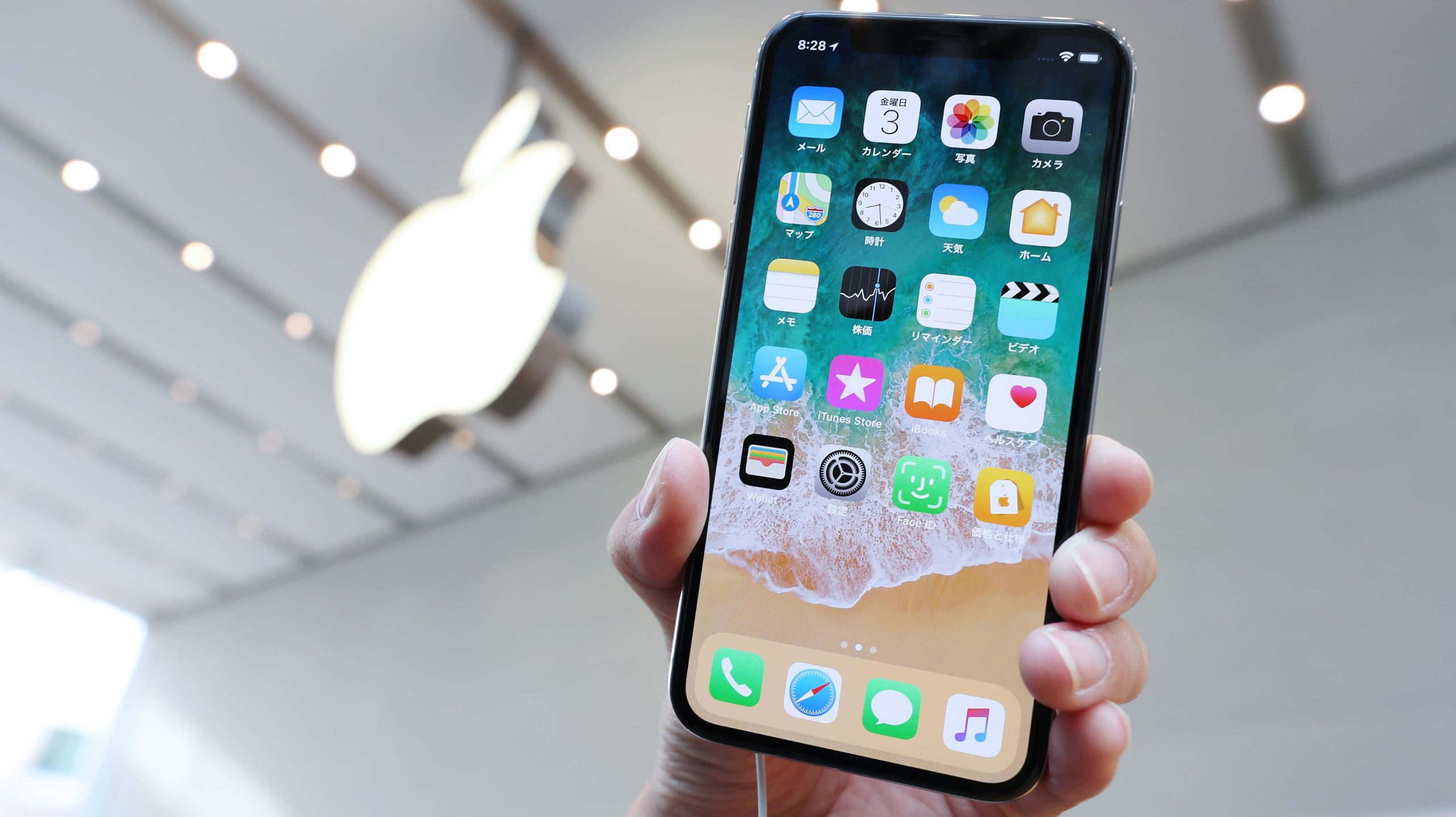
    Apple is back at its home away from home; in court, we mean. The tech giant is suing a Canadian recycling firm called Geep Canada alleging that the firm stole 100,000 Apple devices including iPhones, iPads, and Apple Watches. Apple has been using the firm since 2014 to strip down these devices and recycle them.

    The interesting thing is that Geep Canada doesn’t deny that the devices in question were stolen. But in a countersuit filed by the firm, it claims that three rogue employees were responsible for the thefts which reportedly occurred without the company’s knowledge. Apple says that the three so-called “rogue employees” are actually members of Geep Canada’s senior management.

    The filing that Apple submitted to the court says that between January 2015 and December 2017, the company shipped 531,966 iPhones, 25,673 iPads, and 19,277 Apple Watches to Geep Canada. When Apple visited the recycler’s warehouse to perform an audit, it discovered that some of its devices were being stored separately from devices from other companies. When Apple discovered that there were no security cameras monitoring that gear, the company decided to check the serial numbers of all of the devices it sent to Geep Canada. What it discovered was that 18% of the devices it had sent to Geep to be stripped for parts, a total of 103,845 phones, tablets, and watches, were active on networks belonging to wireless providers. Apple notes that the actual number of stolen devices is higher since the non-cellular iPad and Apple Watch models wouldn’t show up on the carriers’ lists.

    Apple’s lawsuit shows that “At least 11,766 pounds of Apple devices left Geep’s premises without being destroyed – a fact that Geep itself confirmed.” The manufacturer is seeking $22.7 million from Geep Canada. Since someone was able to sell the devices in question, you might wonder why Apple just didn’t decide to sell them itself. But the tech giant told The Verge that “Products sent for recycling are no longer adequate to sell to consumers and if they are rebuilt with counterfeit parts they could cause serious safety issues, including electrical or battery defects.” Selling these devices when they are no longer safe or good to use can not only harm consumers, doing so can also harm Apple’s reputation if these products can’t perform up to par. Apple filed the suit in January 2020 although the thefts were discovered in 2017-2018. Since Apple confronted Geep Canada, it has stopped working with the company.

    At the beginning of this year, we told you that Apple is looking to recycle all of the parts used on its devices and become a closed-loop manufacturer. Apple also relies on robots like Daisy that can strip and keep the parts of 200 iPhone units an hour. But not everyone believes that Apple is best served by recycling old products. Consider Kyle Wiens, the founder of device repair company iFixit. He would prefer that Apple repair older iPhones rather than strip them down and recycle the parts.

    Daisy the robot can disassemble an iPhone (think of it doing the opposite of what Foxconn’s assembly line does) using a blast of freezing cold air weighing in at -176 degrees Fahrenheit. Apple removes and keeps screws and modules and sends some parts to recycling firms tp extract the minerals. Cobalt is removed from the batteries inside these older devices and is used on new batteries. Once Daisy removes an iPhone’s display, sensors, screws, logic boards, and the wireless charging coil, all that is left is an aluminum chassis. The aluminum is reused on newer devices while the solder used to mount components on new devices is produced from 100% recycled tin.

  • Tipster says that Samsung will soon introduce the chips that will power the Galaxy S21 line

    Tipster says that Samsung will soon introduce the chips that will power the Galaxy S21 line

    A tweet disseminated on Saturday by tipster MauriQHD (@MauriQHD) says that the next Exynos chipset will be introduced by Samsung at any moment. According to the tweet, the Exynos 2100 will be the successor to the Exynos 990. A recent Geekbench test of the Exynos 2100 allegedly running on the Galaxy S21+ had a single-core score of 1038 and a multi-core score of 3060. That pales in comparison to the Geekbench results recently posted for the Apple A14 Bionic SoC that will power the iPhone 12 series. That chip, tested while powering an iPad, had single-core and multi-core scores of 1583 and 4198 respectively. At this point, it is possible that the Exynos 2100 score is based on a test using unoptimized firmware so we need to hold off on making any direct comparisons.

    Both the A14 Bionic and the Exynos 2100 will be manufactured using the 5nm process which means that more transistors will fit inside a square mm allowing for greater performance and improved energy consumption. Like the Exynos 2100, the Qualcomm Snapdragon 875 chipset will be manufactured by Samsung Foundry using the 5nm process node. We could see the new Snapdragon flagship chip unveiled in December during the Snapdragon Summit.

    The tipster also said in his tweet that the Exynos 2100 should be “way better” than the Exynos 990. Considering that the latter was manufactured using the 7nm EUV process (EUV is a technique used to mark wafers with very thin ultraviolet beams allowing more transistors to be placed inside a chip) compared to the more powerful and energy-efficient 5nm Exynos 2100, this is pretty much a sure thing.

    The Exynos 2100 and Snapdragon 875 will both be found in consumer devices starting early next year. The A14 Bionic, which Apple already introduced when it unveiled the fourth-generation iPad Air last month, could be in consumers’ hands as soon as later this month as the chip will power both the aforementioned tablet and the 2020 iPhone models, both of which are expected to be released later this month. Another 5nm chip manufactured by TSMC this year is Huawei’s Kirin 9000 chipset. The chip will power the Huawei Mate 40 line and the Huawei Mate X2 foldable model. But due to a change in U.S. export regulations, Huawei can no longer get deliveries of this chip sent to it by the foundry. The Chinese manufacturer has been building up a stockpile of Kirin 9000 chips that it will be able to use until the inventory is all gone.

    So how will the Exynos 2100 compare with the Snapdragon 875? Both 5nm chipsets, as we pointed out, will be manufactured by Samsung, but Twitter tipster Ice Universe said back in August that while Samsung will close the gap, the Snapdragon 875 will still be the superior chip (note that the Exynos 1000 is a rumored name for the same chip that we are calling the Exynos 2100). While Samsung is moving to AMD for the GPU on its new component, Qualcomm is debuting the 7 series for the Adreno GPU found inside the Snapdragon 875.

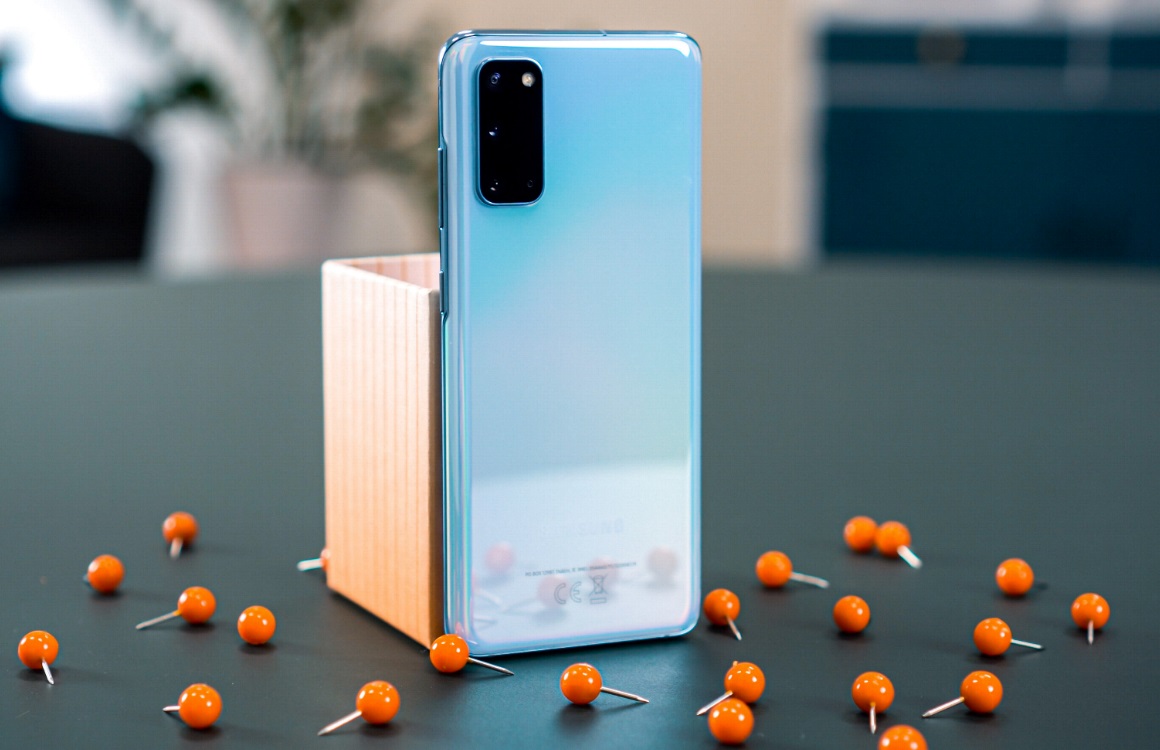
    The Exynos 2100 SoC will most likely make its debut on the Samsung Galaxy S21 line which will probably include the Galaxy S21, Galaxy S21+, and the Galaxy S21 Ultra. If Samsung sticks with tradition, the Exynos 2100 will power the vast majority of Galaxy S21 series models; those in the U.S., China will get the version of the phone powered by the Snapdragon 875. However, for the Galaxy S20 line this year, Samsung equipped all of the units shipped everywhere but Europe with the Snapdragon 865. That humiliated Samsung employees in the company’s home country of South Korea. But the Exynos 990 just did not have the performance capabilities that Sammy’s executives were hoping for. This year, we could see Samsung return to the Exynos chip for its first flagship line of the year in most markets

  • Monitoring and Controlling Temperature using Wearables

    Monitoring and Controlling Temperature using Wearables

    Regulating body temperature is a problem that humankind has been contending with for millennia. Our physiology adapted to cope with quite a small part of the world, where the climate is a certain way. Once we spread out across the globe, we had to cope with the entire range of weather systems – from hot and humid jungles to icy tundra.

    Of course, when it’s too cold, the technological solution is simple: just wrap up warm. But what happens when it’s too hot? That’s the problem which a new wave of wearable devices aim to solve.

    Perhaps the most eye-catching of these is the Reon Pocket from Sony – a small piece of plastic, chargeable via USB-C, which is built to sit against your skin, and to cool you down via the Peltier effect. Released exclusively in Japan, where the humidity during summer is a problem in some regions, it functions, basically, like a small cold device which sits against the skin, which, while welcome, is a little more local as a cooling effect than some of the marketing material might suggest.

    What’s the Peltier Effect?

    The Peltier Effect is one of three thermoelectric effects, produced by thermocouples of the sort you might find on the RS Components webstore. It allows the creation of solid-state heat pumps. If we take two junctions, and apply a voltage across them to create a current, heat will be removed from one and be deposited at the other. Note that this only works in the case of DC circuits; otherwise you’d have heat being moved rapidly from one junction to the other without any useful effect.

    The traditional means of air conditioning involves pipes of coolant, motors and compressors. Heat is absorbed at one end of a loop and dispersed at the other. This is the function of those big air-conditioning units you might see sprouting from the tops of office buildings. Obviously, this method wouldn’t be practicable in a wearable device. But it’s only very recently that Peltier-based circuitry has gotten small enough that it can be fitted into a wearable device.

    On the other hand, we also have devices powered by another thermoelectric effect – the Seebeck effect – which actually allows for smartwatches which don’t ever need to be charged. Wearable devices like the Matrix Powerwatch can be powered by body heat alone, meaning that you never have to worry about charging them ever again.

    What about the Environment?

    Naturally, a world where we’re all walking around with air-conditioned jackets is sure to impose a cost on the environment, in much the same way that air-conditioned buildings has done. If the Seebeck effect is properly leveraged, however, then the effect might run in the opposite direction – we’ll have wearable devices that never need to be charged again!

  • Android 11 update roadmap for Nokia smartphones leaks

    Android 11 update roadmap for Nokia smartphones leaks

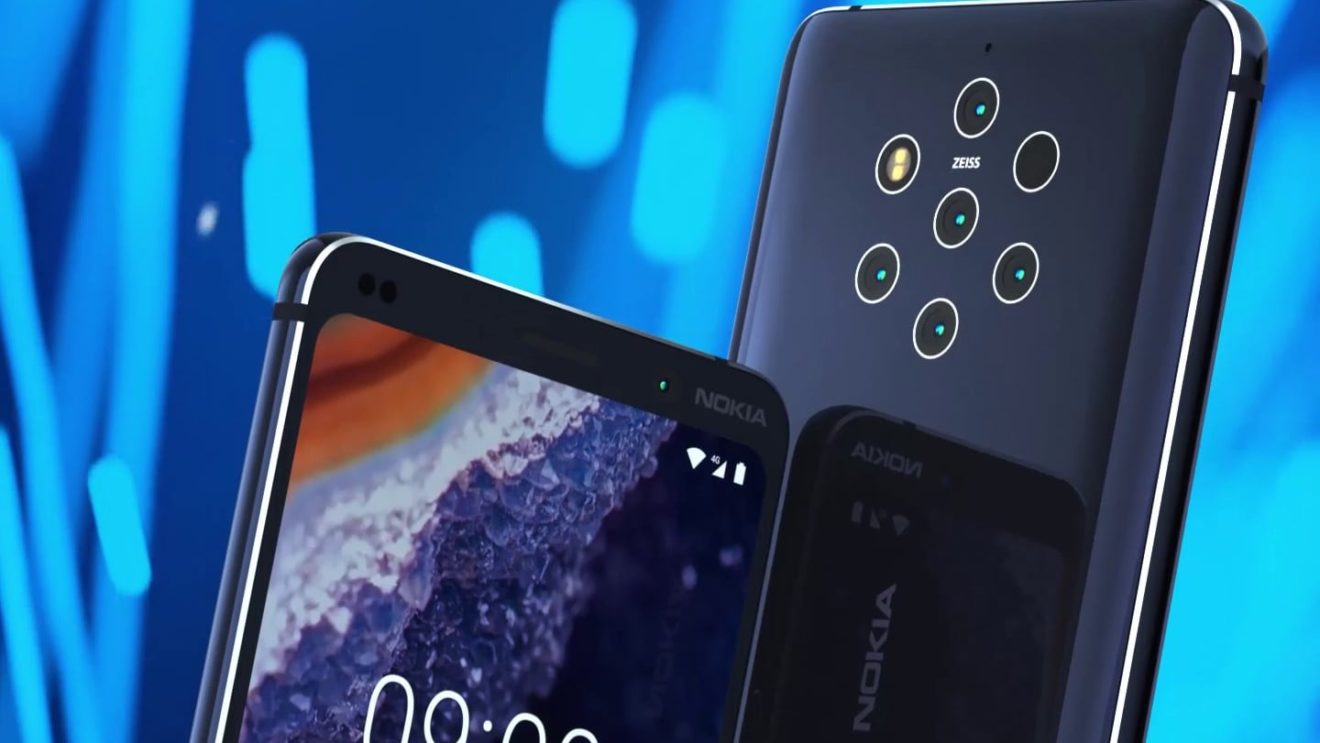
    HMD Global did a little blunder recently when it decided to tweet the Android 11 update roadmap for Nokia smartphones and then delete it quickly afterward. That usually means that the company is not ready to commit to those dates highlighted in the document, so take the information with a grain of salt even if it comes through official channels.

    As many Nokia fans already know, HMD Global usually updates all its smartphones, regardless of the hardware inside. That being said, it’s no surprise that we’re seeing devices like Nokia 1 Plus and Nokia 1.3 on the list of devices eligible for an Android 11 upgrade.

    You can check the picture above to see when exactly your Nokia smartphone will receive Android 11, or you can read below if what’s in the image isn’t too clear for you. Just like every other year, HMD Global will push Android 11 in waves, so here is a quick rundown of the situation:

    • Nokia 2.2, Nokia 5.3, Nokia 8.1, Nokia 8.3 5G: Q4 2020 and early Q1 2021
    • Nokia 1.3, Nokia 2.3, Nokia 2.4, Nokia 3.4, Nokia 4.2: Q1 2021
    • Nokia 3.2, Nokia 6.2, Nokia 7.2: Q1-Q2 2021
    • Nokia 1 Plus, Nokia 9 PureView: Q2 2021

    Since HMD Global decided to take down the document maybe some of the estimates will be modified. Well, at least we have an idea of what to expect from the Finnish company when it comes to Android 11 updates.

  • HTC’s foldable smartphone is awkward rather than exciting

    HTC’s foldable smartphone is awkward rather than exciting

    Many companies have already jumped on the foldable phone bandwagon, but it may take years for the market to reach maturity. As such, the first companies to have their own foldable smartphones available on the market have a big advantage over those who didn’t have the courage or resources to come out with such products yet.

    Even though these foldable smartphones are still crazy expensive, there seems to be an audience for these. It remains to be seen how large this audience really is and whether or not foldable smartphones will become a thing, unlike 3D phones that disappeared very fast.

    After Samsung, Motorola, and Huawei, it looks like HTC is readying its own foldable smartphone. Although HTC’s foldable smartphone exists just on paper at the moment, the Taiwanese company seems to be interested in the concept.

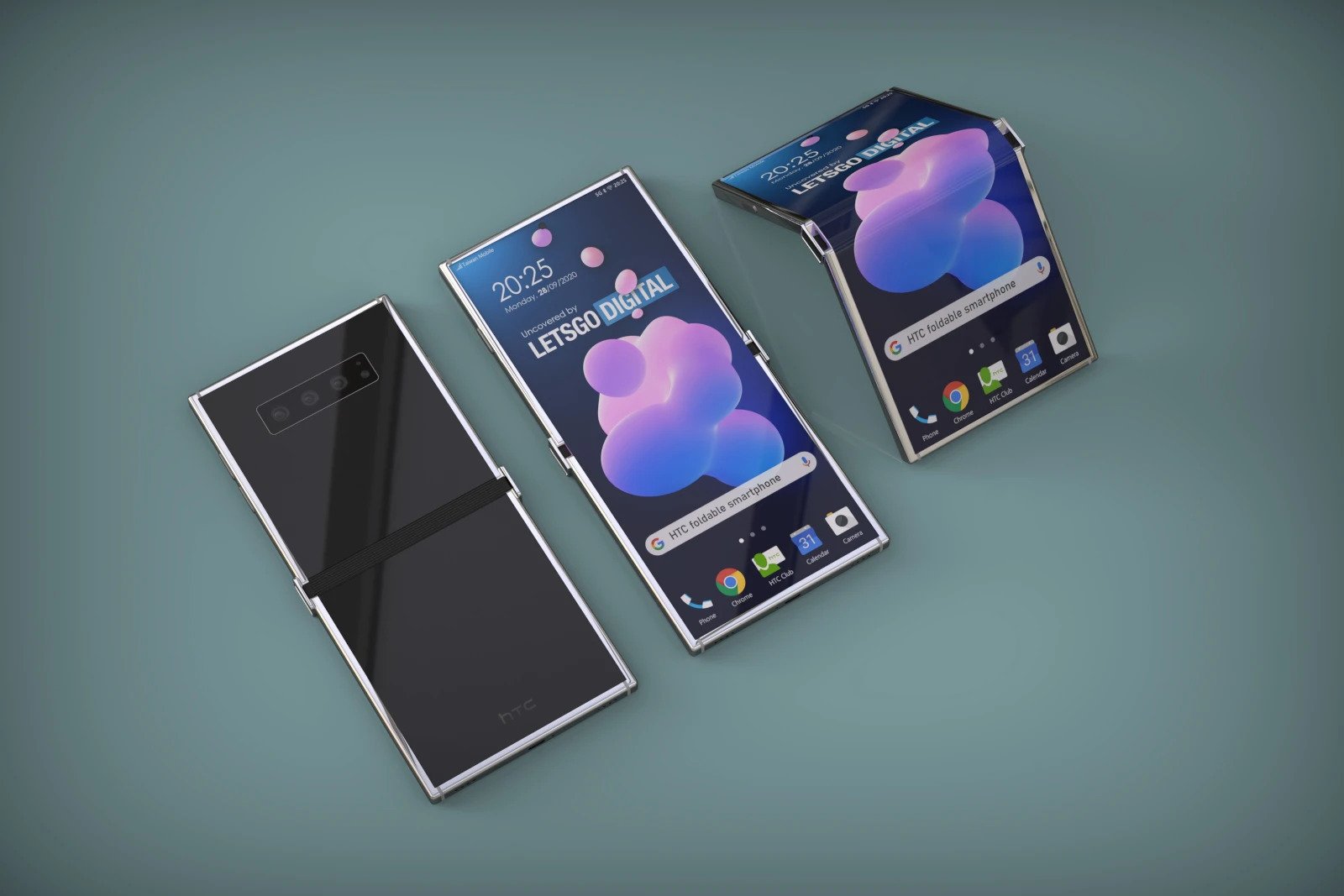
    HTC filed a patent for a new foldable smartphone late last year. The patent was published back in August by the WIPO (World Intellectual Property Office) and judging from the sketches, HTC’s device doesn’t look too good. The technology behind it needs to be streamlined, that’s for sure.

    The hinge mechanism is the first weird thing noticeable in the pictures. It protrudes outwards and while it might offer an additional layer of sturdiness to the phone, it’s quite unpleasant for the eyes. But the biggest question mark is that HTC’s device folds outwards, so the display will always be on the outside.

    HTC’s foldable smartphone doesn’t seem to feature a secondary display like Motorola’s new RAZR, but because it folds outwards, it should allow users to operate the phone without having to open it, at least in theory.

    LetsGoDigital made a handful of renders based on the patent drawings filed by HTC, but the final device might not look like what we’re seeing in these images. It’s hard to say if HTC is still determined to launch its own foldable smartphone, but if it does, let’s hope it comes up with a better concept.

  • Snapdragon 875 will likely be followed by Snapdragon 775G, a 6nm flagship-rivaling chip

    Snapdragon 875 will likely be followed by Snapdragon 775G, a 6nm flagship-rivaling chip

    The upcoming Qualcomm Snapdragon 875G will also be available in a Plus variant, claims tipster Roland Quandt. The Snapdragon 875G is apparently codenamed SM8350 and it is internally known as Lahaina. Based on what we know so far, it will be made using Samsung’s 5nm EUV process as Taiwan Semiconductor Manufacturing Company (TSMC)’s entire 5nm capacity has been reserved by Apple for the A14 Bionic and other proprietary chips.

    5nm chips are expected to be around 25 percent smaller and 20 percent more power-efficient than 7nm SoCs. And, of course, we can also look forward to performance gains. The Snapdragon 875 will likely feature an Arm Cortex-X1 core, three Cortex-A78 cores, and four Cortex-A55 cores. The X60 5G modem will presumably be embedded within the chip.

    If history is any indication, Qualcomm’s upcoming flagship chip will be unveiled in December.

    It will probably be refreshed in July 2021, and per Quandt, the overclocked version is internally known as Lahaina+. The leaker also mentions the rumored Snapdragon 775G, which will likely succeed the Snapdragon 765G that powers midranges 5G-enabled phones like the OnePlus Nord and LG Velvet. The chip will reportedly not share the stage with the Snapdragon 875, and we can expect it in early 2021.

    The chip is reportedly going to be a massive upgrade over its predecessor, and will probably have more in common with the Snapdragon 875 than its 7-series stablemates. According to today’s leak, it will support 120Hz displays, 12GB LPDDR5 RAM, and 256GB UFS 3.1 storage.

    This chip will reportedly be based on a 6nm architecture and it will have a 40 percent faster CPU and 50 percent better graphics than the Snapdragon 765G. This may make it more power-efficient and faster than the Snapdragon 865.

  • Qualcomm’s newest 5G chipset is announced

    Qualcomm’s newest 5G chipset is announced

    Qualcomm unveiled a new 5G enabled chipset from the Snapdragon 7-Series. The Snapdragon 750G enables “truly global gaming” according to the San Diego-based company, along with True HDR gaming (with 10x brighter colors), and on-device AI. The chipset supports both sub-6GHz and mmWave 5G; the latter delivers signals that travel far, easily penetrate structures but provide slower 5G download data speeds than what is available from mmWave 5G signals. The Snapdragon 750G chip offers some features from Qualcomm’s Snapdragon Elite Gaming that allow for smooth gameplay with low latency.

    The Snapdragon 750G comes with the Adreno 619 GPU providing users with as much as a 10% hike in graphics rendering compared to the Adreno 618 GPU found on the Snapdragon 730G. Qualcomm states that the new chipset delivers “stunning, life-like imagery” and the 5G support allows users to play multiplayer contests or stream games through their smartphones using 5G cloud gaming platforms.

    AI tasks will be handled by the fifth-generation Qualcomm AI Engine supporting voice translation, smart camera, and video, AI-enhanced gaming experiences and advanced AI-based imaging. The AI Engine handles up to 4.0 Trillion Operations Per Second (TOPS), a 20% improvement compared to Snapdragon 730G. The chip is powered by the Kryo 570 CPU core allowing for a 20% hike in “enhanced user experience,” also compared to the Snapdragon 730G. Integrated into the Snapdragon 750G is an AI-based audio and voice communication suite that allows users to hear speech loud and clear despite dogs barking in the background, the sounds of construction, loud traffic, and more.

    The Qualcomm Spectra 355L Image Signal Processor produces noise-reduced sharp images and 4K HDR videos can be recorded. The chip will work with image sensors supporting a pixel count of up to 192MP.

    The CPU runs at a clock speed as fast as 2.2GHz and works with Bluetooth 5.1. It is Wi-Fi 6 ready and does work with a 120Hz rapid refresh rate on screens with a resolution of FHD+. The maximum display that can be driven by the Snapdragon 750G is QHD (1440p) with a standard 60Hz refresh rate. The chip is manufactured using an 8nm process node and the first devices to be powered by the chip are expected to be commercially available at the end of this year.

    Verizon’s Chris Emmons, executive director device and product marketing, says, “As Verizon continues to lead 5G innovation with 5G Ultra Wideband and our soon-to-be-launched 5G Nationwide network, we know we can count on technology partners like Qualcomm Technologies to provide the superior solutions for sub6 and mmWave spectrum needed to run the next-generation 5G devices our customers rely on.”

    >Andreas Bussmann, program manager 5G Devices Deutsche Telekom, states that “Deutsche Telekom and Qualcomm Technologies have a strong strategic collaboration in driving innovation together. We are excited as this announcement will further help scale 5G for everyone and improve the overall consumer experience.” Lastly, Quanxin Wang, general manager of product and technology, Xiaomi International, said that “Xiaomi is committed to developing cutting-edge devices to address the growing consumer demand for 5G. We are proud to work with Qualcomm Technologies to launch the first commercial smartphone based on the latest Snapdragon 750G to consumers.”

    Speaking of 5G, the Snapdragon 750G offers peak speeds of up to 3.7Gbps (download) and 1.6Gbps (upload) with 5G connectivity. Peak LTE speeds are up to 1.2Gbps (download) and 210Mbps (upload).

    So now we know that a Xiaomi branded 5G handset will be the first powered by the Snapdragon 750G when the integrated circuit is released later this year.

  • Apple supplier Pegatron to invest $1 bln in Vietnam

    Apple supplier Pegatron to invest $1 bln in Vietnam

    Pegatron, a supplier for Apple, Microsoft, and Sony, plans to invest $1 billion in an electronics manufacturing plant in northern Vietnam. The Taiwanese company will invest $19 million in the first phase at the Dinh Vu Industrial Zone in Hai Phong City to produce computing, communications, and consumer electronics, according to a recent report by the Ministry of Planning and Investment submitted to Prime Minister Nguyen Xuan Phuc.

    It has received licenses for this and is seeking licenses for the $481-million second phase.

    The two phases will create 22,500 direct jobs and contribute around VND100 billion ($4.3 million) annually to the government’s coffers.

    Pegatron would invest another $500 million in the plant in 2026-2027.

    It seeks to move its research and development center from China to Vietnam at a suitable time.

    The ministry said it is working with another Taiwanese company, Universal Global Technology, which produces smartphones and earbuds parts for Lenovo and Sony, to set up a manufacturing plant in Vietnam.

    The company, a subsidiary of semiconductor maker ASE Technology Holding, is considering investing $400 million in two phases.

    These are among major companies seeking to shift production facilities from China to Vietnam as they seek to diversify their supply chains following the huge disruptions caused by the Covid-19 pandemic and trade tensions between China and the U.S.

    Apple has begun making its wireless earbuds AirPods Pro in Vietnam, and its contract manufacturer Foxconn said in June that Vietnam was its largest manufacturing hub in Southeast Asia.

    Fifteen Japanese companies, most producers of medical equipment and electronic components, registered in July to move their production from China to Vietnam under a Japanese government-funded scheme.

  • Issues with the Samsung Galaxy S20 Ultra 5G and other high-end-models are frustrating users

    Issues with the Samsung Galaxy S20 Ultra 5G and other high-end-models are frustrating users

    Some of the phones in Samsung’s 2019-2020 flagship lineup are experiencing issues with the indicator that shows how much battery life remains on these models. The particular phones affected include those in the Galaxy S10 and S20 families and the Galaxy Note 10 and Note 20 lines. There are two major problems affecting these phones. One is that the battery (and thus the phone) shuts down before the indicator measuring the remaining battery life hits 1% or less. The other problem is that the phone runs through the last 1%-5% of battery life too quickly.

    Several users confirmed that these battery issues are legitimate. One subscriber with the handle of Ldn_brother wrote: “I can confirm this on the s20 ultra. As soon as I get down below 15% the battery magically disappears rapidly. I’ll be on 6% and all of a sudden my phone has turned off after I pick it up 2 mins later. I’ve kind of learned to live with it, although I know its not right. Never had this with the S4 or S7.”

    One Galaxy S20 Ultra 5G user had a suggestion. He posted “Easy solution, charge your phone whenever possible and don’t let it get that low.” This might sound like an impractical fix, but if you don’t mind spending a few bucks for a power bank (one with a 10,000mAh capacity battery or larger), you might be able to try out this bit of advice to see if there is any improvement.

    If you feel like blaming the blazing fast charging capabilities supported by some of these devices, you might be barking up the wrong tree. For example, it is true that the Galaxy S20 Ultra 5G comes with a 25W charger out of the box, and Super Fast Charging 2.0 does support 45W charging,  But one of the devices having battery issues is the Galaxy Tab S5e, and that slate charges at “only” 15W. And this brings us to another point; while we have been focusing on flagship Galaxy phones, other Samsung devices have had these problems as well.

    So far we have yet to hear from Samsung about these battery issues. Owners of Galaxy devices impacted by this problem should keep their fingers and toes crossed hoping that the manufacturer can solve this issue with a simple OTA update. Or you can take matters into your own hands by calling Samsung yourself and alerting them to the problem. In the states, pick up your phone (and assuming that there is enough battery life on the device) and call 1 (800) 726-7864. The company’s online support site can be found by tapping on this link.

  • Apple India opening online store early next week

    Apple India opening online store early next week

    Apple India will open its online store in India on September 23, representing the tech giant’s first formal step into direct retailing in the world’s second-most populous country.

    In a statement, the US company said the online Apple Store would offer a full product range and ship nationwide along with finance and a level of customer support similar to that offered in physical Apple stores elsewhere in the world.

    “We’re proud to be expanding in India and want to do all we can to support our customers and their communities,” said Deirdre O’Brien, Apple’s senior vice president of Retail + People. “We know our users are relying on technology to stay connected, engage in learning, and tap into their creativity, and by bringing the Apple Store online to India, we are offering our customers the very best of Apple at this important time.”

    Besides selling products, the store will offer customers technical support and training in using and setting up Apple products, in either English or Hindi.

    The company said all online orders will be shipped via a contactless delivery process to preserve the health of staff during the Covid-19 pandemic.

    While Apple has been selling products through retail partners and distributors in India for more than 20 years, it has long wanted to launch a direct-to-consumer presence there. Until recently it was hamstrung by foreign investment laws in the state which require a minimum proportion of locally sourced components in products sold in overseas-owned retail networks. The company has steadily increased its manufacturing in India and now claims to support almost 900,000 jobs nationwide.

    The company continues to plan the opening of its first physical store in the country, most likely in Mumbai, with CEO Tim Cook promising in February it would open next year.

    Apple has an App Design and Development Accelerator in Bengaluru which supports thousands of local developers.

  • The Fitbit Sense will match the Apple Watch’s ECG capabilities next month

    The Fitbit Sense will match the Apple Watch’s ECG capabilities next month

    While its name might be synonymous with low-cost fitness trackers for many consumers around the world, Fitbit has faced quite the uphill battle trying to gain a foothold in the fast-growing smartwatch market over the last few years.

    Although the company’s rookie Apple Watch-rivaling effort was released all the way back in 2017 (to tepid reviews and overall indifference even from its core fanbase), followed by the slightly better-received Versa the next year, Fitbit still failed to make the industry’s top five in terms of revenue for H1 2020, ranking behind everyone from Apple to Garmin, Huawei, Samsung, and even Imoo and Amazfit.

    As you can imagine, that’s a very poor result for a 2007-founded outfit with Fitbit’s brand recognition, but instead of waiting for Google to arrive on a white horse and miraculously right the ship, the US-based company stepped things up to unveil its “most advanced health smartwatch” last month.

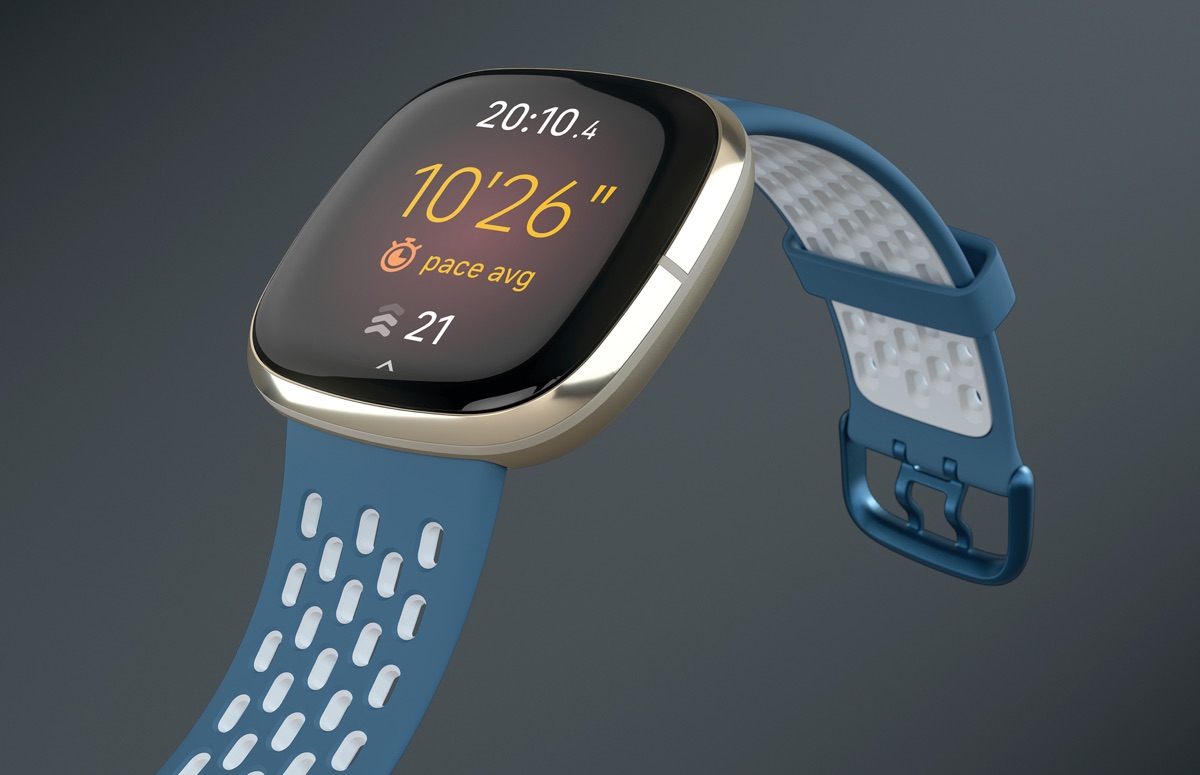
    Much like 2019’s Samsung Galaxy Watch Active 2, the Fitbit Sense went official with a dormant ECG monitor. This is the same exact feature that made its debut on the Apple Watch Series 4 two years ago, saving countless lives between then and now in conjunction with fall detection capabilities and Cupertino’s all-around impressive heart rate sensor.

    While Fitbit needed a lot of time to catch up to the heavyweight champion of the wearable device world, it looks like the company will be able to miraculously beat Samsung to the commercial ECG punch. That’s because the potentially life-saving technology has already received clearance from the US Food and Drug Administration (FDA) ahead of public October 2020 availability on the recently announced Sense.

    The aptly named Fitbit ECG App will be enabled stateside sometime next month, as well as in a host of European countries including Austria, Belgium, Czech Republic, France, Germany, Ireland, Italy, Luxembourg, the Netherlands, Poland, Portugal, Romania, Spain, Sweden, Switzerland, and the United Kingdom. That’s right, Fitbit pulled a double, obtaining both FDA approval and Conformité Européenne (CE) marking in the European Union.

    Last but certainly not least, early Fitbit Sense adopters in Hong Kong and India are also slated to get access to the Apple-matching ECG app in October. That makes for a pretty remarkable list of supported countries straight off the bat, mind you, but in case you’re wondering, Apple’s list is unsurprisingly even longer.

    Meanwhile, Galaxy Watch Active 2 and Galaxy Watch 3 owners can still measure their ECG exclusively in South Korea, although for what it’s worth, Samsung has at least made a big step recently towards finally spreading the love to the US at some point by the end of the year. This time for real.

    In a nutshell, this is what separates the serious health-tracking smartwatches from the casual fashion-centric wearable devices. As explained by Fitbit, the main purpose is to detect atrial fibrillation (AFib), a condition that affects more than 33.5 million people (!!!) globally, increasing the risk of complications like stroke.

    A large chunk of those suffering from AFib is unlikely to become aware of their problem until it’s too late to keep it in check, which is where the Apple Watch lineup and now the Fitbit Sense comes in, assessing a user’s heart rhythm for early signs of atrial fibrillation so you can receive the necessary medical attention to live a long and normal life.

    Obviously, the ECG monitor built into a $330 commercial device also featuring a bunch of other sensors may not prove as reliable as a medical-grade system typically found in a hospital, but Fitbit claims the multi-site clinical trial is conducted as part of the submission process to regulatory agencies yielded a stellar 98.7 percent sensitivity score and a perfect 100 percent specificity rating.

    In other words, you should absolutely consider the Fitbit Sense as an alternative to the Apple Watch Series 5 or the soon-to-be-released Series 6 if you have heart problems, trouble sleeping, or even if you need help managing day-to-day stress. Keep in mind that the Android and iOS-compatible smartwatch is still up for pre-order ahead of an actual September 25 release. And no, we’re afraid Amazon’s early discount is no longer available.

  • Tencent to Launch Regional Hub in Singapore

    Tencent to Launch Regional Hub in Singapore

    The Chinese technology conglomerate is pushing ahead with global expansion plans, despite recent app bans in India and the United States. Tencent is planning to open a new office in Singapore, which will be its regional hub for Southeast Asia, where it also has offices in Malaysia, Indonesia, and Thailand, the company said in a statement on Tuesday.

    The Singapore office will also enable us to capture potential from the rapid pace of digitization and meet the demand for internet-based services and solutions in Singapore, Tencent said in a statement. Tencent’s cloud computing arm, which seeks to tap into the demand for remote IT services for home-based workers, as well as its financial cloud platform that provides digital banking services to small and medium enterprises, have been growing in the region amid the coronavirus pandemic.

    The company had been discussing Singapore as a potential regional hub and geopolitical tensions accelerated its plans, according to a Bloomberg report. The company is already hiring for software engineers, data analysts, business development, and compliance roles in the city-state, according to its careers portal.

    Singapore, with its business-friendly policies, is benefitting from the growing hostility towards Chinese tech firms in the U.S. and other markets. Chinese tech start-up ByteDance, the owner of video-sharing app TikTok, are among those which are shoring up its presence in the country, where it is looking to spend several billion dollars and add hundreds of jobs here over the next three years.

    U.S. President Donald Trump has banned U.S. entities from dealing with Tencent’s super-app WeChat from September 20, while the company’s hit games PlayerUnknown’s Battlegrounds (PUBG) Mobile and Arena of Valor are banned in India.

  • NVIDIA rumored to pay $40 billion for ARM Holdings

    NVIDIA rumored to pay $40 billion for ARM Holdings

    Back in July, we told you that Japan’s SoftBank was talking to American GPU manufacturer NVIDIA about selling it ARM Holdings. The latter’s main business is the design of CPU cores such as the 64 bit Cortex-A78 CPU core. Both sides are closing in on a deal that would be valued at over $40 billion. The deal would give SoftBank a multi-billion dollar profit after it purchased the company for $32 billion. NVIDIA is the world’s third-largest GPU supplier and ARM is the third-largest in the world thanks to its Mali line of graphic chips.

    The Journal report noted that ARM and NVIDIA have been talking on an exclusive basis over the last few weeks and a deal could be announced as soon as early next week. NVIDIA’s shares have soared over 100% this year thanks to heavy demand for its GPUs which are used in video games, cloud computing, and in other devices that have taken off thanks to the coronavirus. If a deal can be agreed to not only would it be one of the biggest transactions of the year, it could also be the largest deal of all time involving the purchase of a semiconductor company.

    However, as with most tech-related deals these days, the purchase of ARM by NVIDIA could set off antitrust alerts. Regulatory agencies could put such a deal under intense scrutiny and ARM customers like Samsung and Apple could try and put the kibosh on the transaction. If the merger closes, NVIDIA would control the pricing on ARM’s CPU cores and Adreno GPU chips along with the pricing of the Mali GPU line.

    According to the Journal, SoftBank has been working with a small team on the final terms of the ARM deal. The team includes ARM CEO Simon Segars and Chief Financial Officer Yoshimitsu Goto.

  • Apple’s patent application could fix a major problem with Siri

    Apple’s patent application could fix a major problem with Siri

    Some Apple iPhone users find themselves struggling with Siri. Besides some of the usual things that we’ve brought up in the past, such as Siri’s inability to understand the questions we’ve asked her, or the incorrect answers that she comes up with (especially when they are related to an inquiry about Apple devices-a category that she should know about), Siri also has a habit of activating accidentally. Last year, we told you that these accidental activations were more likely to occur on the Apple Watch and the HomePod smart speaker.

    According to a new patent application that Apple filed with the U.S. Patent and Trademark Office, the company is working on technology that will keep accidental Siri activations to a minimum. The patent application, titled “Attention Aware Virtual Assistant Dismissal,” uses criteria to determine how interested you are in receiving a response from the digital assistant. To do this, Siri could use cameras to check your gaze when calling out for the digital assistant.

    For example, if you’re looking exactly at your iPhone when calling out for Siri, the iPhone will realize that you did indeed mean to activate the digital assistant by using the “Hey Siri” hotword. At the same time, it increases the odds that you did mean to say “Hey Siri” and not “Tom and Jerry,” or “Very Hairy.” Some claim that the sound of a zipper opening causes Siri to accidentally open, but we’re not sure that the technology expressed in the patent application can determine the motive of a zipper.

    Besides staring at the phone when activating Siri, the length of the stare also plays a part in determining whether an iPhone user really wants help from Siri. For example, let’s say that you’re staring at your phone, execute the “Hey Siri” hotword, and then get distracted by someone before you give Siri a question or task to do. If the iPhone can determine that your intention was indeed to give your digital assistant a task, Siri could be told by the system not to deactivate so that you can give the assistant the task you want her to handle.

    Besides being annoying, accidental Siri activations can also negatively affect the battery running an iPhone. Siri will be more efficient if it deactivates when the user is not engaged with it, if it doesn’t deactivate while being used, or if a task has to be repeated because Siri was accidentally deactivated. Apple notes that by using Siri more quickly and efficiently, power usage is reduced and battery life is improved.

    Apple expressed this in the patent by saying, “Determining, based on data obtained using one or more sensors of the electronic device, whether one or more criteria representing expressed user disinterest are satisfied (and/or whether one or more criteria representing expressed user engagement are satisfied) allows determination of whether a user is engaged with a virtual assistant session. Knowing whether a user is engaged allows intelligent decision making about whether to deactivate the virtual assistant session.

    For example, if the user is not engaged, a device can deactivate the virtual assistant session to save battery and processing power. As another example, if the user is engaged, the device can forgo deactivating the virtual assistant session so the user can continue interacting with the virtual assistant session (and so the virtual assistant session does not deactivate while the user is still interacting with it). In this manner, the user-device interface is made more efficient which additionally, reduces power usage and improves the battery life of the device by enabling the user to use the device more quickly and efficiently.”

    Some will say that Siri has many more issues to work on. In iOS 14, Siri will take up much less of the screen when employed by a user and the assistant will be able to send voice messages. If the patent is approved, at least one annoying and inefficient tendency of Safari could be ended.

  • HCMC requests tax incentives for Samsung subsidiary

    HCMC requests tax incentives for Samsung subsidiary

    HCMC has proposed that a subsidiary of Samsung be defined as an export processing enterprise to enjoy zero import and export duties.

    The city said in a recent proposal to Prime Minister Nguyen Xuan Phuc that switching the label of TV screen producer Samsung Electronics HCMC CE Complex (SEHC) from a manufacturing enterprise to an export processing one will fulfill the city’s commitment to creating a favorable investment environment for the South Korean conglomerate.

    This will place Vietnam as an export base for Samsung to the global market and in turn benefit local suppliers to the South Korean giant, it said.

    Vietnam allows export processing enterprises to enjoy zero import and export duties and other tax incentives, but a company needs to have 90 percent of its revenue coming from exports to be able to achieve this status.

    SEHC forecasts its revenue from exports to reach $4.4 billion this year out of the total $4.9 billion, a ratio of 90 percent.

    In 2018, the management board of the Saigon Hi-Tech Park in District 9, where SEHC is based, had made the same proposal. However, this was denied by the Ministry of Finance because the export revenue ratio of SEHC between January 2016 and June 2018 was 75 percent.

    Another reason for the rejection was that SEHC operated in a hi-tech industrial park, not an export processing zone or an industrial or economic zone.

    SEHC, which began operations in June 2016, produces and assembles smart TVs and LED screens.

    Samsung is a major foreign direct investment company in Vietnam. About half of its smartphones are produced in the country, where it has invested over $17 billion so far. Its first plant in the country was built in 2008.