Category: Electronics

Retail News Asia is committed to providing both local and global retailers with the latest Electronics news throughout the Asian market. This on a daily base.

  • Smartwatches to dominate eSIM adoption in China

    Smartwatches to dominate eSIM adoption in China

    A new joint report by GSMA and Telecommunication Terminal Industry Forum Association (TAF) titled “eSIM in China: the road ahead” suggests that smartwatches, not smartphones, will dominate the eSIM market in China.

    The report acknowledged that eSIM smartwatches still account for a small percentage of total smartwatch ownership but hold hope that this is likely to increase in the future. To drive adoption, Chinese operators are allowing consumers to use their smartwatches as secondary devices with one mobile subscription.

    For now, Chinese phone manufacturers are not formally adopting eSIM technology for devices targeted for the China market. This is because the transition will require appropriate regulation and new manufacturing, logistical and supply chain processes. Globally, over fifty mobile operators already support eSIM functionality in smartphones.

    “In China and around the world, the huge adoption of eSIM technologies has been underpinned by the GSMA’s common and interoperable specification that is reducing fragmentation and delivering a consistent consumer experience,” GSMA CTO Alex Sinclair said.

    “From consumer electronics to automotive we are seeing a diverse array of products hitting the market utilizing the benefits of connectivity and bringing consumers choice.”

    Smartwatches not smartphones

    “China has a unique mobile market, both in terms of size and revenue growth and leadership in mobile developments and tech innovation has reached unprecedented levels. China is increasingly demonstrating its technological innovation and is emerging as a leading global market to test and implement new technologies,” said Xie Yi, Chairman of TAF.

    “Promoting the steady development of eSIM in China will help support developments in both the consumer and industrial markets. Based on the premise of national conditions, TAF has been committed to all parties in the joint industrial chain and cooperation with the GSMA, to make the best efforts to this end,” Xie added.

    The GSMA-TAF report highlights industry-wide collaboration in driving eSIM developments in China involving operators, government and regulatory bodies. China Mobile, China Telecom and China Unicom are all developing eSIM solutions and have launched cellular M2M and IoT eSIM platforms. The Chinese eSIM market is still in an early phase of development in which some proprietary solutions coexist with GSMA specifications. However, it is anticipated that there will be a transitional period as the market matures before it settles on the GSMA specification.

    Regulation as driver

    The report highlights efforts by China to set a favorable regulatory framework for eSIM deployments. These include streamlining procedures and setting clear, unified rules on eSIM requirements for consumer and industrial devices, credentials management, designation of root certificate issuing and security and cross-border interoperability – all important to accelerating the deployment of eSIM technology and its market adoption.

    The report also recommends that the government should facilitate trials of eSIM services, particularly in the nascent industrial IoT to promote an open eSIM ecosystem.

    Early adopters of eSIM

    To date over 90 mobile industry players are supporting the GSMA’s specifications for Remote SIM Provisioning of consumer devices around the world. All are aligned behind a single, defacto approach avoiding industry fragmentation and interoperability issues, driving global developments and allowing consumer choice.

    Devices to come eSIM capable include tablets, laptops, notebooks and smartphones. The automotive industry is also at the forefront of eSIM deployments and built-in connectivity is also now a specific requirement in Europe following the European Emergency Call (eCall) initiative.

  • Apple CE promises new products will ‘blow you away’ soon

    Apple CE promises new products will ‘blow you away’ soon

    Apple CEO Tim Cook has promised investors the firm remains on track to double its 2016 revenues of almost US$25 billion next year, prompting a rise of more than 1 per cent in Apple stock on Friday.

    Speaking at the firm’s annual meeting in Cupertino, Cook claimed Apple is “planting seeds” and “rolling the dice” on new products set to “blow you away”.

    Cook indicated a range of new products under development for the Apple Watch and AirPods, and has previously stoked ongoing expectations for an AR glasses product. He also signalled an eventual drop in price for the MacBook Air laptop, currently retailing at US$1200, despite upgrading to a higher-resolution screen.

    The shareholder meeting saw the entire Apple board re-elected, including former US VP Al Gore, and included a political discussion that emphasised a variance in political ideology with that of the current US administration, despite an acknowledgement that the firm has worked successfully with the US government.

    It also implied criticism of other big tech firms who maintain data profiles of its users, such as Facebook.

    Cook said the company was also continuing to evaluate new businesses to buy to build its technology capabilities.

  • Apple appoints former Microsoft executive

    Apple appoints former Microsoft executive

    Apple has appointed Microsoft’s former Corporate Vice President Sam Jadallah to lead the “Home” products category at Apple. Even though Apple has not officially announced the appointment, Jadallah updated his LinkedIn bio to read – “Working on Home at Apple”, reflecting his new role with the iPhone-maker. However, along with Apple, Jadallah has also been tight-lipped over his hiring by the company.

    After Microsoft, Jadallah ran a smart lock start-up called ‘Otto’ that shut down in January 2018.

    “Hiring Jadallah is the latest signal that Apple plans to get serious about its own efforts in the ‘Home’ category,” the report said.

    Apple has a range of “Home’ products including HomeKit — its software service that connects with a variety of third-party products; and HomePod — a smart speaker for the home with voice recognition and music.

    Currently, Apple’s HomePod constitutes a small share of the home products market as compared to Amazon’s Echo and Google Home.

    Recently, Apple acquired a voicetech start-up called Pullstring to strengthen Siri against Amazon’s Alexa.

    “That purchase could help the smartphone-maker become the centre of a connected living room,” the report added.

  • Asia-Pacific the key market for global smartphone sales

    Asia-Pacific the key market for global smartphone sales

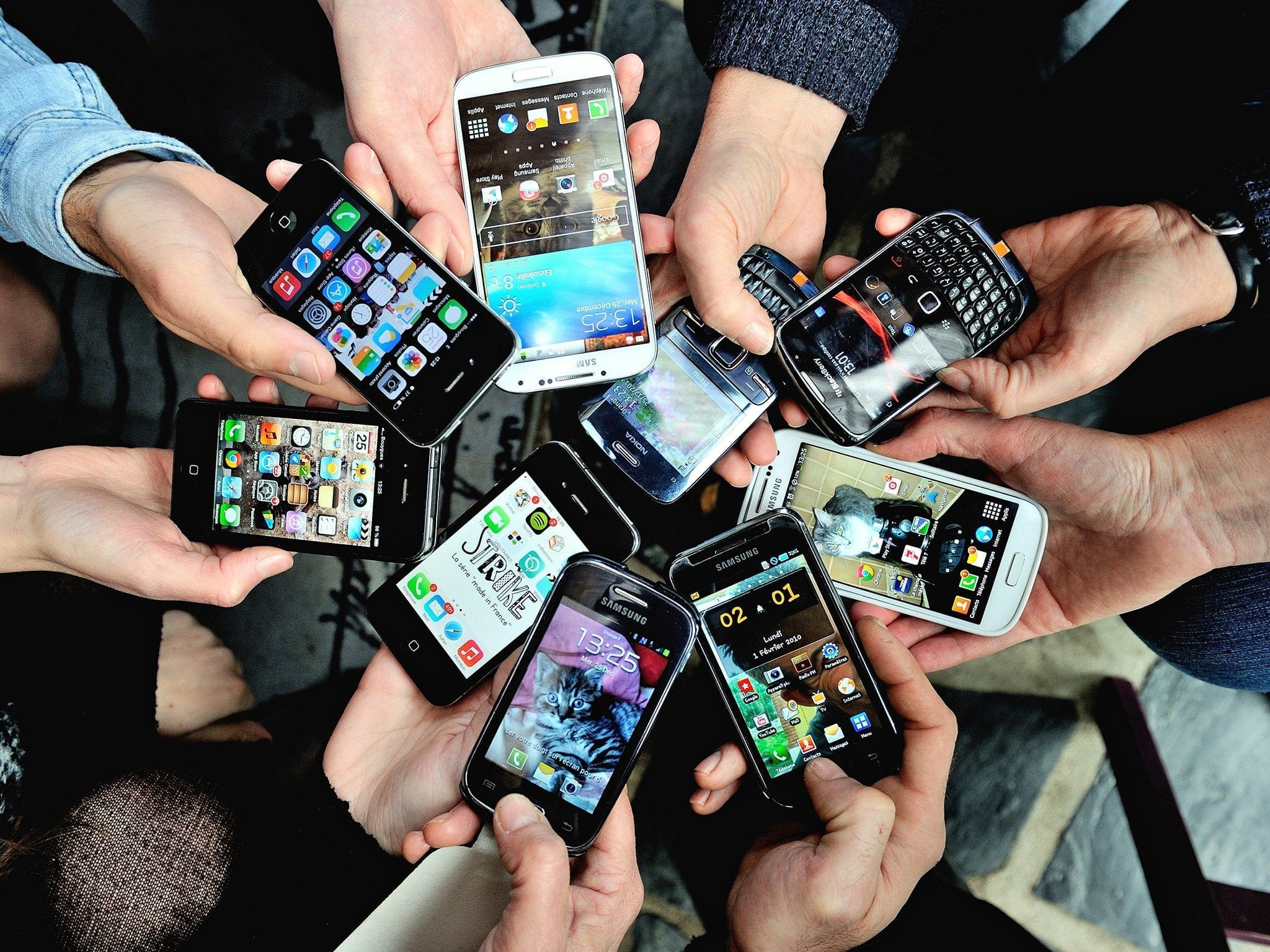
    Global smartphone sales grew 5 per cent to hit US$522 billion last year, with Asia-Pacific accounting for nearly half of those. According to a recent Consumer Life Study by GfK, smartphones, feature phones and wearables accounted for a 44 per cent share of the global $1.2 trillion technical consumer goods (TCG) market. But it warned smartphone sales are expected to grow by just 1 per cent this year.

    Apac the key driver

    More than 732 million smartphone devices were sold last year. Despite a slight decline in demand, overall consumer spend increased by 5 per cent.

    China accounted for 60 per cent of the Apac region’s market value and 54 per cent market volume, making it the largest contributing country to the global smartphone market.

    “The Chinese market consumes the majority of the global smartphone production, as well as being the home of local brands that are becoming increasingly global,” observed Alexander Dehmel, GfK regional senior market insights manager.

    “Some 40 per cent of the Chinese brands’ smartphone production in 2018 was purchased outside of China, up from 31 per cent in 2016.”

    In second position, India bucked the global demand downtrend, reporting growth in both sales volume and value in 2018, by 19 and 21 per cent respectively. More than 161 million smartphones worth more than $28.5 billion were sold last year.

    “In Asia’s emerging markets such as India, a country where feature-phone sales still exceeds half of the total handset market, smartphone market rapid growth is fuelled by the high adoption rate of first-time smartphone users, in addition to the fast replacement cycle and upgrading of existing smartphone users,” said Dehmel.

    Premium models and Chinese brands fuel growth

    Globally, 12 per cent (up from 9 per cent in 2017) of smartphones sold were priced at more than $800 last year. The $150-400 segment continues to be an important competitive battleground accounting for 46 per cent of smartphones sold globally (up 2 per cent from 44 per cent in 2017).

    Within Asia, developed markets drove the take up of high-end smartphones. Last year, every other device (53 per cent) sold in these countries cost more than $800. On the other hand, the most affordable phones priced below $150 accounted for half the total market.

    “Chinese brands have been significantly increasing their presence worldwide, and specifically in emerging Asian markets, their popularity have been largely driven by their affordability and faster model refresh cycles with improved specs,” commented Dehmel.

    “Take the region’s third largest smartphone market of Indonesia for instance; Chinese brands accounted for more than two in every five (42 per cent) smartphones sold in the country in 2018.”

    Looking ahead

    The study shows that consumer trends are changing when it comes to possessions. Not only do consumers “prefer to own fewer but higher quality items” that they will pay premium prices for, but they also “value experiences more than possessions”. If larger memory or screen size and multiple high-megapixel cameras can enhance their overall usage experience, such innovations will likely help ignite consumers’ imagination and stimulate greater demand.

    With rapidly evolving technology, the later part of last year saw new launches in the market which offered consumers features such as larger screen sizes, higher resolutions for both the front and back cameras, along with increased number of camera lens, and more-advanced AI functionalities.

    One of the key observations for last year was the continued popularity of larger screen sized smartphones – a trend consistently reflected across every single Apac market. China and Korea were the top two markets where almost nine in 10 smartphones sold had 5.5 inch or larger screen sizes.

    “From the trends that emerged in the second half of last year, we anticipate the growth of larger display smartphones with high screen-to-body ratios (i.e. slim bezels) to continue developing this year, as well as rising demand for models with stronger camera offerings in both resolutions (megapixels) and the number of lenses, powered by more advanced AI capable chipsets,” concluded Dehmel.

  • LG skips foldables, opts for two screens instead

    LG skips foldables, opts for two screens instead

    LG Electronics launched the V50 ThinQ on the eve of the MWC 2019 in Barcelona on Sunday, presenting its vision of how the much-hyped 5G network can take a mobile device’s multimedia experience to the next level. The V50 ThinQ is the tech giant’s first 5G smartphone, a direct competitor to Samsung Electronics’ Galaxy Fold and Huawei’s Mate X, both of which are equipped with foldable screens.

    Rather than a foldable screen, LG Electronics has opted for a secondary detachable 6.2-inch screen, slightly smaller than the main 6.4-inch screen.

    When the second screen is attached, users can activate multiple apps at the same time. The screen on the left, for example, can have the YouTube app playing a video, while the second screen on the right can be simultaneously used for chatting to friends.

    Held horizontally, the top screen could be displaying a smartphone game, while the screen on the bottom could be used for a virtual joystick to make the game experience more immersive.

    “We believe in multimedia,” said Kim In-kyung, a senior vice president at LG Electronics in charge of 5G and network technology at the unpack event on Sunday in Barcelona.

    “Creating content and broadcasting live are most relevant to our 5G products today.”

    To help the hardware endure the increased data processing derived from 5G connectivity, its CPU, developed by Qualcomm, has been upgraded to the latest Snapdragon 855 and the battery capacity has been increased by 20 percent compared to the predecessor V40.

    LG Electronics also unveiled the G8 ThinQ on Sunday, which is dedicated to the existing 4G network.

    The G8 ThinQ, however, has been upgraded with what’s called “Time of Flight” sensors in the front camera, which are able to read palm veins in a 3-D image. The “Time of Flight” sensors are developed in partnership with German tech firm Infineon.

    Placing the palm in front of the front camera will unlock the phone, while moving the fingers in specific ways will give various orders to the G8 ThinQ such as taking screenshots, activating music apps and controlling the volume.

    Such functions will come in handy when users’ hands are too busy to actually touch the smartphone screen, such as when cooking or driving, according to the electronics company.

    “Installing vein recognition in a mobile device is [a] first,” said David Montanya, a product evangelist from LG Electronics’ mobile communications team at the unpack event. “It [allows the users] to make more intuitive interaction[s] with the smartphone. It anticipates your moves and intentions and reacts accordingly.”

    Montanya also added that palm veins are a safer way to protect the phone compared to other biometric methods such as fingerprints.

    “The probability of two people having the same vein structure is less than one in a billion,” he said.

    While an innovative feature is always a selling point for mobile devices, an experimental one that doesn’t yet work properly is not a good sign.

    The new palm-reading feature required intensive training in order to get the hang of the specific hand gestures needed to activate the sensors.

    A specific timeline for the two new phones’ launch in Korea hasn’t been revealed.

  • Samsung to invest more in education programs

    Samsung to invest more in education programs

    Samsung Electronics will expand investments to develop youth education programs, it said Monday. The company’s three division heads sent an in-house broadcast to employees that day to share a newly set mission: “Enabling people,” which means to help people discover and develop their innate potential. A particular target will be put on developing programs for teens. The theme that will lay out the direction for this corporate social responsibility campaign is “Education for future generations.”

    Samsung has conducted corporate social responsibility (CSR) activities in the past, but this is the first time the company has publicly announced its mission. It comes a month after Samsung de facto leader and Vice Chairman Lee Jae-yong pledged to fully commit in taking on social responsibility as Korea’s leading conglomerate in a meeting with President Moon Jae-in at the Blue House.

    The No. 1 local company by market cap, Samsung Electronics already has a vast lineup of ongoing CSR programs, including educational ones. The designation and public announcement of the new mission, however, signals that the company will be expanding investment in the sector.

    Although there are no concrete plans at the moment, a spokesman explained there will be an increase in programs for teens. Now that there is a fixed mission, the programs will also be organized in a more “structured” way instead of the company and affiliates independently devising programs on their own.

    “We should realize a new model for future education that is based on our know-how in technology and innovation,” said Samsung President Kim Hyun-suk, who leads the consumer electronics division.

    In Monday’s message, there was a repeated emphasis on Samsung’s increased role in society. President Koh Dong-jin, who heads the mobile device business, for example, stressed that no company can communicate with customers if they do not consider social values.

    The word social responsibility has become increasingly common at Samsung recently, including in statements for the launch of a research center for fine dust and an official apology to former workers in November who got sick working at chip factories. The drive is particularly evident since Vice Chairman Lee returned to the company’s helm after his release from prison last year, which some industry watchers say is a move to improve the conglomerate’s public image.

  • Air purifier sales shoot up as fine dust worries shoppers

    Air purifier sales shoot up as fine dust worries shoppers

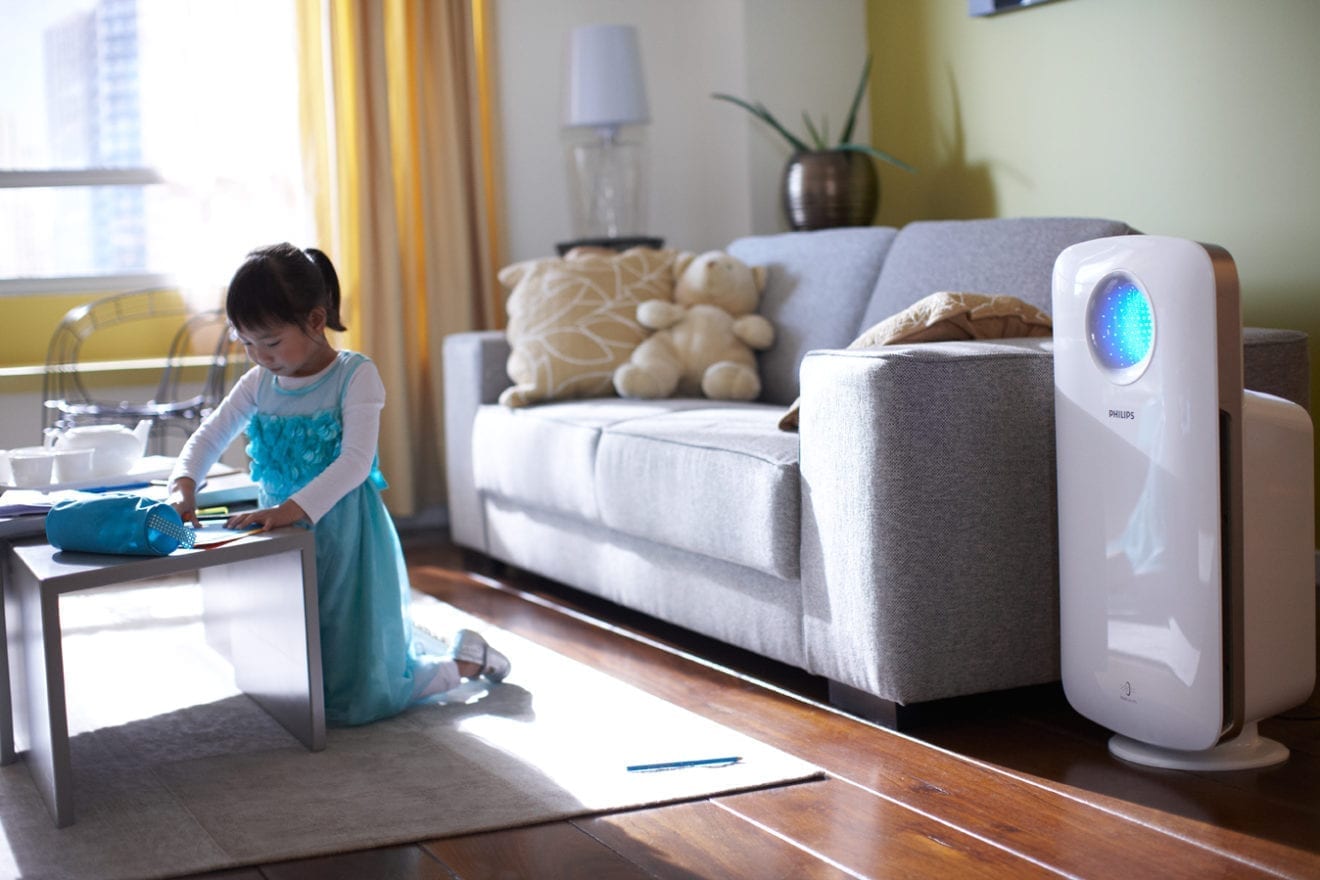
    Korea’s air purifier market has tripled since 2016 thanks to worsening fine-dust pollution levels and growing health concerns. Last year, Koreans bought 1.8 million air purifiers worth around 760 billion won ($676 million), according to market researcher GfK. In 2016, Koreans only purchased 698,000 purifiers for 220 billion won. The research company noted that, unlike previous years, consumers began buying purifiers year-round from 2018.

    The demand for purifiers was highest in March and April last year, when 260,000 and 290,000 appliances were sold. Spring is traditionally the high season for purifiers when pollution from fine dust and yellow dust – dust carried from the deserts of Mongolia and China – is at its worst.

    Throughout the rest of the year excluding August to October, over 180,000 purifiers were bought every month in 2018. In the late summer months, when air quality is usually better, around 50,000 purifiers were still purchased every month. In 2016 by contrast, purifier sales only exceeded 100,000 in April. Sales were considerably lower in other months, with August seeing only 15,000 sales.

    The average purifier price has also increased as consumers are willing to pay more for products that not only do the job, but do it well.

    Various factors like operation method, filter capacity and noise levels played a big role in purifier purchasing. The appliance’s coverage was also an important concern as consumers looked for purifiers that can clean the air in all corners of the home.

    Given the growing popularity of high-end purifiers with advanced functions and technology, the average price of a purifier came to 420,000 won last year, 30 percent higher than the 310,000 won average in 2016, according to GfK.

    The strong demand for purifiers in Korea has made the domestic market very attractive to foreign makers as well. While Korean manufacturers like Samsung and LG Electronics have traditionally been the most popular, overseas brands that offer innovative designs and advanced technology are now making gains.

    Sweden’s Electrolux and Japan’s Balmuda both chose to premier their newest purifiers in Korea last week.

    Electrolux, known for its cordless and robotic vacuum cleaners, launched the “Pure A9,” marketing the product as tested and designed to suit the needs of Korean consumers. The purifier, starting from 749,000 won, has wheels and a handle for improved mobility and is capable of removing 99.98 percent of particles one-eighth the size of ultra fine dust.

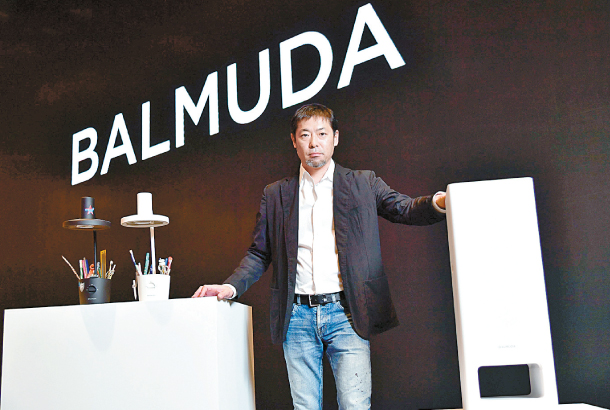
    Balmuda CEO Gen Terao introduced his company’s “The Pure” air purifier himself at a press briefing in Seoul last week, calling the Korean purifier market 10 times larger than Japan’s. The Pure, priced at 749,000 won, allows users to see how much dust is being sucked in at the mouth of the product.

  • LG Electronics to debut dual display phones

    LG Electronics to debut dual display phones

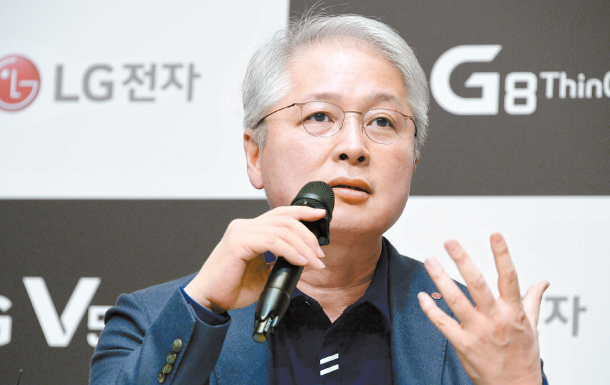
    LG Electronics’ major release of the year will be dual display smartphones, which the company hopes will recover its reputation as consumers flock to next-generation 5G smartphones. “There were internal discussions on releasing foldable phones at the same time but we concluded not to apply the form to early 5G models,” said LG Electronics President Brian Kwon during a press conference at LG Science Park in Magok, western Seoul, Friday.

    The event was the first time since he was appointed to head the smartphone business in November that Kwon shared future strategies for mobile business in front of the local press.

    “Our direction will allow consumers to enjoy 5G network content through dual displays to be showcased at the Mobile World Congress (MWC).”

    “Speaking of displays for early 5G phones, a major question to ask is whether we really need them, is there enough user content that requires such screens? In that perspective, I believe it’s too early to present [foldable phones,]” he added. “In terms of technology, we’re already prepared to make foldable and rollable screens.”

    Changes in form, especially screens, will be a major attraction point at this year’s MWC, the world’s largest trade show for phones. Samsung Electronics and Huawei will be rolling out foldable phones that come with two screens overlapping one another.

    LG’s dual display phone is rumored to come with a separate second screen that can be attached to the back or beside the main screen, although the company did not confirm the details. Its price remains undecided but Kwon said internal discussions were ongoing over whether to set it above or below $1,000.

    The form-factor competition comes in line with the commercialization of 5G networks expected to be realized this year. 5G will transfer data at an extremely high speed, enabling smartphone users to enjoy movies and games at unmatched quality and speed. Phone makers are eyeing the opportunity to win over consumers as they upgrade their phones to models that support 5G.

    LG’s strategy for this generation shift is “two track,” Kwon said Friday. Apart from the dual display phones, the V50 ThinQ 5G and the G8 ThinQ will also be showcased at the MWC. They are the latest models from the company’s high-end V and G lineups. V50 will support 5G networks, while the G8 will remain a premium phone for 4G, or LTE, network users.

    Underlying the two-track strategy is an uncertainty about how fast it will actually take for 5G infrastructure and related services to expand and how many consumers will jump from 4G to 5G.

    “Our plan for the year’s first half is to release the V50 to tackle the 5G market but our direction for the second half will depends on the 5G market,” said Kwon. “If it expands quickly we’ll look into developing a lower priced model that supports the network; if it doesn’t we’ll still have the 4G lineup.”

    LG’s smartphone business has been in the red for 15 consecutive quarters as of last year. Kwon was successfully heading the company’s television business when he was appointed to additionally take charge of the mobile division three months ago.

    “It’s true that industry insiders are hoping the 5G era will push growth of the smartphone market but as there also conservative projections, our goal for the year is not to make a drastic turnaround in the business but to see sales grow and restore our reputation in the smartphone market,” said Kwon.

  • Samsung US stores opens door

    Samsung US stores opens door

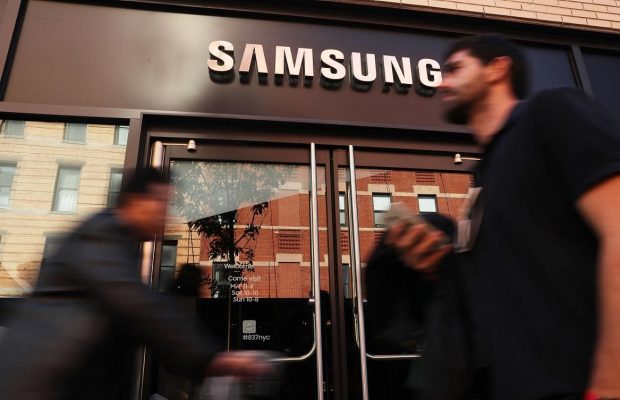
    South Korea’s Samsung will launch the first three of a planned network of North American stores this coming week, timed to coincide with the expected release of its next-generation Galaxy smartphone. The smartphone-focused Samsung US stores will open in the Roosevelt Field mall in Garden City; the Americana at Brand in Los Angeles; and Galleria in Houston. The openings have been interpreted as a branding exercise more than a sales driver by some industry experts, given the predominance of Apple iPhones in America. Samsung currently has 24 per cent of the US market, as opposed to Apple’s 44 per cent, with both manufacturers selling most of their handsets through carrier-operated stores.

    “Our new Samsung Experience Stores are spaces to experience and see Samsung technology brought to life, to empower people to do what they never thought was possible before”, said president and CEO of Samsung Electronics America YH Eom.

    “We want to build a ‘playground’ for Samsung fans – a place to learn about and try out all of the amazing new products we have to offer.”

    The Samsung US stores will encourage visitors to linger in-store while experimenting with the brand’s 4D VR and immersive 4K gaming products.

    Samsung’s Galaxy Unpacked 2019 presentation, scheduled for San Francisco on Wednesday, is widely rumoured to serve as a launchpad for a new foldable phone.

  • New air purifier from Japan debuts in Korea

    New air purifier from Japan debuts in Korea

    Balmuda, a Japanese high-end home appliance maker, is introducing a new air purifier in Korea today ahead of the rollout in Japan, where the launch date has not been set. Balmuda CEO Gen Terao emphasized the importance of the Korean market during the company’s first press conference in Korea Tuesday as he unveiled The Pure air purifiers.

    “We chose to unveil our air purifiers in Korea in light of the fine-dust problem and Balmuda’s growing brand awareness here,” Terao said at the conference in Yongsan District, central Seoul.

    “While Japan’s air purifier market is decreasing every year, it’s been growing in Korea. We sell 10 times more air purifiers here.”

    Several new features make it an upgrade from the AirEngine, the company’s older 2013 model.

    One of the key innovations is that The Pure allows users to see how much dust the machine sucks in. The purifier has a rectangular hole cut out in the bottom installed with lighting, making it easy for users to see the dust and particles that go up into the filter above the hole.

    The Pure’s HEPA filters can trap 99.97 percent of particles as small as 0.3 microns and eliminate odors. The machine releases up to 7,000 liters (1,850 gallons) of cleaned air per minute.

    The Pure will be available at department stores and online and offline electronic retailers from today. They are priced at 749,000 won ($666).

    Terao also discussed Balmuda’s The Light, a desk lamp for children launched last December.

    Addressing the growing problem of short-sightedness among children, Terao said he developed advanced light technology together with medical surgery light manufacturers.

    Terao called out Xiaomi’s air purifiers for copying Balmuda’s AirEngine design.

    “When I saw this [Xiaomi] product, I wondered when we had built it because it had the same size, silhouette and structure as the AirEngine,” Terao said. “But the fact that others are copying us is proof that our products are good.”

    Balmuda, founded in 2003, posted over 10 billion yen ($90 million) in annual sales last year. The company currently generates around 30 percent of its total revenue in Korea.

  • Samsung to pay its biggest tax bill ever as profits rise

    Samsung to pay its biggest tax bill ever as profits rise

    Samsung Electronics is expected to pay 16.8 trillion won ($15 billion) in corporate taxes this year, up 20.1 percent from a year earlier, due to its record earnings, its regulatory briefing showed Monday. It is expected to cough up 28.6 percent of its operating profits, which reached an all-time high of 58.9 trillion won in 2018, according to its consolidated financial statement.

    The estimated tax amount is the highest amount ever for the company, 2.4 times the number from 2015 and over 14 times from 2009, its past reports showed.

  • JC Penney to stop selling home appliances

    JC Penney to stop selling home appliances

    Struggling department store chain JC Penney announced it will exit its home appliances business, and some of its furniture business, while revamping the layout of its stores to focus on clothing sales to boost profits. The company, which hasn’t turned a profit since 2010 and has forecast several more years of losses, said it would stop selling major appliances in February “to better meet customer expectations, improve financial performance and drive profitable growth.”

    JC Penney’s appliances business was a pet project of former CEO Marvin Ellison. The company will also stop selling furniture in majority of its stores and will now only be available in select stores in Puerto Rico and online.

    The announcement is the first major change by new CEO Jill Soltau since she joined the embattled retailer late last year.

    According to JC Penney, they are now finalising new layout options, including reduction of store space previously dedicated to appliance and furniture showrooms to maximise efficiencies, reduce inventory and create an enhanced shopping experience that inspires repeat shopping trips.

    “Optimising the allocation of store space will enable us to prioritise and focus on the company’s legacy strengths in apparel and soft home furnishings, which represent higher margin opportunities,” the company said.

    The company further announced customers can still purchase major appliances in stores and online until February 28 and receive free basic delivery and installation on new model purchases over $299. All protection plans and manufacturer’s warranty agreements will remain in effect for the applicable warranty period.

  • Samsung dreams of a future filled with 8K TVs

    Samsung dreams of a future filled with 8K TVs

    Samsung Electronics will expand its lineup of 8K televisions this year, hoping to launch the premium products in 60 countries around the world. 8K televisions have four times more pixels than 4K, which until recently was the most cutting-edge screen a high-end television could have. When compared to a 4K TV, 8K screens are brighter with more color contrast and sharper edges. Samsung released its first 8K television last year.

    Han Jong-hee, Samsung’s president in charge of the visual display business, said in a press conference Friday that he expects 2019 to mark the start of a new era where 8K becomes the new norm in the high-end television market.

    “4K grew to take up 60 percent [of all Samsung TV sales] in five years – I expect 8K to show a similar level of performance, maybe faster considering how tech develops so fast these days in all sectors including content and displays,” he said at the event held in Samsung’s Suwon complex in Gyeonggi.

    The company’s 2019 goal for 8K TVs is to reach a double-digit year-on-year growth rate for market share in the local high-end TV sector. Han says the goal is “reachable,” adding that half of the large Samsung televisions sold in the country after November were 8K. That month, Samsung started local sales of the product.

    Regarding its global business, the QLED 8K started selling in Europe, Korea, the United States and Russia last year. Tomorrow, the company will unveil new models for 2019 at the Samsung Forum, a showcase event for clients that simultaneously takes place in various regions around the world.

    This year’s plan is to launch sales in 60 countries.

    Whereas last year the QLED 8K lineup came with four size variations with the largest at 85 inches, this year there will be six variations with the largest at 98 inches. The new sizes are in line with Samsung’s strategy to continue strengthening its lineup of massive TVs to keep a competitive edge in the high-end price sector.

    It remains to be seen whether Han’s optimistic views on 8K television will come to fruition as quickly as he projects. Even if 8K TVs exist, the higher definition and the high price it comes at won’t be of much use if video content remains at the 4K level.

    “5G networks will spread this year and the demand for 8K content will go up as well,” responded Han when asked about the problem. Han particularly expressed anticipation for the 2020 Tokyo Olympics. Japan’s national broadcaster NHK plans to live stream the games worldwide in 8K.

  • Where will Apple retail chief go after resigning?

    Where will Apple retail chief go after resigning?

    Within hours of the announcement that Apple retail chief Angela Ahrendts was to leave the role in April, speculation was rife as to where she is headed. Ahrendts, who led the fine-tuning of Apple’s retail business for five years after turning around British fashion house Burberry, has a stellar career in the luxury business. Several fashion industry sources have speculated she may be headed to take the helm of Ralph Lauren.

    In a statement announcing the Apple retail chief’s departure, the company said she is leaving the company “for new personal and professional pursuits”. CEO Tim Cook described her departure as “bittersweet”.

    During her time with Apple, Ahrendts – who was once tipped to take over Cook’s role in the future – has subtly redefined the Apple stores from high-end tech shops into community hubs. She took the renowned Apple Store concept created by predecessor Ron Johnson, dropped the “store” from its title and expanded the network to 506 physical stores and another 35 online.

    “Her vision includes stores as gathering spaces and hubs for creativity,” observed Daphne Howard of Retail Dive.

    “While Johnson is credited with initiating the brick-and-mortar strategy that has been the backbone of Apple’s hardware sales, including minimalist spaces conducive to product demos and customer education, Ahrendts has taken that [a step further].”

    Apple’s retail business will now be overseen by Deirdre O’Brien, the company’s senior VP of people, who will add retail to an already long list of responsibilities including talent development, Apple University, recruiting, employee relations, business partnerships, benefits, compensation and inclusion, and diversity.

    Some might see that as a sign Apple is reducing its focus on its retail business, although O’Brien might be considered something of an Apple acolyte, having been with the company for 30 years.

  • Time for China’s smartphone brands to bloom

    Time for China’s smartphone brands to bloom

    Like many urban Chinese consumers, Shenzhen civil servant Gao Jian has had a long-held belief that the quality of domestic smartphone brands paled in comparison with foreign brands, especially Apple. But in December, Gao joined the growing number of mainland consumers who have made the switch from Apple’s iPhone to a premium Android smartphone from a major Chinese brand. He bought a Mate 20 Pro, the flagship model from the country’s largest smartphone supplier Huawei Technologies.

    “Its design and cameras are better than what I expected,” Gao said. “Also, iPhones have become increasingly unaffordable.”

    His experience reflects the broader success of the Chinese mobile phone industry in smashing people’s perception that domestic suppliers are only good for inexpensive, low-quality products.

    That stereotype has beset many Chinese brands in the home appliances, consumer electronics, personal computer, car and mobile phone markets, where products from more established brands in the US, Japan or Europe were preferred by mainland consumers for many years.

    But brands like Haier Group Corp, Lenovo Group and, more recently, Huawei, have expanded their operations, increased research and development, and made advanced products to change that impression around the world.

    China is now home to some of the most successful smartphone brands, which rival the likes of Samsung Electronics, Apple and LG Electronics.

    Shenzhen-based Huawei, the top global supplier of telecommunications network equipment, was ranked the world’s second biggest smartphone vendor – behind Samsung and ahead of Apple – for the second consecutive quarter in the three months ended September 30, according to research firm IDC. Xiaomi Corp and Oppo took the No 4 and 5 spots in the same quarter.

    The emergence of Chinese smartphone brands on the global stage has mirrored the rising competitiveness of the country’s telecoms network equipment suppliers, which have won market share with value-for-money offerings as well as on heavy investments in research and development.

    The gains have also sparked increasing pushback by the US, which is persuading its allies to boycott Chinese telecoms gear suppliers such as Huawei on grounds of national security.

    With the world’s biggest internet population and smartphone market, China had as many as 300 domestic mobile phone companies about three years ago. Cutthroat competition reduced that number to about 200 last year, as Chinese consumers bought fewer smartphones and the economy grew at a slower pace.