Category: Fashion

Retail News Asia is committed to providing both local and global retailers with the latest Fashion news throughout the Asian market. This on a daily base.

  • Misto Holdings Boosts Q4 Sales Amid US Business Restructuring: Fila & Acushnet Show Strong Performances

    Misto Holdings Boosts Q4 Sales Amid US Business Restructuring: Fila & Acushnet Show Strong Performances

    In the fourth quarter, Misto Holdings, the parent company of Fila, Titleist and FootJoy, announced an increase in sales growth following a restructuring of its U.S. operations. The firm, based in South Korea, saw a 6.3% year-on-year boost in revenue during this period, reaching KRW915.2 billion (US$612 million). This follows a 3.7% uplift in sales reported in the third quarter.

    Company executives attribute this growth to a combination of factors, despite the prevailing macroeconomic uncertainty. These include a focus on profitability-driven operations, the positive outcomes of restructuring, and robust performance from Acushnet.

    Segment Performance

    Revenue from the Misto segment, which includes Fila and other lifestyle brands, fell by 9.6%. This decrease was primarily due to restructuring and inventory clearance in the U.S. market. However, operating profit improved significantly, reaching KRW74.7 billion, marking a notable recovery from the previous year.

    The Greater China market has emerged as a new area of growth for the company, driven by the expansion of prominent K-fashion brands. In South Korea, demand for Fila’s footwear franchise models remained stable.

    The Acushnet segment reported a sales growth of 10.9%, bolstered by strong sales of golf equipment, such as Titleist T-Series irons and SM10 wedges. Additionally, higher average selling prices for FootJoy golf shoes contributed to this growth.

    Yearly Overview

    For the entirety of FY25, the company’s consolidated revenue grew by 4.7% to reach KRW4.47 trillion. Operating profit surged by 31.6% to KRW 474.8 billion.

    Ho Yeon (Aaron) Lee, CFO of Misto Holdings, reflected on the past year, saying it was a significant period that saw the company reinforce its identity as a global brand portfolio company following a corporate name change.

    He noted that the expansion of the Greater China business, improved profitability in the Misto segment, and solid growth in Acushnet have all contributed to the stability of the company’s earnings.

    Questions & Answers

    What factors led to the growth of Misto Holdings in the fourth quarter?
    The growth was attributed to profitability-focused operations, the restructuring of the U.S. operations, and strong performance from Acushnet.

    How has the Misto segment performed amidst the company’s restructuring?
    Despite a decrease in revenue by 9.6% due to restructuring and inventory clearance, the Misto segment saw an improvement in operating profit, marking a significant turnaround.

    What contributed to the sales growth of the Acushnet segment?
    Increased sales of golf equipment, particularly Titleist T-Series irons and SM10 wedges, along with higher average selling prices for FootJoy golf shoes, supported the 10.9% growth in the Acushnet segment.
  • Guess Joins Fashion Exodus: All Mainland China Stores Shutting Down

    Guess Joins Fashion Exodus: All Mainland China Stores Shutting Down

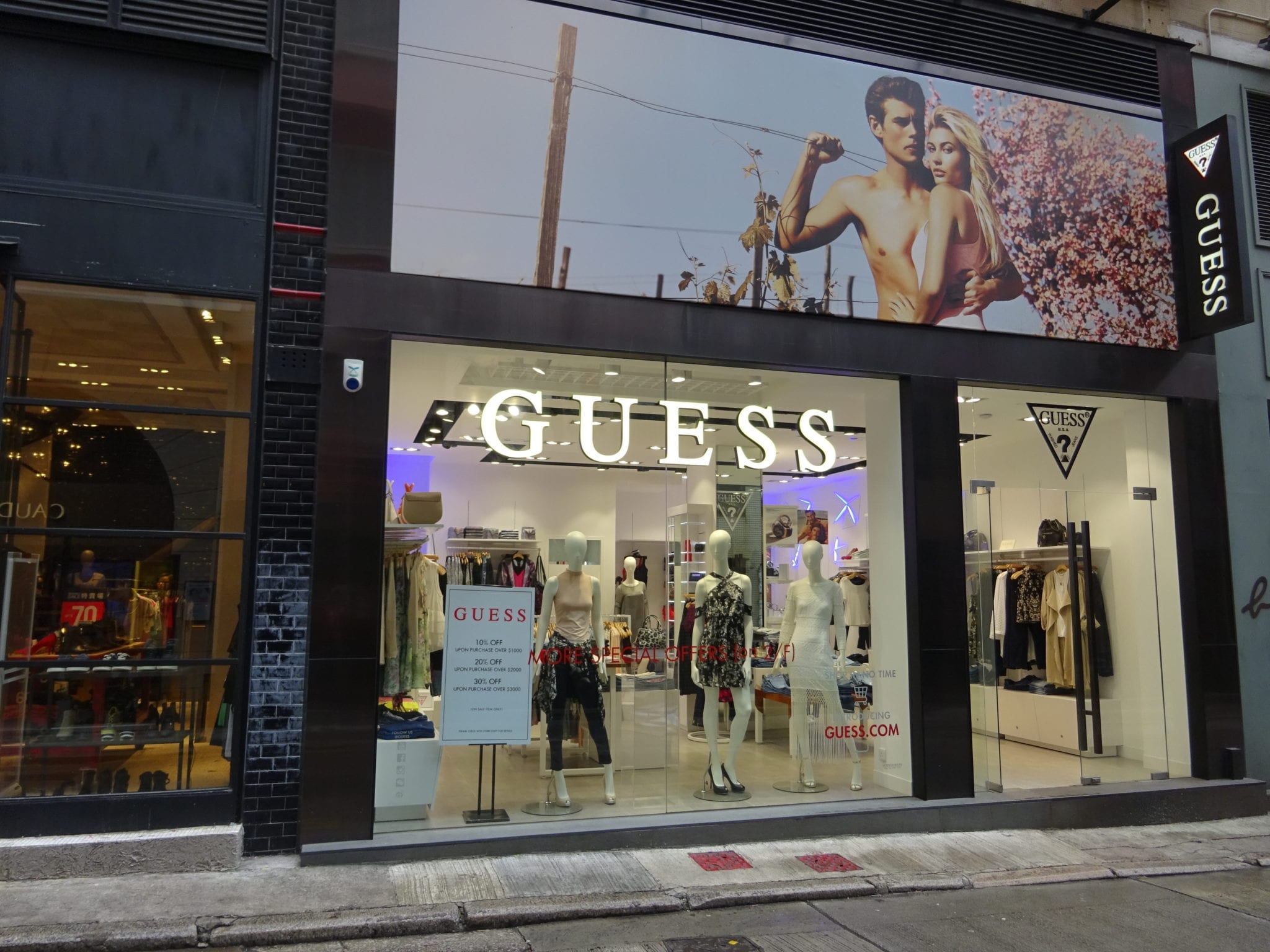
    US-based fashion behemoth, Guess, has announced plans to shutter all its outlets in Mainland China by the end of this month. This move is seen as a continuation of the trend witnessed in recent years where multiple foreign labels have ceased operations in the region.

    Guess has let its customers know of this impending closure through text messages, stating that both its brick-and-mortar and online stores will be affected. Consequently, the company has already ceased the sale of its products on its Tmall online flagship stores.

    The fashion giant has hinted towards a strategic repositioning within the Chinese market, utilizing an innovative model. However, specifics of this new strategy have not been divulged yet.

    Guess first set foot in Mainland China back in 2007, launching its inaugural store in Shanghai. The brand witnessed impressive growth, boasting around 250 stores in the region at its peak in 2019.

    Guess’s withdrawal from China echoes the actions of various international brands over the past few years. Prominent labels including Old Navy, Topshop, Bershka, Pull&Bear, Stradivarius, and Oysho have all left the Chinese market.

    Questions & Answers

    Why is Guess closing its stores in Mainland China?
    Guess is following the trend of many foreign brands that have exited the Chinese market in recent years. Specific reasons for Guess’s decision have not been provided.

    What is the company’s future plan in the Chinese market?
    Guess plans to reposition itself in the Chinese market with a new business model, although the company has not released any details regarding this plan.

    Which other foreign brands have exited the Chinese market recently?
    Several foreign brands have closed their operations in China in the past few years, including Old Navy, Topshop, Bershka, Pull&Bear, Stradivarius, and Oysho.

  • Siddhartha Shukla Exits Lanvin: A Shift in Luxury Fashion Leadership Amid Market Volatility

    Siddhartha Shukla Exits Lanvin: A Shift in Luxury Fashion Leadership Amid Market Volatility

    Siddhartha Shukla is set to leave his position as deputy CEO of the high-end fashion label Lanvin after a four-year tenure. Shukla, who has extensive experience in the luxury industry, joined Lanvin towards the end of 2021 with a vision to assist in the brand’s transition.

    Shukla’s Background

    Prior to his role at Lanvin, Shukla held the position of chief brand officer at the prestigious US label, Theory. His expansive career also includes over ten years at notable fashion houses such as Gucci and Saint Laurent.

    Lanvin’s Leadership

    In the wake of Shukla’s departure, Lanvin Group, the parent company of the fashion brand, announced that Andy Lew, the group’s executive president and Lanvin’s chairman and CEO, will continue to maintain control of the brand and its strategic aspirations.

    Leadership Changes Within the Group

    The exit of Shukla is the latest in a series of leadership changes within the group. Recently, Mandy West was designated as CEO of women’s clothing brand St John Knits, and Marco Pozzo took on the role of CEO at Wolford.

    Strategic Decisions

    Additionally, the group has taken significant strategic steps towards focusing on its central brands, primarily due to the ongoing fluctuations in the luxury market. This includes the divestment of the Italian menswear label Caruso, which was sold to MondeVita Italy, a subsidiary of the Mondevo Group.

    Recent Financial Performance

    In terms of fiscal performance, the group experienced a downturn in the first half, noting a 22% decline in revenue. The Lanvin brand, in particular, witnessed the most considerable decrease, with a fall of 42%.

    Questions & Answers

    Why is Siddhartha Shukla leaving Lanvin?
    The specific reasons for Siddhartha Shukla’s departure from Lanvin have not been disclosed.

    Who will take over Shukla’s responsibilities at Lanvin?
    Andy Lew, the group’s executive president and Lanvin’s chairman and CEO, will continue to oversee the brand and its strategic ambitions.

    How has Lanvin’s financial performance been recently?
    In the first half of the fiscal year, Lanvin’s revenue saw a significant decrease of 42%.

  • Beatrice Goasglas Takes the Helm at Tag Heuer: LVMH’s New CEO to Drive Innovation and Elevation

    Beatrice Goasglas Takes the Helm at Tag Heuer: LVMH’s New CEO to Drive Innovation and Elevation

    Luxury goods multinational corporation LVMH has announced the appointment of Béatrice Goasglas as the new CEO of its premium watch label, Tag Heuer. The appointment will take effect from May.

    Professional Background of the New CEO

    Goasglas has been with Tag Heuer since 2018, during which time she has occupied several pivotal positions. Her most recent role was that of the president of Tag Heuer Americas, which followed tenures as the vice president of digital and client experience and the managing director of Tag Heuer Asia Pacific.

    Role Expectations and Responsibilities

    In her new capacity as CEO, Goasglas is expected to leverage her considerable understanding of the brand’s legacy and workforce to further its ongoing development and innovation initiatives. These efforts will be directed at enhancing the brand’s collections and strategic partnerships. One of the key relationships under Goasglas’s stewardship will be with Formula 1.

    Executive Statements

    Stéphane Bianchi, the managing director of LVMH Group and CEO of LVMH Watches & Jewelry, expressed his enthusiasm for Goasglas’s new role. Bianchi believes that Goasglas’s comprehensive understanding of the brand, along with her leadership skills and unwavering dedication, will empower Tag Heuer to scale new milestones. Bianchi is confident that Goasglas will guide the brand to continue representing the finest standards of watchmaking quality and the innovative spirit that is so integral to the brand’s identity.

    Earlier this year, LVMH named Francois Kohler as president of South and Southeast Asia. Kohler took over the role from Chris Chong.

    Questions & Answers

    Who is the new CEO of Tag Heuer?
    Béatrice Goasglas has been appointed as the new CEO of Tag Heuer.

    When does Béatrice Goasglas’s tenure as CEO commence?
    Goasglas’s appointment as CEO of Tag Heuer will be effective from May.

    What role did Béatrice Goasglas hold at Tag Heuer prior to becoming CEO?
    Before stepping into her new role as CEO, Goasglas was the president of Tag Heuer Americas.

  • Swiss Sportswear Giant On Unveils First Standalone Store in Seoul, Invigorating South Korea’s Retail Scene

    Swiss Sportswear Giant On Unveils First Standalone Store in Seoul, Invigorating South Korea’s Retail Scene

    Swiss sportswear label, On, has unveiled its inaugural standalone shop in South Korea, furthering its direct-to-consumer reach within the nation.

    Strategically Located in Seoul

    The store, nestled within Seoul’s Hannam district, signifies On’s maiden standalone brand space in the Korean market. This launch builds upon the brand’s initial direct retail outposts in Yeouido and Jamsil, which were established in the previous November.

    The shop encompasses three floors, with the lower level spotlighting On’s running collection. The higher levels are dedicated to lifestyle, tennis, outdoors, and children’s merchandise.

    The basement has been repurposed as a hub for running, functioning as a space for community gatherings, such as running club meets and in-store events tied to the local running community.

    Inspired by Seoul’s Night Running Routes

    The store’s aesthetic borrows elements from Seoul’s evening running paths. The use of lighting and reflective surfaces aims to replicate the dynamic movement and visual ambiance of the city post-sunset. The storefront’s design elements also nod towards the nearby Han River.

    According to Rebecca Cai, On’s APAC GM, the brand anticipates the store to serve as a central spot for their running community. This is especially relevant with the looming Seoul Marathon. The brand also hopes the space will allow customers to fully immerse themselves in On’s universe, and personally interact with their latest performance and design innovations.

    This inauguration aligns with the company’s ongoing efforts to widen its retail footprint across Asia. Just this week, On launched its most expansive store in China, situated at Shenzhen MixC World. This two-story outlet covers approximately 802 square meters.

    Questions & Answers

    What does the new On store in Seoul offer?
    The store provides a wide array of sportswear, including running, lifestyle, tennis, outdoor, and kids’ products. Additionally, it will serve as a hub for community activities related to running.

    What is unique about the design of the new store?
    The design of the store is inspired by Seoul’s night running routes, with lighting and reflective surfaces that mimic the city’s atmosphere after dark. The facade also pays homage to the nearby Han River.

    What recent expansion efforts has On undertaken in Asia?
    On has been actively expanding its retail network in Asia. Along with the new standalone store in South Korea, it recently opened its largest store in China, located in Shenzhen MixC World.

  • Inditex, Zara’s Parent Company, Reports Stellar Sales Boost Across All Brands in Annual Profit Surge

    Inditex, Zara’s Parent Company, Reports Stellar Sales Boost Across All Brands in Annual Profit Surge

    Inditex, the parent company of Zara, has seen considerable increases in its gross and net profits, fueled by robust sales across all its brands.

    The company’s total net revenue for the fiscal year ending January 31, 2025, climbed 3.2 per cent to €39.9 billion (US$46 billion). Taking into account the currency exchange, sales experienced a 7 per cent rise. Over the past three years, Inditex’s sales have surged by 22 per cent, with a concurrent decrease in the number of retail outlets by 6 per cent. This demonstrates the firm’s constant growth despite a decrease in physical retail presence.

    All brands within the Inditex group enjoyed sales growth throughout the fiscal year. The primary Zara enterprise, inclusive of Zara, Zara Home, and Lefties brands, saw a 1 per cent sales increase, reaching €28 billion.

    Profitable Performance By Other Brands

    Among other Inditex brands, Oysho topped the growth chart with a 15 per cent surge, closely trailed by Stradivarius and Bershka, each boasting over a 12 per cent rise. Additionally, Pull&Bear and Massimo Dutti each reported growth rates of 3.1 per cent and 3 per cent respectively.

    Inditex’s gross profit saw a 3.9 per cent increase to €23.2 billion, while the gross margin improved by 42 bps, bringing it to 58.3 per cent. Net income for the same period rose by 6 per cent to €6.2 billion.

    CEO of Inditex, Óscar García Maceiras, praised the company’s teams for their ability to maintain the trust of their customers across their eight commercial formats. He emphasized the importance of connecting with customers, understanding their needs, and providing top-tier products and services in driving long-term growth expectations.

    Positive Outlook

    At the conclusion of FY2025, Inditex managed 5460 stores across 214 markets. The company has continued to perform well into the new fiscal year, recording a 9 per cent increase in store and online sales between February 1 and March 8, after adjusting for the constant currency.

    Questions & Answers

    What was Inditex’s total net revenue for FY25?
    Inditex’s total net revenue for FY25 was €39.9 billion (US$46 billion).

    Which brand under Inditex reported the highest sales growth?
    Oysho, an Inditex brand, reported the highest sales growth with a 15 per cent increase.

    What was the net income for Inditex for the fiscal year ending January 31, 2025?
    Inditex’s net income for the fiscal year ending January 31, 2025, increased 6 per cent to €6.2 billion.

  • Hugo Boss Triumphs Amid Challenges: Sees Uplift in Annual Sales Regardless of China’s Downturn

    Hugo Boss Triumphs Amid Challenges: Sees Uplift in Annual Sales Regardless of China’s Downturn

    Hugo Boss, a renowned German fashion company, recently disclosed a slight increase in sales for the preceding fiscal year, which concluded with a robust last quarter.

    The company’s sales for the fiscal year 2025 demonstrated a 1% drop, reaching EUR 4.27 billion (US$4.97 billion). This decrease is attributed to unfavorable currency fluctuations and subdued consumer confidence triggered by macroeconomic and geopolitical instability. However, after considering the impact of currency exchange, there was a 2% rise in sales.

    Geographical Sales Breakdown

    Examining sales by region, Hugo Boss saw a 5% decrease in currency-adjusted sales in the Asia-Pacific region, largely due to restrained local demand in China. In contrast, the company enjoyed a 2% increase in revenues in the EMEA region, propelled by advancements in major European markets such as Germany and France.

    Company management emphasized the remarkable growth in the fourth quarter, with a reported 2% sales increase and 7% rise on a constant currency basis.

    Growth Factors

    This positive performance is credited to a resurgence in physical retail, a modest uptick in comparable-store sales, a fruitful holiday season, and impactful brand and product initiatives.

    The Boss Menswear brand saw a 3% increase in currency-adjusted revenues for the year. However, sales for Boss Womenswear and Hugo dropped by 5% and 4% respectively.

    Americas and Licensing Business Performance

    In the Americas, revenues saw a 3% increase, indicative of progressive improvements in the US market. Conversely, the company’s licensing business experienced a 5% decline in sales.

    The fiscal year ended on a high note, with EBIT (Earnings Before Interest and Taxes) growing 8% to reach EUR 391 million. This figure includes a significant 22% uplift in the fourth quarter.

    Hugo Boss CEO, Daniel Grieder, highlighted the rapid transformation of the fashion industry throughout the year. He pointed towards technological innovation, changing consumer preferences, and persistent macroeconomic and geopolitical instability as key influencers on the industry’s trajectory.

    Future Prospects

    Looking ahead to fiscal year 2026, Hugo Boss anticipates a mid- to high-single digit decline in currency-adjusted sales. This projection is based on the initiation of brand and channel realignments.

    Questions & Answers

    What were Hugo Boss’s sales for fiscal year 2025?
    Hugo Boss reported sales of EUR 4.27 billion (US$4.97 billion) for the fiscal year 2025.

    Which region experienced sales growth for Hugo Boss?
    The EMEA region saw a 2% increase in revenues, driven by performance in key European markets such as Germany and France.

    What are the company’s sales expectations for fiscal year 2026?
    Hugo Boss is forecasting a mid- to high-single digit decline in currency-adjusted sales for fiscal year 2026, due to brand and channel realignments.

  • Swiss Sportswear Giant On Opens its Largest Flagship Store in Shenzhen, Accelerating Retail Growth in China

    Swiss Sportswear Giant On Opens its Largest Flagship Store in Shenzhen, Accelerating Retail Growth in China

    Swiss sportswear brand On has recently unveiled its grandest flagship store to date. This store is located at Shenzhen MixC World, China. This move is part of the brand’s ongoing effort to expand its retail footprint in one of its most rapidly expanding markets.

    Store Design and Features

    Spanning a generous 802 square meters over two floors, the store’s design draws inspiration from the area’s coastal and mountainous topography. The open-concept interiors are harmoniously complemented with the use of natural materials and unique installations.

    To further enhance the customer’s shopping experience, an interactive visual display is present within the store, which showcases the brand’s signature CloudTec cushioning technology and its wide range of apparel.

    At the store’s entrance, visitors are greeted by two majestic, hundred-year-old banyan trees. This area, redesigned as a park, serves as a communal space for group runs and various events.

    Rebecca Cai, GM Apac at On, expressed her hopes for the new store. “Shenzhen is a city full of youthful vigour, and we hope that the flagship store at Shenzhen MixC World will not only function as a retail space, but will also serve as a hub for the city’s running community,” she said.

    A Strategic Expansion

    The unveiling of this store is in line with On’s strategy to expand its direct-to-consumer footprint in China, which has now become its second-largest market internationally. This comes after a period of robust regional growth, with On recording a substantial 96.4 per cent year-on-year increase in net sales in Asia-Pacific in 2025.

    On’s chief commercial officer, Britt Olsen, highlighted the brand’s growth potential. “Following footwear, apparel has emerged as the second major growth engine. In China, the category displays immense potential. We will continue to expand our retail reach and further enhance the brand experience,” she stated.

    On initially entered the Chinese market in 2018 and has since extended its reach to over 30 cities, launching more than 80 stores. The company has ambitious plans to hit the 100-store mark by the end of this year.

    Questions & Answers

    What inspiration did On draw from for its flagship store at Shenzhen MixC World?
    The flagship store’s design was inspired by Shenzhen’s coastal and mountainous geography, and it combines open interiors with natural materials and installations.

    What is On’s strategy for expanding its footprint in China?
    On is focusing on growing its direct-to-consumer footprint in China, which is its second-largest market. This is following a marked increase in regional net sales.

    When did On enter the Chinese market and what are its expansion plans?
    On first entered China in 2018 and has since expanded to over 30 cities with more than 80 stores. The company aims to reach 100 locations by the end of the year.

  • Japanese Retail Giant Beams Set to Launch US Flagship Store in Los Angeles, Amplifying Fashion Footprint

    Japanese Retail Giant Beams Set to Launch US Flagship Store in Los Angeles, Amplifying Fashion Footprint

    Beams, a prominent fashion and lifestyle retailer originating from Japan, is gearing up to establish a flagship store in Los Angeles, significantly expanding its influence in the US market.

    Expanding Retail Space

    This new retail location will cover approximately 1250 square meters over a single level. It is designed to serve as a pivotal hub for the company’s North American operations, while simultaneously broadening its reach to a wider American clientele.

    Curated Selection

    The store will feature an extensive range of products, including clothing, accessories, and lifestyle goods. This selection embodies the retailer’s ‘select shop’ approach, which merges their own brand with a collection of items from an array of other brands.

    Beams America

    In line with its expansion strategy, Beams has also formed Beams America. This venture will manage regional operations and facilitate retail growth and other brand initiatives in the US.

    Digital Presence

    Prior to this physical expansion, Beams launched an e-commerce platform for the US market last year. The company has also been assessing consumer demand through the operation of three pop-up stores in Los Angeles.

    The Company’s History

    Established in 1976 in Tokyo, Beams currently manages approximately 175 stores across Japan and other regions in Asia.

    Questions & Answers

    What is the purpose of the new Beams store in Los Angeles?
    The new store is set to serve as a key base for Beams’ operations in North America and aims to introduce its fashion and lifestyle concept to a broader US audience.

    What is Beams’ ‘select shop’ format?
    The ‘select shop’ format is a retail approach where the store combines its own labels with items sourced from a variety of brands, offering customers a curated selection of products.

    What is Beams America?
    Beams America is a venture established by Beams to oversee its regional operations and support retail growth and wider brand initiatives in the US.

  • NewRee Sports Tapped to Boost Reebok’s Expansion in Greater China: A New Era for Athletic Footwear

    NewRee Sports Tapped to Boost Reebok’s Expansion in Greater China: A New Era for Athletic Footwear

    Authentic Brands Group has teamed up with NewRee Sports, designating them as the primary operating collaborator for Reebok in Mainland China, Hong Kong, and Macau.

    Details of the Partnership

    As per the agreement, NewRee Sports is charged with the supervision of the production, importation, distribution, and sales of Reebok products across the three markets. This encompasses a broad range of products, including footwear and attire for both adults and children.

    The initiation of this partnership comes subsequent to the early dissolution of Reebok’s former licensing accord with Tristate Holdings. As per the details disclosed, the agreement with Tristate Holdings came to an end on December 31st.

    A New Chapter for Reebok

    Authentic Brands Group took the reins of Reebok from Adidas in 2021 and since then, it has adopted a strategy of collaborating with regional partners to boost the brand’s presence in pivotal markets.

    Established in 1895, Reebok has built a reputation for its longstanding heritage in athletic footwear and sports culture. In the present era, it aligns itself at the crossroads of sport, activewear, and lifestyle.

    The collaboration with NewRee Sports signifies a new chapter in Reebok’s evolution in Greater China. Authentic Brands Group is perpetuating the expansion of the brand’s presence via local operating partners.

    Questions & Answers

    What is the role of NewRee Sports in this partnership?
    NewRee Sports will supervise the production, importation, distribution, and sales of Reebok products in Mainland China, Hong Kong, and Macau.

    When did the previous agreement with Tristate Holdings end?
    The agreement with Tristate Holdings ended on December 31st.

    What is the current position of Reebok in the market?
    Reebok, having a strong legacy in athletic footwear and sports culture, currently places itself at the intersection of sport, activewear, and lifestyle.

  • Zara’s Enhanced Shopping Experience: Grand Reopening of Flagship Store in Japan’s Yokohama District

    Zara’s Enhanced Shopping Experience: Grand Reopening of Flagship Store in Japan’s Yokohama District

    Zara, the renowned fashion retailer, has reopened its relocated Minatomirai Tokyu Square store in Yokohama, Japan. The store spans a generous 2000 square meters and features a design aesthetic that aligns with the company’s latest global vision.

    Moving Up

    The outlet has transitioned from its previous location on the first floor, to now occupy a more spacious area on the second level of the shopping center. Shoppers can access the store either directly from Minatomirai Station, which is conveniently situated within the mall, or from a designated street entrance.

    A New Interior Design

    The interior of the store is composed of a number of ’boutique-style’ rooms, each defined by structural beams and portal openings. The mall’s glazed facades and skylights allow natural light to fill the space. The contrast between the textured wall finishes and a black open ceiling adds to the contemporary feel of the store.

    Personalized Shopping Sections

    The women’s department of the store has a fluid layout featuring lighter tones for the main collections. Conversely, the selections aimed at a younger demographic are presented against darker backdrops with details in stainless steel.

    The men’s section echoes the same design principles but employs a segmented sequence of rooms. Dark tones, wood finishes, and black metal accents dominate this part of the store, setting a more defined, masculine atmosphere.

    Tech-Forward Shopping Experience

    Zara has integrated modern technology into the shopping experience, with the inclusion of interactive screens throughout the store. Customers can browse the store’s inventory in real-time, locate specific items within the store, and even utilize dedicated pick-up points for online orders made through Zara’s website or app.

    Questions & Answers

    Why has Zara moved its store to the second level of the Minatomirai Tokyu Square shopping center?
    The move to the second level was part of a strategy to provide a more spacious shopping environment for customers while also aligning with the latest global store design concept.

    How does the new store cater to different customer preferences?
    The new store features separate sections for men and women, each with distinct design elements and varying tones to cater to diverse tastes. There are also interactive screens to assist with browsing and purchasing items.

    What is the benefit of the interactive screens installed throughout the store?
    Interactive screens offer customers the ability to browse the store’s inventory in real-time, locate specific products in the store, and collect online orders placed through Zara’s website or app. This enhances the overall shopping experience by making it more efficient and user-friendly.

  • Estee Lauder Seals the Deal: Full Ownership of India’s Luxury Beauty Brand, Forest Essentials

    Estee Lauder Seals the Deal: Full Ownership of India’s Luxury Beauty Brand, Forest Essentials

    Estee Lauder, a renowned global manufacturer and marketer of skincare, makeup, and beauty products, has acquired the remaining shares of the luxury Indian beauty brand, Forest Essentials. This move finalizes an 18-year partnership between the two entities, pending regulatory approval.

    Increase in Commitment and Position

    Stéphane de La Faverie, the president and CEO of Estee Lauder, emphasized that this acquisition underscores the company’s commitment to enhancing the growth of Forest Essentials. It also solidifies its standing in India’s high-end beauty market. De La Faverie expressed deep admiration for the vision and perseverance needed to create a brand of Forest Essentials’ stature. The shared objective is to further solidify the brand’s leadership domestically, while prudently introducing it to a global market.

    A Brand Rooted in Tradition

    Forest Essentials, established in 2000 by Mira Kulkarni, draws its inspiration from Ayurveda. This age-old Indian wellness system, with a history spanning approximately 3000 years, concentrates on creating harmony between the mind, body, and spirit. Forest Essentials has successfully transformed these traditional rituals into contemporary formulations and immersive retail experiences, placing Ayurveda in the luxury beauty segment. Today, Forest Essentials is a leading brand with about 200 stores spread across India.

    Future Direction

    Despite the acquisition, Forest Essentials will retain its headquarters in New Delhi under the leadership of Mira Kulkarni and her son, Samrath Bedi, who is the executive director. The brand will continue its operations in India, including infusing research and development with Ayurveda principles, sourcing botanicals locally, and manufacturing in-house.

    The collaboration with Estee Lauder will allow Forest Essentials to tap into the latter’s worldwide brand-building capabilities, distribution network, and operational proficiency. This will foster long-term growth while preserving the brand’s heritage.

    Kulkarni expressed that the next phase of the company’s evolution will concentrate on international expansion while preserving its Indian roots. She reiterated that Ayurveda is not simply a belief system, but a refined combination of science, ritual, and holistic wellbeing. She added that this new phase signifies both continuity and growth.

    Questions & Answers

    What is the significance of Estee Lauder’s acquisition of Forest Essentials?
    This acquisition reinforces Estee Lauder’s commitment to the growth of Forest Essentials and strengthens its position in the Indian luxury beauty market.

    What impact will the acquisition have on the operations of Forest Essentials?
    Forest Essentials will remain headquartered in New Delhi and continue its operations in India. It will also leverage Estee Lauder’s global brand-building capabilities, distribution network, and operational expertise to support long-term growth.

    What will be the focus of Forest Essentials’ next stage of development?
    Forest Essentials will focus on international expansion while maintaining its Indian roots and preserving the brand’s heritage.

  • Chow Tai Fook Jewellery Boosts Globalization Strategy with New Global Creative Director, David Tse

    Chow Tai Fook Jewellery Boosts Globalization Strategy with New Global Creative Director, David Tse

    Chow Tai Fook Jewellery Group has announced the appointment of David Tse to the newly created role of Global Creative Director. This strategic move is intended to bolster the company’s ongoing globalization efforts.

    Strengthening Position as a Leading Chinese Luxury Brand

    David Tse will be at the forefront of solidifying Chow Tai Fook Jewellery Group’s standing as a premier Chinese luxury brand. His responsibilities will encompass shaping the brand’s creative identity and spearheading its overall creative strategy across all customer interactions.

    The decision to bring Tse on board is considered quite timely as the company is in the throes of transforming and globalizing the brand. Tse’s profound understanding of luxury, remarkable creativity, and demonstrated ability to transform brand strategy into compelling narratives are expected to significantly contribute to enhancing the brand’s global reputation.

    An Experienced Leader in Creative Direction

    Tse boasts a wealth of international experience in both the luxury and lifestyle sectors, with an impressive career that spans China and various international markets. He launched his career as an entrepreneur, focusing on creative production, and subsequently led projects for an array of renowned brands, such as Burberry, Golden Goose, Uniqlo, Google, PayPal, Volvo, and Starbucks.

    In his most recent role, Tse was the Creative Director at Hermes in Shanghai, having the distinction of being the first Creative Director appointed outside the brand’s Paris head office.

    In his new role at Chow Tai Fook Jewellery, Tse plans to honor the brand’s rich heritage and encourage innovation and creativity, while always prioritizing customer needs.

    Expansion Amid Slow Domestic Demand

    Earlier this year, in response to decelerating domestic demand, market saturation, and pricing pressure in the world’s second-largest economy, Chow Tai Fook Jewellery Group expanded overseas, opening a flagship store at Siam Paragon in Bangkok. This movement forms part of a wider trend of Chinese and Hong Kong consumer brands seeking growth opportunities outside their traditional markets.

    Questions & Answers

    What will David Tse’s role be at Chow Tai Fook Jewellery Group?
    As the Global Creative Director, Tse will be responsible for shaping the brand’s creative identity and leading its overall creative strategy across all consumer interactions.

    What experience does Tse bring to the role?
    Tse brings international experience from the luxury and lifestyle sectors, having worked in both China and international markets. He has led projects for a range of well-known brands and was most recently the Creative Director at Hermes in Shanghai.

    Why is Chow Tai Fook Jewellery Group expanding overseas?
    The group is expanding overseas in response to slowing domestic demand, market saturation, and pricing pressure in the world’s second-largest economy. Opening a flagship store in Bangkok is part of these ongoing globalization efforts.

  • Golden Goose Sees Stellar Rise in Revenue, Celebrates 21% Direct-to-Consumer Growth for FY25

    Golden Goose Sees Stellar Rise in Revenue, Celebrates 21% Direct-to-Consumer Growth for FY25

    Golden Goose, a prominent name in luxury footwear, has recently reinforced its direct-to-consumer sales strategy, a decision that has proved beneficial according to their recent earnings report.

    A Successful Year for Golden Goose

    For the fiscal year of 2025, Golden Goose reported a revenue of €734 million (US$858.1 million), a 15 per cent increase compared to the previous year. However, the company’s major achievement was a 21 per cent surge in direct-to-consumer sales, which now represent 81 per cent of the group’s total sales.

    Silvio Campara, CEO of Golden Goose Group, expressed his pride in the company’s FY25 results. He highlighted another year of robust and stable growth for Golden Goose.

    Expanding the Golden Goose Empire

    The luxury retailer added 17 new stores to its already expansive portfolio in 2025, bringing its total to a remarkable 232 stores worldwide. Sales saw an upward trend globally, with an 18 per cent increase in Europe, the Middle East, and Africa. Asia Pacific sales went up by 17 per cent, while growth in the Americas was marginally slower at 9 per cent.

    2025 also saw the introduction of Chinese private equity firm HSG as a majority shareholder.

    Campara expressed his delight at HSG and Temasek joining as strategic investors to further their international reach and realize their potential as a future-focused luxury brand.

    New Ventures and Future Outlook

    Campara also discussed some of the company’s successful initiatives. These included the introduction of new sneaker models such as True-Star and Marathon Speed, store openings in locations such as Mumbai, Tokyo, London Mount Street, and Naples, and the inauguration of the Padel Arena in Milan. The CEO emphasized their commitment to merging craftsmanship, culture, and community.

    Looking towards 2026 and beyond, Campara voiced his excitement about Golden Goose’s potential and his eagerness to bring more of Italy to their global community of admirers.

    Golden Goose recently unveiled a new concept store in Osaka, Japan, further expanding its international presence.

    Questions & Answers

    What was Golden Goose’s revenue for the fiscal year 2025?
    Golden Goose reported a revenue of €734 million (US$858.1 million) for the fiscal year 2025.

    What percentage of Golden Goose’s total sales in FY25 came from direct-to-consumer sales?
    81% of Golden Goose’s total sales in FY25 were from direct-to-consumer sales.

    What are some new initiatives by Golden Goose?
    Golden Goose launched new sneaker models such as True-Star and Marathon Speed, opened new stores in various international locations, and opened the Padel Arena in Milan.

  • On Pioneers Rapid Shoe Production with Robot-Powered Factory Launch in South Korea

    On Pioneers Rapid Shoe Production with Robot-Powered Factory Launch in South Korea

    On Running, a sportswear brand, has recently launched an automated factory in Busan, South Korea where robots are used to manufacture running shoes. The company expresses its intent to establish more such factories in the United States and Europe to accelerate its production and delivery timelines.

    Embracing Nearshoring

    Due to rising tariffs, supply chain disruptions, and geopolitical risks, several retailers and brands are considering ‘nearshoring’. This involves shifting the manufacturing process closer to the final consumer. On Running aims to expedite shoe production, decrease its environmental footprint, and bring manufacturing closer to its main markets by embracing automation. This approach contrasts with the traditional footwear manufacturing model, which typically involves shipping finished products from factories in Southeast Asia and China to customers in the US and Europe.

    Caspar Coppetti, co-founder of On, believes that automation and nearshoring are the way forward. He cites the increasing speed to market, sustainability efforts, and the growing scarcity of regions with cheap labor as reasons to pursue this direction. At present, On sources 90% of its shoes from third-party manufacturers in Vietnam and the remaining 10% from Indonesia, as per their most recent annual report.

    Automated Manufacturing Expansion

    On Running first revealed its LightSpray marathon running shoe at the 2024 Paris Olympics. This innovative shoe is created by robot arms spraying material onto a mold to generate a sock-like upper. The company’s factory in Busan, equipped with 32 robots, marks a significant expansion from its initial automated factory in Zurich, which only has four robots and commenced production in July of the previous year.

    This new factory can manufacture approximately 1,000 pairs of shoes daily. The spray-on method simplifies the traditional upper manufacturing process, reducing a complex 200-step procedure across multiple factories to a single automated operation.

    On Running, established in Switzerland in 2010, plans to develop robot factories in the US in a bid to mitigate its tariff expenses. Steep tariffs introduced by the US on sportswear manufacturing hubs such as Vietnam and China have escalated costs and affected the industry significantly over the past year. The recent Supreme Court ruling against tariffs has added further uncertainty for retailers and importers.

    Competing with Industry Giants

    In the intense competition to produce the fastest marathon shoe, not just for elite athletes but also for amateur runners eager to beat their personal bests, On Running has promoted the LightSpray as a game-changer due to its light weight. Hellen Obiri, an On-sponsored athlete, wore the LightSpray when she triumphed in the New York Marathon last November.

    Questions & Answers

    What is the importance of ‘nearshoring’ for On Running?
    Nearshoring allows the company to speed up its manufacturing process, reduce its environmental impact, and bring production closer to its main markets.

    What is the LightSpray marathon running shoe?
    The LightSpray is an innovative shoe made with a robot arm spraying material onto a mold to create a sock-like upper. It is lauded for its light weight.

    Where are On Running’s automated factories located?
    On Running currently has automated factories in Busan, South Korea and Zurich, Switzerland. They plan to establish more such factories in the United States and Europe.