Category: Fashion

Retail News Asia is committed to providing both local and global retailers with the latest Fashion news throughout the Asian market. This on a daily base.

  • Vera Wang Launched Bridal Jewelry With Chow Tai Fook

    Chinese-American fashion designer Vera Wang and Chow Tai Fook, the jeweller, have collaborated on a fine jewellery collection to launch this week in China. Hong Kong will follow. The Vera Wang Love collection targets modern Chinese brides with a penchant for diamonds, casting pieces in 18K gold and platinum – including engagement rings, wedding bands, and fine fashion items in precious stones. The diamonds used are traceable and nano-inscribed for individual identification.

    Vera Wang said the sophistication, quality, technical capabilities and vast consumer reach of Chow Tai Fook enabled her to create both wedding and fashion signature pieces at the highest quality from the attainable to the most exclusive.

    Kent Wong, Chow Tai Fook’s MD, added: “The intrinsic value of “traceable” marks carried by T Mark diamonds perfectly aligns with Vera’s design philosophy, resulting in beautiful, modern pieces of jewellery.”

    The Vera Wang and Chow Tai Fook collection debuts October 19 at Chow Tai Fook stores in Shanghai, further expanding to Beijing, Chengdu, Hong Kong and other cities later.

  • Jil Sander unveils new store format in Tokyo

    Jil Sander unveils new store format in Tokyo

    German fashion label Jil Sander has introduced a new store format in Tokyo. The Onward Luxury Group-owned brand has inaugurated the new 268sqm flagship in the fashionable Omotesando district with a redesigned interiors concept that will be used to revamp the label’s existing stores worldwide.

    The new store interior design is the work of British architect John Pawson, who has adopted the minimalist essence of the brand’s fashion aesthetic in the new format – using limestone and cherry wood features and a large glass facade – and showcasing just one or two looks at a time.

    Jil Sander operates 11 stores worldwide, including a flagship in Paris. A new opening in Moscow is planned for next year.


  • Fast Retailing profit soars, mainly Uniqlo

    Fast Retailing profit soars, mainly Uniqlo

    Uniqlo parent Fast Retailing has reported a record full-year profit, due to strong growth in Asia and lessening losses in the US. And the company says current year performance to date suggests even better results lie ahead. Fast Retailing profit rose 34 per cent to US$2.11 billion in the year to August.

    In July the company reported a solid third-quarter, again based on strong sales across Asian markets. Across the first nine months, sales outside Japan rose 28 per cent year on year and operating profit outside Japan soared 65 per cent, driven largely by Uniqlo Asia.

    Online sales were also strong as the Uniqlo brand expanded its reach to new markets.

  • Ferragamo CEO announced

    Ferragamo CEO announced

    Salvatore Ferragamo has officially found its new chief executive officer.

    The luxury Italian brand’s CEO and general manager, Micaela Le Divelec Lemmi, will relinquish her dual title to take on the sole position of CEO in November.

    The general manager position will be made obsolete, as reported by the Italian press.

    After joining Ferragamo from Gucci in April, where Le Divelec Lemmi was chief financial officer, the executive was named Ferragamo’s CEO in July, a role taken ad interim by group president Ferruccio Ferragamo, following the departure of Eraldo Poletto in March.

    Ferragamo looks to lift dwindling sales across the globe with Le Divelec Lemmi, who has 20-plus years experience in luxury, namely at Gucci.

    For the first-half 2018, the company said revenues were down 3.4% currency-neutral or 6.2% on a reported basis to €674 million, lower than the €685 million that analysts had predicted.

    Retail sales fell 5.2% and wholesale revenues were down 7.6%.

    By region, Asia Pacific revenues fell 5.5%, lead by China down 1%, while Hong Kong sales rose 32% currency-neutral.

    Overall, net profit dropped 23.1% to €59 million.

  • Amazon is preparing its private lingerie label

    Amazon is preparing its private lingerie label

    Inside the Aerie pop-up shop in Soho, the body positive, post-Victoria’s Secret message that has become the brand’s calling card since it released its first photoshop-free campaign in early 2014 is perfectly packaged up and displayed on walls covered in bralettes or one-piece bathing suits. “No Retouching. No Makeup. No Problems,” reads one sign, next to a cushion-covered banquette.

    By the checkout counter, pins reading “Keep it Real!” and “Can’t Retouch This” fill colourful buckets. They are free to shoppers who donate to the National Eating Disorders Association.

    Aerie, just a small slice of parent company American Eagle’s overall business, is resonating with a consumer base that’s growing tired of traditional, sexy lingerie brands like Victoria’s Secret.

    Aerie grew sales revenue by 20 percent year-over-year in 2015 and 23 percent year-over-year in 2016.

    Meanwhile, Victoria’s Secret — the goliath which still dominates the lingerie market, worth at least $12 billion in the US alone — has struggled to maintain momentum.

    Sales decreased 13 percent in March, year-over-year, as the company continues to feel the impact of discontinuing its non-athletic apparel and swimwear ranges in 2016.

    The business has since been reorganised around three buckets — lingerie, the Gen Z-targeted Pink range and beauty — and pulled back on promotions.

    As Victoria’s Secret has stumbled, a series of disruptive niche lingerie brands — such as Lively, Naja, Negative Underwear and Third Love — have also entered the playing field, peddling a new kind of inclusive, female-centric identity that’s more about the wearer and less about who might be looking at her.

    They also offer a broader swath of nude shades — serving a wider range of ethnicities — and aim to undercut competitors on price with direct-to-consumer distribution.

    Mass market brands like Aerie and Madewell, which launched intimates in February, have taken notice.

    In March, Phillips Van Heusen acquired True & Co, a vertically integrated online brand that prides itself on fit, for an undisclosed amount.

    “The category has been so overlooked for so long,” says Michelle Cordeiro Grant, founder of direct-to-consumer niche brand Lively, who previously worked at Victoria’s Secret. “It still is run by old-school retailers.”

    Now, Amazon is entering the market with a private label lingerie brand. The line, called Iris & Lilly has already launched in the UK with a limited assortment of sizes and colours.

    Amazon has several advantages. The sophistication level of its data operation allows the company to birth and swiftly iterate its private labels in response to market feedback. And once a label gets traction, Amazon’s scale means it can negotiate the lowest prices from suppliers.

    The company is already offering bras costing as low as $8 while competitor Target’s offerings average about $15 and Victoria’s Secret’s average around $40.

    Amazon also has an estimated 63 million registered Prime member households, a group dominated by households earning over $112,000 a year meaning its lines have the potential to gain market share fast.

    The question becomes: will Amazon disrupt lingerie’s disruptors before they have a chance to reach significant scale? And what are they doing to defend themselves?

    “It’s something we talk about every day,” says Aerie global brand president Jennifer Foyle. “The Aerie Real platform has certainly set us apart and there are so many ways to utilise that platform.”

    For one, Aerie is doubling down on physical stores, aiming to have a total of 200 standalone locations by the end of the year as a way to further differentiate itself from online-only players — including Amazon.

    Still, 40 percent of Aerie’s sales take place online.

    “I think what’s important today is to really leverage this omni-channel customer… The nice thing about a fit intensive category, like intimates, is that a lot of women do want to go into the store and get the experience,” says Foyle.

    Fit is just one of the many challenges of both making and selling lingerie, specifically bras — the more structured of which can have anywhere from 18 to 25 components.

    “Because lingerie is such a technical product… you can’t just take a mold from a size 36D and scale it up and think that it’s going to hold,” explains explains Catalina Girald, chief executive and co-founder of Naja.

    Predicting demand across the range is another challenge. “We would love to carry a broader range of sizes, but from an inventory management perspective… the capital costs of carrying that much investors at once are prohibitive,” she says.

    The popularity of bralettes has come at a great time for lingerie retailers looking to appease price-conscious shoppers.

    For one, they often come in traditional sizes of small, medium, large, reducing complexity.

    “They are a more value-oriented product, sort of cheap and cheerful, fun fashion,” says Aerie’s Foyle.

    Cordeiro Grant says the bralette category is here to stay, but that current growth will plateau at some point. “Skinny jeans are a mainstay, not a trend,” she says. “I think bralettes are the same way.”

    Amazon has a history of tackling complicated and expensive categories, but will the particular challenges of lingerie prove tricky?

    “People do tend to want a level of service or insight or knowledge or instruction around lingerie,” says Kit Yarrow, a consumer psychologist and professor at Golden Gate University in San Francisco.

    “Women are willing to pay for solutions that are comfortable and are going to last with quality,” says senior vice president of marketing Kimberly Grabel. The retailer, which carried third-party brands and private label, is parent company Chico’s healthiest business.

    “Aerie is a brand that we’re proud of, and when you think about Amazon, they probably couldn’t have an Aerie Real campaign and stand for something,” adds Foyle

  • Vietnam footwear exports benefit from US-China trade dispute

    Vietnam footwear exports benefit from US-China trade dispute

    According to customs statistics, Vietnam’s footwear exports in the first nine months of this year were worth $11.74 billion, a 10.2 percent year-on-year increase. Its exports to China in the period have risen by 28.5 percent, to Japan by 14.7 percent, and to the U.S. by 13.5 percent. Vietnam is the second biggest exporter of footwear to the U.S. behind China, shipping 404 million pairs of shoes last year.

    The upward trend is likely to continue, too, as rising wages in China increase the cost of goods produced there and the country is thus directing more of its manufacturing resources toward higher-priced goods like electronics.

    Adidas CEO Kasper Rorsted told last May that his company is shifting sourcing of footwear from China to Vietnam.

    Vietnam has in fact overtaken China as its top supplier, with Vietnamese factories producing 44 percent of its shoes by volume last year and Chinese manufacturers supplying 19 percent, according to Adidas.

    This would help shield the company from potential tariffs or supply chain disruptions if President Donald Trump’s trade war with China continues to escalate, a fact its competitors also seem to be taking notice of.

    Vietnam may see export orders surging as footwear importers shun China to avoid high U.S. tariffs and choose the Southeast Asian nation instead, local media quoted Diep Thanh Kiet, vice chairman of the Vietnam Leather, Footwear and Handbag Association (Lefaso), as saying.

    “Vietnam’s leather and footwear export can reach $19.5 billion or slightly higher this year depending on the situation,” he said. Vietnam’s footwear exports were worth $14.65 billion last year.

  • A.S. Watson Group’s Number of Loyalty Members Reached 130million

    A.S. Watson Group’s Number of Loyalty Members Reached 130million

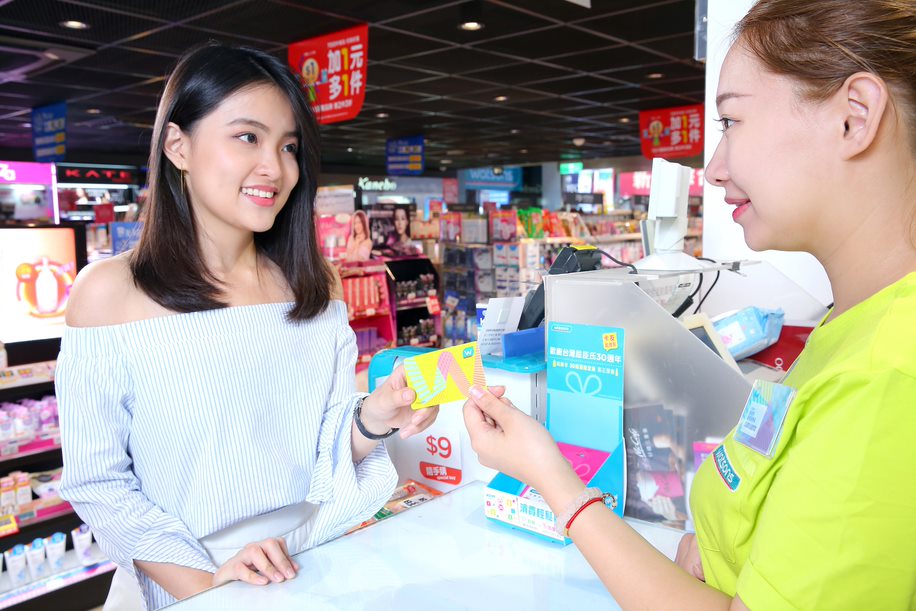
    In a world where customer preferences are ever-changing and they always want to try out something new, loyalty is everything to retailers. That is why A.S. Watson Group, the world’s largest international health and beauty retailer, is further investing in its loyal customers to give them unparalleled levels of rewards. Last month, the Group announced it is rolling out new VIP loyalty programmes worldwide to enhance customer connectivity and plans to extend to all of its 24 markets by early 2019.

    With 130 million loyalty members across the globe currently, the new VIP programme is an additional and invitation-only tier of membership which aims to reward and retain top customers. Malina Ngai, Group Chief Operating Officer of A.S. Watson Group, says, “We appreciate our customers, no matter how much they spend in our stores, and we know they love to feel valued. Our existing loyalty programmes reward everyone with great offers, but our VIP programmes thank our most loyal customers for shopping with us with amazing benefits and even more tailored rewards.” Getting Closer with Customers Since 2010, A.S. Watson Group has invested in CRM programmes in all of its key operating markets in Asia and Europe. Since that time, the Group has grown incredibly fast to an amazing 130 million members worldwide.

    The Group understands that great products, prices and service are not enough to remain close to customers. Customers are increasingly making decisions based on how retailers connect with them and make them feel. Data insights and analysis of existing CRM programmes show that around two thirds of customers who qualify as “VIP members” in a year continue as such the following year.

    These VIP members spend up to eight times more than average members each year, and this year the newly qualified VIP members’ spending saw a year-on-year double-digit increase. Now, the Group is launching VIP programmes around the globe to connect with its VIP members more closely and reward these highly valuable customers, offering an extra layer of advantages, many of which are personalised to the individual, such as exclusive invitations to product previews, members only Zumba dance events, family movie days, early access to sales and promotions and more bonus points.

    Moreover, there are a variety of additional benefits that are tailored to what’s valuable to the lifestyle of the local customer. Examples of this can be seen with free health and wellbeing classes offered to some VIP customers, such as invitations to fitness training classes for Watsons China and invitations to yoga in the sky and cooking classes for Watsons Malaysia VIP members.

    Other additional benefits include free movie tickets with Watsons Thailand, free exclusive gifts with purchases and sample boxes with The Perfume Shop in the UK and opportunities to be brand ambassadors and invitation to exclusive beauty workshops and shopping nights with ICI PARIS XL. Using Data Technology to Enhance Customer Connectivity In line with the launch of the Group’s CRM programmes in 2010, A.S. Watson has established a CRM function and focus on building CRM capabilities.

    This year, the Group launched DataLab which unites over 100 CRM experts around the world to share insights and best practices. With four billion customers each year and 30 million items sold every day around the world, A.S. Watson Group collects on average 4,300 terabytes of customer data every three years.

    To convert such enormous amounts of data to a useful tool which helps build closer relationships with customers, DataLab is using the latest technology to extract vital customer insights. This will help A.S. Watson better understands its VIP members, and provide more personalised, exclusive offers; all of this is done to achieve even stronger customer connectivity. Malina added, “We’re continuously investing into data technology and in doing so have launched DataLab, which does not only help us generate customer insights that are useful in enhancing retention and increase customer spending, but also enables the Group to make smarter decisions, blending science, experience and intuition. With cutting-edge data technology, we are turning transactions to interaction and that is how we are staying connected with our customers.”

  • Reebok Releases First of Its Kind Sports Bra Featuring New Reactive Technology

    Reebok Releases First of Its Kind Sports Bra Featuring New Reactive Technology

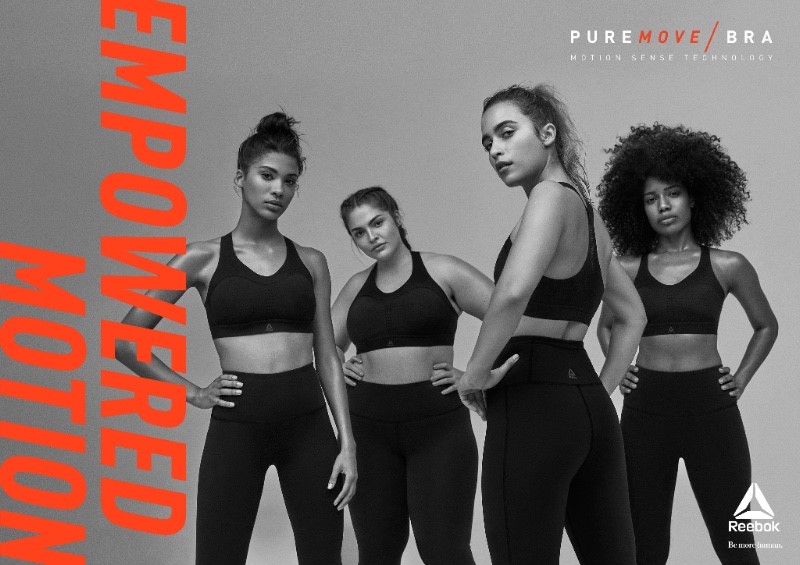
    Global fitness brand Reebok makes waves in the sports bra industry with the unveiling of the Reebok PureMove Bra: a first of its kind, technologically advanced sports bra that uniquely responds and adapts to movement to provide women with a customised amount of control and support, exactly where and when they need it. Just over forty years after the first sports bra came to market, Reebok is proud to debut a first of its kind product featuring the brand’s new proprietary Motion Sense Technology.

    Treated with STF (Sheer Thickening Fluid), a gel-like solution that takes a liquid form when in a still or slow-moving state and contrastingly stiffens and solidifies when moving at higher velocities, the fabric technology adapts and responds accordingly to the body’s shape, velocity of breast tissue, and both type and force of movement. The end result is a sports bra that does it all – one that stretches less with high impact movements, while providing the comfort and light support that is desirable during rest and lower intensity activities.

    To celebrate one of Reebok’s most anticipated product launches in 2018, the PureMove Bra is brought to life through powerful campaign imagery featuring a team of Reebok’s most formidable female partners including Gal Gadot, Gigi Hadid and Nathalie Emmanuel.

    Some key performance features of the PureMove Bra in addition to the reactive fabric technology include: 

    • Responsive Support: Revolutionary fabric that reacts to your movement for absolute control and support.
    • Minimalist Construction: Comprised of only 7 unique pieces of fabric that mould to the body for a seamless fit, the end result is a second-skin like design that creates a barely-there feel.
    • Natural Shaping: Moulded front panel and free cut edges for a minimalistic, second-skin fit so you can move freely without distractions.
    • Breathable Perforations: Perforations in front and back to keep you cool and comfortable, no matter the physical activity.

    The Reebok PureMove Bra will be available in Singapore from 27 September 2018. It will retail for S$79, in sizes XS, S, M and L. It will be available at all Reebok Fit Hub stores and selected Royal Sporting House stores.

  • Alcis Sports To Partner Haryana Steelers

    Alcis Sports To Partner Haryana Steelers

    Alcis Sports, an Indian sportswear brand, announced their association with Haryana Steelers for the sixth season of Pro Kabaddi League that will start from 5th October. Alcis Sports will provide technologically advanced sportswear to Haryana Steelers to enhance their comfort and performance.

    Alcis Sports is a homegrown Indian sportswear brand which is at par with any international brand in terms of quality and also is in sync with Indian sensibilities. Alcis Sports prides itself for being the first Indian brand to have the capability and production ability to manufacture technologically advanced sportswear to enhance the performance of the wearer, bringing the best of style, comfort and cost; backed by great innovation and technology.

    In the past, Alcis Sports has been the trusted kit partner for several high profile sporting events and teams across sports such as cricket, football, kabaddi, running etc. Alcis Sports has been the licensed apparel merchandise partner in India for both FIFA U-17 World Cup India 2017 and the 2018 FIFA World Cup Russia. Alcis Sports was also the Official Kit Partner of the 2018 Kabaddi Dubai Masters held in Dubai and recently partnered with Inspire Institute of Sports (IIS).

    Roshan Baid, Managing Director, Alcis Sports, said “Its disheartening to see great Indian sportsmen wear clothes made by foreign brands, we being the largest manufacturer and exporter of Sportswear in India feel proud to be supplying international quality sportswear to Indian sportsmen. These clothes are designed keeping in mind Indian weather conditions and body types. They are infused with the latest technologies and I am sure will help our sportsmen & sportswomen preform better.”

    He further added, , “We are glad to be associated with Harynana Steelers for the sixth edition Pro Kabaddi League. Kabaddi being an indigenous sport is extremely close to our hearts and it is heartening to see it’s growing popularity in the last couple of years. We were the official kit partner for 2018 Kabaddi Dubai Masters and our products were highly appreciated internationally.”

    Ravish Nanda, Director, Alcis Sports, said, “We have done a lot of research in making the playing kit for the players. The player Jersey and shorts are made out of very high stretch fabric to give comfort to the players and it is loaded with technology to enhance their performance. Even the stitching thread used has innovative performance stretch for high extension. It has high initial modulus which minimise the risk of seam extension failure.”

    The entire apparel range for the Haryna Steelers features some of the most advance garment technology and is highly stretchable. Stylish, easy and comfortable to wear, they are equipped with features such as Dry-Tech — which doesn’t hold sweat and moisture for long, and are made with Anti-Microbial, Anti-Odour and Anti-Static finishes.

  • DFS in exclusive launch of latest Michael Kors capsule collection

    DFS in exclusive launch of latest Michael Kors capsule collection

    DFS Group, the world’s leading luxury travel retailer, is excited to announce the launch of an exclusive Michael Kors capsule collection available only in DFS and T Galleria by DFS stores this October. Inspired by the jet-set lifestyle and designer Michael Kor’s take on luxury, the exclusive DFS x Michael Kors collection features thirteen handbags, three wallets, a watch with three straps and a pair of chic sunglasses.

    Building upon a history of successful collaborations, this capsule marks the third exclusive collection Michael Kors has launched with DFS Group. Starring influential Chinese actress Yang Mi and photographed by renowned Chinese photographer Chen Man, the campaign spotlights the actress and fashion icon showcasing the limited-edition styles on the chic streets of Shanghai.

    The DFS x Michael Kors collection includes the Whitney Large Shoulder Bag with quilted stitching and a detachable crossbody strap, the Whitney Medium Backback with sleek push-lock gunmetal hardware and chain-trimmed shoulder straps, the Benning Medium Messenger Satchel in two toned leather with polished hardware, as well as the Lauryn Three-Hand Watch Set with a pearlescent dial and two additional straps and classic rounded Aviator Sunglasses. The DFS x Michael Kors collection is available in an array of smooth and metallic jewel tones and prices range from USD$88 – USD$378.

    The exclusive DFS x Michael Kors collection will be available in 19 DFS and T Galleria stores across 13 counties beginning October 1 and offered while supplies last.

  • Louboutin focuses more on kids

    Louboutin focuses more on kids

    For many women, investing in a set of Christian Louboutin shoes is the ultimate luxury-good rite of passage. A pair of the heels will set you back hundreds of dollars, but that’s a small price to pay to rock the famous red sole. Now, because it’s 2017 and the world is #extra, the brand has announced it’s branching out into making teeny tiny versions of their favourites with the help of Gwyneth Paltrow’s Goop lifestyle brand.

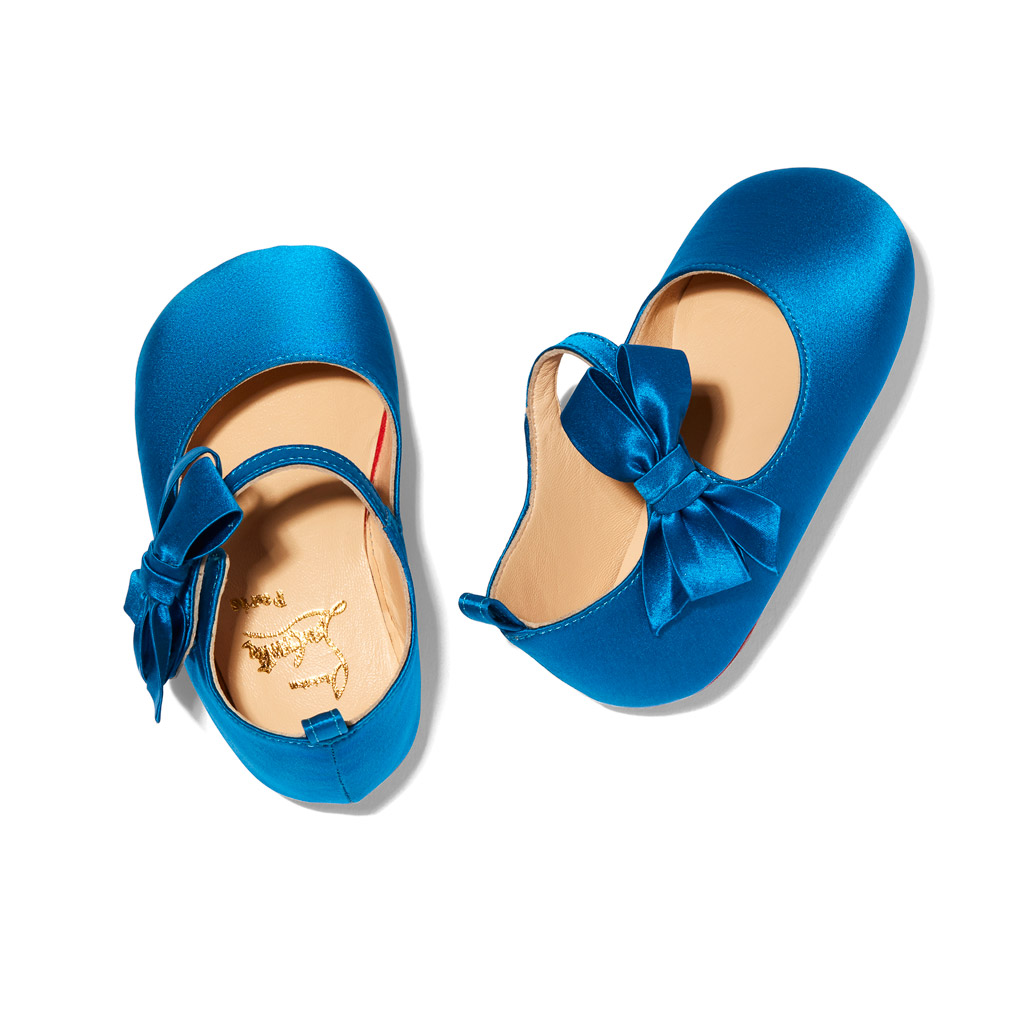
    The shoes are set to launch in November. The Loubibaby collection includes red, blue, pink and gold Mary Janes.

    Each shoe features a handmade ribbon bow, the brand’s signature red sole, and is guaranteed to turn any child into the chicest baby on the block.

    The baby shoes will retail for US$250 and will be available exclusively on Goop from 16 November.

  • Furla growth report slowing down

    Furla growth report slowing down

    Italian handbag label Furla has posted a 5.8 per cent rise in sales for the first half of the year, down from 23.5 per cent growth during the same period last year.

    Furla sales growth in Asia has similarly slowed, showing a 27 per cent growth in the Asia-Pacific region as opposed to last year’s 63 per cent increase. Furla recently assumed direct control of retail distribution in the greater China region.

    Furla generates 23 per cent of its sales in Japan against 7 per cent in the US. Revenue growth for Japan was 9.5 per cent, while growth for the US market was 24.2 per cent. E-commerce sales are up 24.1 per cent.

    Furla’s GM Alberto Camerlengo said: “For us, 2018 is a year of consolidation.” He described the firm’s plans to strengthen its delivery organisation via the adoption of a more advanced IT system as better suited to the company’s increased size.

  • Sales, profit soar for Levi Strauss & Co in Asia

    Sales, profit soar for Levi Strauss & Co in Asia

    Levi Strauss & Co Asia boosted operating income by 30 per cent in the latest quarter as sales rose 10 per cent and margins improved.

    Asia proved to be the US-headquartered denim retailer’s best-performing of three geographical regions, even after excluding a $4 million unfavourable change in currency year on year.

    In Europe, operating profit rose 25 per cent on sales up 17 per cent and in the US income rose just 4 per cent on sales up 9 per cent in the three months to August 26.

    Levi Strauss & Co Asia sales increased across all channels – wholesale, retail and online – and the strong operating profit performance came despite increased direct-to-consumer investments across key markets.

    Chip Bergh, president and CEO at Levi Strauss & Co, said the result marked the fourth consecutive quarter of double-digit sales growth, at 11 per cent worldwide, after adjusting for unfavourable currency movement.

    “This growth was broad-based across virtually every part of our business, including all four brands, men’s, women’s, tops and bottoms, and all regions and channels, with results that put us among the top performers in the industry.”

    The company had 65 more company-operated stores at the end of the third quarter of this year than it did a year ago. Wholesale revenues grew 8 per cent, reflecting improved sales in all regions.

    Globally, Levi Strauss & Co’s gross margin for the quarter was 53.2 per cent of net revenues compared with 51.8 per cent in the same quarter of last year, reflecting the benefit from achieving more direct-to-consumer sales.

    Operating income for the third quarter of US$159 million was up 8 per cent year on year.

  • New CDFG flagship at Grand Lisboa Palace in Macau

    New CDFG flagship at Grand Lisboa Palace in Macau

    Sociedade de Jogos de Macau (SJM) and China Duty Free Group (CDFG) announced that they have entered into a binding Memorandum of Understanding to open a CDFG flagship store at Grand Lisboa Palace in Macau.

    Grand Lisboa is SJM’s future integrated resort on Cotai, Macau. It is expected to open in the second half of 2019.

    CDFG will be the anchor tenant, operating 7,500sq m in a prime first floor retail space at the Grand Lisboa Palace, marking the Chinese travel retail giant’s downtown debut in Macau.

    CDFG, established in 1984, is China’s leading duty free retailer, and is a subsidiary of the travel giant China National Travel Service Group Corporation Limited (CNTS).

    CDFG has over 200 stores across China, the most duty free outlets in a single country within the travel retail sector.

    CDFG’s Macau flagship store will be in Grand Lisboa Palace’s much-anticipated 53,000sq m retail mall themed “Fantasy Garden”, which will cover the first and second floors of the development.

    Building on CDFG’s long-term relationships with top-tier luxury brands, its Macau flagship store at Grand Lisboa Palace will carry a diverse mix of perfumes and cosmetics, watches and jewellery, apparels, shoes and accessories, travel-related products, and other categories.

    “Macau is an integral part of the Greater Bay Area, welcoming 32.61 million visitors in 2017, amongst which 90.3% were tourists from Greater China.” said Charles Chen, CDFG’s President.

  • Theory Expands Footprint in China with Tmall Debut |

    Theory Expands Footprint in China with Tmall Debut |

    New York-based clothing label, Theory, known for its minimalist, precisely tailored wardrobe essentials, has opened its first online store in China on Alibaba’s Tmall e-commerce platform and its dedicated site for high-end shoppers, Tmall Luxury Pavilion. The stores offer all items in Theory’s womenswear and menswear collections available in its brick-and-mortar stores, including its newest Good Wool and autumn-winter 2018 lines. Offline, the brand currently counts 33 stores across 17 cities in China, a number it expects to double in three years.

    “Tmall’s partnership with Theory is a milestone in our continued market leadership in China as the premier B2C platform for fashion. We will empower Theory through our unparalleled data-driven consumer insight and New Retail technology to serve and discover fashion consumers across China, as well as build lasting relationship with customers,” said Jessica Liu, president of Tmall Fashion and Luxury.

    As part of the partnership agreement, Theory and Tmall will work more closely to leverage consumer insights and offer personalized New Retail experiences, starting with providing the same bonus points, sales benefits and exclusive birthday perks to Theory’s hundreds of thousands of VIP loyalty club members, both online and offline, for a more-seamless shopping experience across all channels.

    Tmall also provided the brand with marketing support, such as promoting its popular merino wool and cashmere clothing on Tmall Cashmere Category Day, an online-to-offline, multi-brand marketing event that ran from Sept. 24 to 26. The category is specially highlighted because of growing popularity of cashmere goods among the 30-40 age group on the platform, with the most rapid sales growth coming from younger consumers under 30 years old, the e-commerce platform said.

    “We will continue to roll out similar campaigns with Theory. At the same time, the brand has already merged its online and offline membership system to ensure the most complete set of rewards and services for its customers across all its online and offline channels,” said Anita Lyu, vice president of Tmall Fashion.

    Owned by Japan’s apparel giant Fast Retailing, Theory has pioneered a new category in the market now known as contemporary fashion — garments and accessories with designer aesthetics and premium quality, but sold at more-affordable price points. Contemporary fashion labels include Massimo Dutti, Charles & Keith and H&M Group’s COS.

    Aside from Theory, Fast Retailing also owns fashion brands, including Austrian contemporary label Helmut Lang, Los Angeles-based demim brand, J Brand and French lingerie brand, Princesse tam.tam, as well as premium fashion brand Comptoir Des Cotonniers. Two of its brands, Uniqlo and GU, have already opened flagship stores on the Tmall platform.