Category: Fashion

Retail News Asia is committed to providing both local and global retailers with the latest Fashion news throughout the Asian market. This on a daily base.

  • H&M to shut high-profile Singapore store

    H&M to shut high-profile Singapore store

     H&M’ s two-storey Ion Orchard outlet is closing in March, after a run of more than a decade.

    Opened in 2012, the store’s last day of operations is on March 12, according to a Facebook post by the Swedish fast-fashion brand on Feb

    The post added: “But don’t worry. We’ll meet in other places.” The retailer, which currently has nine outlets in Singapore, shuttered two outlets in recent years.

    H&M’s Tampines Mall outlet was shut in August 2020, while its Waterway Point outlet in Punggol closed in January 2021.

    The Straits Times has contacted H&M for comment.

    H&M entered the Republic in 2011 with a flagship store at Somerset.

    The world’s No. 2 fashion retailer – behind Inditex, which owns Zara – has had a spate of closures in Europe, spurred by factors such as the Ukraine-Russia conflict and high inflation.

    According to media reports, one in five of its Britain-based stores had closed in the past few years, with four more stores earmarked to close this year citing “a rapid change in customer behaviour”.

    In October 2020, the retailer said it planned to cut 250 of its stores globally. As at Nov 30, 2022, it had 4,465 outlets worldwide.

    Luxury brands have weathered factors such as the Ukraine-Russia conflict far better than their high-street counterparts.

    While H&M saw its net profit fall 68 per cent from 2021 to 3.6 billion Swedish kronor (S$450 million), French multinational LVMH – which owns brands including Tiffany & Co, Christian Dior and Sephora – had a record year in 2022, raking in a 23 per cent jump to hit €79.2 billion (S$112.9 billion) in 2022.

  • Amorepacific Group’s net profit halved last year

    Amorepacific Group’s net profit halved last year

    On April 28, Amore Pacific Group announced key figures for Q1 FY2022, with the Korean beauty giant reporting sales of $997 million, down 9% year-on-year, operating profit of $136 million, down 13.4% year-on-year, and net profit of $104 million, down 25.2% year-on-year.

    The earnings report noted that domestic sales in Korea continued to account for the largest share of sales at 62.9%, down 9.9% year-over-year, while overseas sales fell 6.1%. In addition, in its fiscal 2021 earnings report, it noted that the Korean beauty giant’s sales rose 8% to $4.26 billion in 2021, which ended on December 31 last year, while operating profit soared 136.4% to $286 million, with sales up 8% year-over-year to $4.2 billion and net profit of $240 million , a 1224% jump compared to 2020.

    For the reason that its revenue decreased 10%, Amore Pacific Group said pure domestic (Korean) revenue increased from strong online sales growth (over 20%) but travel retail revenue declined by double digit (24% of total revenue).

    In the first quarter of 2022, group revenue in Asia fell 10% to $300 million due to revenue decline from resurgence of COVID-19 and restructuring of offline stores.

    Notably, in Asia, Amore Pacific’s premium brand Sulwhasoo contributed accounting 35% in its Luxury Subsidiary. Sulwhasoo strengthened representative anti-aging solution line of Sulwhasoo strengthened its representative anti-aging solution line of “Concentrated Ginseng Renewing Serum Ex, eye cream”.

  • Uniqlo parent says profit slipped as Japan, China drag growth

    Uniqlo parent says profit slipped as Japan, China drag growth

    Japan’s Fast Retailing Co, owner of clothing brand Uniqlo, said on Thursday that first quarter earnings slid 2%, reflecting weakness at home and continuing COVID-19 restrictions in China.

    A day after announcing plans for big wage rises, the company said operating profit had been 117.1 billion yen ($889.82 million) in the three months to the end of November, compared with 119.4 billion yen a year earlier.

    The consensus forecast was for 135.3 billion yen, according to the average of five analyst estimates collected by Refinitiv.

    Domestic results were hit by warmer weather in November that stifled sales of fall and winter wear, while COVID curbs continued to weigh on China, including the temporary closure of 247 stores in Beijing and Guangzhou.

    “Once ‘with corona’ lifestyles take root, we think a normal operations will come back on the Chinese mainland,” CFO Takeshi Okazaki told reporters.

    Sales and earnings in all other regions increased. The company held its full-year operating profit forecast at 350 billion yen.

    The company, Japan’s biggest retailer, sent shockwaves through the country on Wednesday by saying it would lift its employees’ wages by as much as 40%. That greatly satisfied policymakers, who had been urging employers to raise wages to help offset the highest inflation in a generation.

    “From a macro perspective, this move highlights that it is becoming increasingly difficult for Japanese companies to attract and retain workers,” said Mark Chadwick, an independent equities analyst who publishes on the Smartkarma platform.

    Fast Retailing, which operates more than 3,500 clothing stores worldwide, reported record profit last fiscal year, as growth in North America and Europe compensated for a slump in China.

    The company is seen as a bellwether for the Chinese market, where it produces many of its goods and operates almost 900 Uniqlo stores, more than in Japan.

    Fast Retailing’s share price slid 2% in Tokyo trade, compared to a flat benchmark Nikkei index.

  • LVMH names new CEOs for Louis Vuitton and Dior

    LVMH names new CEOs for Louis Vuitton and Dior

    LVMH Moët Hennessy Louis Vuitton SE, Europe’s most valuable company, is embarking on one of its biggest management shake-ups in years, elevating Pietro Beccari to lead Louis Vuitton and tapping Delphine Arnault, daughter of Chief Executive Bernard Arnault, to run Christian Dior.

    The changes announced Wednesday, effective Feb. 1, involve two of the luxury giant’s largest brands and some of its best-known managers. Both Louis Vuitton and Dior have been on a tear, most recently riding a postpandemic boom in luxury spending that so far has shown little sign of easing.

    LVMH emerged from the pandemic as Europe’s largest company by market value, far ahead of the continent’s industrial stalwarts such as Shell PLC, Airbus SE and Volkswagen AG. Mr. Arnault, meanwhile, has recently usurped Elon Musk as the world’s richest person.

    This year, loosened Covid-19 restrictions in China—one of the luxury industry’s biggest markets—have further boosted LVMH’s shares, which rose as much as 2% on Wednesday to hit a record intraday high, bringing year-to-date gains to 13%.

    In taking the helm of Louis Vuitton, Mr. Beccari succeeds Michael Burke, who has led the fashion brand for a decade. Mr. Burke is one of the most trusted lieutenants of Mr. Arnault—LVMH’s CEO and controlling shareholder—having worked with him since the 1980s. LVMH said Mr. Burke, 66 years old, would now assume new duties, reporting directly to Mr. Arnault.

    Mr. Beccari currently leads Dior, where he will be succeeded by Delphine Arnault, the eldest of Mr. Arnault’s five children.

    The management changes mark a homecoming of sorts for Ms. Arnault, who worked for 12 years at Dior before joining Louis Vuitton as No. 2 in 2013. It is also the first time she takes on a CEO job at one of LVMH’s brands. At Louis Vuitton, Ms. Arnault was in charge of all product-related activities. She was recently responsible for a collaboration between the brand and Japanese artist Yayoi Kusama for a major new collection.

    Ms. Arnault’s elevation will be closely watched in Paris business circles, where monitoring the progress of Mr. Arnault’s children with a view to potential succession is a favorite pastime. All of Mr. Arnault’s children have responsibilities at the luxury conglomerate that he has built over decades. Last month, Mr. Arnault named his eldest son, Antoine Arnault, CEO of the family holding company that owns the bulk of the family’s stake in LVMH.

    The challenge for both Ms. Arnault and Mr. Beccari will be to keep the growth humming at Louis Vuitton and Dior as the global economy confronts challenges ranging from high inflation to Covid-related disruption in China and the war in Ukraine. In November, consulting firm Bain & Co. forecast that sales of personal luxury goods would rise between 3% and 8% in 2023, a sharp slowdown on last year’s growth that it estimated would be 22%.

    The strength of Louis Vuitton and Dior, which in recent years have both proved popular with shoppers regardless of the fashion trends of the day, have been instrumental in helping LVMH become the world’s biggest purveyor of luxury goods, extending its lead over rivals such as Gucci-owner Kering SA and Cie. Financière Richemont SA, which owns Cartier.

    In returning to Louis Vuitton, Mr. Beccari rejoins a leather-goods juggernaut that he first joined in 2006. In recent years, the Italian executive has overseen remarkable growth at Dior, where analysts estimate revenue has more than tripled over the past five years. At Dior, Mr. Beccari’s achievements include the opening of a huge new flagship store in Paris’s luxury shopping district that extends over five levels.

    Mr. Beccari has also become known for pushing an array of high-visibility projects around the globe. Recent examples include a fashion show last month in front of Egypt’s ancient Giza pyramids as well as a major partnership with Harrod’s, the luxury British department store, for the Christmas season.

    Mr. Beccari now takes responsibility for LVMH’s biggest brand. LVMH doesn’t disclose revenue for individual brands, though analysts at Citi estimate that revenue at Louis Vuitton rose to 21.8 billion euros, equivalent to $23.40 billion, last year. “Vuitton has become one of the strongest and most resilient luxury brands,” they said Wednesday.

    That rise has come under the leadership of Mr. Burke, whose tenure at Louis Vuitton included the brand’s much-hyped collaboration with cult streetwear brand Supreme in 2017 as well as tapping the late Virgil Abloh as menswear artistic director the following year.

    On Wednesday, Mr. Arnault credited Mr. Burke with extending Louis Vuitton’s lead over its competitors and promoting the brand’s heritage while anchoring it in modernity.

    A dual French-U.S. citizen, Mr. Burke has worked for Mr. Arnault since graduating from business school, initially on real-estate investments in the U.S. before taking the helm of Christian Dior USA in 1986.

    He also oversaw the integration of U.S. jeweler Tiffany’s into LVMH. As part of the organizational changes announced on Wednesday, Tiffany’s—which LVMH bought for more than $15 billion in 2021—will now be housed in the group’s watches & jewelry division.

  • L’Oreal launches make-up applicator for people with limited mobility

    L’Oreal launches make-up applicator for people with limited mobility

    L’Oréal has debuted a motorised, handheld device that allows people with limited hand and arm mobility to apply make-up steadily.

    The slender new product uses motion sensors and magnetic attachments that enable make-up application in 360-degree rotations and 180-degree flexions, according to the company.

    The move is part of the cosmetics industry’s push to develop products for people with disabilities – a generally untapped market that is believed to be worth $1.2 trillion (£990 billion). Thus far, these efforts have largely focused on creating ergonomic products, such as make-up brushes that can bend and are easier to grip, and easy to open moisturisers.

    L’Oréal says the new Hapta device is aimed at the 50 million people around the globe with limited fine motor skills, including those with cerebral palsy or who have suffered a stroke.

    The product, unveiled at the CES tech show in Las Vegas, will be piloted with a lipstick applicator later this year from L’Oréal brand ​​Lancôme.

    L’Oréal and Verily began collaborating on skincare and digital dermatology tools in January.

    “Beauty tech [is] revolutionising the way we develop beauty products and services and enabling greater personalisation,” said Françoise Lehmann, Lancôme’s global brand president. “With Hapta we are going one step further by making beauty more accessible to use, because everyone should have equal access to it.”

    Also at CES, the cosmetics company announced a Brow Magic applicator that offers personalised eyebrow looks based on face scans from an accompanying app.

    The product has 2,400 small nozzles and a printing resolution of up to 1,200 drops per inch. L’Oréal says it can apply a precise brow shape in seconds and can be removed using a standard makeup remover. Brow Magic looks at the user’s face shape and thickness to make recommendations for microblading, micro-shading or filler effects. The product is scheduled to arrive later this year.

  • Hermes Expands in Nanjing as Luxury Industry Bets on Chinese Return

    Hermes Expands in Nanjing as Luxury Industry Bets on Chinese Return

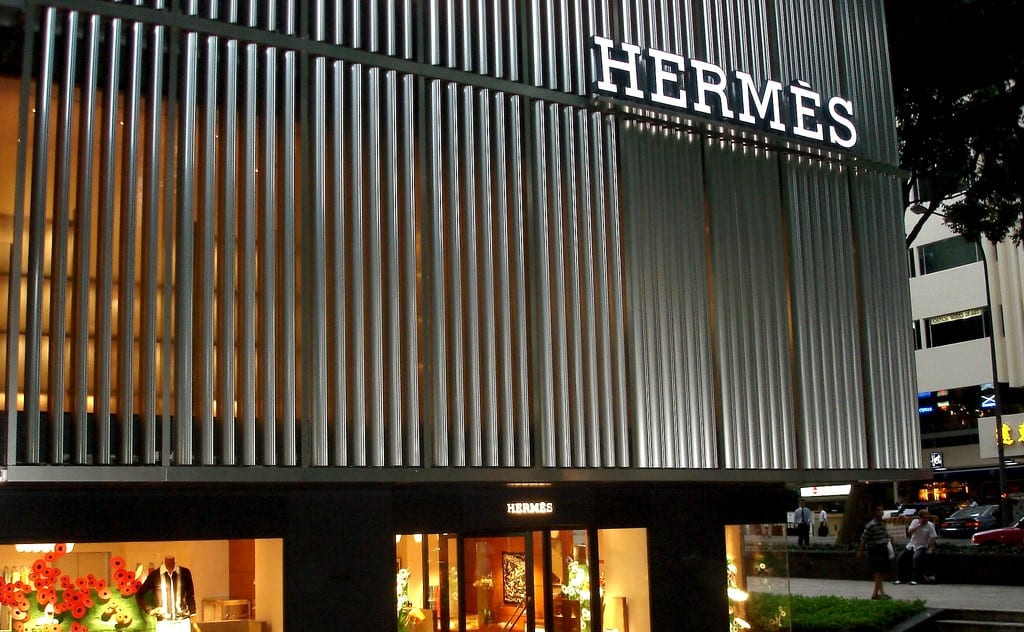
    Birkin bag maker Hermes is opening a new, enlarged store in China’s Nanjing city, signalling the luxury industry’s confidence in a strong return of Chinese shoppers after three years of tough COVID-19 restrictions.

    Hermes, which first opened a store in the city in 2010, has now relocated to the upscale mall Deji Plaza, with a wider product selection spread across two floors, from silk scarves to leather goods, as well as home decor, jewellery and clothing.

    European luxury houses have continued to invest in China, expected to become the sector’s largest market by 2025, despite a turbulent year marked by disruptions as the country imposed strict curbs to contain the spread of the coronavirus.

    News in late December that the country was relaxing travel rules pushed up the share prices of global luxury companies including the world’s largest, LVMH.

    Hermes and LVMH both generated around 30% of annual sales in China in 2020, according to UBS.

    Mainland China, where Hermes counts 27 stores, has been a strong focus for the leather goods specialist. Last year, Hermes opened a larger store in Wuhan, and set up its first shop in Zhengzhou, in Henan province.

    China is expected to serve as an important source of growth in the coming months as Europe faces an energy crisis and the U.S. economy cools. Bernstein analyst Luca Solca forecasts luxury sales could grow between 25% and 35% in the country this year while in the West they are expected around 5% to 10%.

  • Dr Martens shuts all stores in the Philippines

    Dr Martens shuts all stores in the Philippines

    German-founded British footwear and apparel brand, Dr Martens, has closed all of its physical stores in the Philippines.

    The brand announced on social media that it closed all of its remaining four stores in Glorietta 4, SM Mall of Asia, SM Megamall, and Manila Bay by the end of last month. However, Dr Martens did not disclose the reason behind its physical withdrawal from the market.

    Local sources said Dr Martens started shutting its stores in the country last February, including its flagship store in Two Parkade BGC.

    UK-based footwear retail reported a 13 percent year-on-year increase in revenue, reaching US$507 million in turnover for the first half of the fiscal year 2023. The brand opened 21 new stores and closed five stores during the period.

    “Although there are economic challenges ahead, we are well positioned for future growth,” said Kenny Wilson, CEO of Dr Martens.

    Dr Martens’ store closure in the Philippines occurred despite the market having seen growth in sportswear spending. Last month, US sneaker chain Foot Locker expanded into the country with the first store opened inside Manila’s Glorietta shopping mall under the partnership with Indonesian retailer MAP Aktif Adiperkasa.

  • Canadian luxury jewellery brand Korite to expand to Asia

    Canadian luxury jewellery brand Korite to expand to Asia

    Canadian luxury jewellery brand Korite has named Kaimirra Tutan as its exclusive distributor in Asia.

    Kaimirra Tutan will bring Korite’s luxury lines of jewellery and ammolite gemstones to customers across Asian markets, including Malaysia, Singapore, Thailand, Vietnam, and South Korea. The partnership between the two jewellers follows the launch of Kaimirra Tutan’s flagship boutique in Malaysia’s shopping complex Mid Valley Megamall earlier this year.

    “Kaimirra Tutan gives us the ability to reach customers through their retail stores, e-commerce, and wholesale opportunities,” said David Lui, CEO at Korite. “This partnership not only allows us to work with another Canadian company, but it is also an essential element of our future growth and we couldn’t be more excited.”

    Founded in 1979, Korite specialises in ammolite gemstones and jewellery that is ethically mined and handcrafted by skilled artisans. Kaimirra Tutan is a luxury jewellery brand launched in 2010 in Toronto.

    In case you missed this news, Japanese bridal jewellery company I-Primo has opened its first Southeast Asia flagship store in Singapore after launching a pop-up in June.

  • L’Oreal Groupe launches 19 new boutiques in Haikou Duty Free

    L’Oreal Groupe launches 19 new boutiques in Haikou Duty Free

    Travellers can experience professional consultation services for skincare, make-up, and haircare, along with personalised treatments at professional skincare cabins by Lancôme, Helena Rubinstein, SkinCeuticals and Armani Beauty. An array of tech-enabled beauty services will also be available, including Lancôme Skin Screen, SkinCeuticals SkinScope, L’Oréal Paris Science Table, Yves Saint Laurent (YSL) Neuro Fragrance Consultation, Kérastase’s Kérascan for scalp and hair, and a blow dry service pop-up.

    With CDFG’s “Scan and Purchase” initiative, customers can make purchases with reduced queuing and waiting time.

    All store counters were constructed using eco-certified and recyclable materials and pop-ups and future retail animations will be built on L’Oréal’s Eco-Design Golden Rules, where certified recycled FSC, PESC, and mono materials are optimally-weighed, made redressable, separable for disassembly, and old fixtures from previous animations to be reused.

    L’Oréal Travel Retail President Vincent Boinay said: “As L’Oréal Travel Retail and China Duty Free Group, we share the same passion to provide beauty for all travellers. Haikou International Duty Free Shopping Complex is a symbol of our 20 years of great collaboration. We are proud to showcase the best of beauty with our 19 brand flagship boutiques welcoming Chinese travellers to live the exclusive L’Oréal experience – best in retail expression, best in beauty tech innovation, best in services, best in engagement and best in sustainability.”

    China Duty Free Group President Charles Chen said: “With CDF Haikou International Duty Free shopping complex, CDFG’s vision is to build a shopping destination that will set a new benchmark for travel retail. We are delighted with the 19 outstanding and amazing beauty boutiques, services and experiences that L’Oréal has designed for our complex. These boutiques will certainly give our travelers many reasons to visit and repeat.”

  • Nike and Adidas supplier offers bigger Tet bonuses

    Nike and Adidas supplier offers bigger Tet bonuses

    Some 130,000 workers at Taiwanese-invested footwear maker Pou Chen Vietnam, a contract manufacturer for giants like Nike, Adidas and Puma, will enjoy a 30% increase in Tet bonuses this year.

    That puts the annual windfall for employees at the global shoe supplier back to pre-Covid levels.

    Eight Pou Chen Vietnam factories in HCMC and four in the southern provinces of Dong Nai, Tien Giang, Tay Ninh and Ba Ria Vung Tau announced on Monday that they will set aside over VND1.5 trillion ($62.5 million) as bonuses for workers for the upcoming Tet (Lunar New Year Festival). Tet, the most important festival in Vietnam, falls in late January 2023.

    Depending on seniority, workers who have worked for the company a full year or more will be given Tet bonuses of 1-2.2 months’ salary, from around VND6.5 million ($274.20) to nearly VND26 million. The highest bonus in 2022 was 1.54 months’ salary, while in 2021 the figure stood at 1.87 months.

    Besides Tet bonuses, the biggest and most anticipated reward for workers, Vietnam’s largest employer and trade unions at of its eight factories have planned provide free bus tickets home to migrant workers who will be able to enjoy Tet in their hometowns. Other gifts to poor employees will also be distributed.

  • Myntra launches fashion label Kenneth Cole in India

    Myntra launches fashion label Kenneth Cole in India

    Myntra announces the launch of global designer-led fashion brand, Kenneth Cole, further boosting the portfolio of international brands available on its platform. A brand with huge international repute, Kenneth Cole offers unique premium products catering to an urban and socially conscious audience between the age group of 22-35 years to begin with, the brand will offer over 140 SKUs across categories like T-shirts, shirts, jeans, and winter wear.

    Founded in 1982, the American fashion house, Kenneth Cole, is one of the leading fashion brands worldwide and is available across stores as well as online. The brand’s unique collections include Techni-Cole, Conscious-Cole will also be available as a part of EORS 17 offerings, which is scheduled to be held between Dec 10 to 16, this year. The Techni-Cole collection uses technical fabrics, making it more flexible and functional, while the Conscious-Cole collection uses sustainability-led fabrics and organic cotton, along with Kenneth Cole’s unique take on modern work-wear, appealing to a product-conscious cohort. Kennethism, which are quotes from Kenneth Cole himself, helps drive the brand message to the audience, further augmenting the brand’s salience among shoppers.

    Kenneth Cole’s launch on Myntra will help Kenneth Cole reach and engage with diverse targetaudiences and amplify its presence in the country. The association allows our in-house speciality teams to design, manufacture and distribute Kenneth Cole apparel, accessories and footwear digitally in India. Men’s and Women’s Apparel from Kenneth Cole is live on Myntra, with other categories launching in the upcoming seasons. Kenneth Cole will further have its own Online Brand Store (OBS) on Myntra, allowing shoppers quicker access and a richer shopping experience.

    Talking about the launch, Nandita Sinha, CEO, Myntra, said, “Kenneth Cole has created a mark for itself over the years, among global fashion and lifestyle consumers. We are delighted to welcome Kenneth Cole on Myntra and are confident of the brand being able to build deeper salience with the millions of shoppers across the country, especially with Kenneth Cole’s product-driven approach and Myntra’s wide reach and popularity with India’s fashion-forward consumer base.” Speaking on the launch, Kenneth Cole, said, “We are excited to announce this initiative which is intended to firmly establish our footprint in the Indian market. Myntra is one of the leading platforms in the fashion and lifestyle space and we are looking forward to partnering with them to meet the
    hyper-growing stylish aspirations of Indian consumers.”

    Myntra’s EORS-17, is set to bring offerings from over 6000 brands across a whopping 17 lakh styles.
    As a part of the event, Myntra is also presenting EORS specials and Kenneth Cole will be a part of the
    EORS specials this edition. First-time shoppers can expect a flat ₹500 off on their initial transaction,
    along with free shipping on their first four orders, while also receiving exciting coupons for future use.

  • Levi’s largest Southeast Asia store lands in Singapore

    Levi’s largest Southeast Asia store lands in Singapore

    Levi’s will be launching new stores and rolling out existing store refreshes as well as new in-store services throughout the East Asia Pacific (EAP) region. New stores are expected to launch this year in Singapore, Malaysia, Indonesia, Japan, Australia, and Thailand. This is part of the company’s plans to accelerate sustainable business and commercial growth in the EAP region.

    Its stores and shop-in-shops will be refurnished into NextGen Indigo stores, and this will be done using digital tools to streamline the consumer journey, including installing LED portal entry archways and LED screens for marketing content. Levi Strauss & Co. managing director and senior vice president of EAP, Nuholt Huisamen, said that in Thailand alone, close to 100 new retail stores will be introduced in the new NextGen Indigo format, eight of which opened on 1 April. This marks the pivot towards a 100% owned-and-operated business model in the country, added Huisamen.

    Select stores in the region will also introduce in-store tailoring services to offer greater personalization of apparel. According to Levi’s, as the retail market finds its new equilibrium, the company will focus on omnichannel engagement, leveraging the hybrid customer experience model. Some of the brand’s marketing plans for 2022 include leveraging the brand experiences with initiatives such as 501 Day and the Levi’s Music Project. 501 Day is a global campaign that commemorates the iconic blue jean receiving its official patent. Similarly, the Levi’s® Music Project is a programme that connects with and supports artists and aims to leave a more global footprint.

    Exciting consumer-facing events and activities in Bangkok will also be announced, Huisamen said, adding that more localised activities will be rolled out in key markets this year.

    D2C focus played a role in financial success

    Levi Strauss & Co., which owns Levi’s, Dockers, and Beyond Yoga, reported an 11% increase in net revenue on a reported basis in Asia during the first quarter of the year. The increase was driven by both its D2C and wholesale channels and most markets, despite a few markets continuing to experience COVID-related impacts.

    Direct to consumer (D2C) net revenues for the region increased 17% driven by strong performance in its company-operated stores, as well as eCommerce, which was up 22%. Wholesale net revenues increased 5% driven by strength of the Levi’s brand across several markets. Net revenues through all digital channels grew 17% and represented 14% of the segment’s sales in the quarter.

    Huisamen credits its success with placing consumer at the centre of everything it does and its focus on D2C. Huisamen cited the recent expansion into Thailand as an example of this. With Levi’s global D2C eCommerce increasing by 22% in the past year, the company prioritised its Thai eCommerce site and created a dedicated CRM programme as well, to respond to the omnichannel behaviour of its younger, digitally savvy target audience.

    With young consumers becoming a priority audience, Huisamen said that it is important the brand continue to adopt a digital-first mindset to better serve and appeal to them – both from a marketing and consumer standpoint. Levi’s has thus dialled up its social media presence locally with newly launched channels on platforms such as LINE, Facebook, Instagram and Twitter. On top of that, there are brand collaborations and collections with other brands such as The Simpsons, BEAMS, Human Made and Levi’s® Fresh. These have already been rolled out in the region, and reflect the brand’s push to connect with younger audiences.

  • Desigual’s new store lands in Singapore’s Ion Orchard

    Desigual’s new store lands in Singapore’s Ion Orchard

    Located in the “prime location” of the Ion Orchard shopping center, the new store features an enhanced shopping experience “so that consumers can enjoy Desigual from a new perspective,” as stated by the brand.

    Over this fiscal year, the company has redesigned its strategy for Asian markets. In Singapore, the brand plans to reopen its Raffles City store in early 2023 and has already renovated its Vivo City store where the company has been operating for more than 16 years. This space features Desigual’s new art gallery concept like its new boutique.

    “With this store opening, we now have a presence in the most important shopping areas with our new brand image,” said Balazs Krizsanyik, head of the Barcelona-based brand in Asia.

    “We try to adapt to the specific characteristics of each market, without losing the essence of what Desigual stands for. In addition, we believe that Singapore continues to be a point of reference and benchmark within the region and provides us with a significant opportunity for expansion over the next few years,” he added.

    For his part, the company’s global commercial director, Oriol Martínez, said that Desigual’s future plans “include accelerating international expansion to implement its new brand image and paying special attention to Asian markets”. According to him, the region has always played “a very important role” in Desigual’s international business and currently “has great potential for growth”.

    Desigual’s arrival in the Asian market did not take place until 2008, when the colorful brand opened its first store in Singapore. Today, the Barcelona-based company already has around 190 points of sale in Japan, its fifth largest market in terms of turnover, China, Hong Kong, Macau, South Korea, Australia, the Philippines, Malaysia, Indonesia and Taiwan through its own stores, the online channel and multi-brand stores.

    In the Chinese market, where the company recently signed a joint venture with its local partner E-Shine, Desigual plans to launch up to 60 stores and accelerate its online sales.

    Founded in 1984, Desigual currently has more than 2,600 employees and is present in 109 countries through 10 sales channels, 393 mono-brand stores and six product categories. In 2021, the company raised its turnover by 3.4% to 371 million euros.

  • Prada hires former Luxottica chief Andrea Guerra as new CEO

    Prada hires former Luxottica chief Andrea Guerra as new CEO

    Patrizio Bertelli, the current CEO of the premium brand, will be chosen chairman at the annual shareholder meeting next spring. He will succeed Paolo Zannoni, who will be proposed for the position of executive vice chairman of the group and chairman of Prada Holding, the parent firm.

    Current Co-CEO Miuccia Prada, age 73, will continue to serve as creative director of the Miu Miu and Prada brands, the latter with Belgian designer Raf Simons, and as a board member.

  • Japanese eyewear retailer Aigan to exit China

    Japanese eyewear retailer Aigan to exit China

    The company said that Japanese eyeglasses seller Aigan will leave the Chinese market as the impact of the coronavirus dims its hopes for turning a profit.

    Already weak earnings in China have been squeezed further by coronavirus-related disruptions that forced temporary store closures.

    The Osaka-based company’s Chinese arm has lost money for seven straight years since 2015.

    Aigan set up a China unit in 1994 and later expanded to six stores in Beijing and Tianjin, including franchisees.

    Also, on Monday, the company projected a group net loss of 425 million yen ($3 million) for the fiscal year ending March 2023 — wider than the previously forecast 315 million yen. It cited losses related to liquidating the Chinese unit, estimating them at 110 million yen.