Category: Fashion

Retail News Asia is committed to providing both local and global retailers with the latest Fashion news throughout the Asian market. This on a daily base.

  • Kering invests in resale platform Vestiaire Collective

    Kering invests in resale platform Vestiaire Collective

    French luxury group Kering has taken a 5 percent stake in Vestiaire Collective, a leading platform for second-hand clothes and handbags, betting that the booming resale market will help it woo younger and more environmentally conscious shoppers.

    The purchase is part of a 178 million euro (US$215 million) financing round announced on Monday which valued Vestiaire Collective at more than US$1 billion, the companies said.

    U.S. investment firm Tiger Global Management also invested in the platform, while existing shareholders including Vogue publisher Conde Nast and French private equity firm Eurazeo put more money in.

    The pre-owned fashion market has enjoyed rapid growth over the last three years, with a further acceleration during the coronavirus pandemic, thanks to younger shoppers’ heightened focus on sustainability and also homebound consumers looking for good deals on second-hand clothes.

    “There is a real shift happening that is going to shape the future of the fashion industry, and as a leader, in the sector, we want to shape that trend,” Kering’s digital chief Gregory Boutte told reporters.

    The proportion of secondhand pieces in closets is predicted to grow from 21% in 2021 to 27% in 2023, with the value of the sector estimated to be worth over $60 billion by 2025, the companies said in a statement. Paris-based Vestiaire Collective said its transaction volume doubled in 2020.

    Luxury groups have traditionally been wary of secondhand sellers, which weaken their control over the distribution and pricing of their brands and, according to critics, can help spread counterfeit goods. But that is changing, and Kering’s star brand Gucci last year announced a partnership with U.S.-based resale platform The RealReal.

  • LVMH’s shuttered Thomas Pink brand to be revived

    LVMH’s shuttered Thomas Pink brand to be revived

    British shirt-maker Thomas Pink is set to be revived after former JD Sports executive Nick Preston acquired the brand.

    According to the Mail on Sunday, Nick Preston has brokered a deal to take control of LVMH’s shirtmaker brand, including its intellectual property but not its website or shops.

    The retailer ceased operations last year amid the Covid-19 pandemic, as LVMH Group was seeking to sell the brand. Last December, the French luxury group removed Thomas Pink from its “Fashion and Leather Goods” website page.

    According to Retail Gazette, Thomas Pink updated its own website last month, saying “We’re excited to announce that we’re returning to our roots with the same team that has helped build Thomas Pink Shirtmakers over the years”.

    “We have some things to iron out and button-up, but will be back soon with an improved website to offer you the highest quality English shirting made for modern life that you have come to know and love.”

  • Bvlgari makes Vietnam comeback

    Bvlgari makes Vietnam comeback

    Italian luxury brand Bvlgari has returned to Vietnam and opened its first store in HCMC.

    The store opened in a shopping mall in District 1, HCMC, in February but without a formal opening ceremony due to the Covid-19 outbreak and official orders not to congregate in large numbers.

    The brand is known for its Bvlgari Serpenti jewelry and watches, the B.Zero1 Jewellery collection and Octo Finissimo watches.

    Some of its products cost more than €25,000 ($30,180).

    The brand used to be sold in Vietnam through a local distributor, Imex Pan Pacific Group, until March 2019. In October that year, it established a subsidiary in the country.

    A Bulgari Vietnam spokesperson told VnExpress it returns to Vietnam due to the potential of the market owing to rapid urbanization and economic growth.

    It is the right time to return since “we will be able to approach our potential customers, who usually buy luxury products when traveling to foreign countries,” the spokesperson said.

    According to the market and consumer data provider Statista, the Vietnamese luxury goods market is expected to be worth $1.14 billion in 2021 and grow at 7.17 percent annually until 2025.

    Bvlgari, founded in 1884 sold a majority stake in 2011 to French luxury group Moët Hennessy Louis Vuitton.

  • Giordano opens largest retail store in Indonesia’s

    Giordano opens largest retail store in Indonesia’s

    Apparel retailer Giordano has unveiled a large-scale store in the newly opened Bumi Raya City Mall in Pontianak, Indonesia.

    Located on the mall’s first floor, the Giordano store spans 2300sqft and offers a complete range of men’s, women’s and children products.

    “This is our second store in Pontianak, which is one of the most culturally diverse cities in Indonesia and the entrance to Singkawang, the renowned ‘city of a thousand temples,” said Patrick Yeo, president director of Giordano Indonesia.

    Opened last month, Bumi Raya City Mall is home to more than 190 brands, including a host of international retailers and flagship stores. Bumi Raya City Mall is also the first family lifestyle mall to open in Pontianak.

    Founded in 1981, Giordano operates more than 2100 stores and counters in Greater China, South Korea, Southeast Asia, Australia, India and the Middle East.

  • Uniqlo dethrones Zara as most valuable fashion business

    Uniqlo dethrones Zara as most valuable fashion business

    Japanese retail conglomerate Fast Retailing, which owns and operates Uniqlo, is now the most valuable fashion retailer in the world, outstripping Zara’s parent company Inditex.

    Fast Retailing reached a market value of $103 billion last week, eclipsing the Spanish firm for the first time, which sits around $99 billion.

    The business’ focus on the Asia Pacific market, which has seen regions such as China and Australia weather the storm of the pandemic relatively well and, and on casual wear, which has seen a spike in relevance due to the ongoing working-from-home arrangements many workers find themselves in, has helped to deliver the growth needed to dethrone Inditex.

    The business was named the biggest apparel brand in China last year after achieving record revenue of $4.8 billion during FY19, and with China projected to overtake the US as the world’s leading apparel market according to GlobalData, Uniqlo is in a strong position for further growth.

    The difference between Uniqlo and other ‘fast-fashion’ brands is that it places an emphasis on quality than quantity, and makes clothing that is simple – with most of its range being fairly devoid of patterns and logos.

    “We don’t chase trends. People mistakenly say that Uniqlo is a fast-fashion brand. We’re not. We are about clothing that’s made for everyone,” Uniqlo chief executive Tadashi Yanai said, according to Forbes.

    “People will select clothes that are comfortable to wear as working clothes, as well as in their home. There will be no need for clothes that are worn for a year and then are discarded.”

  • Gentle Monster’s newest store Haus Dosan took a year to create

    Gentle Monster’s newest store Haus Dosan took a year to create

    Gentle Monster has launched Haus Dosan, a new retail concept featuring its dessert brand Nudake and cosmetic label Tamburins.

    Located at Dosan Park, the store spans five stories, housing Nudake’s first flagship store in South Korea. Named ‘Haus 0 10 10 10 1’, the number ‘01’ is derived from quantum mechanics, representing “the future-forward direction”, whereas ‘Haus’ is a metaphorical description of the future retail.

    Haus Dosan is the eyewear brand’s first project of many more to come under the theme of ‘Unopened:Future”.

    The first floor houses a gigantic structure in the centre, a collaborative artwork with Frederik Heyman, which creates “a bizarre scene that no one has seen before and represents Gentle Monster’s bold and daring philosophy”. Inspired by the installation, an exclusive soundtrack created by Venezuelan artist Arca will be played throughout the first to the third floor of the store.

    The second floor of the building, dedicated to Gentle Monster’s optical eyewear, is designed under the concept of minimalism and moderation, featuring a media installation by Jonas Lindstroem showing video artwork ‘Truth or Dare’.

    Haus Dosan’s third floor, which displays sunglasses range, houses The Probe, a six-legged walking robot made by Gentle Monster’s own robot lab after a year of research.

    The upper-floor is home to Tamburins’ second flagship store, showing art pieces by artists such as Chulan Kwak, Mercedes Vicente and Casper Kang. Meanwhile, Nudake’s first flagship store is located on the B1 floor, offering an array of artistic desserts.

    Starting with Haus Dosan, Gentle Monster aims to launch a larger scale ‘Haus Shanghai’ this May.

  • L’Oreal predicts ‘Roaring 20s’ retail resurgence post Covid

    L’Oreal predicts ‘Roaring 20s’ retail resurgence post Covid

    Beauty giant L’Oréal, besides posting financial results that beat expectations, is offering high-level optimism, promising a resurgence in sales and a new “Roaring ’20s.”

    “Like a flower after winter, beauty is ready to blossom after COVID goes away,” says Nicolas Hieronimus, the Paris-based conglomerate’s incoming chief executive officer, in a webcast for investors.

    Adding that the company is already seeing fiesta-like gains in China, “we are confident that, like in the roaring ’20s, there will be a big beauty party. Beauty is and always will be essential.”

    Those upbeat remarks are likely to cheer up many in the industry. Between working from home, wearing masks and keeping six feet away from anyone, consumers felt little reason to buy makeup or spritz on fragrances, depressing sales.

    The NPD Group, a market research company that tracks beauty sales, reports that prestige cosmetics tanked 19% for the full year, falling to $16.1 billion. Makeup dropped the most, down 34%.

    L’Oreal’s Hieronimus made his remarks as the company presented solid quarterly results. Even as industrywide sales tumbled, L’Oréal bucked the trend. Comparable sales rose 4.1% in its fourth quarter, and the company says it is winning significant market share gains in many categories.

    The company’s ecommerce revenues soared 62%, with gains in all geographic regions. It now accounts for a record 26.6% of the total sales for the year. “The huge surge is helping to democratize beauty,” he says. “And consumers of beauty remain strong. We saw rapid recovery everywhere when stores reopened.”

    Hieronimus also says he expects the company to continue to benefit from skincare’s growing importance, which now accounts for 40% of sales.

    In terms of marketing, he says digital spending now accounts for 60% of its budget.

    Describing beauty as “both a need and an aspiration,” Hieronimus says he believes the company will continue to outperform competitors because of its focus on data, AI, research and innovation. “We are ahead of the curve in digitalization.”

    And he says consumers will continue to reward companies with a strong brand purpose, a commitment to social values and “acting for the greater good. We create the beauty that moves the world.”

  • LVMH, Rihanna ‘suspend’ Fenty fashion label

    LVMH, Rihanna ‘suspend’ Fenty fashion label

    LVMH and Rihanna are suspending the ready-to-wear operations of Fenty, the pop singer’s brand, less than two years after its debut as the pandemic pummels demand for clothing.

    “Rihanna and LVMH have jointly made the decision to put on hold the ready-to-wear activity, based in Europe, pending better conditions,” the French luxury conglomerate said in a statement Wednesday.

    Fenty was launched to great fanfare in May 2019 and represented a rare effort by LVMH to build a new fashion brand from scratch. The luxury giant has typically focused on acquiring businesses with prestigious legacies, whether it’s handbag maker Louis Vuitton or Champagne producer Moet & Chandon.

    In a separate statement on Wednesday, L Catterton, the private equity fund backed by LVMH founder and billionaire Bernard Arnault, led a $115 million series B funding along with other investors into Savage X Fenty, Rihanna’s lingerie brand.

    The funds will help power the underwear business’s next phase of growth and enable its retail expansion after it experienced an “explosive” rise in revenue in the past year, the fund’s statement said. The goal is to support “the Fenty ecosystem focusing on lingerie, cosmetics, and skincare,” according to LVMH.

    “Celebrity-originated brands can be very popular very quickly, but their staying power is questionable,” Luca Solca, an analyst at Sanford C. Bernstein, said by email. “The risk is that they end up being a flash in the pan.”

    Rihanna’s Fenty Beauty make-up brand has 10.5 million followers on Instagram, compared with one million for Fenty ready-to-wear. The pandemic has impacted the personal luxury goods sector differently, with the apparel category suffering the most, according to a study by Bain consultants.

    “We are still in a launching phase and we have to figure out exactly what is the right offer,” LVMH Chief Financial Officer Jean-Jacques Guiony told analysts about Fenty in October. “It’s still a work in progress.”

  • South Korean sees jump in perfume sales despite shrinking cosmetics market

    South Korean sees jump in perfume sales despite shrinking cosmetics market

    Perfume sales in South Korea have gone up despite the suspension of perfume testing at department stores. Last December, South Korean retailers suspended all practices of testing cosmetic samples at offline vendors in accordance with government regulations, which has led to a plunge in cosmetics sales at department stores.

    Cosmetics sales at Lotte Department Store and Hyundai Department Store last month dropped by 22 percent and 8.6 percent, respectively, compared to the same month last year.

    As protective masks have become a new norm, demand for color cosmetics had already dropped before the new ban on the use of samples tightened consumption even further.

    In contrast, perfume sales at the two department stores jumped by 34 percent and 49.7 percent.

    “Consumers are replacing cosmetics with perfumes as a way of expressing themselves in the pandemic era,” Lotte Department Store said.

    Bans on testing perfumes at offline vendors have led to a sales jump among online perfume sellers.

    S.I. VILLAGE, a luxury shopping platform run by the country’s leading retailer Shinsegae Group, saw last month’s perfume sales jump by a whopping 772 percent compared to the same month in the previous year.

    Another major online shopping mall Gmarket saw a 711 percent spike in January sales of perfume, compared to the same month last year.

    “More consumers are buying perfumes as they are beginning to use them as an everyday accessory,” an industry official said.

  • La Perla opens new boutique at Hong Kong’s Lee Gardens

    La Perla opens new boutique at Hong Kong’s Lee Gardens

    The Italian luxury lingerie label has opened their latest boutique at Lee Gardens in Causeway Bay, Hong Kong.

    Occupying an area of 710sq ft, the new store adorns La Perla’s usual elegant design and reflects the ‘brand’s unique aesthetic philosophy, merging distinctive Italian opulence and exquisite craftsmanship.’

    The leading luxury brand combines rich Italian artisanal heritage with revolutionary, intricate and unrivaled craftsmanship creating elegant and superior lingerie, swimwear and nightwear. The storehouses’ La Perla’s collections, including their Petit Macrame, Shapewear, Loungewear and the brand’s 25-year old Maison collection.

    The store’s façade is white marble whilst the interior presents soft pink colors, complemented with golden shelving units and wooden flooring, velvet sofas and textured carpets.

    Louis Pong Wai Yan, Chairman of La Perla Asia, commented: “We stay committed as ever to our brand values and hope to present La Perla’s authentic spirit, contemporary opulence and impeccable craftsmanship to even more customers.”

  • Italian fashion brand Kampos launches in Korea

    Italian fashion brand Kampos launches in Korea

    Kampos, the ultimate Italian brand promoting luxury with integrity, is expanding overseas by entering the South Korean market.

    The brand has recently signed a partnership with a local distributor, Sanghyun Yu, based in the capital, Seoul, and has already established Kampos South Korea Ltd. As part of the strategy, the brand has just launched its South Korean website.

    When we ask the reason of this expansion to Alessandro Vergano, Founder & CEO of Kampos he declares: ”This international move is more than a business decision; it is a strategic and meaningful move to strengthen our sustainable mission. We are determined to transform the way of consumption by challenging the luxury industry’s norms, inspiring change, and reducing marine waste.” He adds: ”Sharing our message at an international has become obvious as we understand the need to reach further international customer profiles outside Europe. We believe South Korea is full of opportunities and we are thrilled to collaborate with Sanghyun Yu”.

    Sanghyun Yu is a well-recognized local distributor in South Korea with strong expertise in the market and luxury goods. ”I am extremely excited to be part of the Kampos journey. I believe in sustainability as the next big trend in South Korea. The younger generation wants to shop and hear about sustainable luxury brands. Today, there is a big market gap as we don’t give them access to those international changemakers. I’m determined to turn this gap into an opportunity by supporting Kampos”.

  • Apparel retailers cut orders while Asian factories fight to survive

    Apparel retailers cut orders while Asian factories fight to survive

    Clothes retailers in Europe and America sit on excess inventory and cut back on spring orders. Sourcing agents face late payments. Garment factories in Bangladesh are on the rack.

    The global apparel industry, reeling from a punishing 2020, is seeing its hopes of recovery punctured by a new wave of COVID-19 lockdowns and patchy national vaccine rollouts.

    Some major retailers are still nursing last year’s clothes, which would have been sold off in clearance sales in normal times. British chain Primark, for example, said it was housing around 150 million pounds ($205 million) worth of 2020 spring/summer stock and 200 million pounds from autumn/winter.

    In an indication of the scale of the backlog, consultancy McKinsey says the value of unsold clothing worldwide, in stores and warehouses, ranges from 140-160 billion euros ($168-192 billion) – more than double normal levels.

    Britain’s Marks & Spencer and Germany’s Hugo Boss  said they had placed smaller orders than usual for this year’s spring collection.

    Retailers are keeping volumes small and lead times tight, according to Ron Frasch, former president at Saks Fifth Avenue who is now operating partner at private equity firm Castanea Partners, which works with a number of apparel brands.

    “Most of the brands now are pretty tight on shipping and the factors are very tight. I think everyone was very conservative with their purchasing,” he said. “I know many have been slow-paying. That is for sure.”

    Indeed, Hong Kong-based sourcing agent Li & Fung, which manages more than 10,000 factories in 50 countries for retailers including global players, said that some retailers had requested later payment terms, but declined to provide specifics.

    The pain is consequently flowing to  major garment manufacturing centres like Bangladesh, whose economies rely on textile exports. Factories are struggling to stay open.

    Fifty factories surveyed by the Bangladesh Garment Manufacturers and Exporters  Association said they had received 30% fewer orders than usual this season, as pre-Christmas lockdowns in much of Europe followed by another clampdown in January hit their businesses hard.

    “Orders usually arrive three months in advance. But there are no orders for March,” said Dhaka-based factory owner Shahidullah Azim, whose clients include North American and European retailers.

    “We are operating at 25% of capacity. I have some orders to run the factory till February. After that, I don’t know what future holds for us. It’s difficult to say how we will survive.”

    Miran Ali, who represents the Star Network, an alliance of manufacturers in six Asian countries, and himself owns four factories in Bangladesh, faces similar problems.

    “At this point in time, I should have been entirely full until March at least, and looking at a healthy quantity for autumn/winter coming in already. Across the board, that is coming slow,” he told Reuters from the capital Dhaka.

    “Brands are buying less from fewer people.”

    Asif Ashraf, another factory owner in Dhaka who makes clothes for global retailers, said it was tough to adjust. “We’ve produced the fabric and we’re ready to stitch the garments, but then they say the order is on hold.”

    With store closures threatening to carry into summer, some retailers are attempting to sell off as much of their excess stock as possible before placing new orders, textile recycling firm Parker Lane Group told Reuters.

    CEO Raffy Kassardjian said his business went from processing an average of 1.5 million items of excess apparel per month to over 4 million in January, its busiest month ever.

    Last year was dire for the clothing industry, which saw sales slide by about 17% versus 2019, according to Euromonitor. And the future is uncertain.

    Estimates for 2021 range from pessimistic forecasts of a 15% sales drop from McKinsey, to an 11% recovery from Euromonitor.

    So are there bright spots? Well, a lockdown pyjama boom is offering some minor relief.

    “If you want to know what the Great British public is doing – it’s wearing pyjamas again,” Marks & Spencer CEO Steve Rowe said last month, while Hugo Boss alluded to the same phenomenon, saying it had “streamlined our range of classic business clothing and expanded the range of casual wear”.

    But that’s cold comfort for some factory owners.

    “Demand for pyjamas is at a life-time high,” Ali in Dhaka acknowledged. “But not everyone can make pyjamas!”

  • L Brands appoints new Victoria’s Secret CEO

    L Brands appoints new Victoria’s Secret CEO

    Martin Waters, who currently leads the troubled brand’s lingerie division, has been promoted to CEO of business as a whole. He will take over from L Brand CFO Stuart Burgdoerfer who has served as interim chief executive at Victoria’s Secret for the past nine months.

    Burgdoerfer will retire this summer, the retailer announced Thursday, February 4. Waters, who joined the company in 2008 as head of the international division, will assume his new role effective immediately.

    L Brands said it expects the separation of Victoria’s Secret from Bath & Body Works to be completed in August. “All options, including a spin-off of the Victoria’s Secret business into a public company or a private sale of the business, are being evaluated,” L Brands said in a statement.

    L Brands had agreed to sell Victoria’s Secret to private equity firm Sycamore Partners in early 2020, but the deal fell through in the wake of the pandemic. With Sycamore out of the picture, the company said last May that it would still go forward with plans to separate its two entities and establish Bath & Body Works as a stand-alone public company.

    As part of the announcement Thursday, L Brands also raised its fourth-quarter earnings guidance and forecasted a comparable sales increase of 10 percent — a 22 percent increase at Bath & Body Works and a 3 percent decrease at Victoria’s Secret.

  • How the online sporting industry has influenced fashion retail

    How the online sporting industry has influenced fashion retail

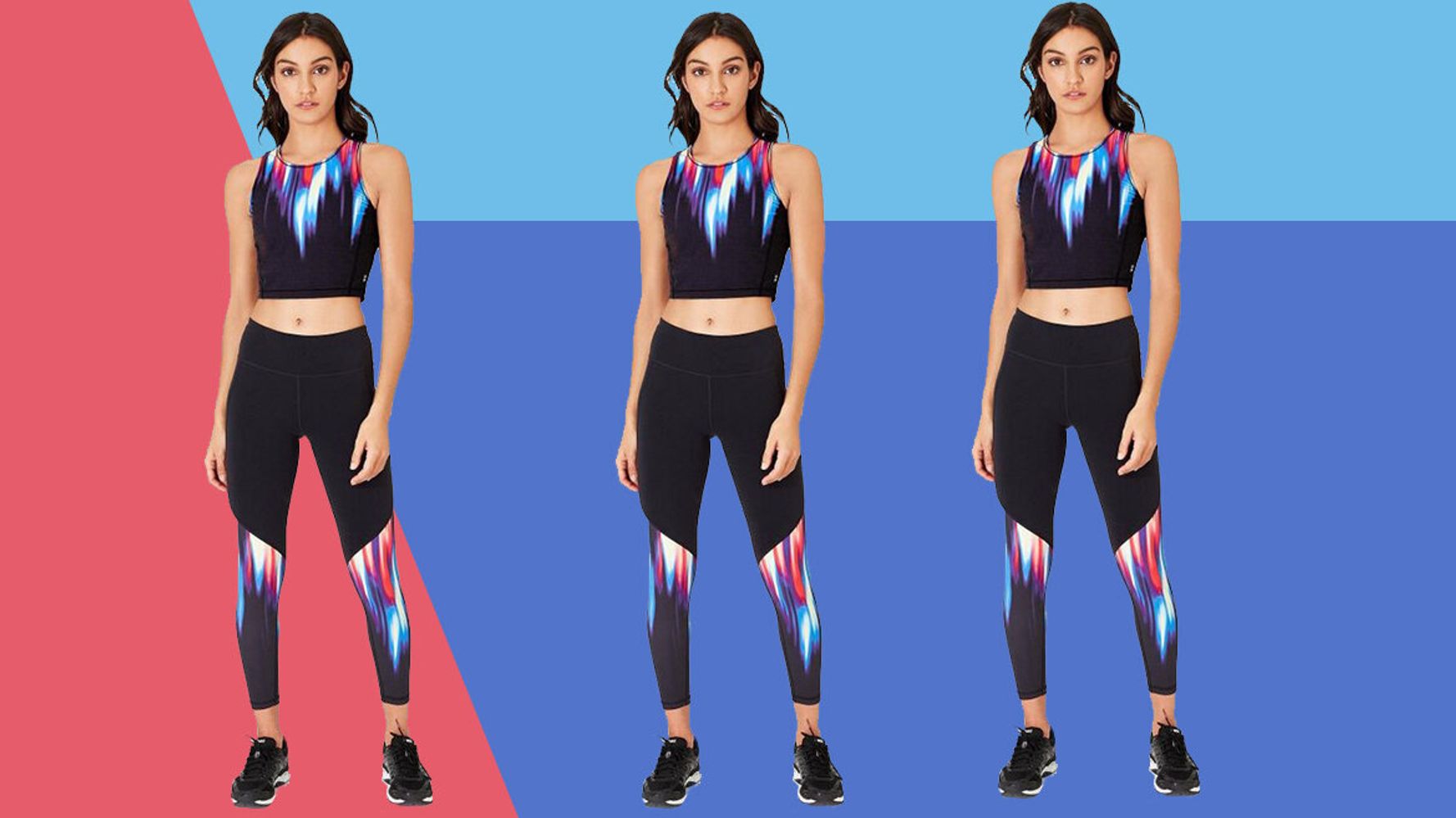
    Sport can simply be recognized as a physical activity that involves competition between individuals or teams. That being said, it doesn’t seem clear where fashion fits into this notion, apart from the sportswear used to play such games. Though, traditionally, sports like football have always carried an aspect of fashion design in order to create sportswear that represents a team and allows them to stand out from their competition, fashion in sport has since come a long way.

    Now, with access to sport in person, on television, and online, such sports have influenced fashion trends and have diversified the fashion retail industry as a result of its accessibility. Sportswear has now become a part of everyday life, whether playing sport or not. That’s why big sports apparel brands like Nike and Adidas dominate the retail industry in China. It’s therefore not surprising that jeans have been exchanged for joggers and boots for trainers. We’ll take a look at this shift in the fashion retail industry below.

    Influencers

    First and foremost, while sport itself has of course influenced the fashion retail market through the exploration of clothing for active people, key figures in society have a lot to answer for this. In our modern society, a lot more people are aware of their health and fitness so are engaging in more physical activities. Naturally, this means a bigger sportswear wardrobe. This shift in wardrobe doesn’t stop there. Now, people are quick to share their sporting apparel across social media to engage with other like-minded fitness people.

    One Asian influencer in particular, Hana Giang Anh, has her very own fitness social media platform and can often be seen sharing her sportswear looks on Instagram. Since Instagram is a visual platform that creates aspiration amongst users, particularly since products can be tagged, those that follow influencers often get on board with fashion trends and can be seen flaunting sportswear themselves. For that reason, online sport has influenced the fashion retail market as it has exposed social media users to the benefits of sportswear.

    Online events and games

    With the online space so widespread, access to online sporting events and games is all the easier. Sites like William Hill offer access to sport via online betting across the world, allowing the sporting market to draw further attention to itself. This has led to the sporting audience has grown and interest in sport has increased: even those that don’t play sports themselves or take a keen interest in a particular sport or team are presented with the opportunity to participate in some way, whether it’s through betting on a game or playing an online sports game.

    Since fashion is a way of displaying your identity, more people are taking to sportswear to show that they belong to the sporting industry. For that reason, since sport has been introduced to the online sphere, it has capably influenced the fashion retail market through the increased accessibility to online users. This has had both a cause and effect – it has caused more people to directly or indirectly get involved with sport, and it has consequently had an effect on their lifestyle choices, including the clothes they choose to wear.

    This goes to show that with the idealization of and accessibility to sport online, more people are aware, not only of its health benefits and entertainment value but of its fashion value too. That’s why more retail brands are creating sportswear that pushes boundaries and makes a statement, all while being fashionable, comfortable, and ideal for physical activity. Hence, the fashion retail market is more sport orientated than ever.

  • Shiseido confirms sale of consumer business for US$1.5 billion

    Shiseido confirms sale of consumer business for US$1.5 billion

    Japanese beauty company Shiseido said it plans to sell its personal-care business, which includes its lower-priced hair care and skin care products, to private equity firm CVC Capital Partners for 160 billion yen (US$1.5 billion).

    Shiseido’s personal-care unit includes popular brands like Senka face wash and Tsubaki shampoo.

    Under this deal, the assets will be transferred in July to a new company. Private equity fund CVC Asia V will acquire a 65% stake in the venture and Shiseido will hold a 35% stake.

    “We see significant potential for growth by investing further in employees, brands, and R&D, as well as by driving digitalization and accelerating overseas expansion, with the possibility of going public in the future,” said Yukinori Sugiyama, partner and co-head of CVC Japan, in a statement.

    Founded in Tokyo in 1872, Shiseido is focused on its premium beauty brands such as NARS Cosmetics, Bare Escentuals, and its namesake Shiseido line. As part of this strategy, the company is planning.